Worldwide location-image library — 562 scenes across the United Kingdom — AI-generated artistic interpretations
Word of the daynostalgia“a longing for the past”·“The smell of woodsmoke woke a sharp nostalgia.”“The smell of woodsmoke woke a sharp nostalgia.”Day 298 of 365
🎄 Christmas Markets
Our special holiday collection — festive market evenings, growing through the season. Tap a card to jump to its full gallery entry.
Gallery split across 4 pages — search & filters apply to this page only (scenes 151–300 of 562).
No scenes match your search.
UK-01-311
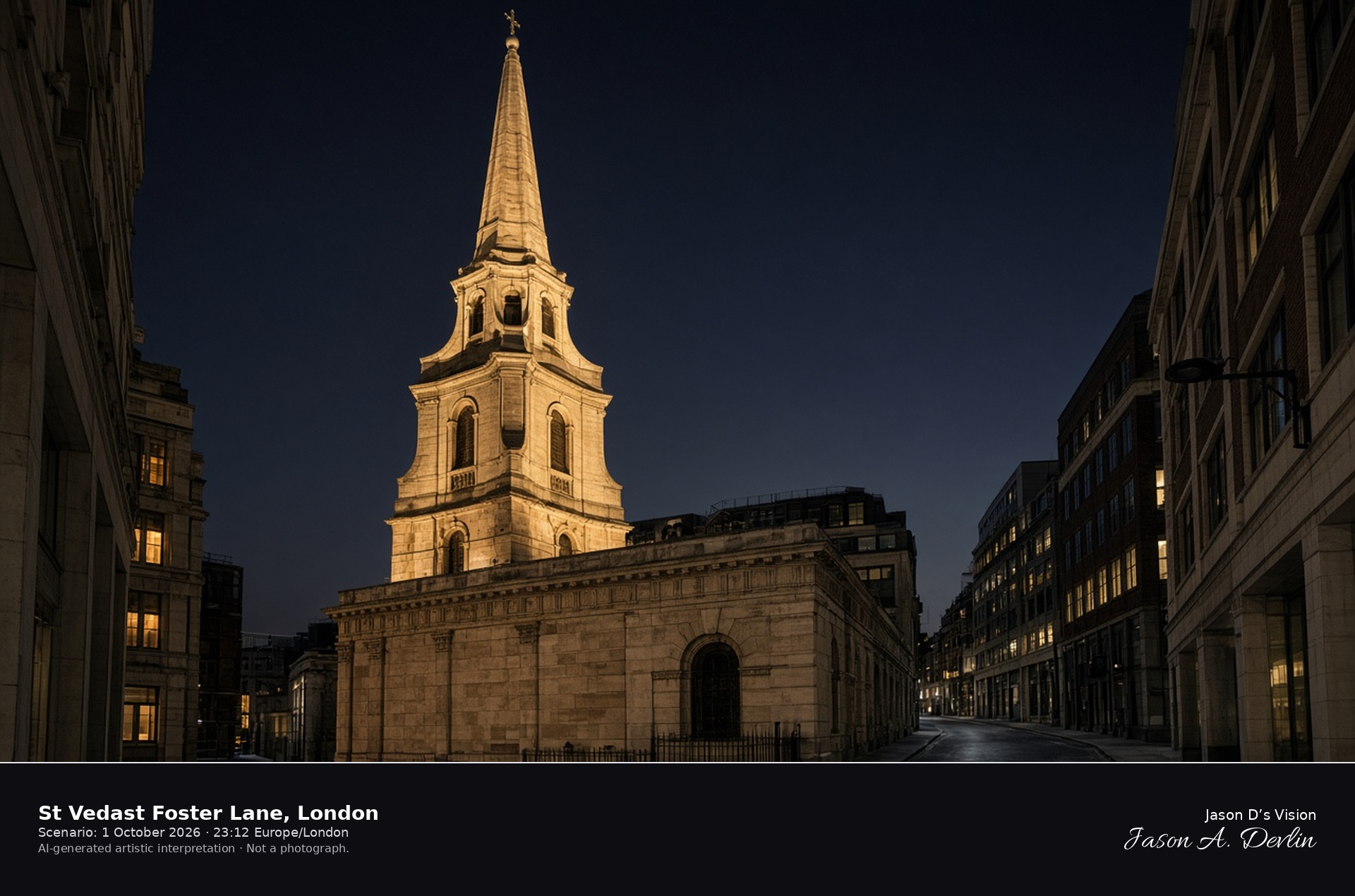
St Vedast Foster Lane, London (City of London)
Scenario: 1 October 2026 · 23:12 Europe/London
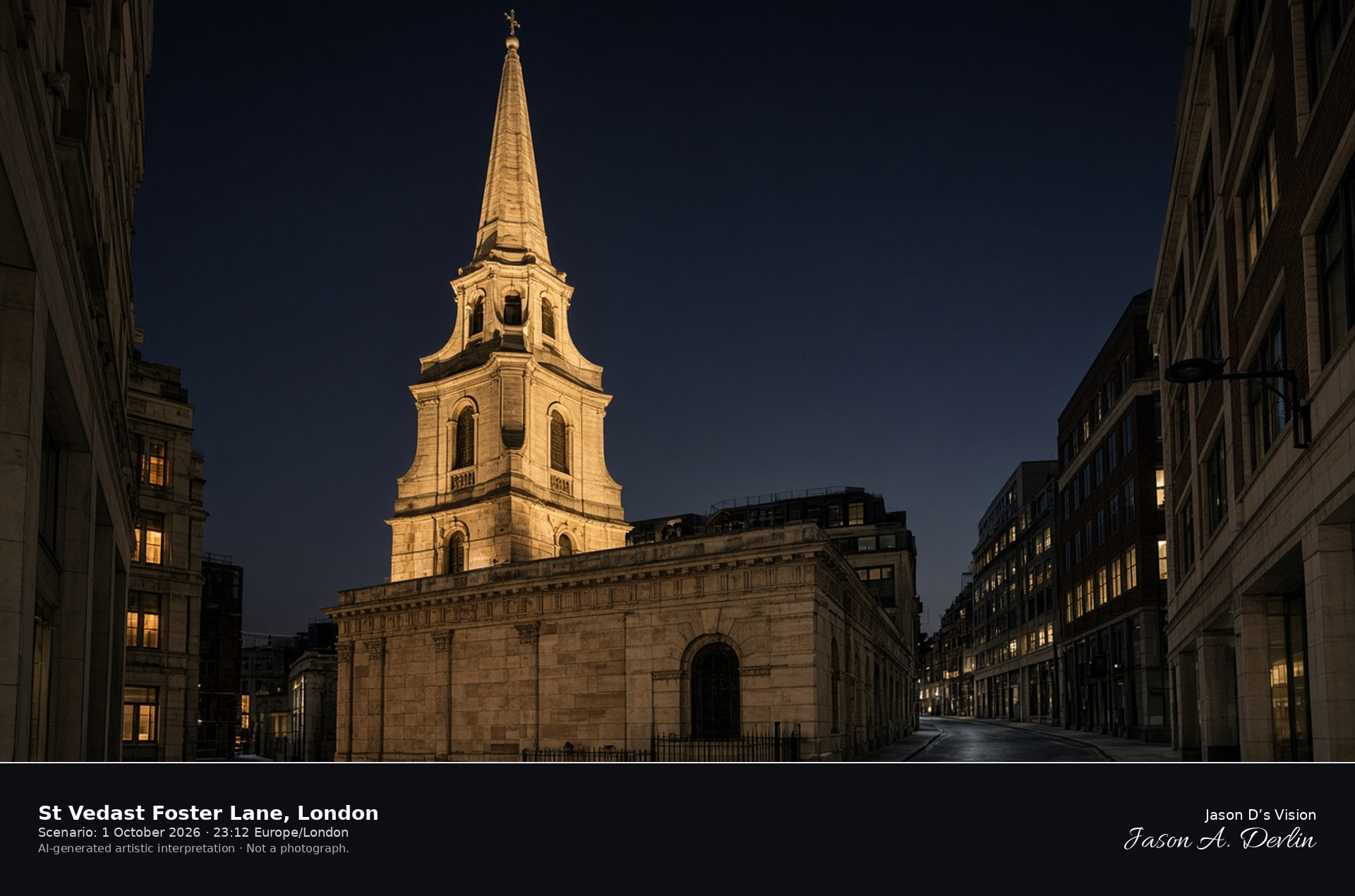
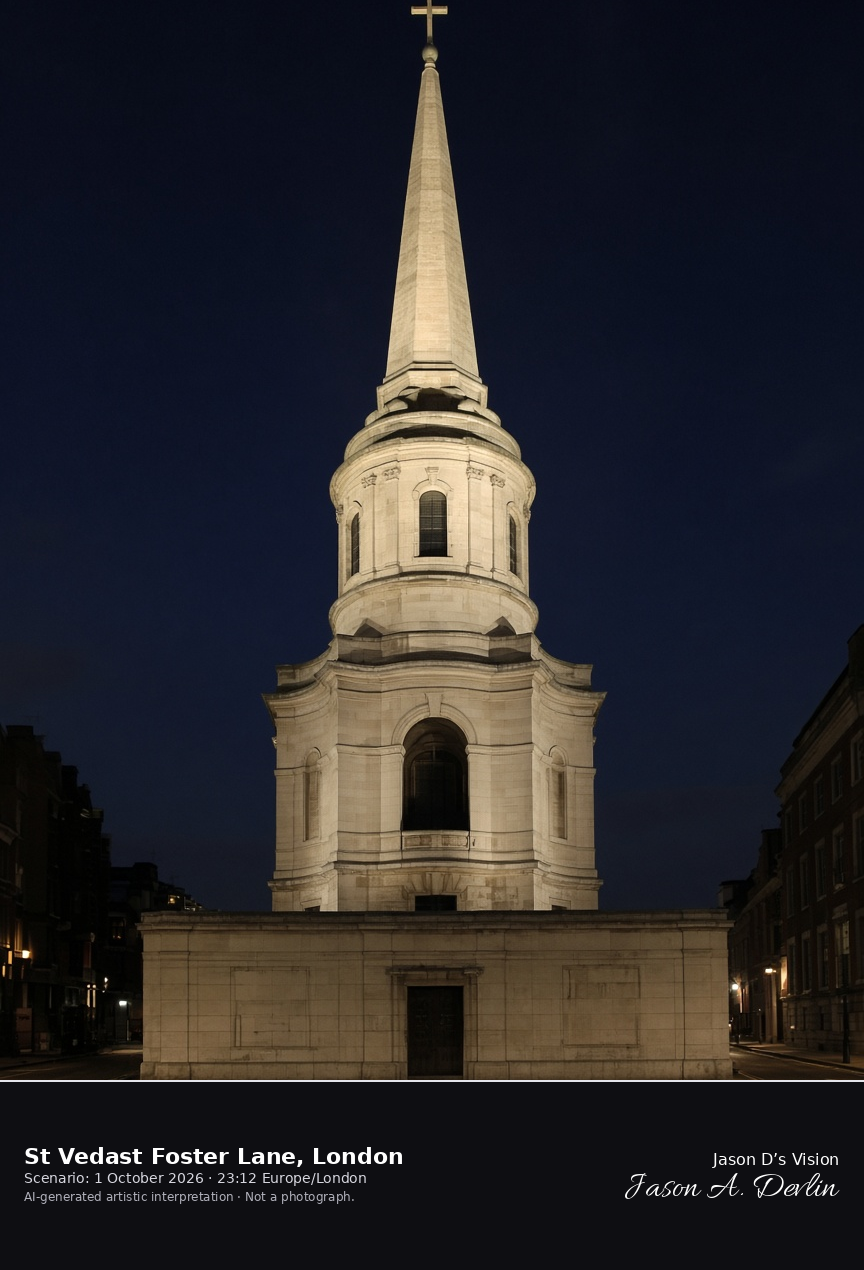
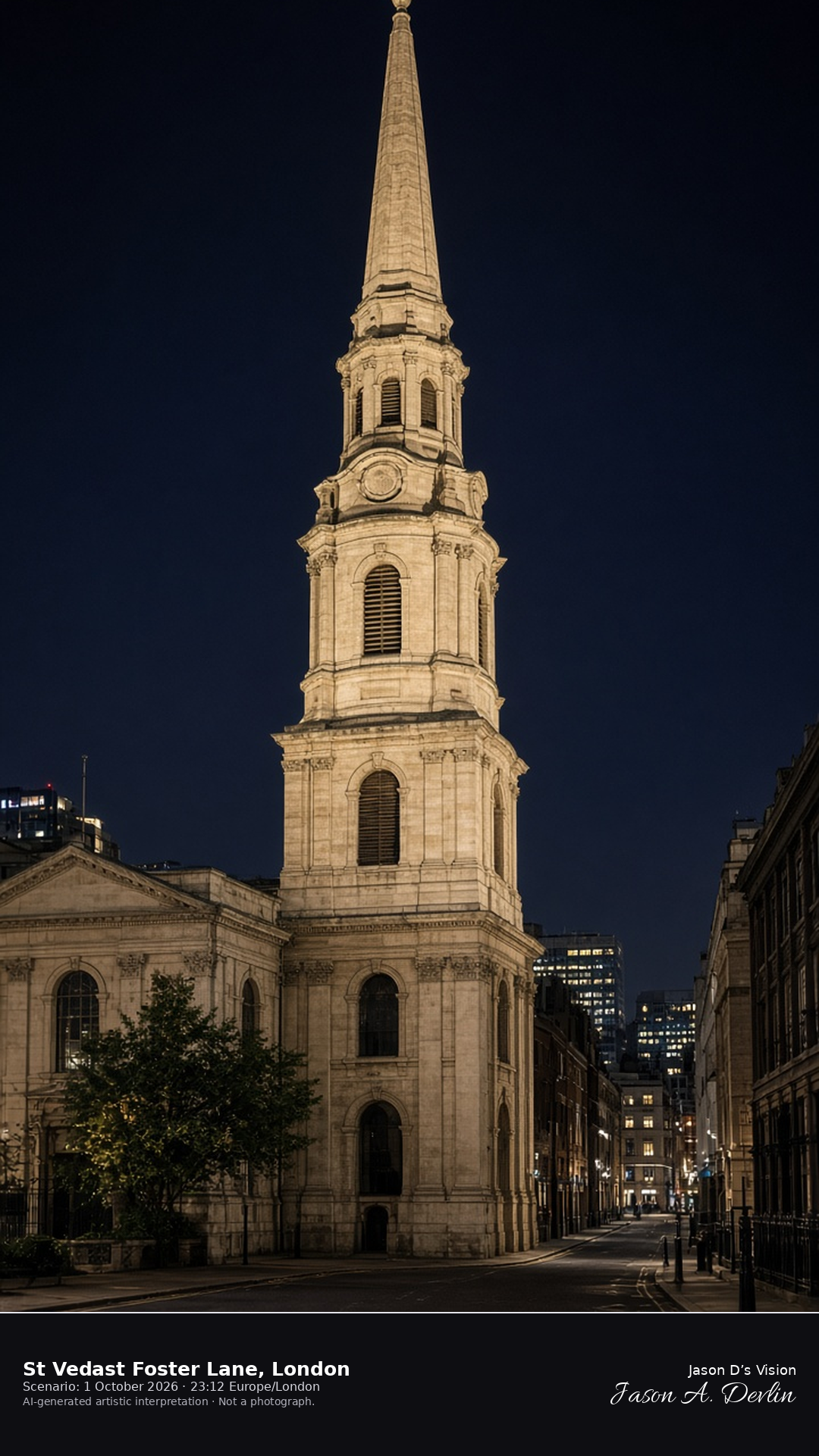
St Vedast Foster Lane, London · AI-generated artistic interpretation
From Foster Lane the view looks at St Vedast-alias-Foster, a small City church whose Portland-stone steeple rises in three baroque stages, concave then convex, and closes in an obelisk with a ball and cross. It is not the wedding-cake spire of St Bride's. It is a clear night, about 16.1°C, dry, and the sun is below the horizon. Open-Meteo valid time is 2026-10-01T23:00 Europe/London on 1 October. This is not a verified on-site observation.
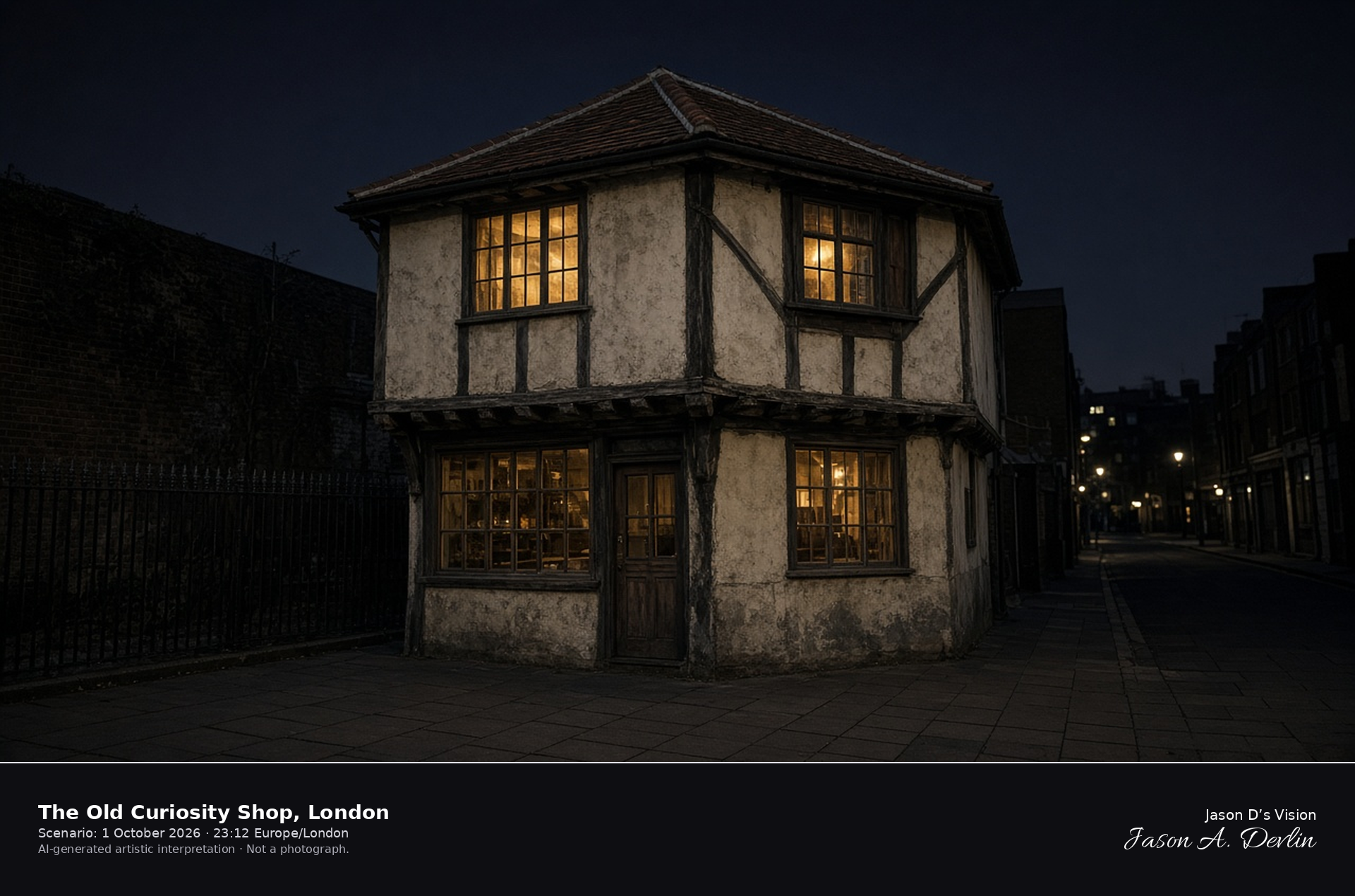
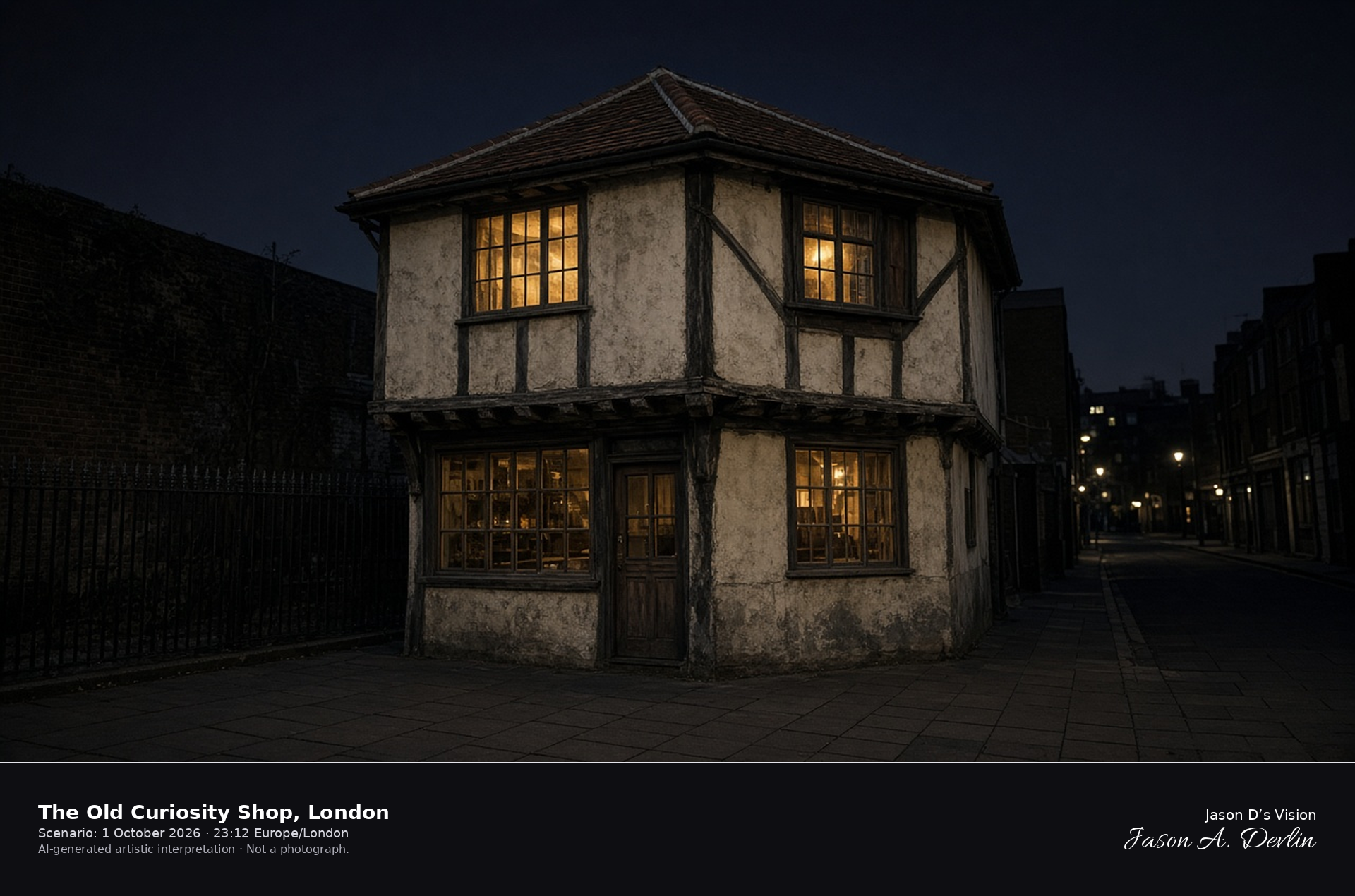
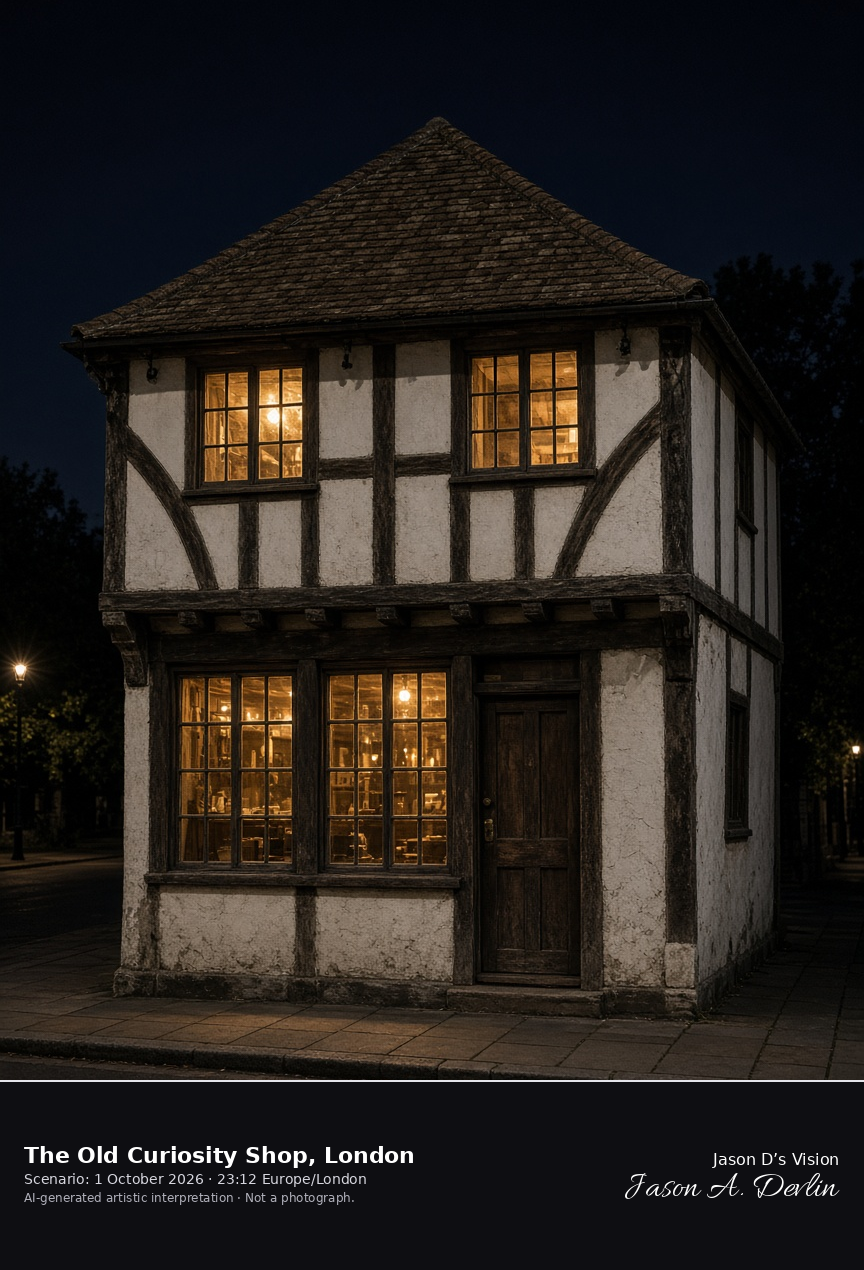
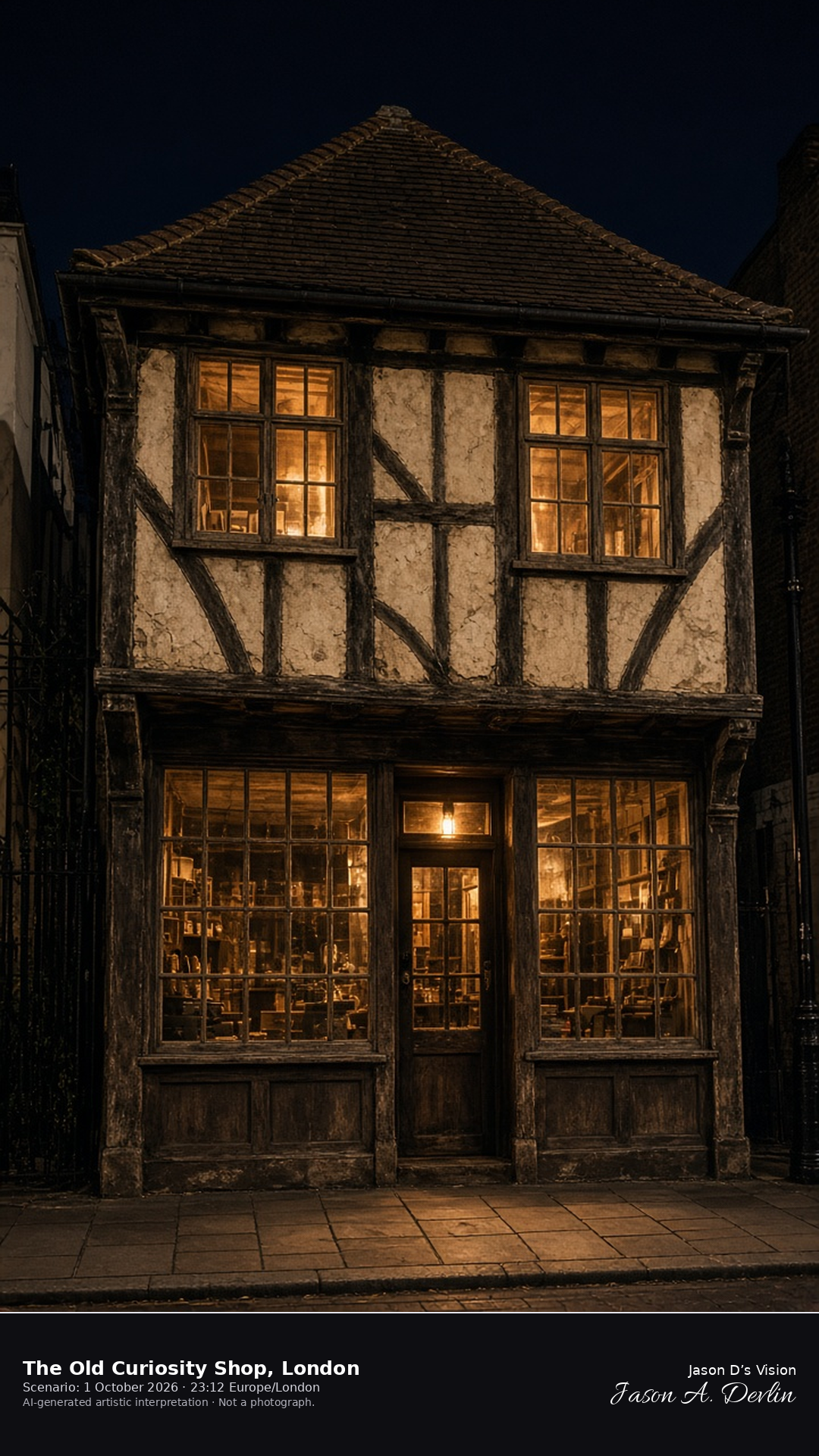
The Old Curiosity Shop, London · AI-generated artistic interpretation
From Portsmouth Street the view is the Old Curiosity Shop, a tiny two-storey plastered timber house whose upper floor overhangs the corner, under a tiled hipped roof. Shop windows sit below the jetty. It is not the long Holborn front of Staple Inn. It is a clear night, about 16.0°C, dry, and the sun is below the horizon. Open-Meteo valid time is 2026-10-01T23:00 Europe/London on 1 October. This is not a verified on-site observation.
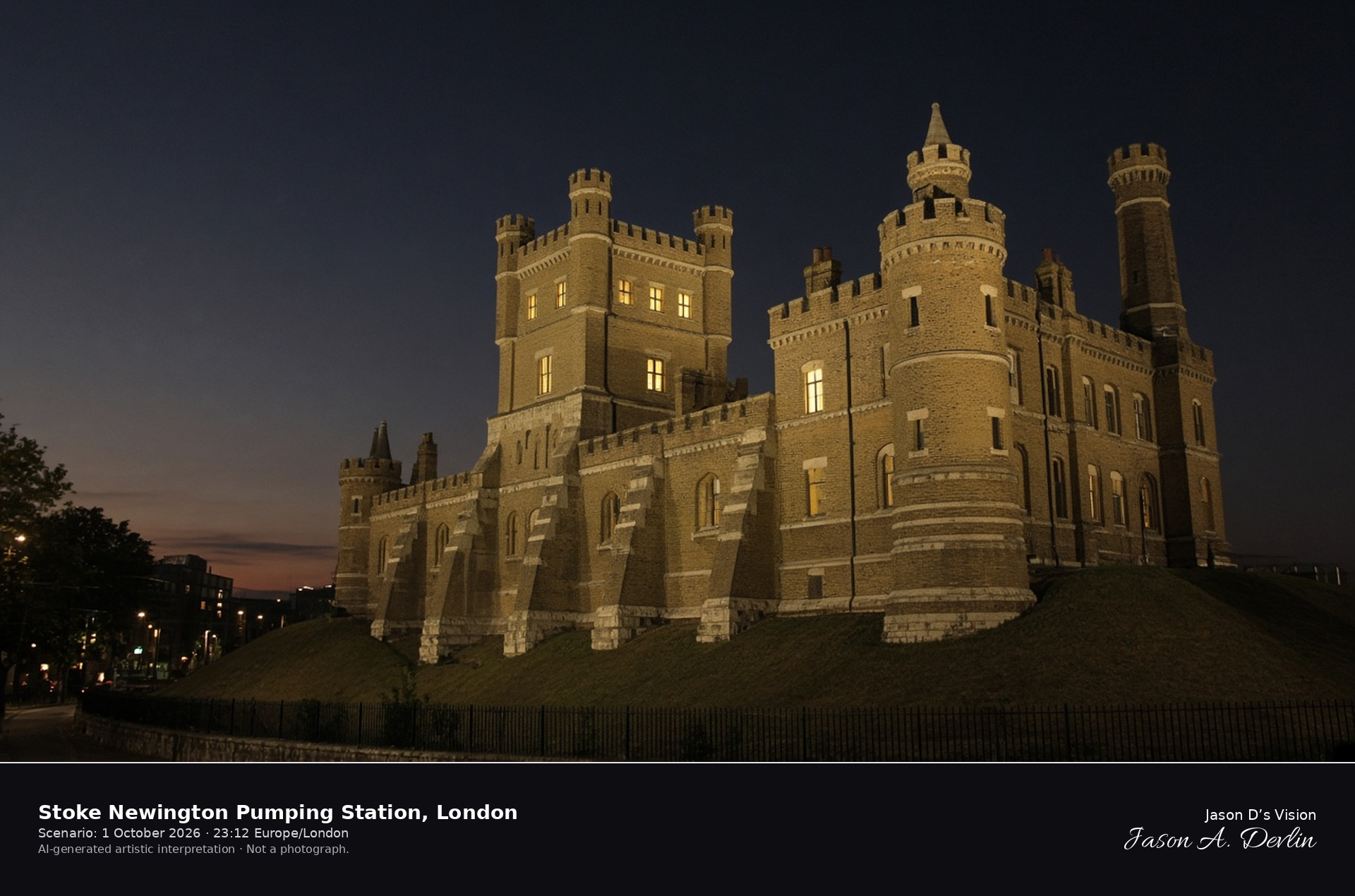
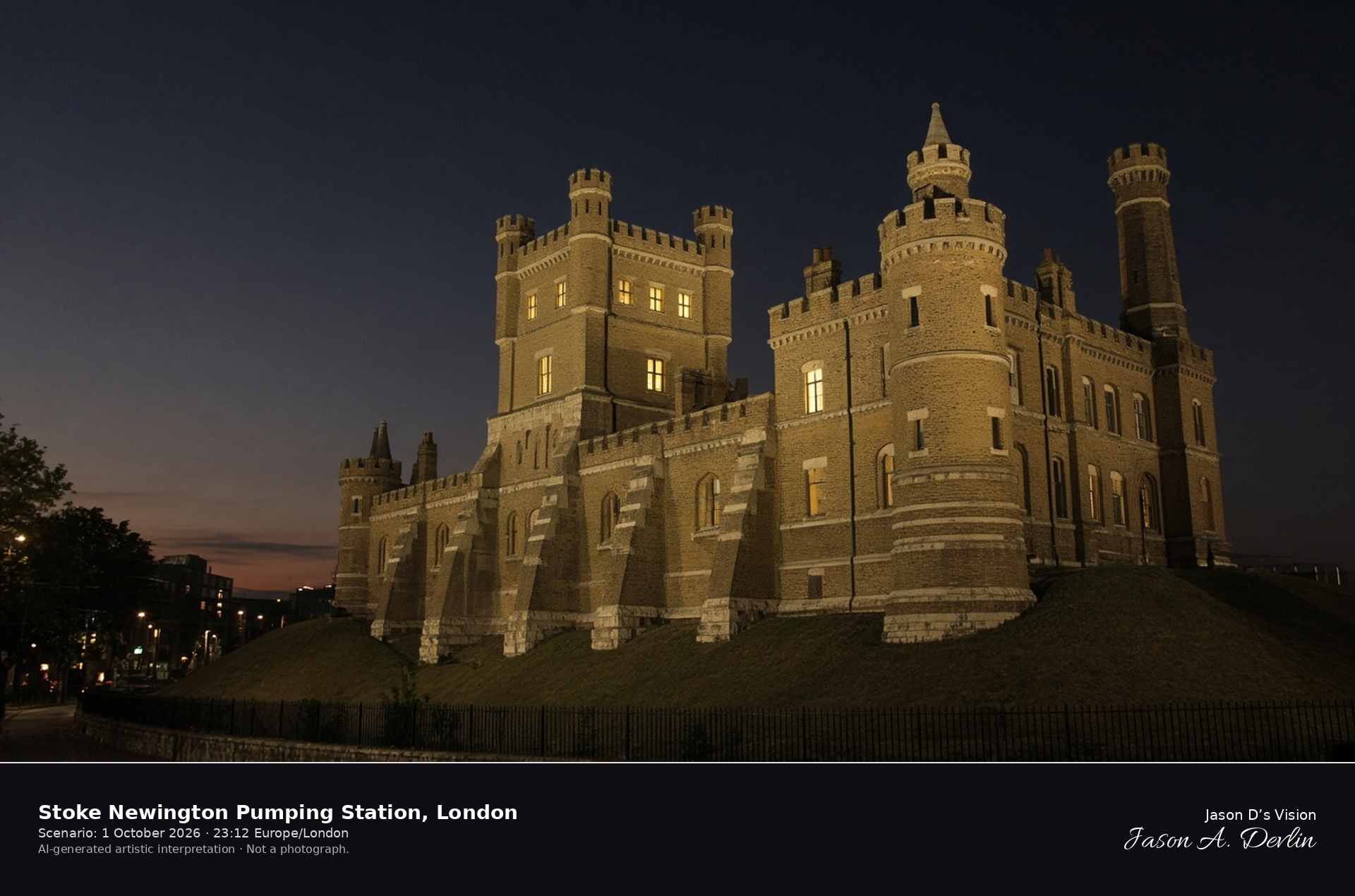
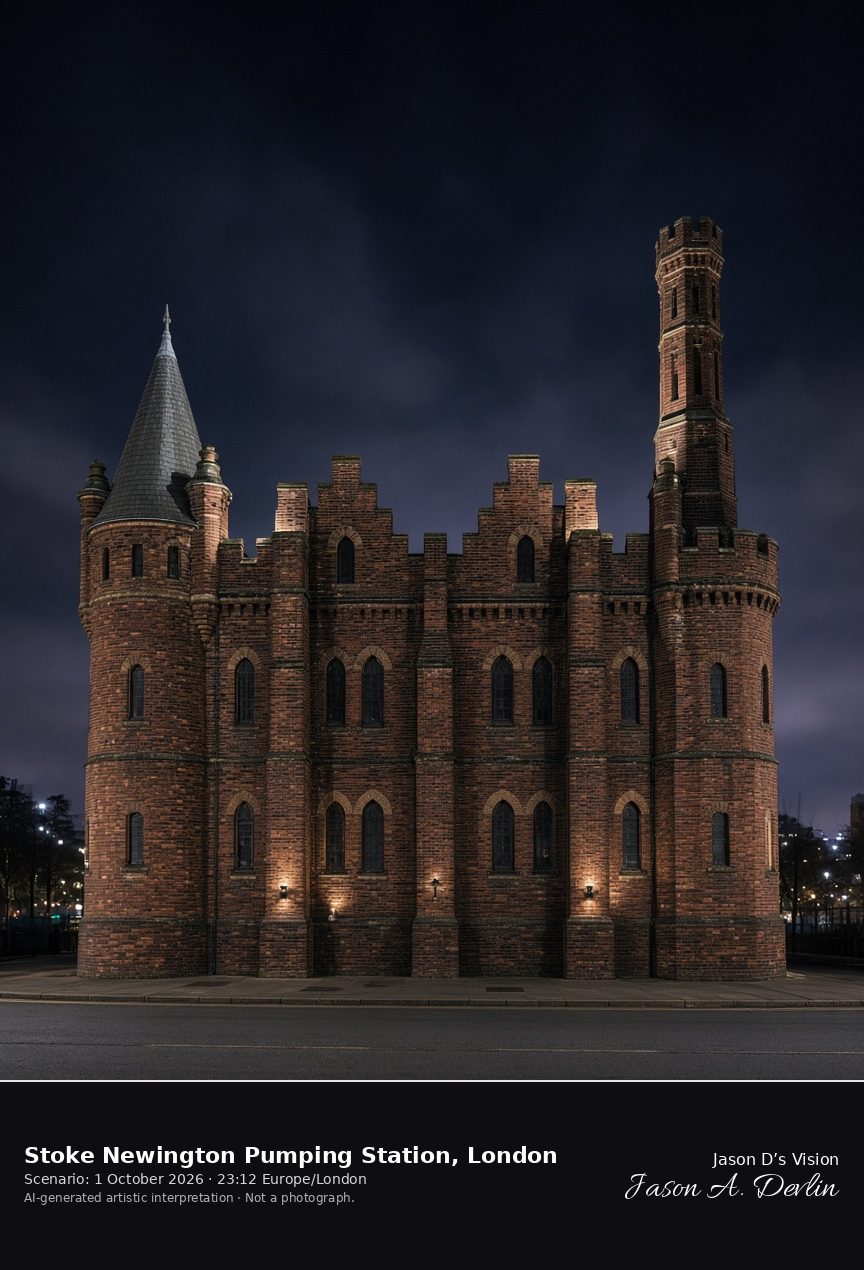
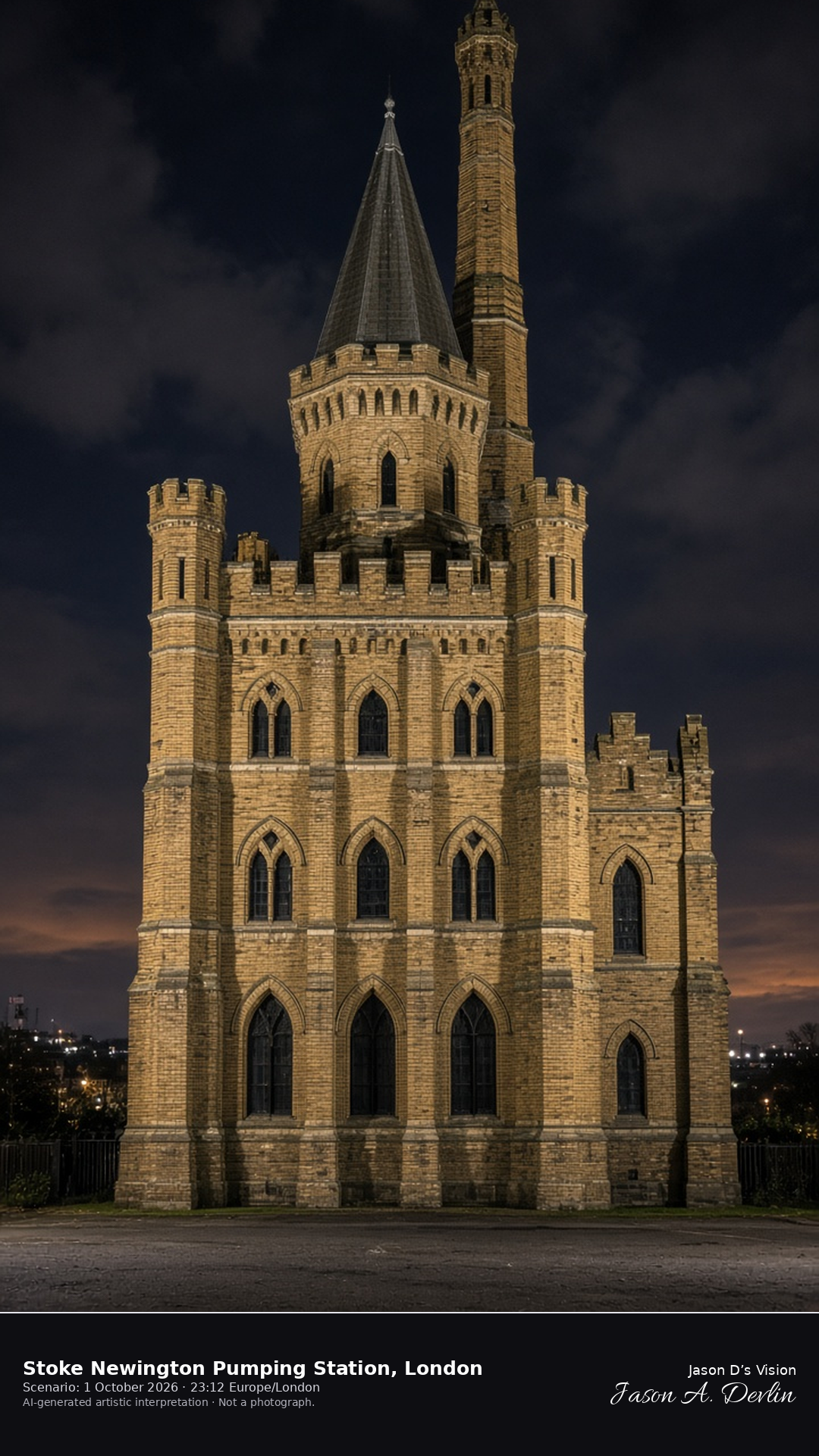
Stoke Newington Pumping Station, London · AI-generated artistic interpretation
From the southwest the Stoke Newington Pumping Station reads as a stock-brick fortress: battlements, stepped buttresses, a round tower with a conical roof, and a taller octagonal chimney tower. William Chadwell Mylne and Robert Billings built it in the 1850s to house the engines. It is a clear night, about 16.1°C, dry, and the sun is below the horizon. Open-Meteo valid time is 2026-10-01T23:00 Europe/London on 1 October. This is not a verified on-site observation.
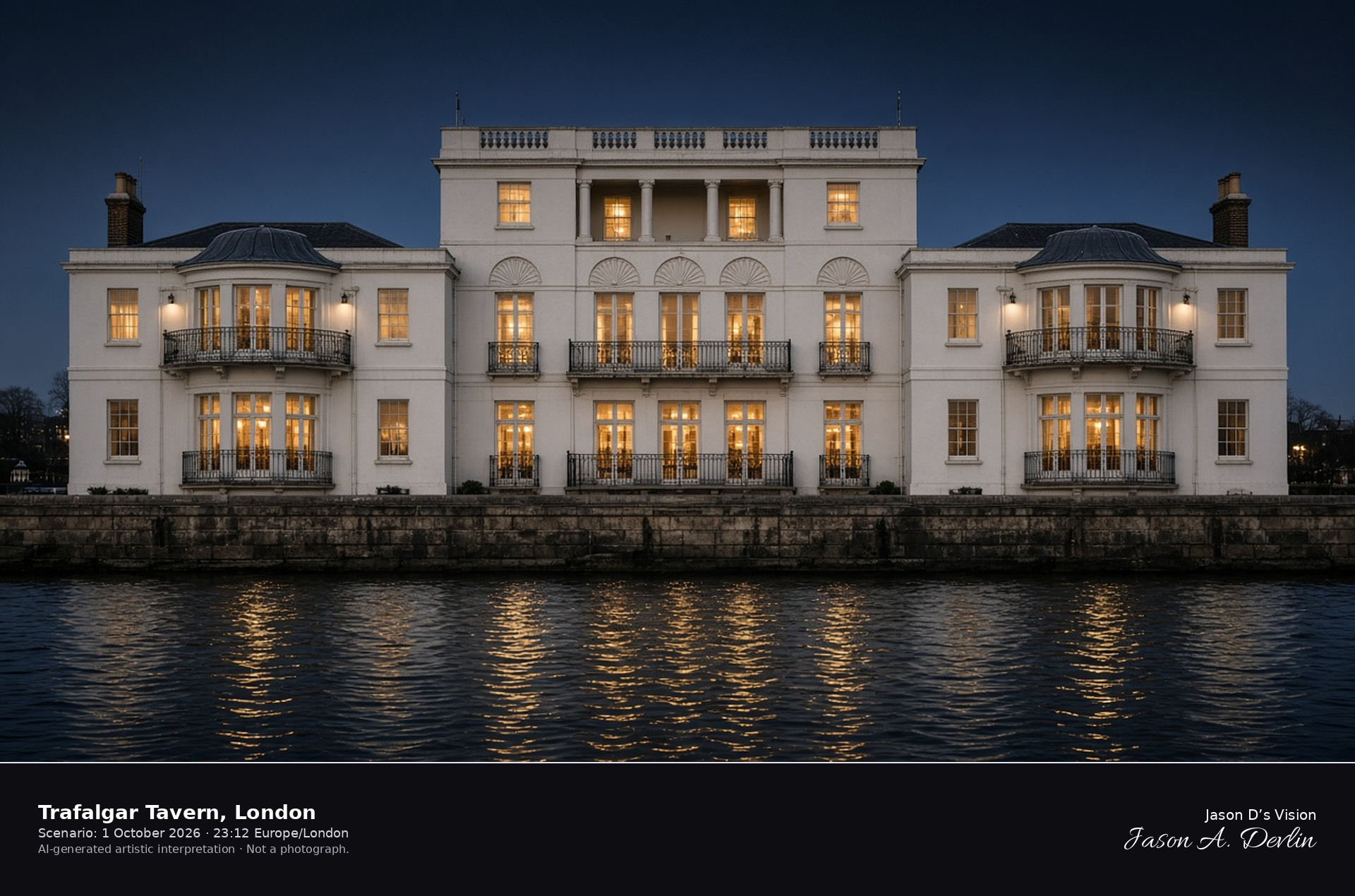
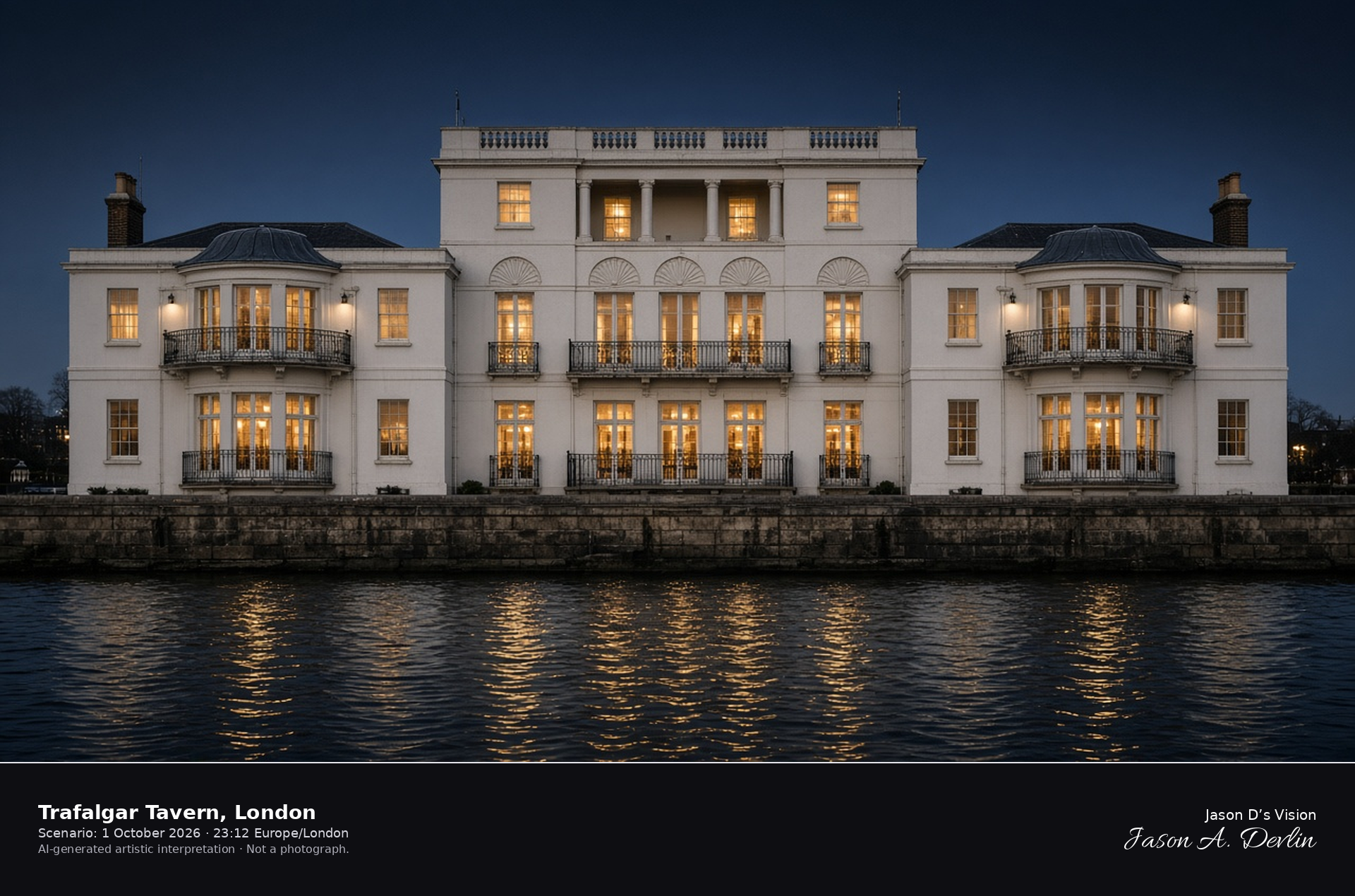
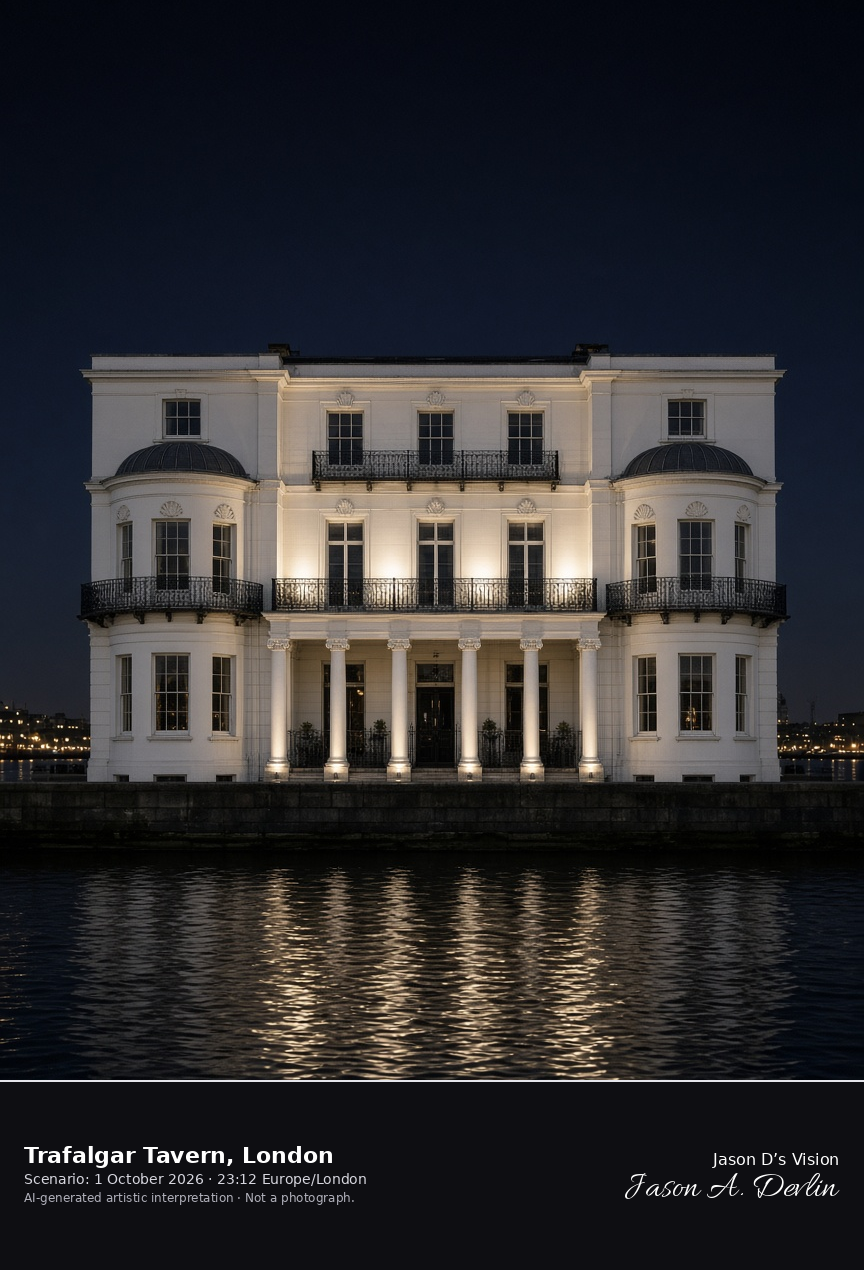
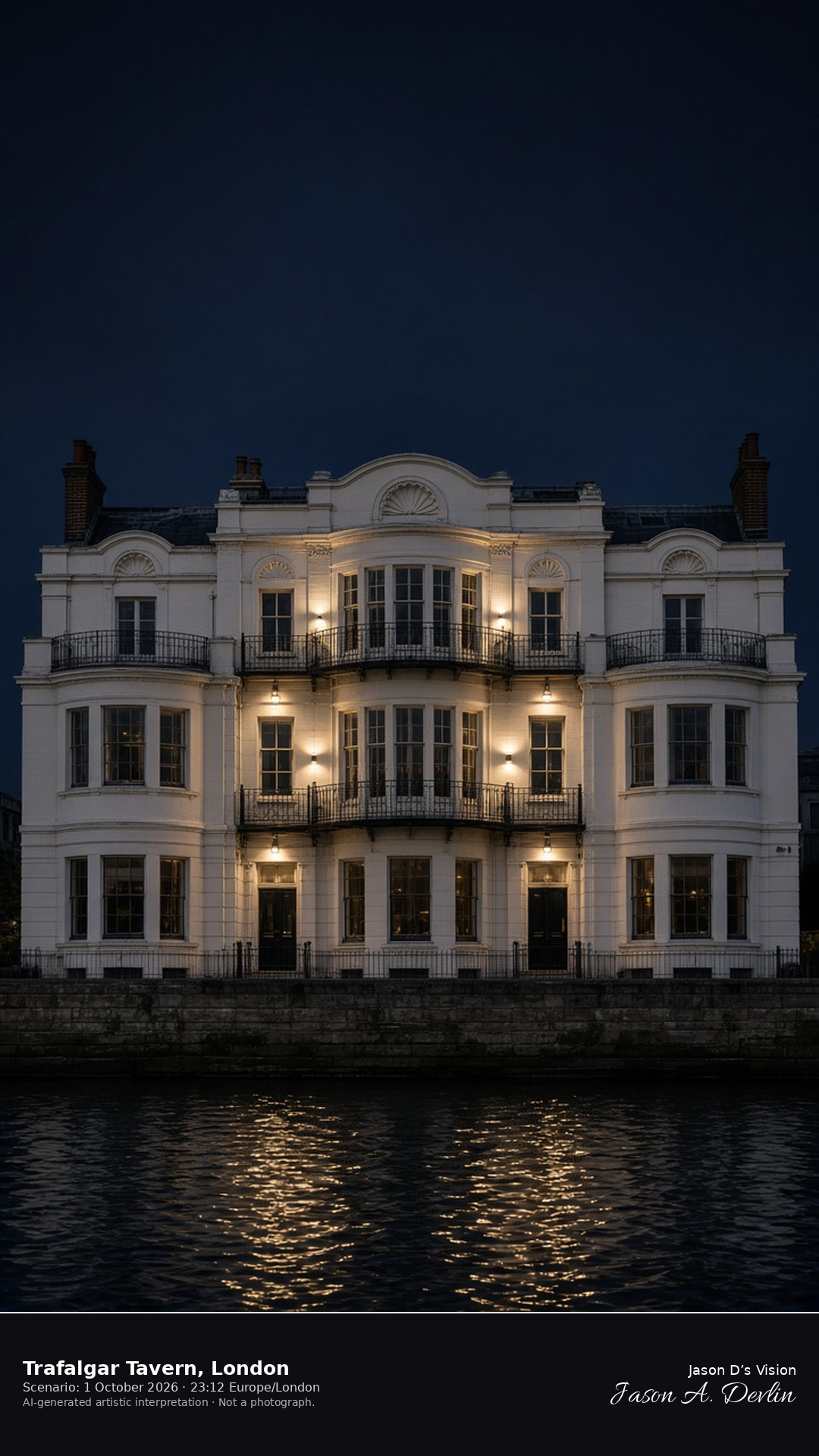
Trafalgar Tavern, London · AI-generated artistic interpretation
From the riverside the Trafalgar Tavern is a white stucco block on the Thames wall, with bow windows, shell motifs, and iron balconies. The centre is three storeys and the sides are two. The naval college domes and the Cutty Sark stay out of the frame. It is a clear night, about 16.4°C, dry, and the sun is below the horizon. Open-Meteo valid time is 2026-10-01T23:00 Europe/London on 1 October. This is not a verified on-site observation.
Many of London’s garden squares began as private gardens for the houses around them, enclosed by railings and entered with keys. Russell Square in Bloomsbury, laid out at the beginning of the nineteenth century, is now a public garden, with paths and mature trees offering a green retreat from the surrounding streets.
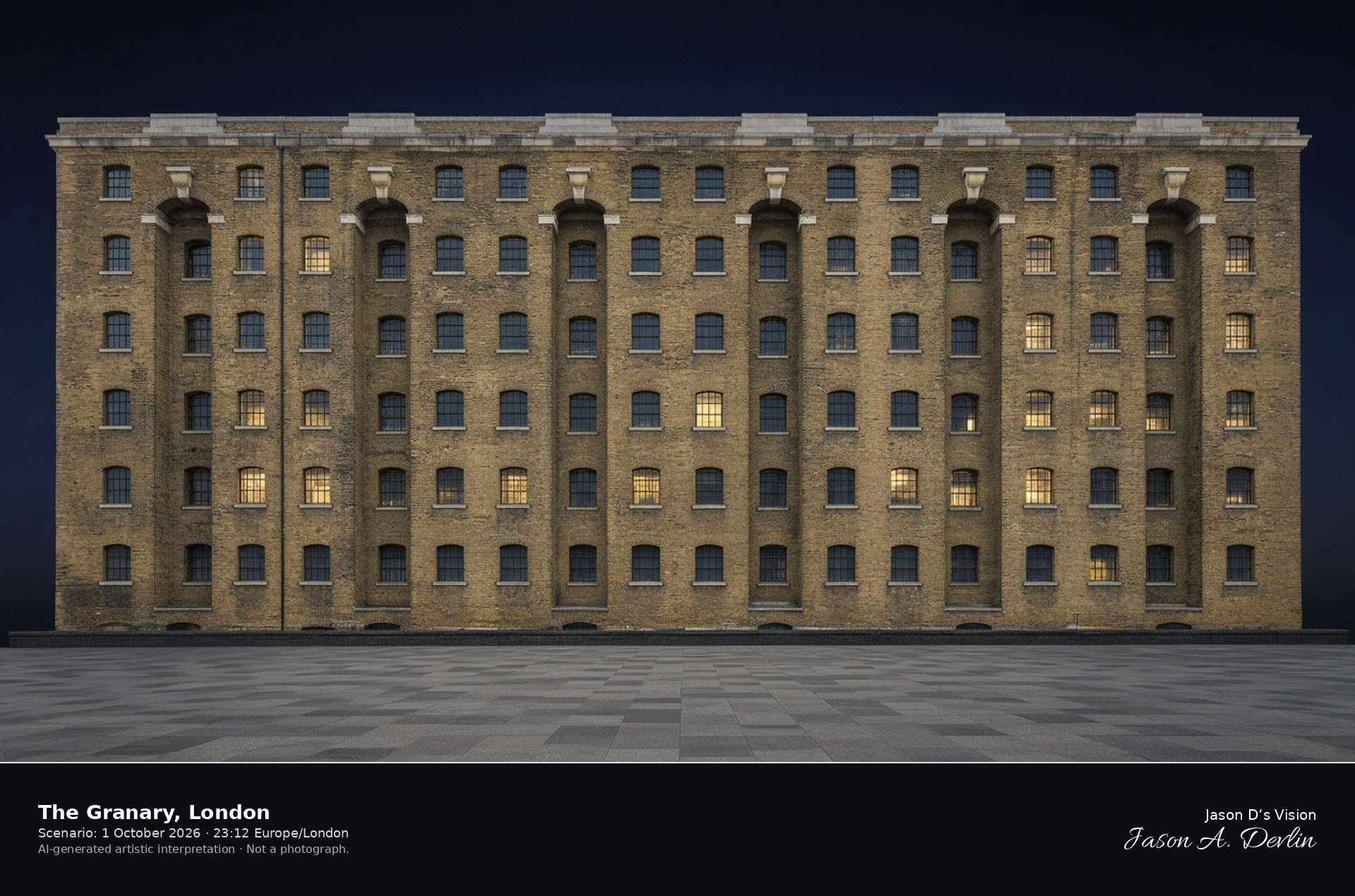
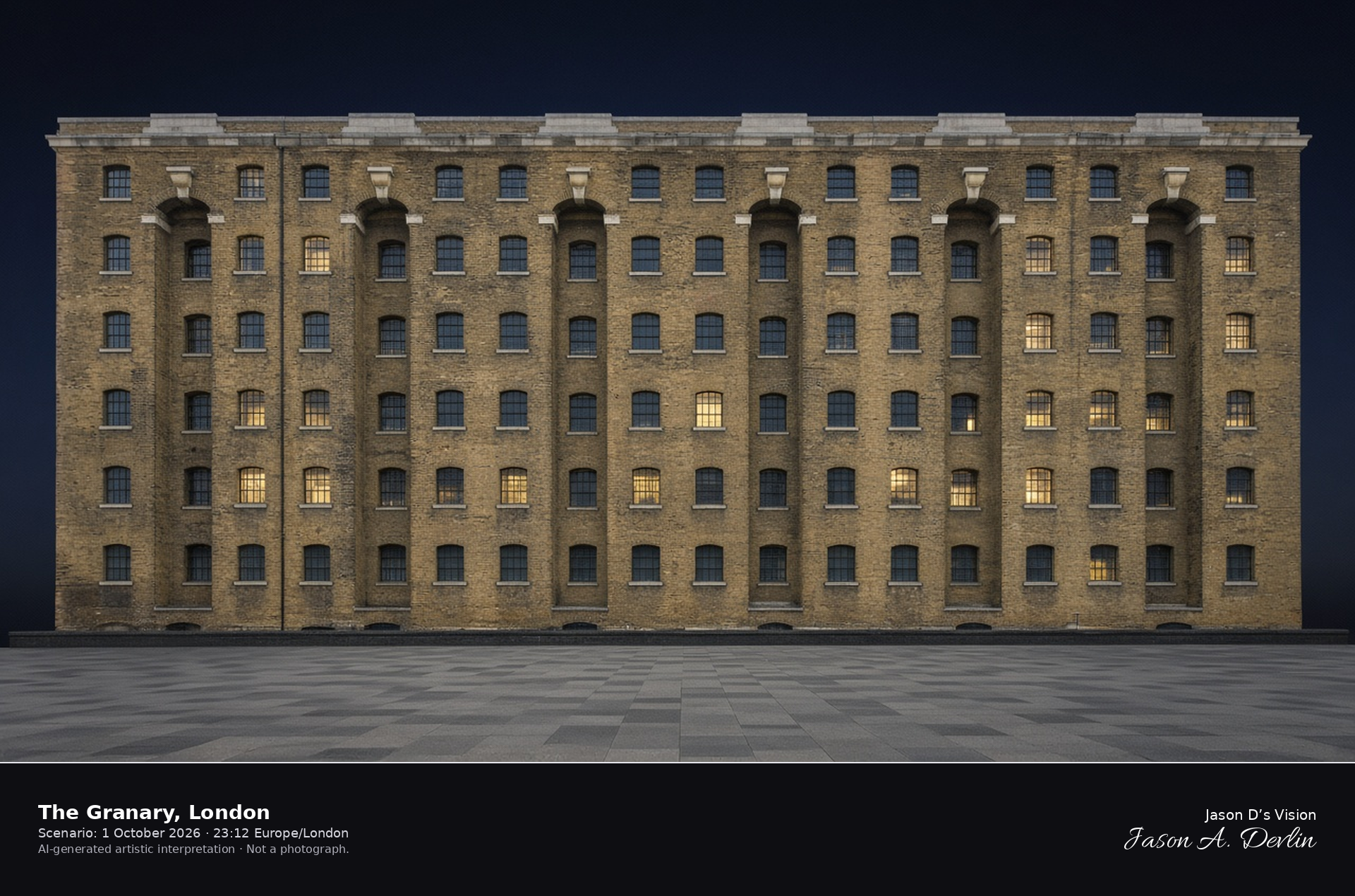
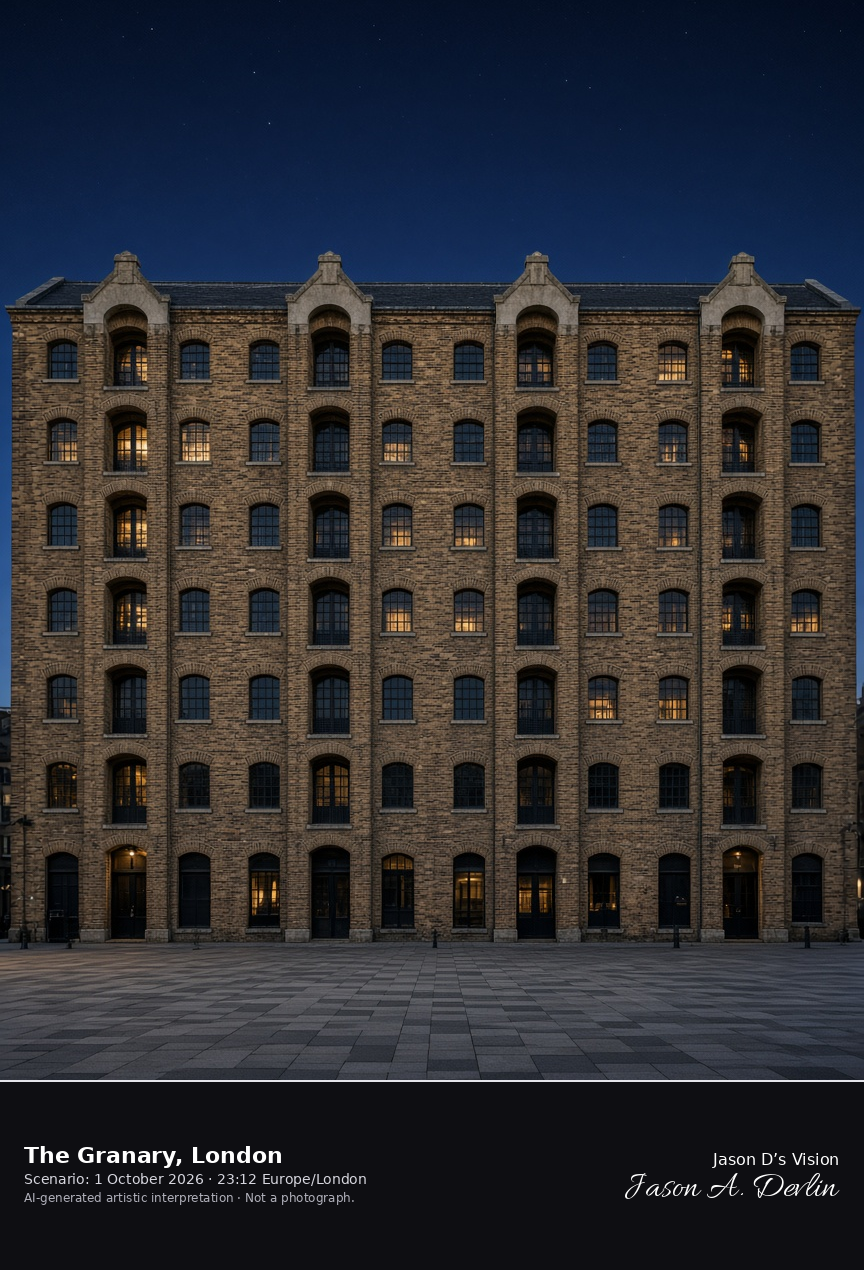
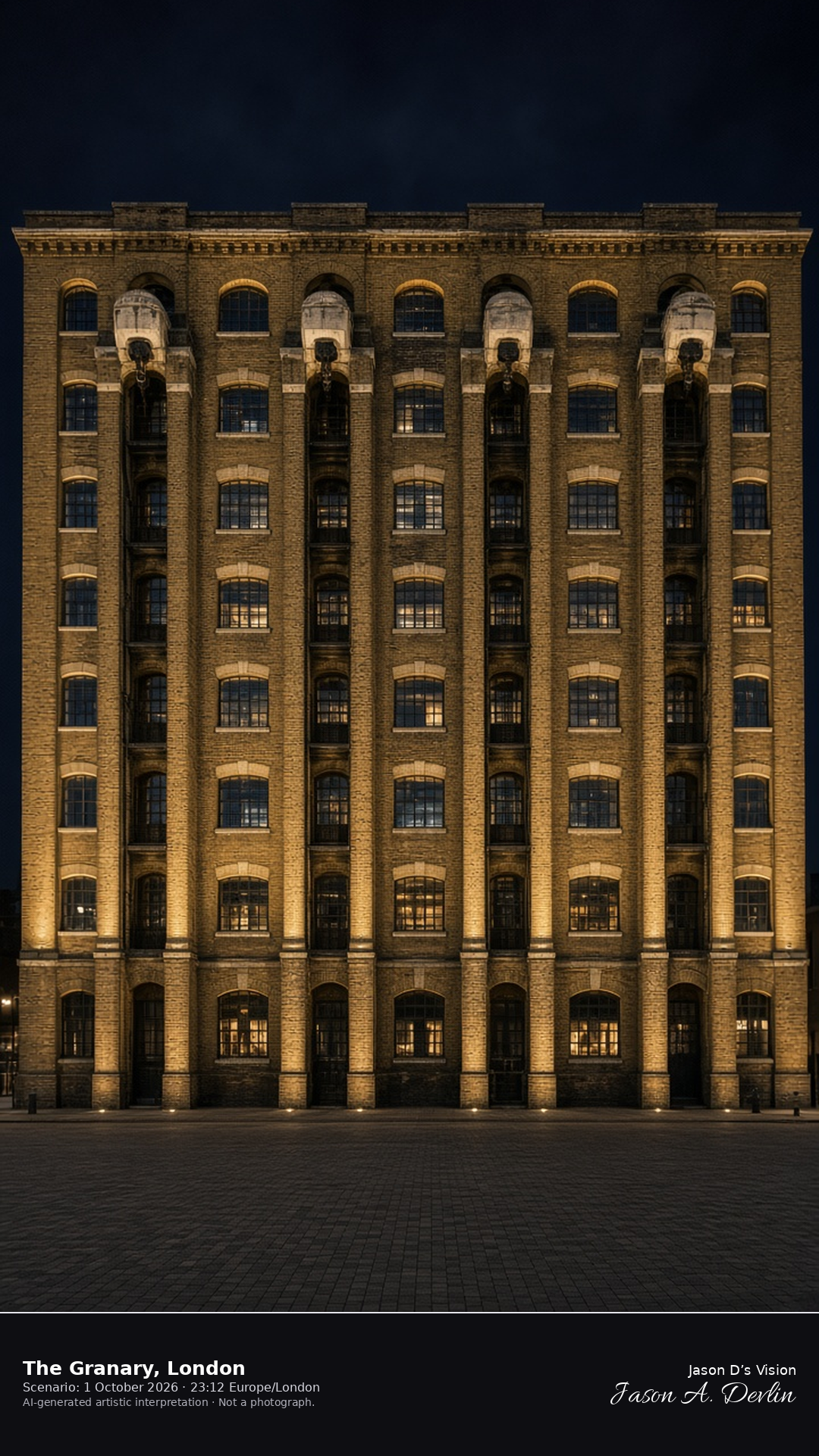
The Granary, London · AI-generated artistic interpretation
From Granary Square the view looks north at the Granary, Cubitt's six-storey stock-brick warehouse, its hoist bays running the full height under stone crane hoods. There is no station clock and no kissing roof. It is a clear night, about 16.0°C, dry, and the sun is below the horizon. Open-Meteo valid time is 2026-10-01T23:00 Europe/London on 1 October. This is not a verified on-site observation.
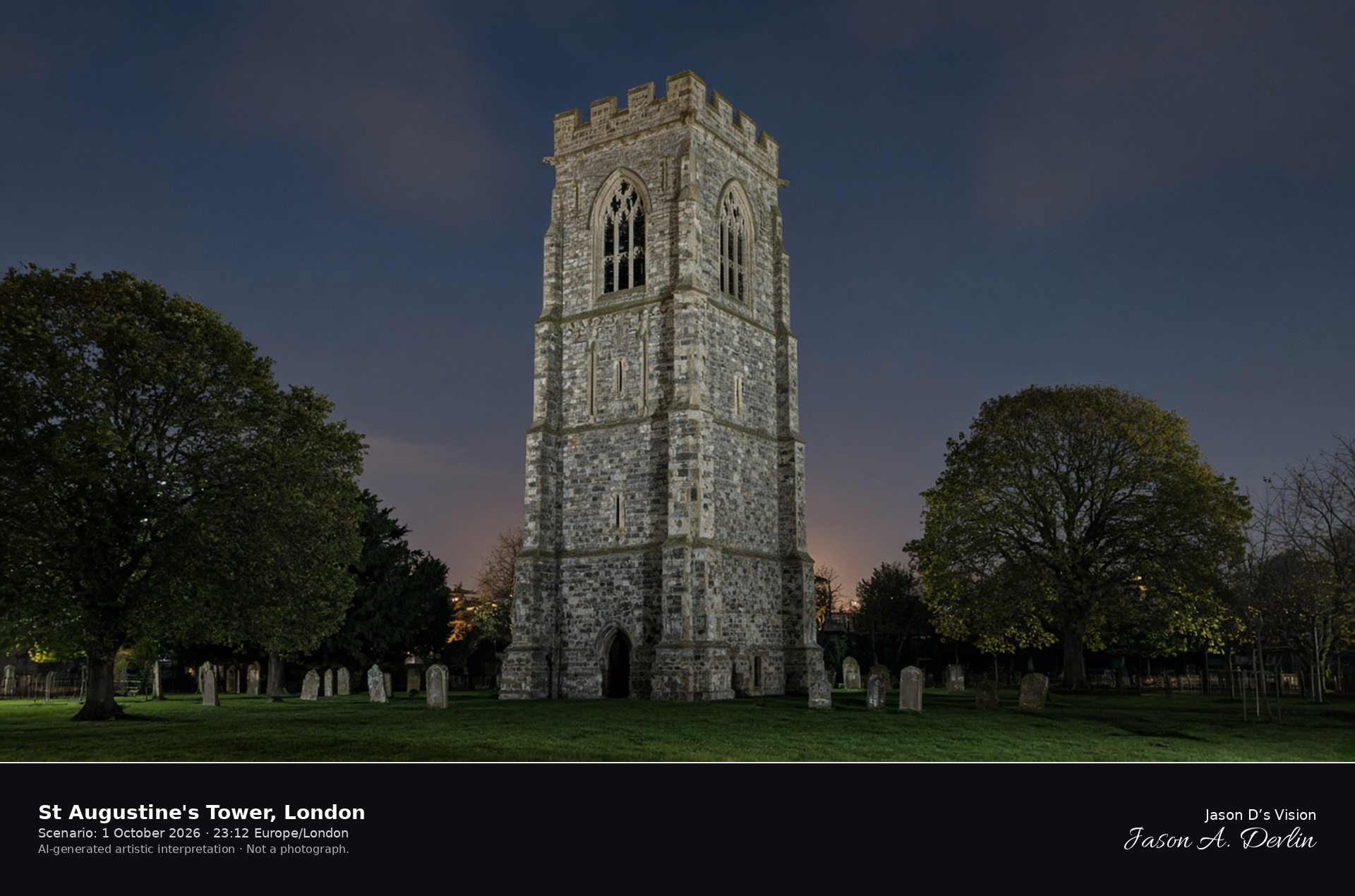
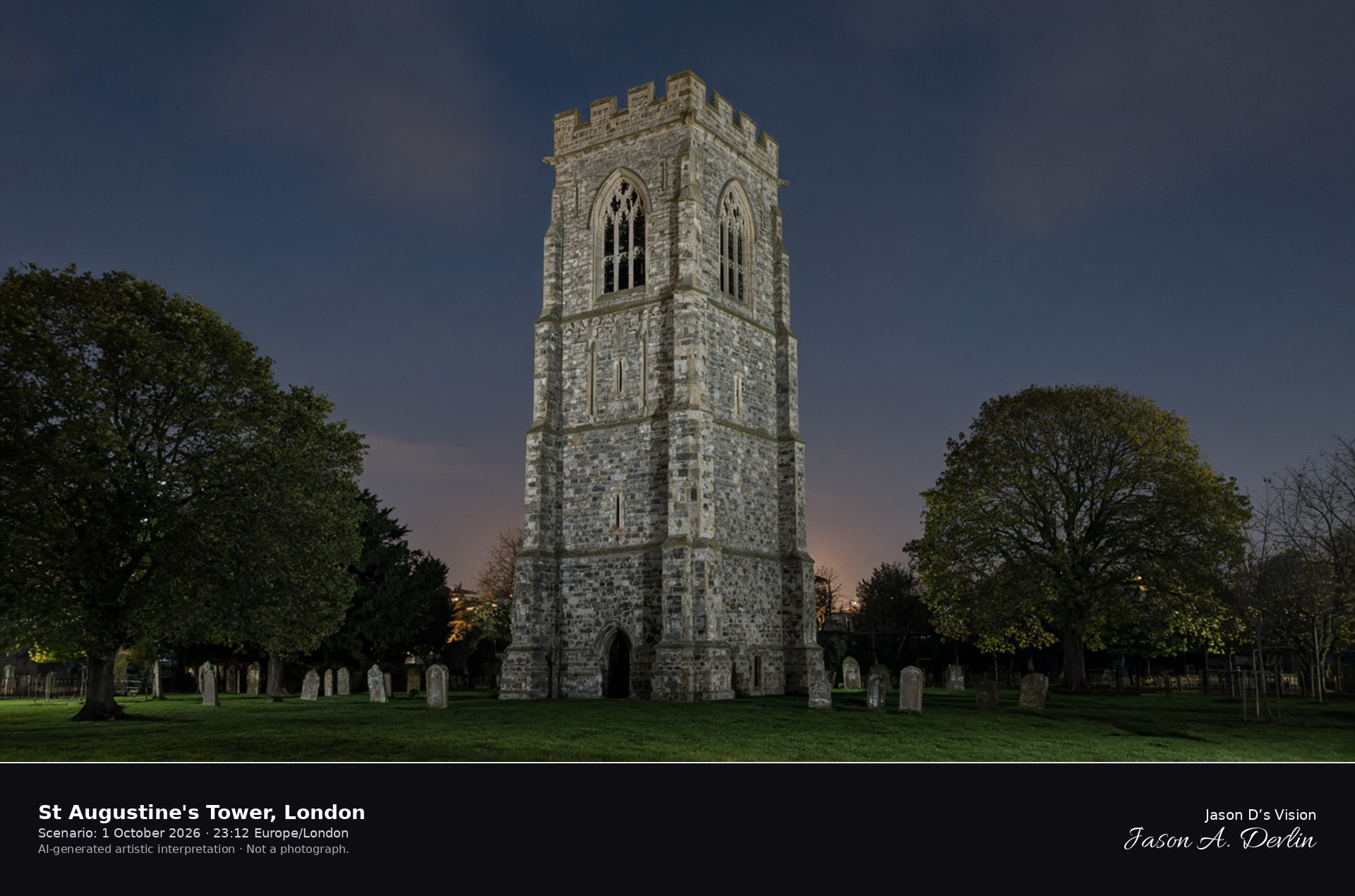
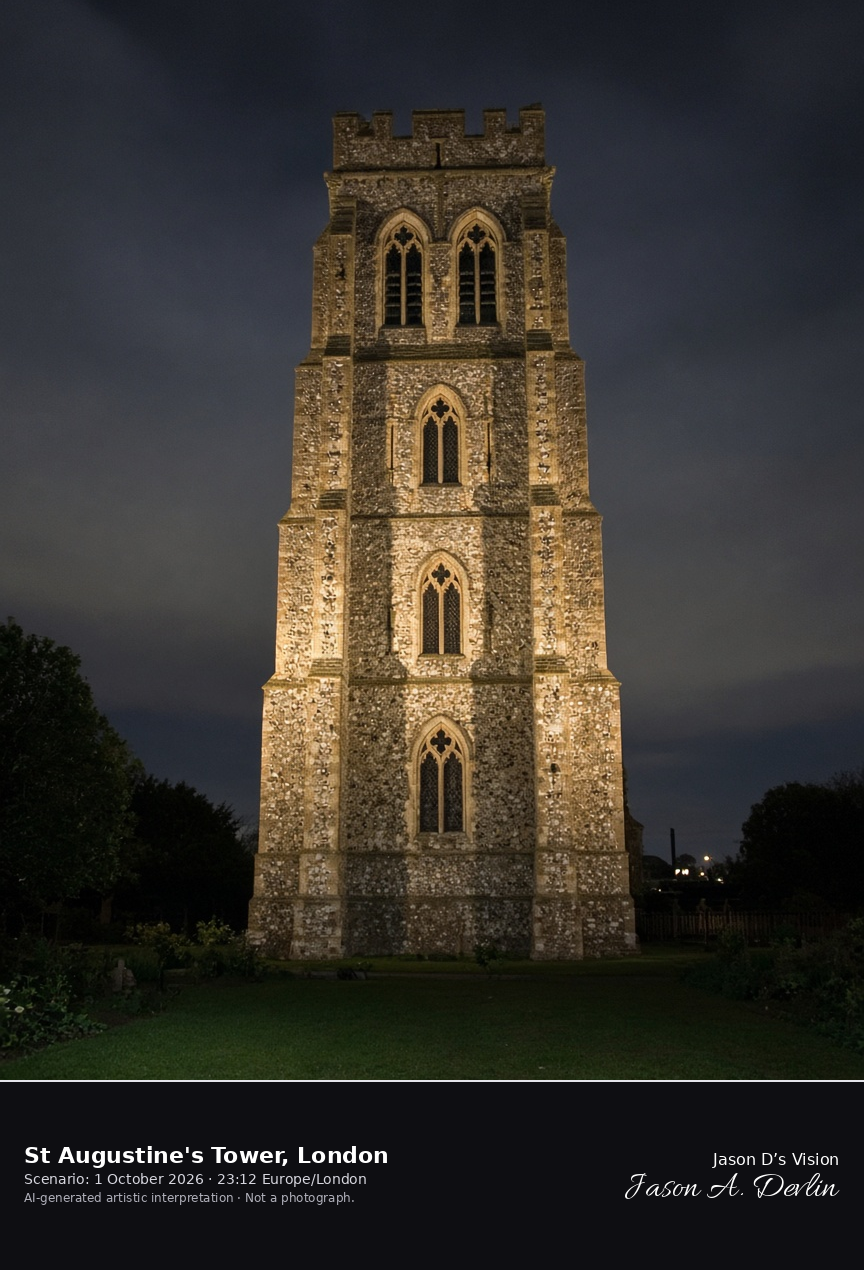
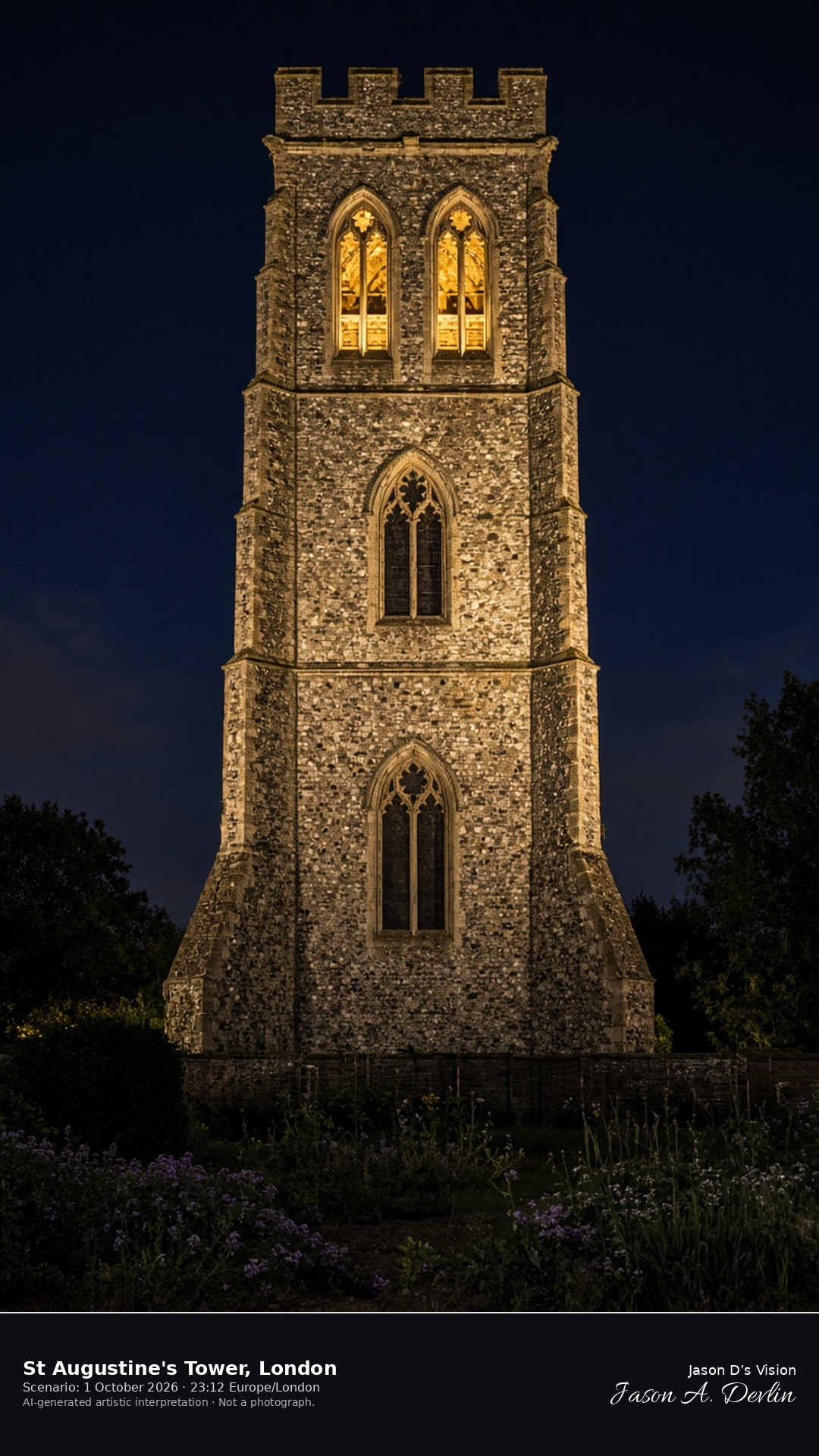
St Augustine's Tower, London · AI-generated artistic interpretation
In St John's Church Gardens, St Augustine's Tower stands on its own, a ragstone tower of four stages with diagonal buttresses, traceried bell openings, and a battlemented top. The medieval church it served was taken down in 1798, so there is no nave. It is a clear night, about 16.4°C, dry, and the sun is below the horizon. Open-Meteo valid time is 2026-10-01T23:00 Europe/London on 1 October. This is not a verified on-site observation.
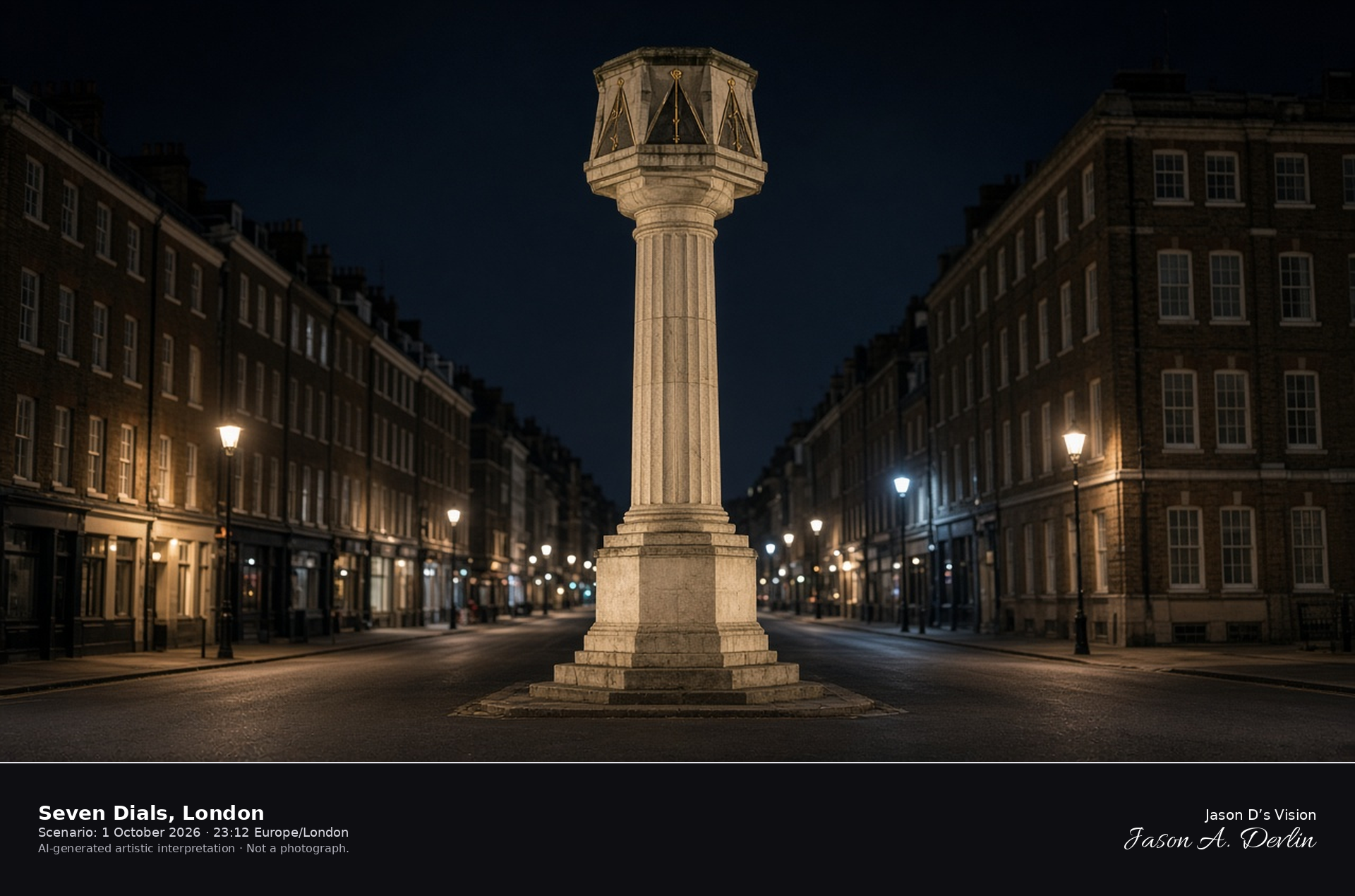
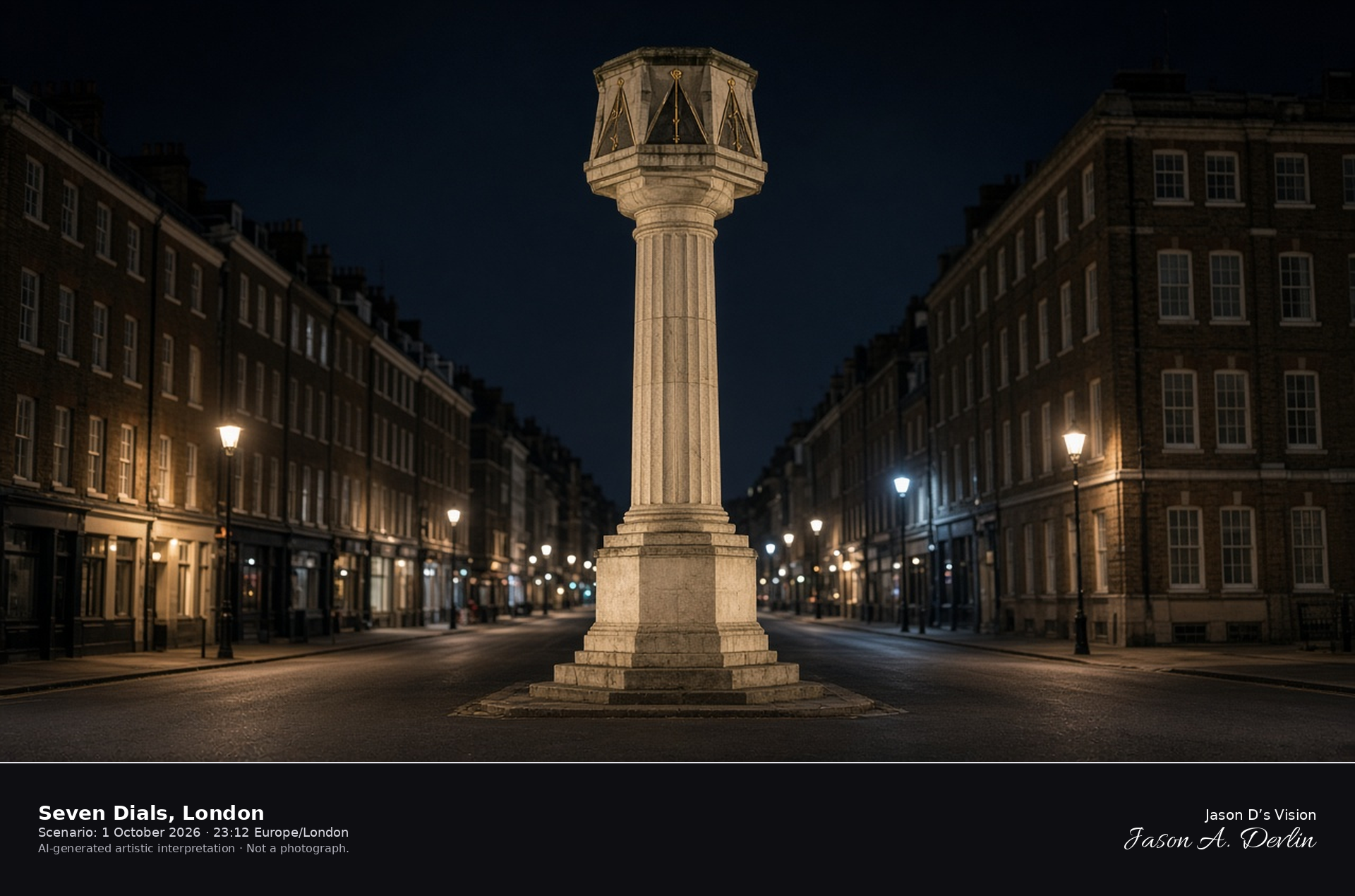
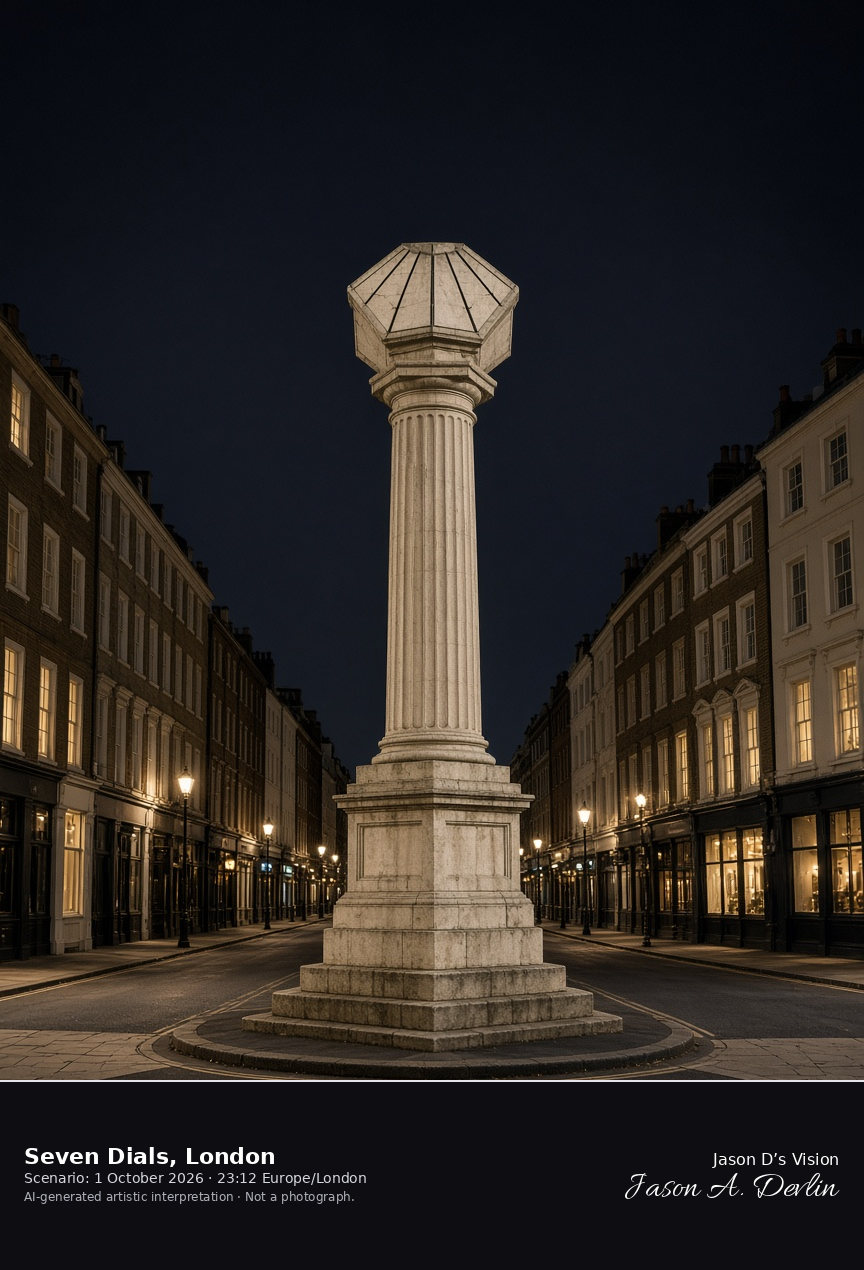
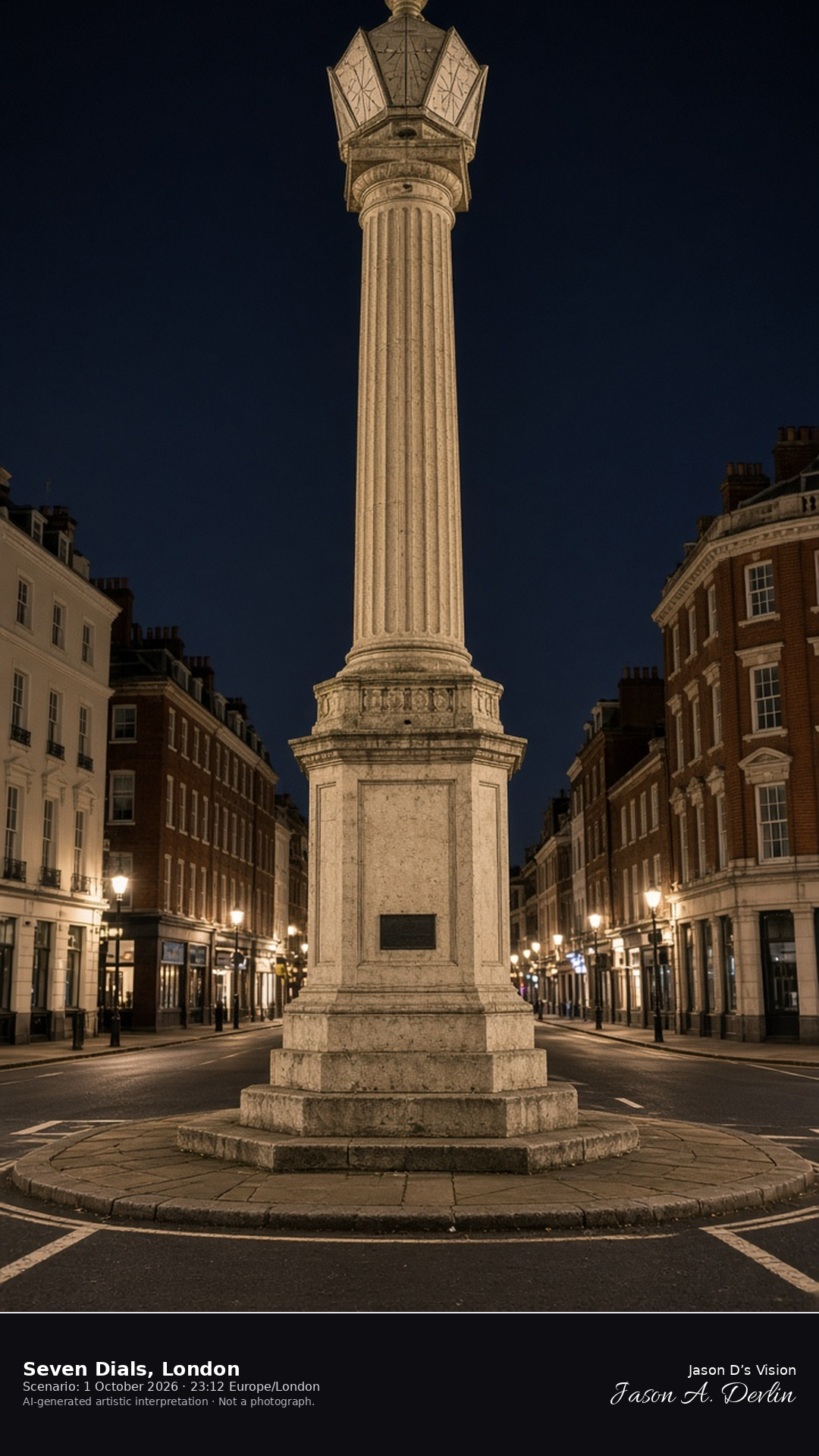
Seven Dials, London · AI-generated artistic interpretation
At the junction the Seven Dials pillar is a Portland-stone Doric column on a pedestal, topped by a block of six sundial faces. Streets run away from it. There is no figure on the capital and no gilded urn. It is a clear night, about 15.9°C, dry, and the sun is below the horizon. Open-Meteo valid time is 2026-10-01T23:00 Europe/London on 1 October. This is not a verified on-site observation.
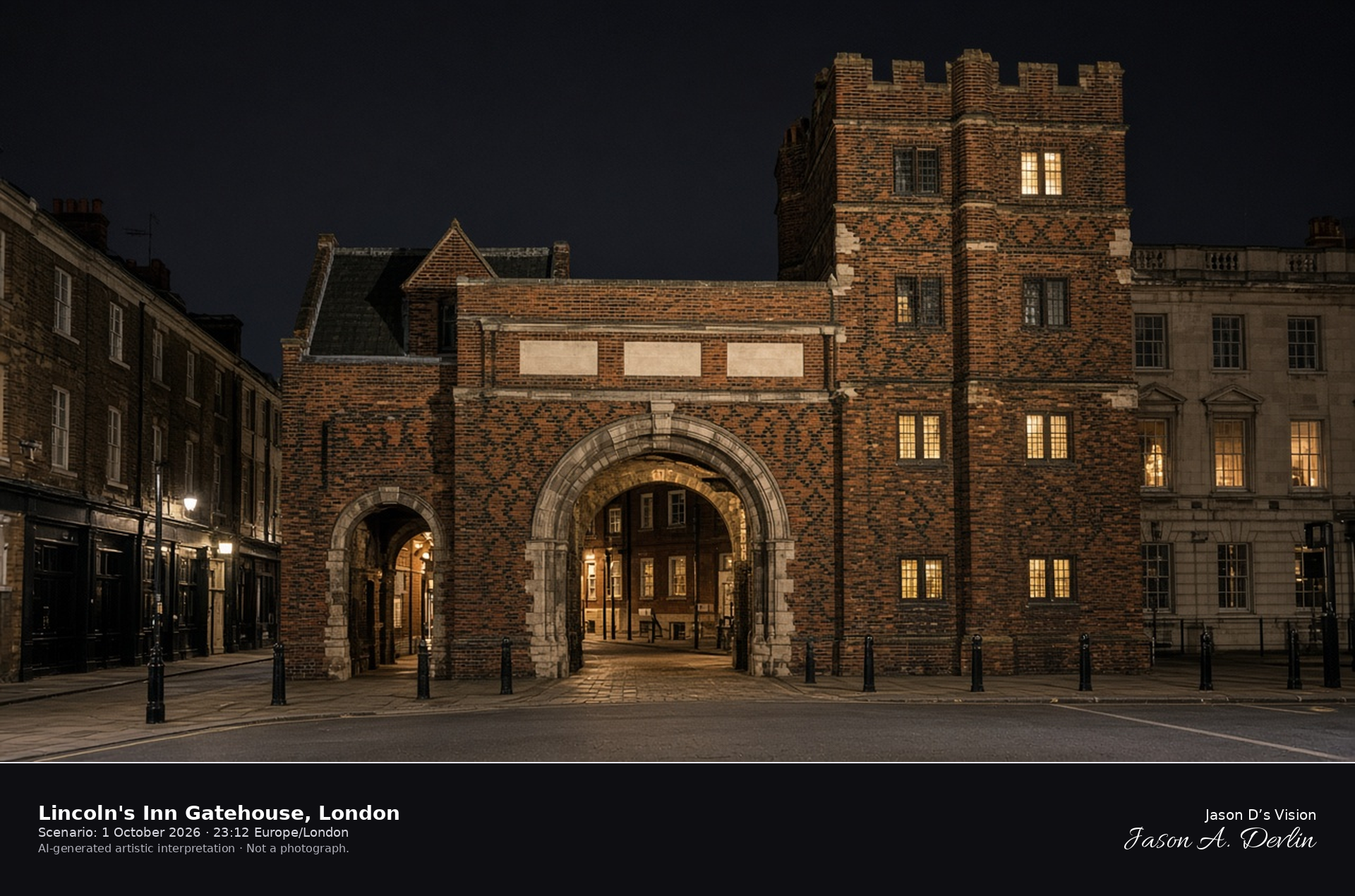
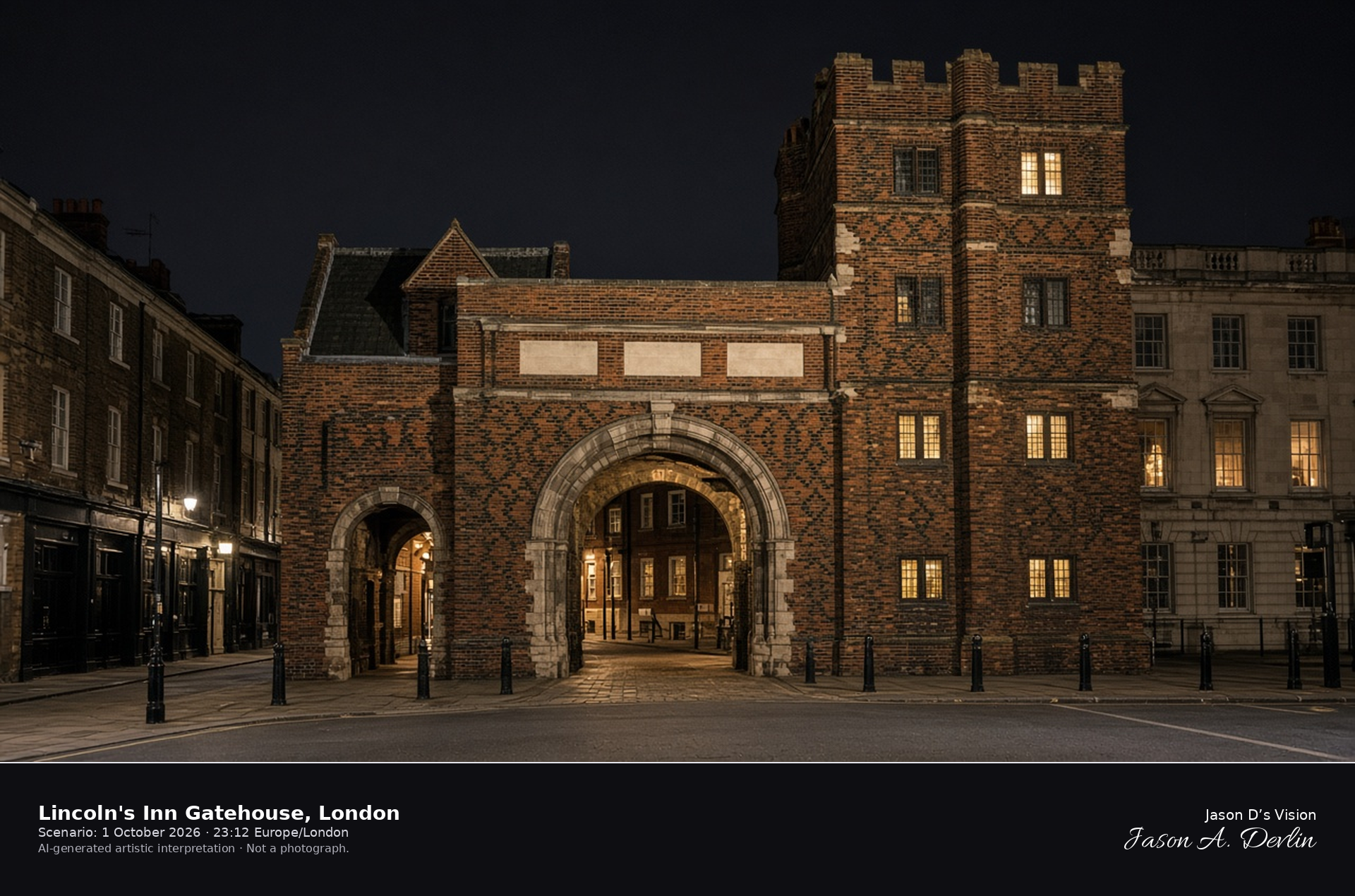
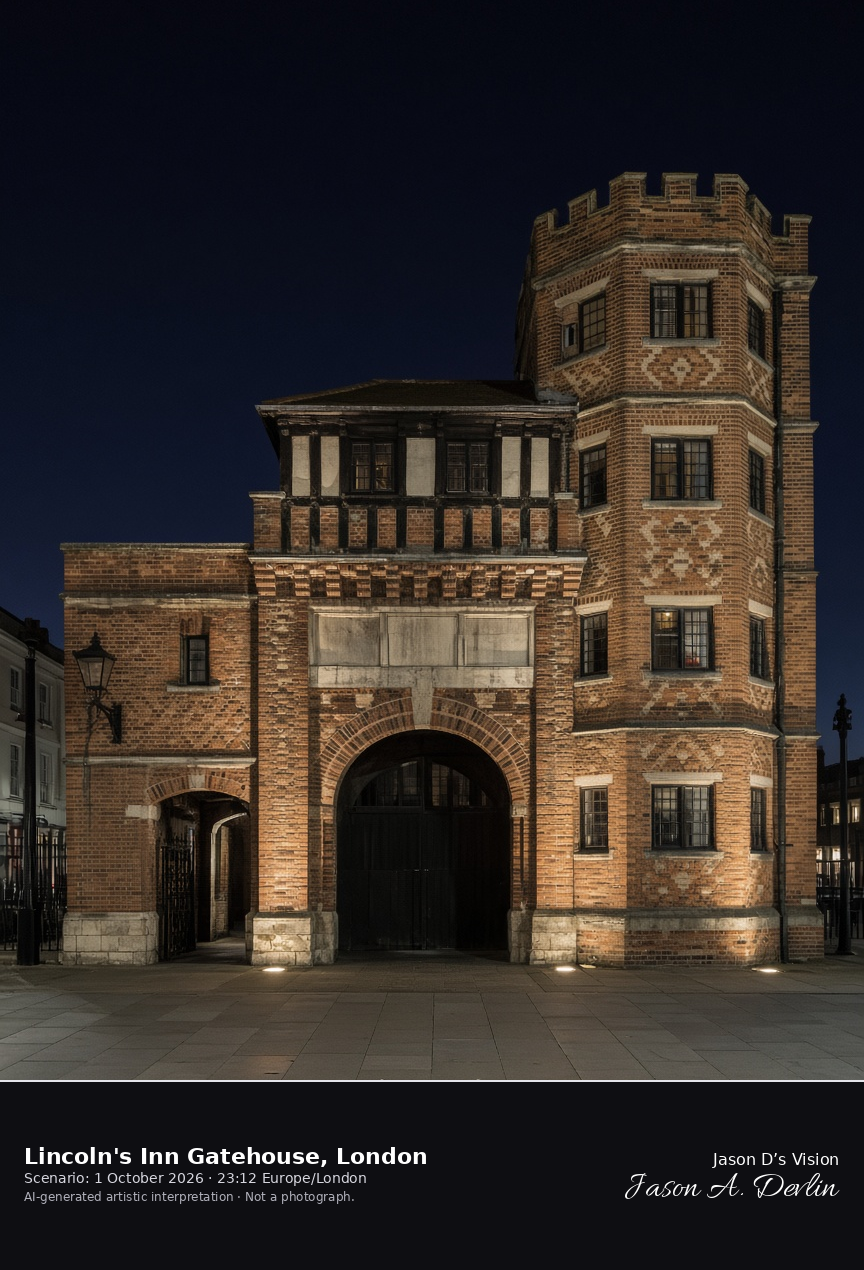
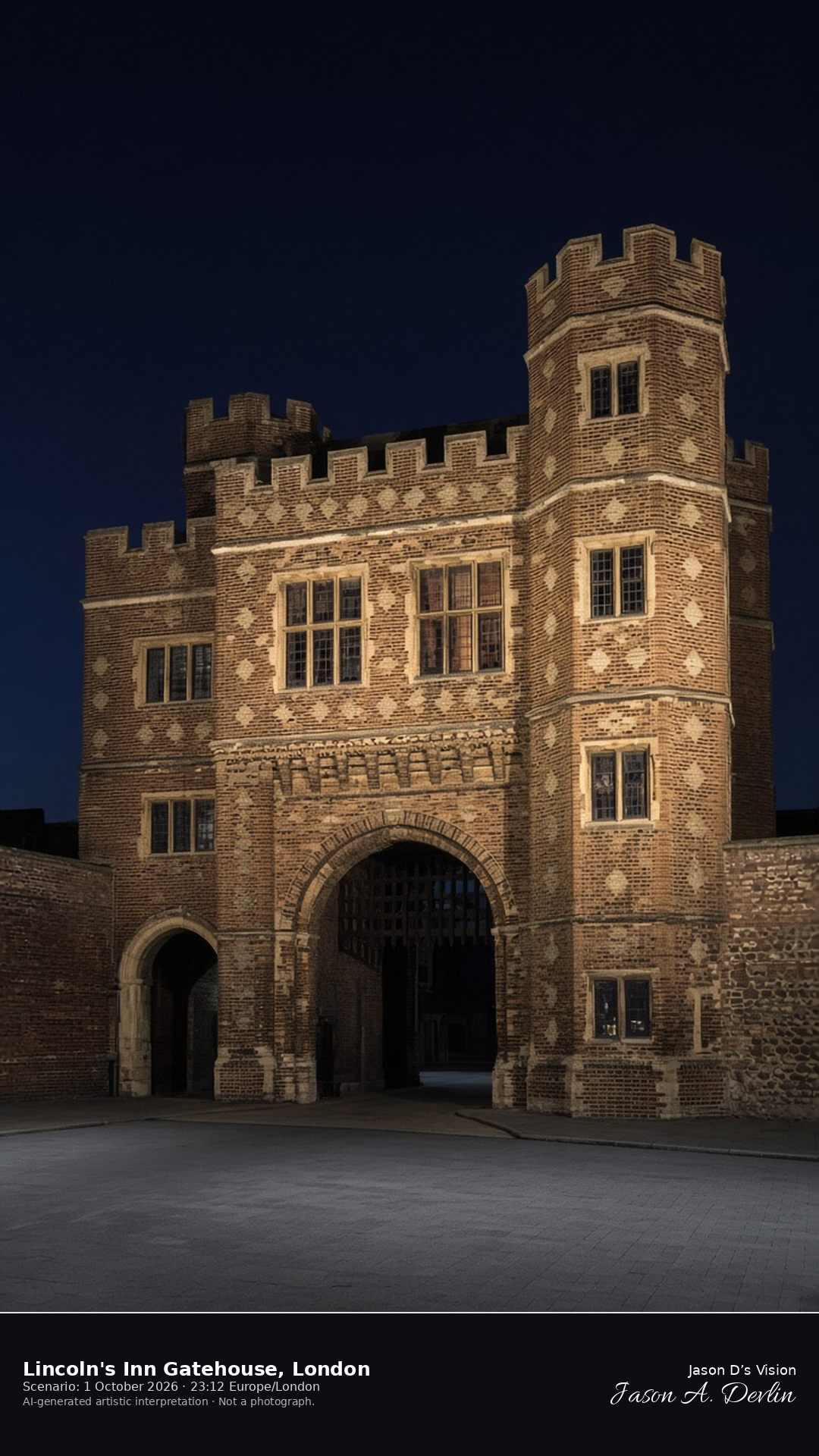
Lincoln's Inn Gatehouse, London · AI-generated artistic interpretation
From Chancery Lane the Lincoln's Inn Gatehouse is a brown-brick Tudor gate, a carriage arch beside a narrower passage, with a taller brick tower rising on the right. Diaper patterns run through the brick. It is not the stone clock tower of the Maughan Library. It is a clear night, about 16.1°C, dry, and the sun is below the horizon. Open-Meteo valid time is 2026-10-01T23:00 Europe/London on 1 October. This is not a verified on-site observation.
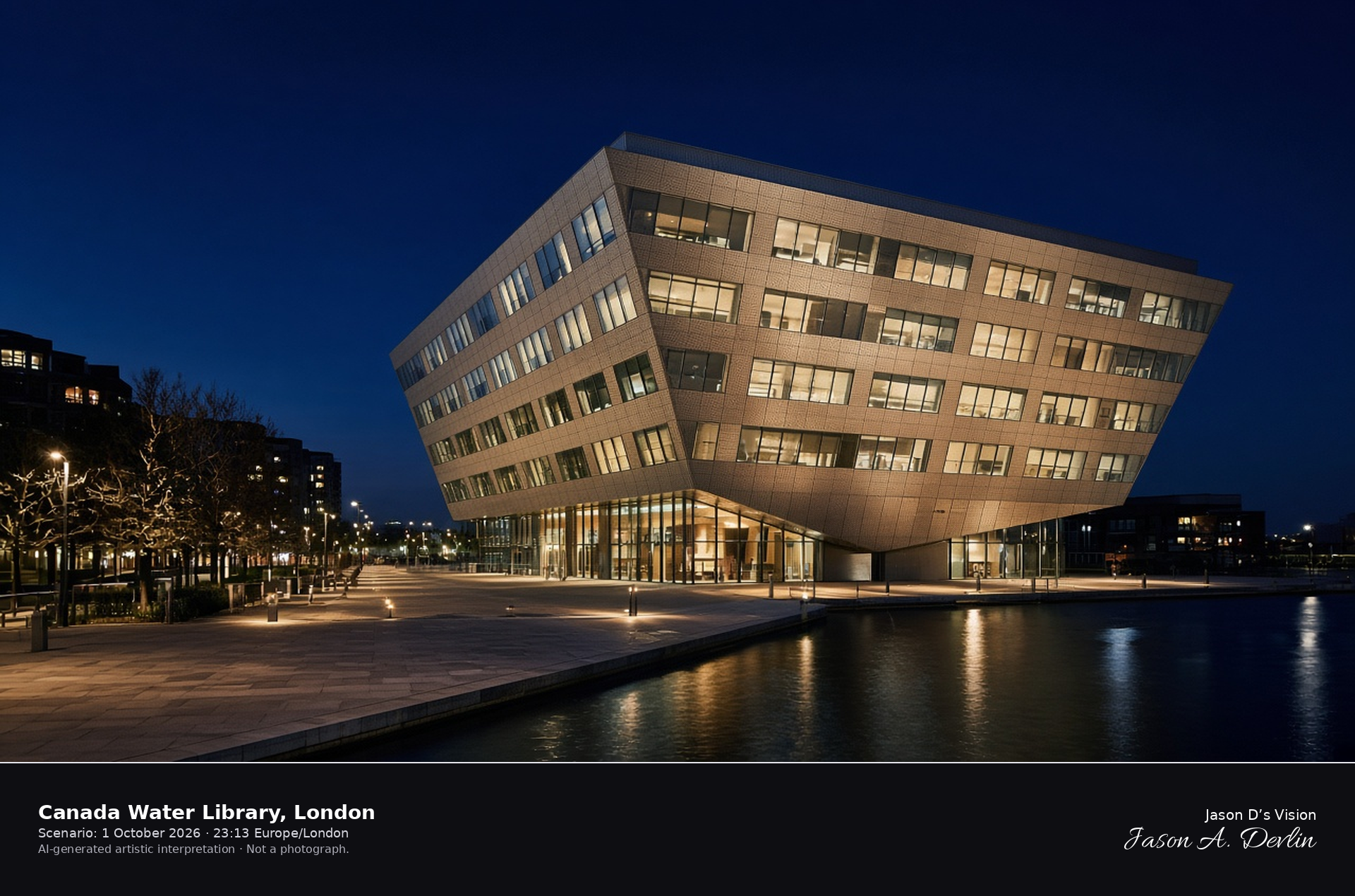
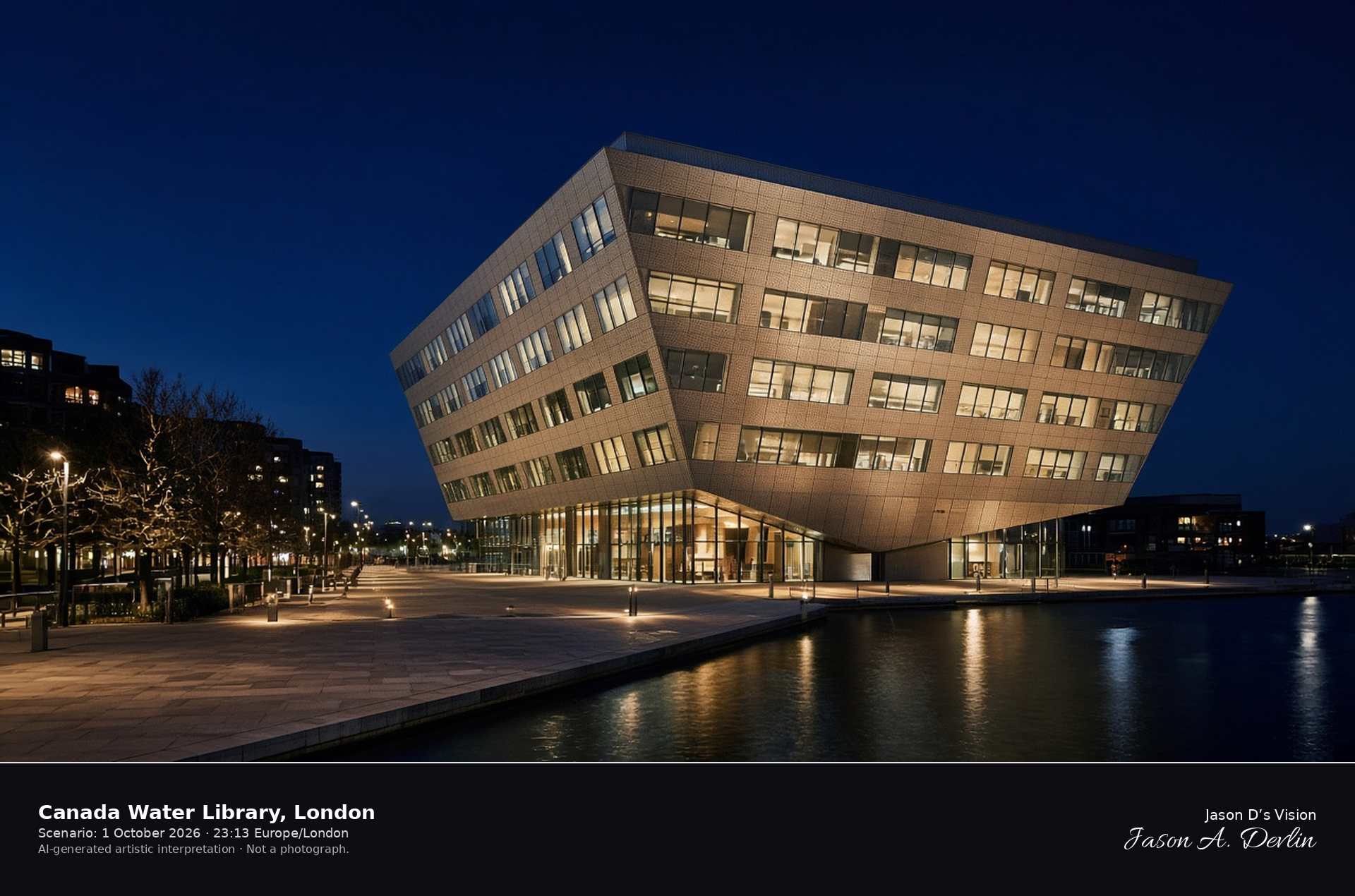
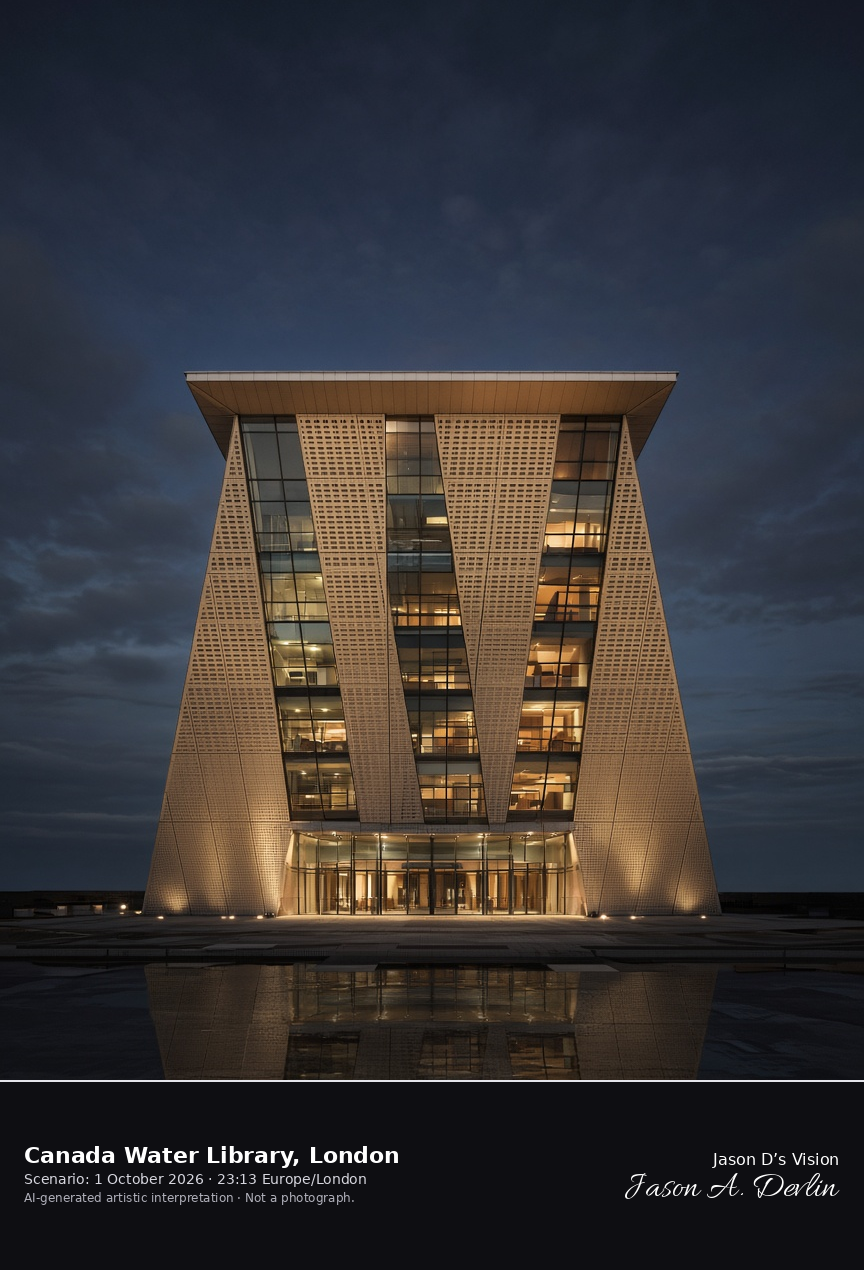
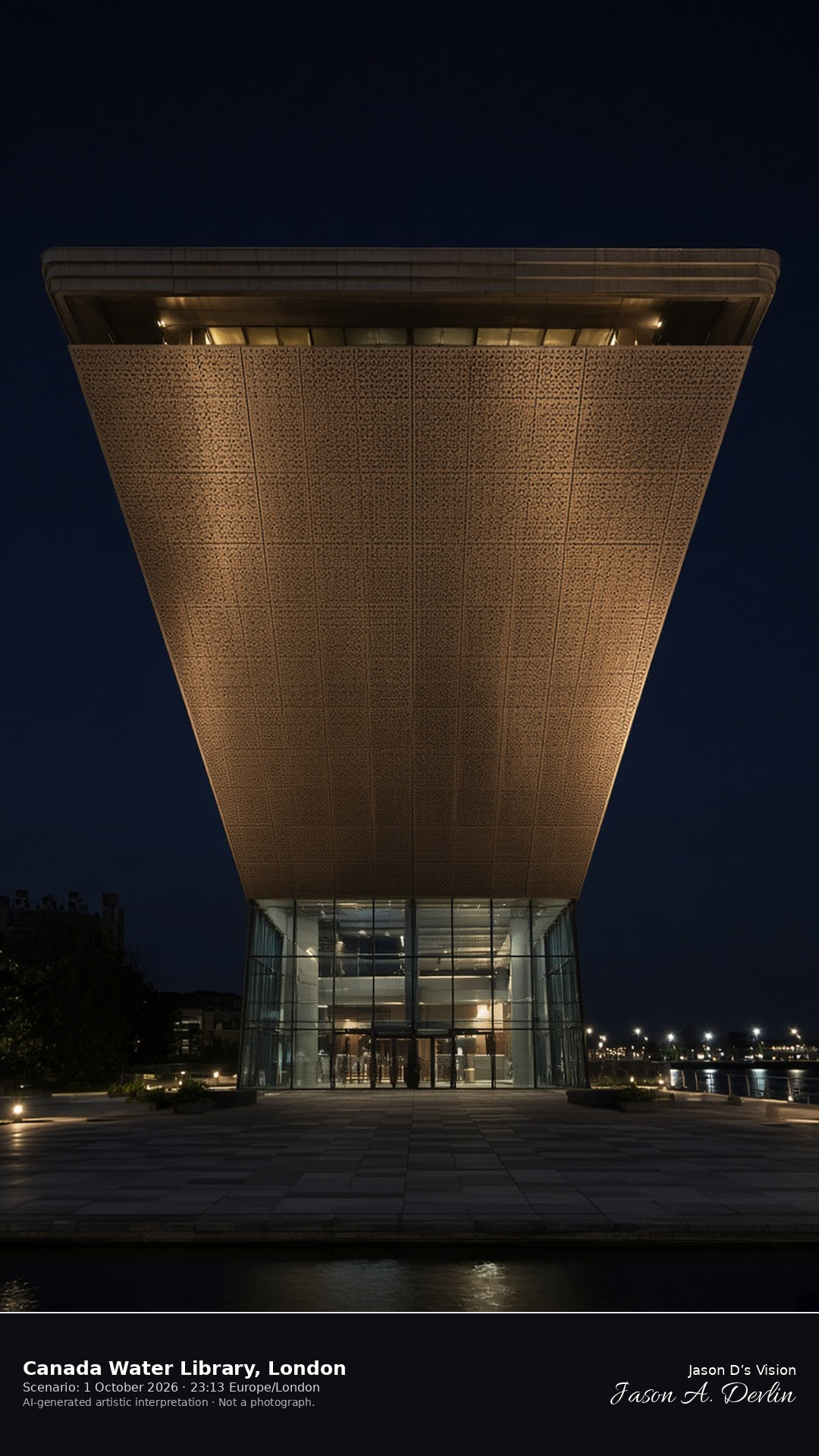
Canada Water Library, London · AI-generated artistic interpretation
From the plaza Canada Water Library is an inverted pyramid, narrow at the glass base and overhanging above, clad in light bronze perforated metal. The basin sits to one side. It is not a timber cone and not a glass tower. It is a clear night, about 16.2°C, dry, and the sun is below the horizon. Open-Meteo valid time is 2026-10-01T23:00 Europe/London on 1 October. This is not a verified on-site observation.
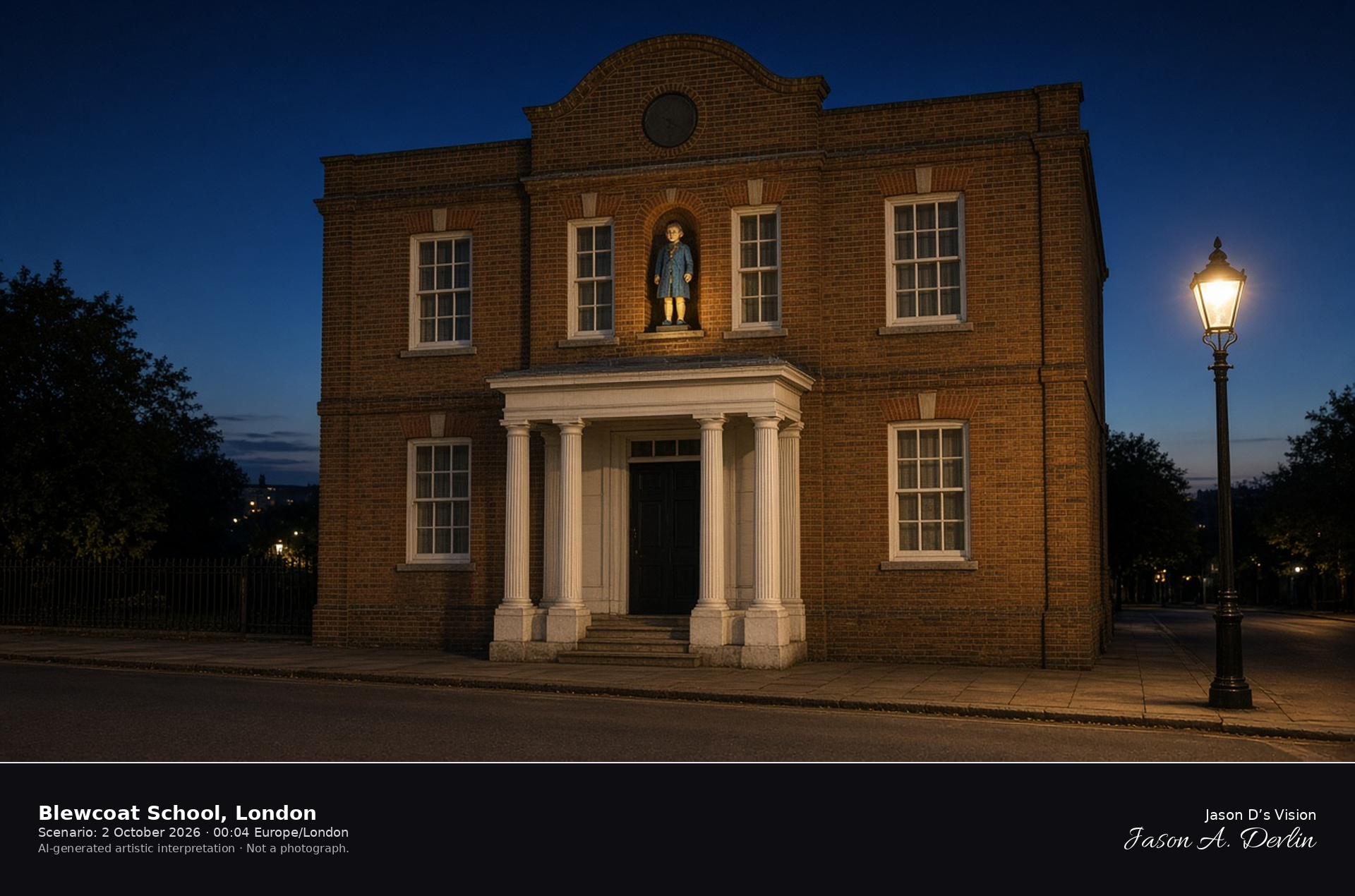
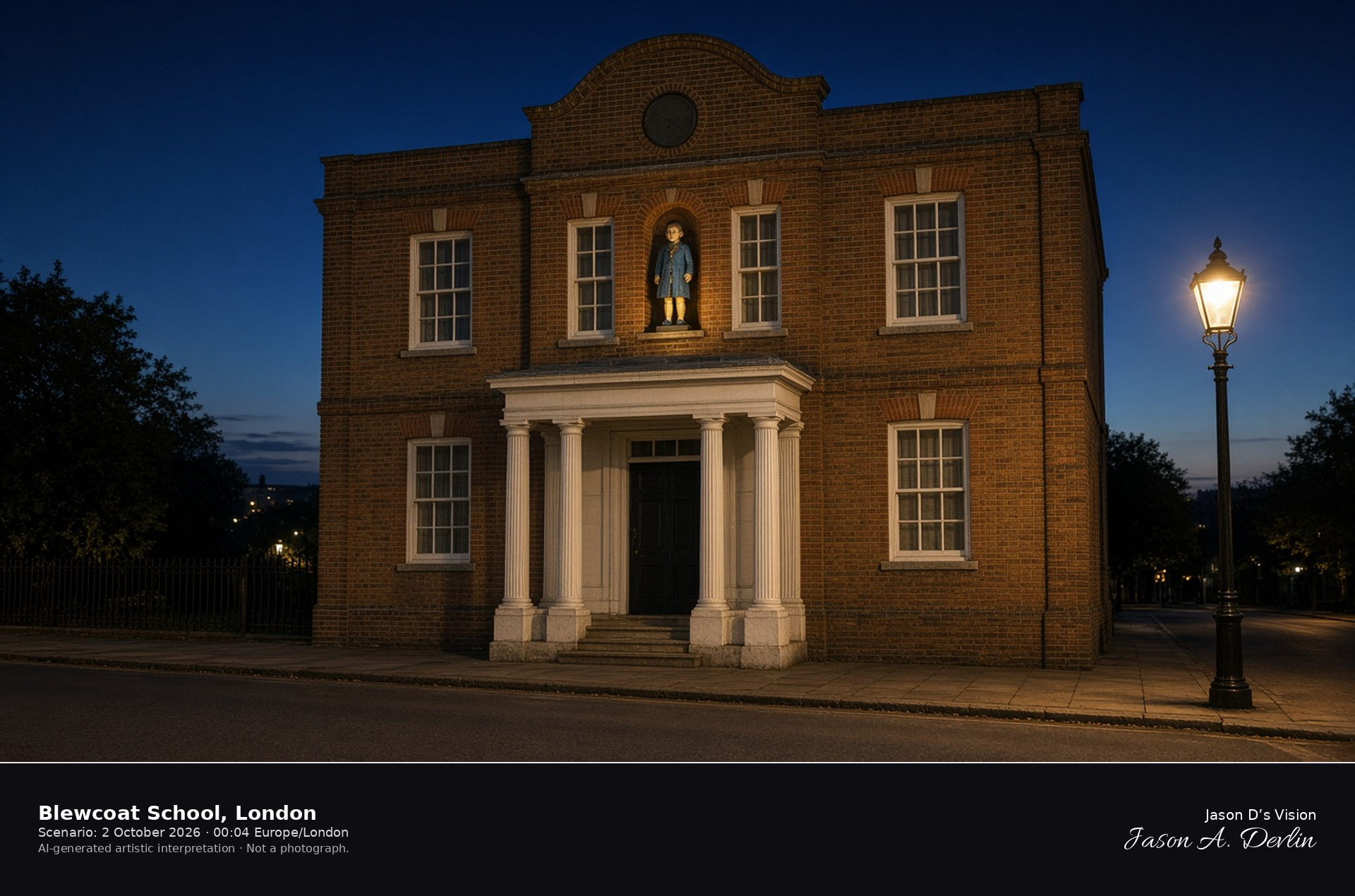
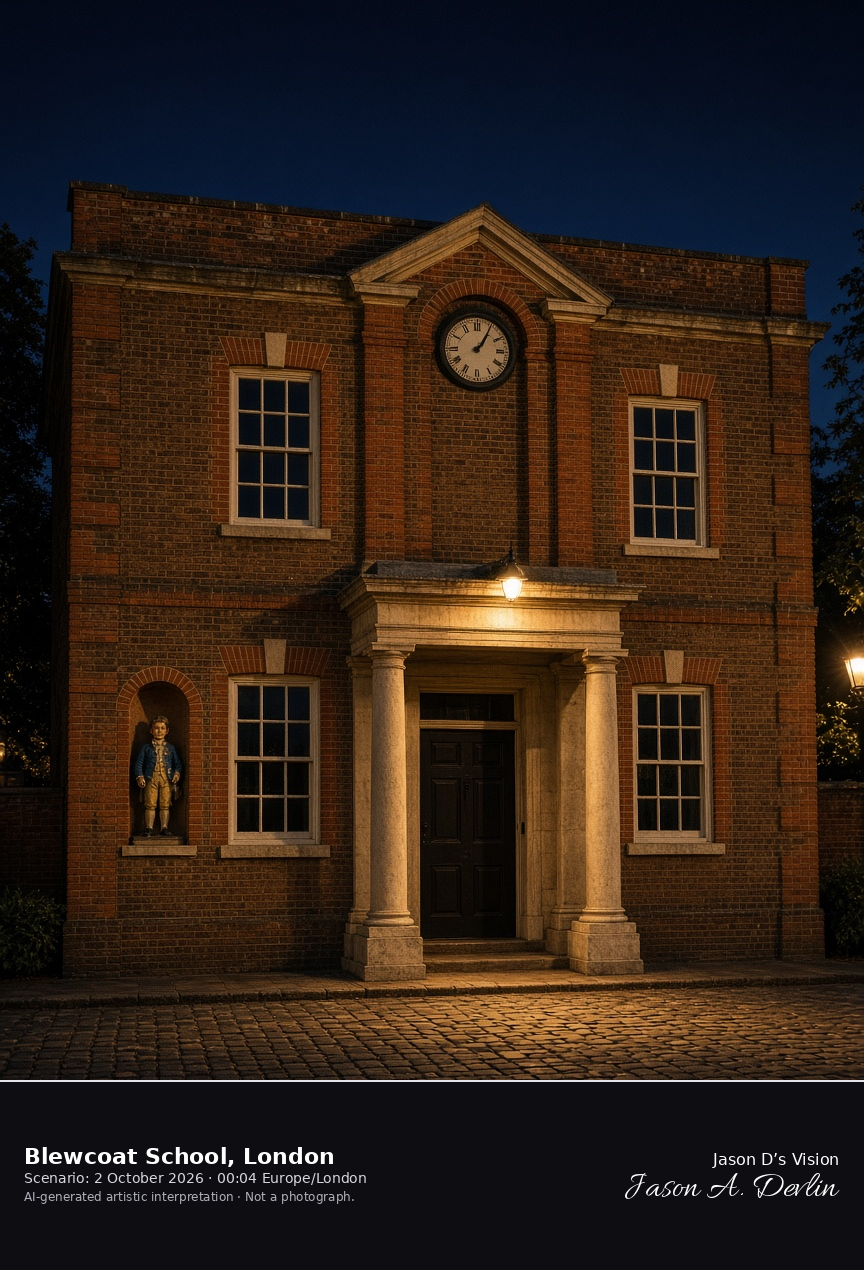
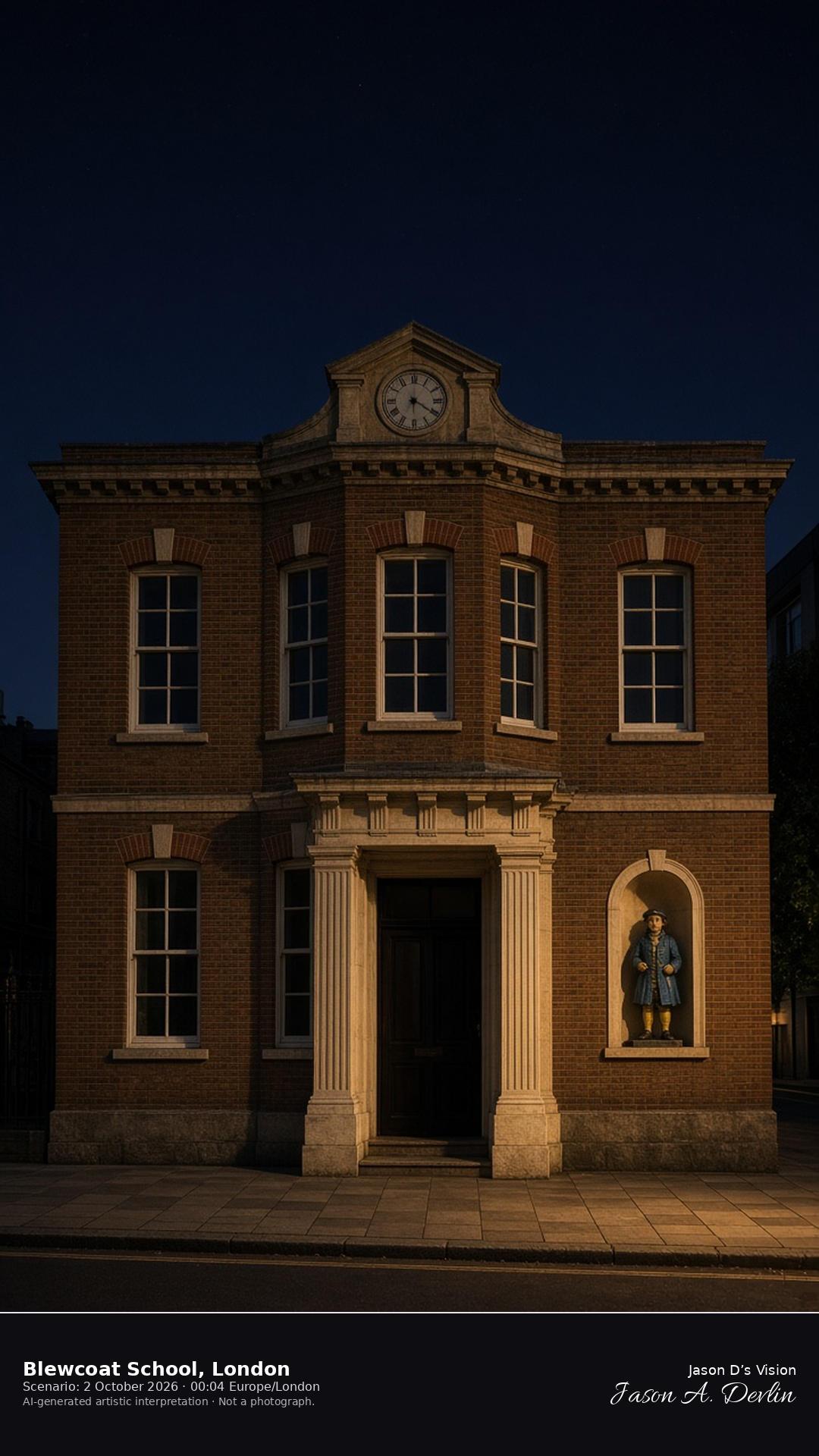
Blewcoat School, London · AI-generated artistic interpretation
From Caxton Street the Blewcoat School is a small brown-brick block of 1709, three bays wide, with a Doric porch and a niche holding a scholar in a blue coat and yellow stockings. A clock and a split pediment finish the parapet. It is a clear night, about 15.0°C, dry, and the sun is below the horizon. Open-Meteo valid time is 2026-10-02T00:00 Europe/London on 2 October. This is not a verified on-site observation.
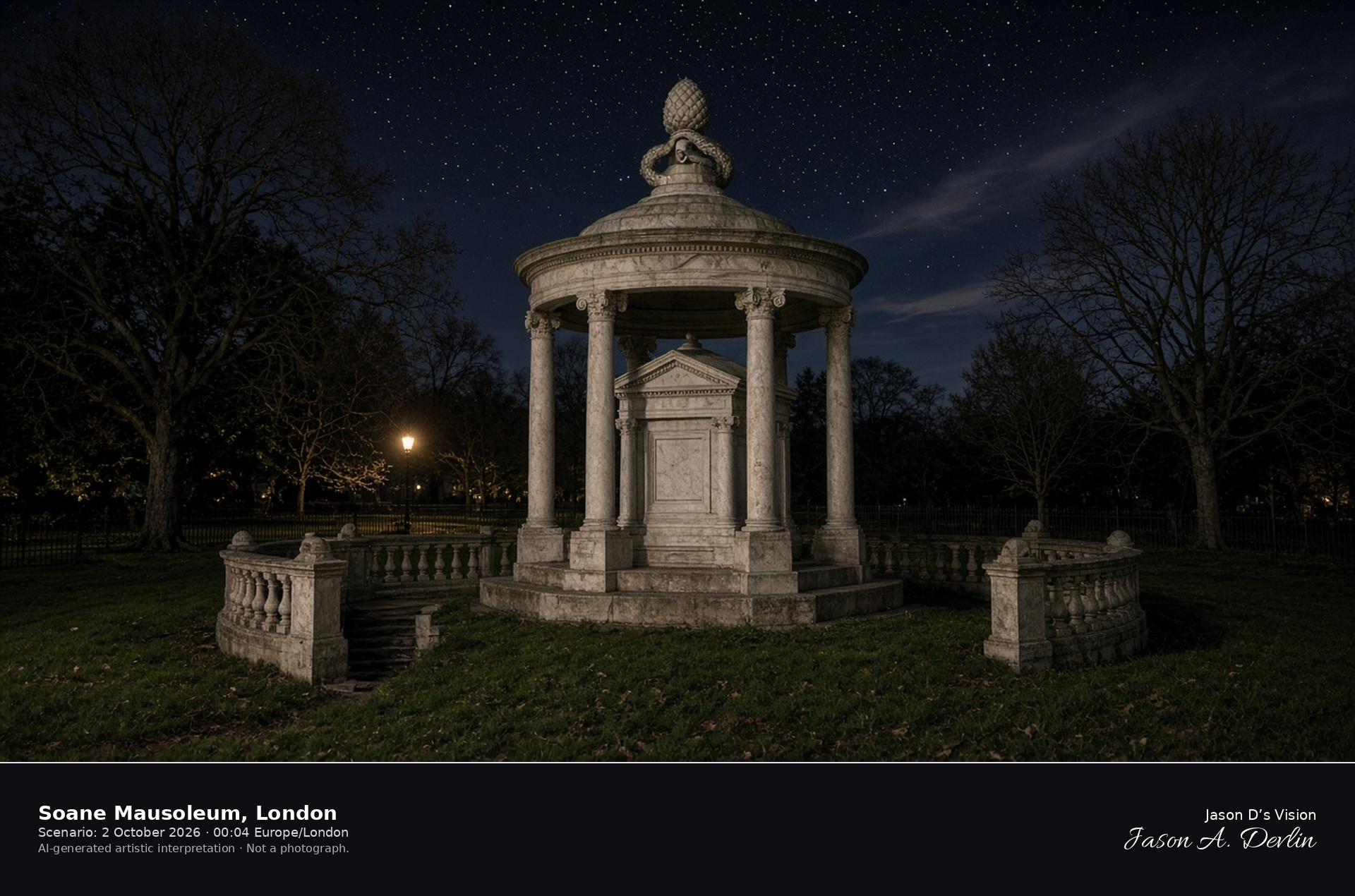
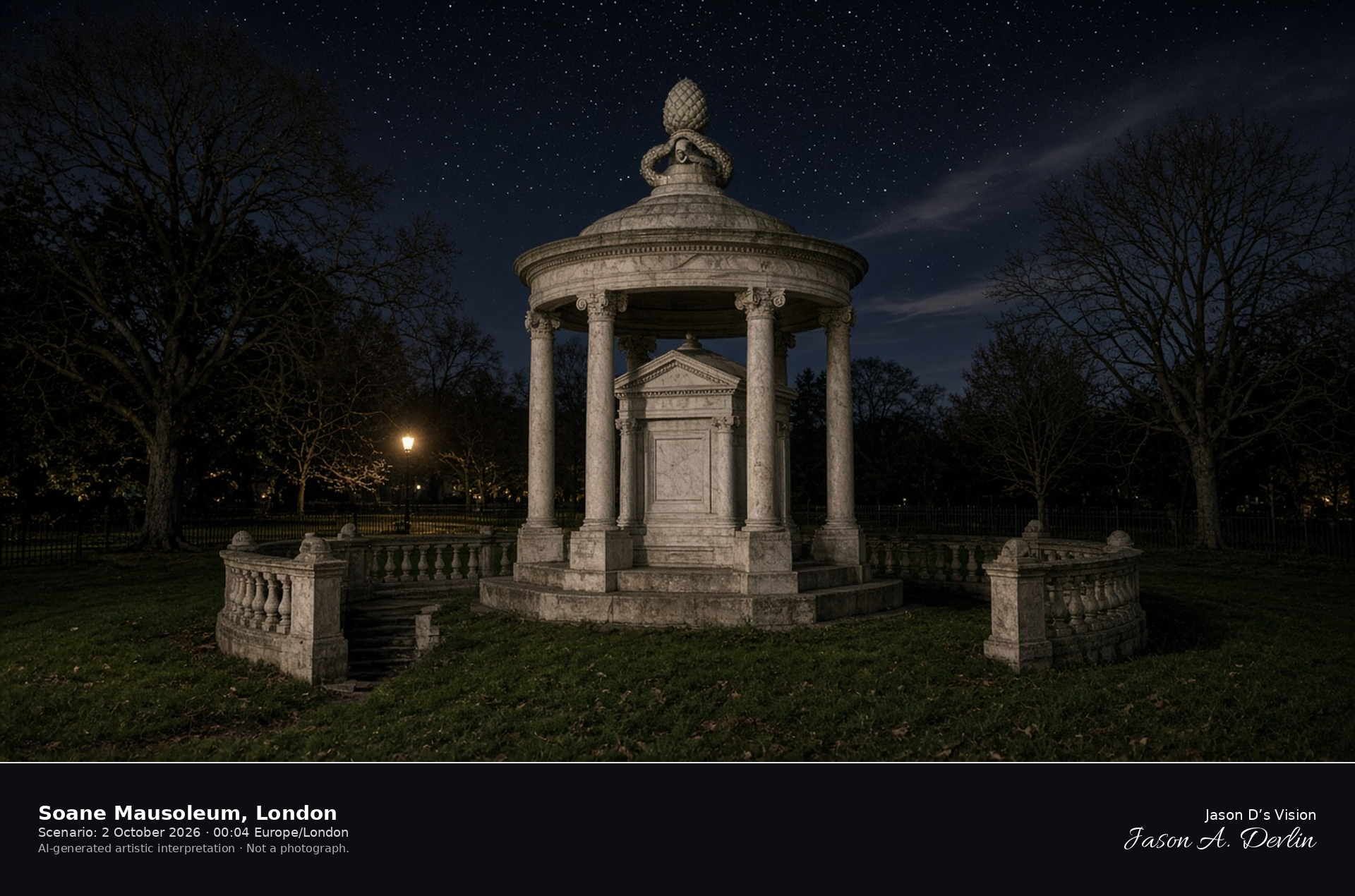
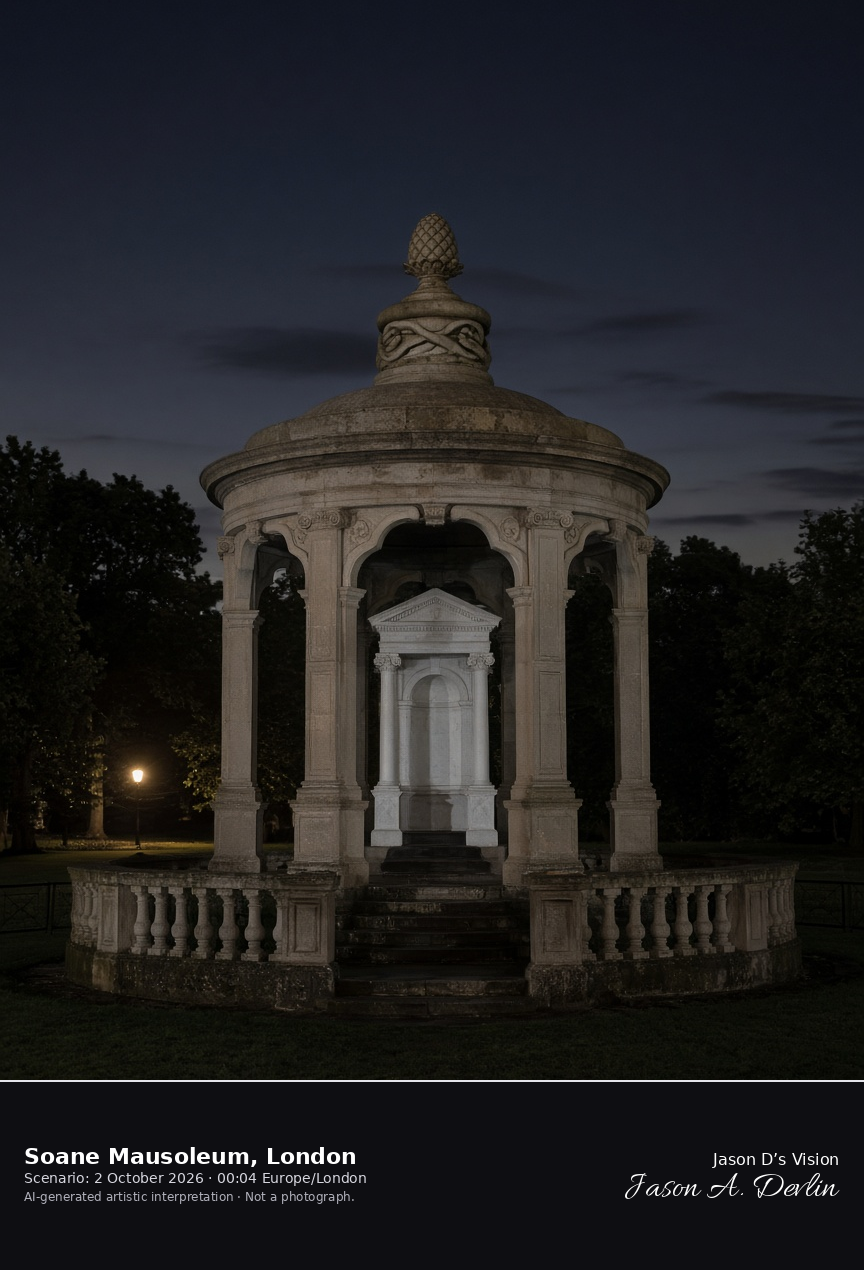
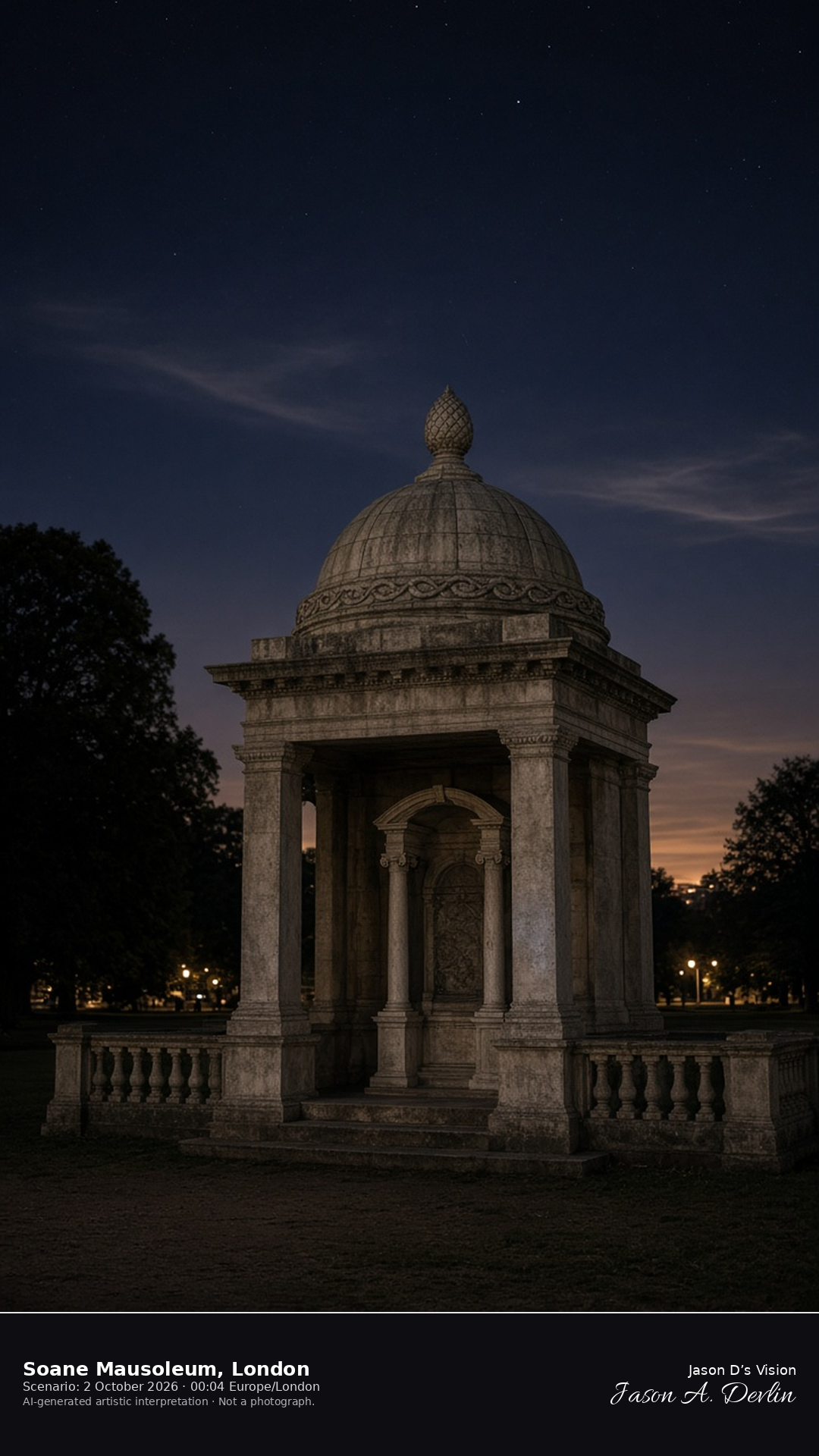
Soane Mausoleum, London · AI-generated artistic interpretation
In St Pancras Gardens the Soane mausoleum is a small Portland-stone canopy, a dome on four piers around a marble Ionic shrine, with a pineapple finial above a snake-banded drum. A low balustrade closes the plot. It is a mostly clear night, about 15.3°C, dry, and the sun is below the horizon. Open-Meteo valid time is 2026-10-02T00:00 Europe/London on 2 October. This is not a verified on-site observation.
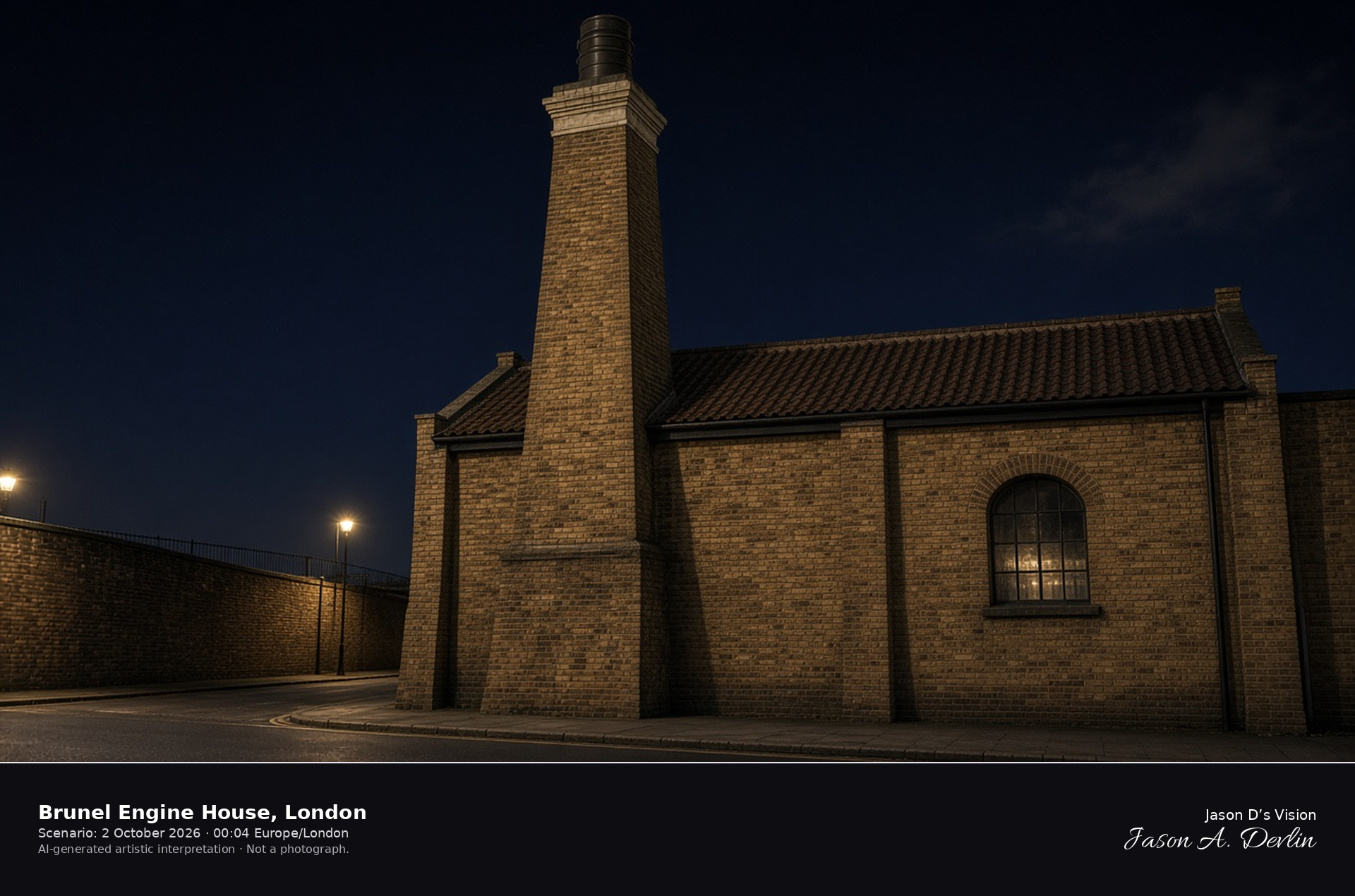
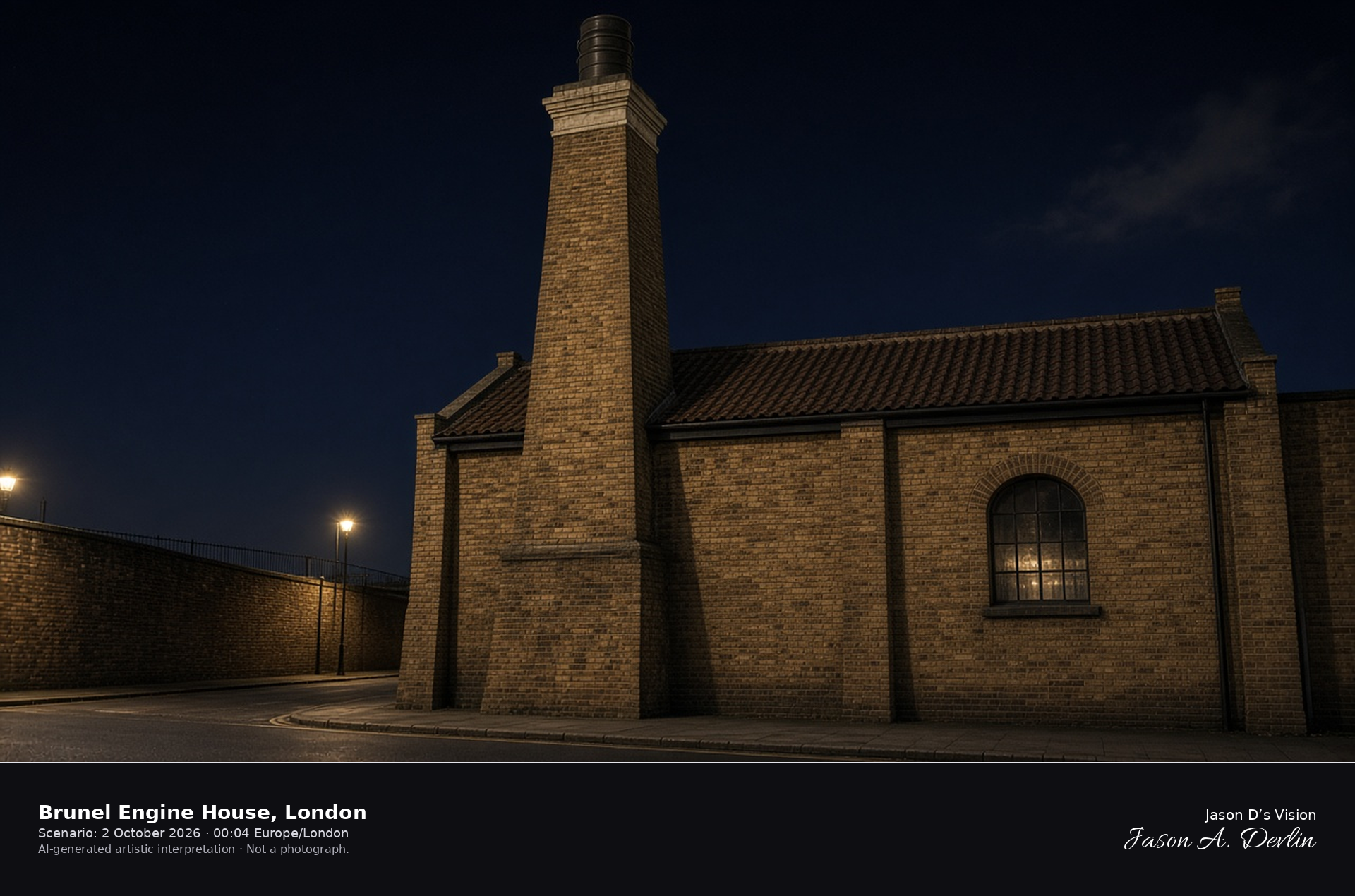
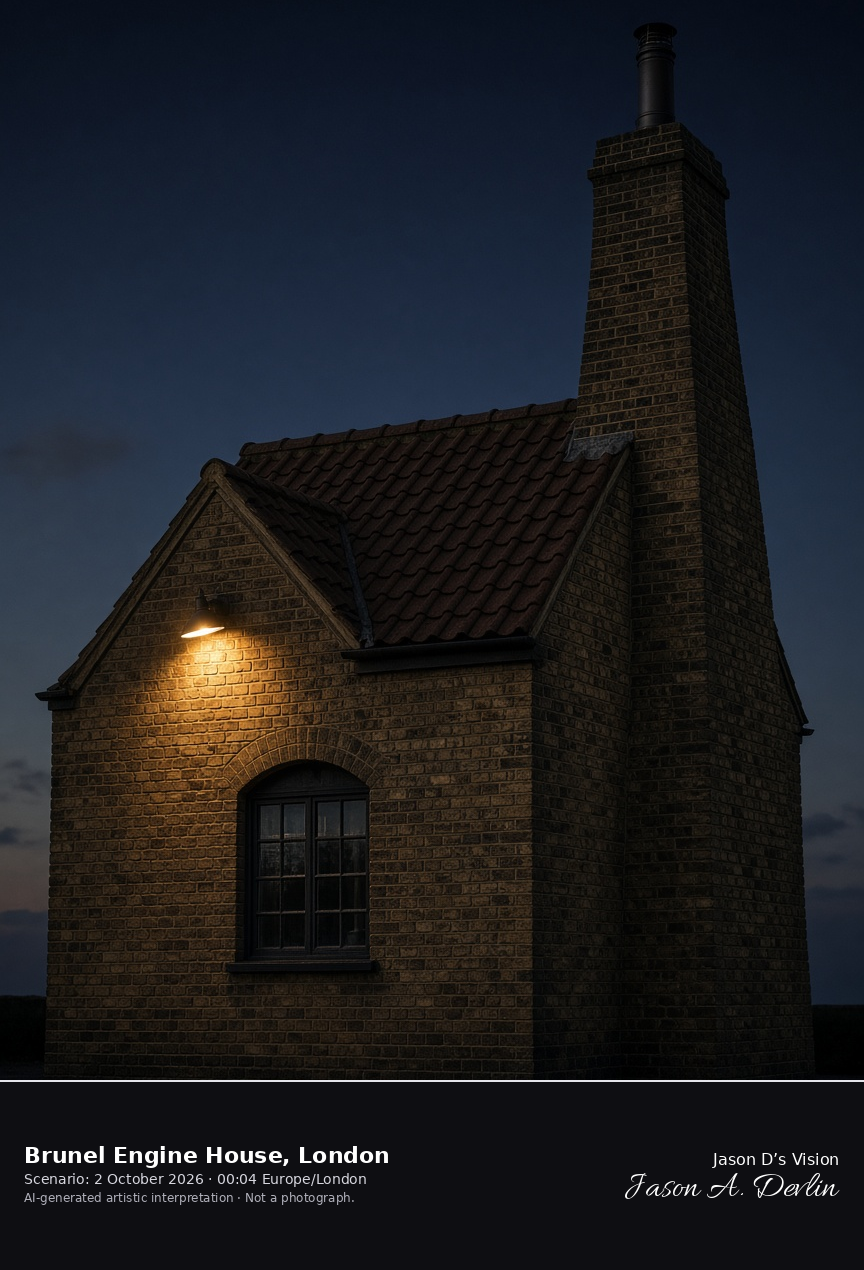
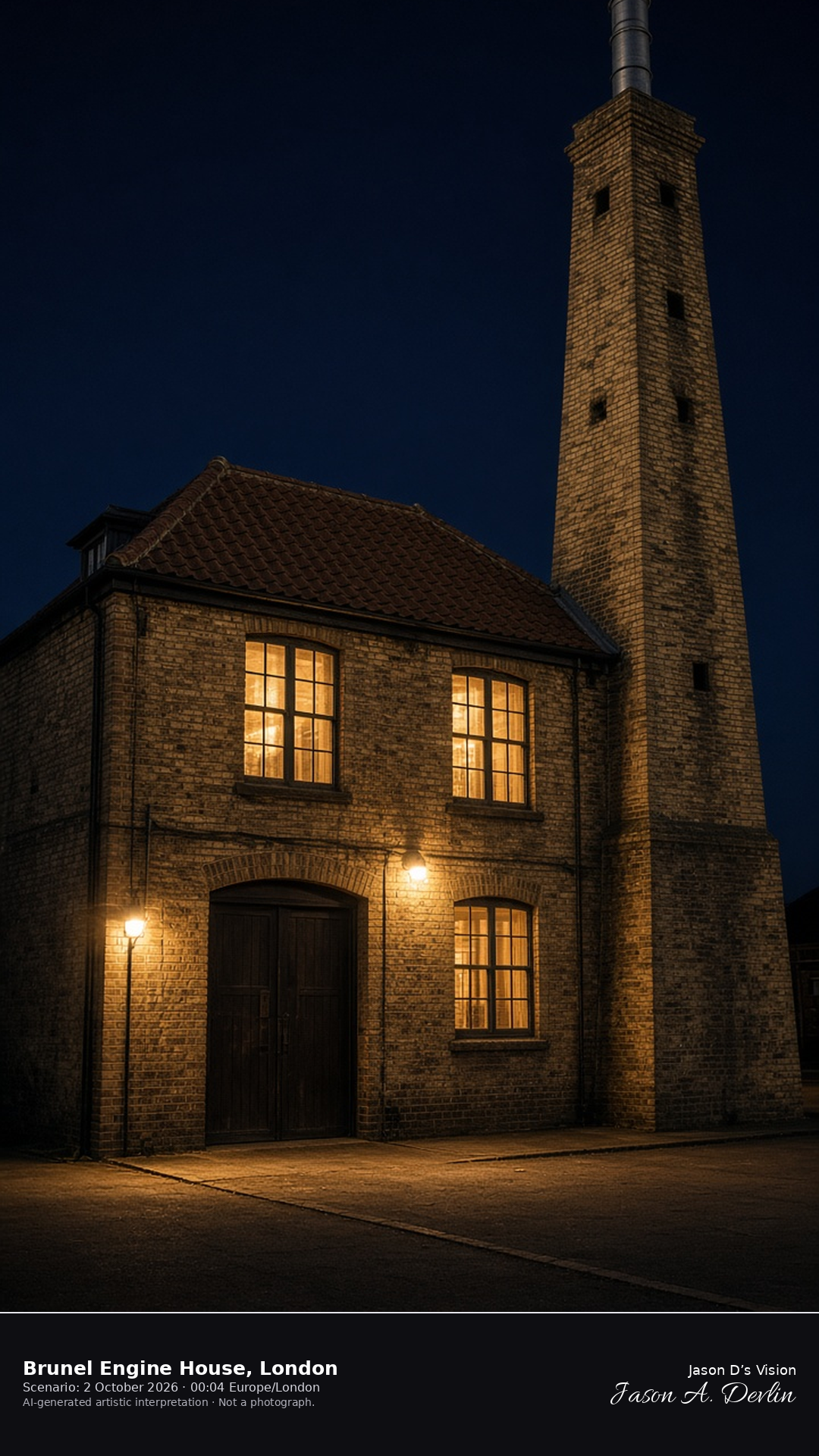
Brunel Engine House · AI-generated artistic interpretation
The Brunel Engine House at Rotherhithe housed machinery serving Marc Brunel’s Thames Tunnel, built beneath the river after years of difficult excavation. Opened in 1843, the tunnel was the first driven beneath a navigable river, and trains still pass through it today.
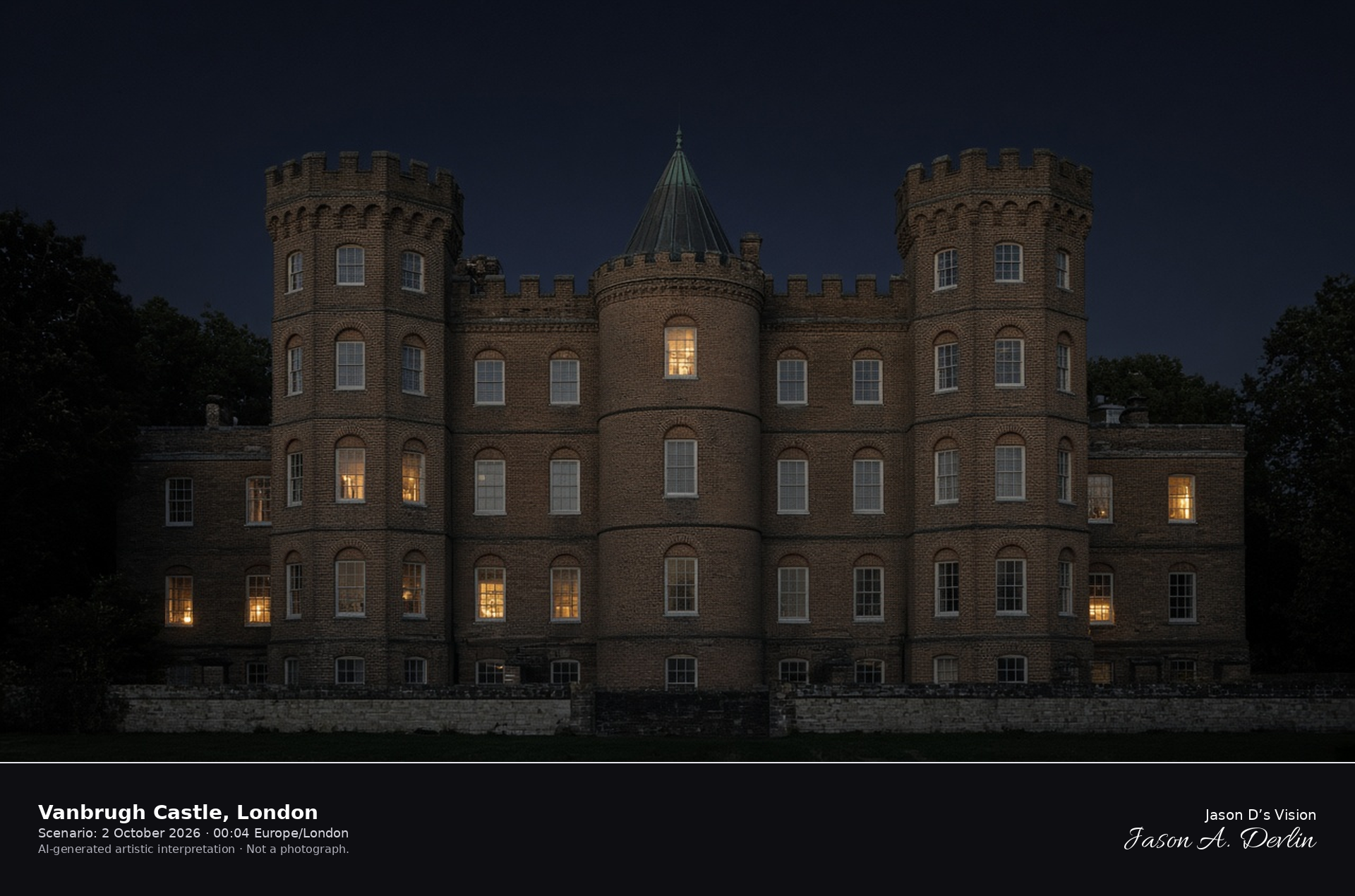
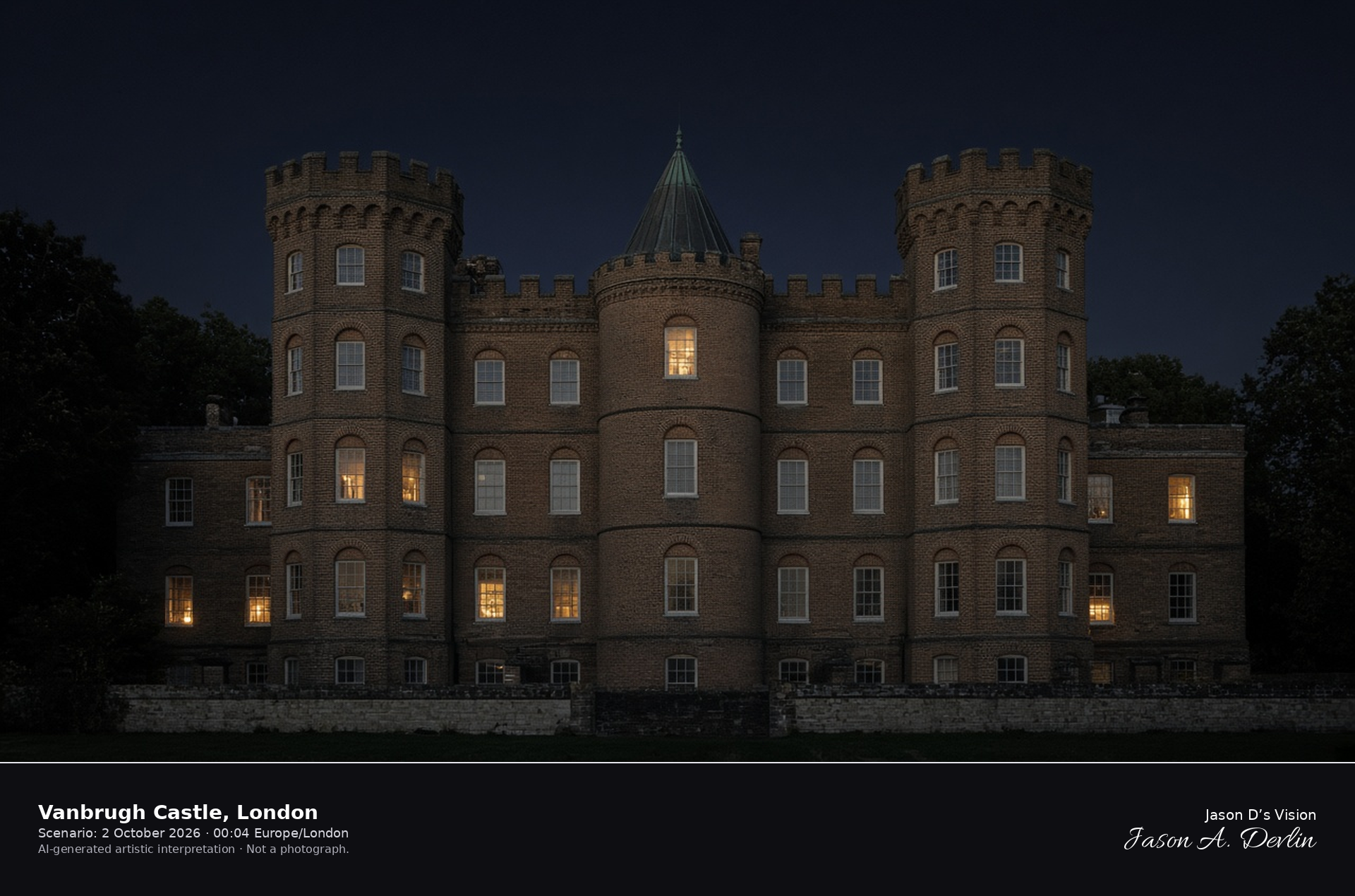
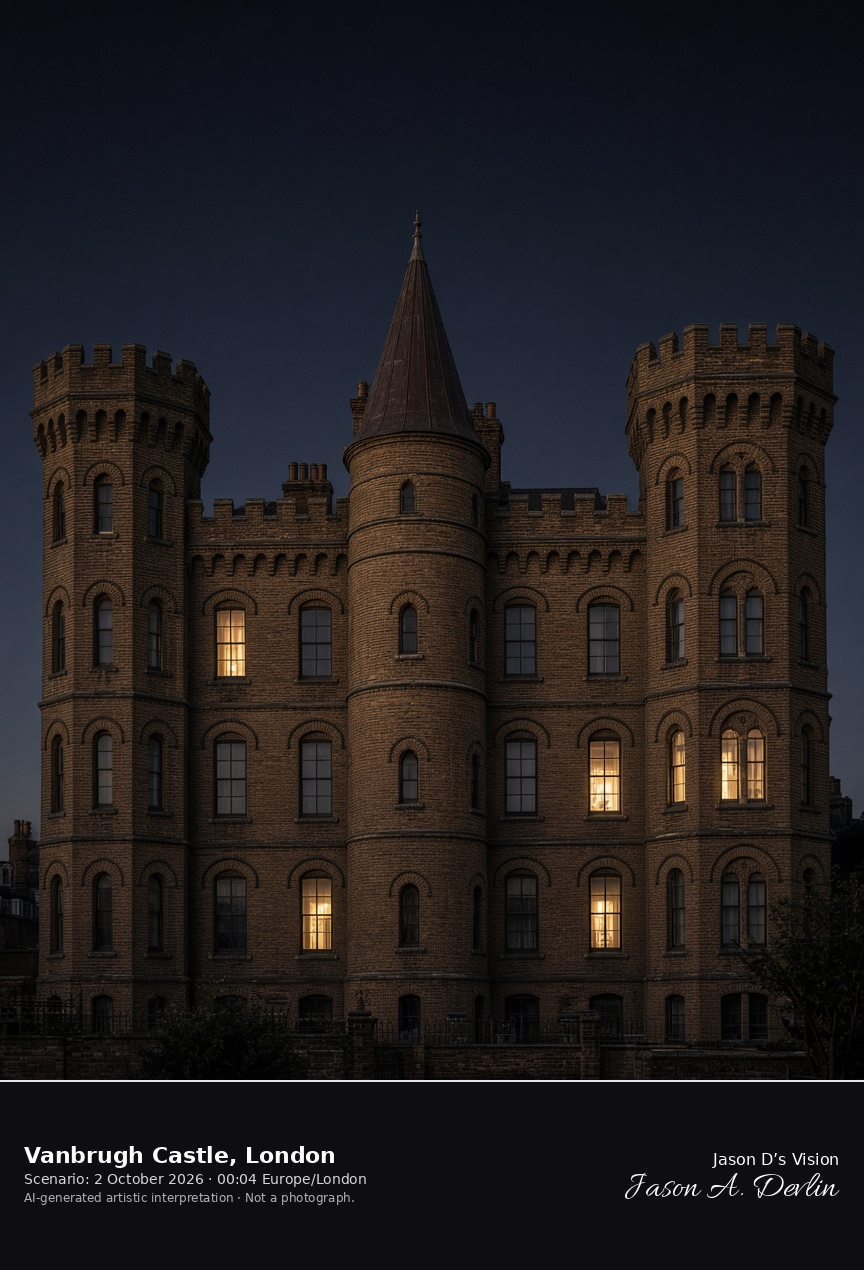
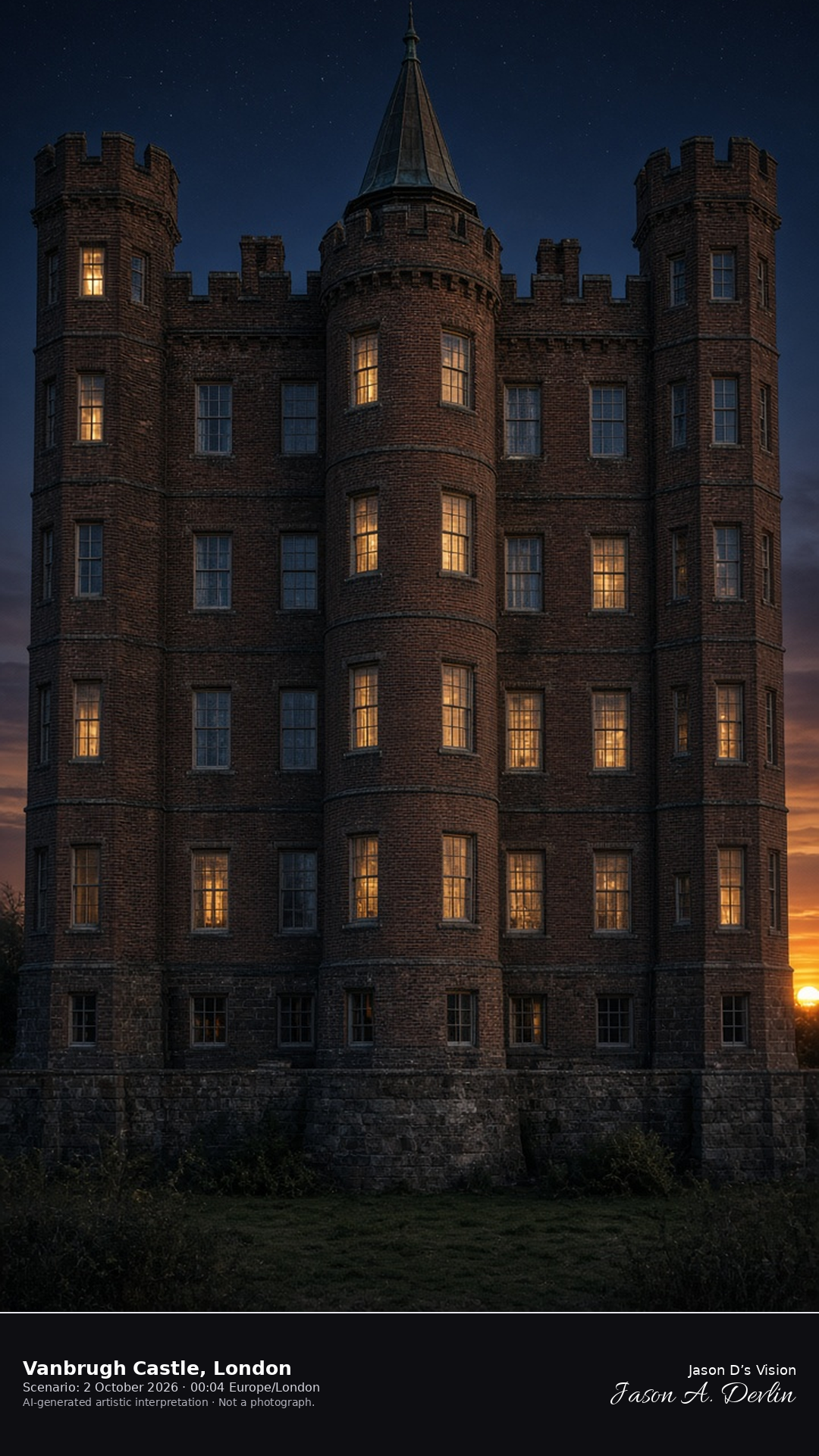
Vanbrugh Castle, London · AI-generated artistic interpretation
From Maze Hill, Vanbrugh Castle is a brown-brick house with a round tower under a copper cone and two square battlemented towers. The windows are narrow Georgian sashes, not arrow slits in a stone keep. It is a clear night, about 15.1°C, dry, and the sun is below the horizon. Open-Meteo valid time is 2026-10-02T00:00 Europe/London on 2 October. This is not a verified on-site observation.
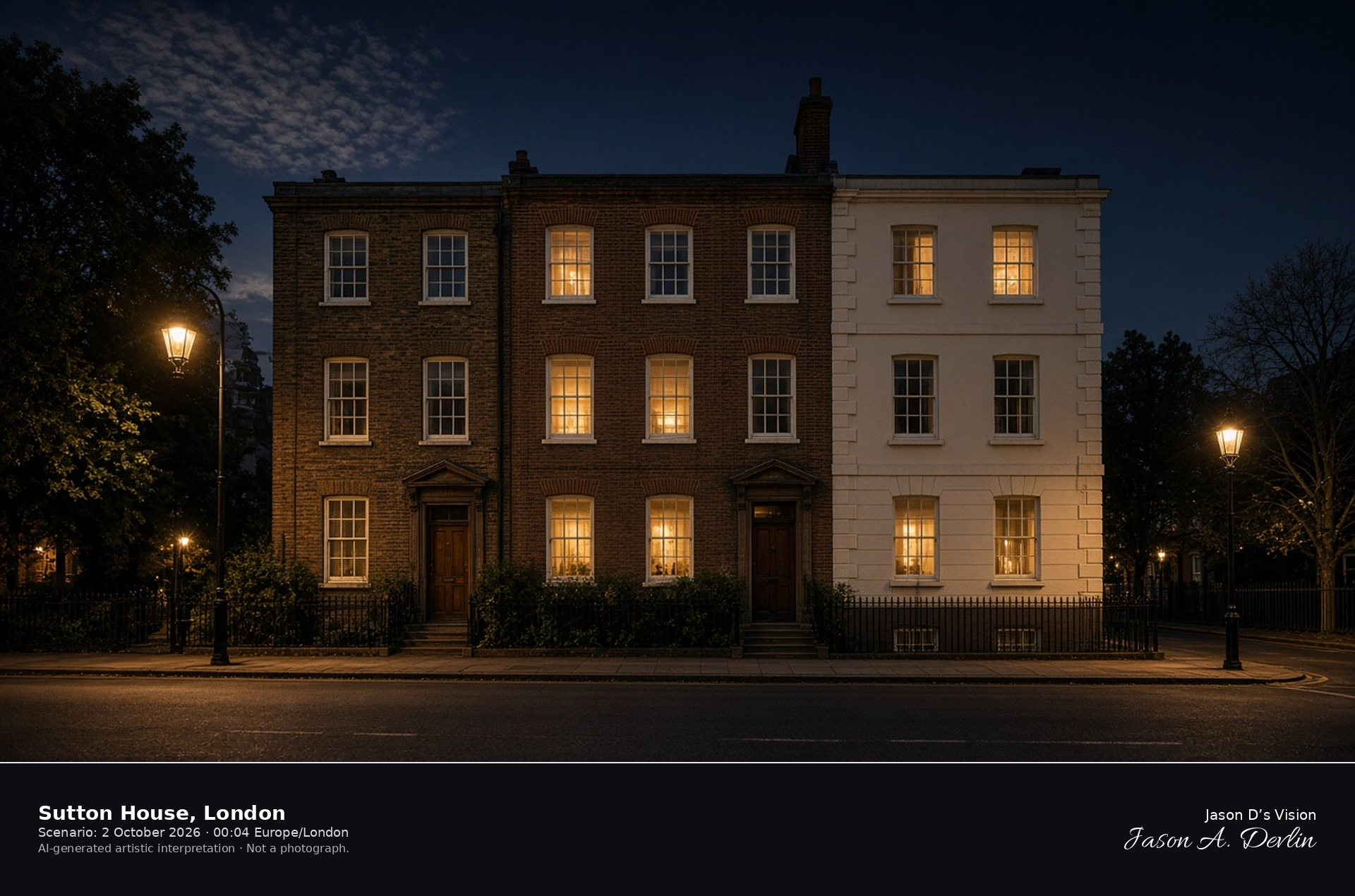
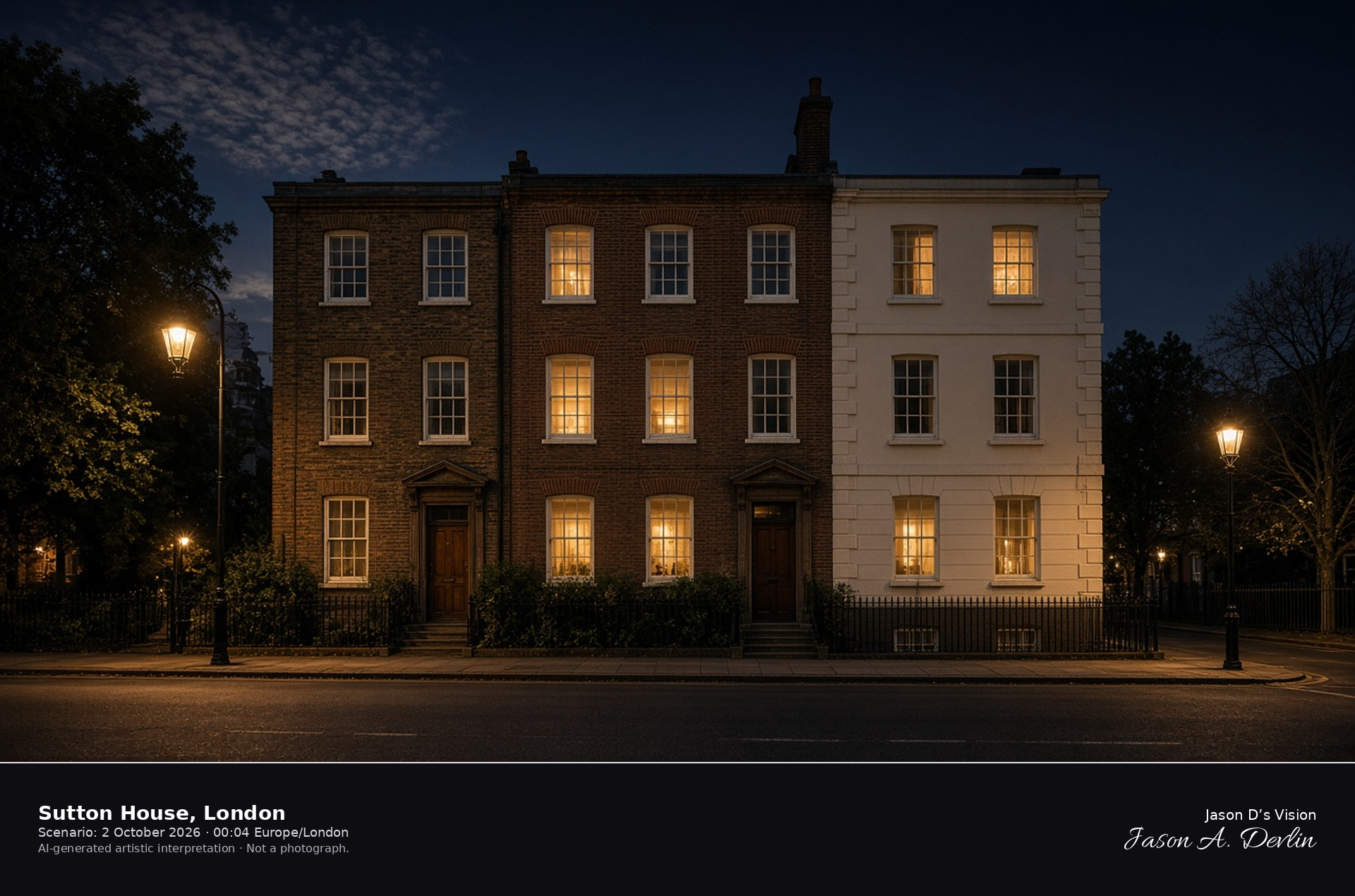
Sutton House · AI-generated artistic interpretation
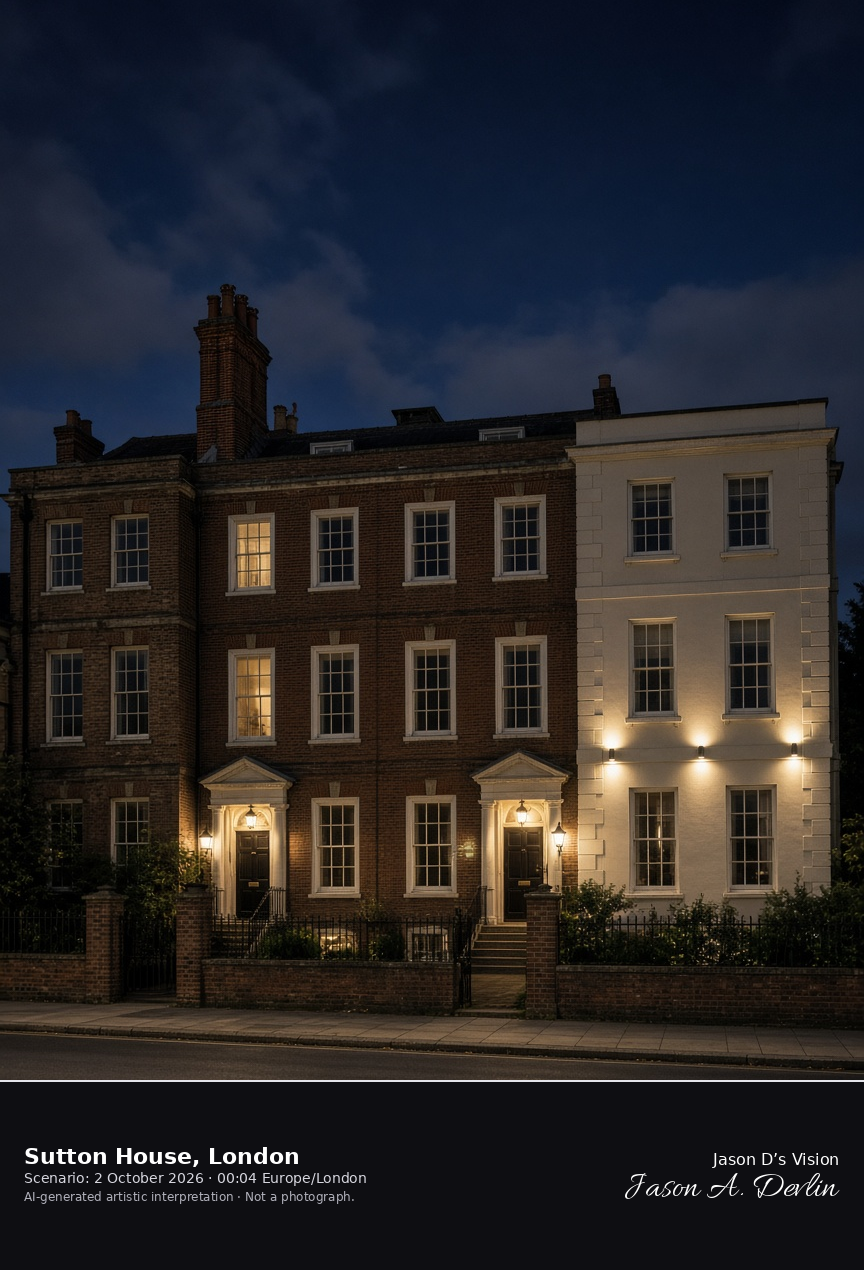
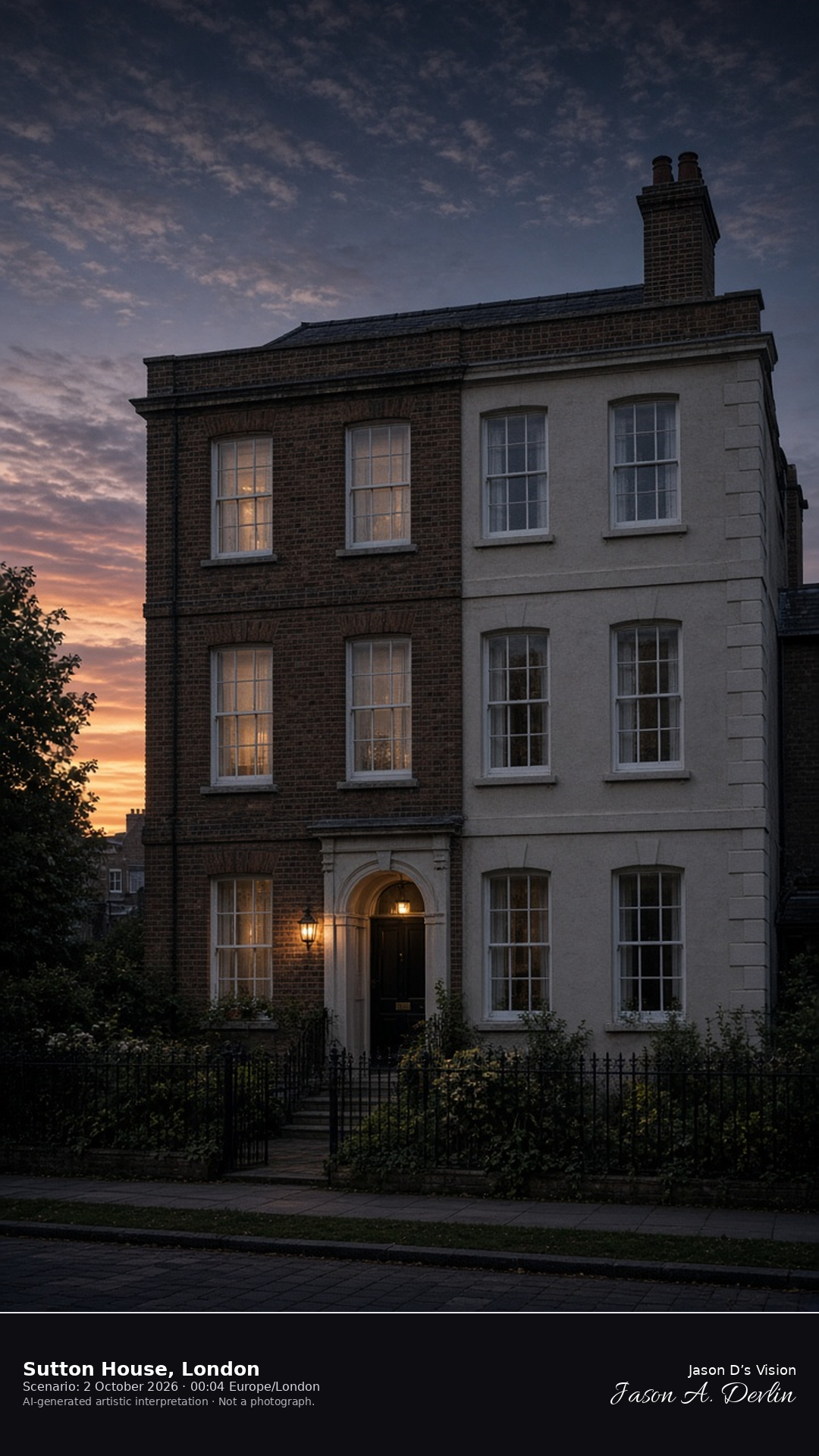
Sutton House, built in 1535 for Sir Ralph Sadleir, a courtier of Henry VIII, is Hackney’s oldest surviving house. Its Tudor rooms and linenfold panelling recall a time when this part of London was still a country retreat, long before the surrounding streets grew into the modern city.
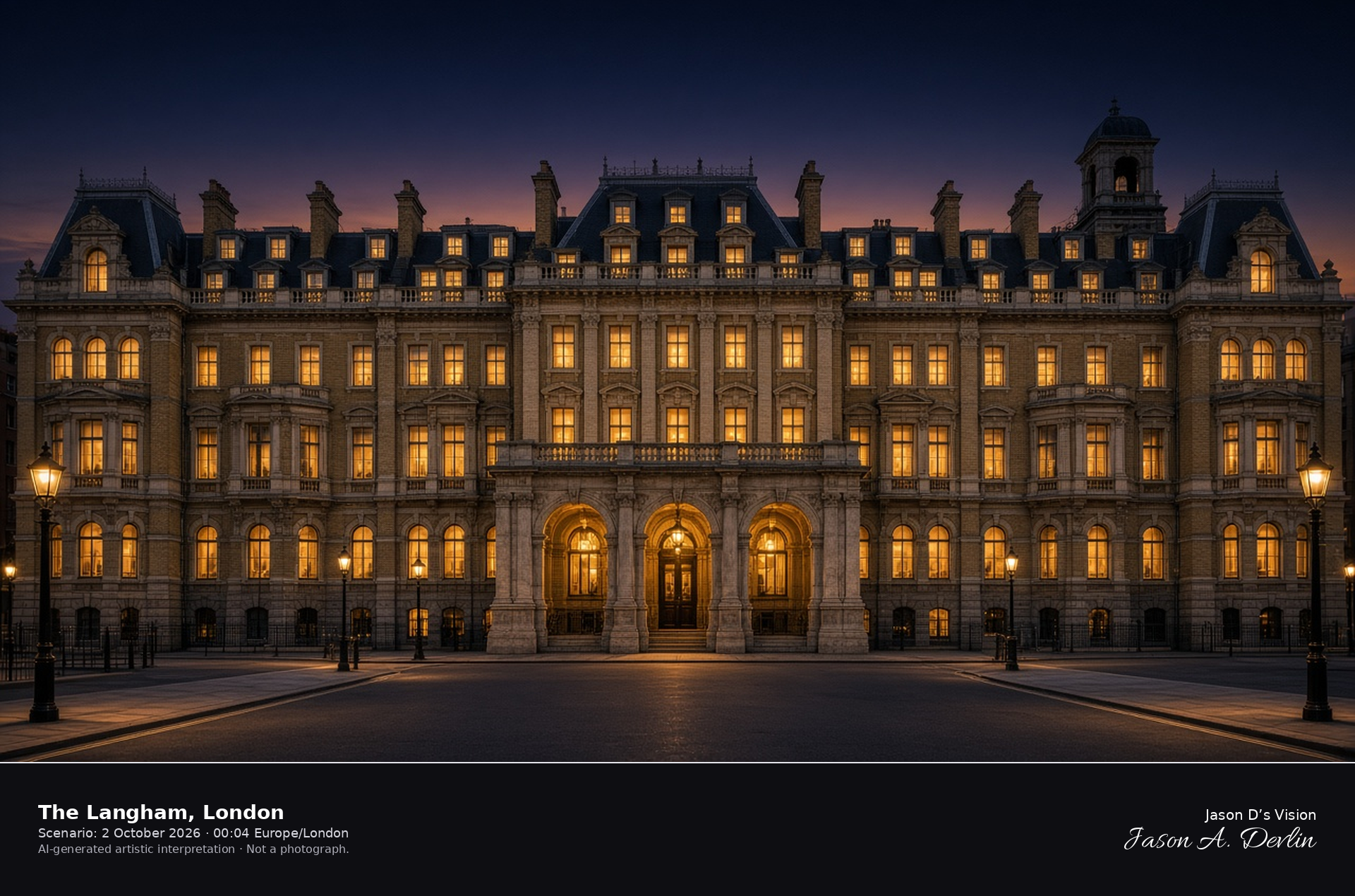
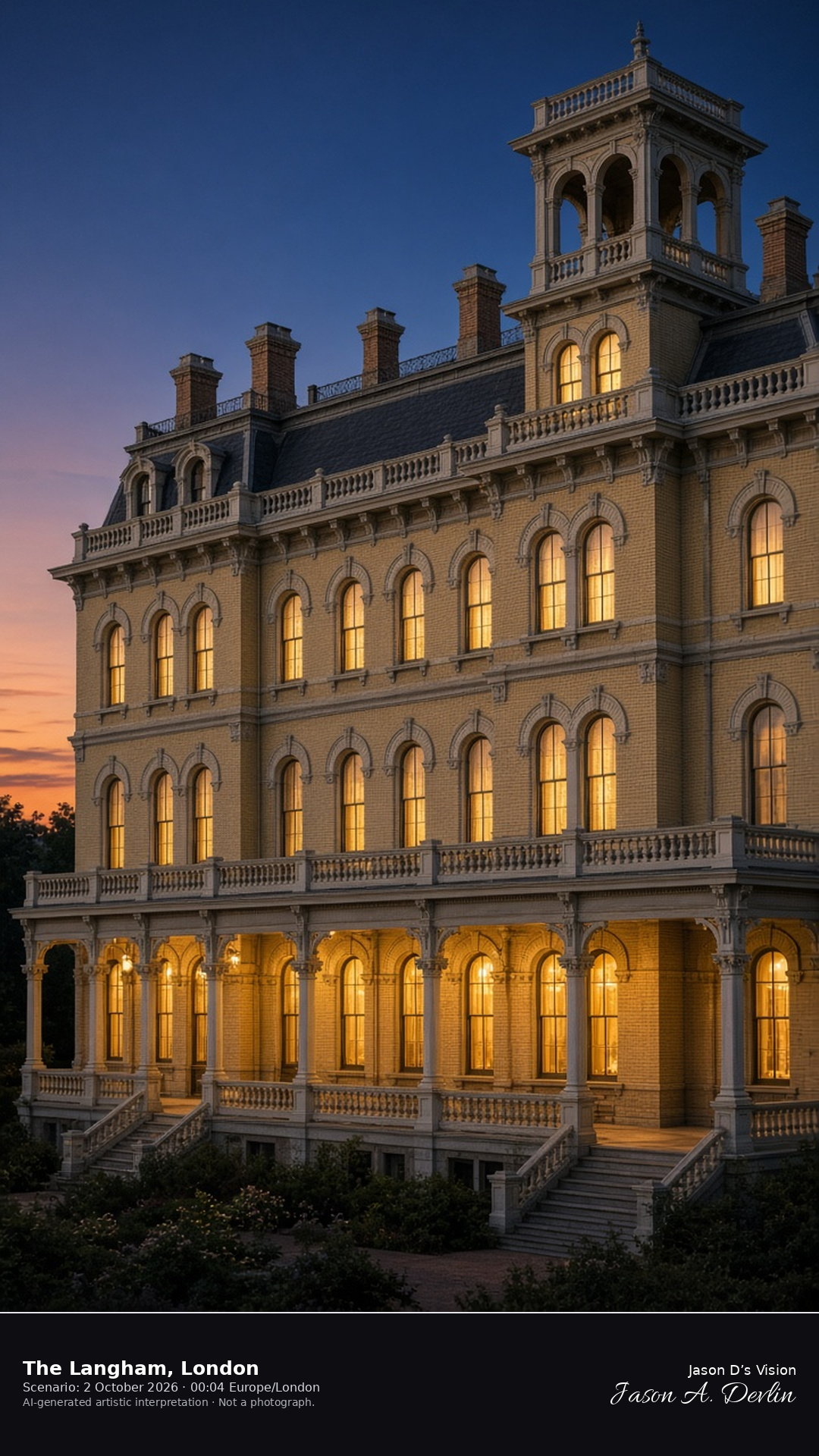
The Langham, London · AI-generated artistic interpretation
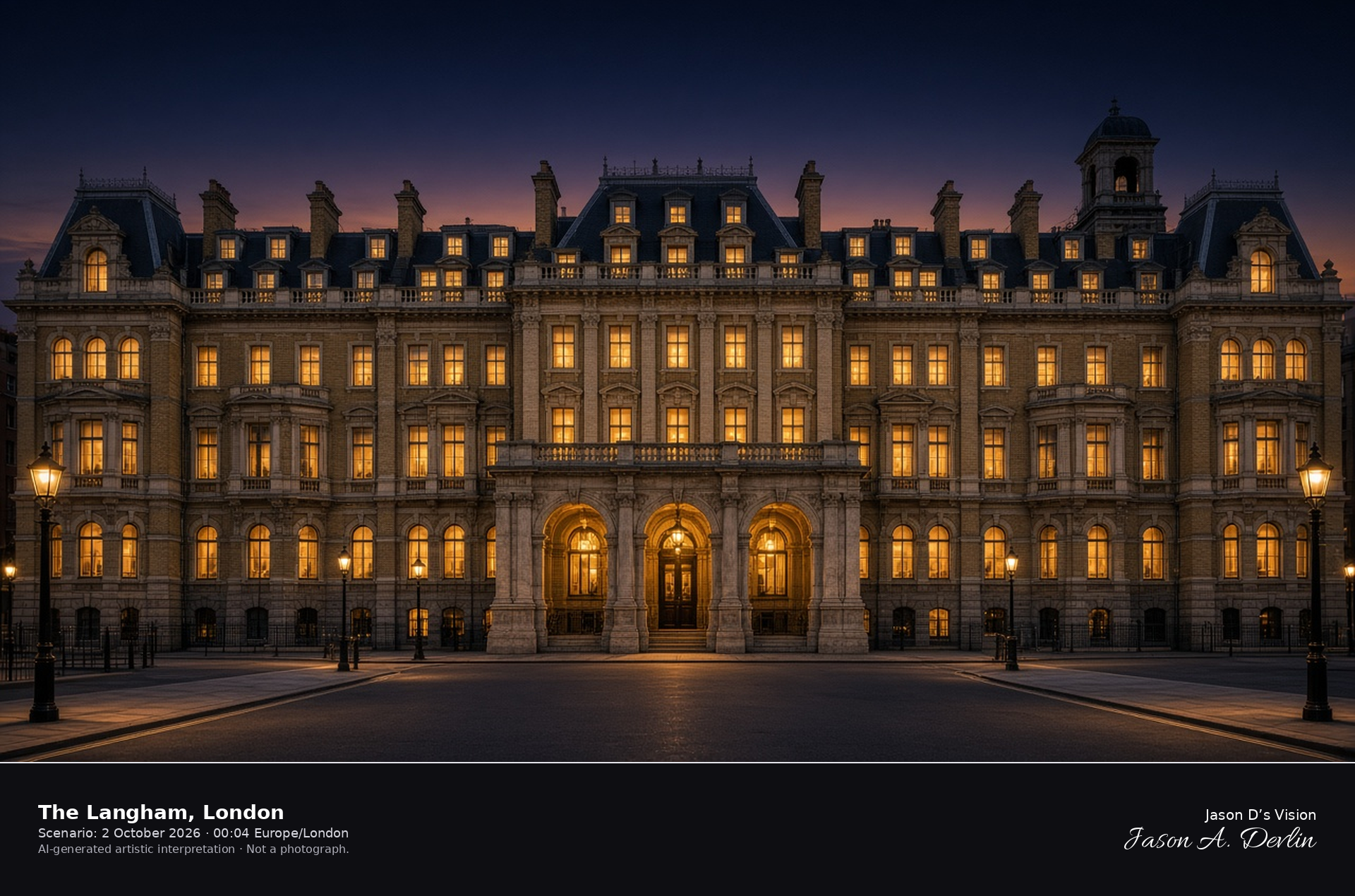
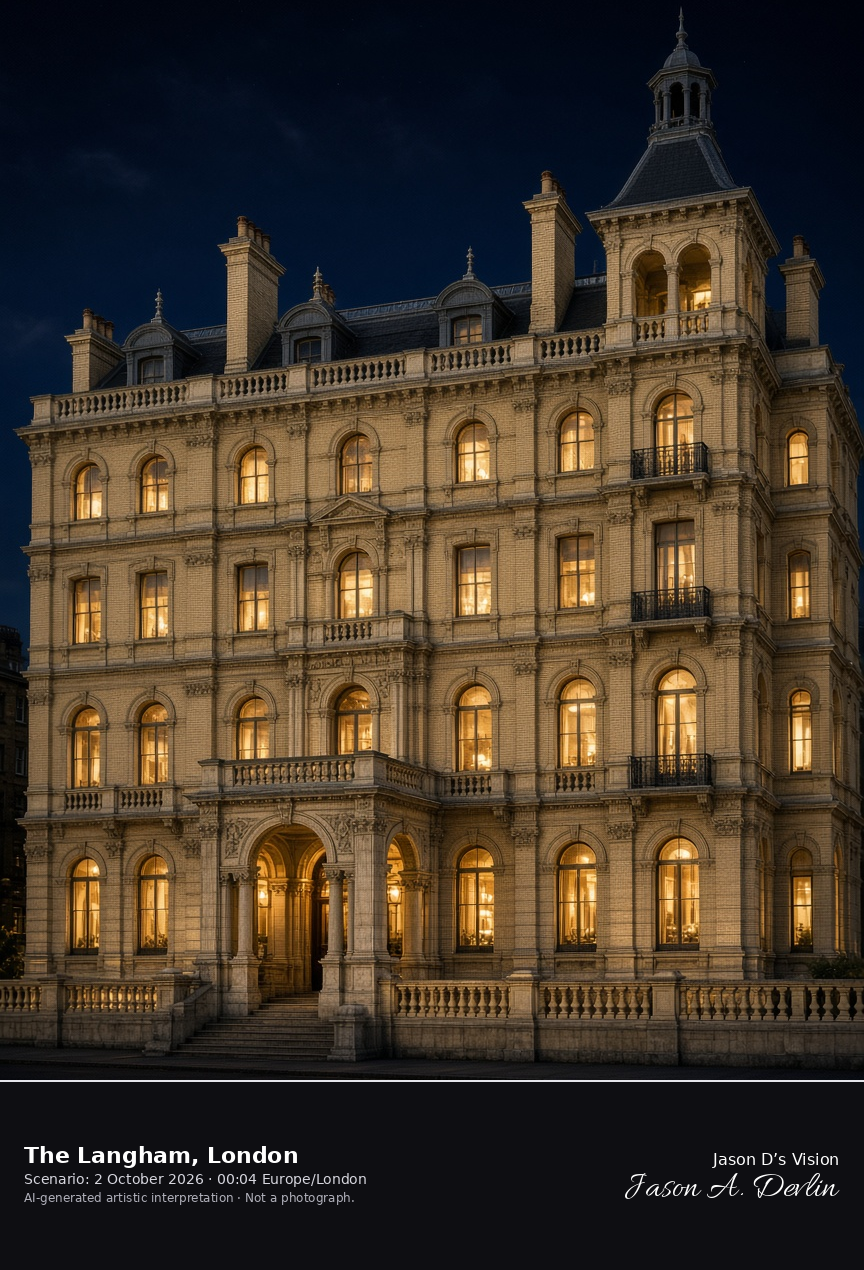
From Portland Place the Langham closes the street, a vast pale-brick hotel with French pavilion roofs, an arched stone porch, and a square belvedere at the corner. Rows of round-headed windows are lit. It is a clear night, about 15.3°C, dry, and the sun is below the horizon. Open-Meteo valid time is 2026-10-02T00:00 Europe/London on 2 October. This is not a verified on-site observation.
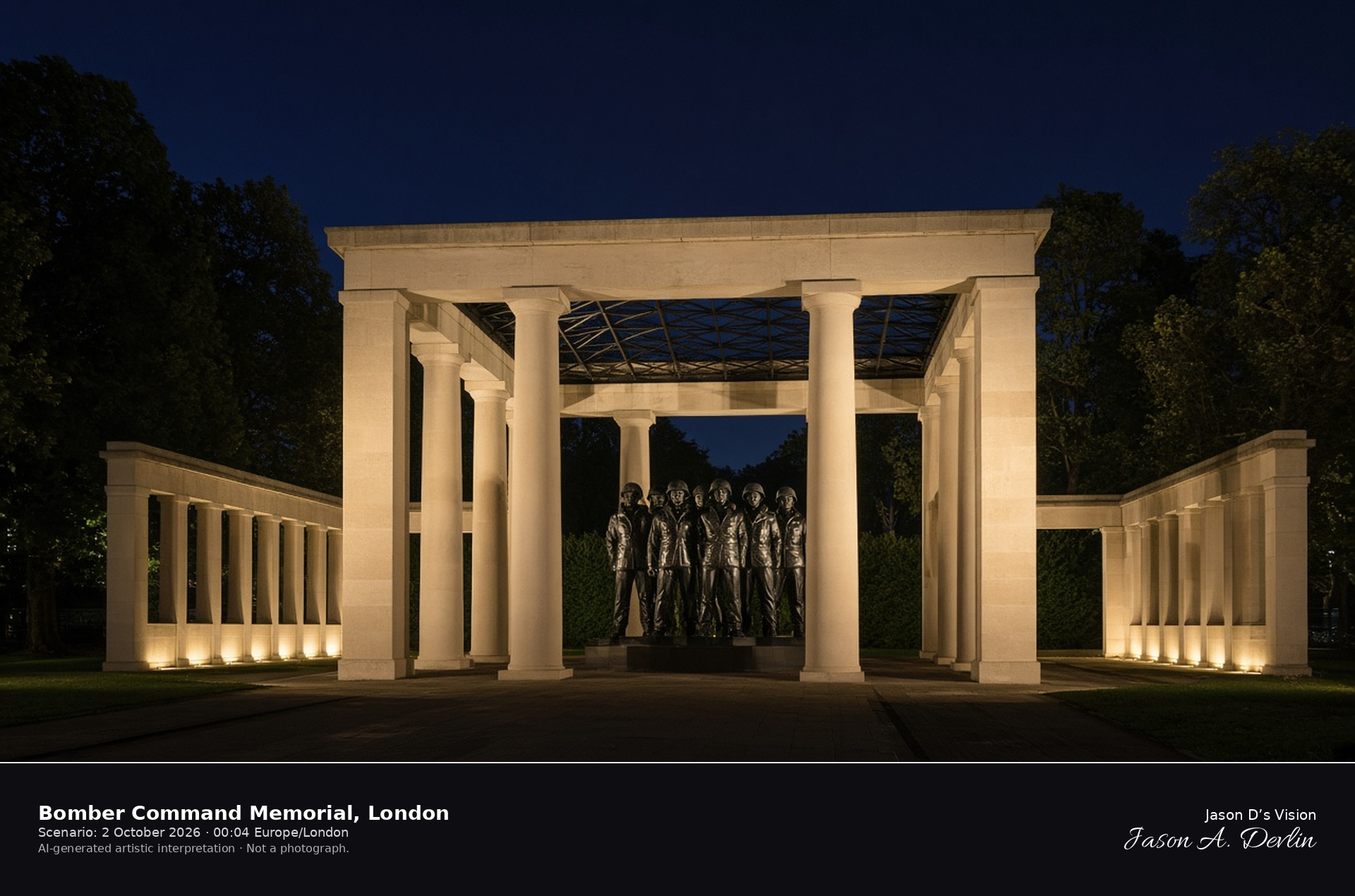
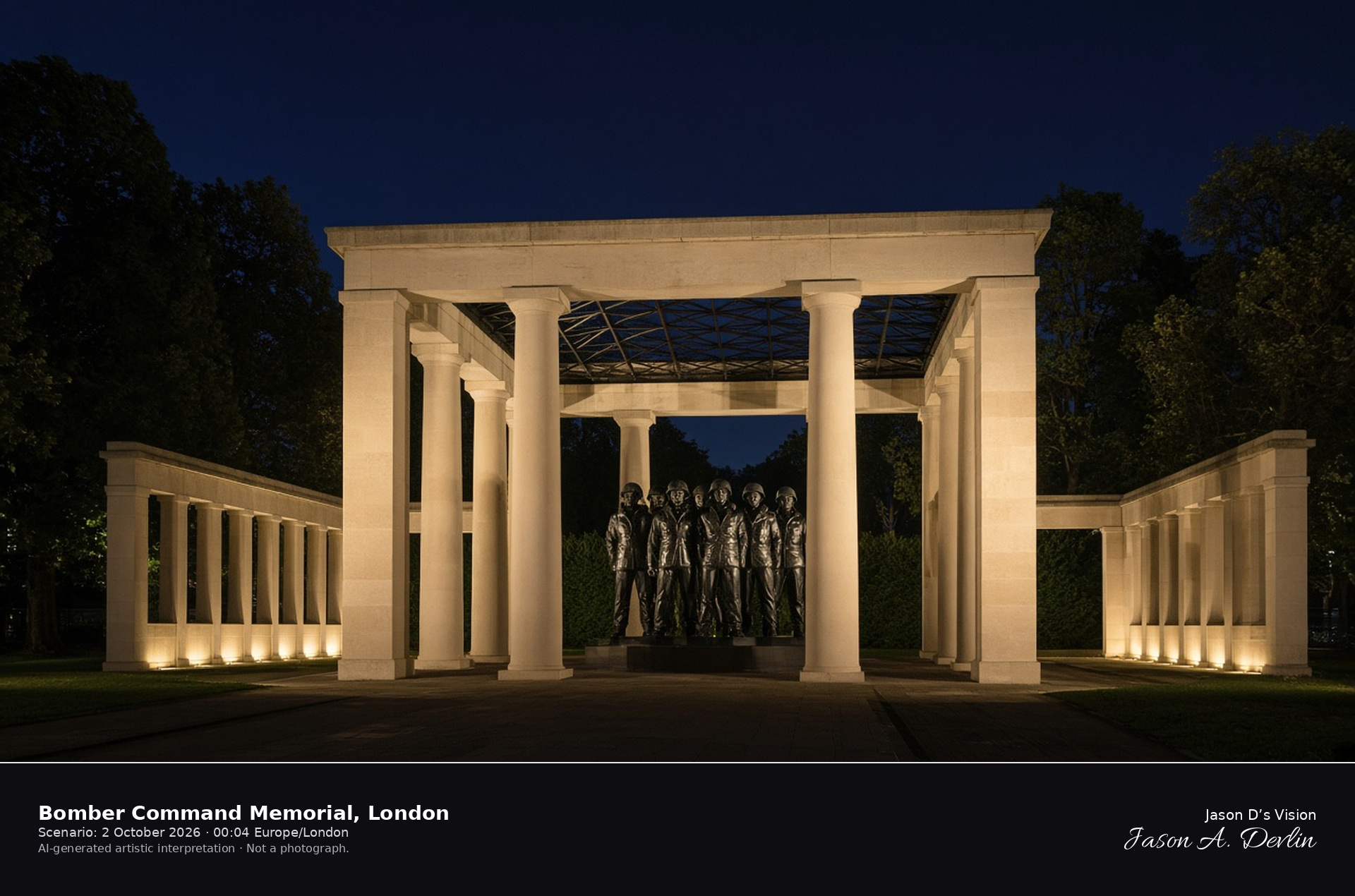
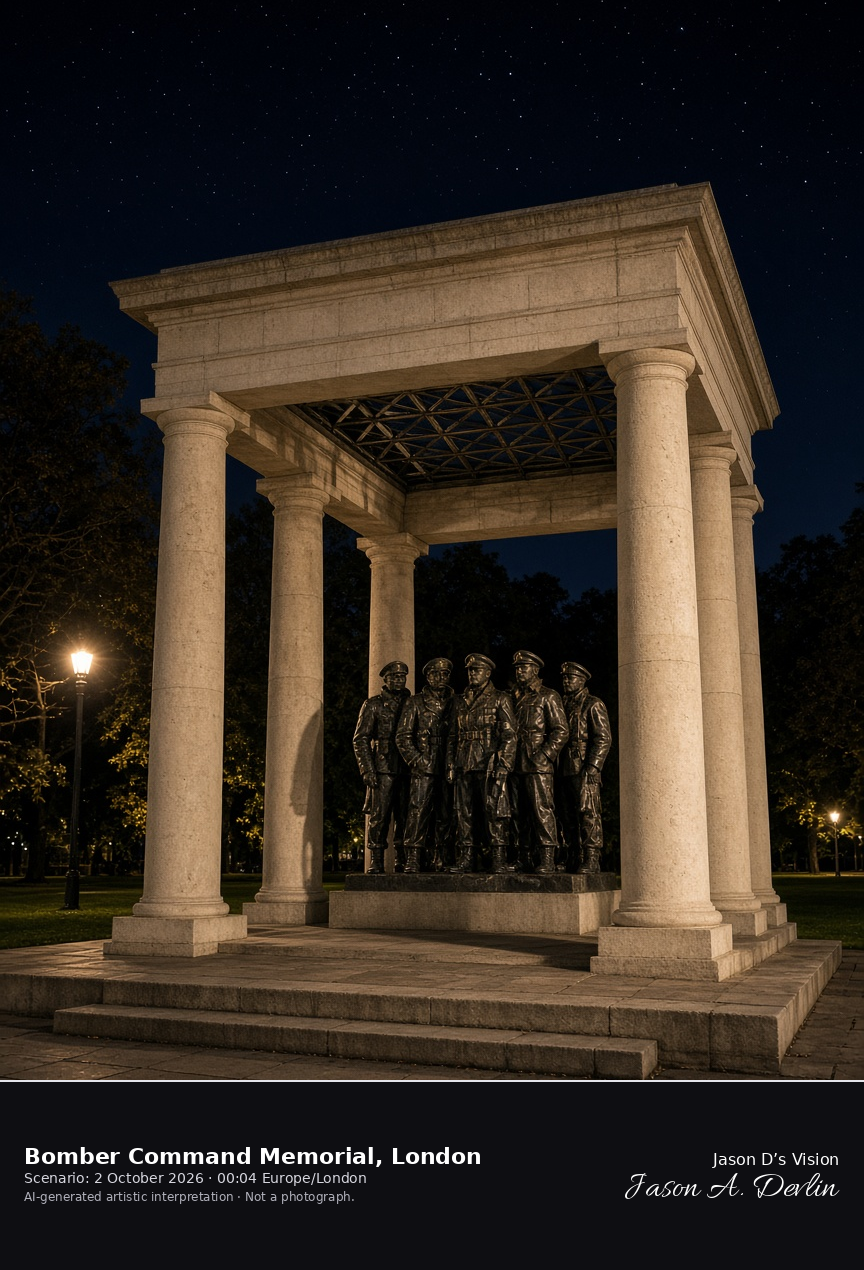
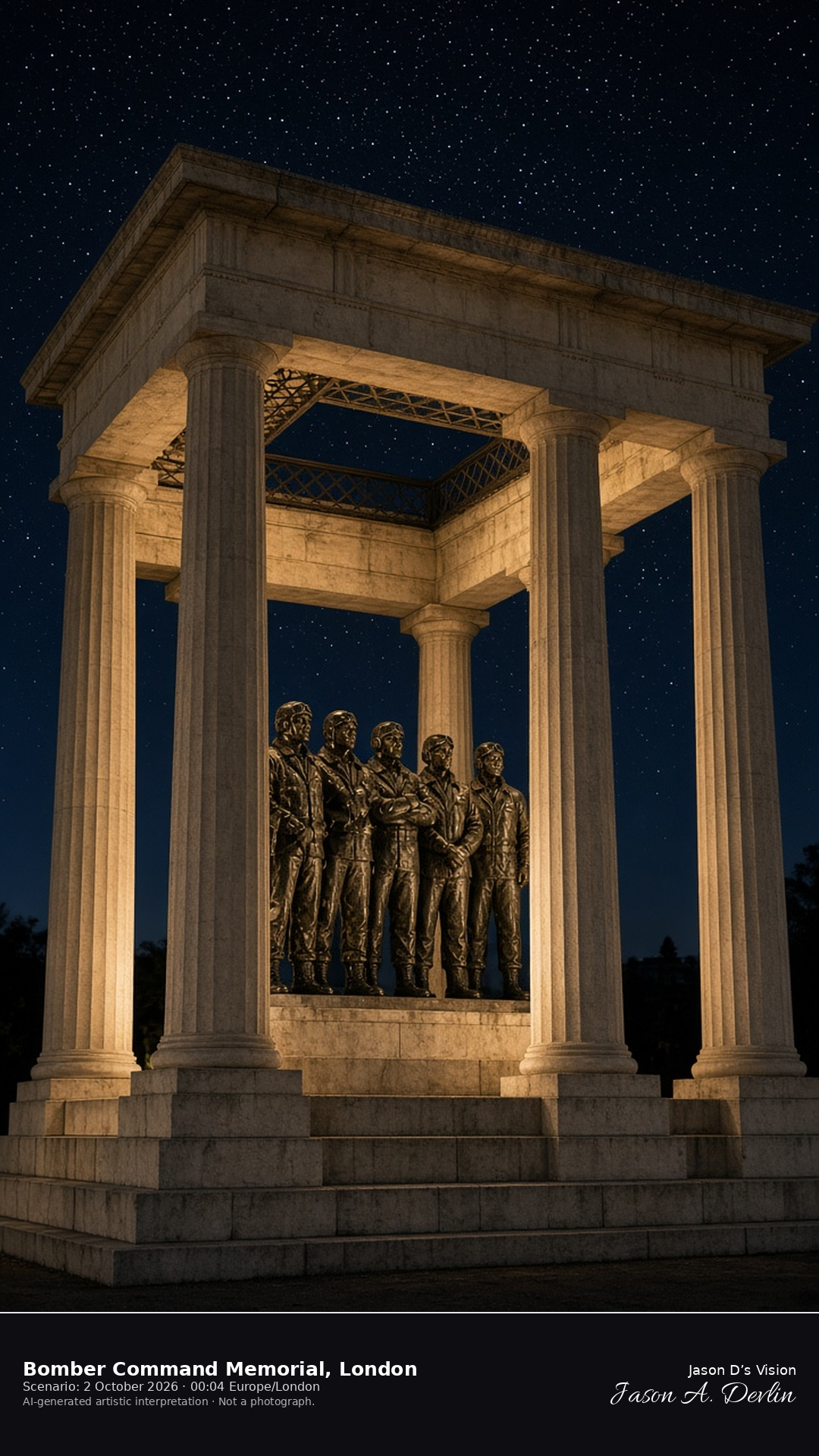
Bomber Command Memorial, London · AI-generated artistic interpretation
From Piccadilly the Bomber Command Memorial is a pale Portland-stone Doric pavilion, open to the night sky, with a bronze crew of airmen standing inside. Colonnade wings reach toward Green Park. It is a clear night, about 15.2°C, dry, and the sun is below the horizon. Open-Meteo valid time is 2026-10-02T00:00 Europe/London on 2 October. This is not a verified on-site observation.
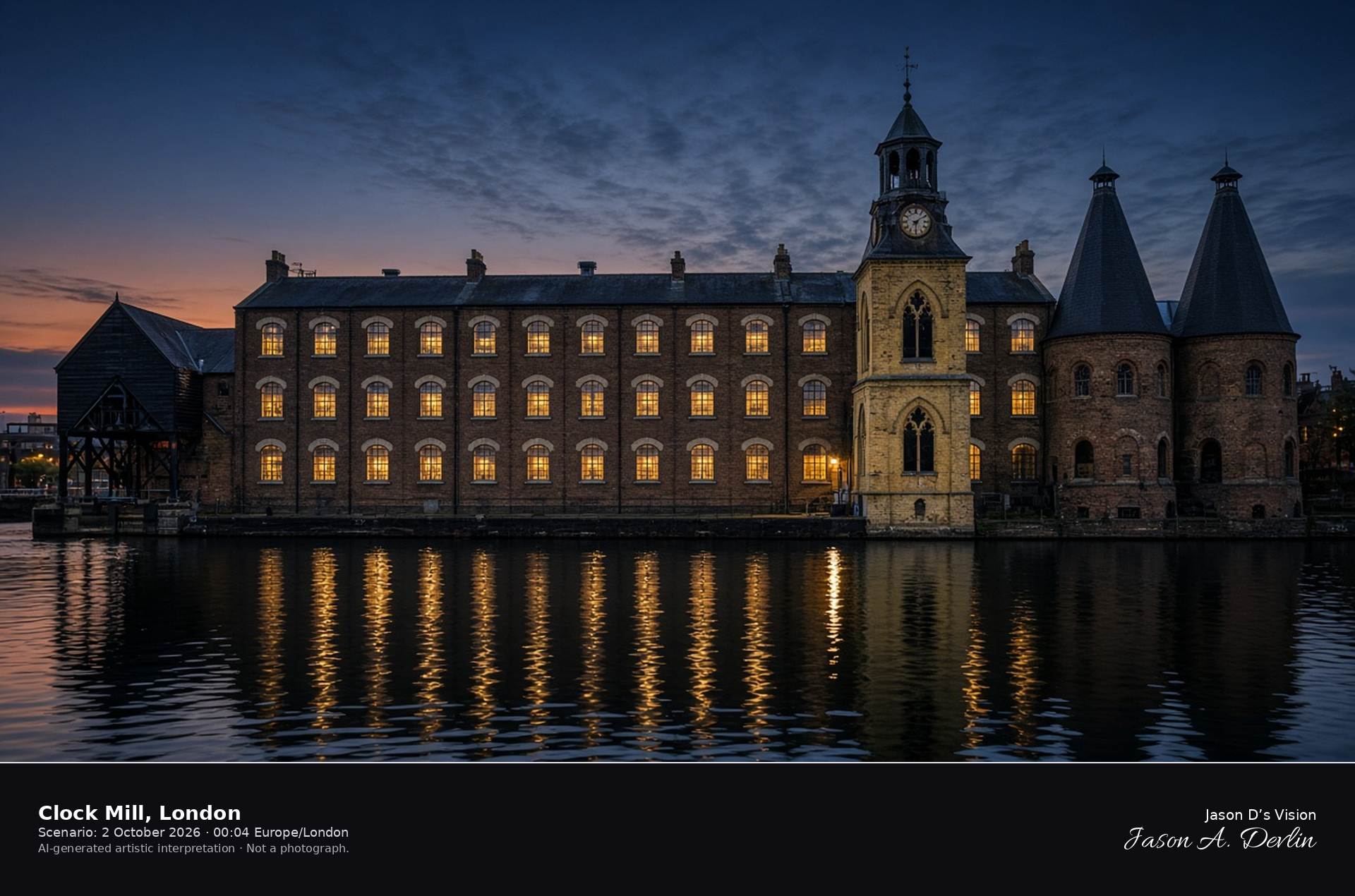
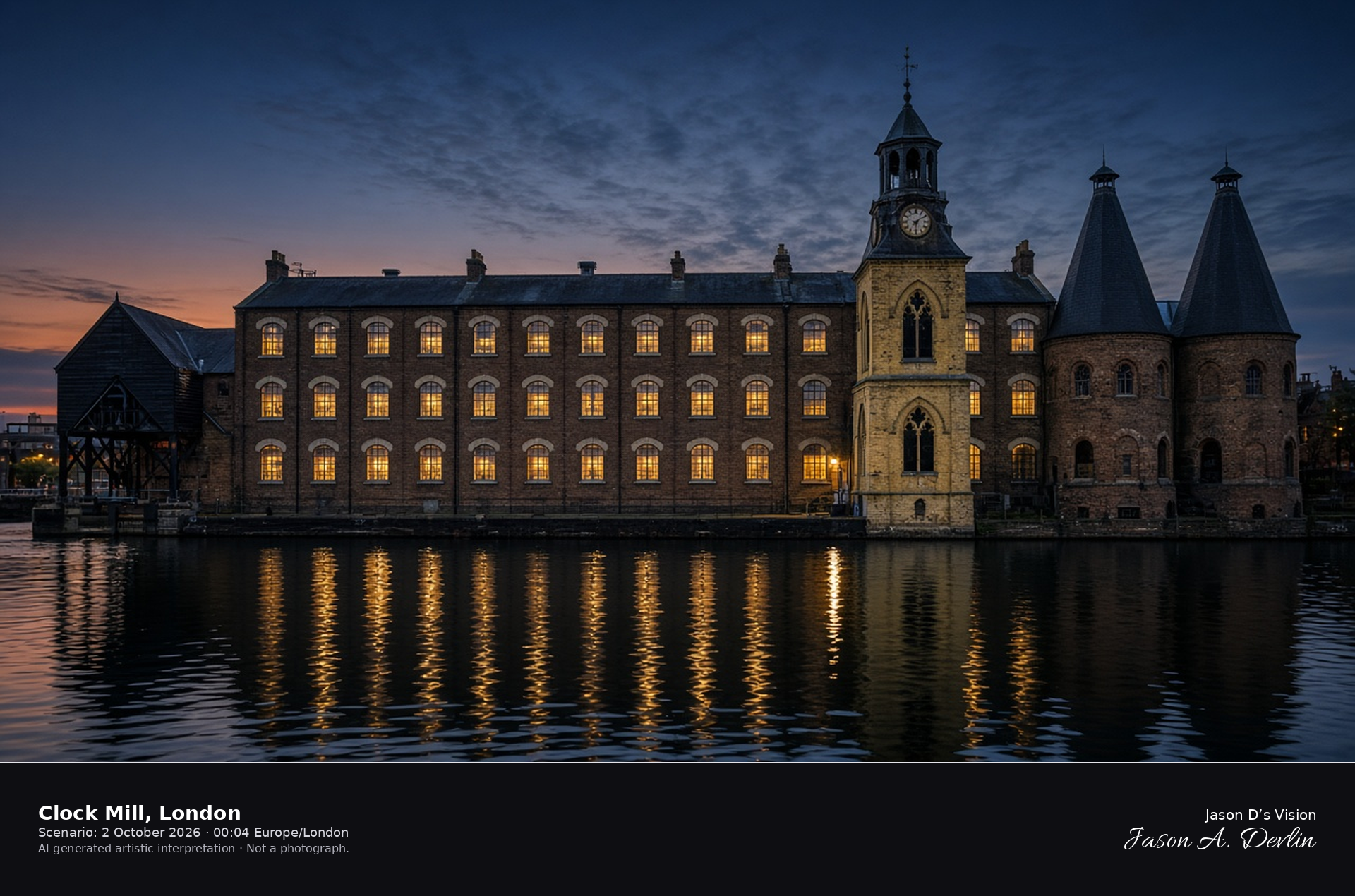
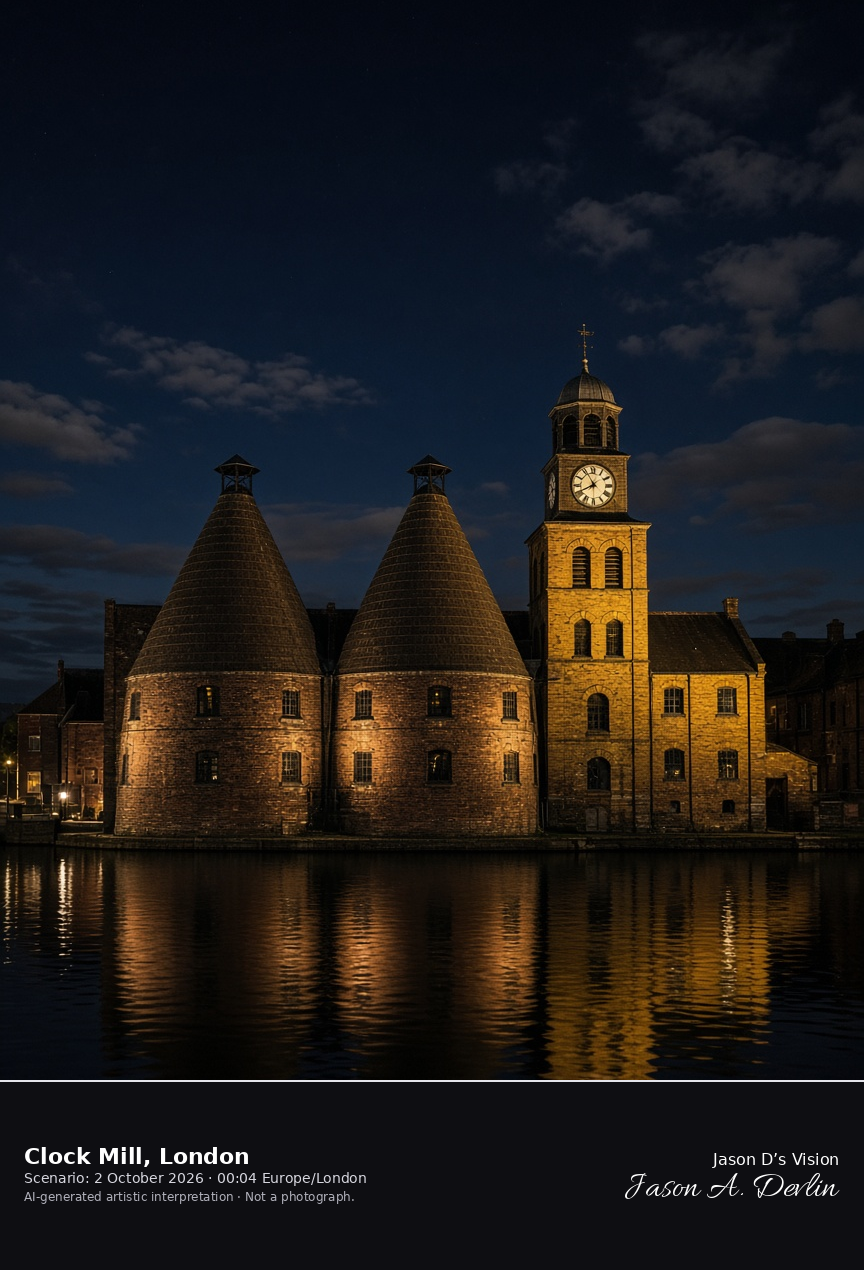
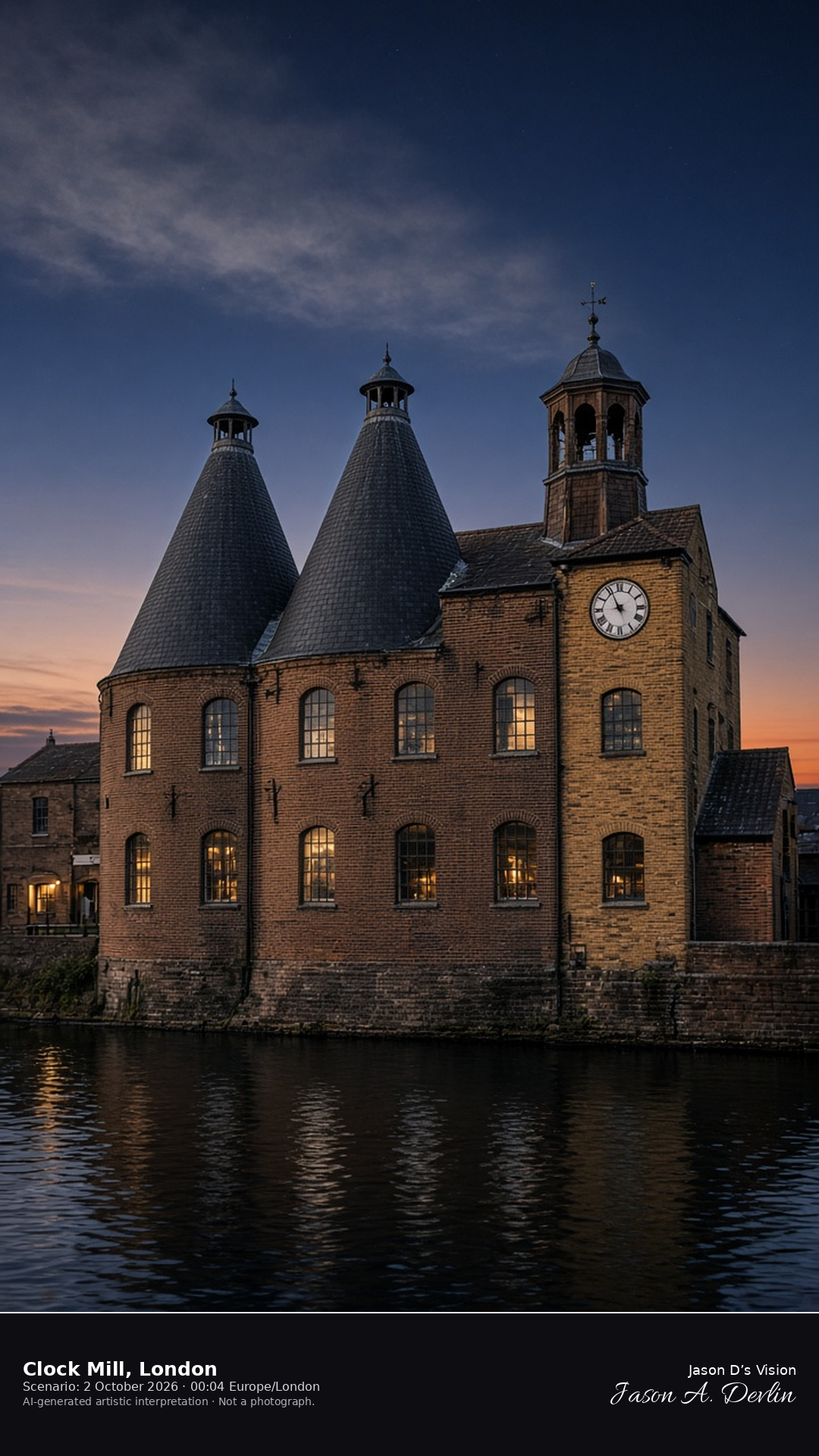
Clock Mill, London · AI-generated artistic interpretation
Across the mill water the Clock Mill is a brown-brick range with two conical kiln roofs and a yellow-brick clock tower under a wooden cupola. The timber House Mill is not in the frame. It is a mainly clear night, about 15.8°C, dry, and the sun is below the horizon. Open-Meteo valid time is 2026-10-02T00:00 Europe/London on 2 October. This is not a verified on-site observation.
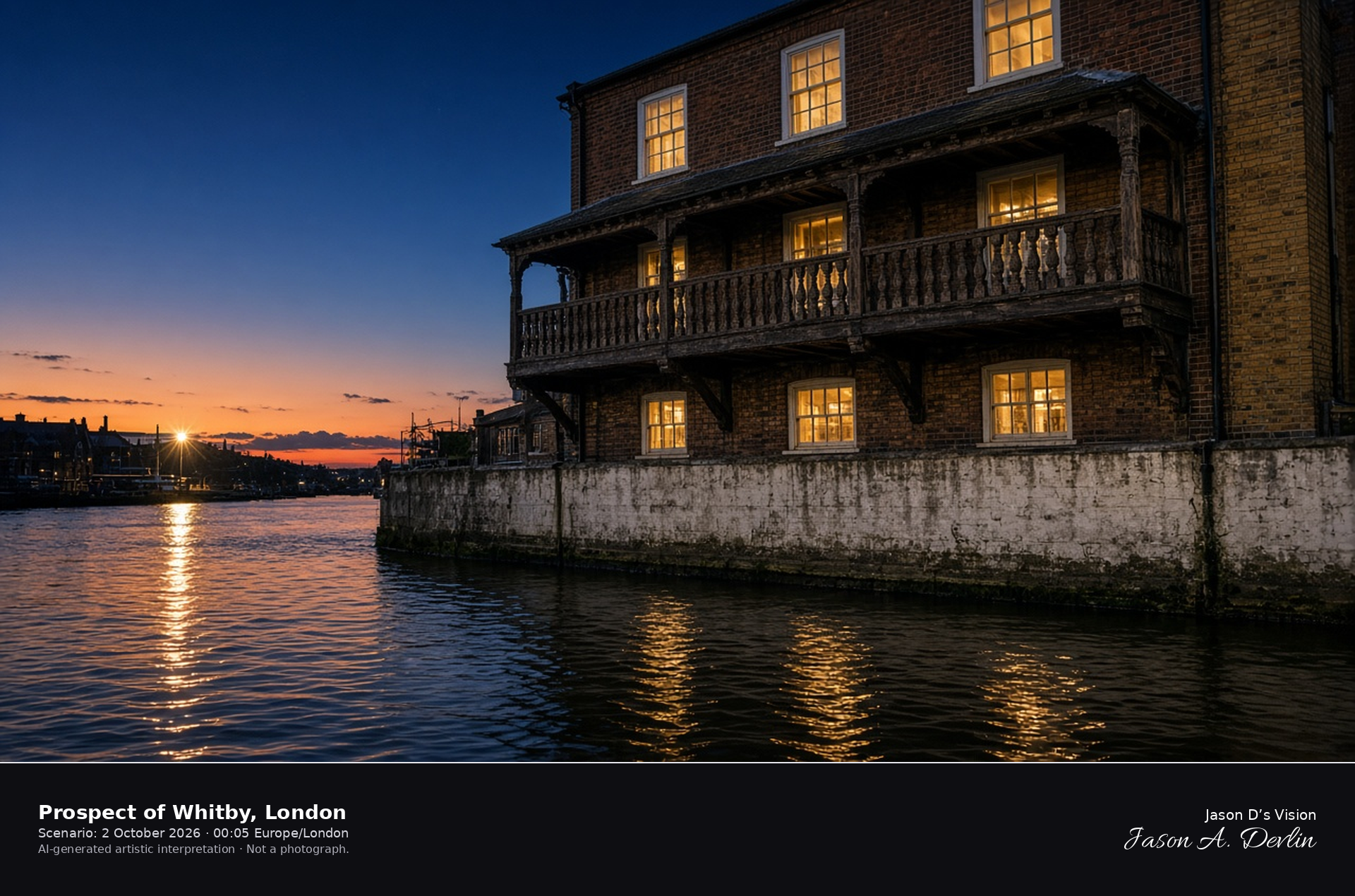
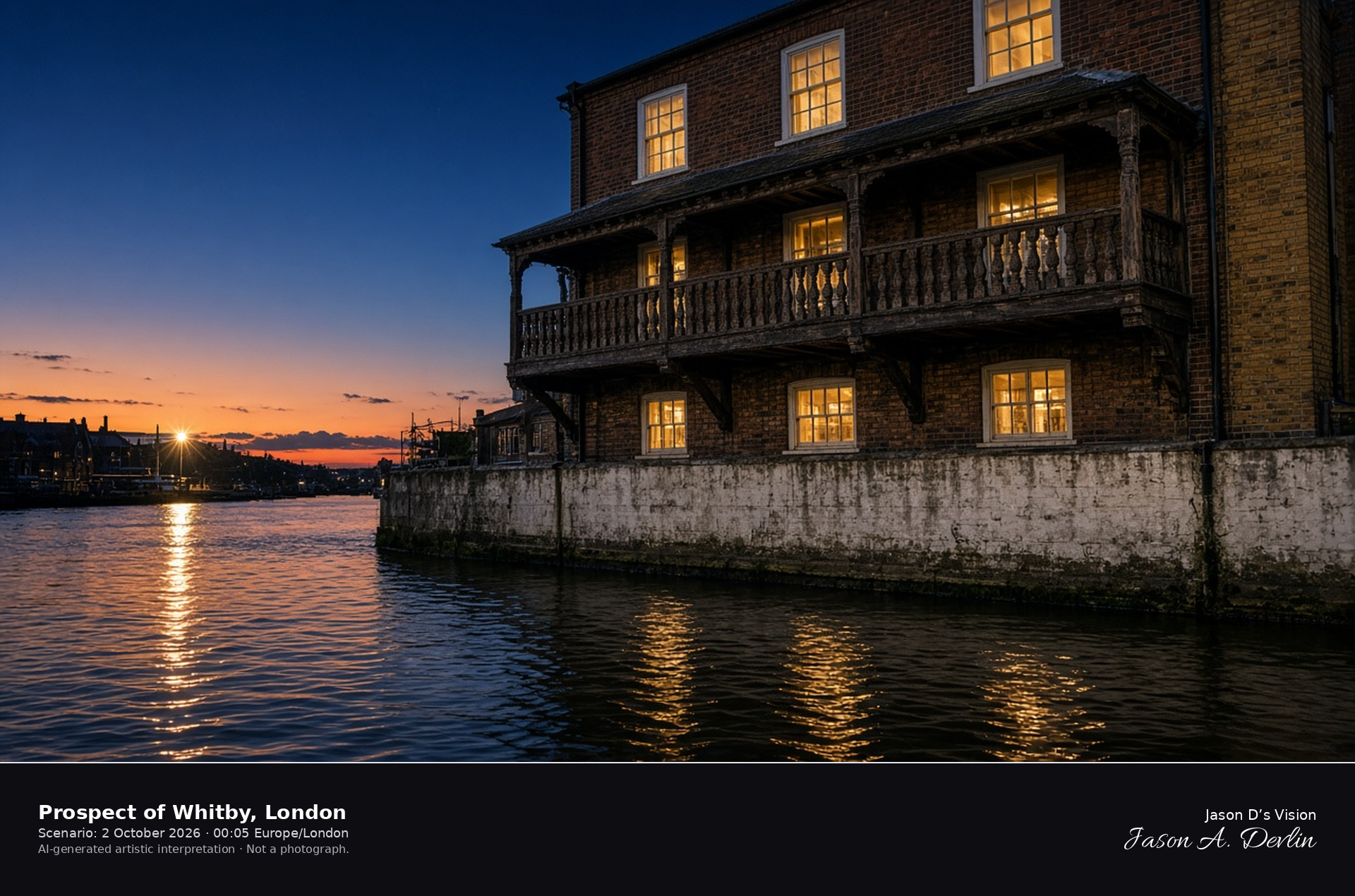
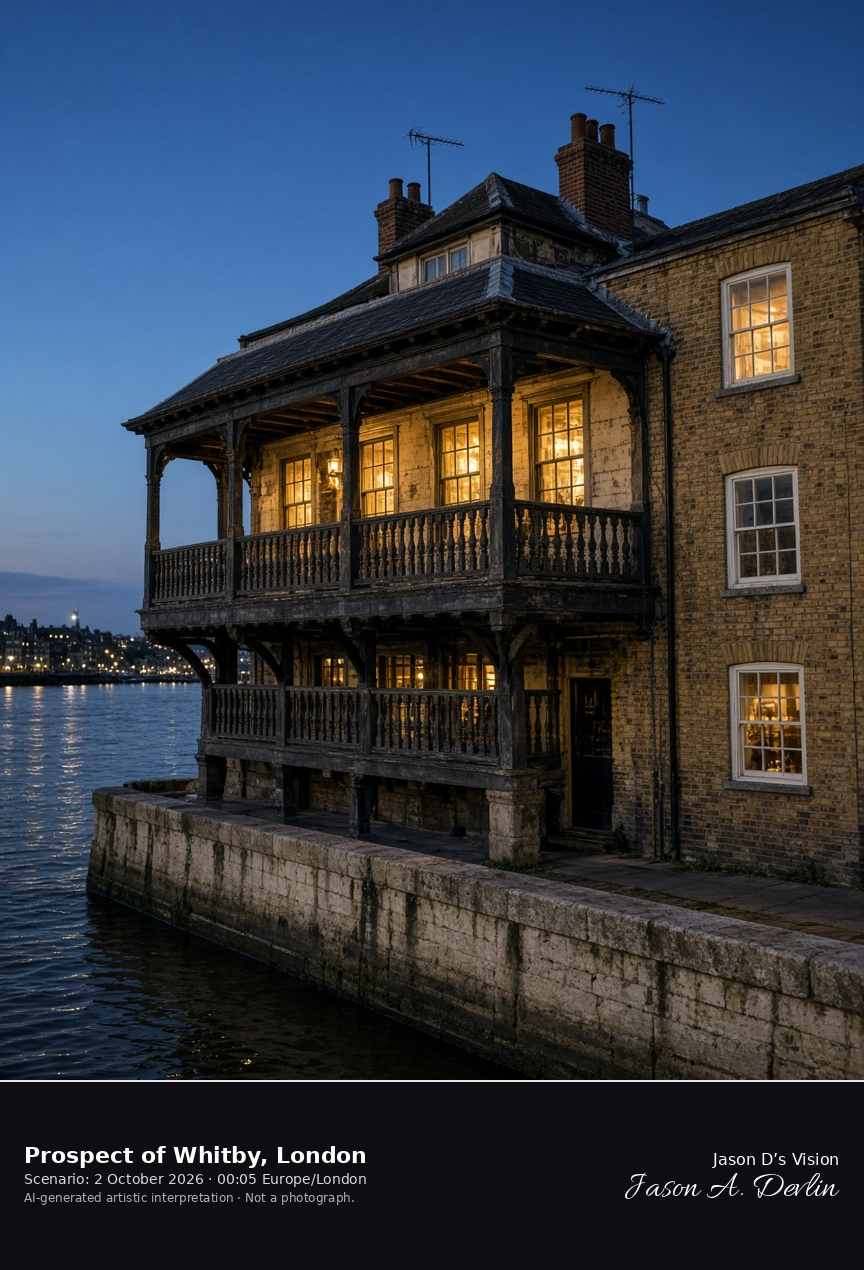
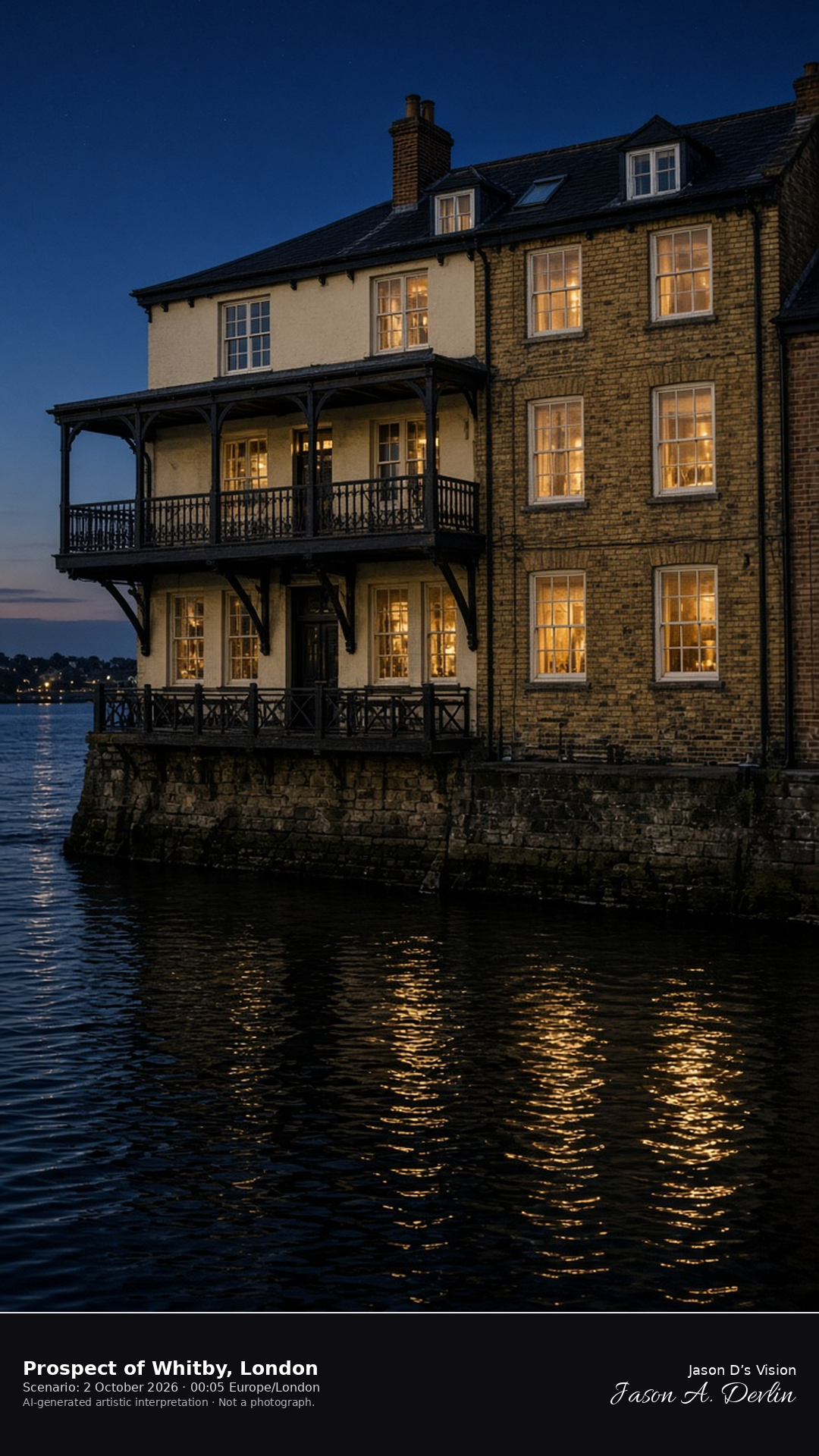
Prospect of Whitby, London · AI-generated artistic interpretation
From the river the Prospect of Whitby shows a hooded balcony with a turned balustrade over the Thames, three storeys of sash windows, and yellow brick at the side. The tide is dark under the lamps. It is a clear night, about 15.7°C, dry, and the sun is below the horizon. Open-Meteo valid time is 2026-10-02T00:00 Europe/London on 2 October. This is not a verified on-site observation.
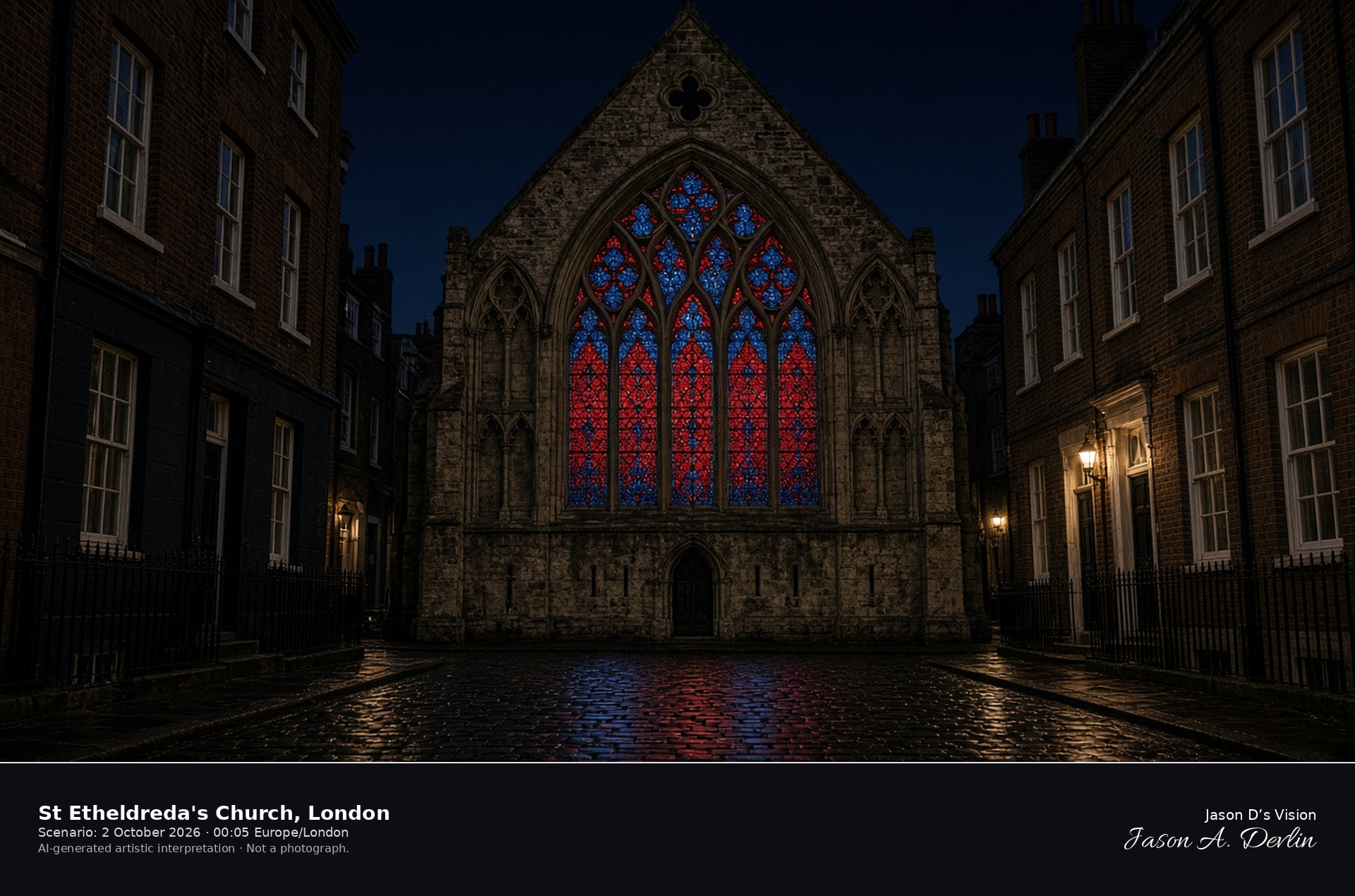
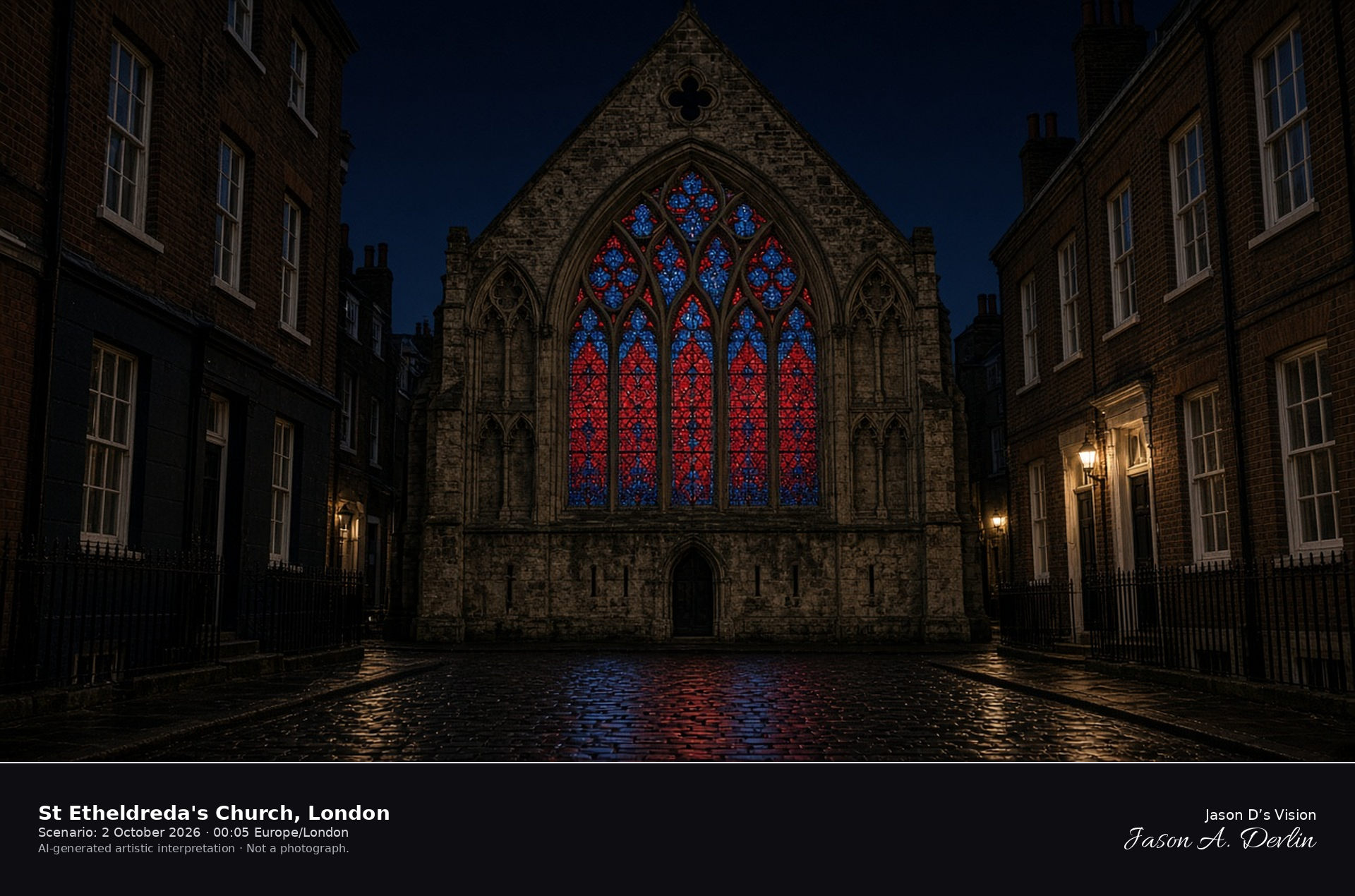
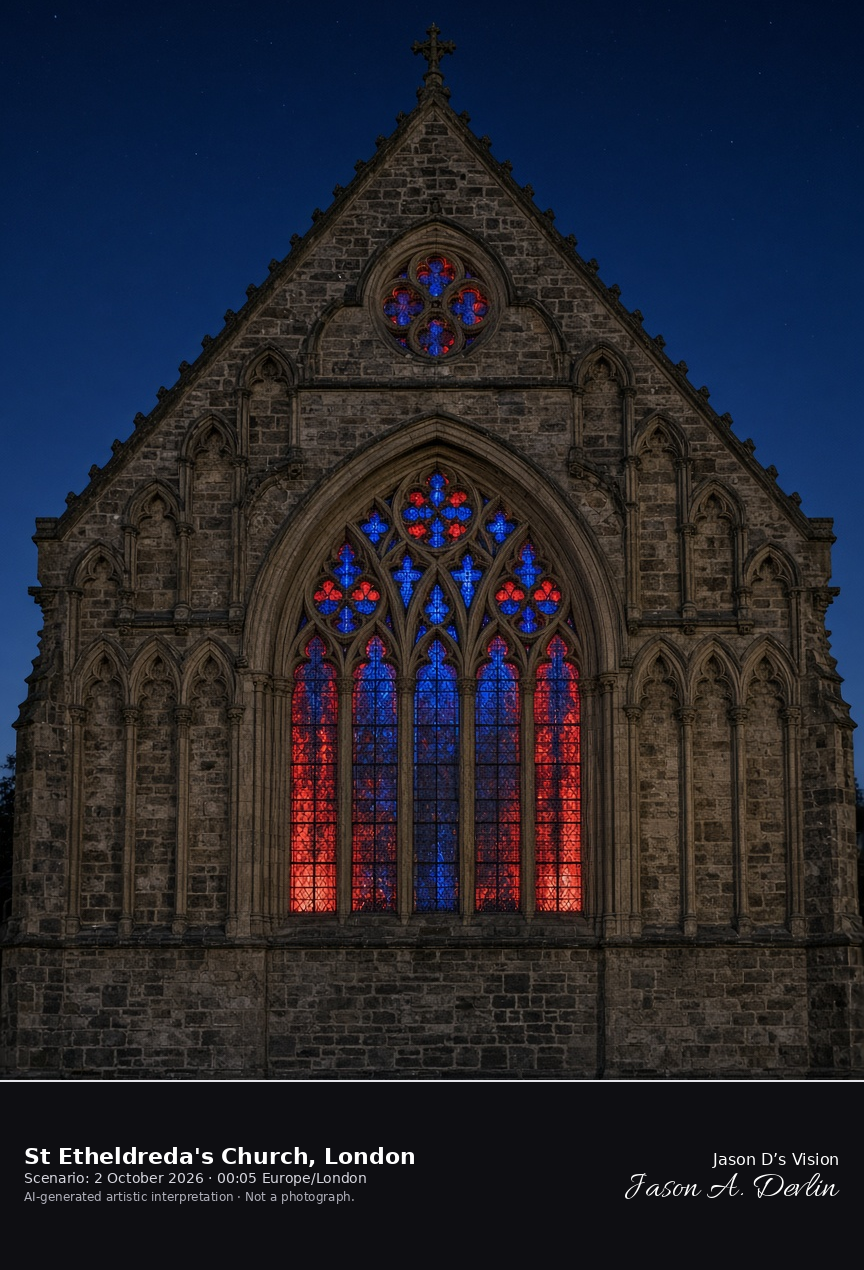
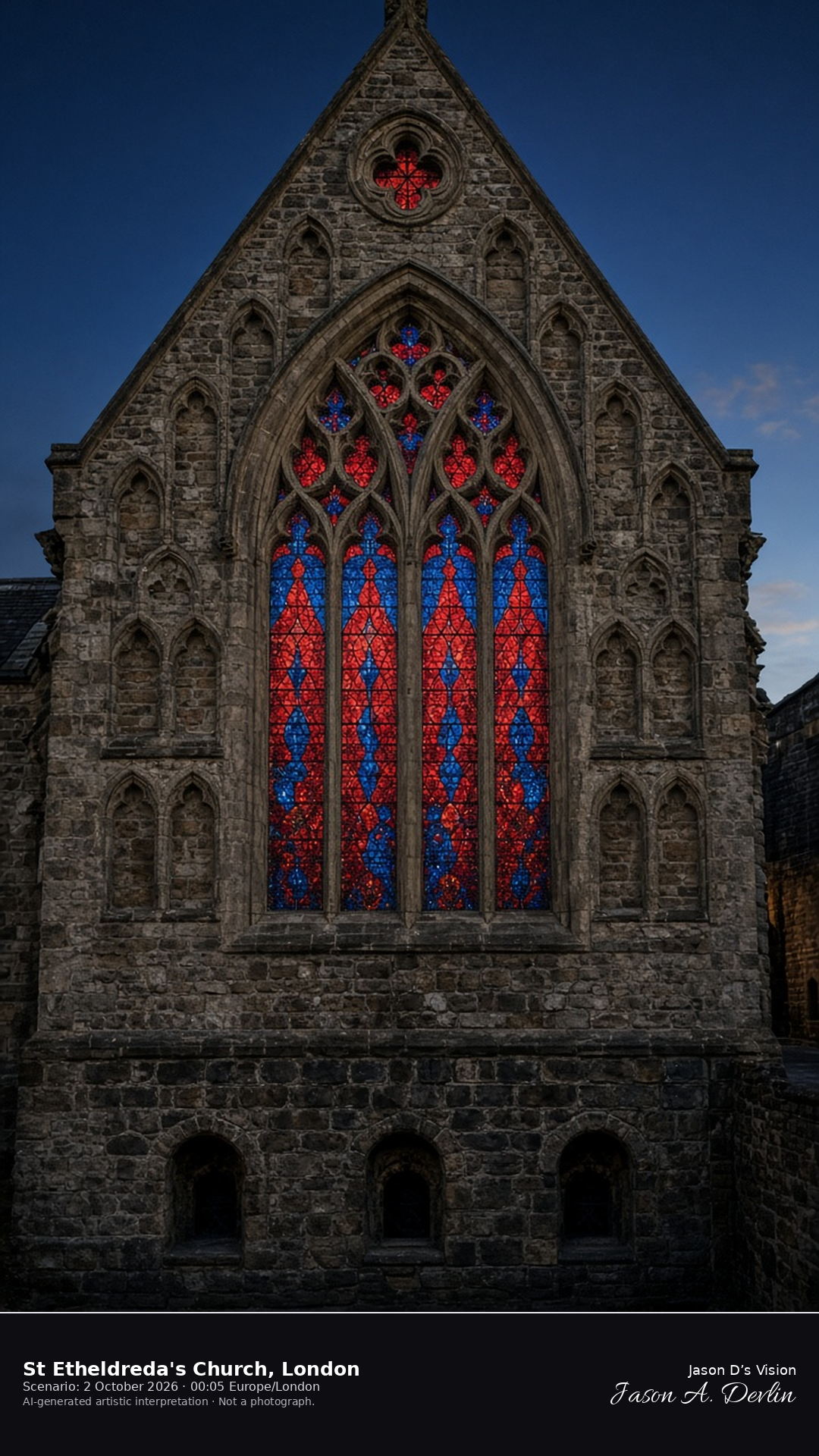
St Etheldreda's Church, London · AI-generated artistic interpretation
In Ely Place the west end of St Etheldreda's is a ragstone gable filled by a five-light Decorated window, with blind arcades beside it and a quatrefoil above. The glass glows red and blue against the night. It is a clear night, about 15.5°C, dry, and the sun is below the horizon. Open-Meteo valid time is 2026-10-02T00:00 Europe/London on 2 October. This is not a verified on-site observation.
Beneath London’s streets run its buried rivers — the Fleet, the Tyburn, the Westbourne — enclosed as the city grew over them. The Fleet gave Fleet Street its name and once reached the Thames at Blackfriars; its old sewer outfall is now intercepted by the Tideway system.
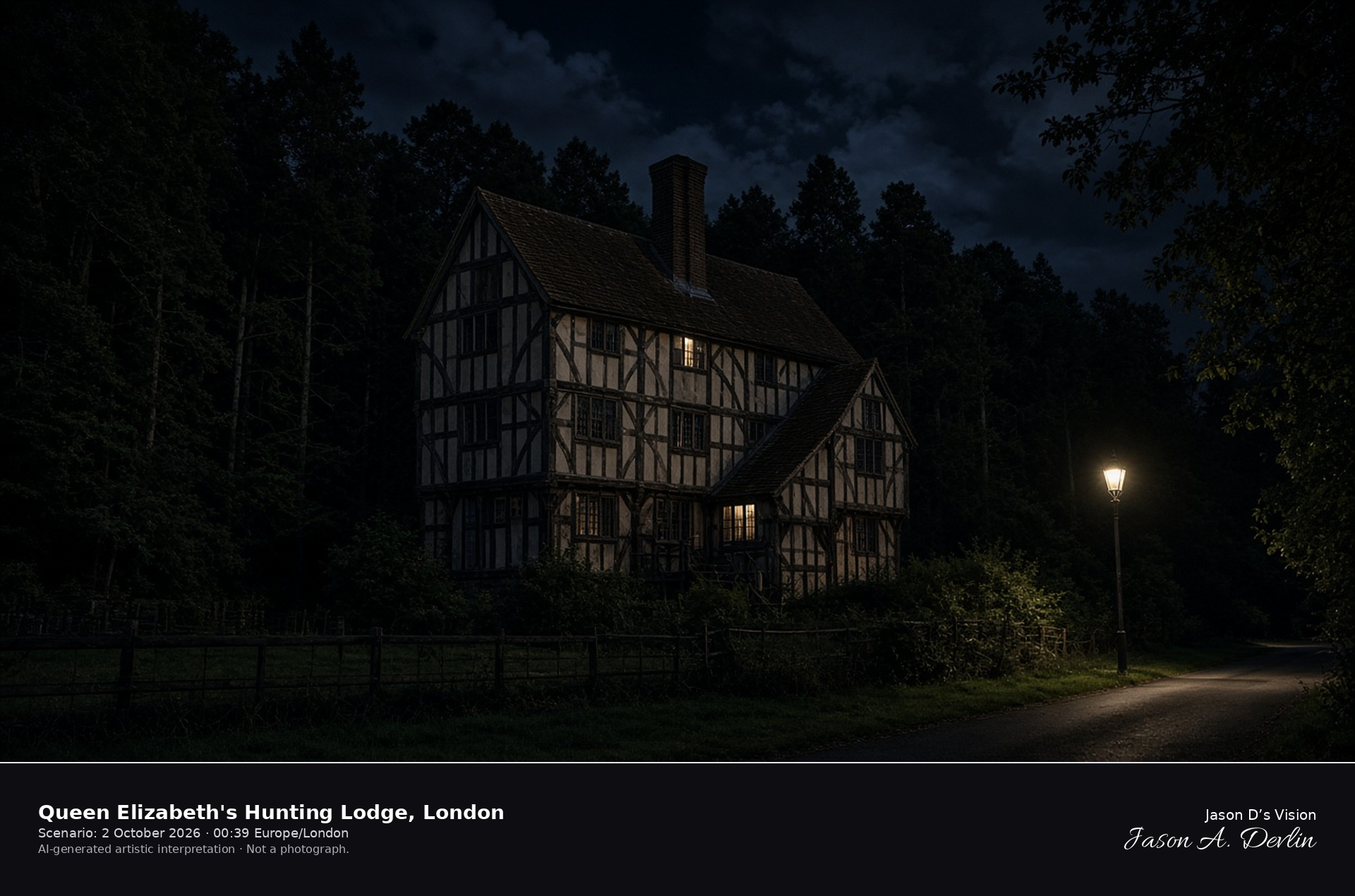
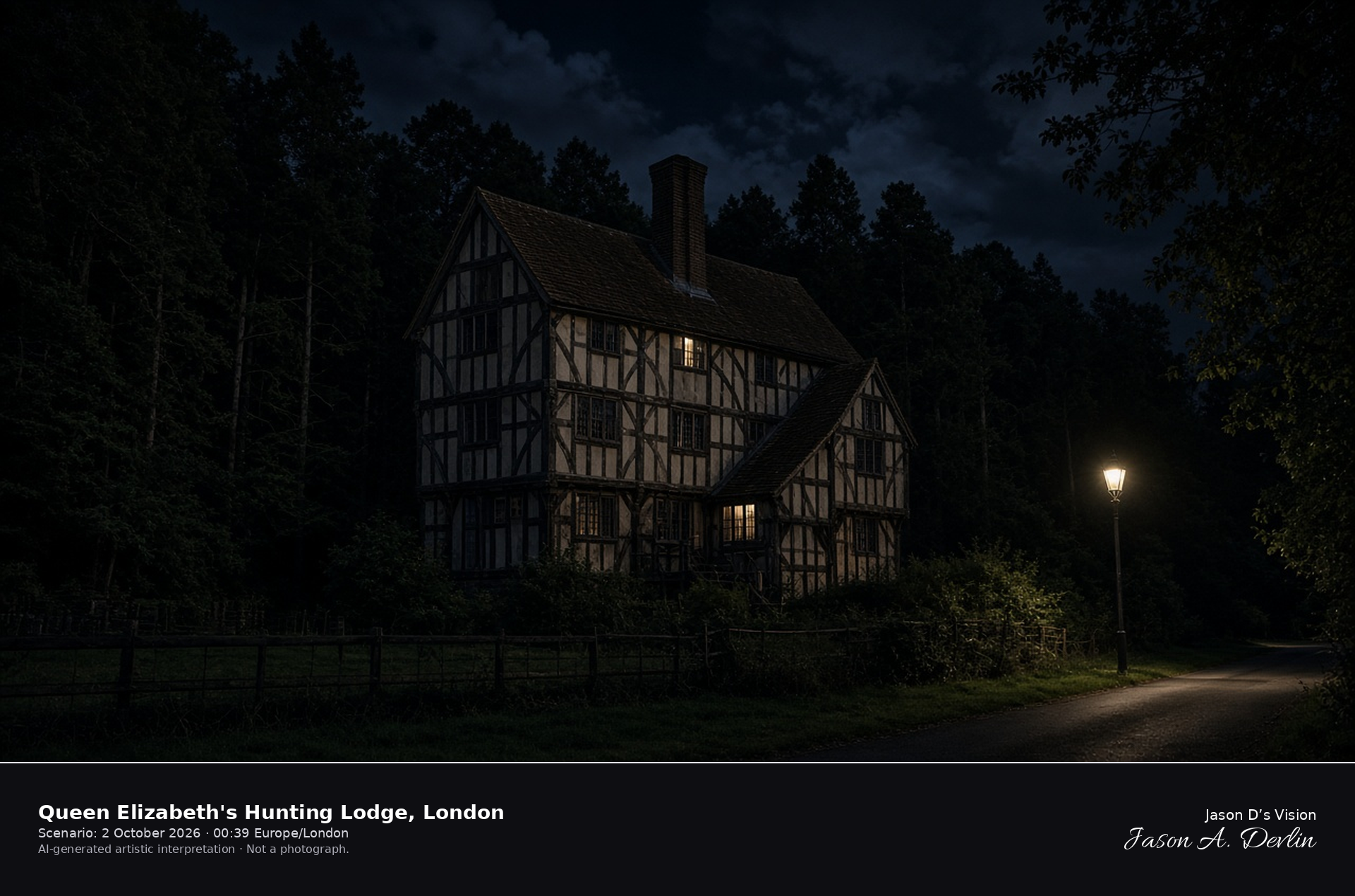
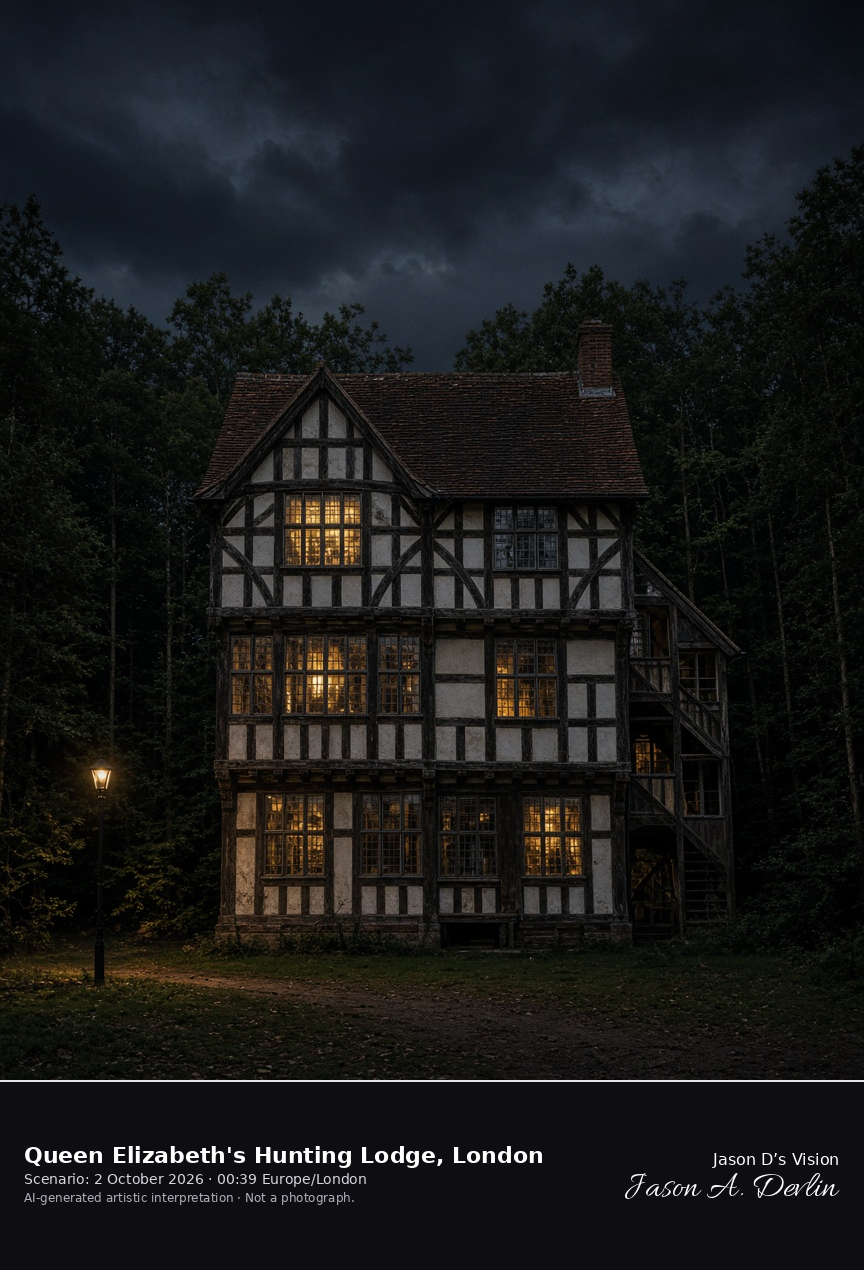
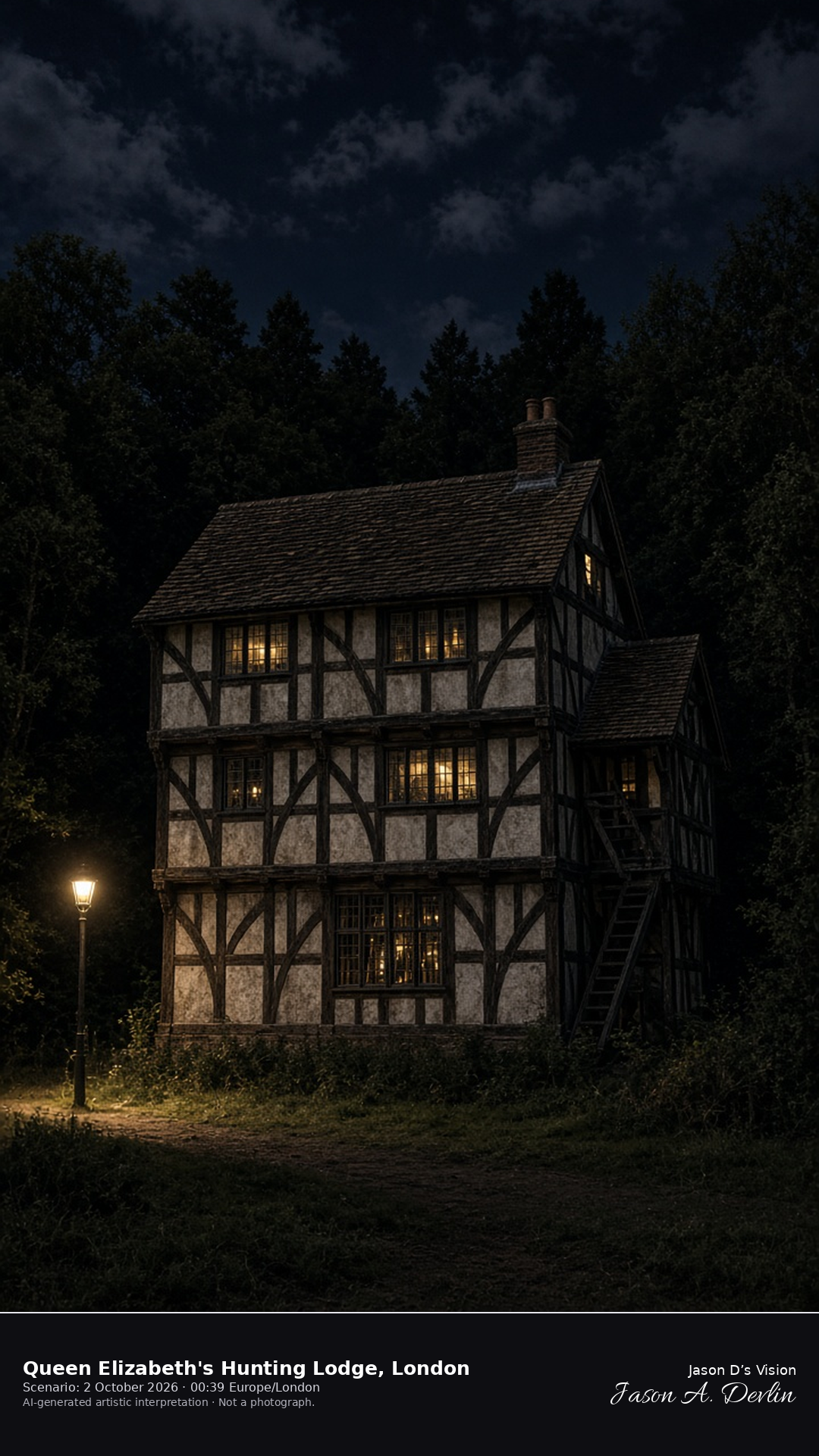
Queen Elizabeth's Hunting Lodge, London (Chingford)
Scenario: 2 October 2026 · 00:39 Europe/London
Queen Elizabeth's Hunting Lodge, London · AI-generated artistic interpretation
From Rangers Road the hunting lodge is a three-storey timber frame of 1543, dark oak and pale plaster, with a clay-tile roof, mullioned windows, and a stair wing to the south. Epping Forest is dark behind it. It is a partly cloudy night, about 14.1°C, dry, and the sun is below the horizon. Open-Meteo valid time is 2026-10-02T00:30 Europe/London on 2 October. This is not a verified on-site observation.
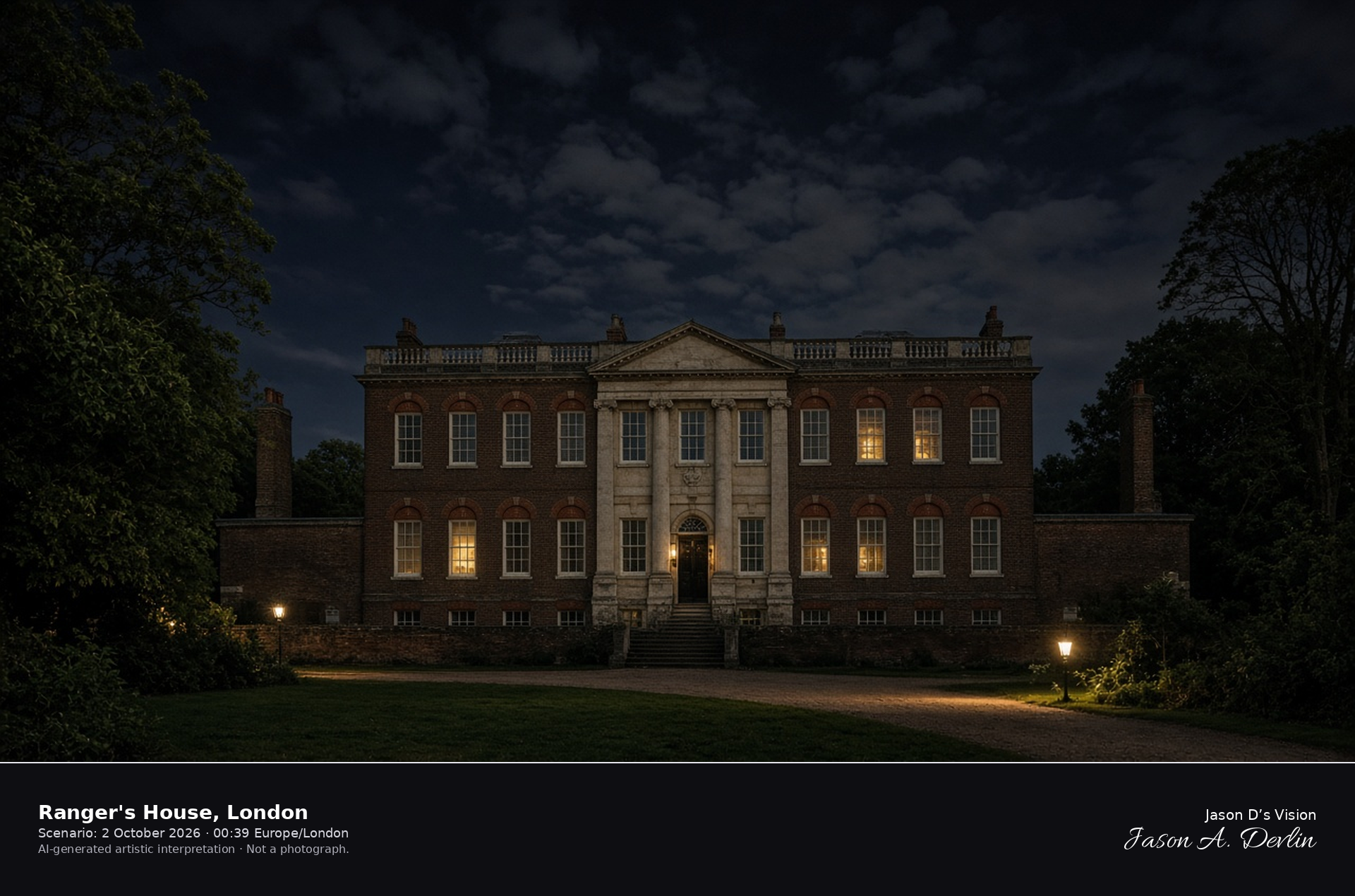
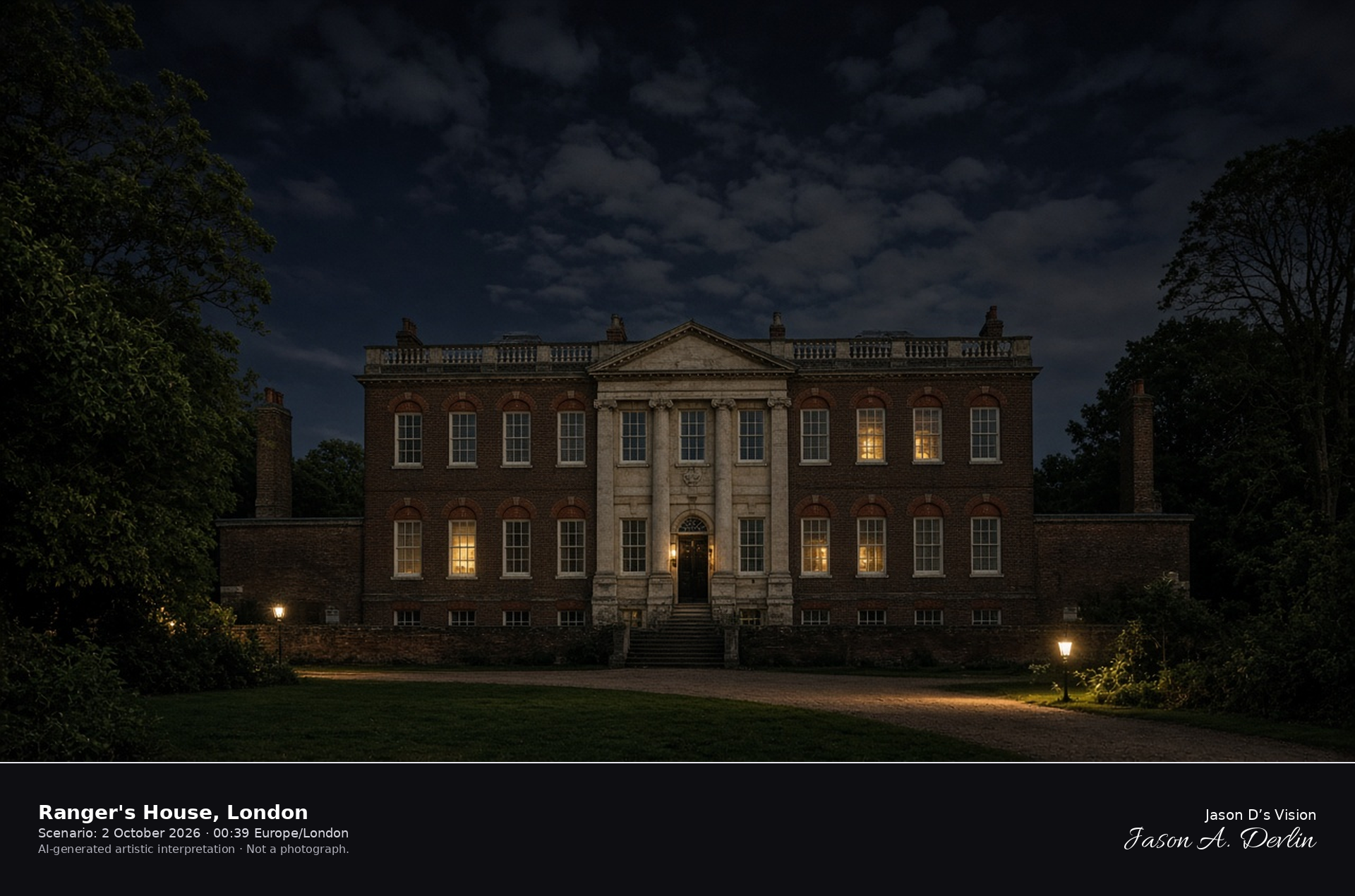
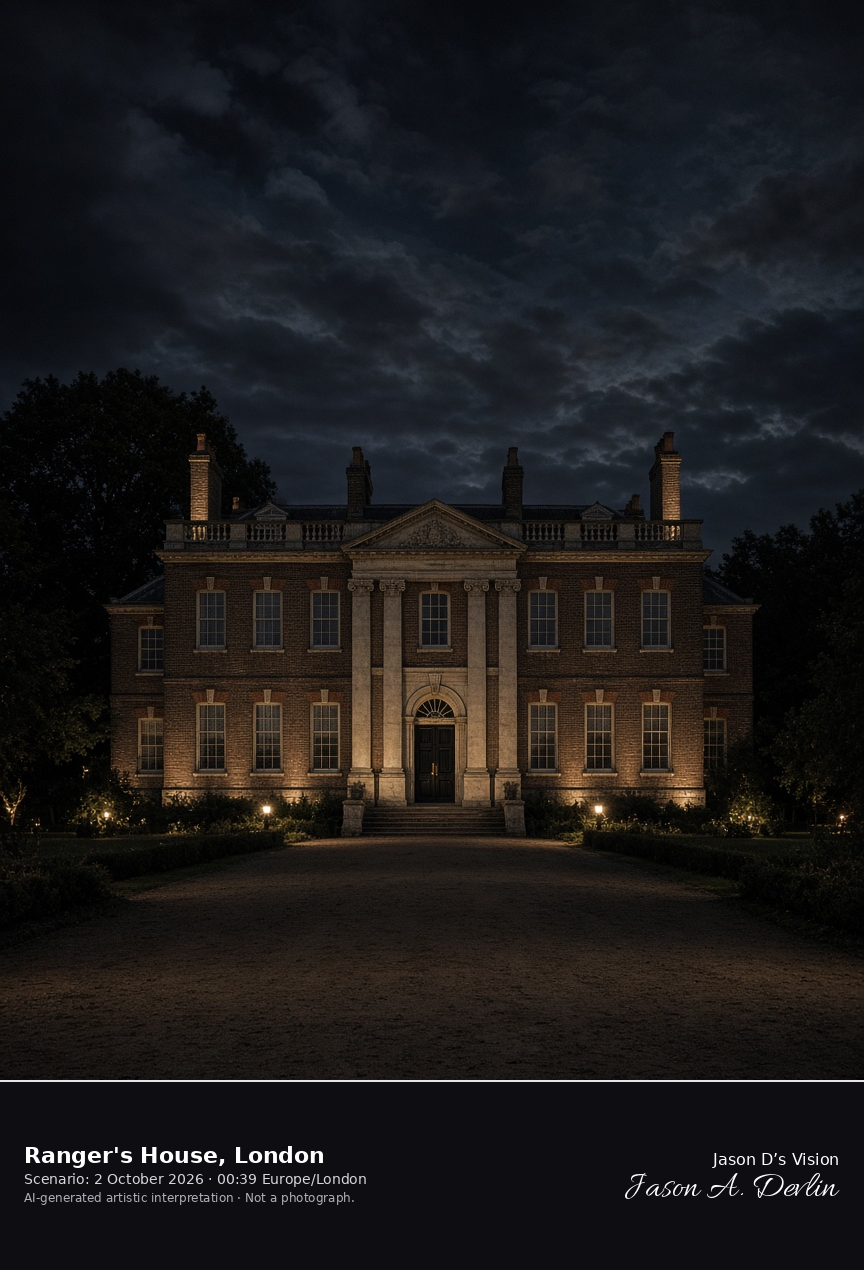
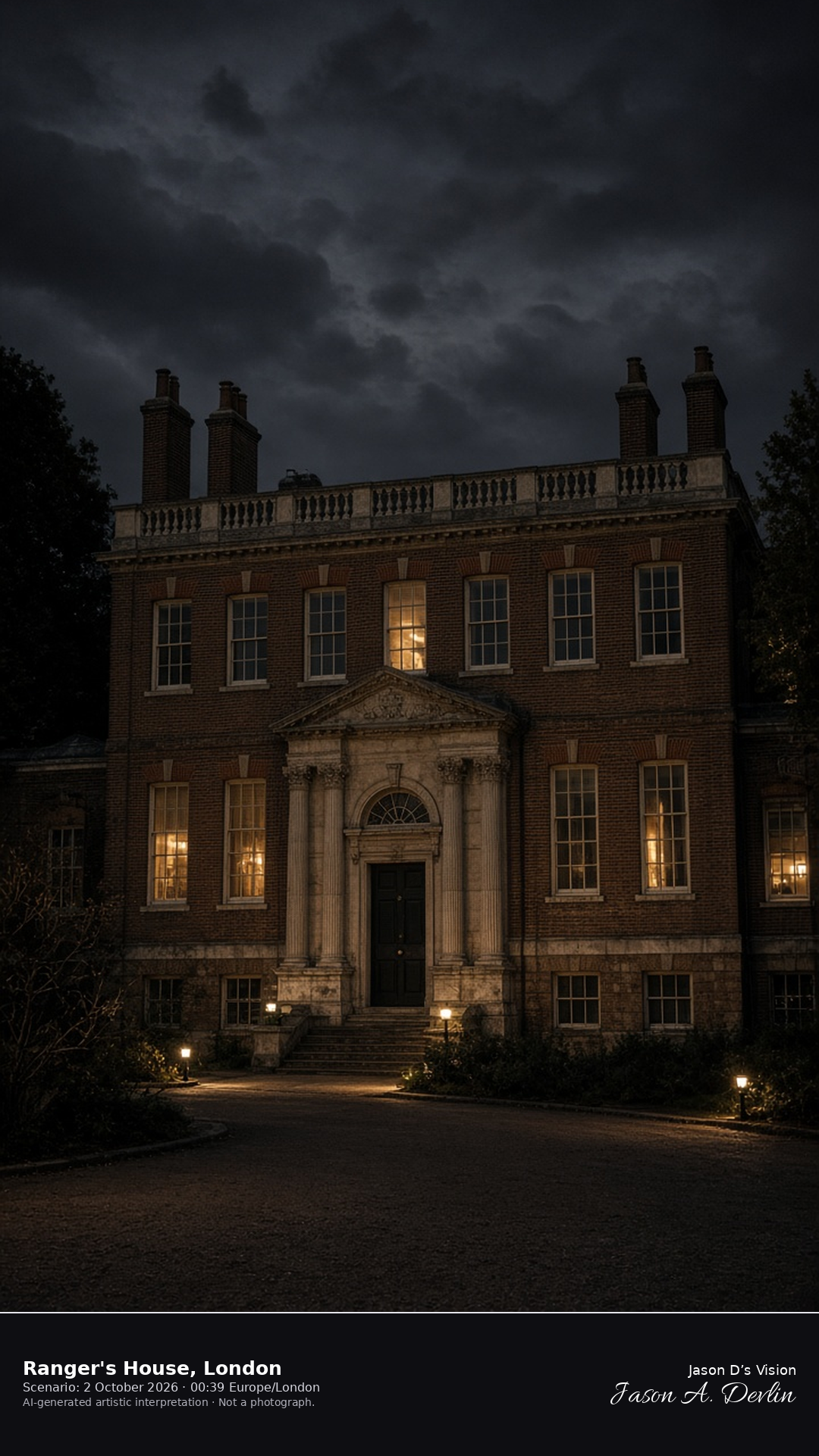
Ranger's House, London · AI-generated artistic interpretation
From Chesterfield Walk the west front is a brown-brick villa with red dressings, seven bays of sash windows, a balustraded parapet, and a Portland-stone centre of Ionic columns and a pediment. Low wings end in tapered brick chimneys. It is a partly cloudy night, about 14.6°C, dry, and the sun is below the horizon. Open-Meteo valid time is 2026-10-02T00:30 Europe/London on 2 October. This is not a verified on-site observation.
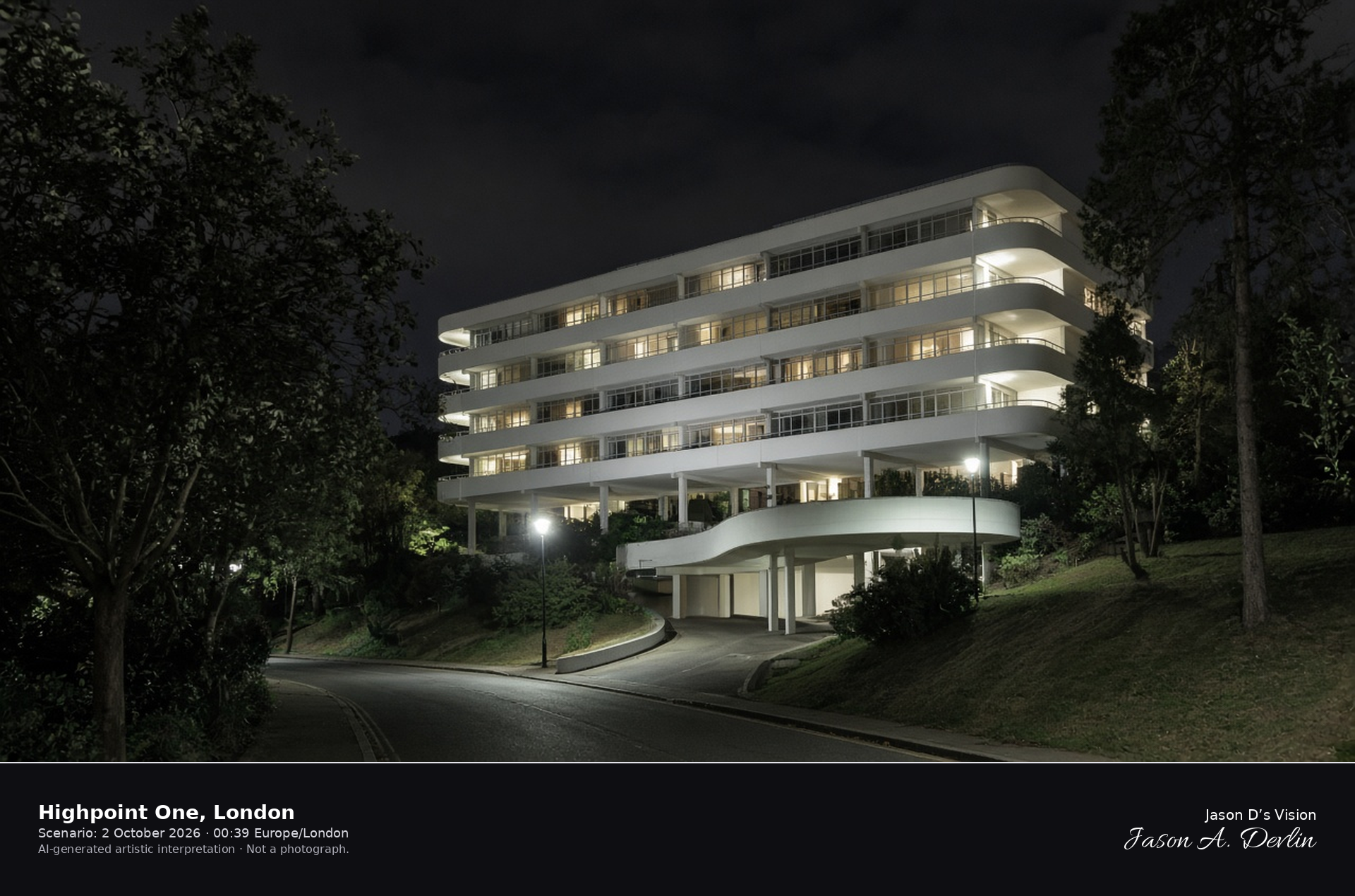
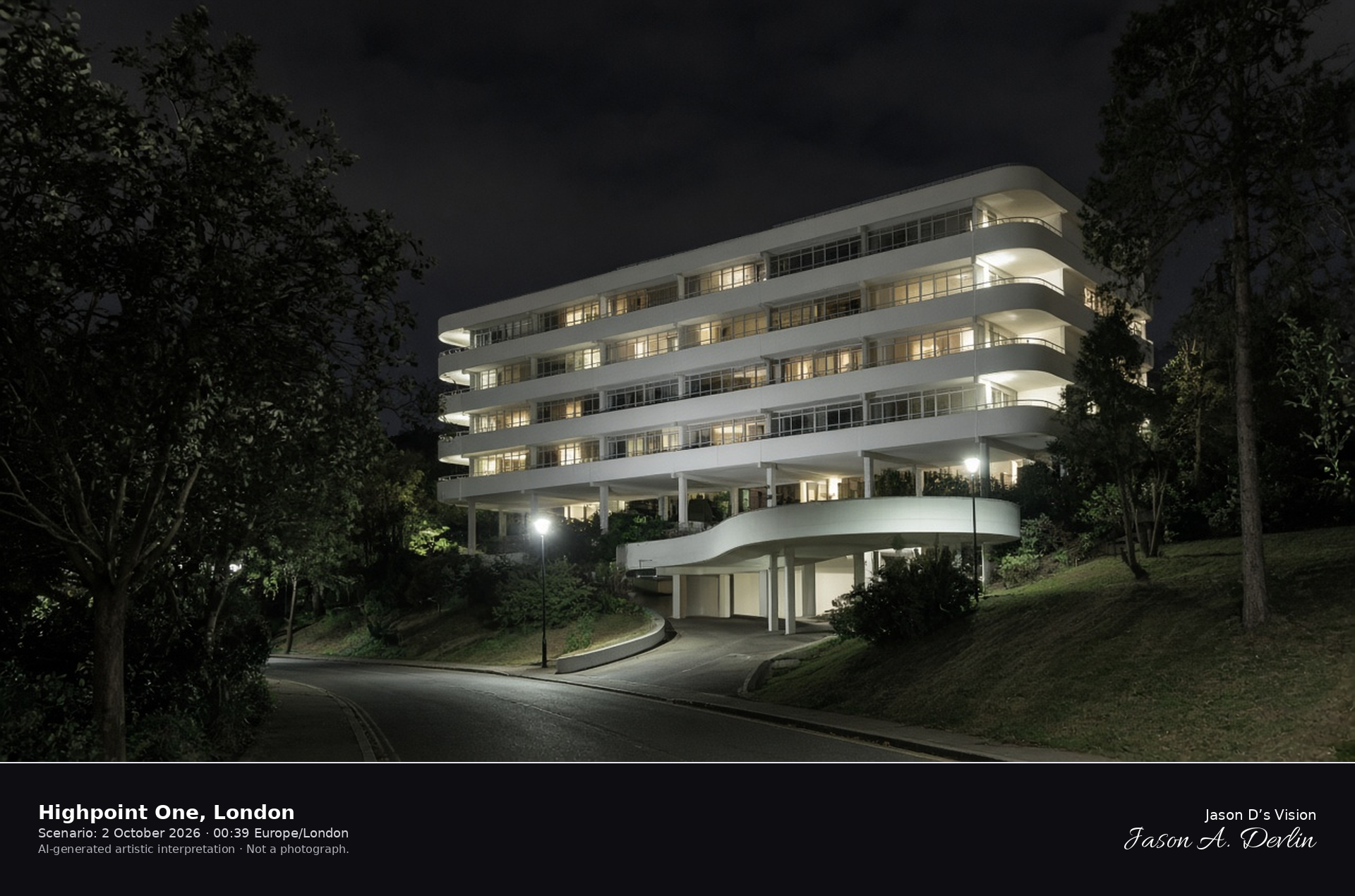
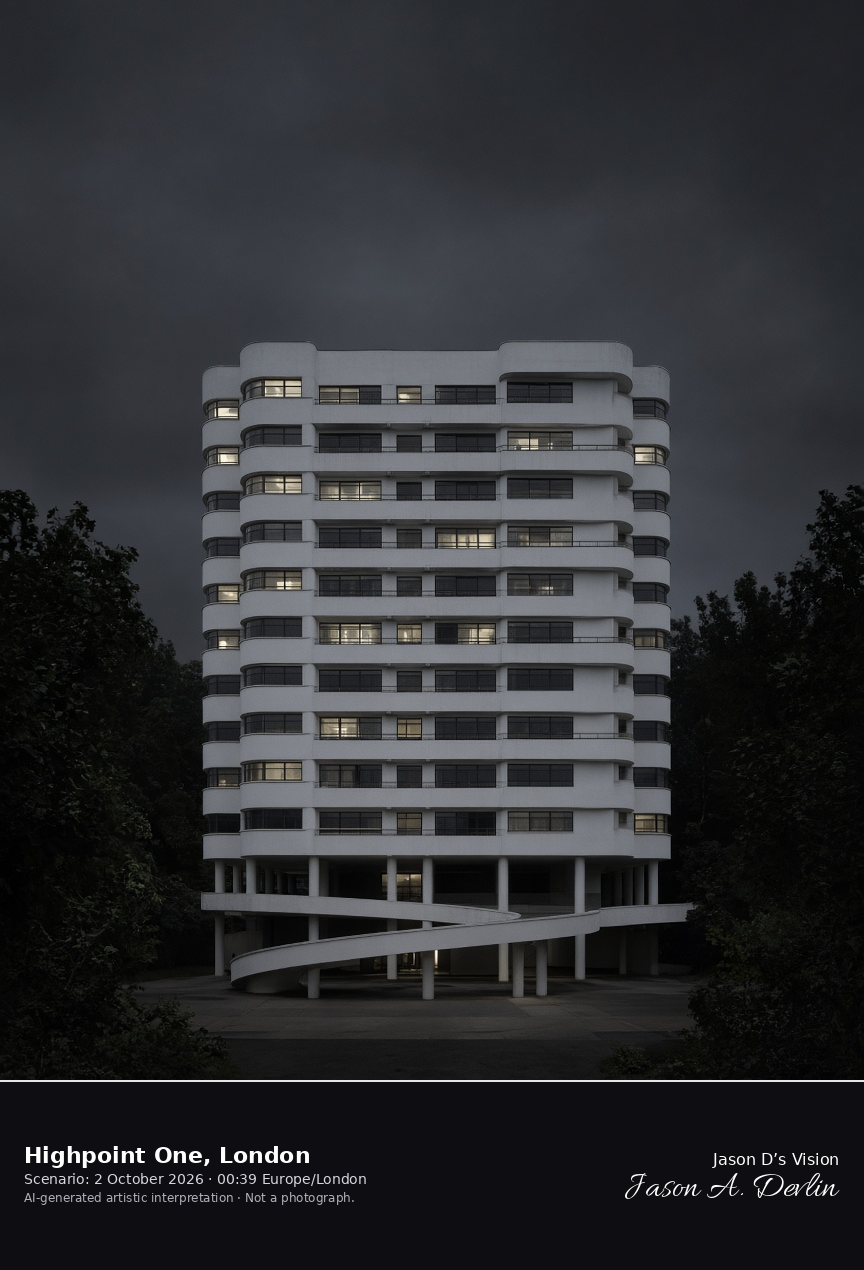
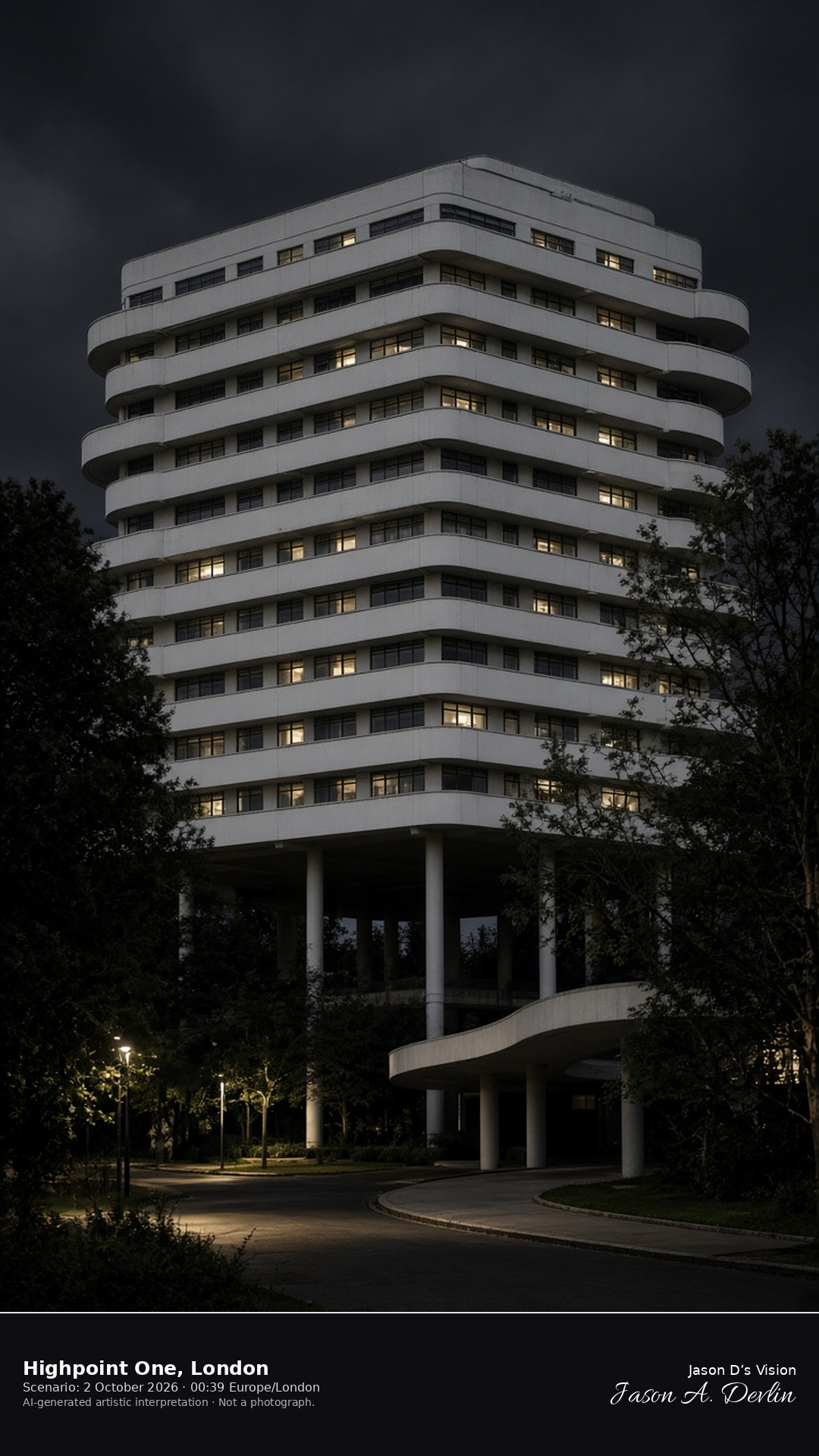
Highpoint One, London · AI-generated artistic interpretation
From North Hill, Highpoint One is a white concrete slab of 1935, a double cruciform of flats lifted on pilotis, with long window bands, curved balconies, and a curved entrance canopy at the street. It is an overcast night, about 13.5°C, dry, and the sun is below the horizon. Open-Meteo valid time is 2026-10-02T00:30 Europe/London on 2 October. This is not a verified on-site observation.
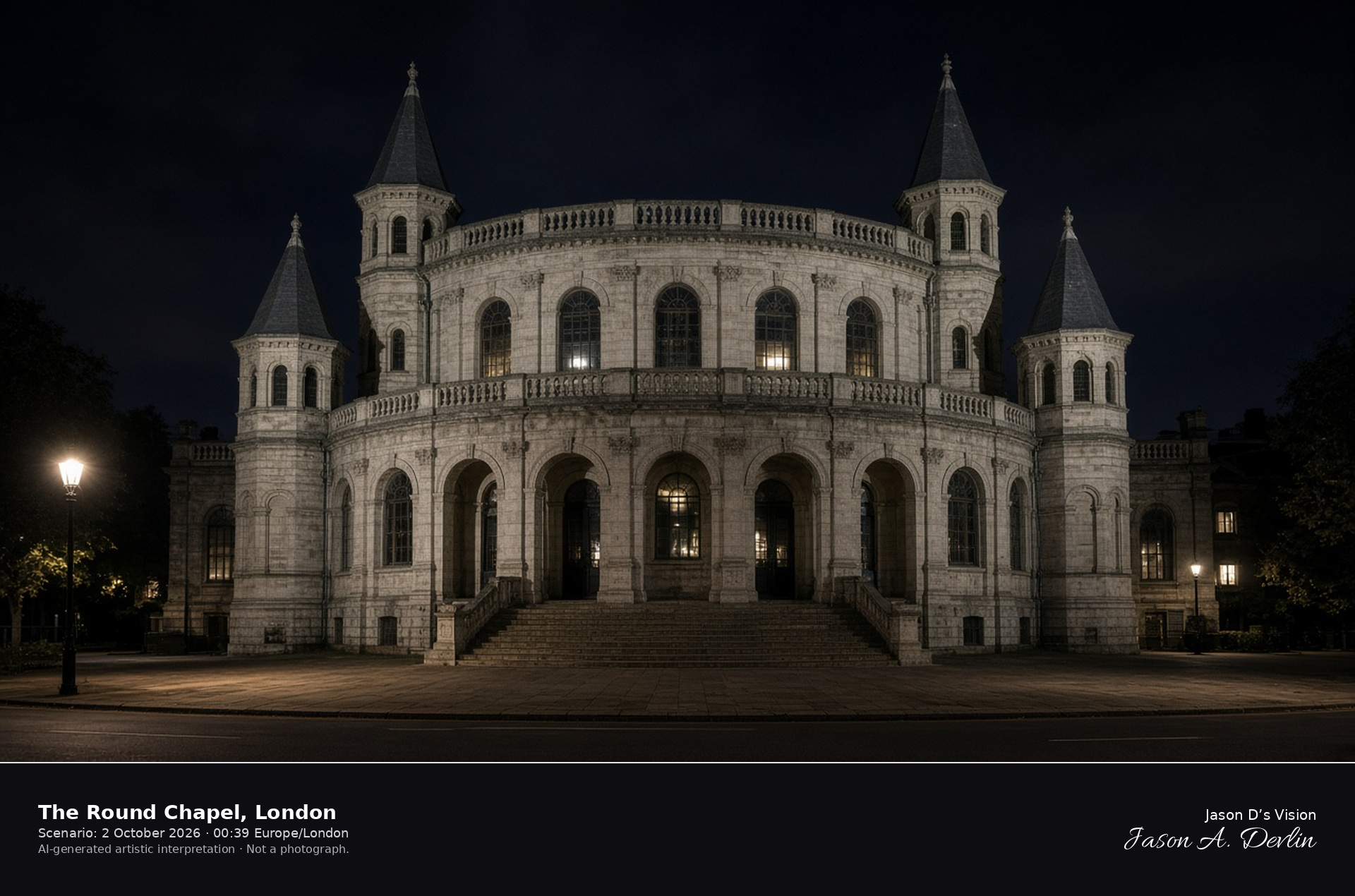
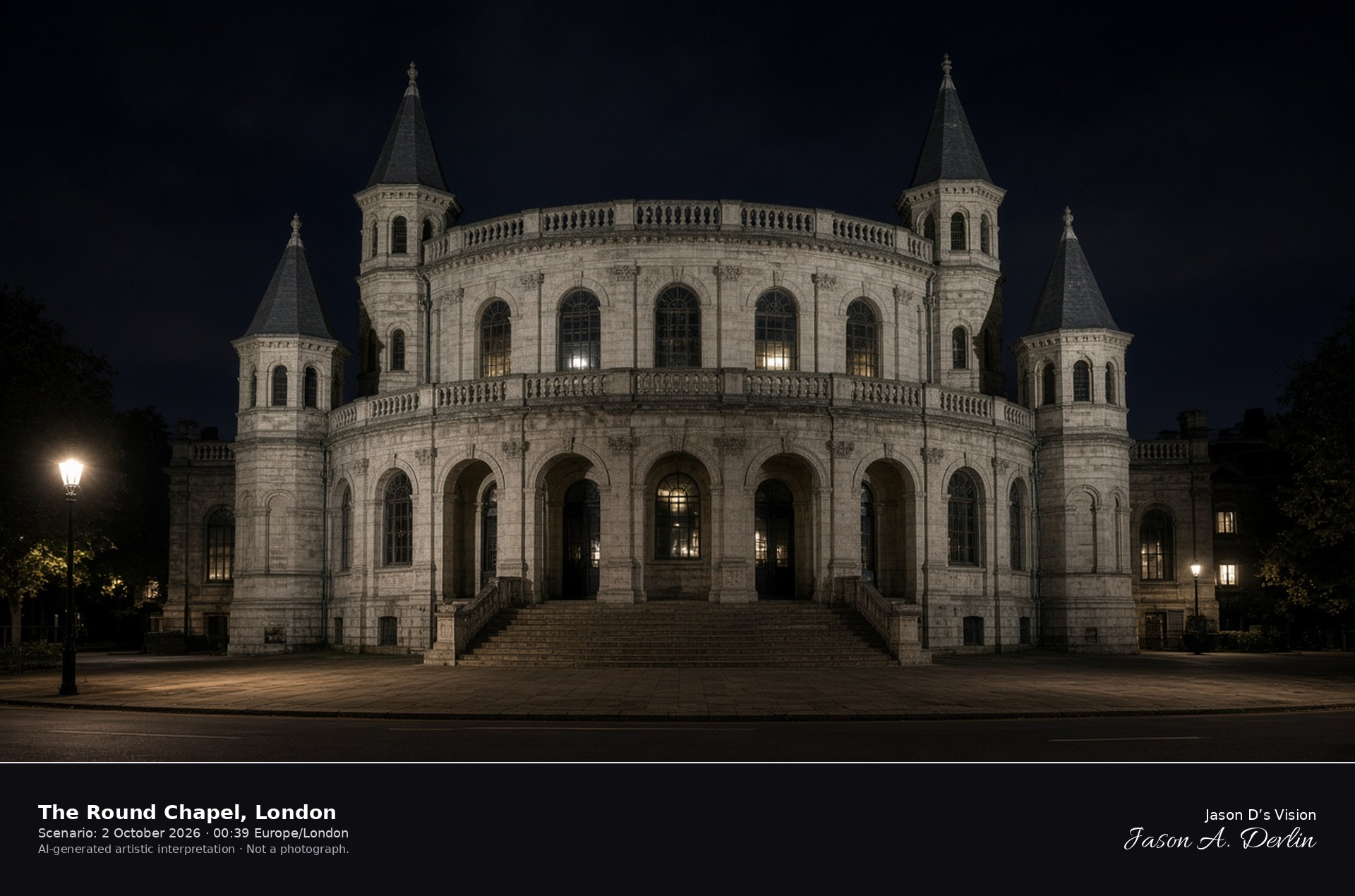
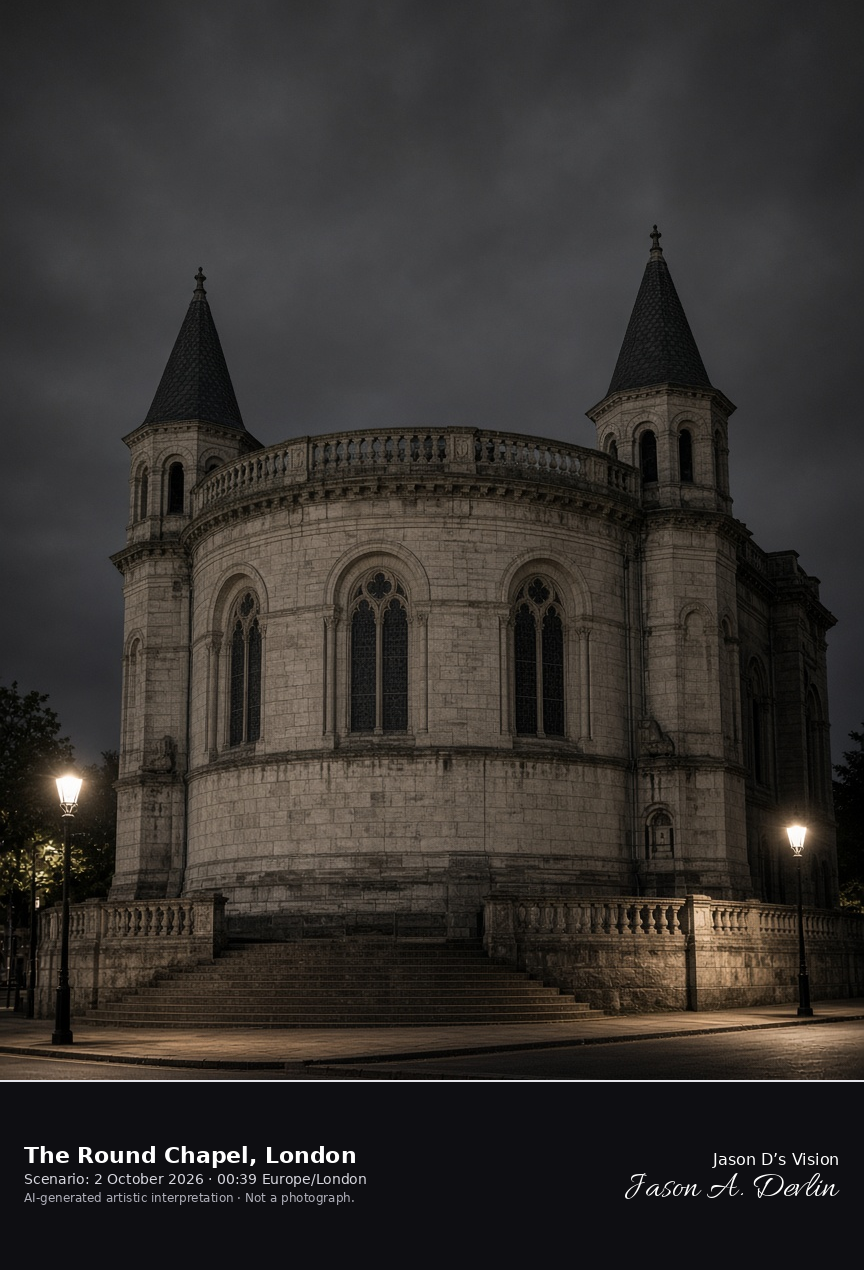
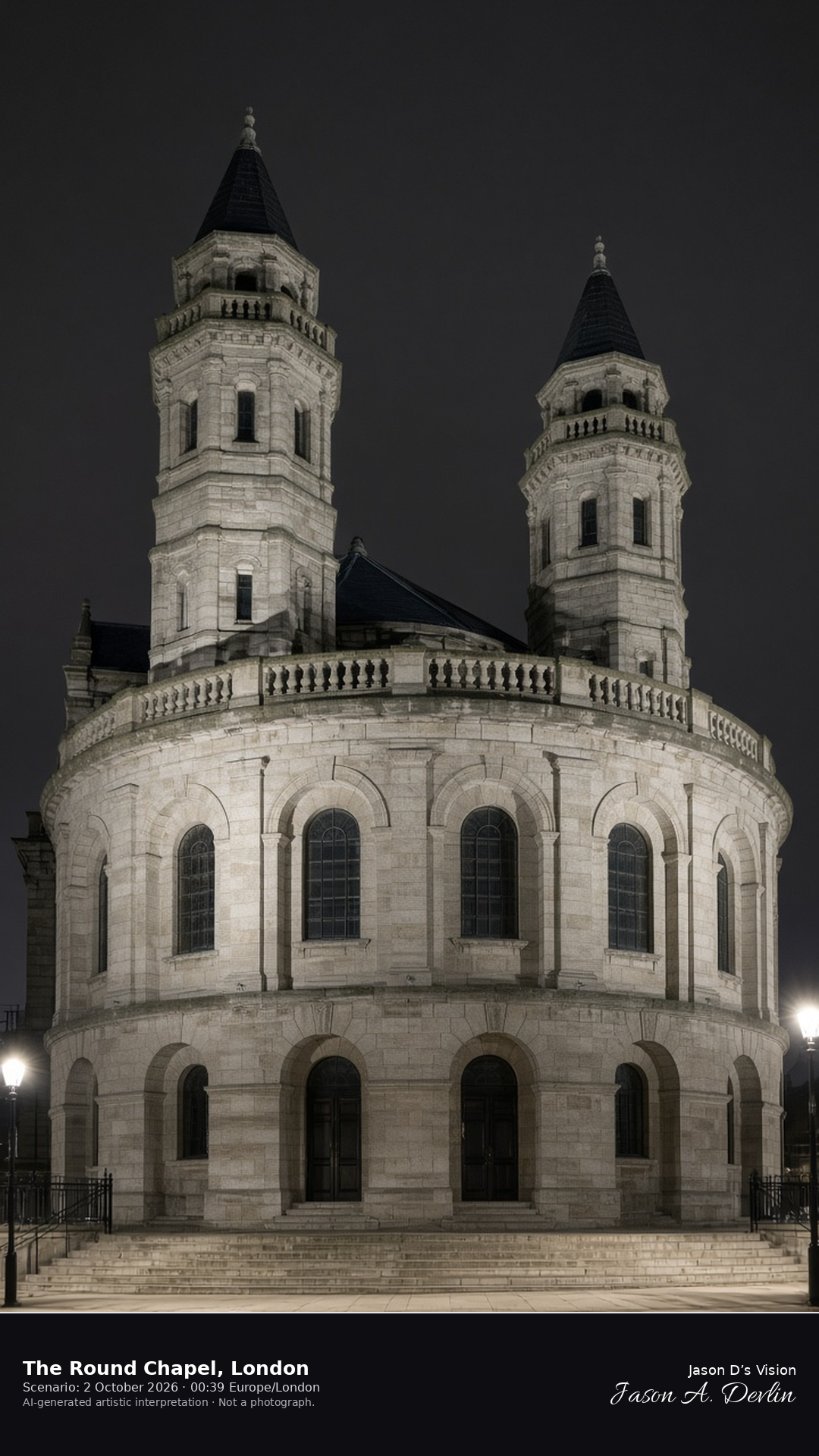
The Round Chapel, London · AI-generated artistic interpretation
From Lower Clapton Road the west end of the Round Chapel is a curve of pale ashlar, with round-arched windows, a balustraded parapet, and octagonal towers under conical slate roofs. Steps spread from the curve. It is an overcast night, about 15.2°C, dry, and the sun is below the horizon. Open-Meteo valid time is 2026-10-02T00:30 Europe/London on 2 October. This is not a verified on-site observation.
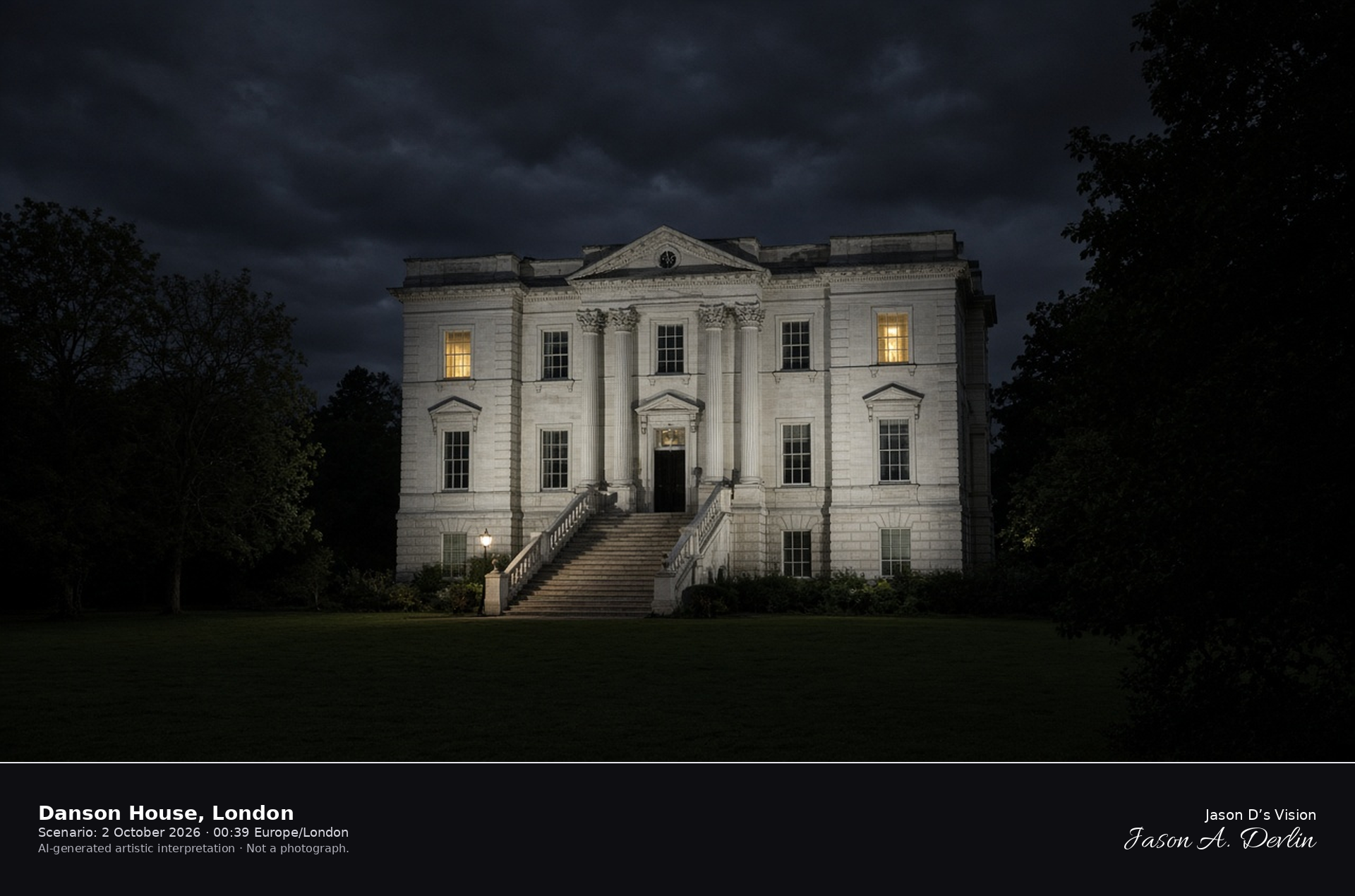
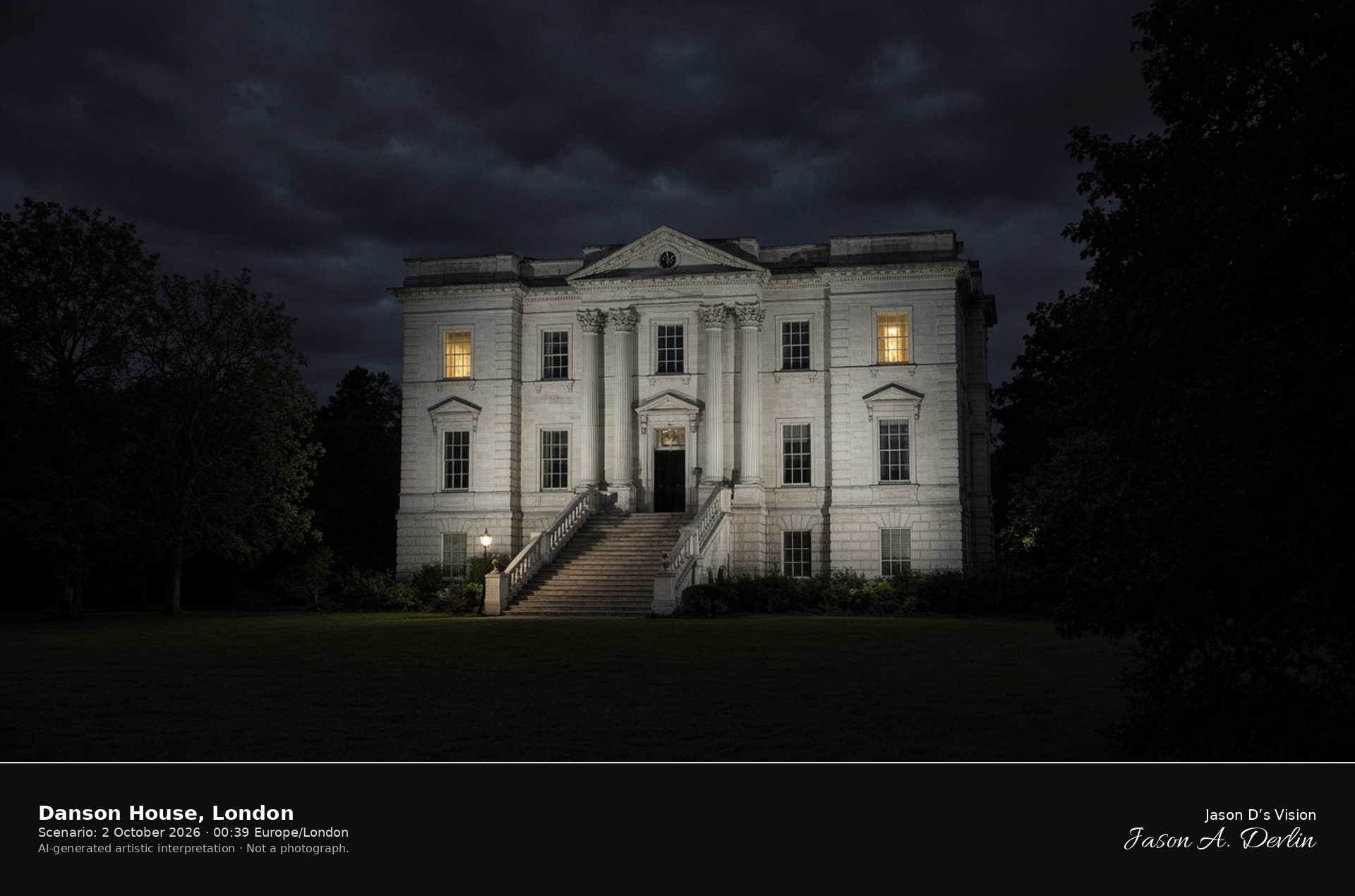
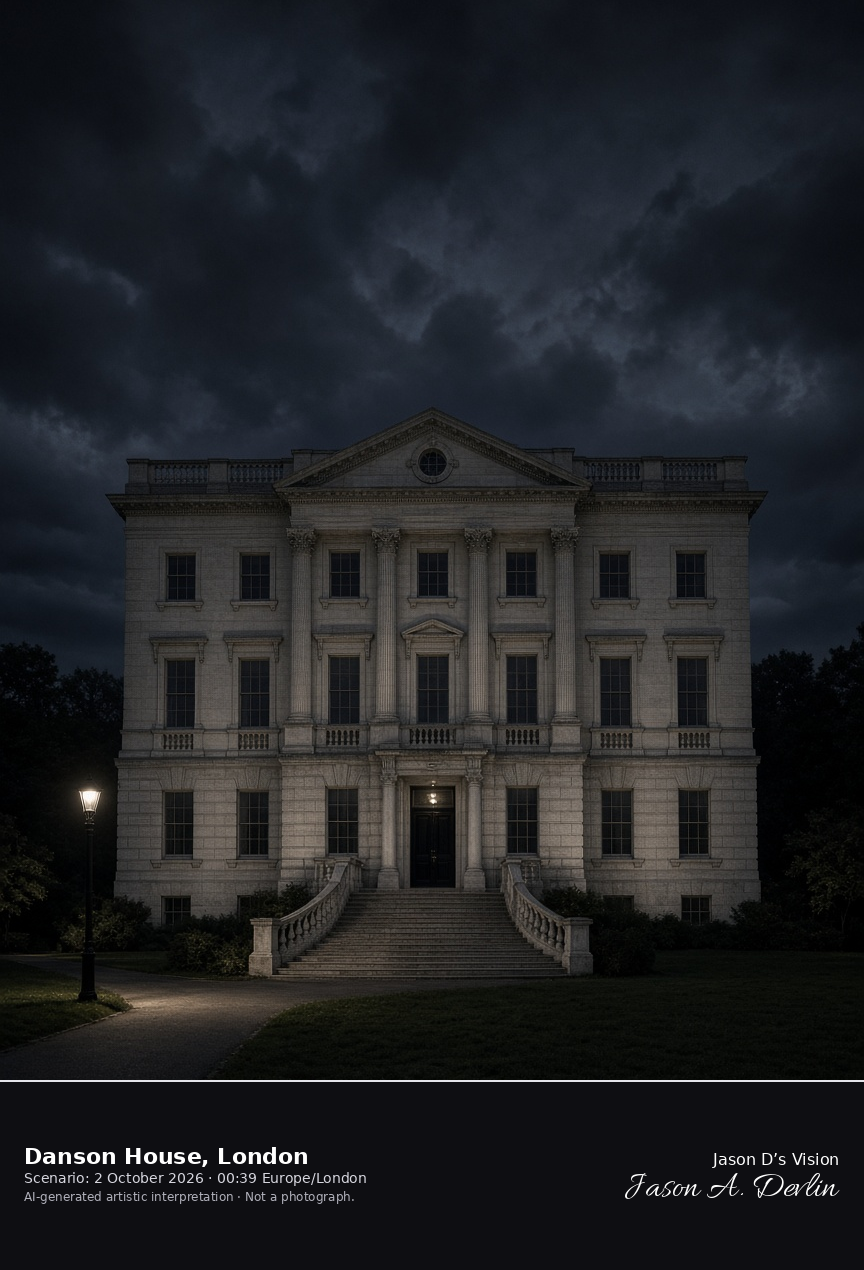
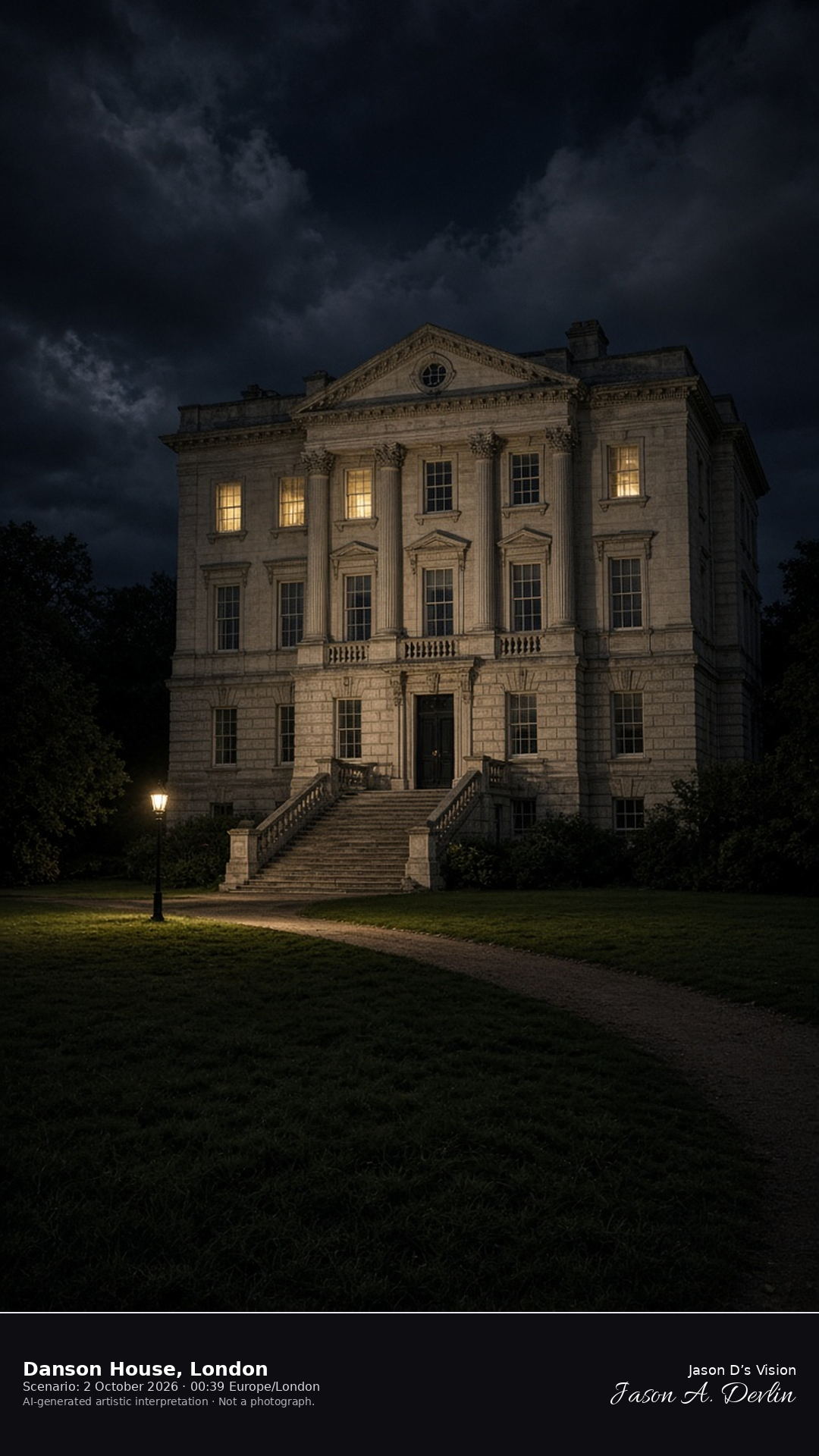
Danson House, London · AI-generated artistic interpretation
From the park lawn the north front of Danson House is a compact Portland-stone villa, three storeys on a rusticated base, with a pediment that holds a round window and a wide balustraded stair to the door. There is no outer dome. It is a partly cloudy night, about 13.3°C, dry, and the sun is below the horizon. Open-Meteo valid time is 2026-10-02T00:30 Europe/London on 2 October. This is not a verified on-site observation.
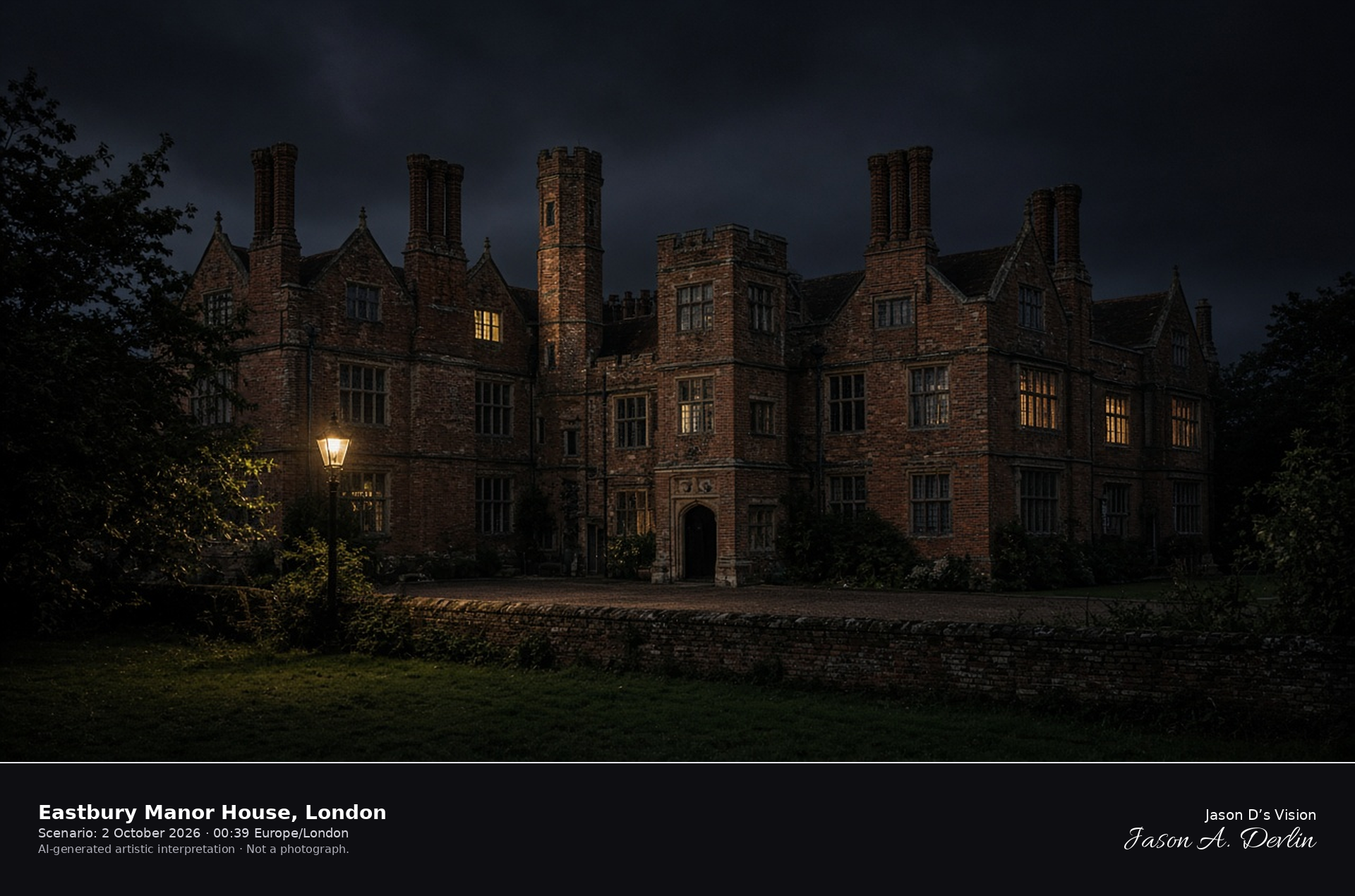
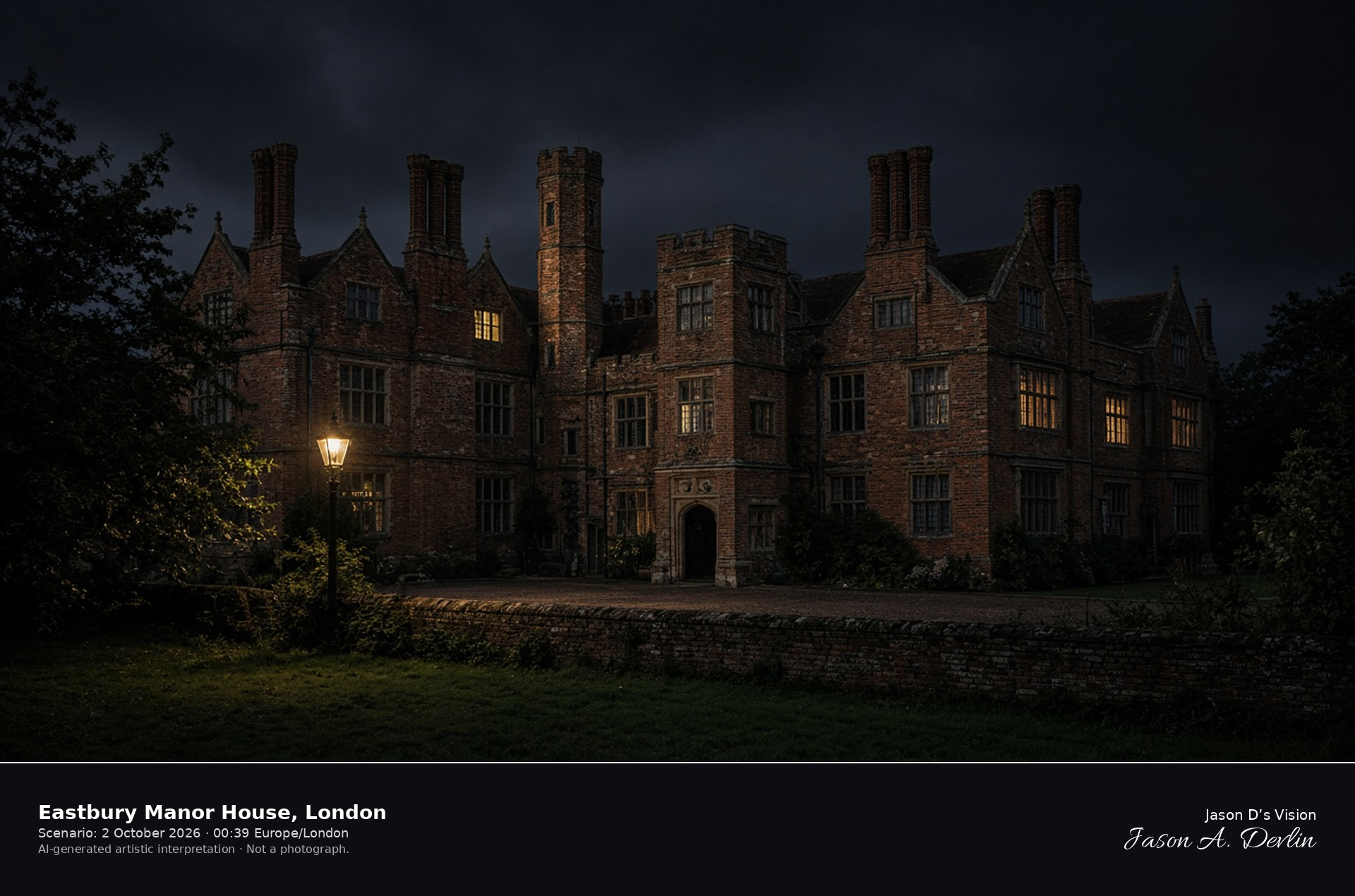
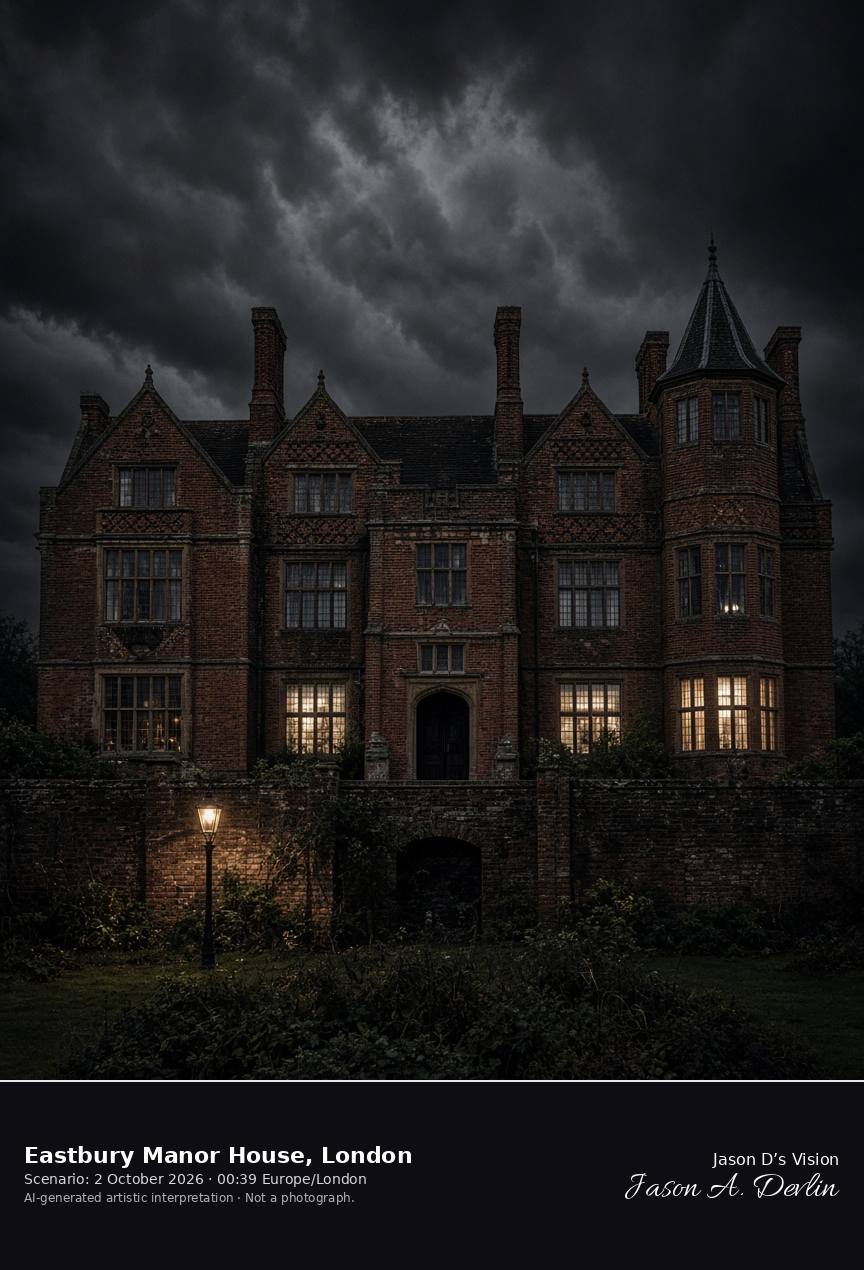
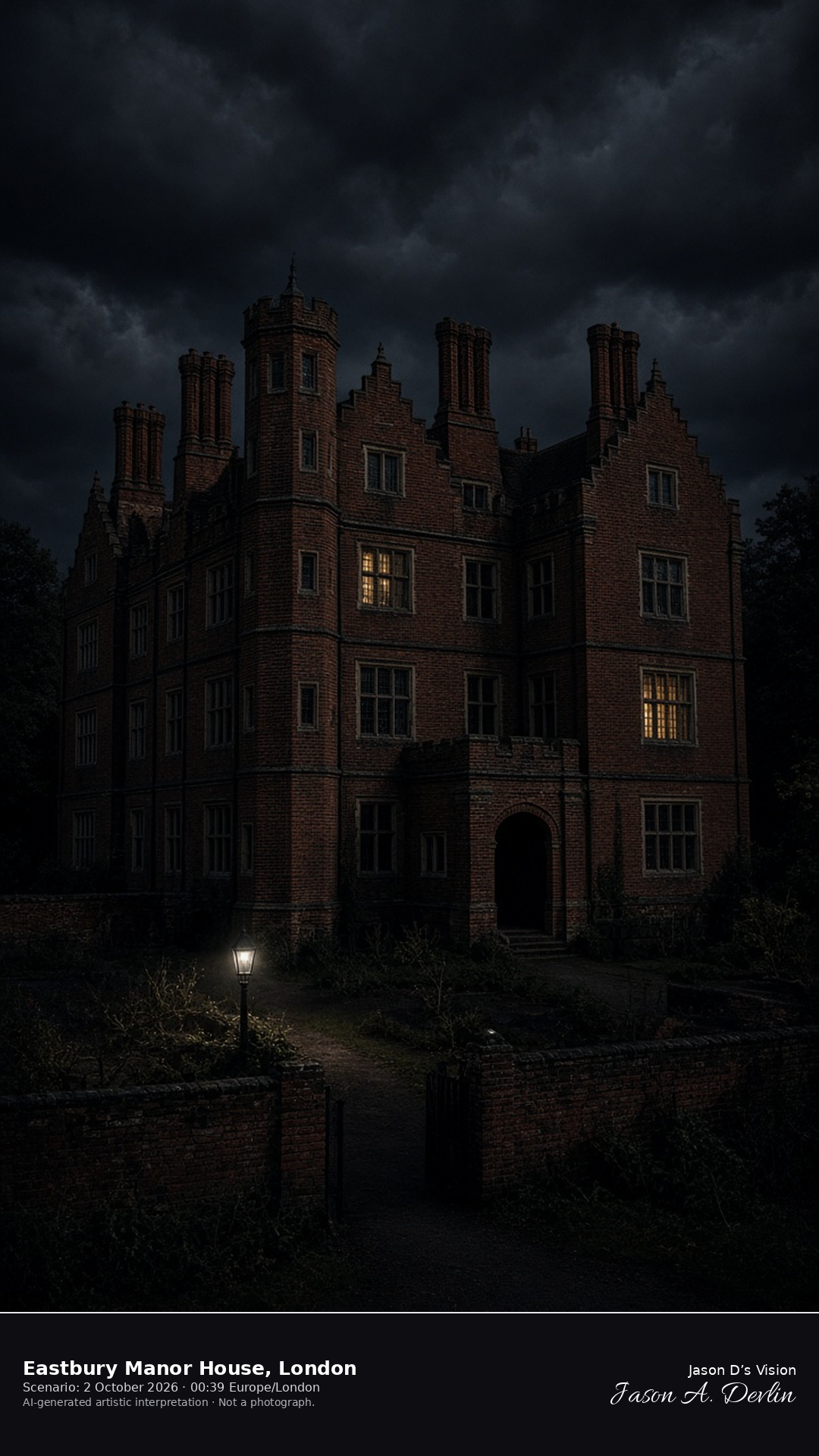
Eastbury Manor House, London · AI-generated artistic interpretation
From the garden, Eastbury Manor House is a red-brick H-plan house of the 1570s, with gables, mullioned windows, tall octagonal chimney shafts, and one surviving octagonal stair turret. It is an overcast night, about 15.3°C, dry, and the sun is below the horizon. Open-Meteo valid time is 2026-10-02T00:30 Europe/London on 2 October. This is not a verified on-site observation.
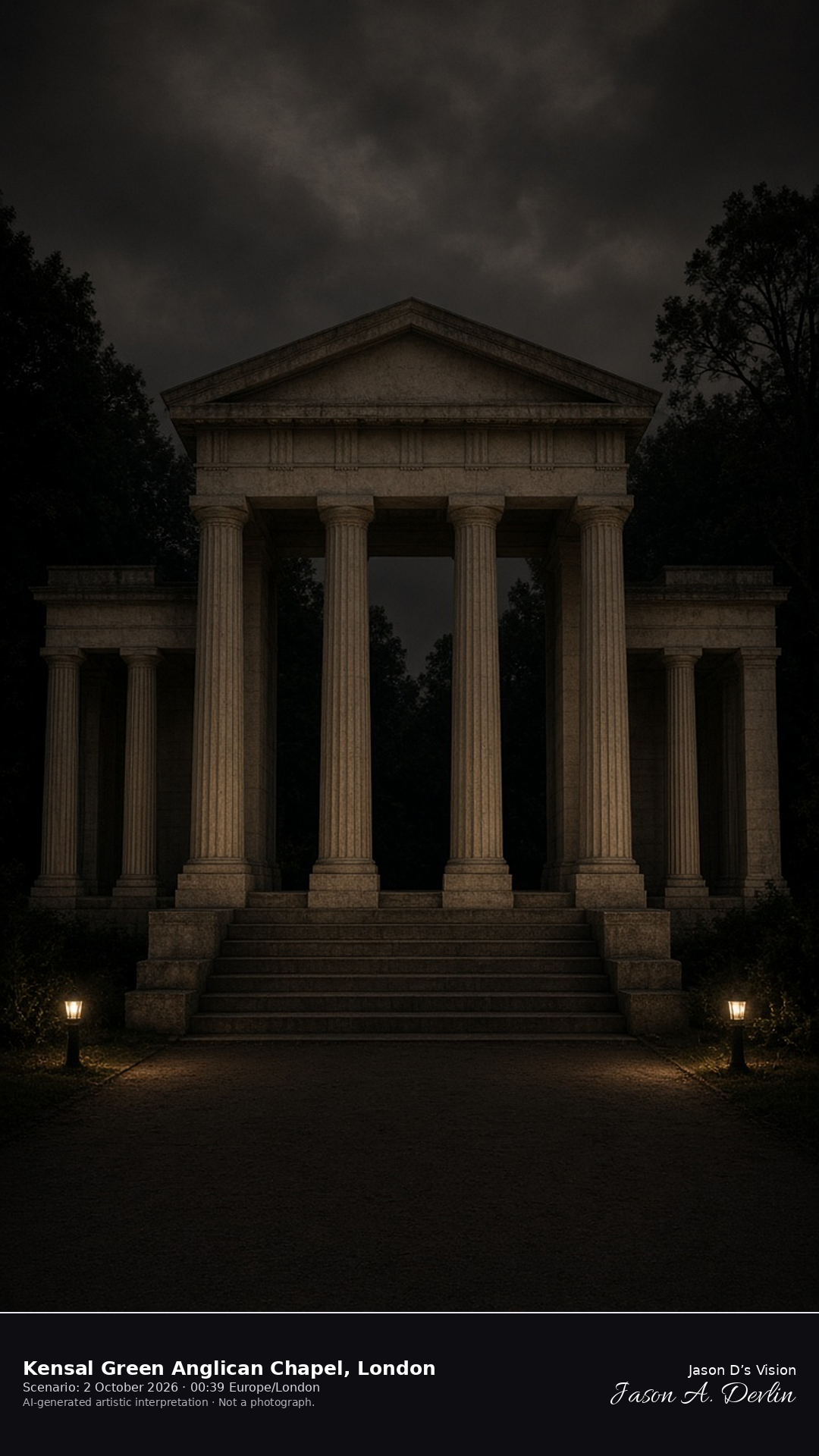
Kensal Green Anglican Chapel, London (Kensal Green)
Scenario: 2 October 2026 · 00:39 Europe/London
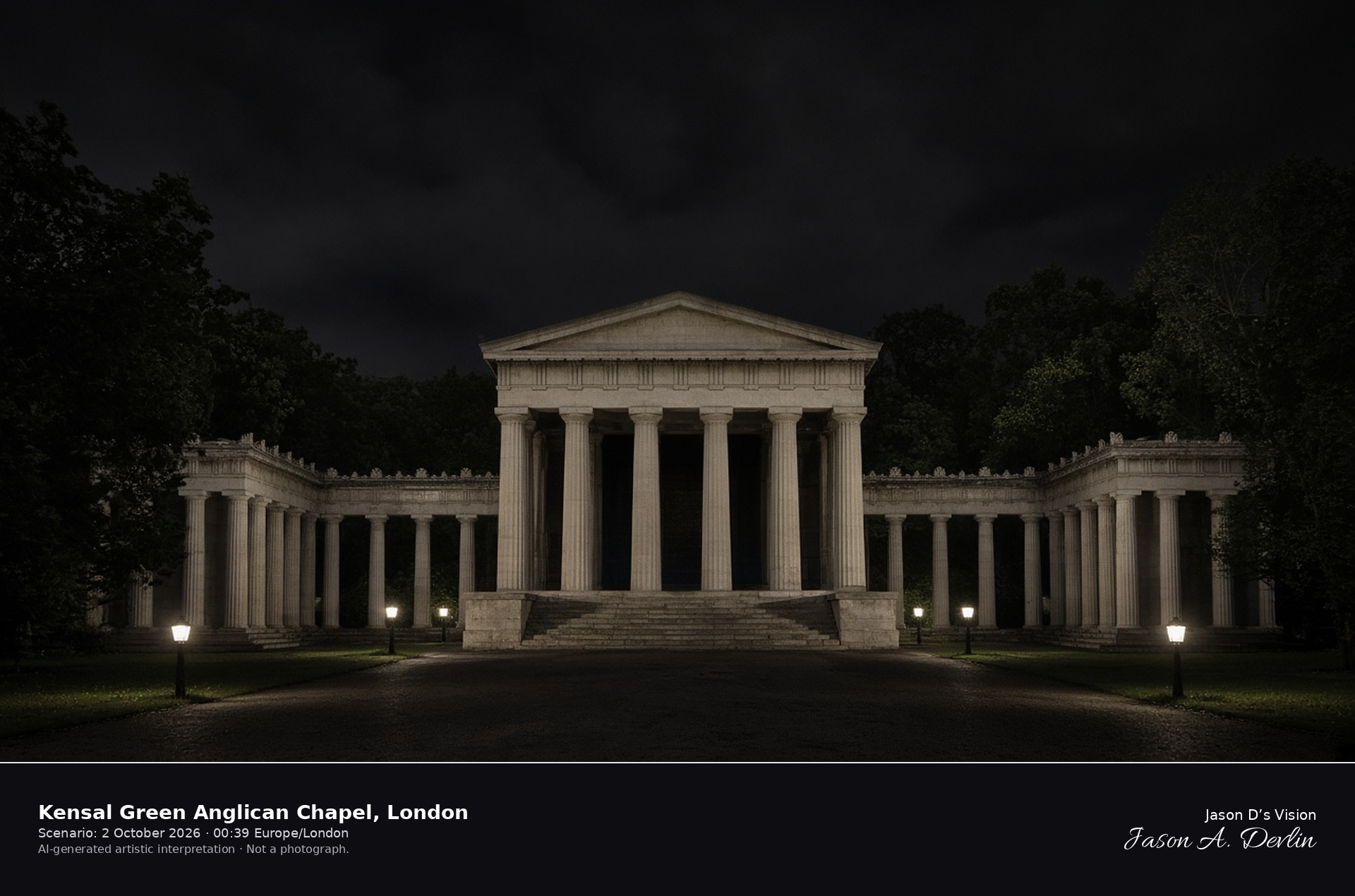
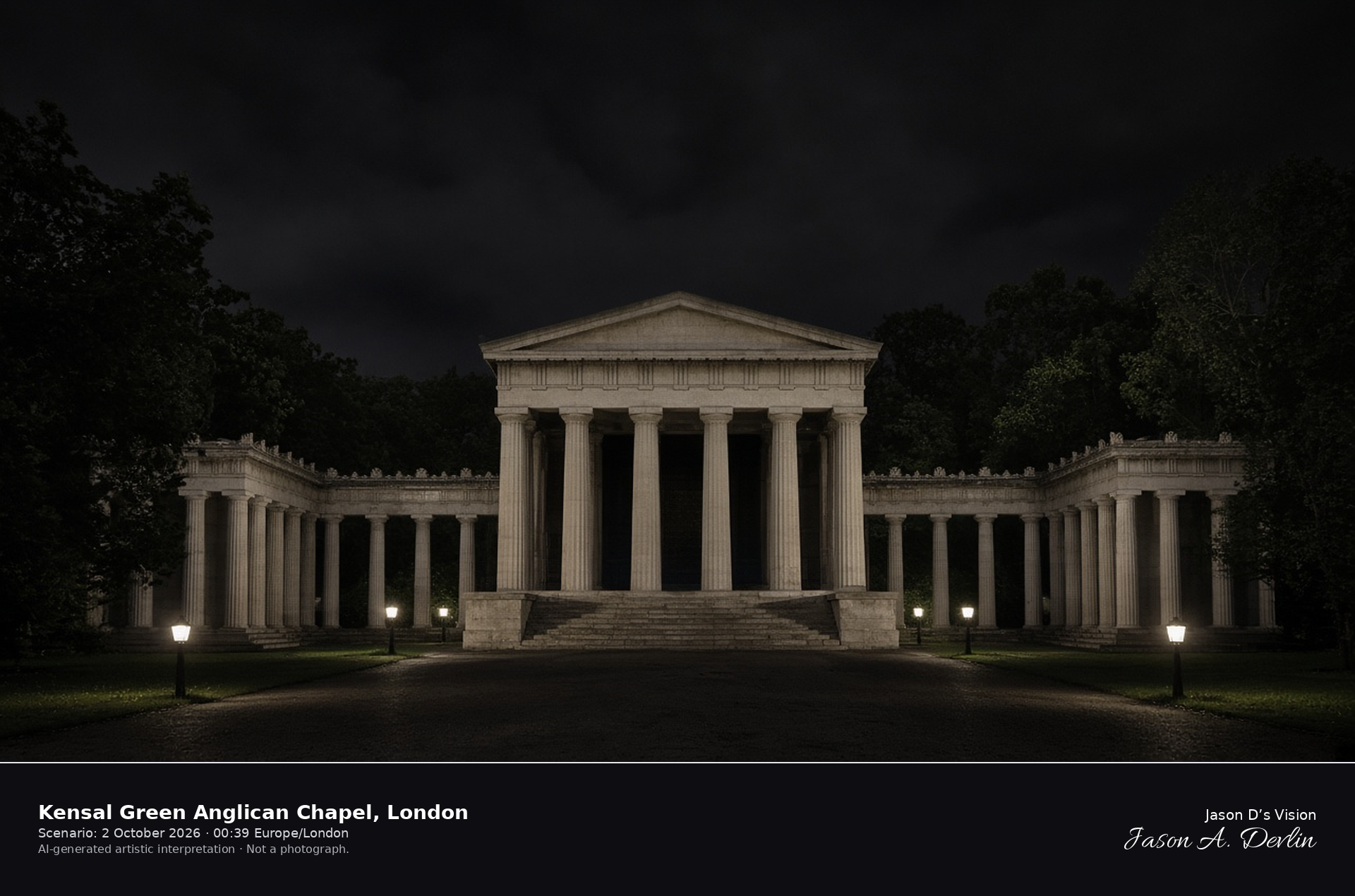
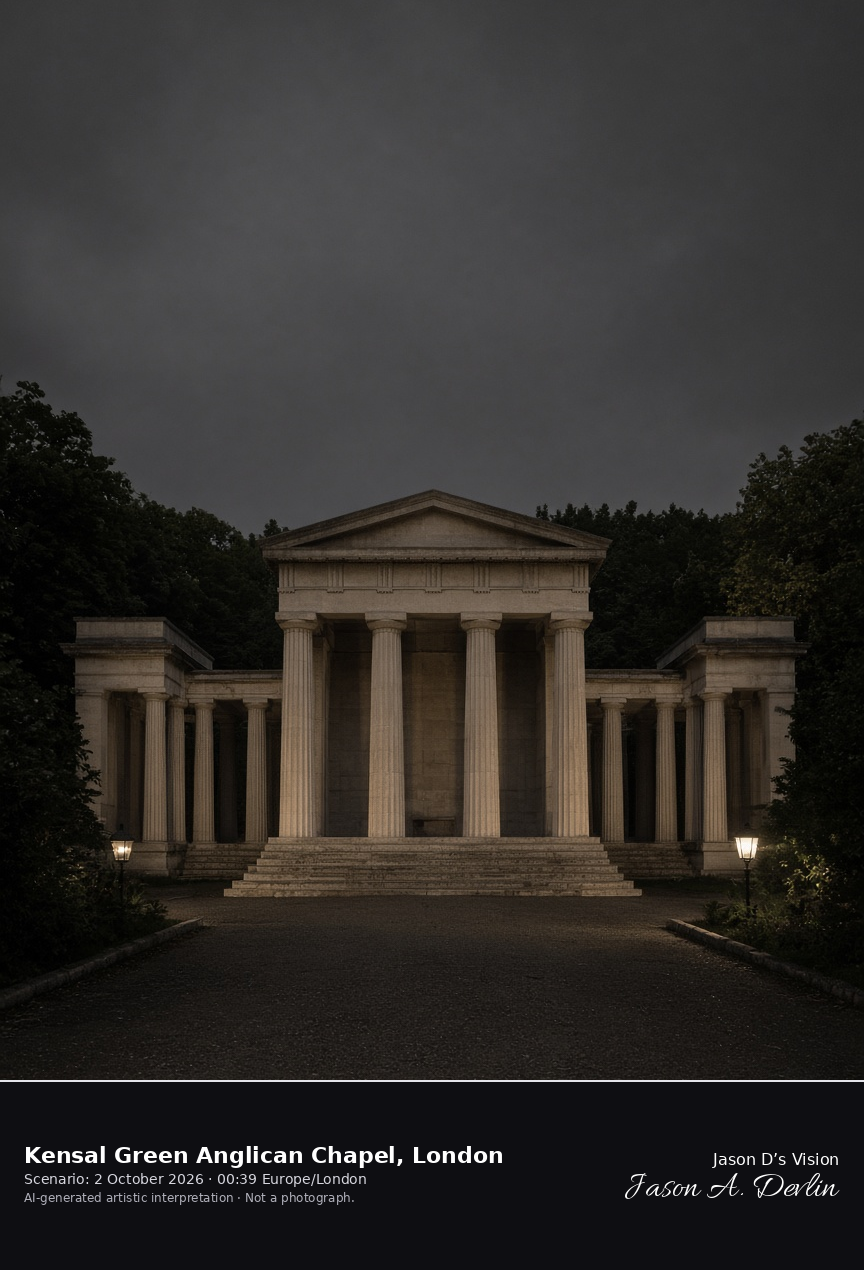
Kensal Green Anglican Chapel, London · AI-generated artistic interpretation
From the centre avenue the Anglican chapel is a Greek Doric portico of four baseless fluted columns under a plain pediment, with colonnades running out to square pavilions. Cemetery trees stand behind the stone. It is an overcast night, about 14.8°C, dry, and the sun is below the horizon. Open-Meteo valid time is 2026-10-02T00:30 Europe/London on 2 October. This is not a verified on-site observation.
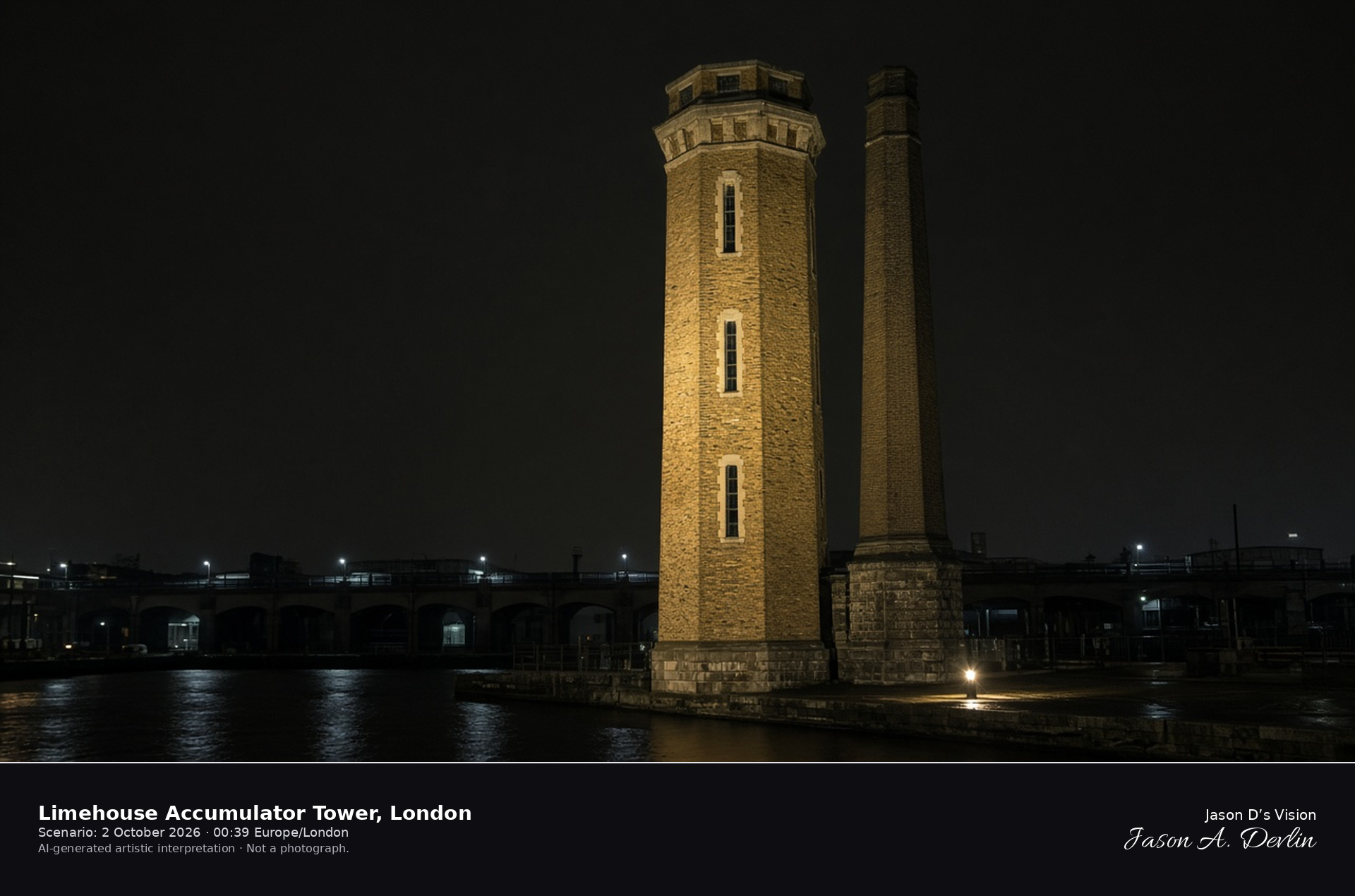
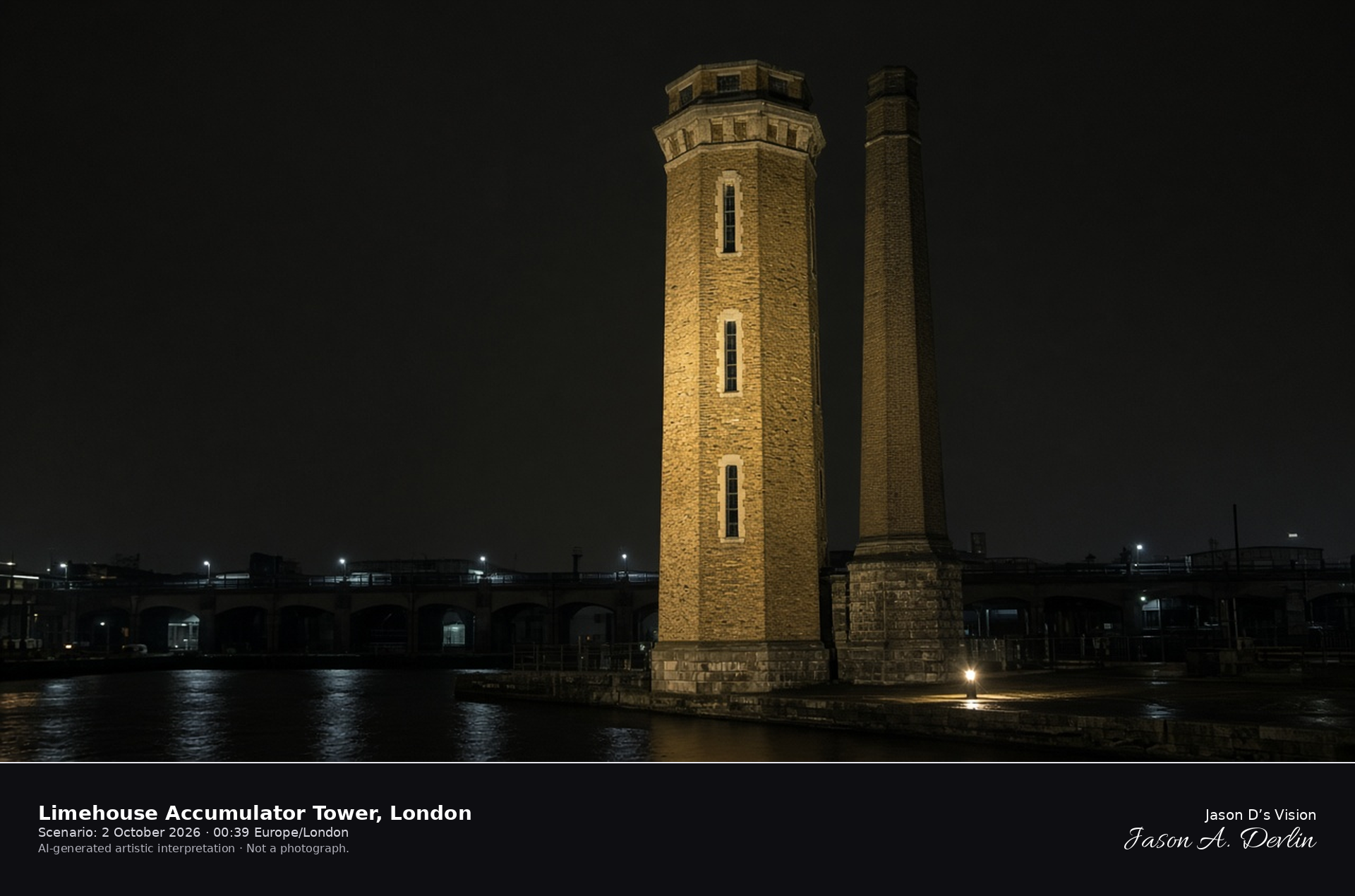
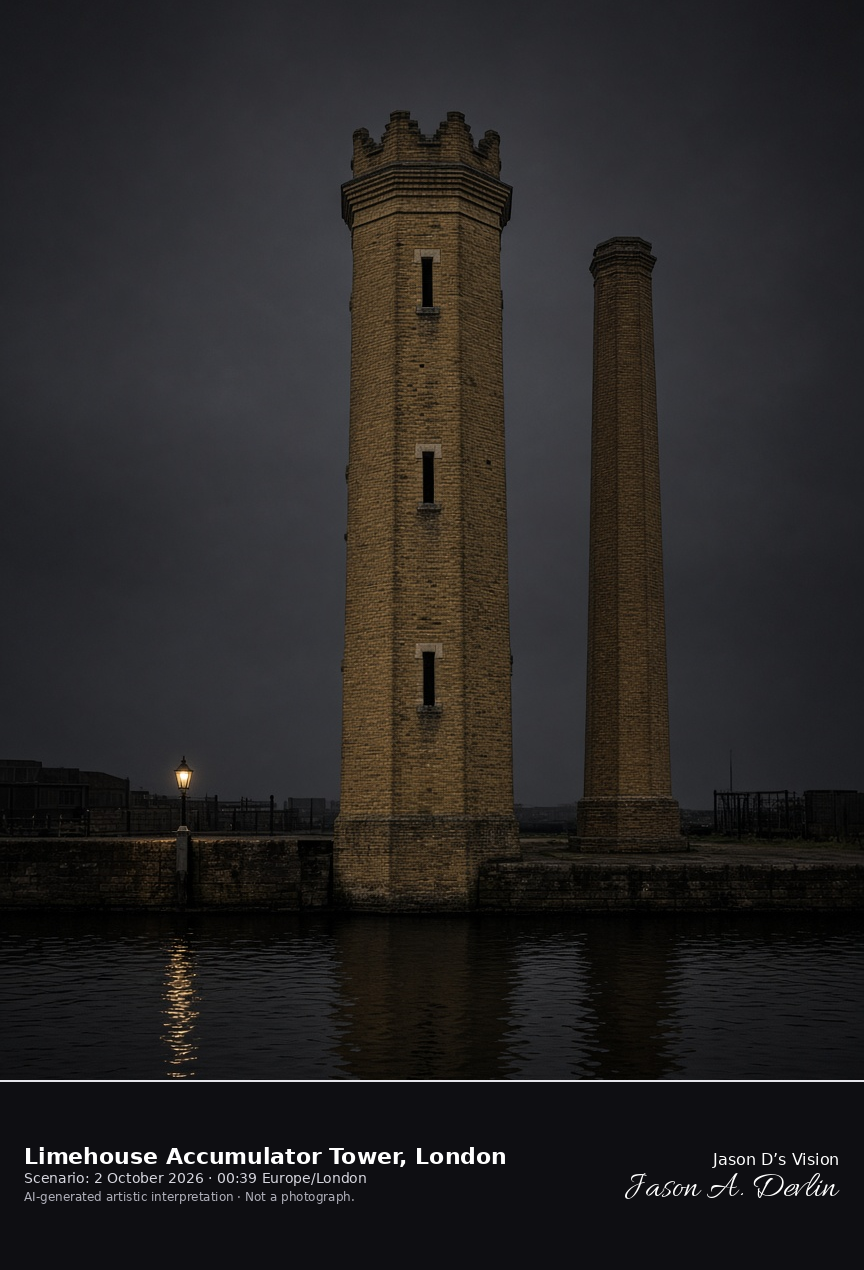
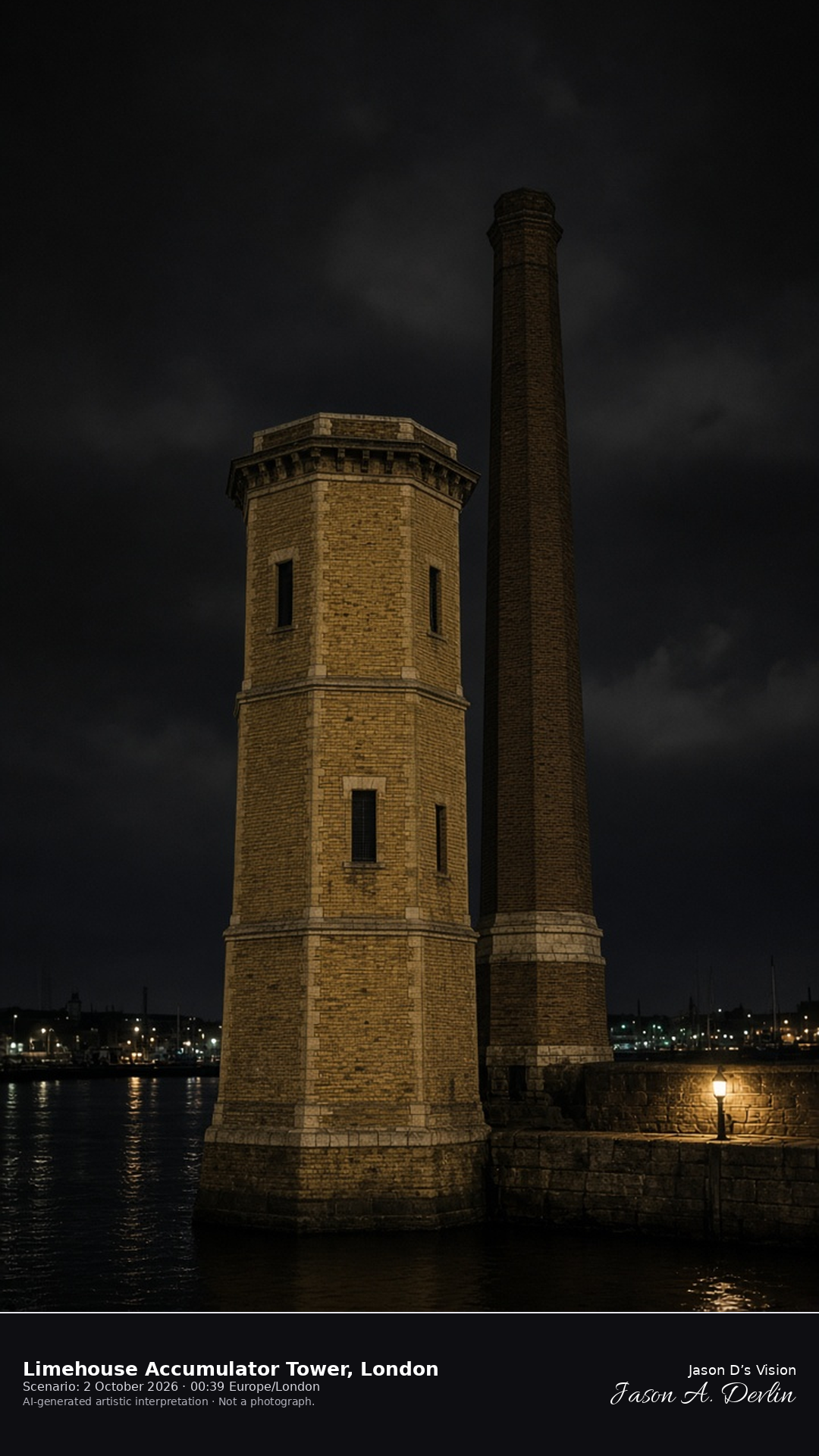
Limehouse Accumulator Tower, London · AI-generated artistic interpretation
Beside the basin the accumulator tower is a slim octagon of yellow stock brick, with slit windows, a cornice, and an octagonal chimney rising from its own square base on the north side. The pumping house is gone. It is an overcast night, about 15.3°C, dry, and the sun is below the horizon. Open-Meteo valid time is 2026-10-02T00:30 Europe/London on 2 October. This is not a verified on-site observation.
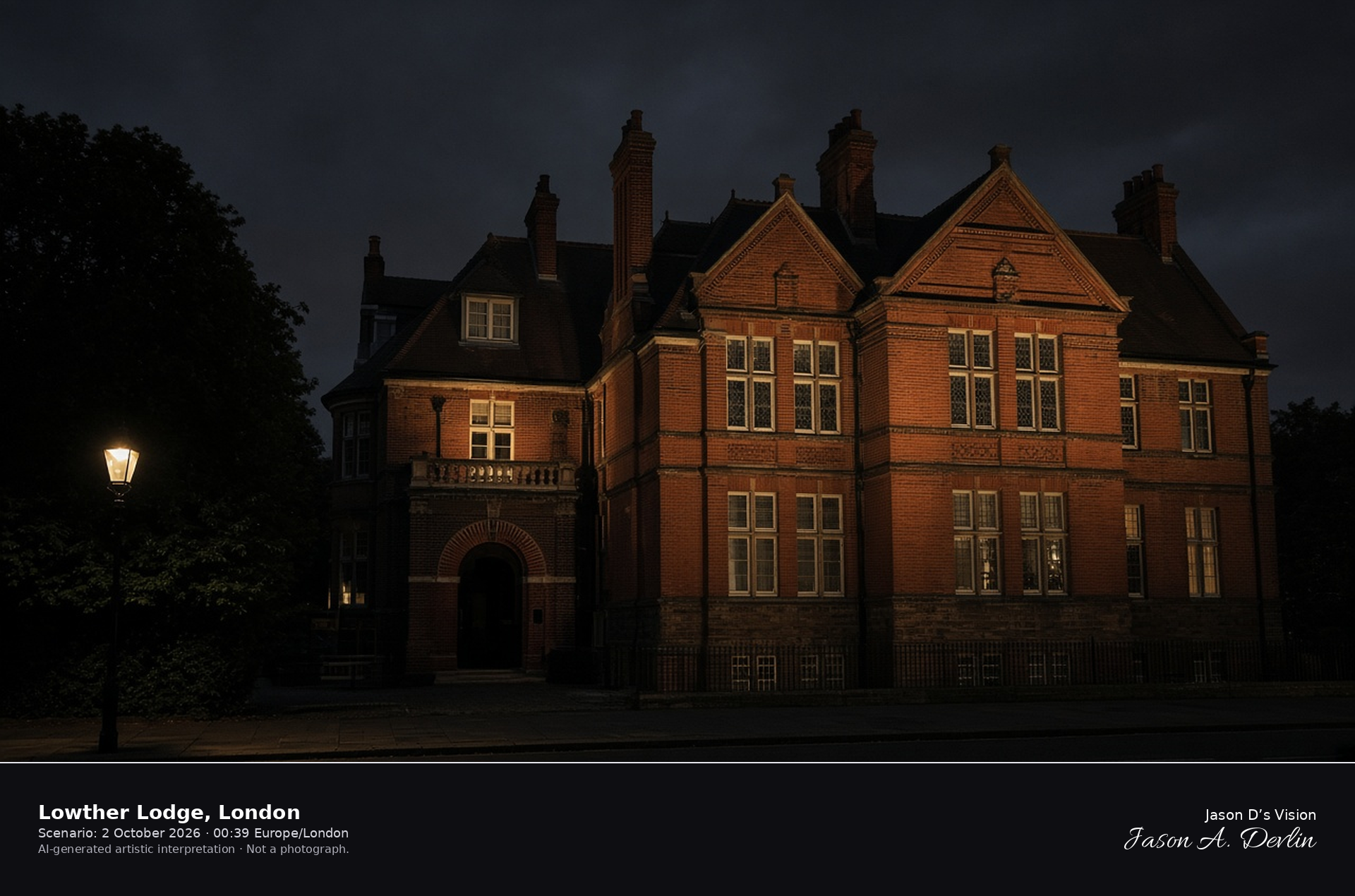
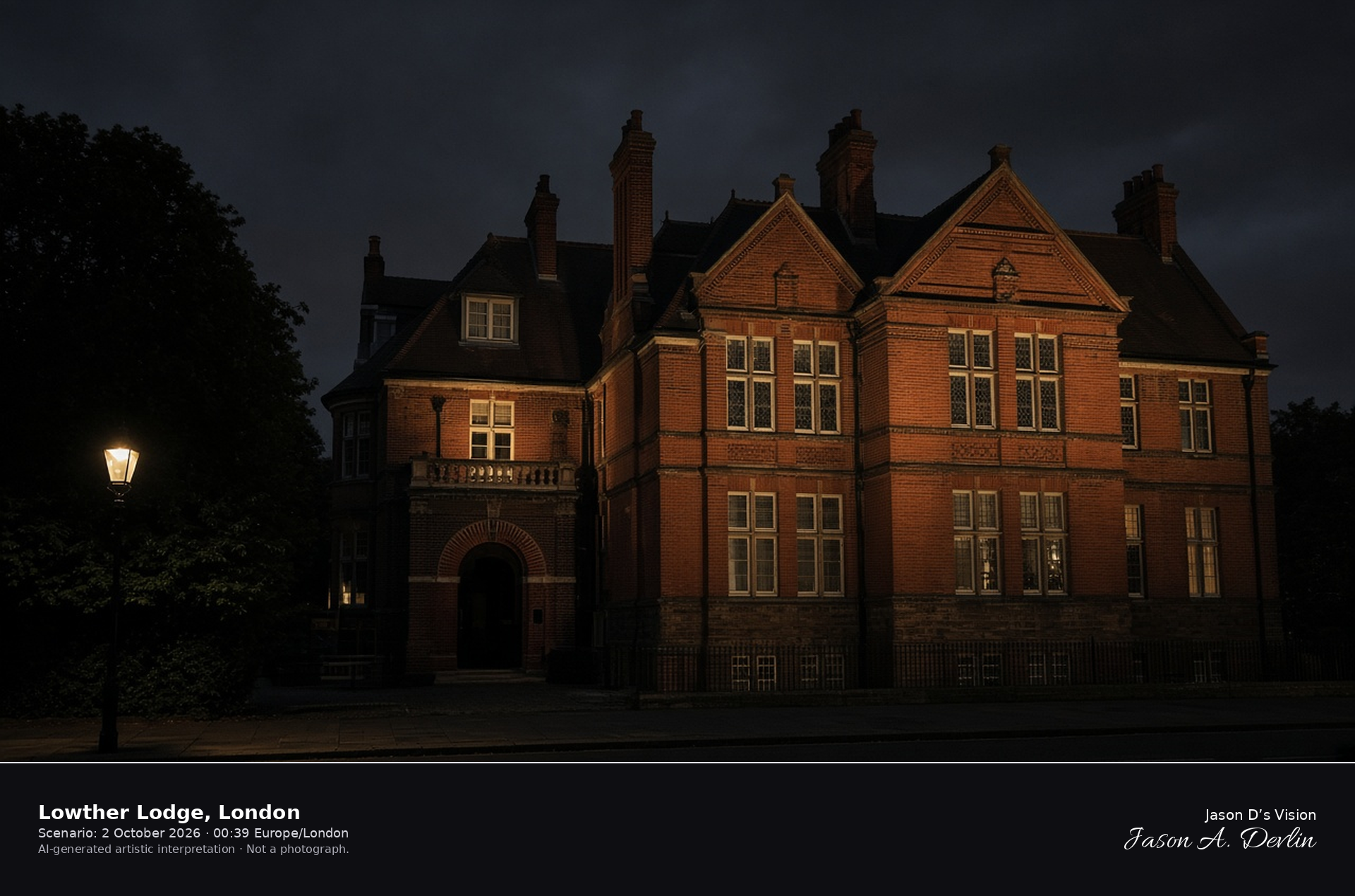
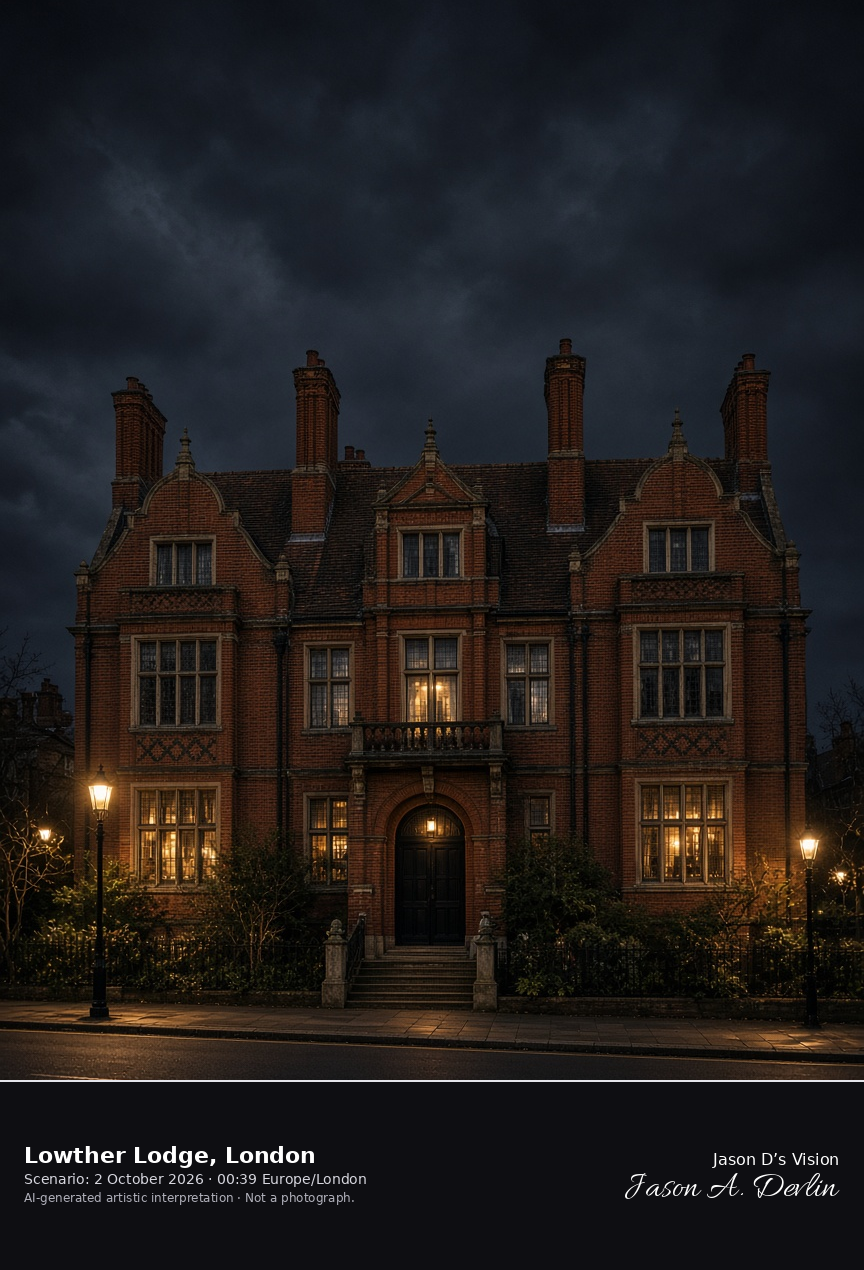
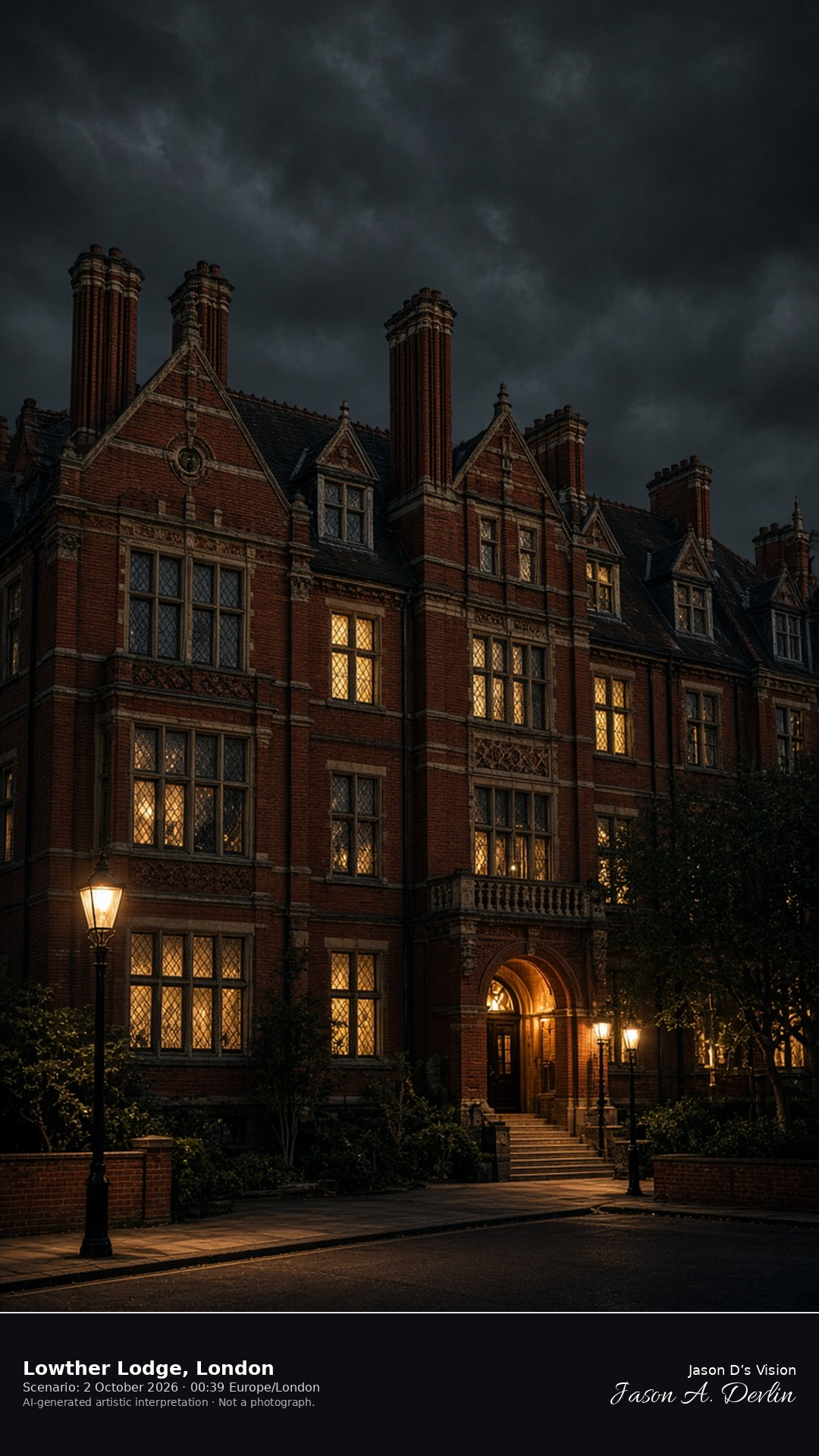
Lowther Lodge, London · AI-generated artistic interpretation
From Kensington Gore, Lowther Lodge is a red-brick Queen Anne house, with steep tiled roofs, tall fluted chimney stacks, pedimented gables, and leaded cross windows. A semicircular arched door sits in one wing. It is an overcast night, about 14.7°C, dry, and the sun is below the horizon. Open-Meteo valid time is 2026-10-02T00:30 Europe/London on 2 October. This is not a verified on-site observation.
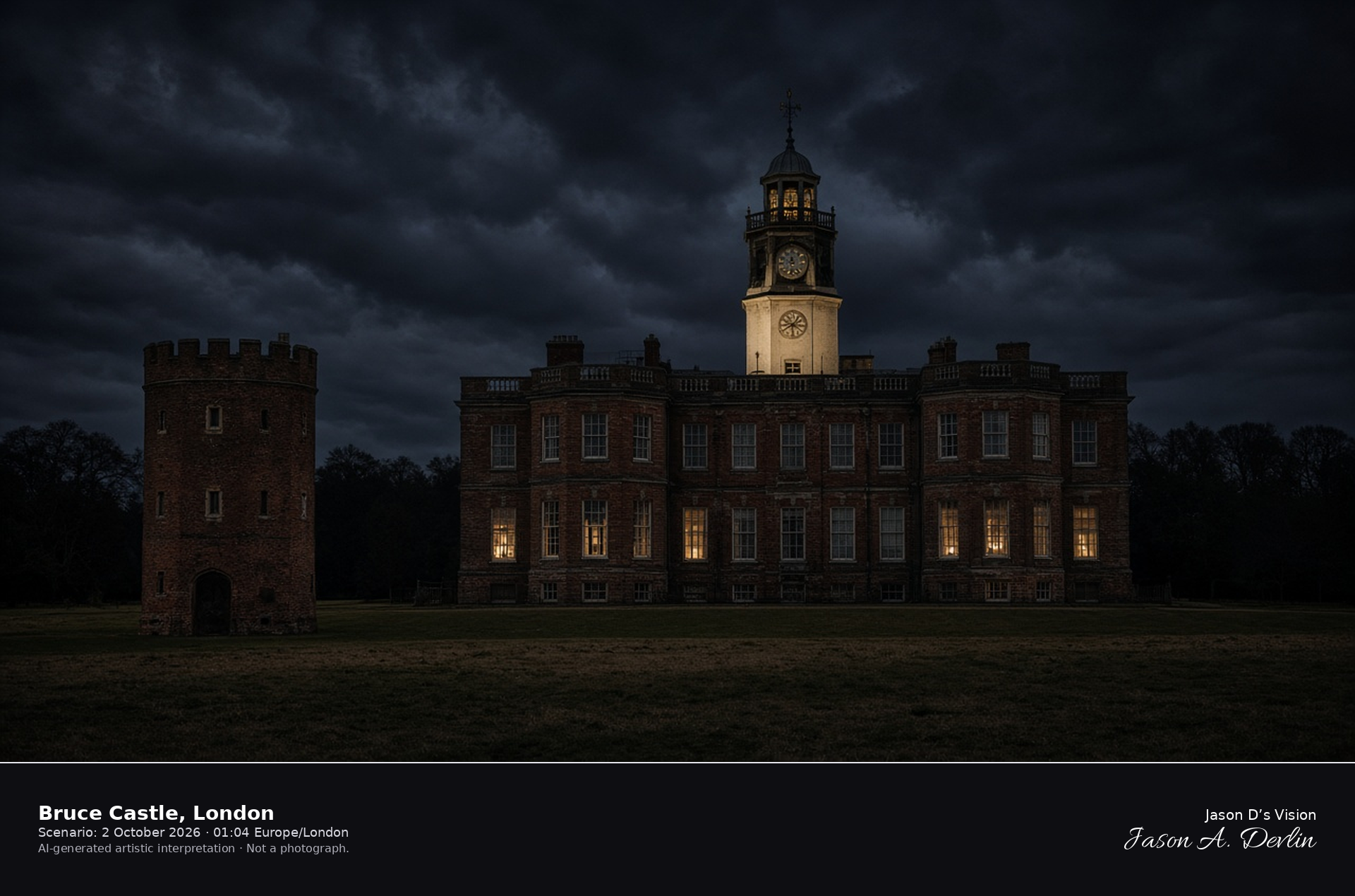
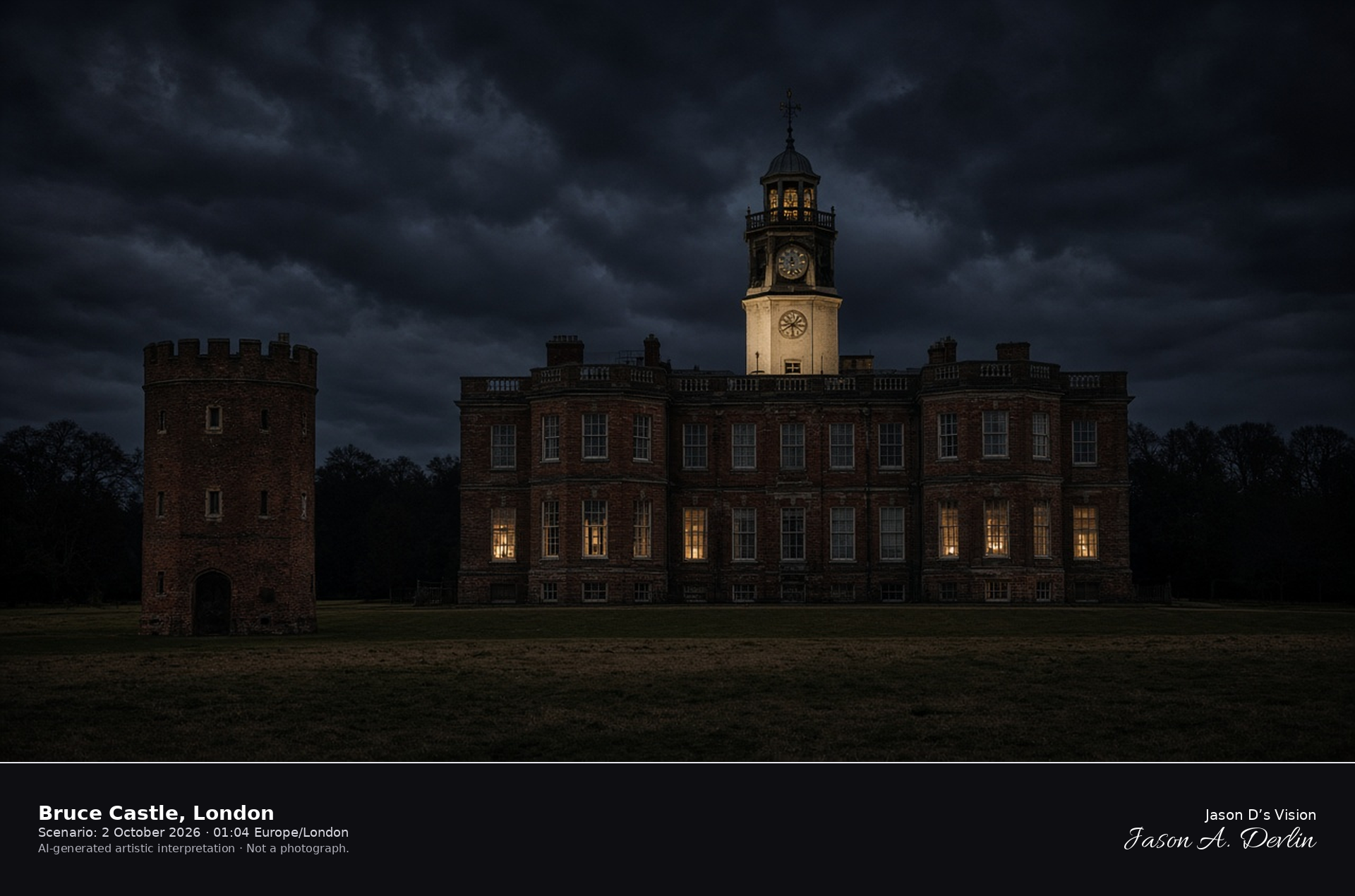
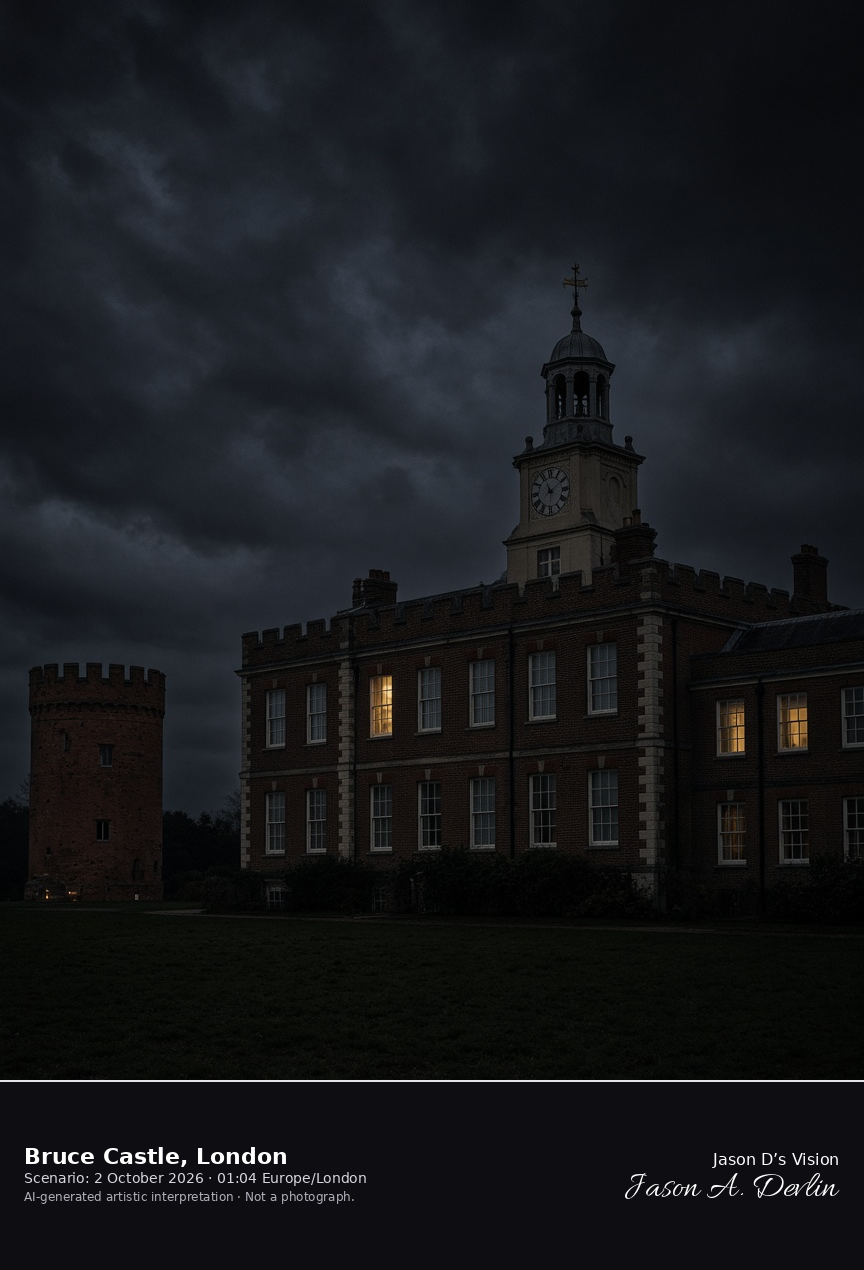
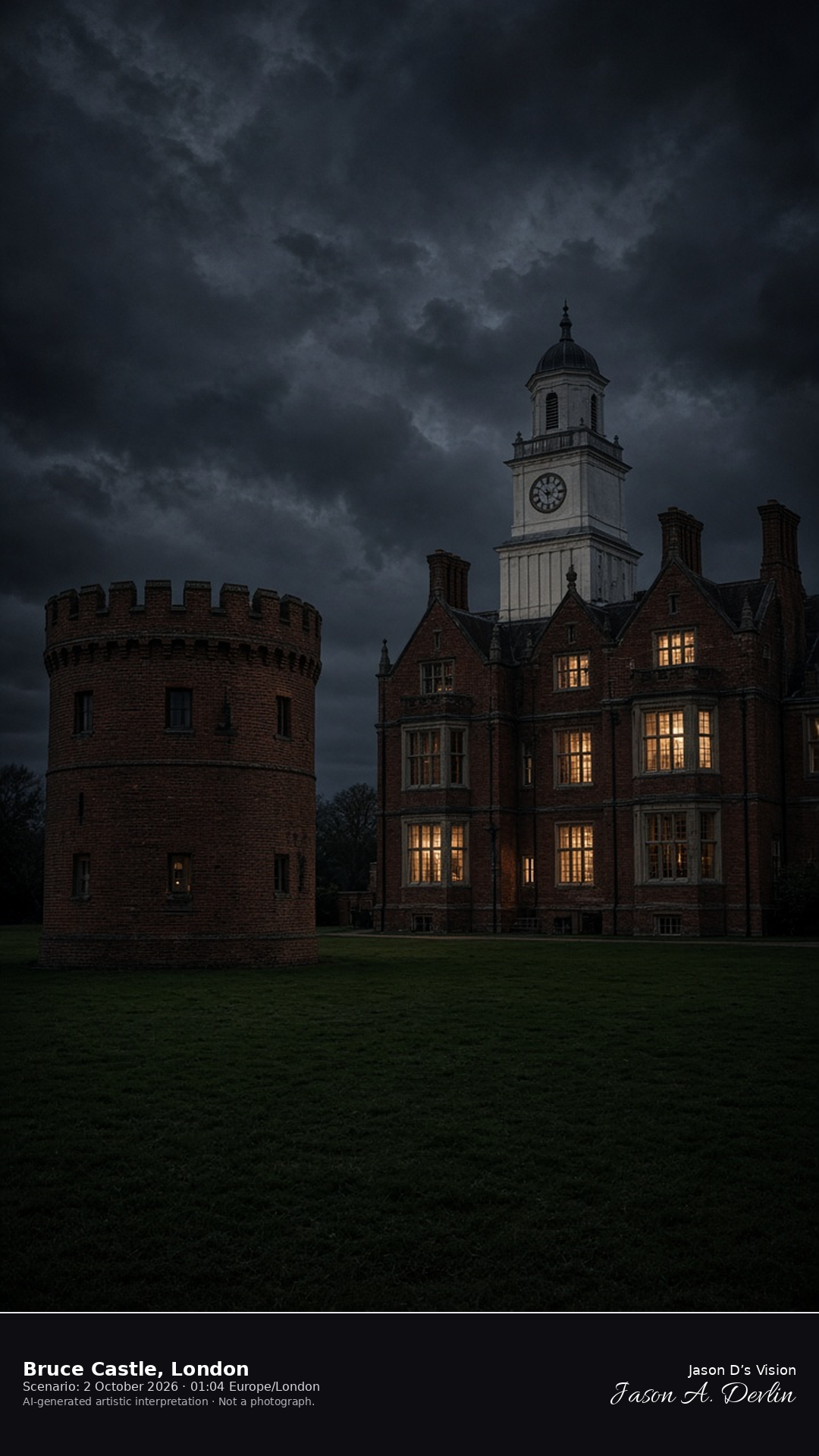
Bruce Castle, London · AI-generated artistic interpretation
From Bruce Castle Park the south front is a red-brick manor, with a stuccoed clock tower, a glazed octagon and a cupola rising over the parapet. A short circular Tudor brick tower with battlements stands apart on the lawn. It is a partly cloudy night, about 15.0°C, dry, and the sun is below the horizon. Open-Meteo valid time is 2026-10-02T01:00 Europe/London on 2 October. This is not a verified on-site observation.
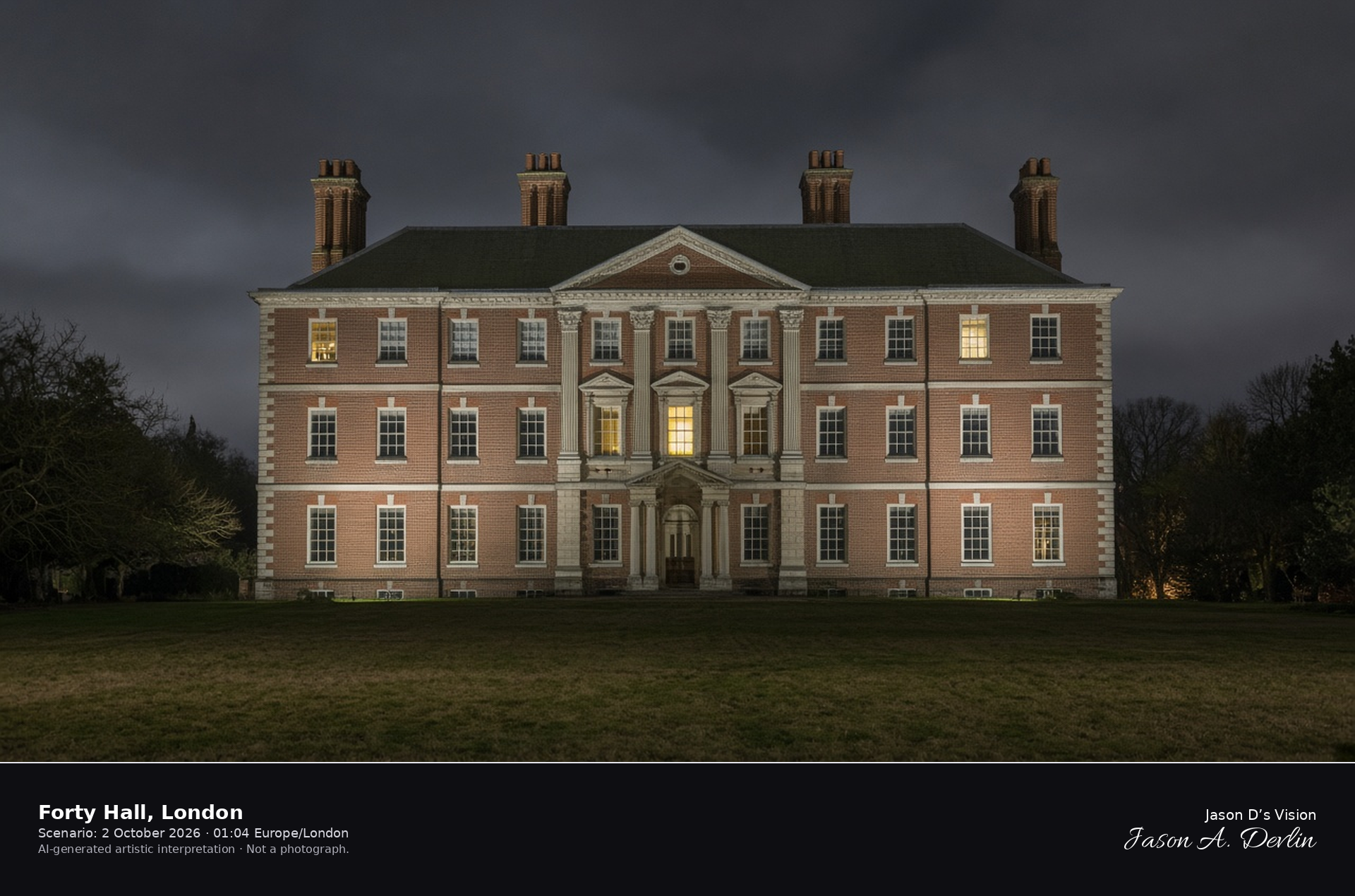
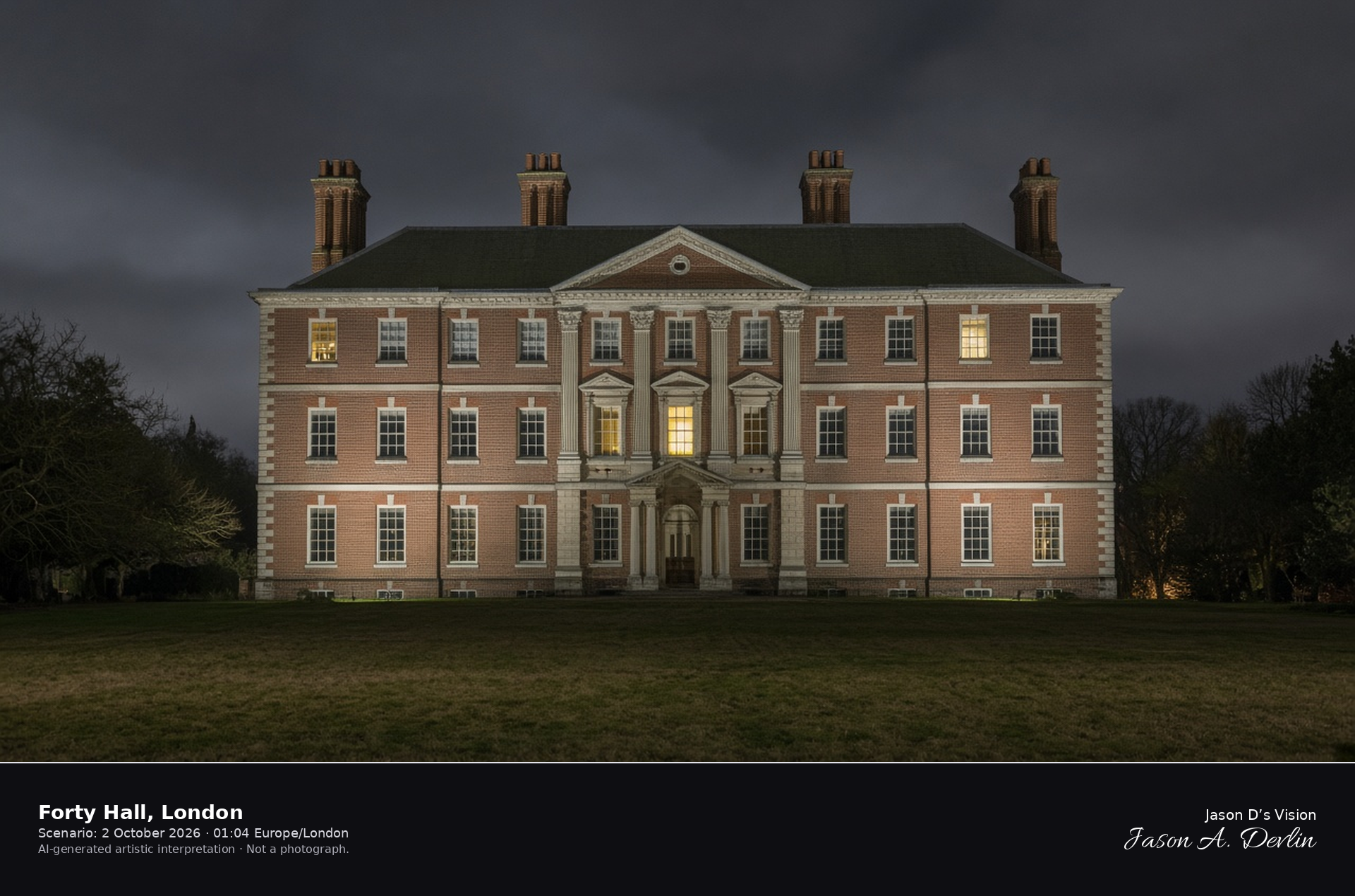
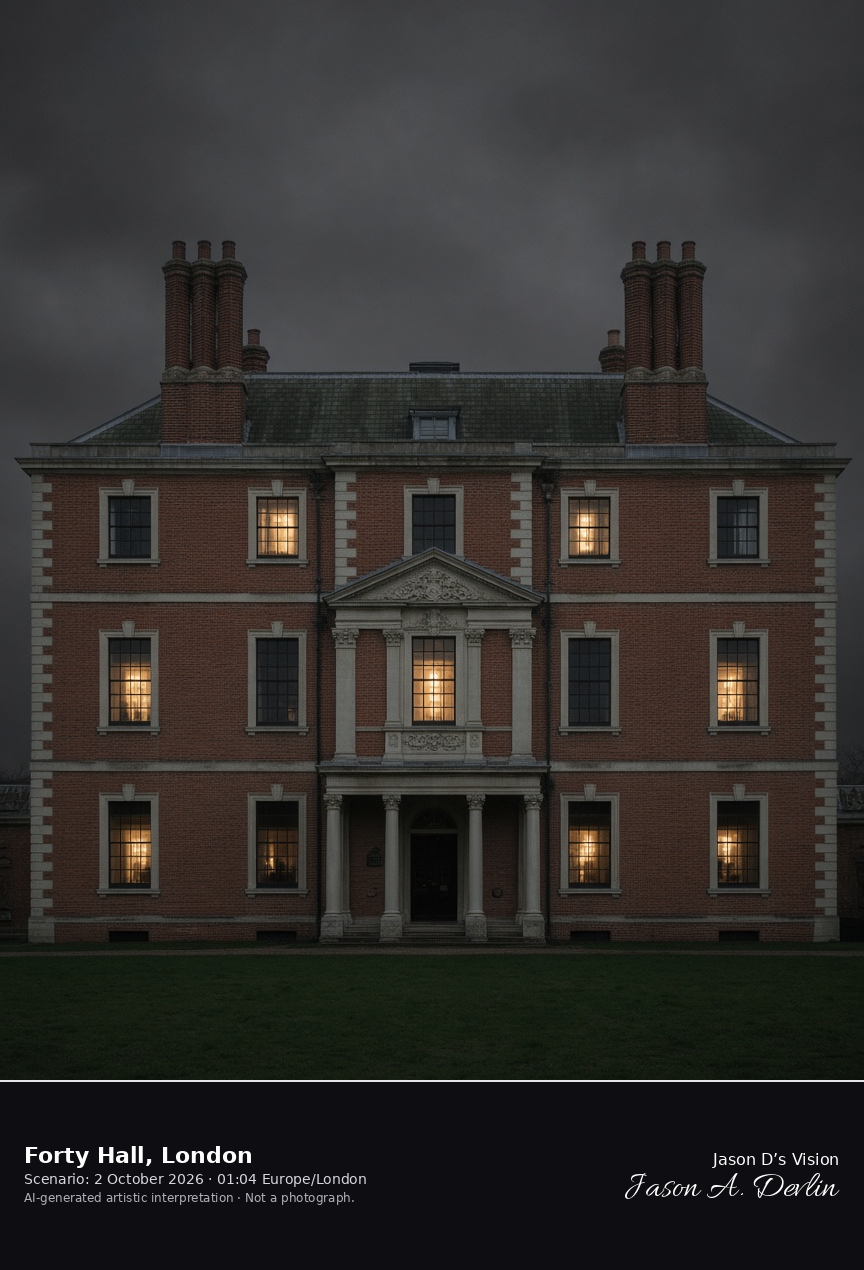
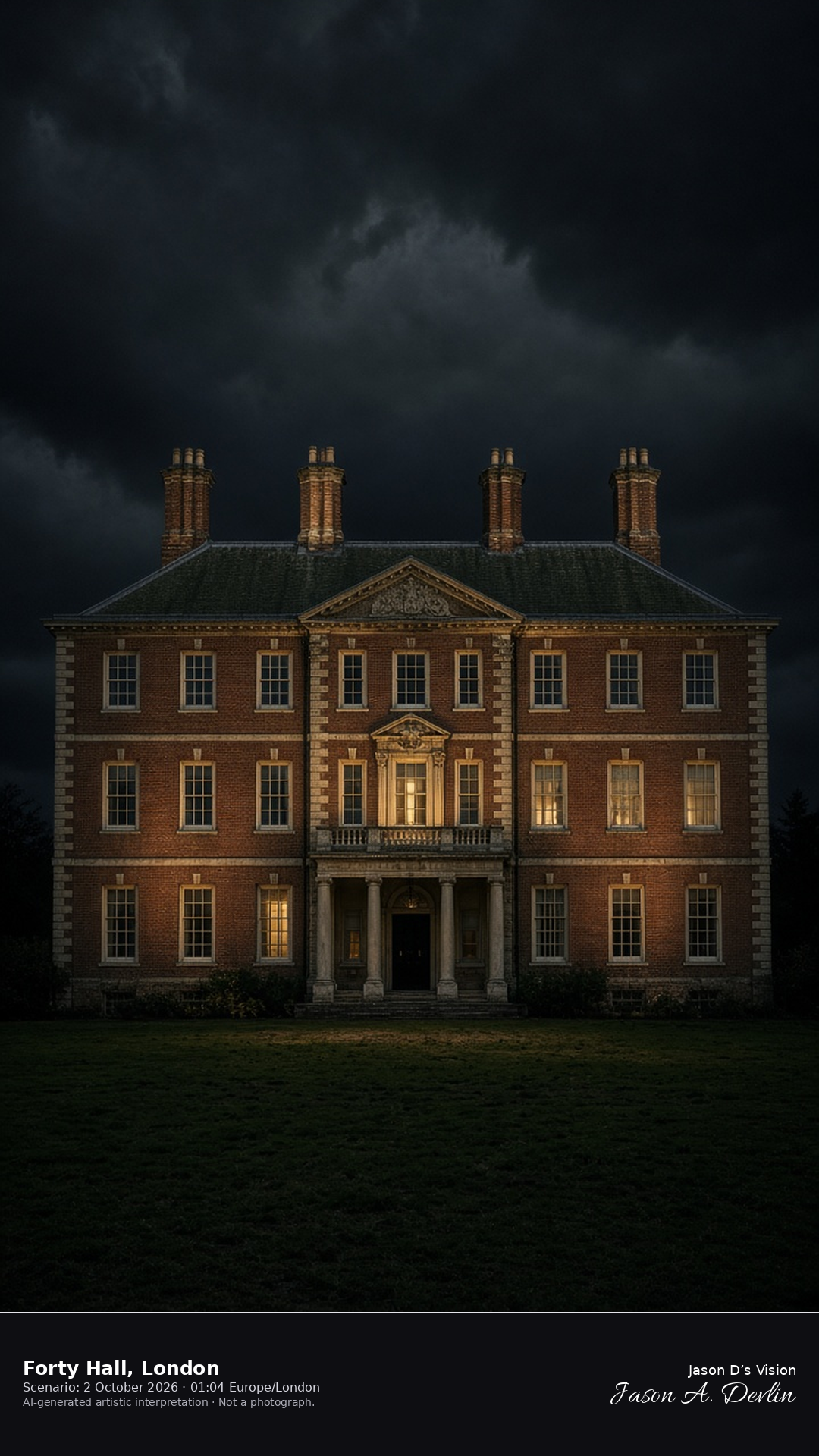
Forty Hall, London · AI-generated artistic interpretation
From the lawn, Forty Hall is a square light-red-brick house of three storeys, with a high hipped green-slate roof and tall octagonal chimney stacks. Pale quoins and bands cross the front, and a pediment frames the centre window above the porch. It is an overcast night, about 13.2°C, dry, and the sun is below the horizon. Open-Meteo valid time is 2026-10-02T01:00 Europe/London on 2 October. This is not a verified on-site observation.
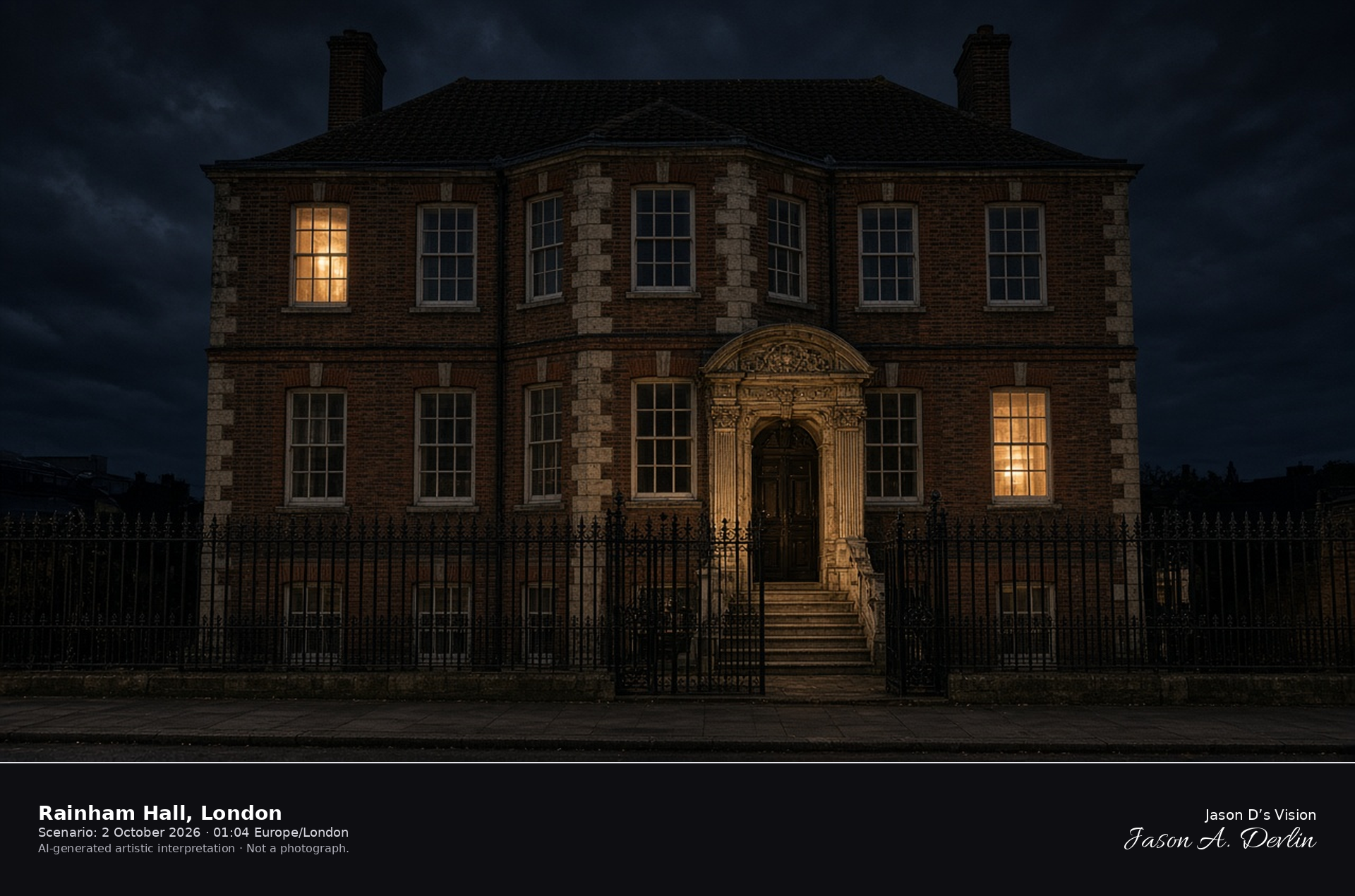
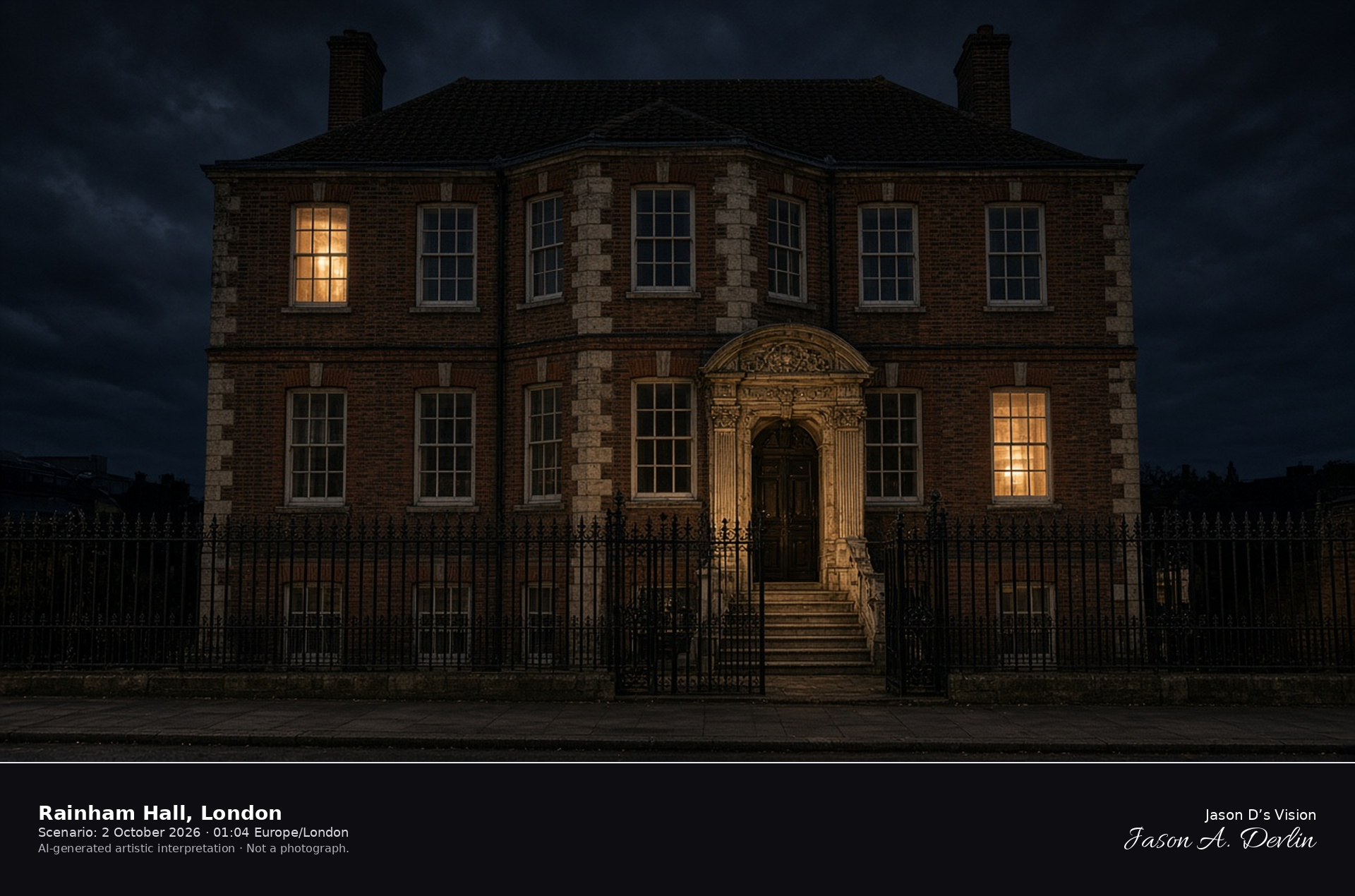
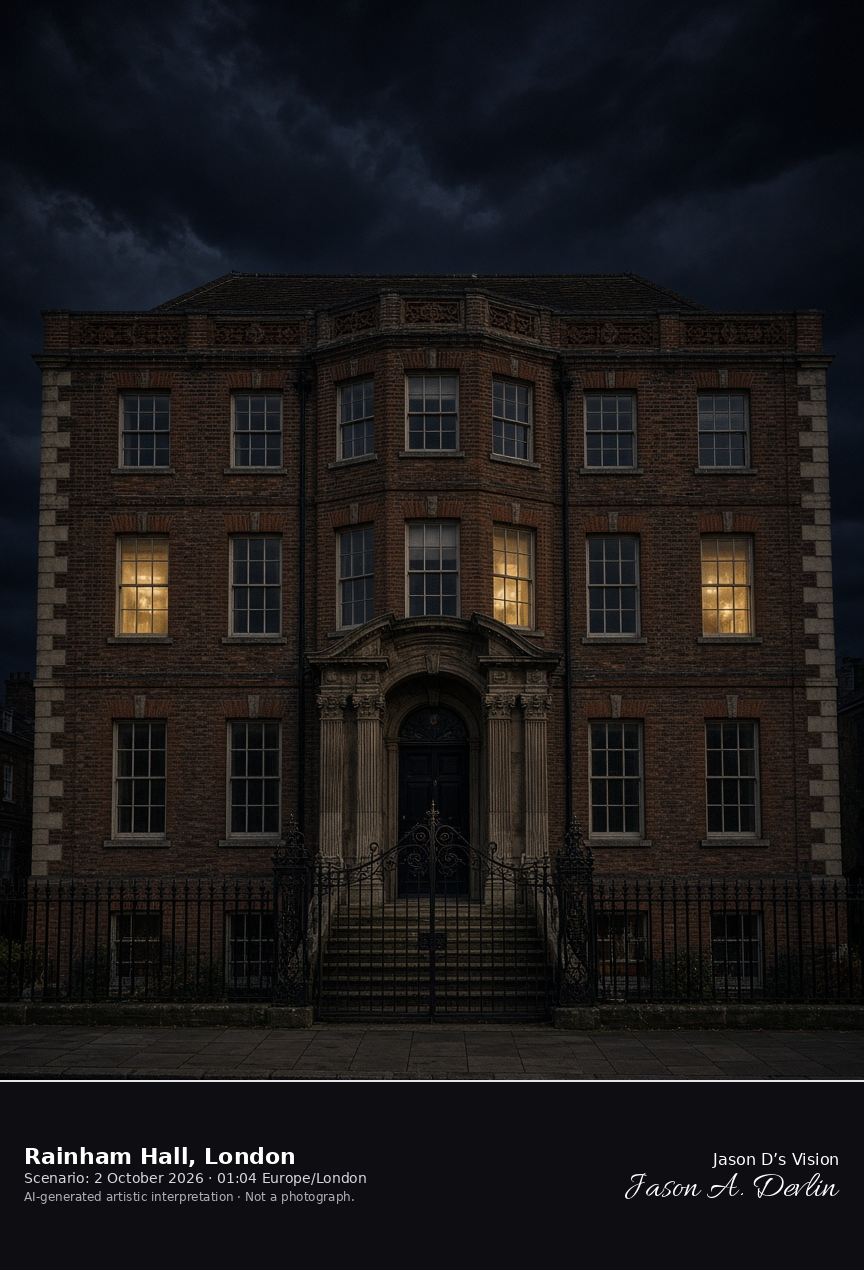
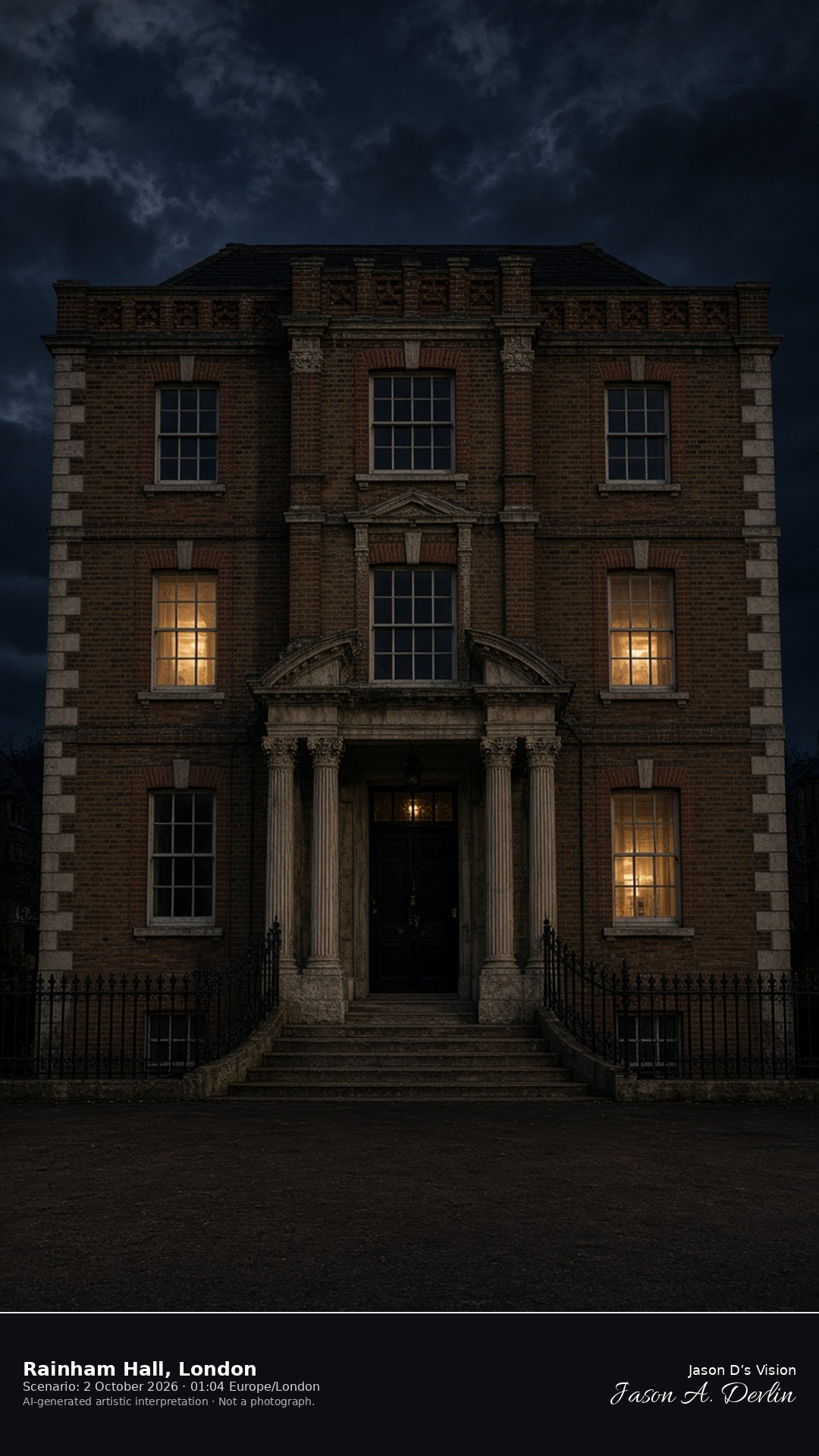
Rainham Hall, London · AI-generated artistic interpretation
From the Broadway pavement, Rainham Hall is a three-storey brown-red brick merchant house, with red dressings, stone quoins and a panelled parapet. A carved wooden porch with Corinthian pilasters carries an open segmental pediment, and wrought-iron railings stand in front. It is a partly cloudy night, about 14.6°C, dry, and the sun is below the horizon. Open-Meteo valid time is 2026-10-02T01:00 Europe/London on 2 October. This is not a verified on-site observation.
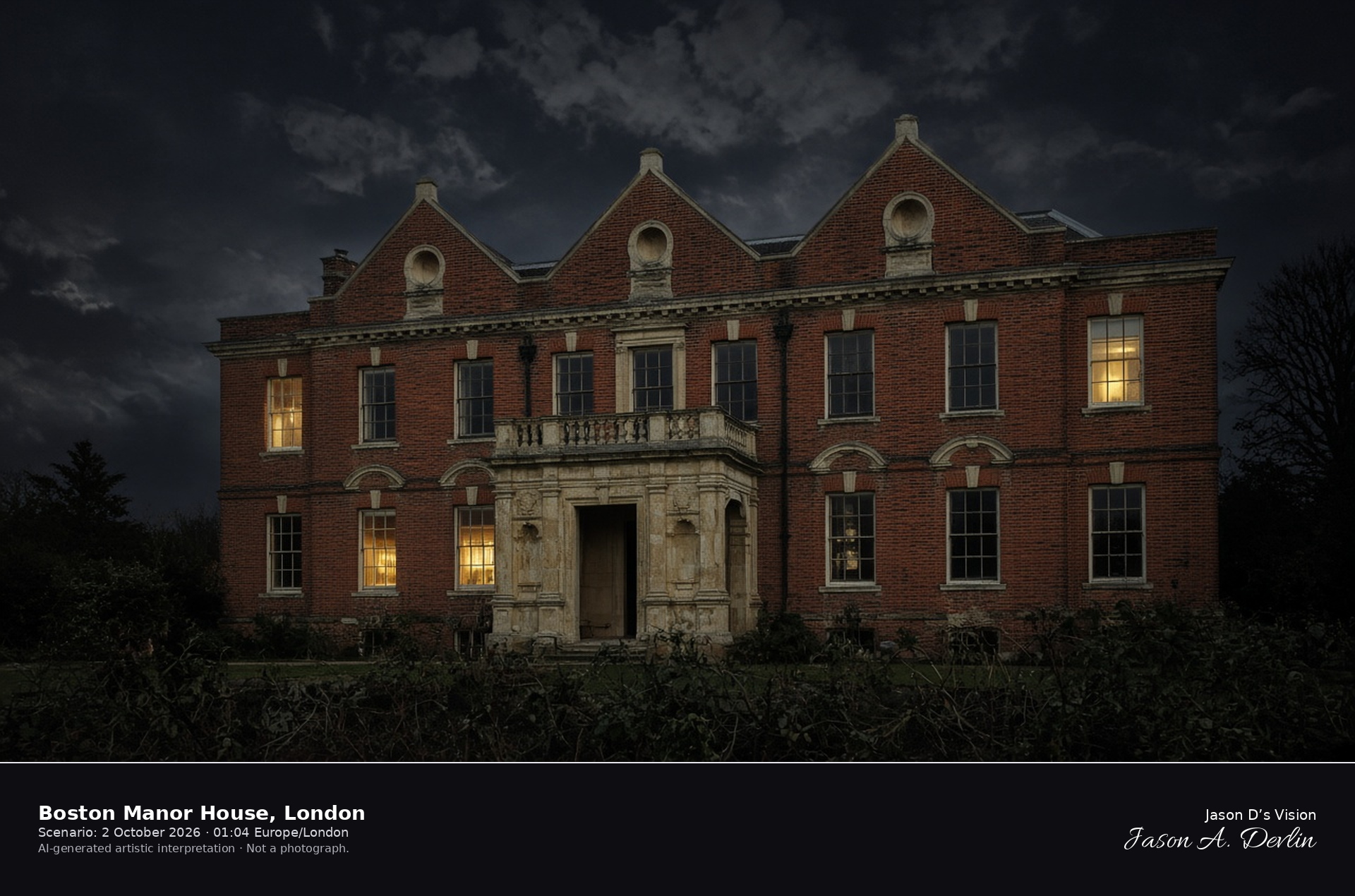
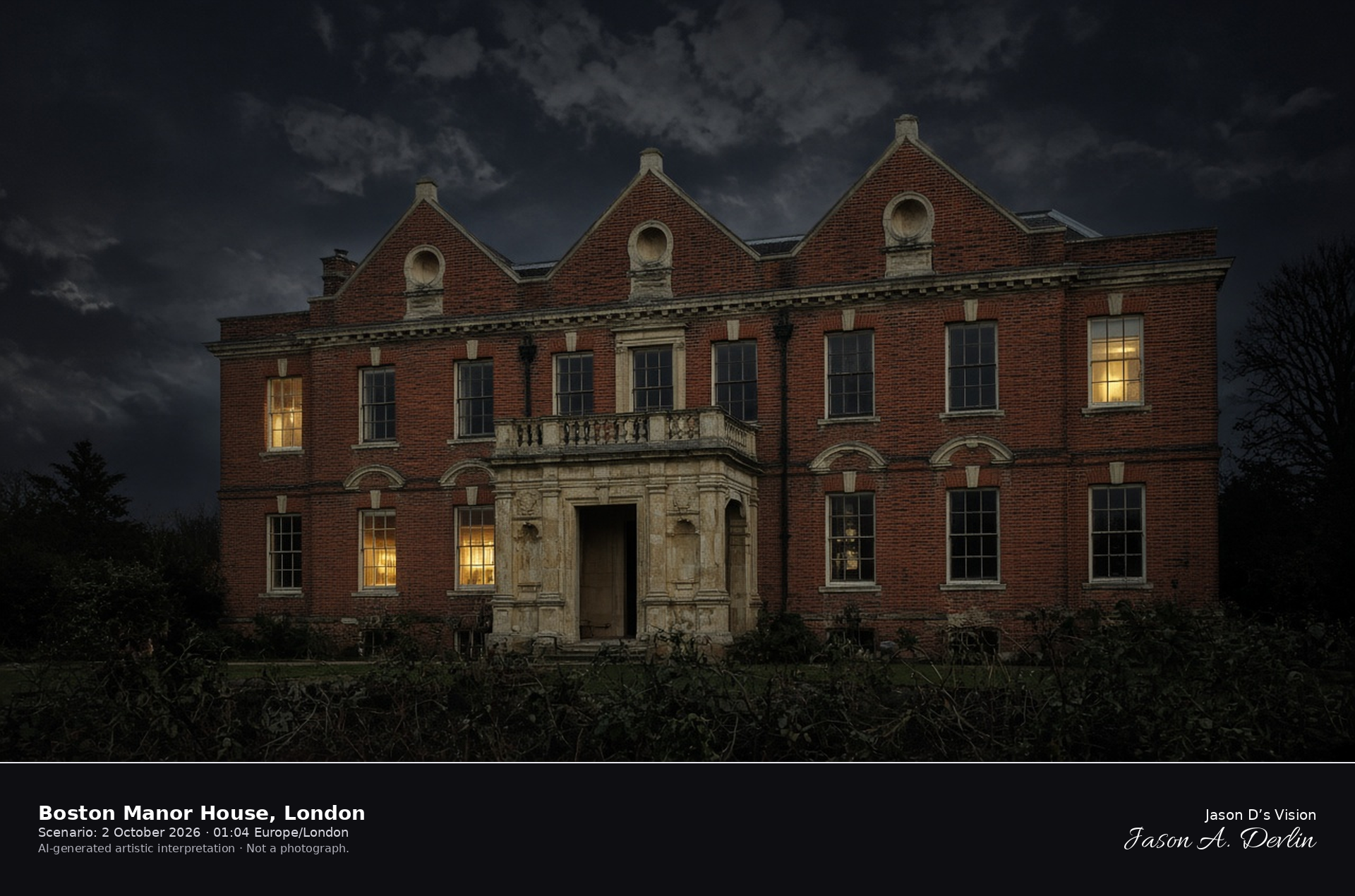
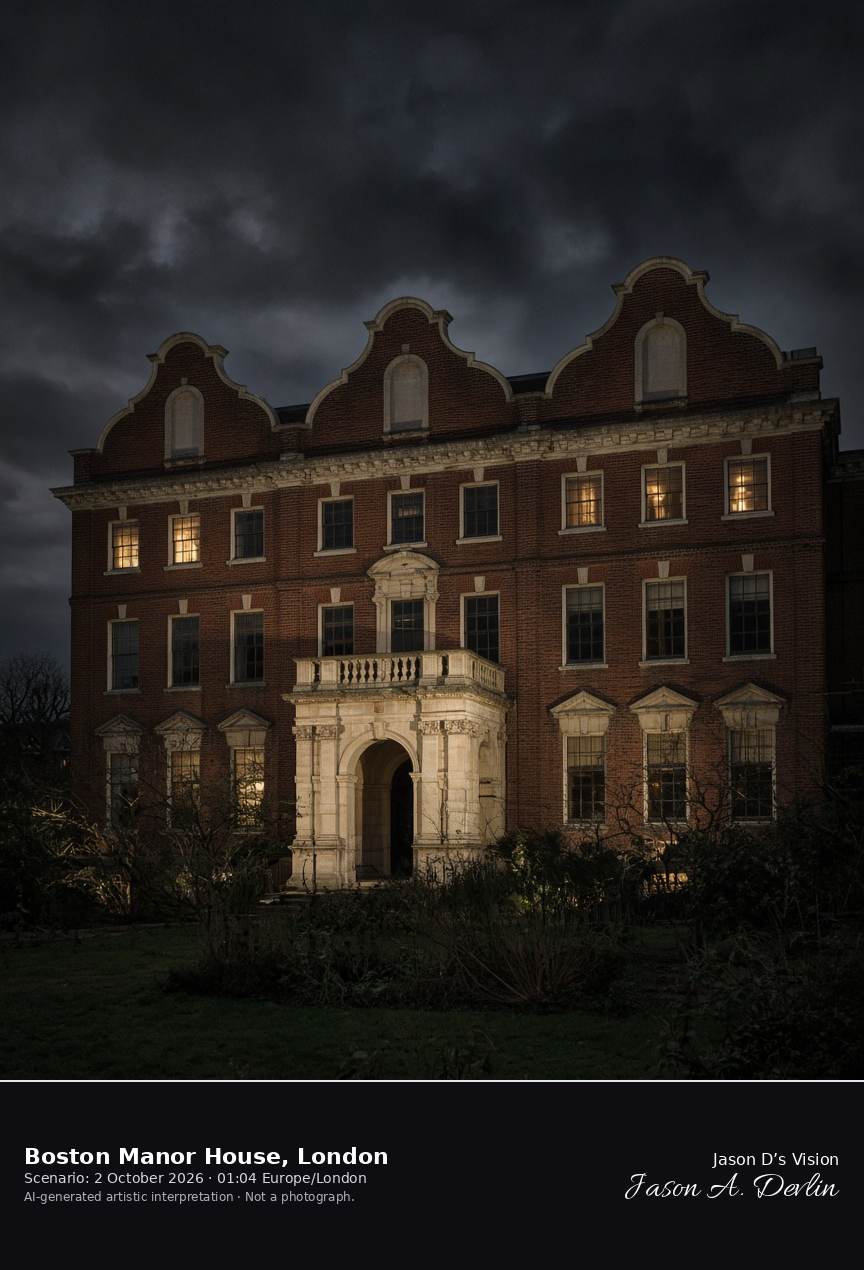
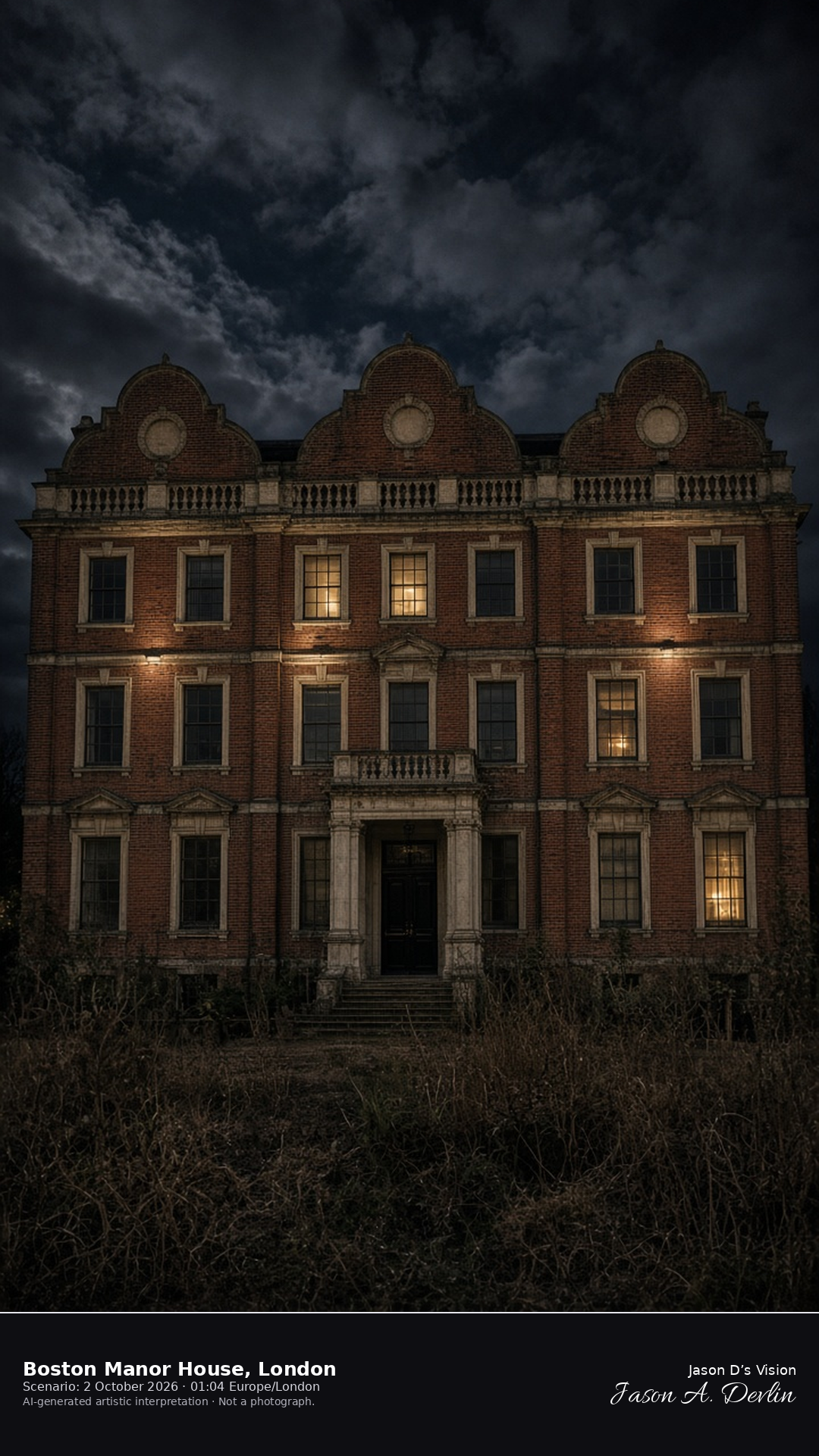
Boston Manor House, London · AI-generated artistic interpretation
From the garden, Boston Manor House shows a red-brick east front of three storeys, crowned by three gables with round-headed niches. A stone cornice divides the floors, the ground-floor windows are pedimented, and a balustraded stone porch marks the door. It is a partly cloudy night, about 14.2°C, dry, and the sun is below the horizon. Open-Meteo valid time is 2026-10-02T01:00 Europe/London on 2 October. This is not a verified on-site observation.
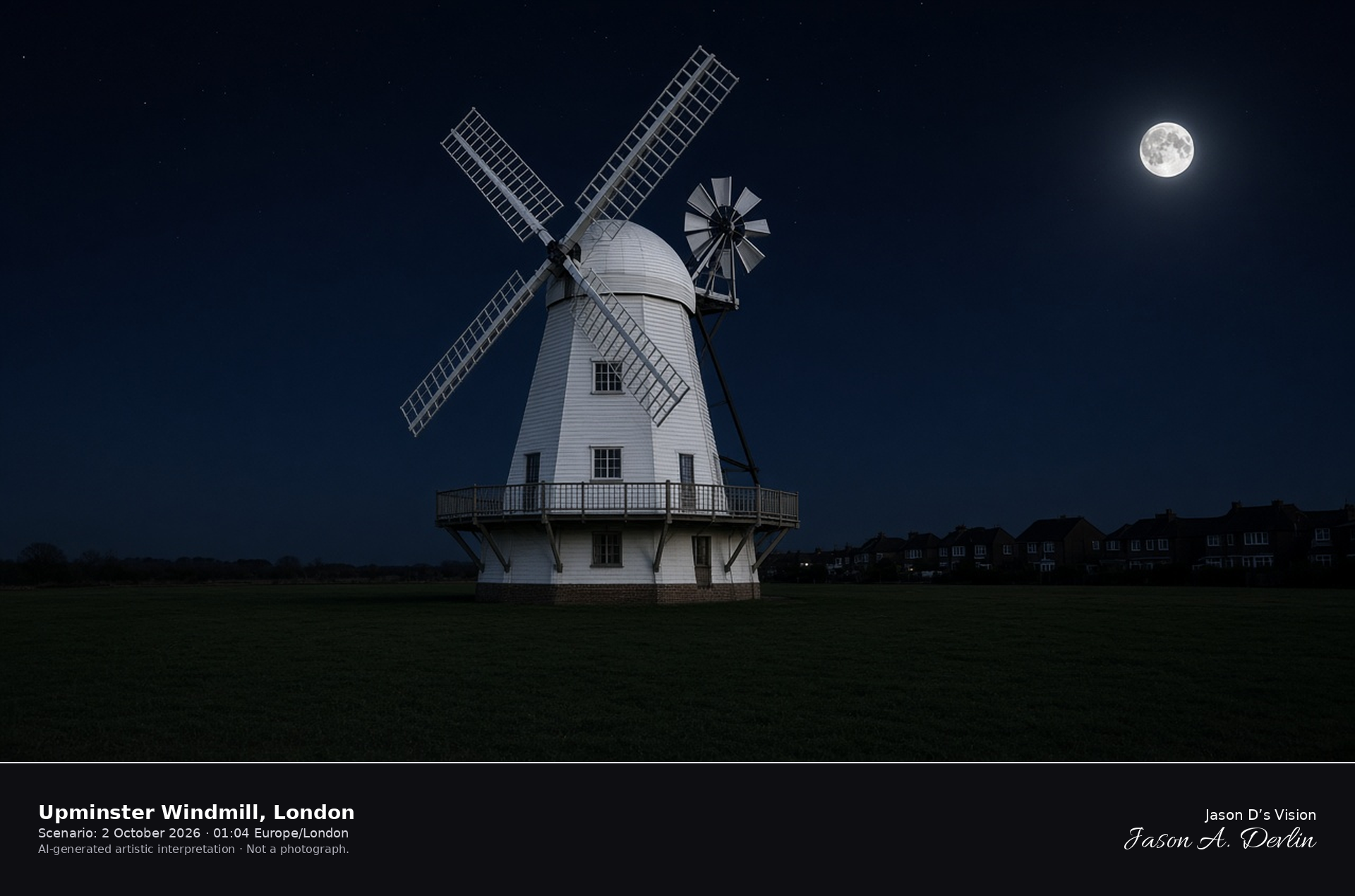
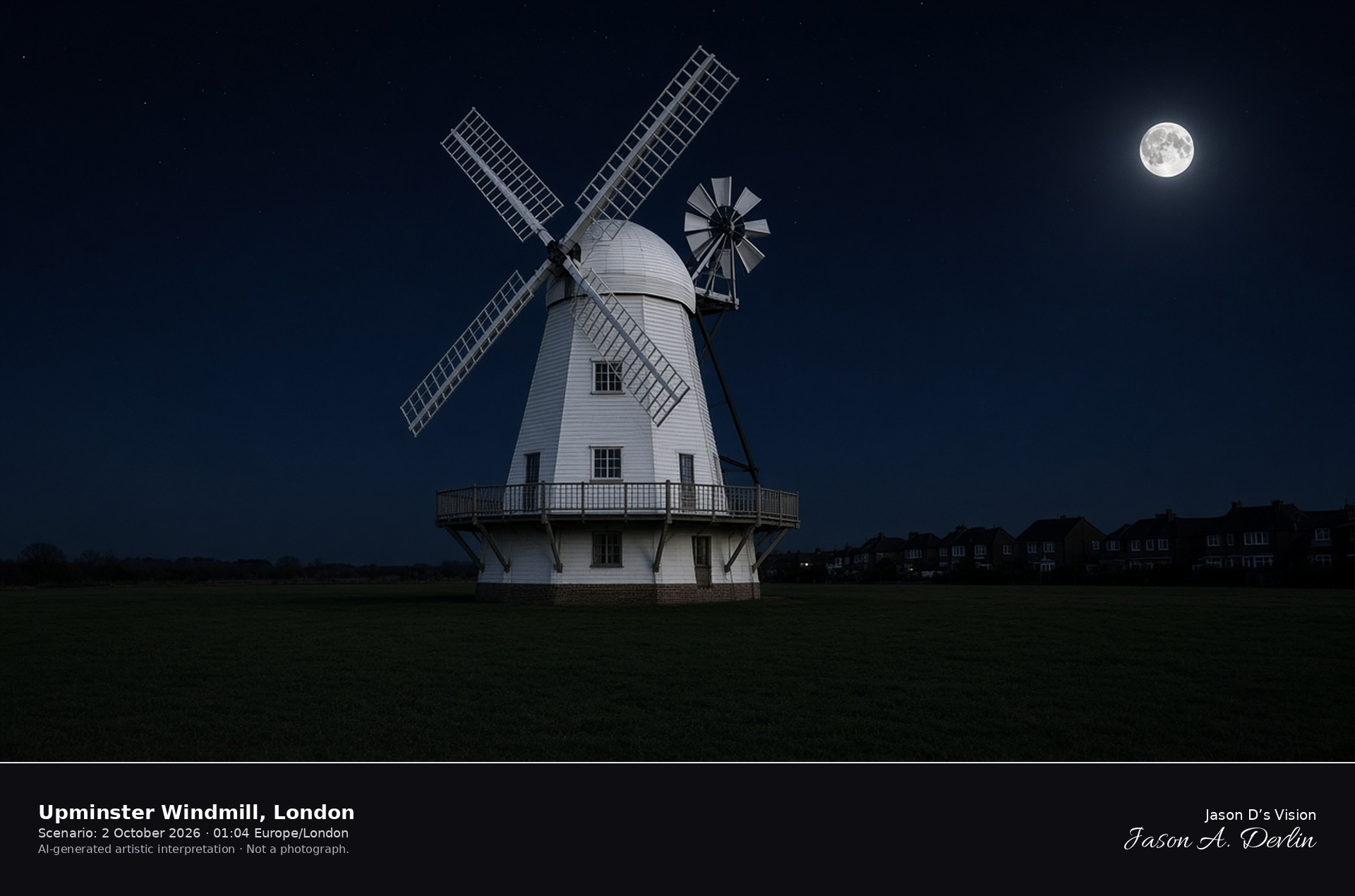
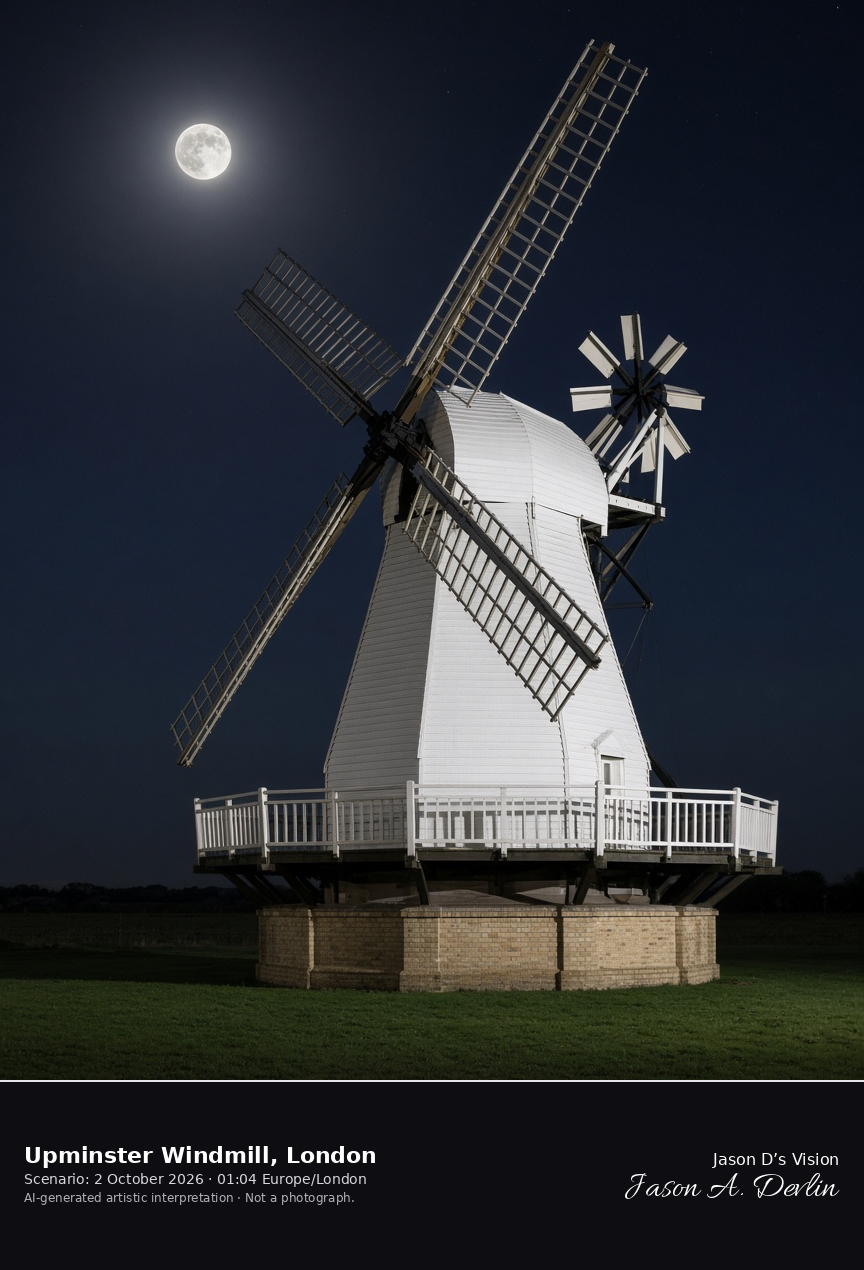
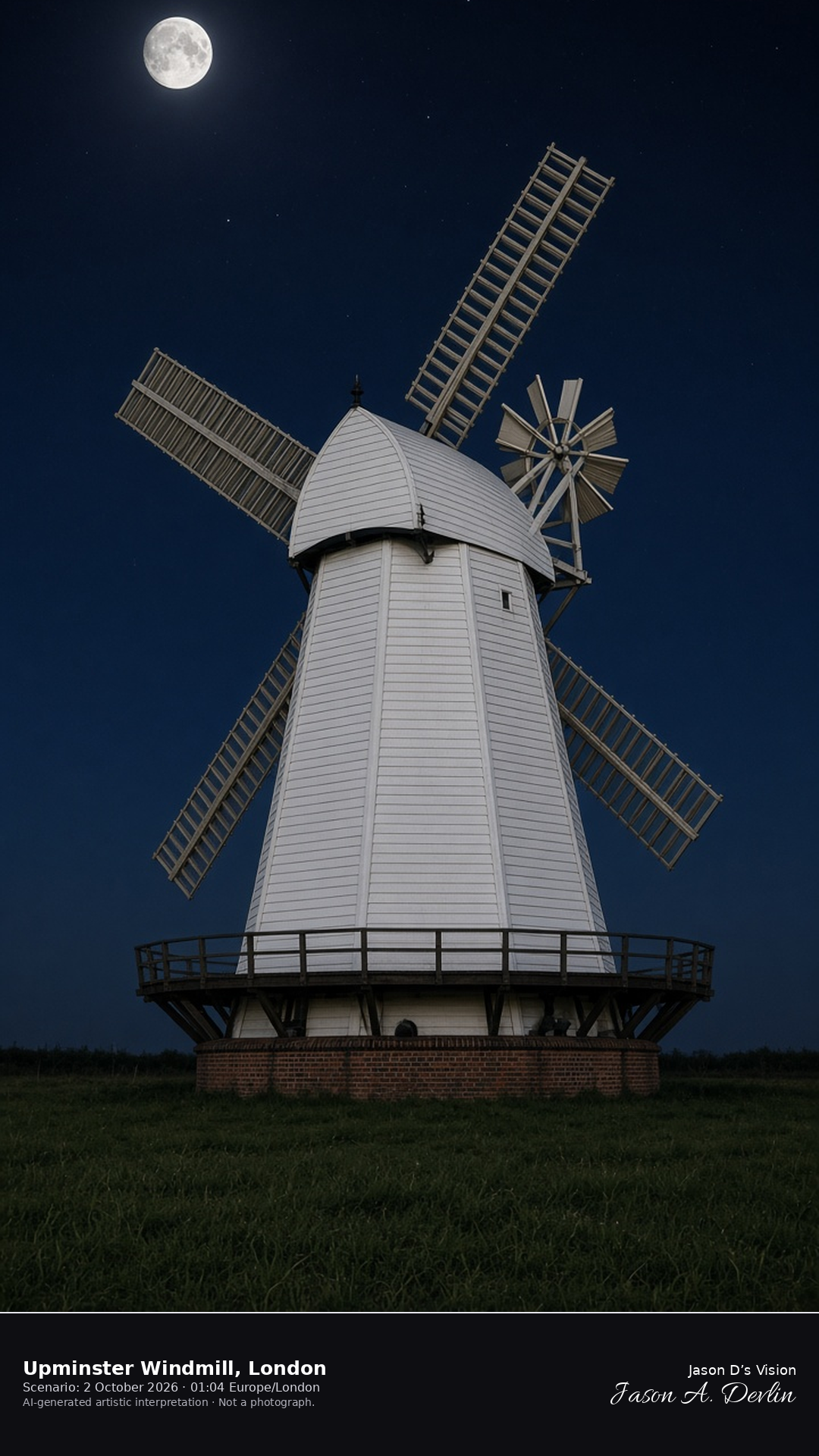
Upminster Windmill, London · AI-generated artistic interpretation
From the grass, Upminster Windmill is a white octagonal smock on a low brick base, with a wooden stage, a boat-shaped cap, four sails and a six-bladed fantail. The body is weatherboarded, not a brick tower. It is a clear night, about 13.9°C, dry, and the sun is below the horizon. Open-Meteo valid time is 2026-10-02T01:00 Europe/London on 2 October. This is not a verified on-site observation.
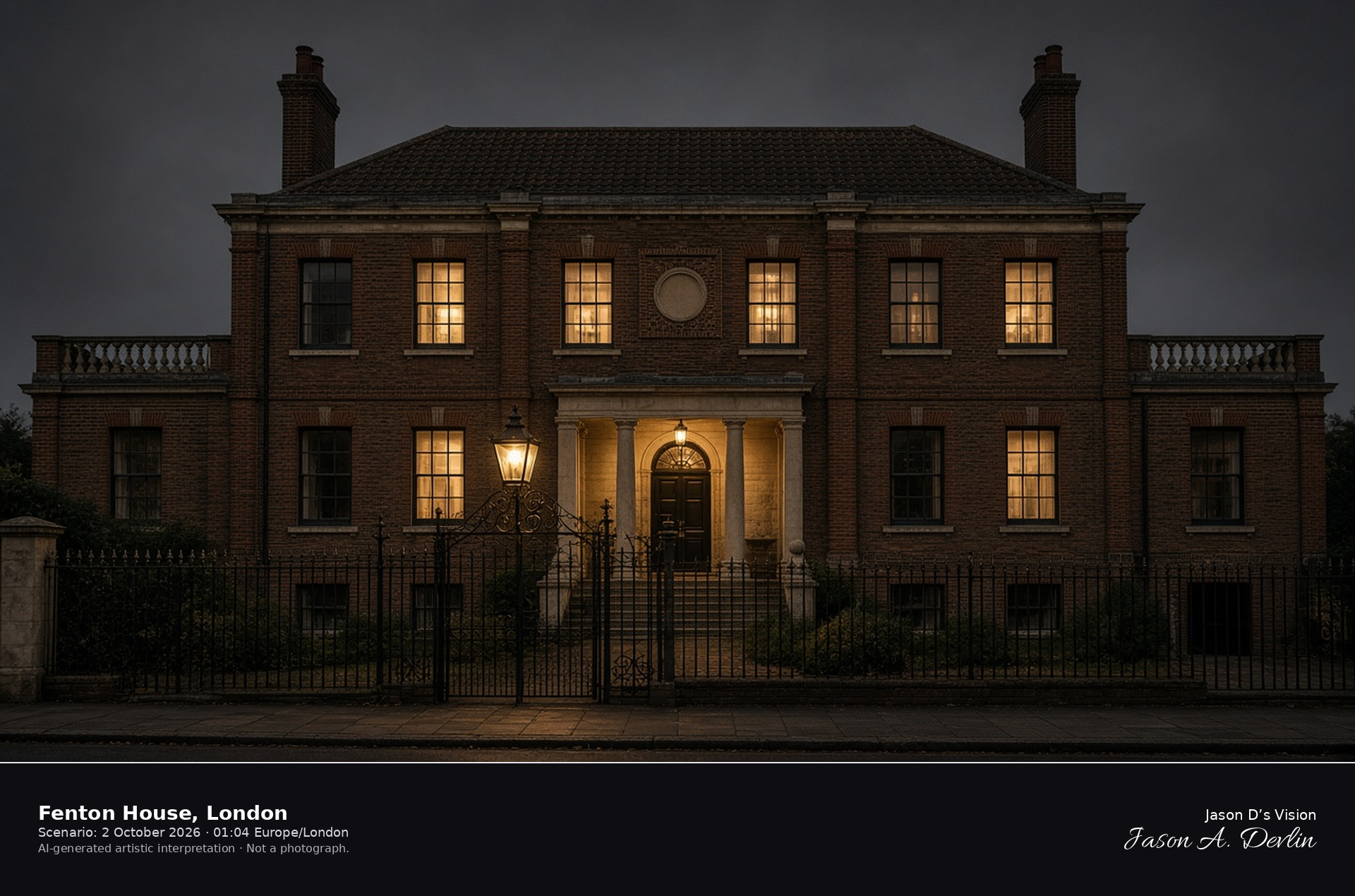
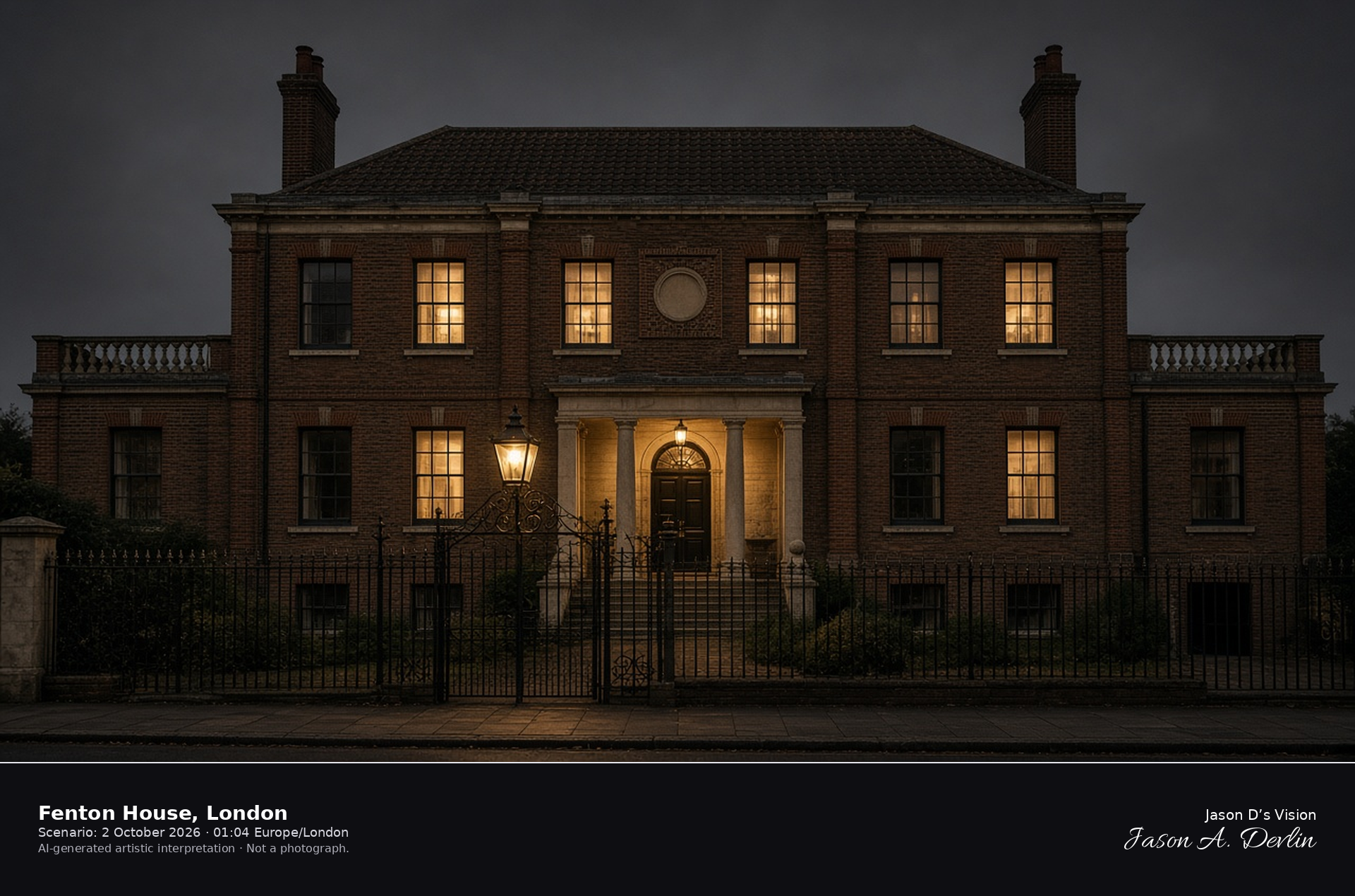
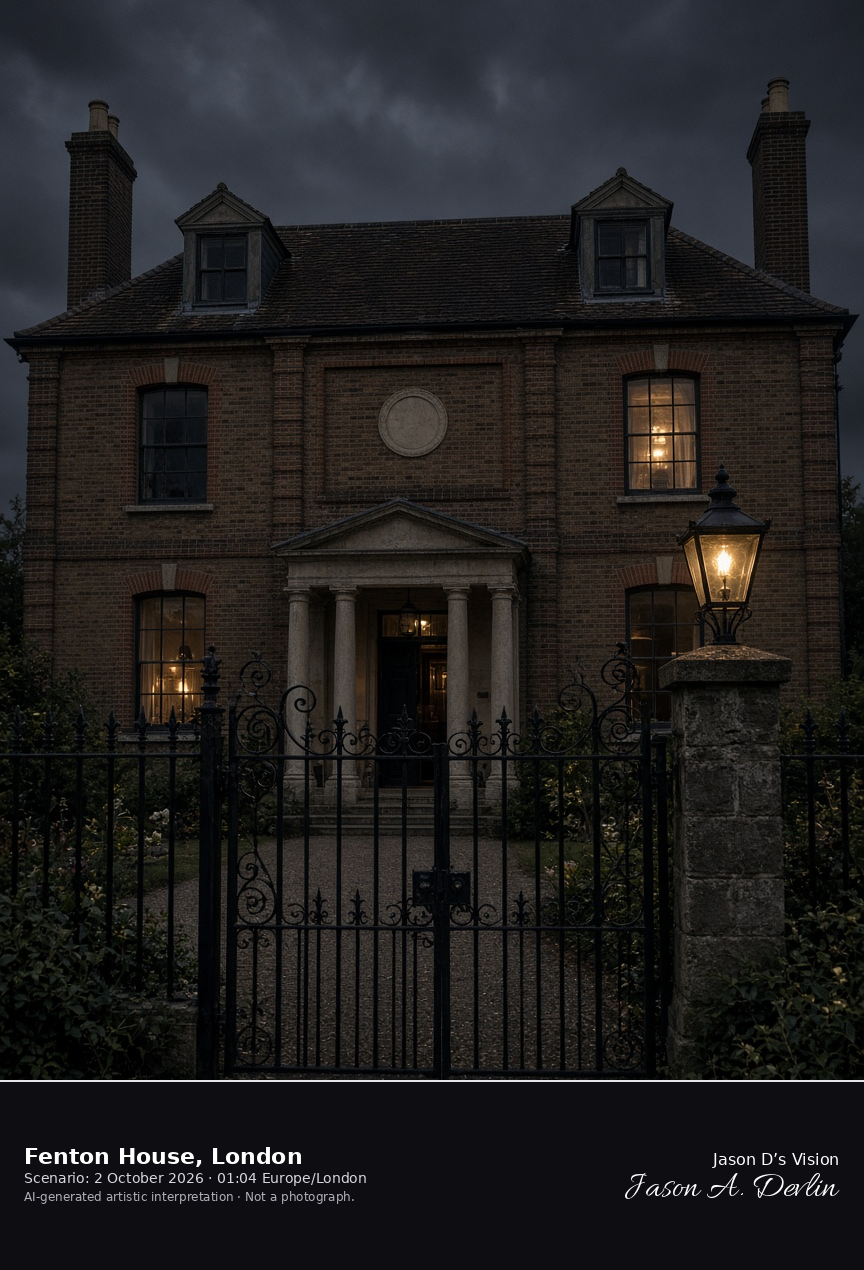
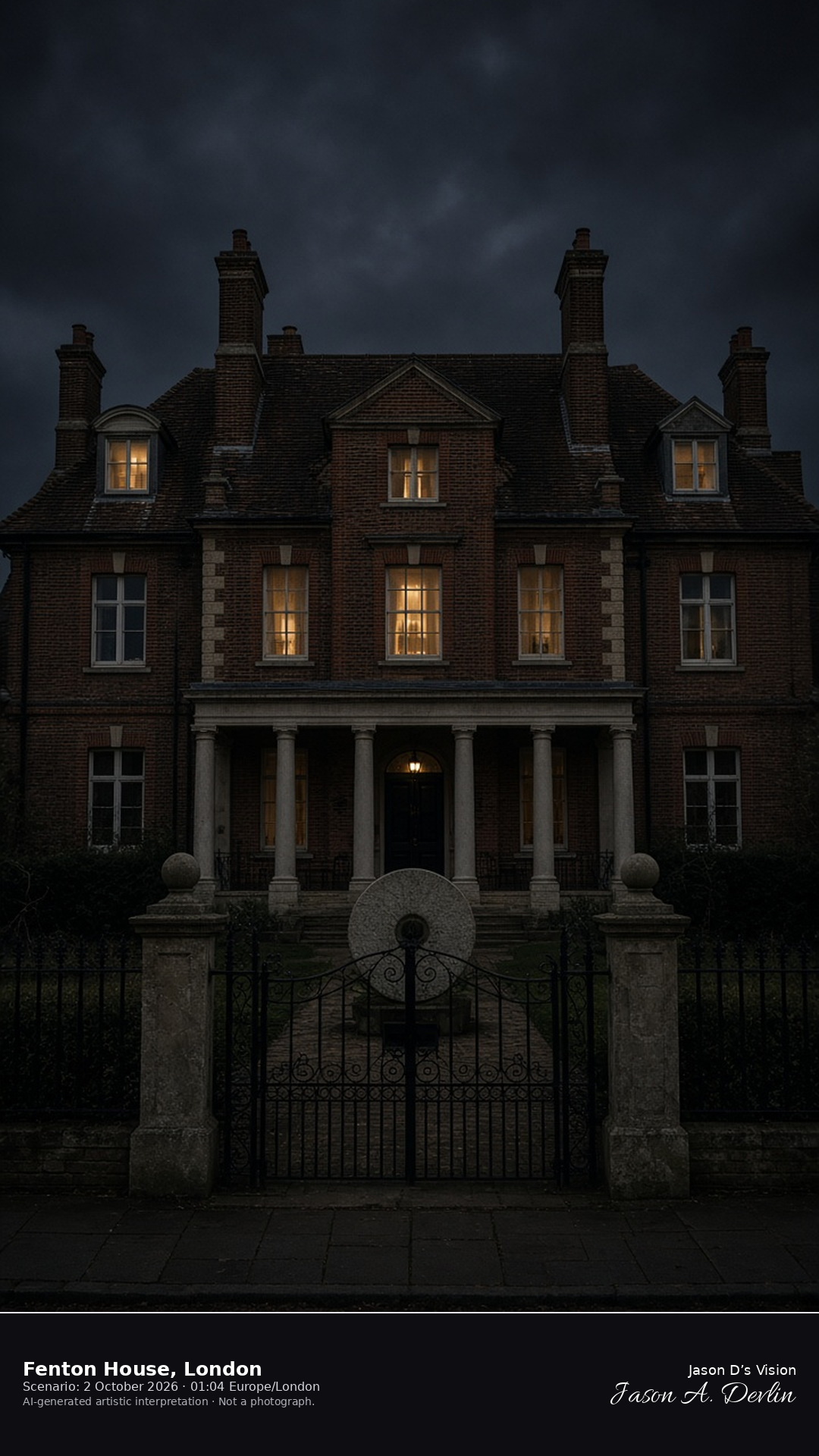
Fenton House, London · AI-generated artistic interpretation
From Hampstead Grove, Fenton House is a brown-brick merchant house with red dressings, a hipped tiled roof and dormers. A Roman Doric porch marks the door, a blank panel carries an empty roundel, and a wrought-iron gate with a lantern stands in front. It is an overcast night, about 13.9°C, dry, and the sun is below the horizon. Open-Meteo valid time is 2026-10-02T01:00 Europe/London on 2 October. This is not a verified on-site observation.
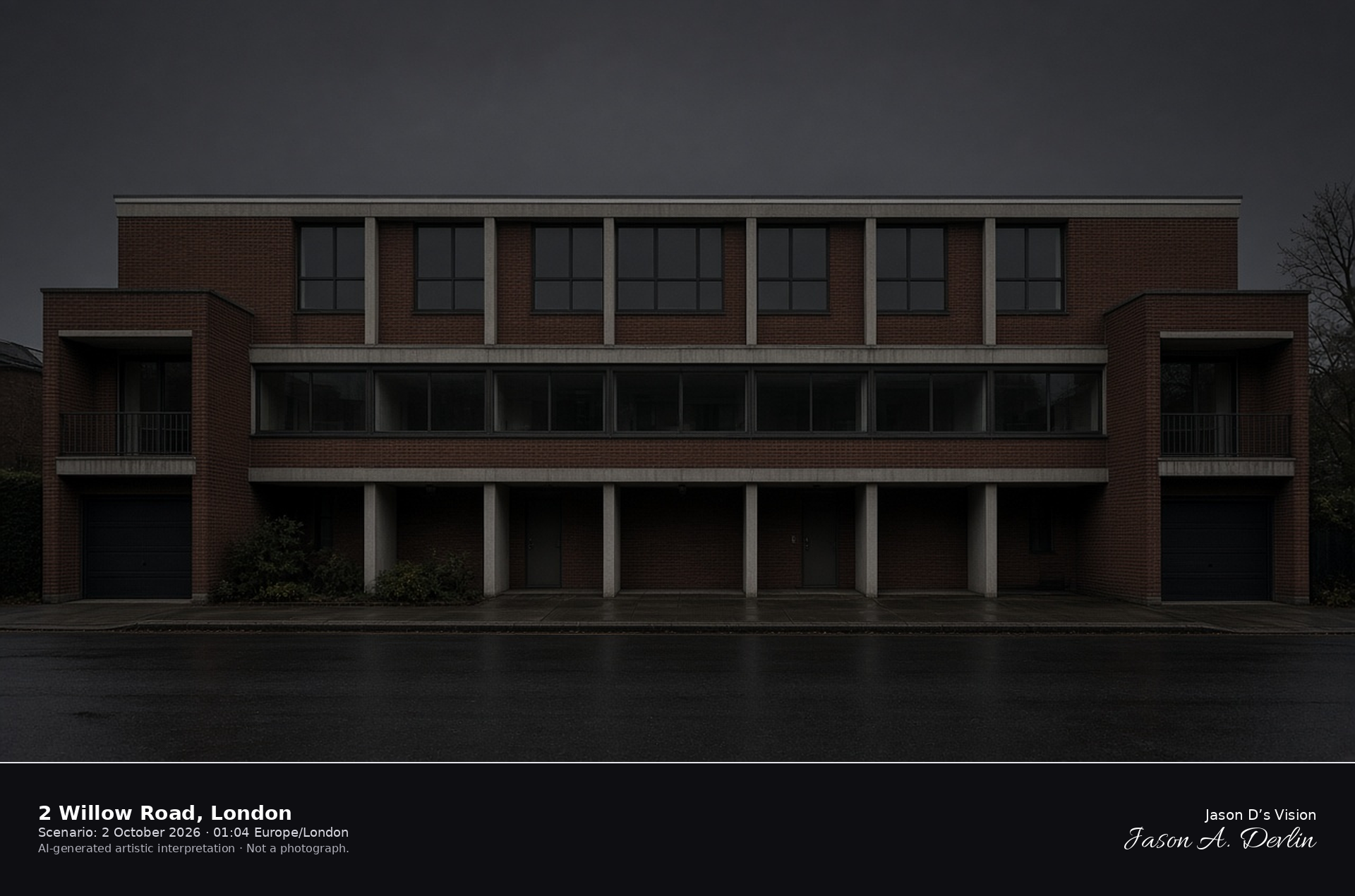
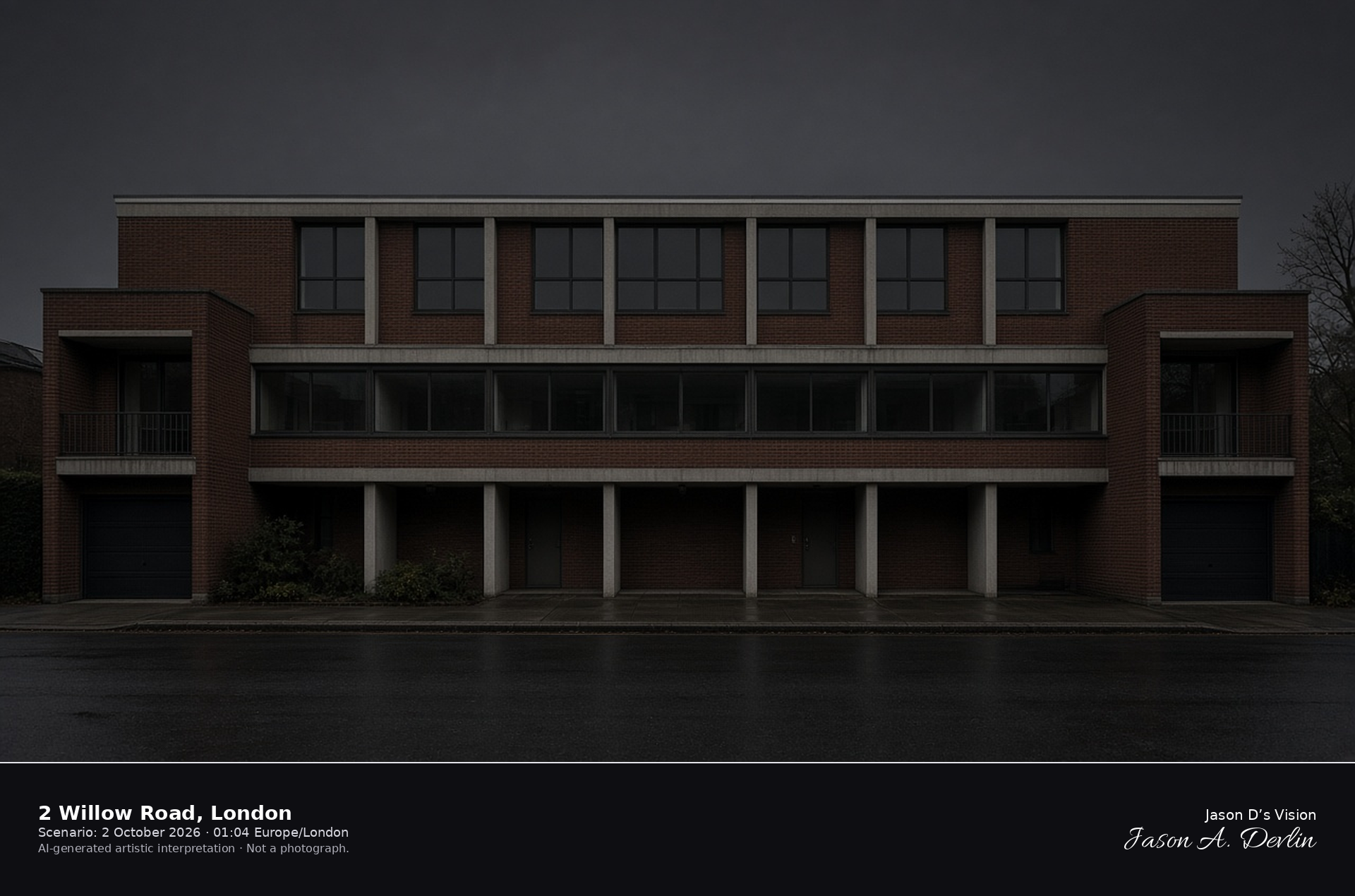
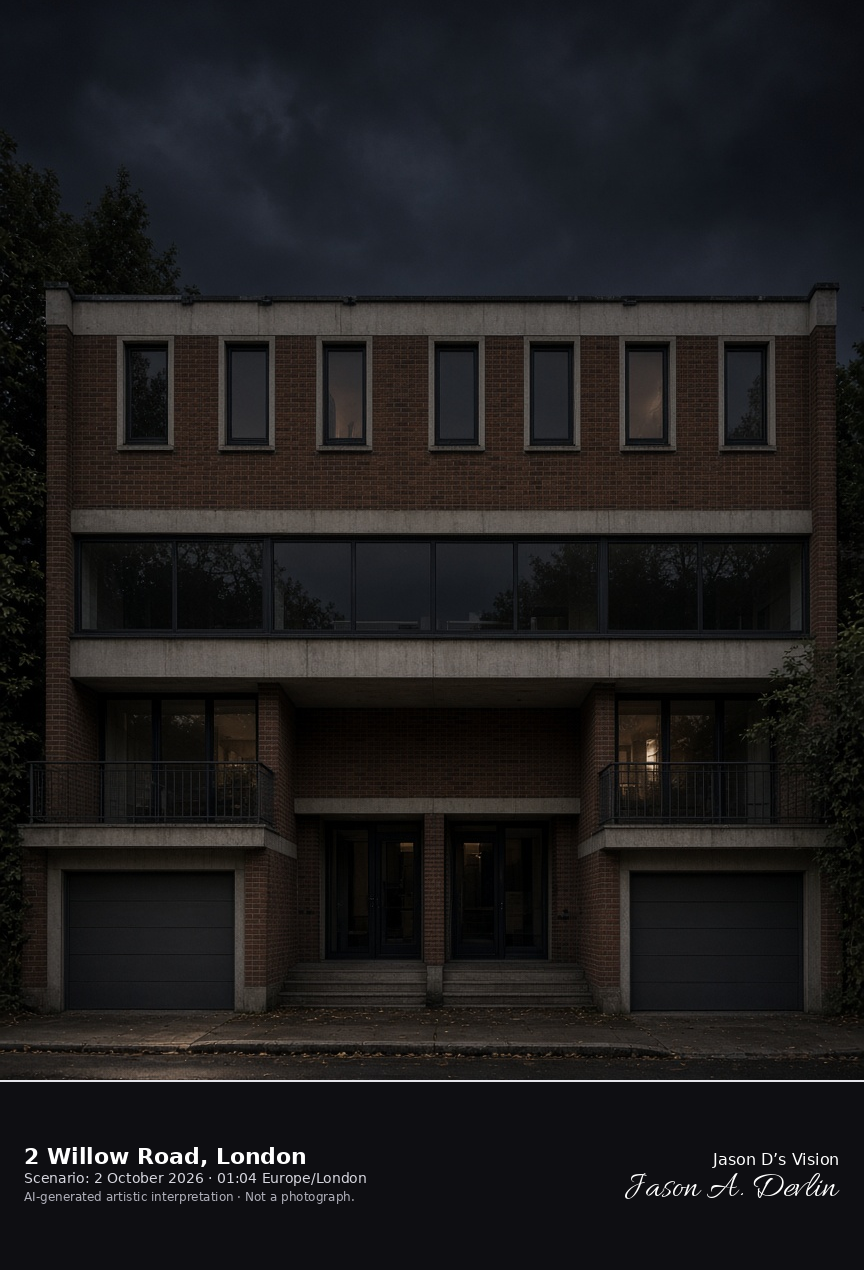
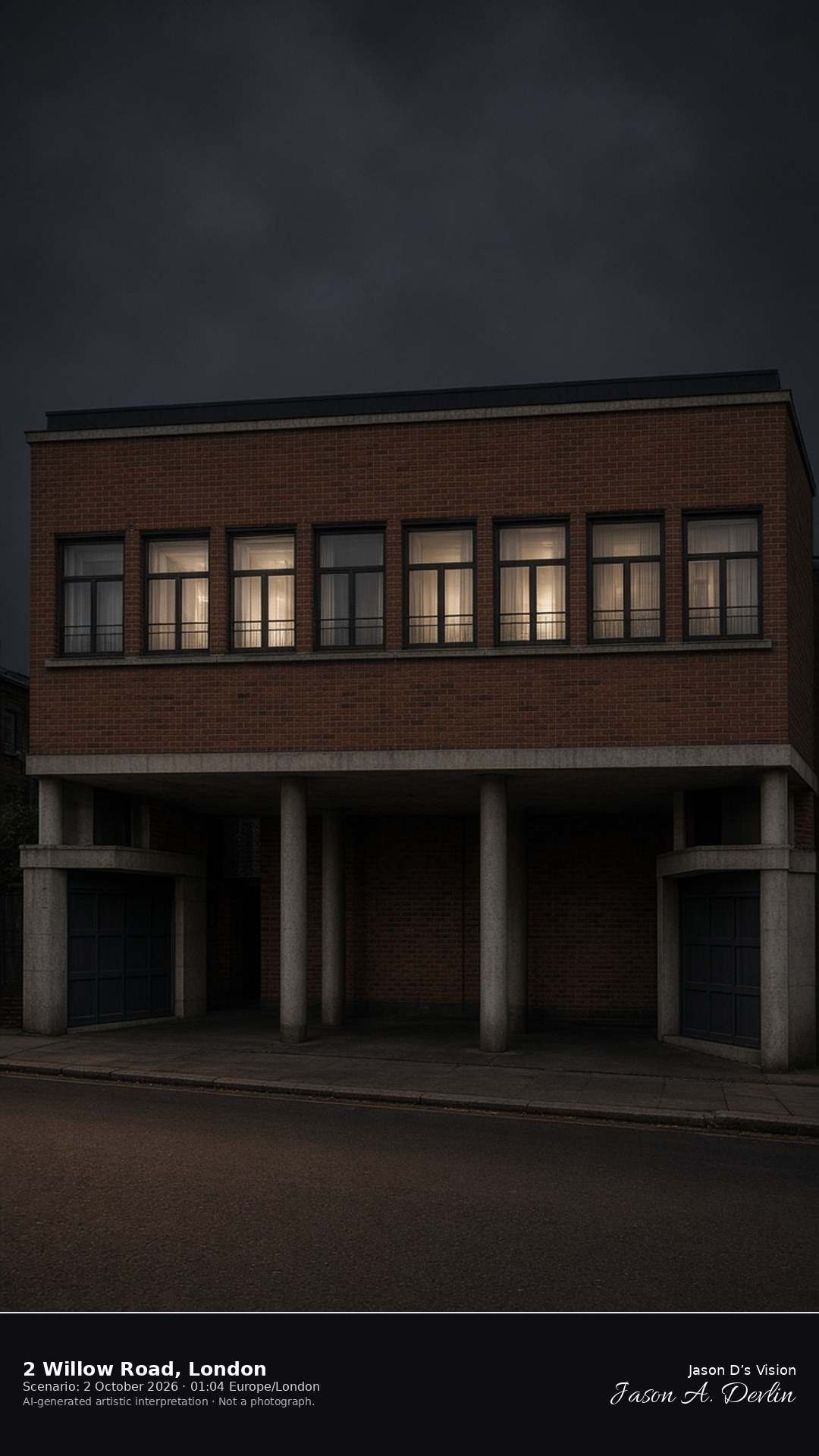
2 Willow Road, London · AI-generated artistic interpretation
From Willow Road, numbers 1 to 3 read as one red-brick modernist terrace, with a concrete frame and a flat roof. A continuous window band runs the full width of the first floor, and seven separate windows sit on the floor above. It is an overcast night, about 14.4°C, dry, and the sun is below the horizon. Open-Meteo valid time is 2026-10-02T01:00 Europe/London on 2 October. This is not a verified on-site observation.
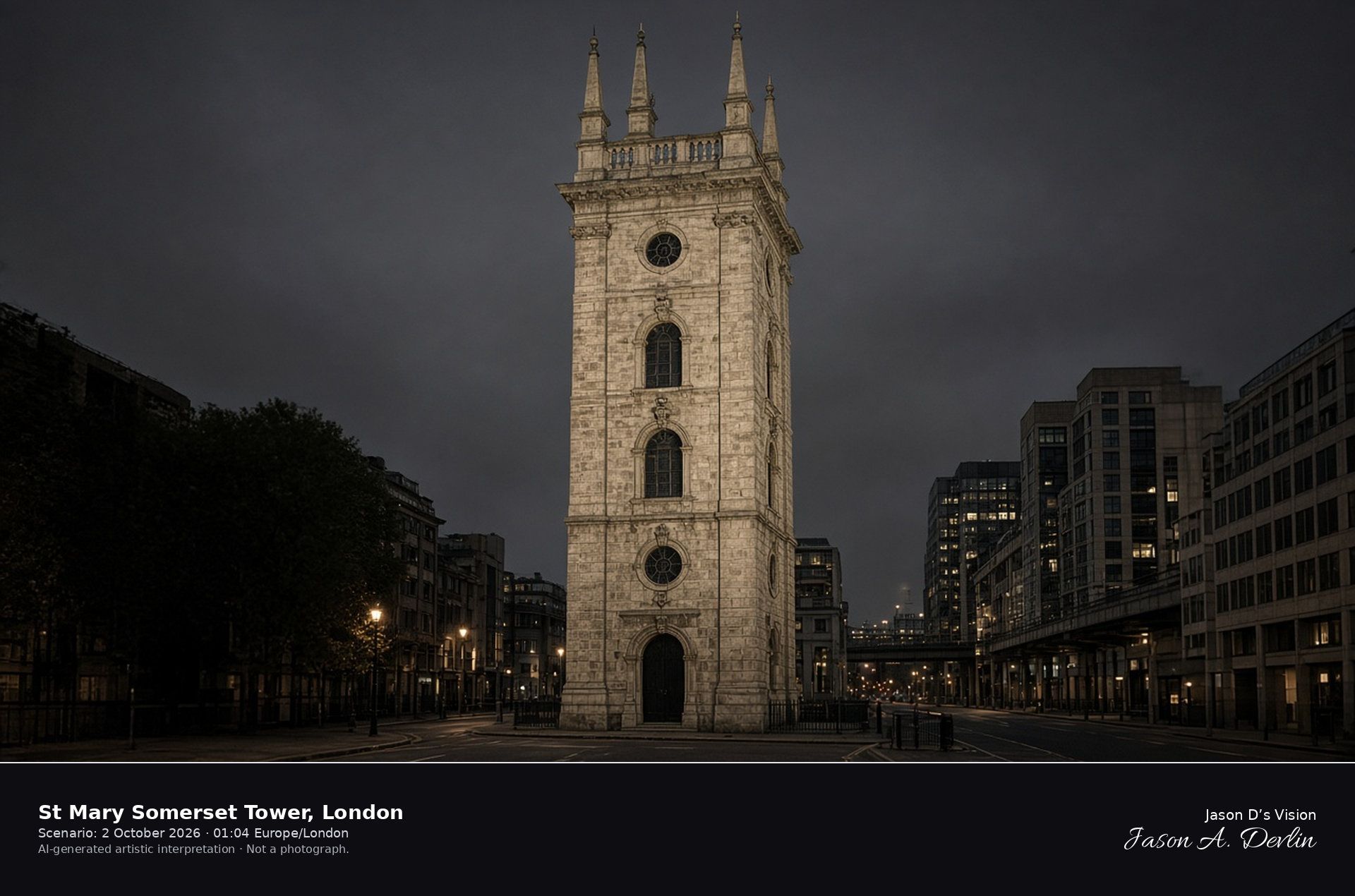
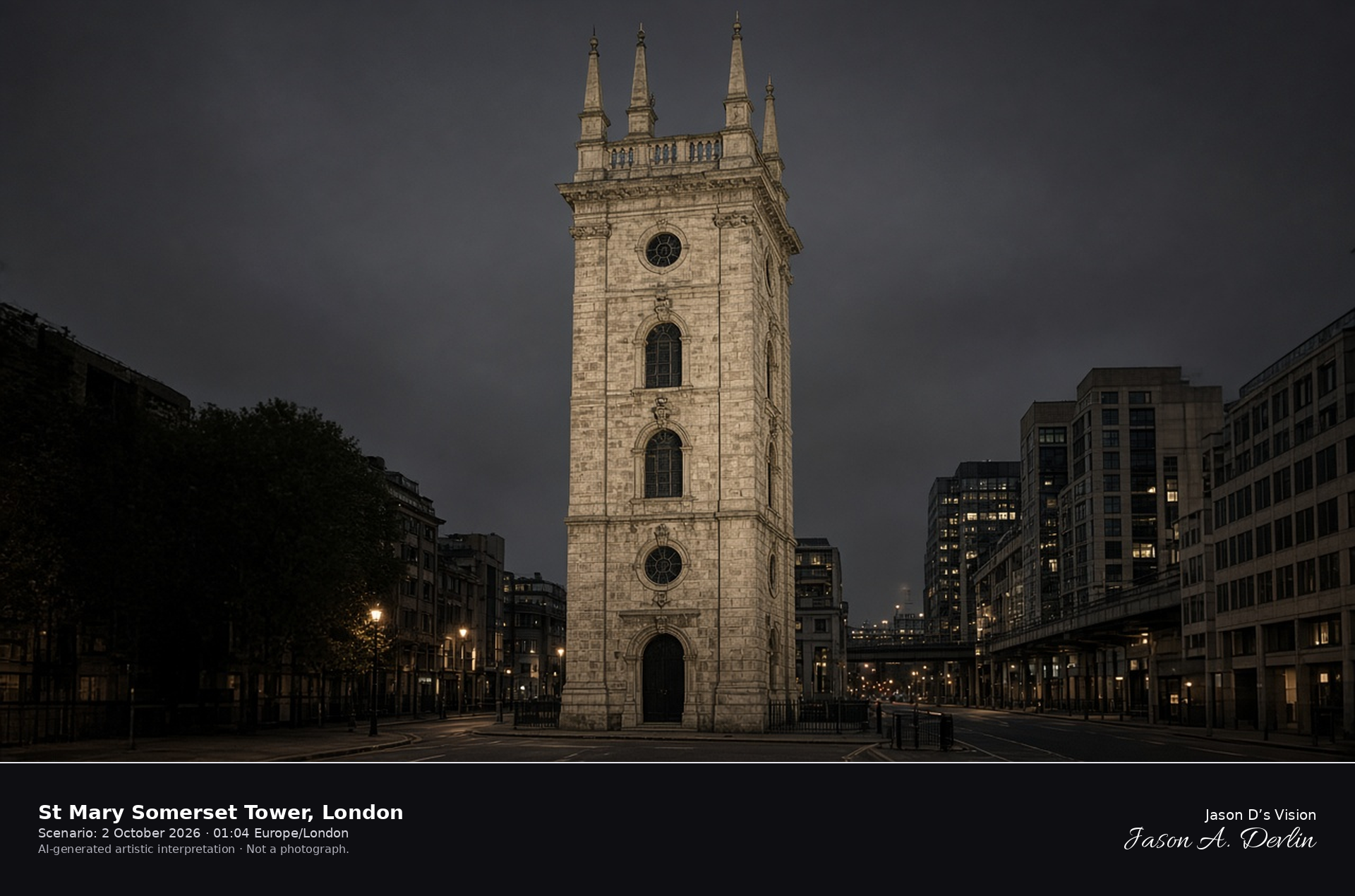
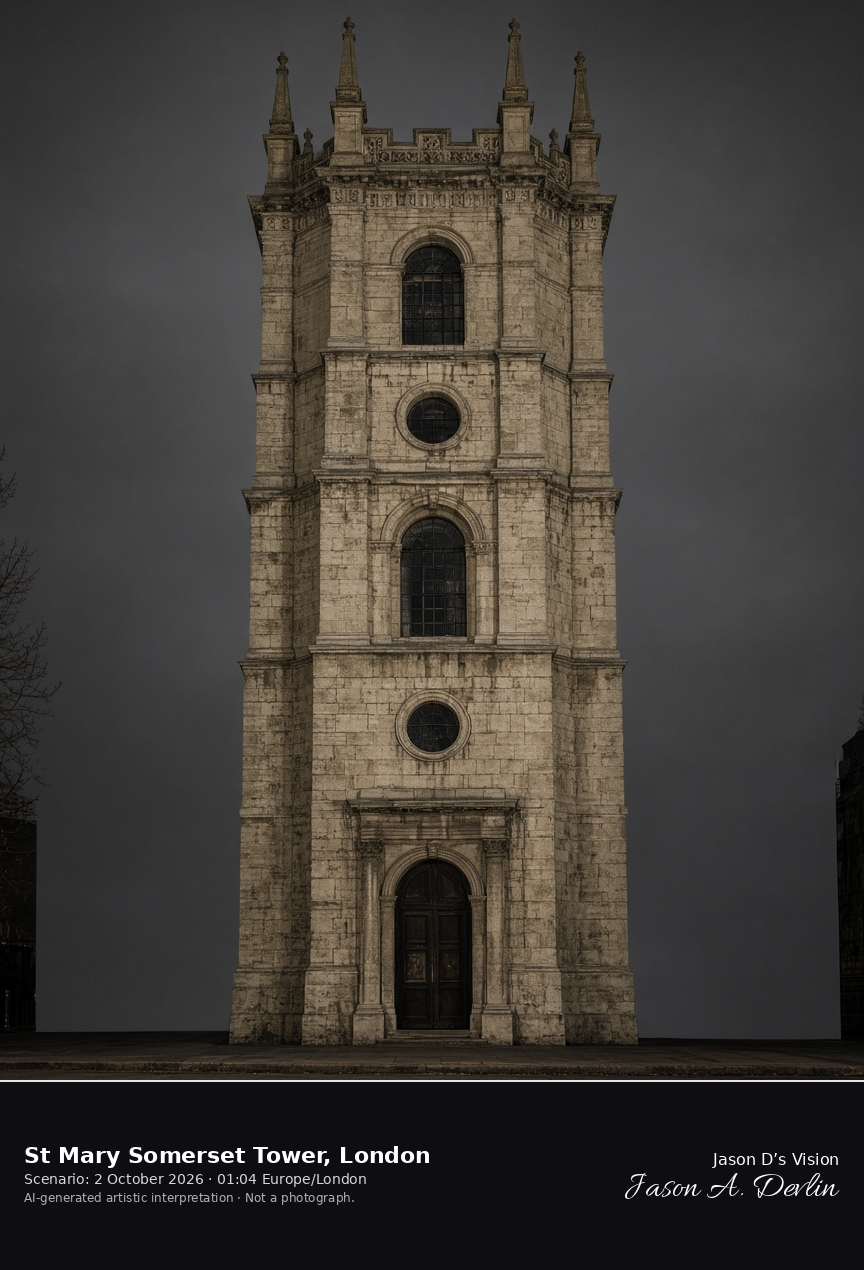
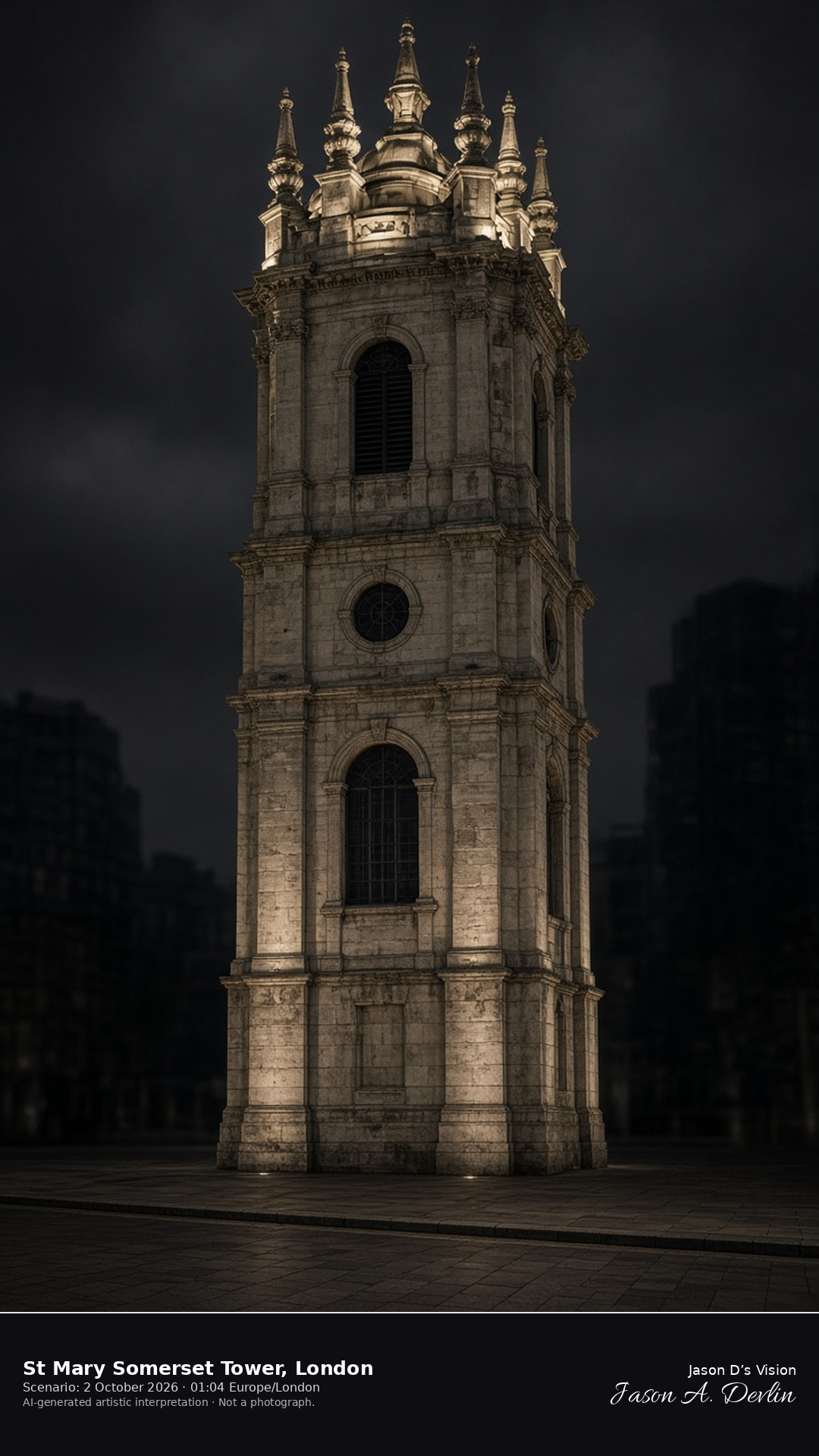
St Mary Somerset Tower, London · AI-generated artistic interpretation
From Upper Thames Street, St Mary Somerset survives only as a Portland-stone tower. Circular and round-arched windows alternate up the faces, and eight pinnacles, corner urns and obelisks, crown the parapet. It is an overcast night, about 15.0°C, dry, and the sun is below the horizon. Open-Meteo valid time is 2026-10-02T01:00 Europe/London on 2 October. This is not a verified on-site observation.
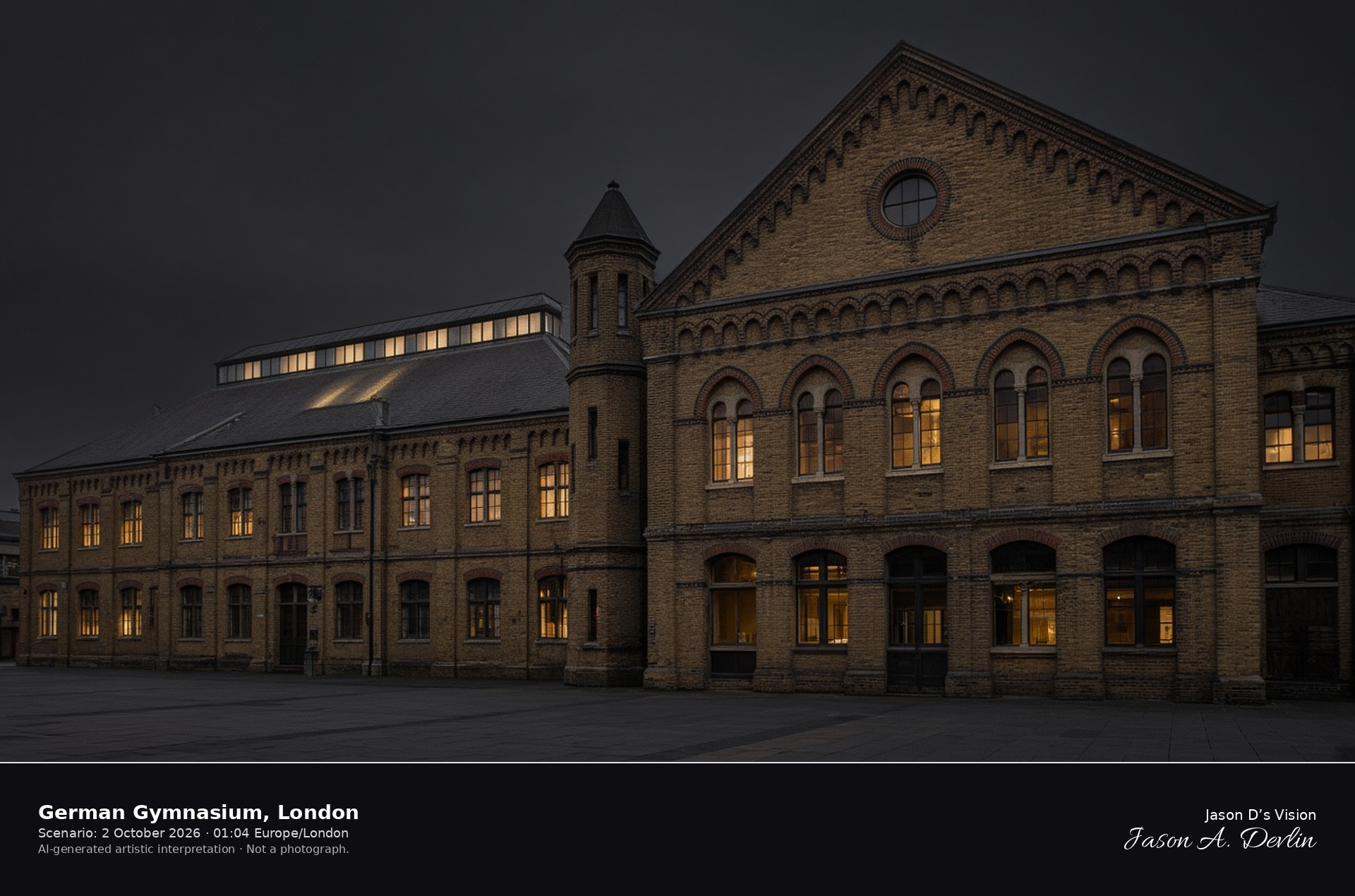
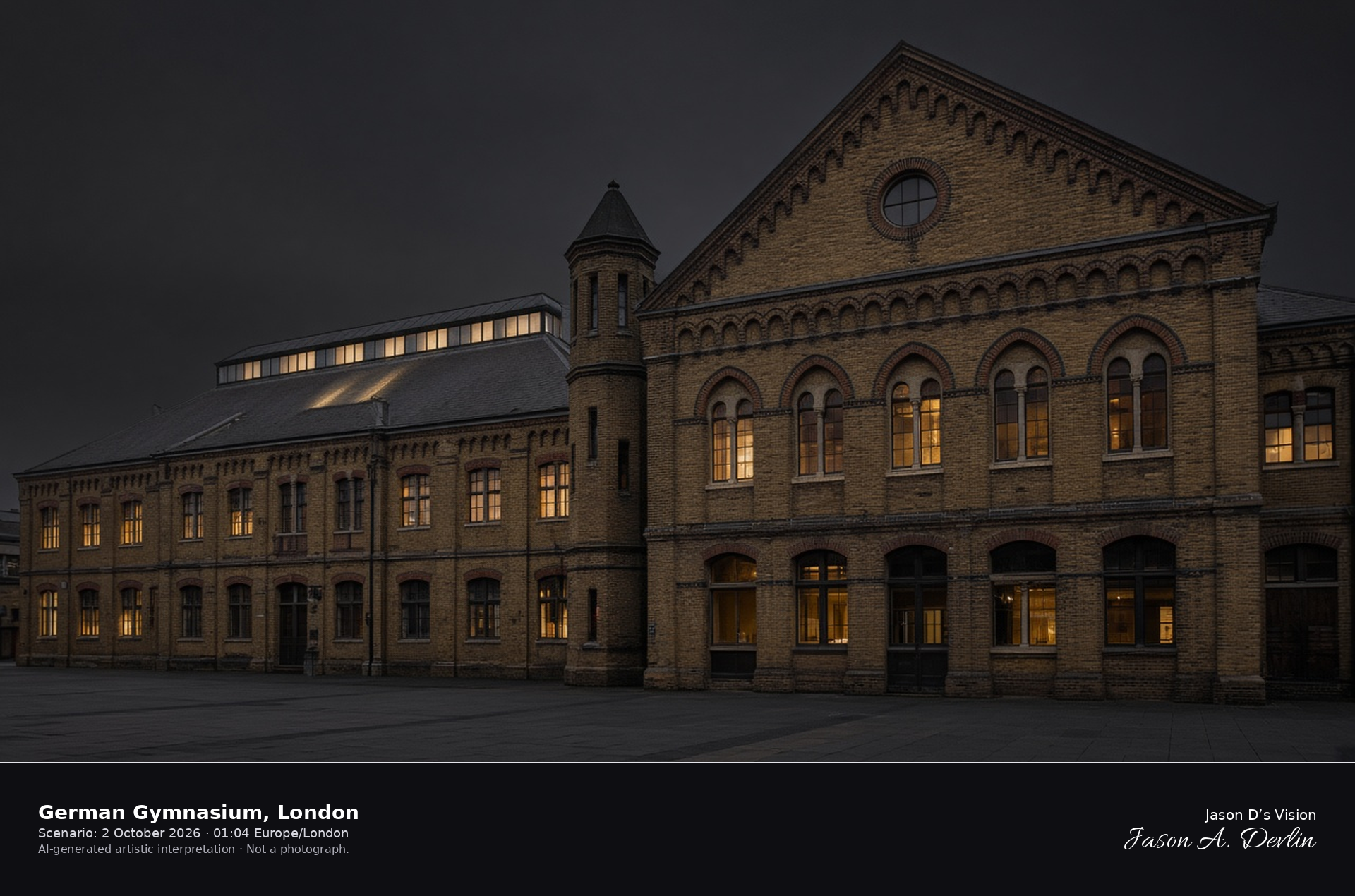
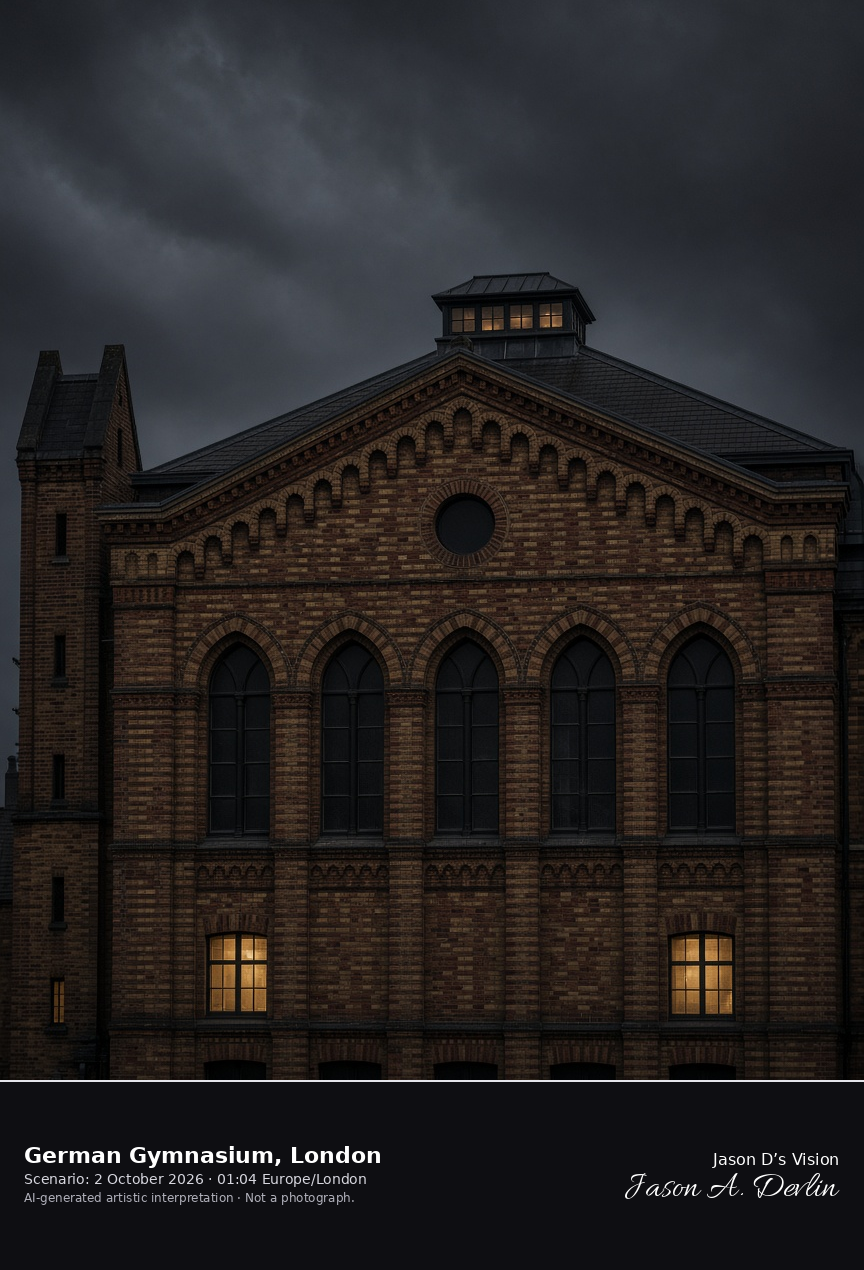
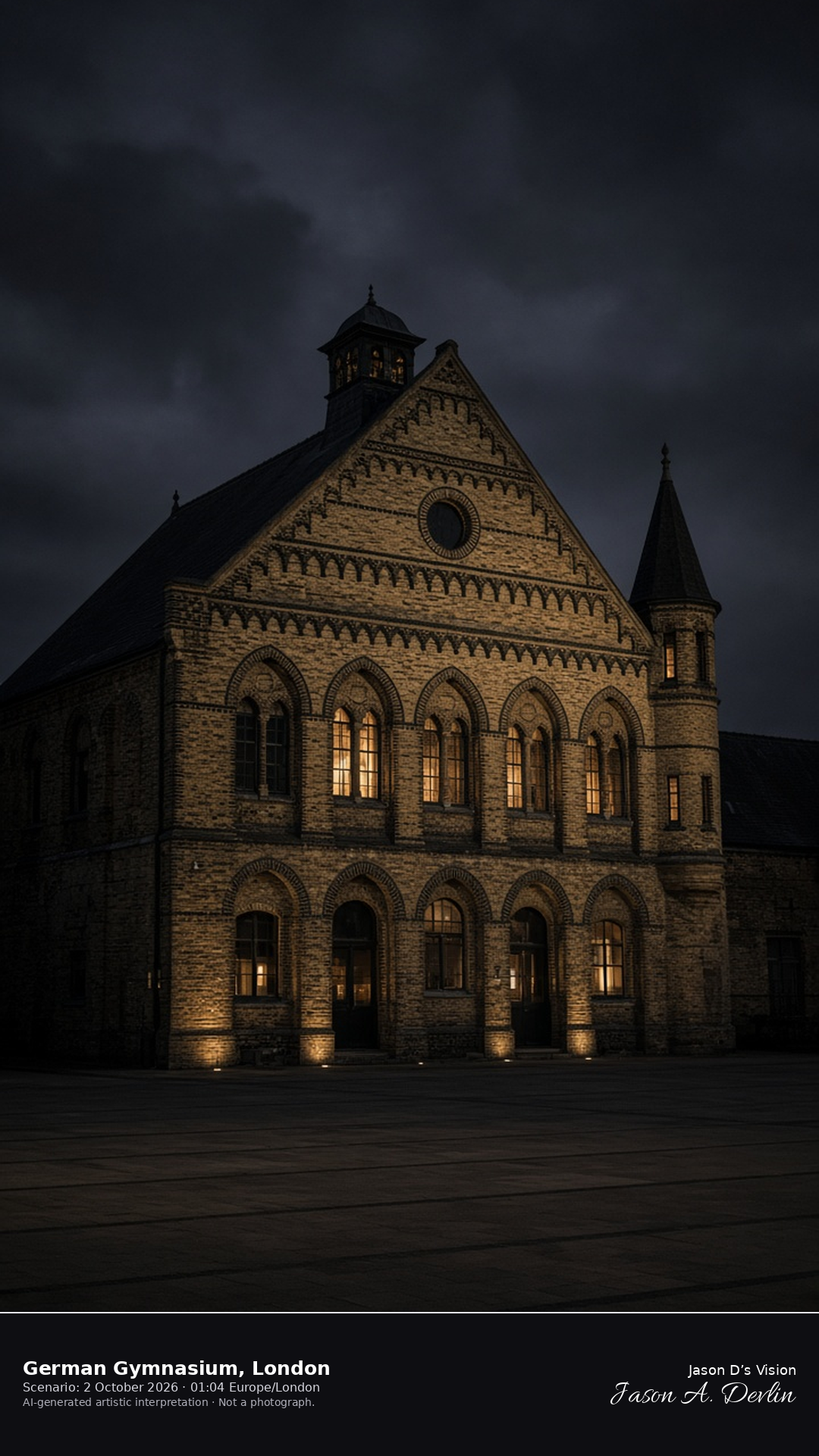
German Gymnasium, London · AI-generated artistic interpretation
From King's Boulevard, the German Gymnasium is a multi-coloured stock-brick hall, with a gable of pointed-arch windows, an oculus and a Lombard frieze. A narrow stair tower stands at one side, and a lantern runs along the roof ridge. It is an overcast night, about 14.7°C, dry, and the sun is below the horizon. Open-Meteo valid time is 2026-10-02T01:00 Europe/London on 2 October. This is not a verified on-site observation.
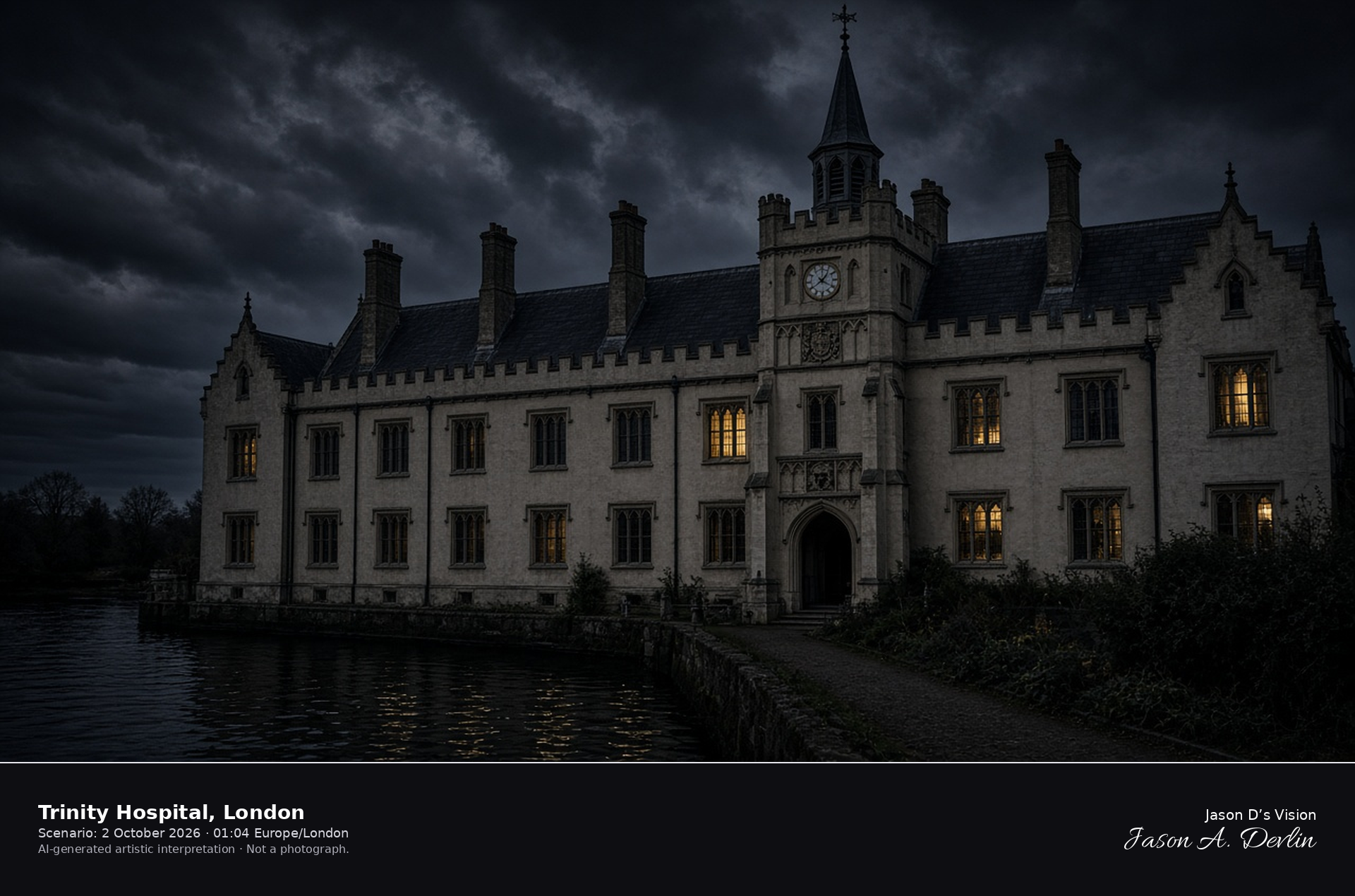
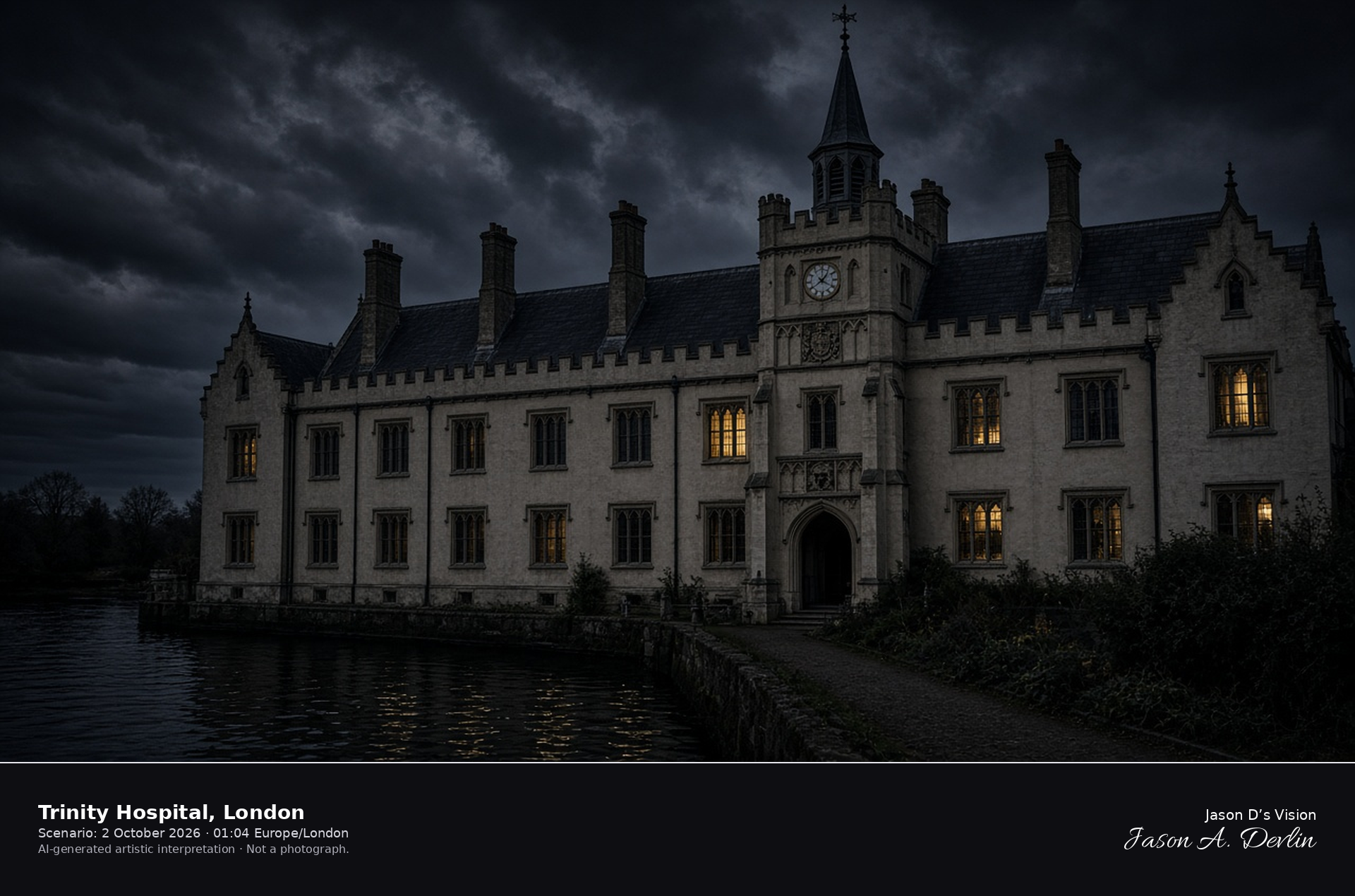
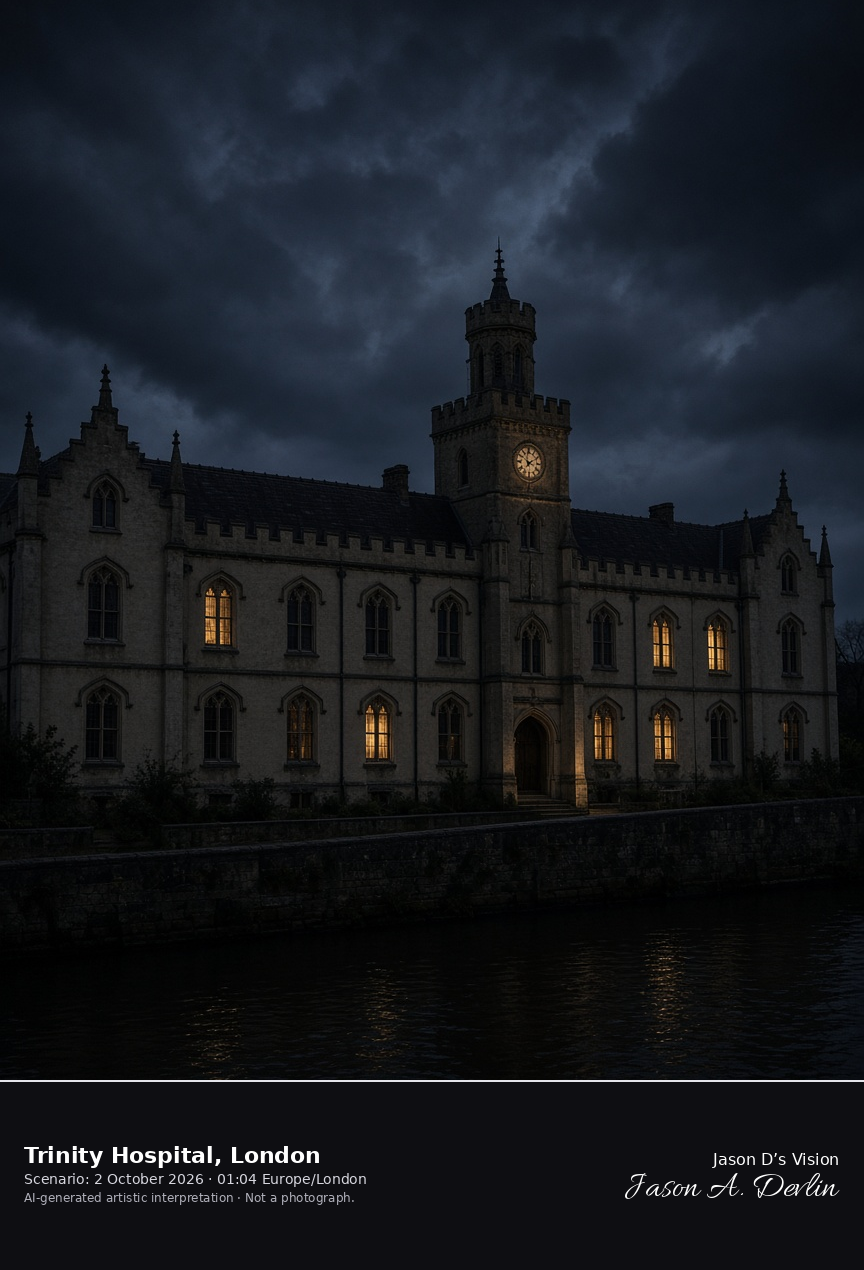
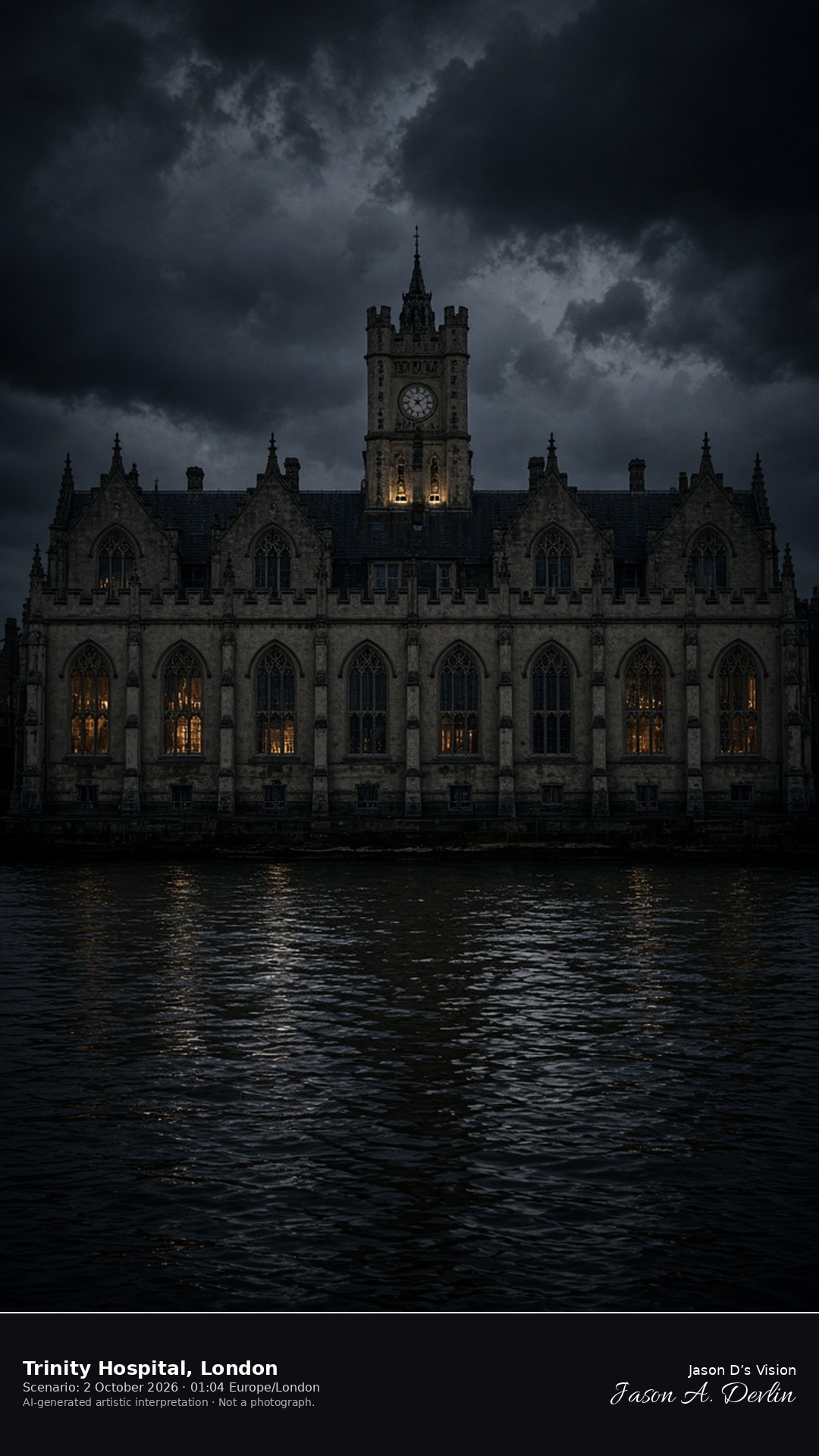
Trinity Hospital, London · AI-generated artistic interpretation
From the Thames Path, Trinity Hospital is a small stuccoed gothic almshouse, with a battlemented parapet, crow-stepped end gables and a high slate roof. A central tower carries a clock and a short spike. It is a partly cloudy night, about 15.3°C, dry, and the sun is below the horizon. Open-Meteo valid time is 2026-10-02T01:00 Europe/London on 2 October. This is not a verified on-site observation.
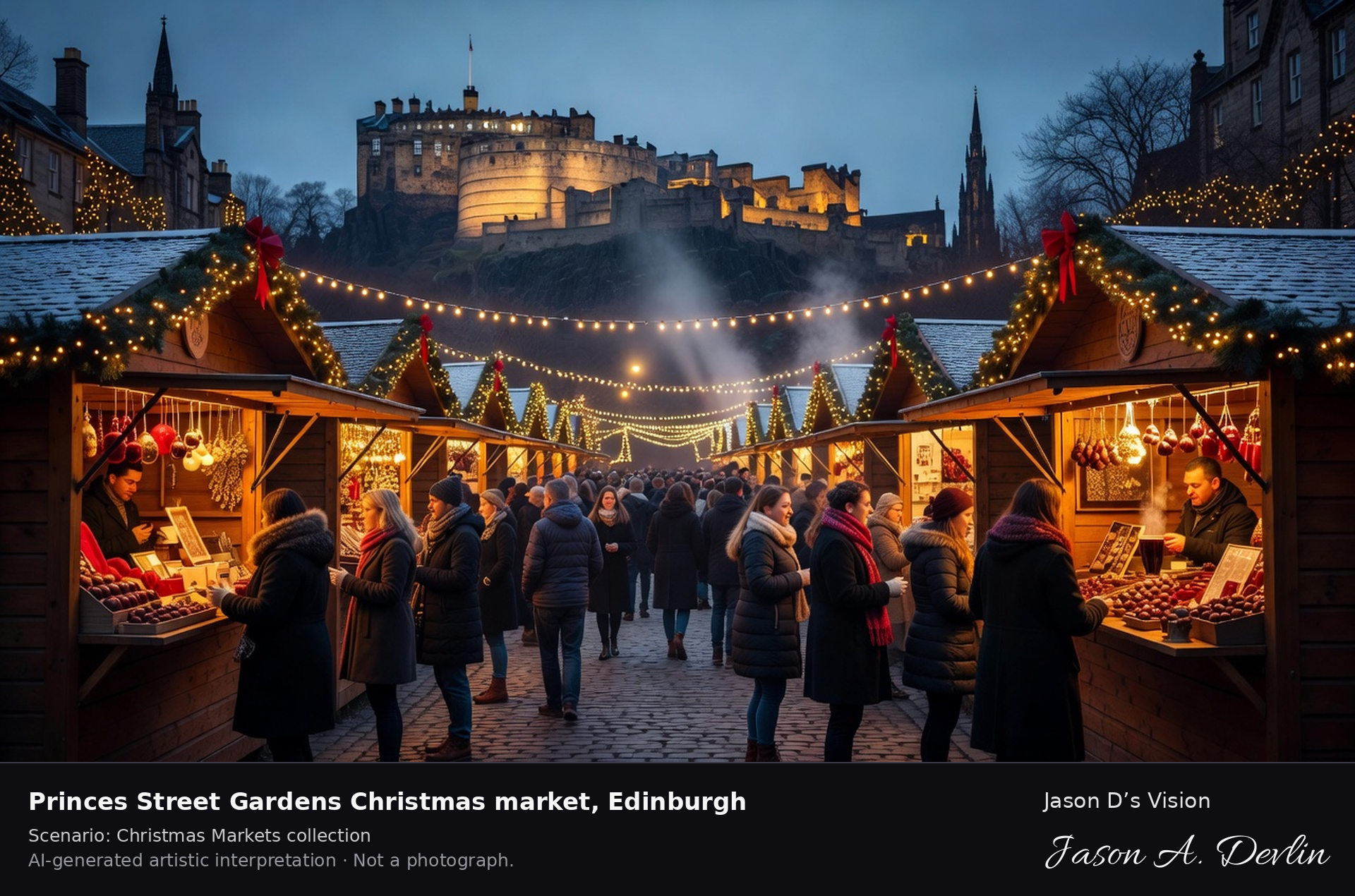
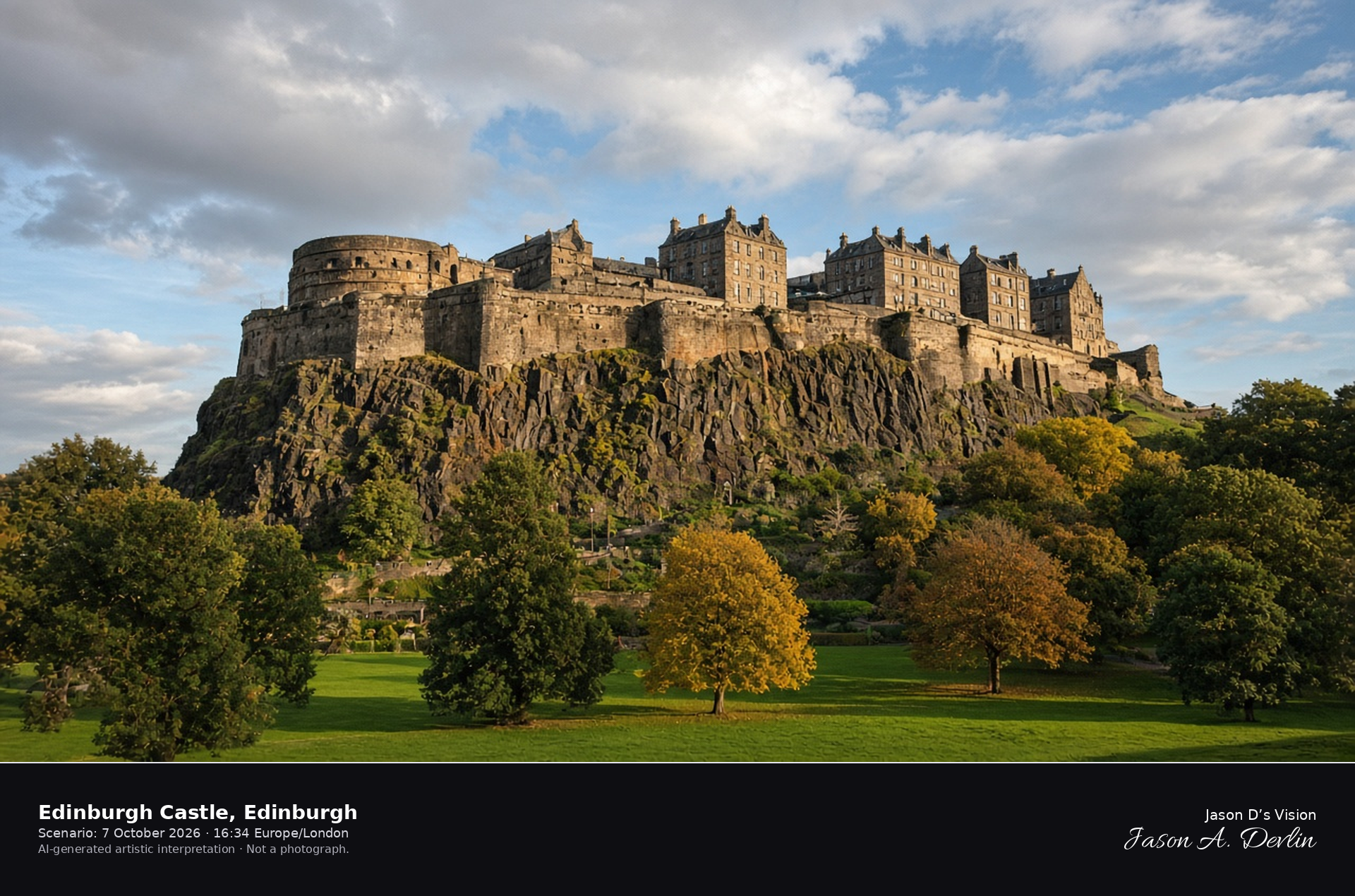
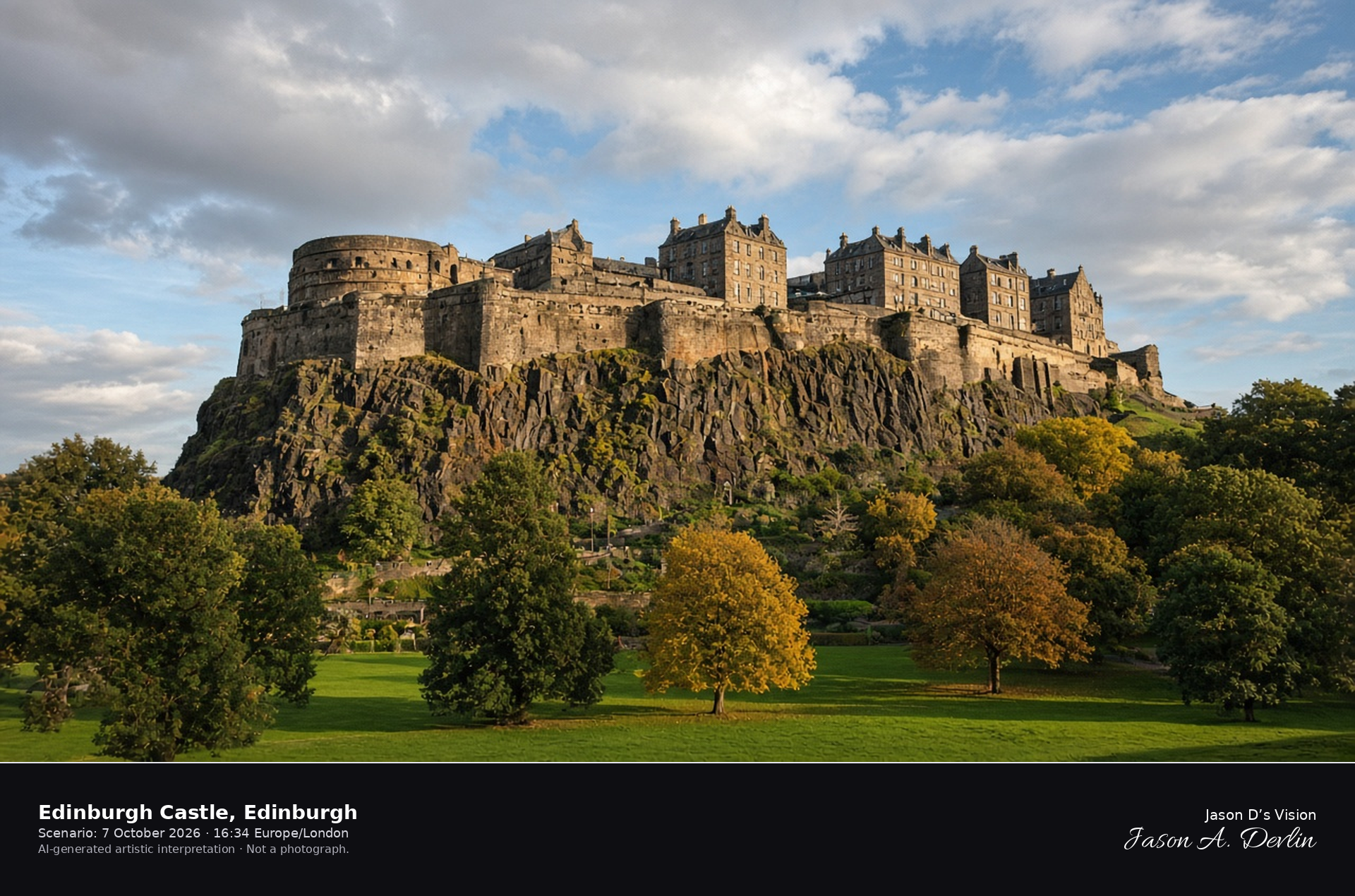
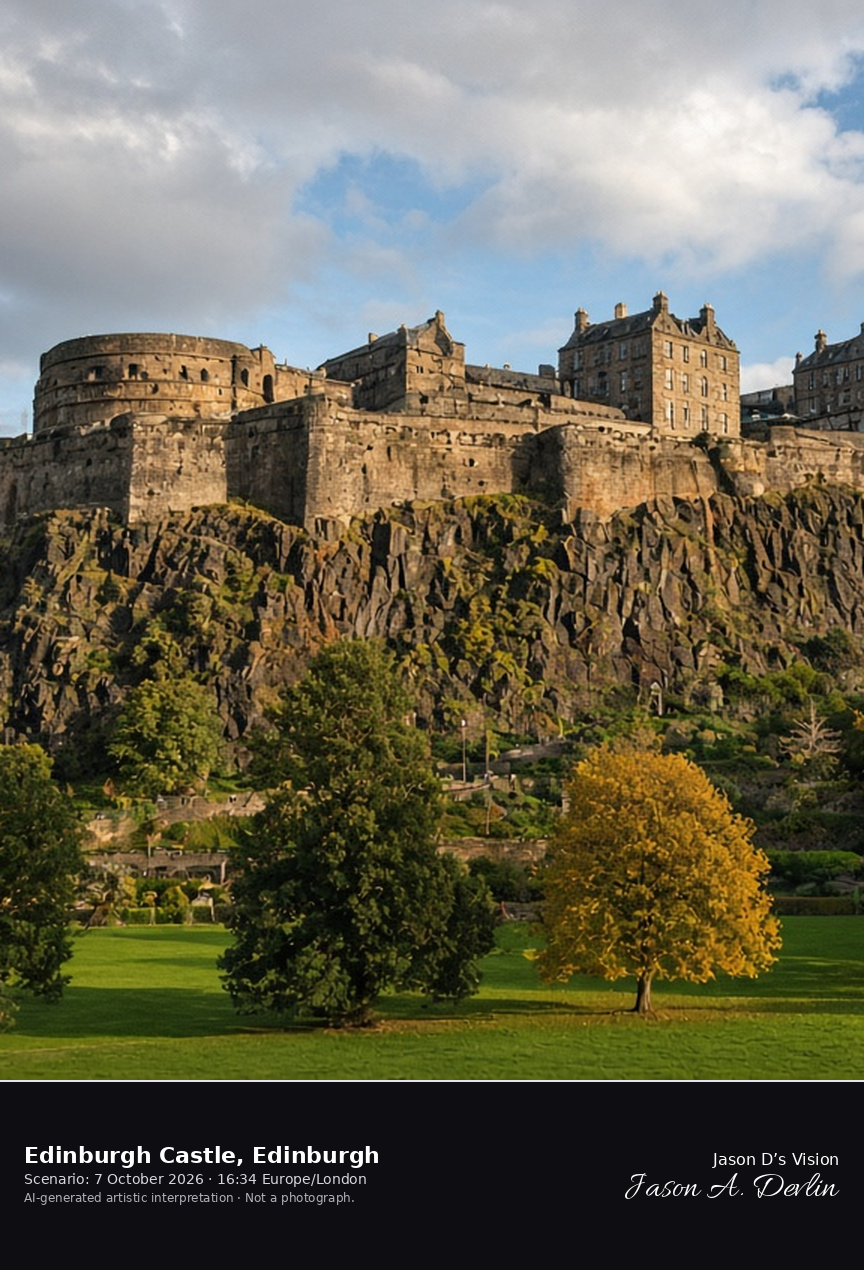
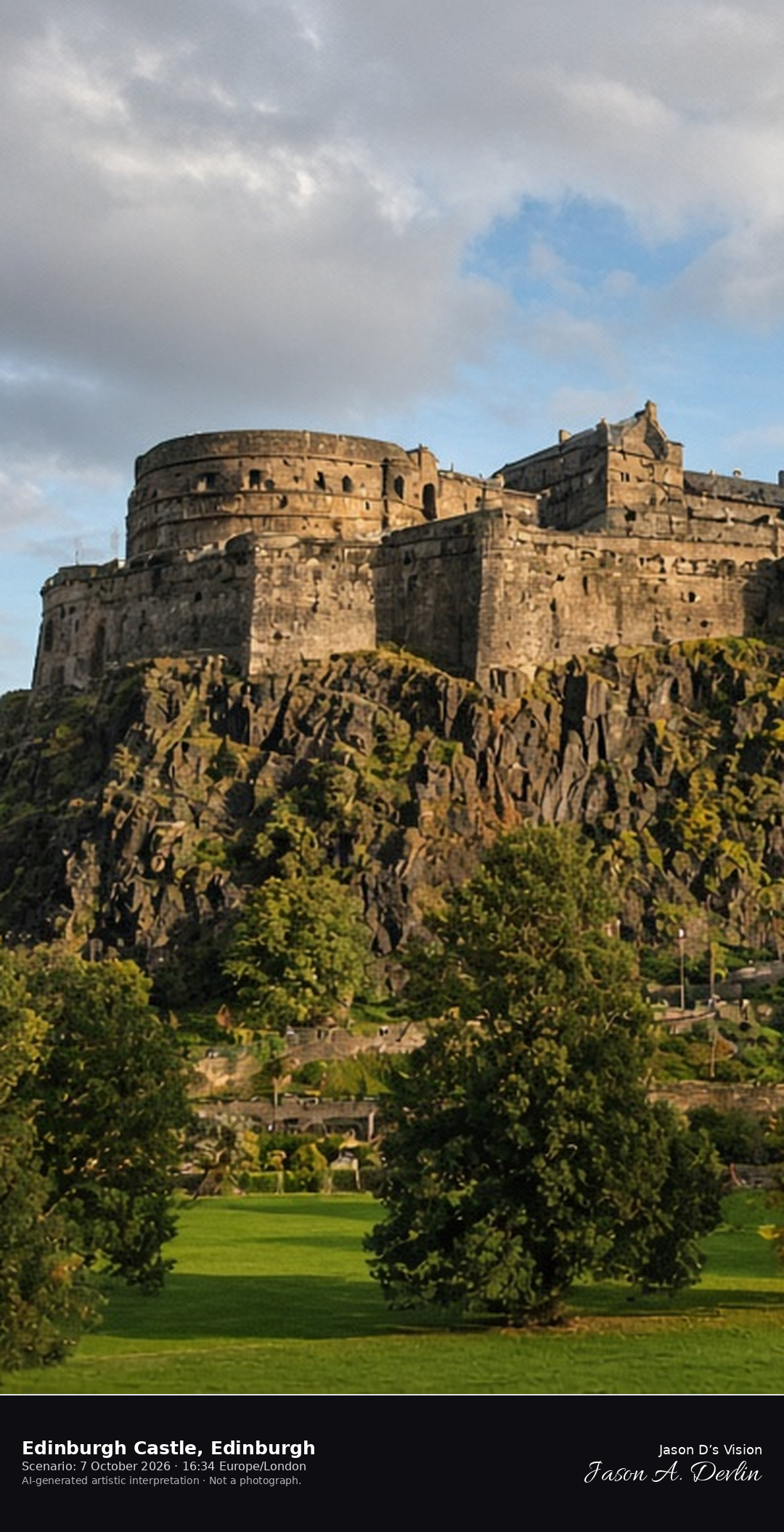
Edinburgh Castle stands on Castle Rock, the plug of an extinct volcano in the centre of Edinburgh. From the gardens to the north the rock shows near-vertical crags, topped by the castle's batteries, barracks and Crown Square buildings; the gardens fill the valley of the drained Nor' Loch.
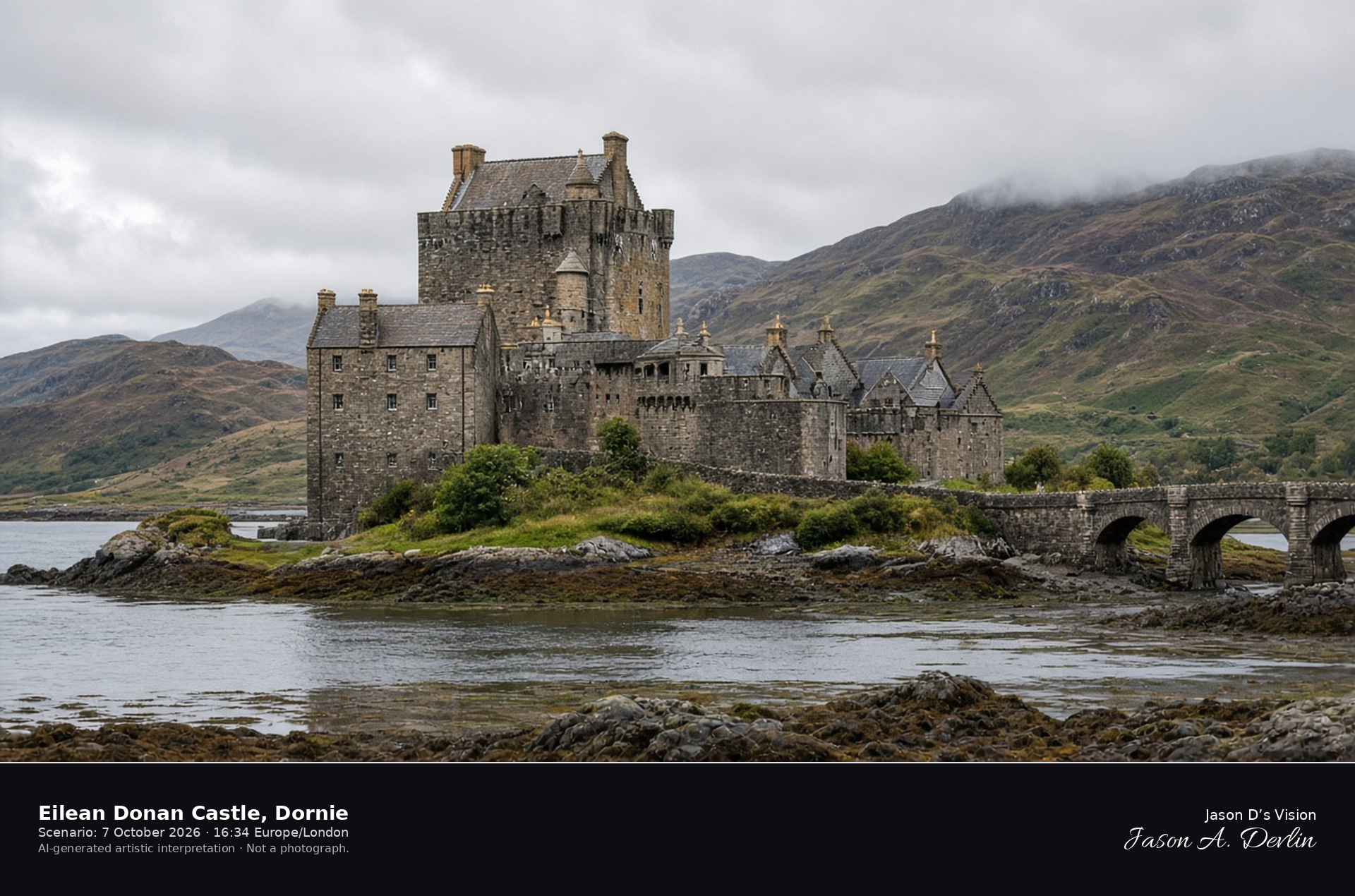
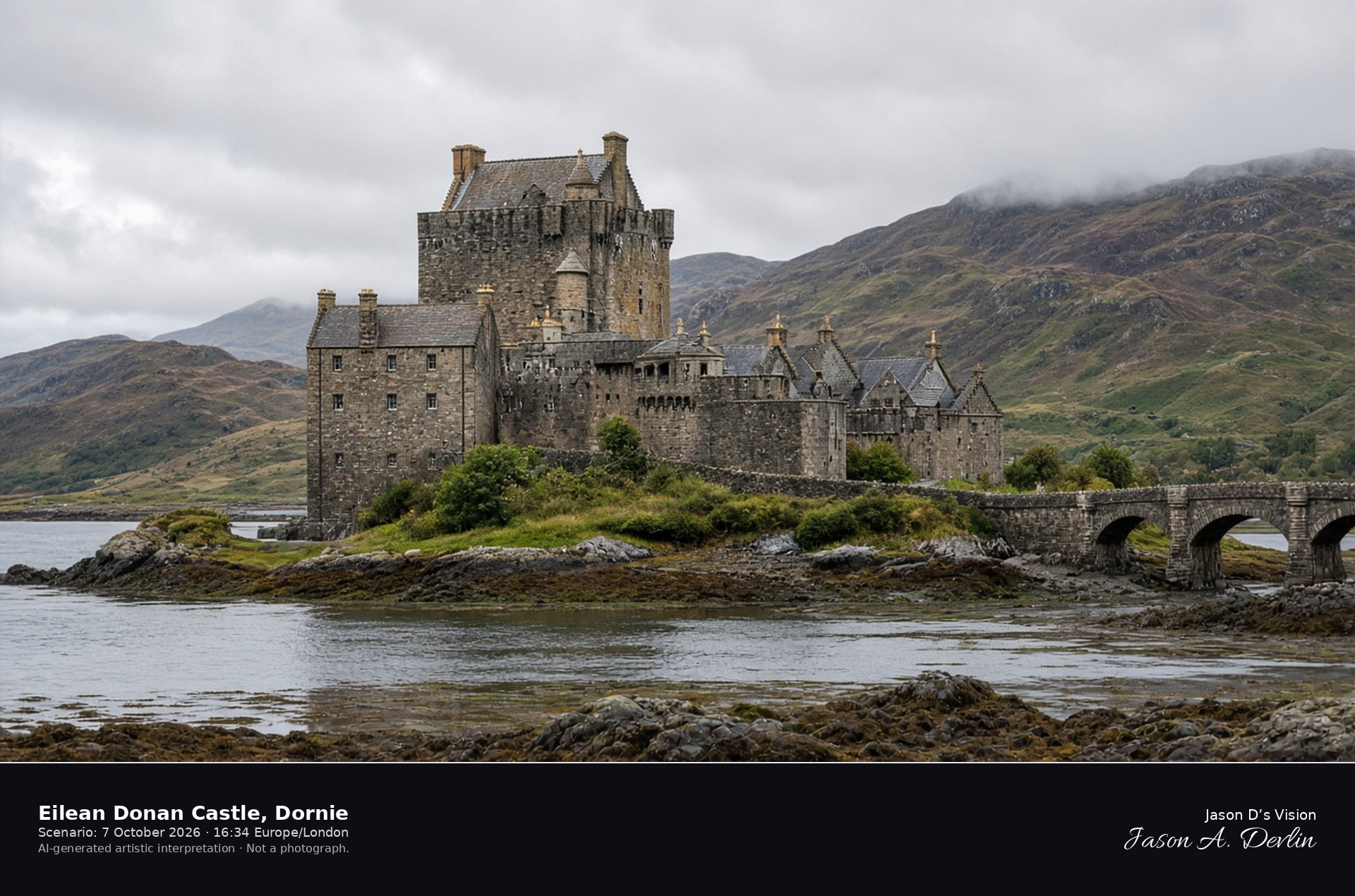
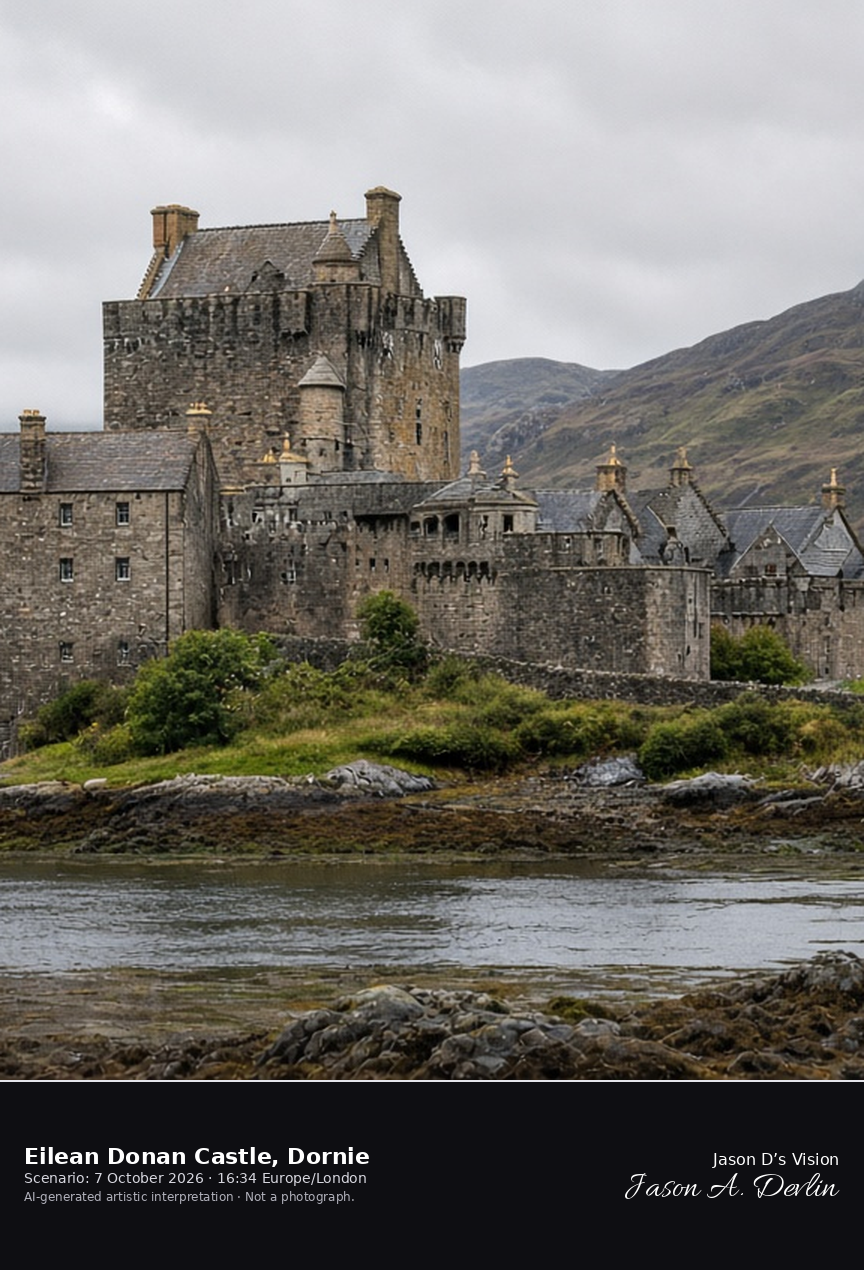
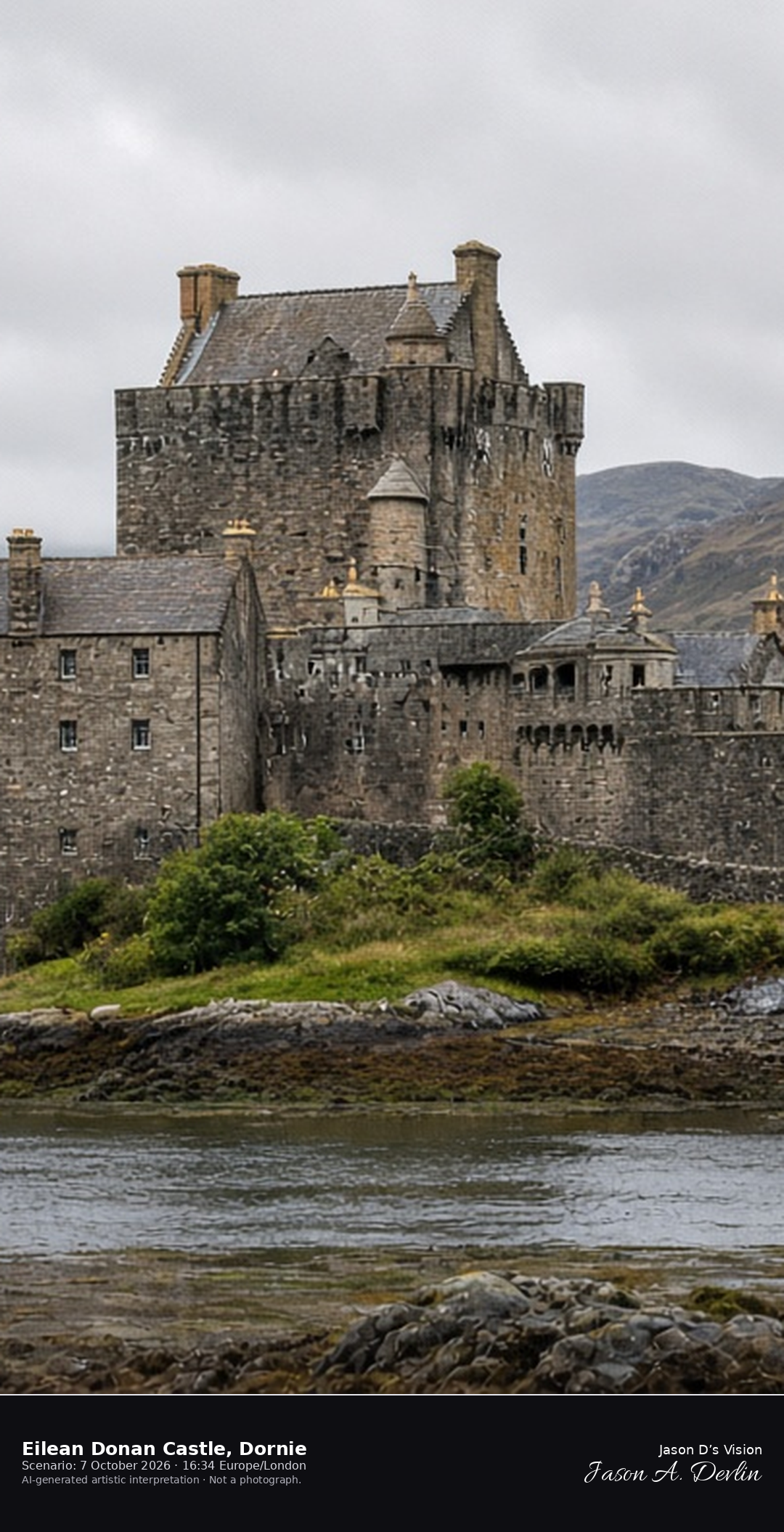
Eilean Donan is a castle on a small island at the meeting of three sea lochs near Dornie in the western Highlands. The present buildings are an early-20th-century reconstruction of the medieval stronghold, linked to the mainland by a multi-arched stone bridge.
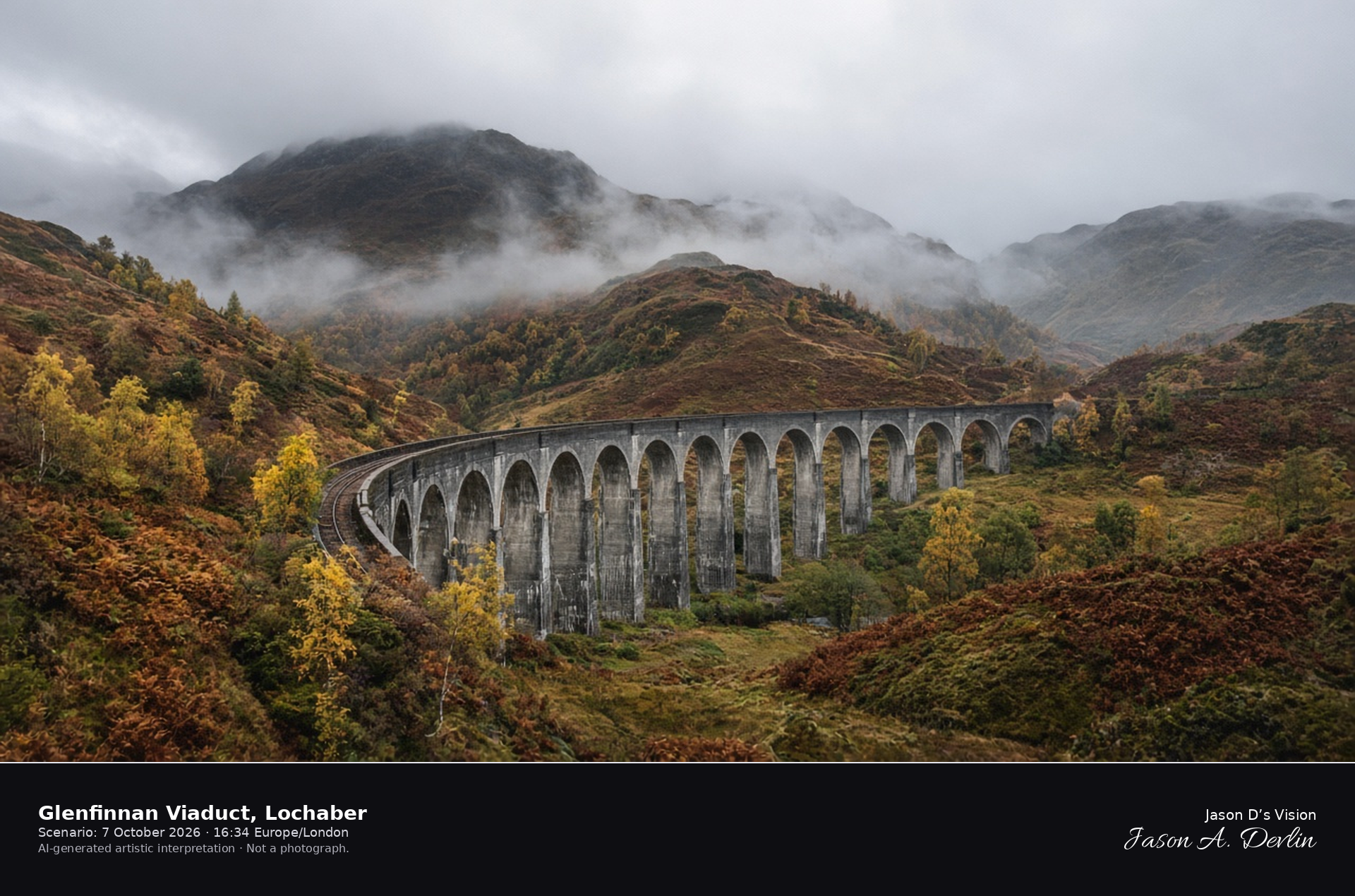
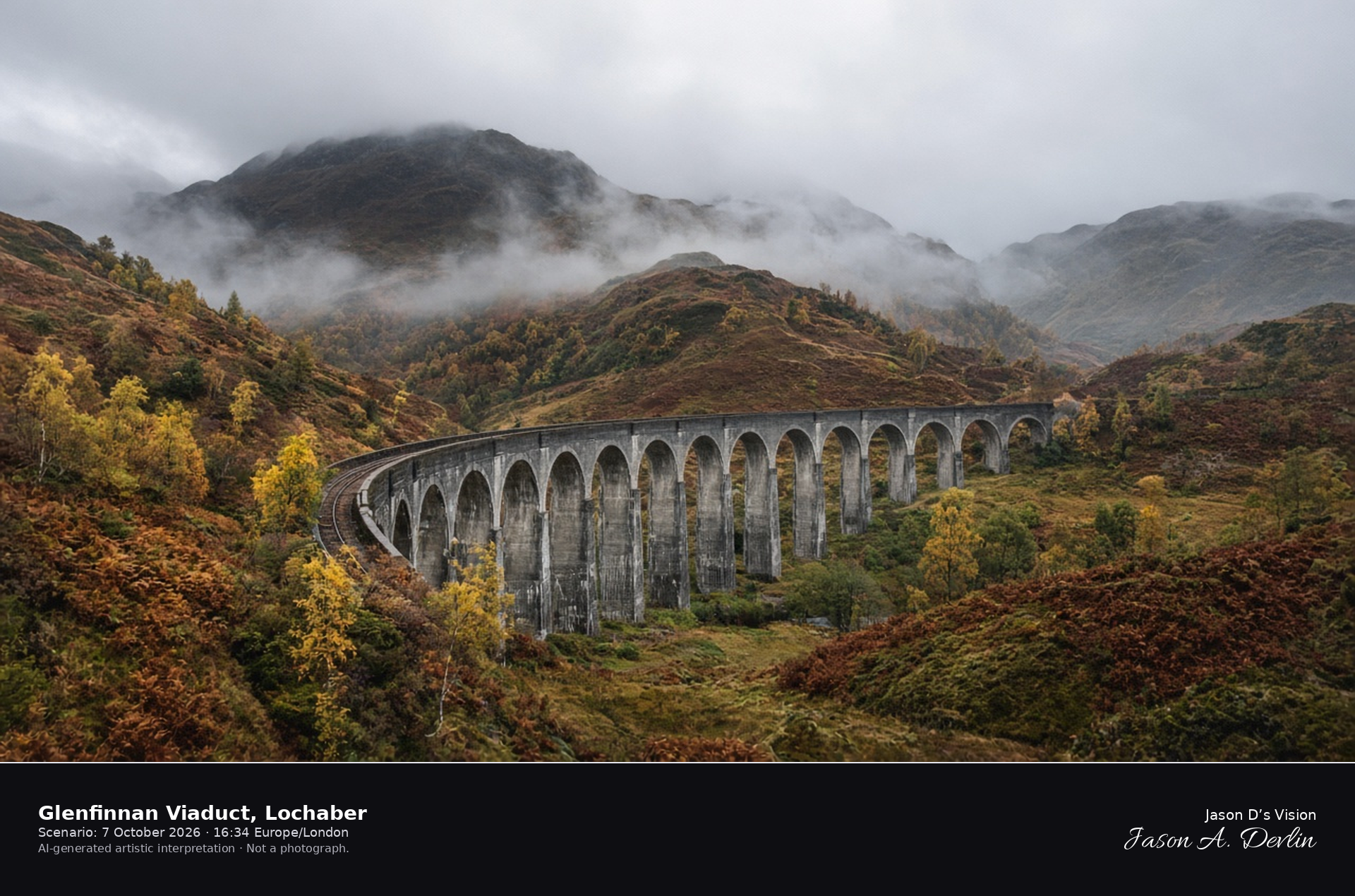
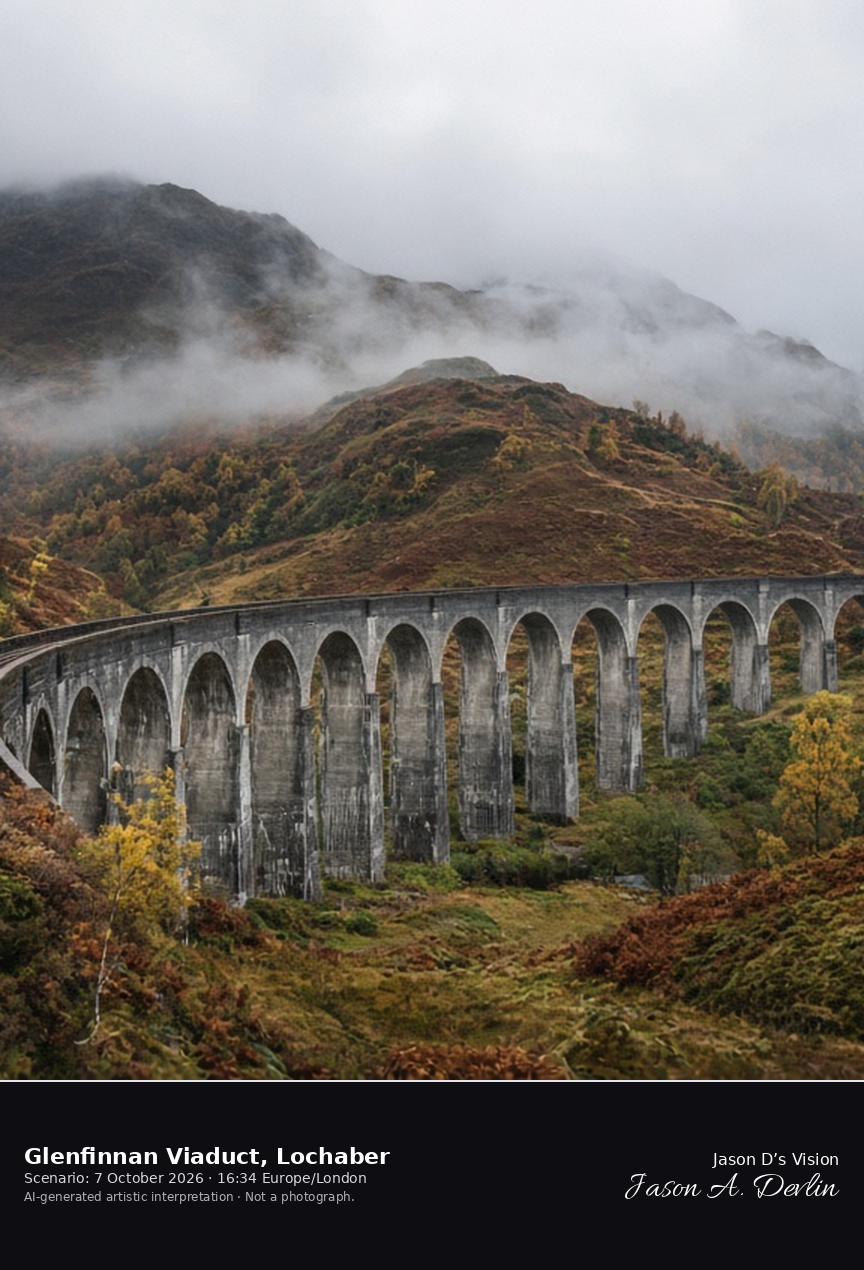
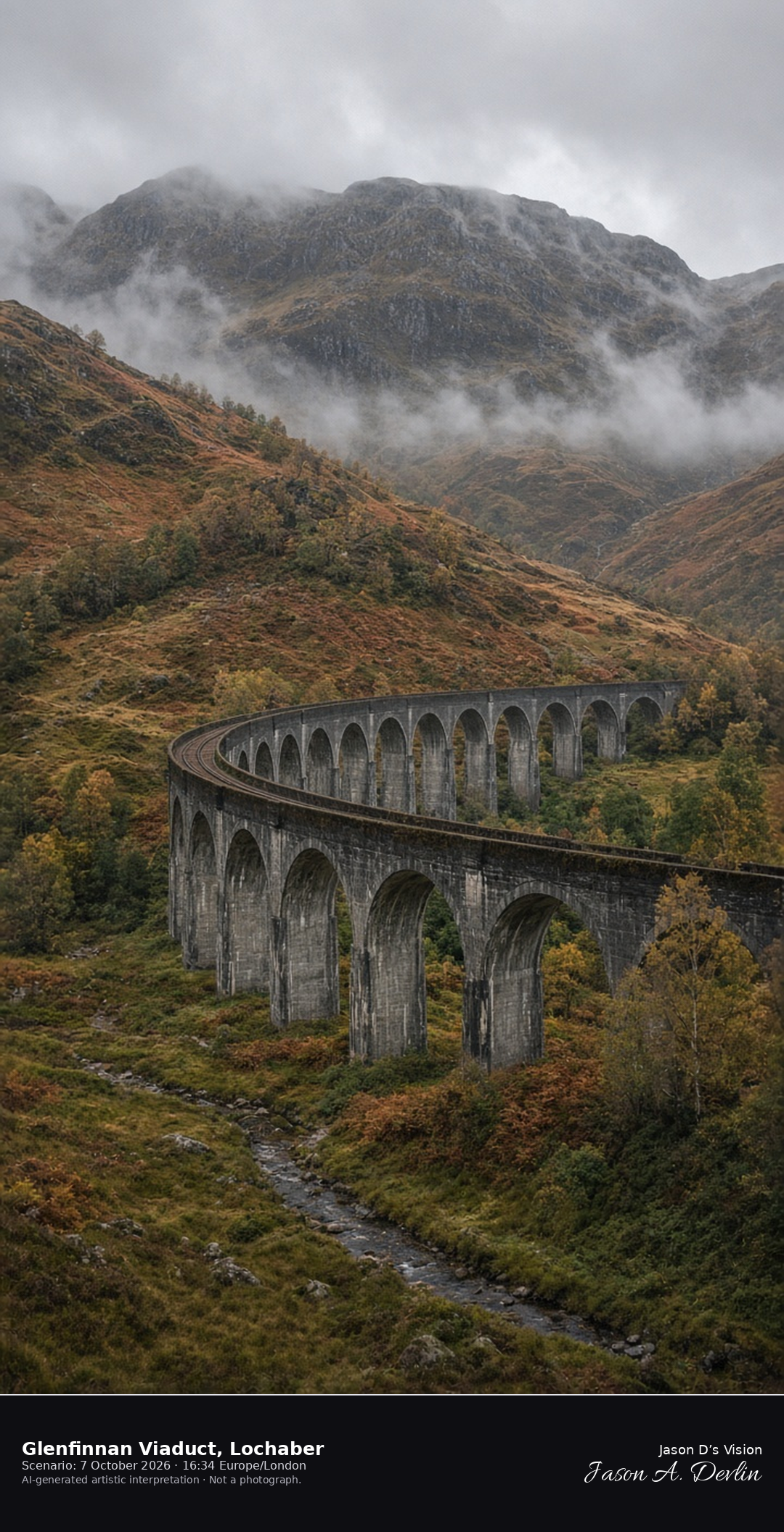
The Glenfinnan Viaduct carries the West Highland Line over the River Finnan at the head of Loch Shiel. Completed in 1901, it is built of unreinforced mass concrete, has 21 semicircular spans and follows a curve about 380 metres long.
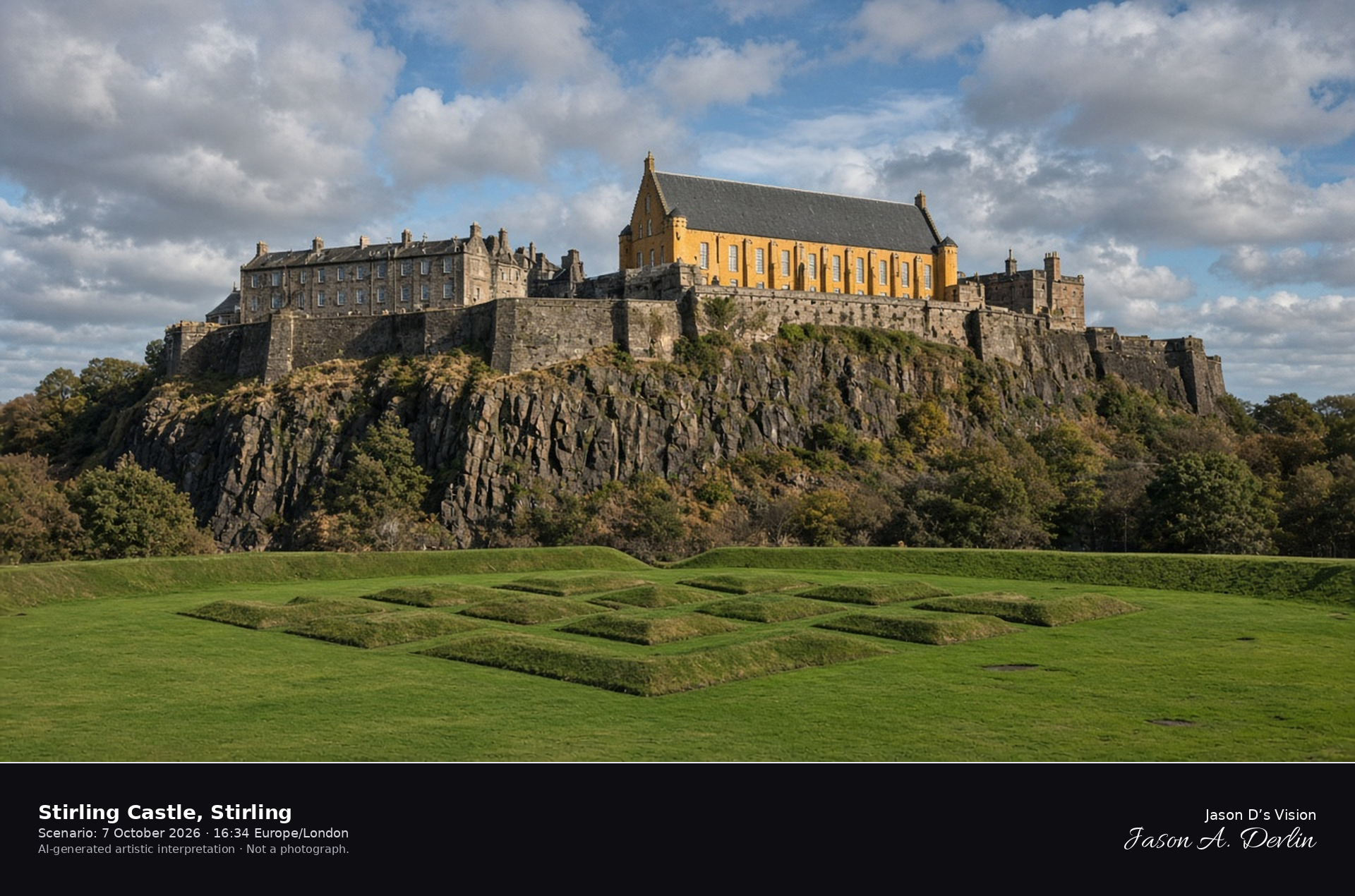
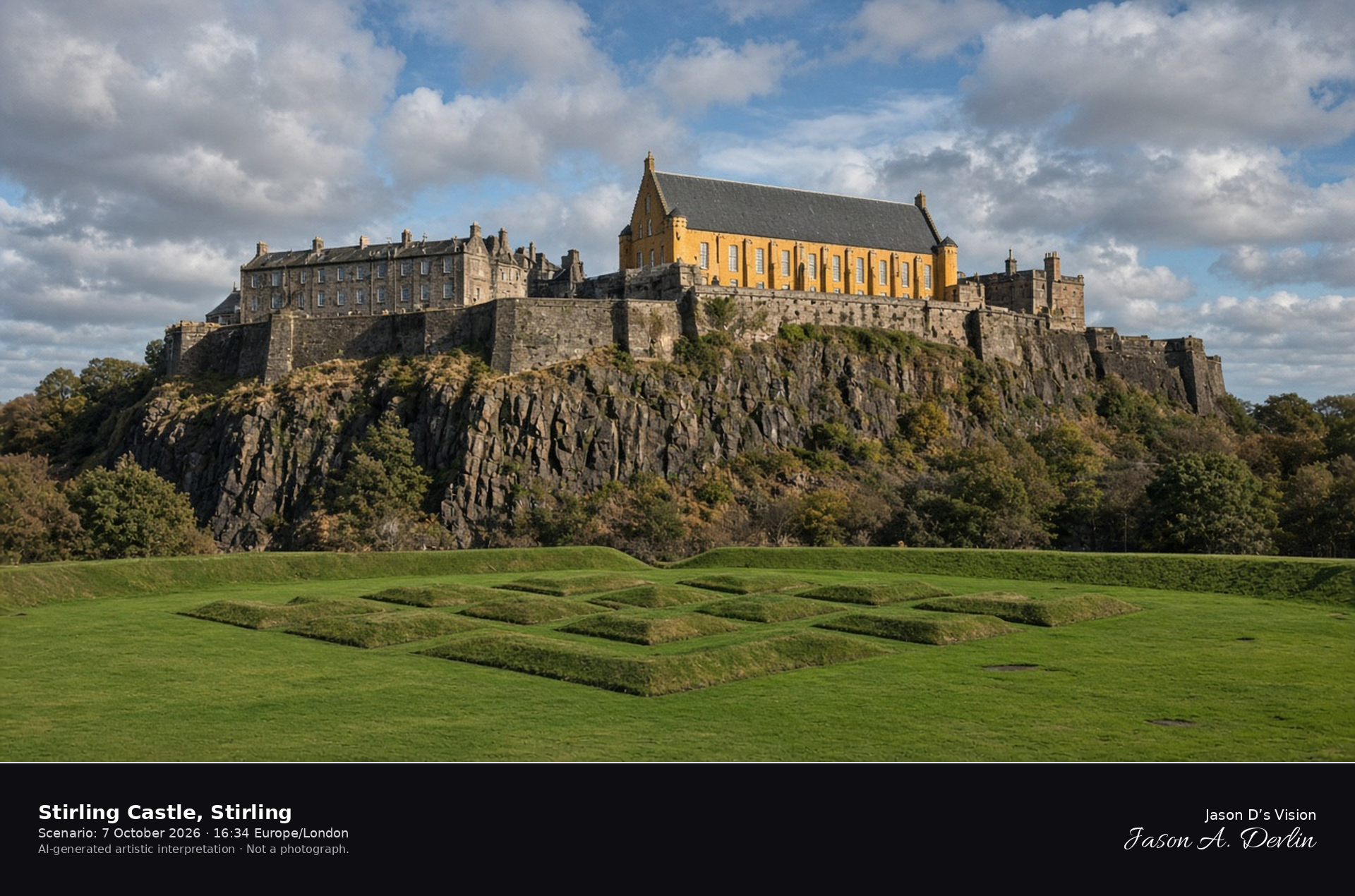
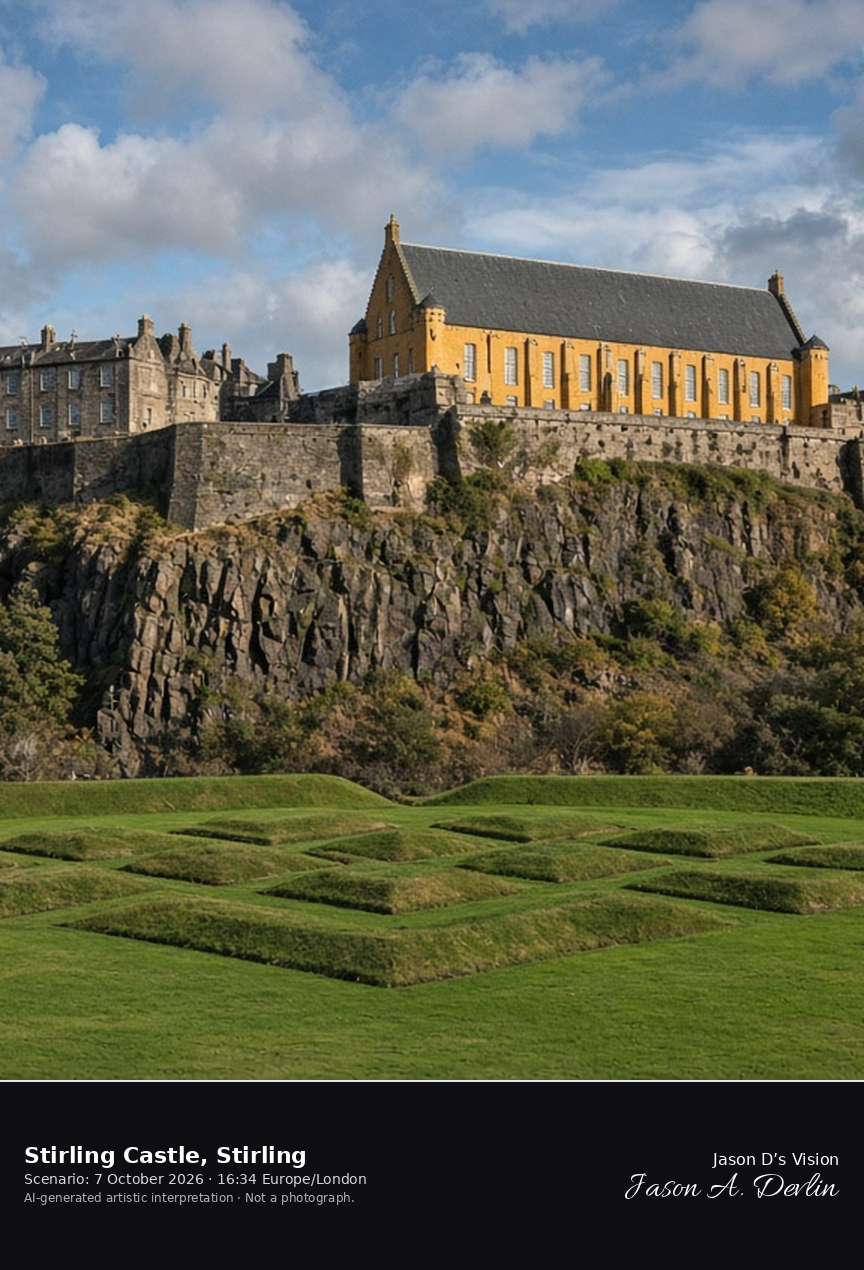
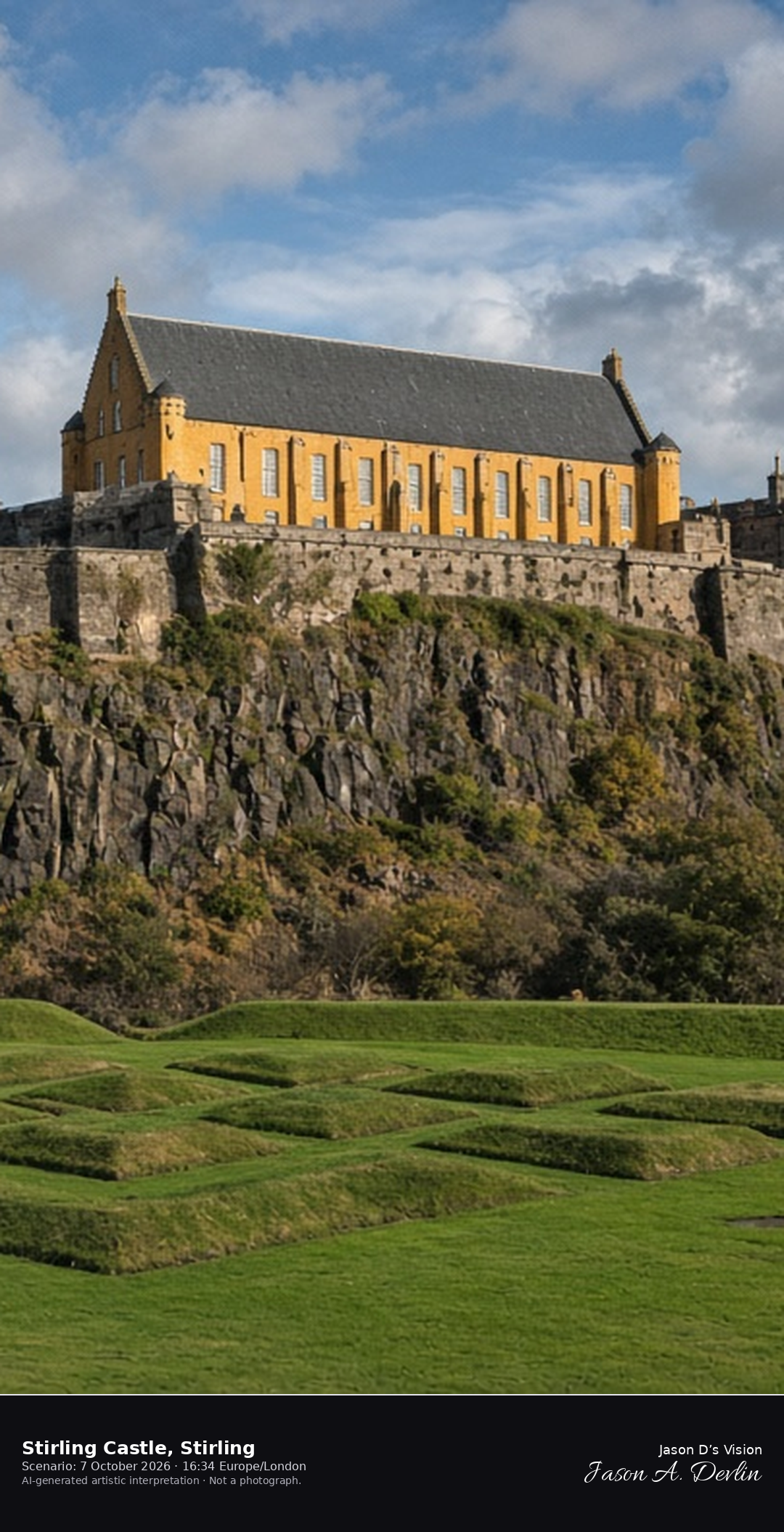
Stirling Castle occupies Castle Hill, a crag of volcanic rock with steep cliffs on three sides, guarding the old crossing of the River Forth. Its Renaissance Great Hall was restored in 1999 with an ochre limewash finish, which makes it stand out from the surrounding grey stonework.
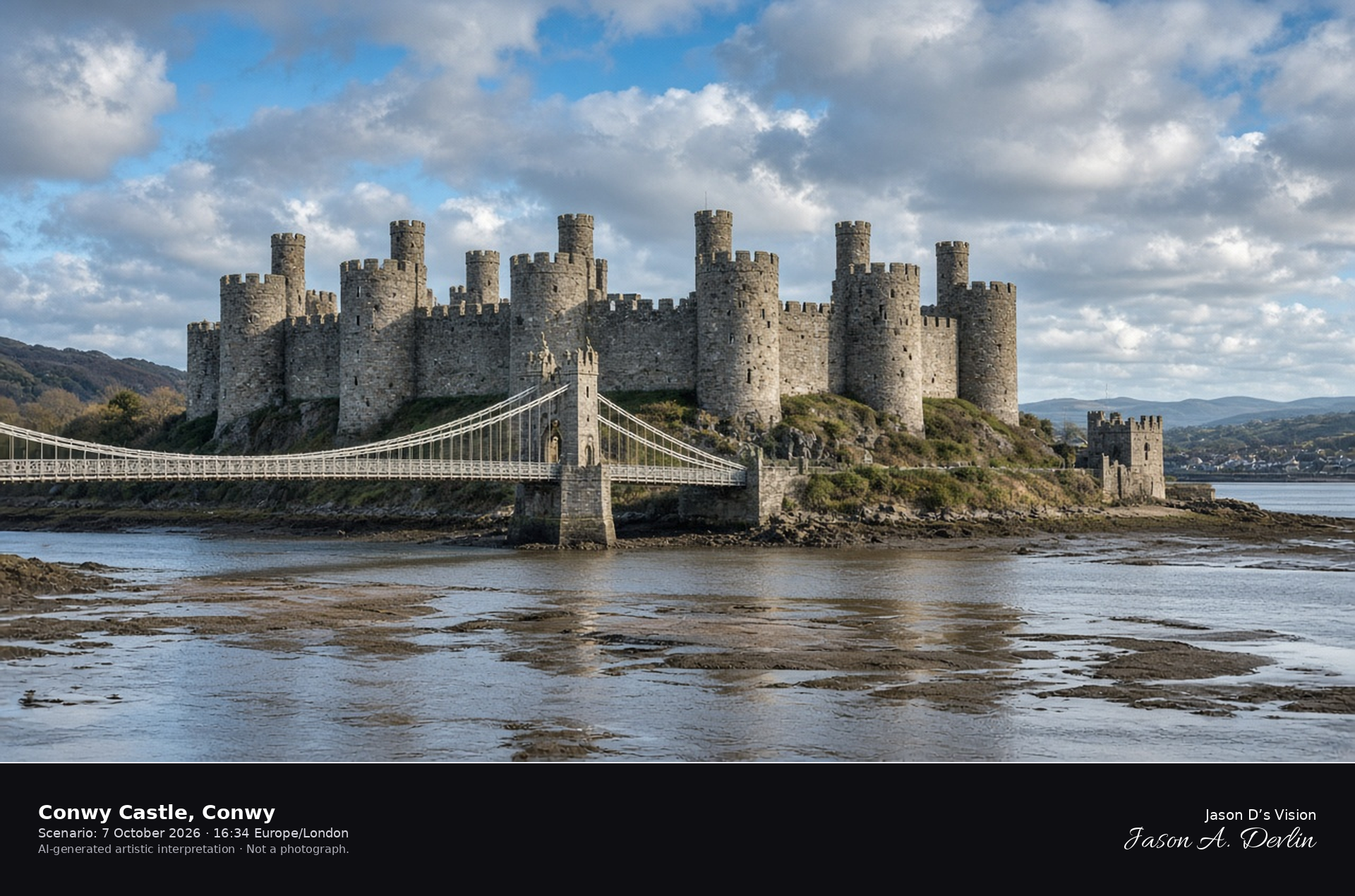
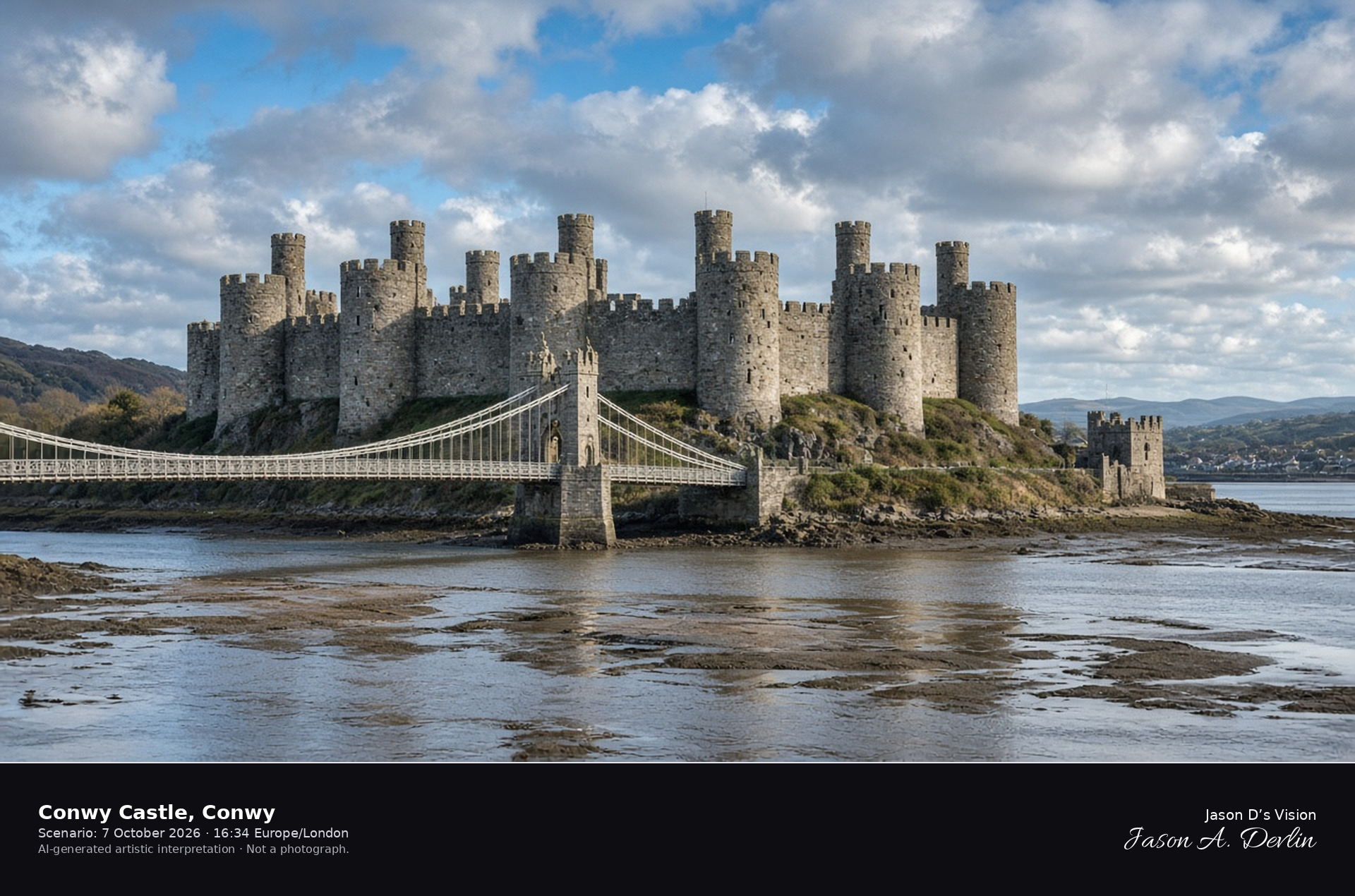
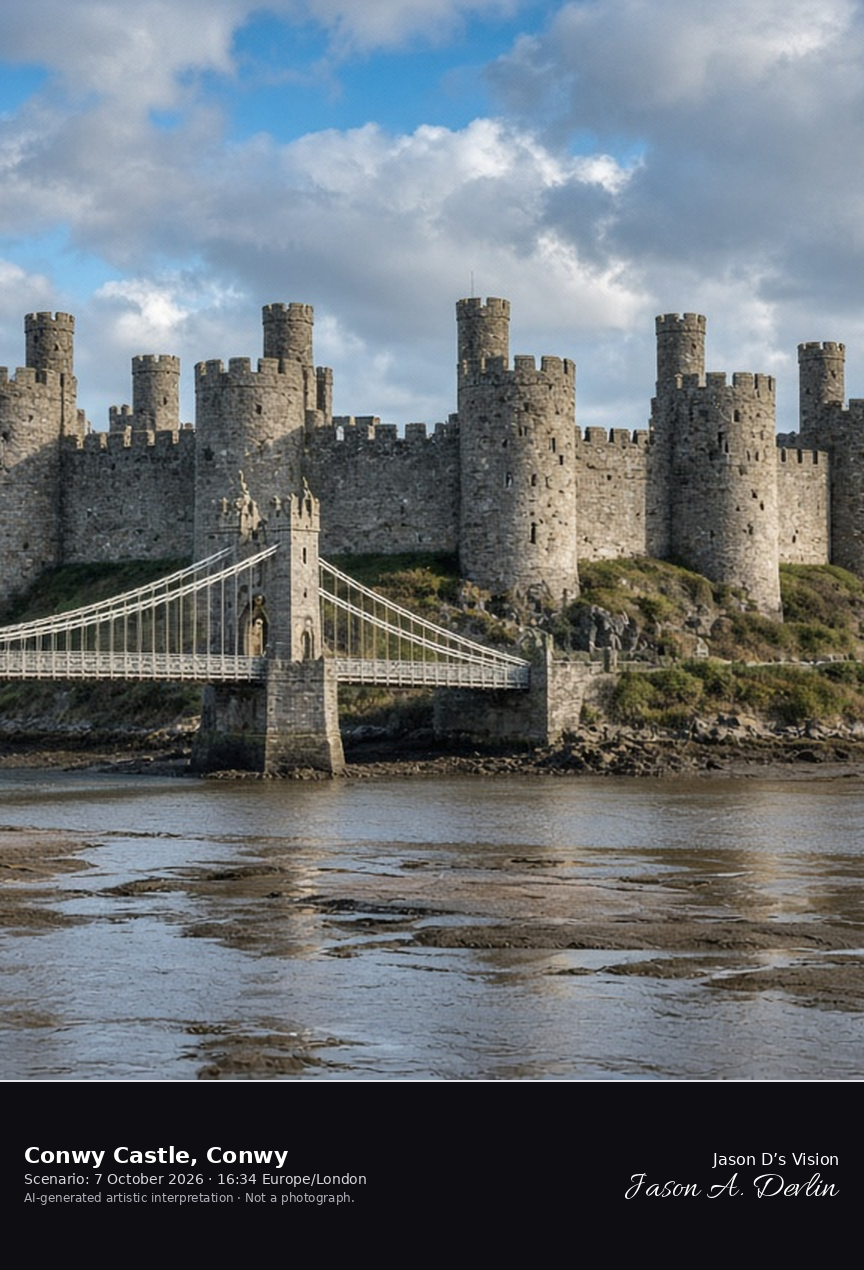
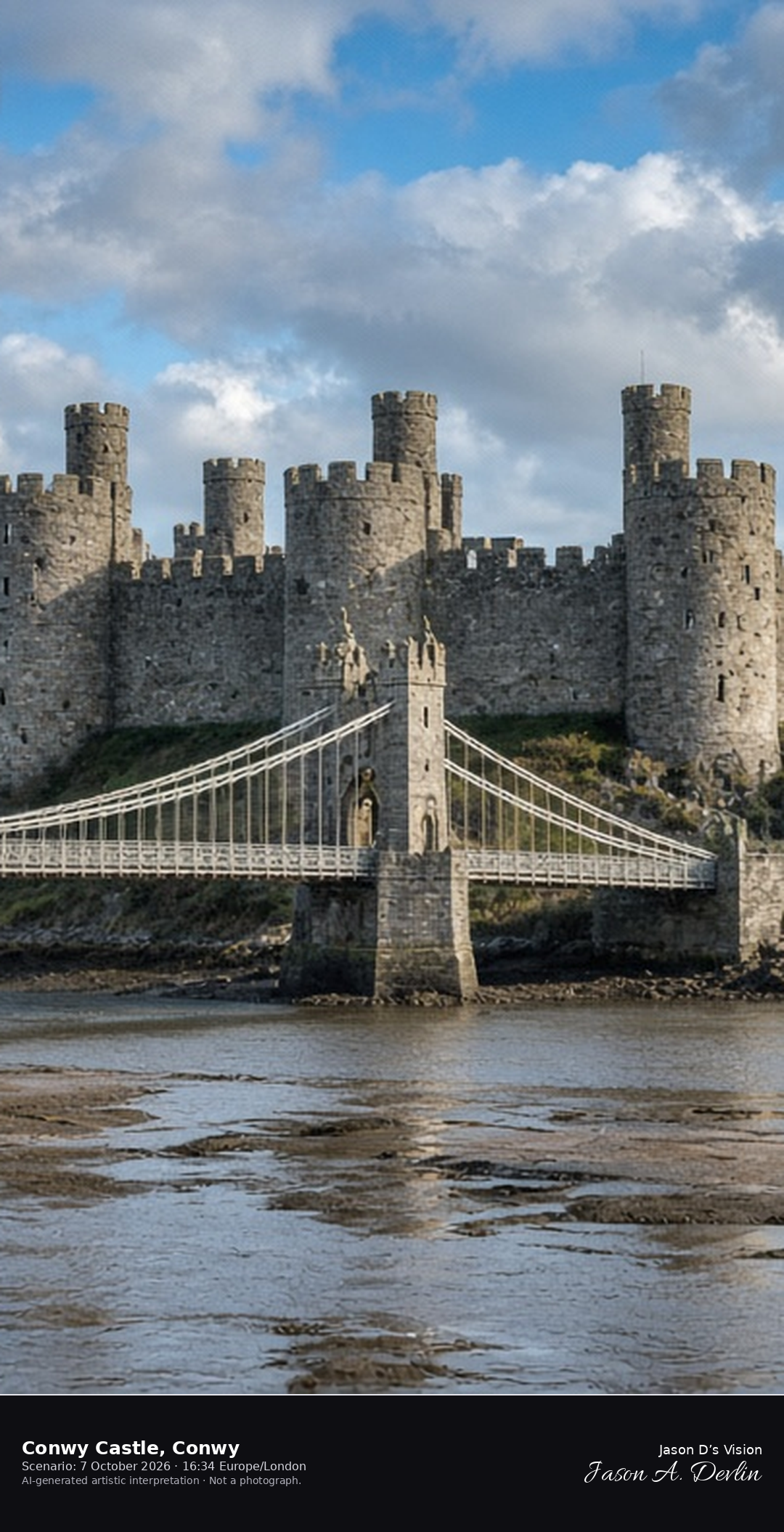
Conwy Castle was built for Edward I between 1283 and 1289 on a rocky ridge beside the River Conwy. Its two wards are defended by eight large round towers, and Thomas Telford's suspension bridge of 1826 was given castellated towers to match the castle.
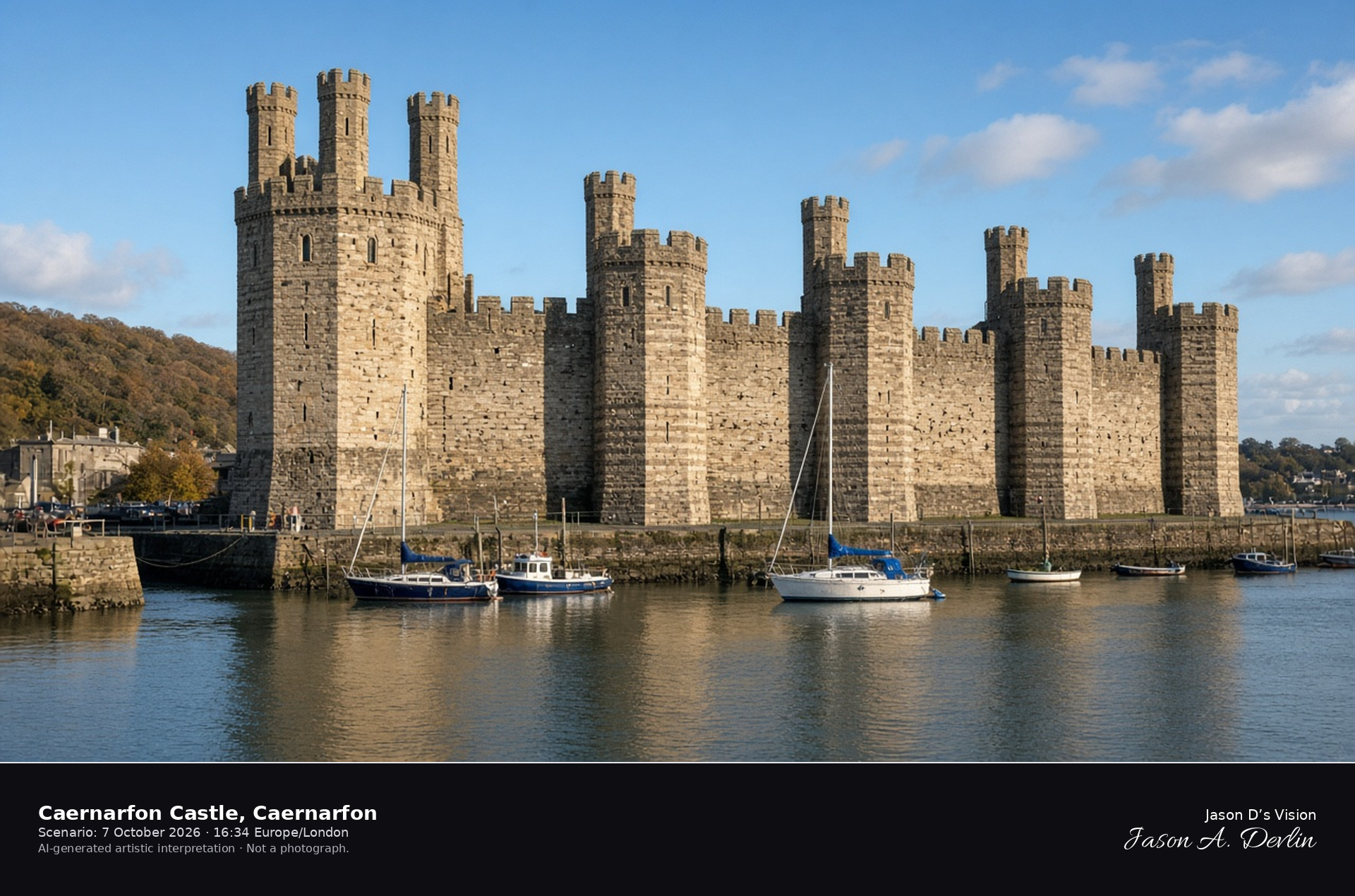
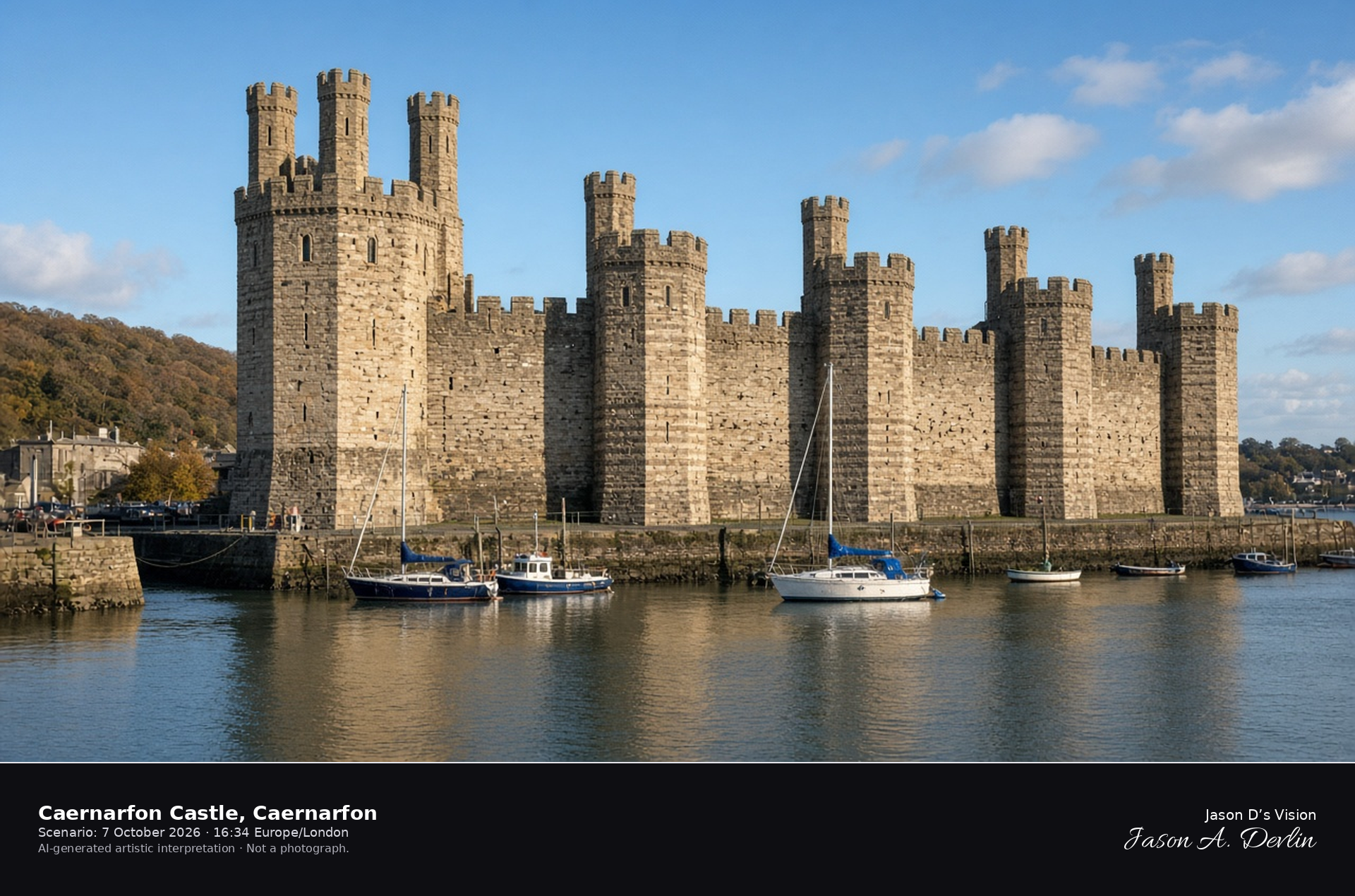
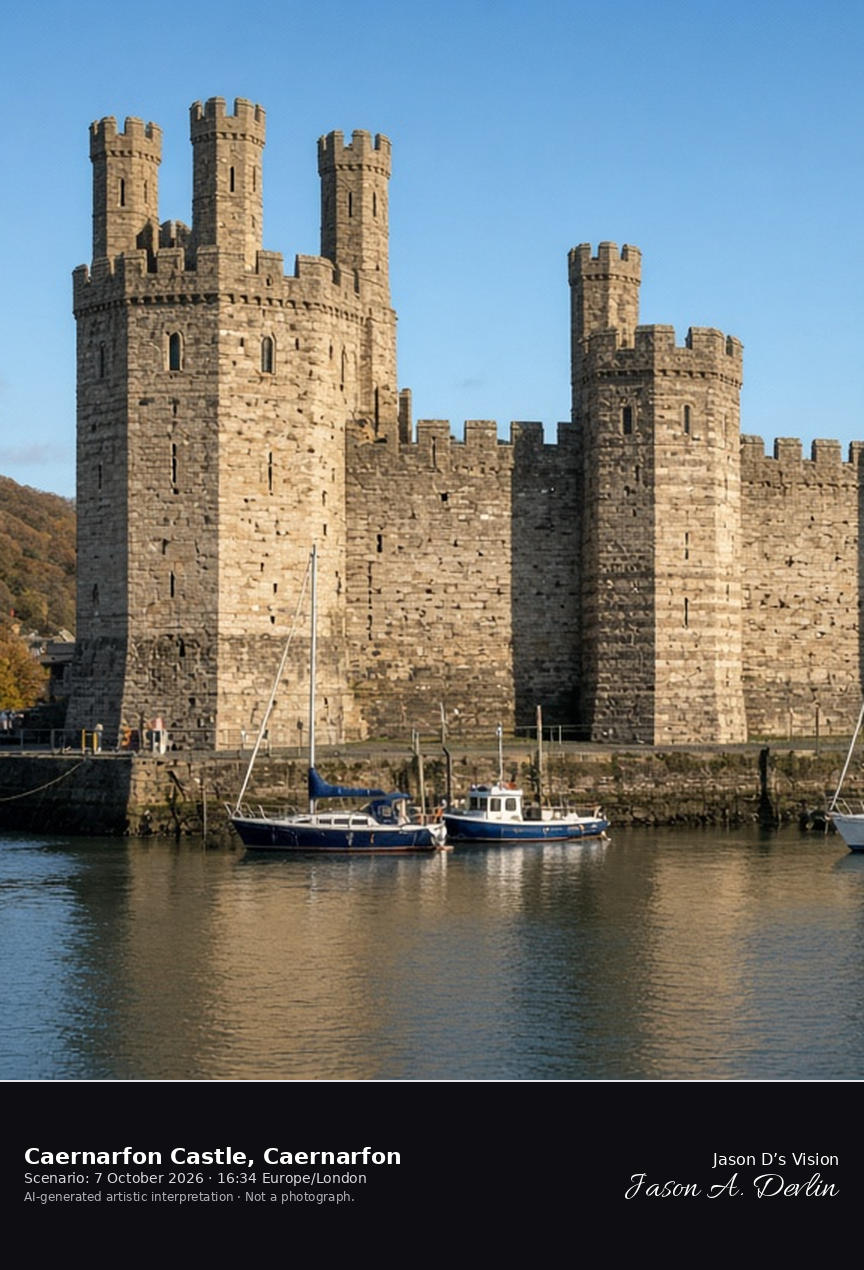
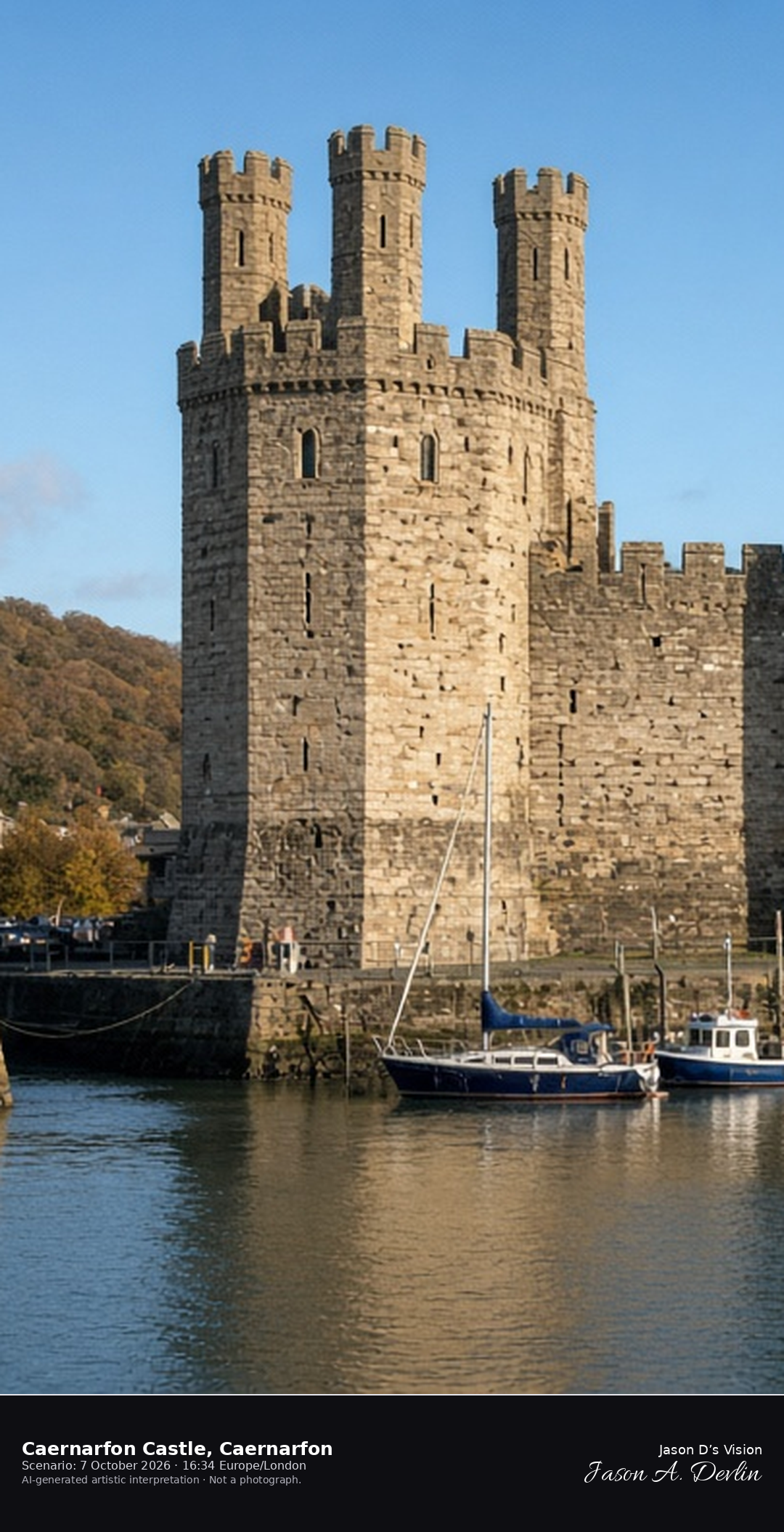
Caernarfon Castle was begun in 1283 for Edward I at the mouth of the Afon Seiont on the Menai Strait. Unlike the round towers of other Welsh castles, its towers are polygonal and its walls are banded with coloured stone; the Eagle Tower carries three turrets.
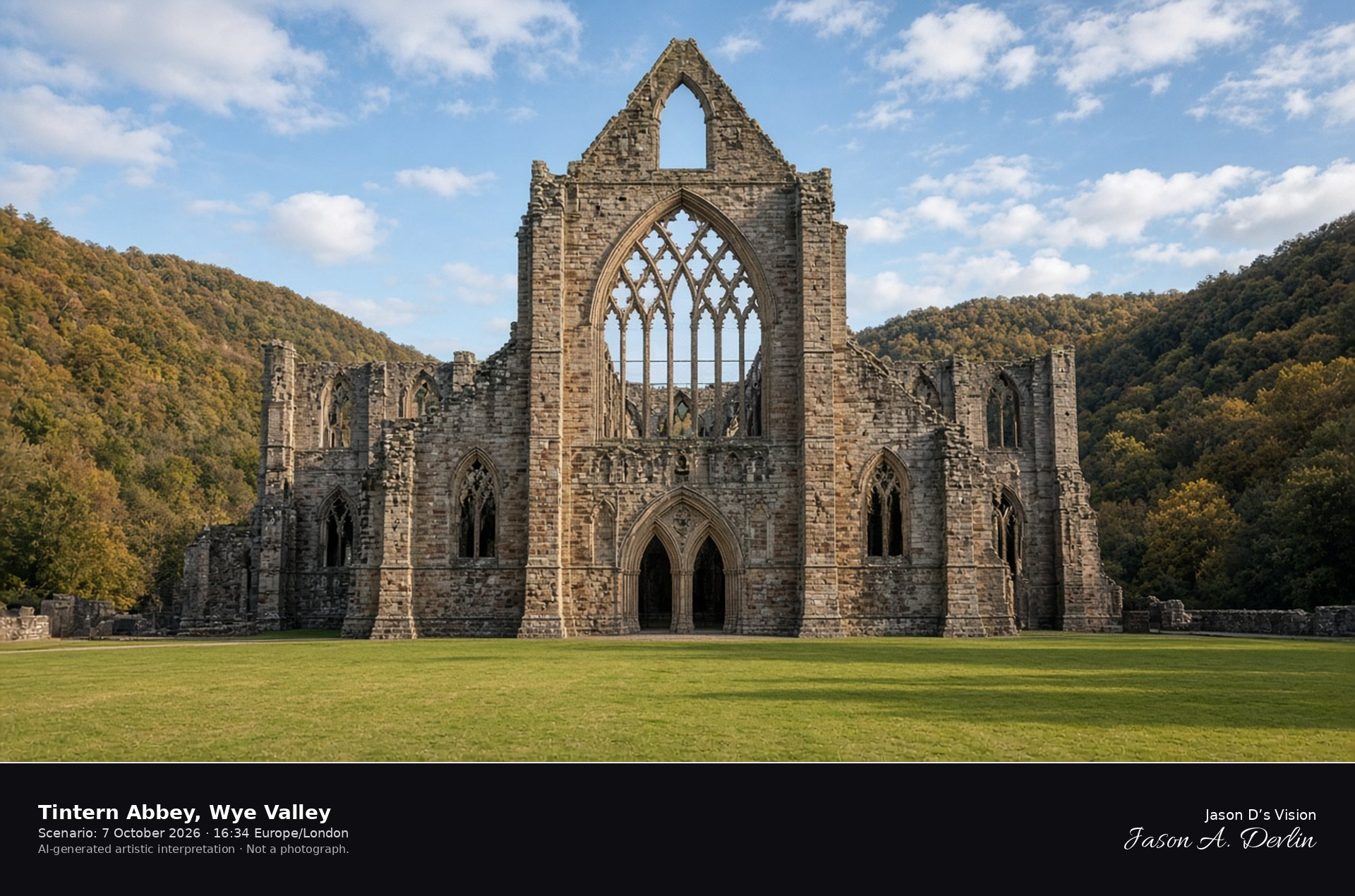
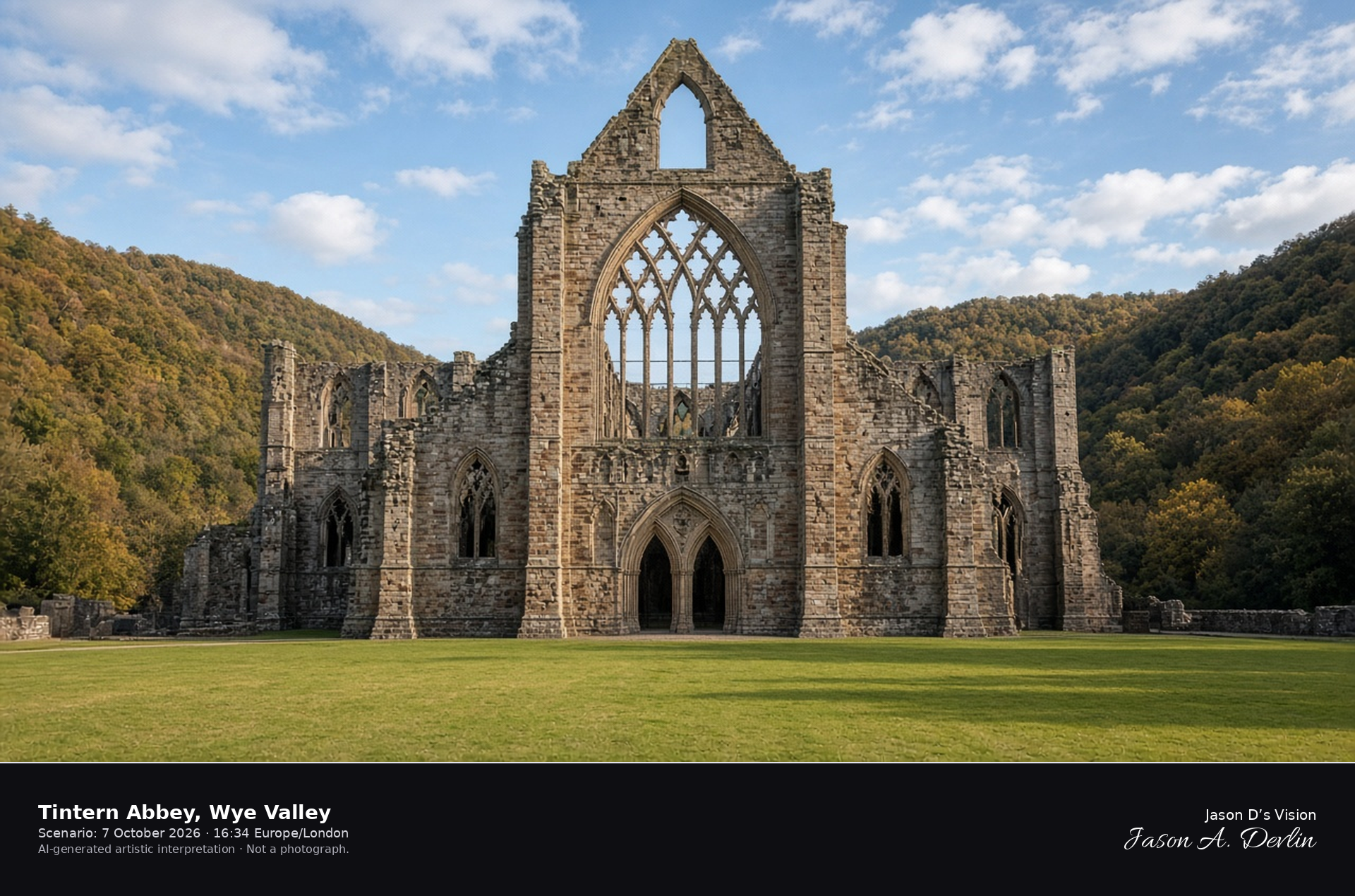
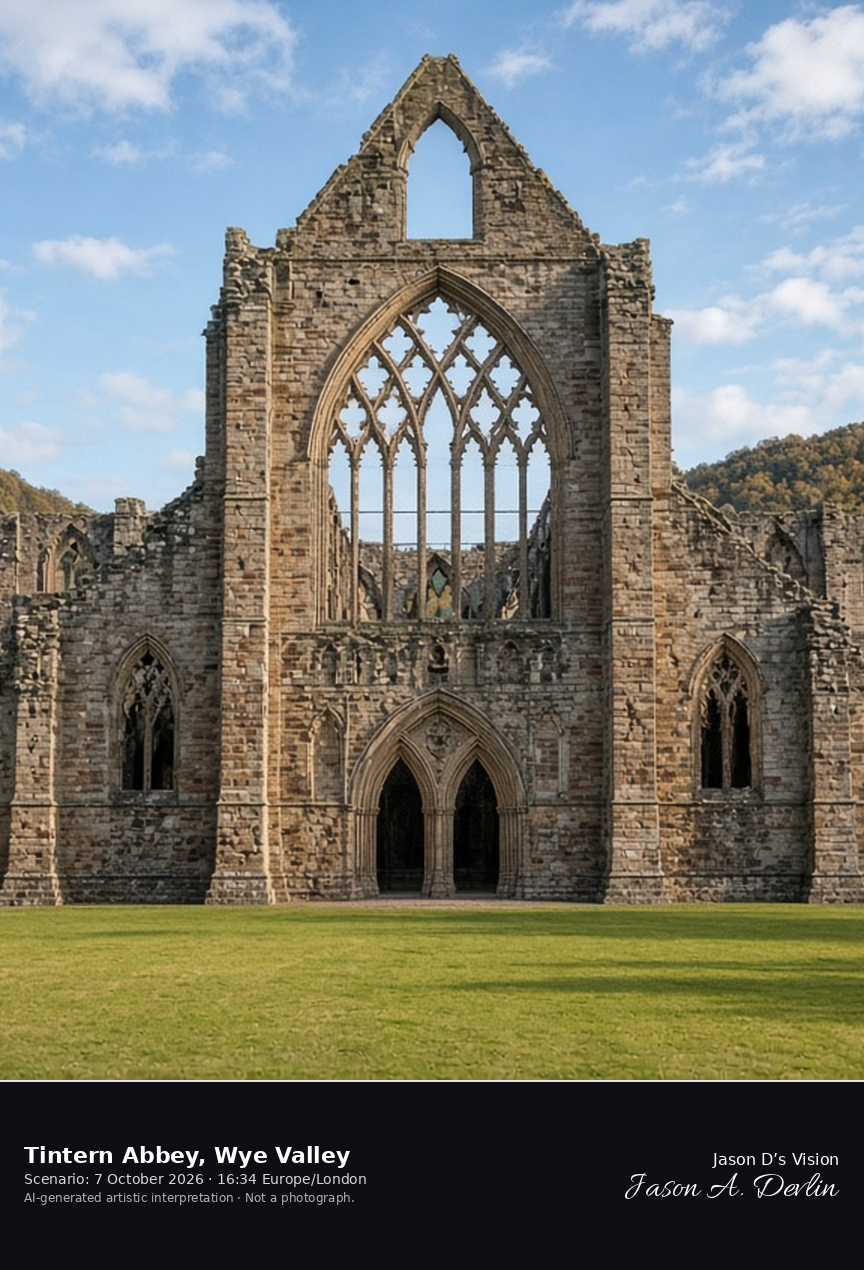
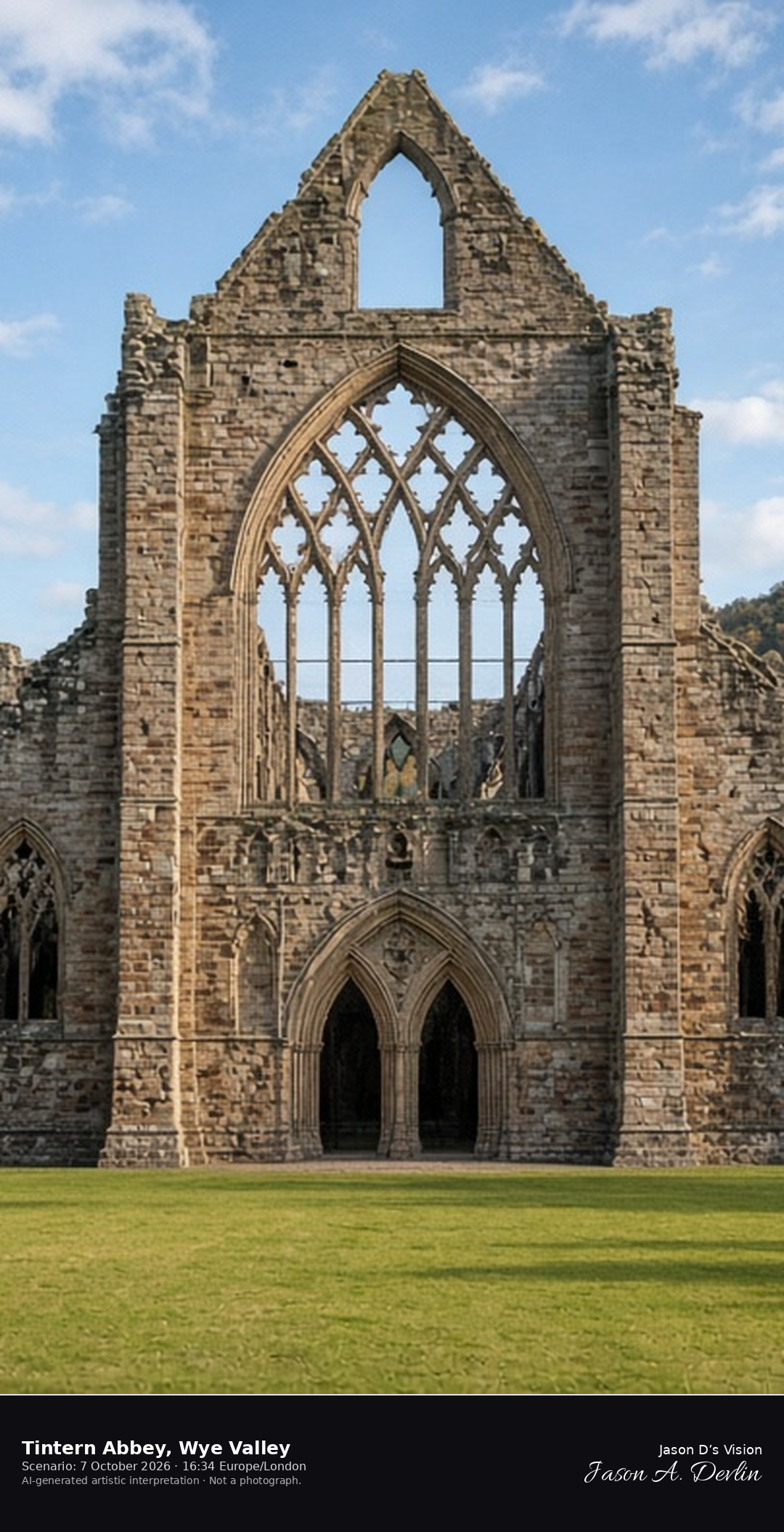
Tintern Abbey, Wye Valley · AI-generated artistic interpretation
Tintern Abbey is a ruined Cistercian abbey on the Welsh bank of the River Wye in Monmouthshire. Its church was rebuilt in the Decorated Gothic style between 1269 and 1301 and has stood roofless since the Dissolution, with the great seven-light west window still in place.
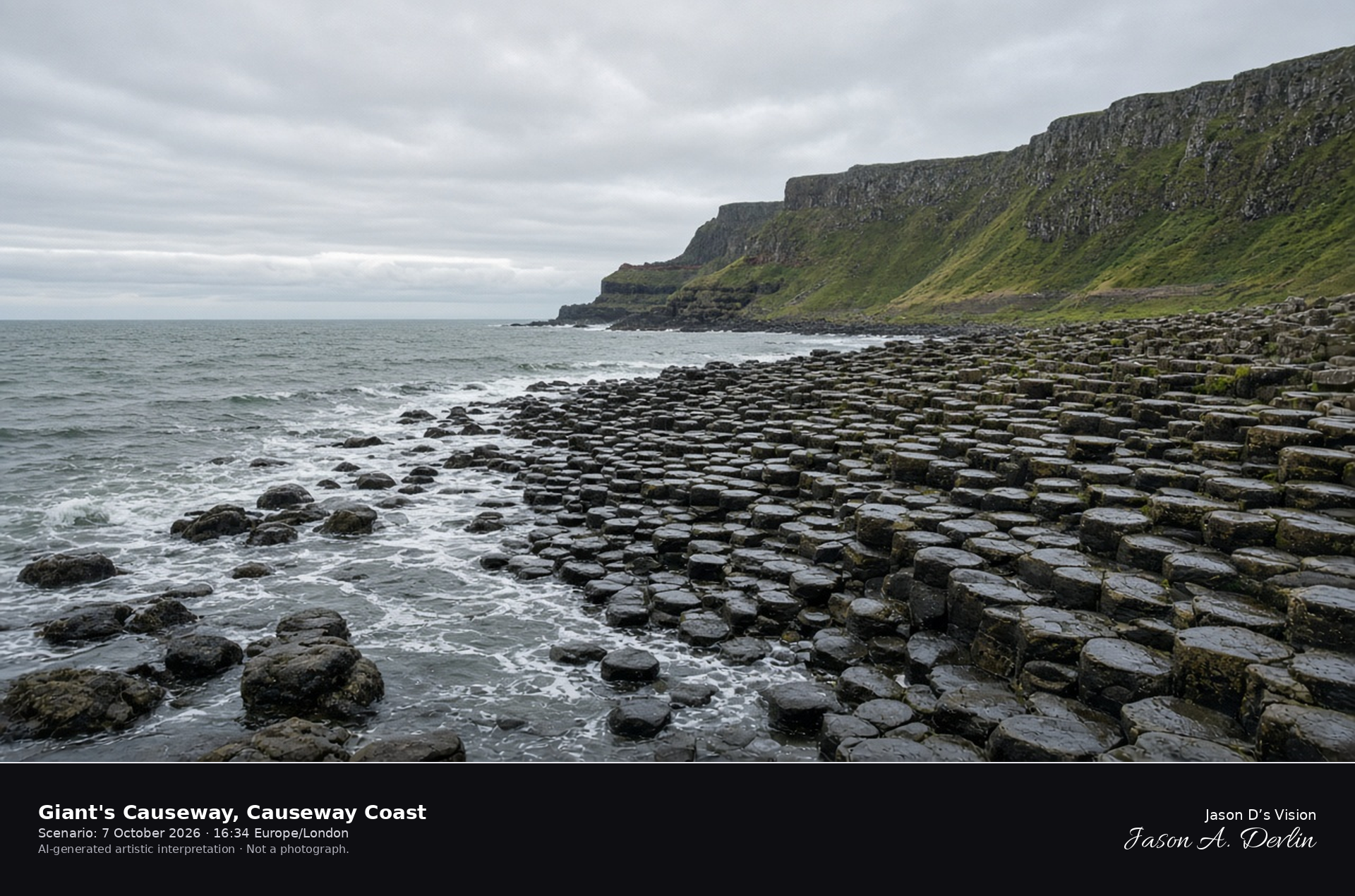
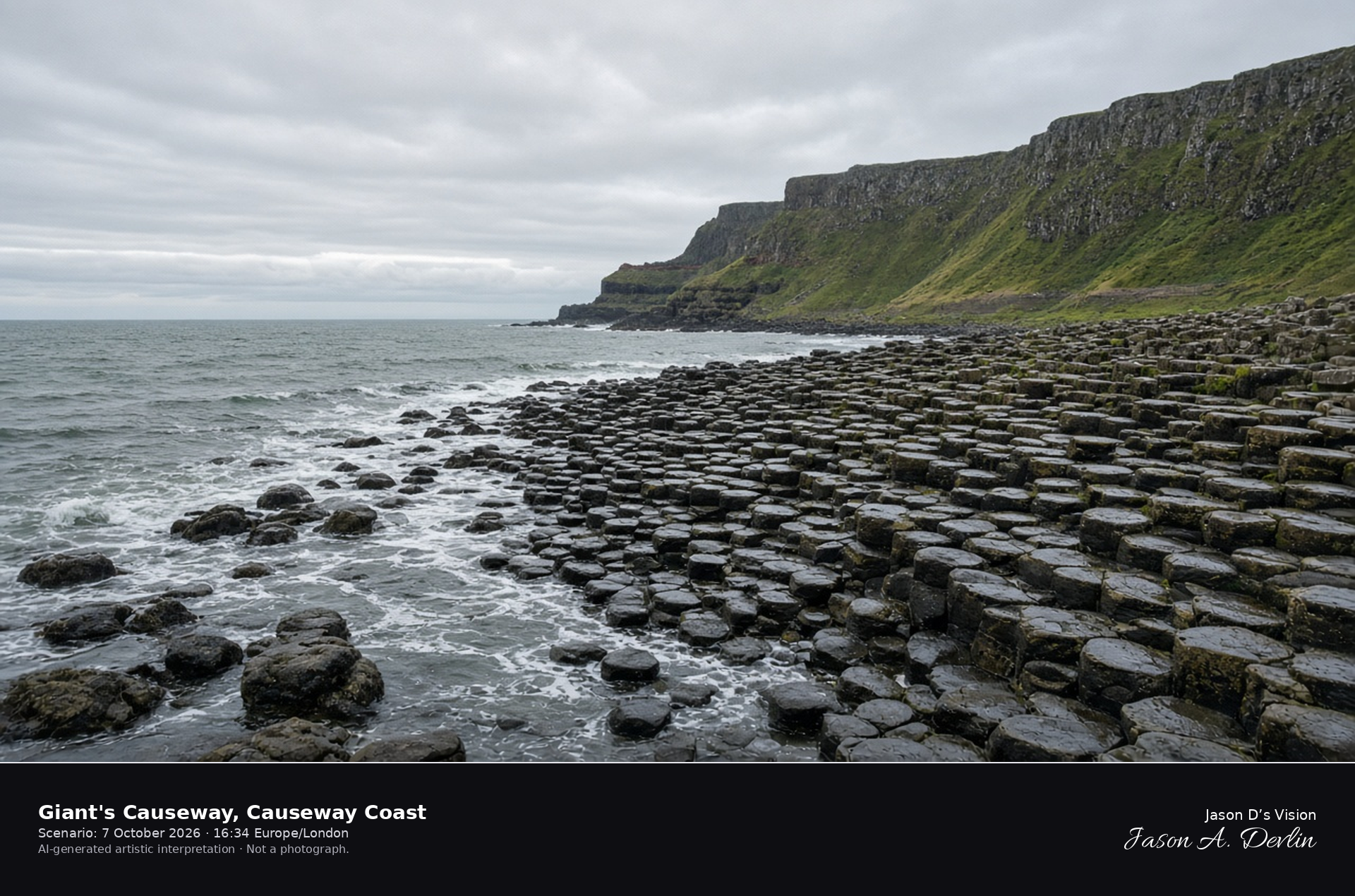
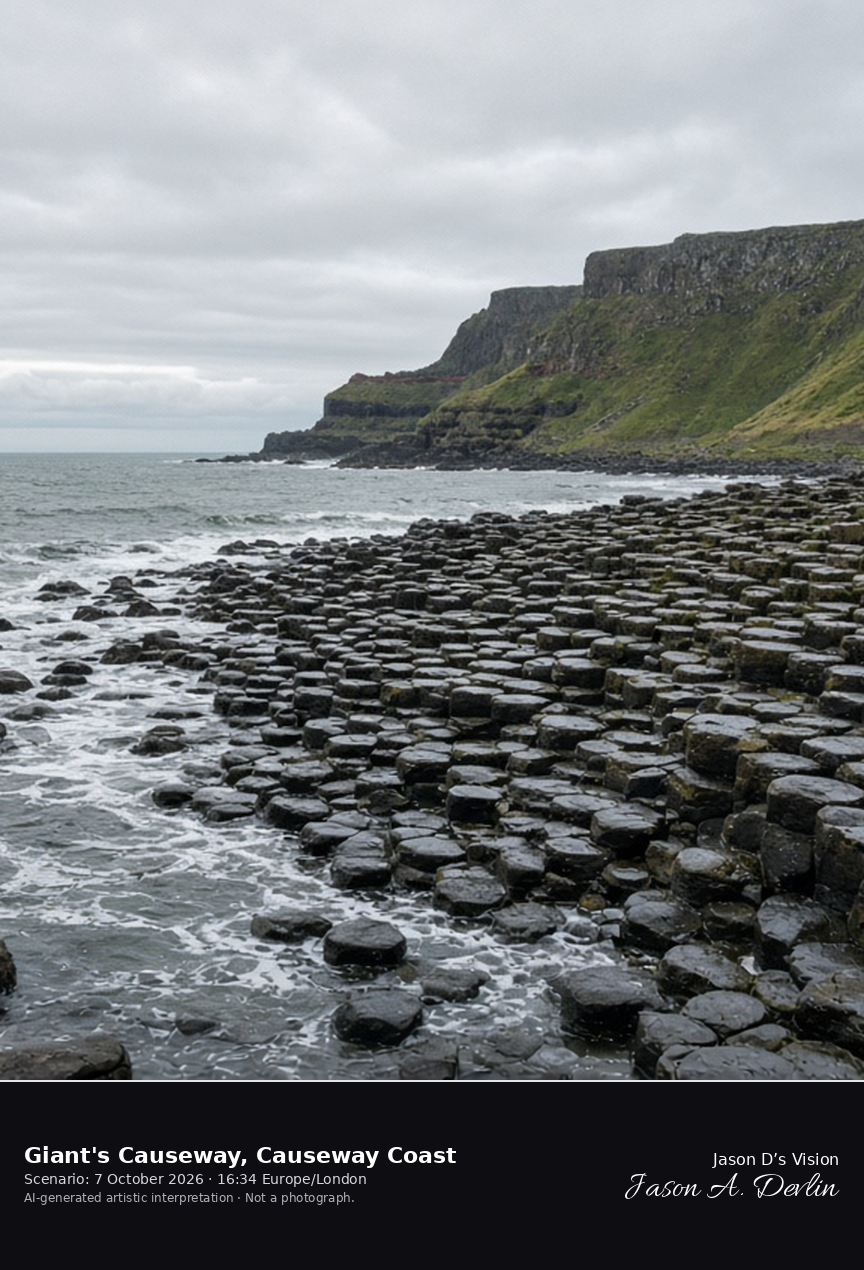
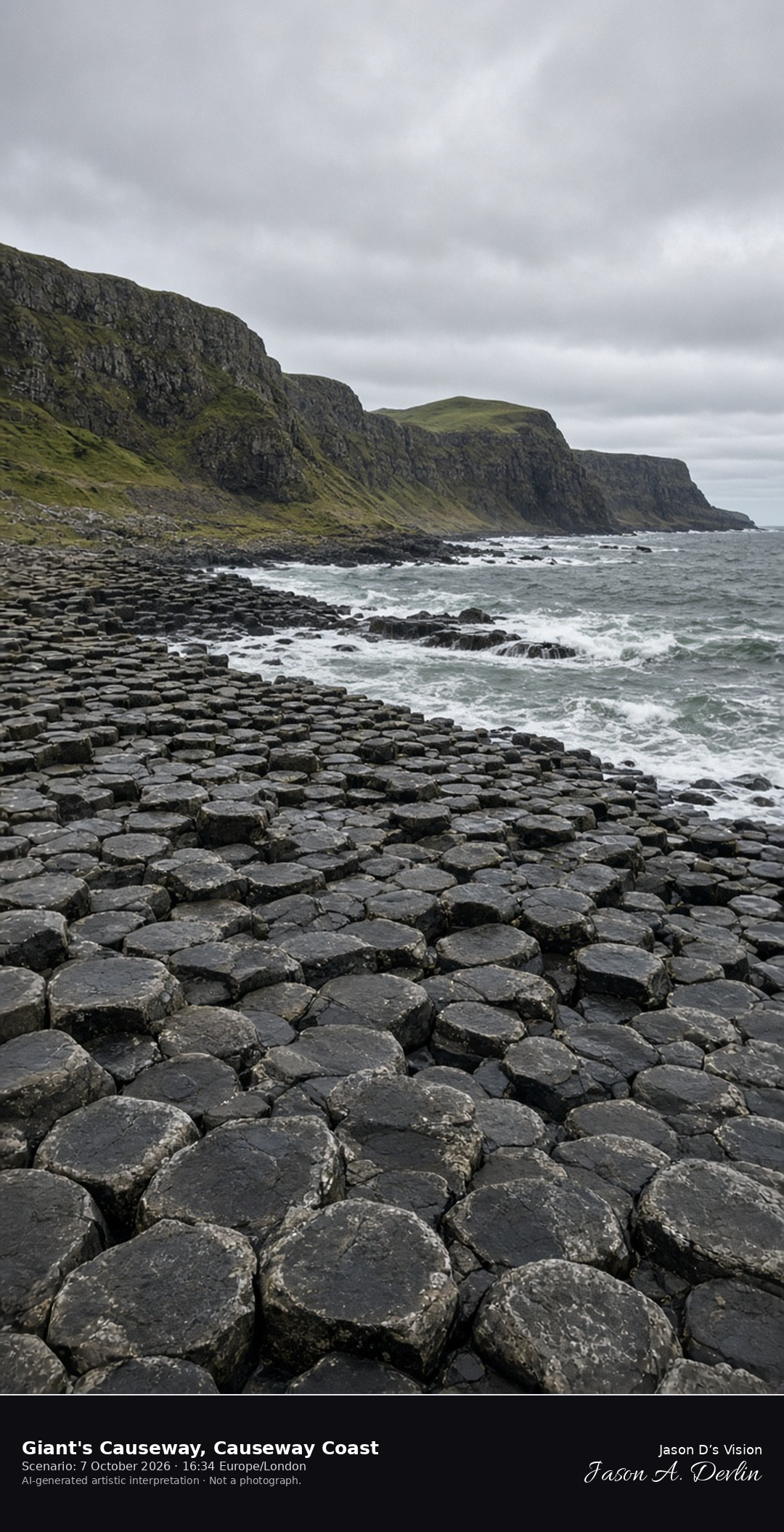
The Giant's Causeway is an area of about 40,000 interlocking basalt columns on the north coast of County Antrim, formed by an ancient lava flow that cooled and cracked into mostly hexagonal prisms. It is a UNESCO World Heritage Site cared for by the National Trust.
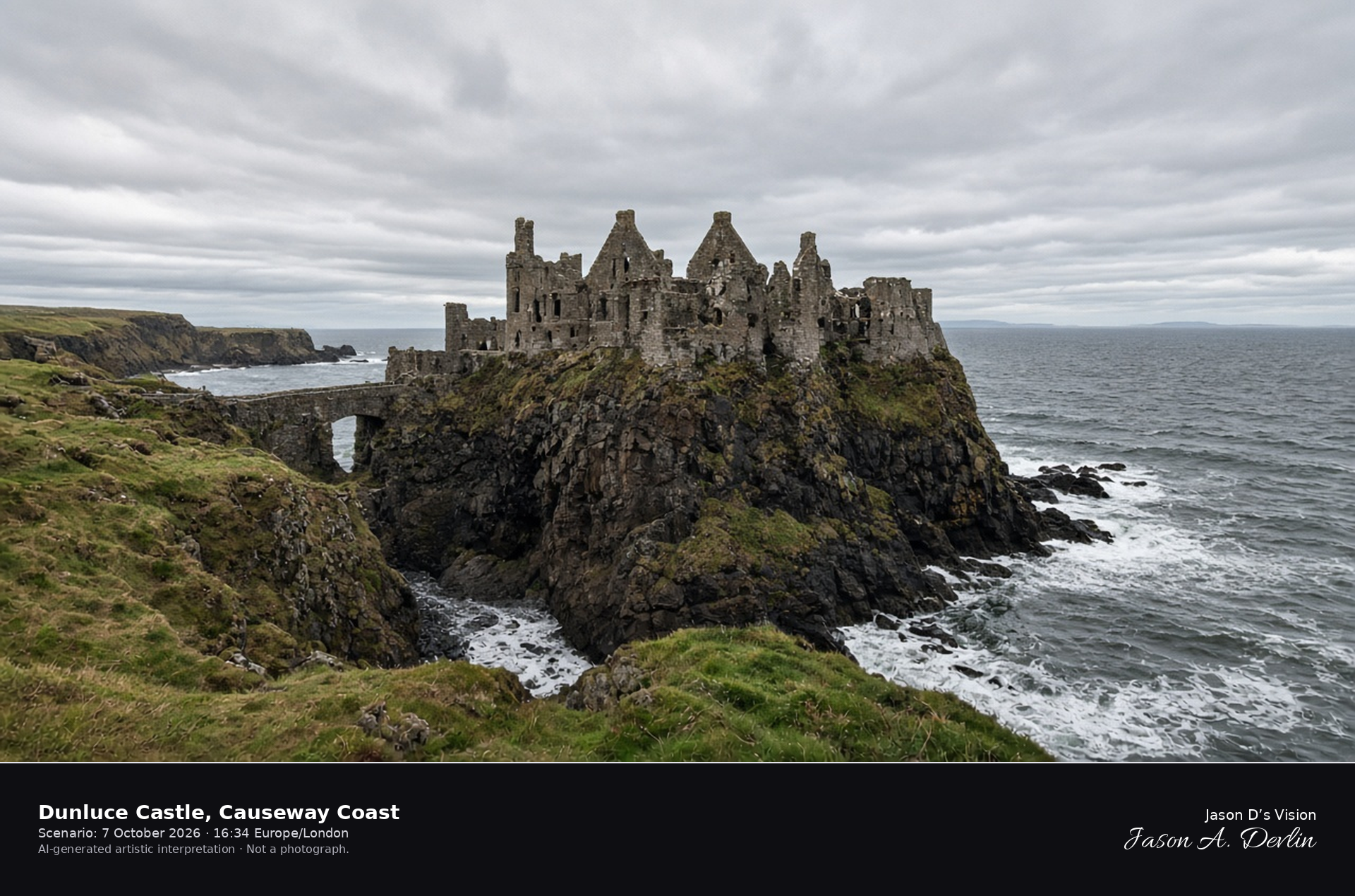
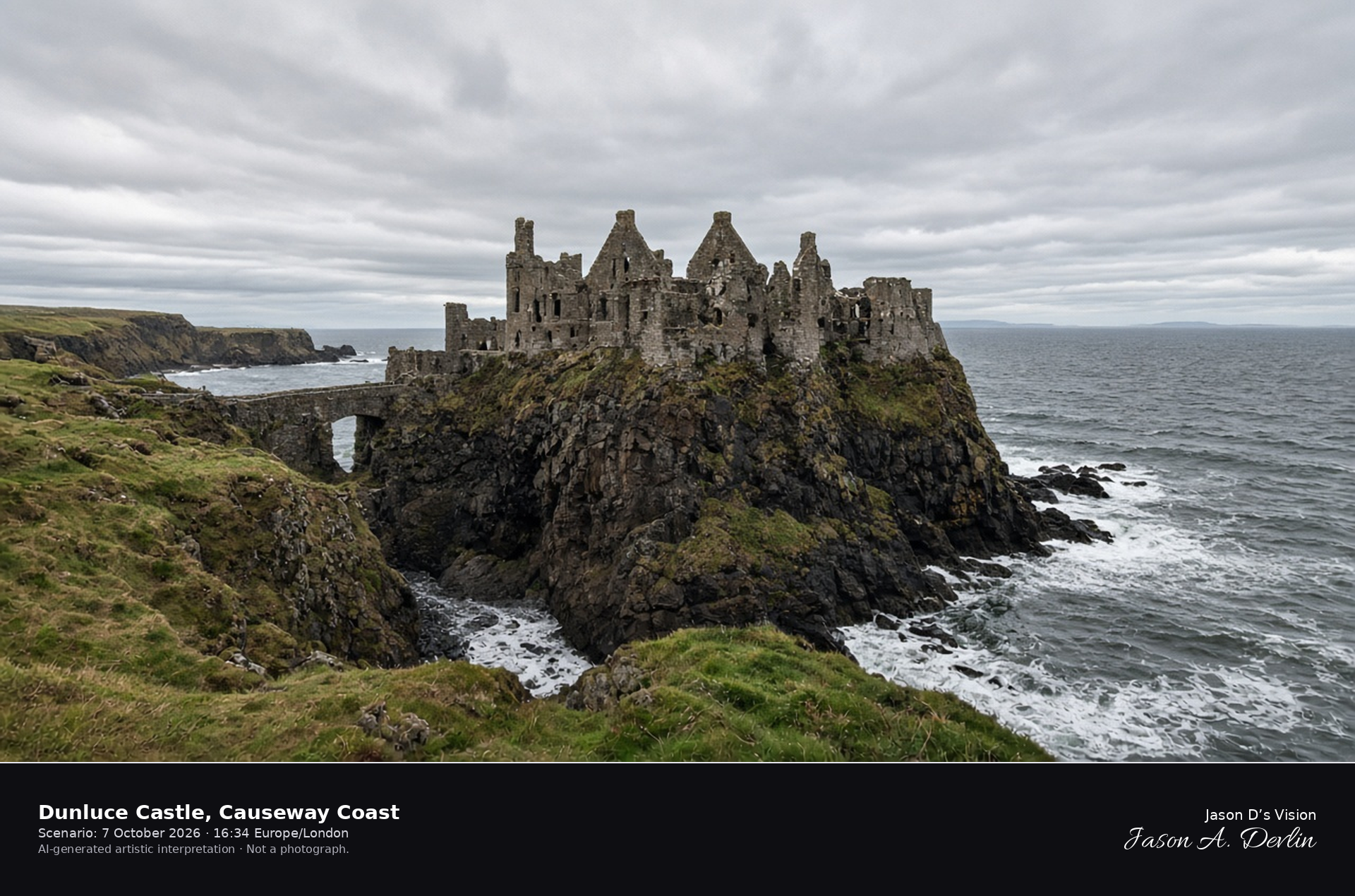
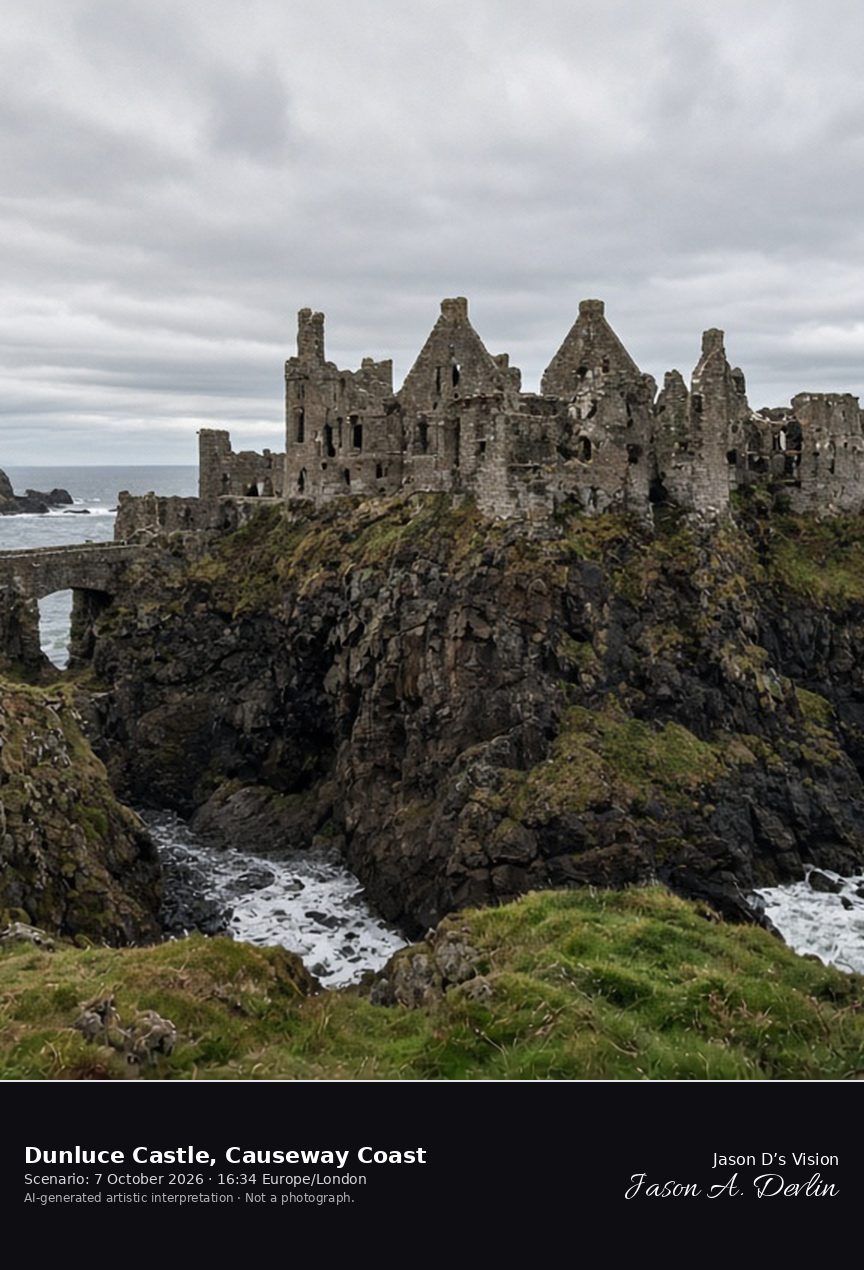
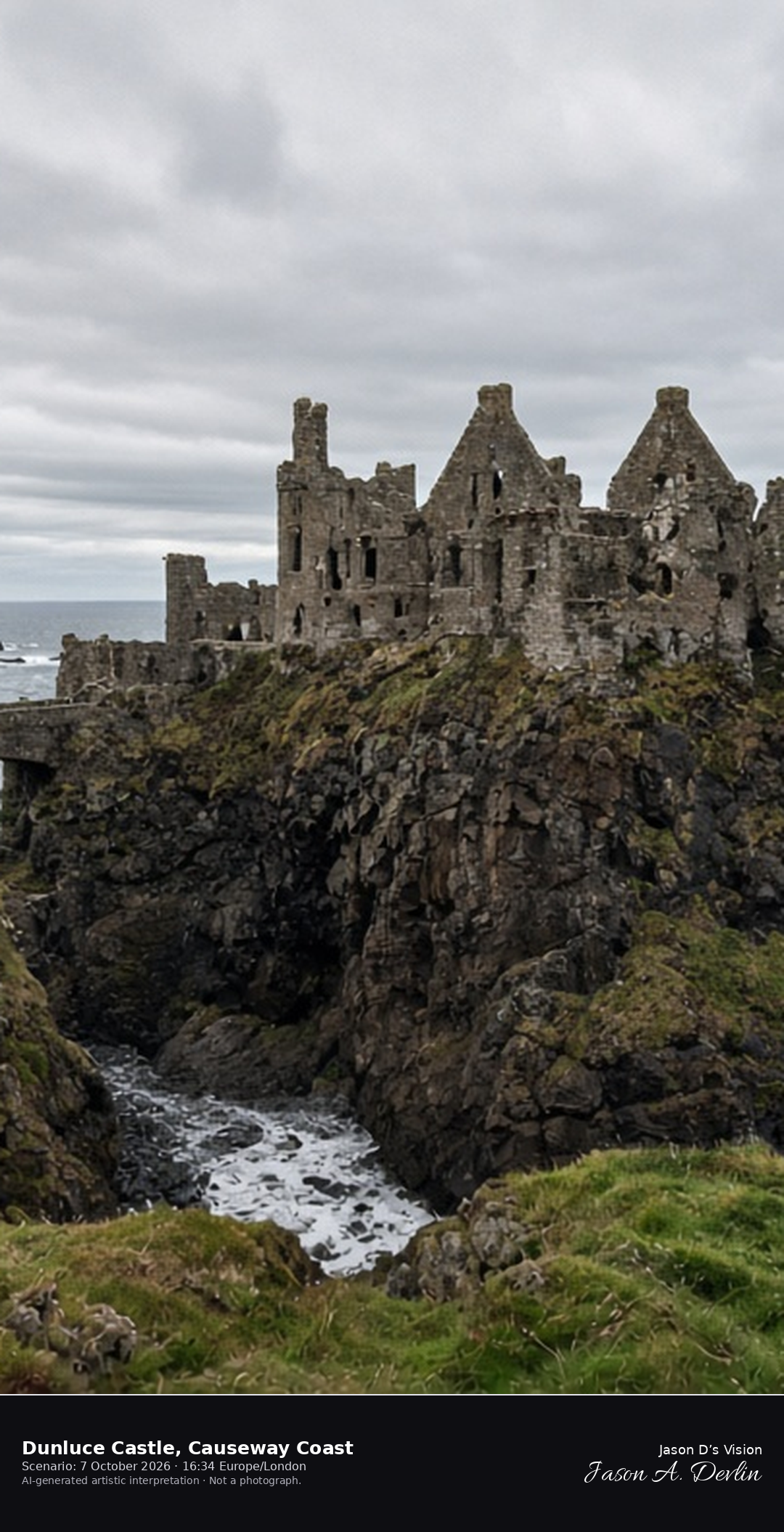
Dunluce was a seat of the MacDonnells, earls of Antrim, perched above the coastal cliffs. Its ruined walls carry both history and legend: one tale tells how the castle kitchens fell into the sea on a stormy night in 1639.
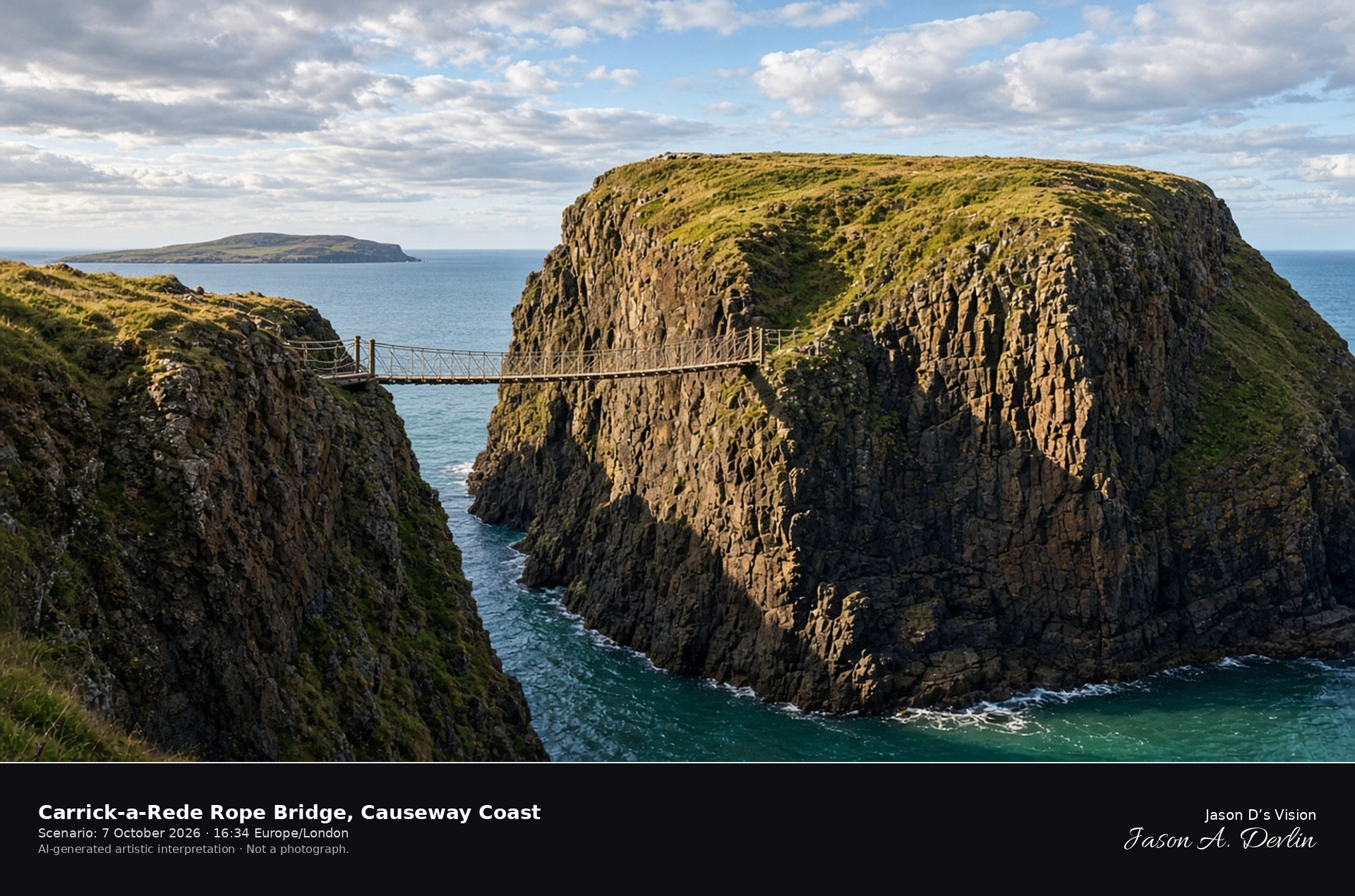
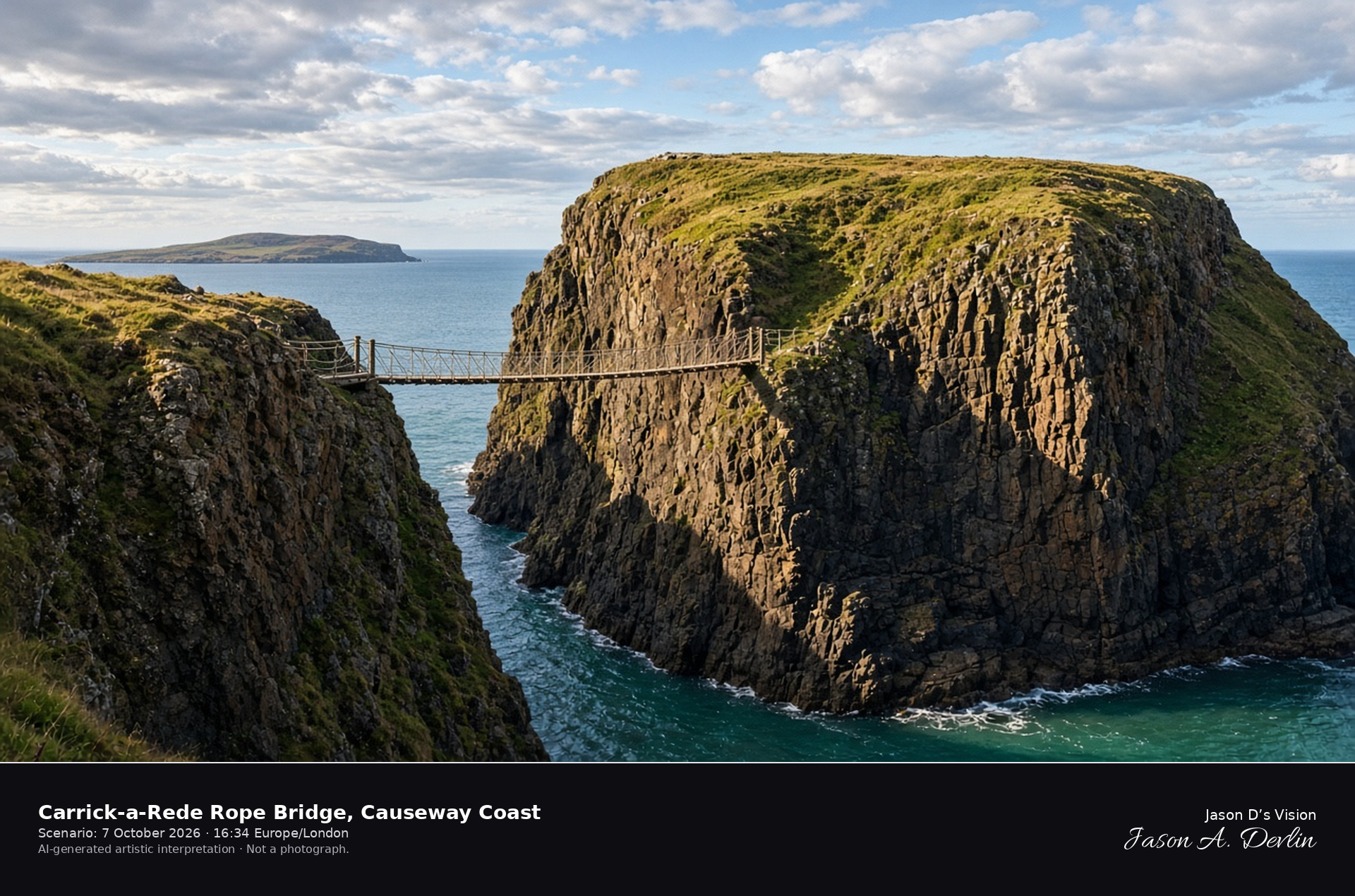
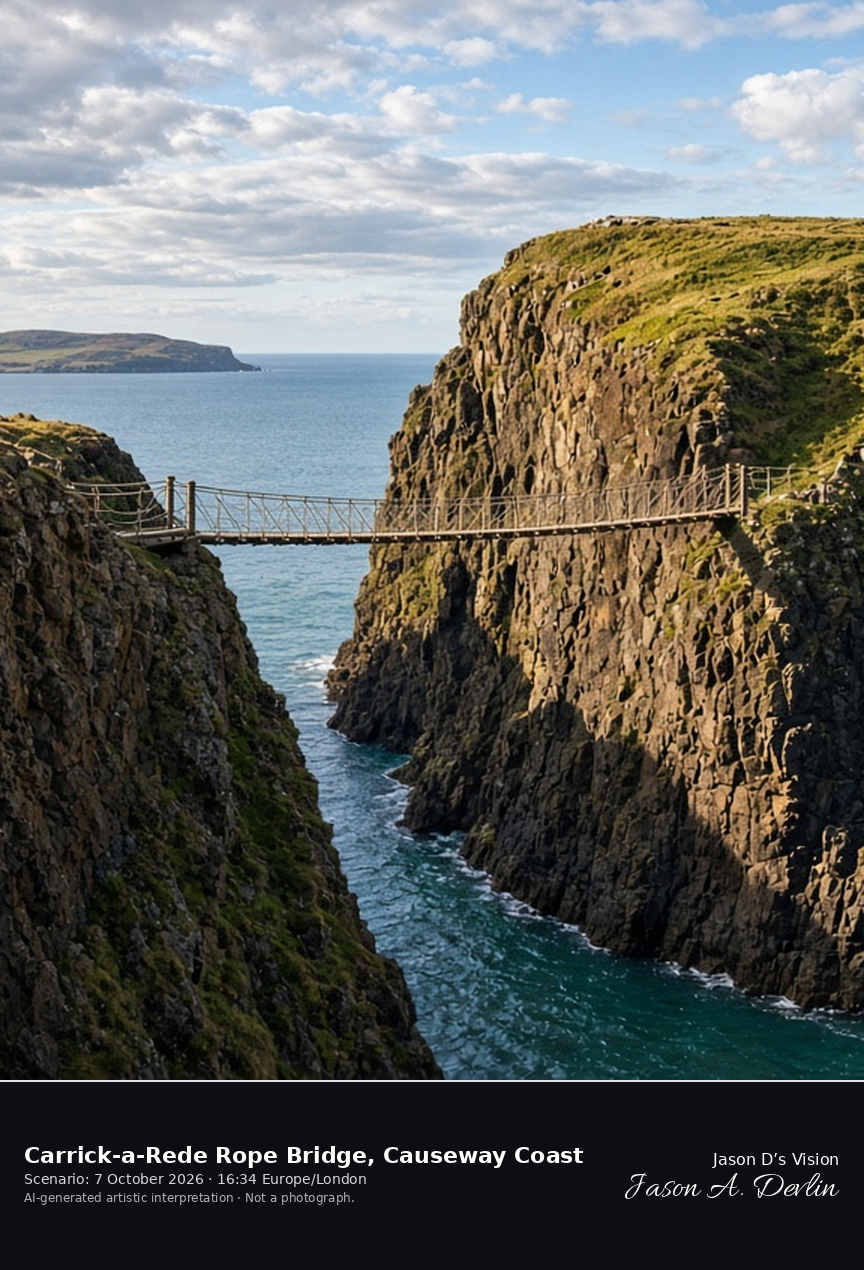
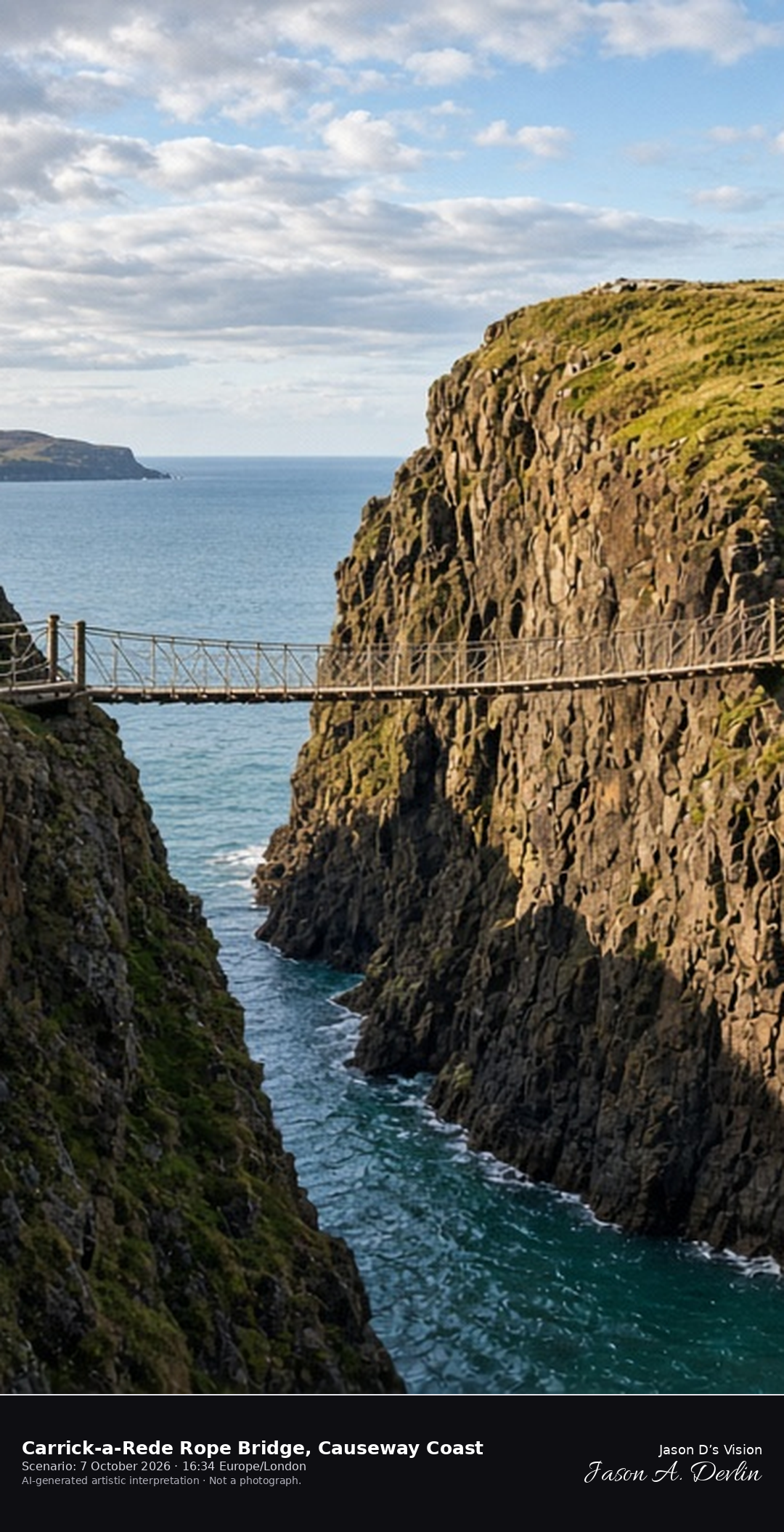
Salmon fishermen first slung a rope bridge across to Carrick-a-Rede island in 1755, giving them access to the island's fishing grounds. The bridge maintained by the National Trust today hangs thirty metres above the sea.
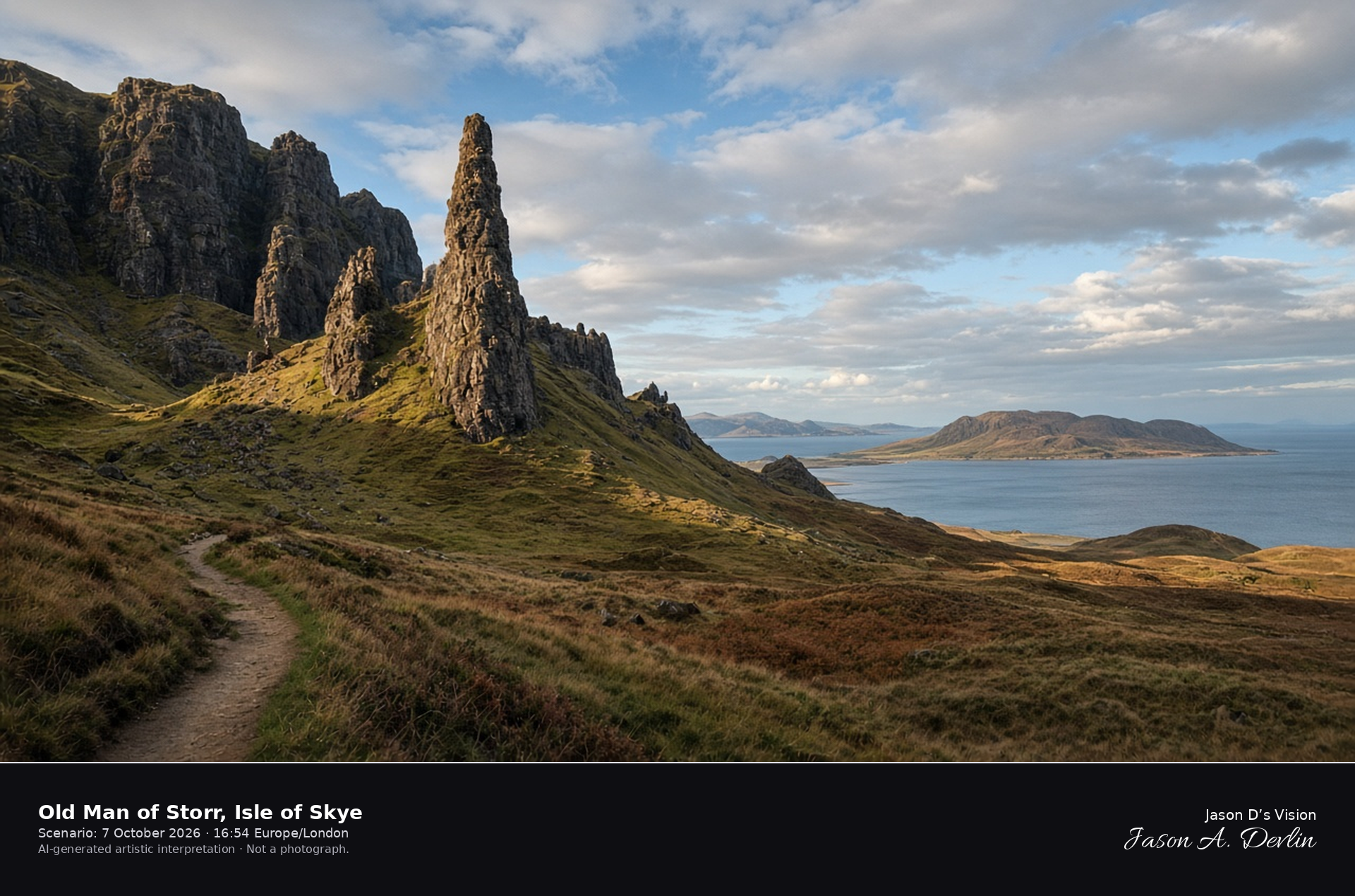
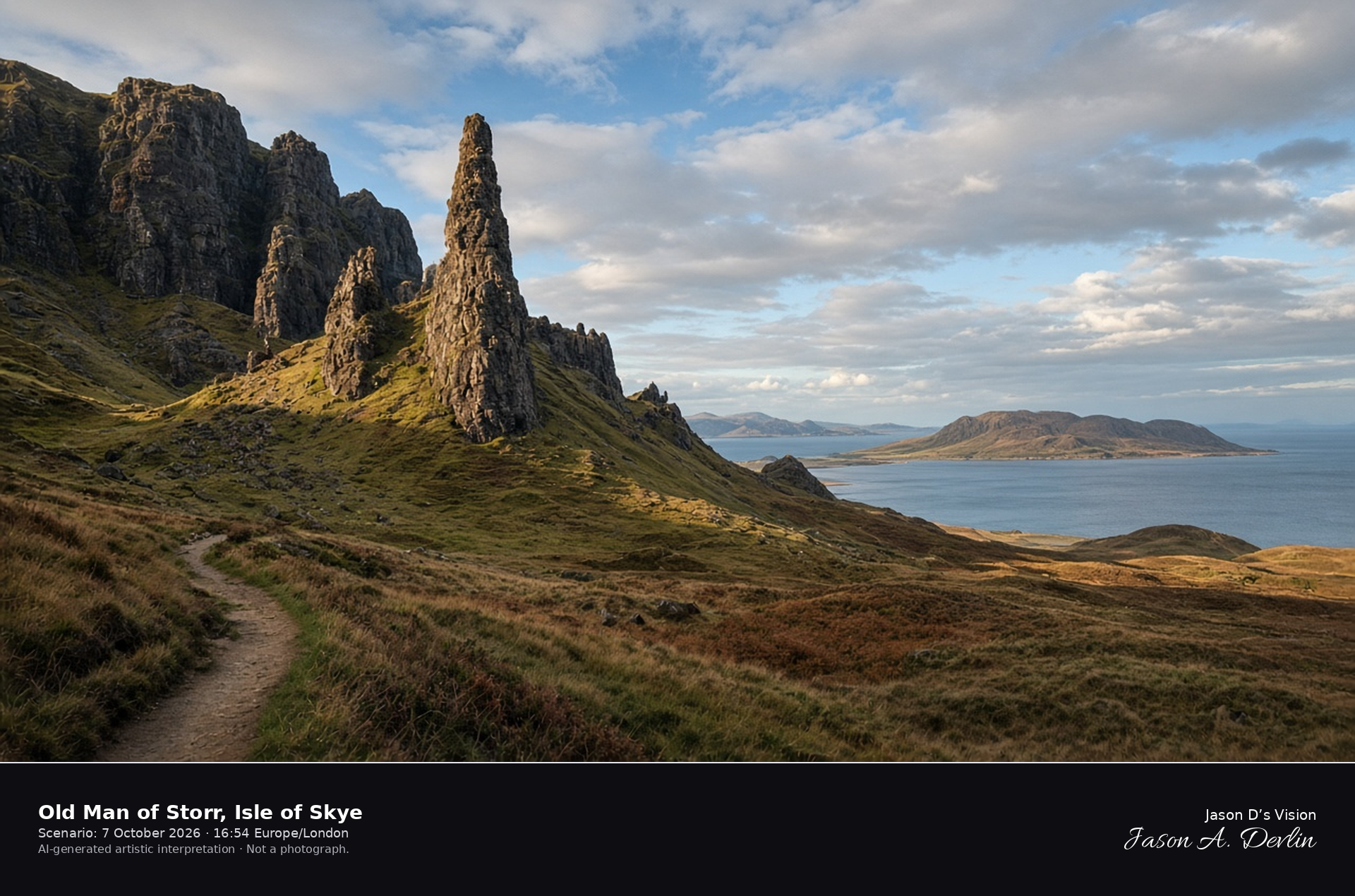
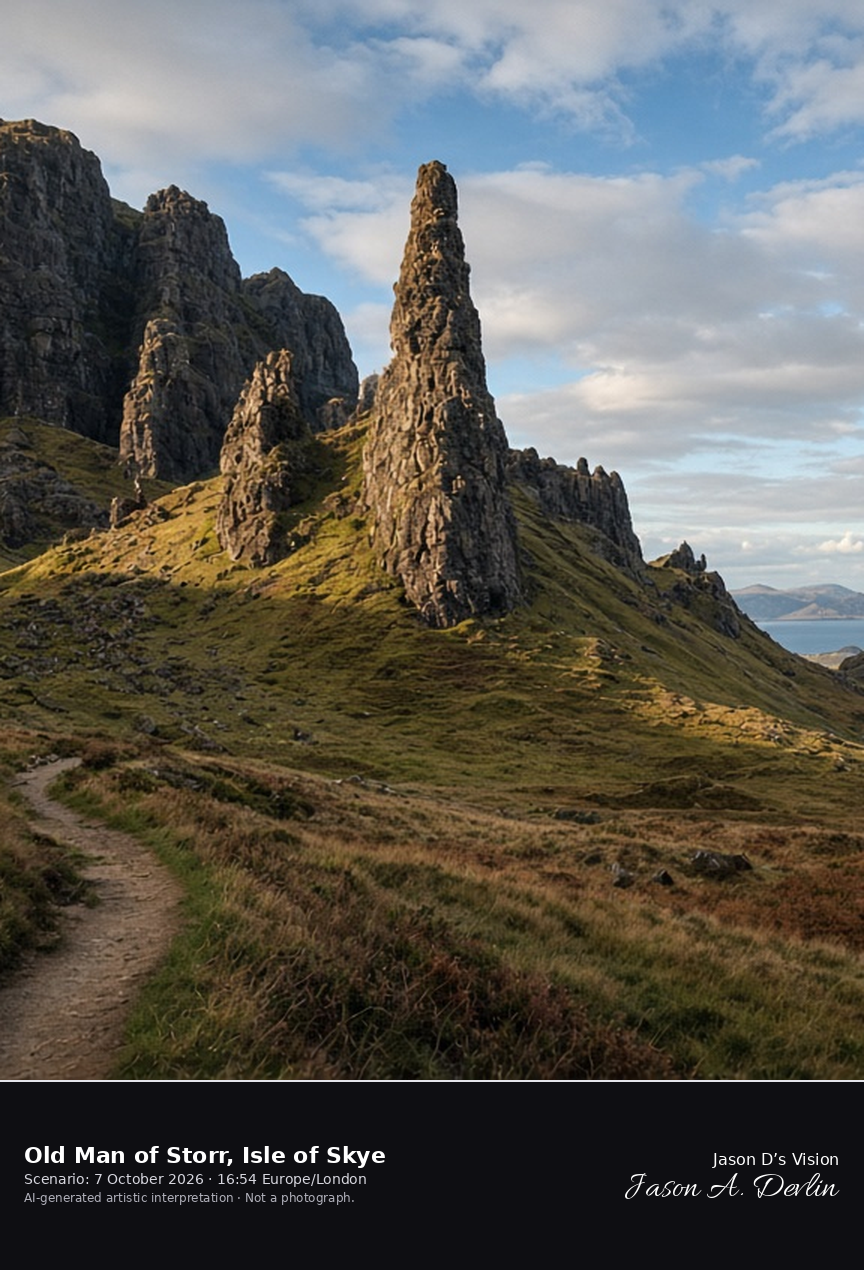
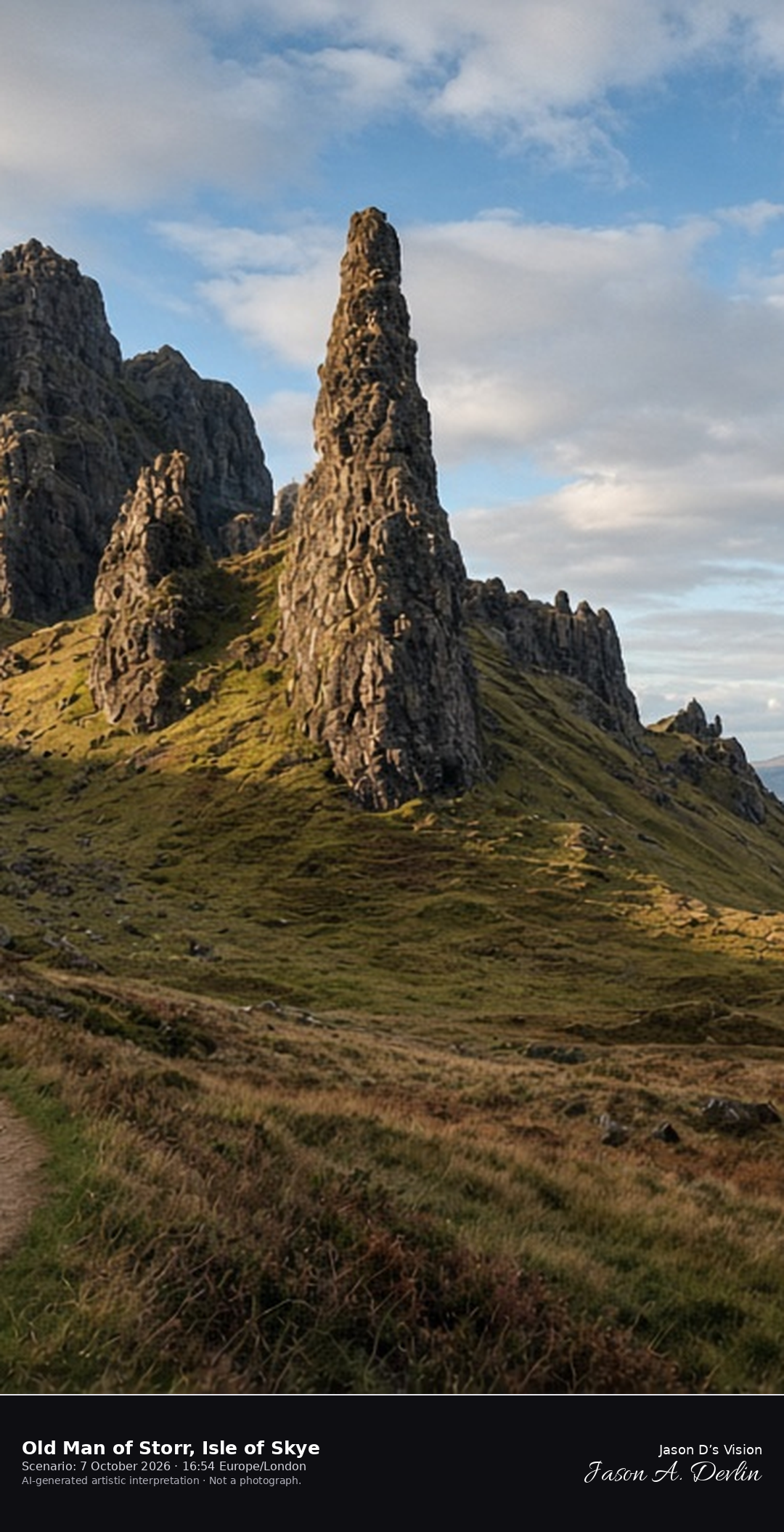
Old Man of Storr, Isle of Skye · AI-generated artistic interpretation
The Old Man of Storr is a pinnacle of basalt on the Trotternish ridge of the Isle of Skye, left standing by an ancient landslip of the Storr cliffs. It is about 50 m tall and is one of the most photographed landforms in Scotland.
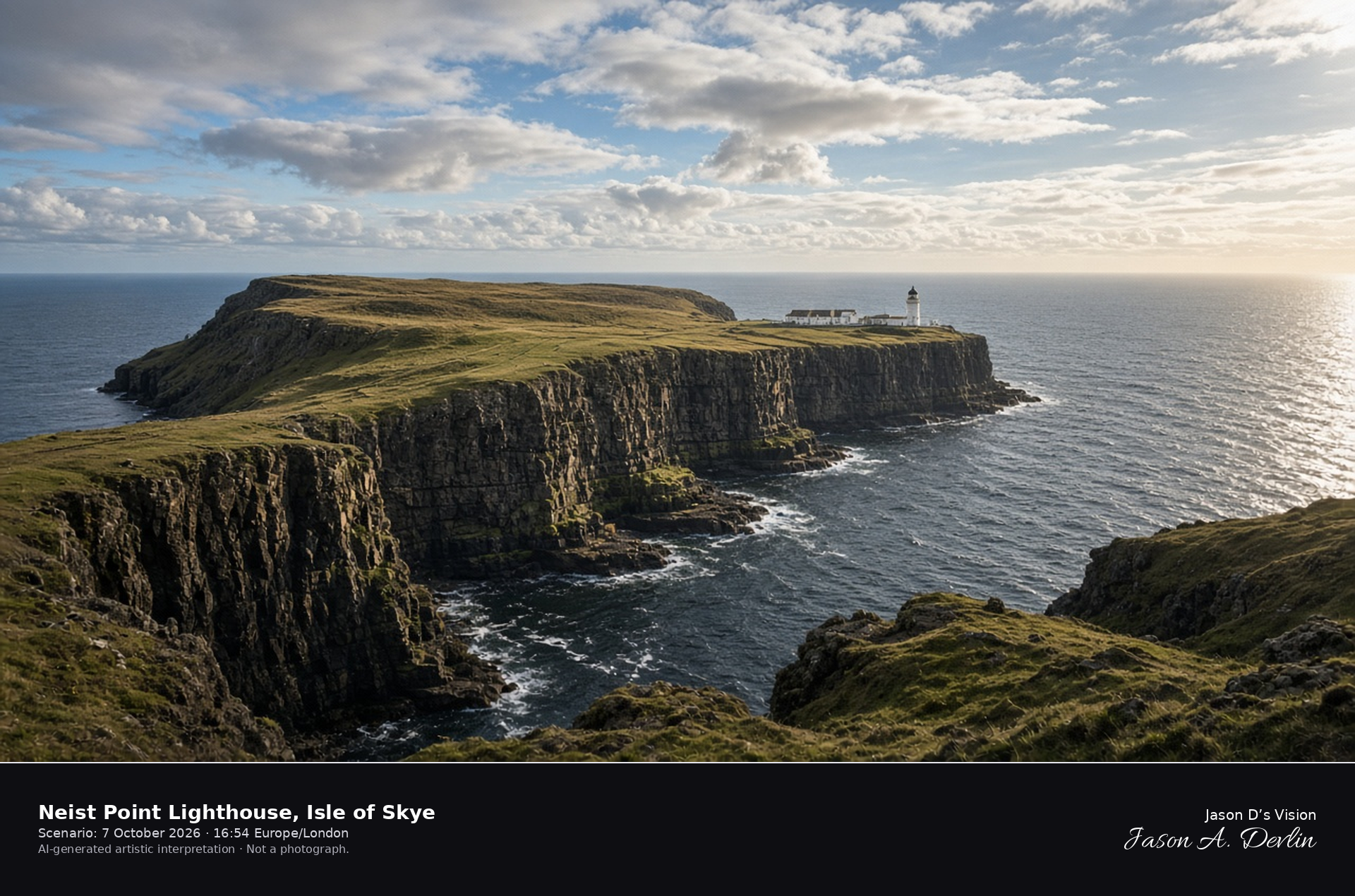
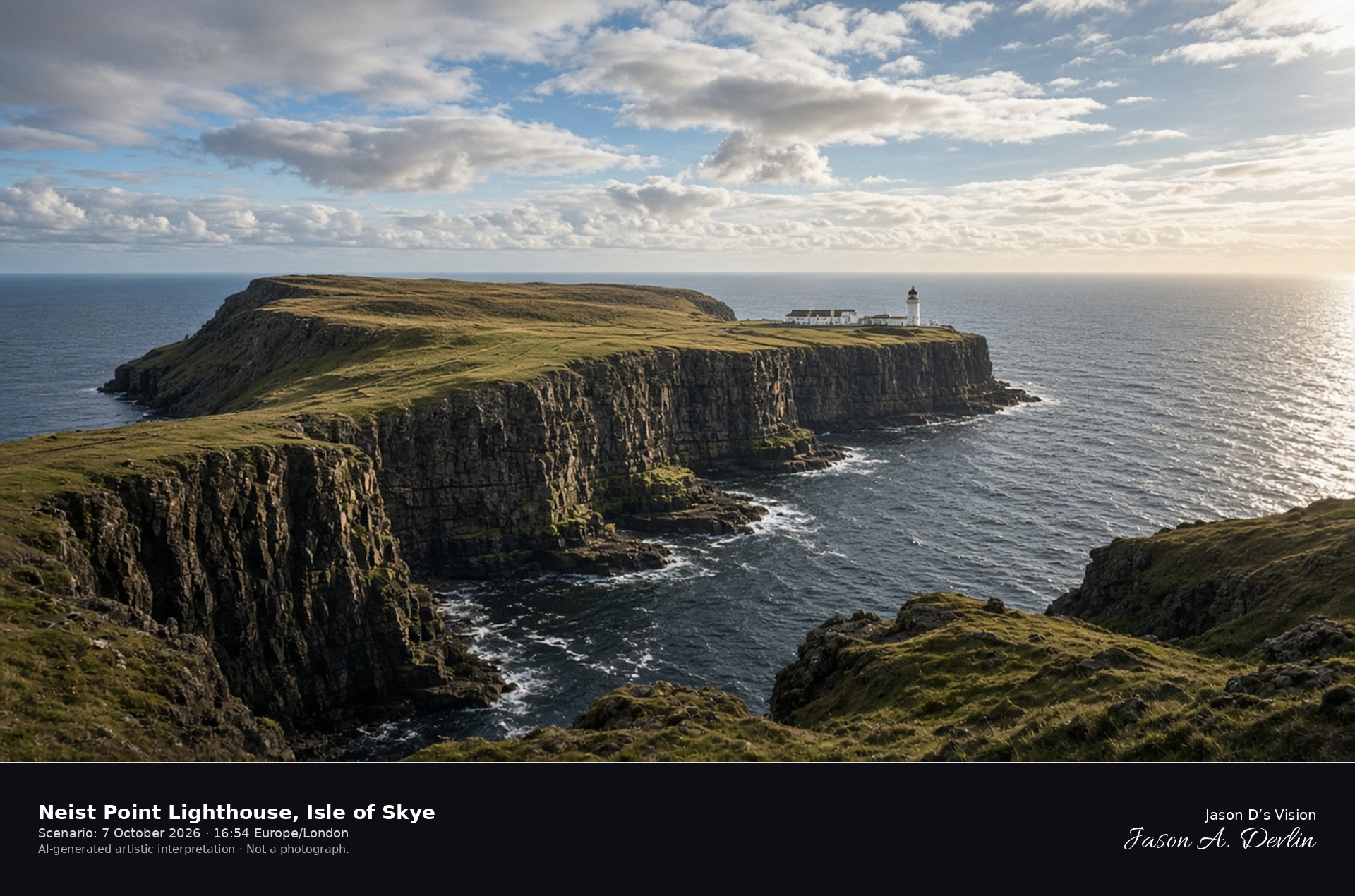
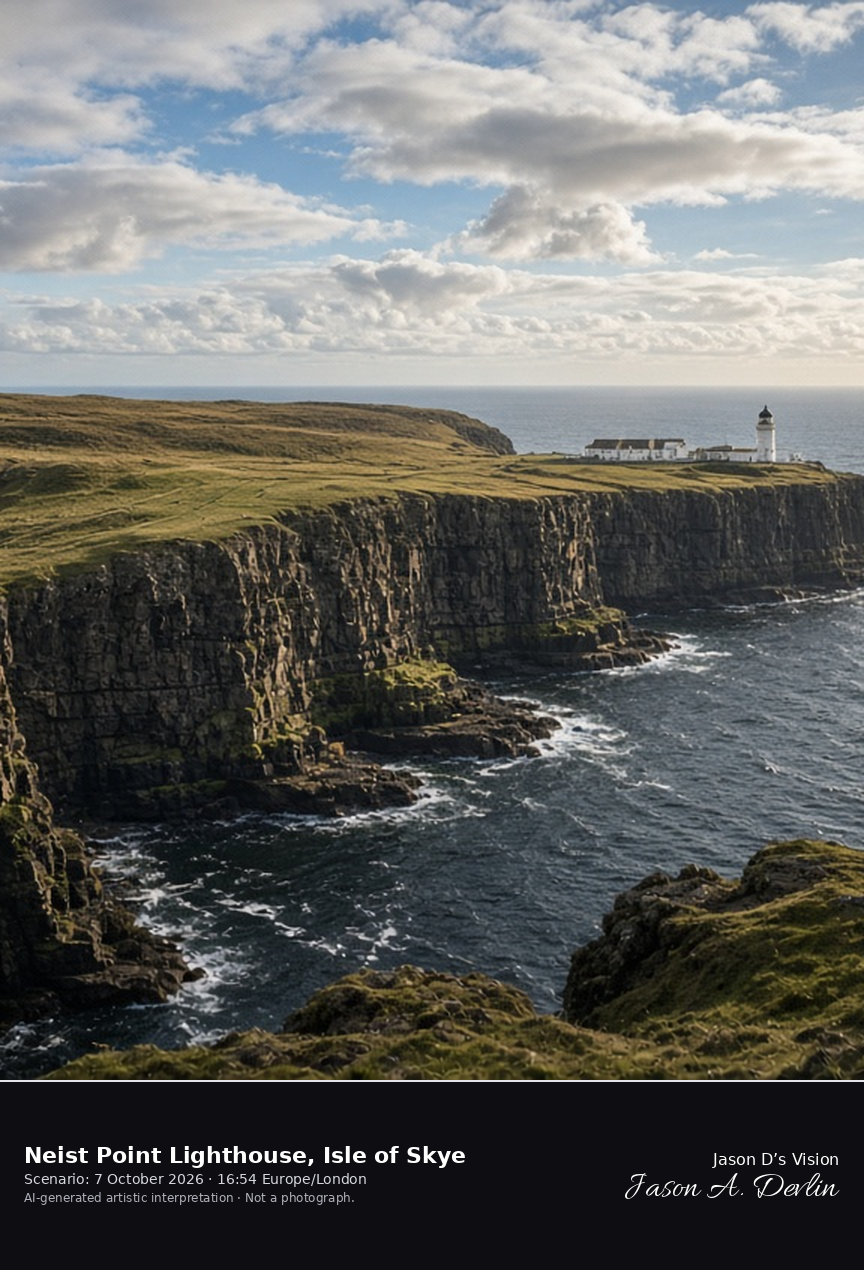
Neist Point Lighthouse · AI-generated artistic interpretation
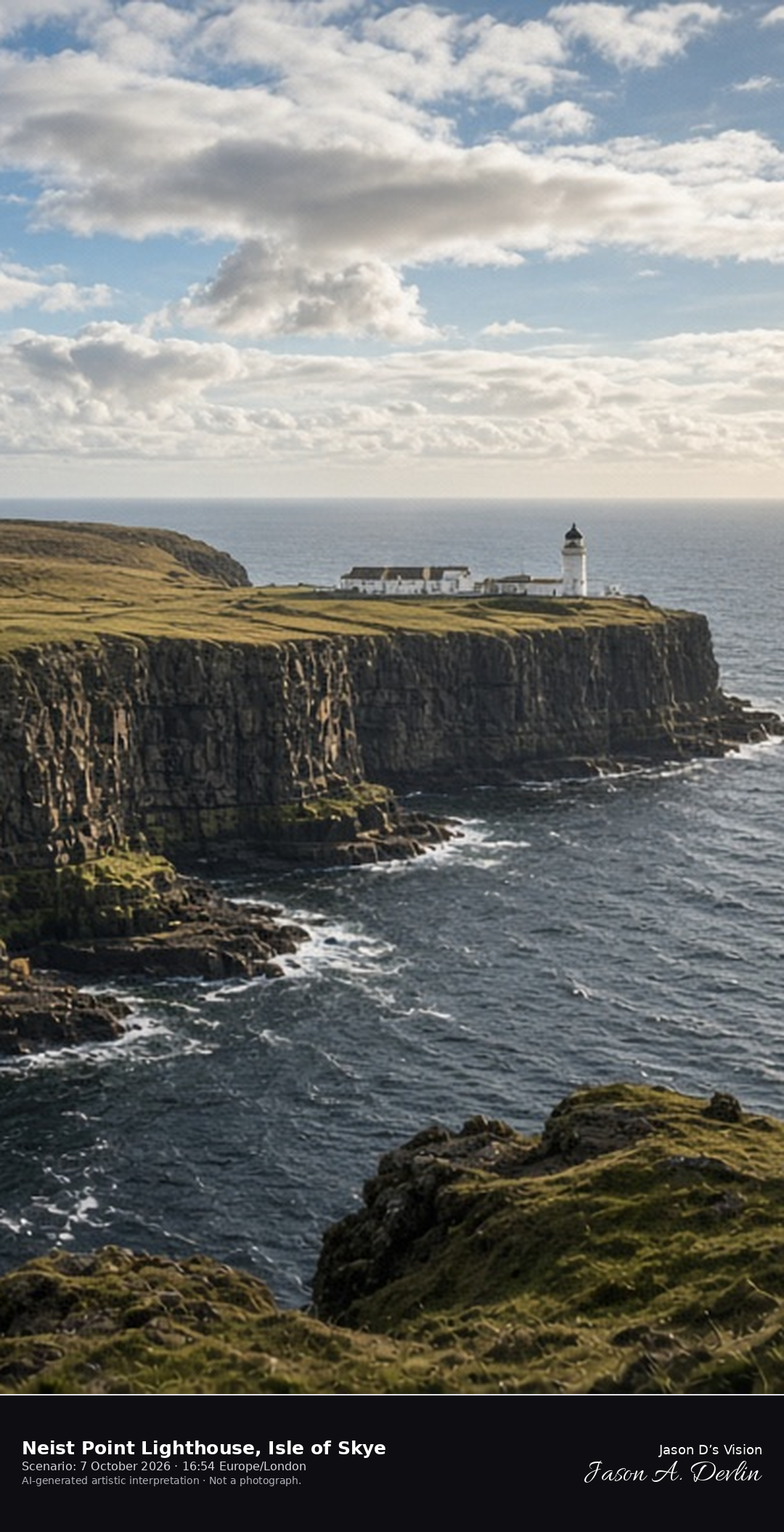
Neist Point Lighthouse, first lit in 1909 to David Alan Stevenson's design, guards the most westerly tip of the Isle of Skye. The headland is also a place for watching marine wildlife: local observers have recorded minke whales, dolphins and basking sharks in the surrounding waters.
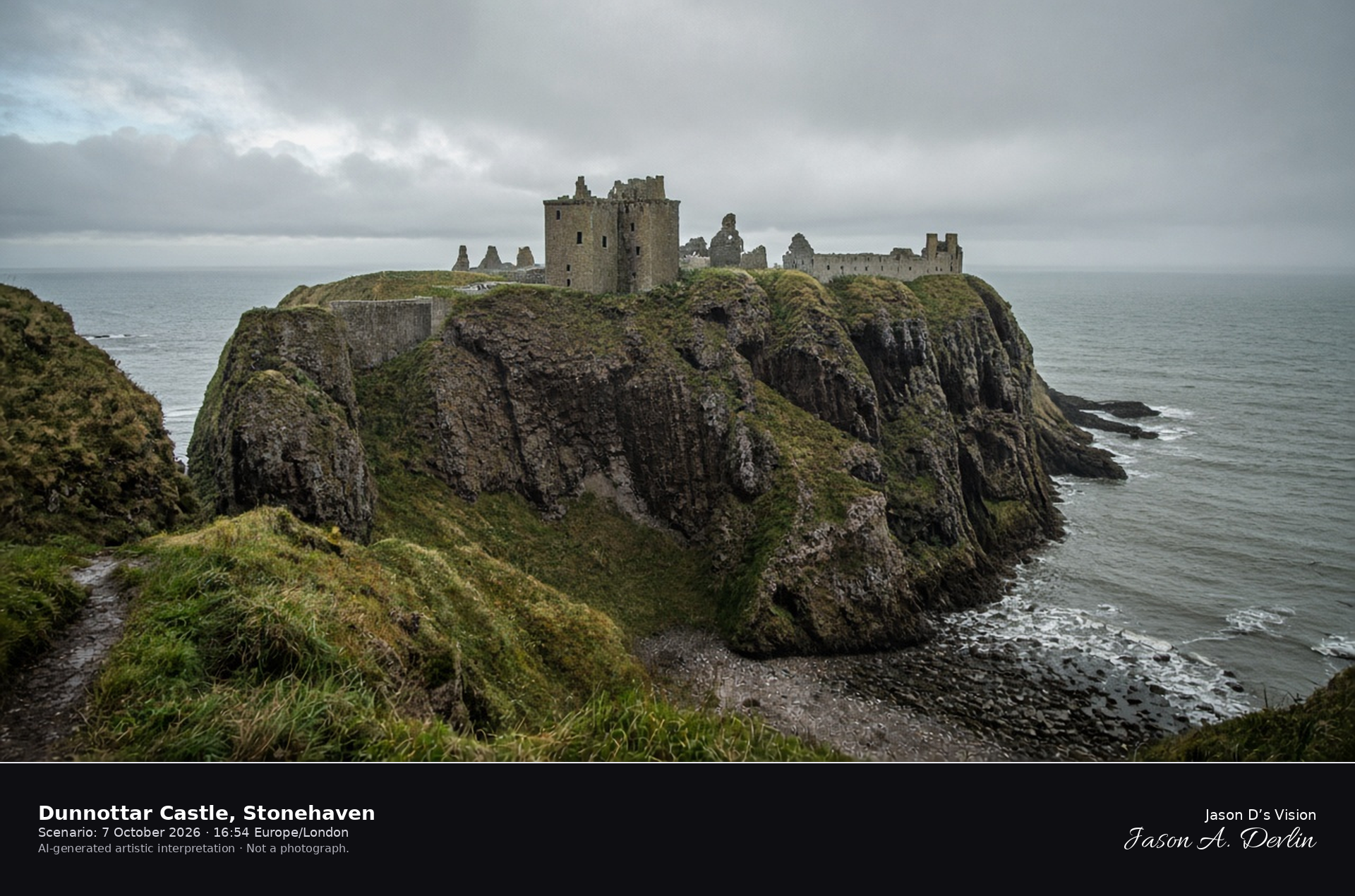
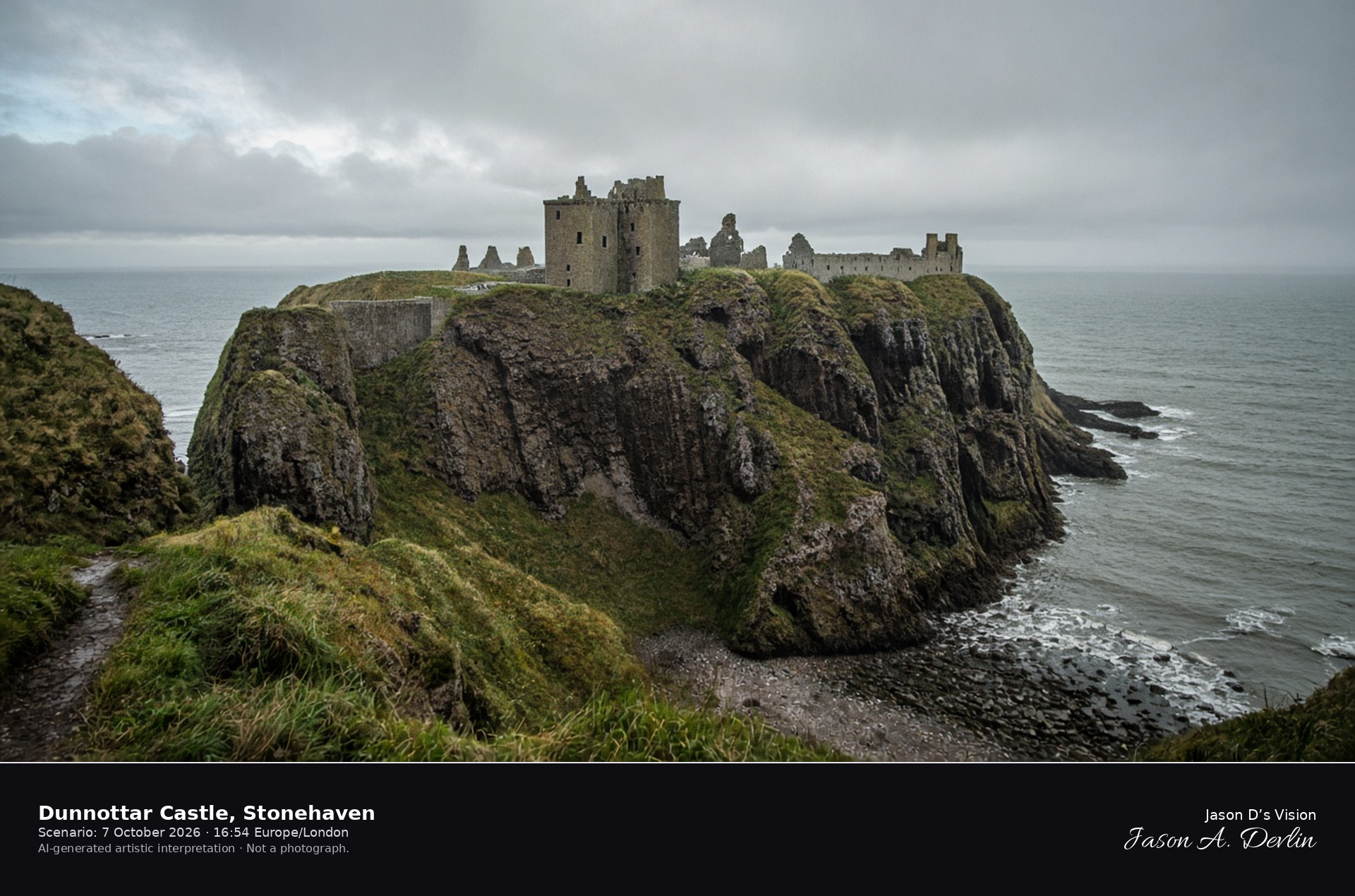
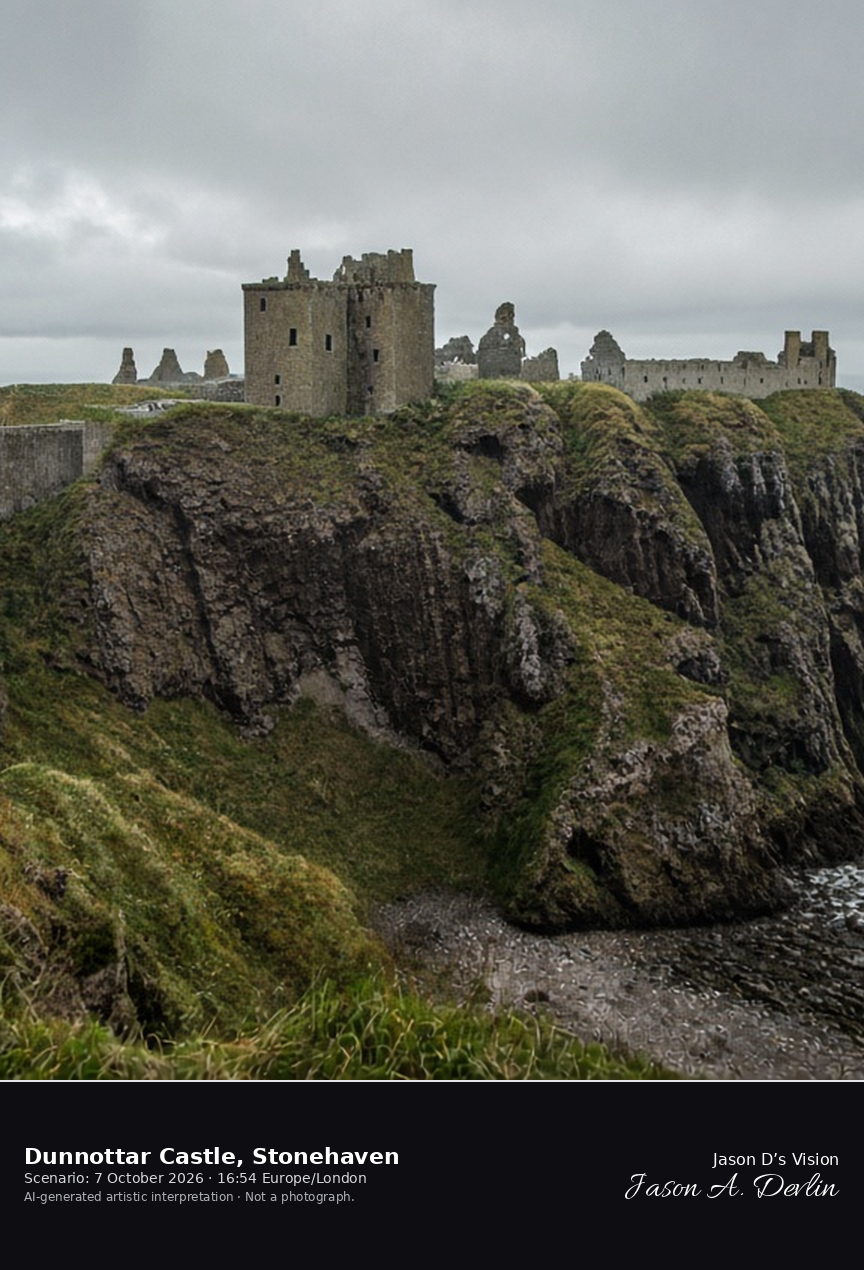
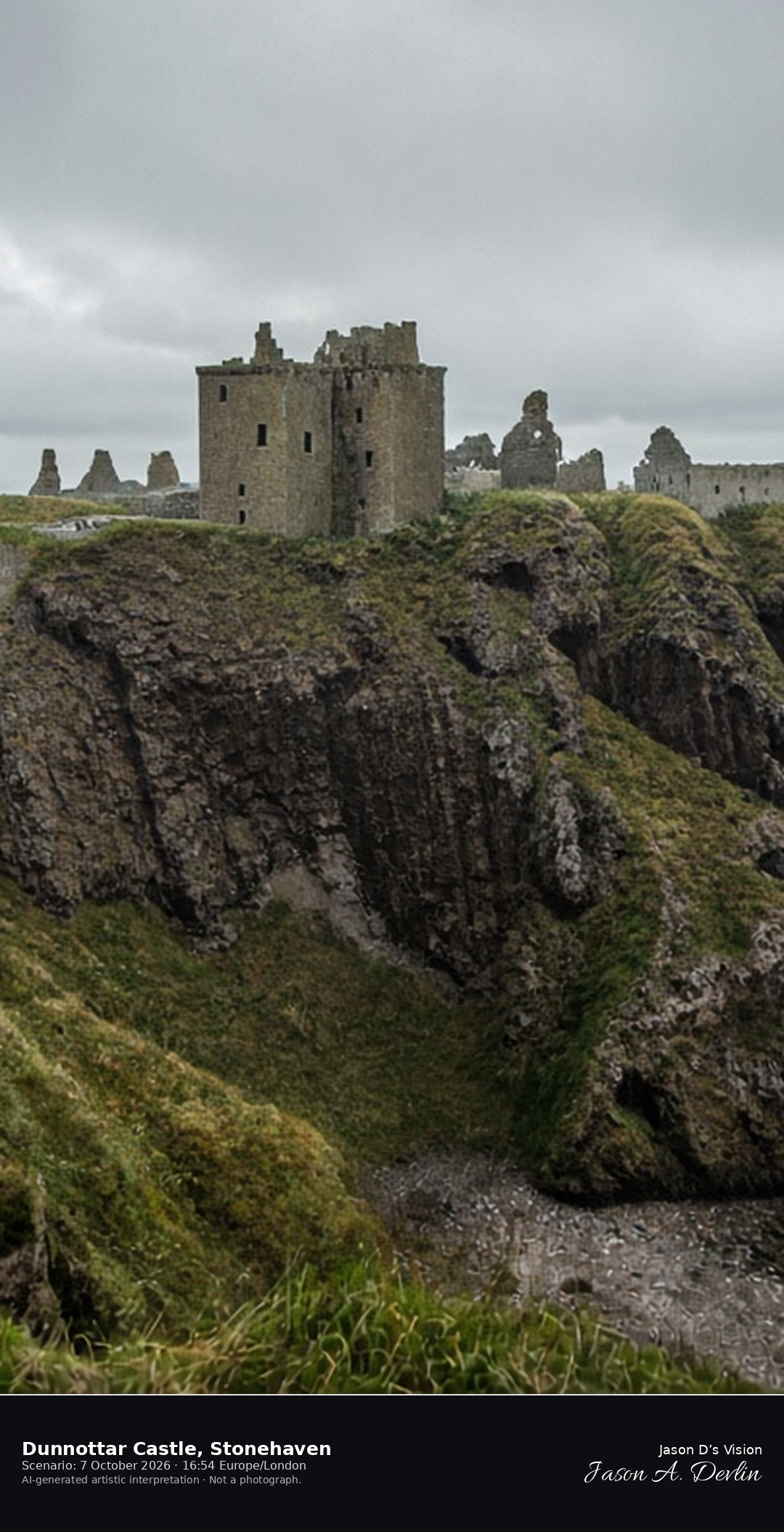
Dunnottar Castle is a ruined medieval fortress on a rocky headland about 3 km south of Stonehaven. It is famous for hiding the Honours of Scotland, the Scottish crown jewels, from Cromwell's army in 1651–52.
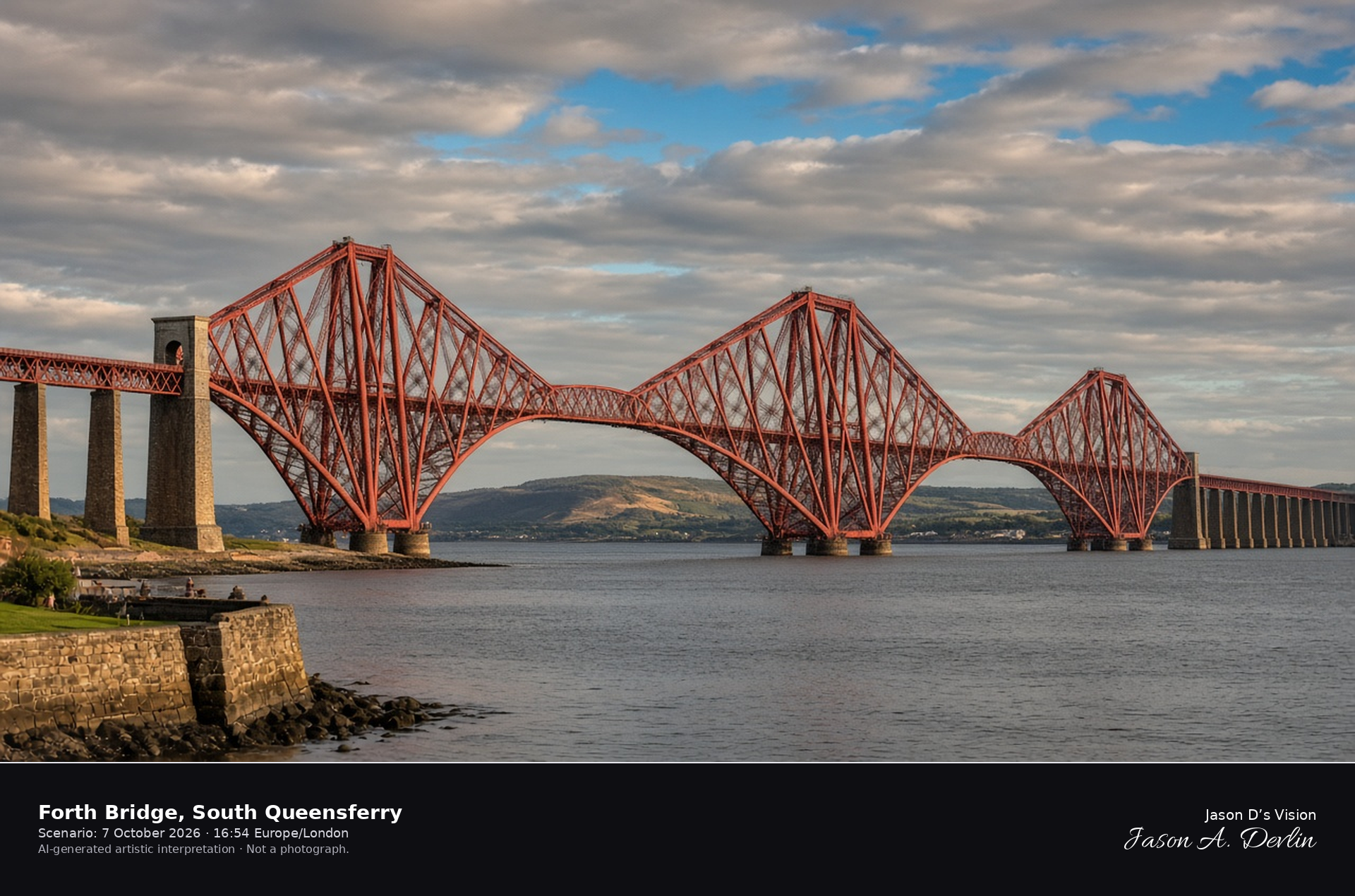
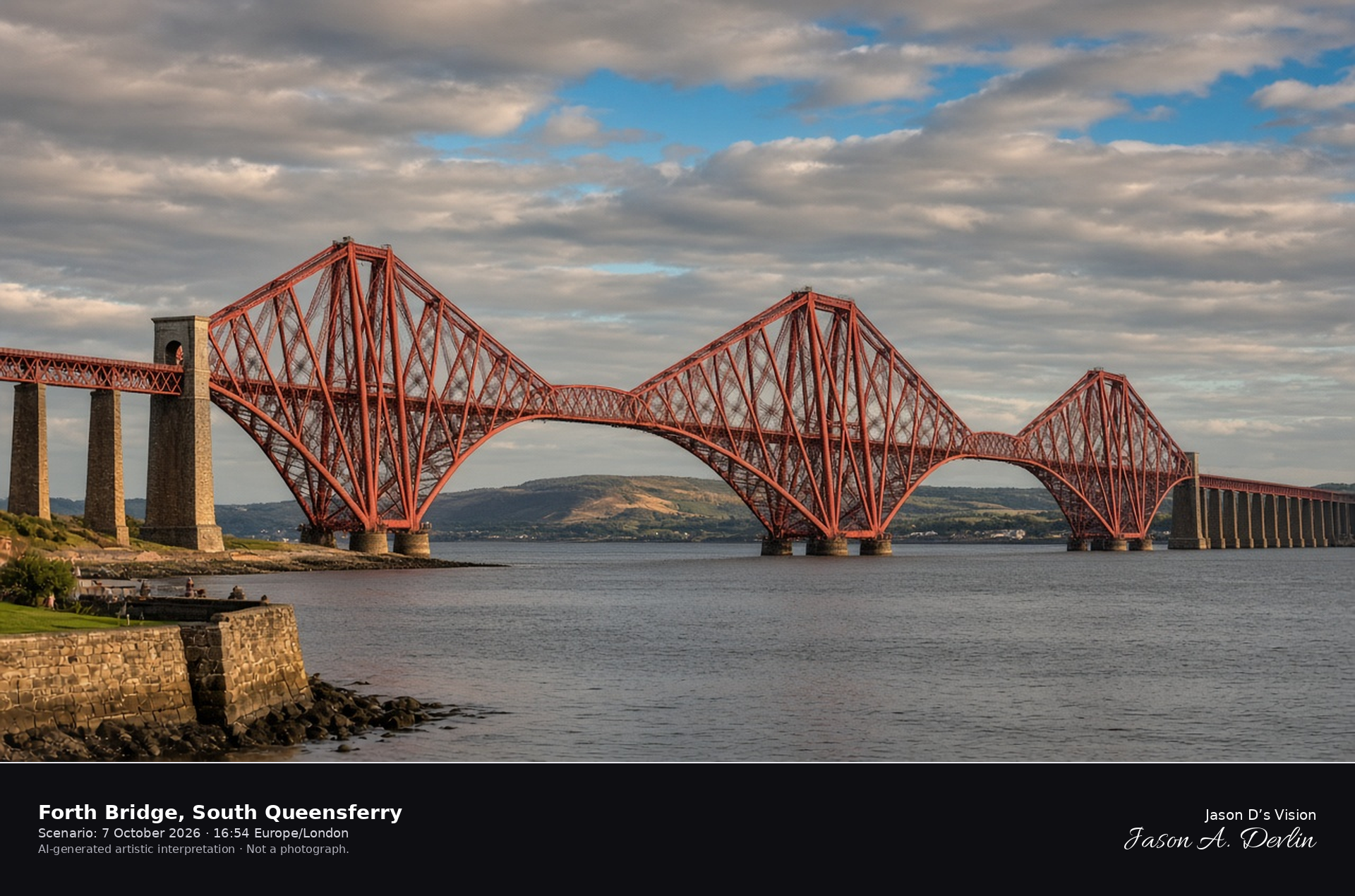
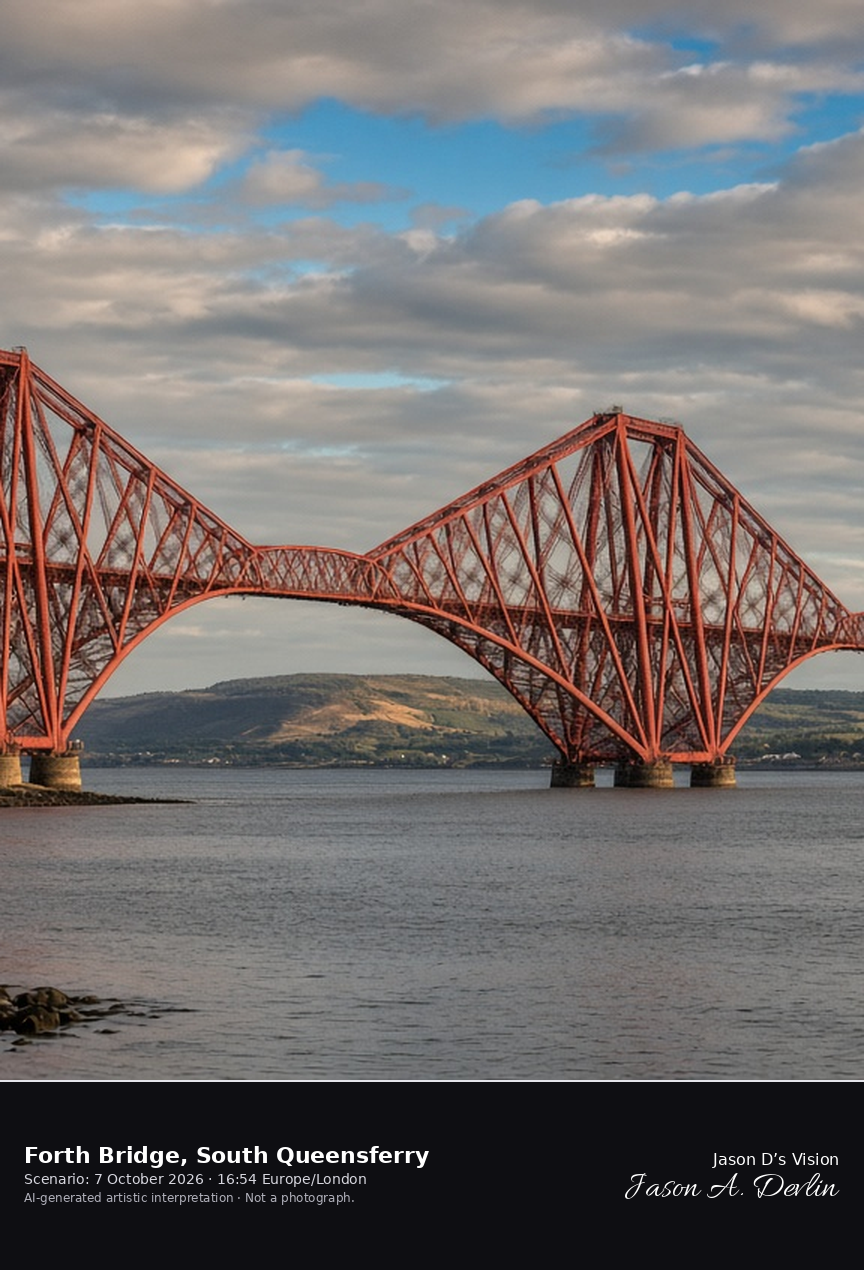
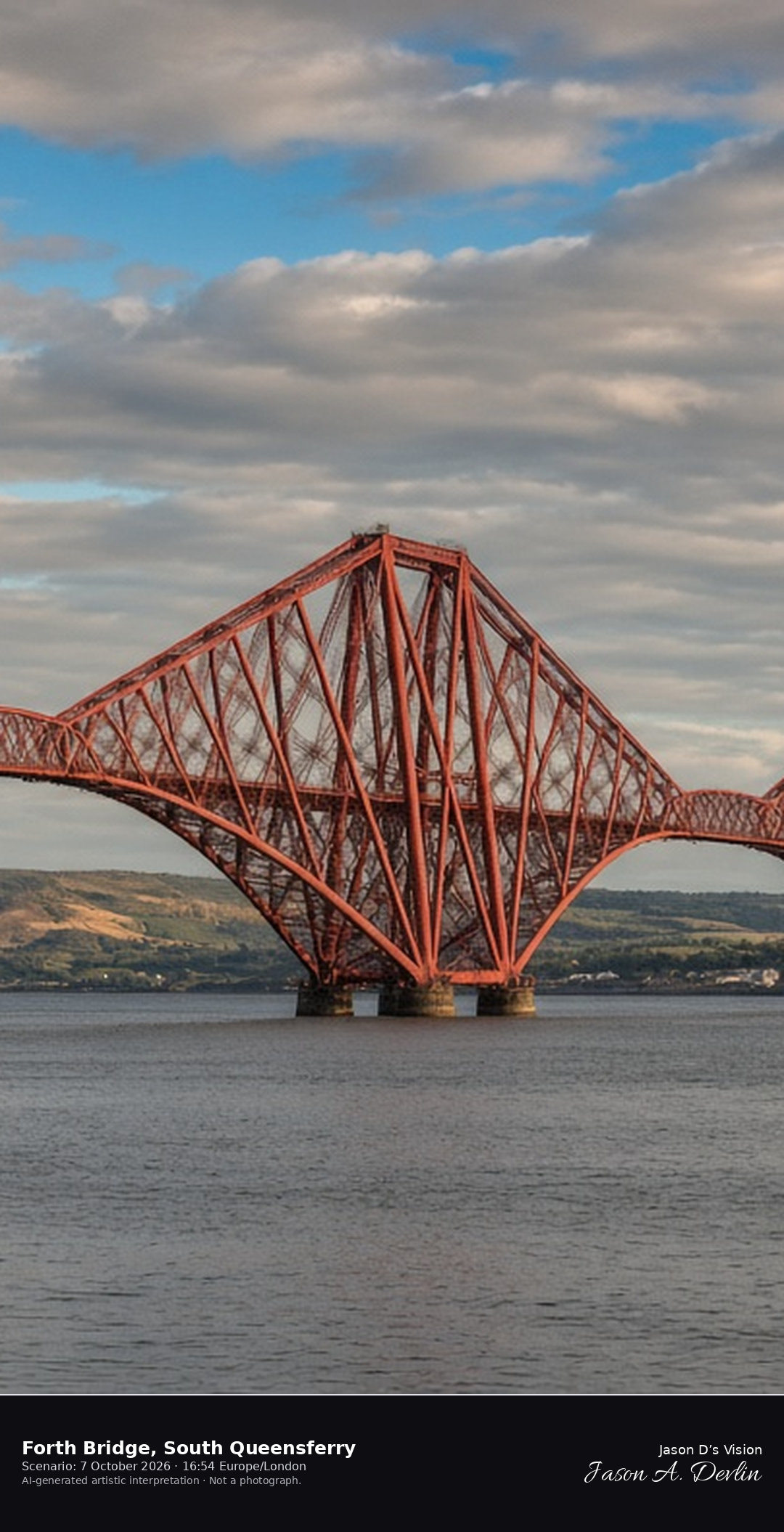
The Forth Bridge, opened in 1890, was the first great steel cantilever bridge in the world, carrying the railway two and a half kilometres across the Firth of Forth. It still bears the Edinburgh to Aberdeen trains under its UNESCO World Heritage inscription, granted in 2015.
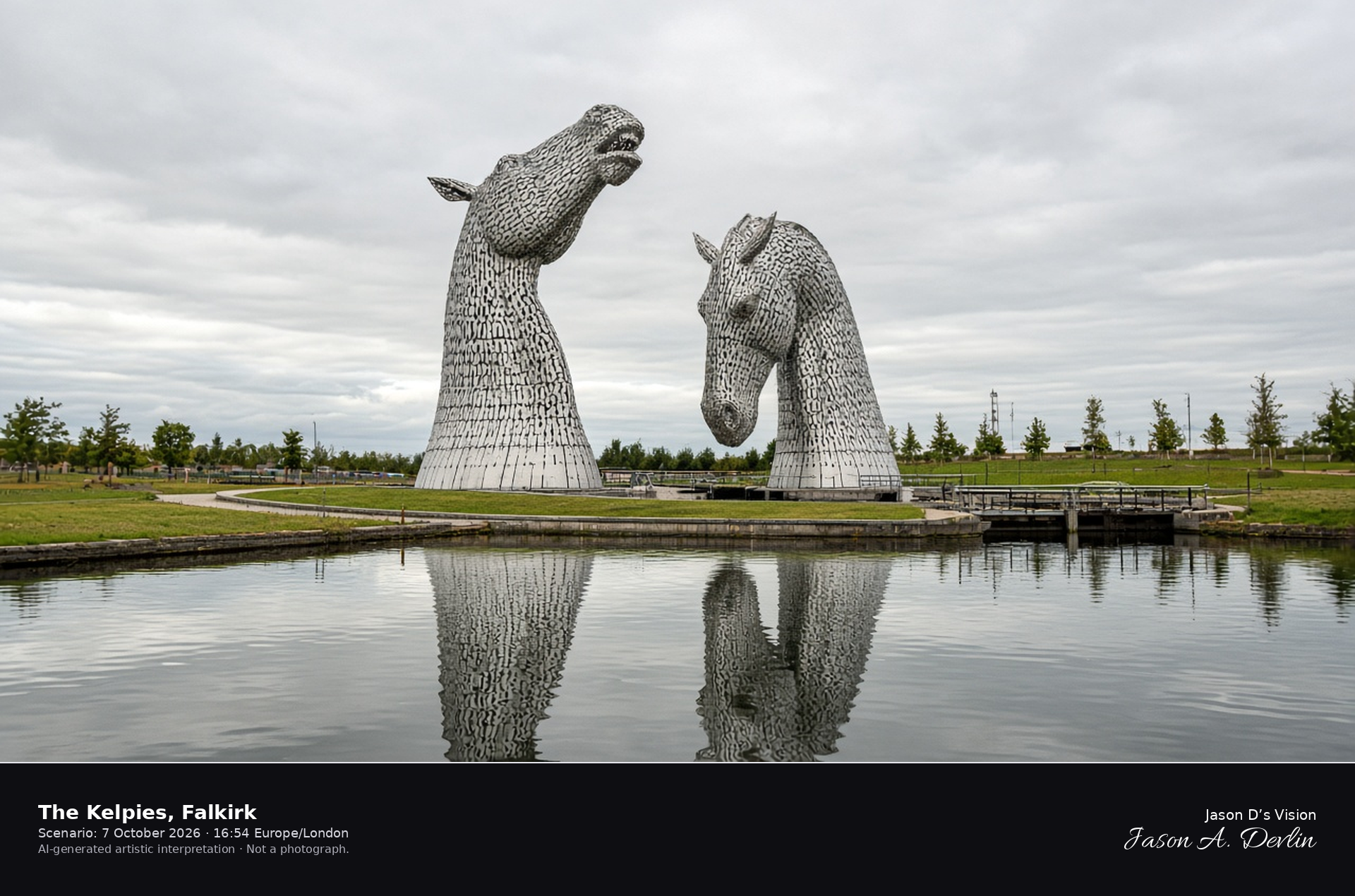
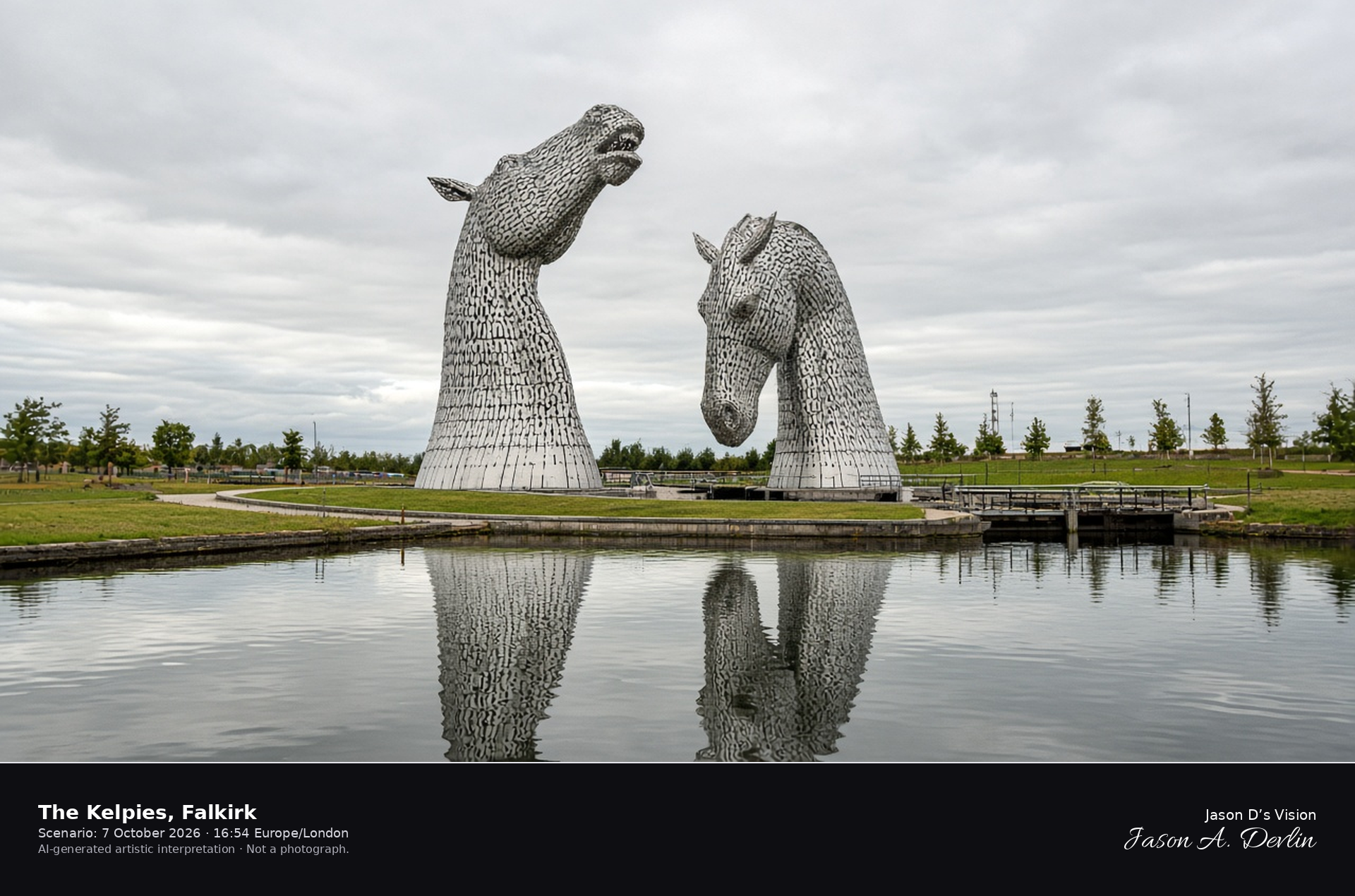
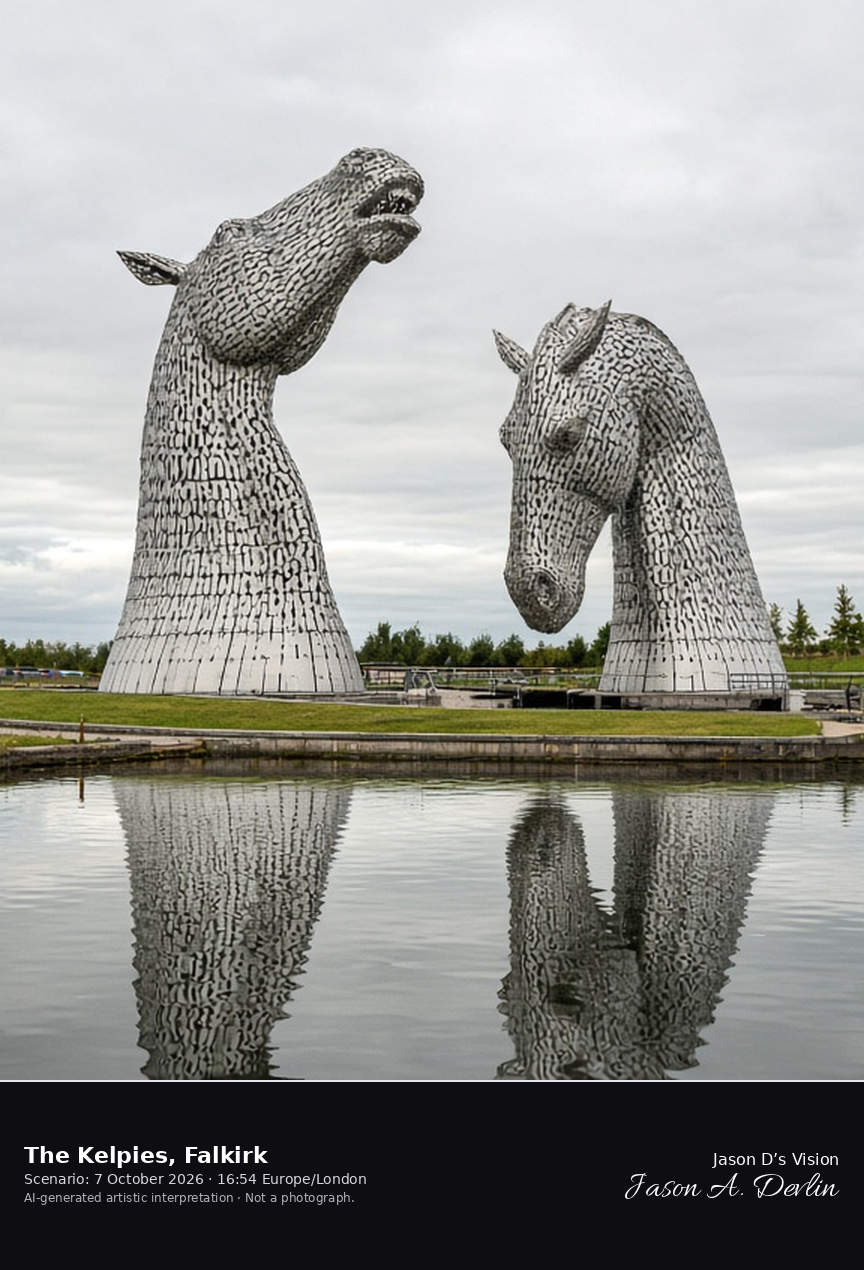
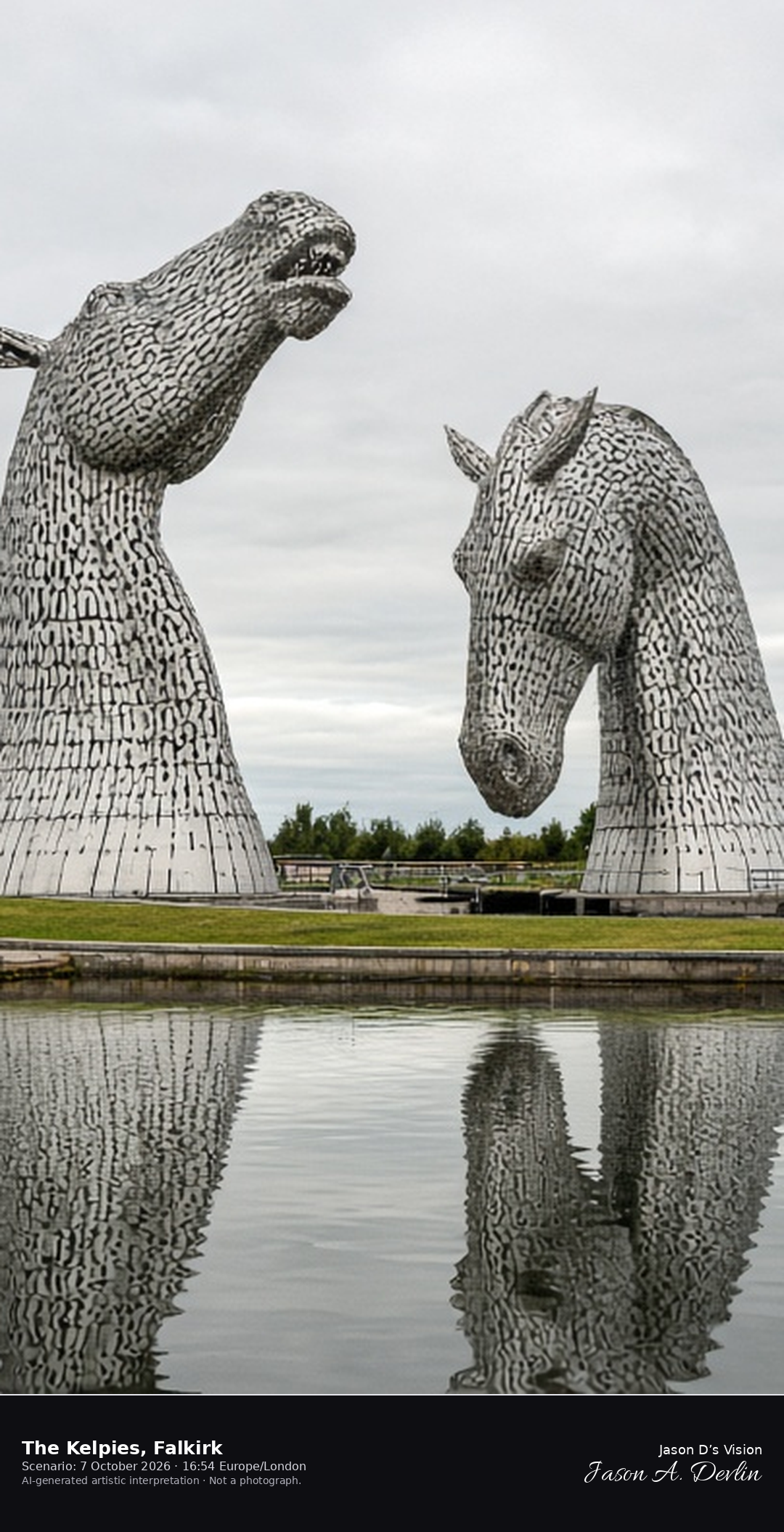
The Kelpies, Falkirk · AI-generated artistic interpretation
The Kelpies are two 30 m horse-head sculptures by Andy Scott, completed in 2013 beside the Forth and Clyde Canal extension at The Helix park. They honour the working horses that once pulled barges and ploughs in the area.
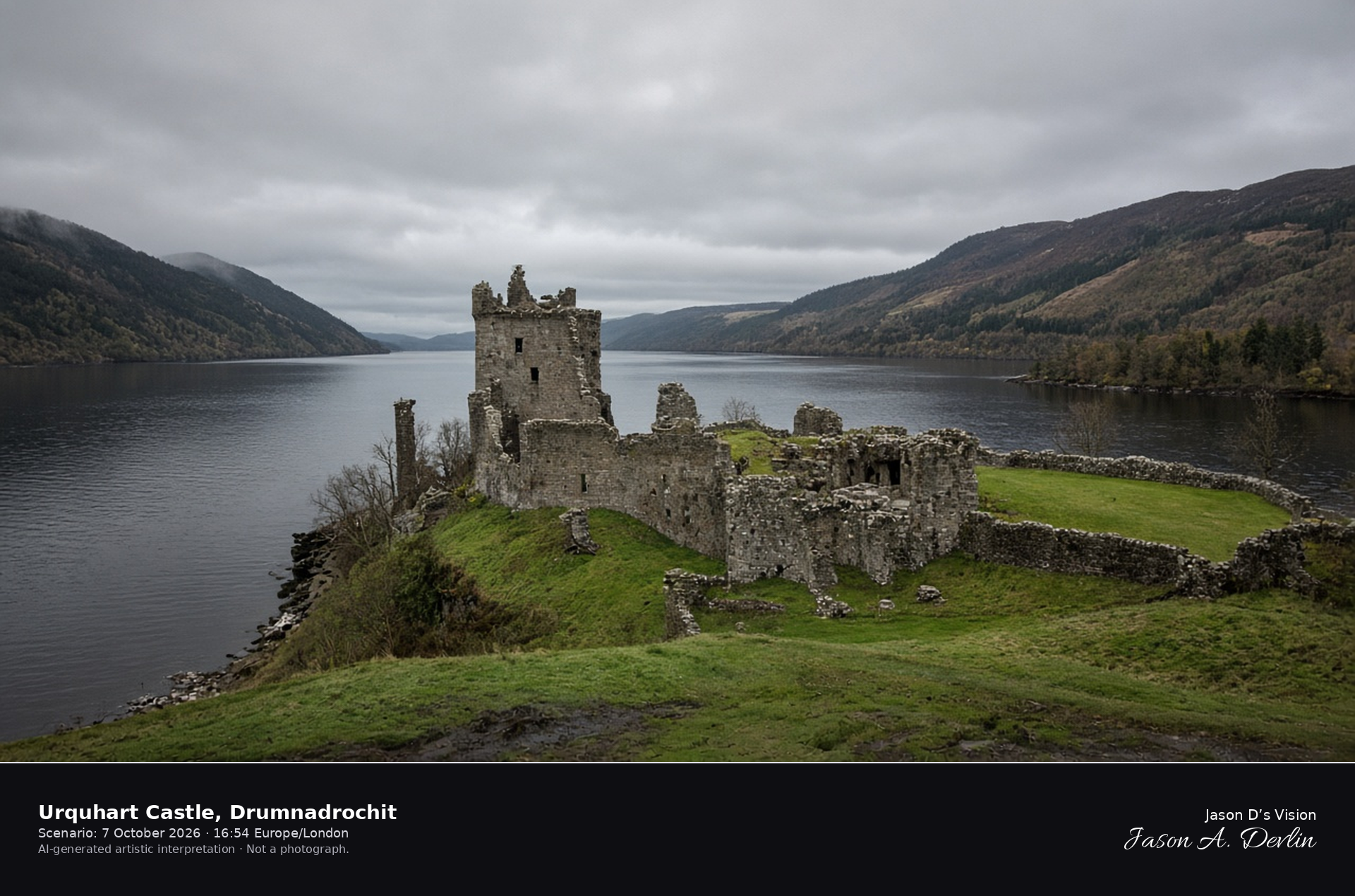
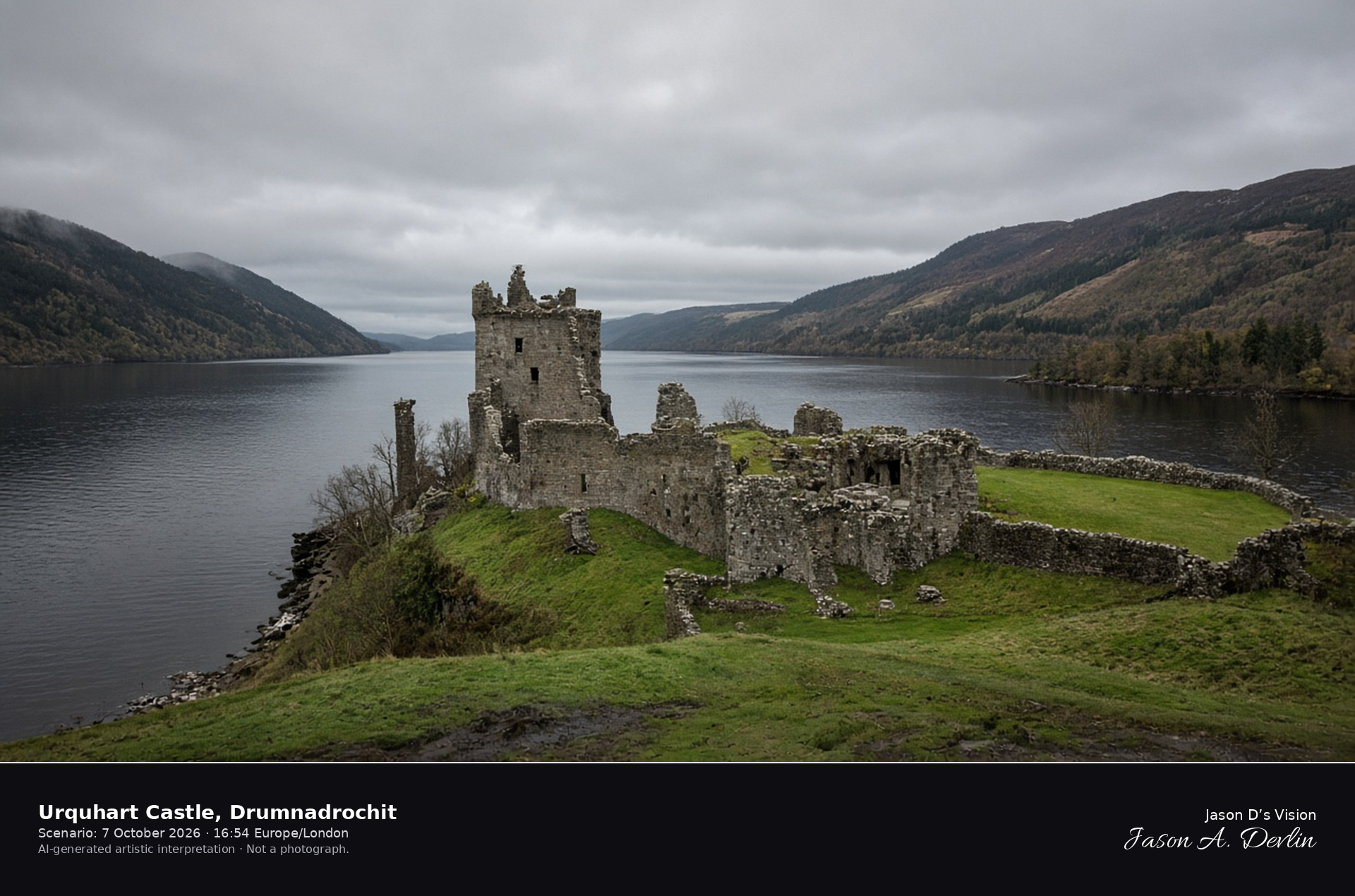
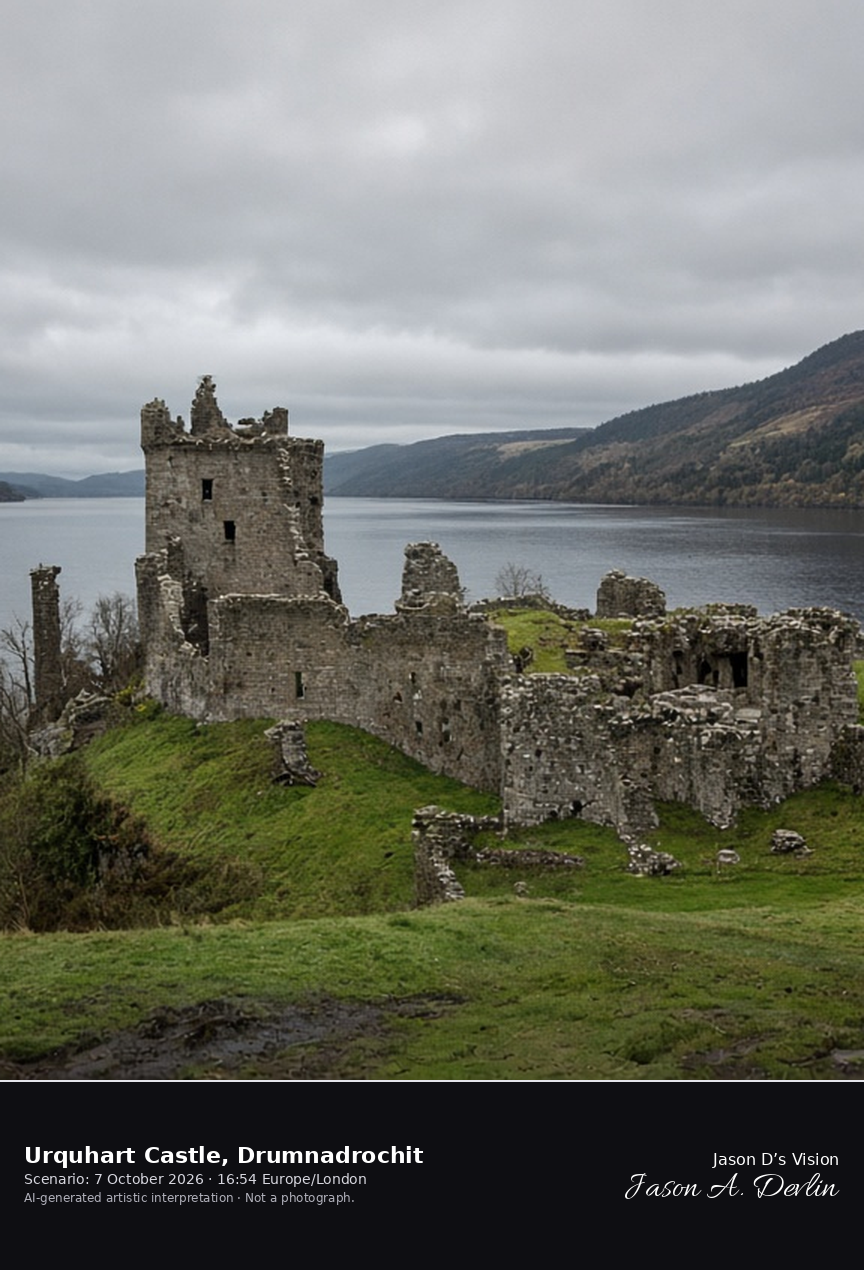
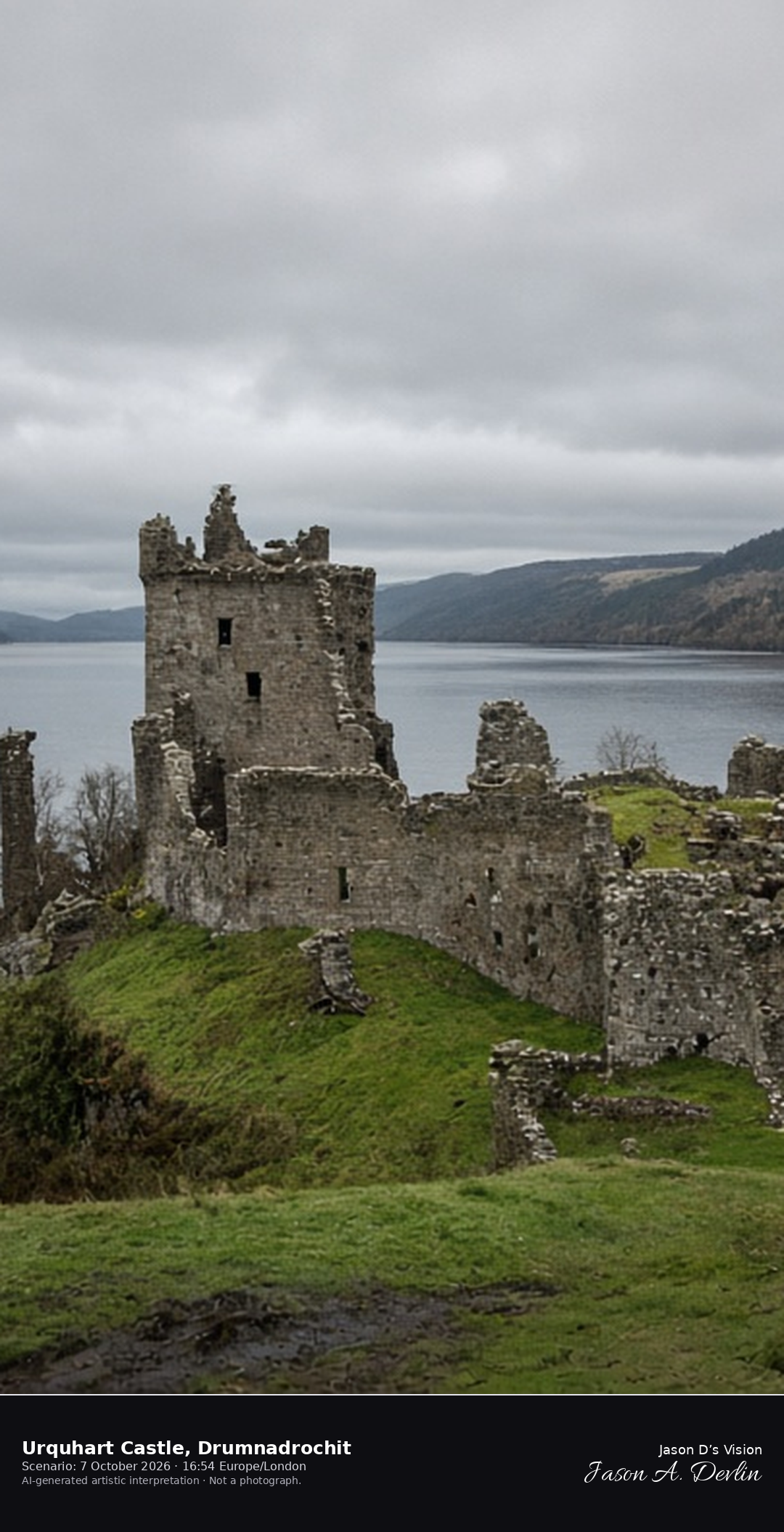
Urquhart watched over the Great Glen for five hundred years, fought over by MacDonald lords and Grant lairds through centuries of Highland war. In 1692 its own government garrison blew the castle up rather than leave it to the Jacobites, and the Grant Tower has kept its lonely watch over Loch Ness ever since.
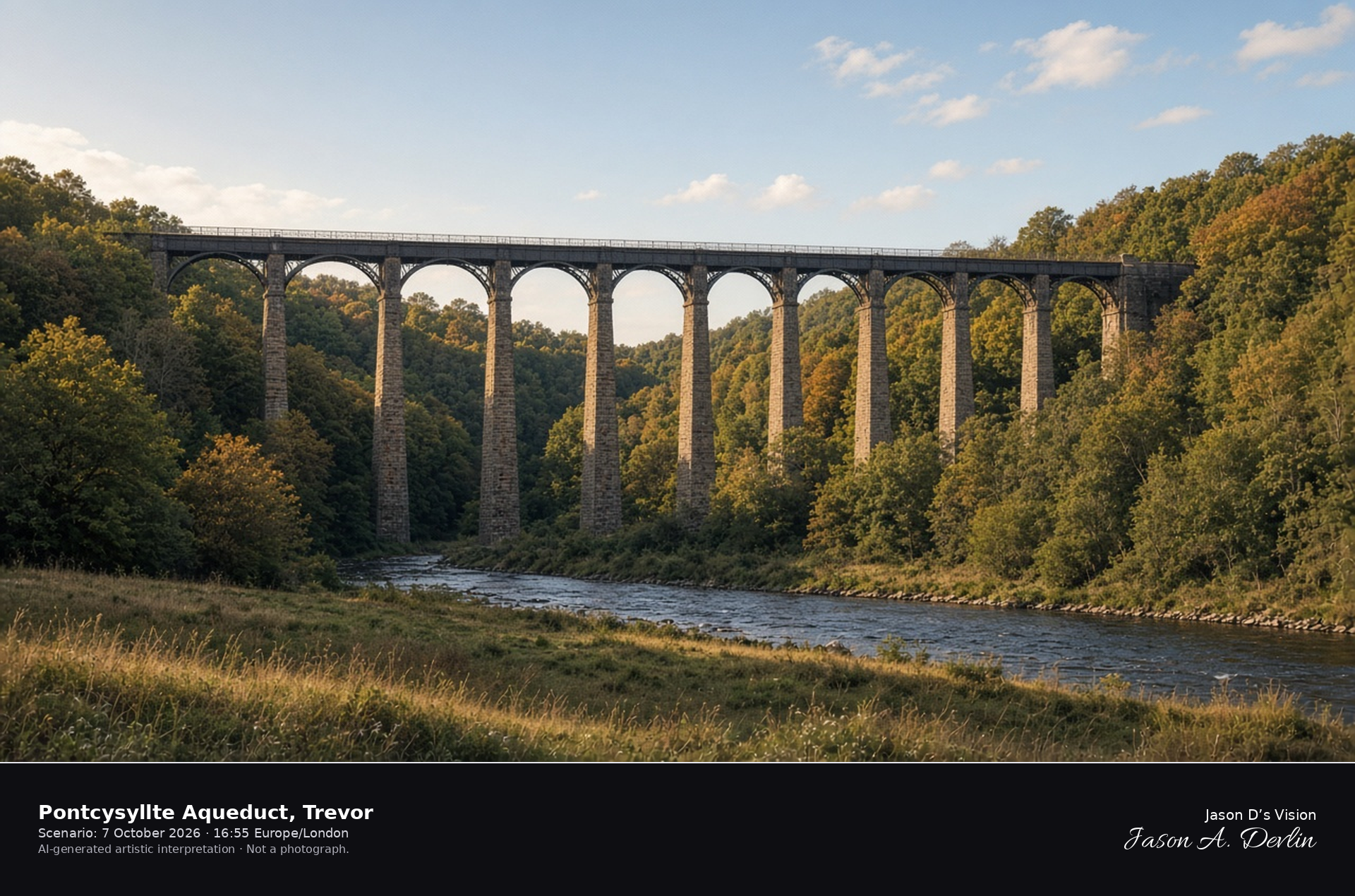
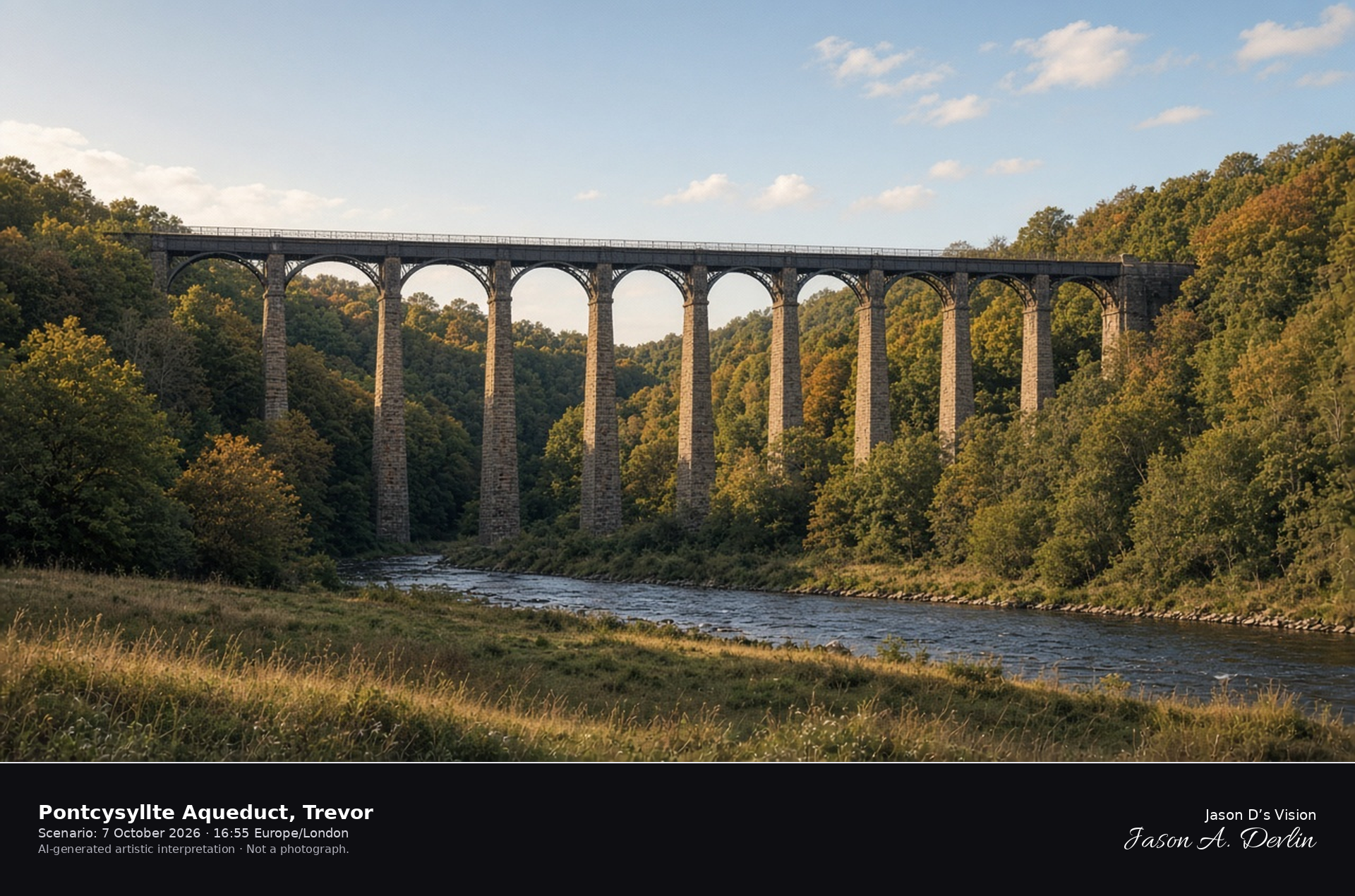
The Pontcysyllte Aqueduct carries the Llangollen Canal about 38 m above the River Dee. Built by Thomas Telford and William Jessop and opened in 1805, it is the longest and highest aqueduct in Britain and a UNESCO World Heritage Site.
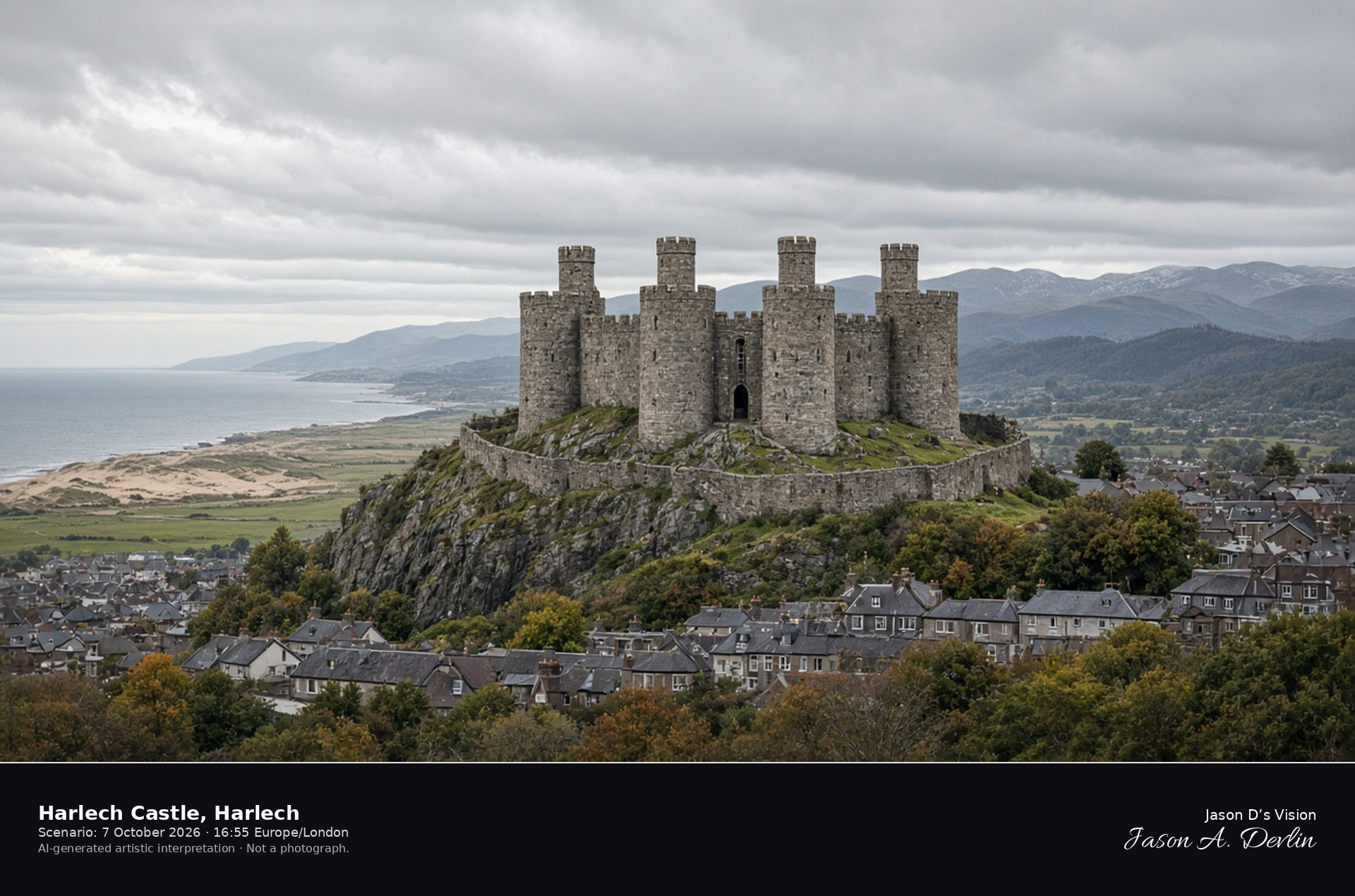
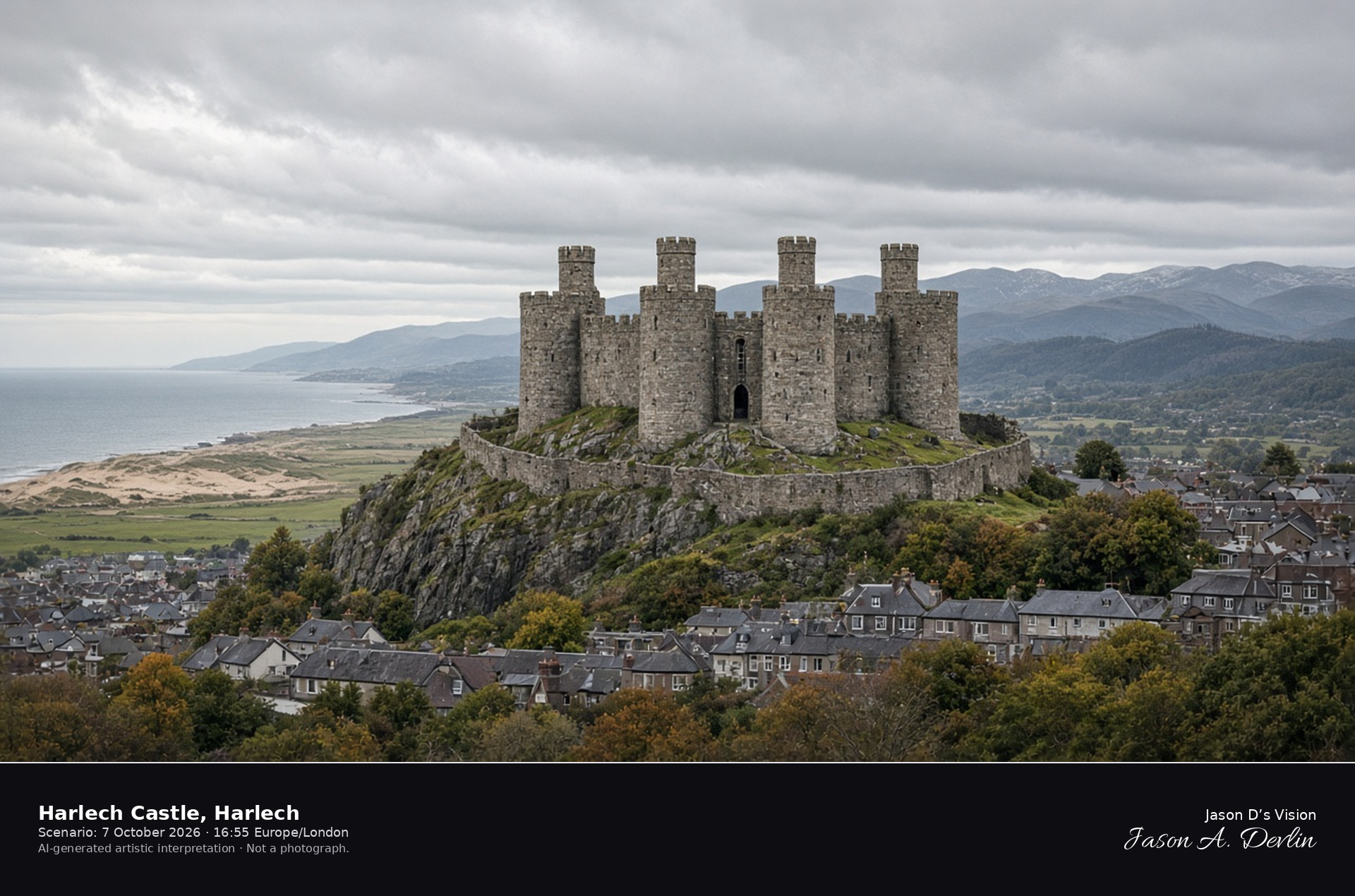
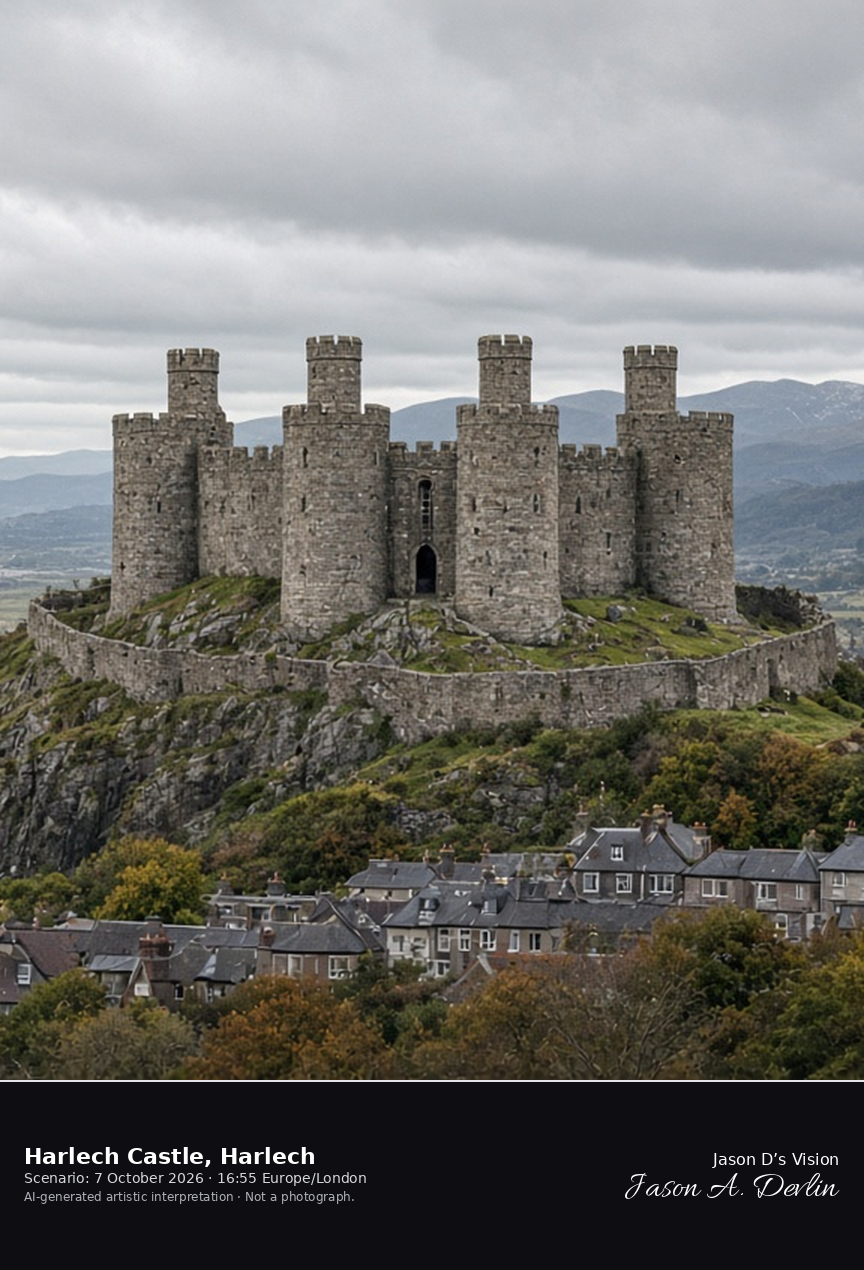
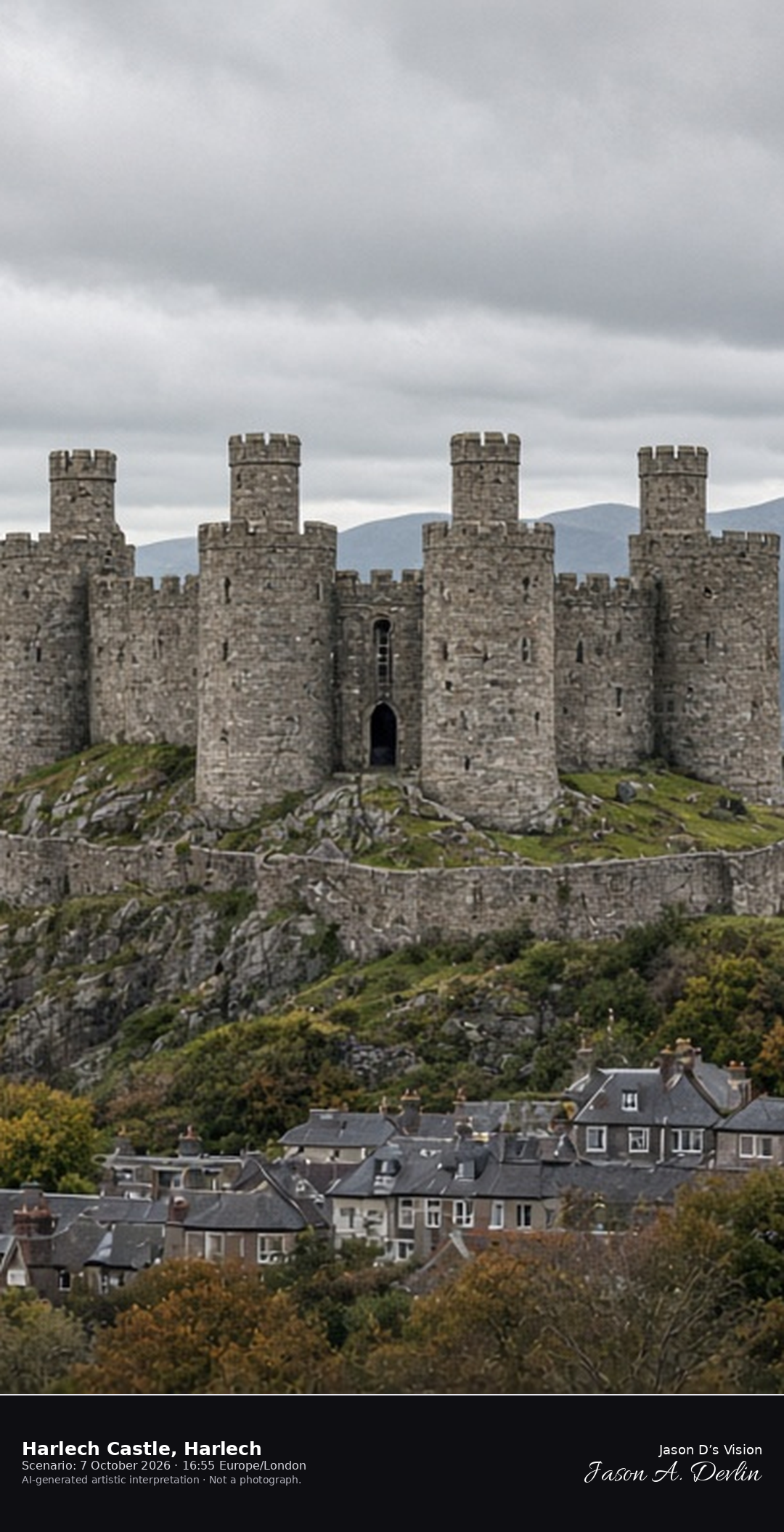
Harlech Castle was built for Edward I between 1282 and 1289 as part of his conquest of Wales. It is part of the UNESCO World Heritage Site of the Castles and Town Walls of King Edward in Gwynedd.
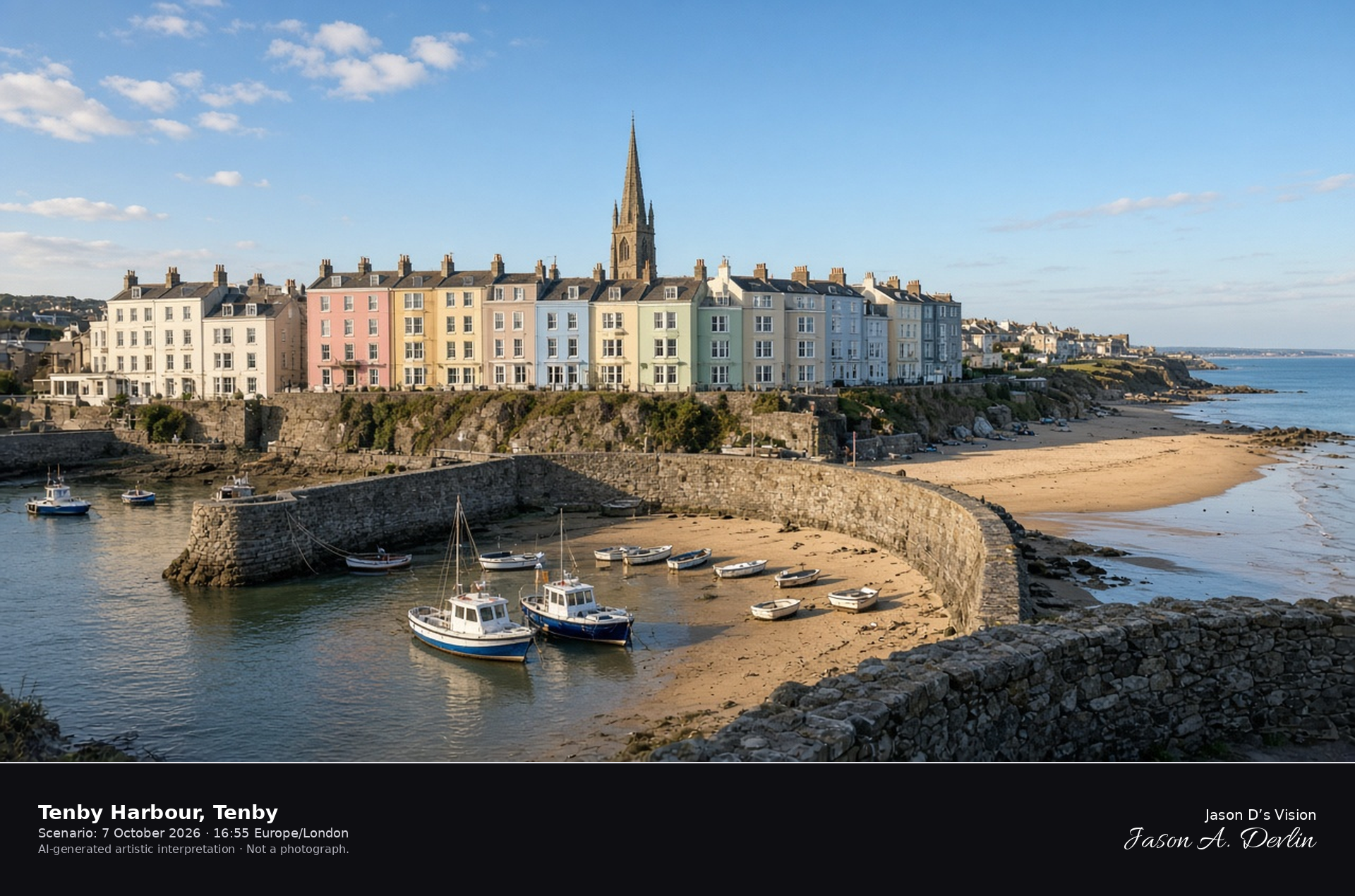
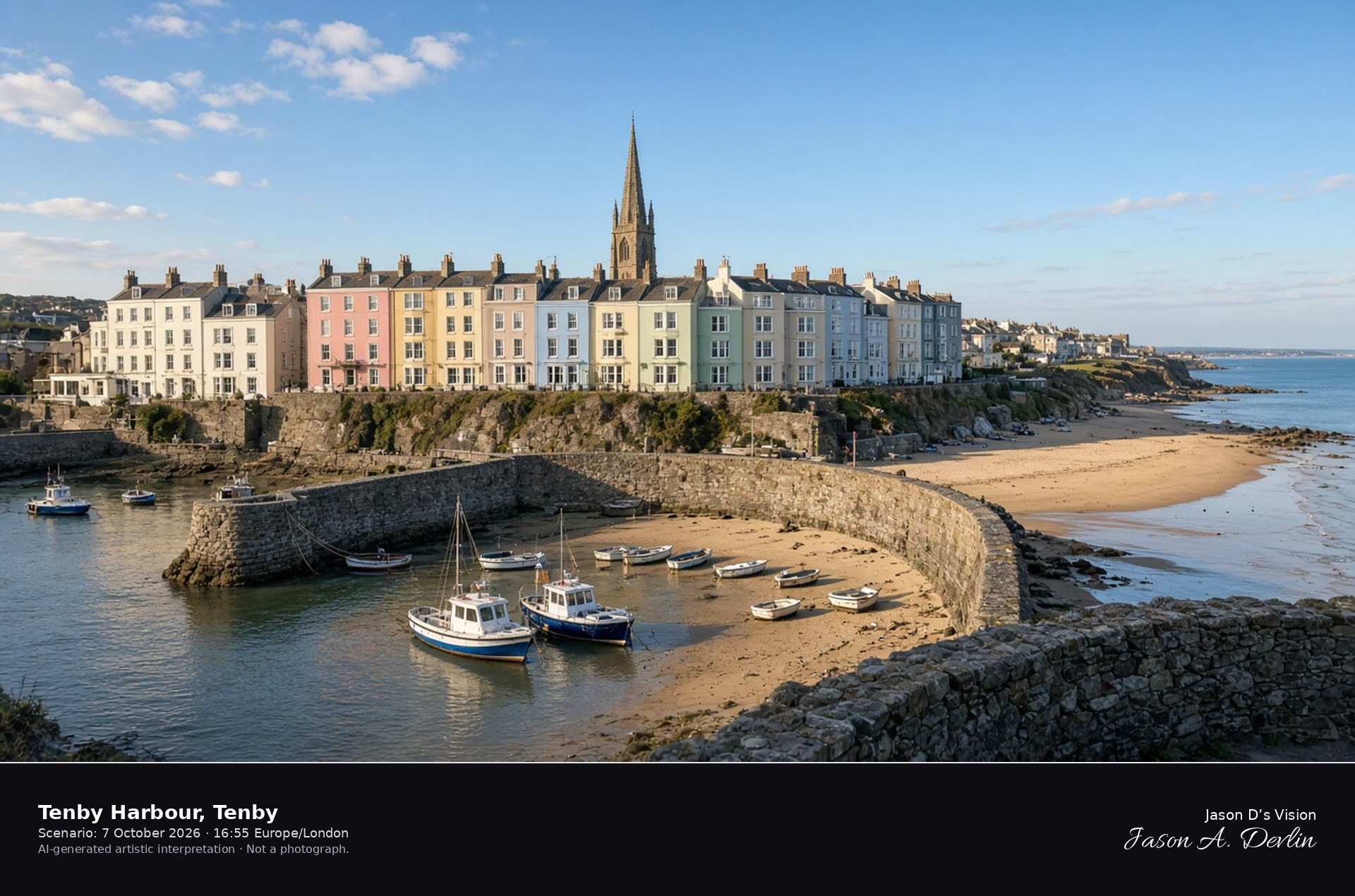
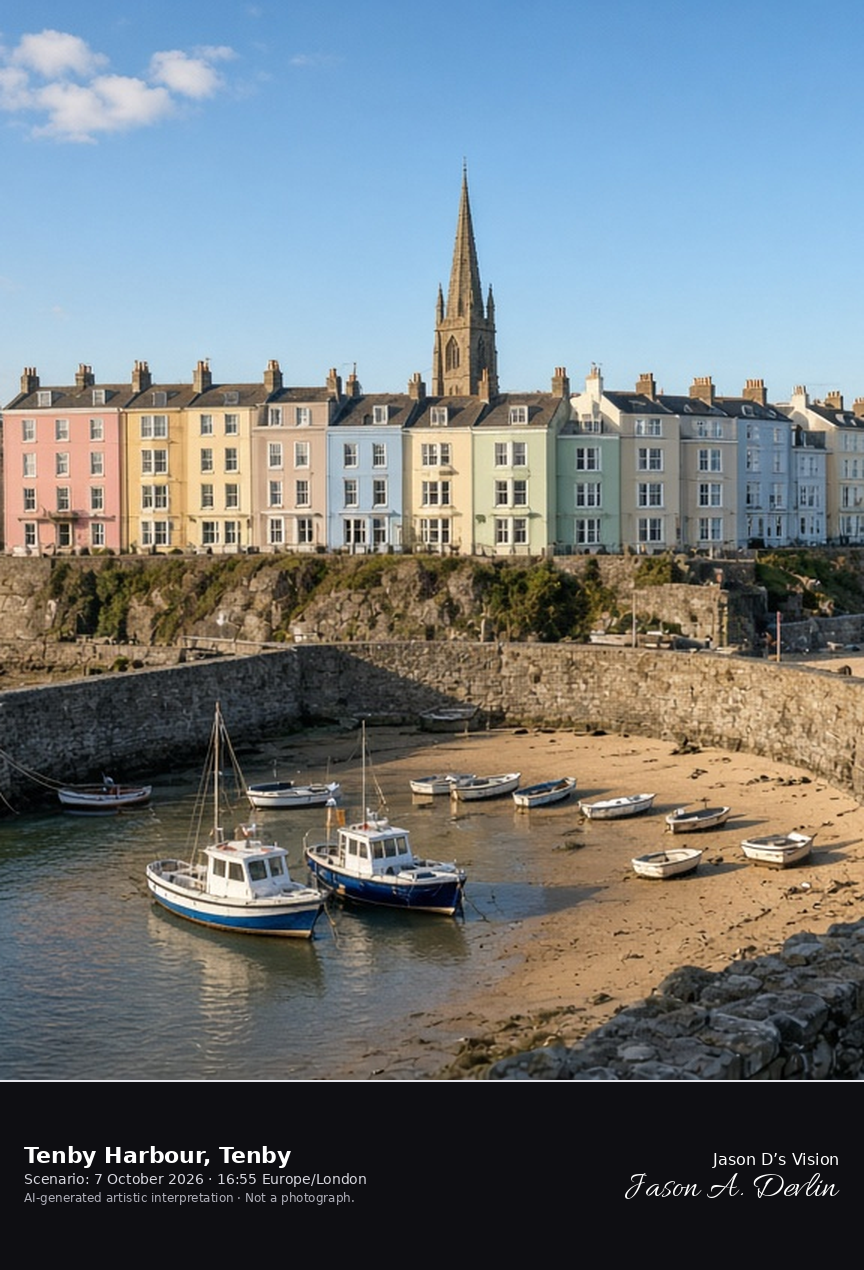
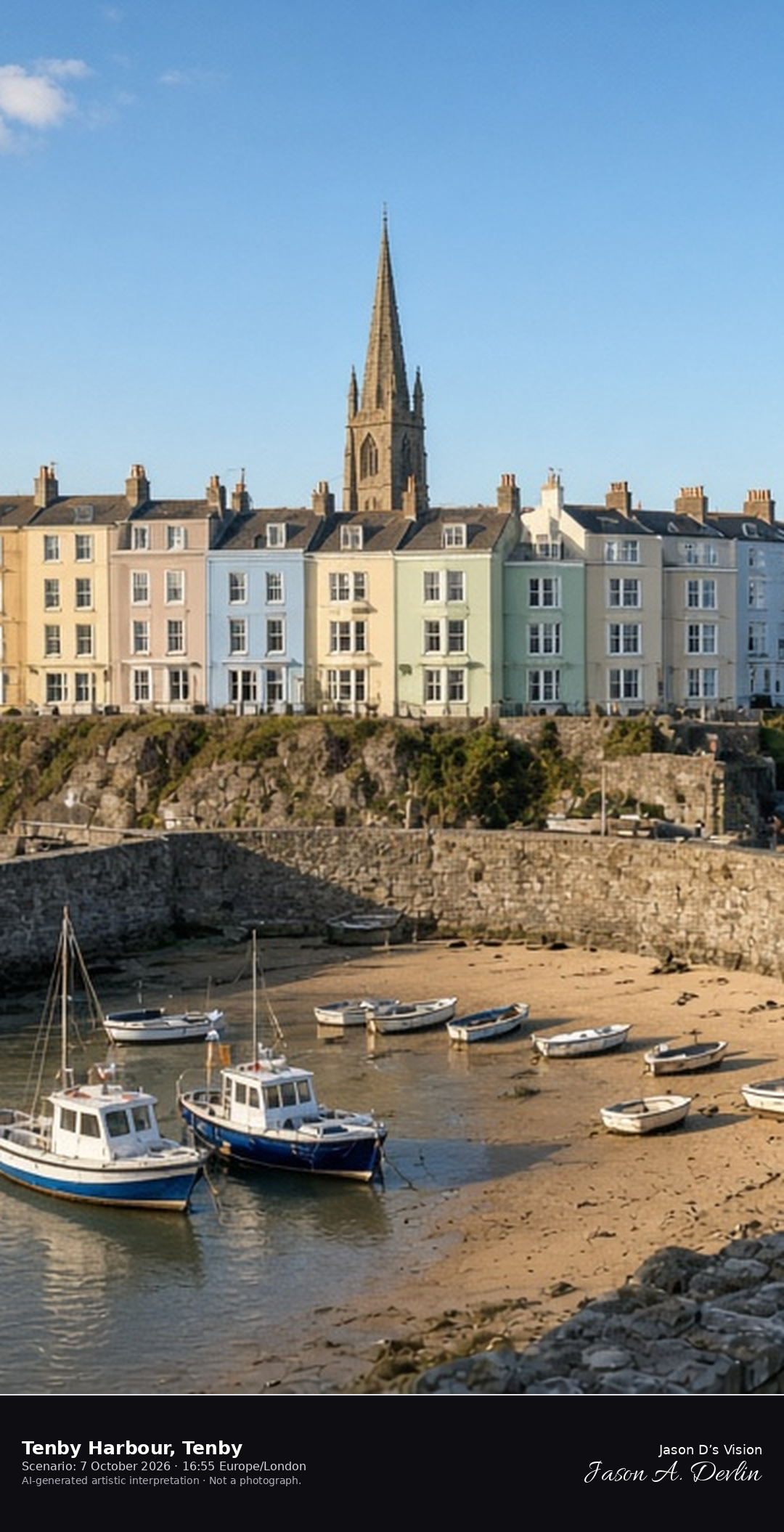
Tenby is a walled seaside town on Carmarthen Bay in Pembrokeshire. Its harbour and colourful Georgian terraces date from the town's growth as a resort in the late 18th and 19th centuries.
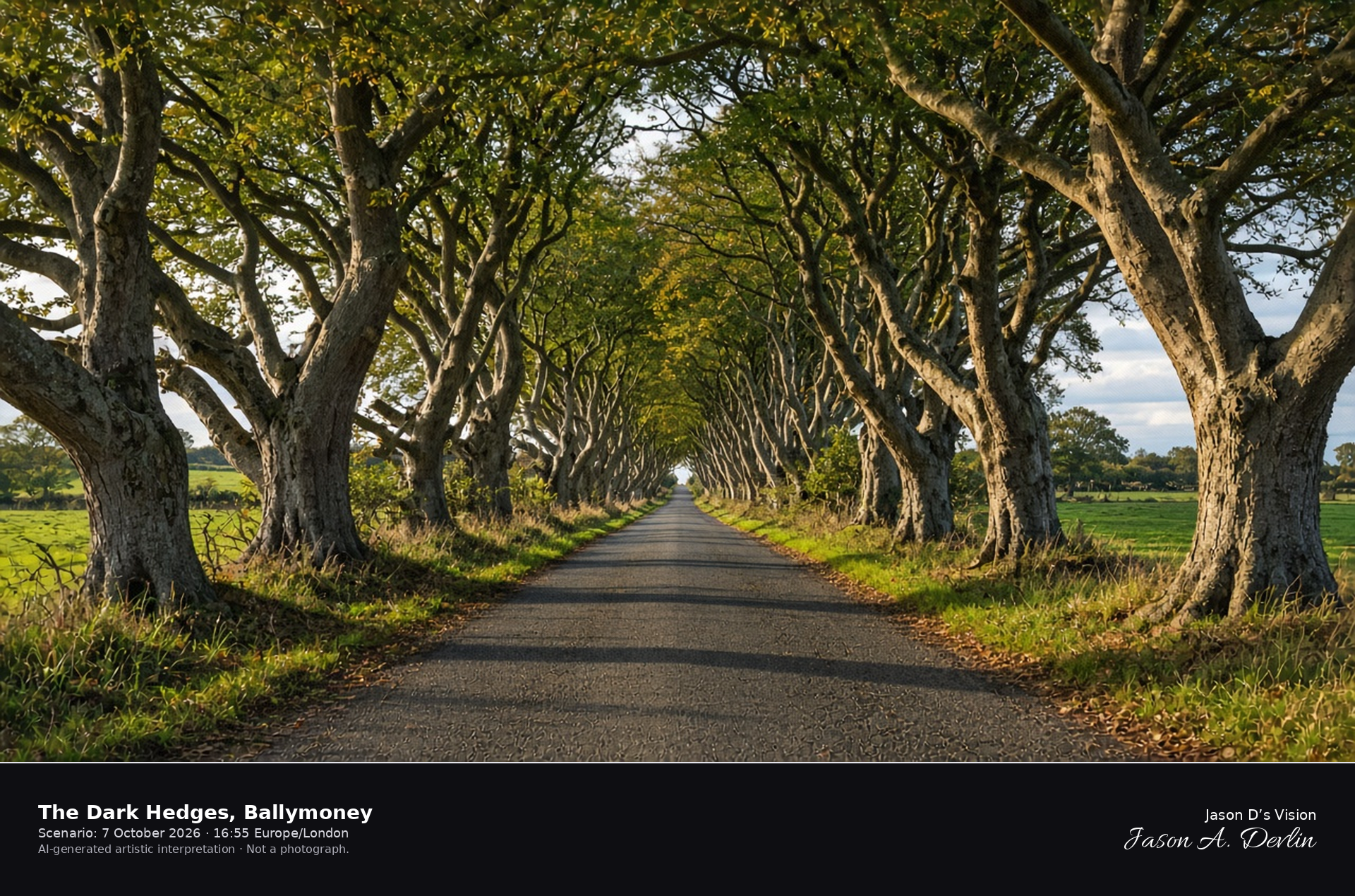
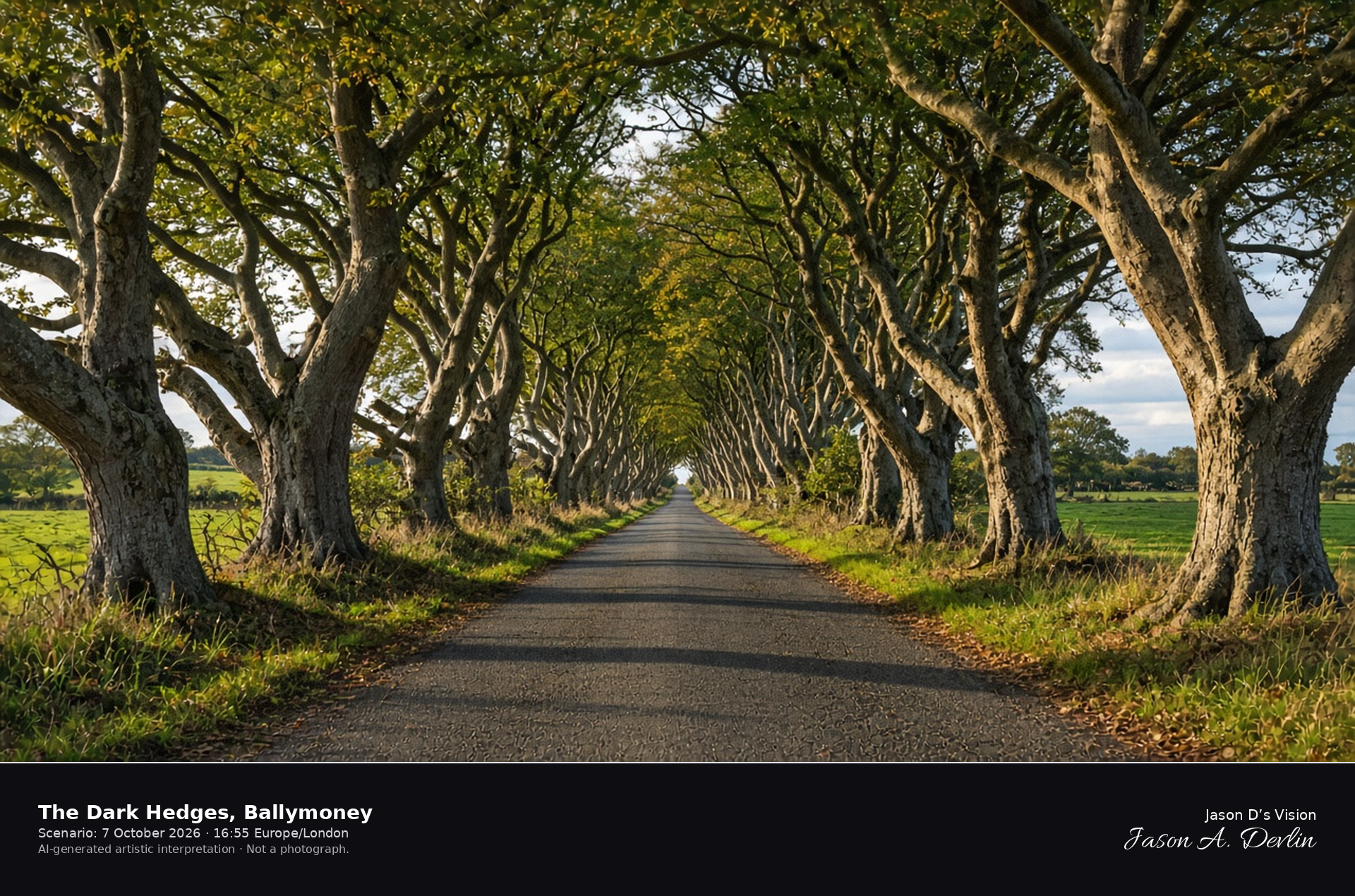
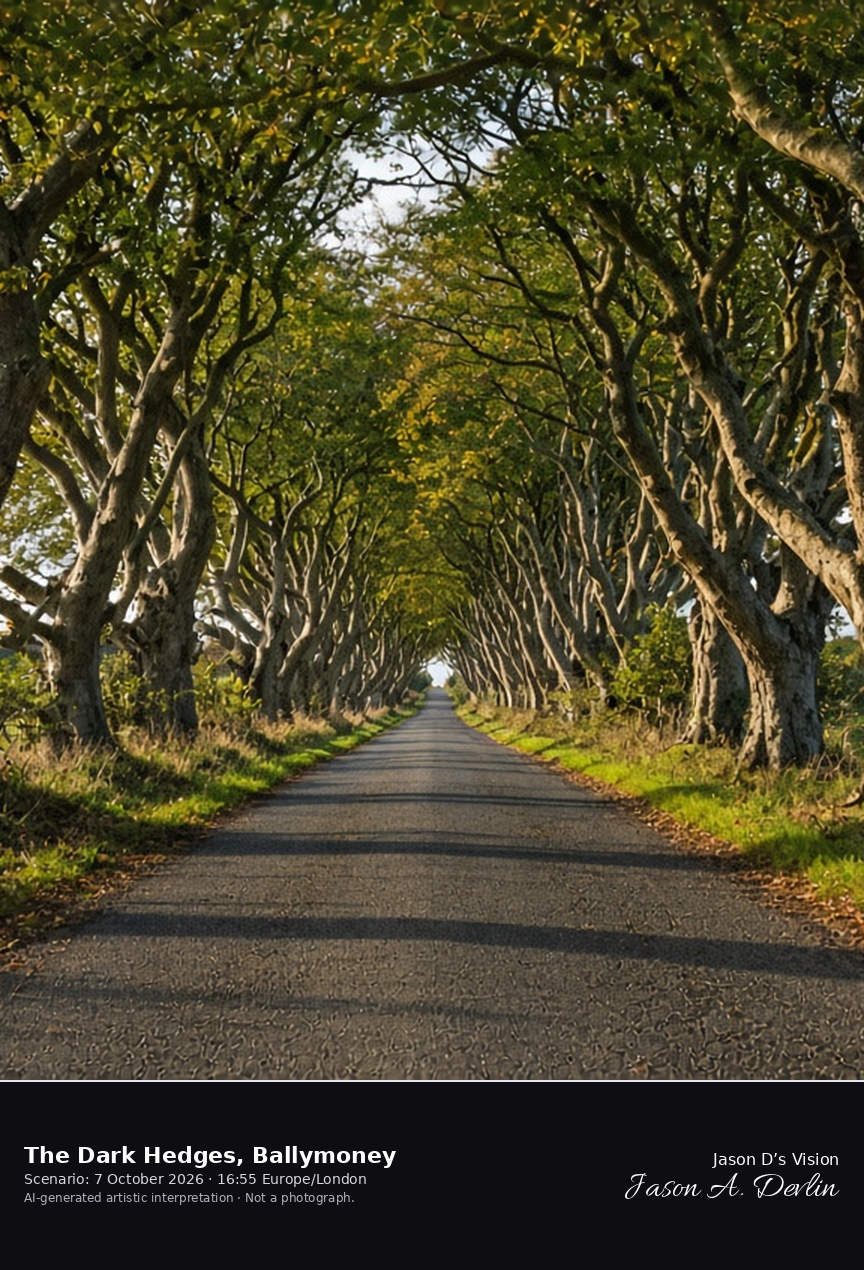
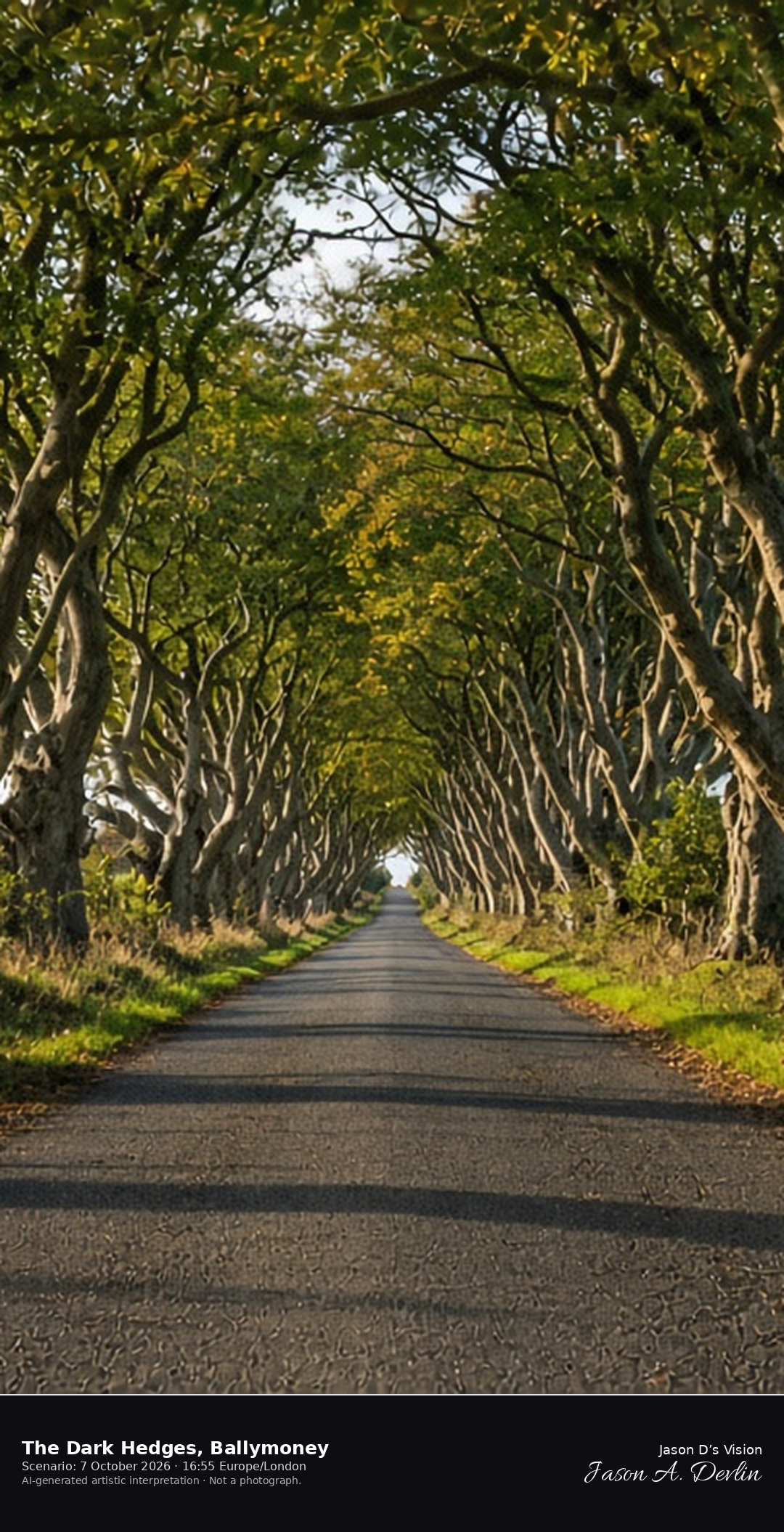
The Dark Hedges, Ballymoney · AI-generated artistic interpretation
The Dark Hedges is an avenue of beech trees planted by the Stuart family in the 18th century along the approach to their house, Gracehill. It became widely known after appearing in the television series Game of Thrones.
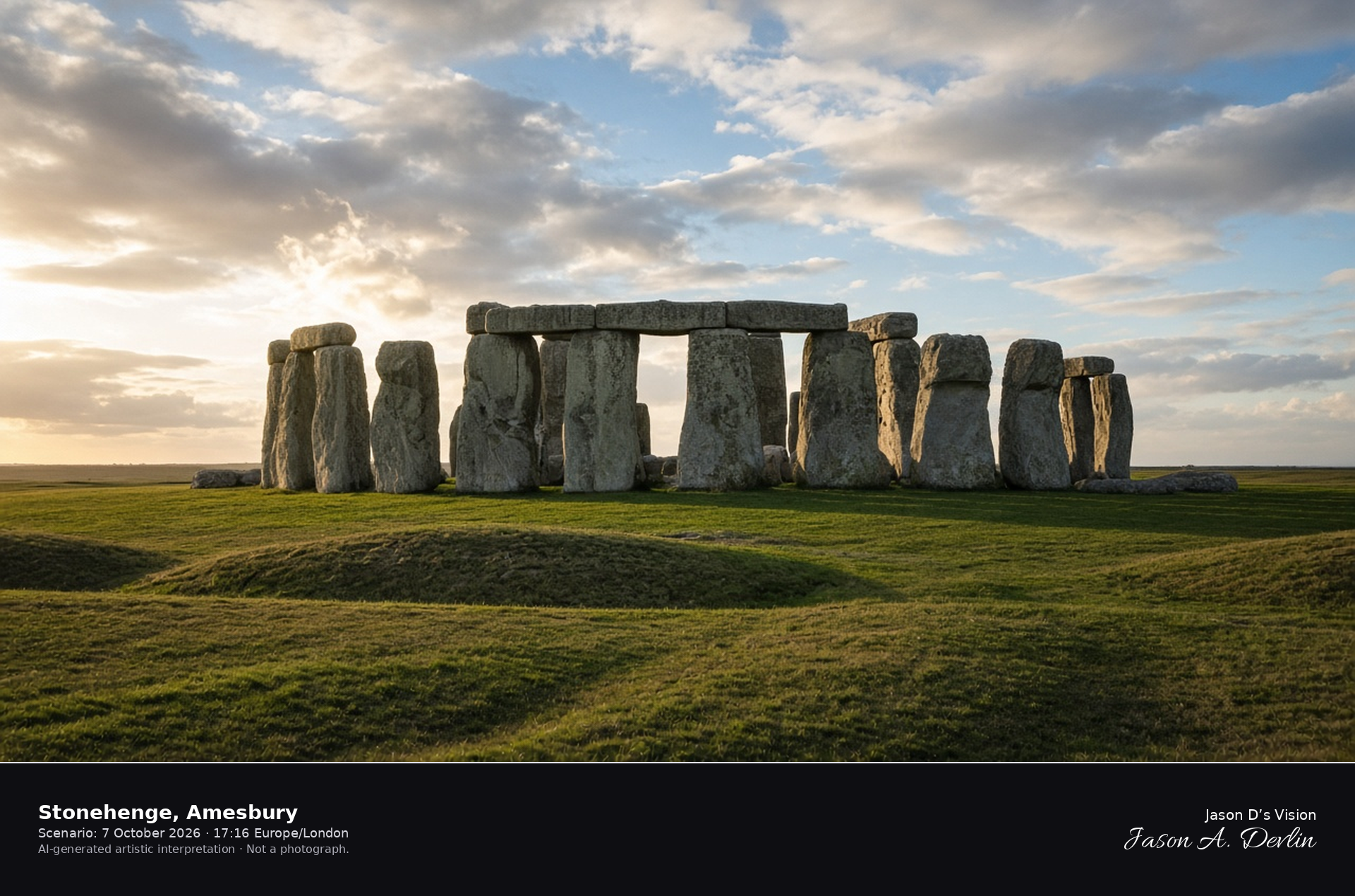
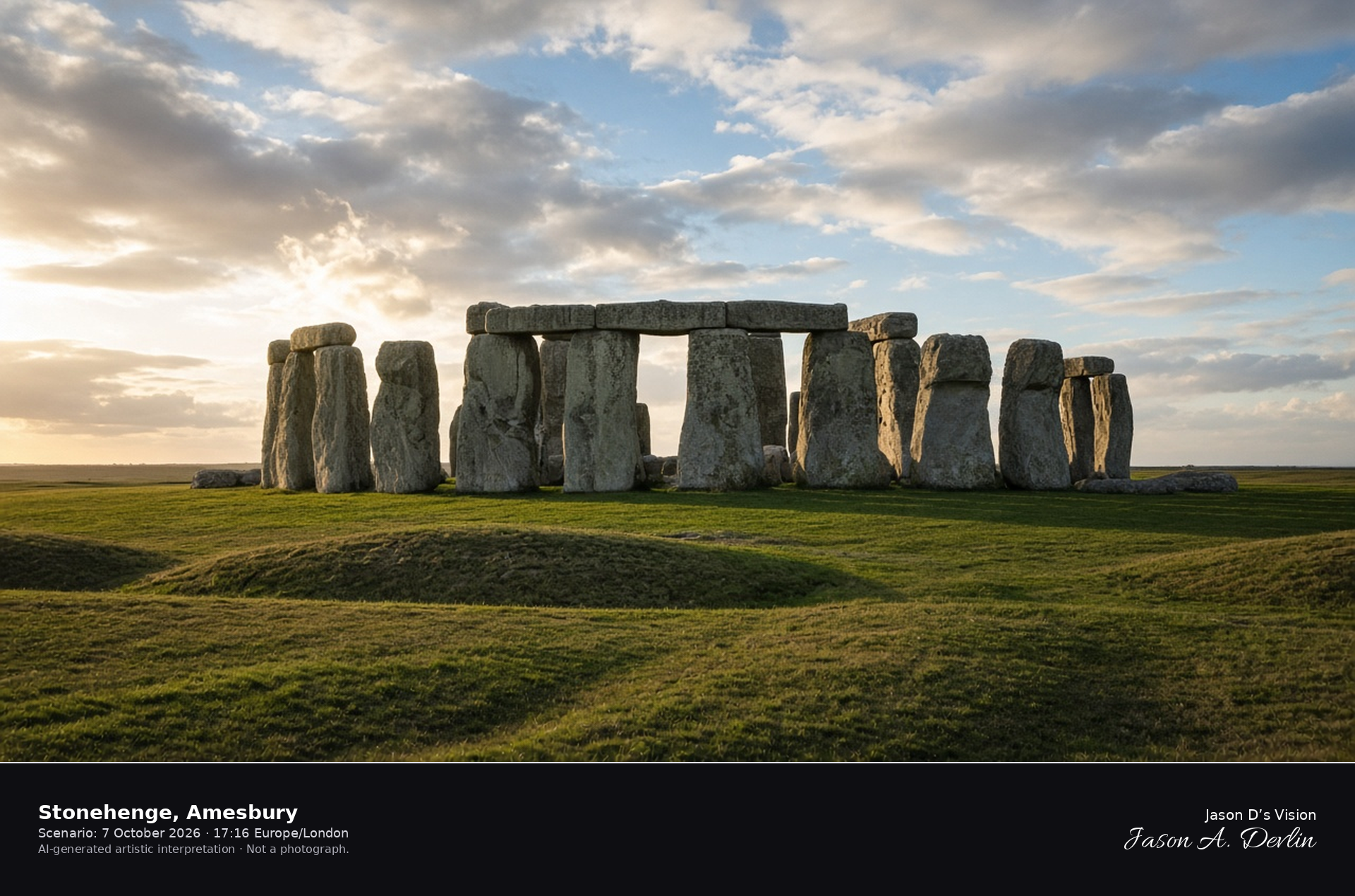
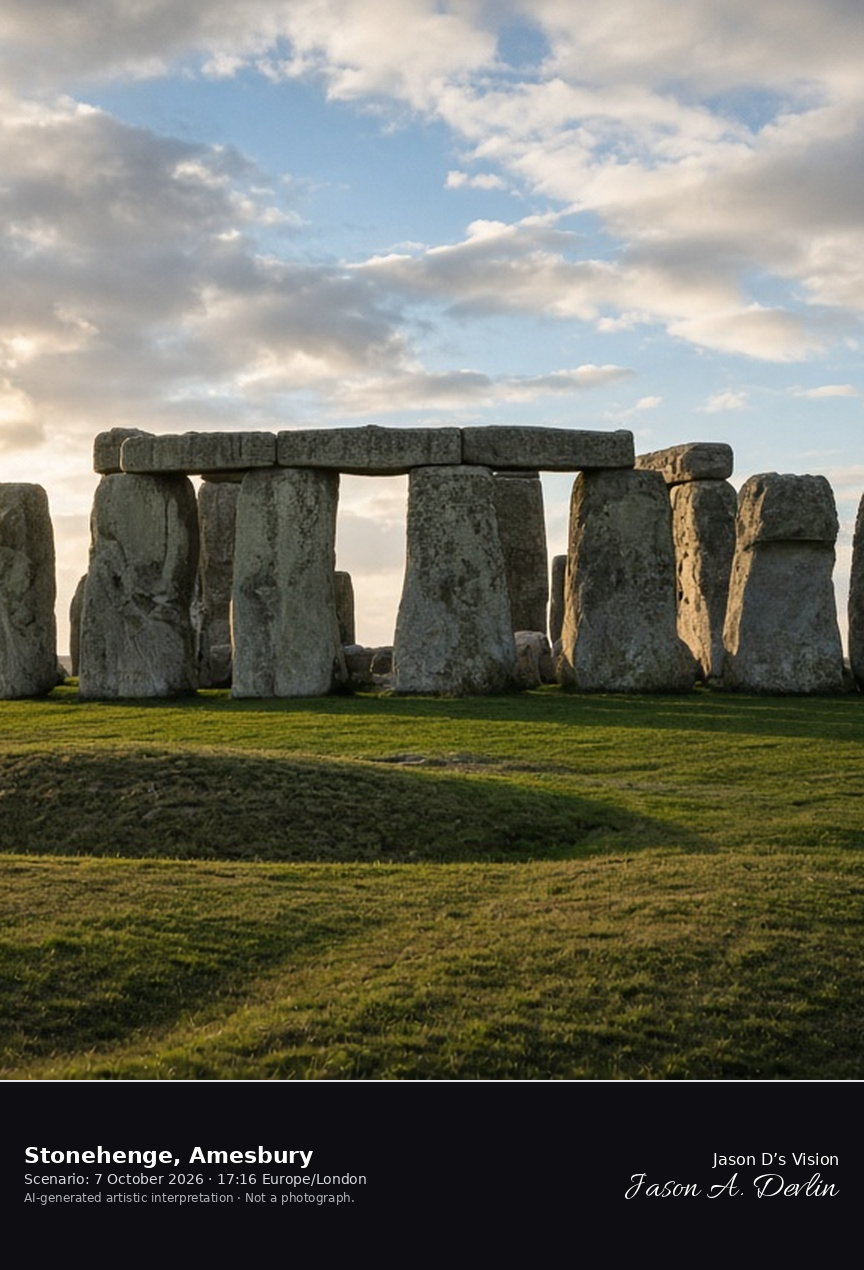
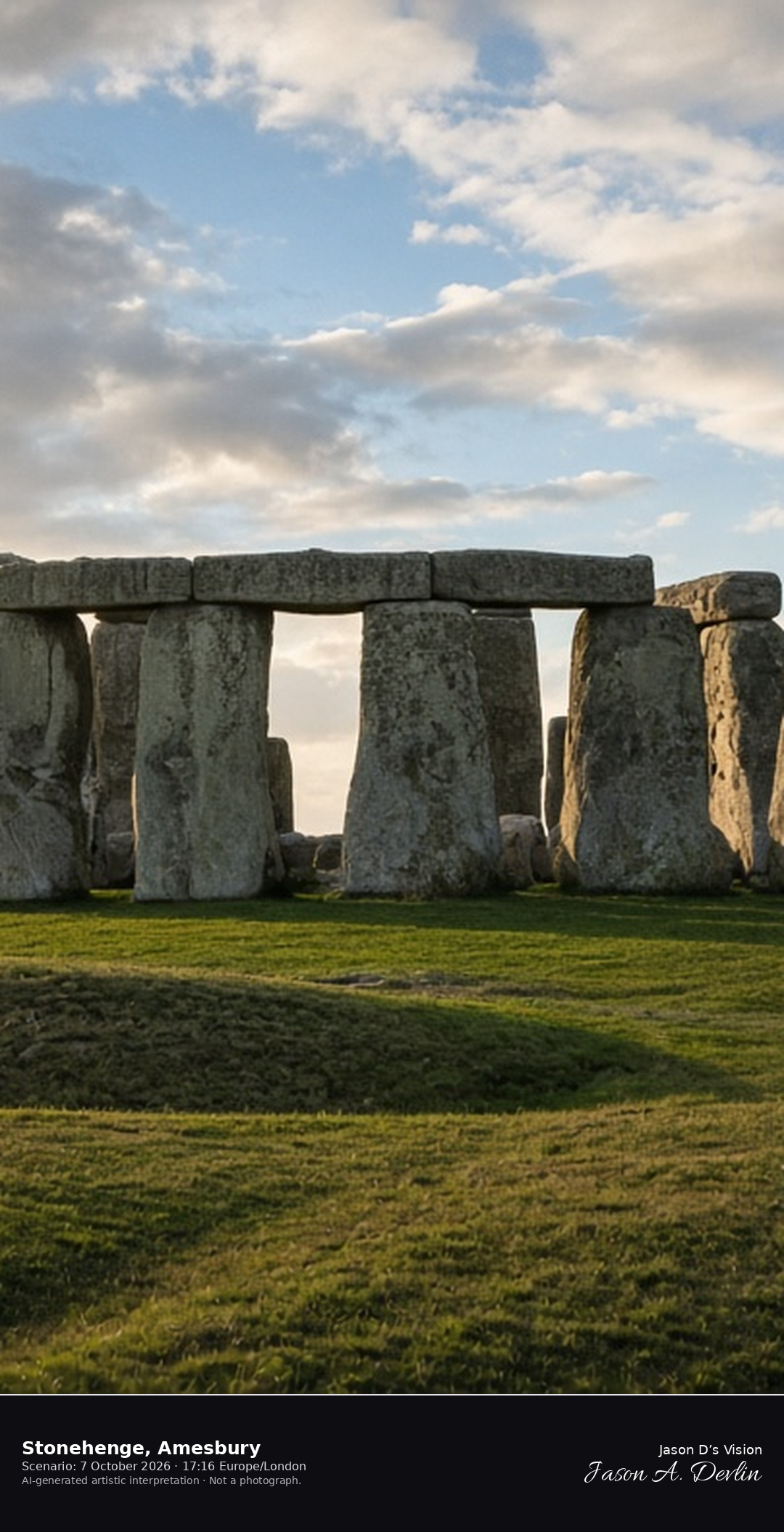
Stonehenge is a prehistoric monument on Salisbury Plain in Wiltshire, built in stages from about 3000 BC. Its outer circle of sarsen uprights and lintels surrounds a horseshoe of five trilithons and smaller bluestones brought from Wales.
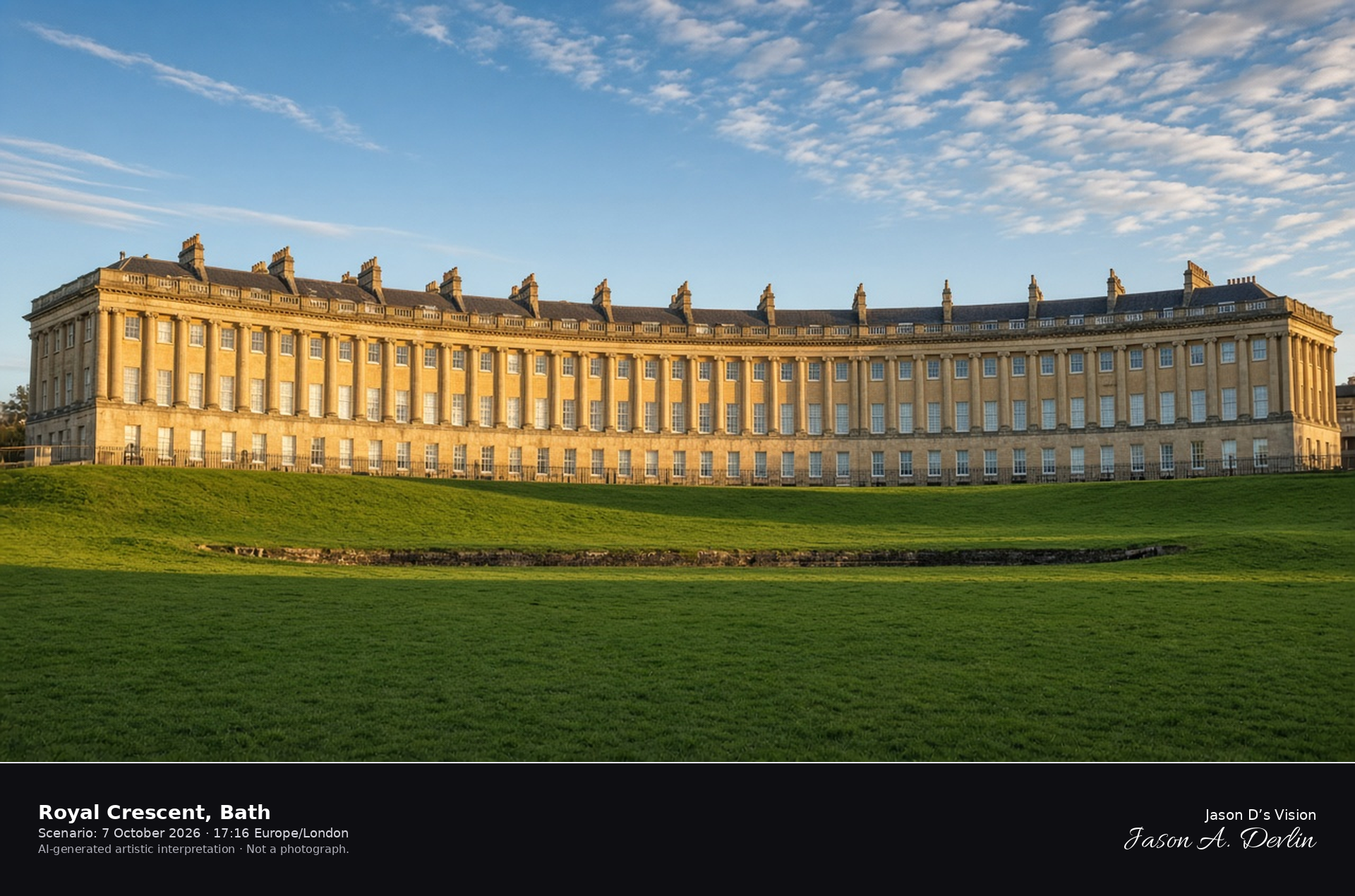
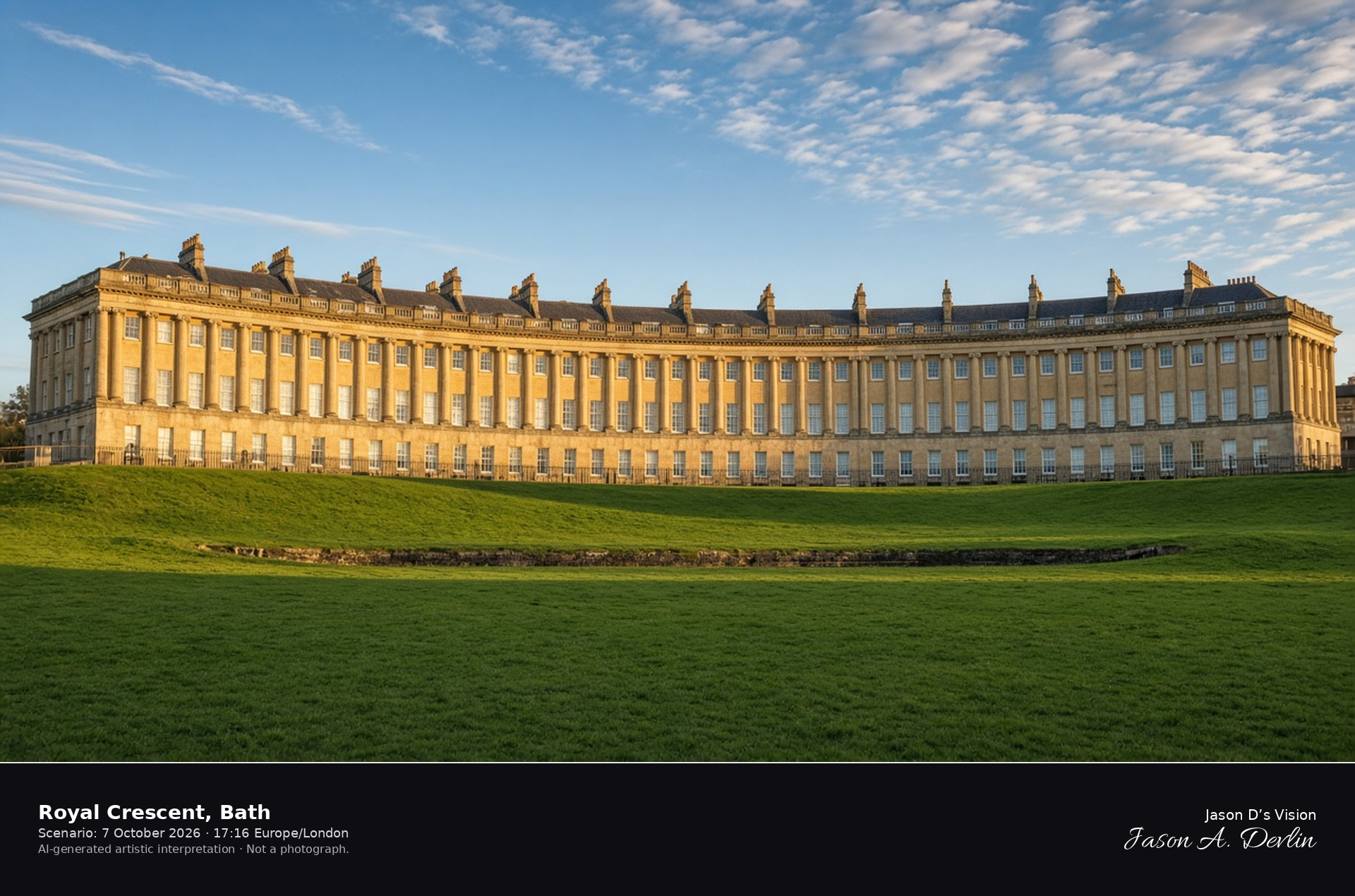
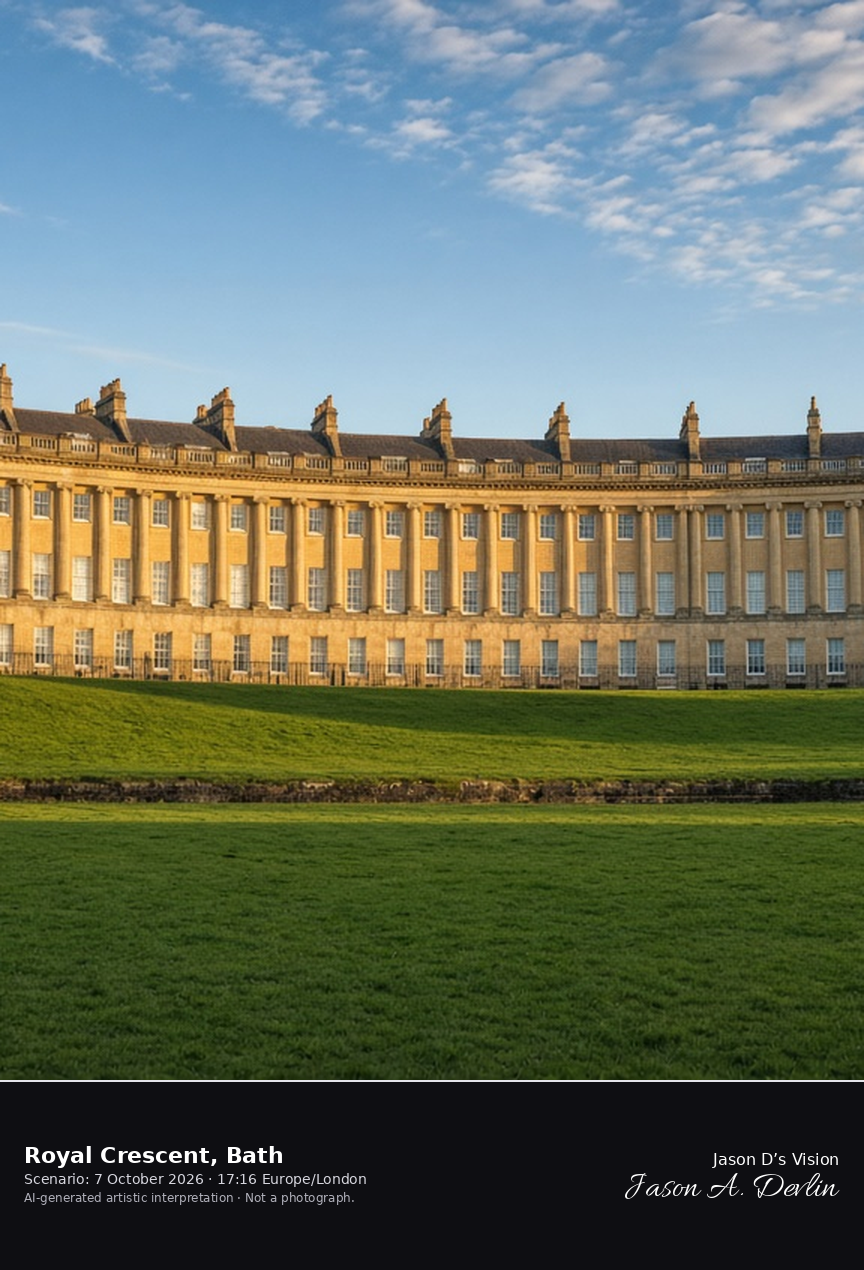
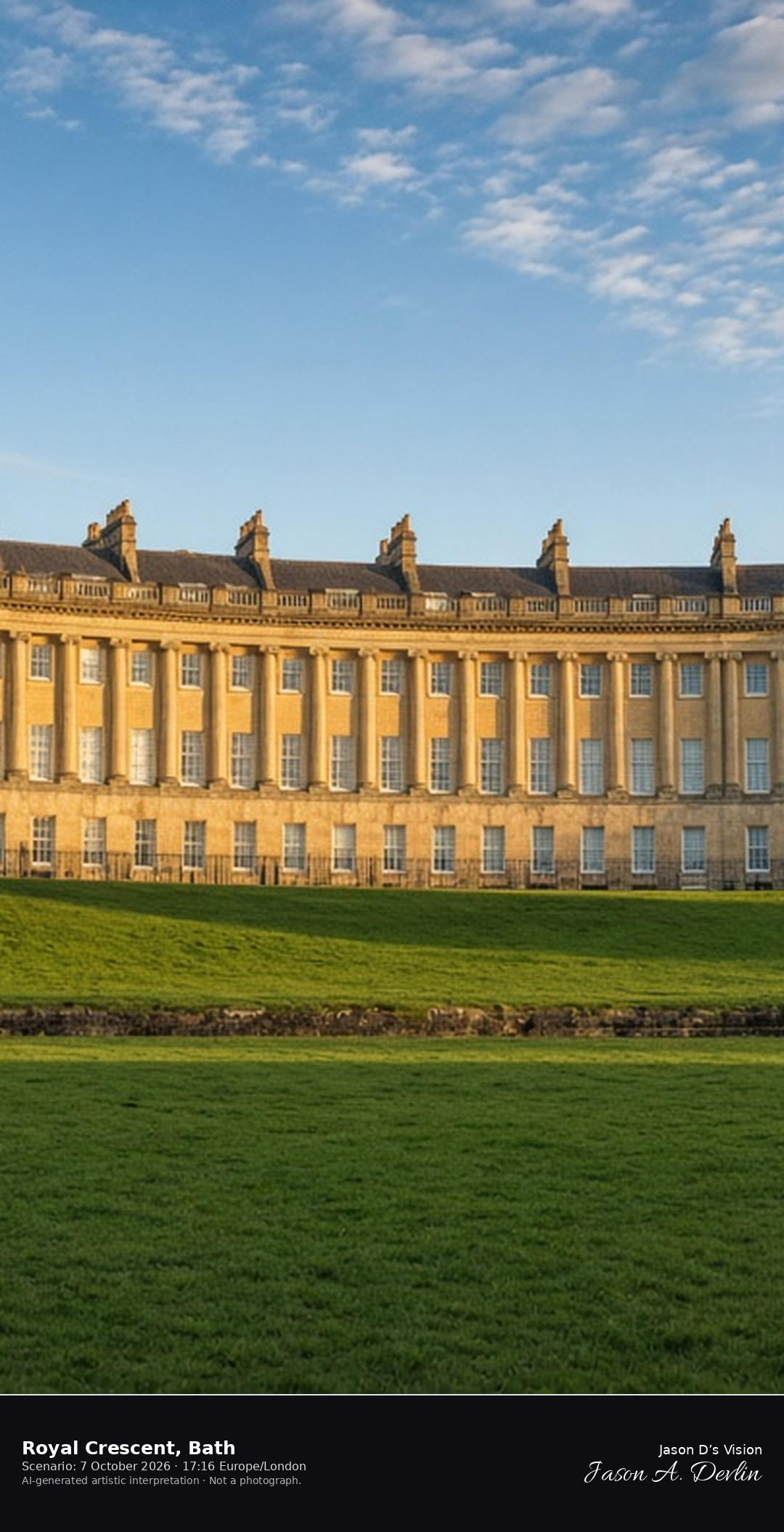
Royal Crescent · AI-generated artistic interpretation
The Royal Crescent, built between 1767 and 1775 to the design of John Wood the Younger, sweeps thirty houses into one great arc of honey-coloured Bath stone. Number 1, at the eastern end, is now a museum house, furnished to evoke life in Georgian Bath.
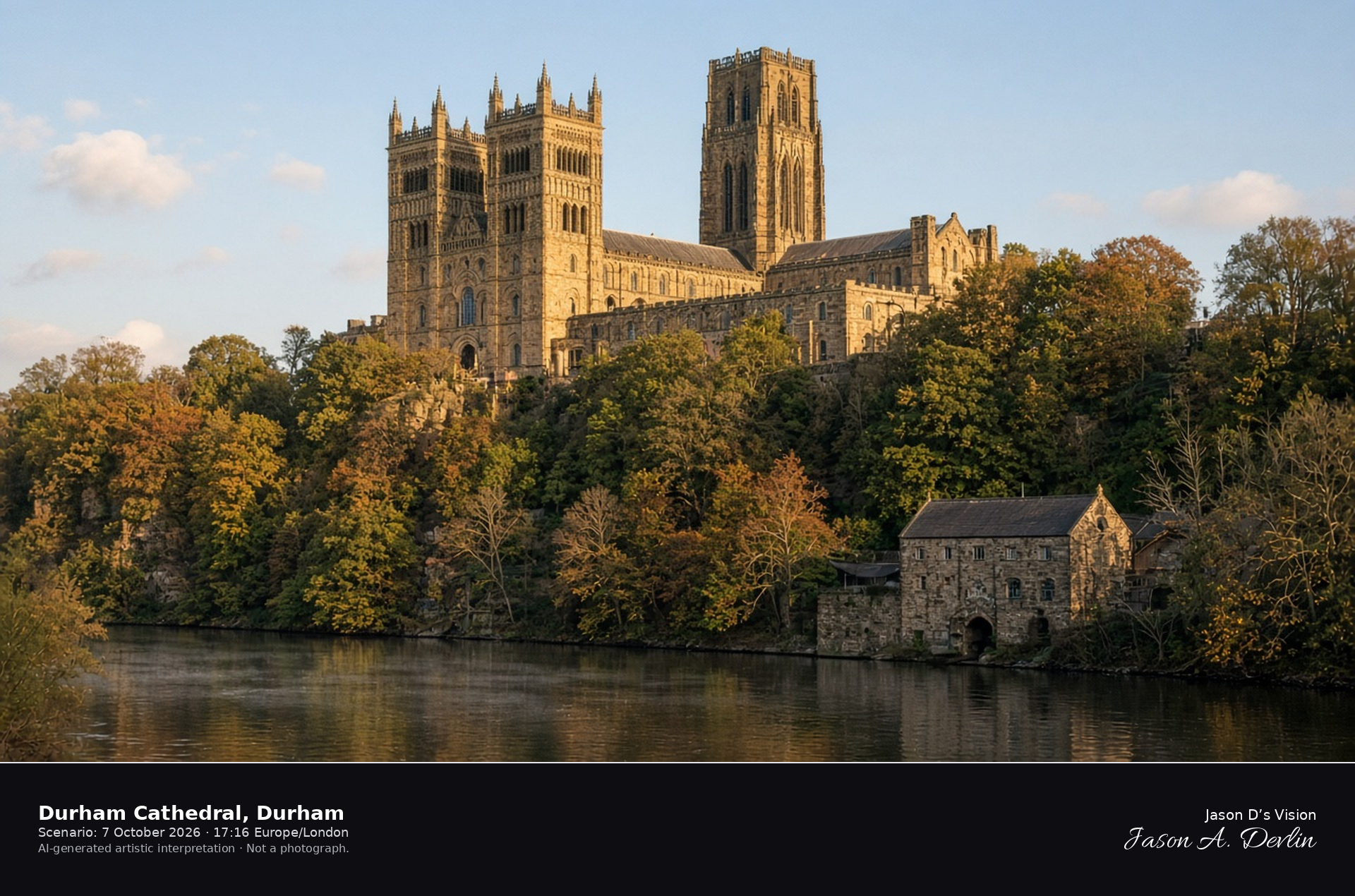
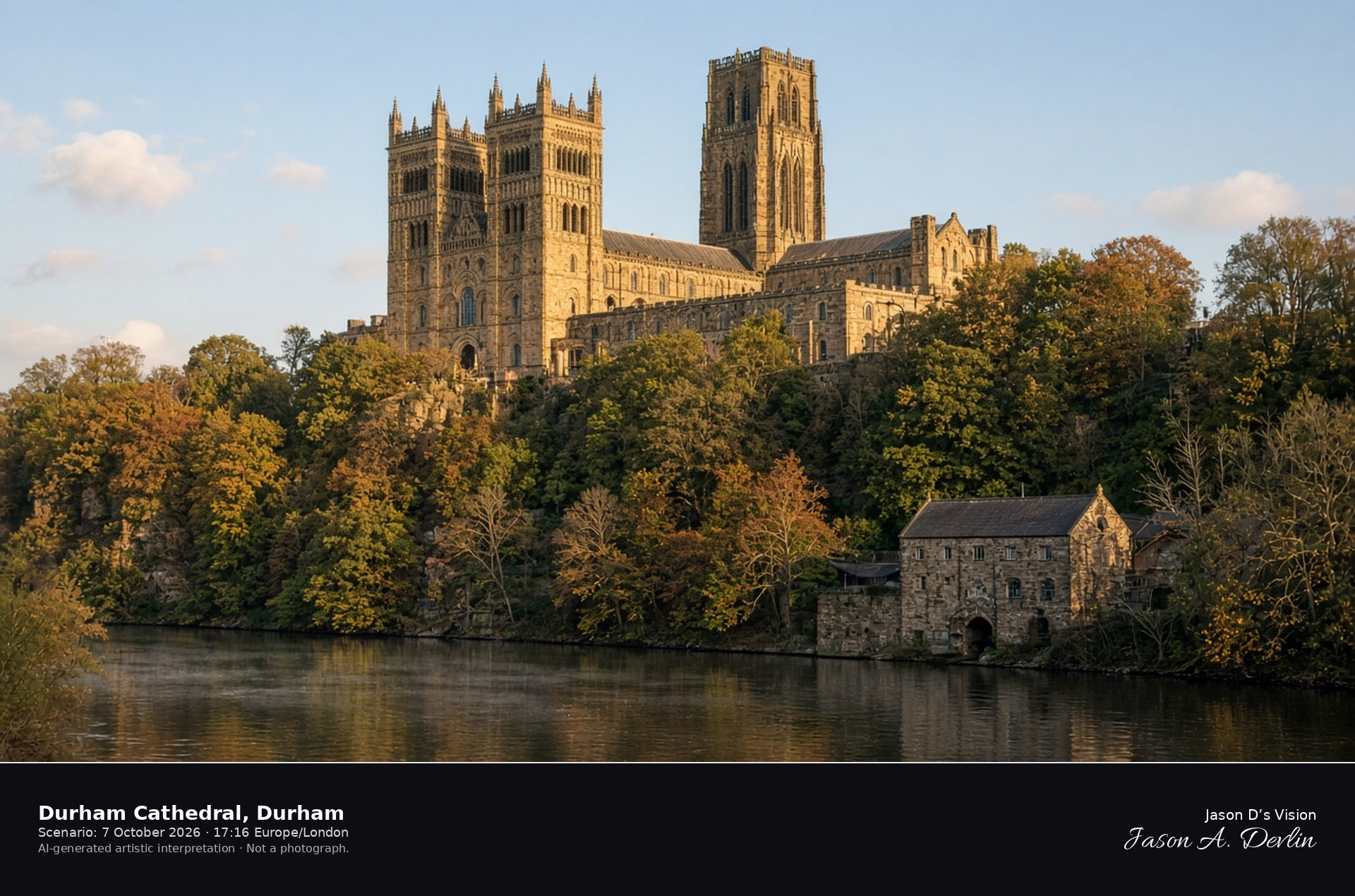
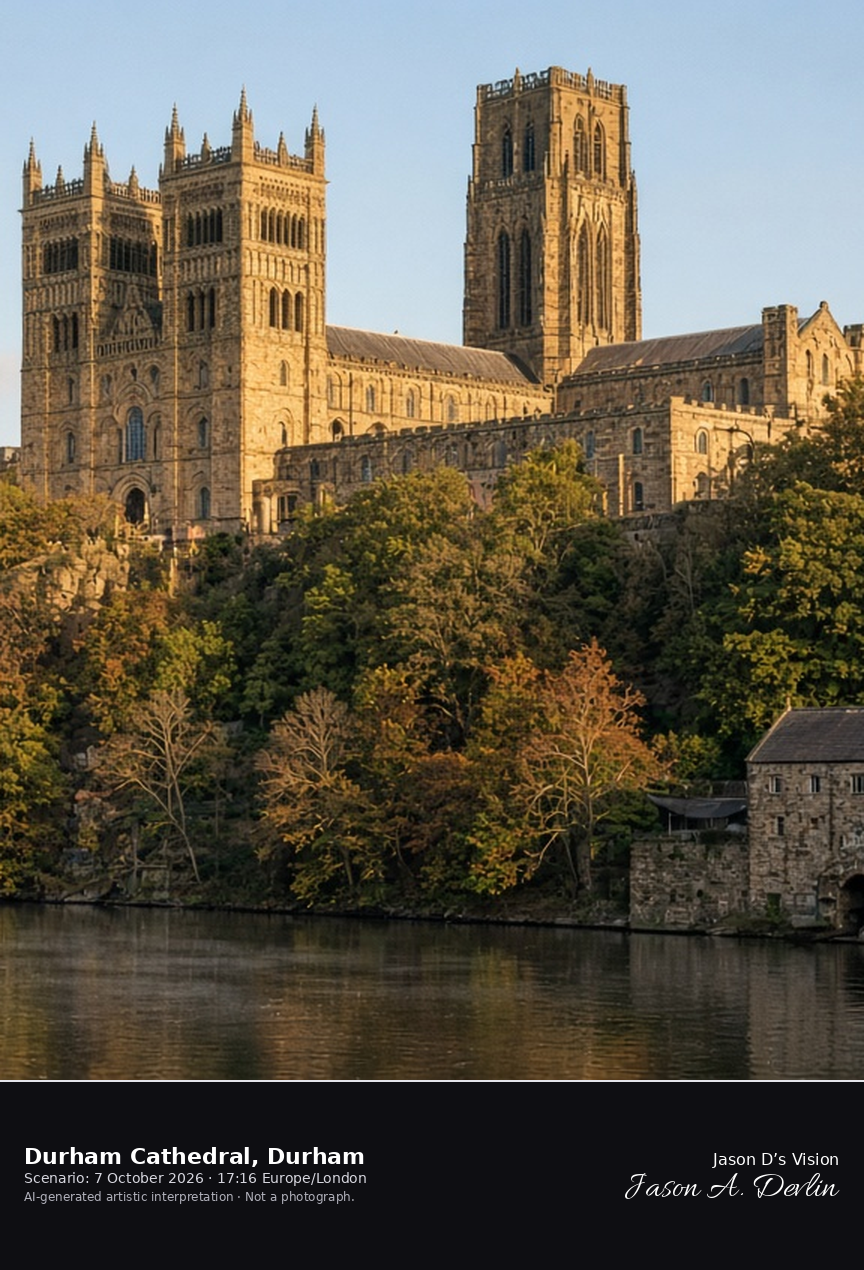
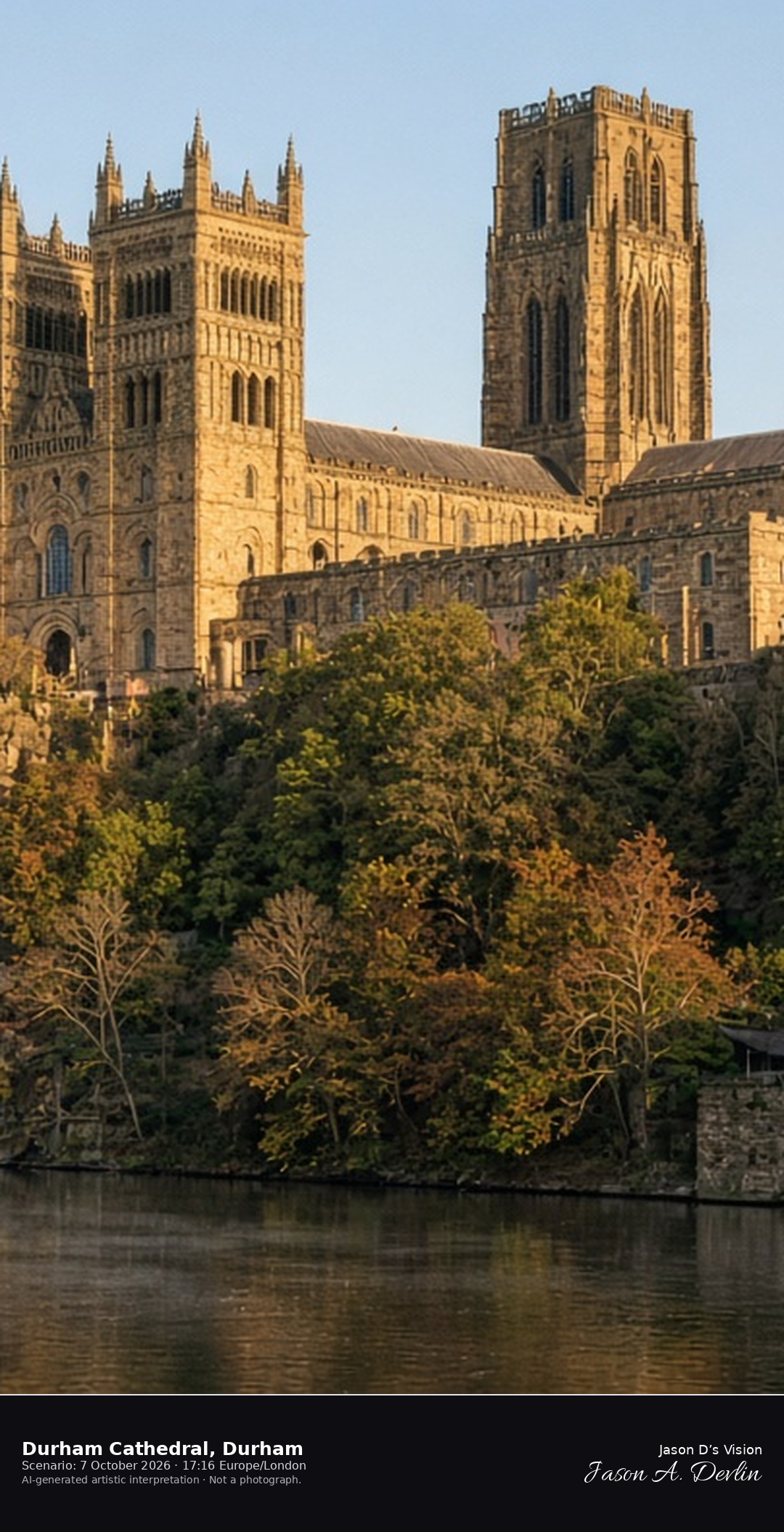
Durham Cathedral, begun in 1093, is one of the finest Norman Romanesque buildings in Europe and stands with Durham Castle on a rocky peninsula in a loop of the River Wear. Together they form a UNESCO World Heritage Site.
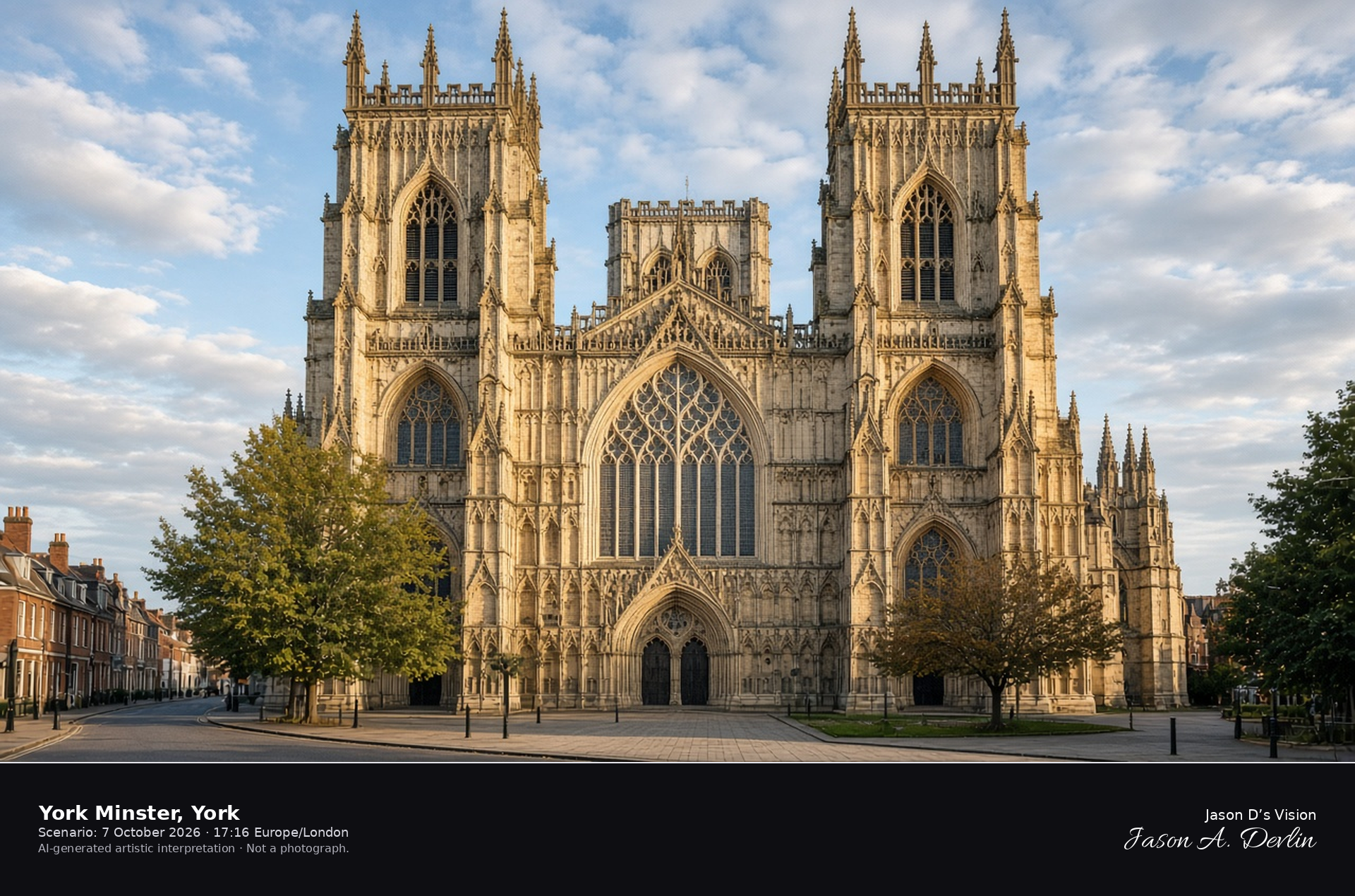
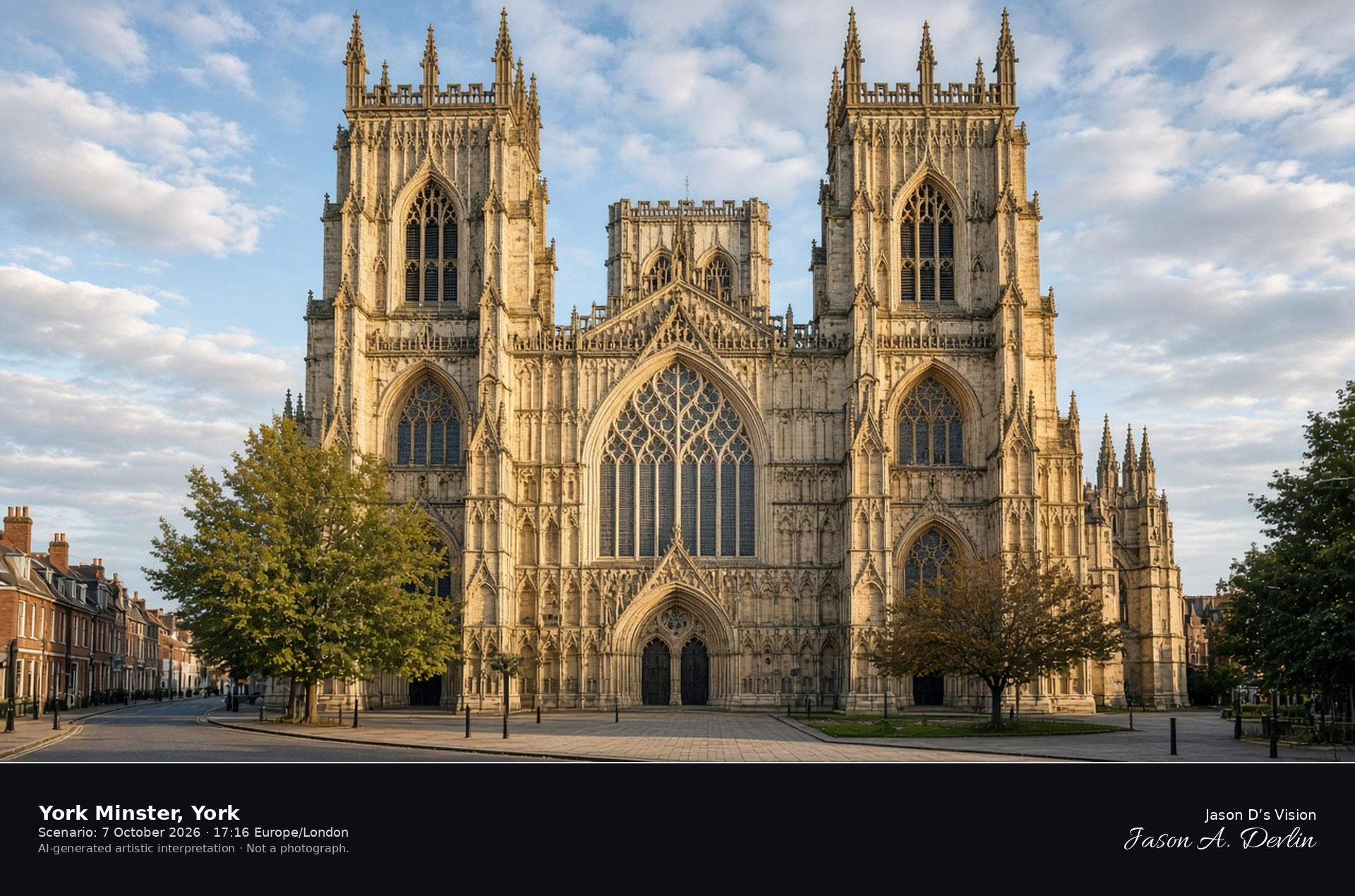
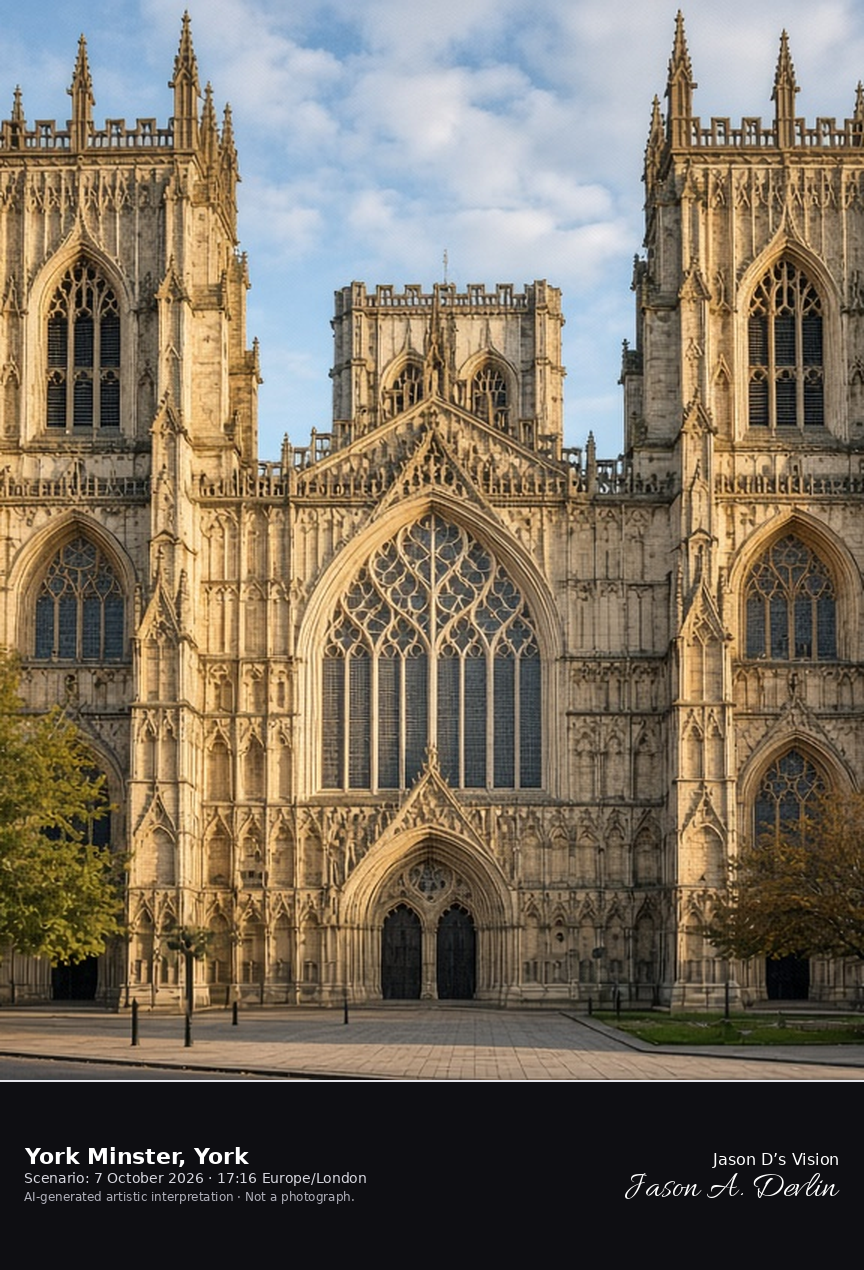
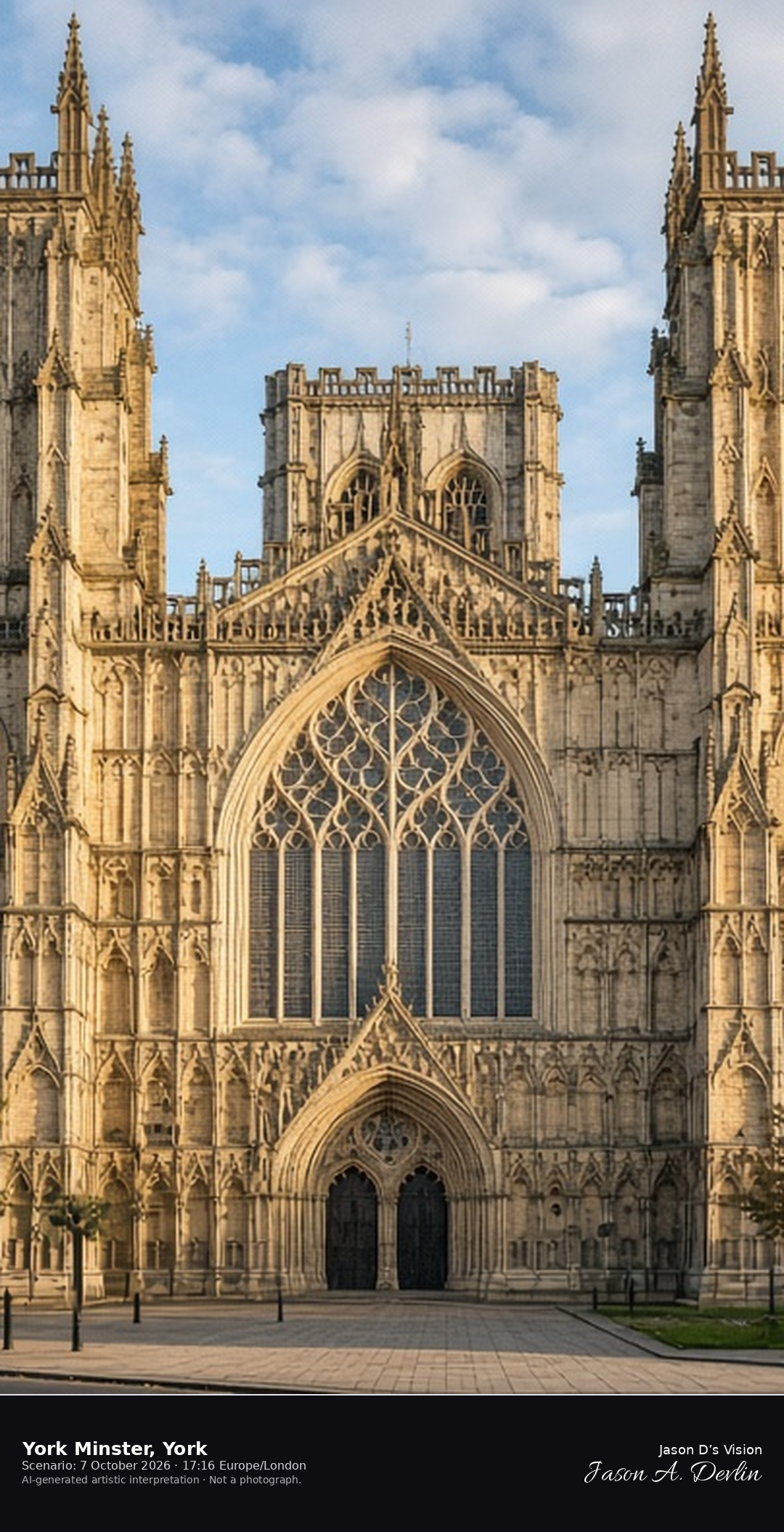
York was founded by the Romans in the year 71 as Eboracum, and Constantine the Great was proclaimed emperor here in 306. Its later history includes Viking Jorvik and an archbishopric established before the Viking conquest; today its archbishop ranks second only to Canterbury in the Church of England.
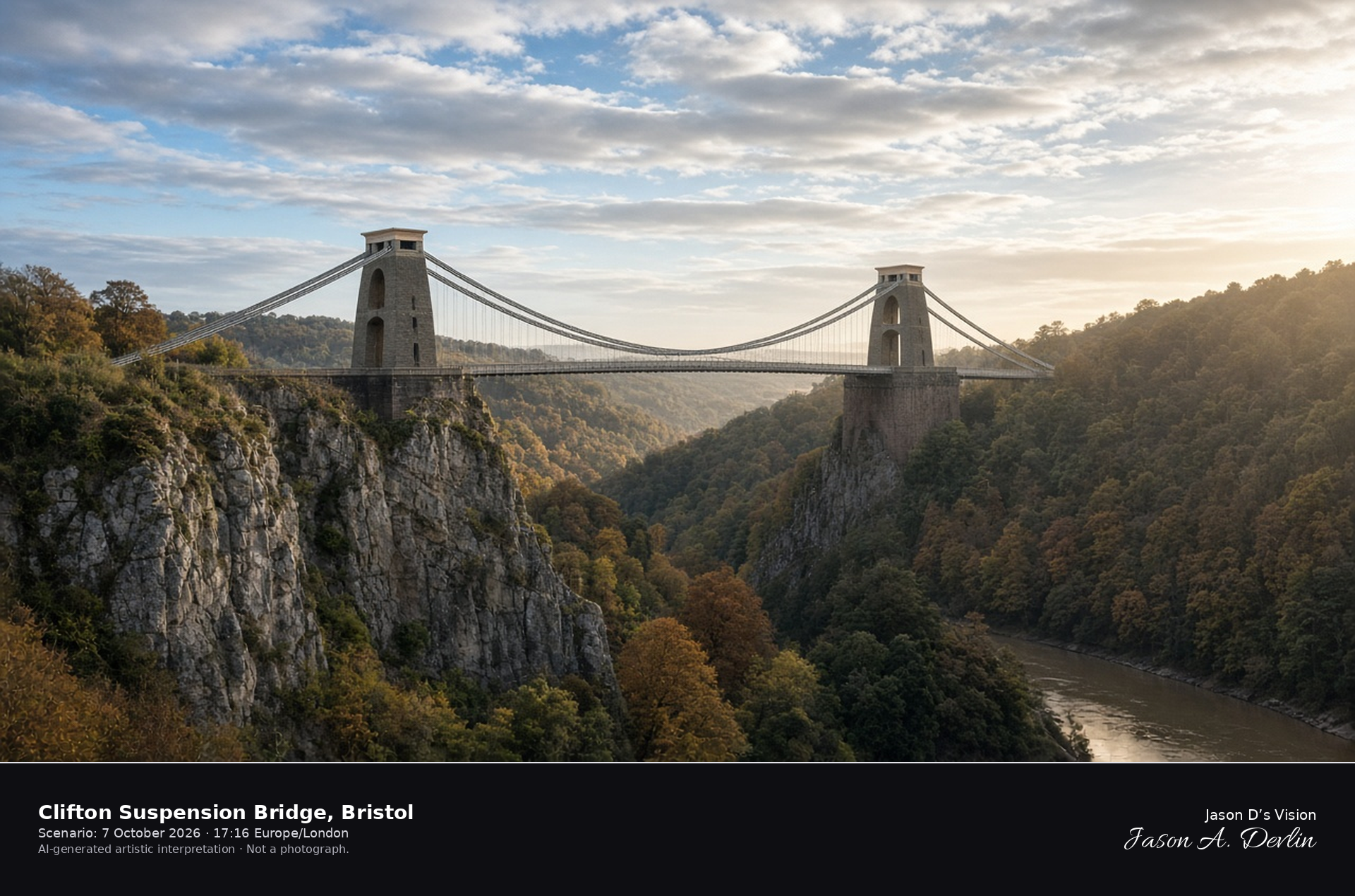
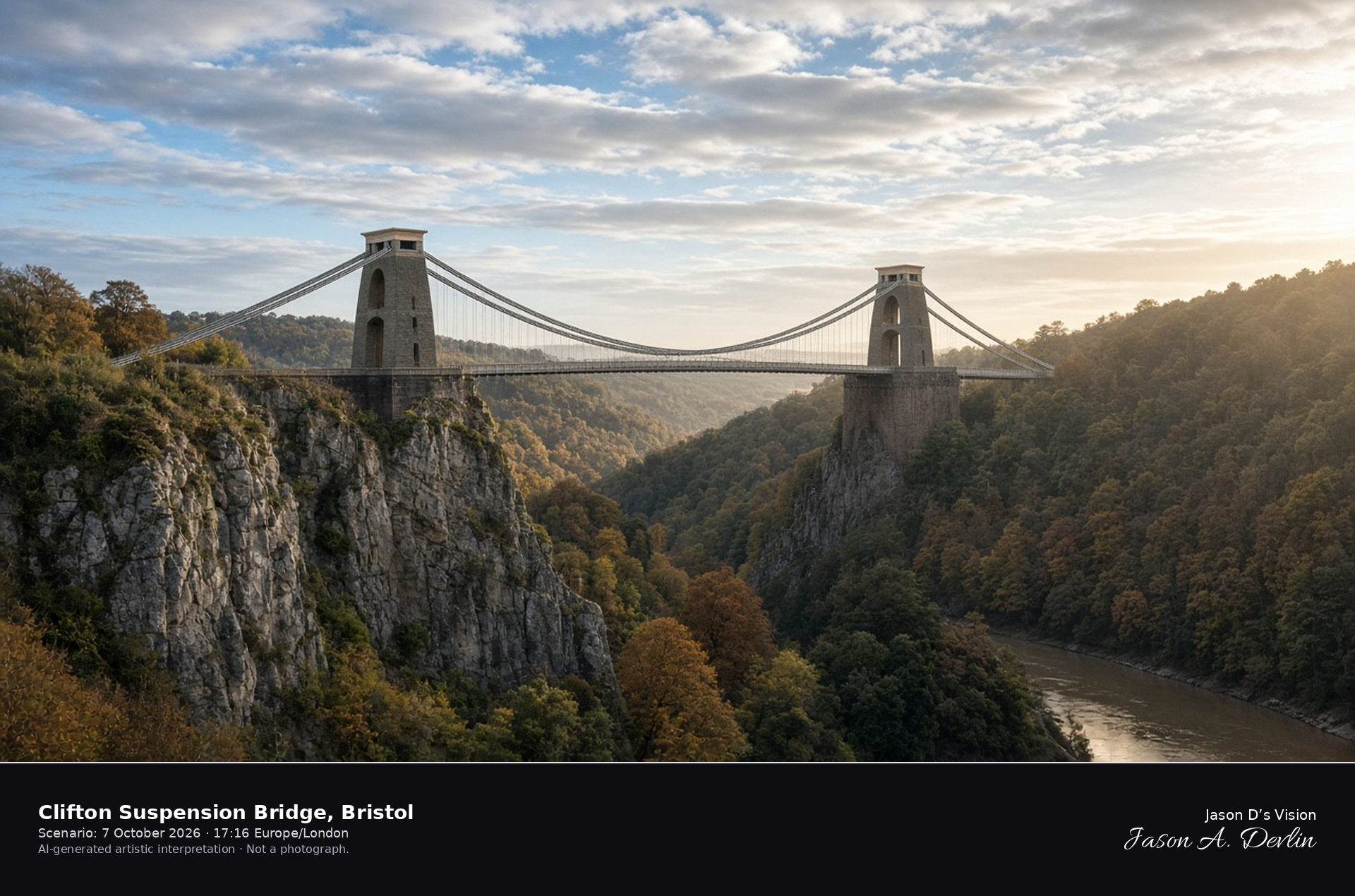
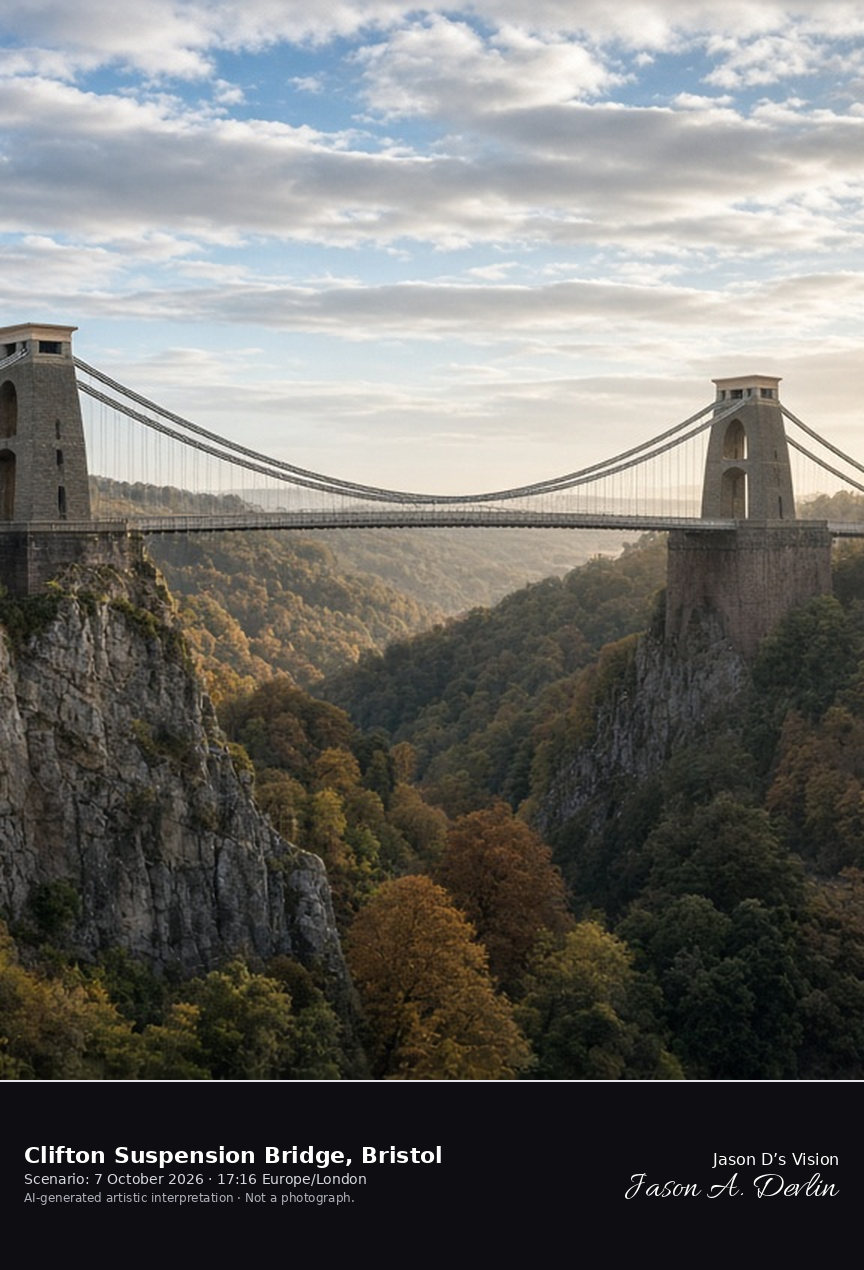
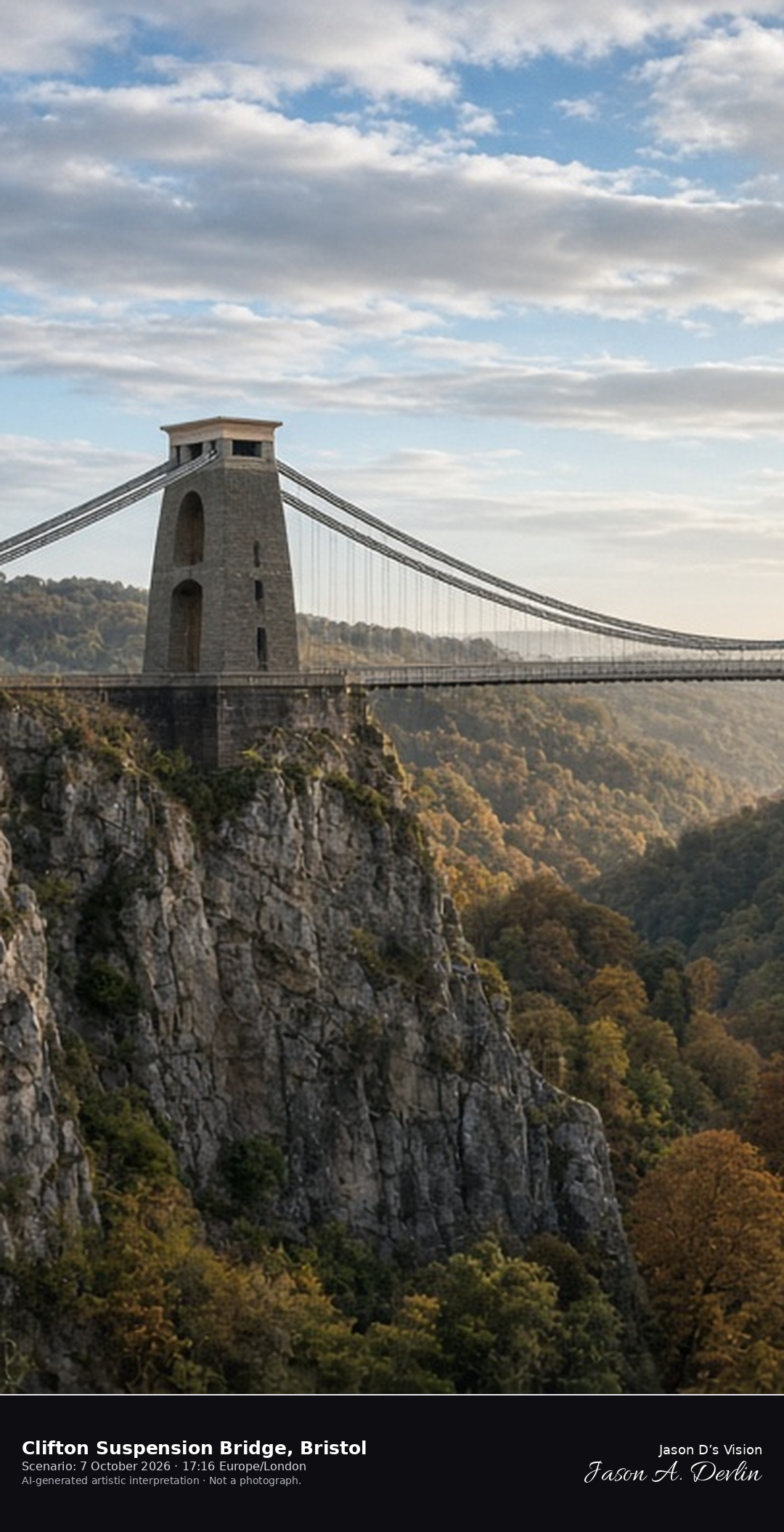
Clifton Suspension Bridge spans the Avon Gorge between Clifton in Bristol and Leigh Woods in North Somerset. Designed by Isambard Kingdom Brunel and completed in 1864, its deck hangs about 75 m above the river.
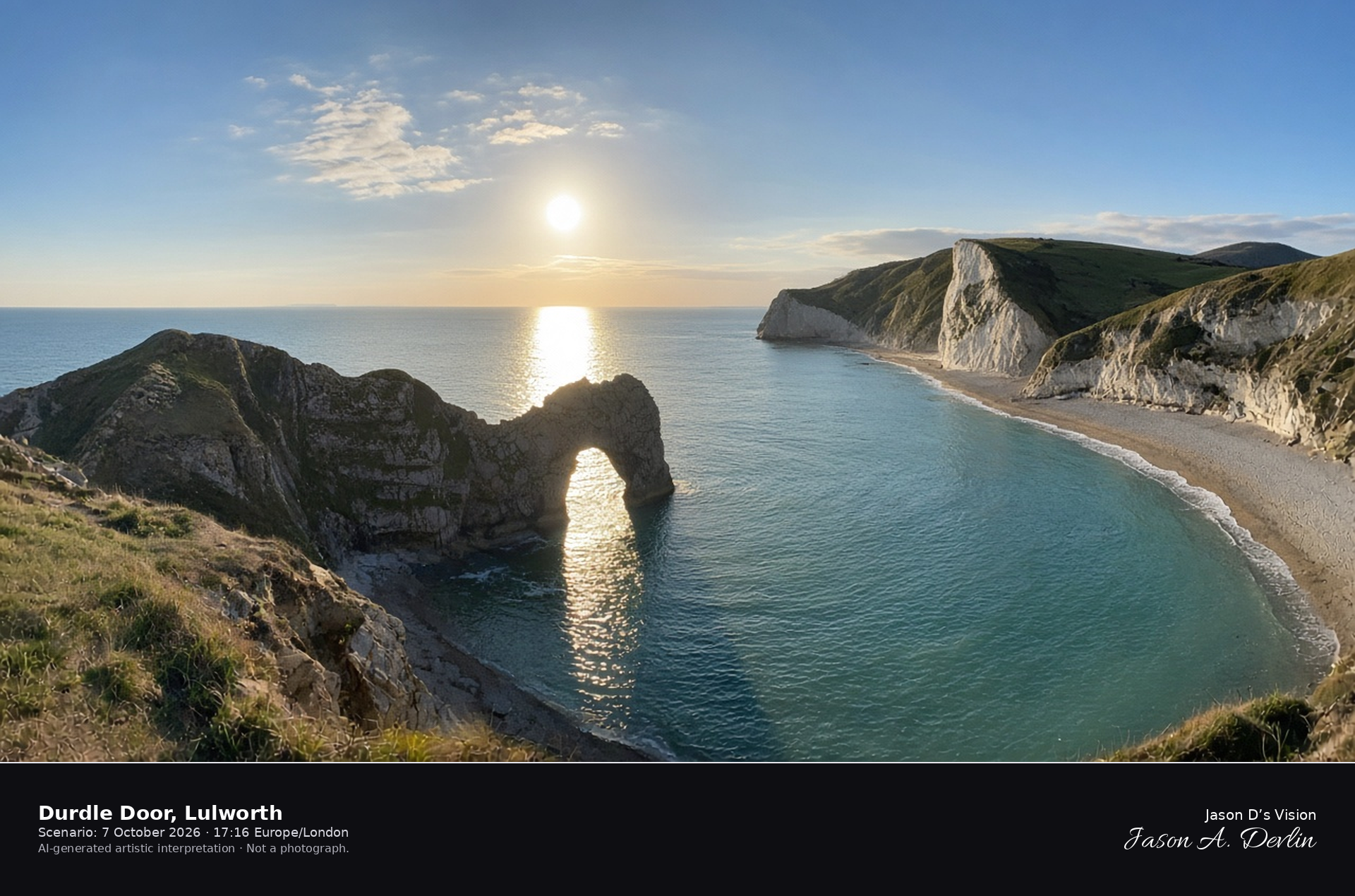
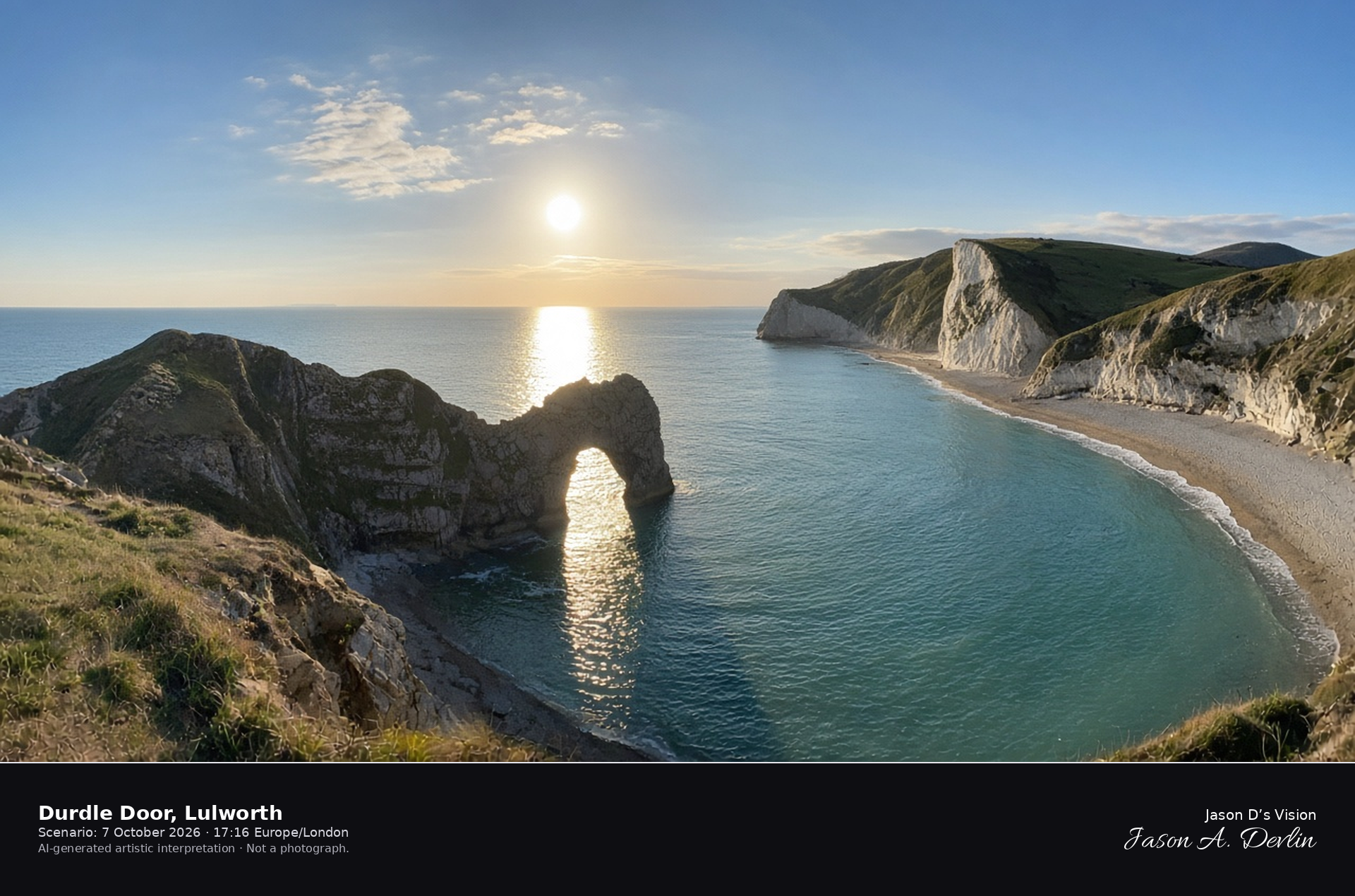
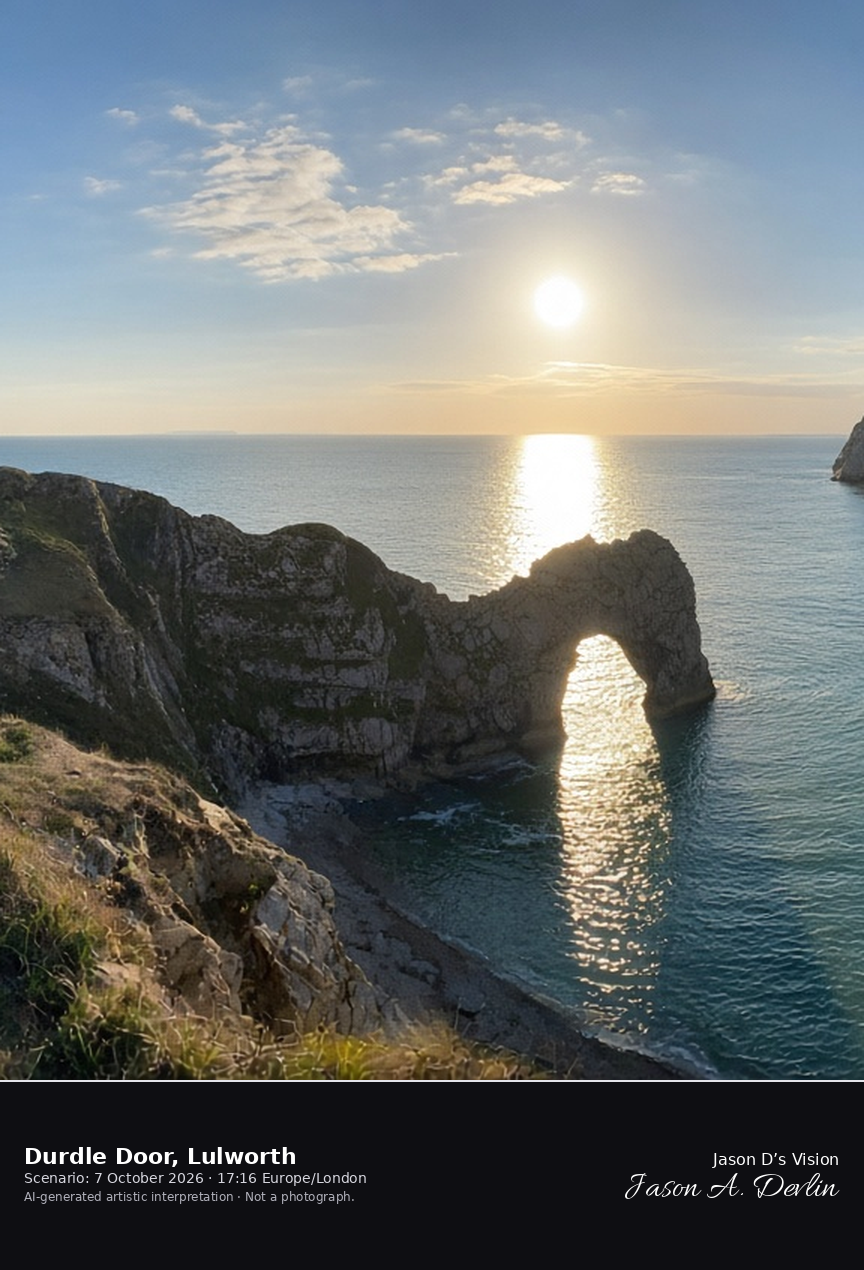
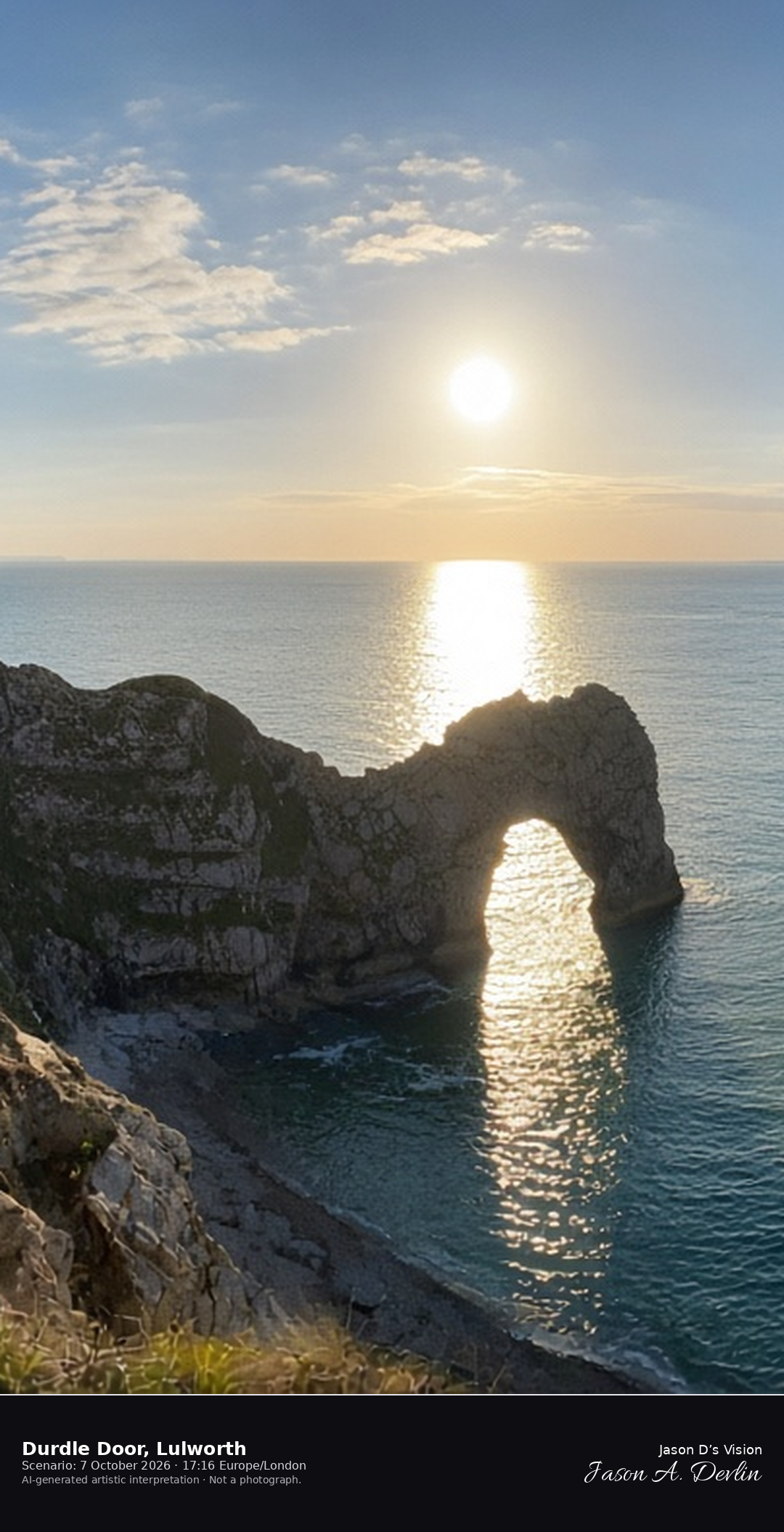
Durdle Door is a natural limestone arch near Lulworth on the Jurassic Coast of Dorset, a World Heritage Site. The sea has worn through the hard Portland limestone, leaving the arch joined to the softer cliffs behind.
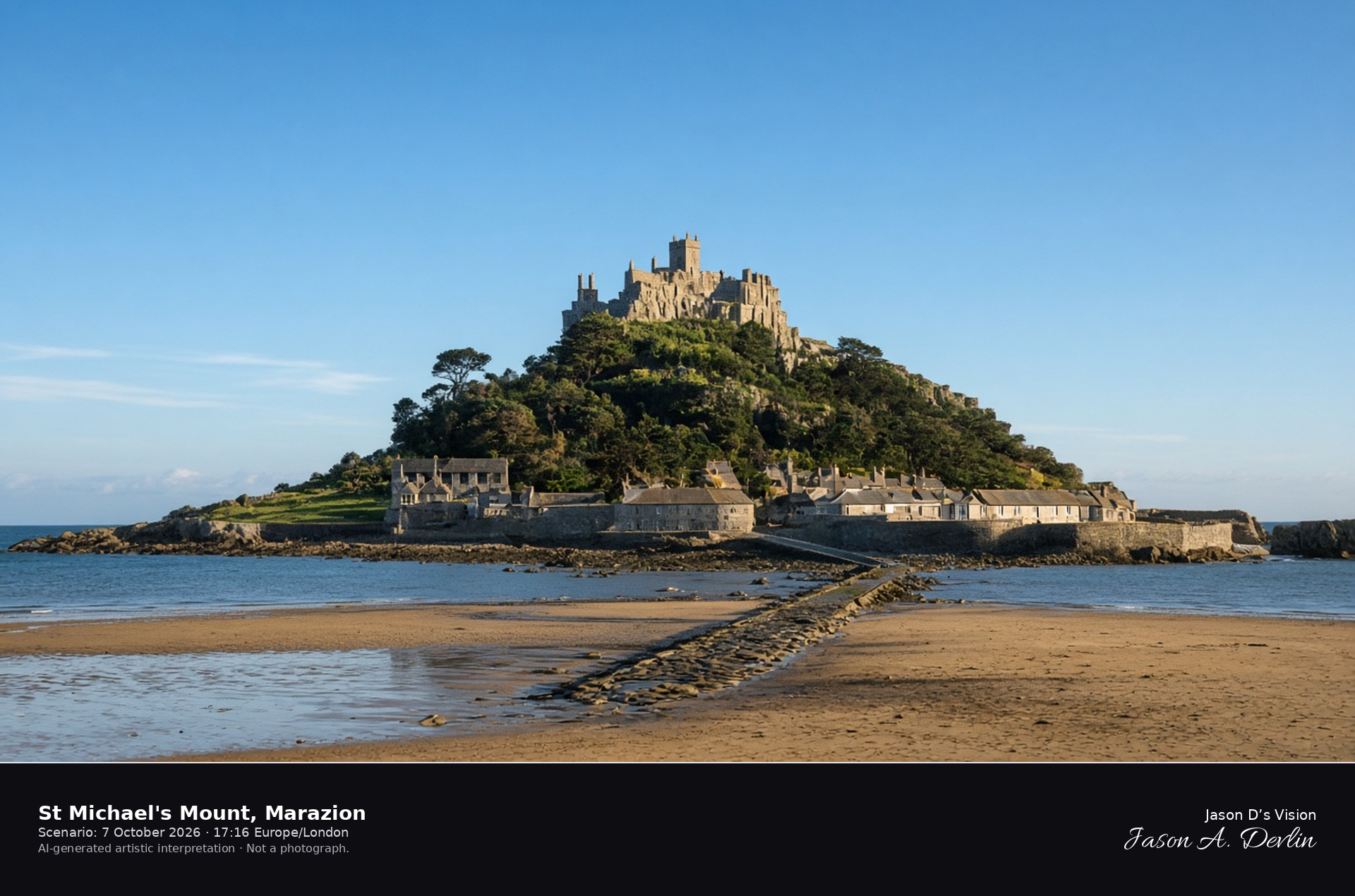
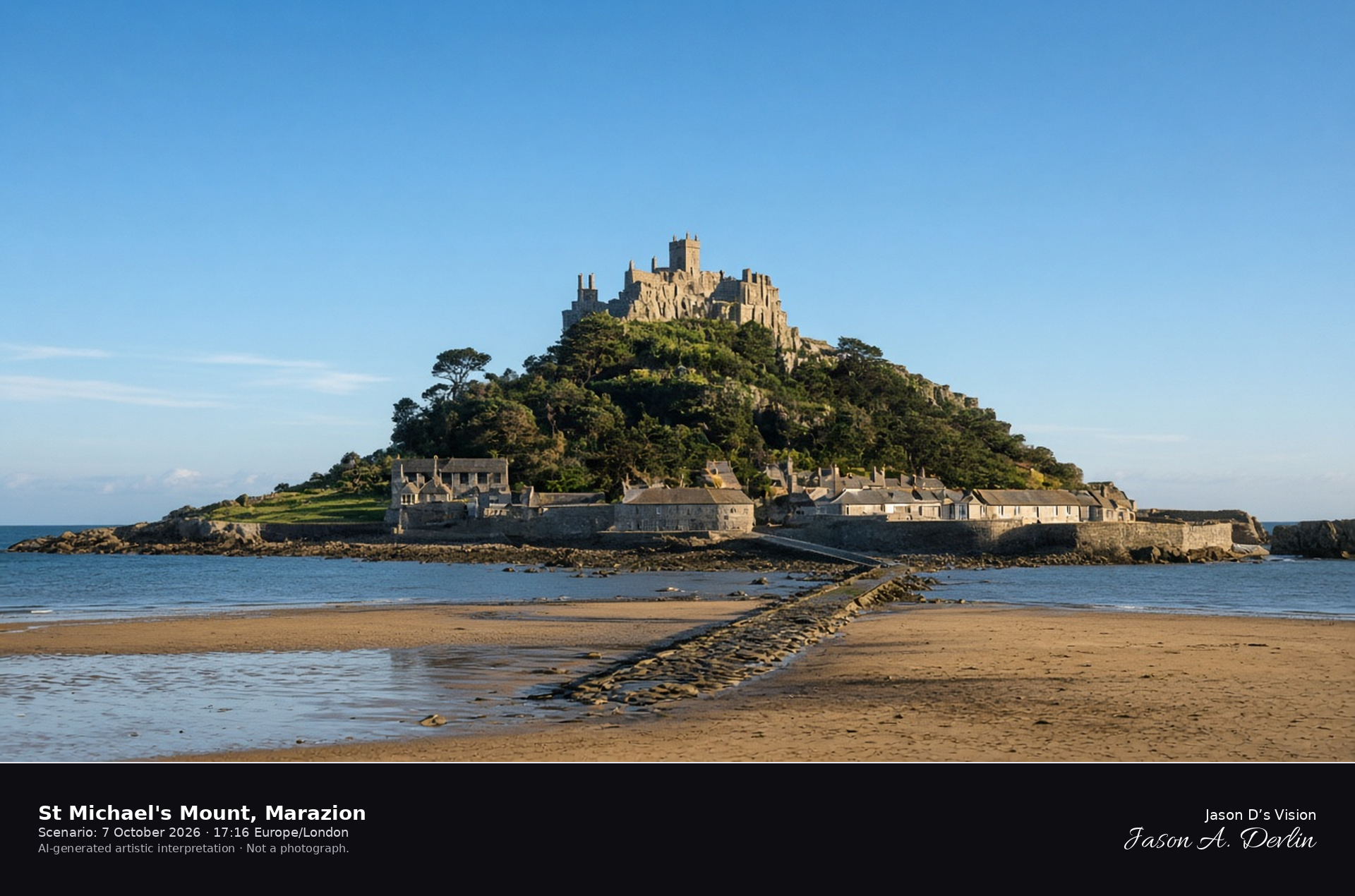
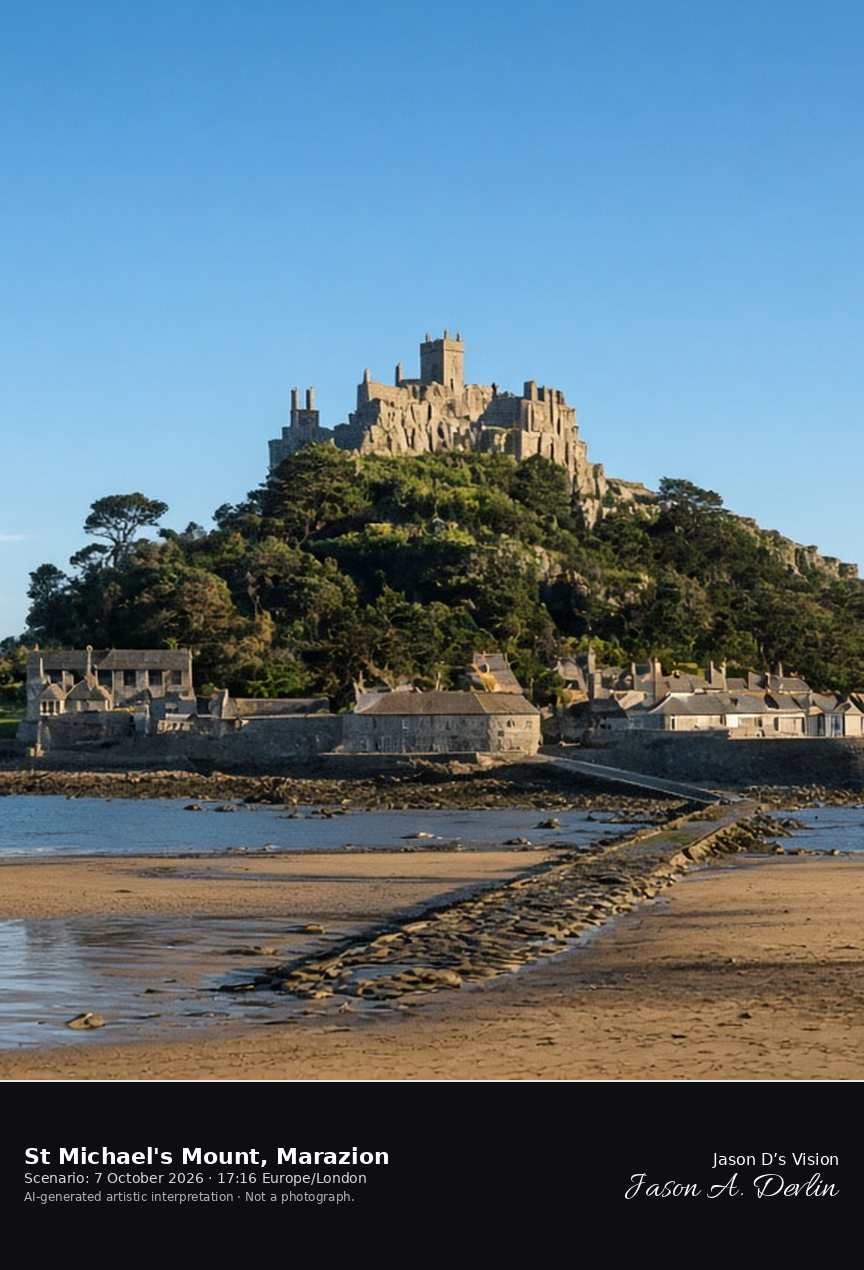
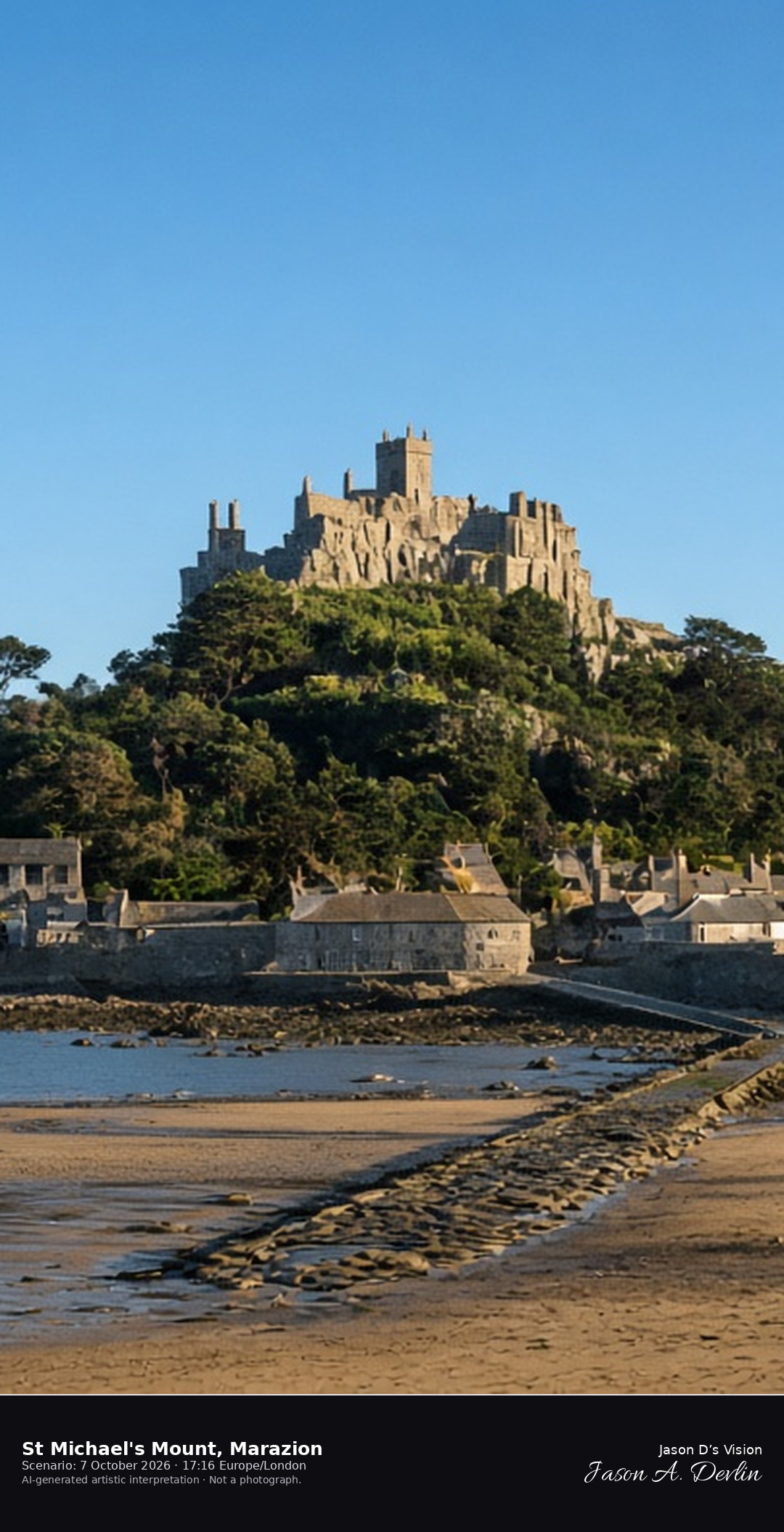
St Michael's Mount, Marazion · AI-generated artistic interpretation
St Michael's Mount is a tidal island in Mount's Bay, Cornwall, linked to Marazion by a granite causeway passable at low tide. A medieval church and castle stand on its summit, and it is cared for by the National Trust.
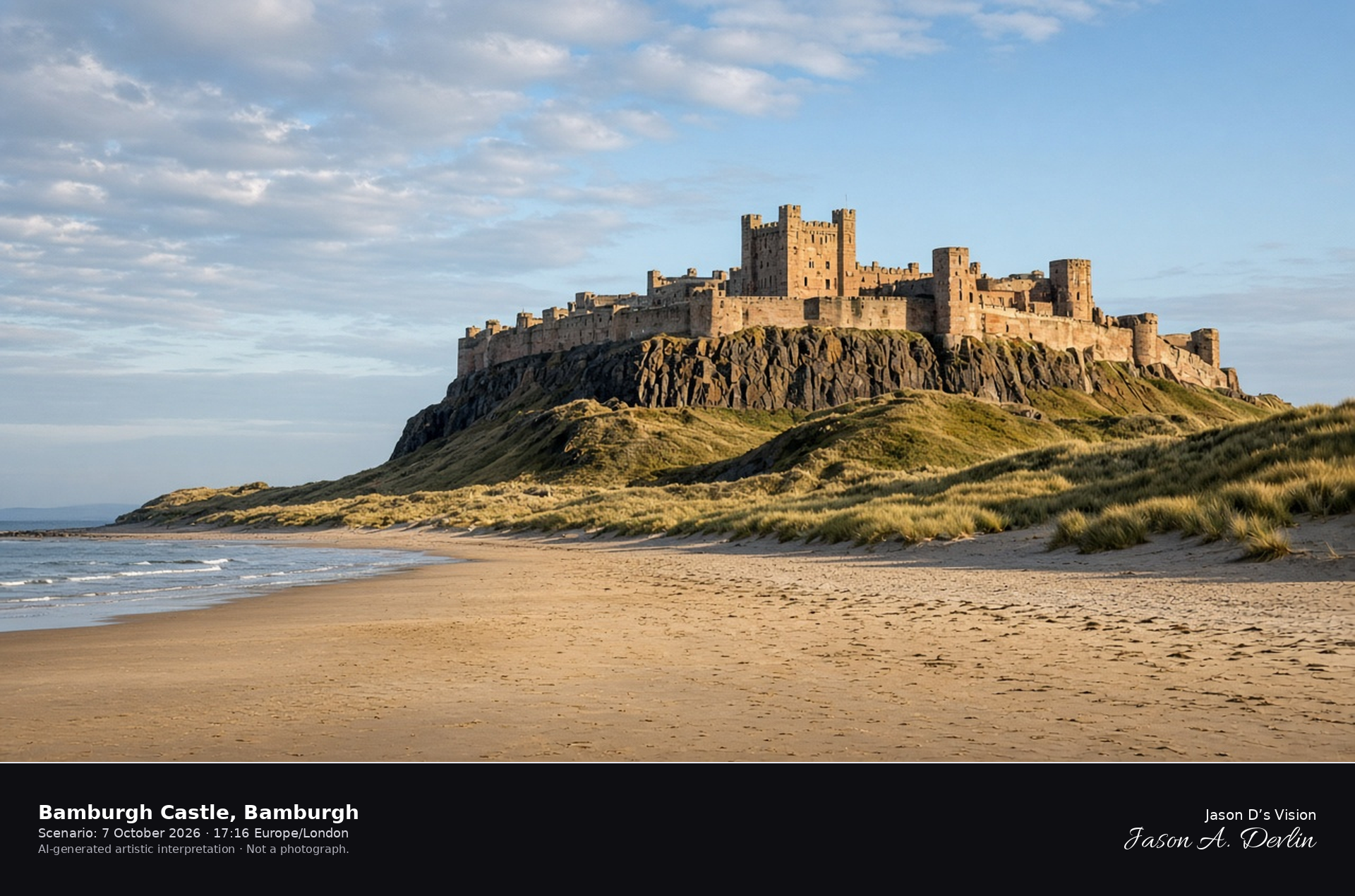
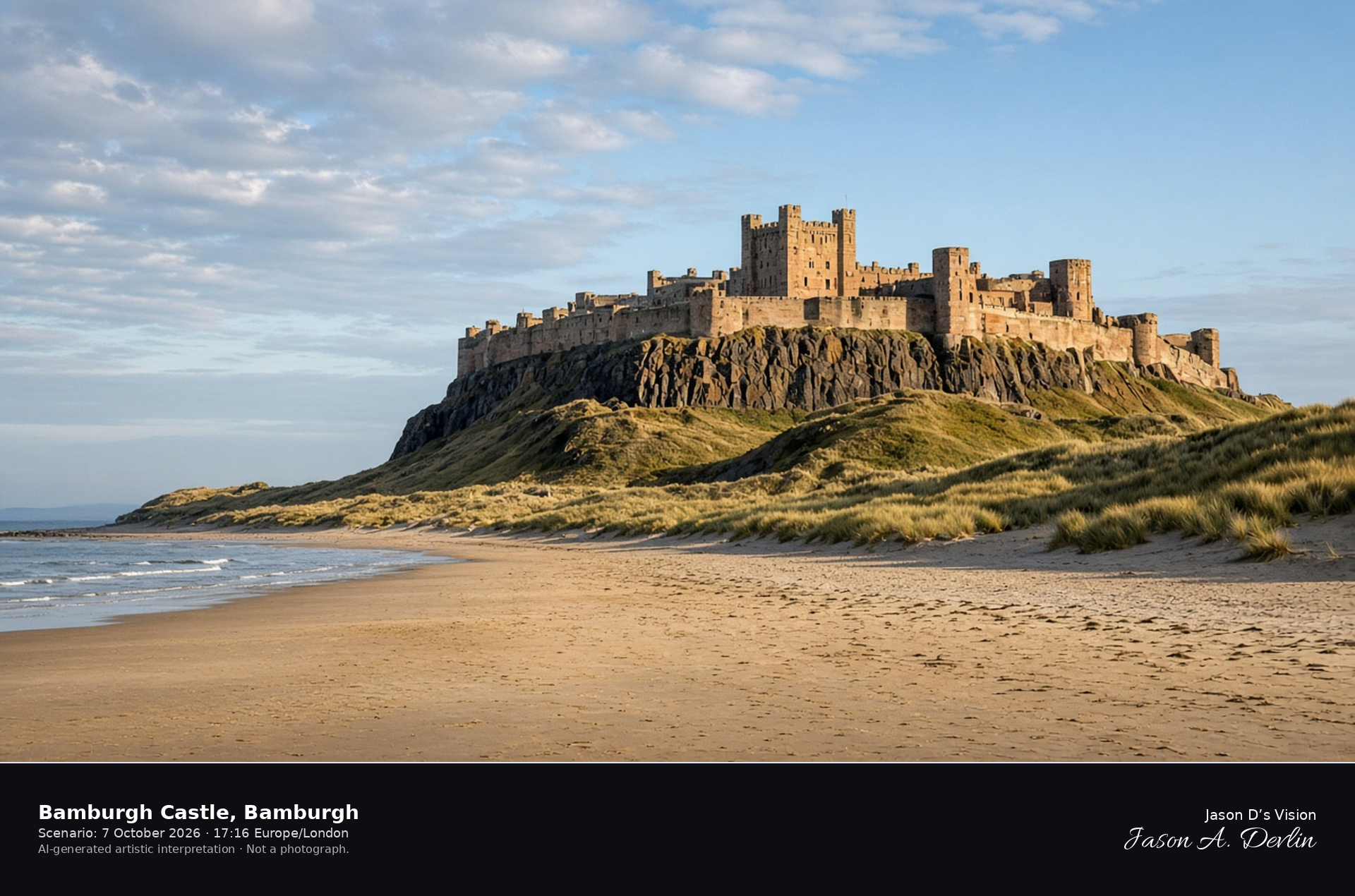
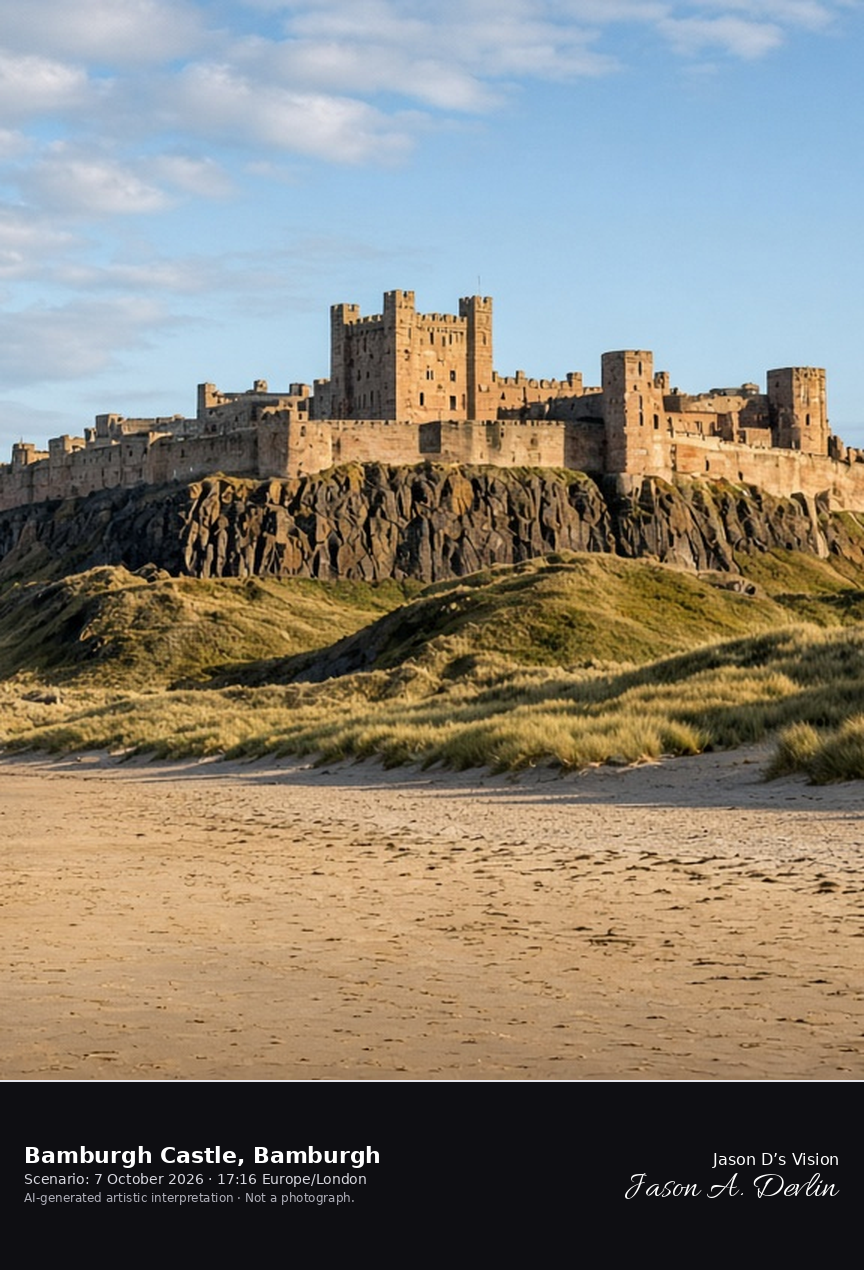
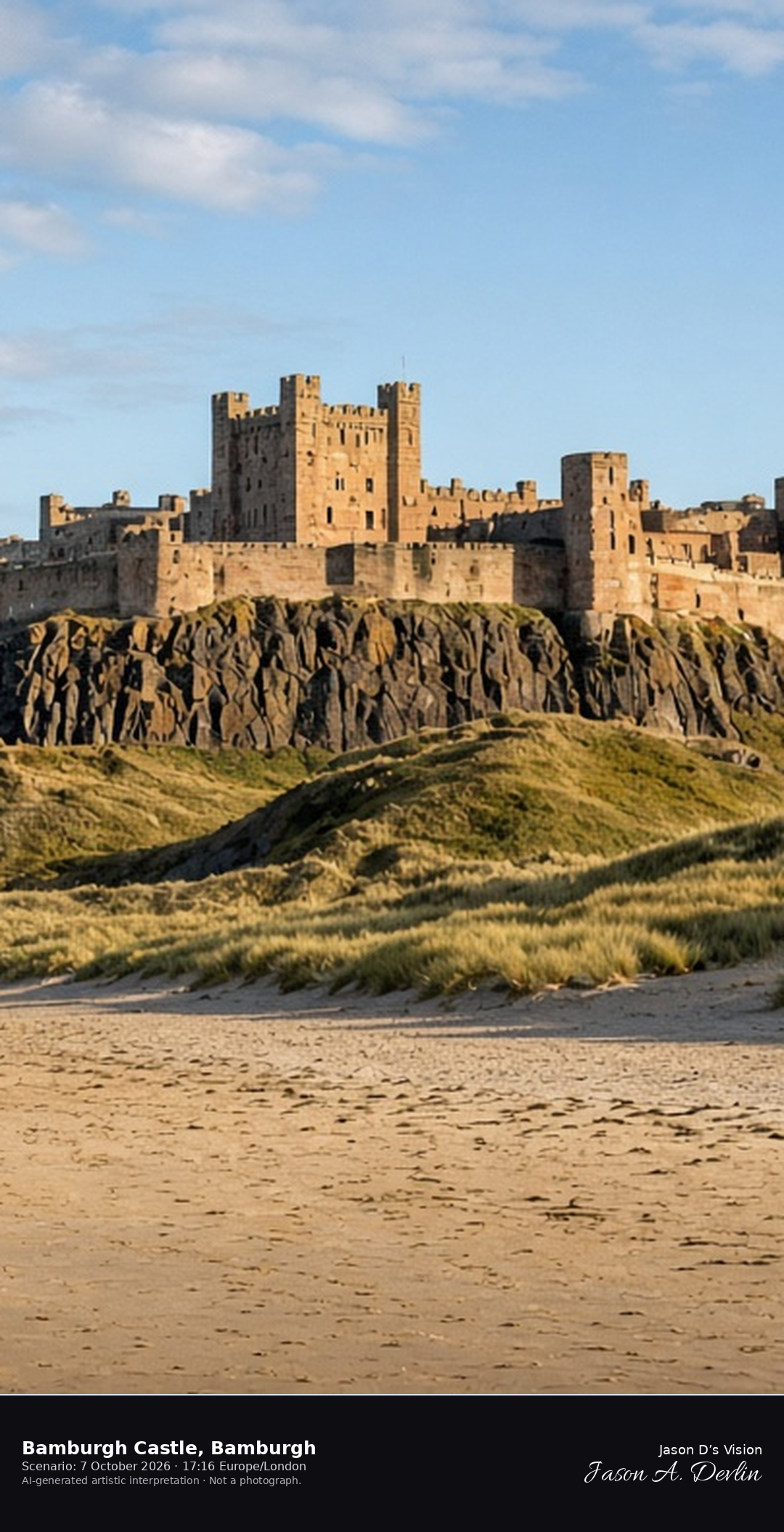
Bamburgh was Bebbanburg, the citadel of the kings of Northumbria, in the centuries when Viking sails haunted this shore. The first Lord Armstrong, the Tyneside industrialist, restored the ruined castle in the 1890s; it belongs to his family still, above the village where the lifeboat heroine Grace Darling was born.
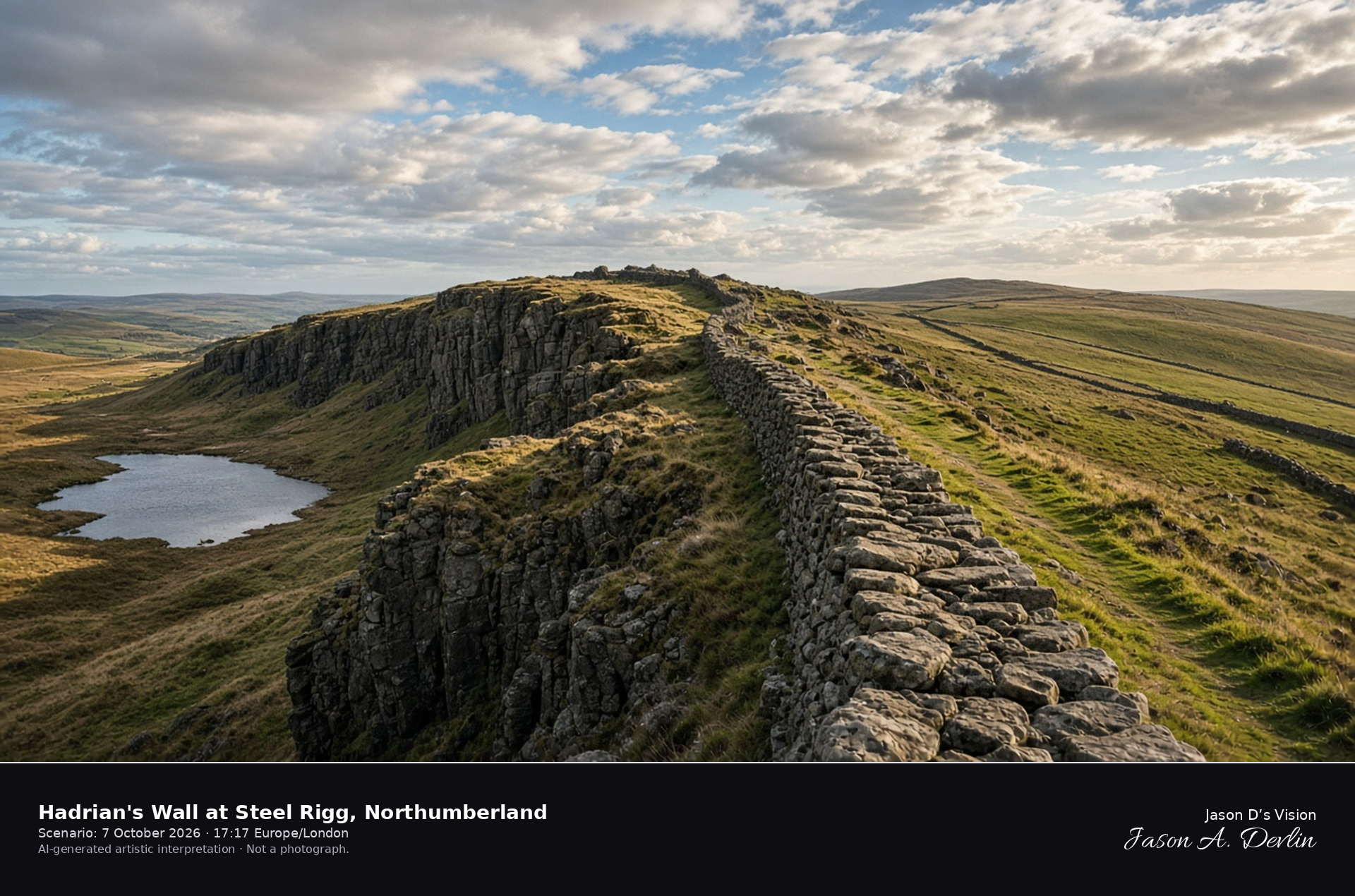
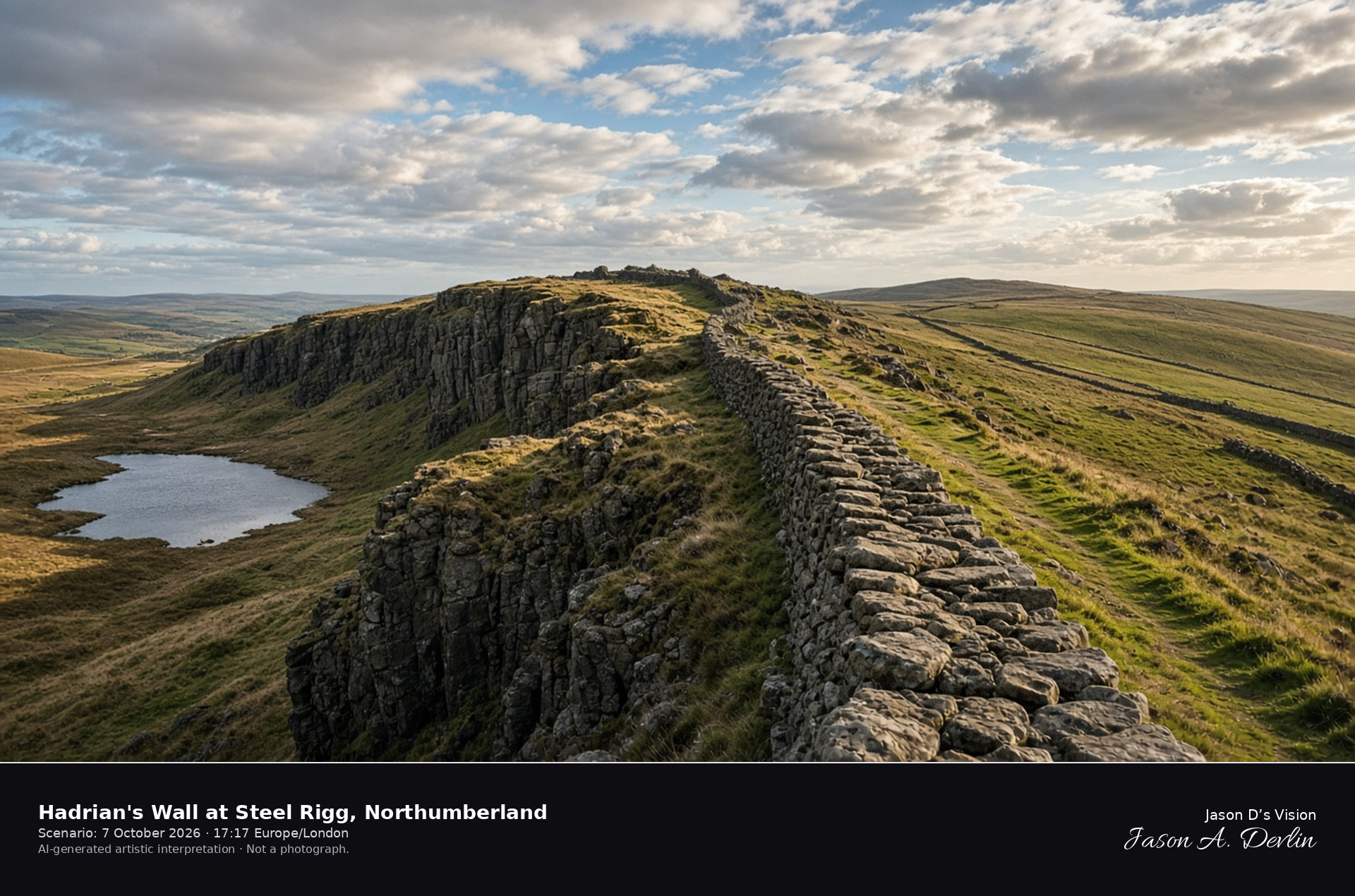
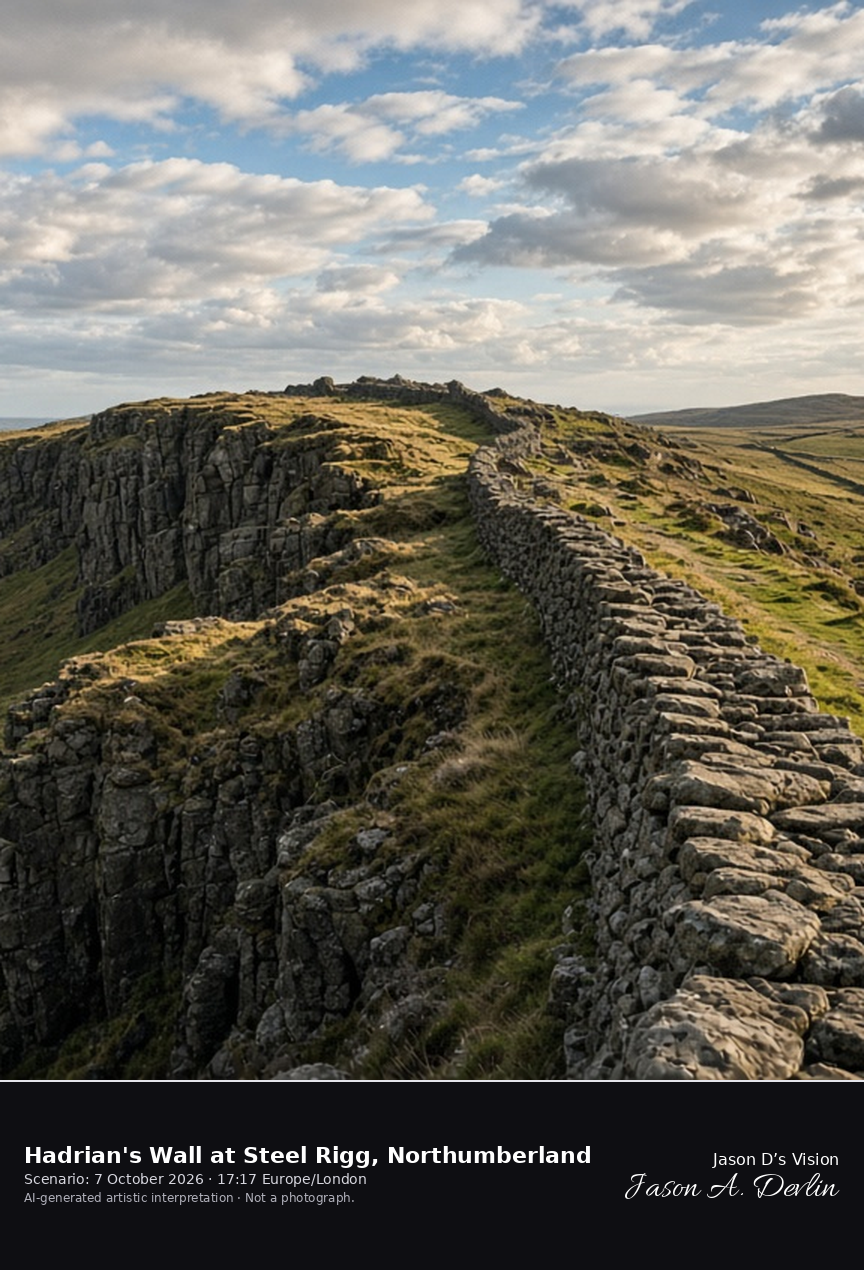
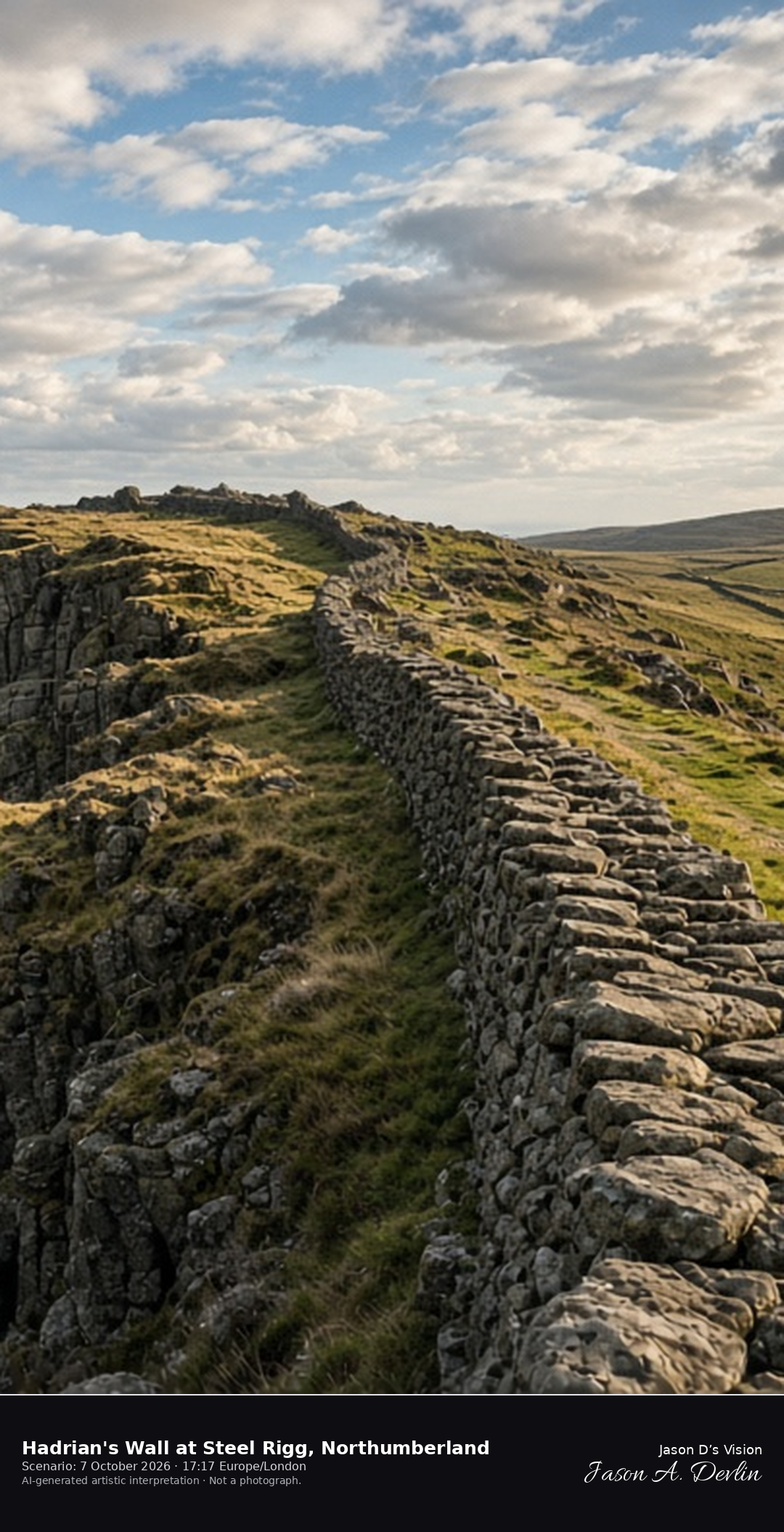
Hadrian's Wall at Steel Rigg · AI-generated artistic interpretation
Hadrian's Wall, begun in the year 122, ran for seventy-three miles from sea to sea as the north-western frontier of the Roman Empire. At Steel Rigg the wall rides the Whin Sill ridge, letting the crags themselves do half the soldiers' work of defence.
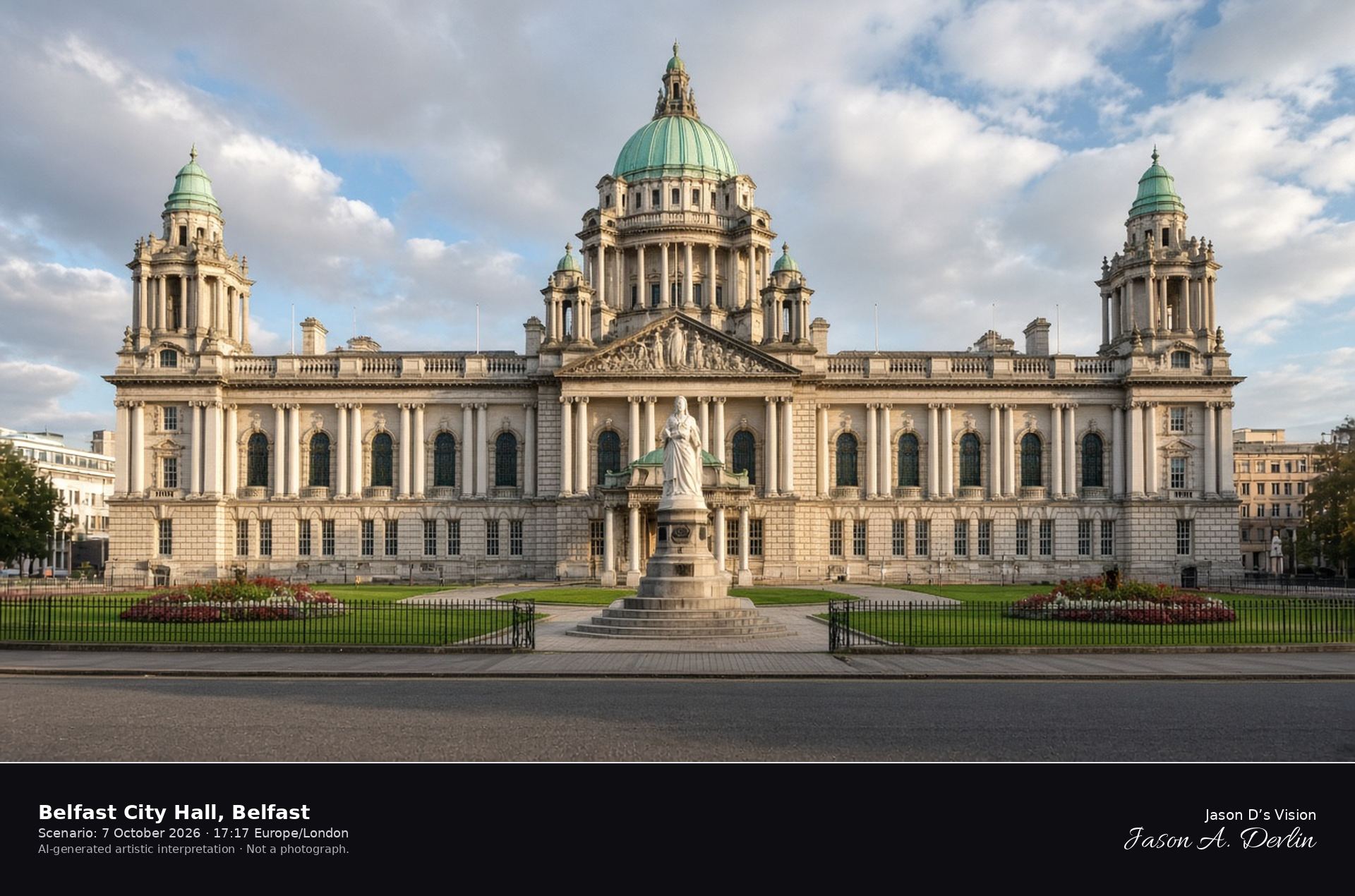
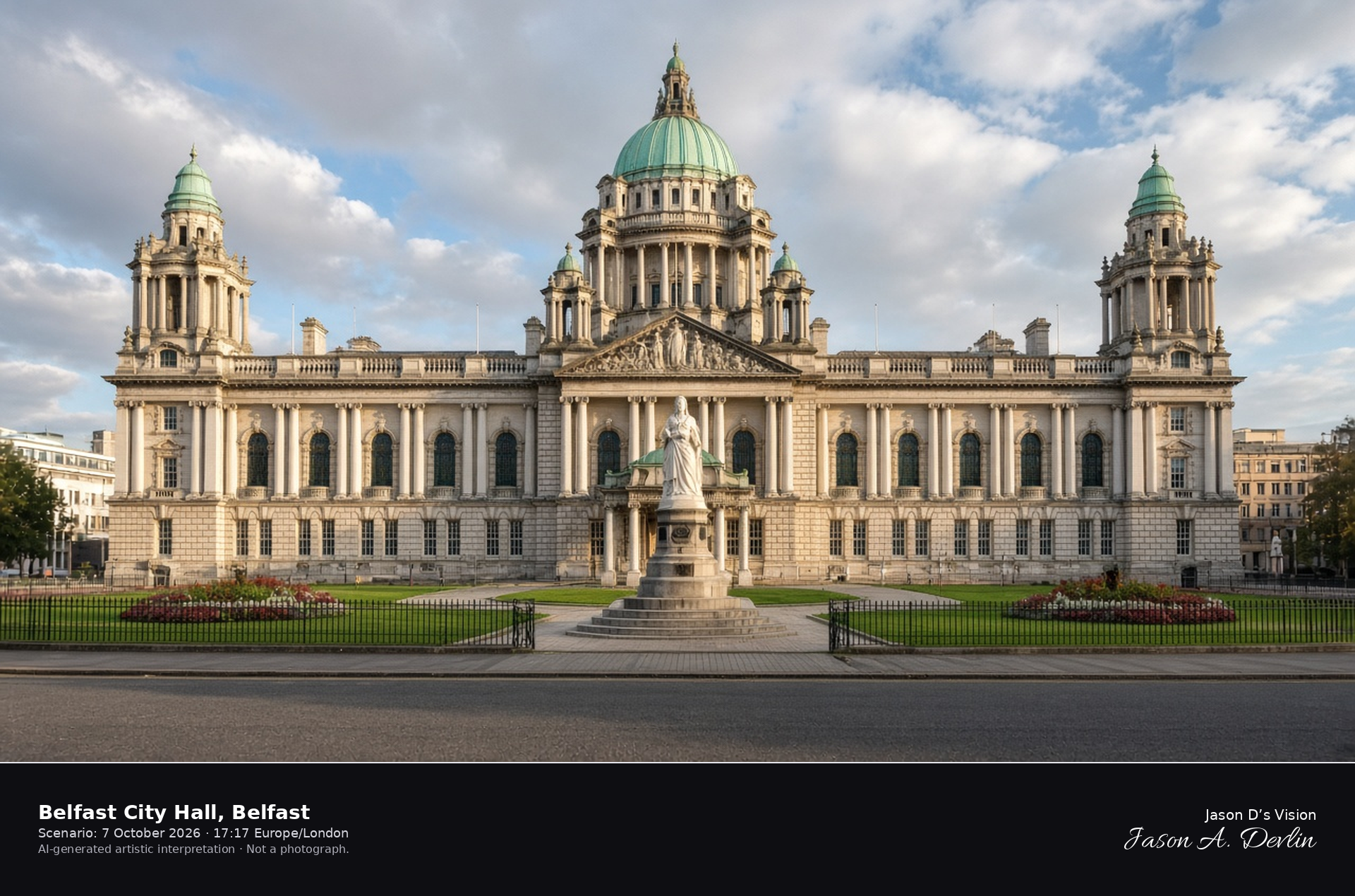
Belfast grew through linen manufacture and shipbuilding: its yards launched the Titanic in 1911, while Harland and Wolff's great yellow cranes, Samson and Goliath, became landmarks of its industrial skyline. The name comes from the Irish Béal Feirste — the mouth of the River Farset.
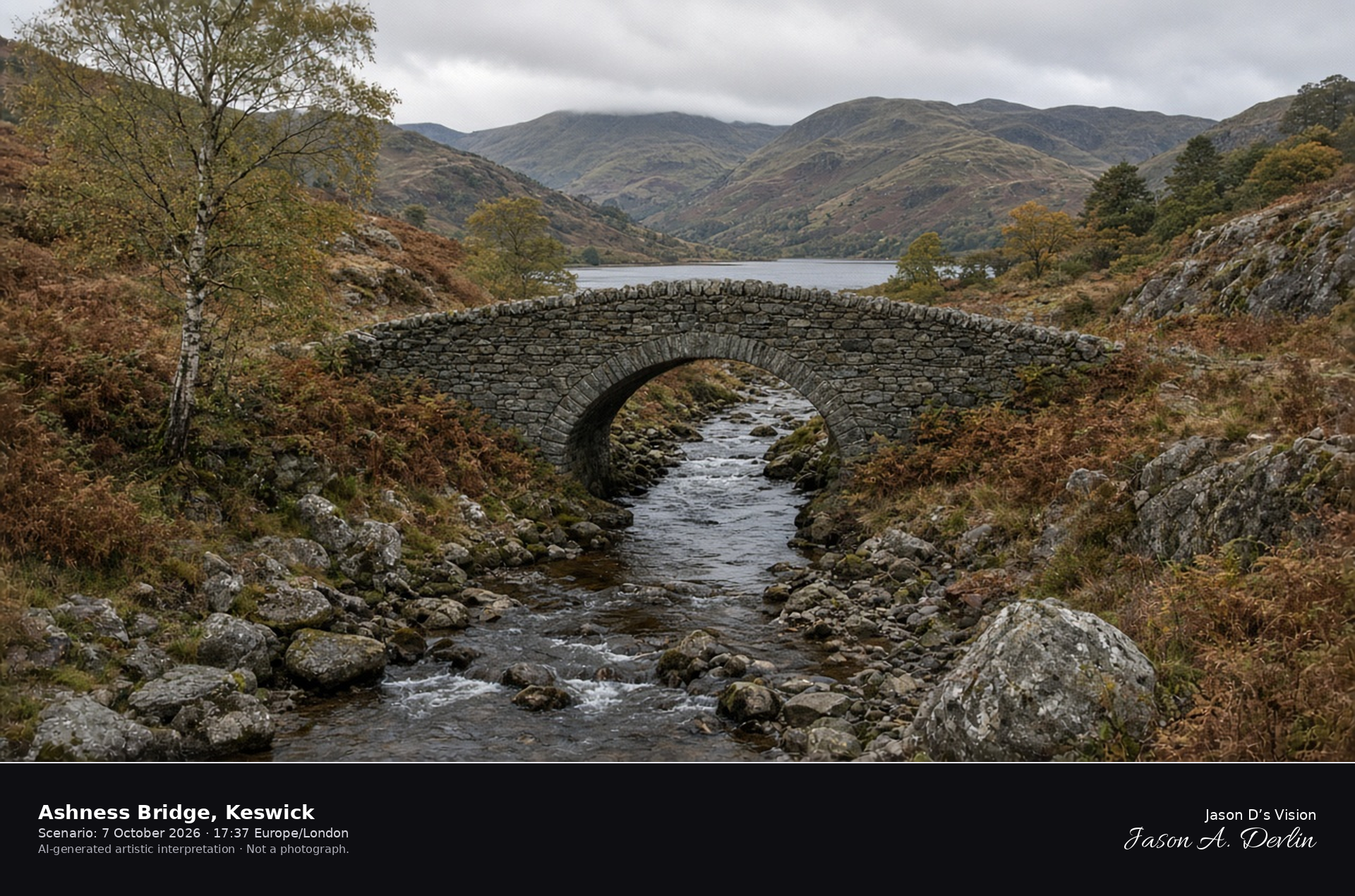
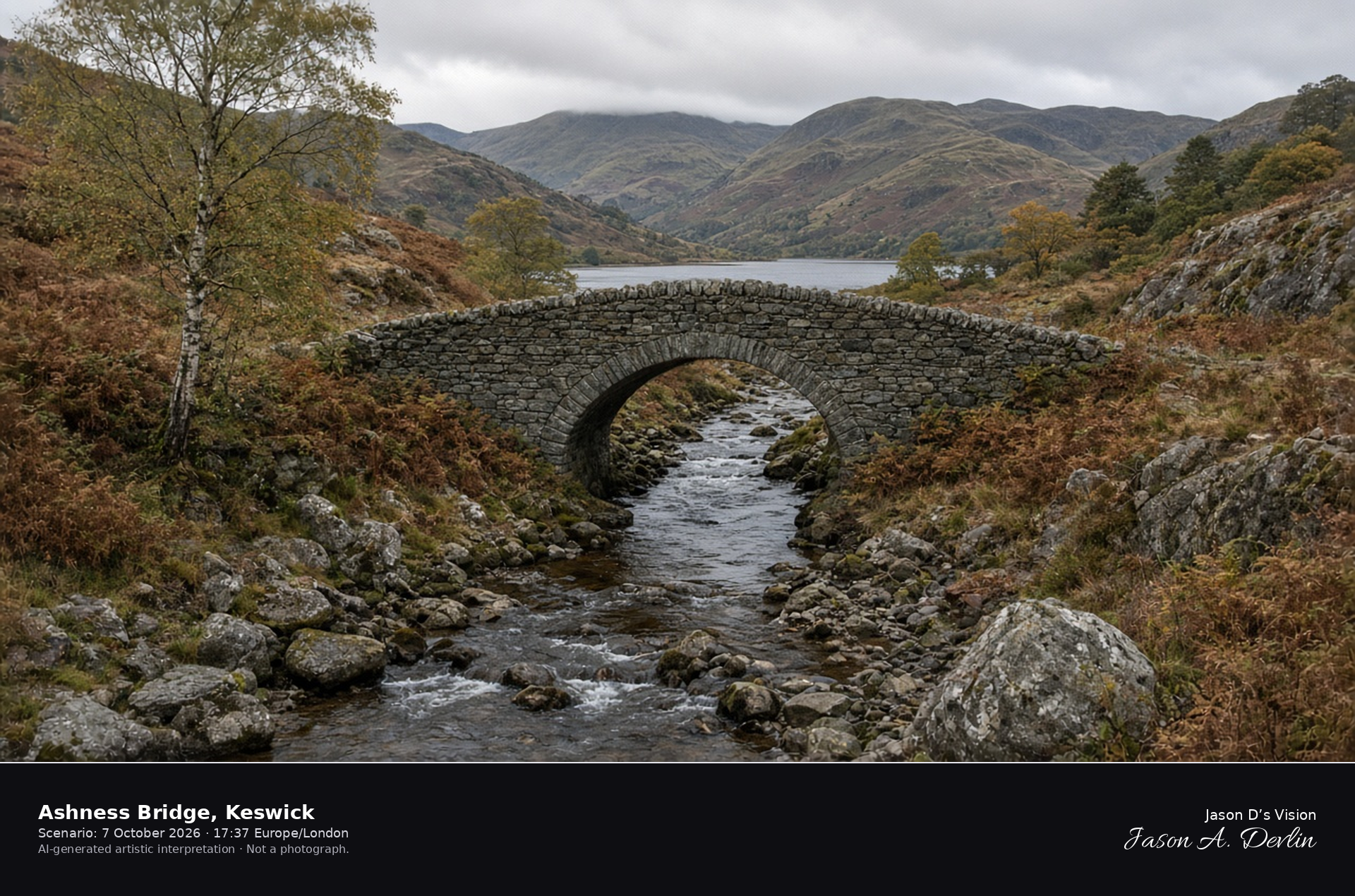
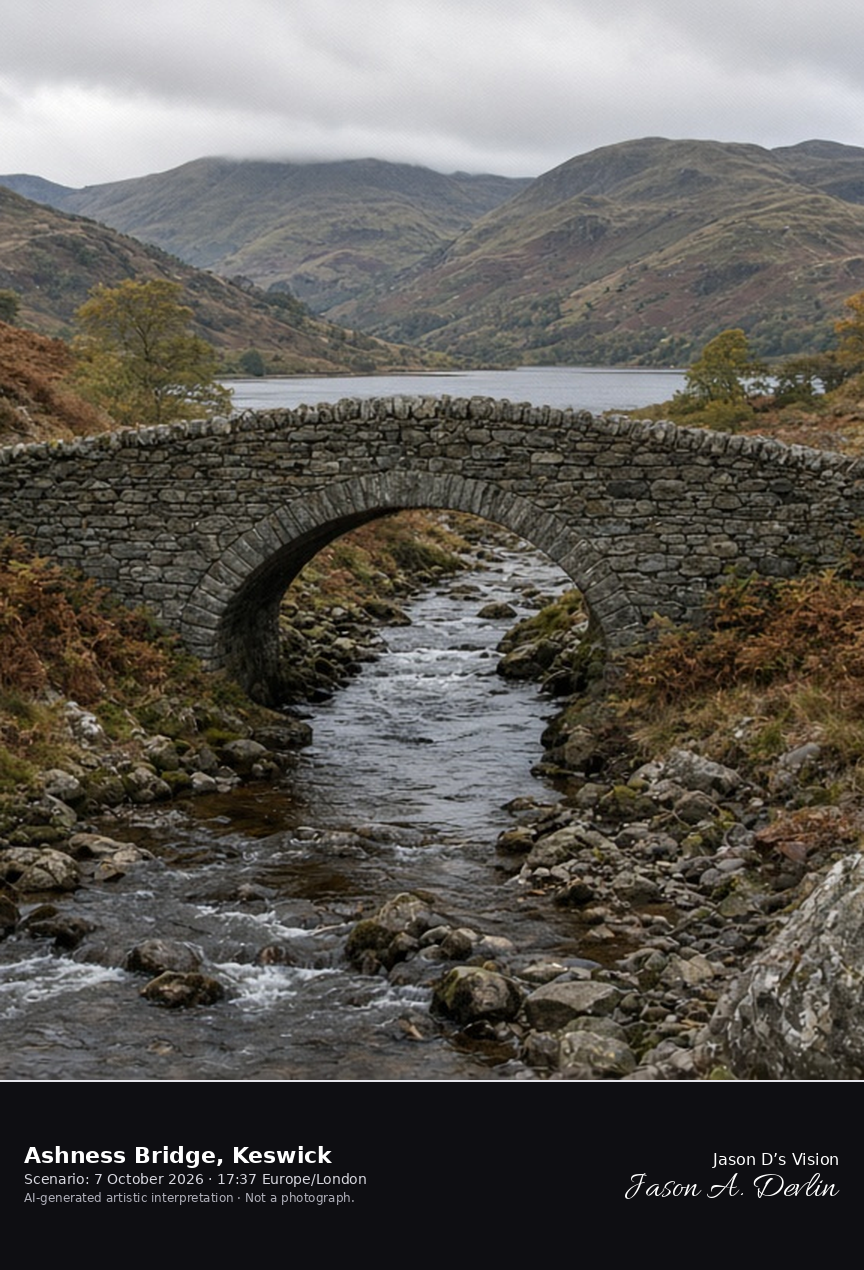
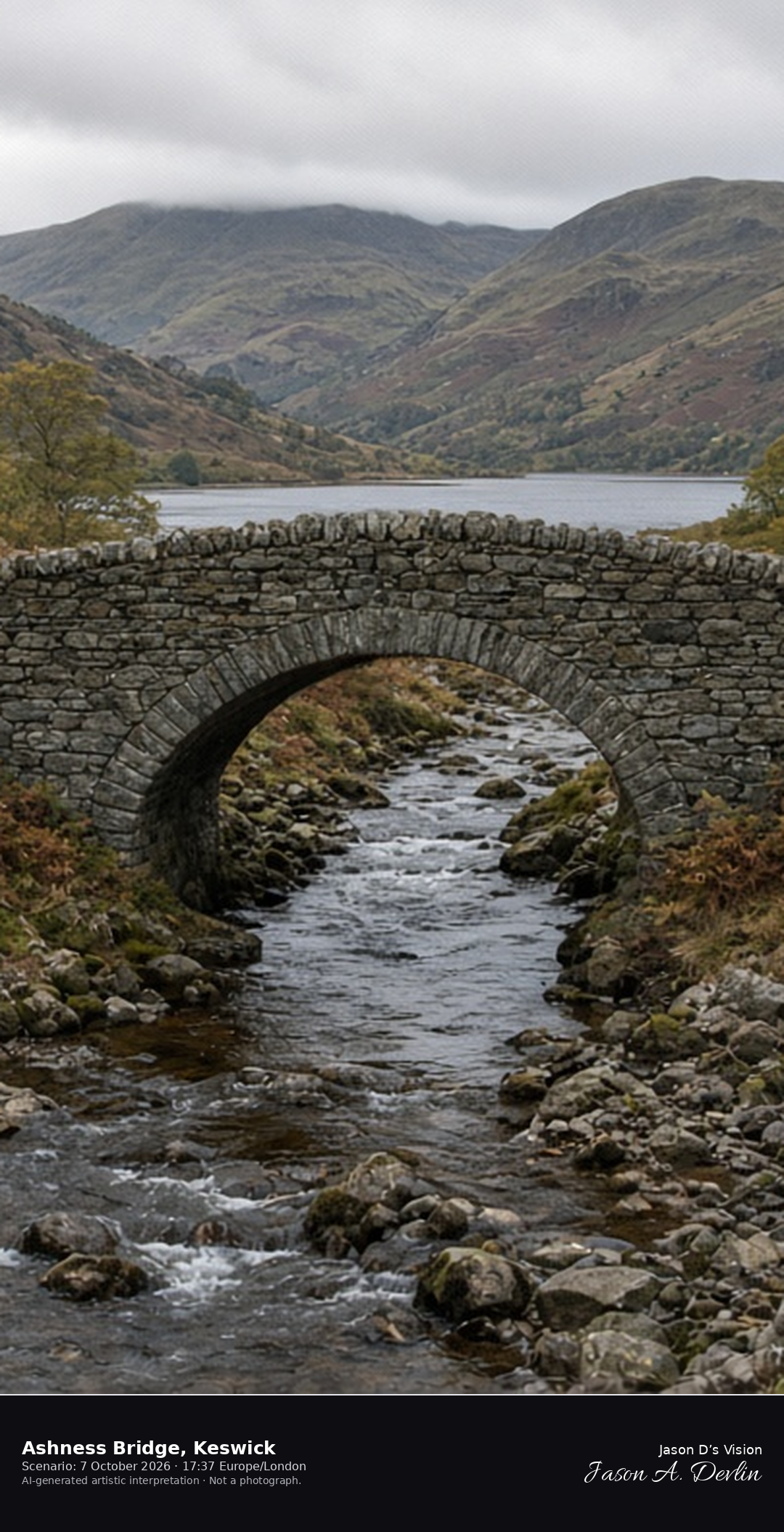
Ashness Bridge is a traditional single-arch packhorse bridge on the road from Borrowdale to Watendlath, above Derwentwater near Keswick in the Lake District. It is one of the most photographed views in the Lake District National Park.
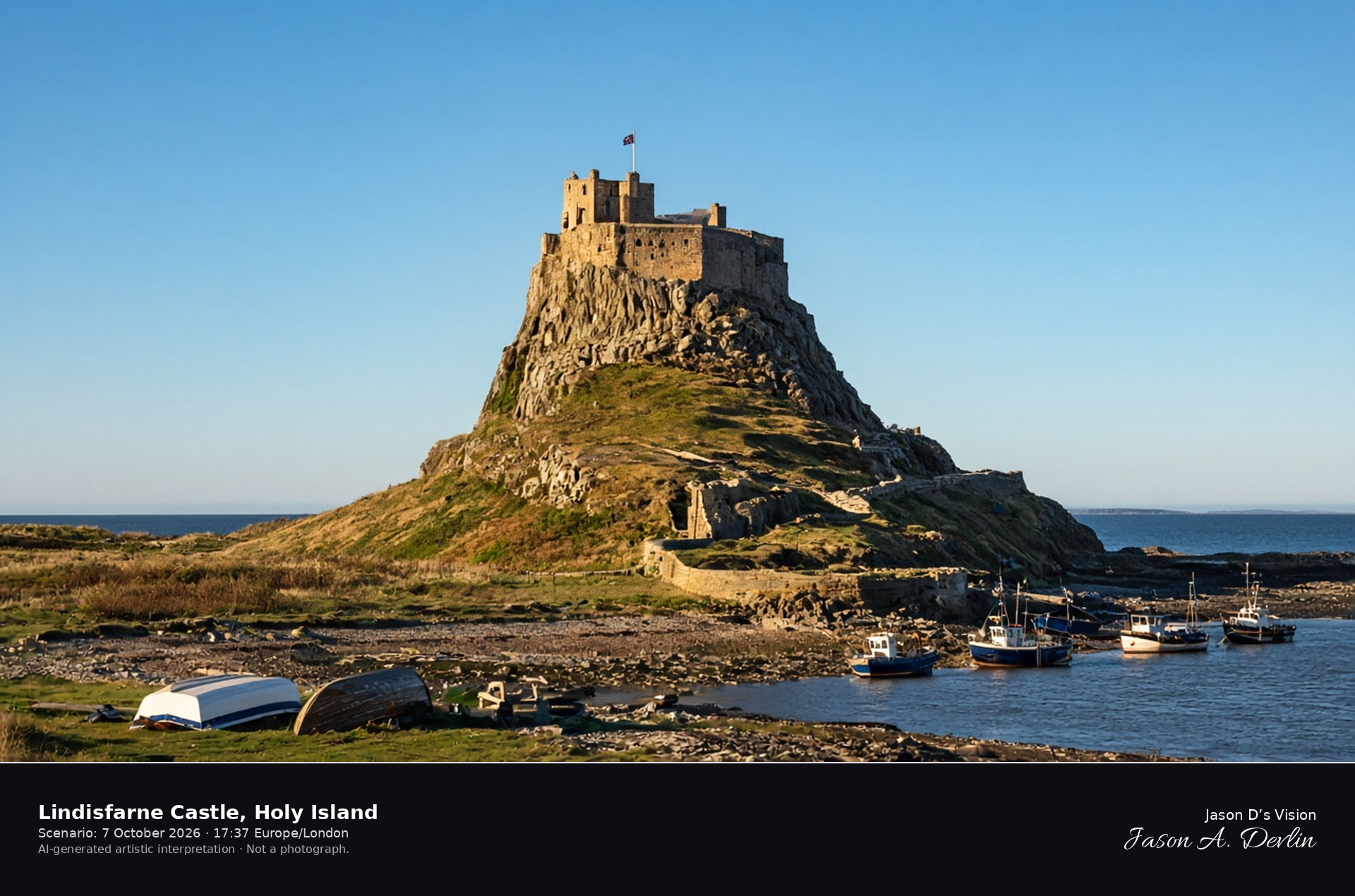
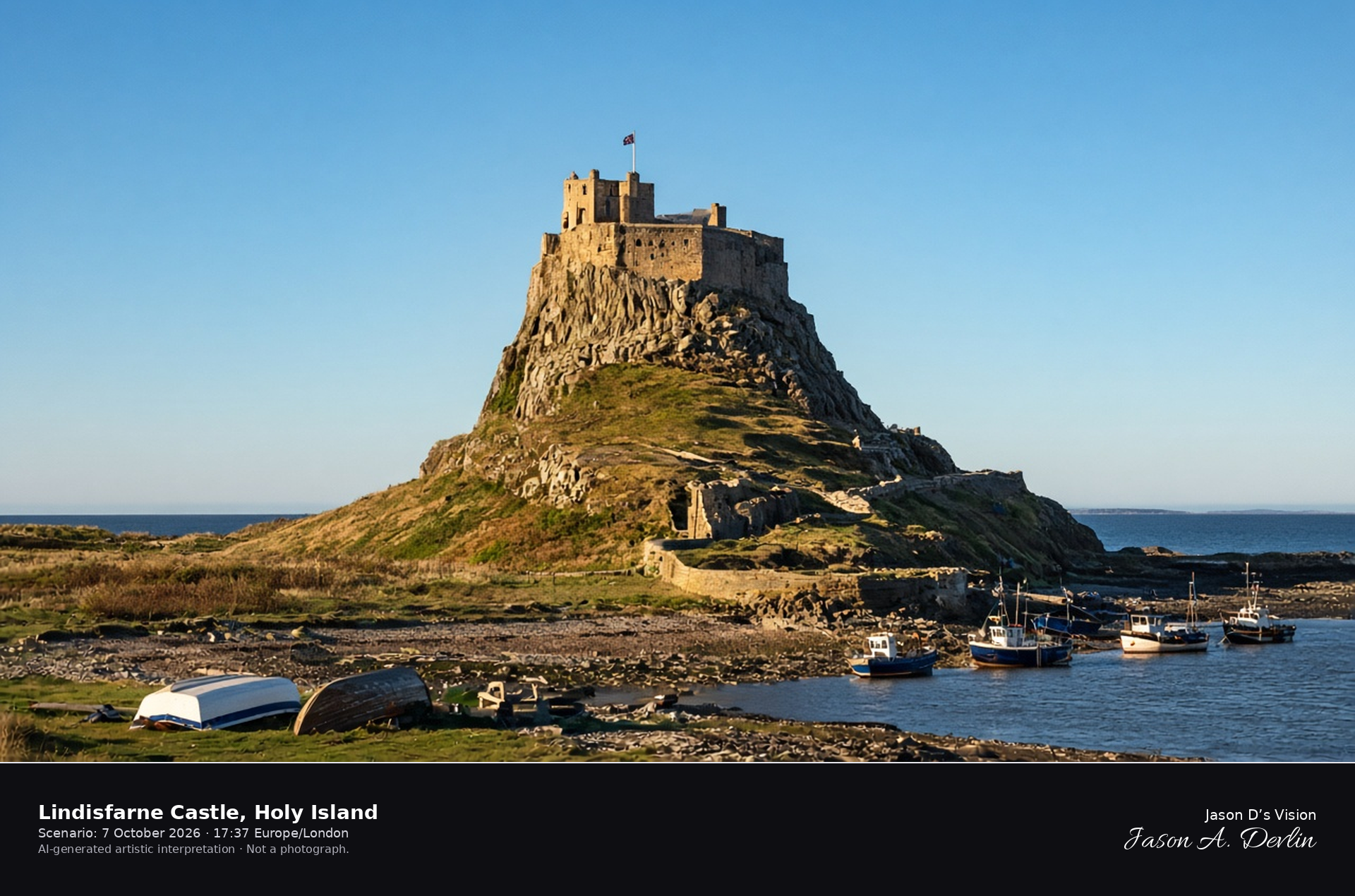
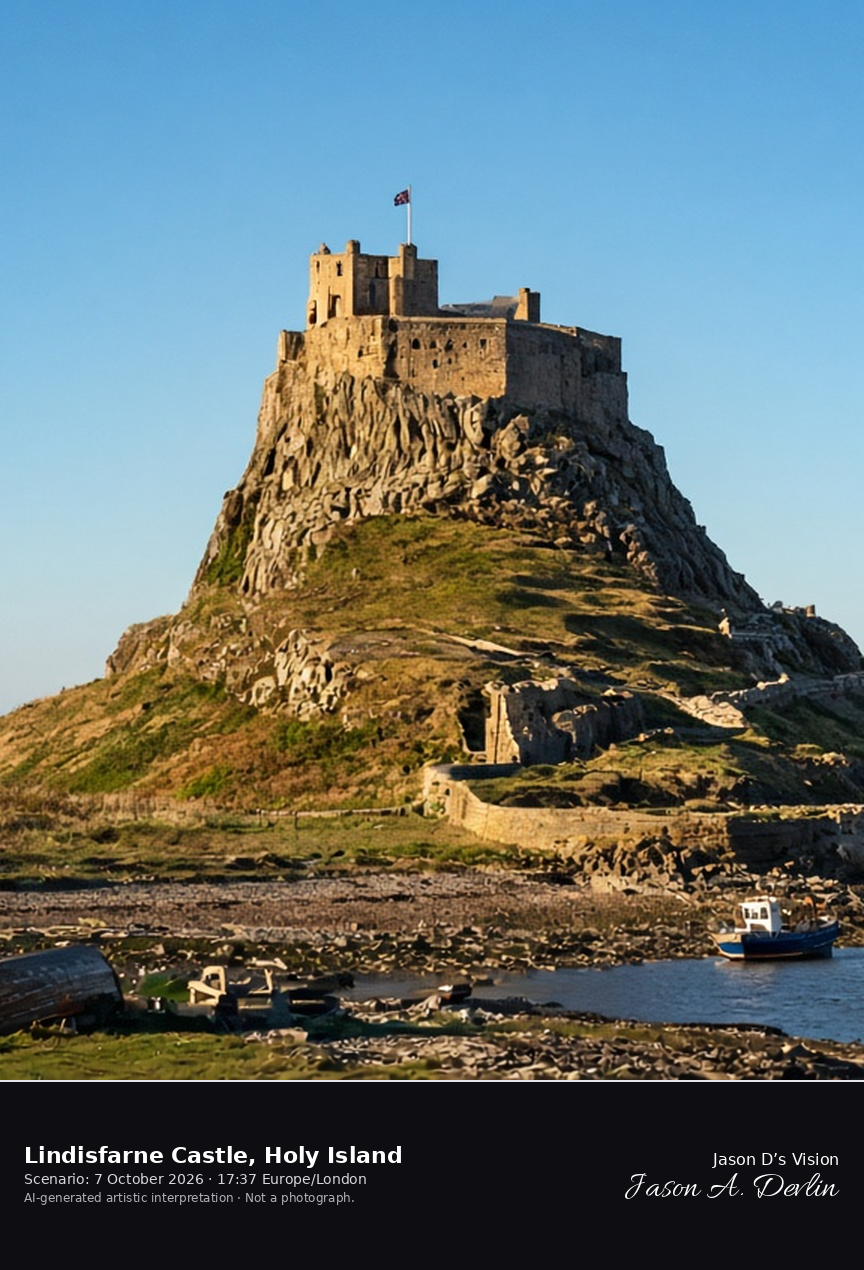
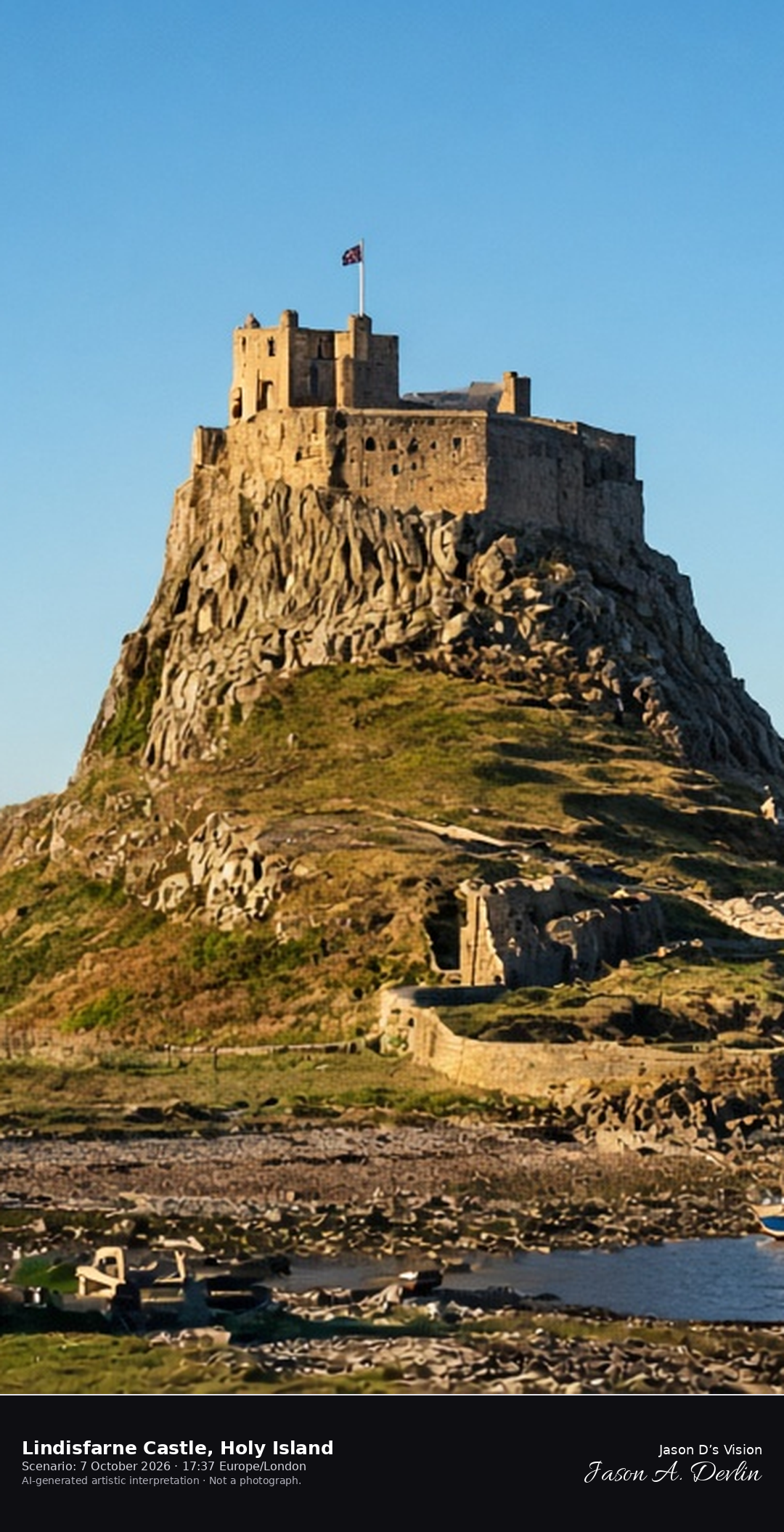
Lindisfarne Castle, Holy Island · AI-generated artistic interpretation
Lindisfarne Castle was built in the 16th century on Holy Island off the Northumberland coast and converted into a holiday home by Edwin Lutyens in 1901. The island is reached by a tidal causeway, and the castle is cared for by the National Trust.
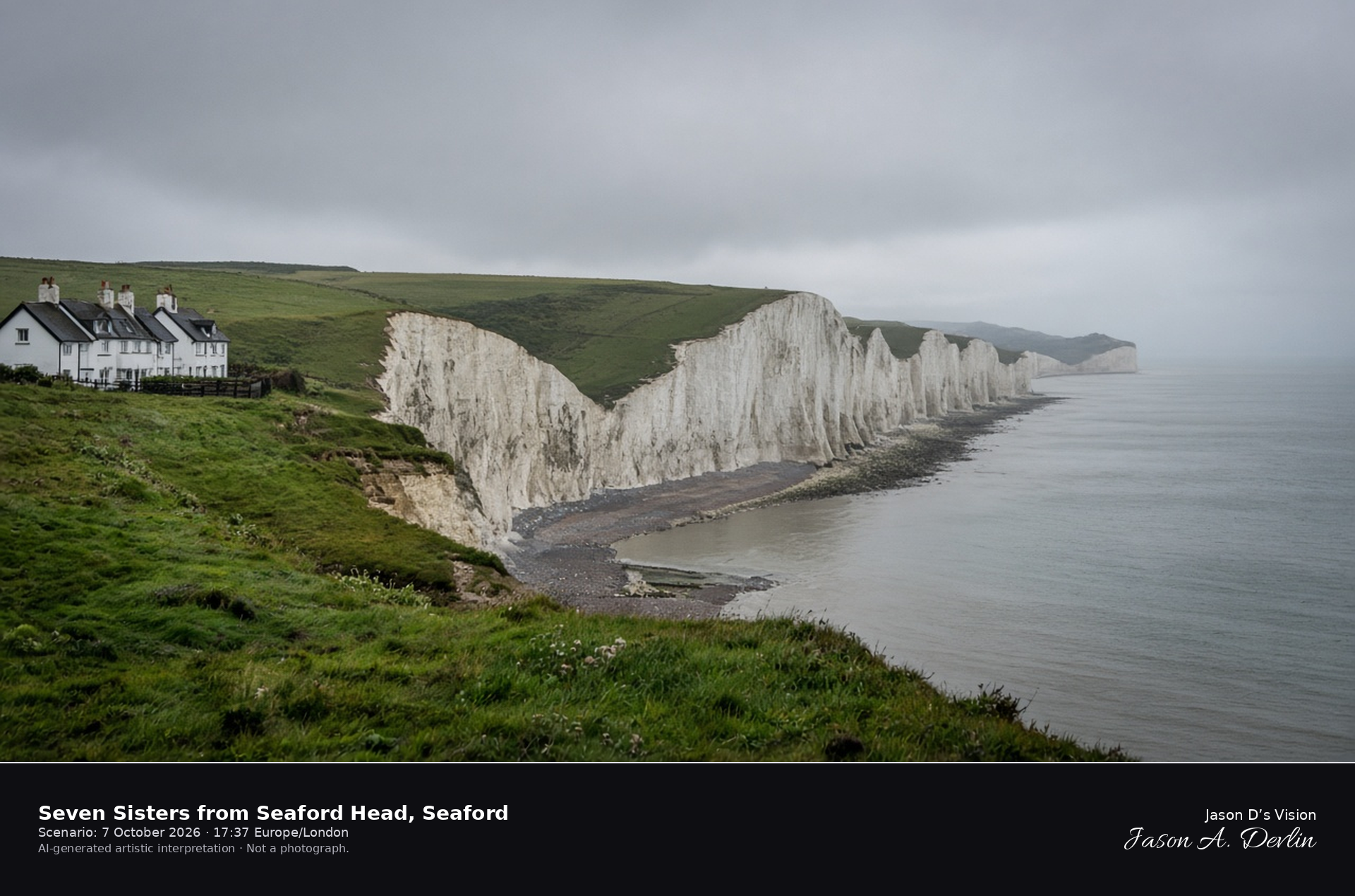
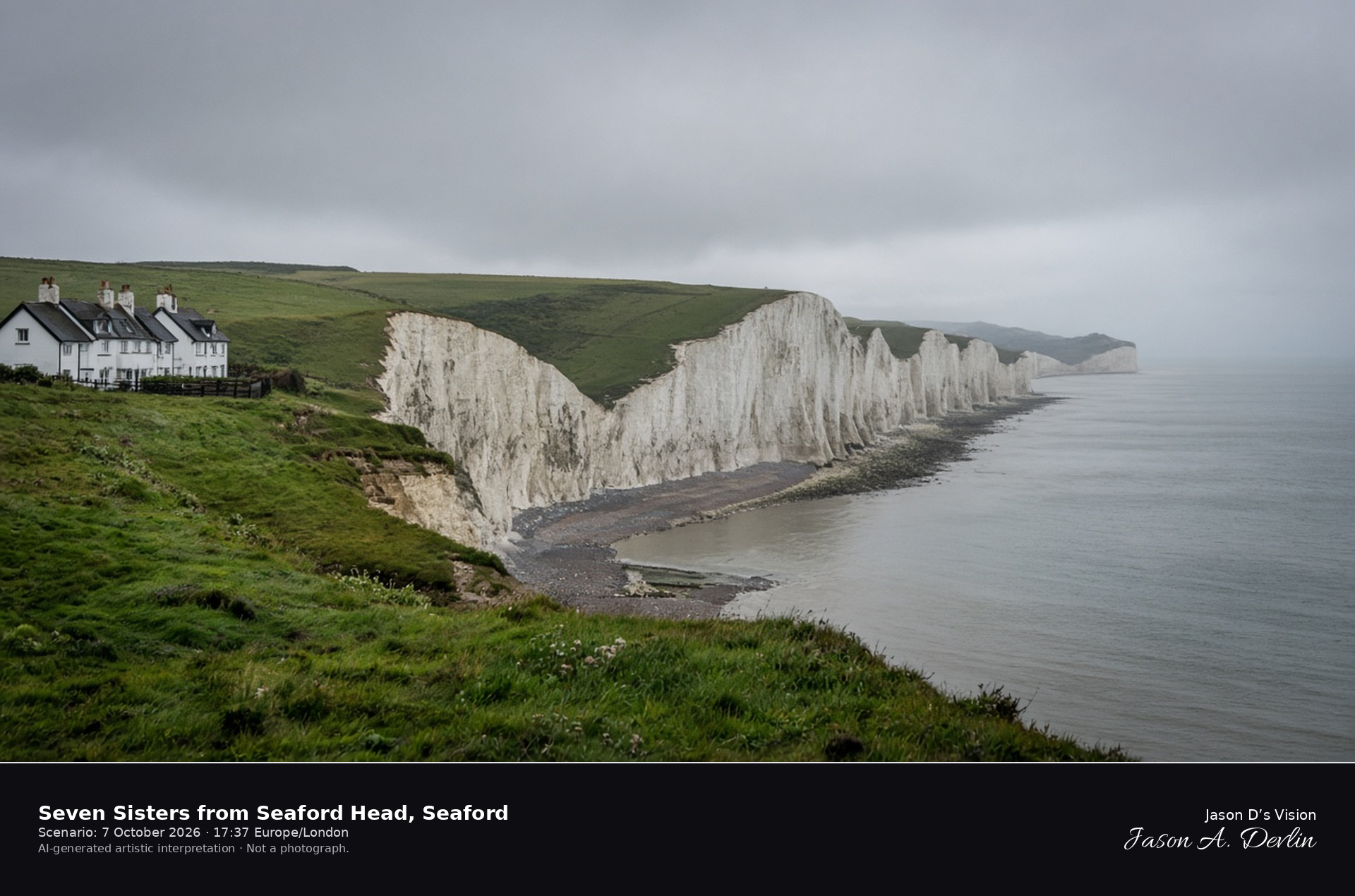
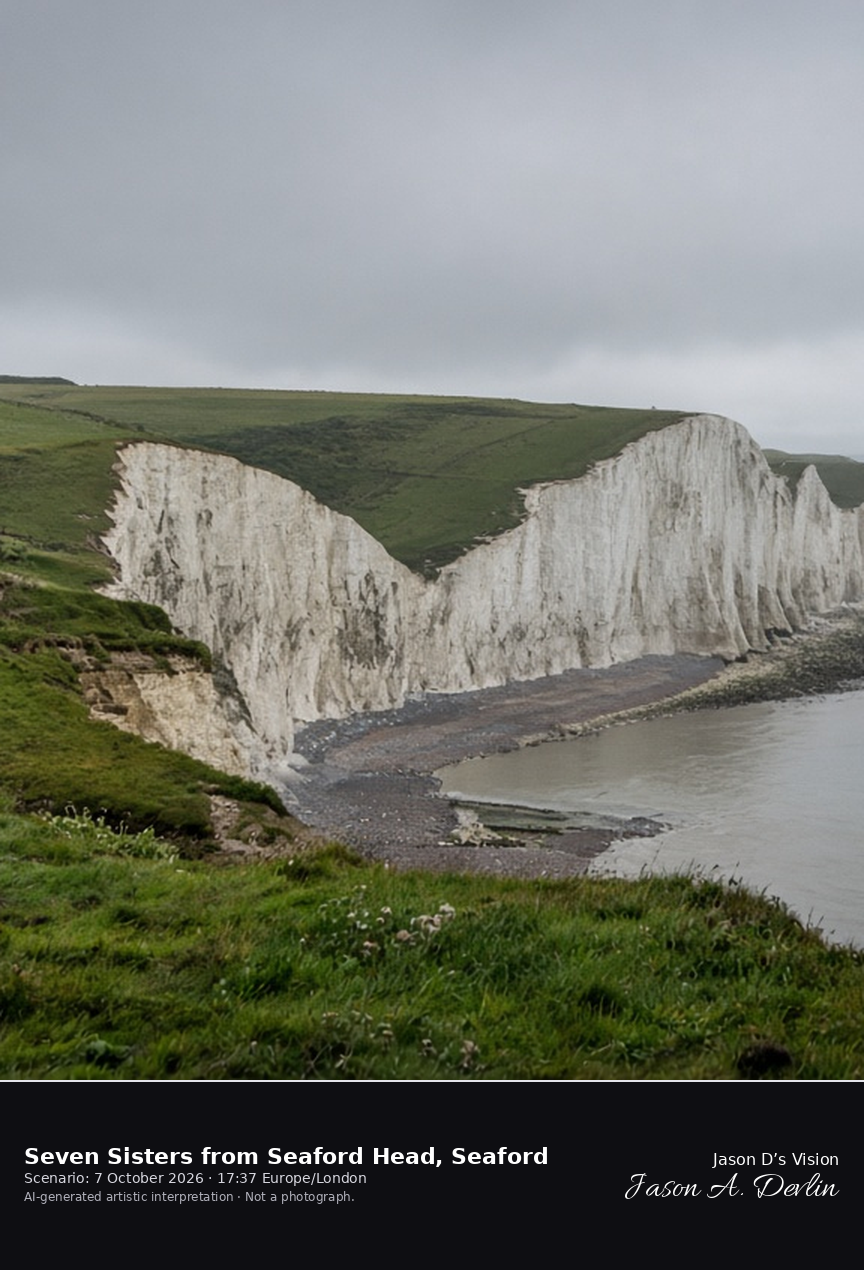
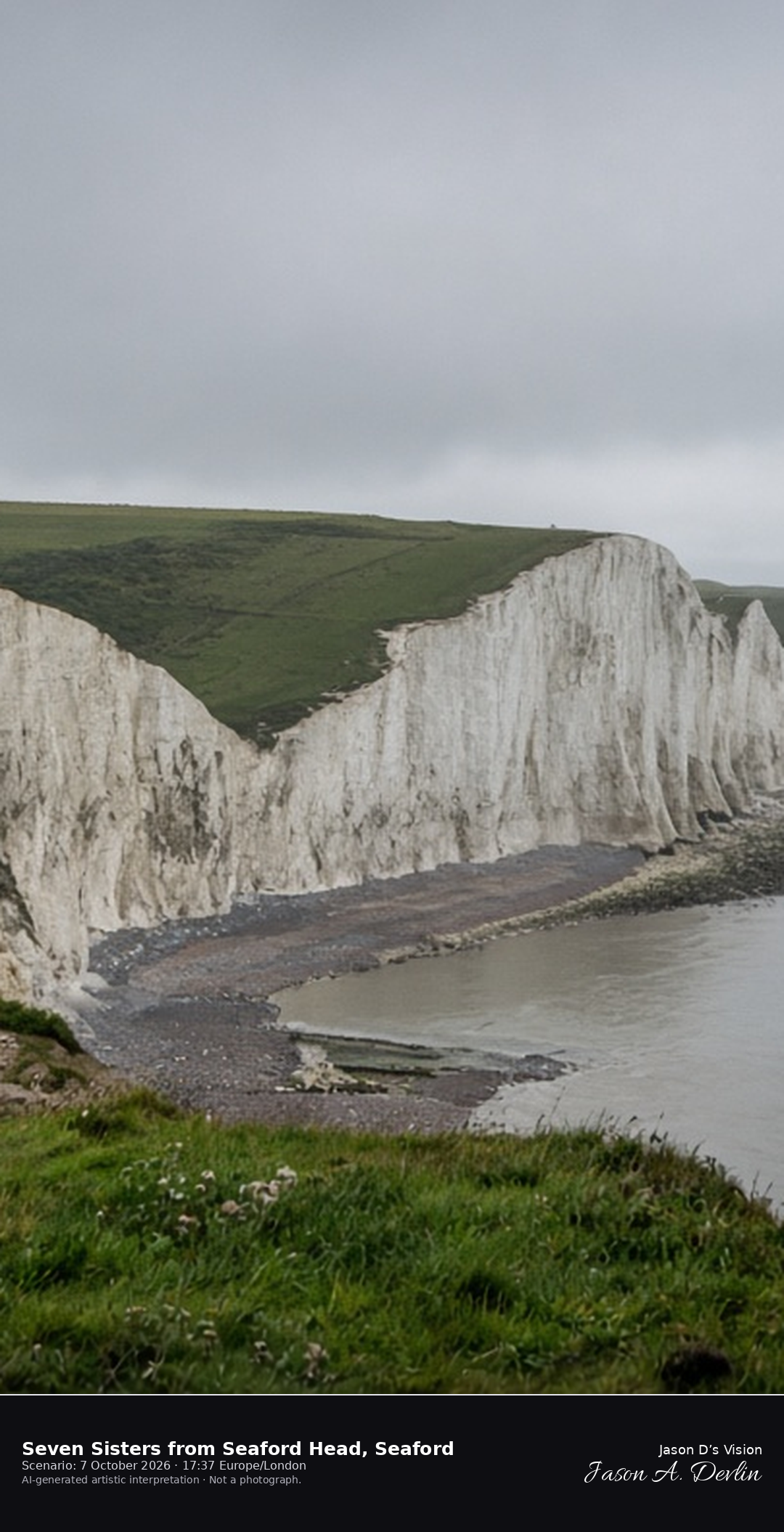
Seven Sisters from Seaford Head, Seaford · AI-generated artistic interpretation
The Seven Sisters are a series of chalk cliffs between Cuckmere Haven and Birling Gap in East Sussex, within the South Downs National Park. The view from Seaford Head past the Coastguard Cottages is one of the best-known coastal views in England.
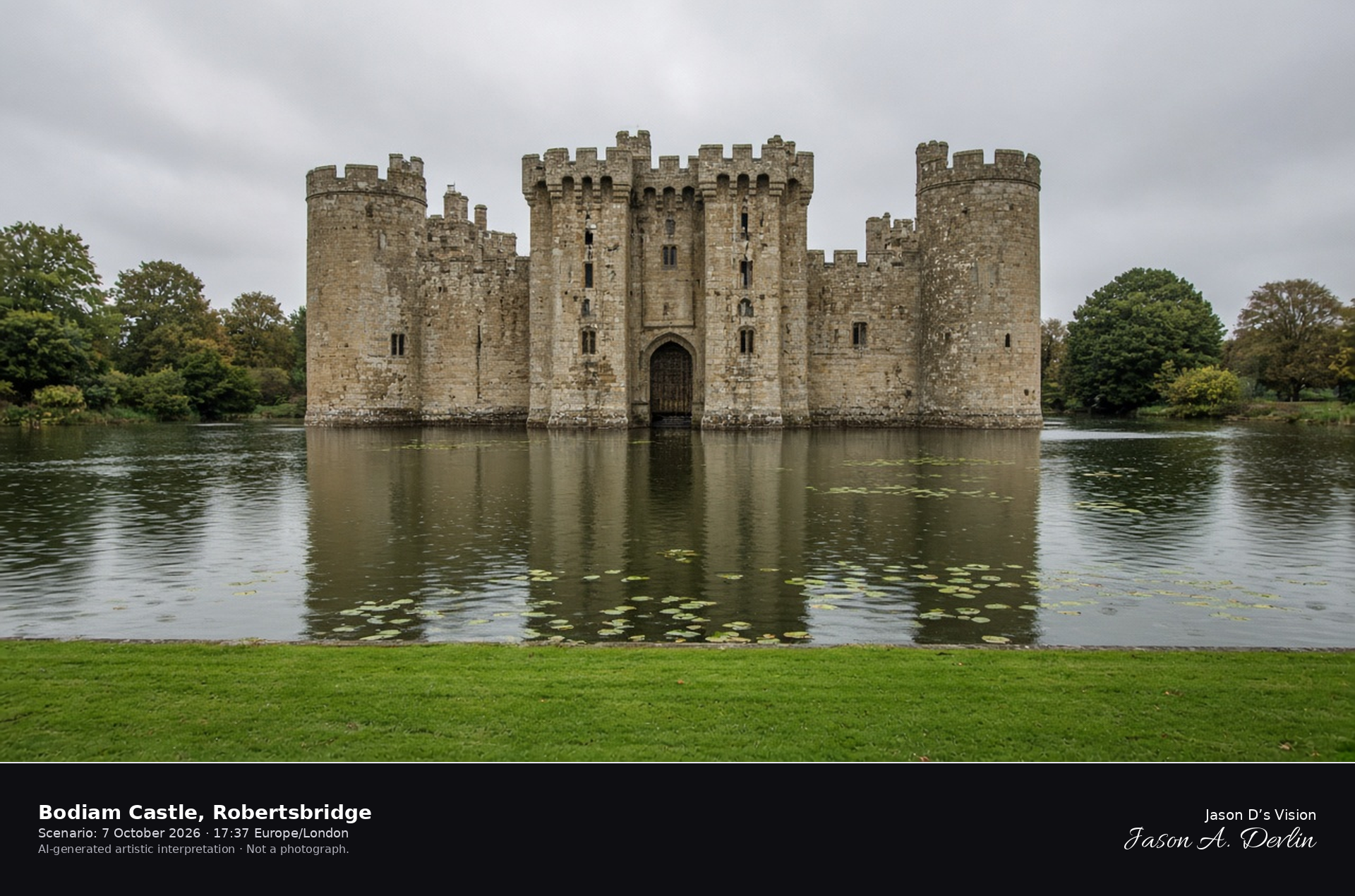
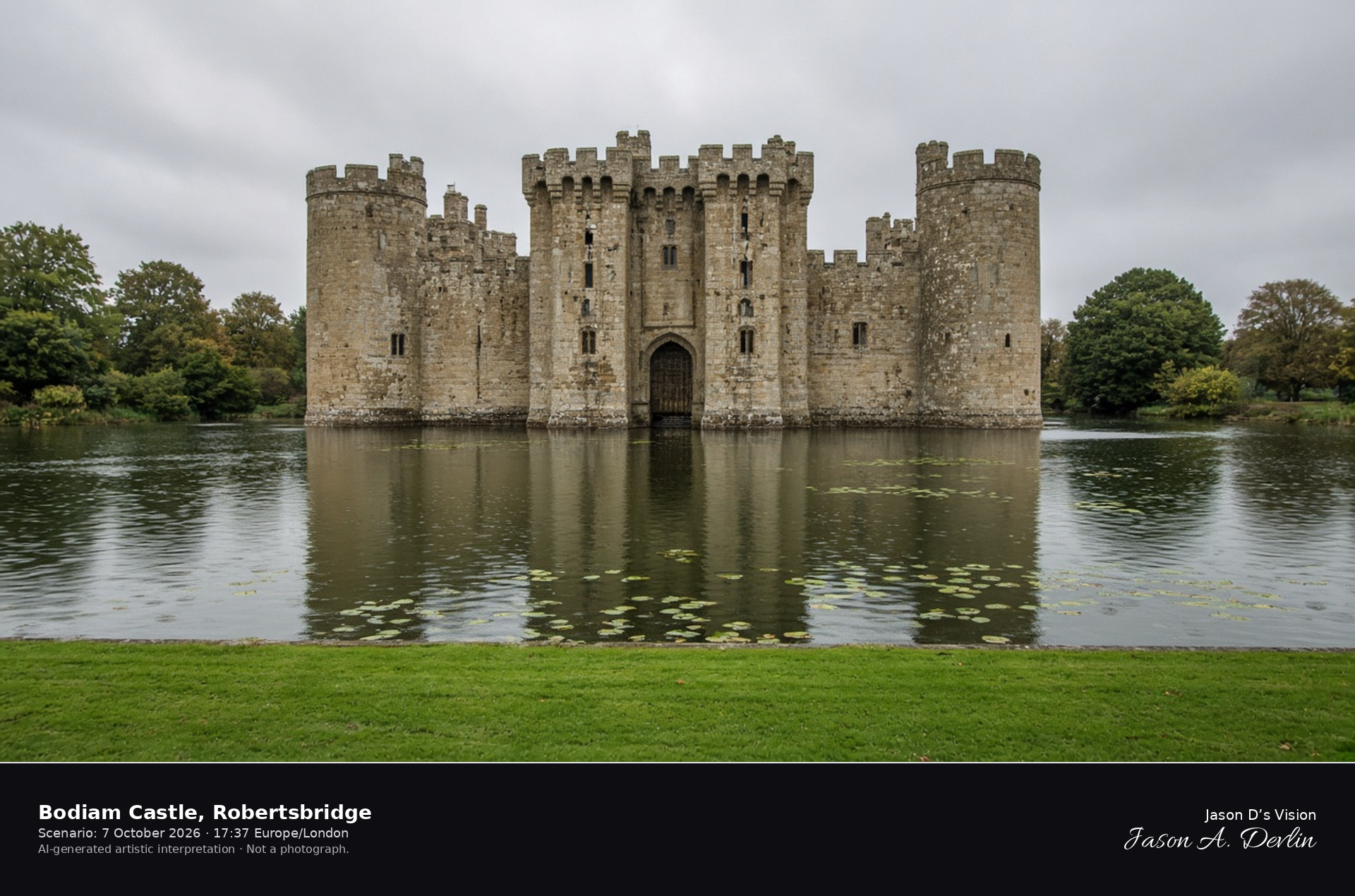
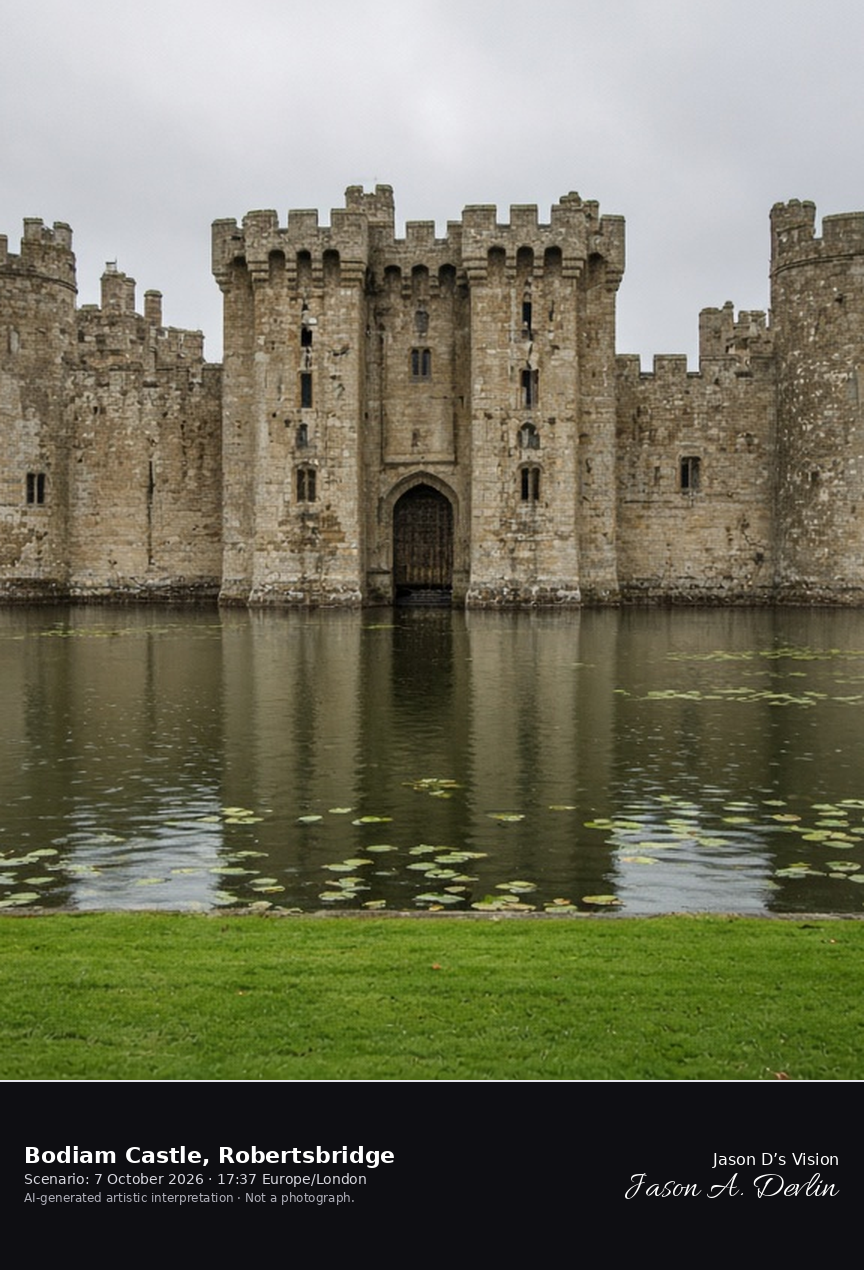
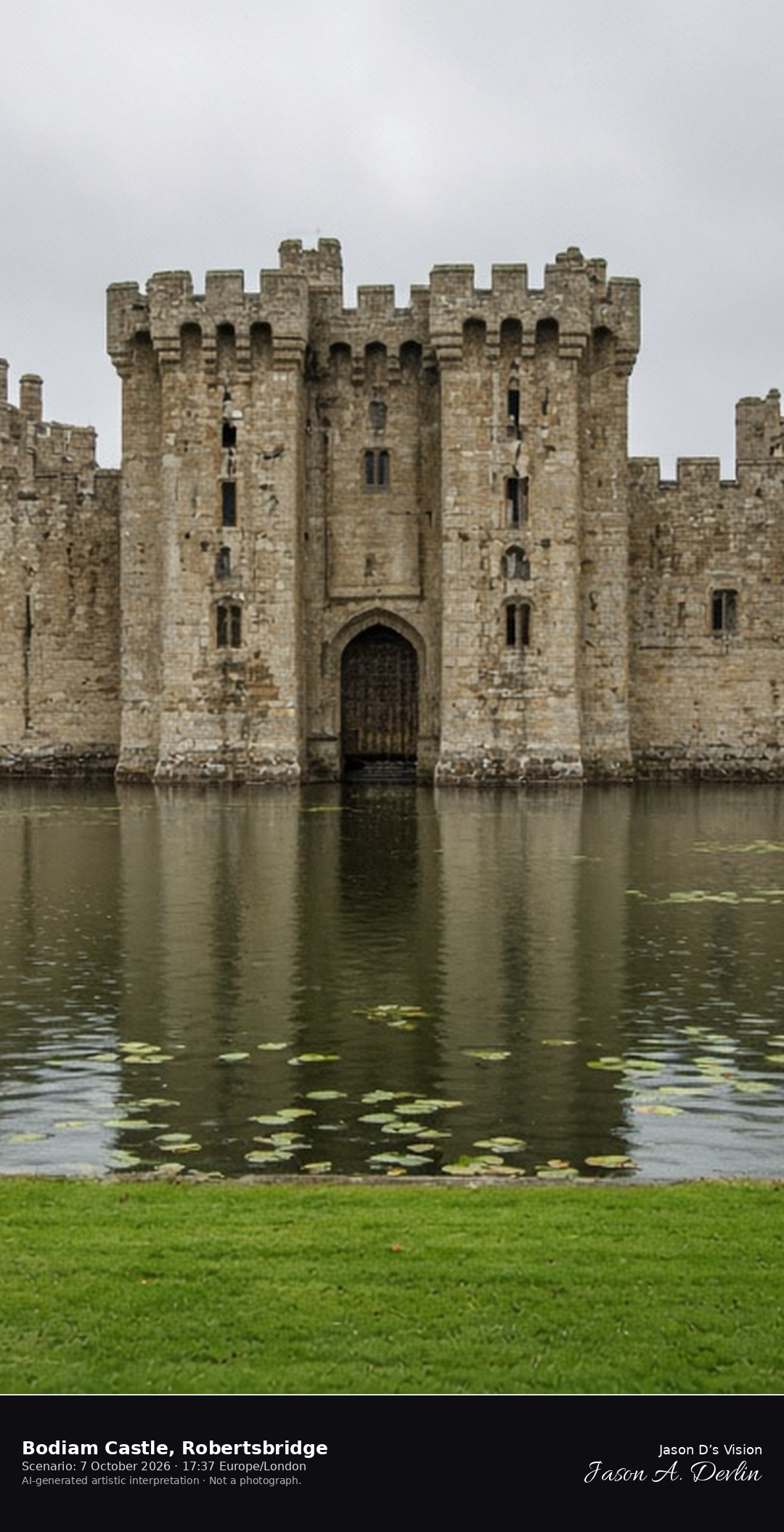
Sir Edward Dalyngrigge received Richard the Second’s permission to build Bodiam Castle in 1385, amid fears of French attack. Its storybook outline rises from a spring-fed moat, while gunloops in the walls recall the defensive ambitions of its builder.
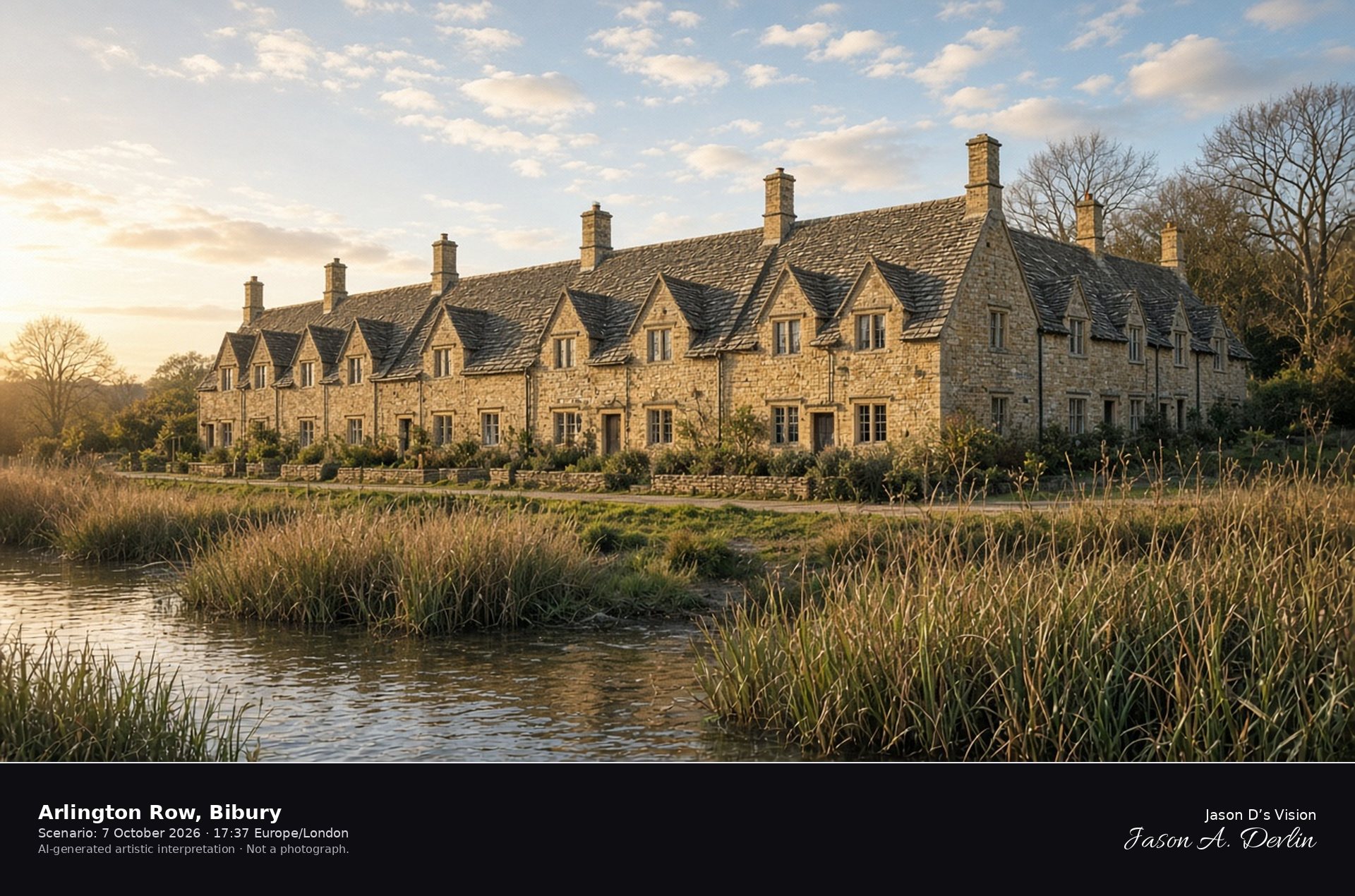
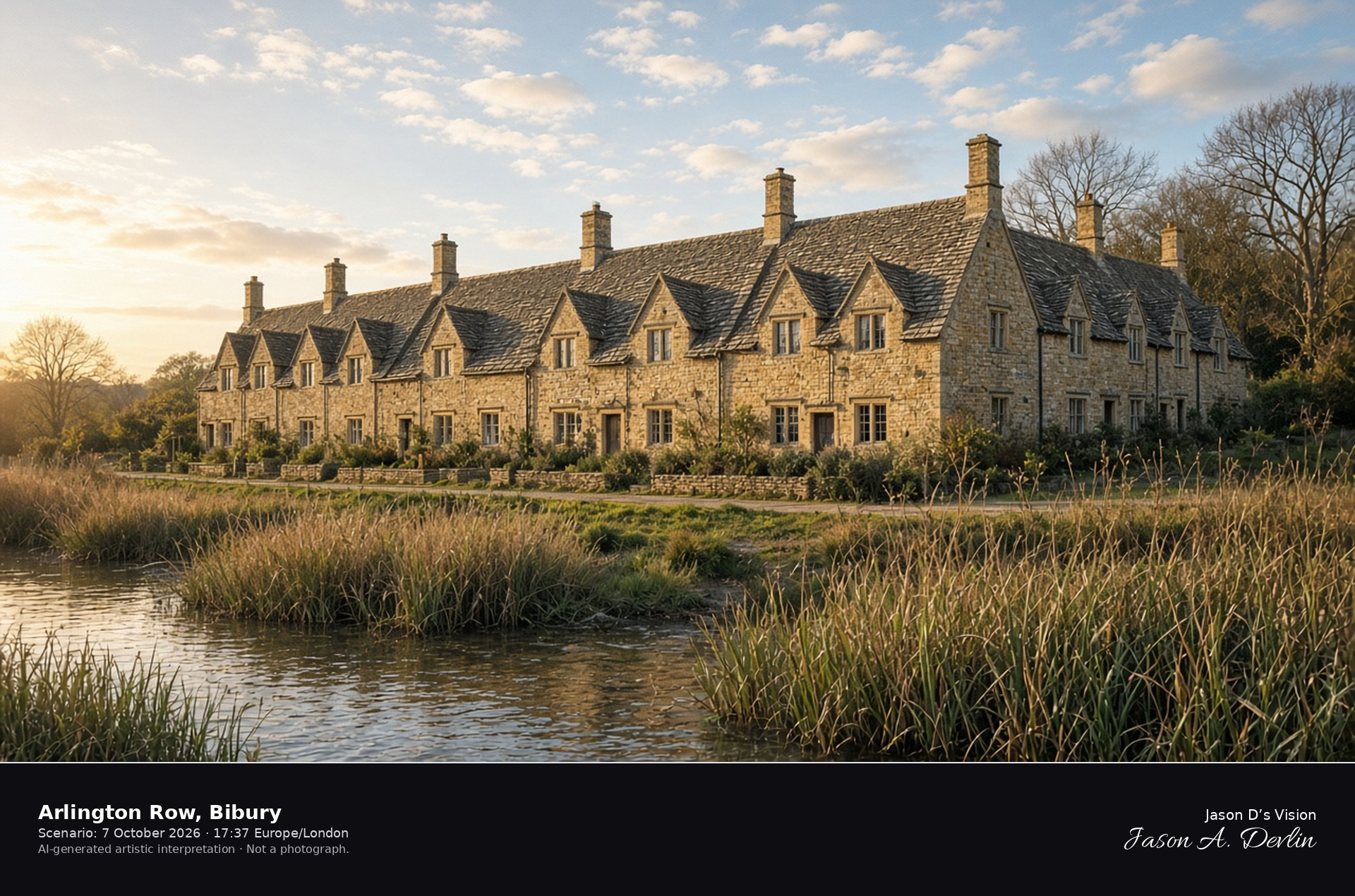
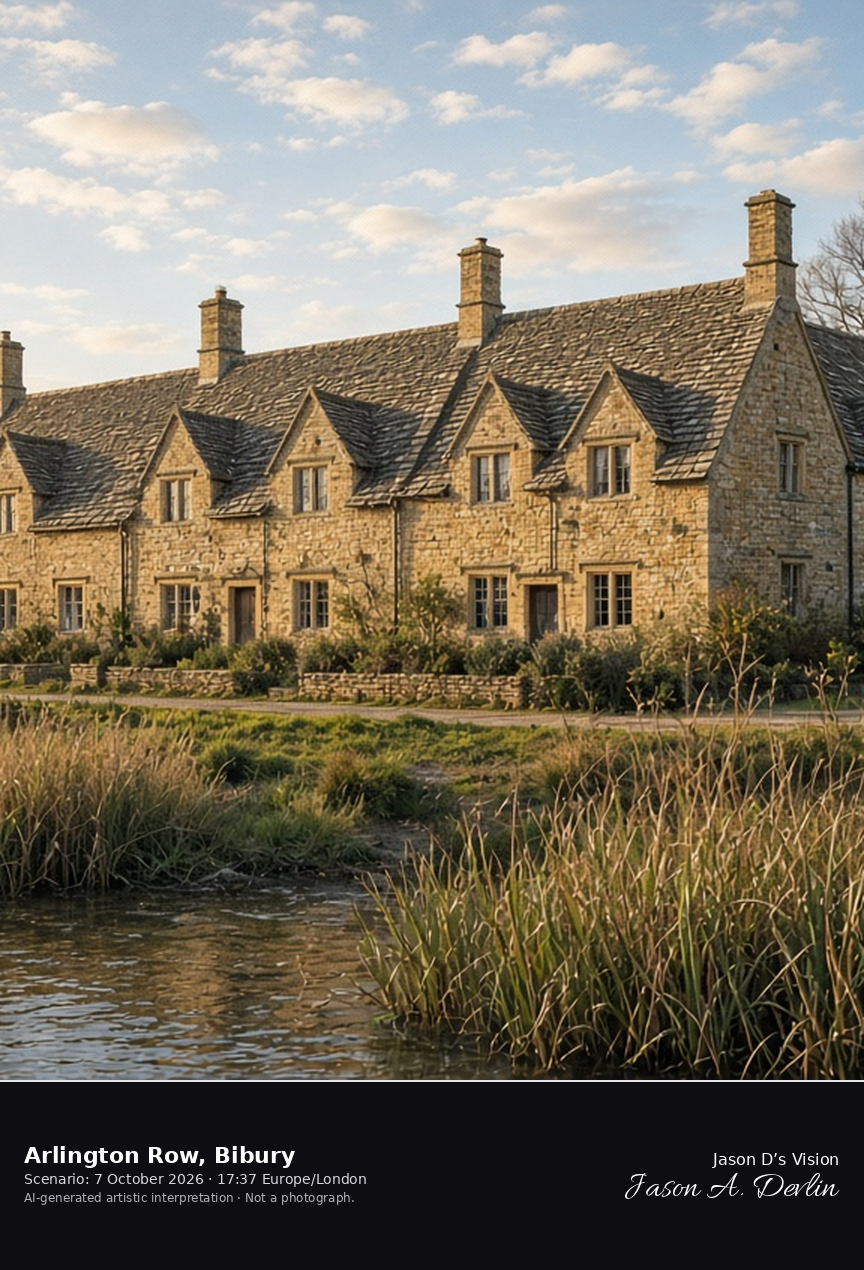
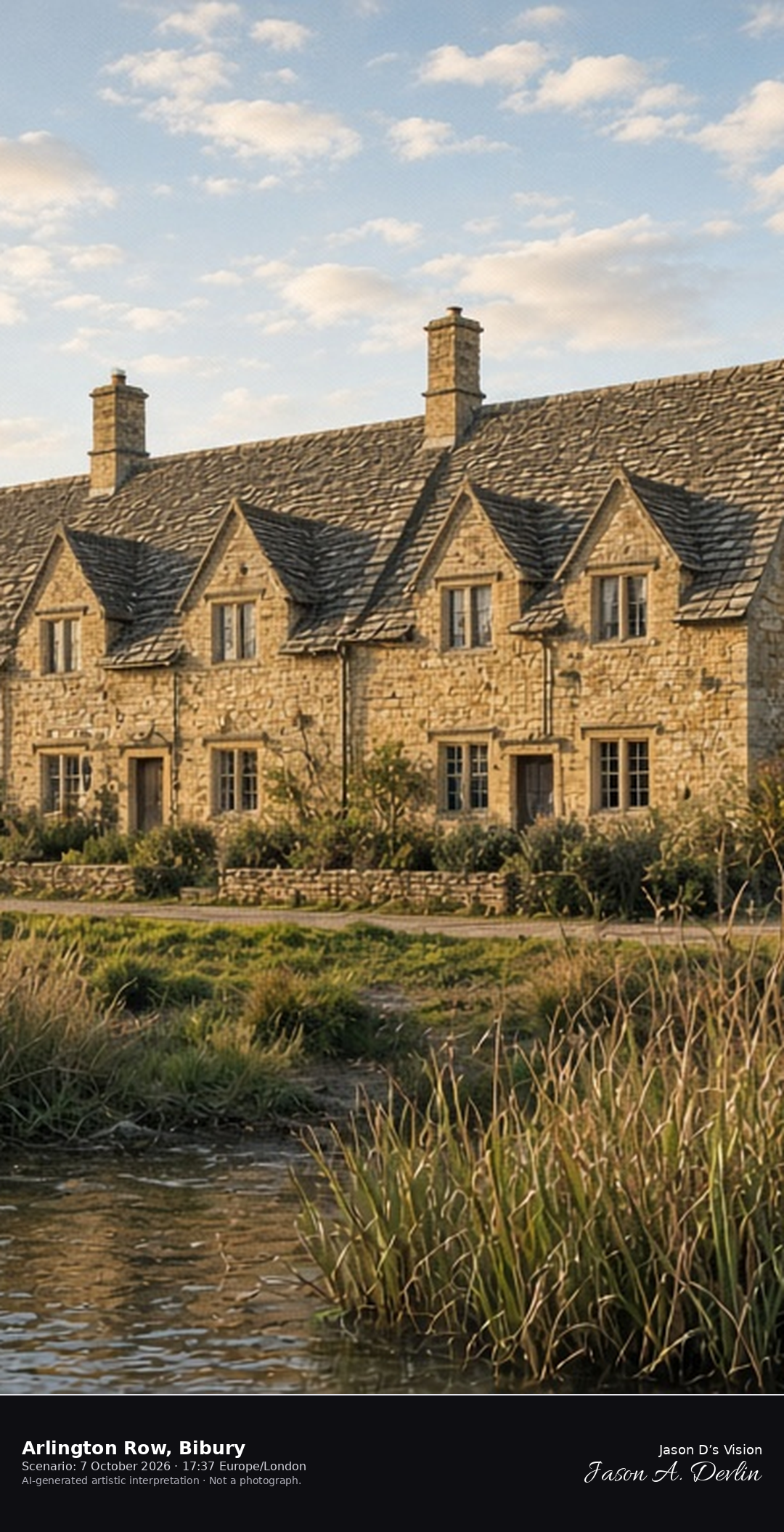
Arlington Row is a row of weavers' cottages in Bibury, Gloucestershire, converted in the 17th century from a 14th-century monastic wool store. It is one of the most photographed scenes in the Cotswolds and belongs to the National Trust.
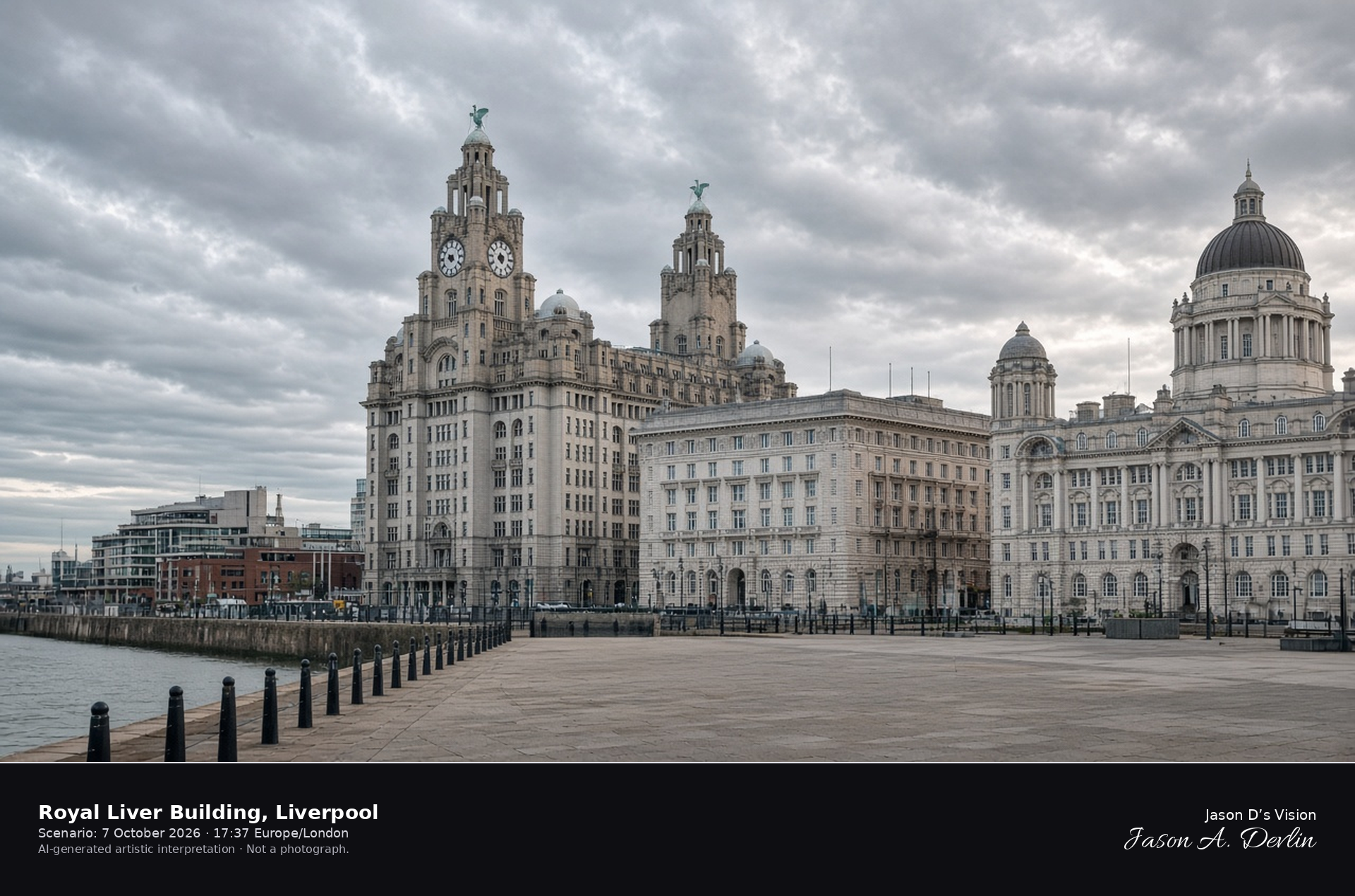
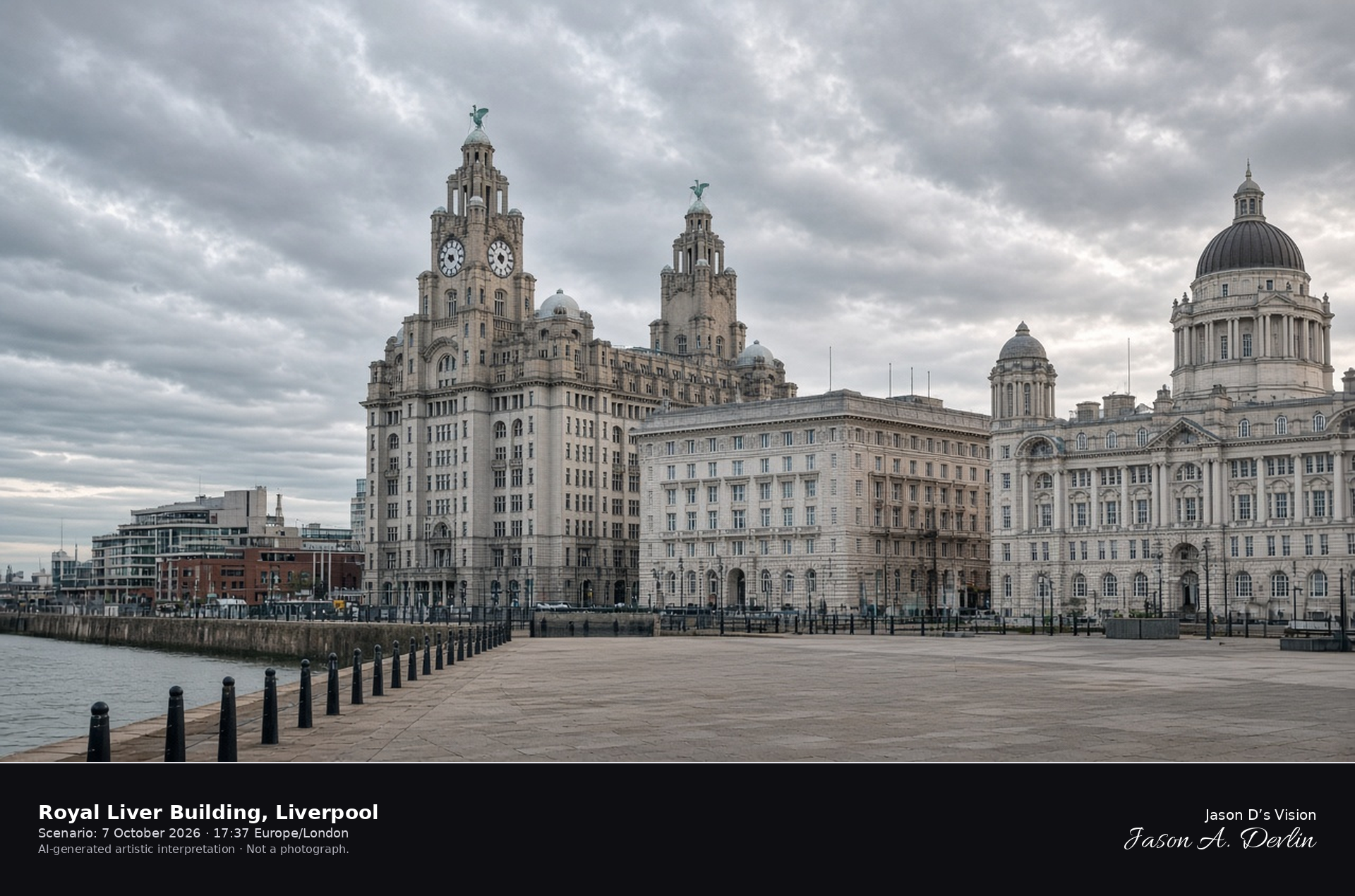
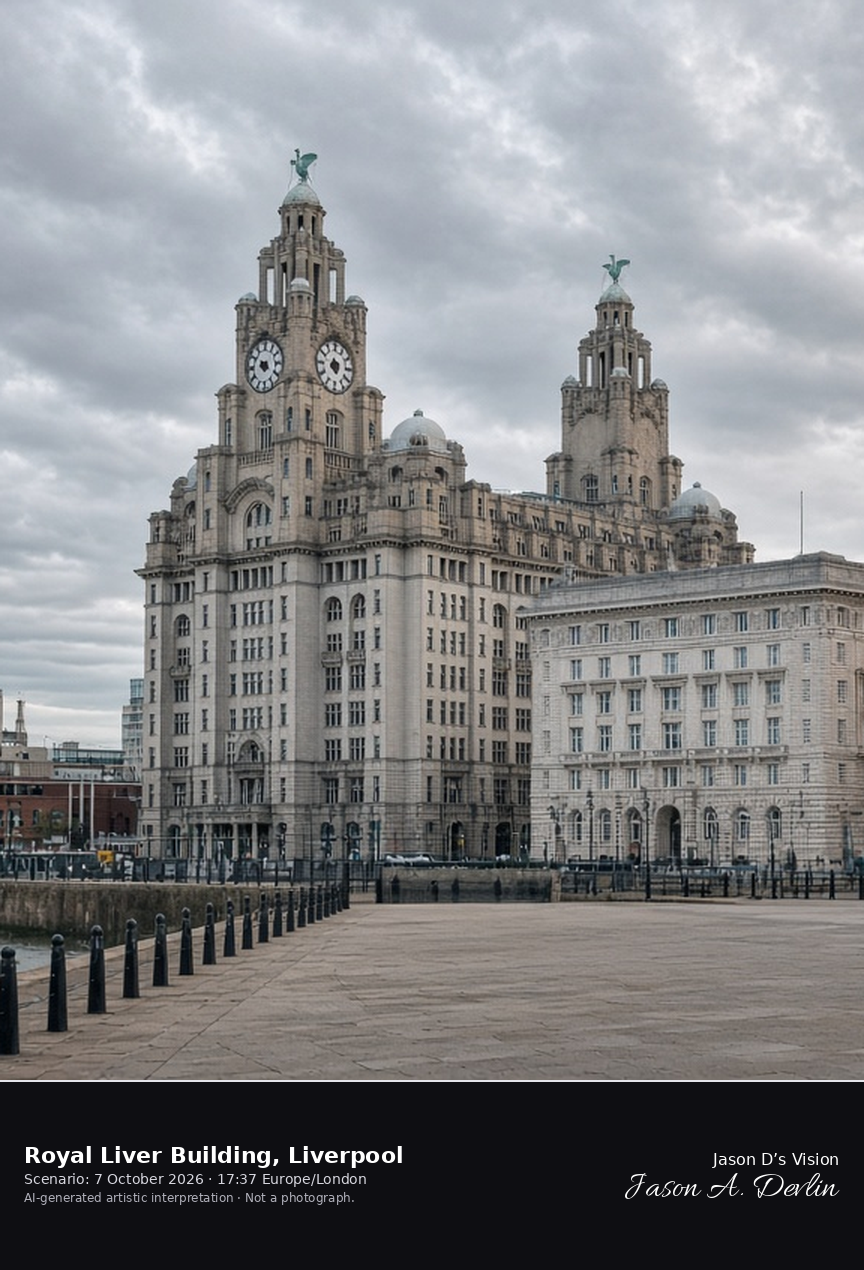
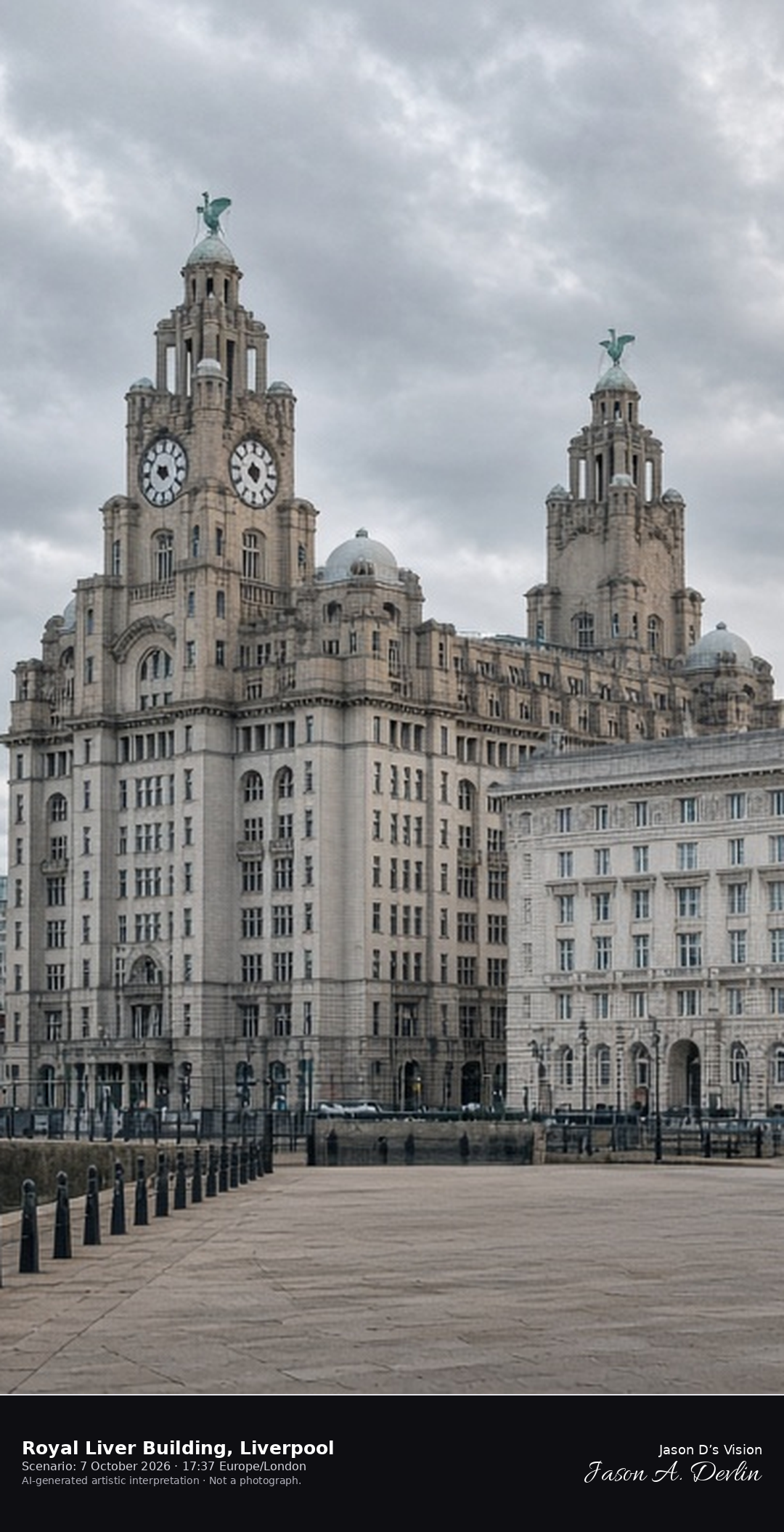
Royal Liver Building, Liverpool · AI-generated artistic interpretation
The Royal Liver Building, opened in 1911, was one of the first large buildings in the world built with reinforced concrete. With the Cunard Building and the Port of Liverpool Building it forms the Three Graces at the Pier Head on the River Mersey.
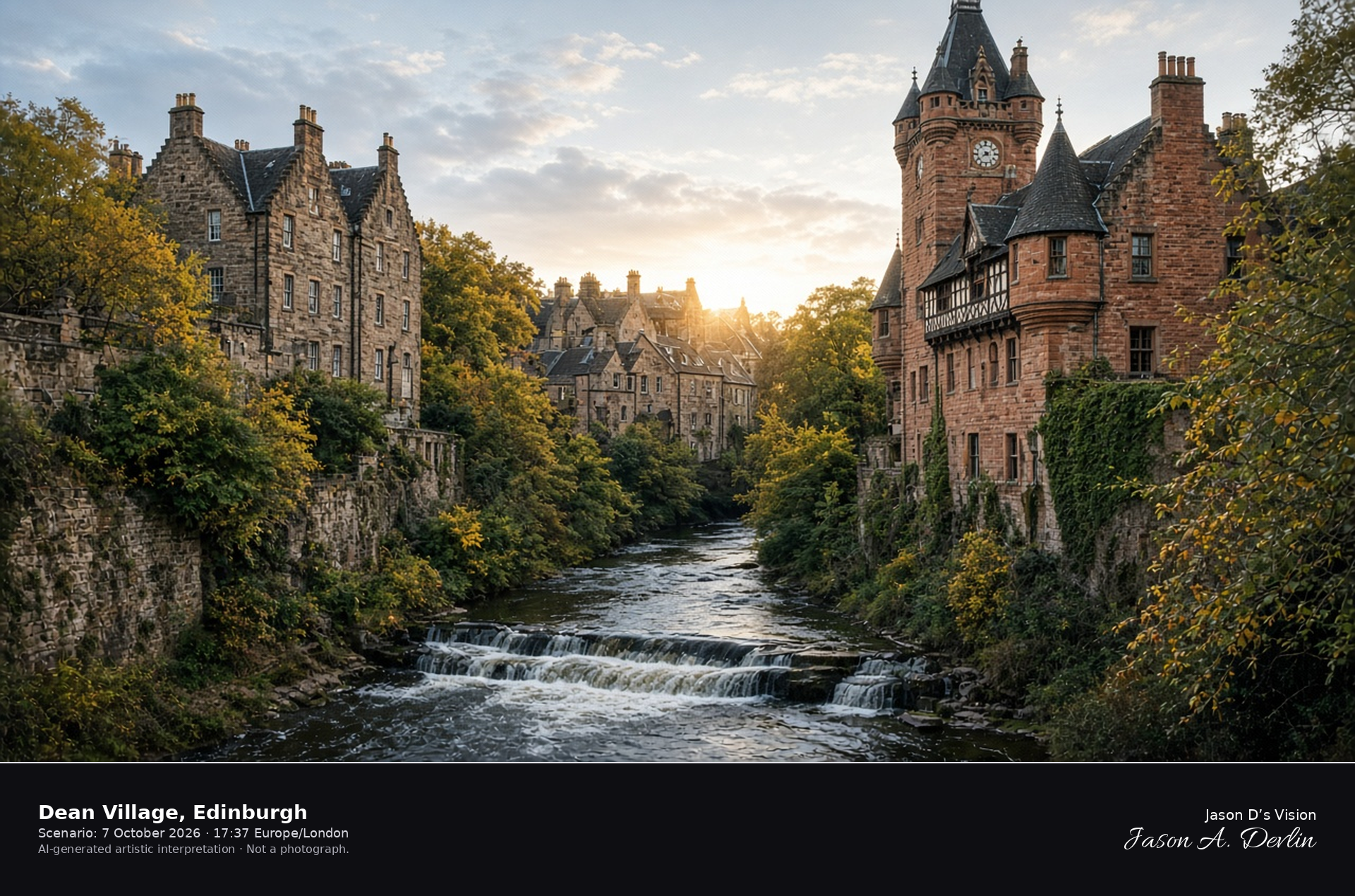
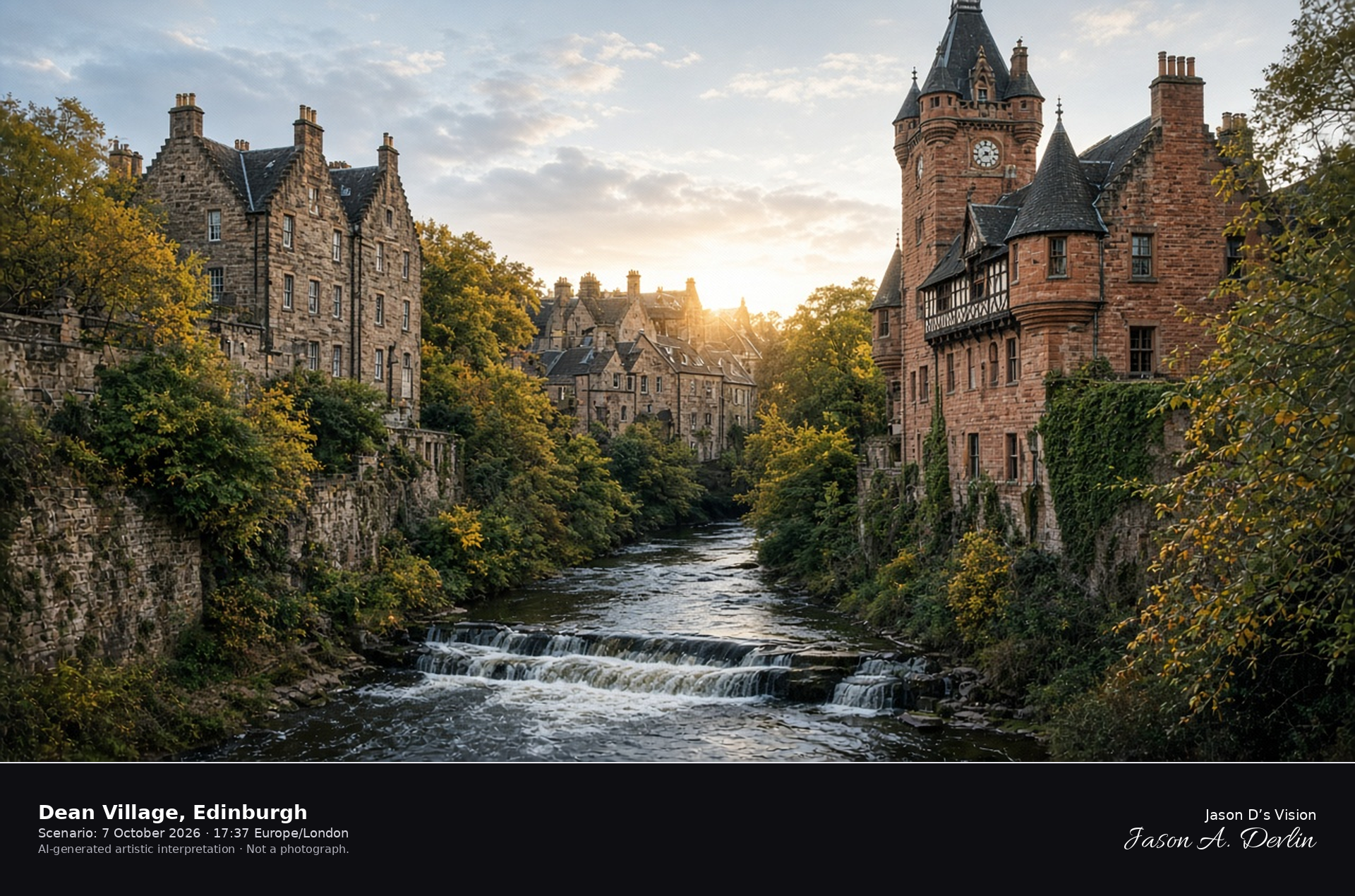
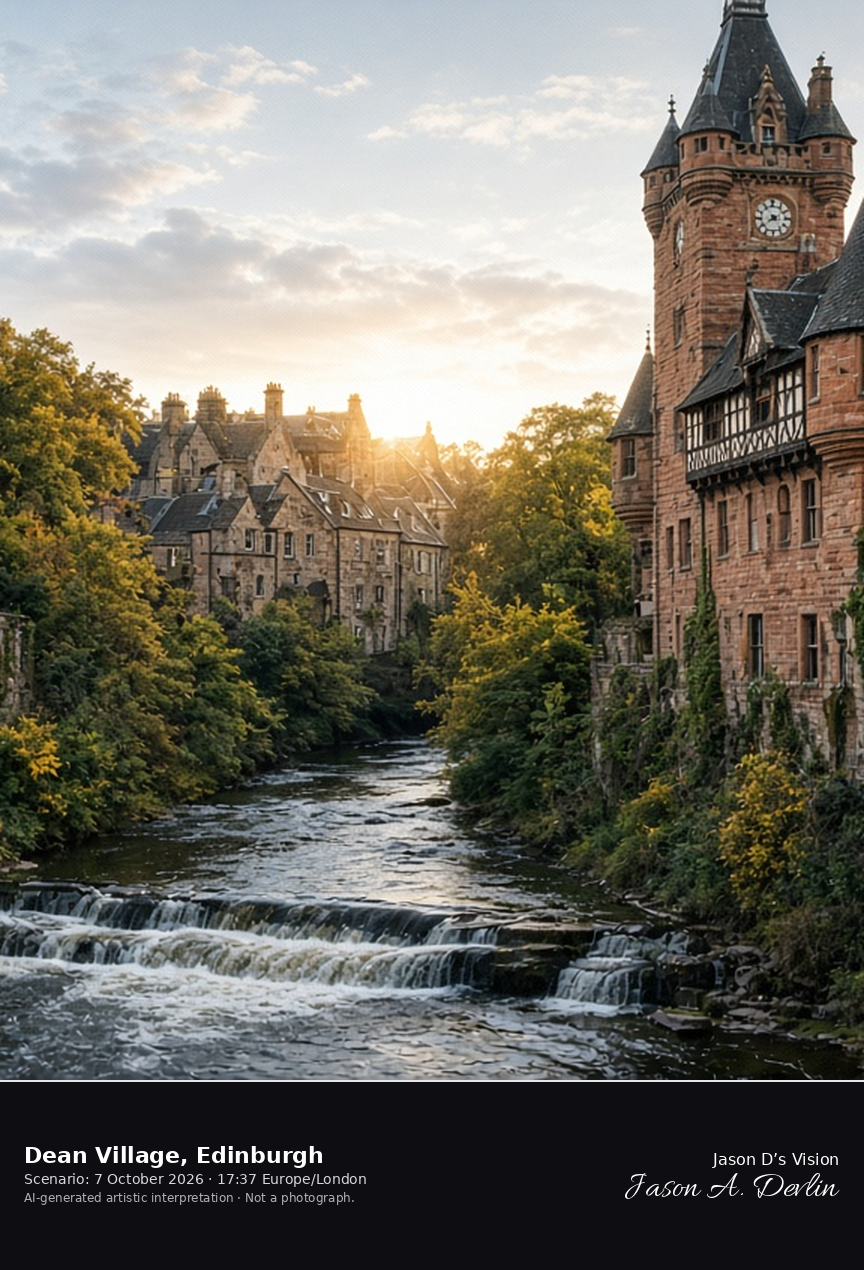
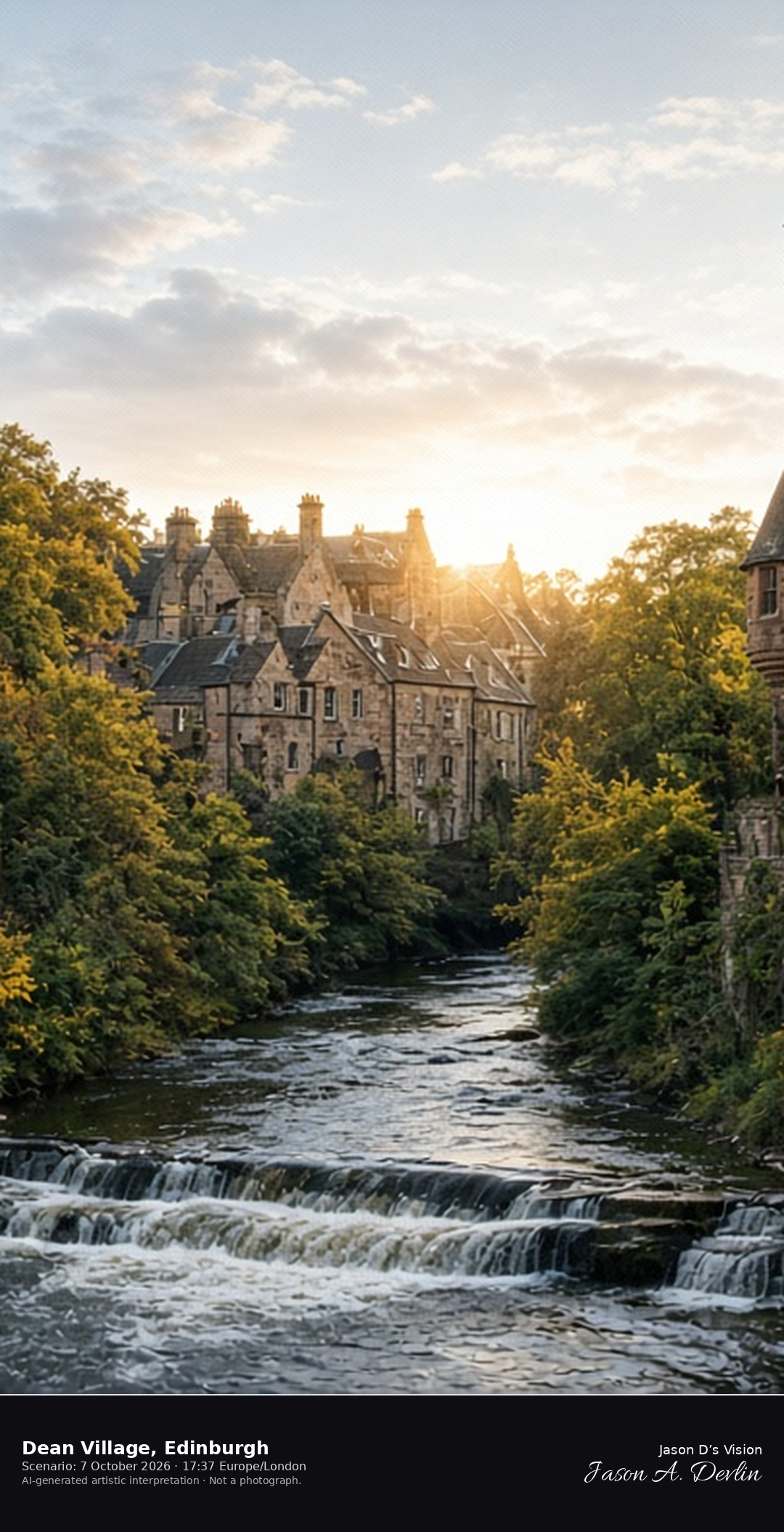
Dean Village, Edinburgh · AI-generated artistic interpretation
Dean Village was a milling village on the Water of Leith for some 800 years and is now a conservation area within the Edinburgh World Heritage Site. Well Court was built in the 1880s as model housing for local workers.
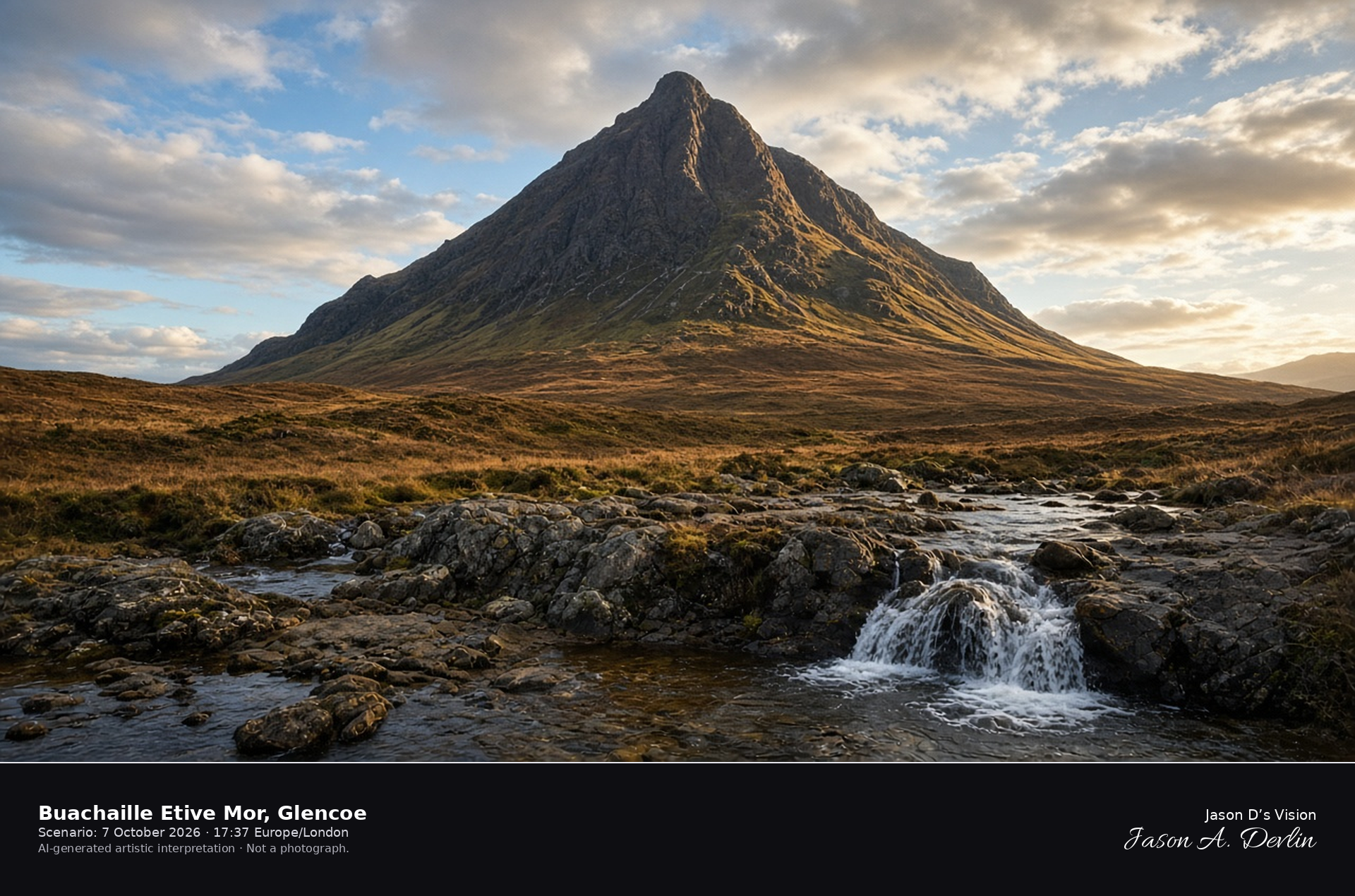
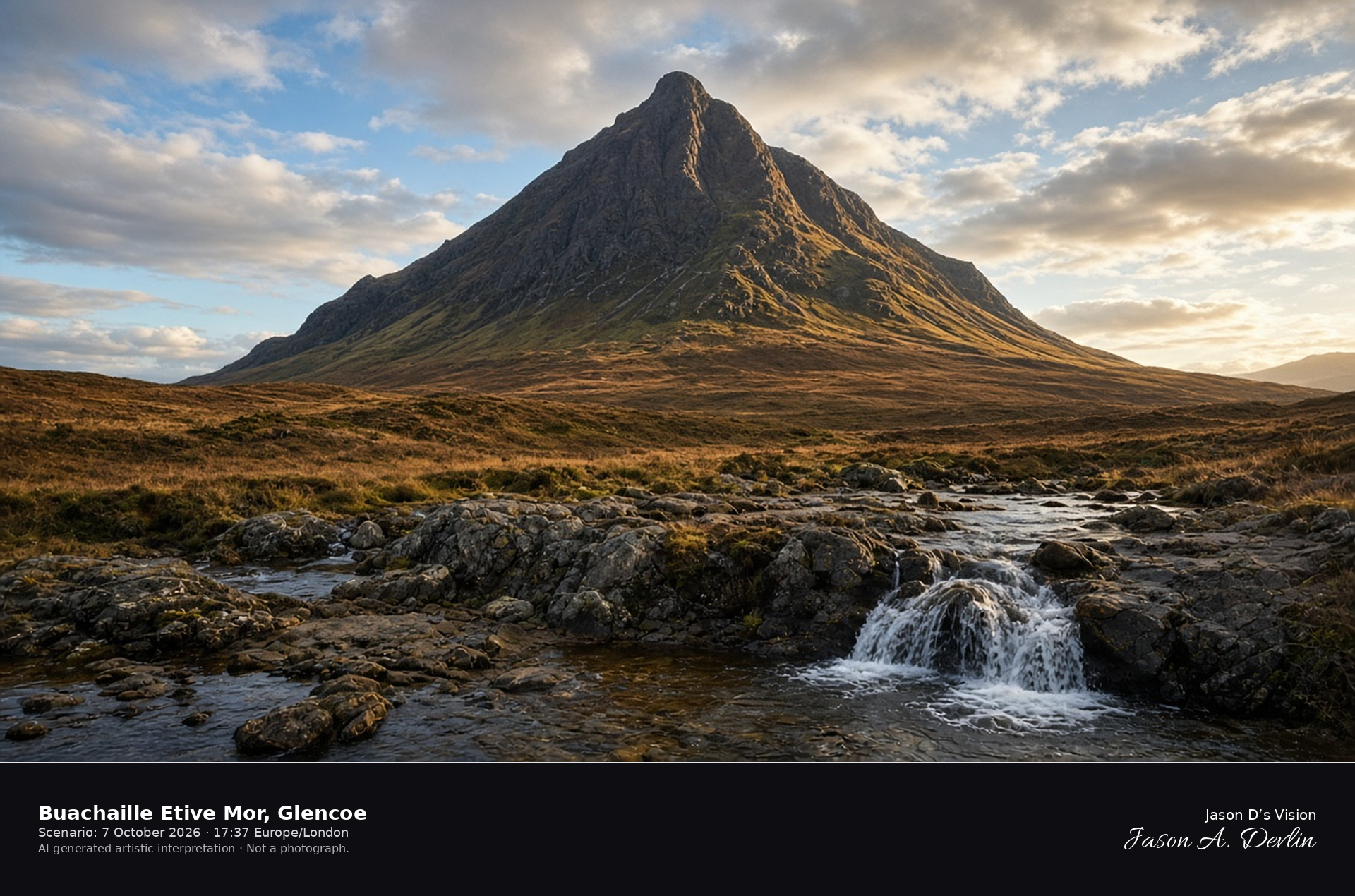
Buachaille Etive Mor is a 1,022 m mountain at the head of Glen Etive in the Scottish Highlands, guarding the entrance to Glen Coe. The view of it above the falls on the River Coupall is one of the most photographed in Scotland.
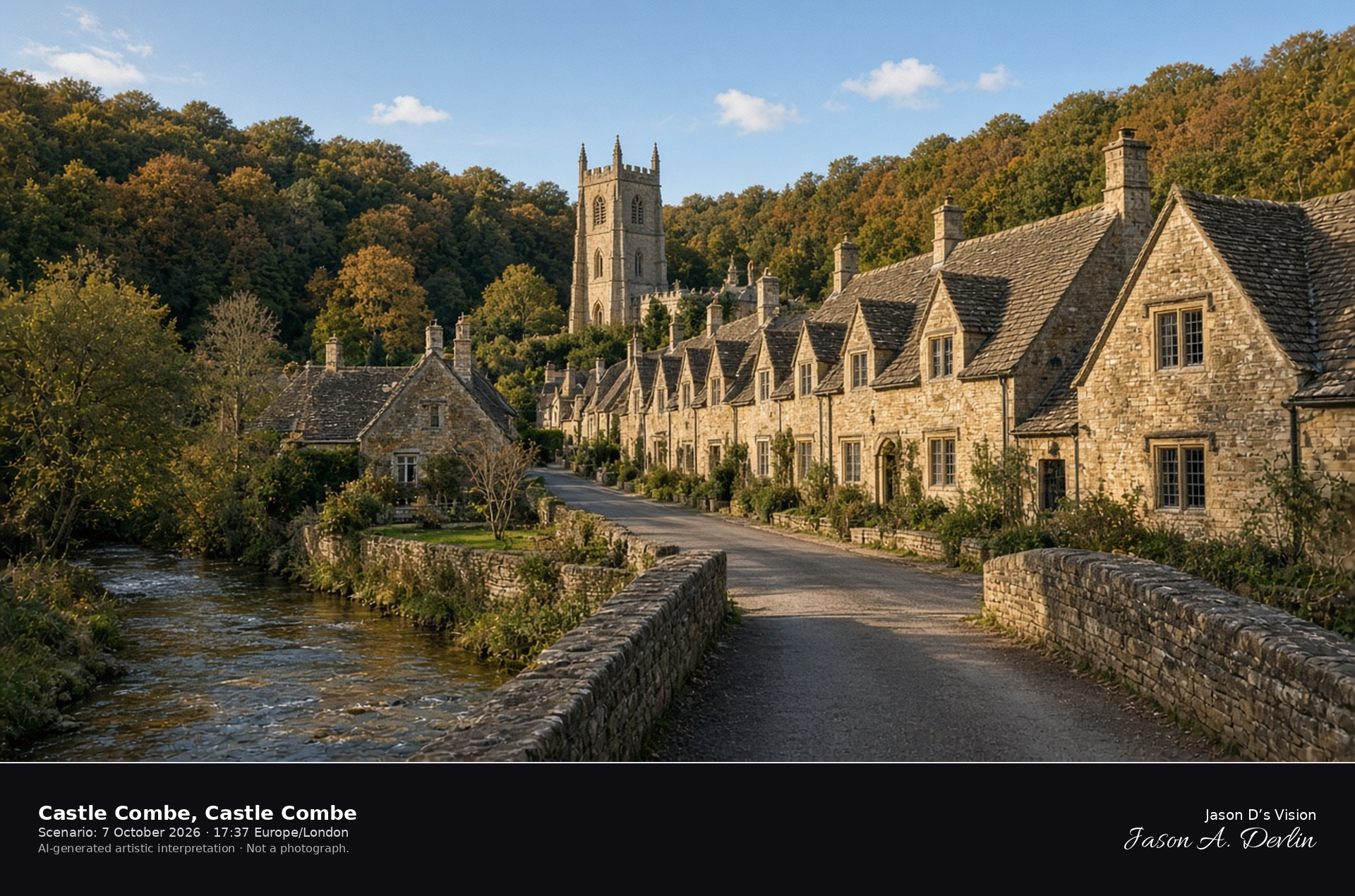
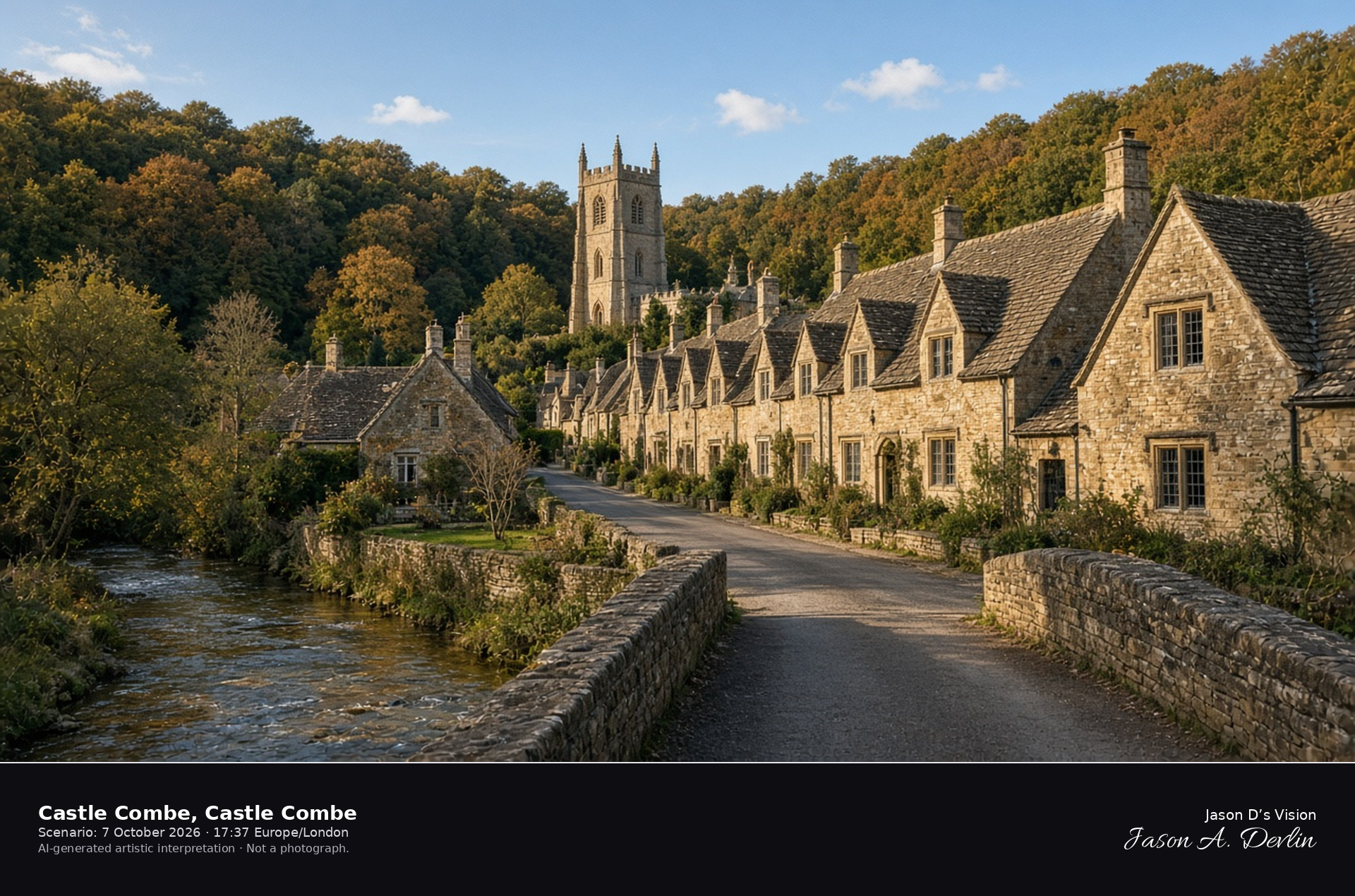
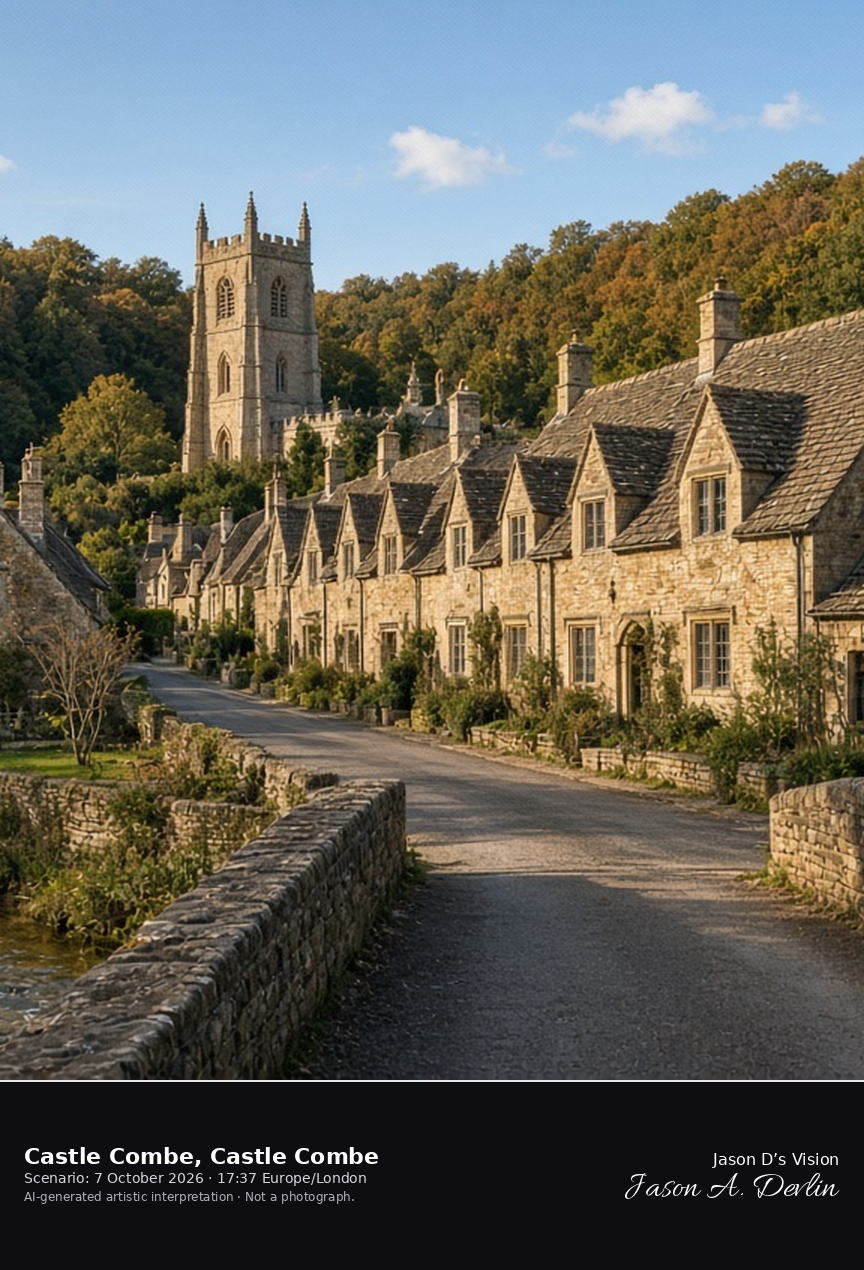
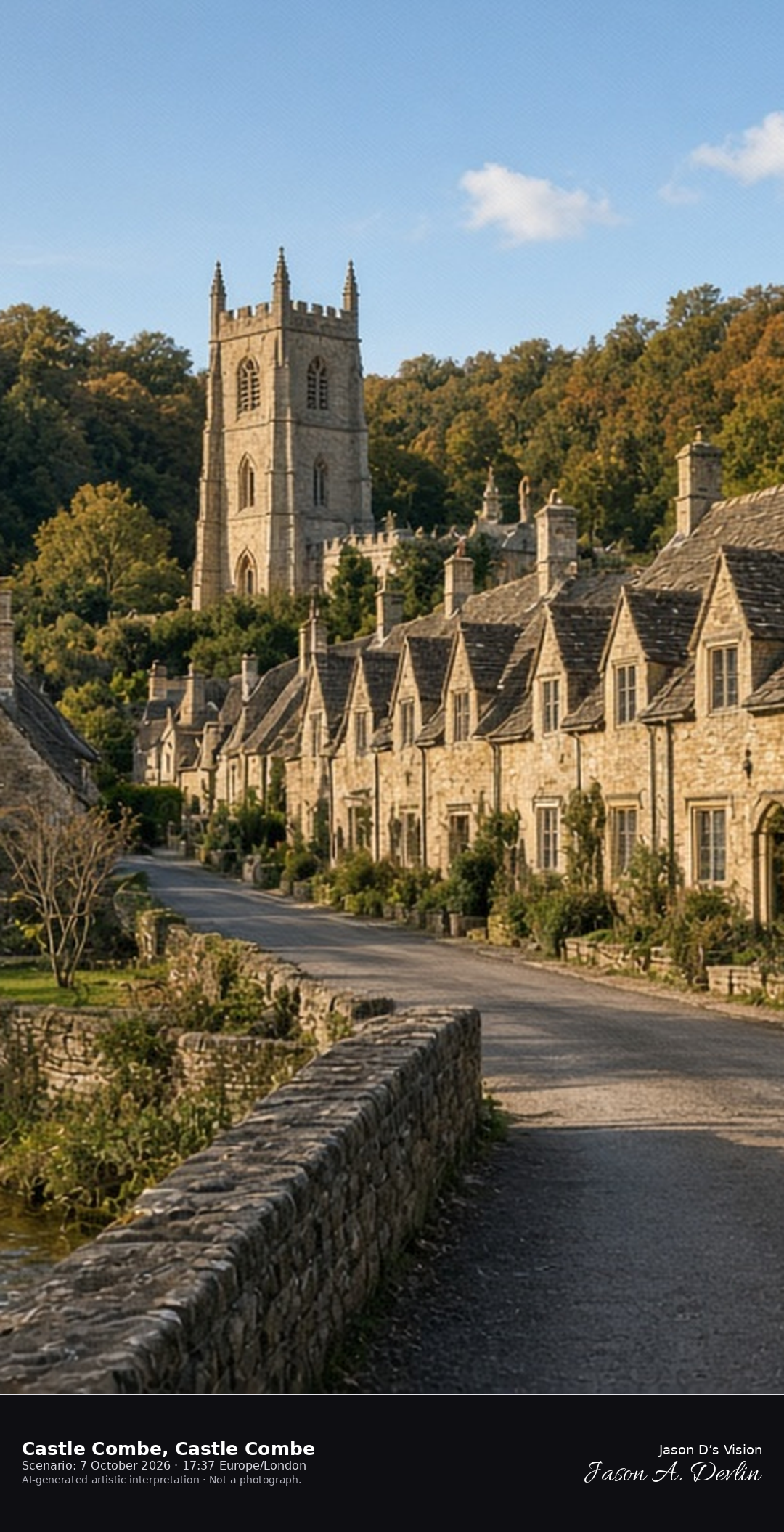
Castle Combe prospered through the medieval wool and cloth trade, and its fourteenth-century market cross still marks the village centre. Often described as England's prettiest village, it has served as a filming location for productions including Doctor Dolittle and War Horse.
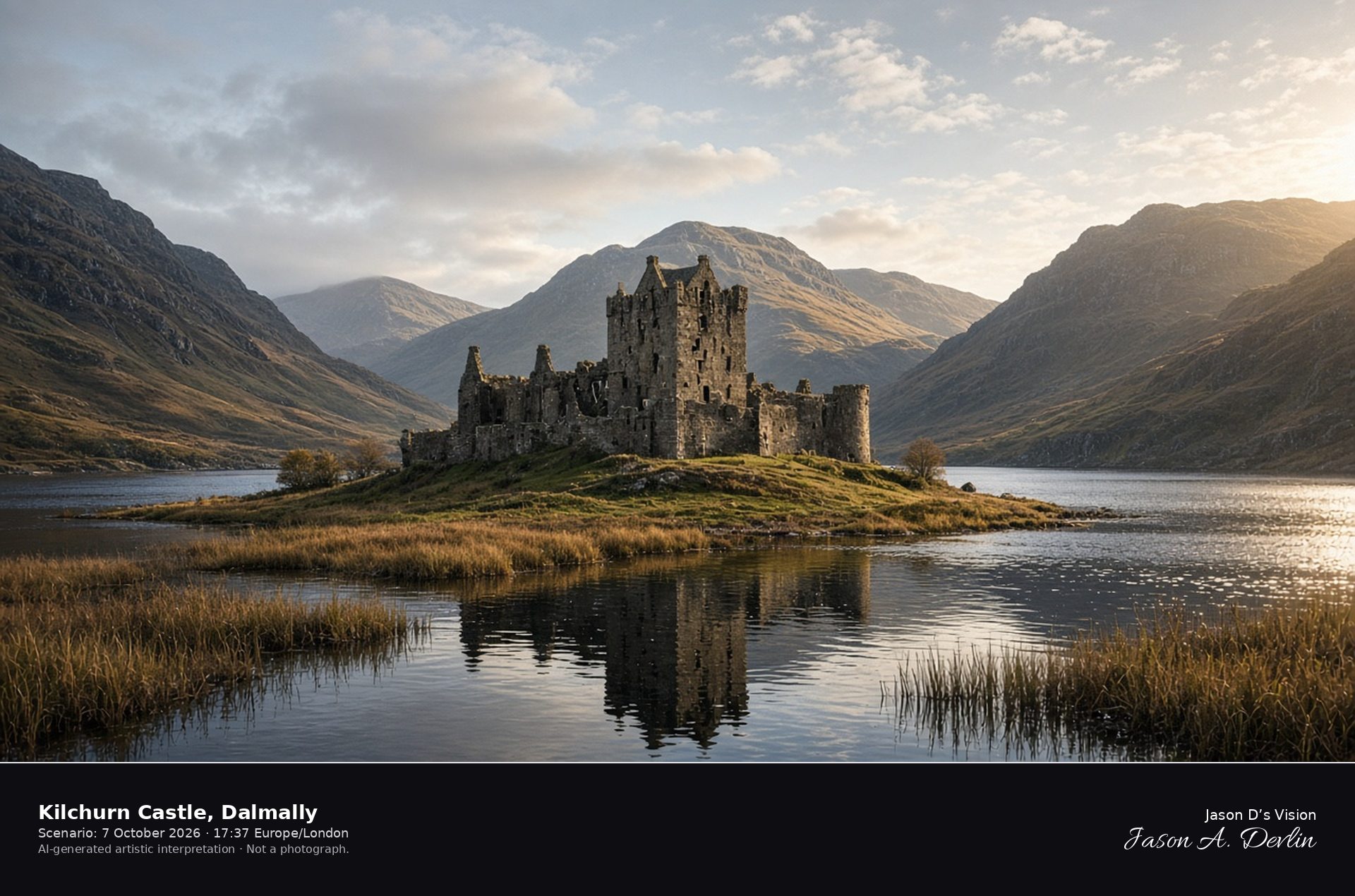
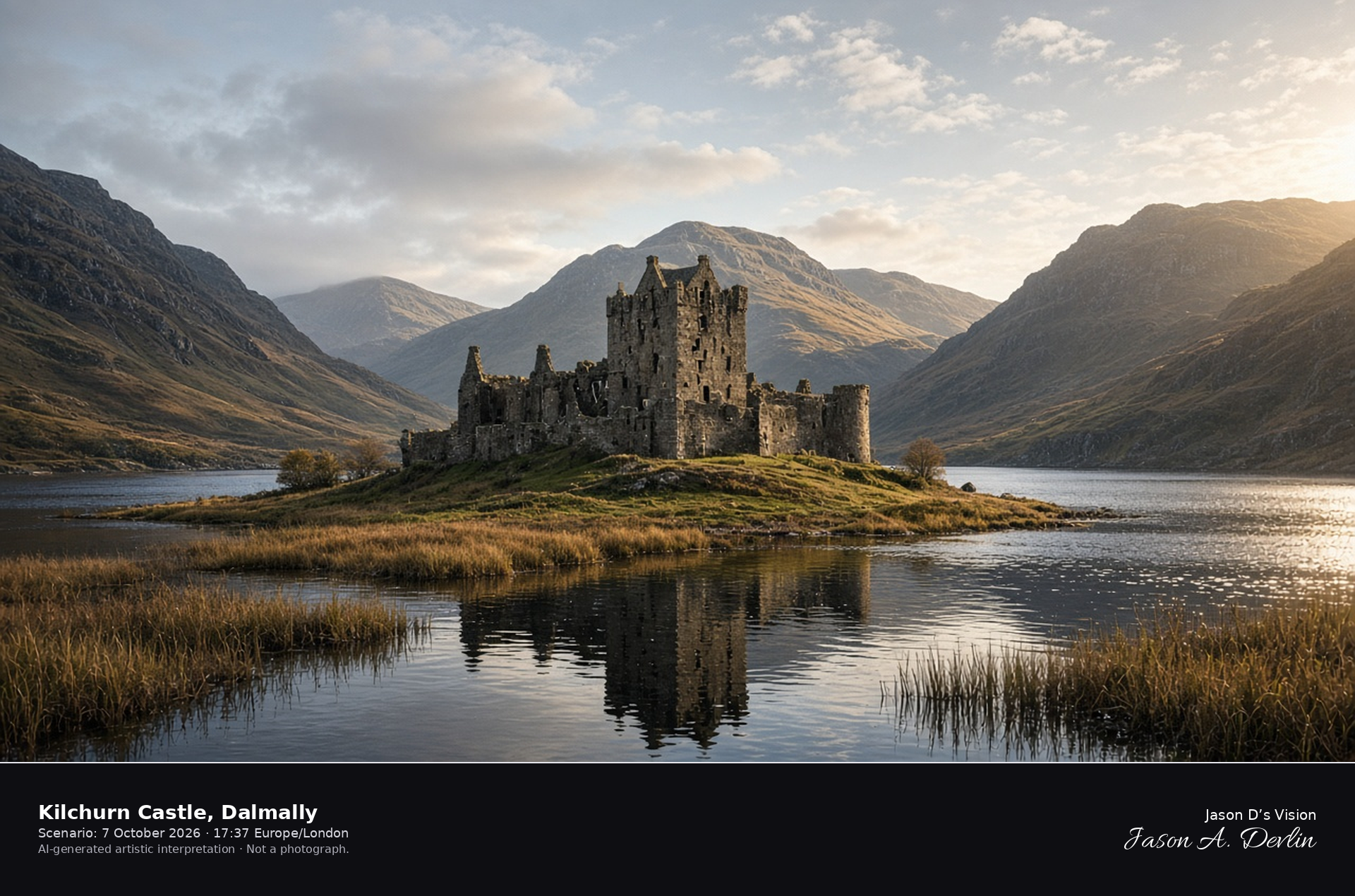
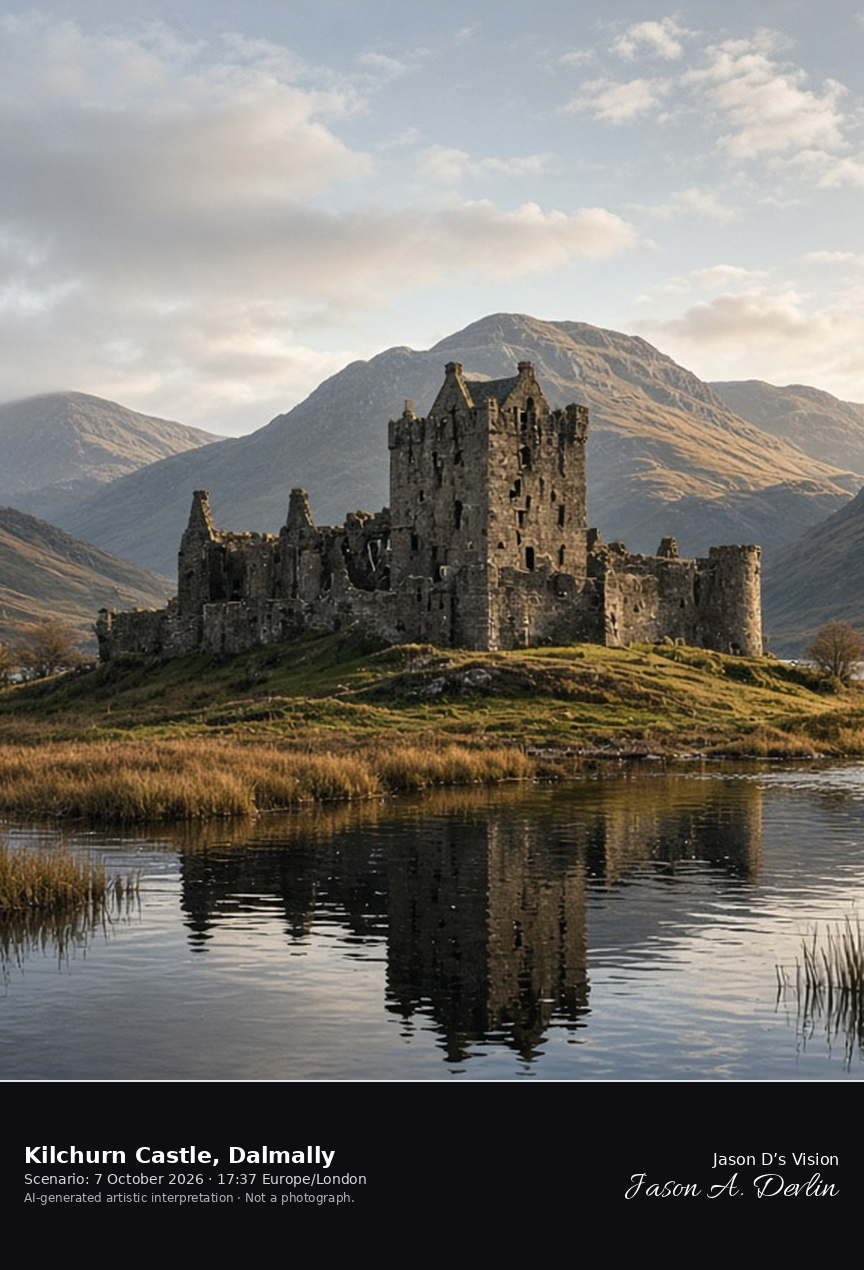
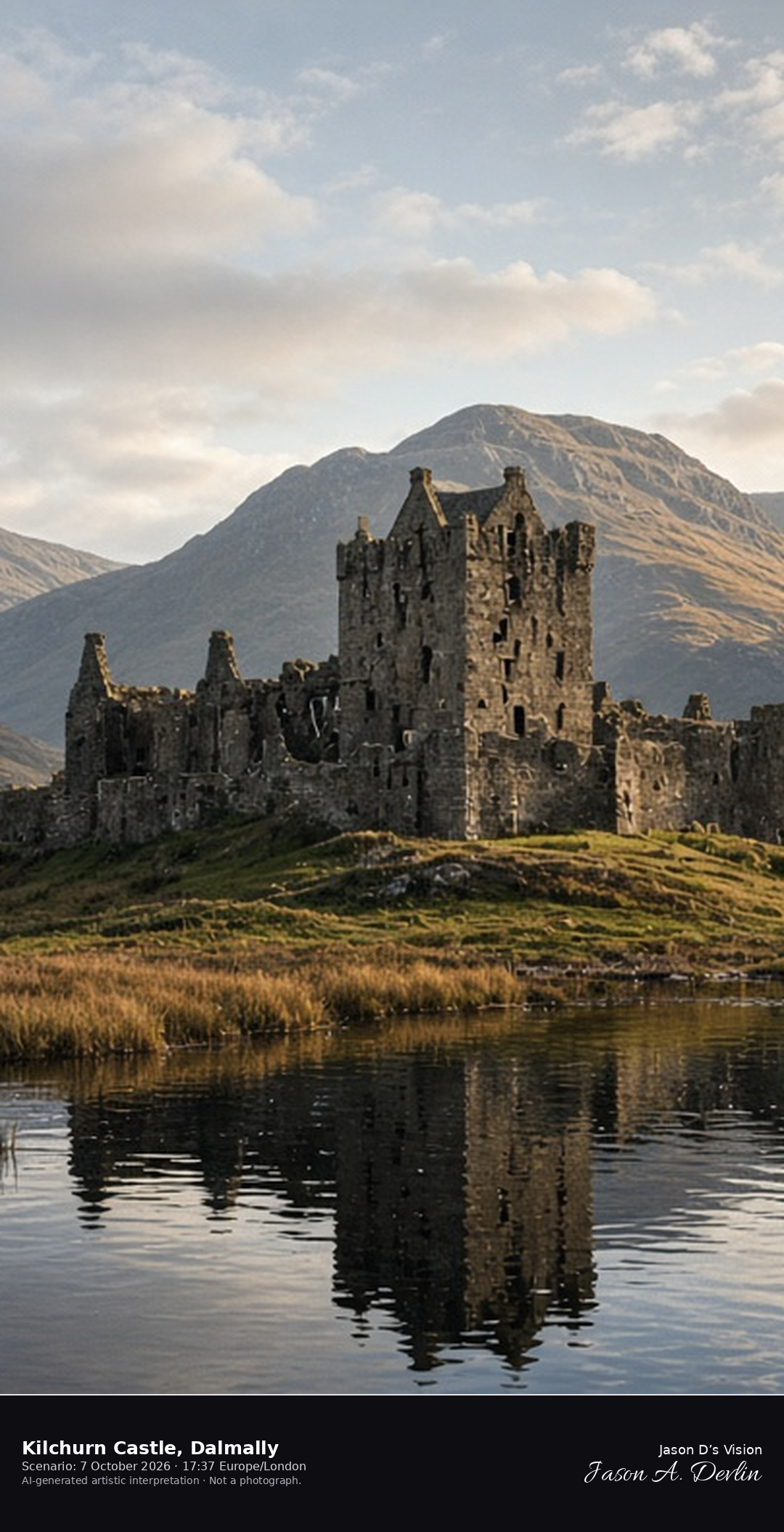
Kilchurn was built by Sir Colin Campbell in the mid-fifteenth century at the head of Loch Awe, becoming a power base for the Campbells of Glenorchy. Later adapted as a garrison stronghold, it housed government soldiers during the Jacobite risings of 1715 and 1745, before being abandoned later in the eighteenth century.
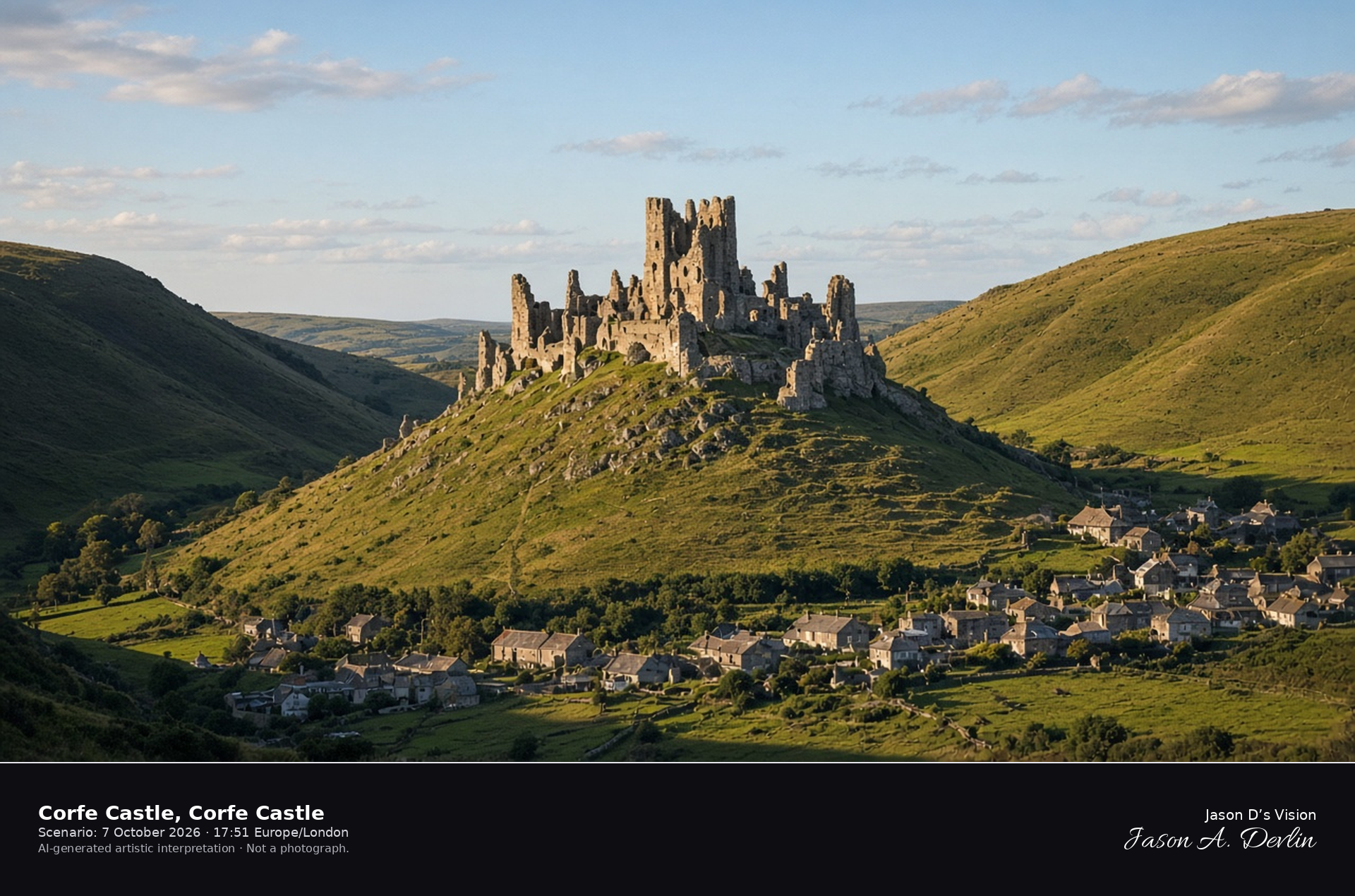
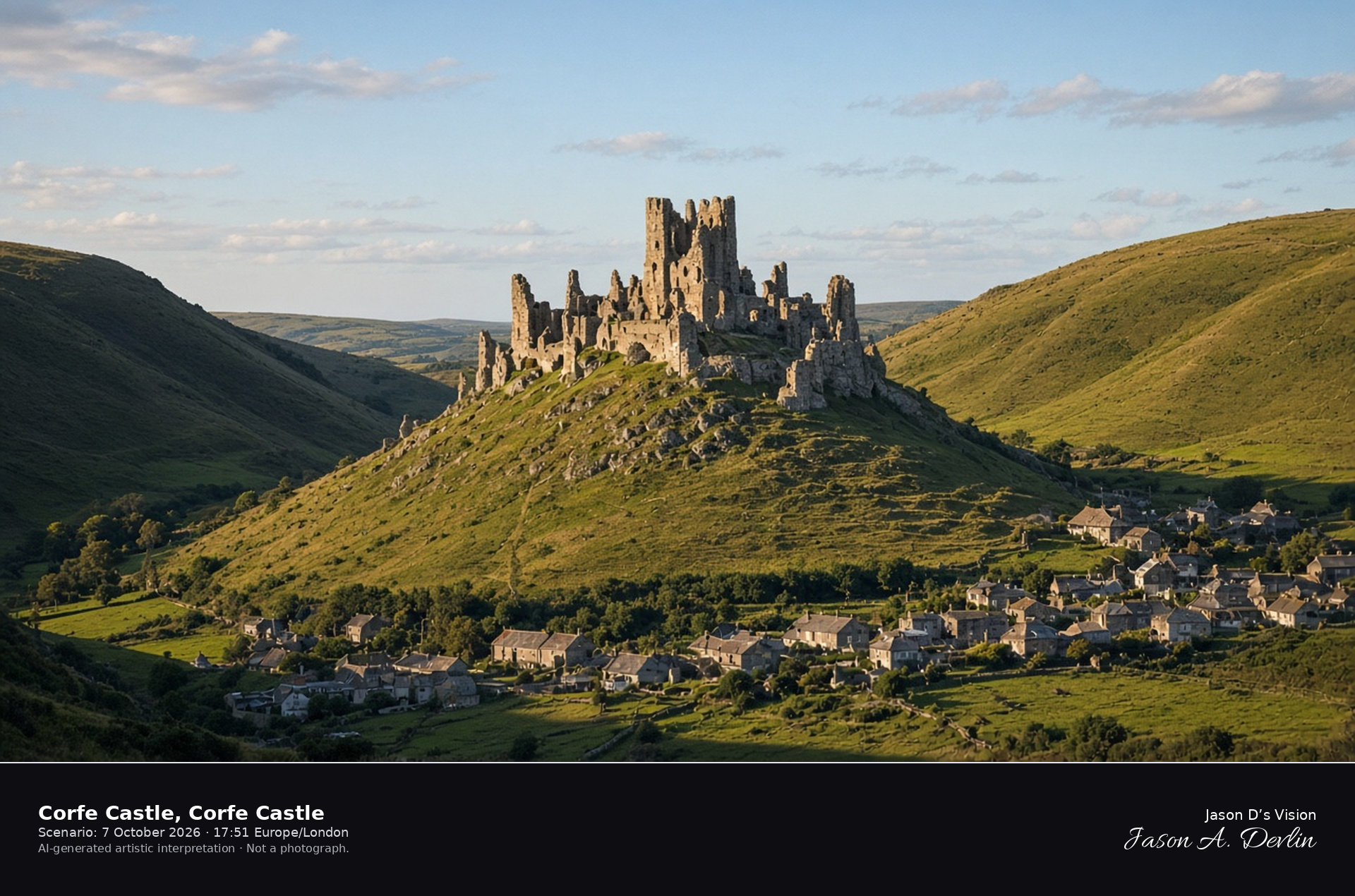
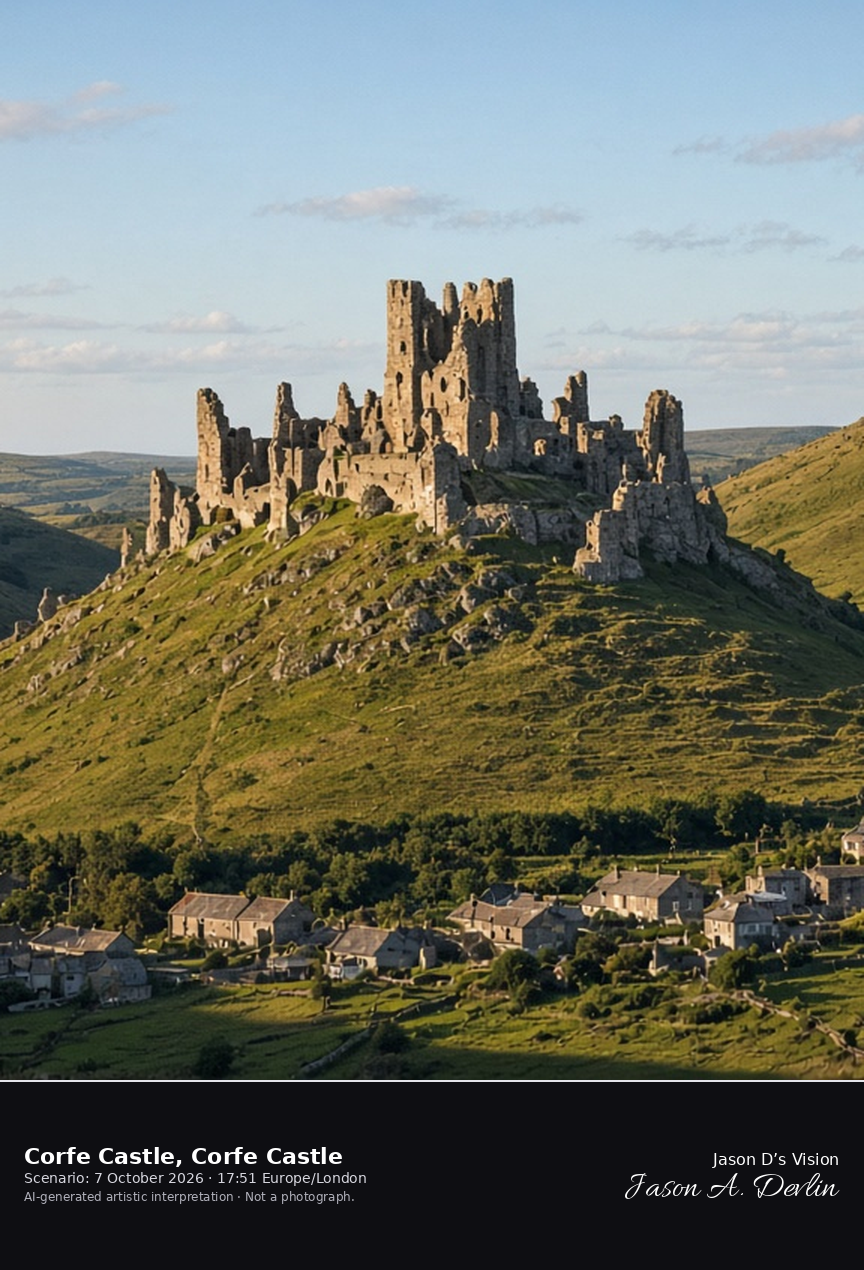
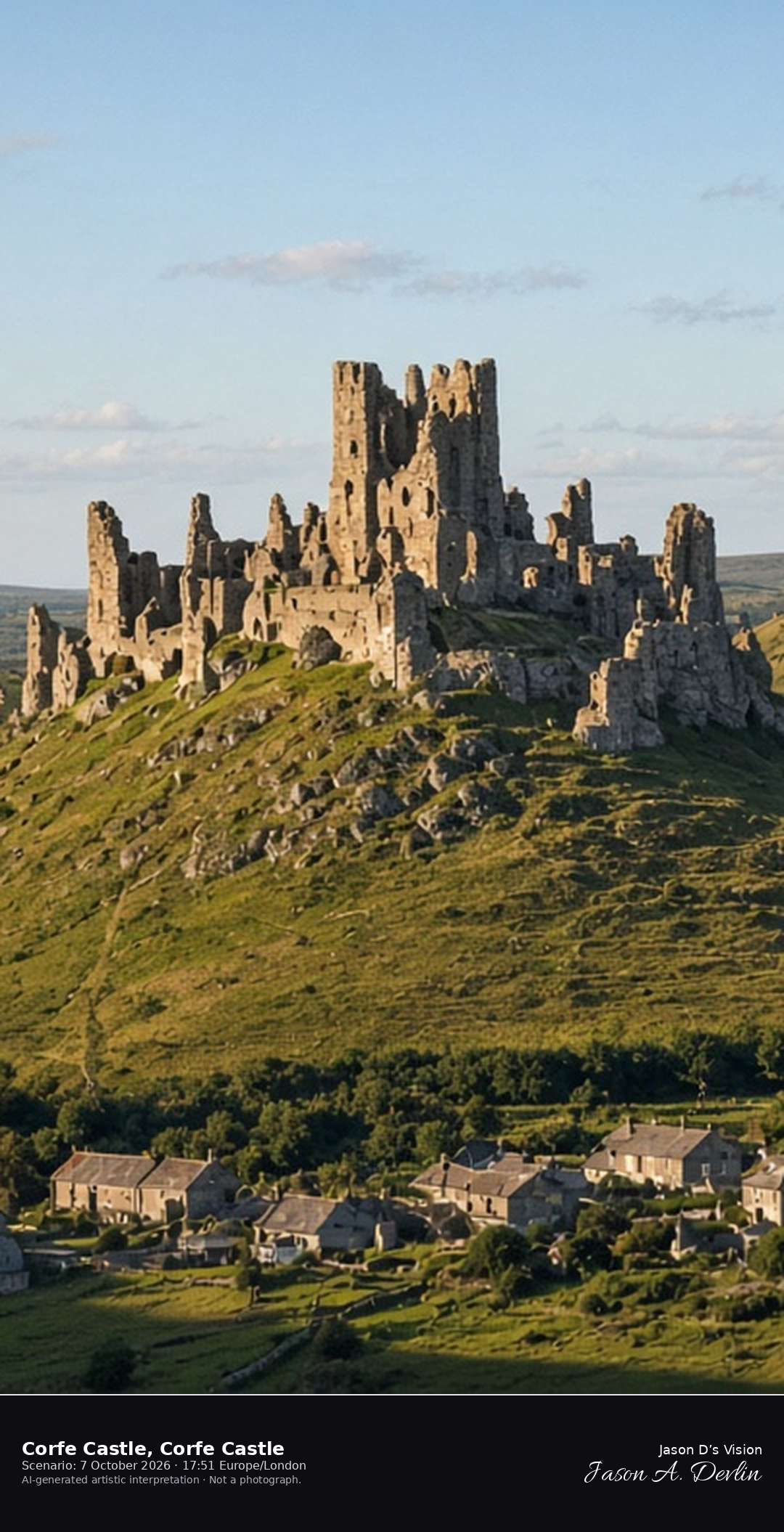
William the Conqueror raised the first stone castle on this hill, guarding a gap through the Purbeck ridge. In the Civil War Lady Mary Bankes defended Corfe for the King during two sieges; Parliament ordered it blown apart in 1646, and it has been a magnificent ruin ever since.
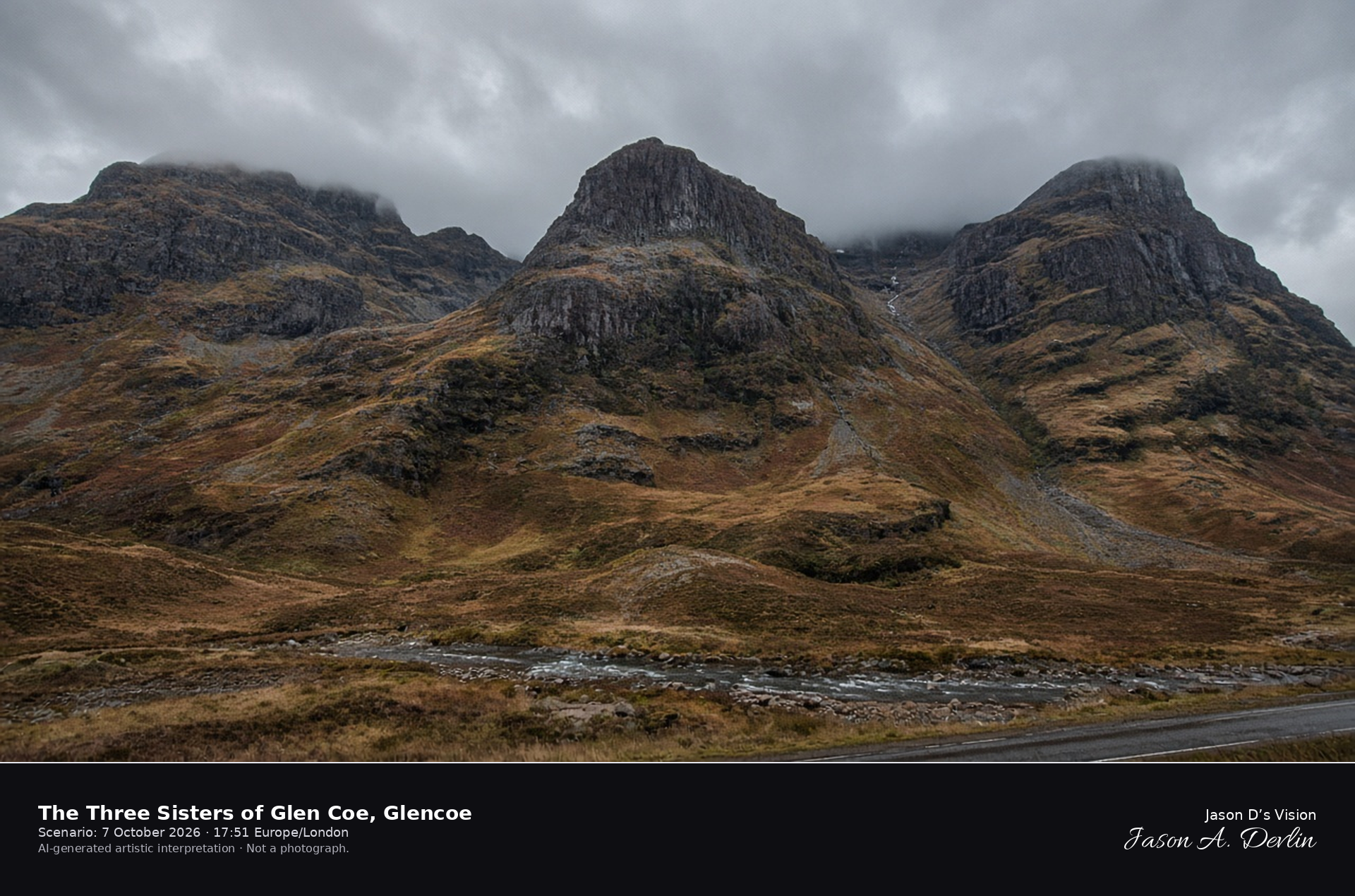
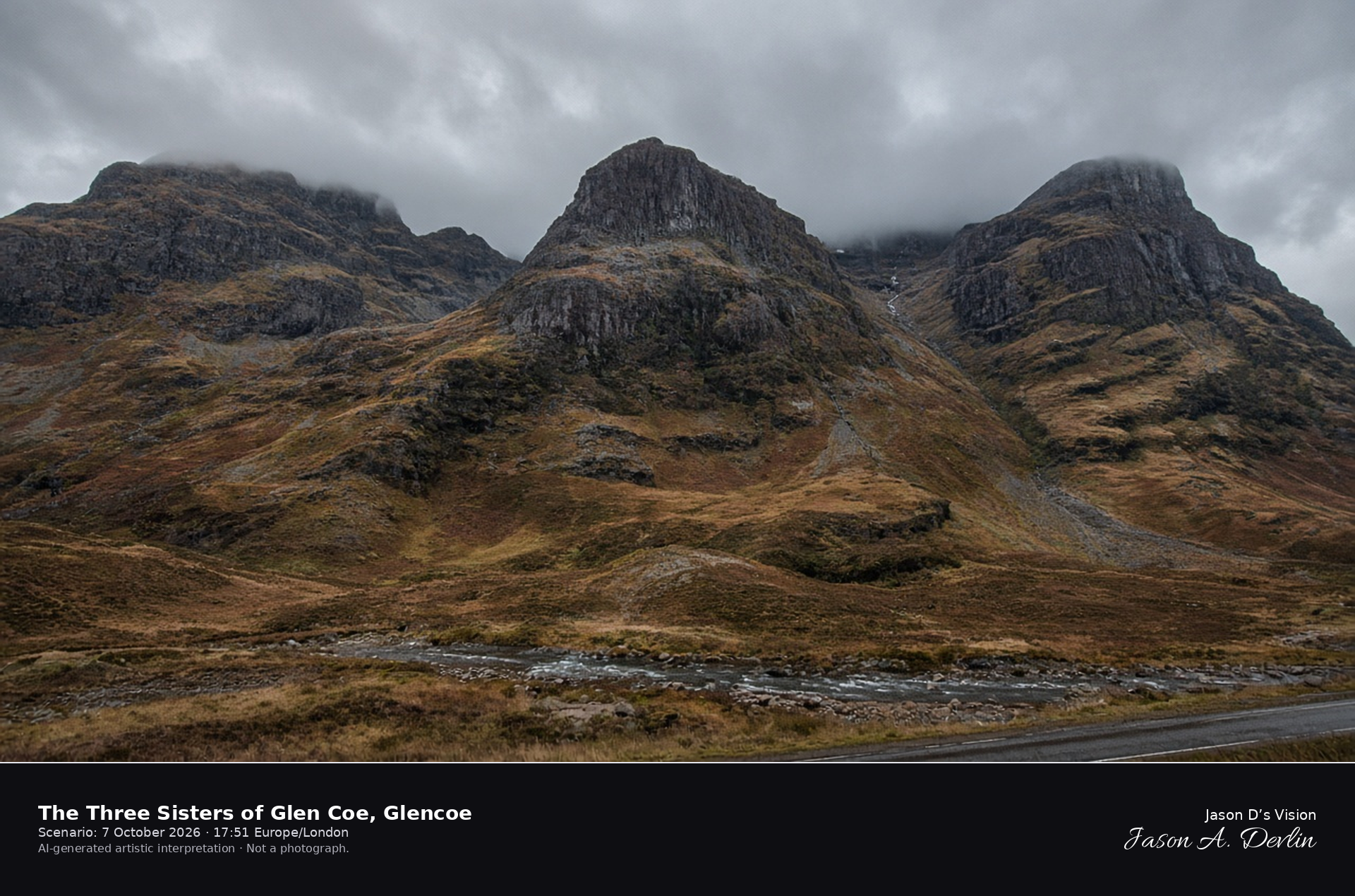
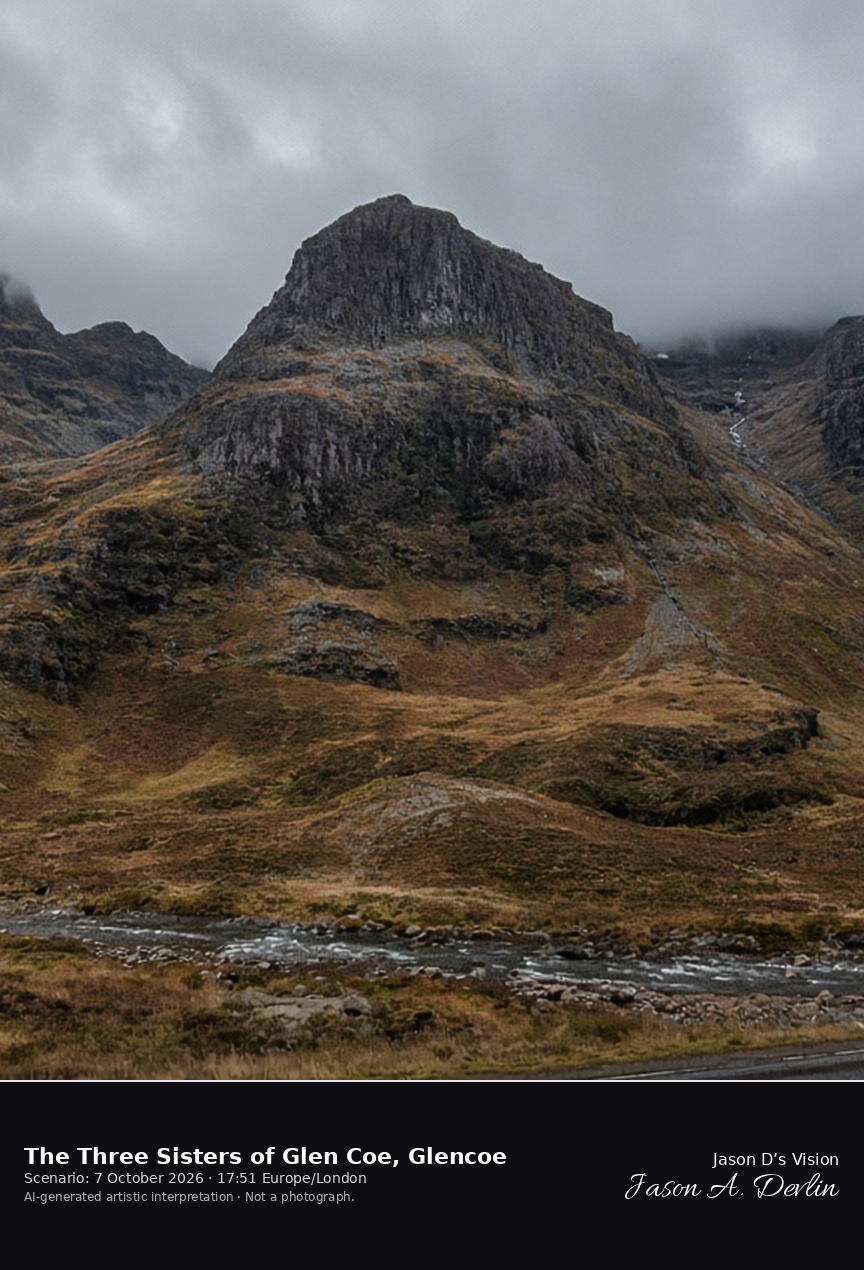
The Three Sisters of Glen Coe, Glencoe · AI-generated artistic interpretation
The Three Sisters are the steep north-facing spurs of Bidean nam Bian: Beinn Fhada, Gearr Aonach and Aonach Dubh. They line the south side of Glen Coe in the Scottish Highlands and are seen from the A82 road through the glen.
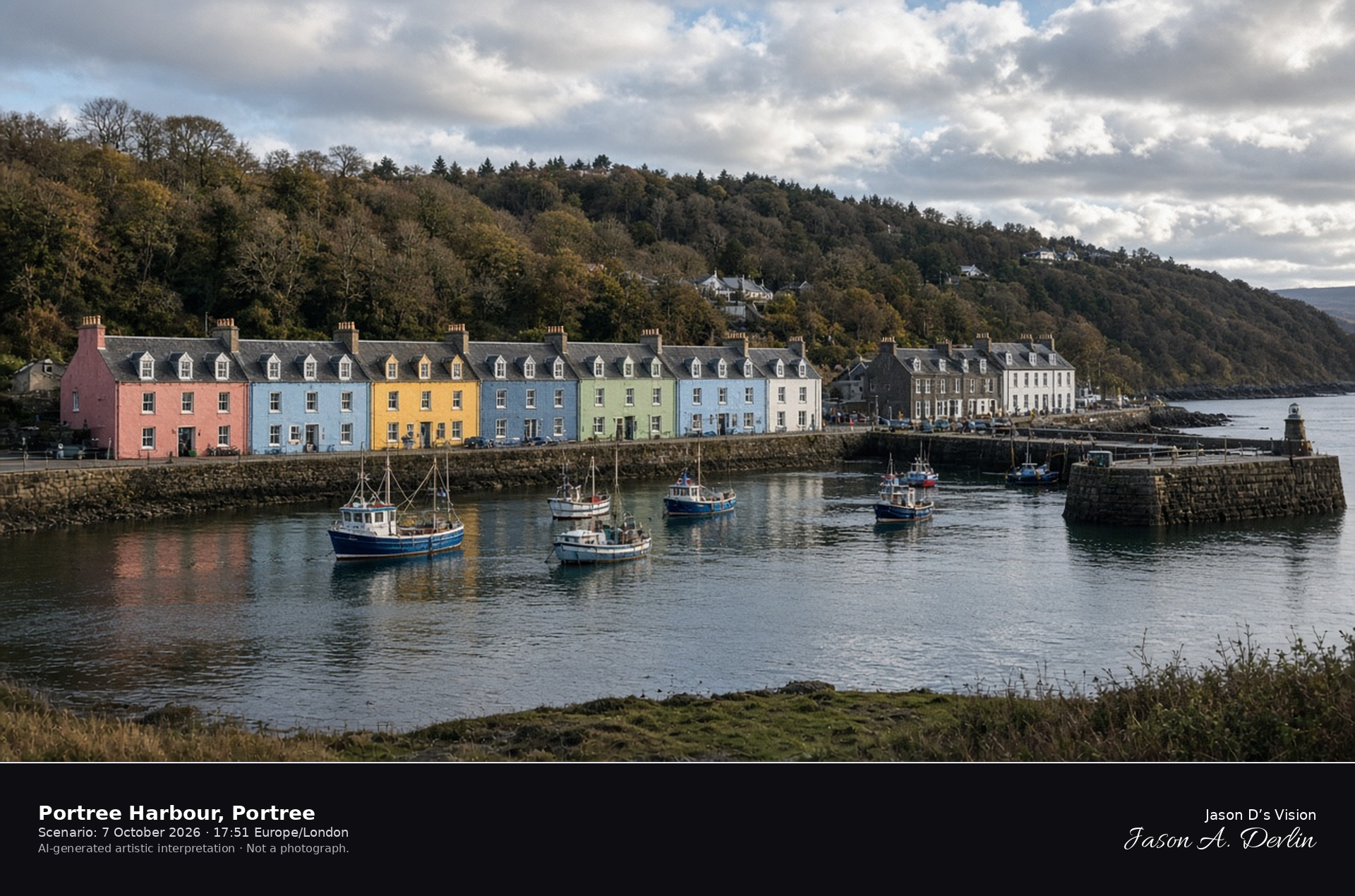
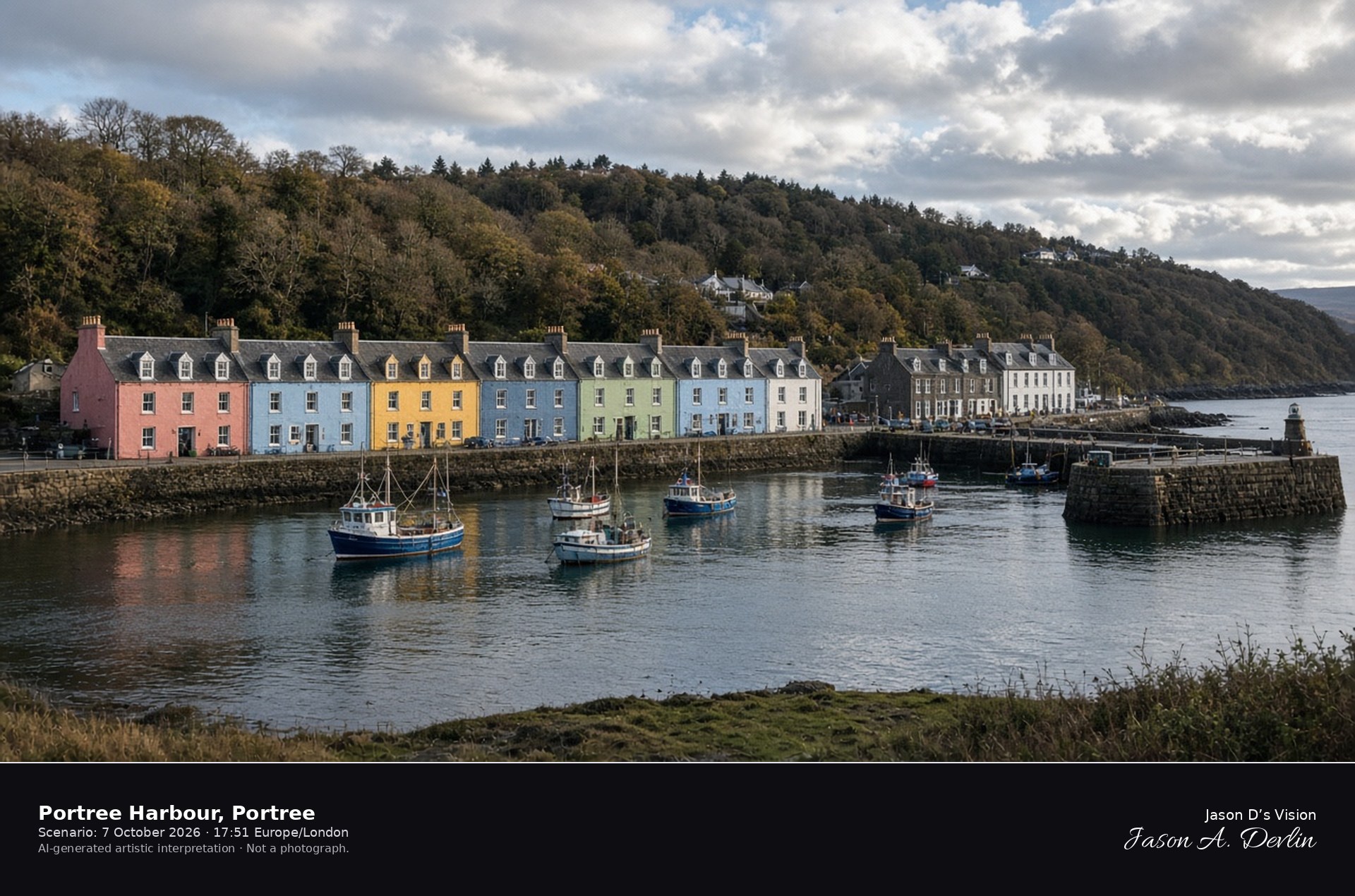
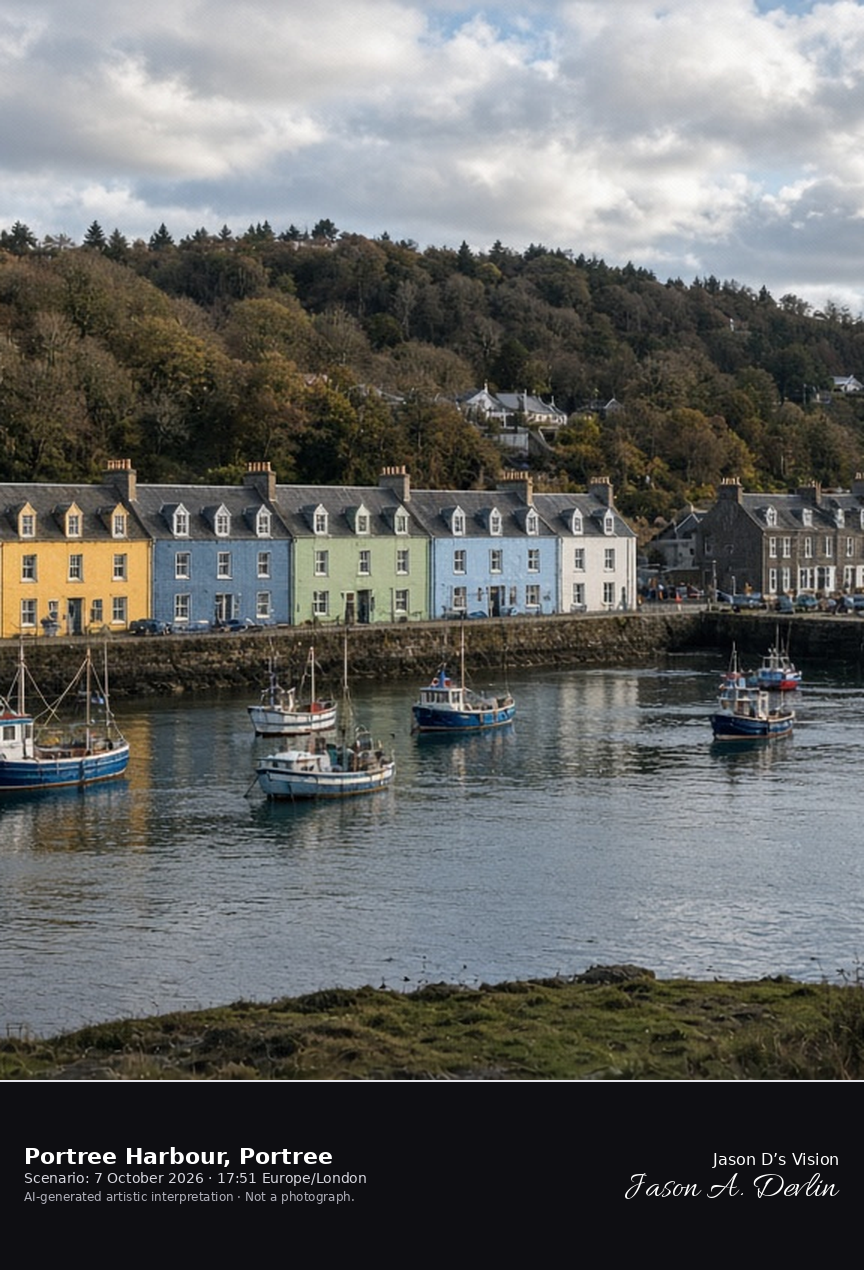
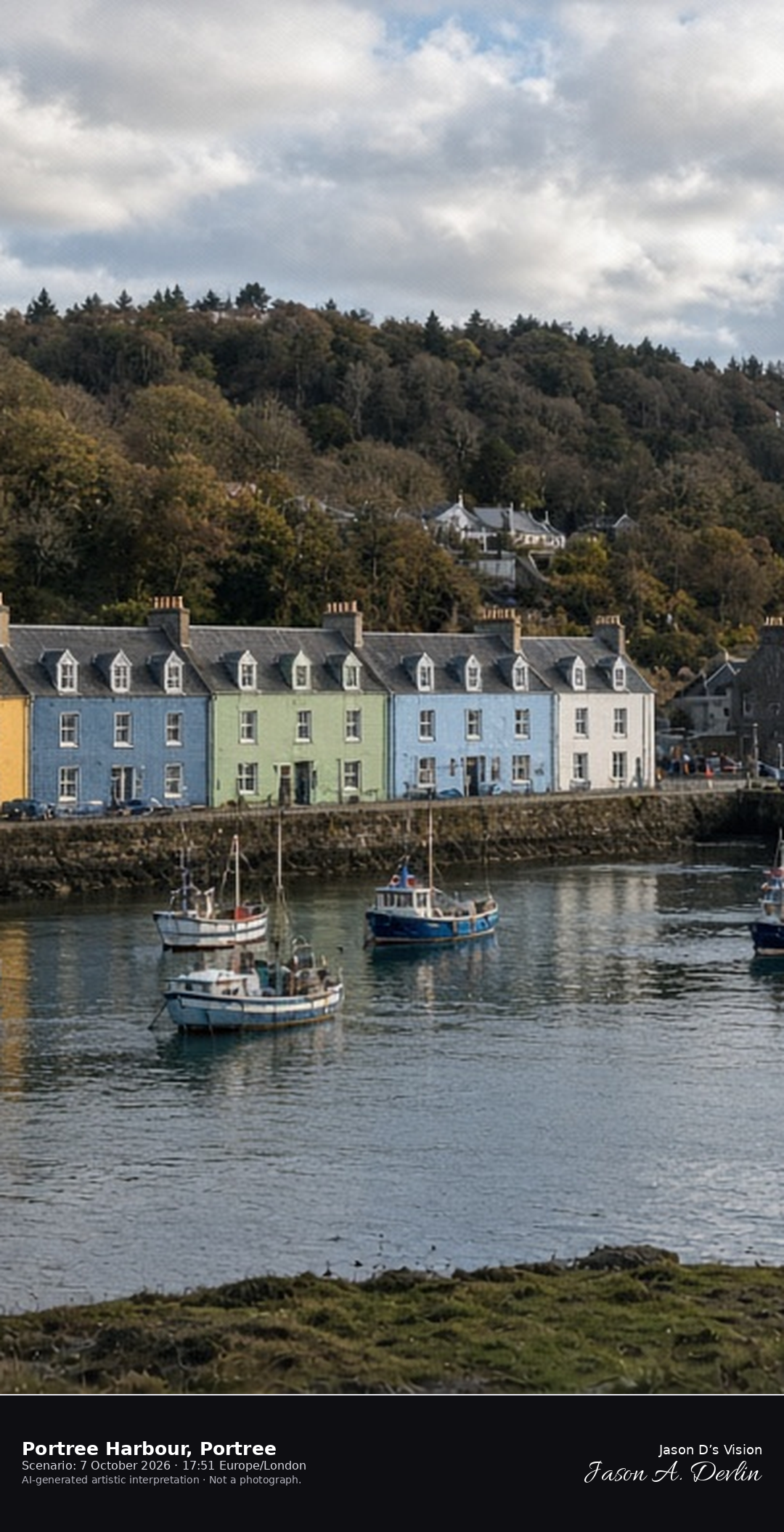
Portree's name, the King's Port, is traditionally linked to a visit by James the Fifth in 1540. Thomas Telford developed its harbour in 1818–20; the quayside's pastel-coloured buildings give Skye's principal town a distinctive waterfront character.
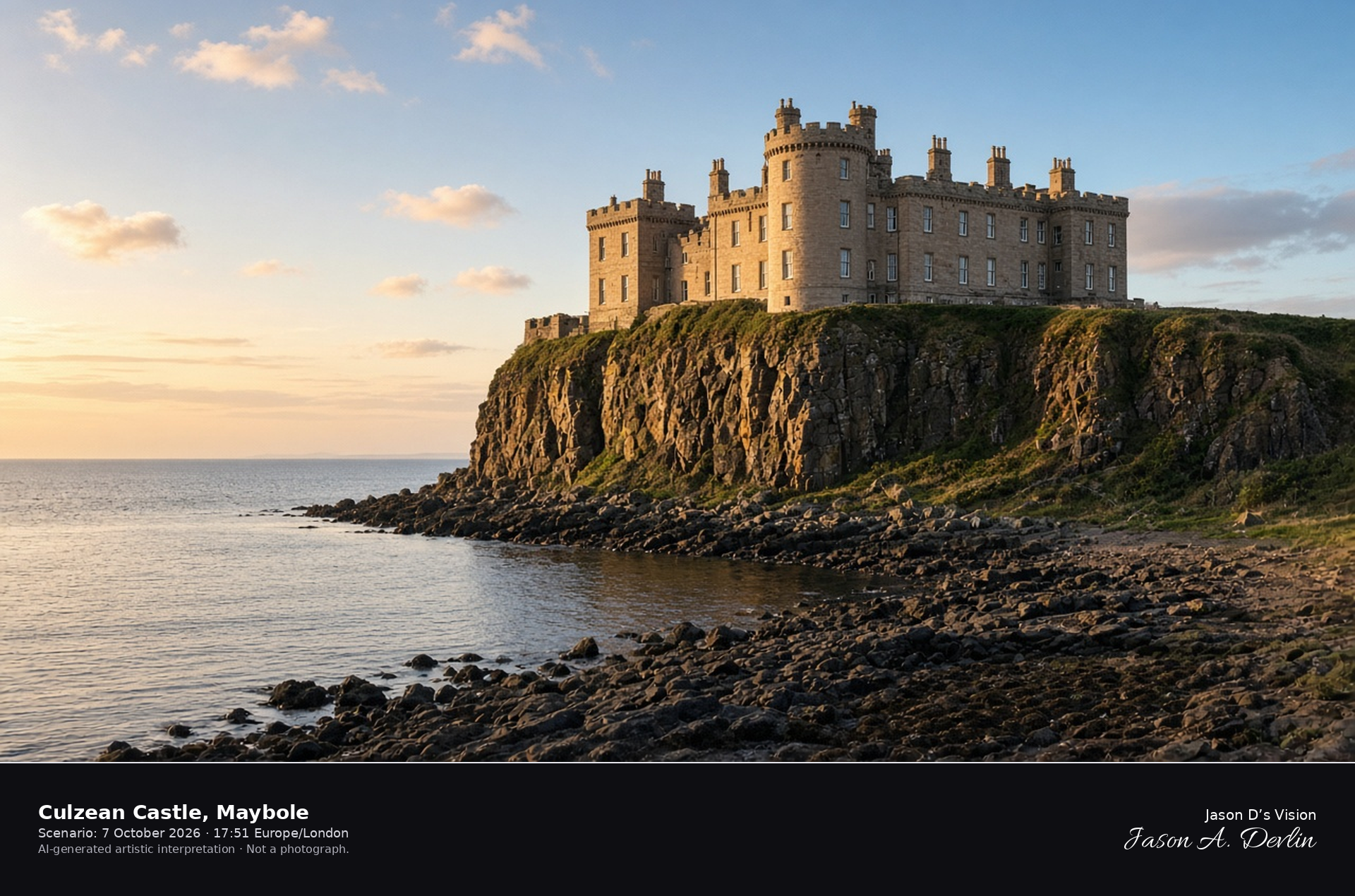
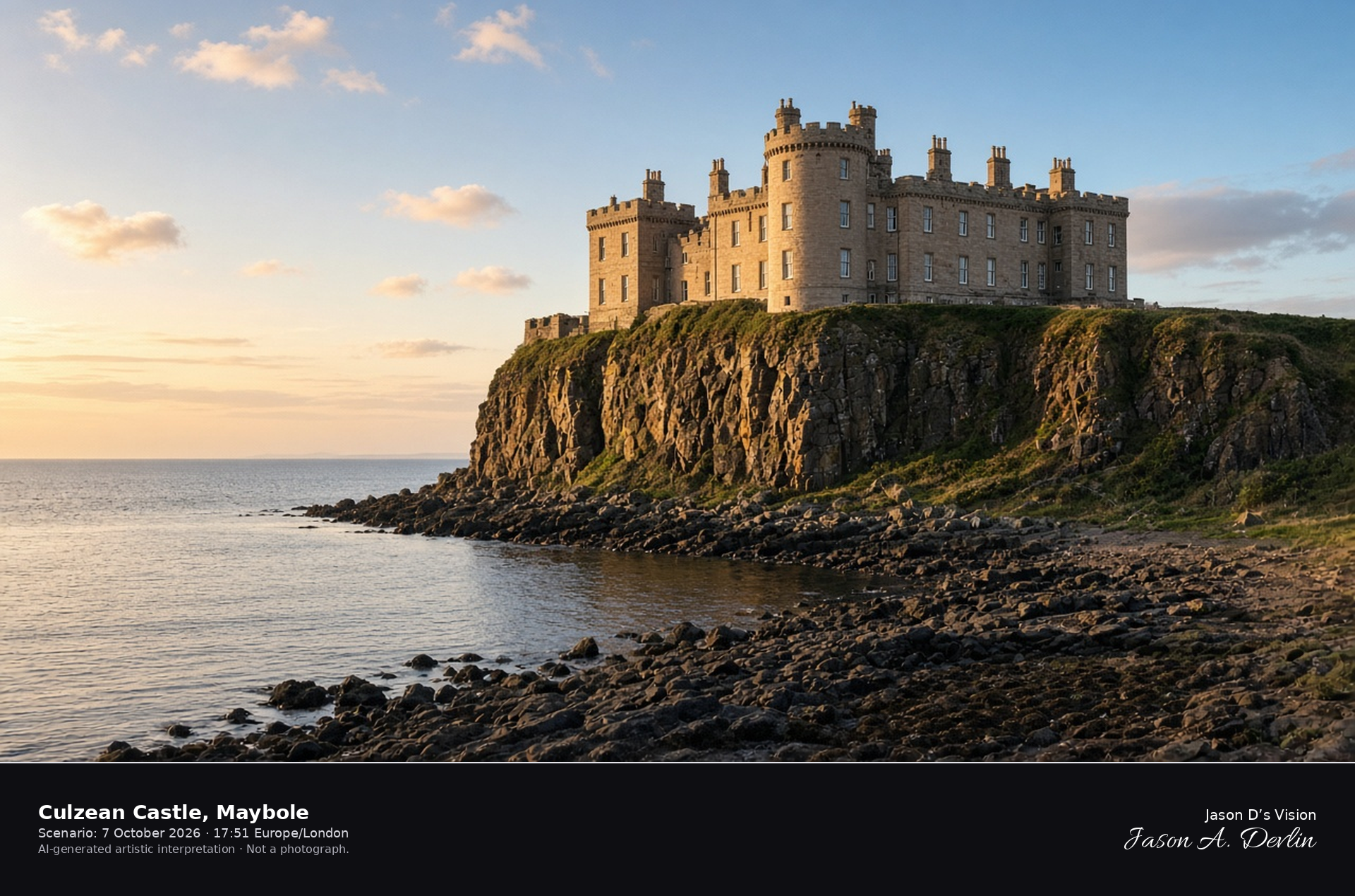
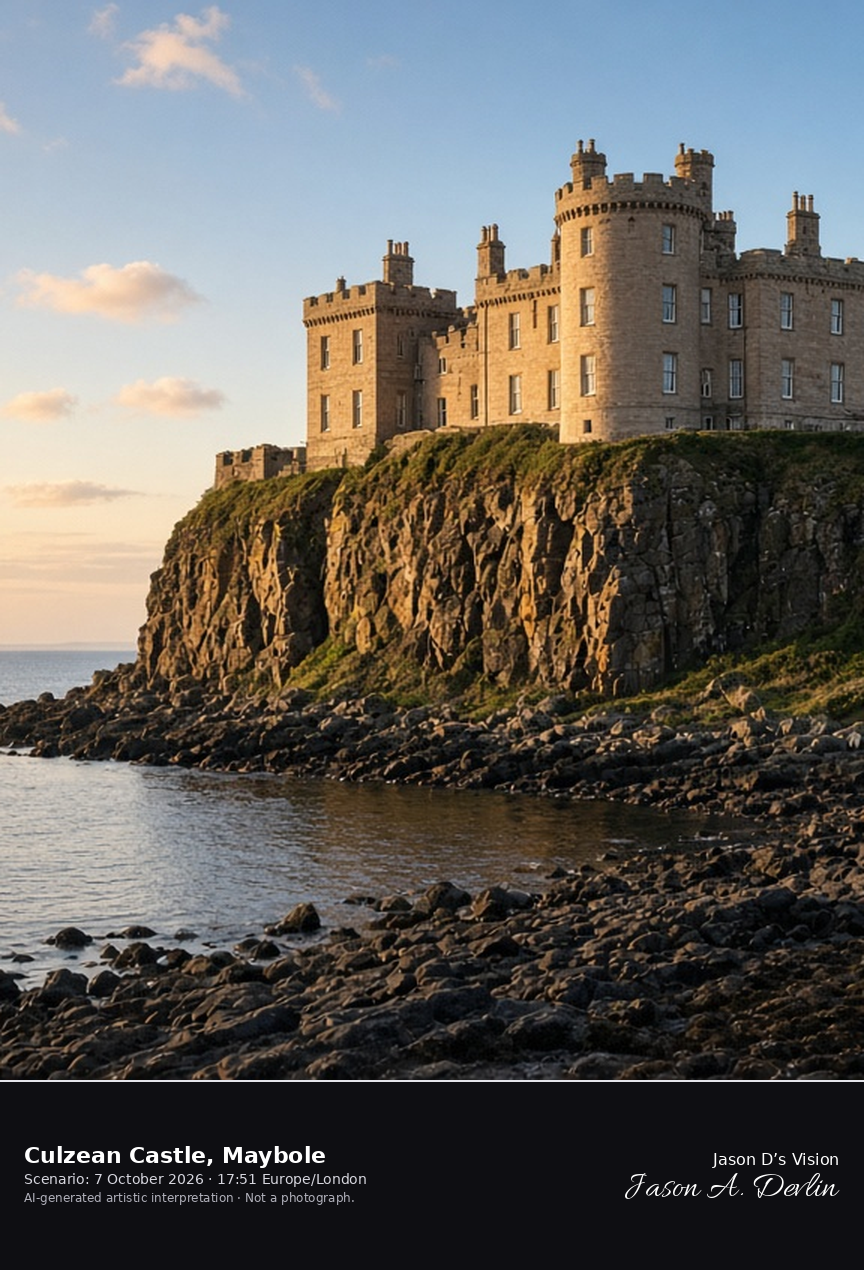
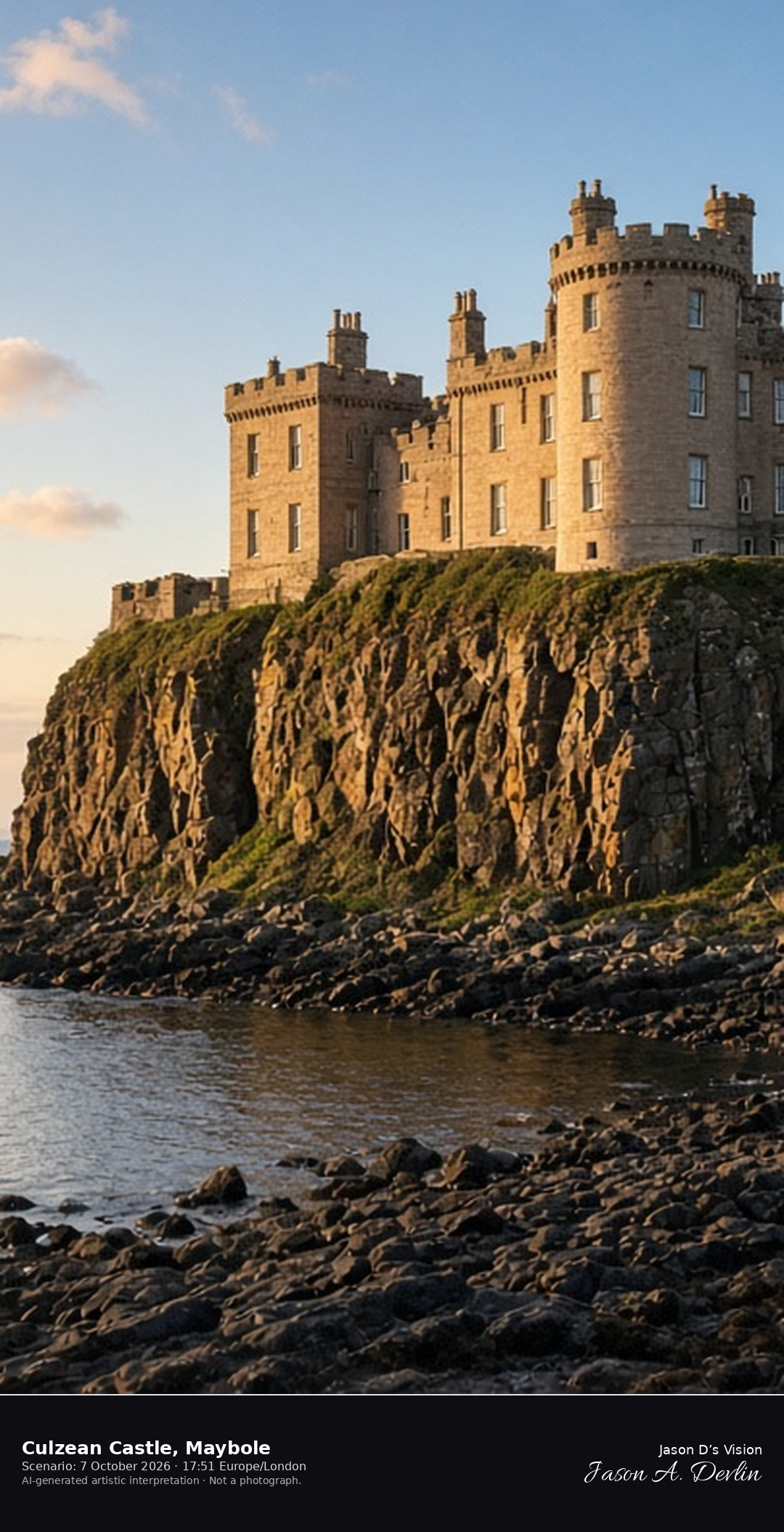
Culzean Castle, reshaped by Robert Adam from the late eighteenth century for the Earls of Cassillis, rides its cliff above the Firth of Clyde. A top-floor apartment was offered for General Eisenhower’s use in gratitude for his wartime command, and he returned to stay here as President of the United States.
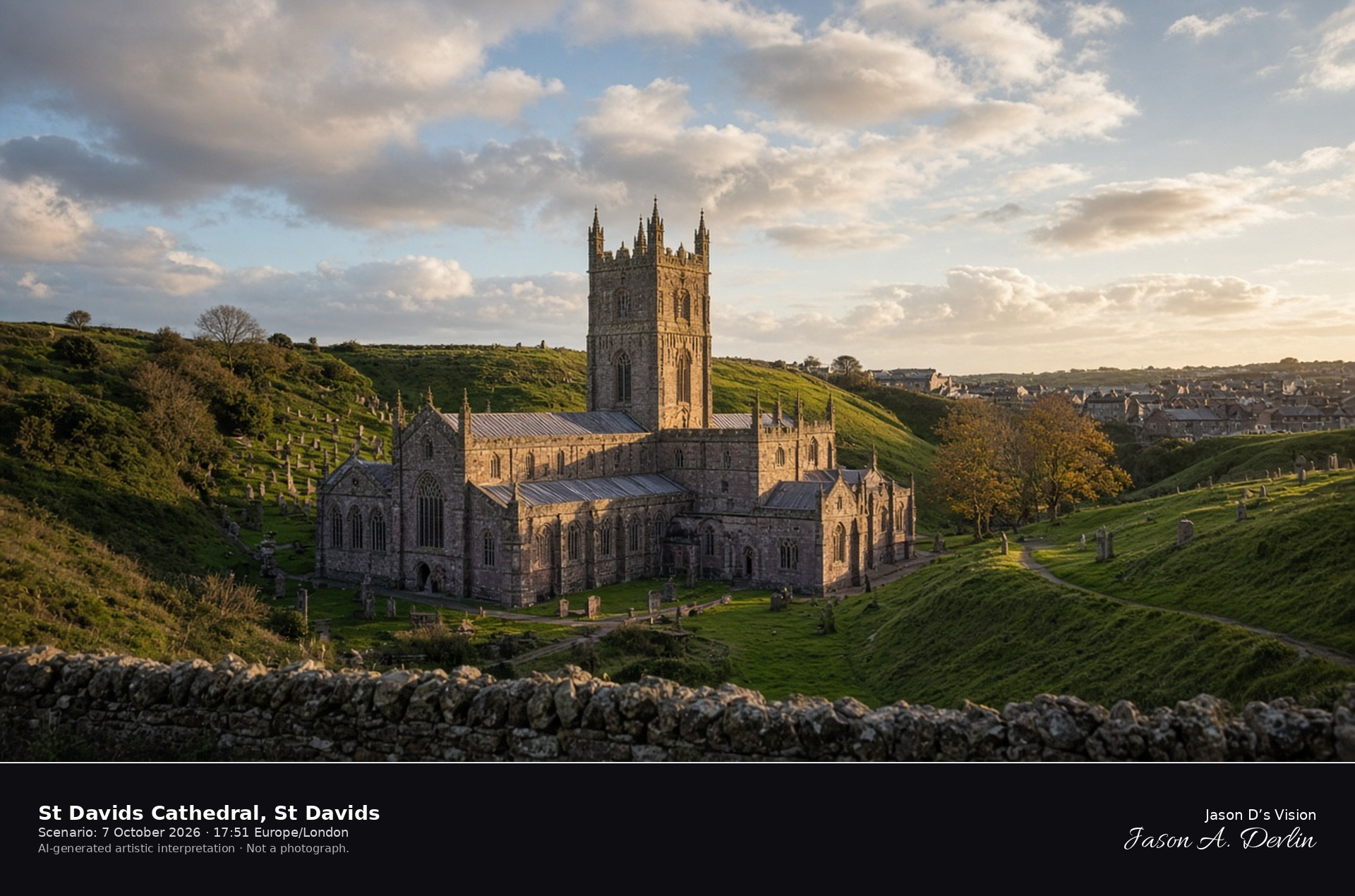
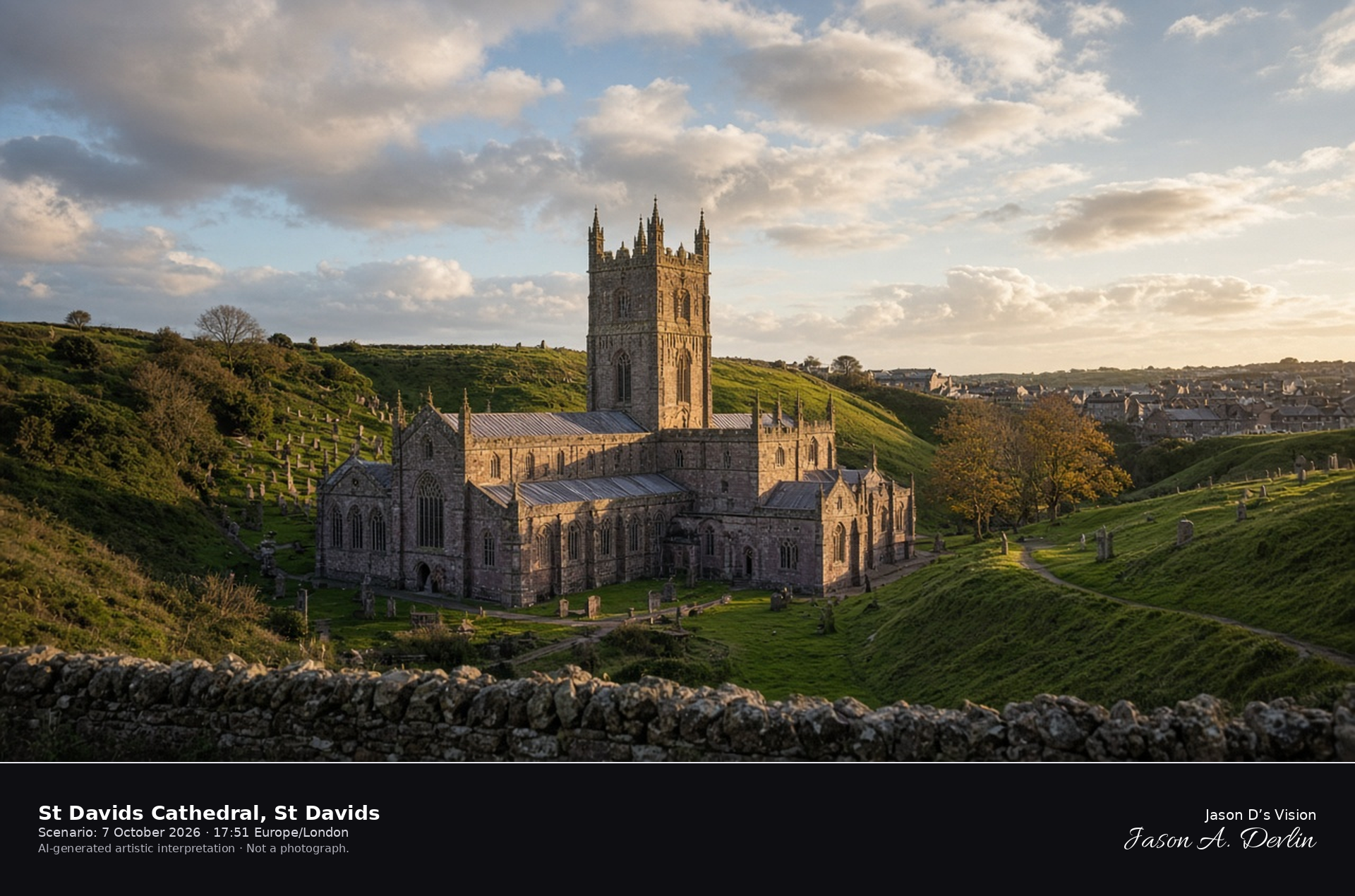
St Davids Cathedral, St Davids · AI-generated artistic interpretation
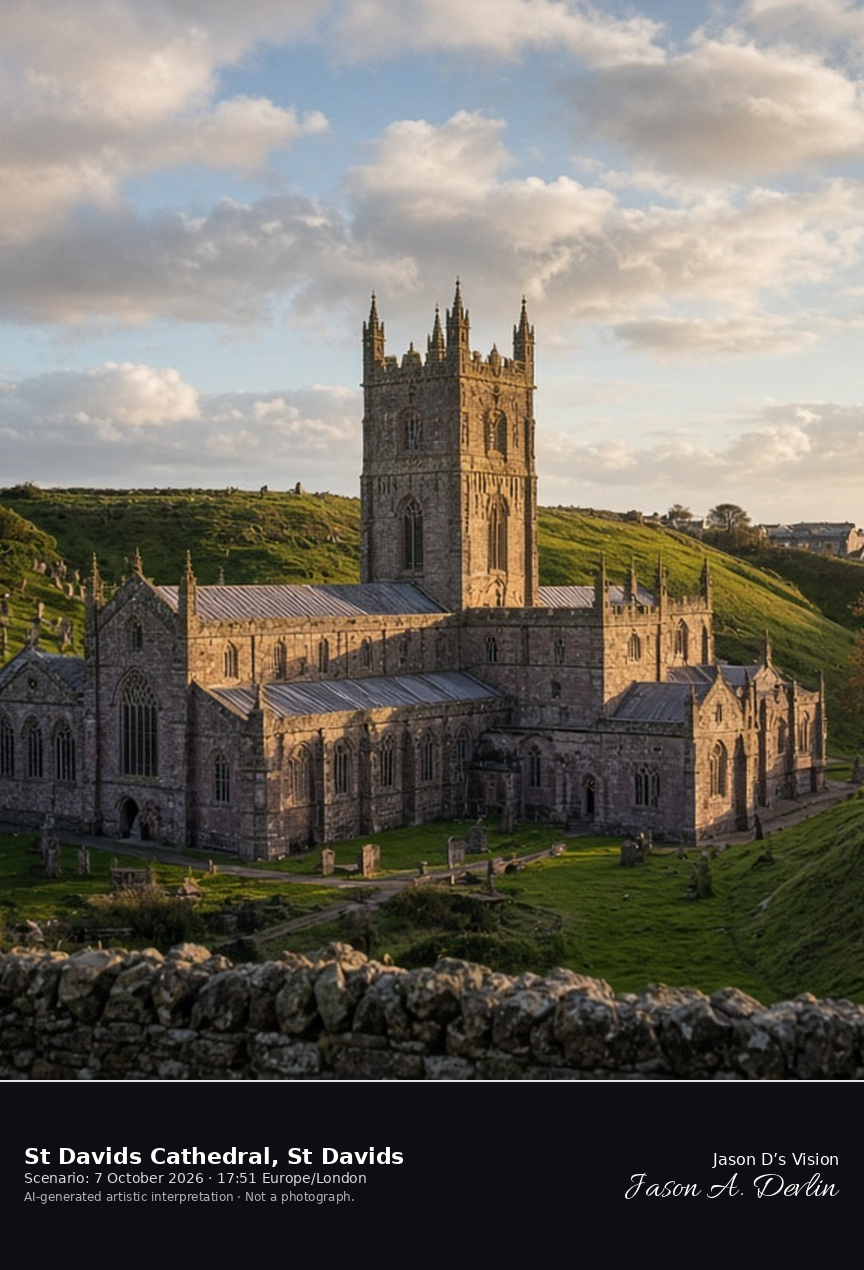
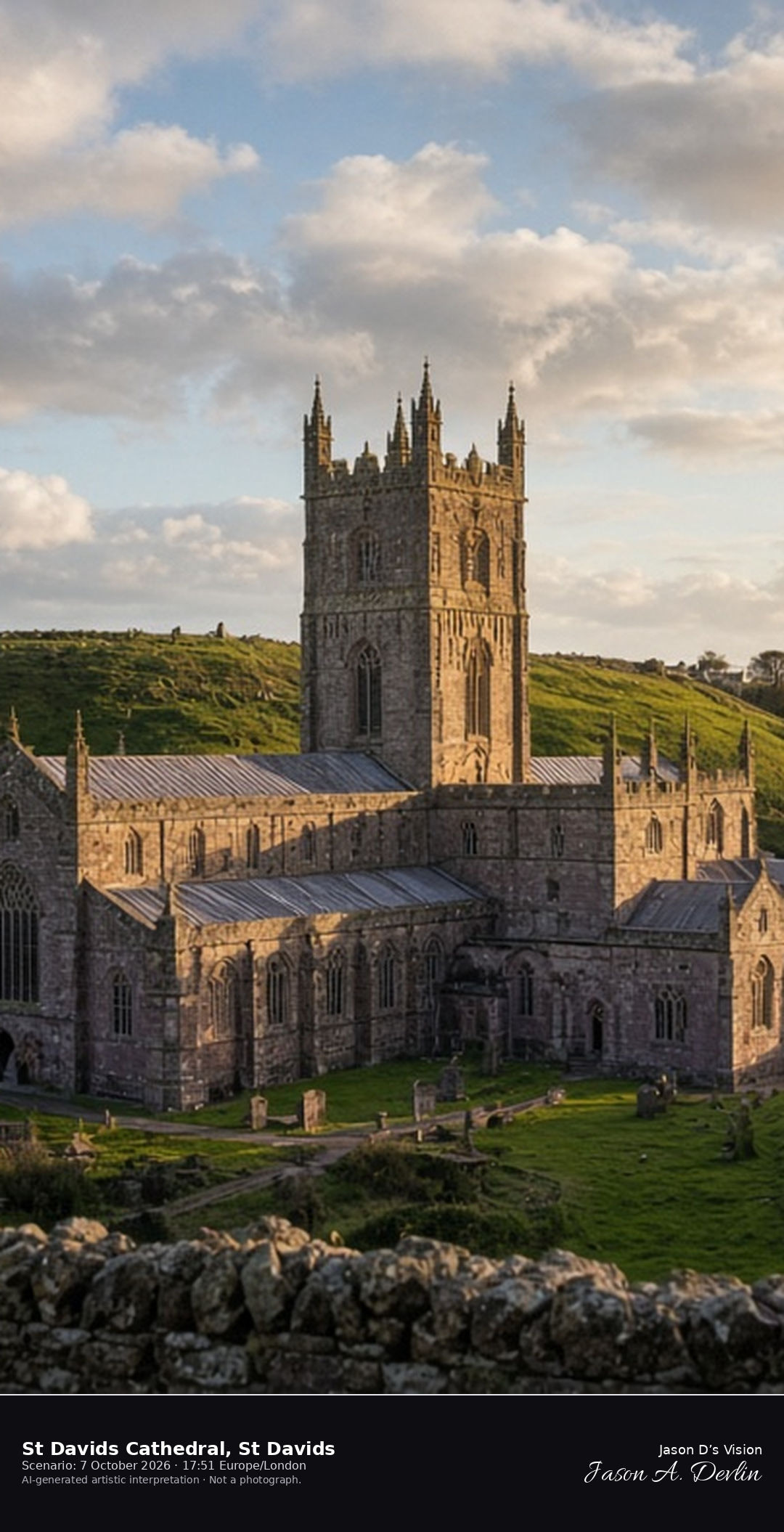
St Davids Cathedral in Pembrokeshire stands on the site of the monastery founded by Saint David, the patron saint of Wales, in the 6th century. The present building was begun in 1181, and St Davids is the smallest city in the United Kingdom.
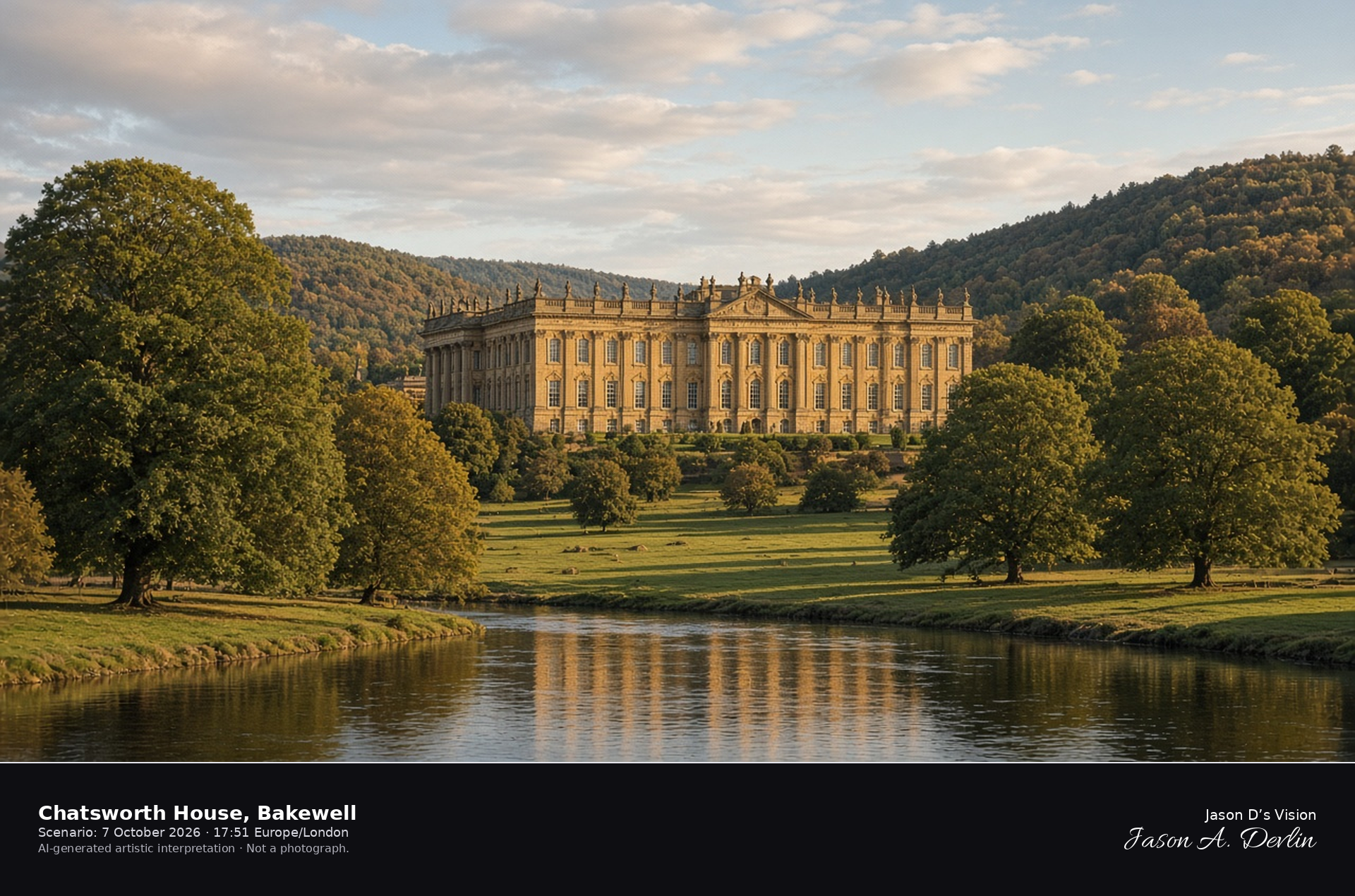
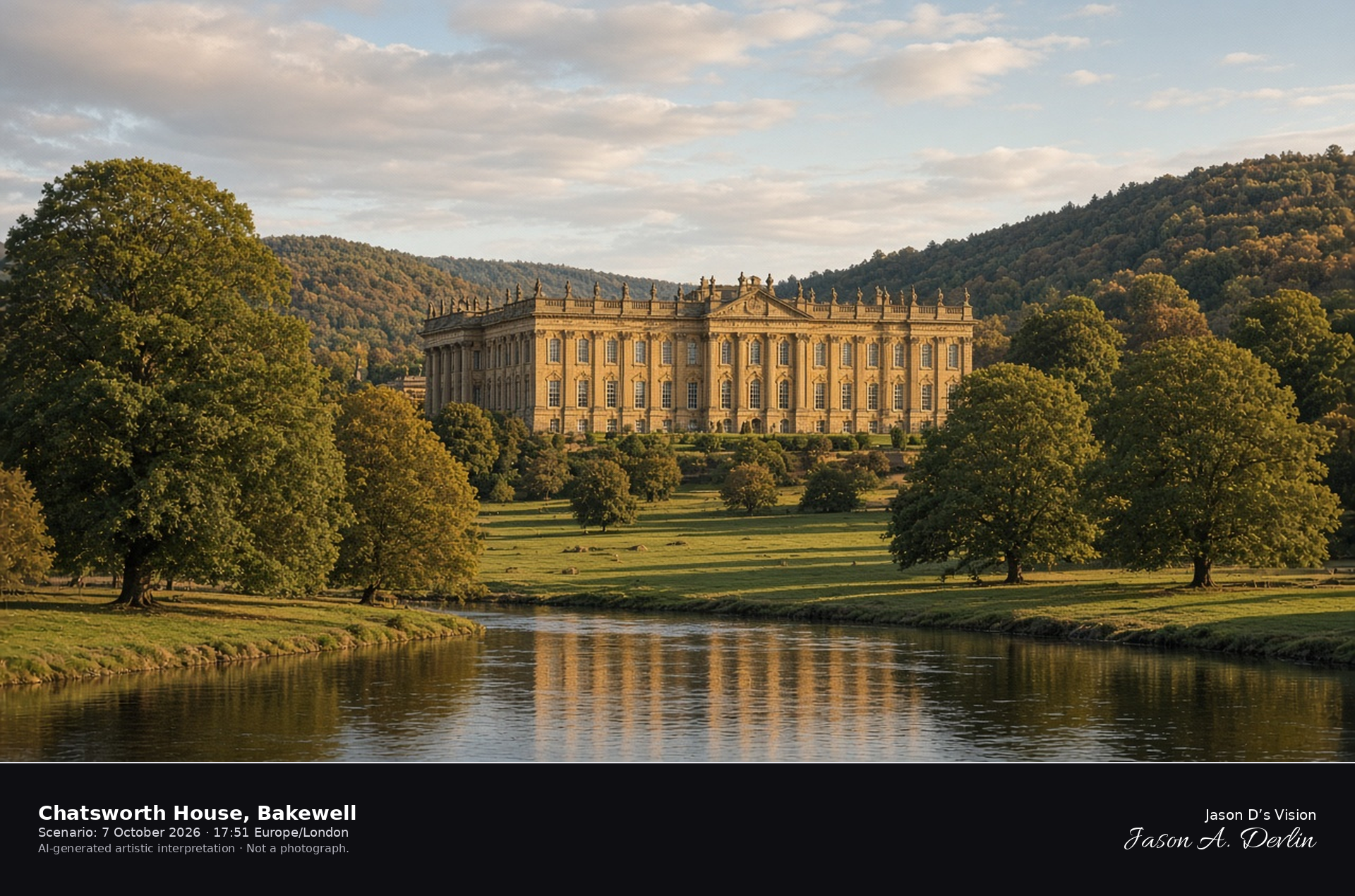
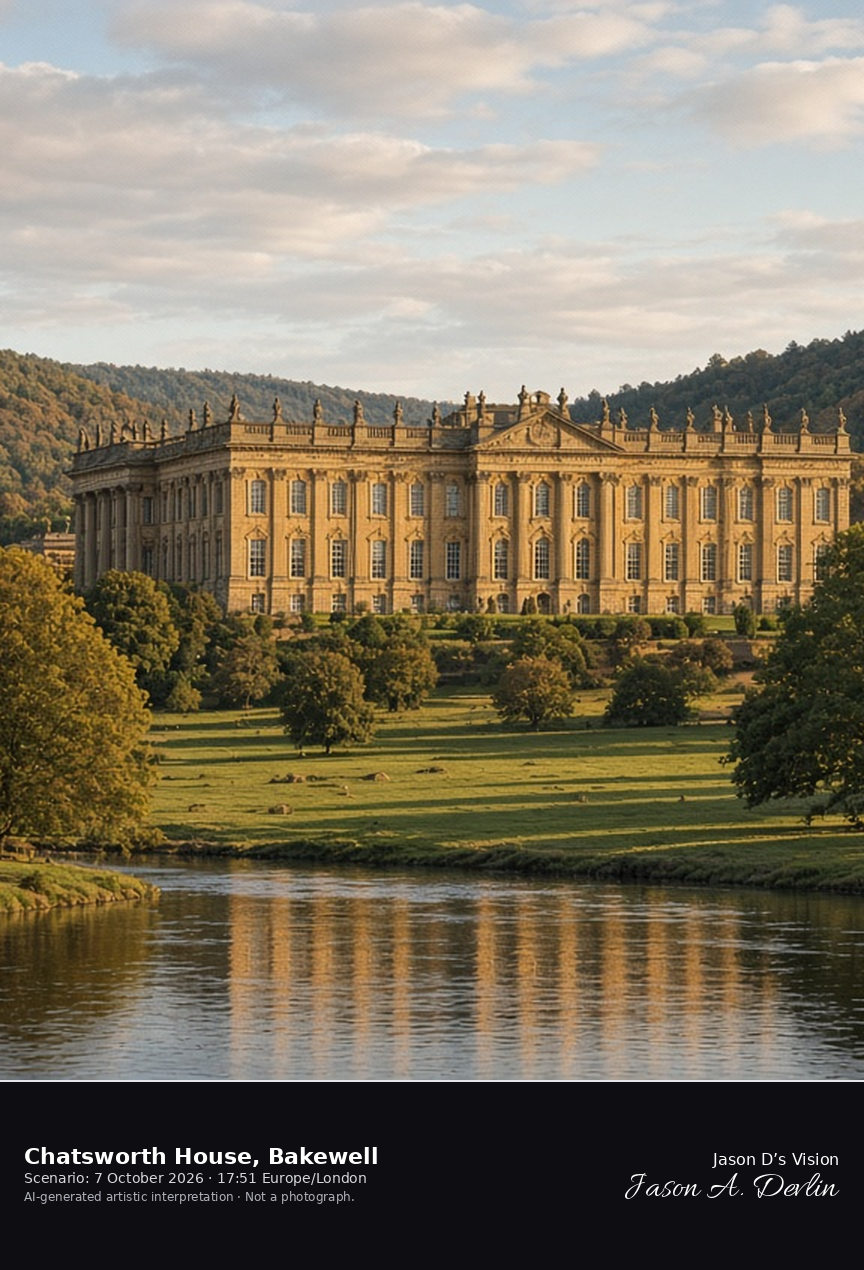
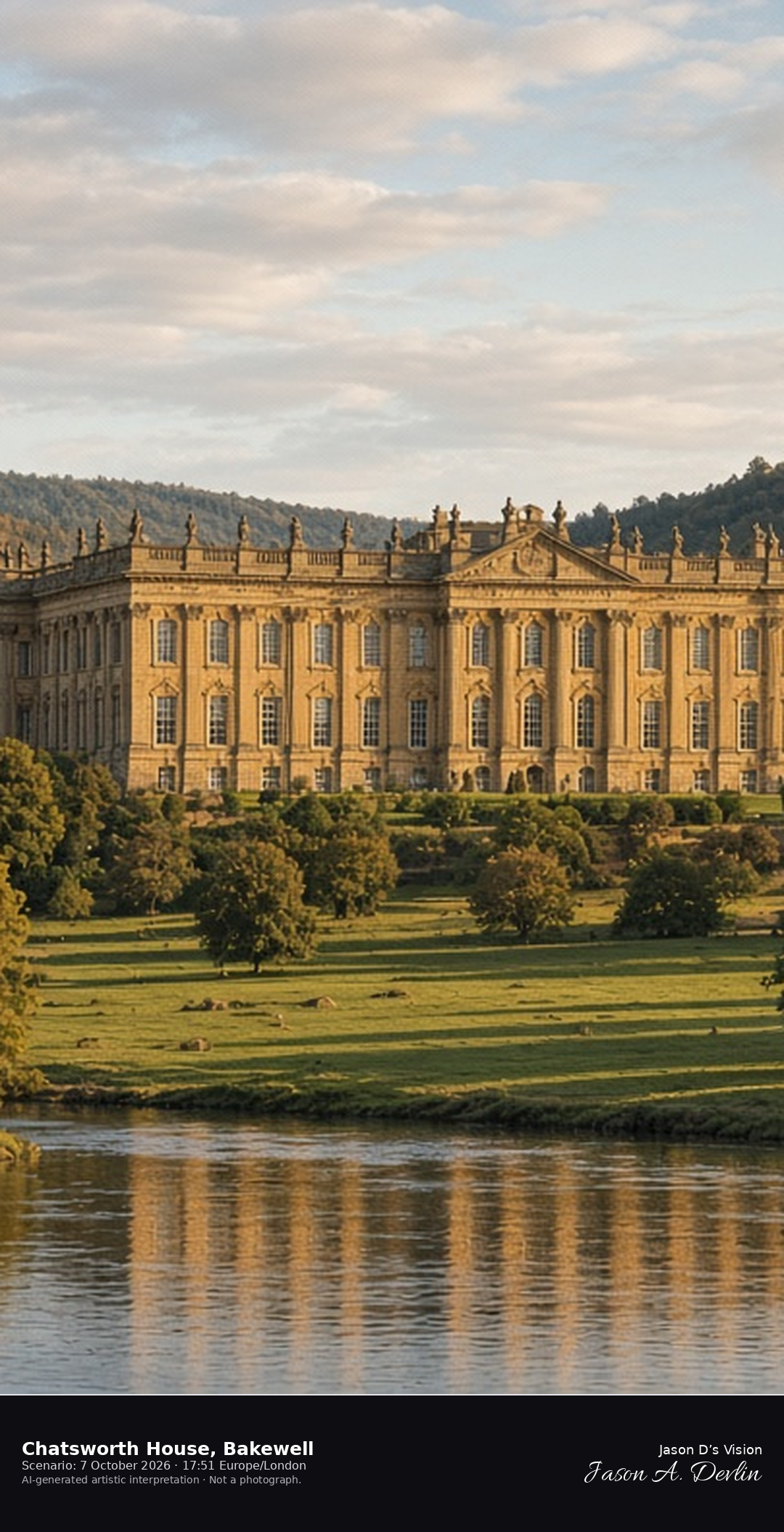
Chatsworth House in Derbyshire is the seat of the Duke of Devonshire and has been home to the Cavendish family since the 16th century. The present Baroque house was largely rebuilt from 1687 and stands in parkland landscaped by Capability Brown.
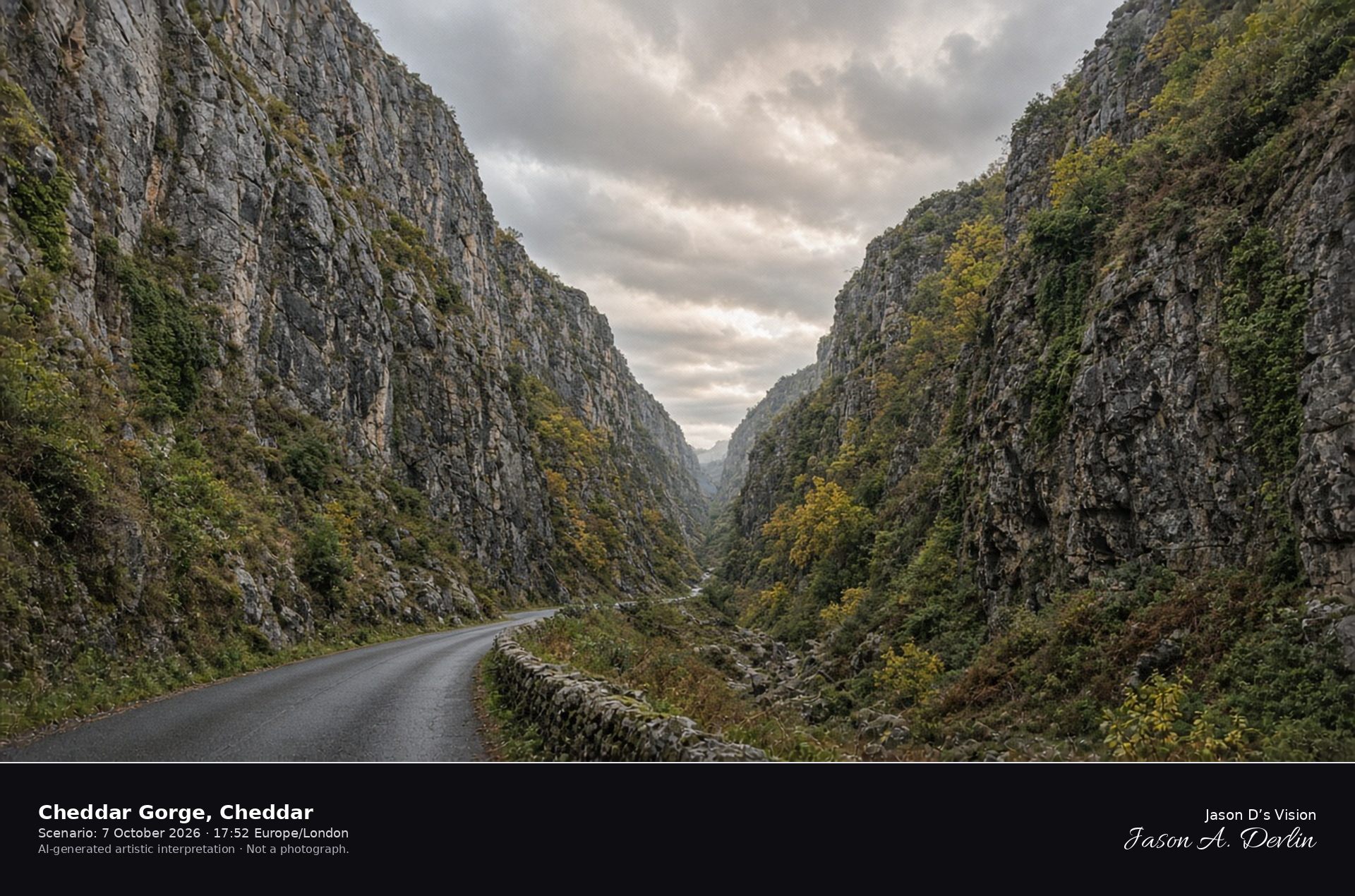
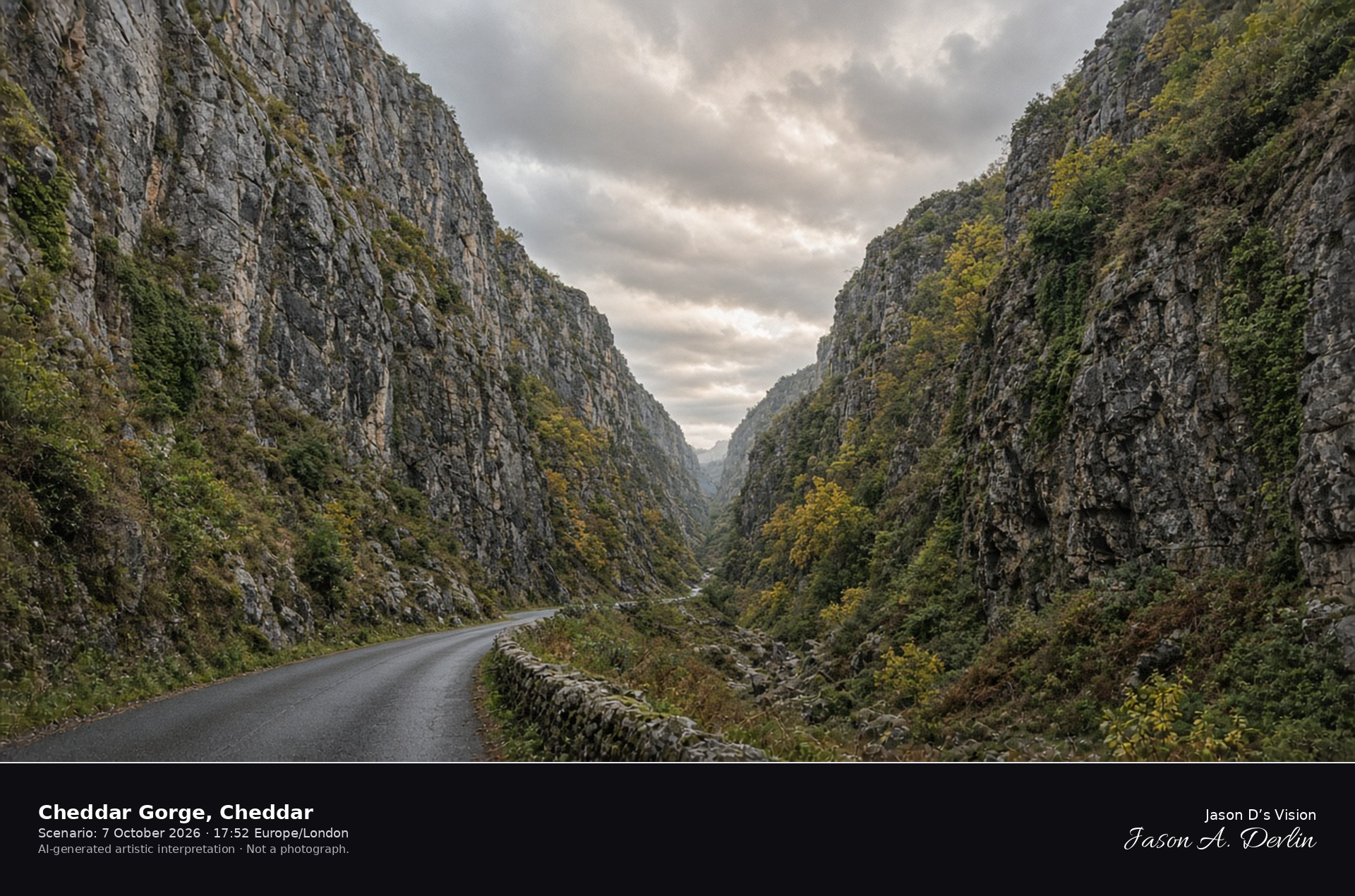
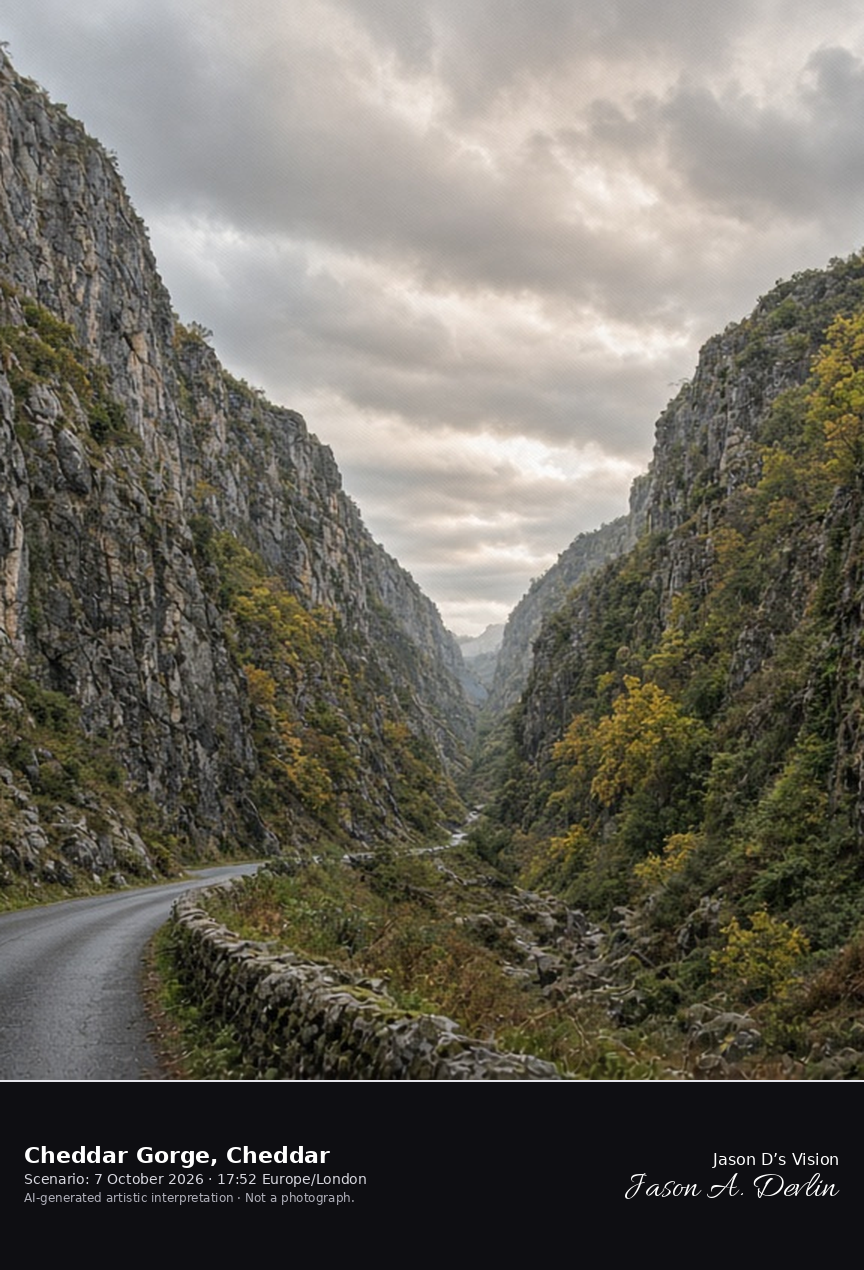
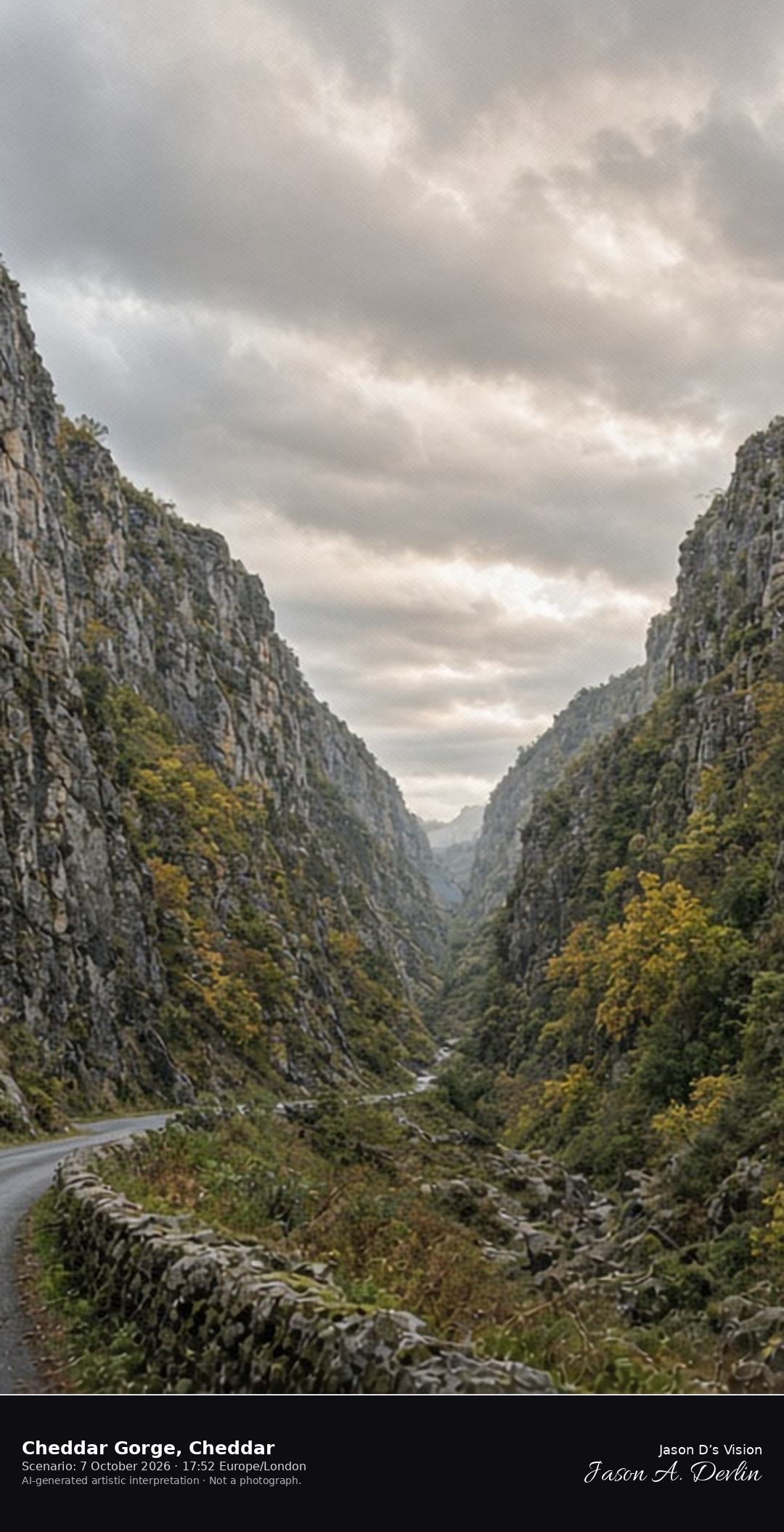
Cheddar Gorge in the Mendip Hills, Somerset, is the largest gorge in Britain, with cliffs around 137 metres high. Its caves have yielded Cheddar Man, Britain's oldest complete human skeleton.
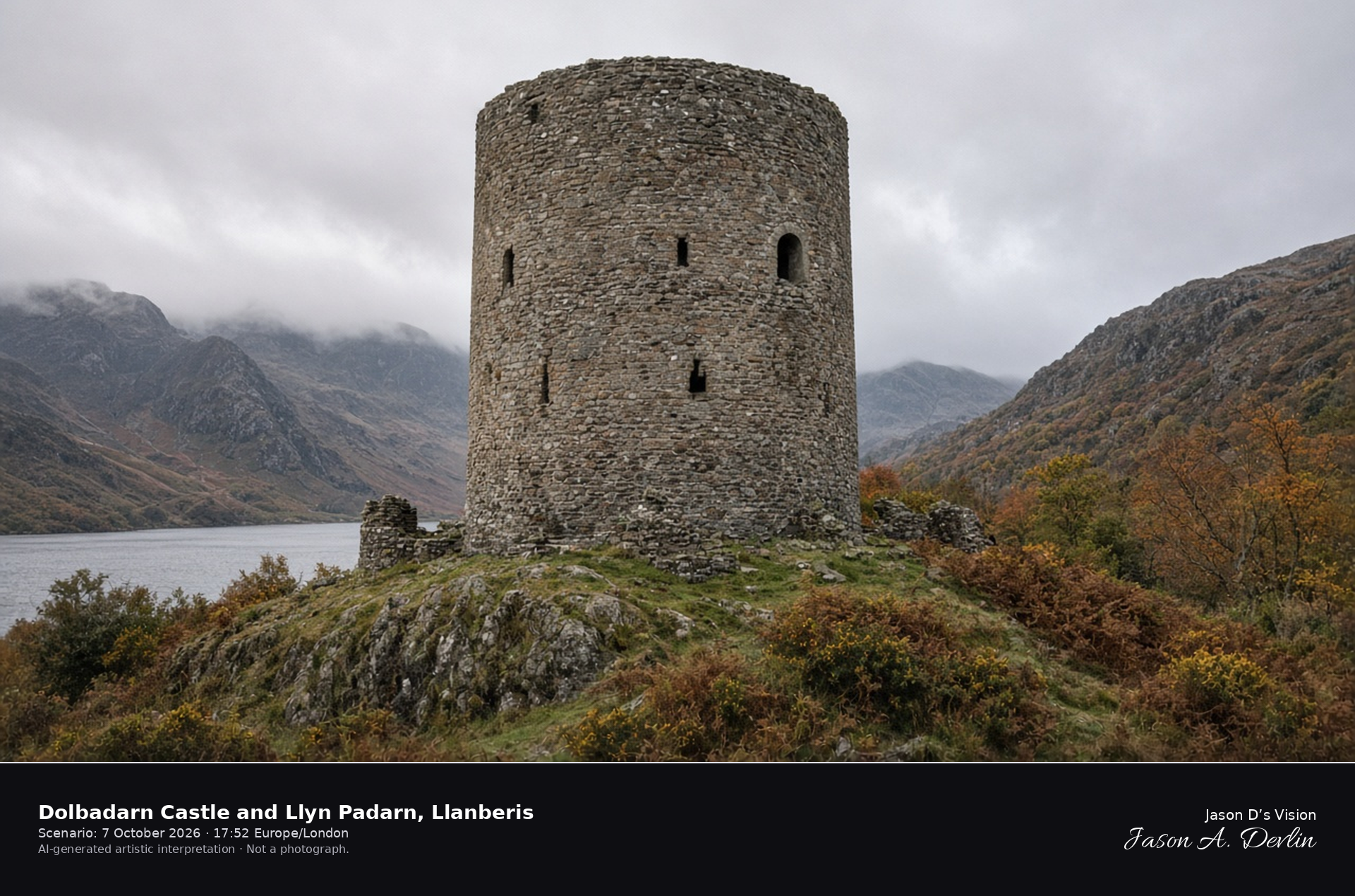
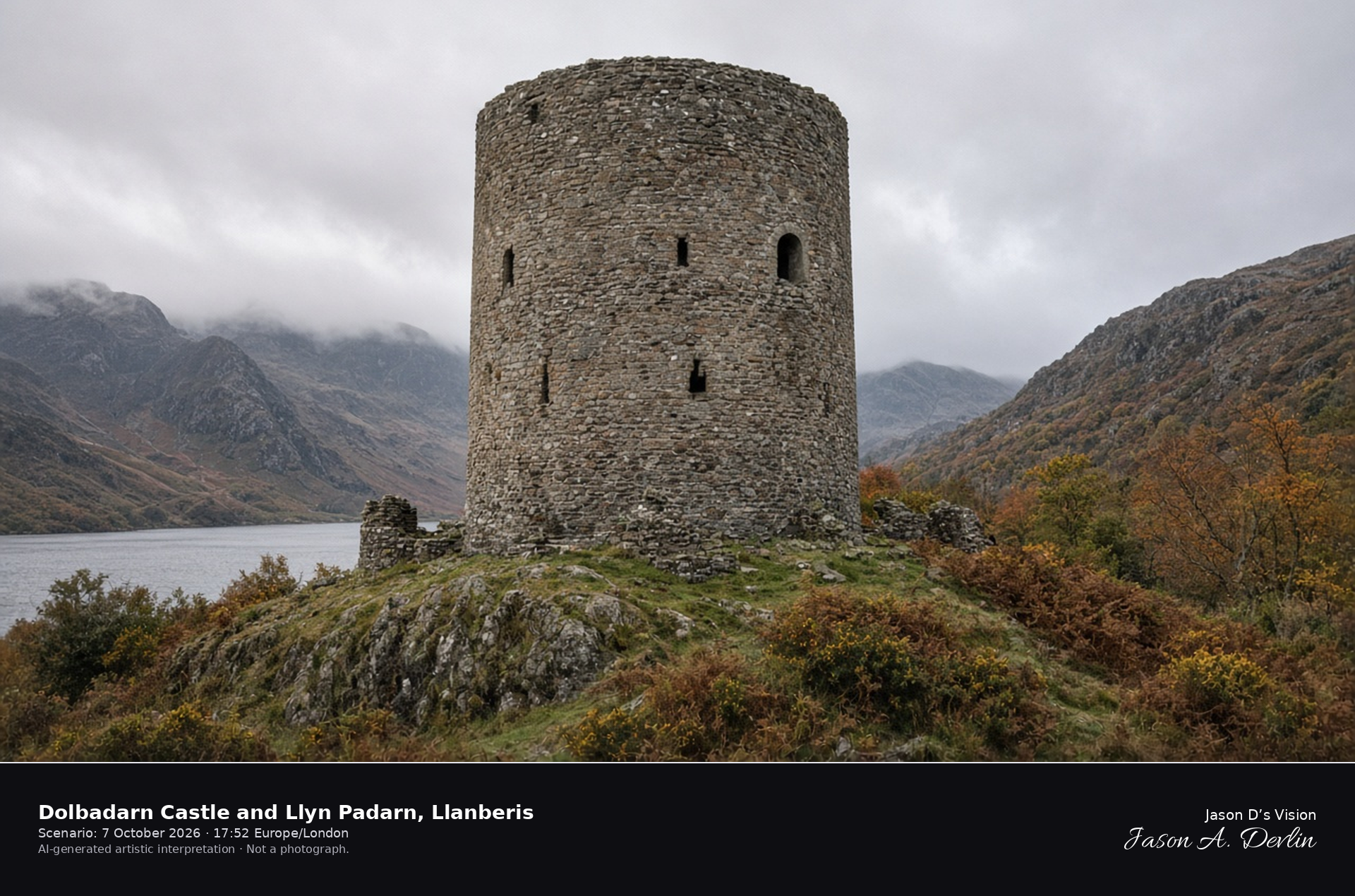
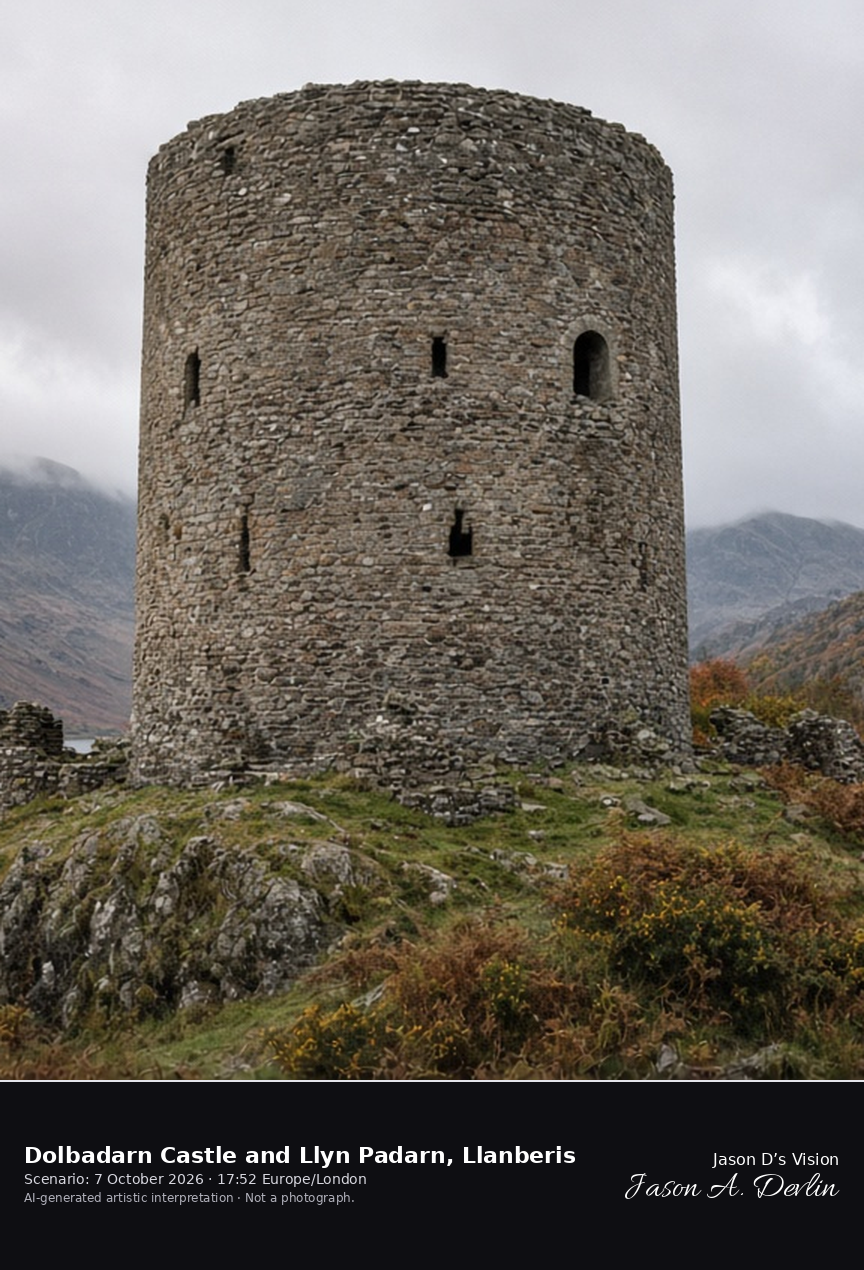
Dolbadarn Castle and Llyn Padarn · AI-generated artistic interpretation
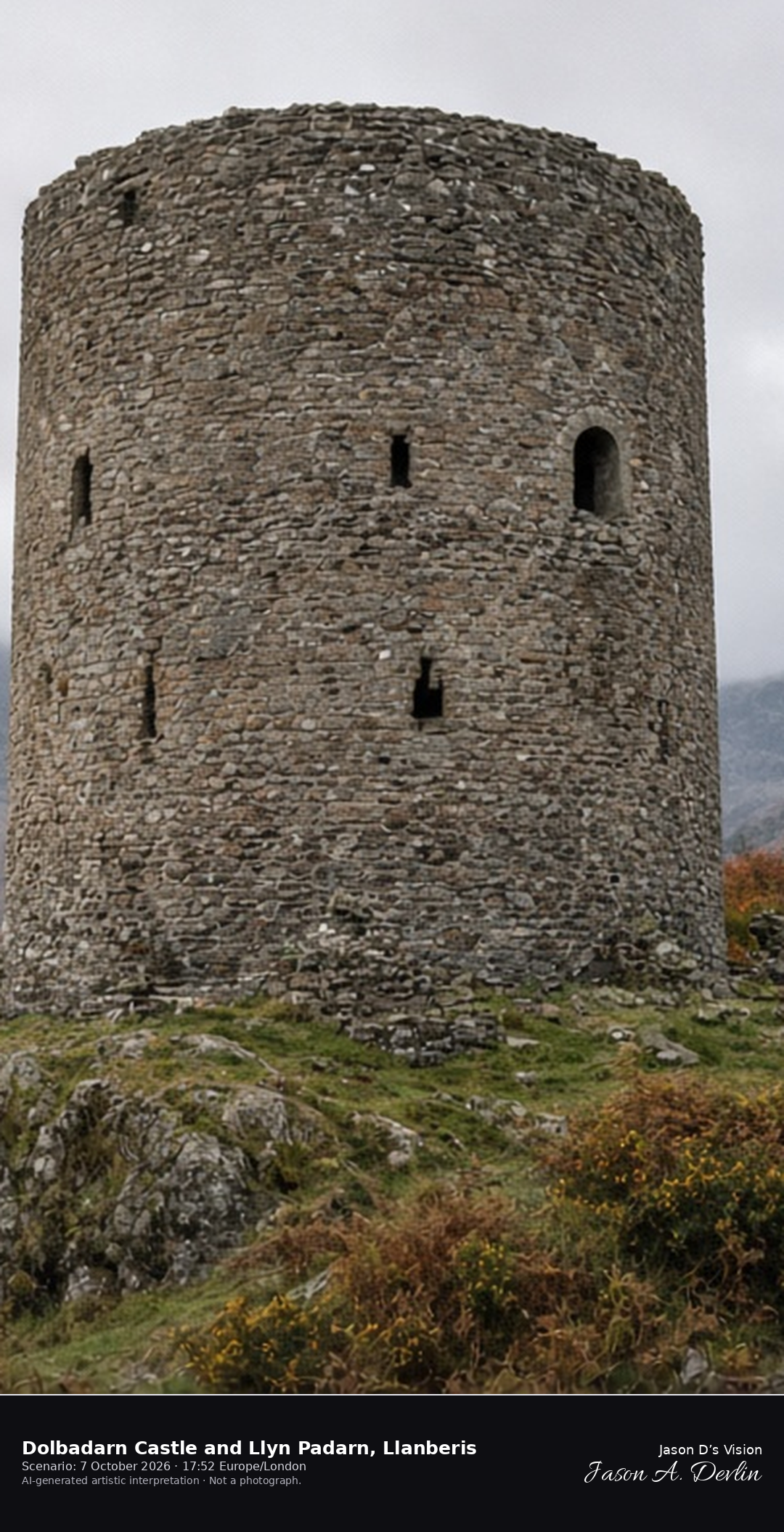
Dolbadarn most likely began under Llywelyn the Great in the late twelfth or early thirteenth century, guarding the Llanberis Pass above Llyn Padarn. Its round tower is traditionally associated with the long imprisonment of Owain ap Gruffudd by his brother Llywelyn — more than twenty years amid the struggles of the Welsh princes.
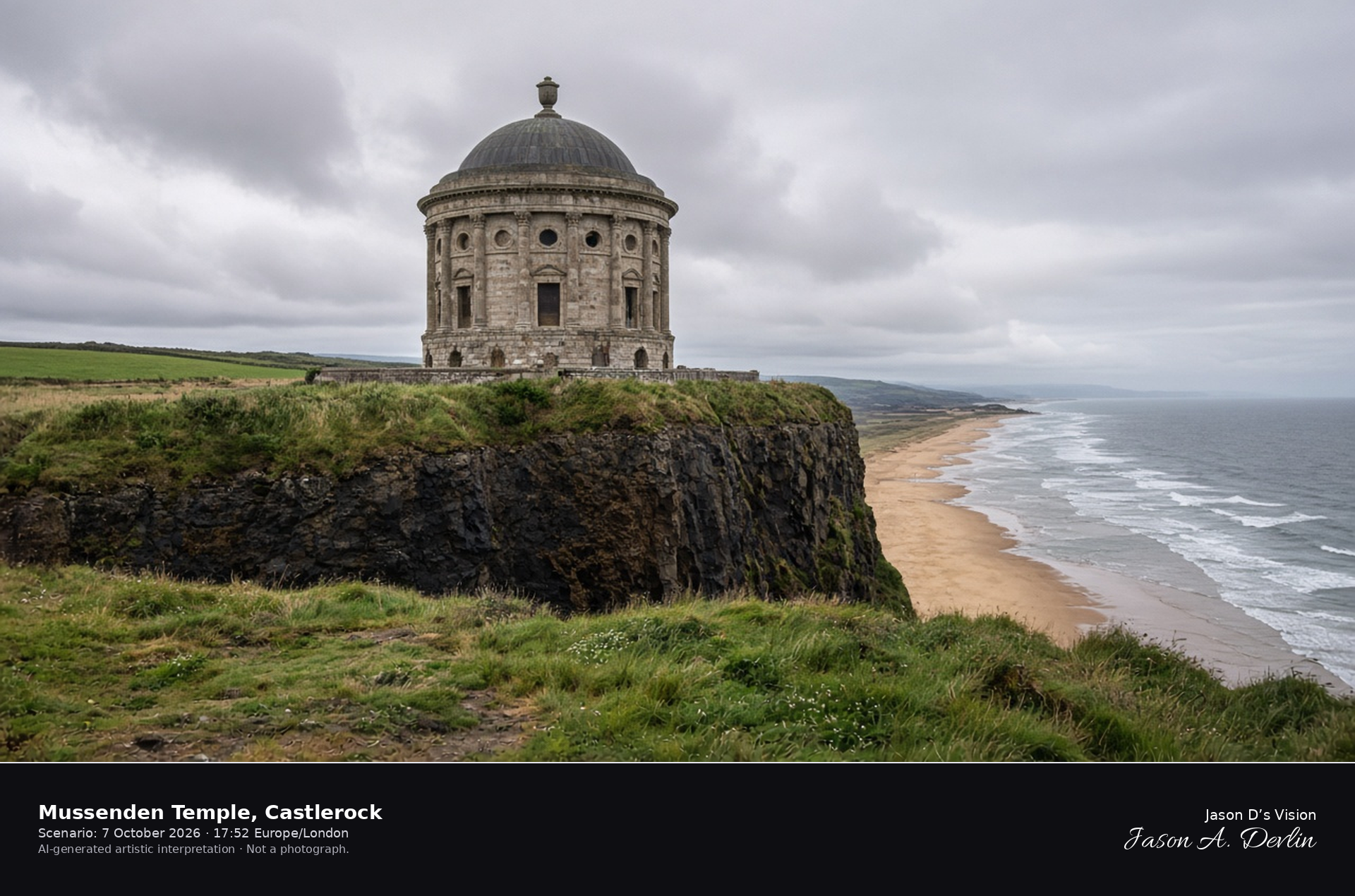
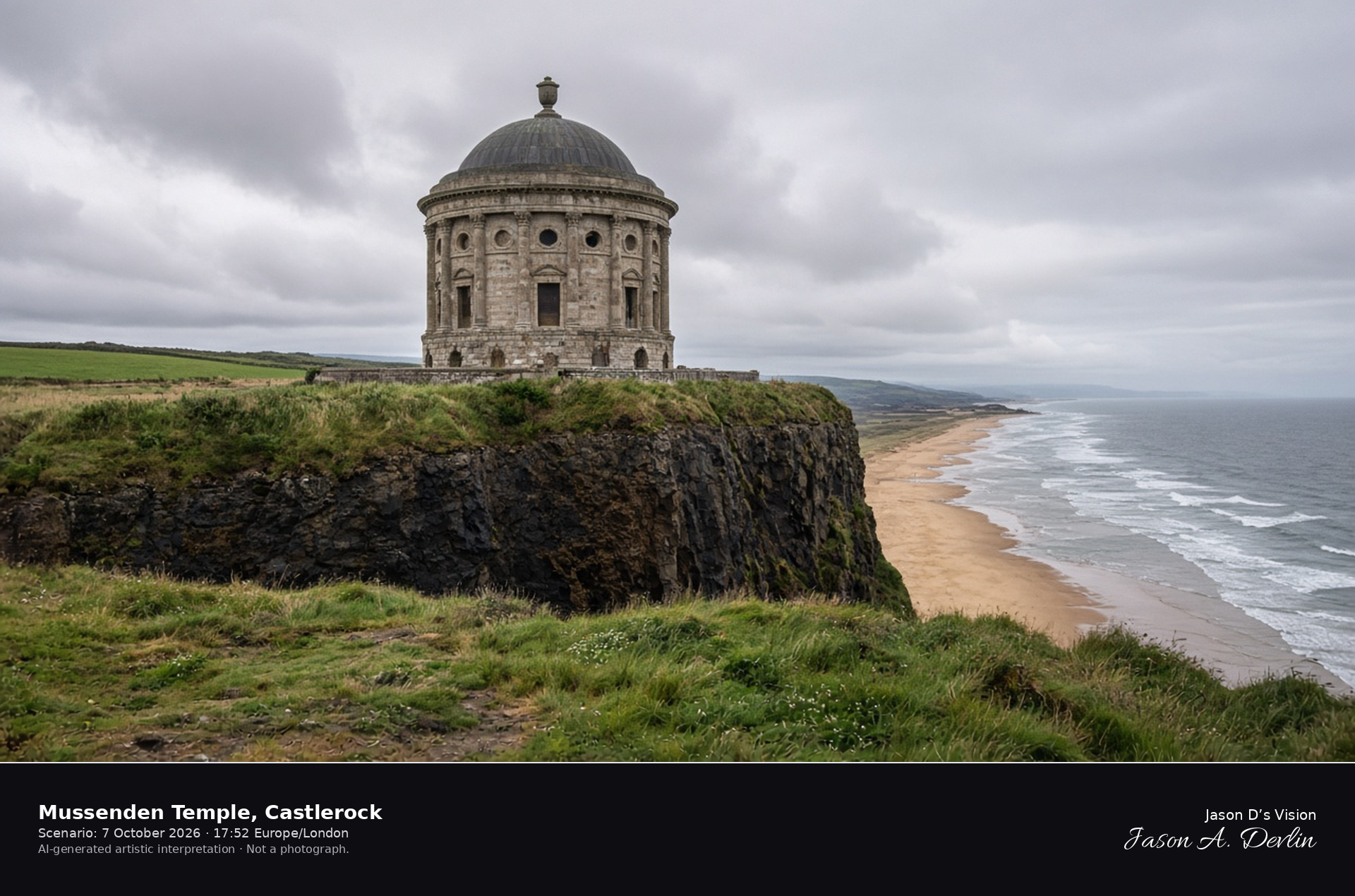
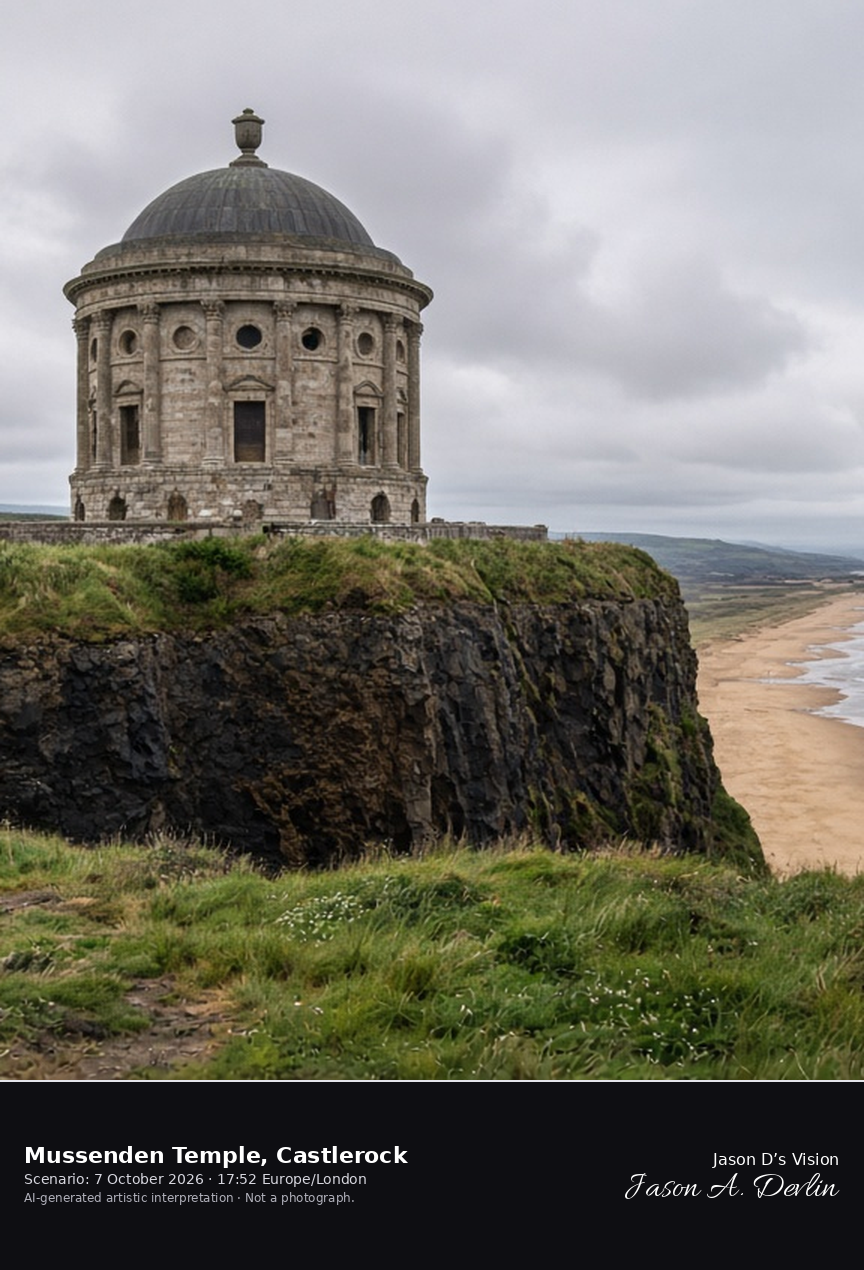
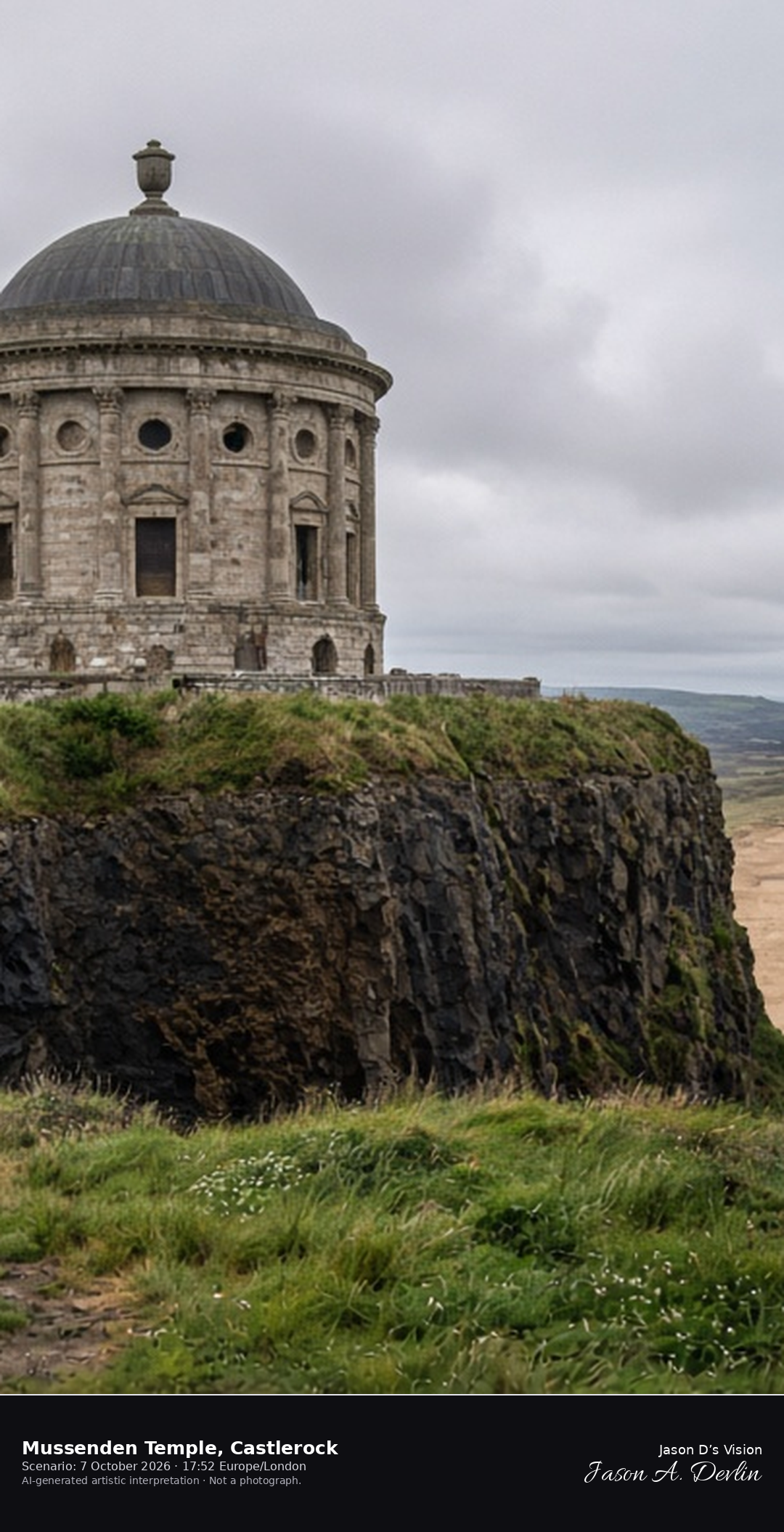
Frederick Hervey, the Earl-Bishop of Derry, commissioned Mussenden Temple as a summer library, completed in 1785 and inspired by the Temple of Vesta at Tivoli. A broad path once ran between the temple and the cliff edge; coastal erosion narrowed that setting, prompting stabilisation work in the late 1990s.
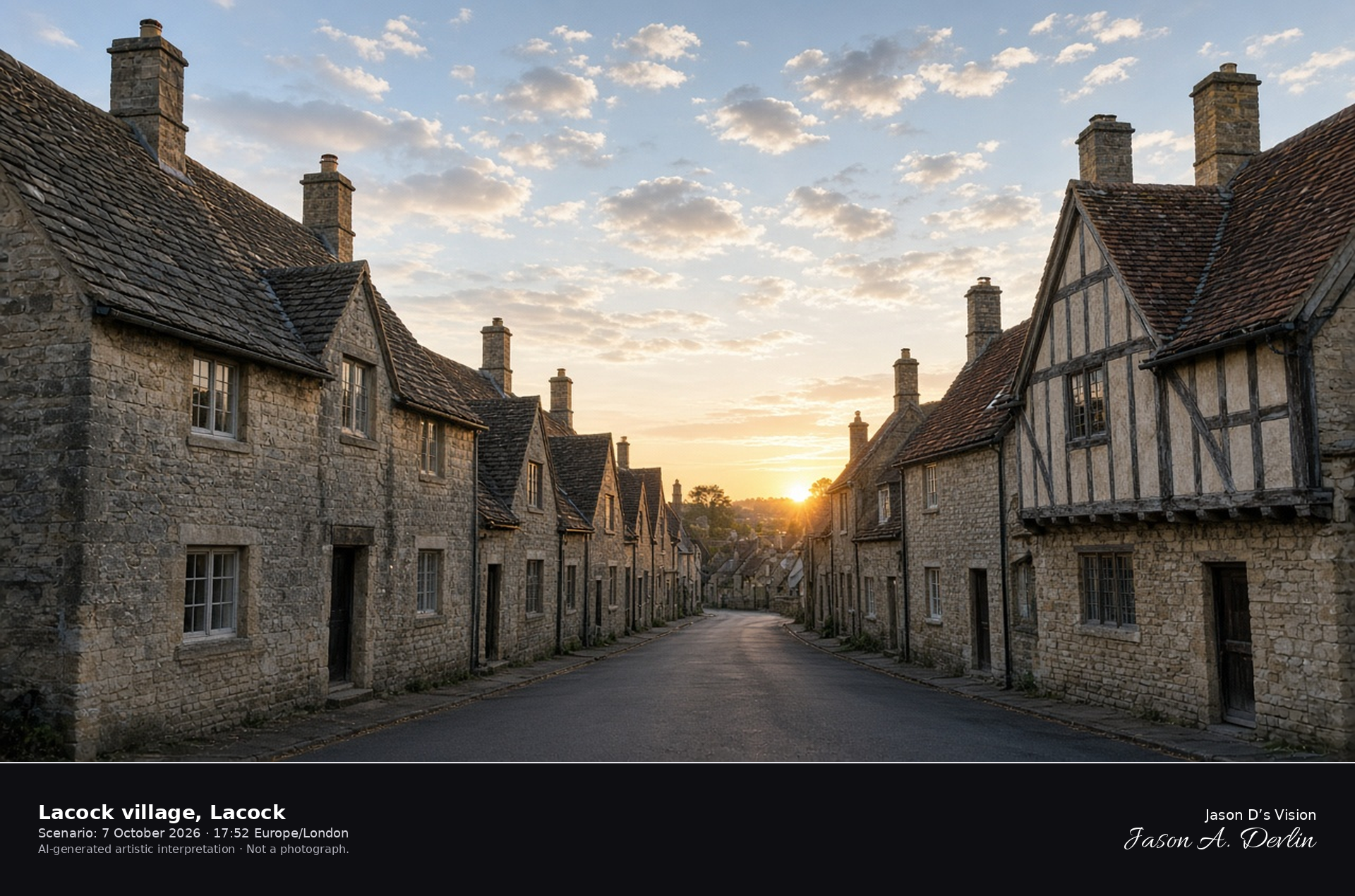
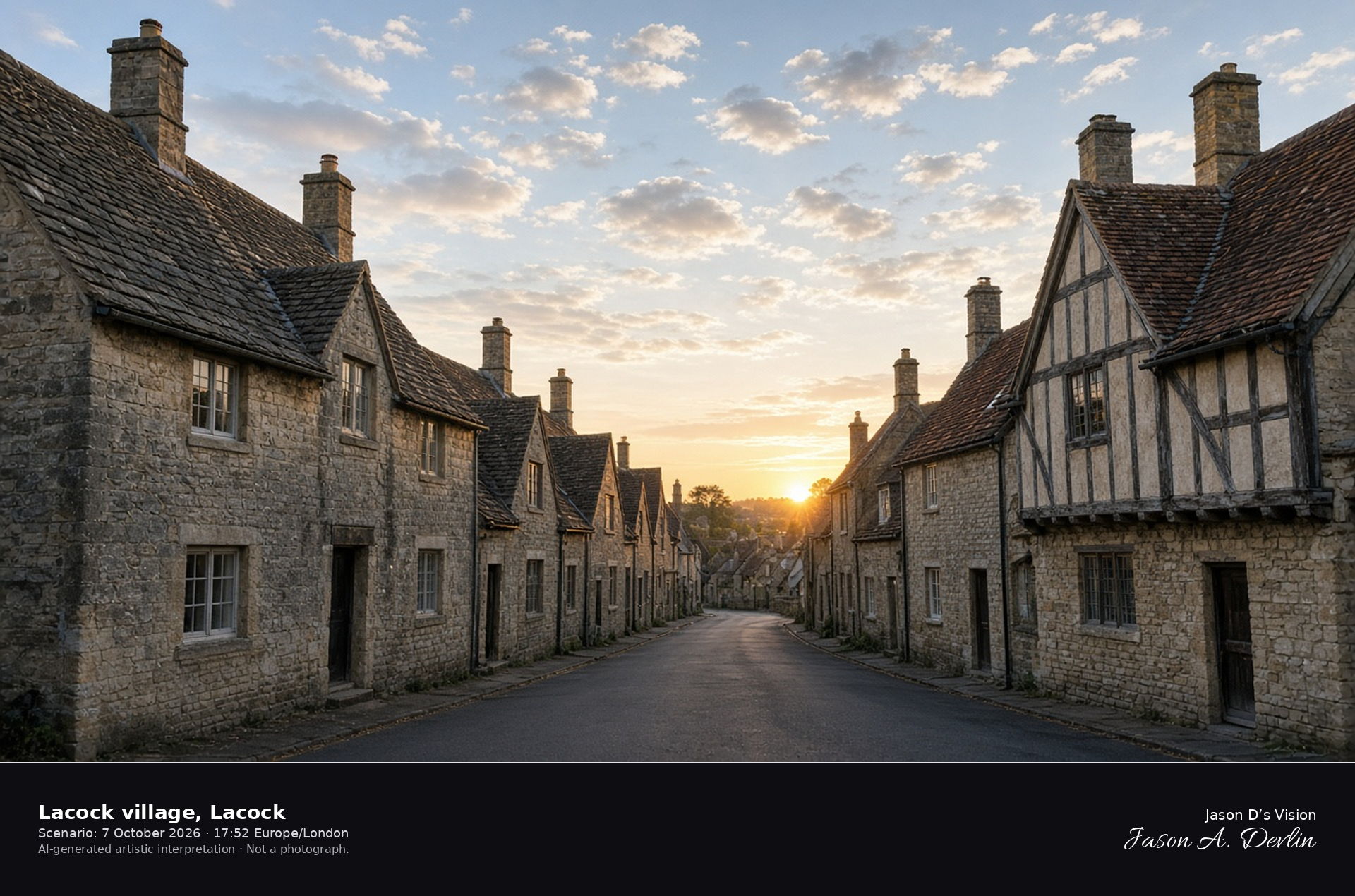
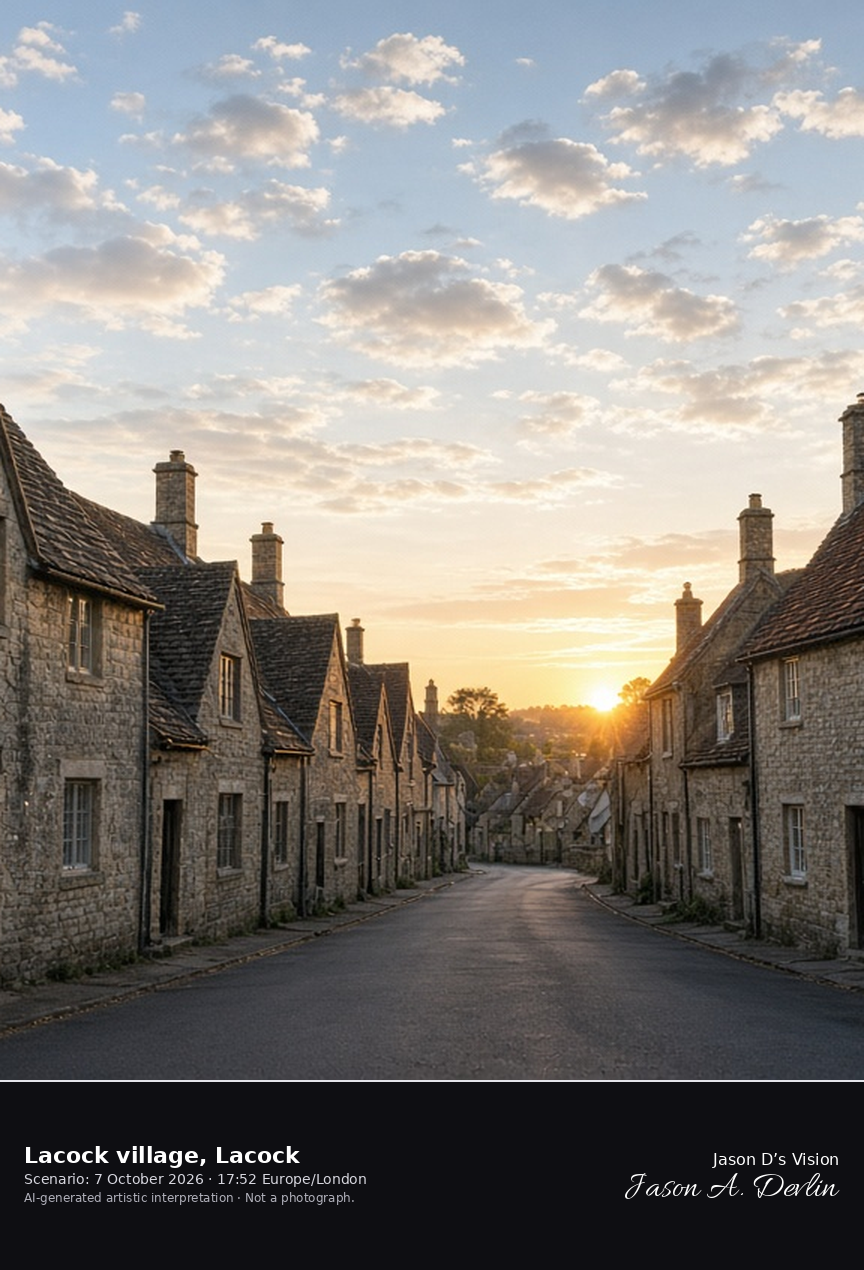
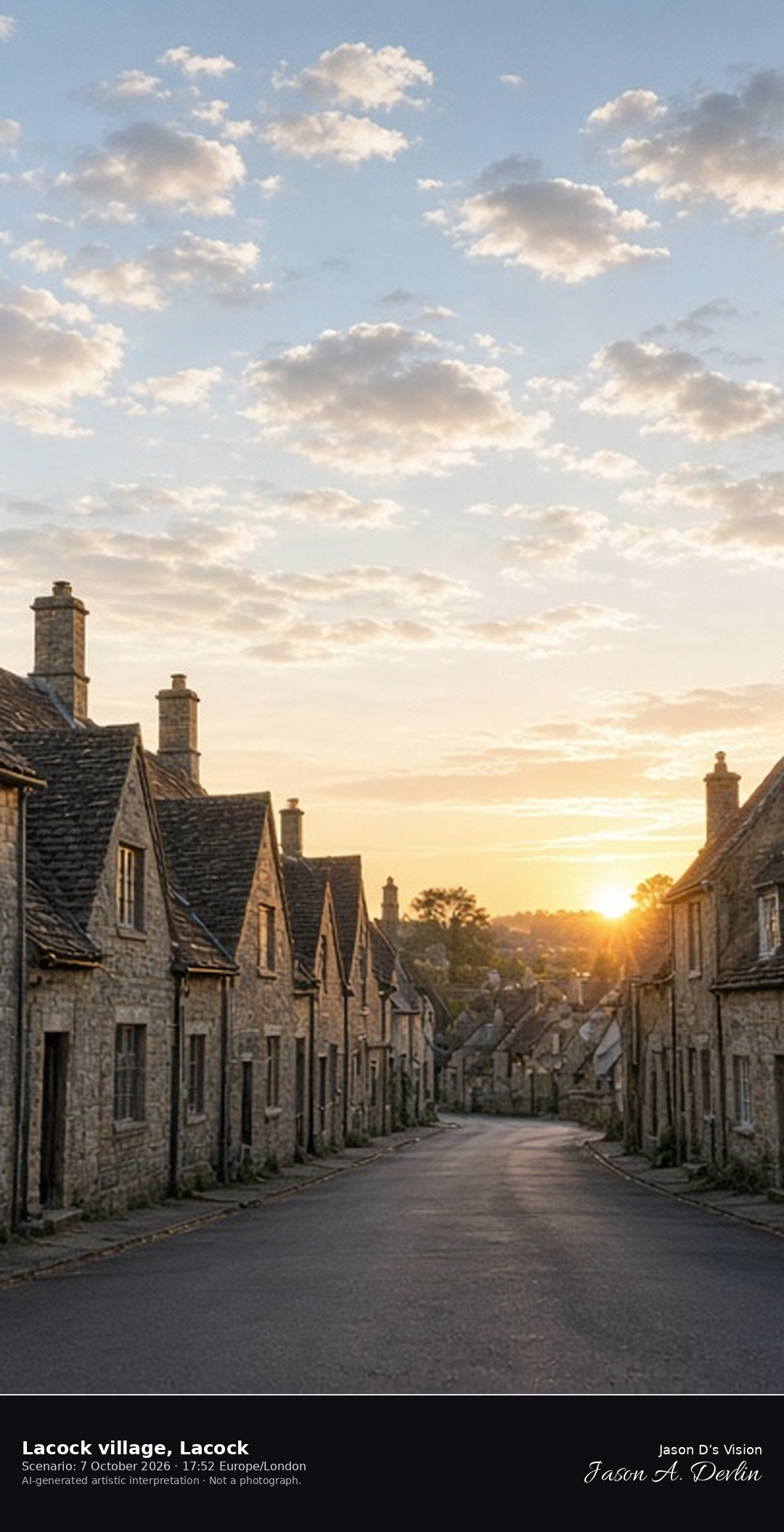
Lacock village · AI-generated artistic interpretation
Lacock prospered through the wool trade, and its historic village streets have become familiar settings for film and television. At the abbey, William Henry Fox Talbot made the world's earliest surviving photographic negative in 1835 — a milestone in the history of photography, in a quiet Wiltshire village.
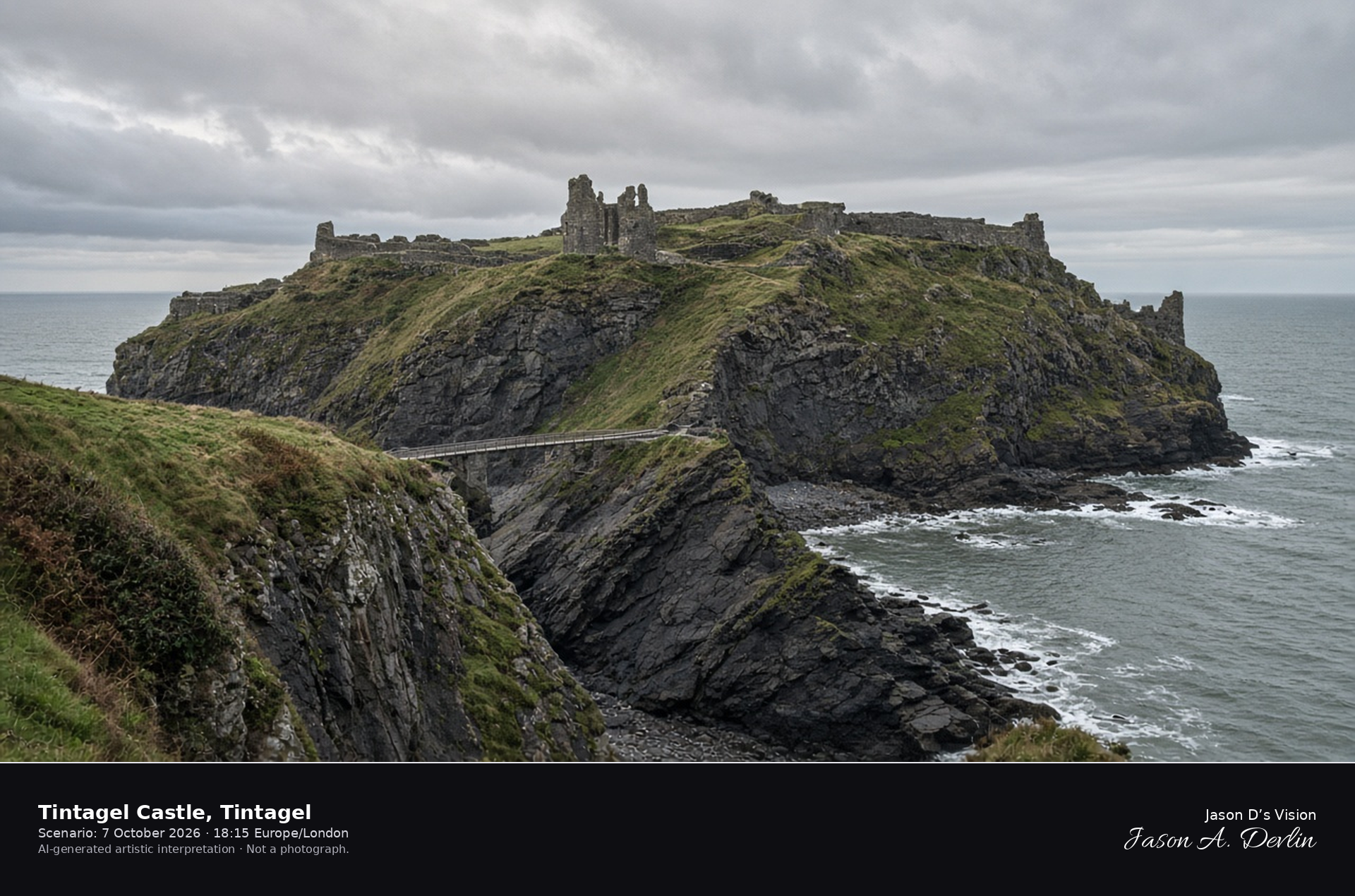
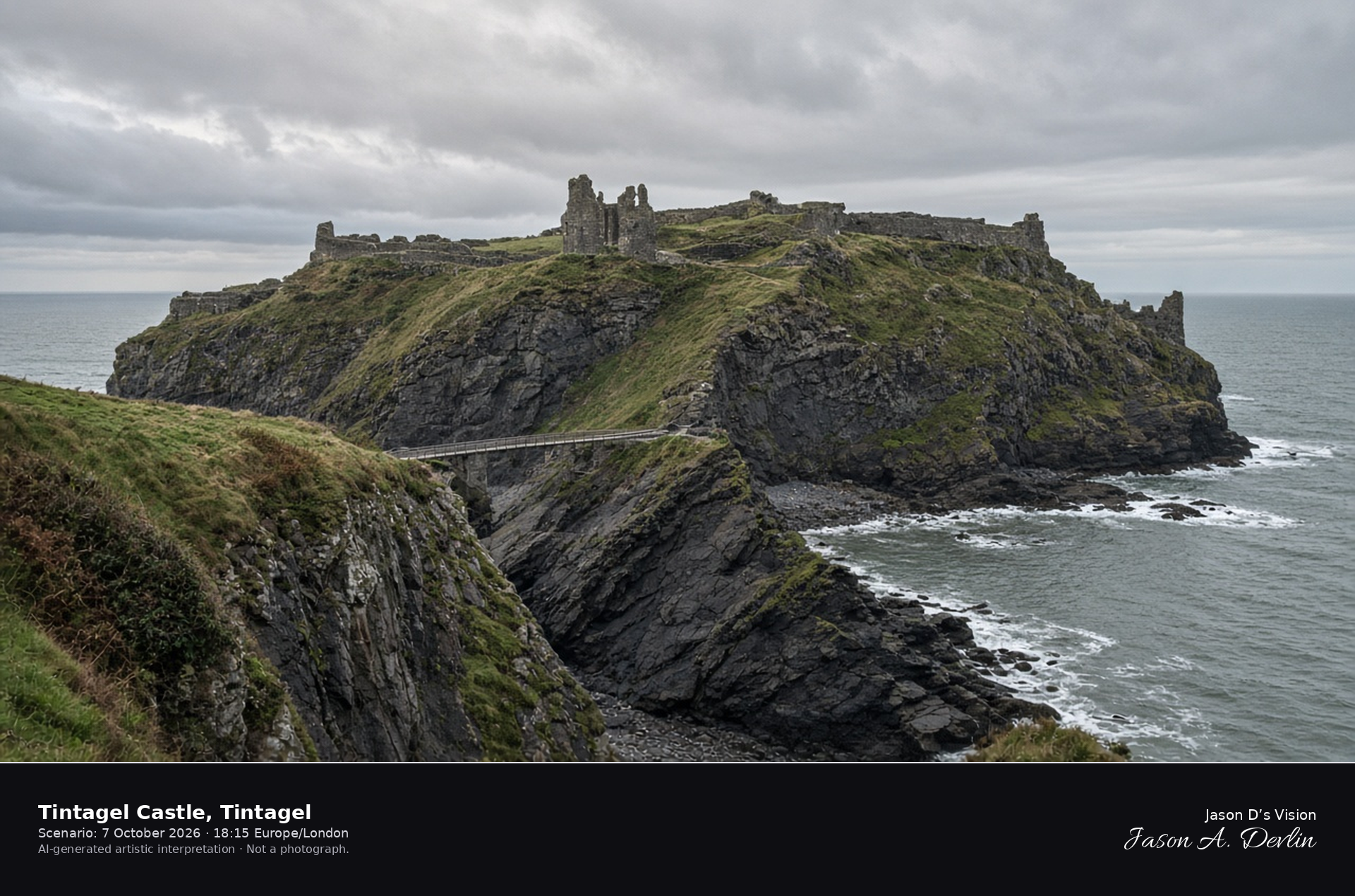
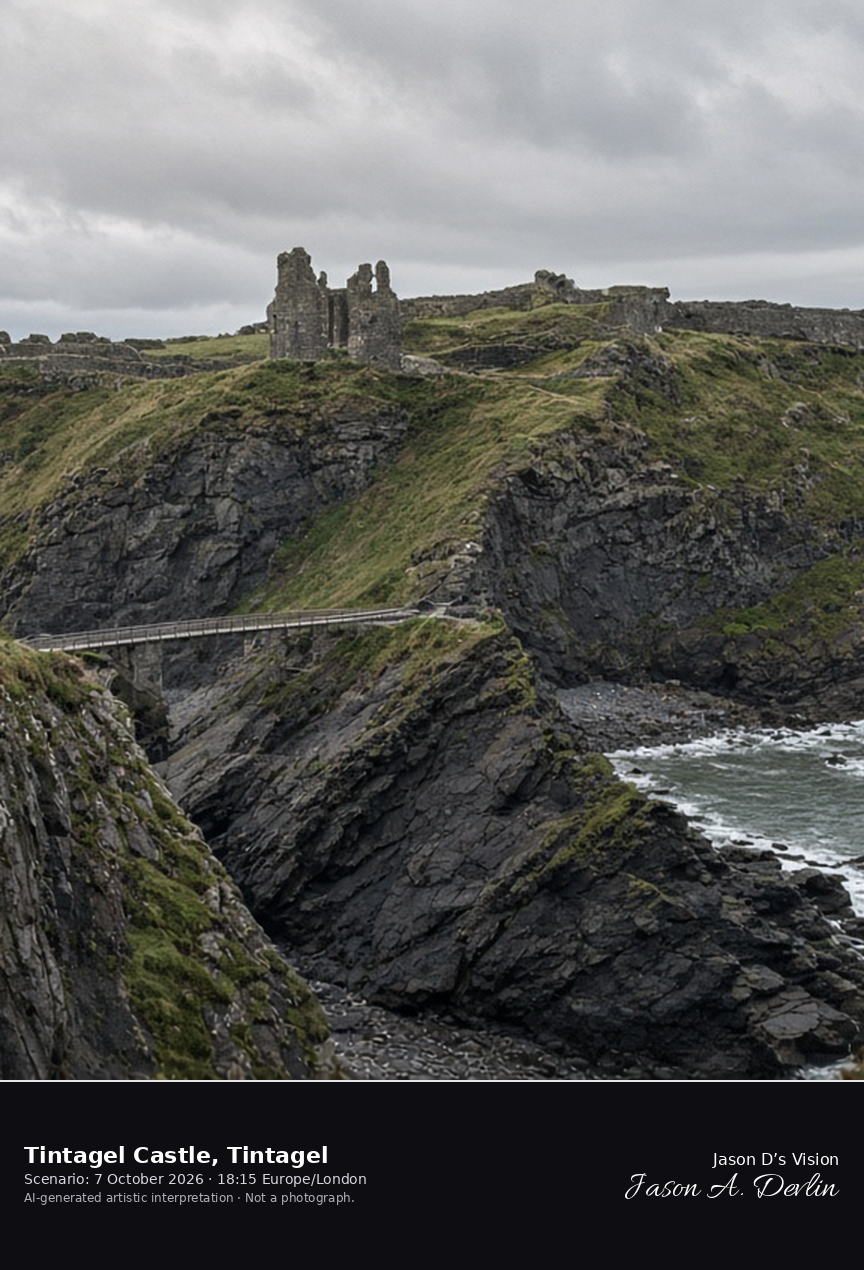
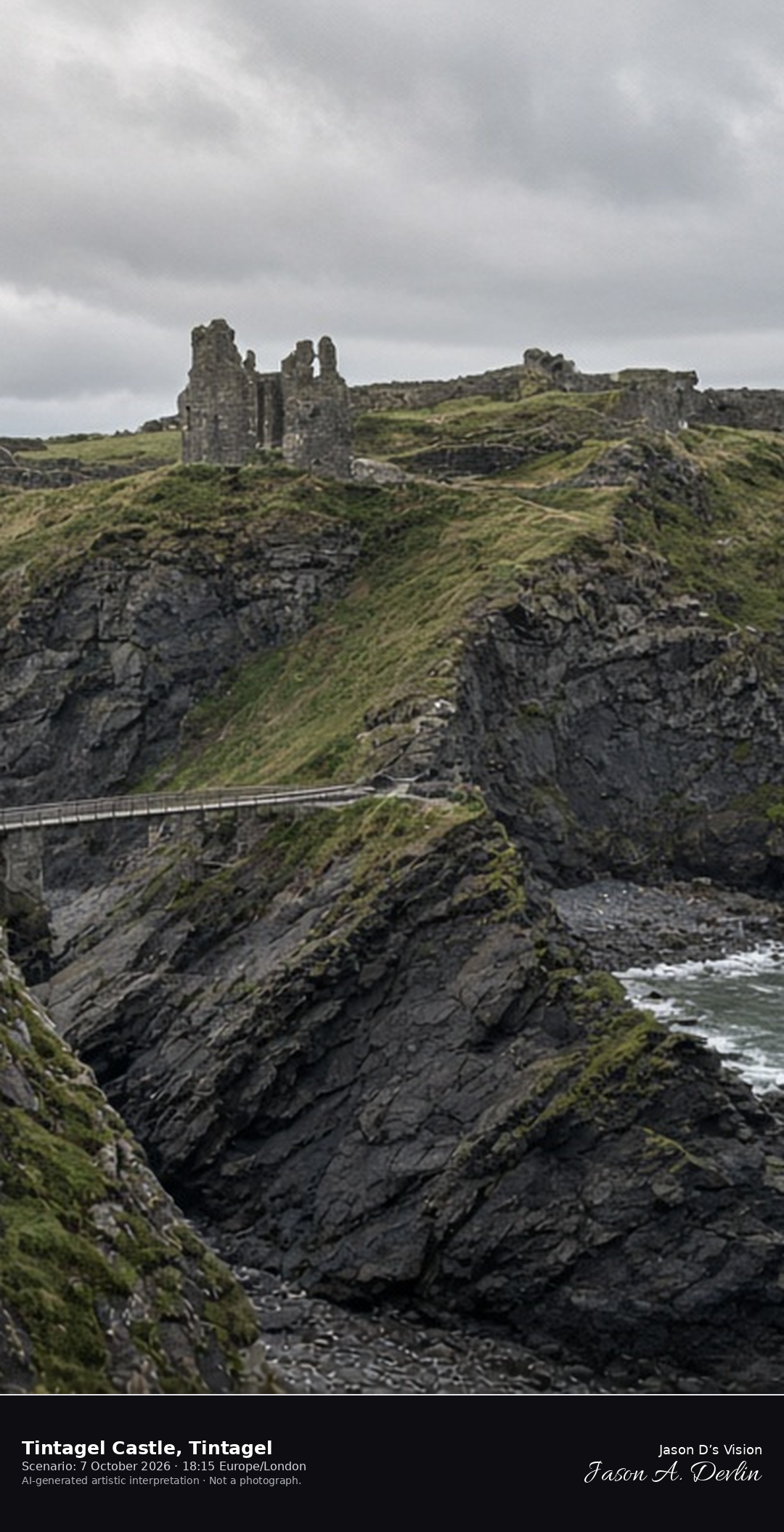
Tintagel Castle on the north Cornwall coast was built by Richard, Earl of Cornwall, in the 13th century and has long been linked with the legend of King Arthur. It is cared for by English Heritage, and a new footbridge to the Island opened in 2019.
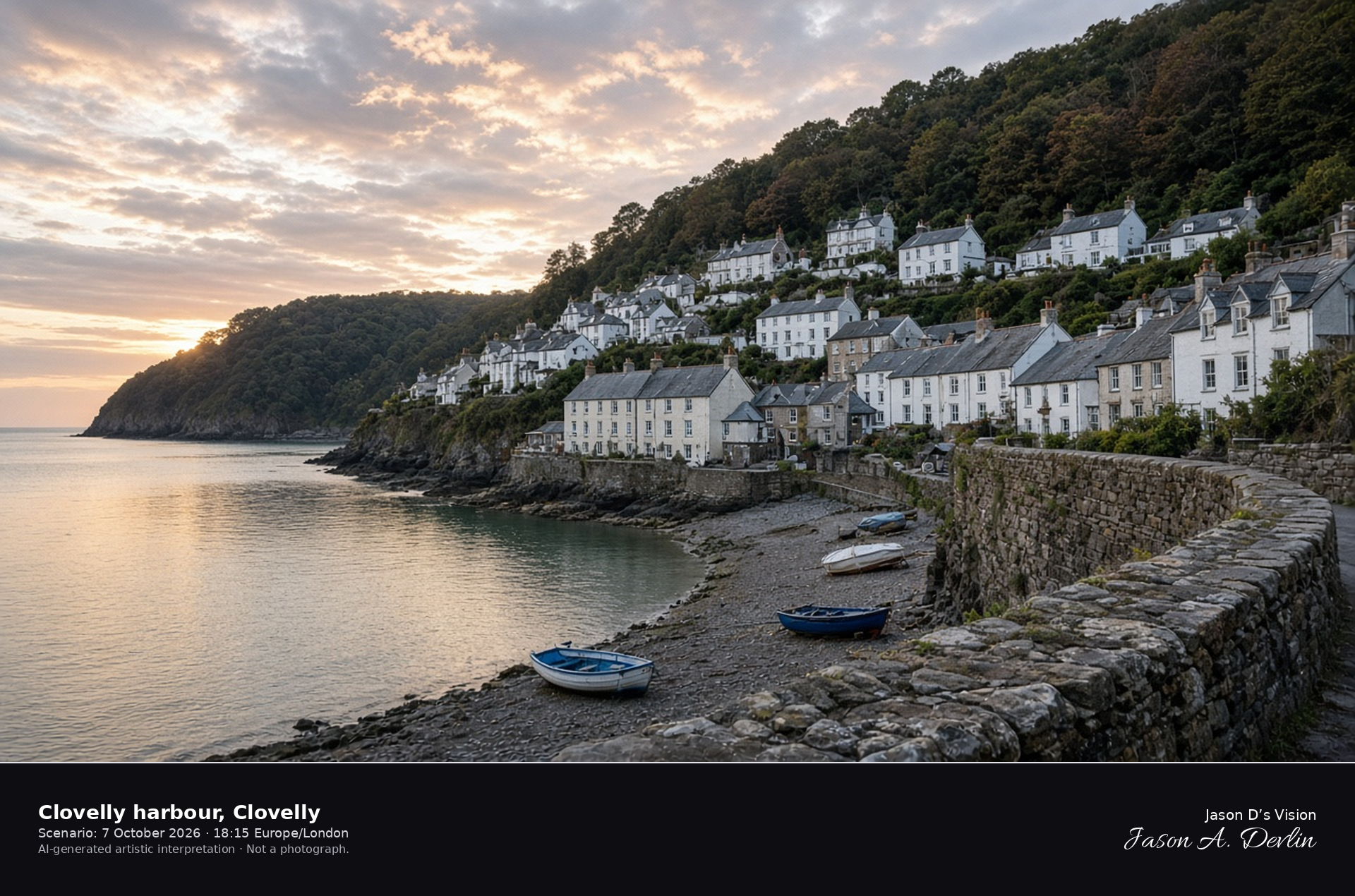
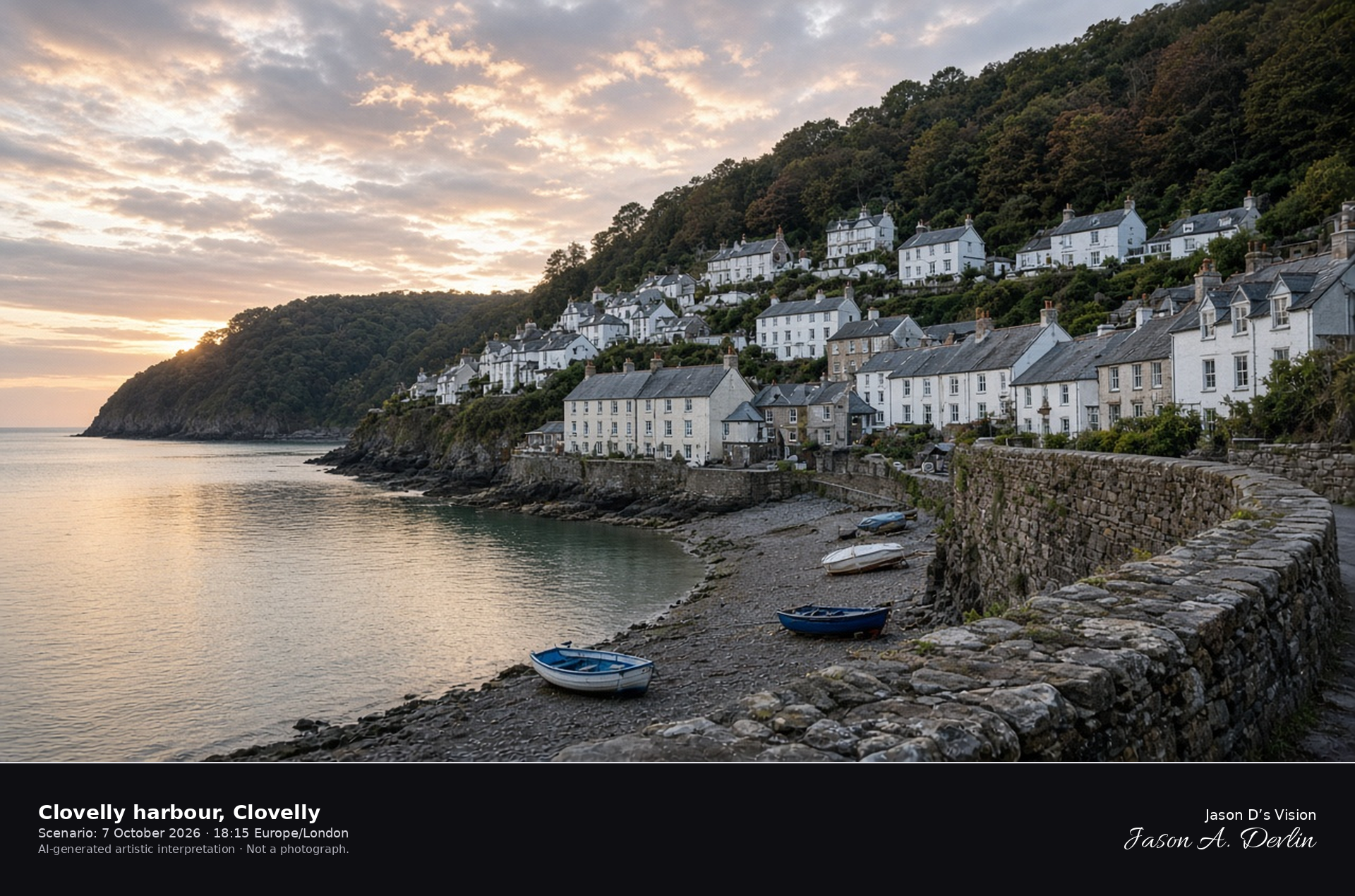
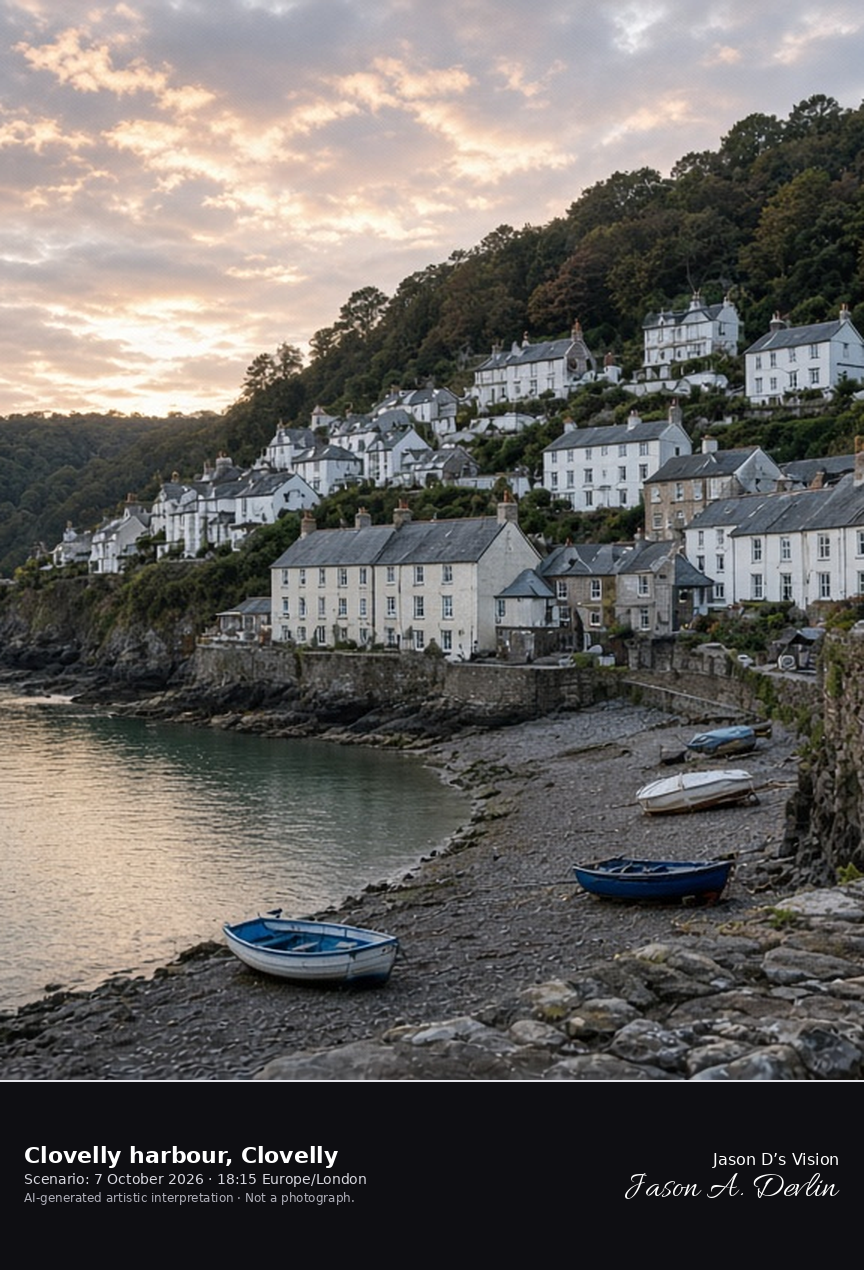
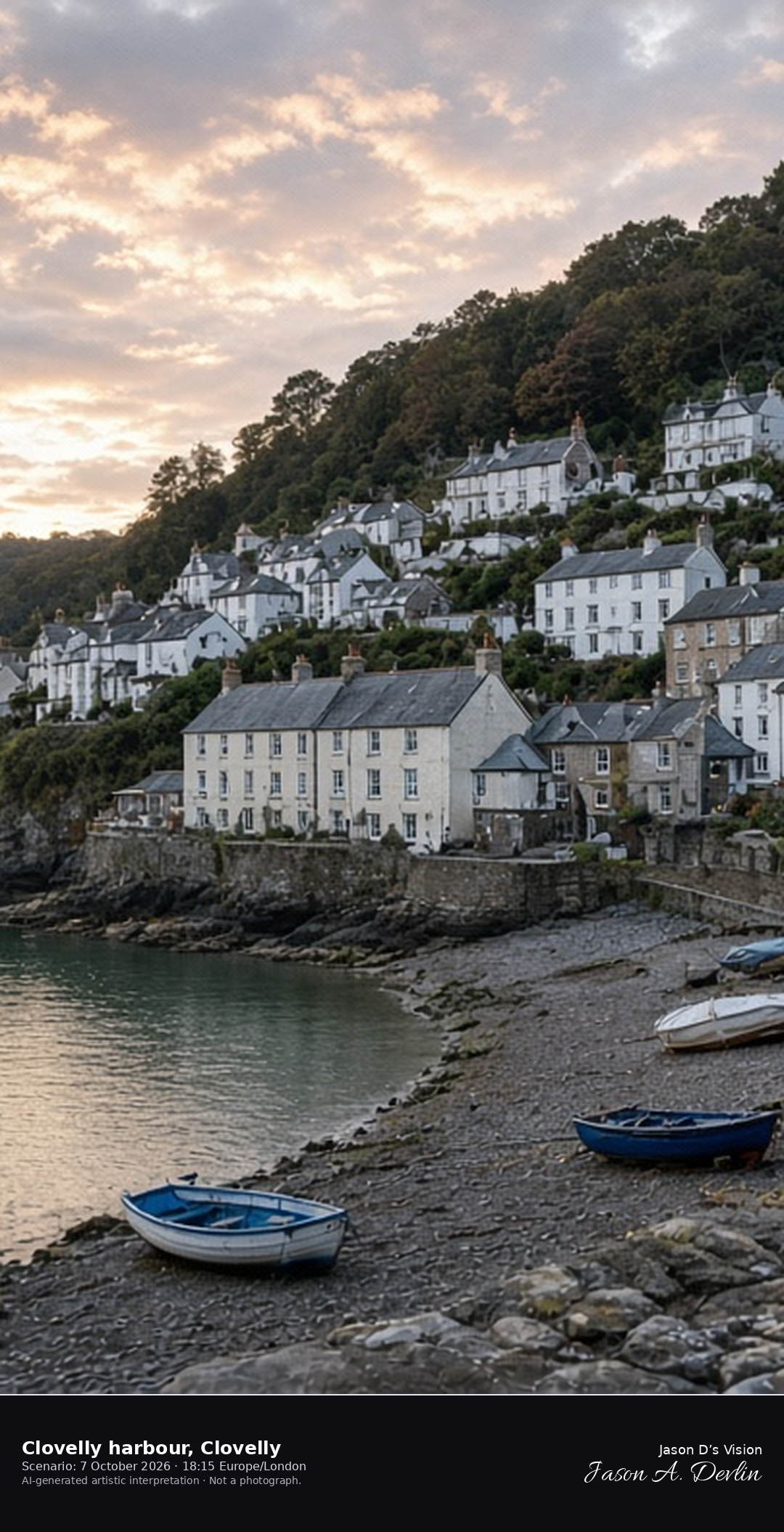
Clovelly in north Devon is a privately owned village whose steep cobbled street is closed to cars; goods are still carried down it on sledges. The estate has been owned by the same family since 1738.
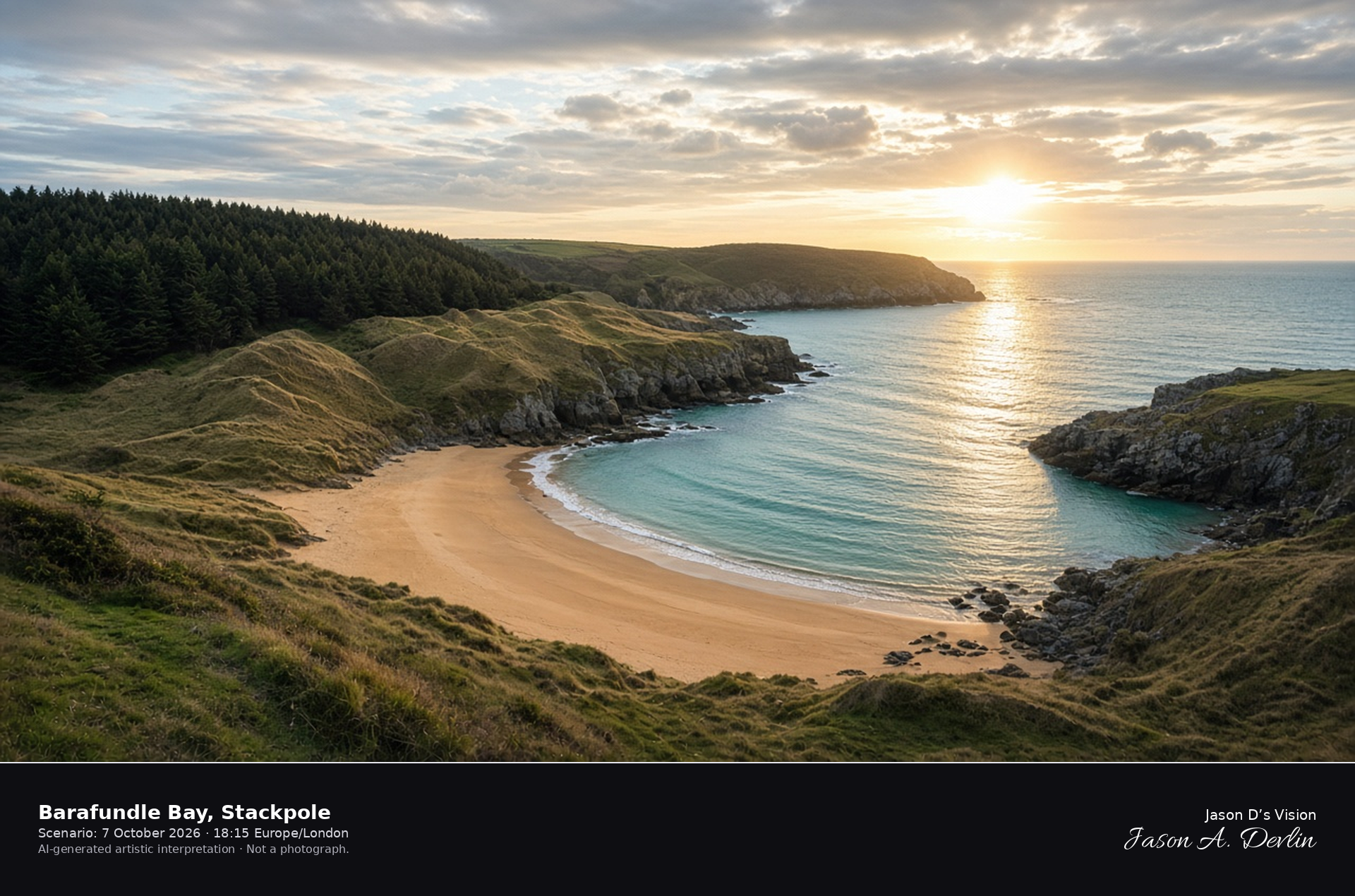
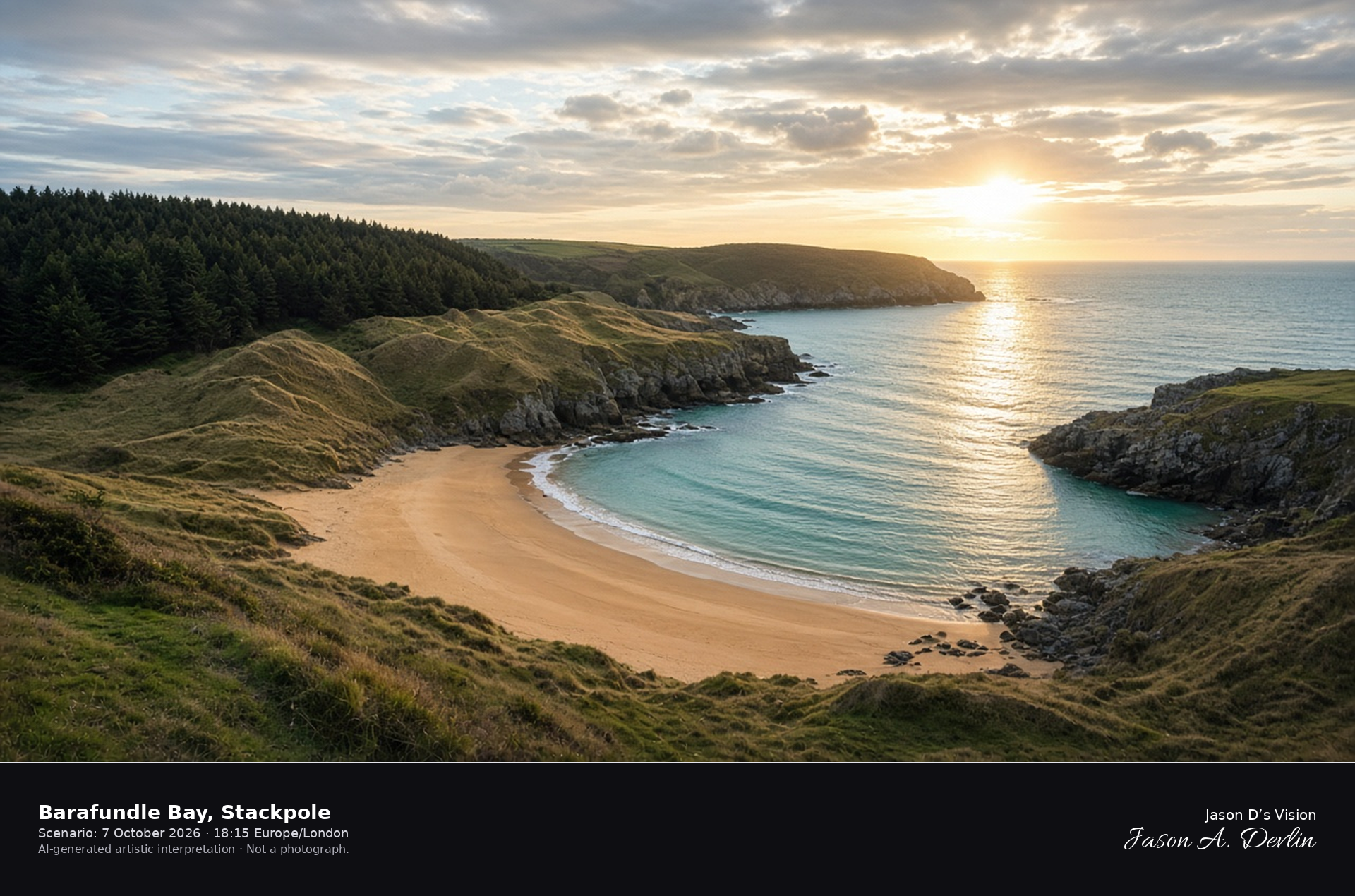
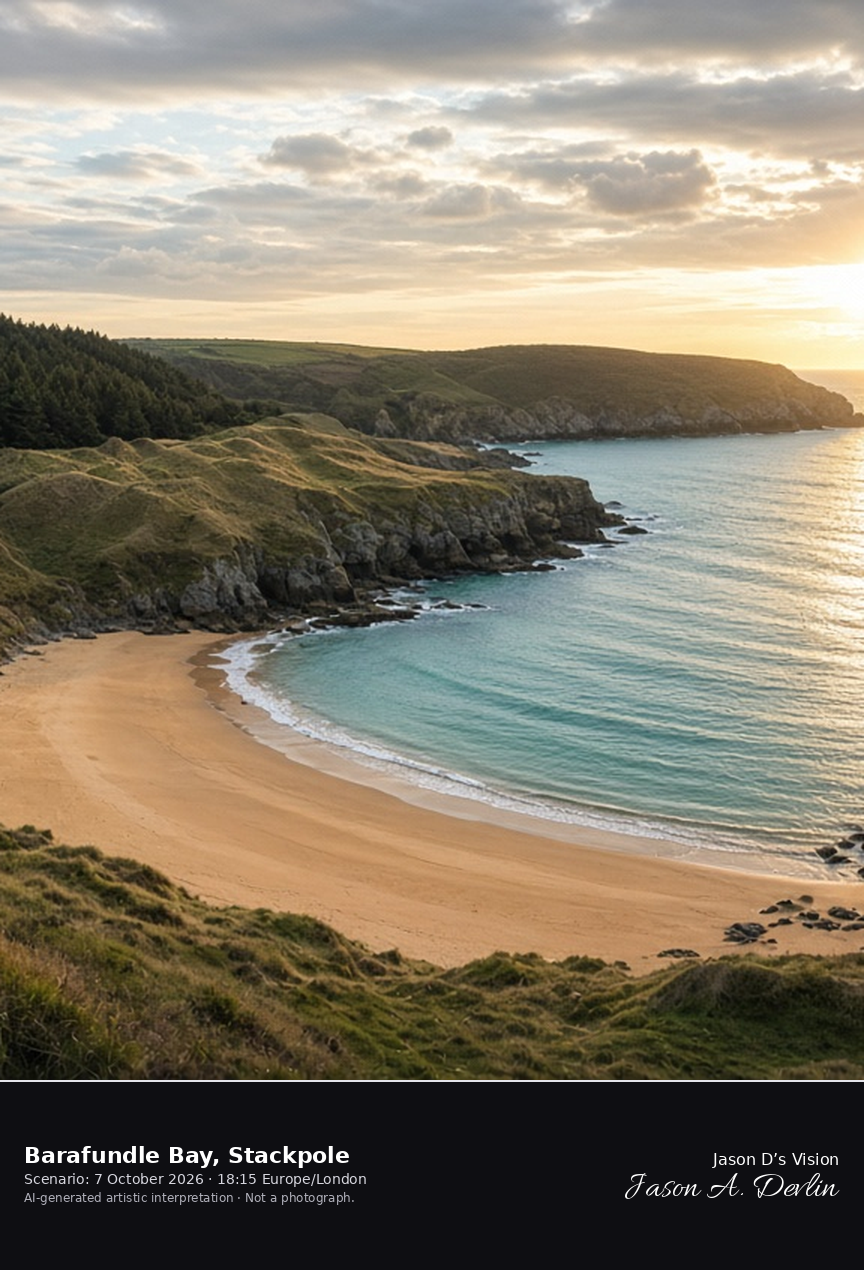
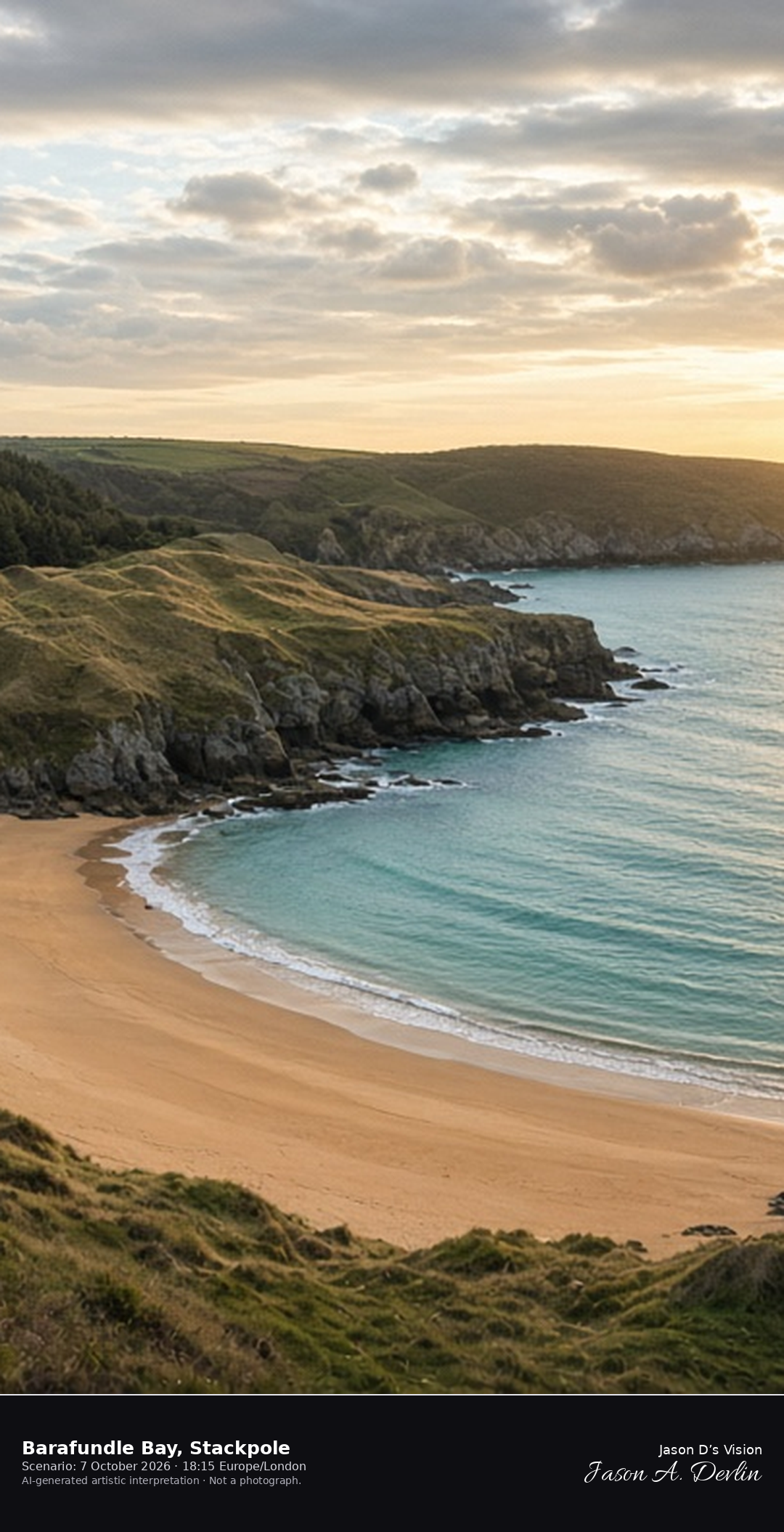
Barafundle Bay, Stackpole · AI-generated artistic interpretation
Barafundle Bay is part of the National Trust's Stackpole Estate on the Pembrokeshire coast of Wales. With no road access, it is reached only on foot along the coast path from Stackpole Quay.
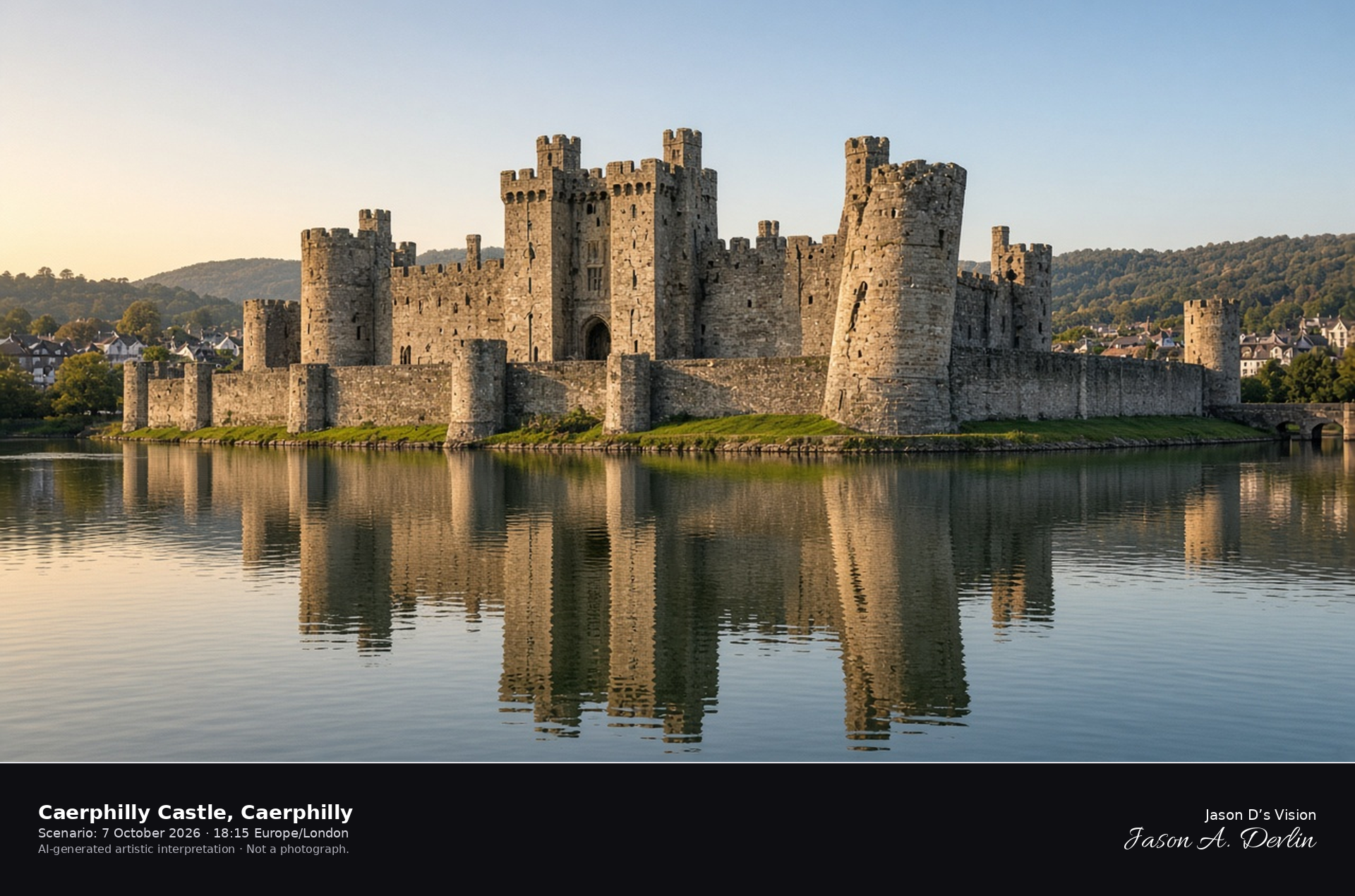
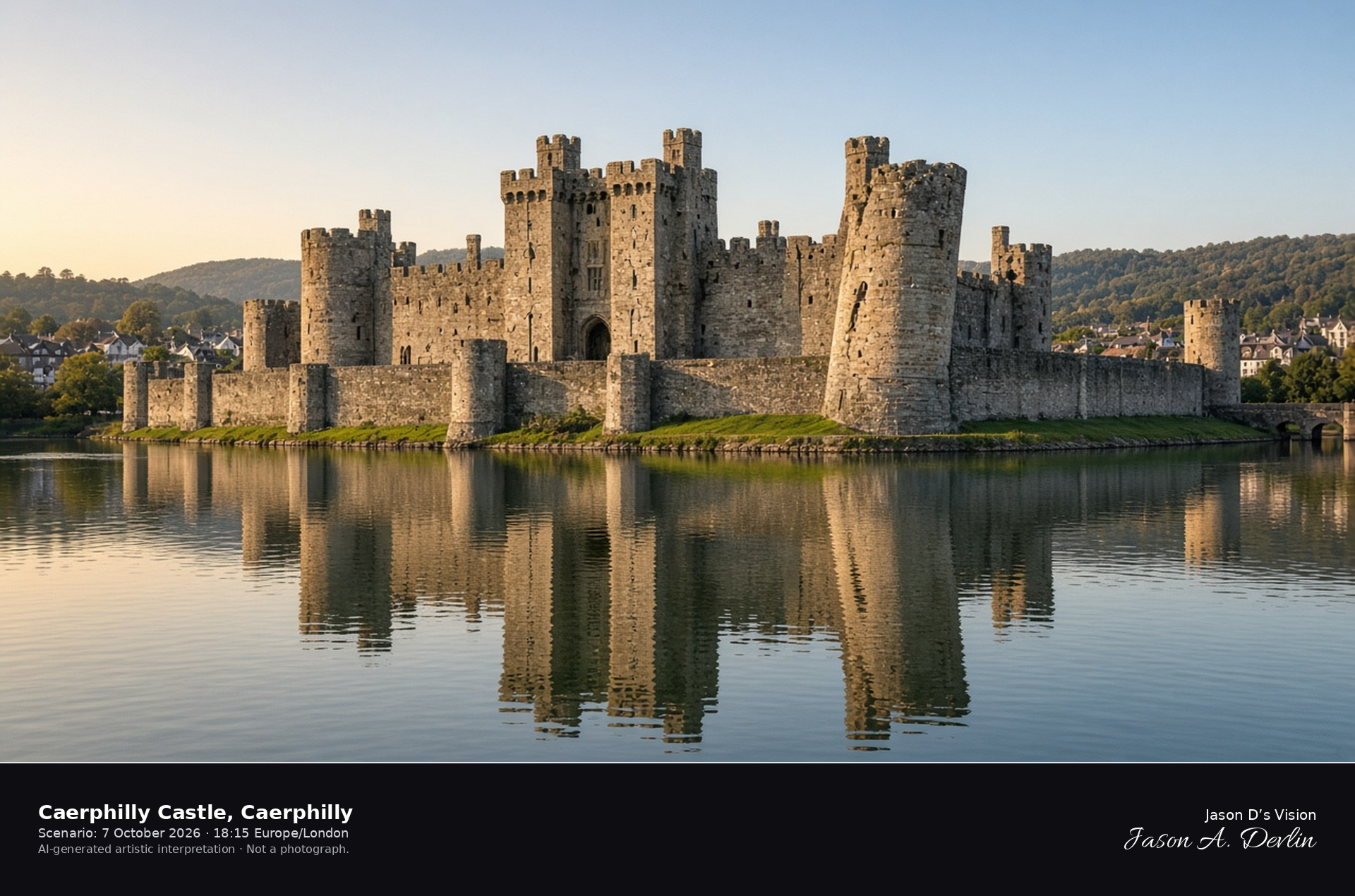
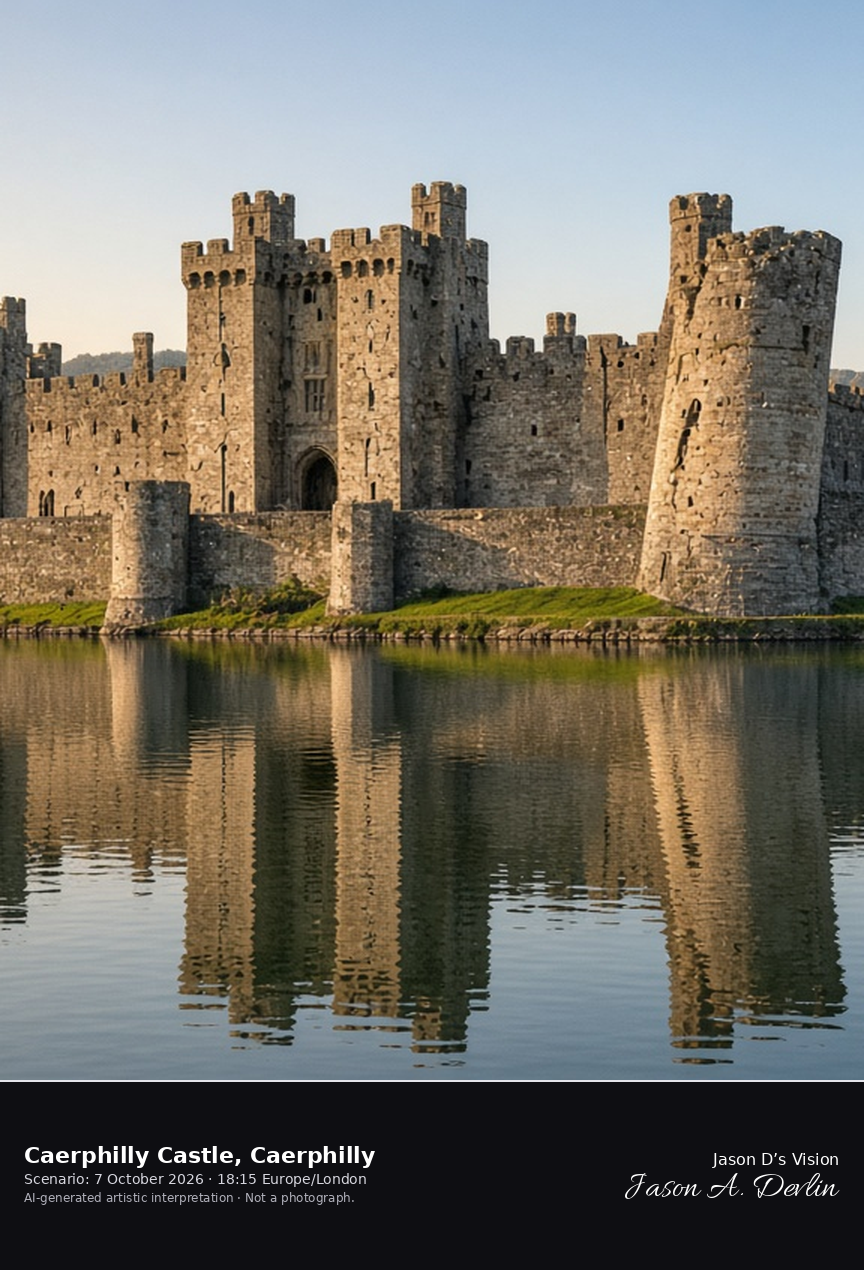
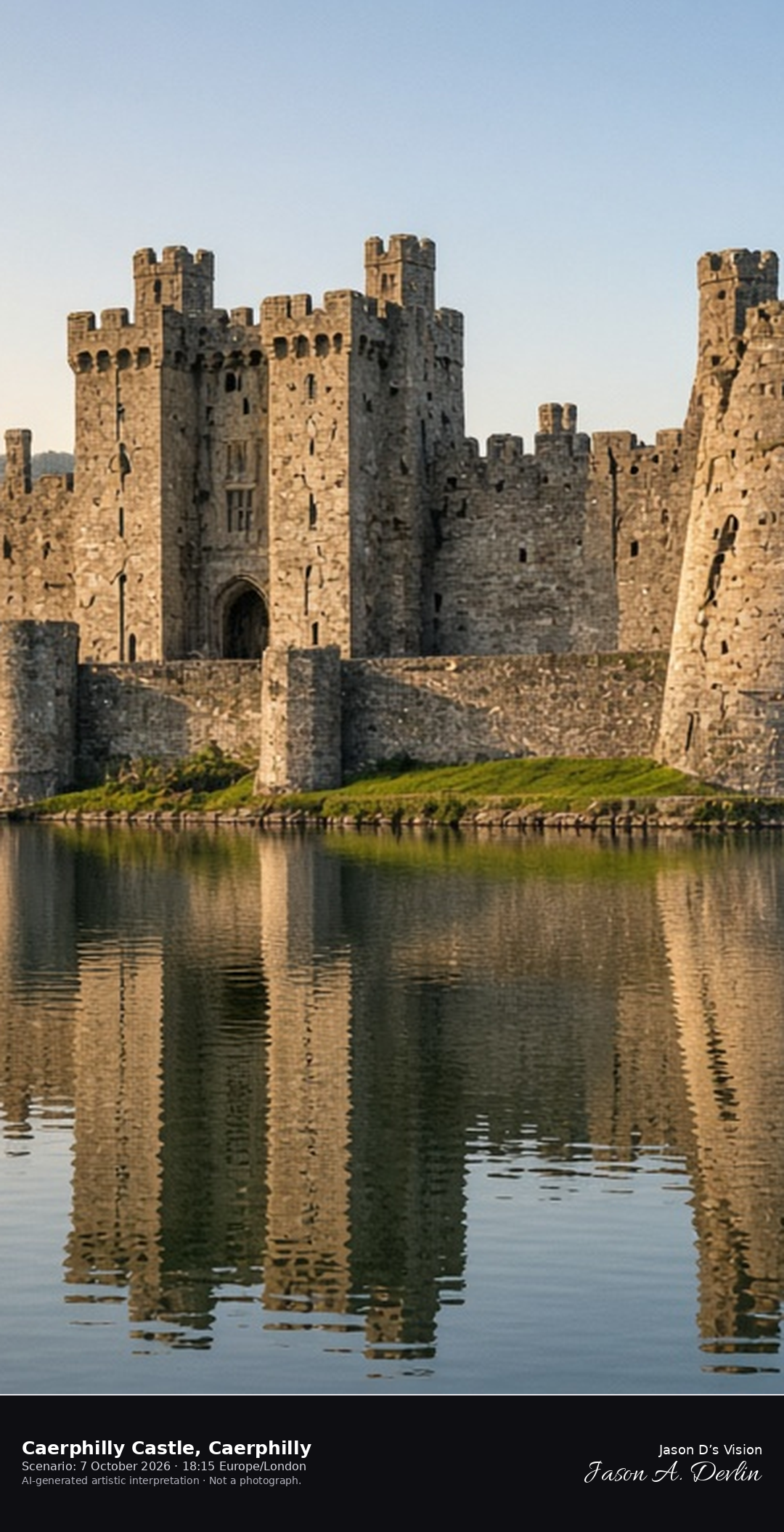
Caerphilly is the largest castle in Wales and the second largest in all Britain, raised by the Marcher lord Gilbert de Clare from 1268 to hold down the princes of Glamorgan. Its leaning tower tilts by about ten degrees — further, as Welsh guides delight in saying, than the famous tower of Pisa.
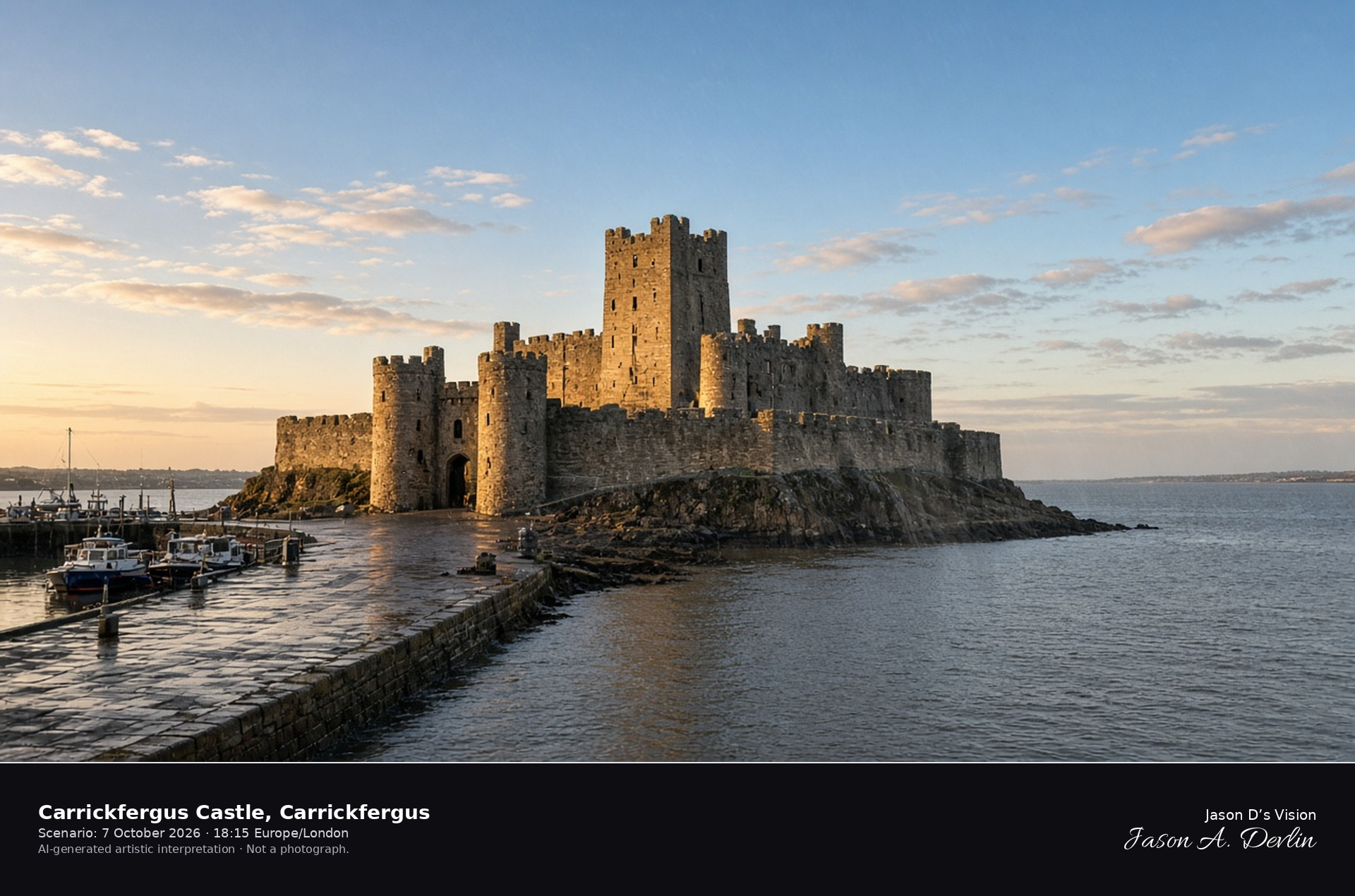
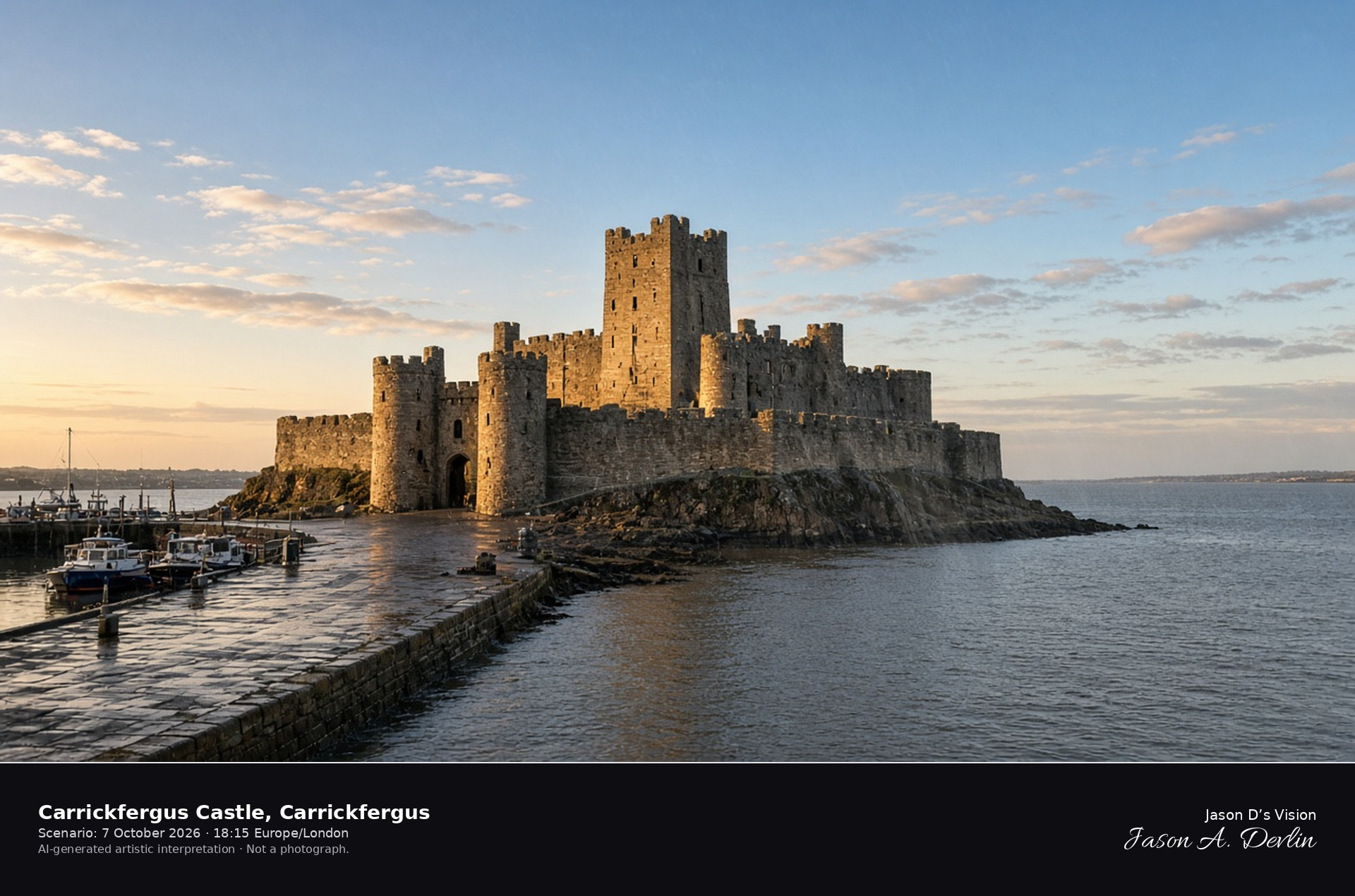
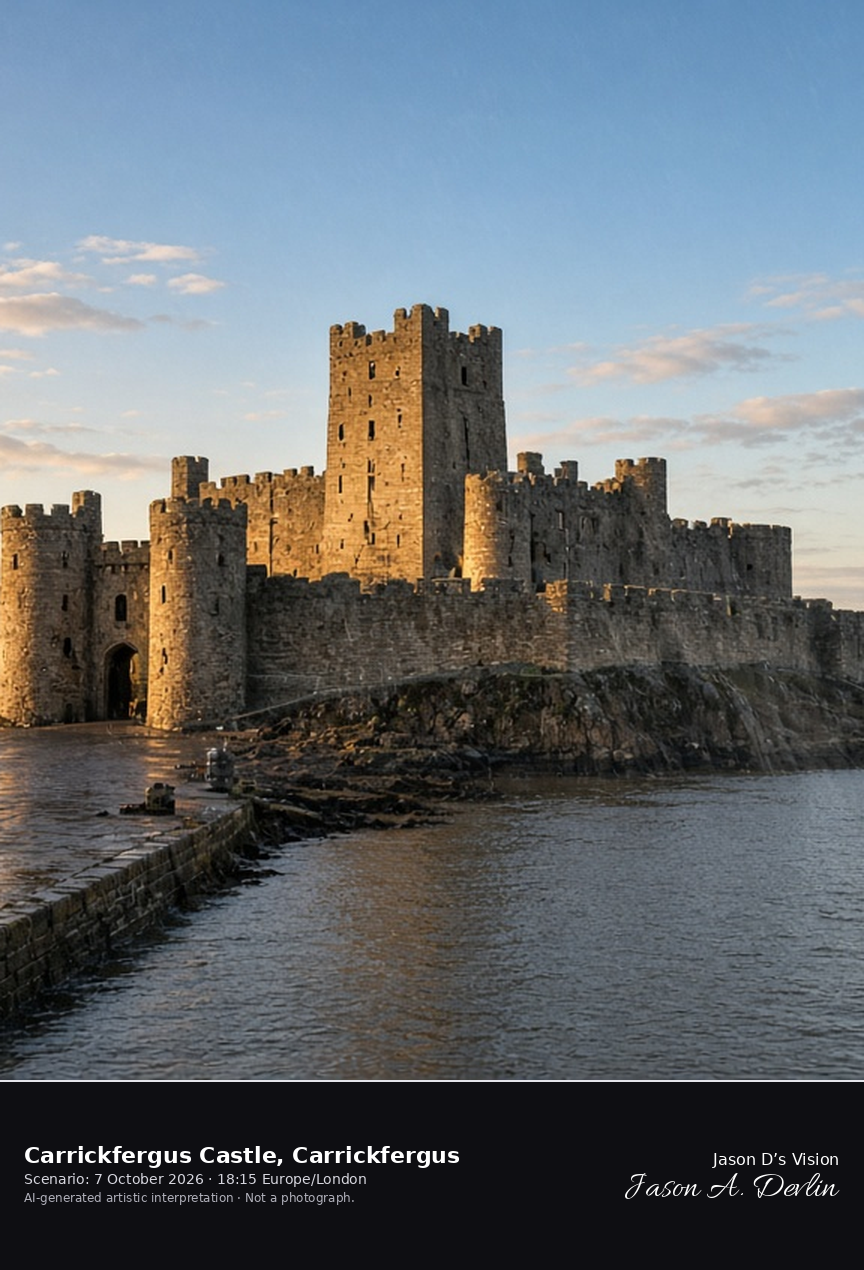
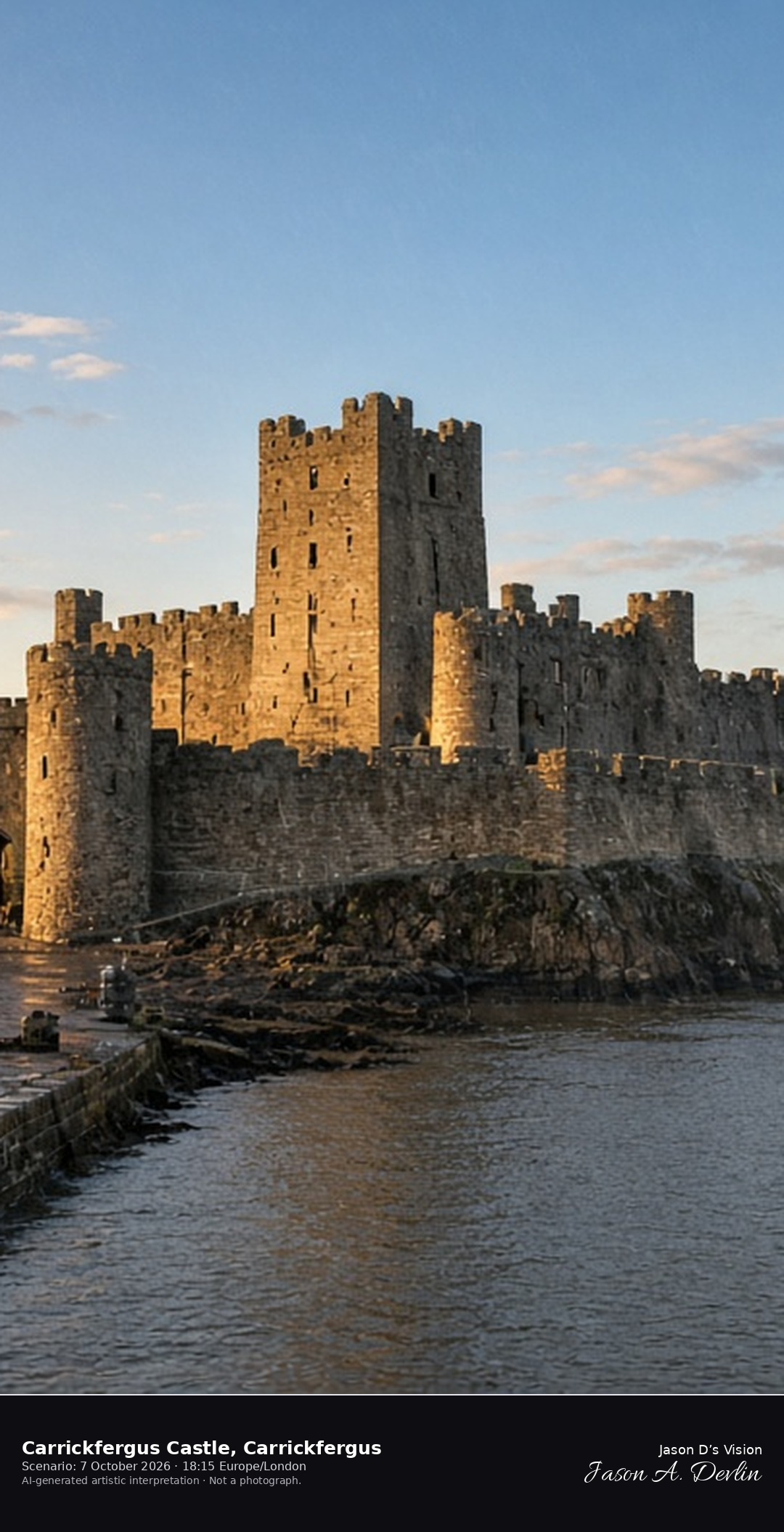
Carrickfergus Castle in County Antrim was built by John de Courcy around 1177 after his invasion of Ulster. It is one of the best-preserved medieval castles in Northern Ireland.
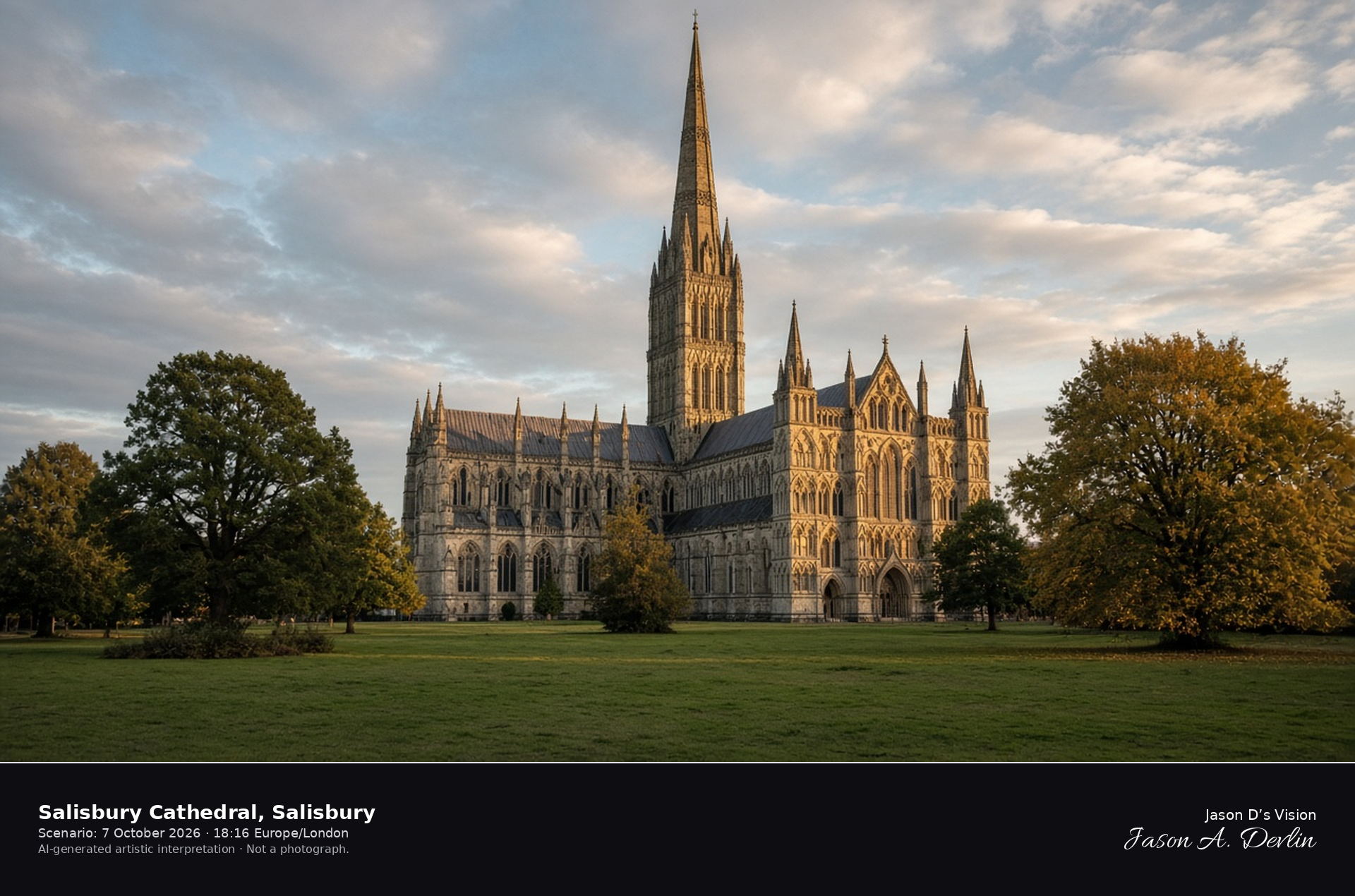
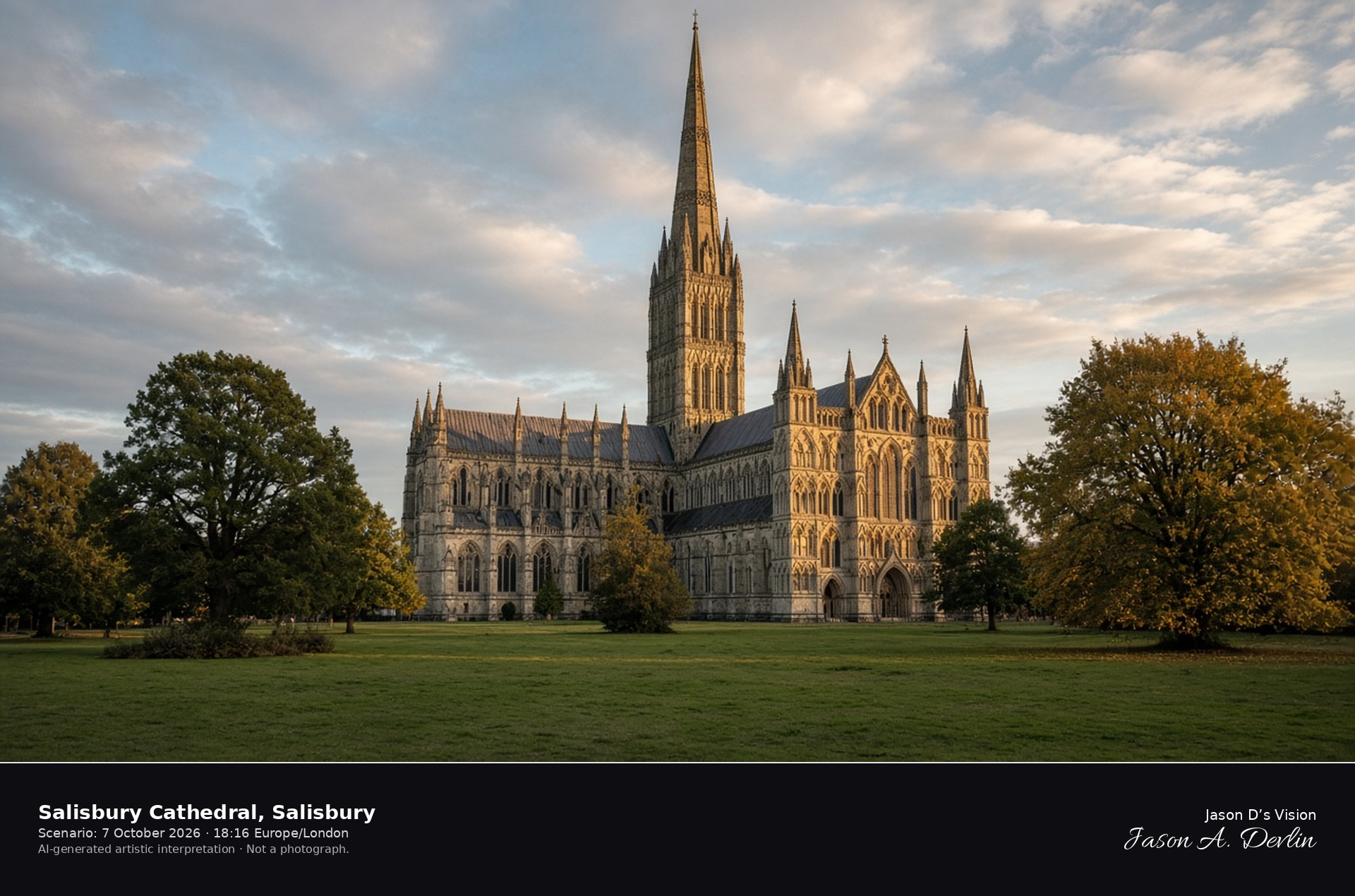
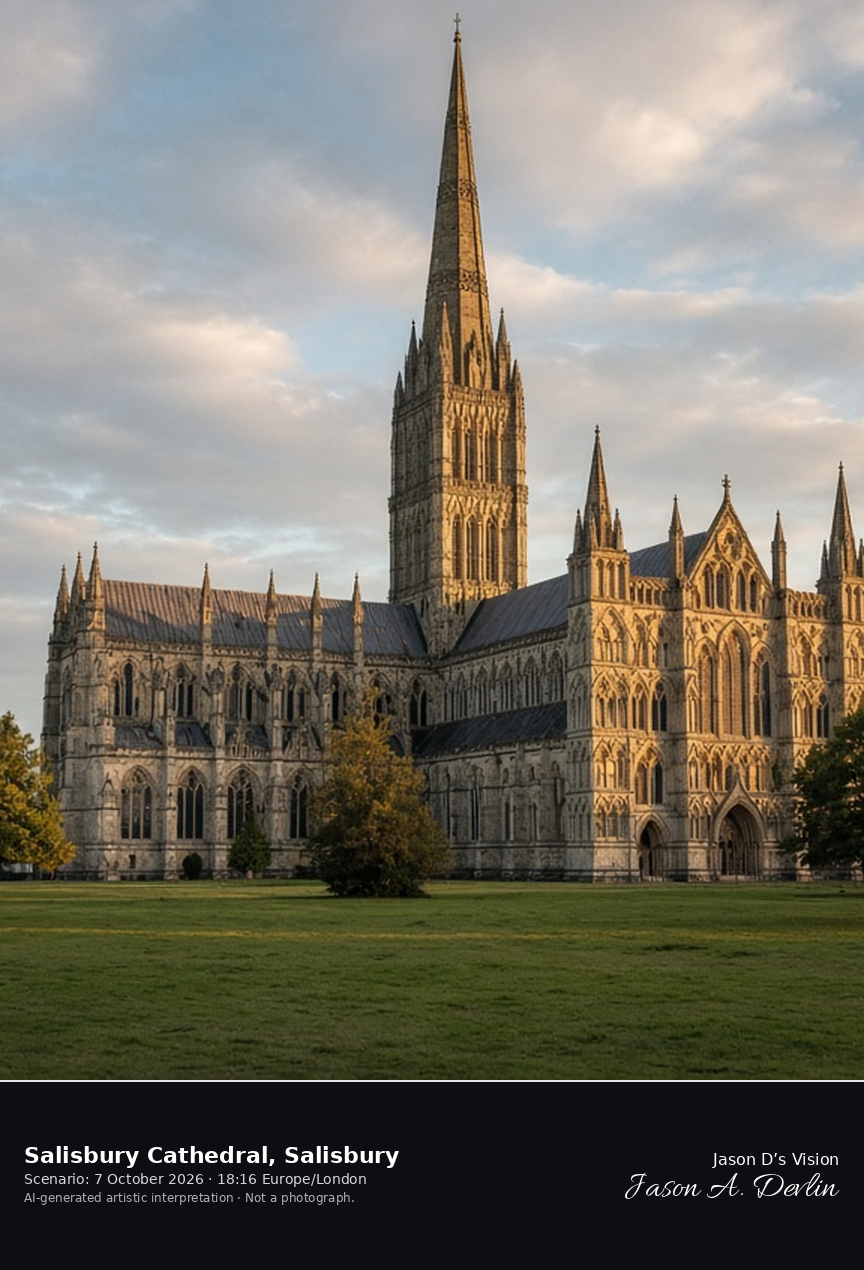
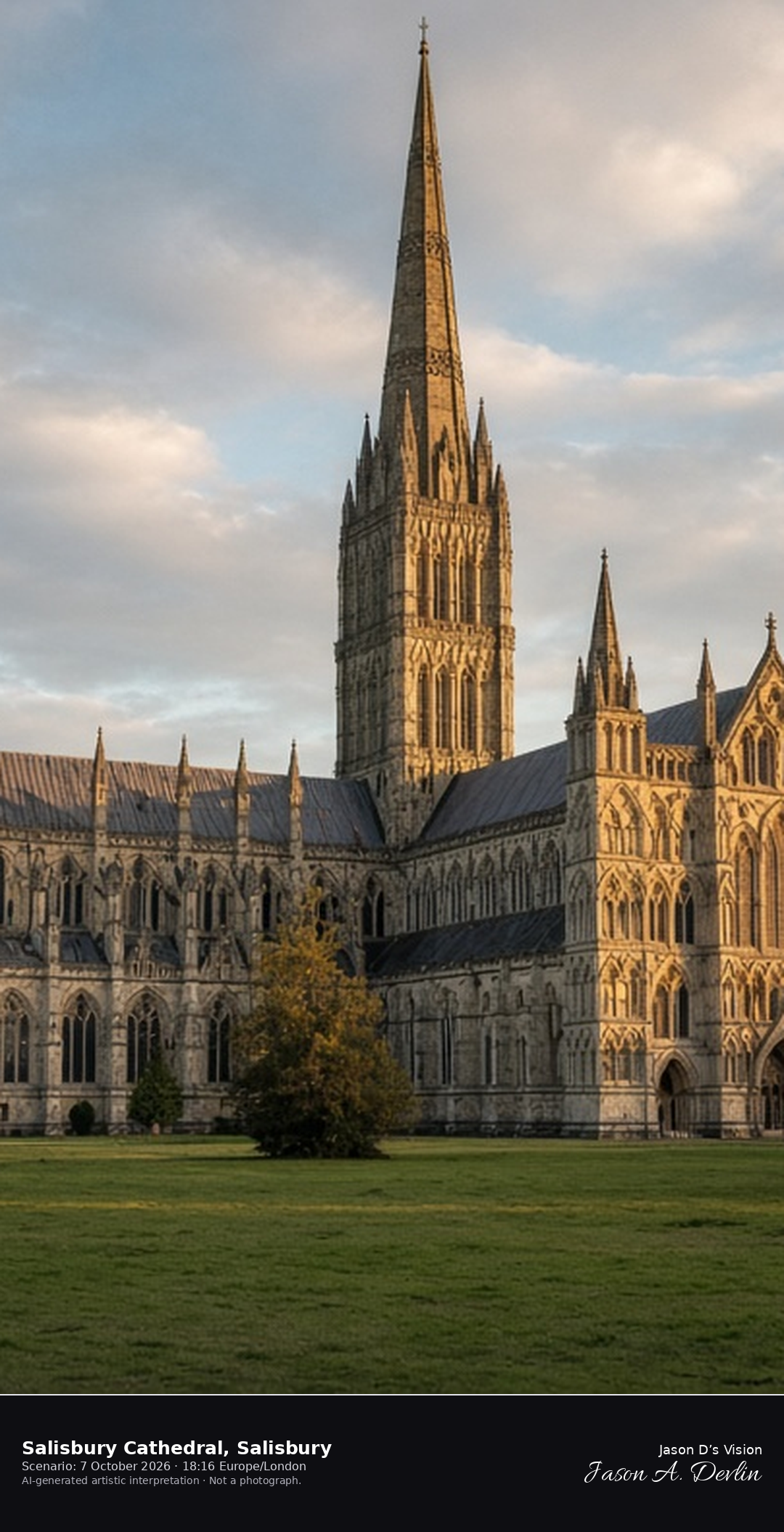
Salisbury Cathedral in Wiltshire was built largely between 1220 and 1258, and its 123-metre spire is the tallest in Britain. The cathedral holds one of the four surviving original copies of Magna Carta of 1215.
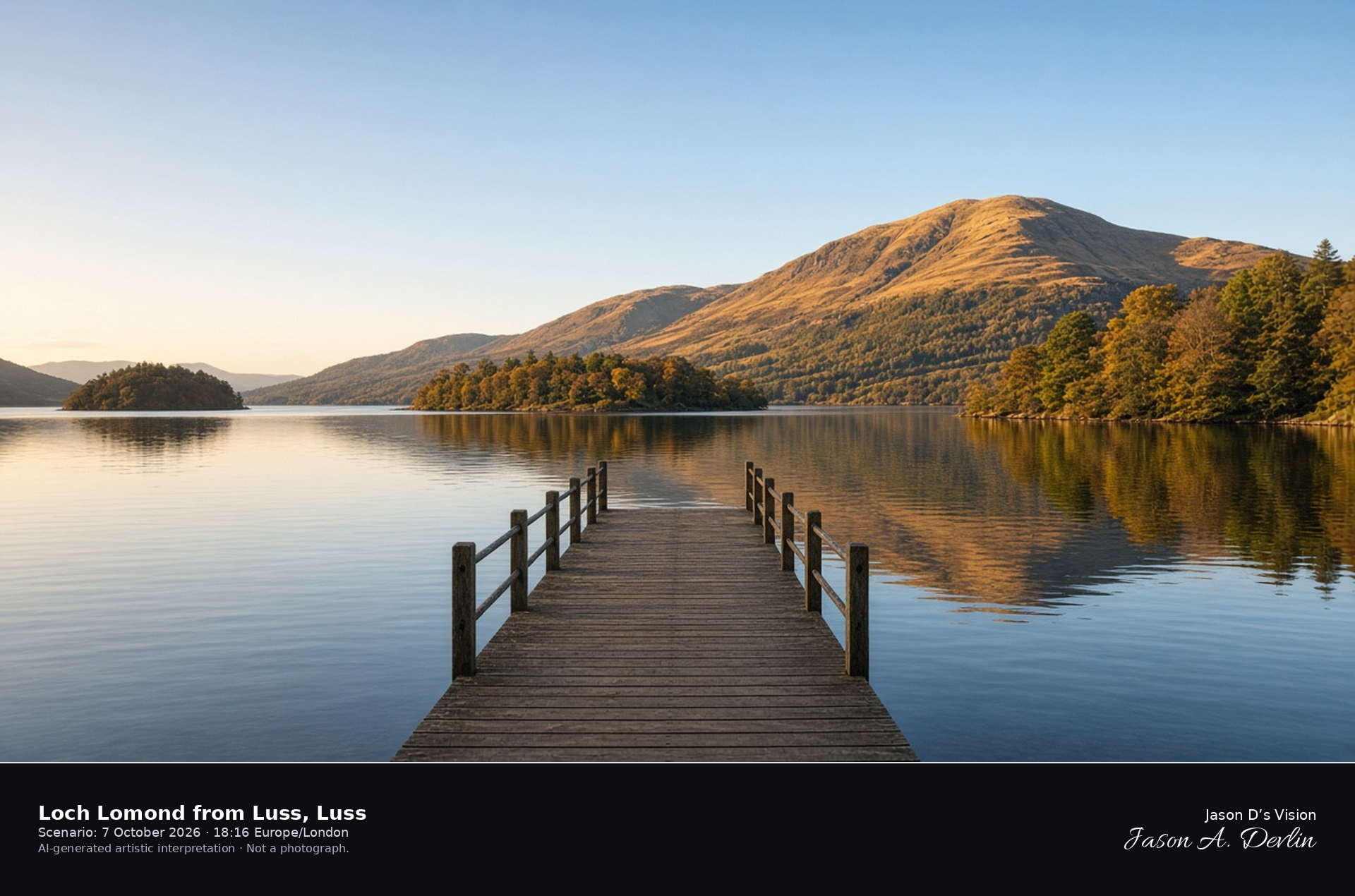
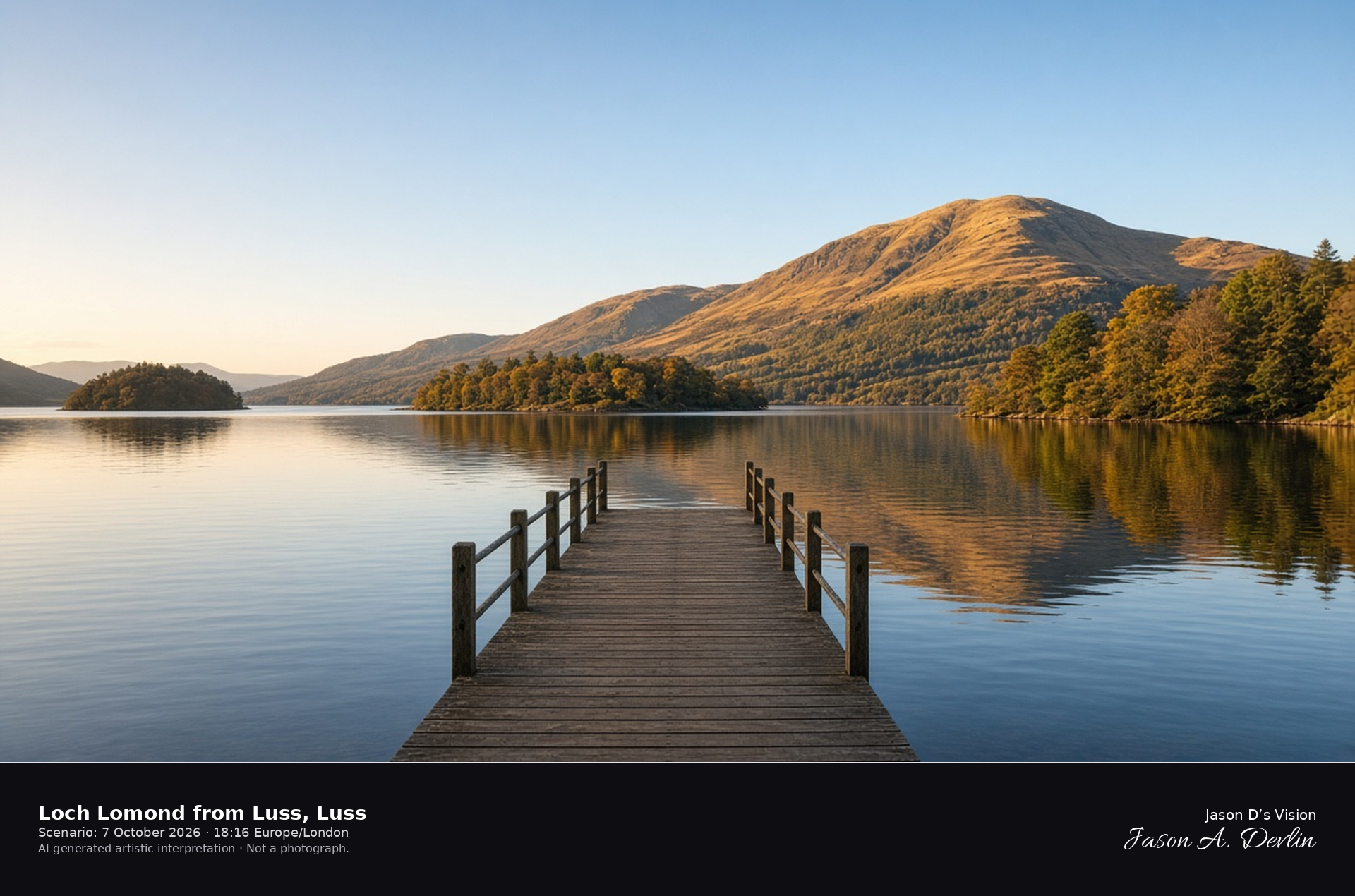
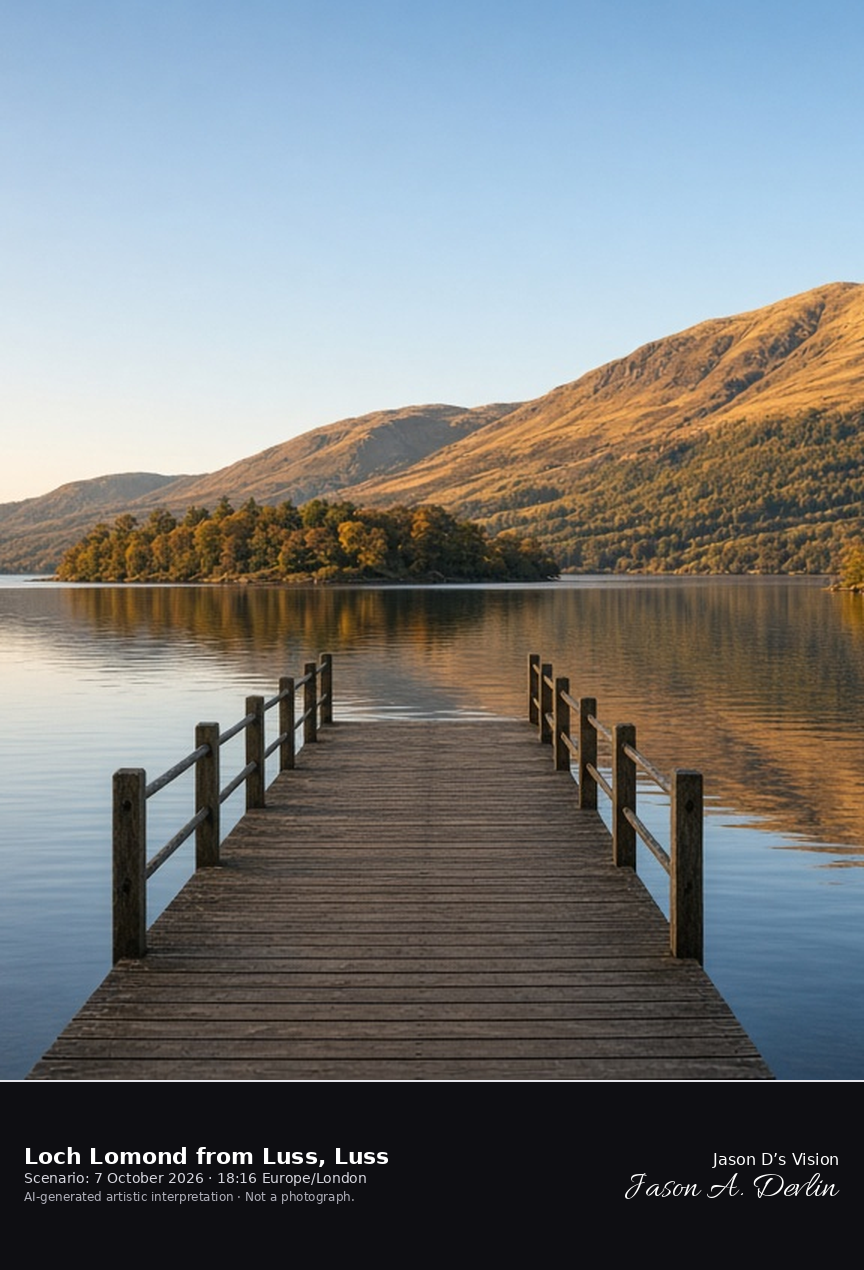
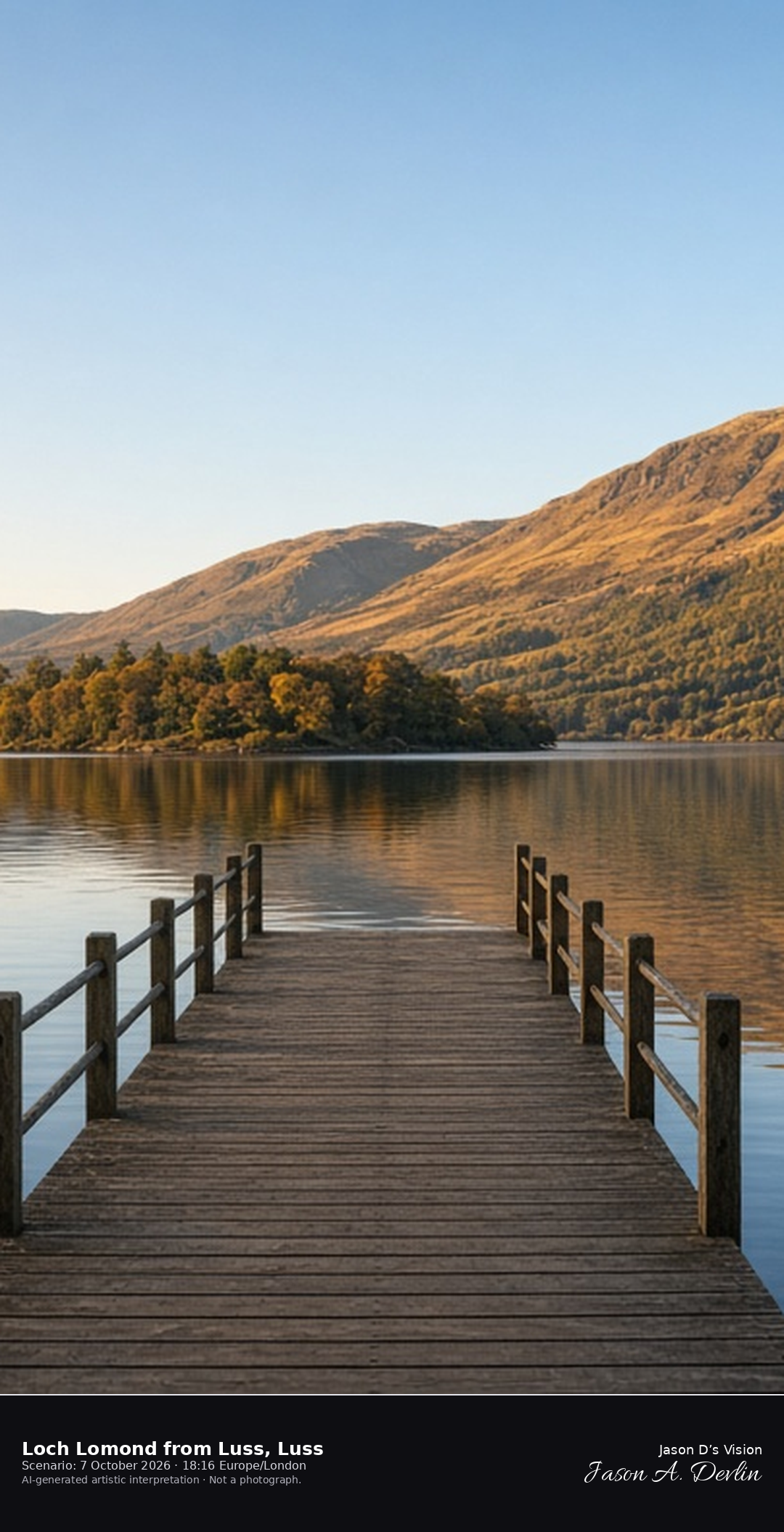
Loch Lomond from Luss, Luss · AI-generated artistic interpretation
Loch Lomond is the largest lake in Great Britain by surface area and lies within Loch Lomond and the Trossachs National Park. Luss, on its west shore, is a conservation village of old stone cottages.
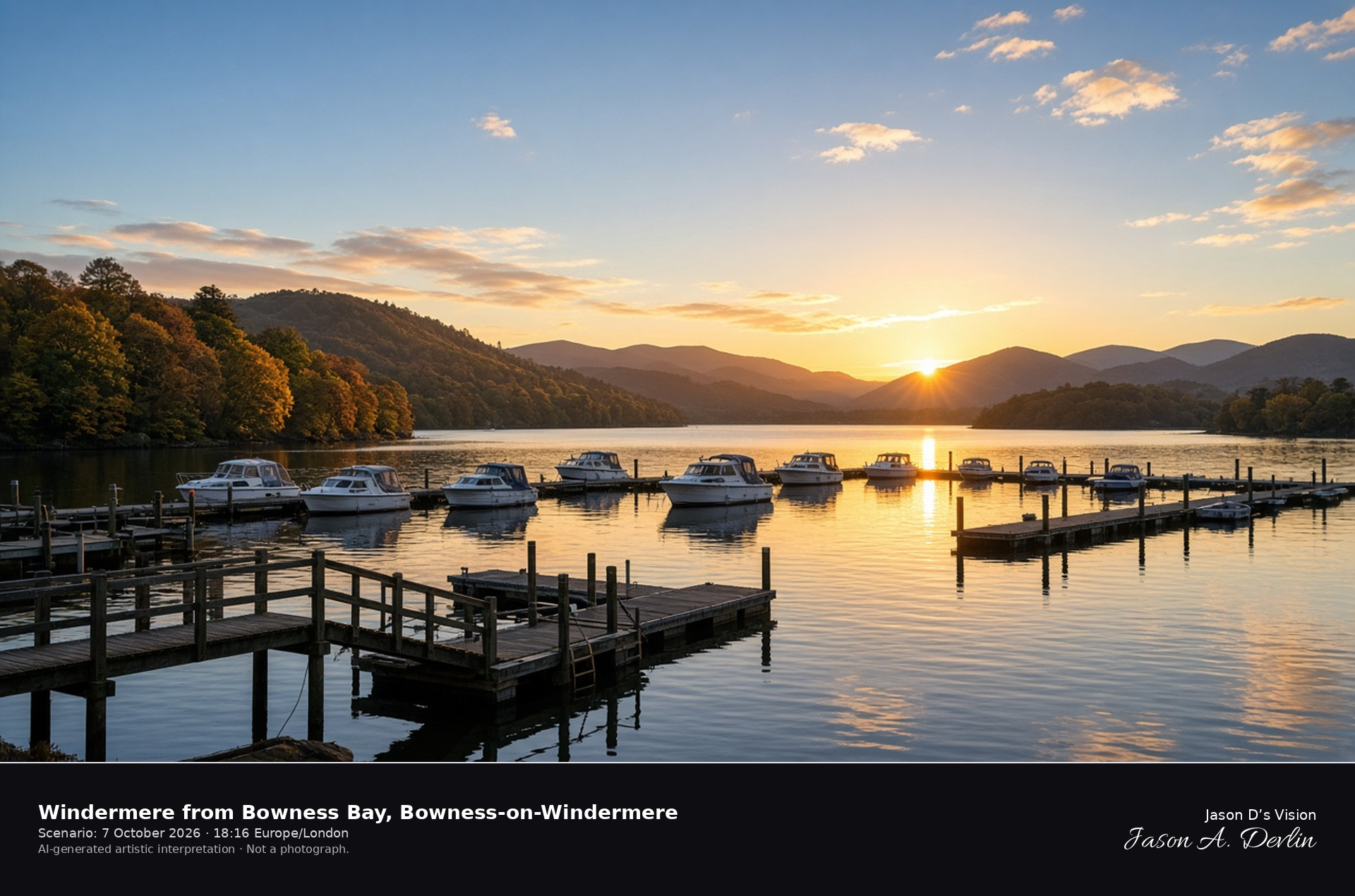
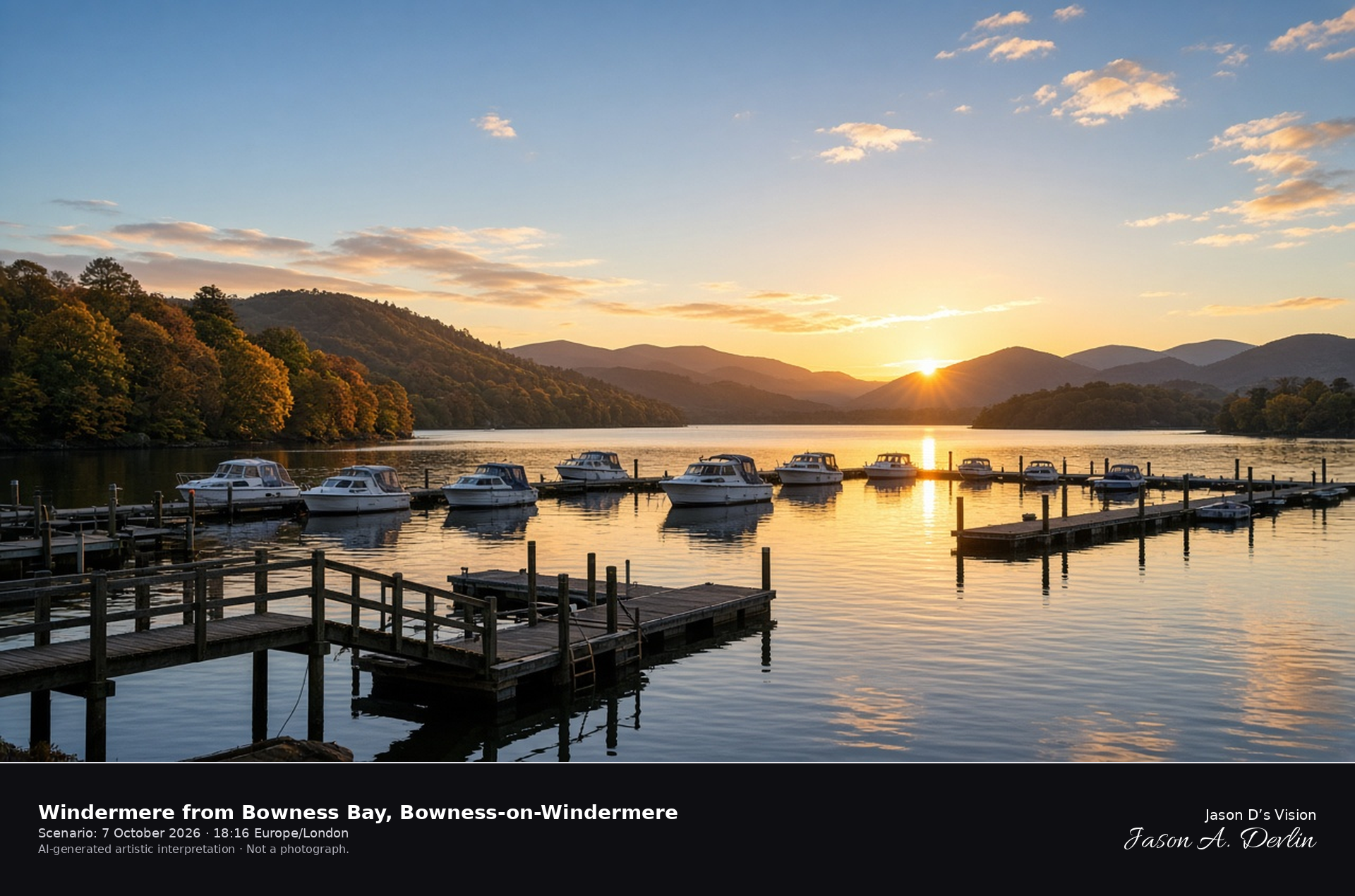
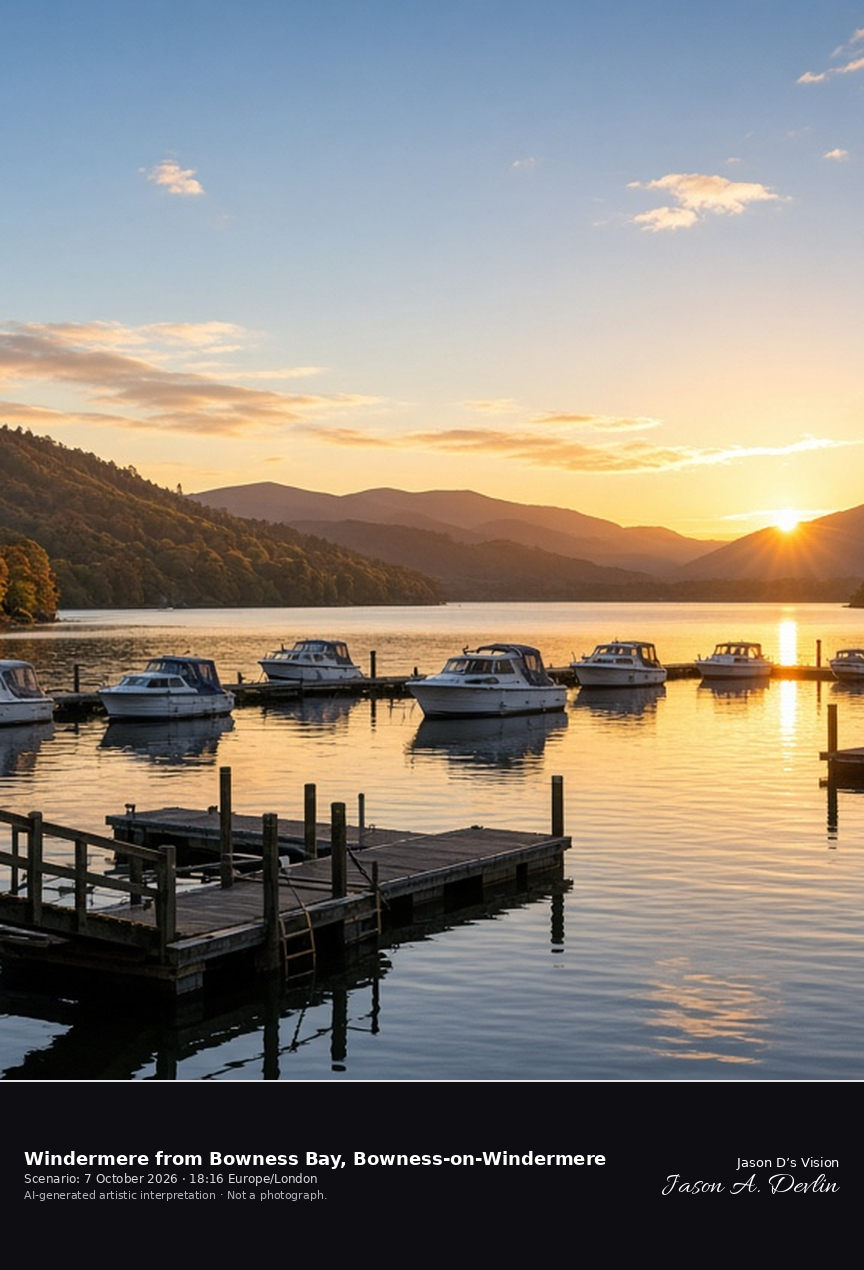
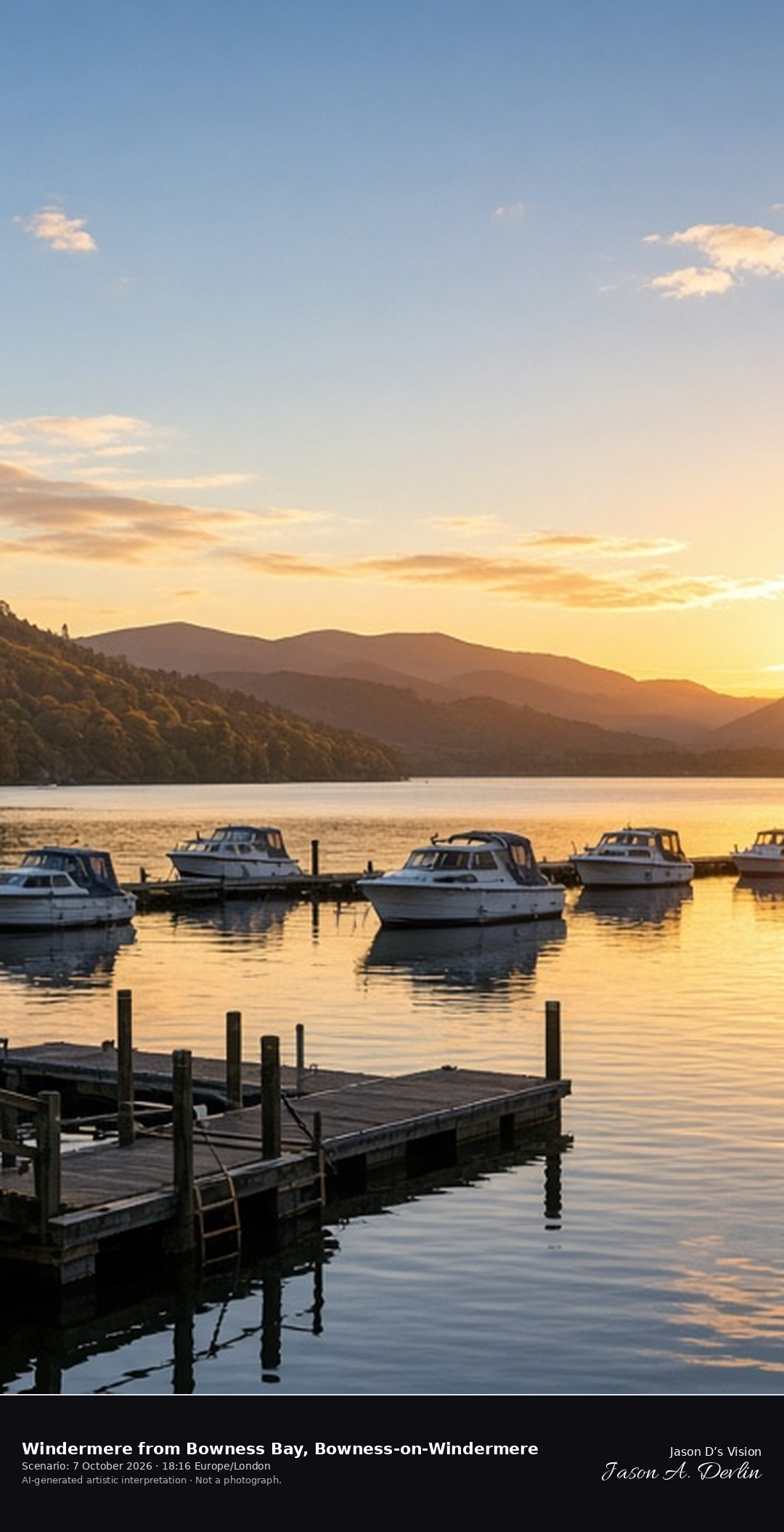
Windermere from Bowness Bay, Bowness-on-Windermere
Windermere from Bowness Bay, Bowness-on-Windermere · AI-generated artistic interpretation
Windermere in Cumbria is the largest natural lake in England, about 18 kilometres long. Bowness-on-Windermere on its eastern shore is the lake's main boating centre, and the Lake District became a UNESCO World Heritage Site in 2017.
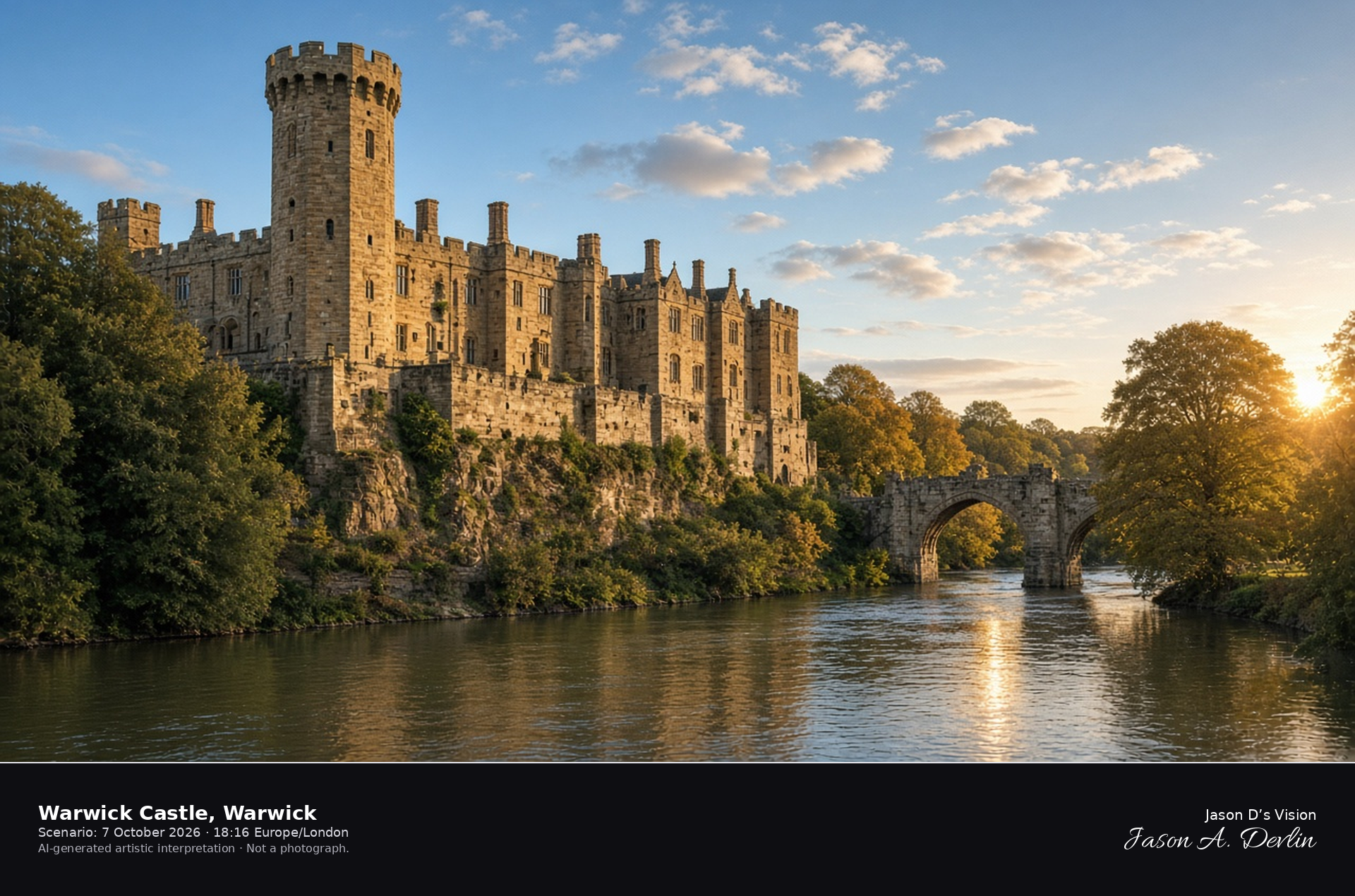
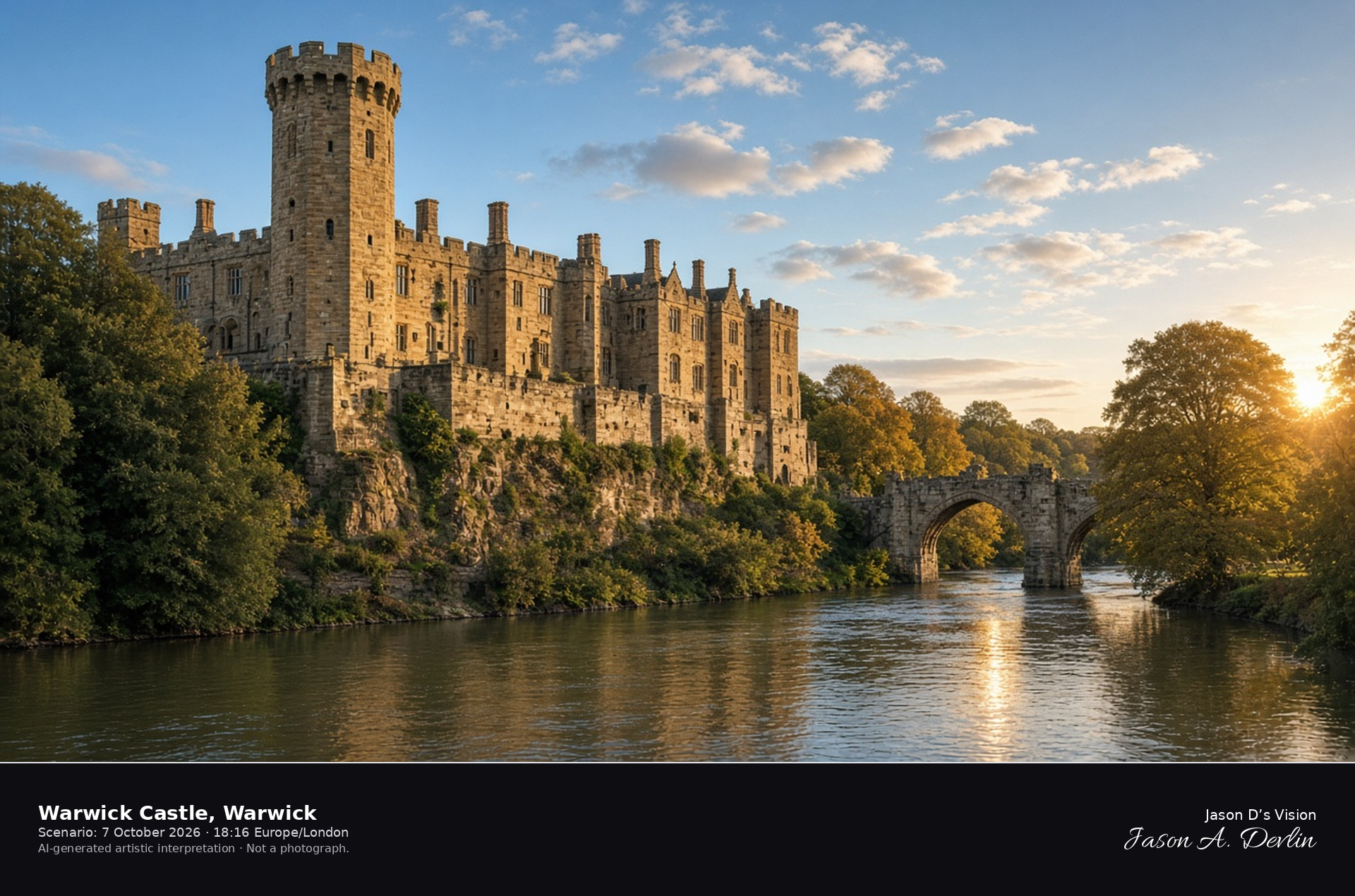
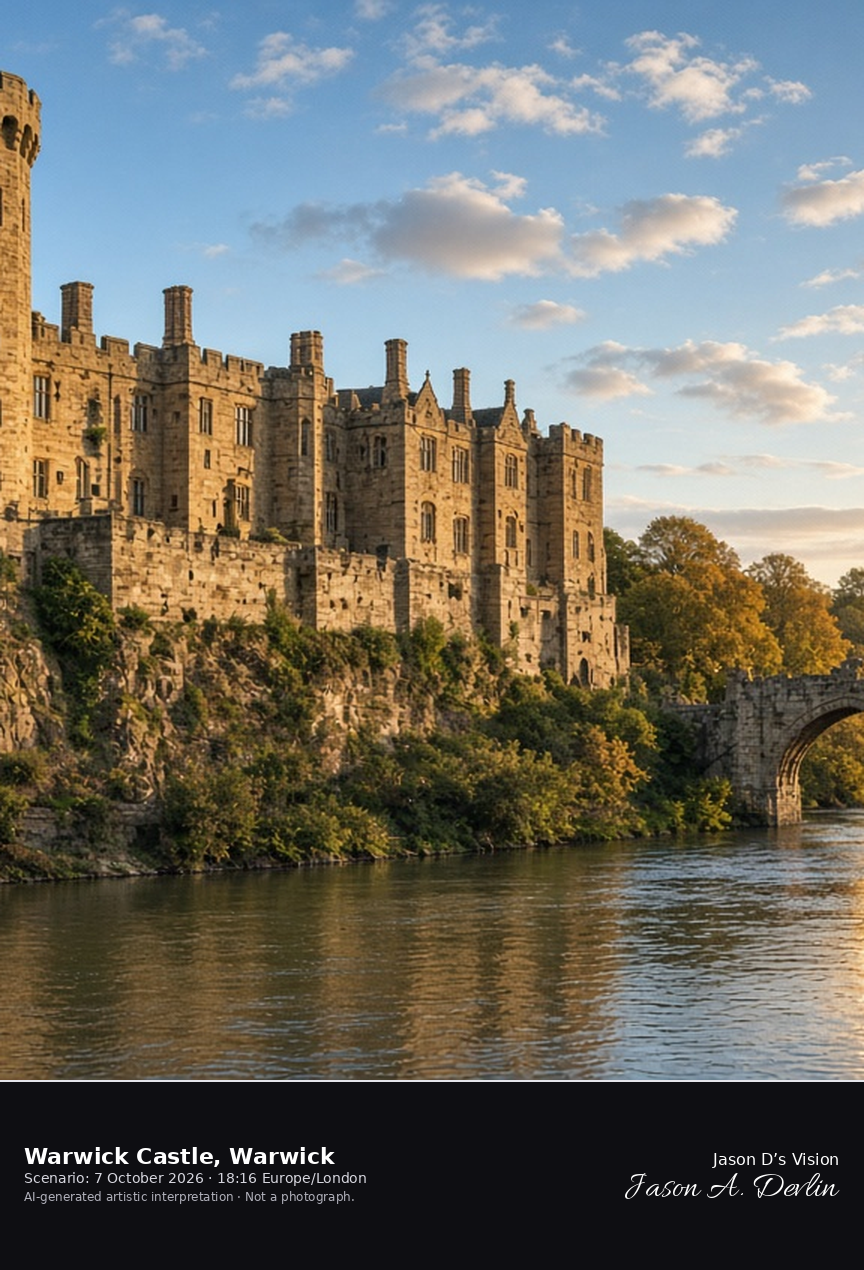
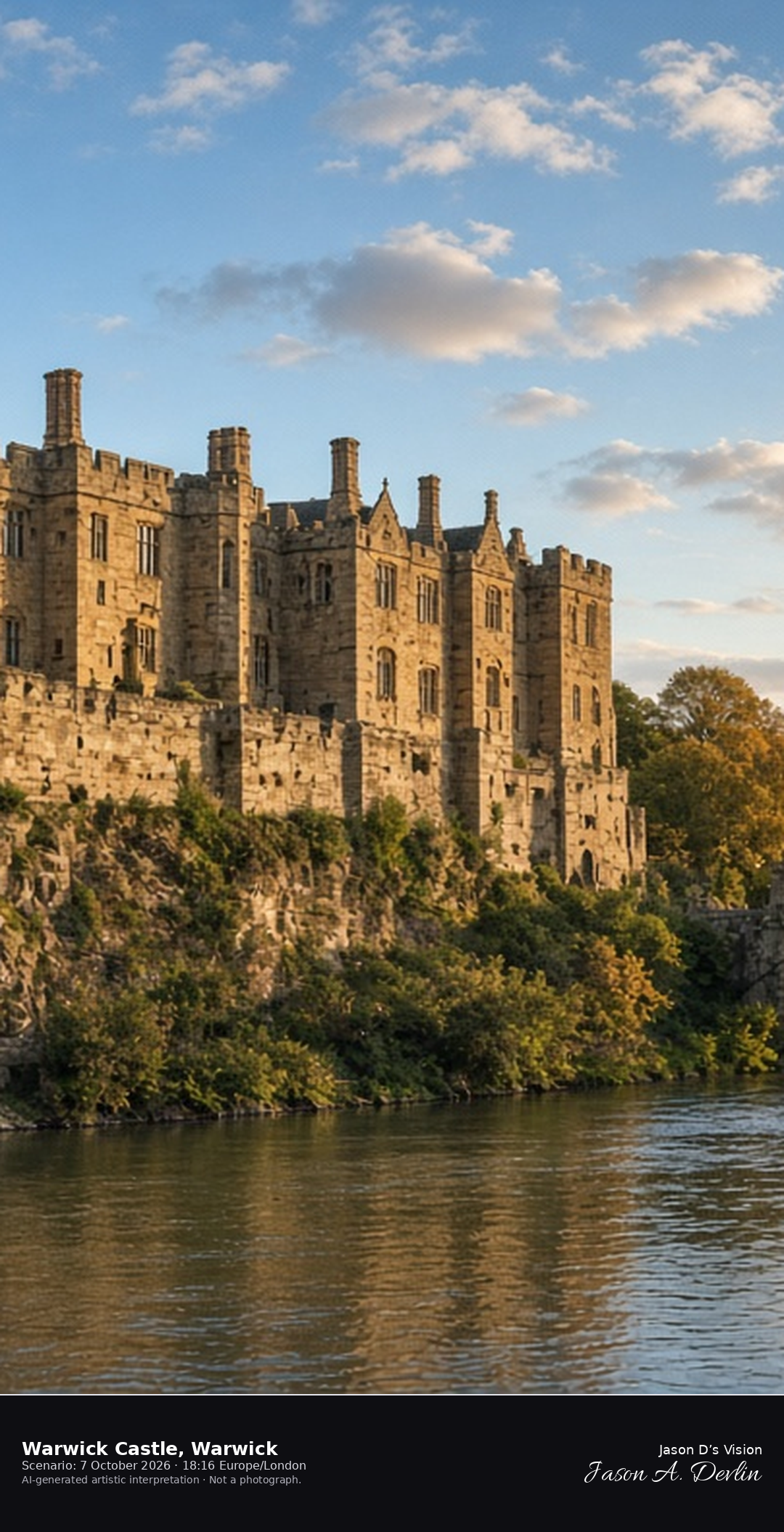
Warwick began in 914 as a Saxon burh raised by Æthelflæd, Lady of the Mercians, daughter of Alfred the Great, and grew into the stronghold of the Earls of Warwick. Among those earls was Richard Neville, the Kingmaker, whose hand set up and pulled down kings in the Wars of the Roses.
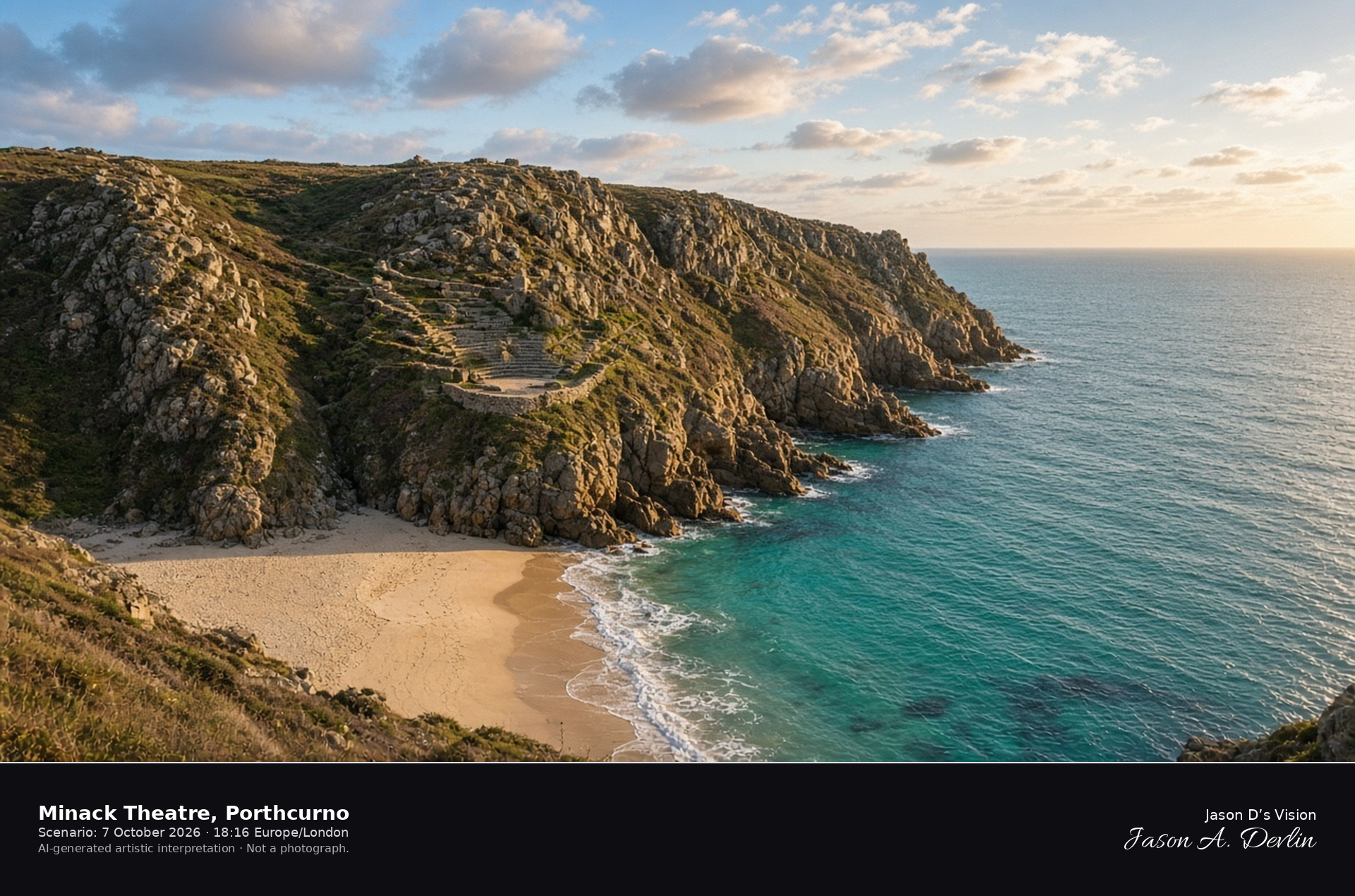
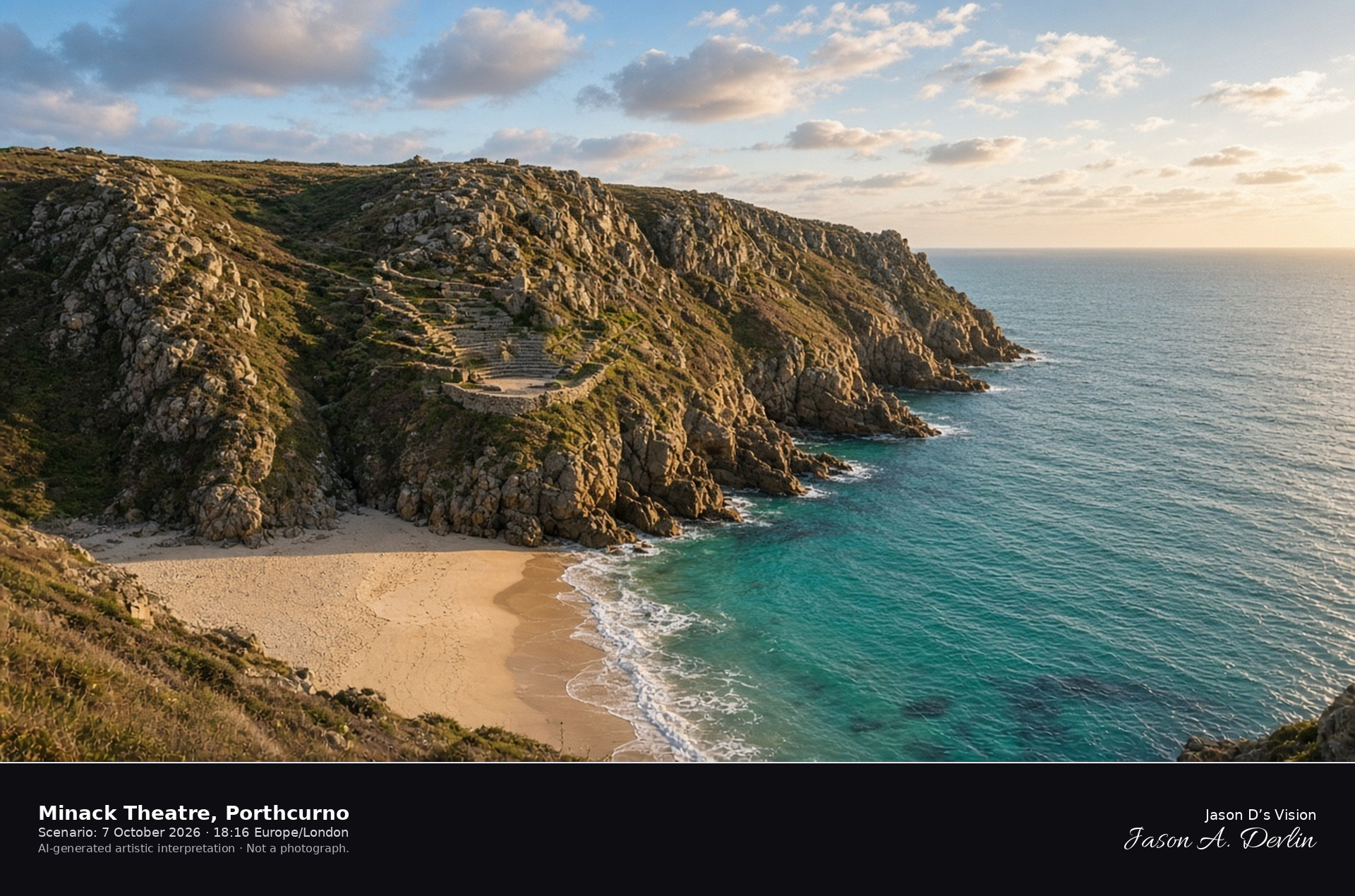
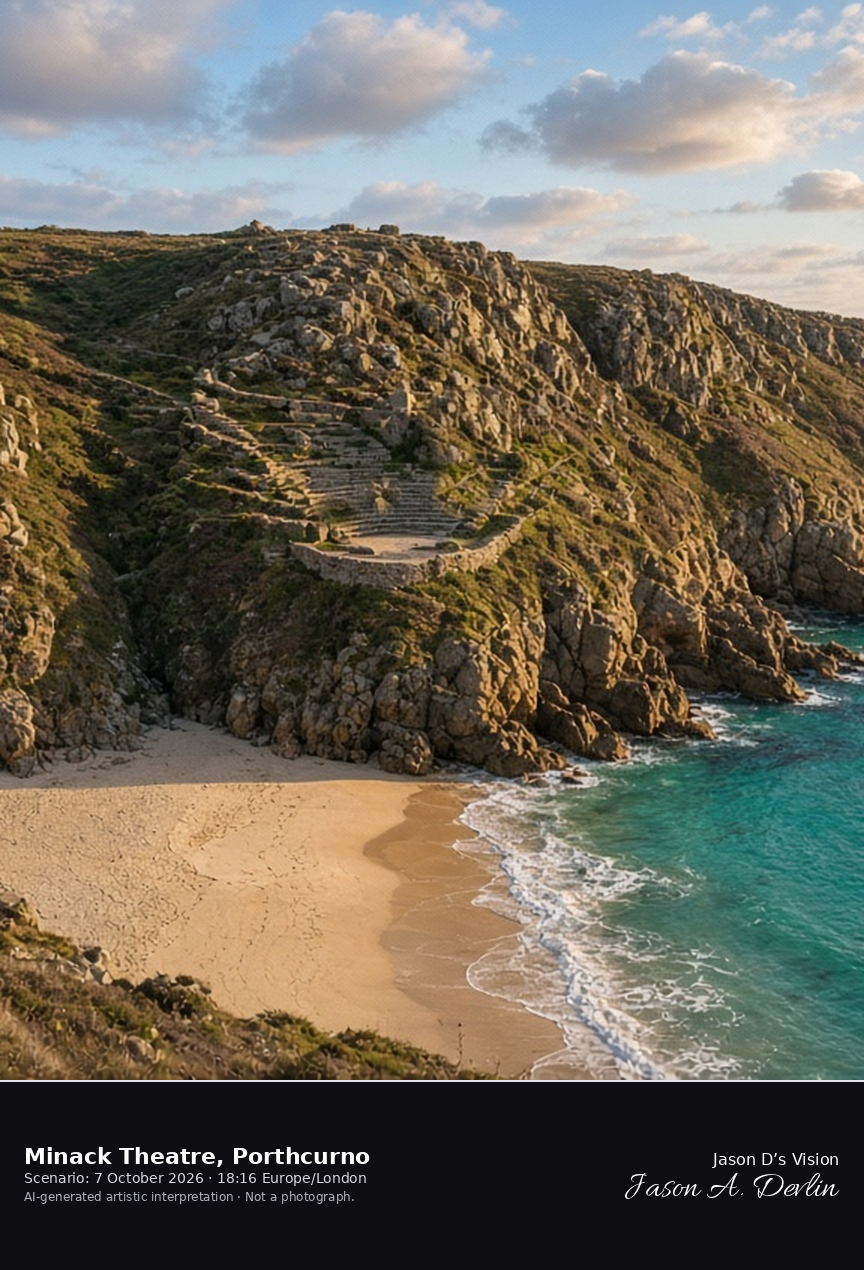
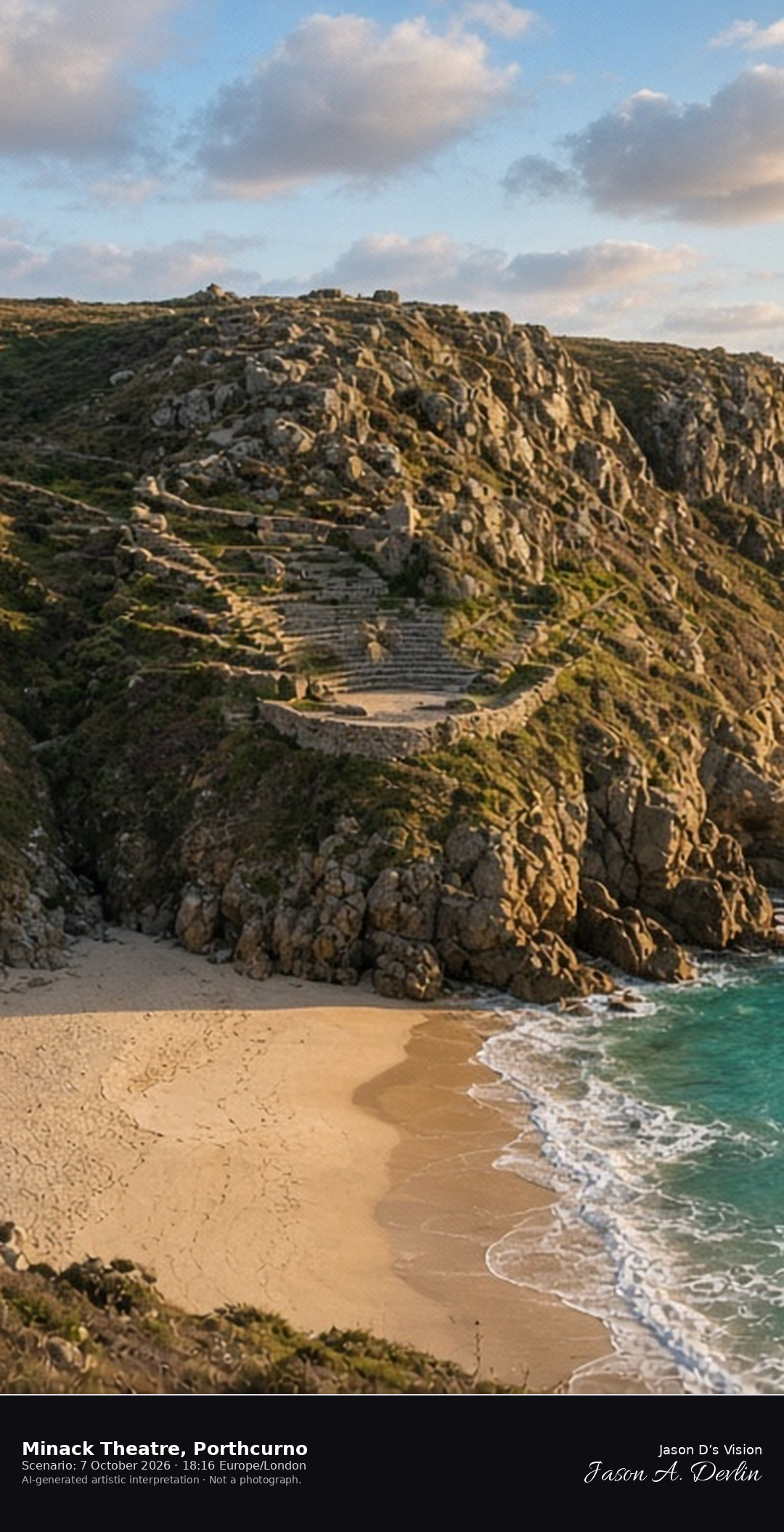
From 1870 Porthcurno became a gateway to the wired world: a submarine telegraph cable came ashore in this little cove as part of a link to India, and the network grew far beyond it. Engineers trained at the valley’s cable college, and PK Porthcurno museum preserves the tunnels built to protect the station during the Second World War.
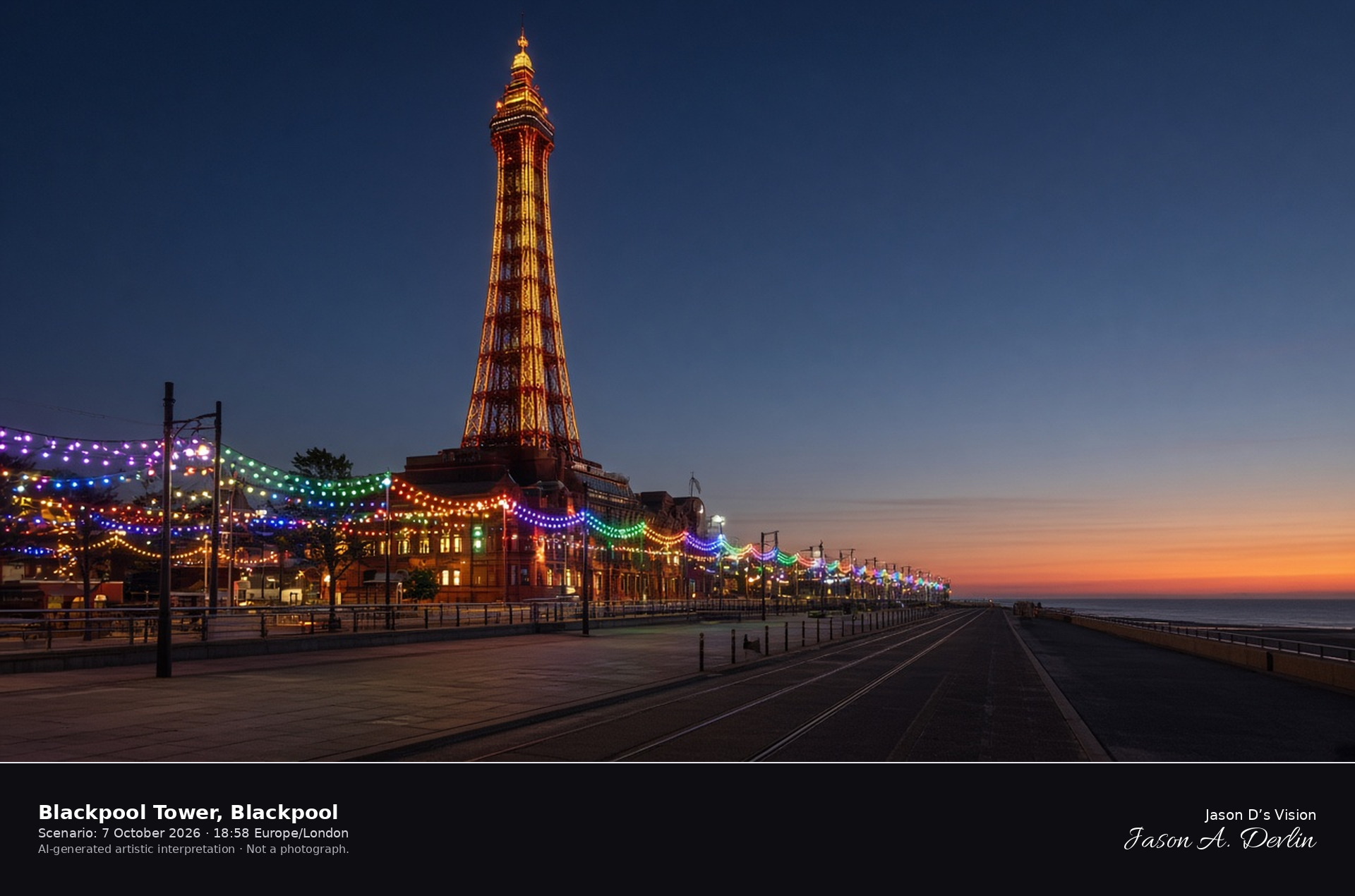
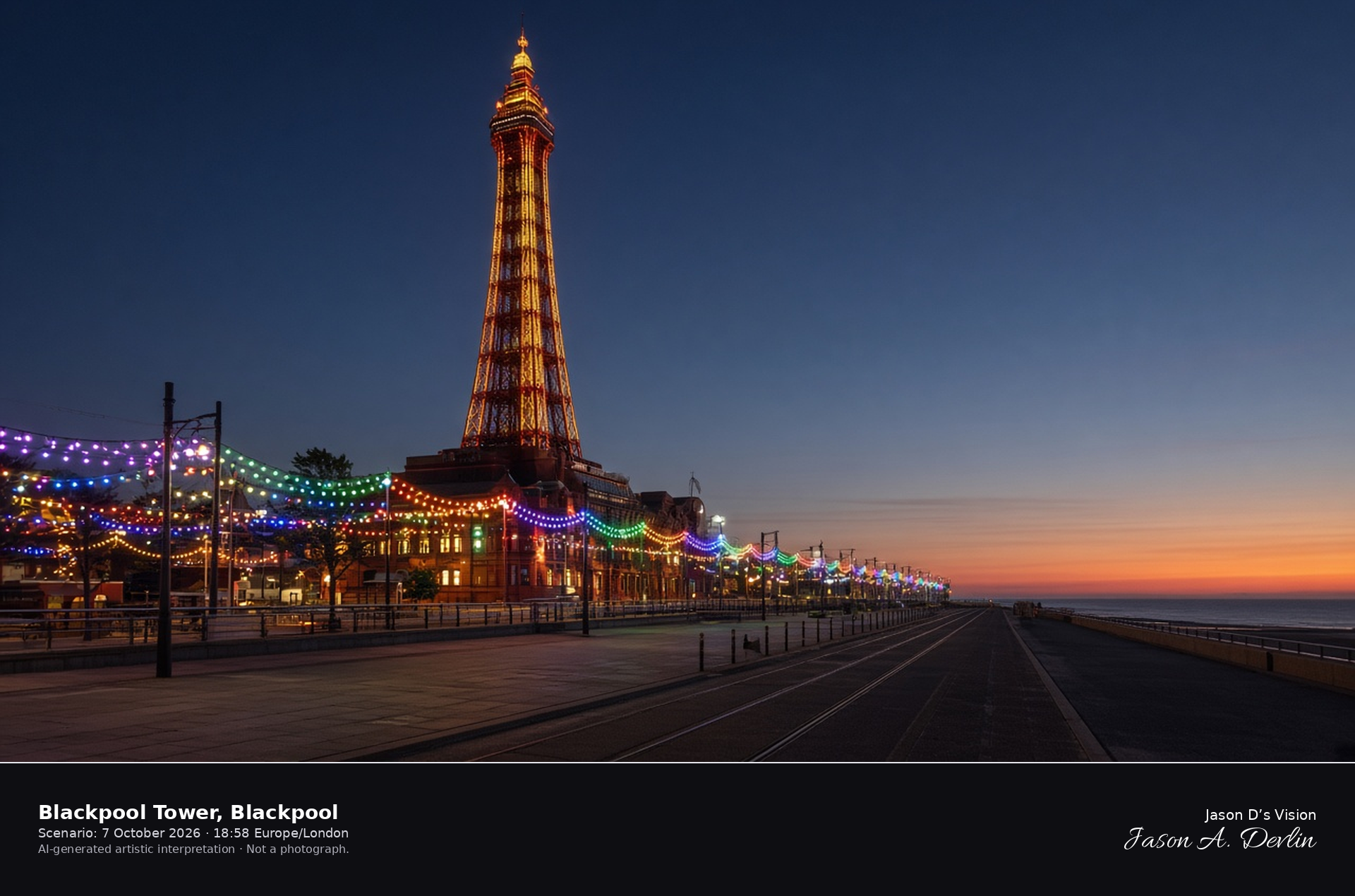
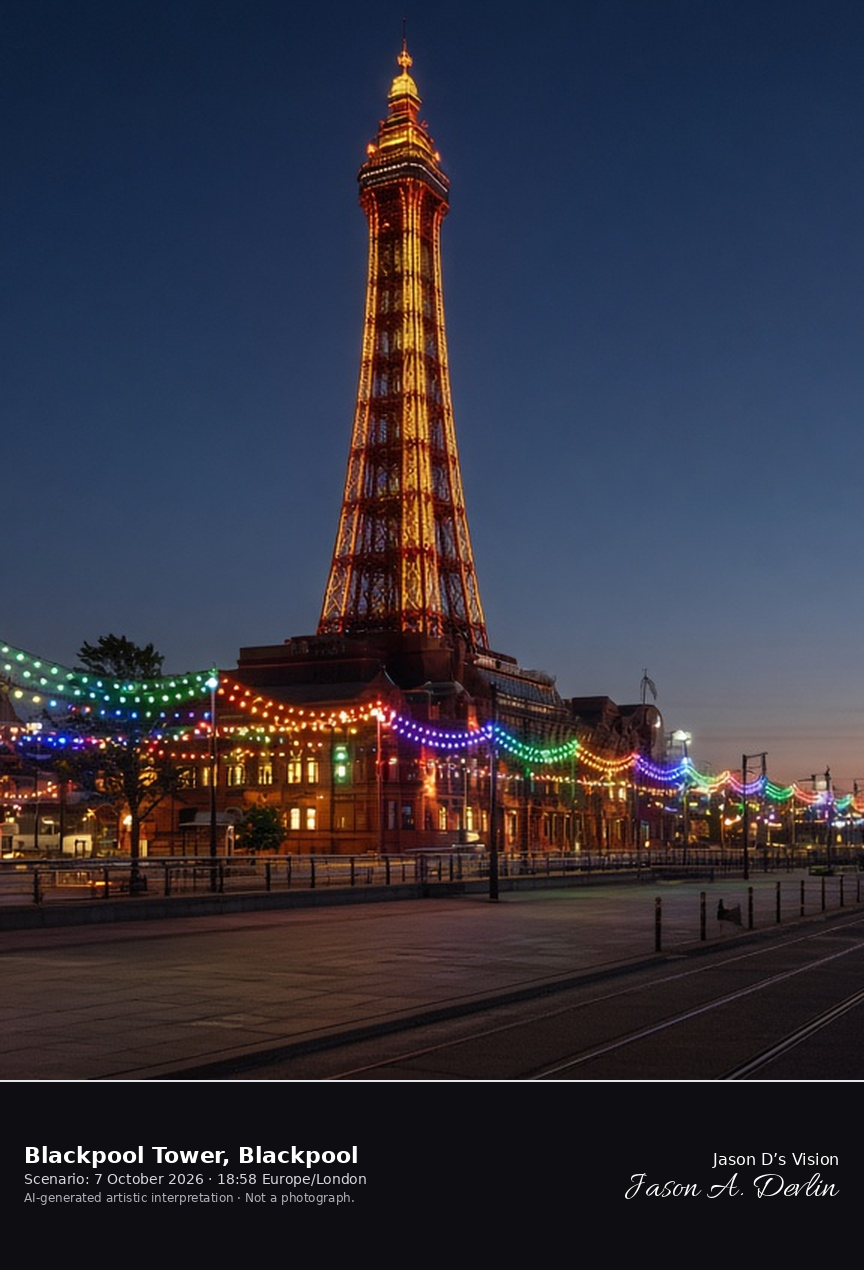
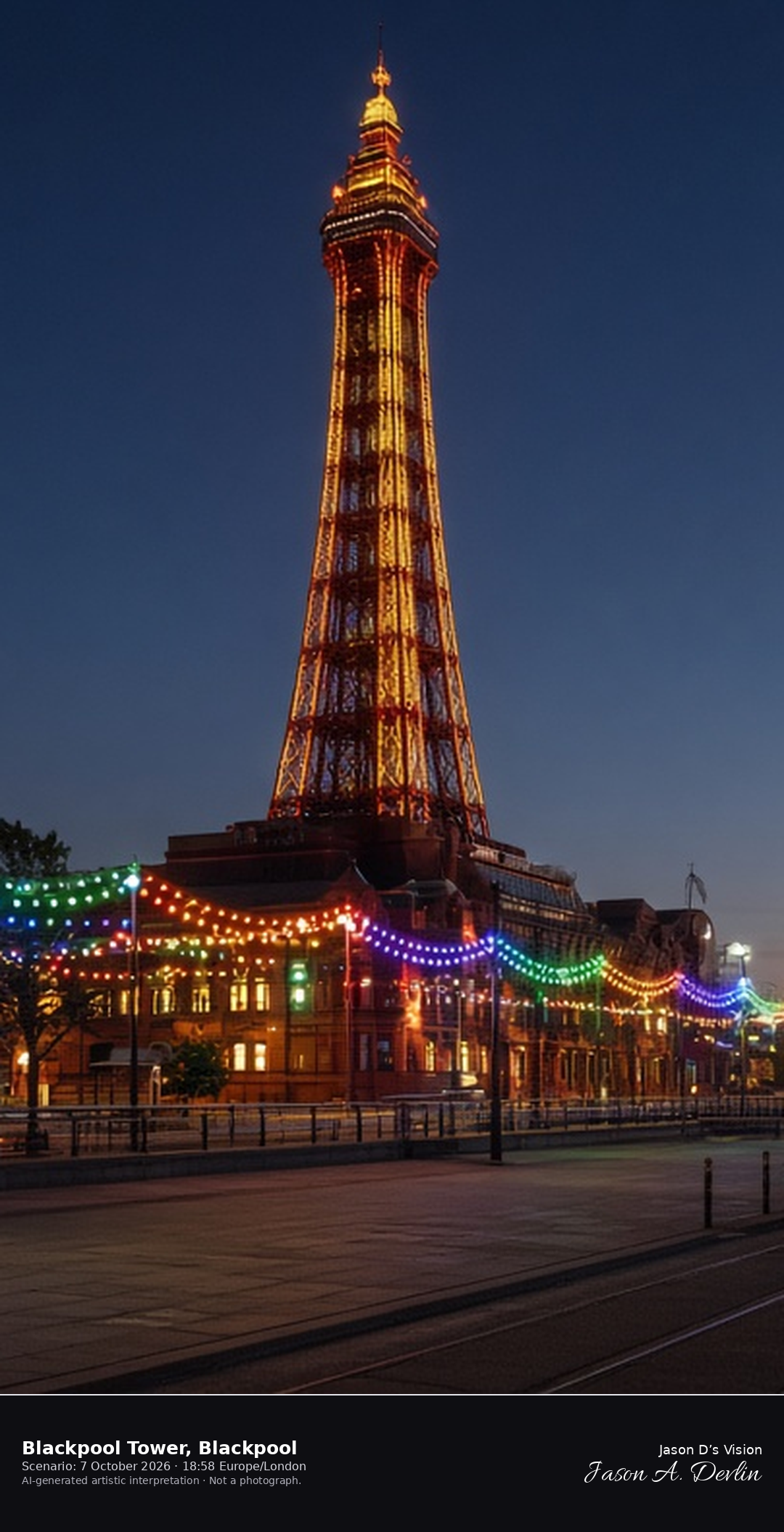
Blackpool Tower opened in 1894 and stands about 158 metres tall, inspired by the Eiffel Tower. The Blackpool Illuminations light the seafront each autumn and have run, with breaks, since 1879.
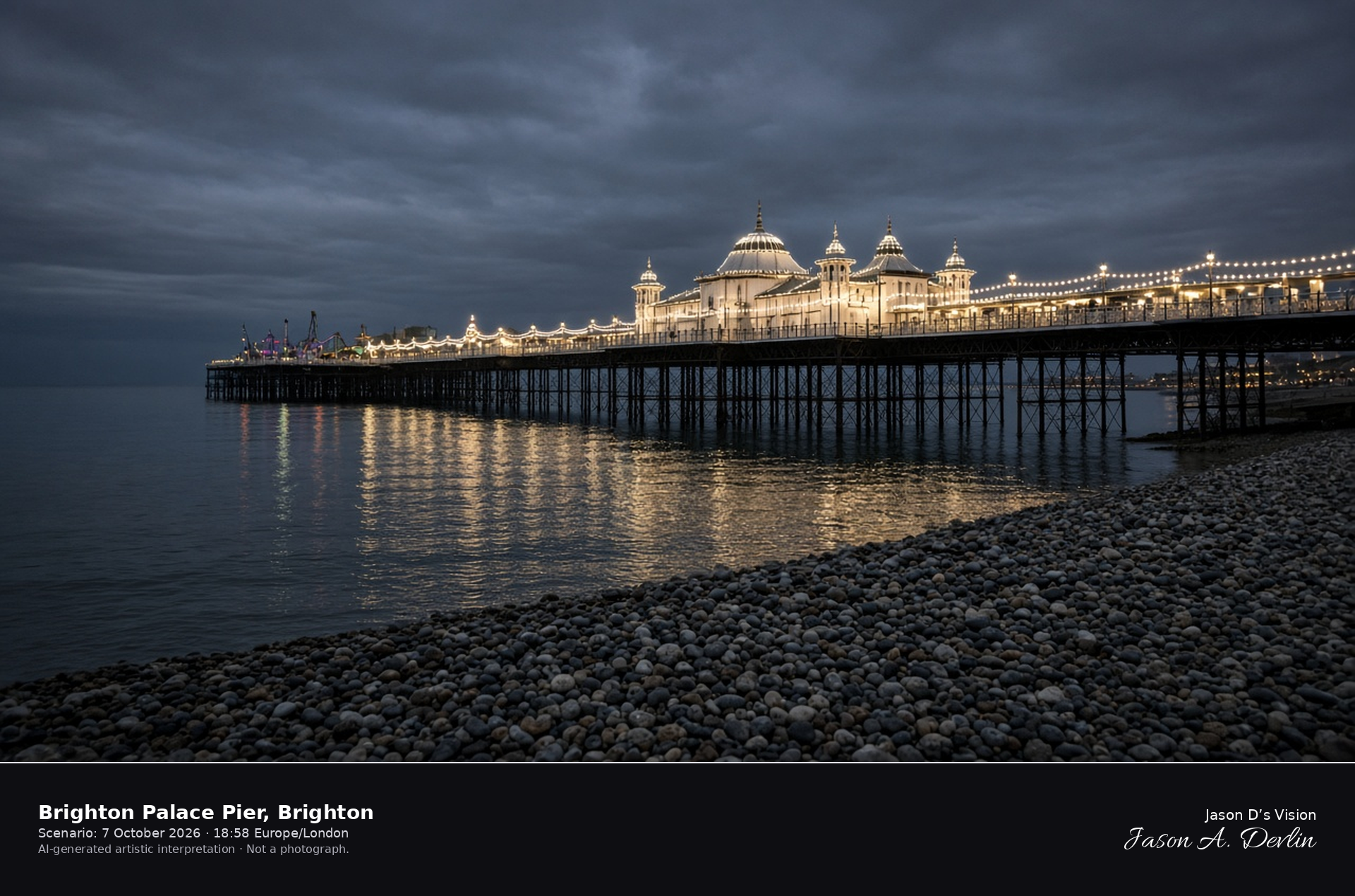
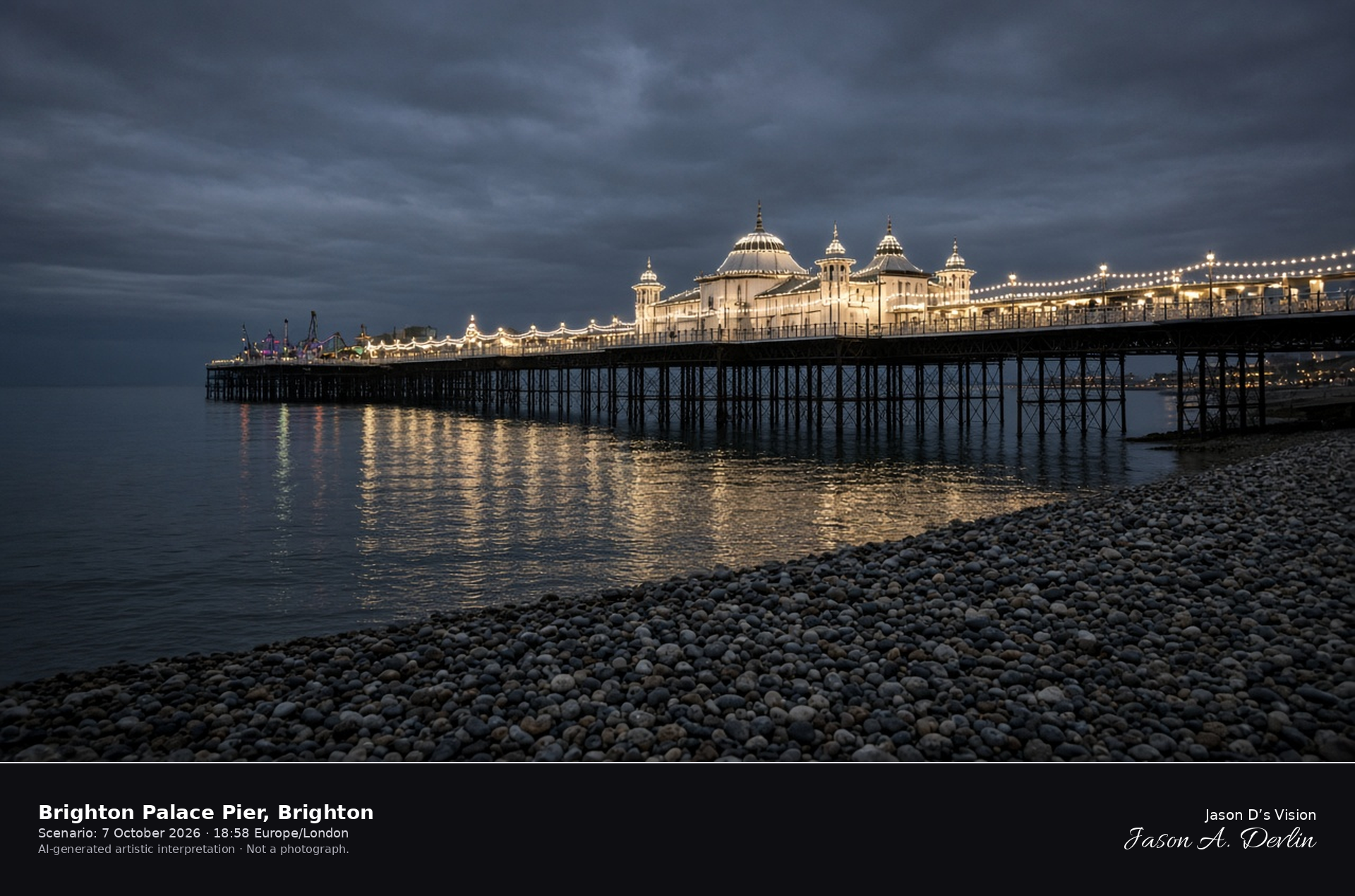
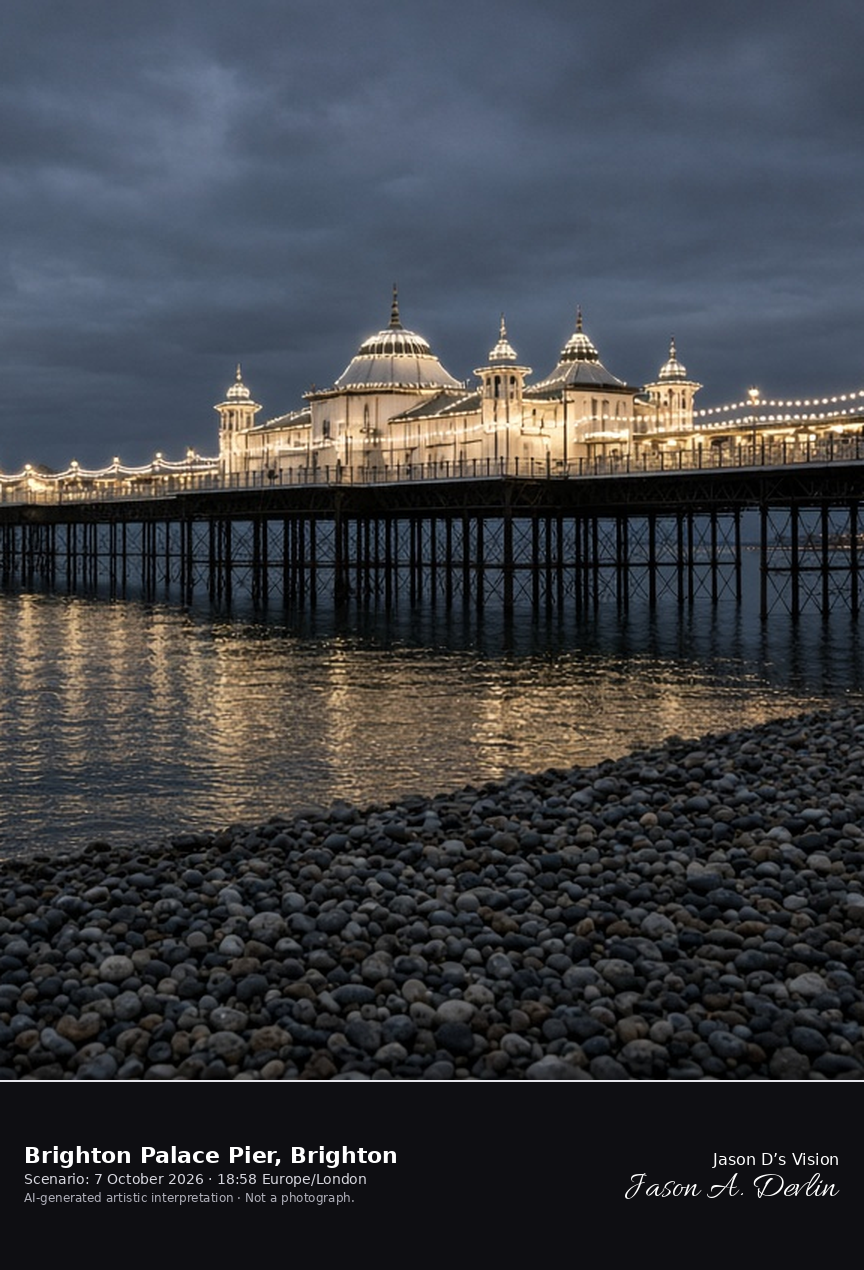
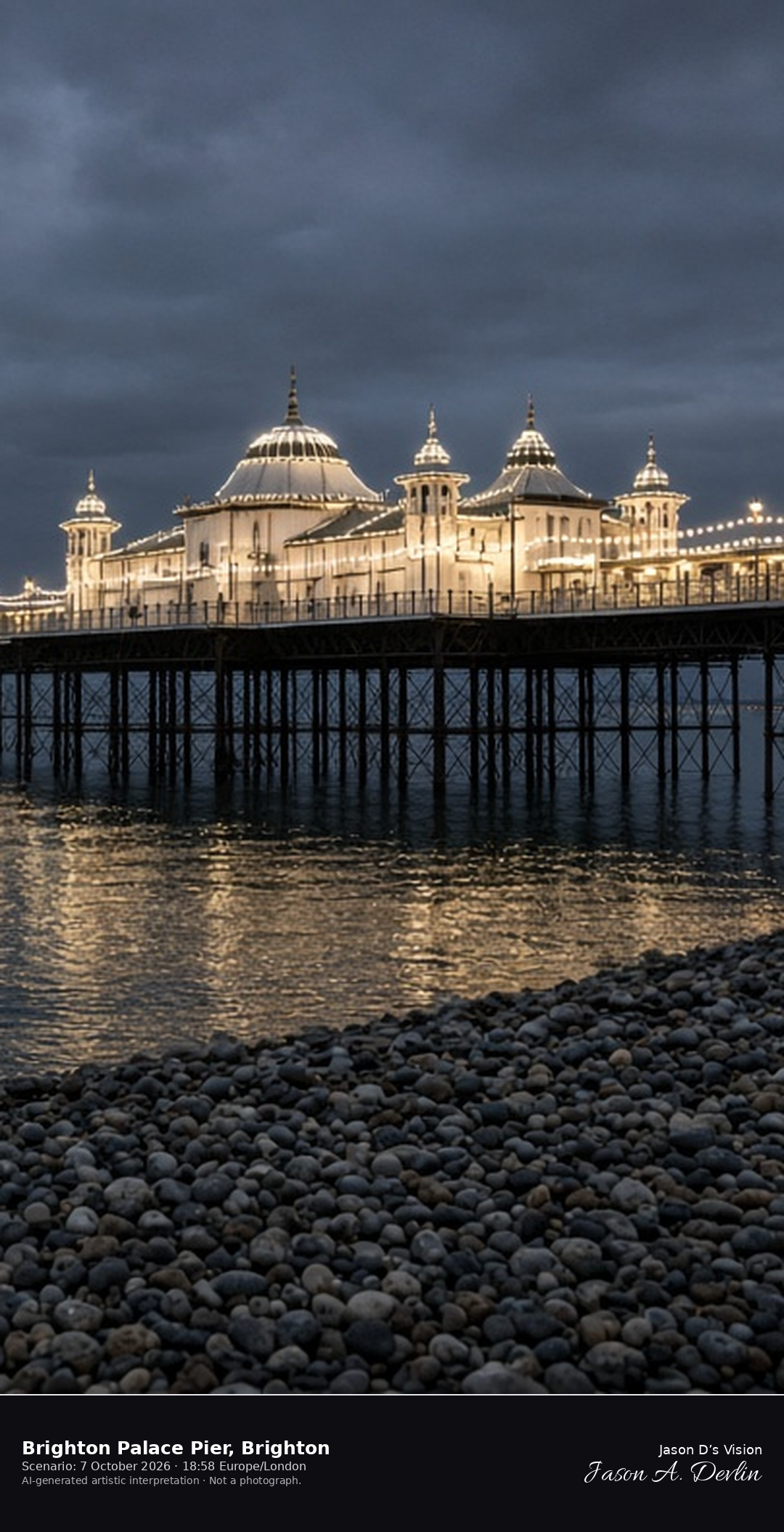
Brighton Palace Pier opened in 1899 and is a Grade II* listed pleasure pier with arcades, restaurants and a funfair at its end. It is one of the most visited free attractions in Britain.
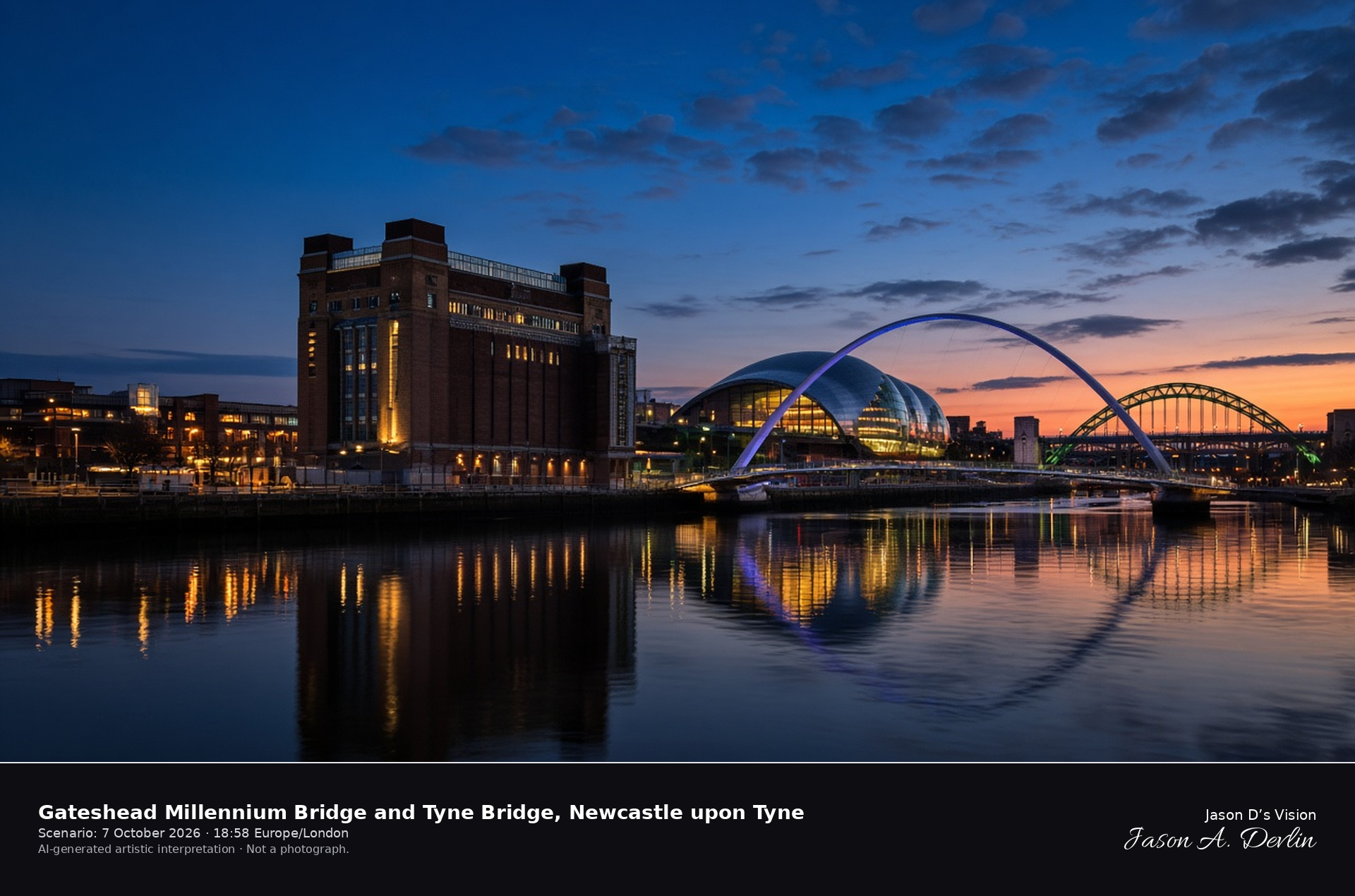
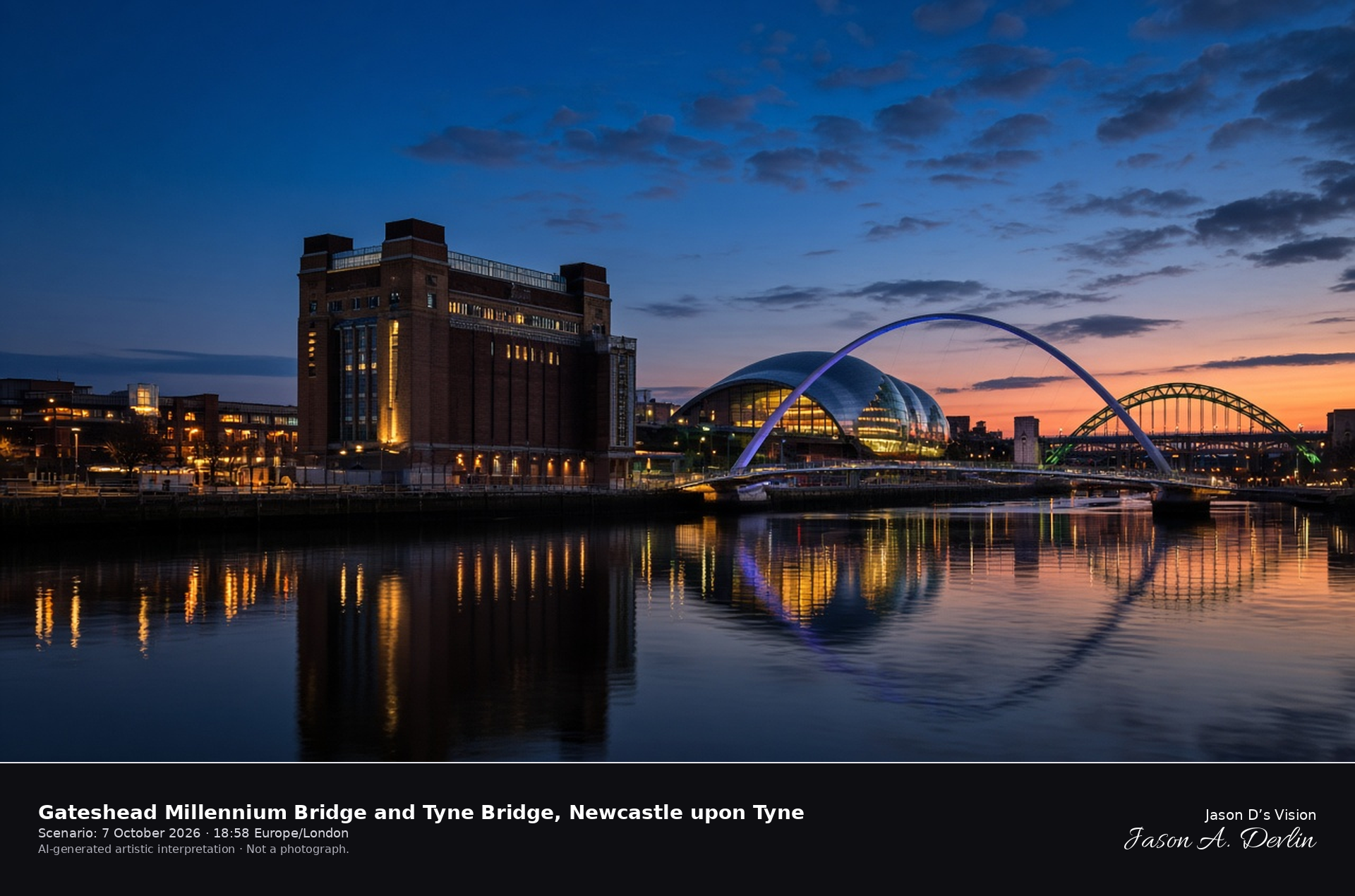
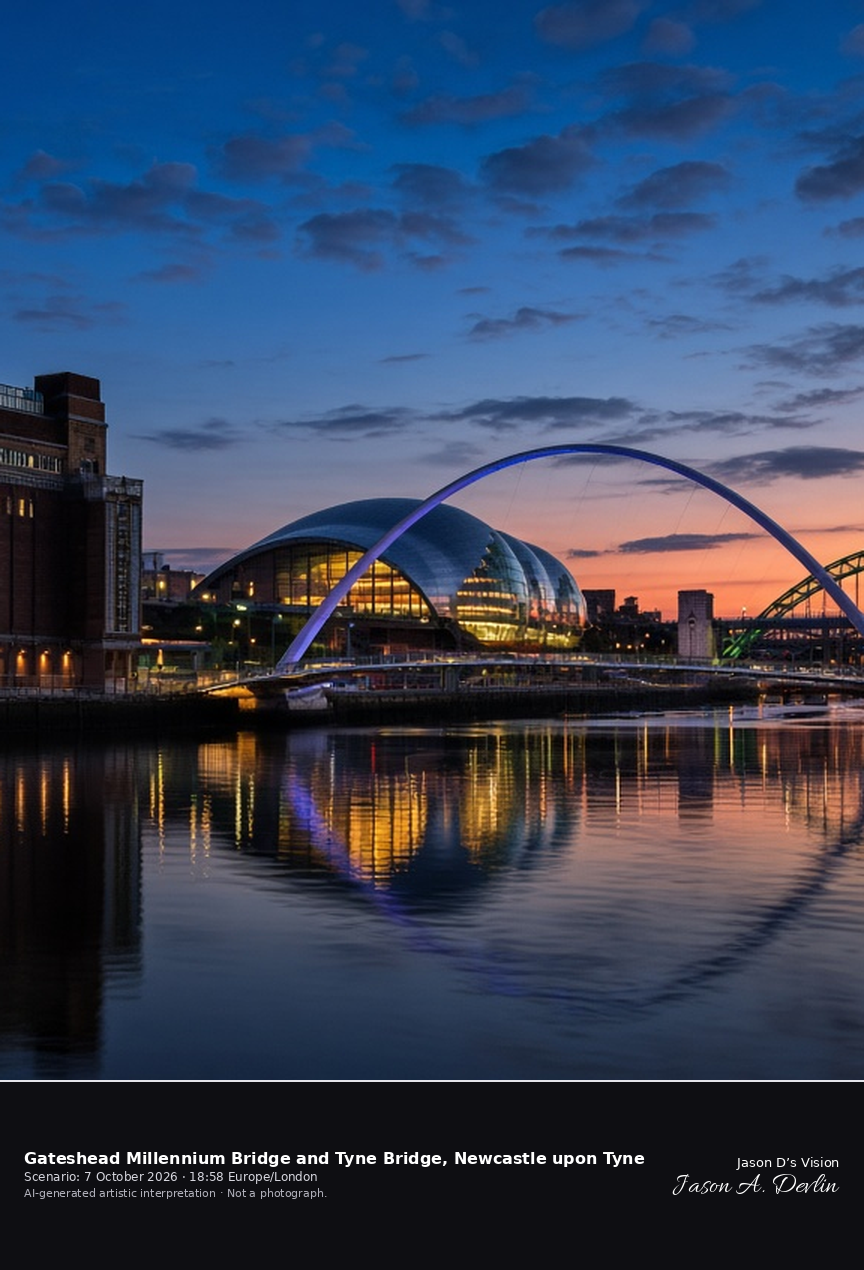
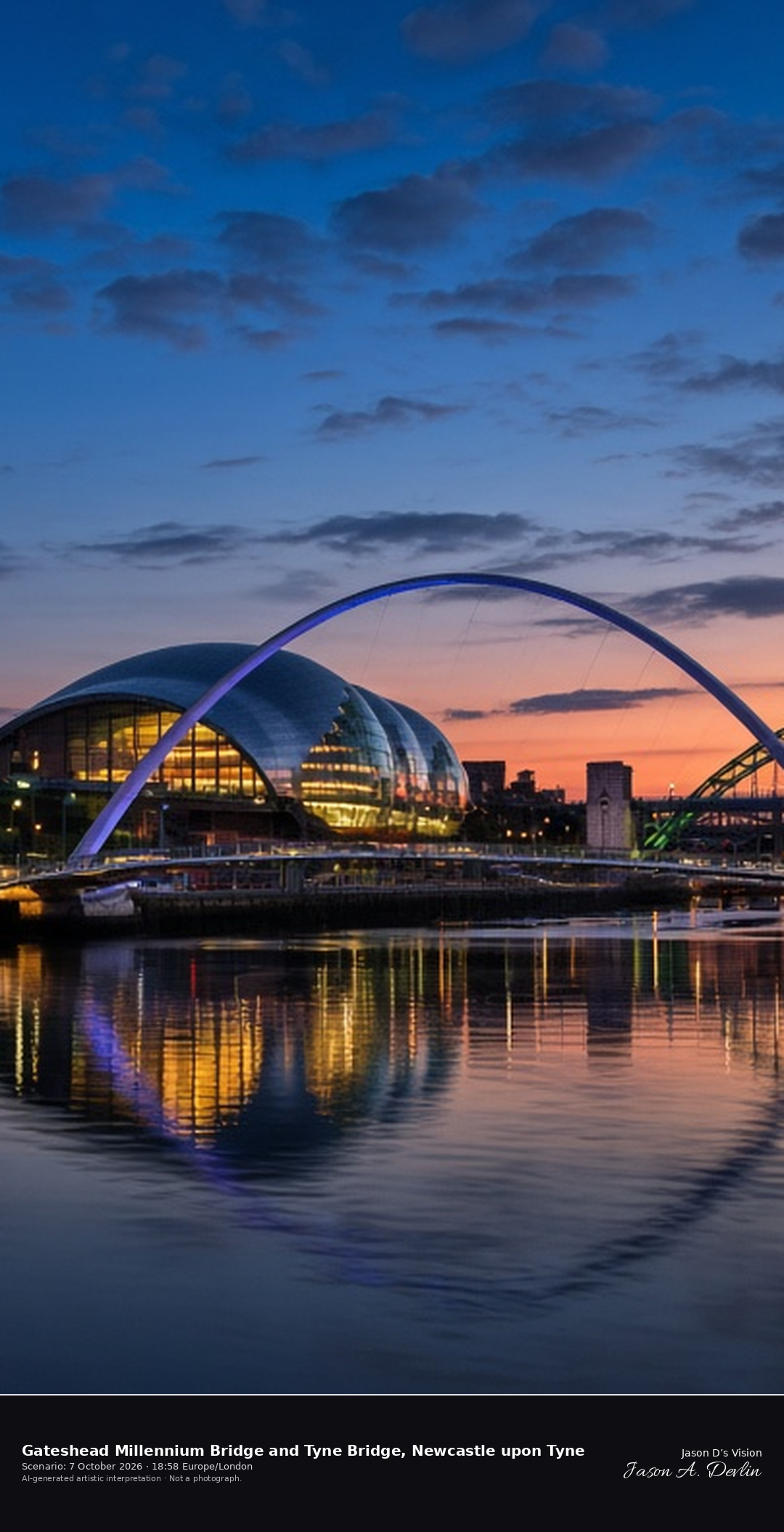
Gateshead Millennium Bridge and Tyne Bridge, Newcastle upon Tyne
Gateshead Millennium Bridge and Tyne Bridge, Newcastle upon Tyne · AI-generated artistic interpretation
The Gateshead Millennium Bridge opened in 2001 and tilts as a whole to let ships pass beneath, earning the nickname the Blinking Eye. The Tyne Bridge upriver opened in 1928.
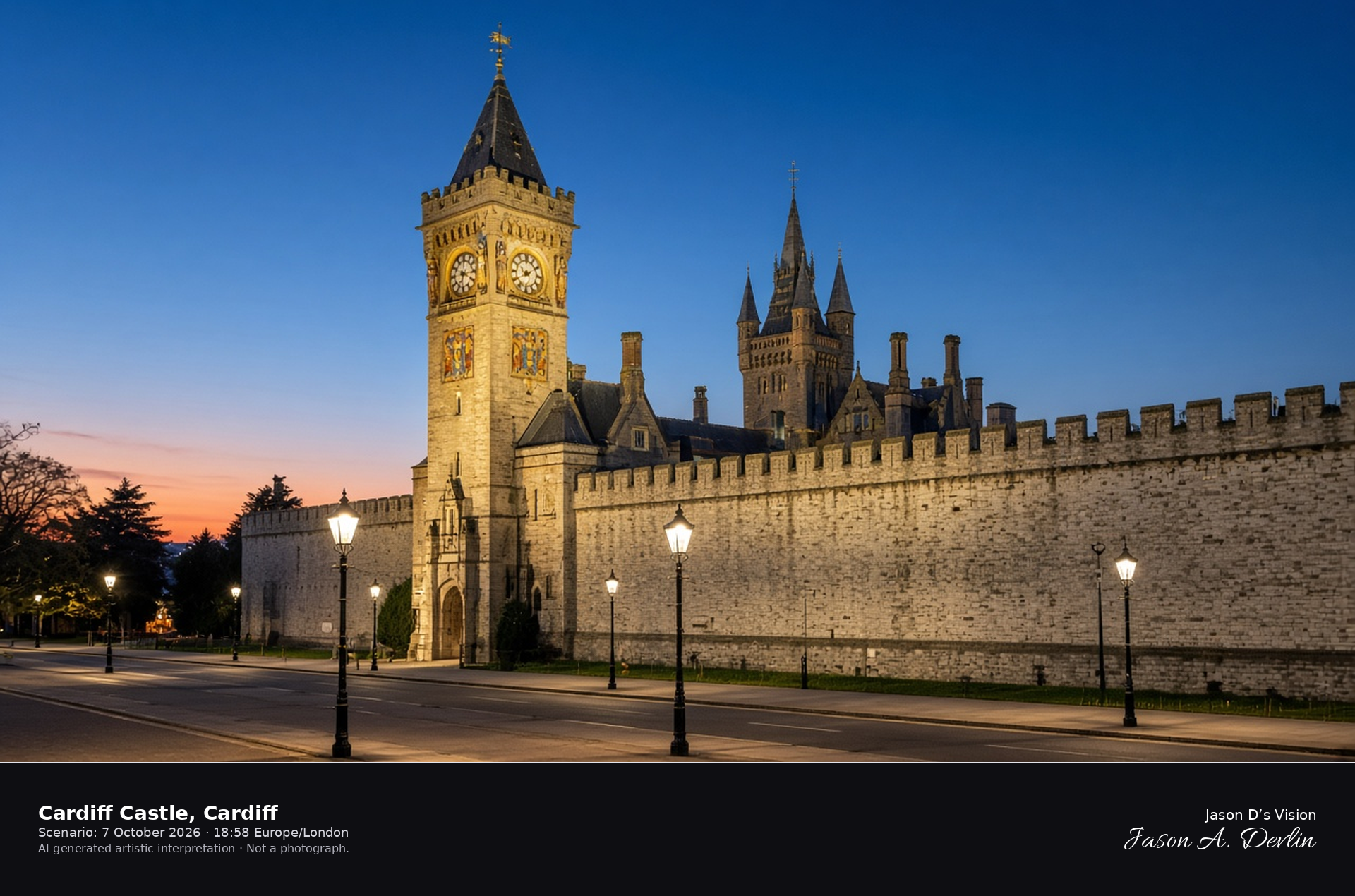
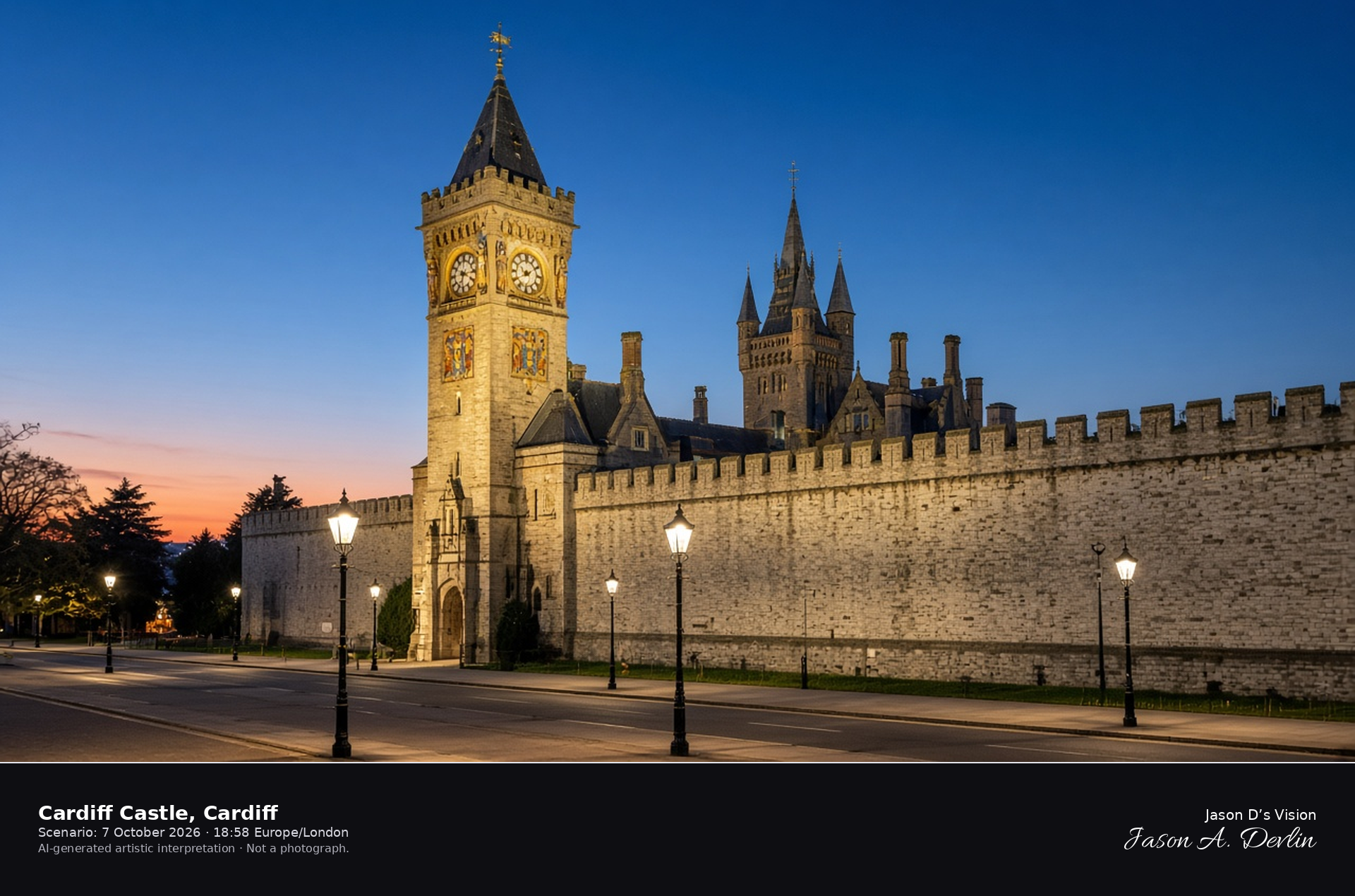
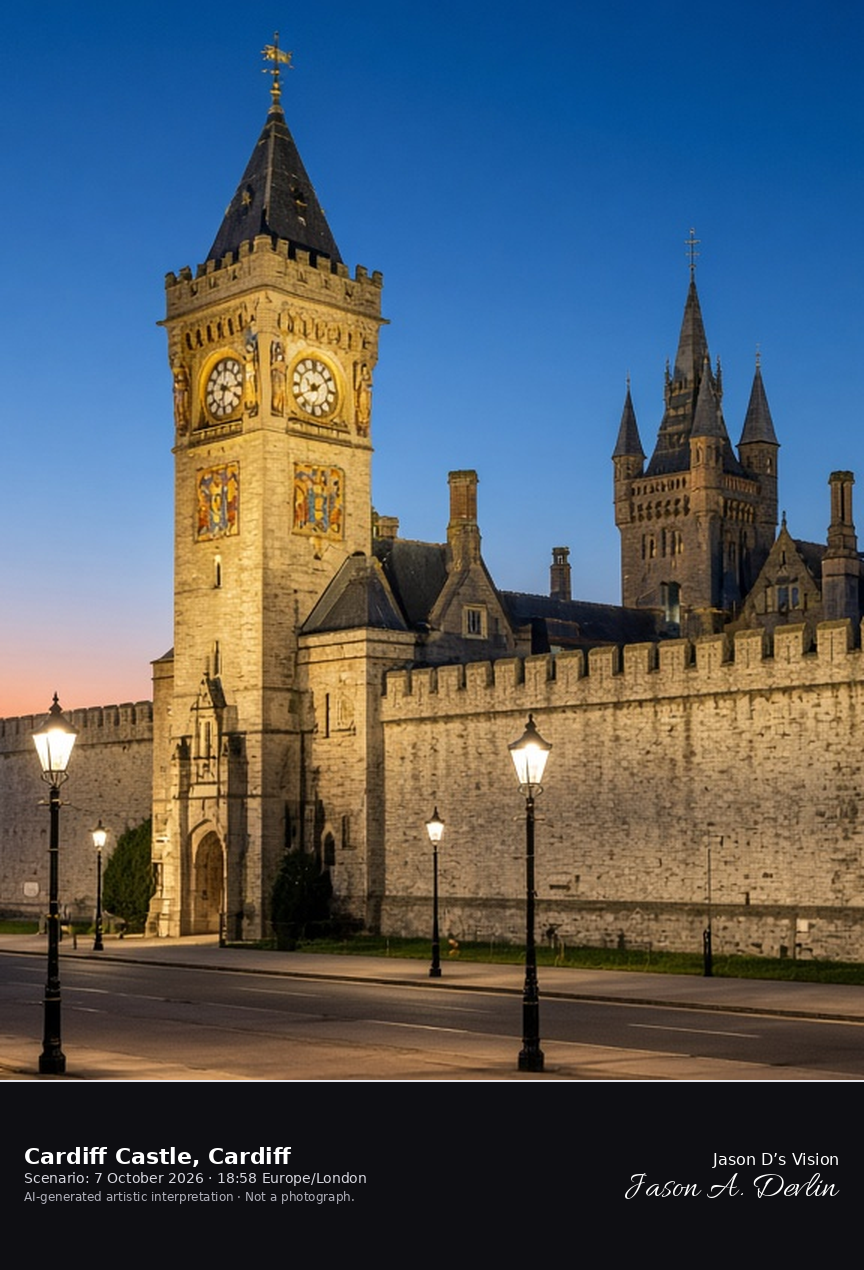
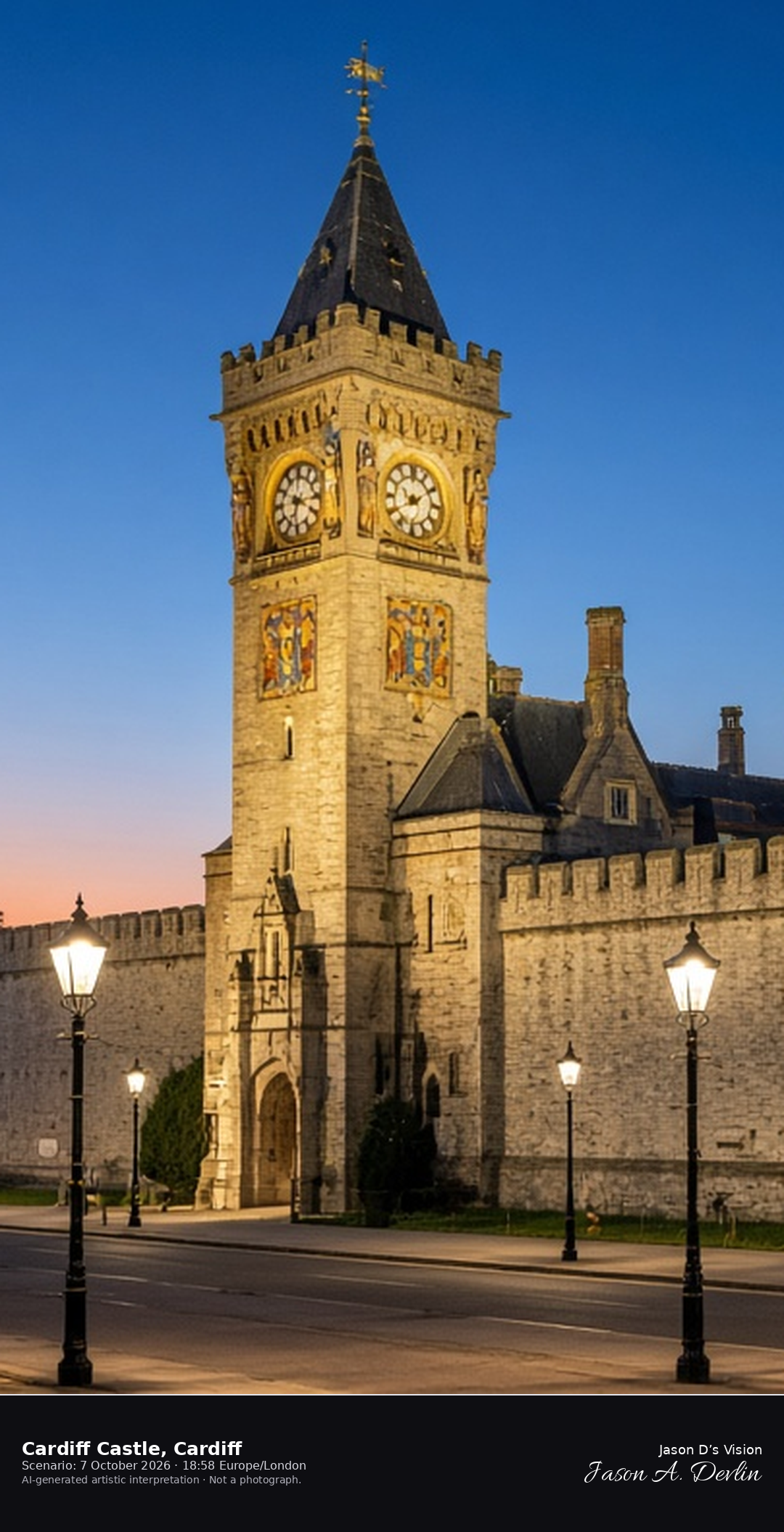
Cardiff Castle has Roman and Norman origins, and its Gothic Revival clock tower and lodgings were designed by William Burges for the 3rd Marquess of Bute in the 1860s and 1870s. The castle is now owned by the city of Cardiff.
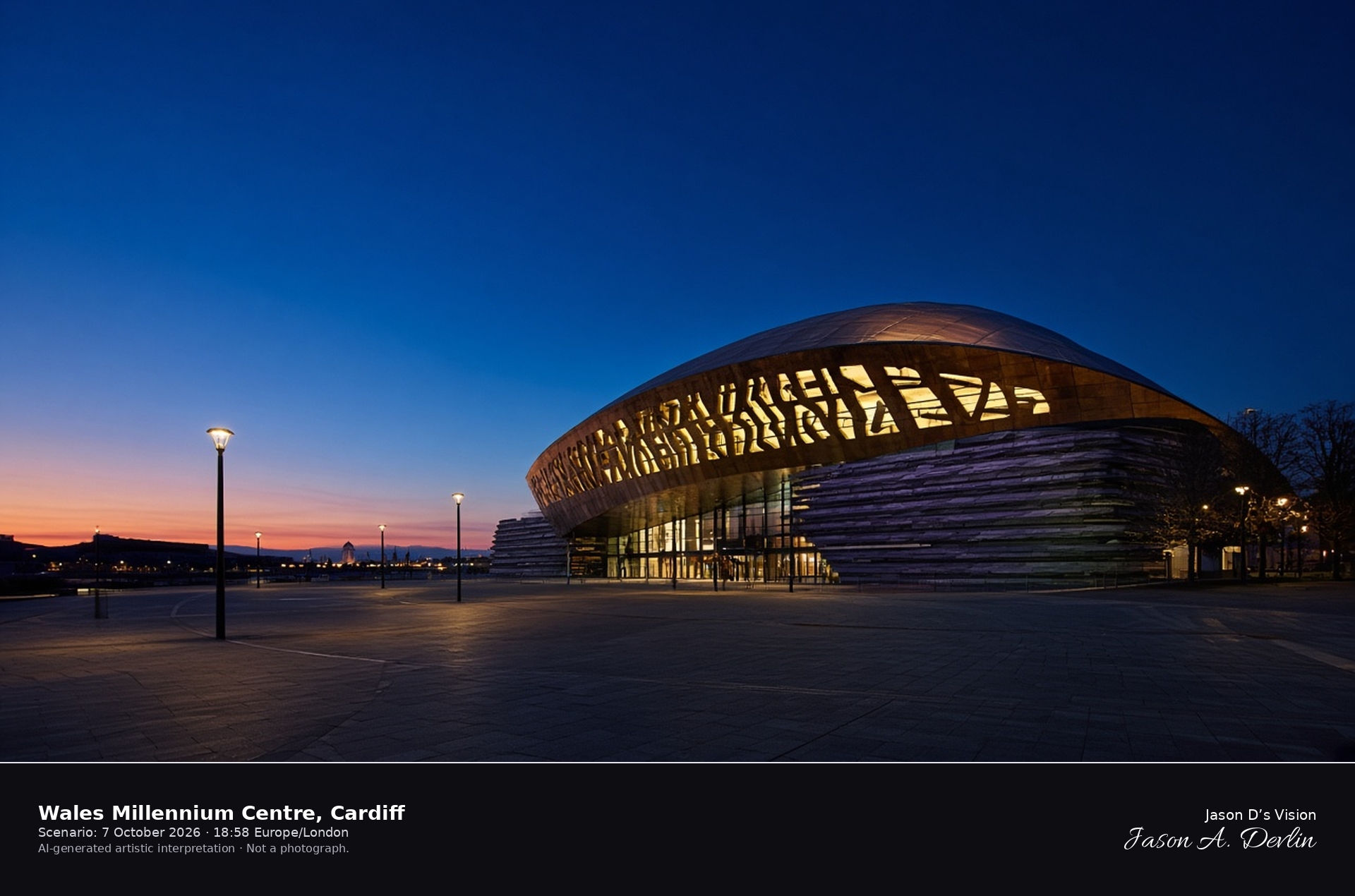
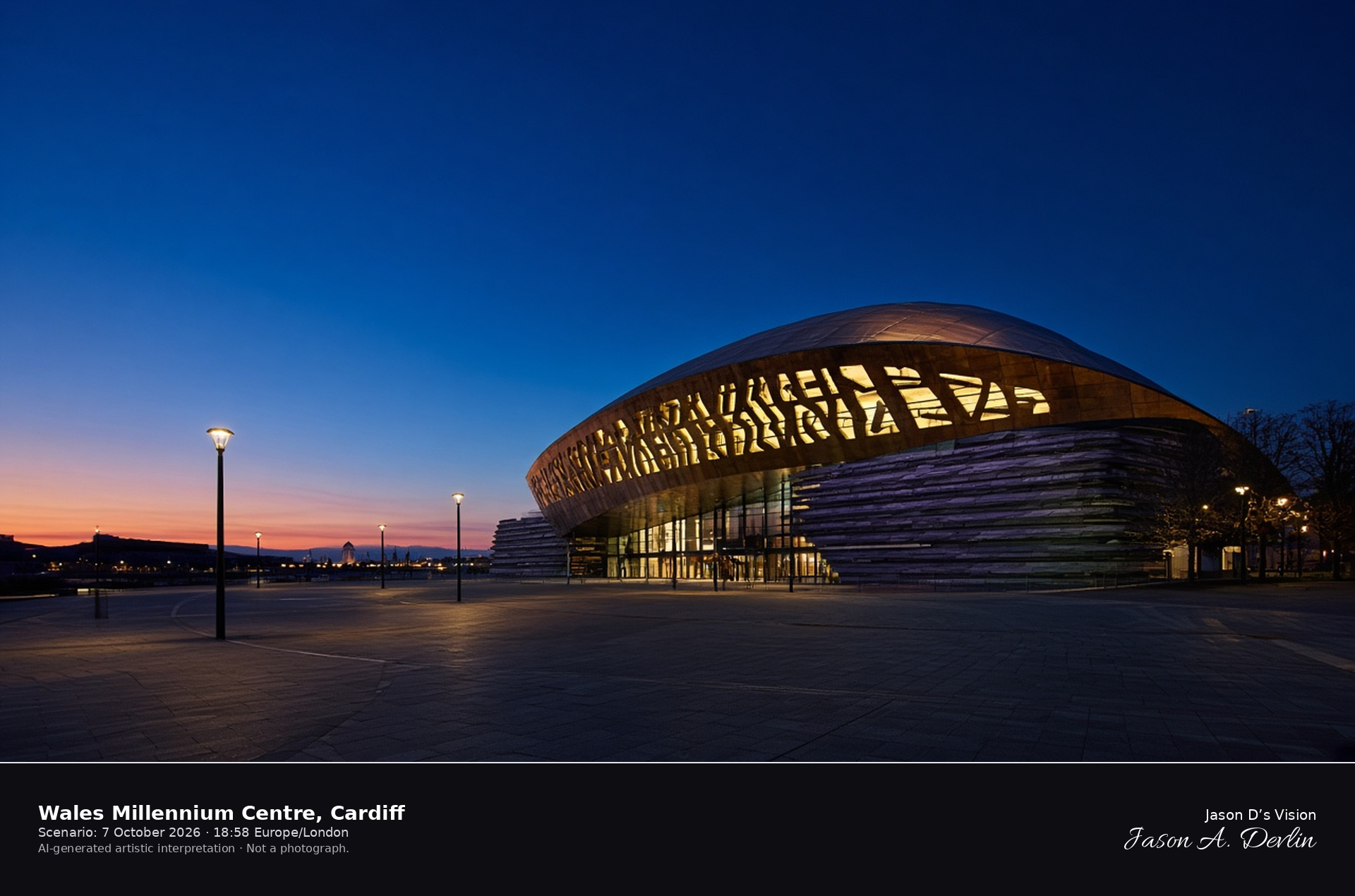
Wales Millennium Centre · AI-generated artistic interpretation
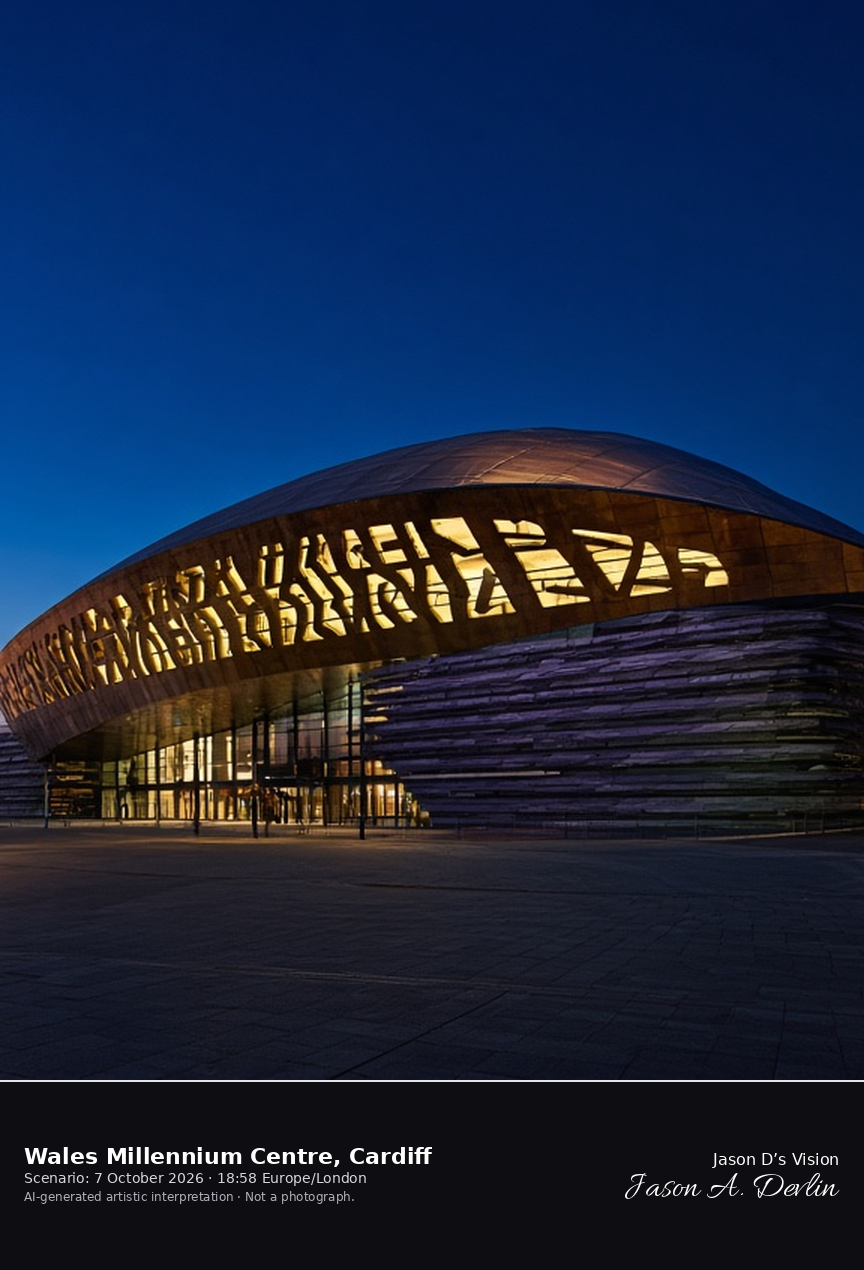
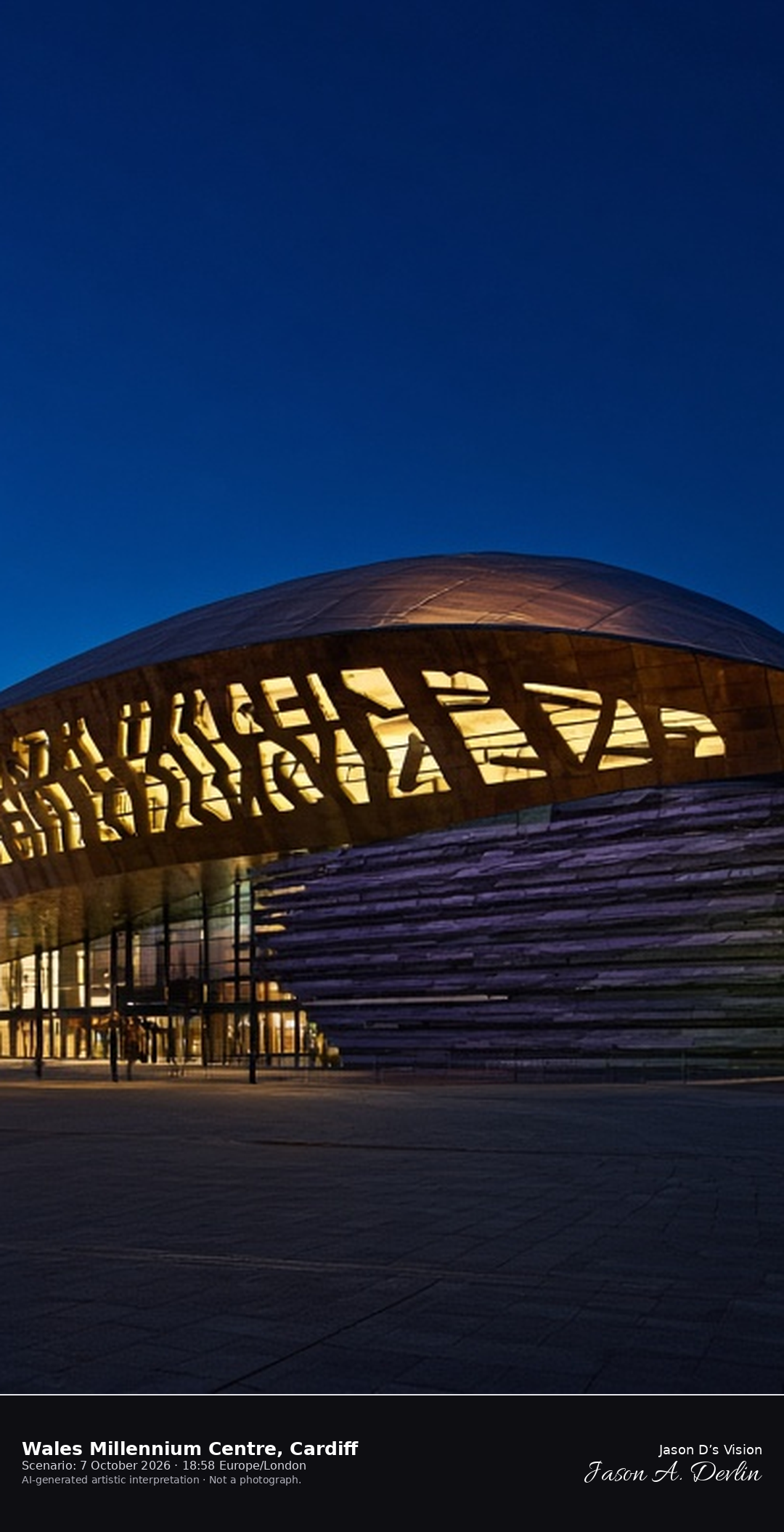
The Centre opened in 2004 as the home of Welsh National Opera and of the nation's performing arts companies. Over the entrance the poet Gwyneth Lewis set her bilingual inscription in letters about two metres tall: in English, 'In these stones, horizons sing'.
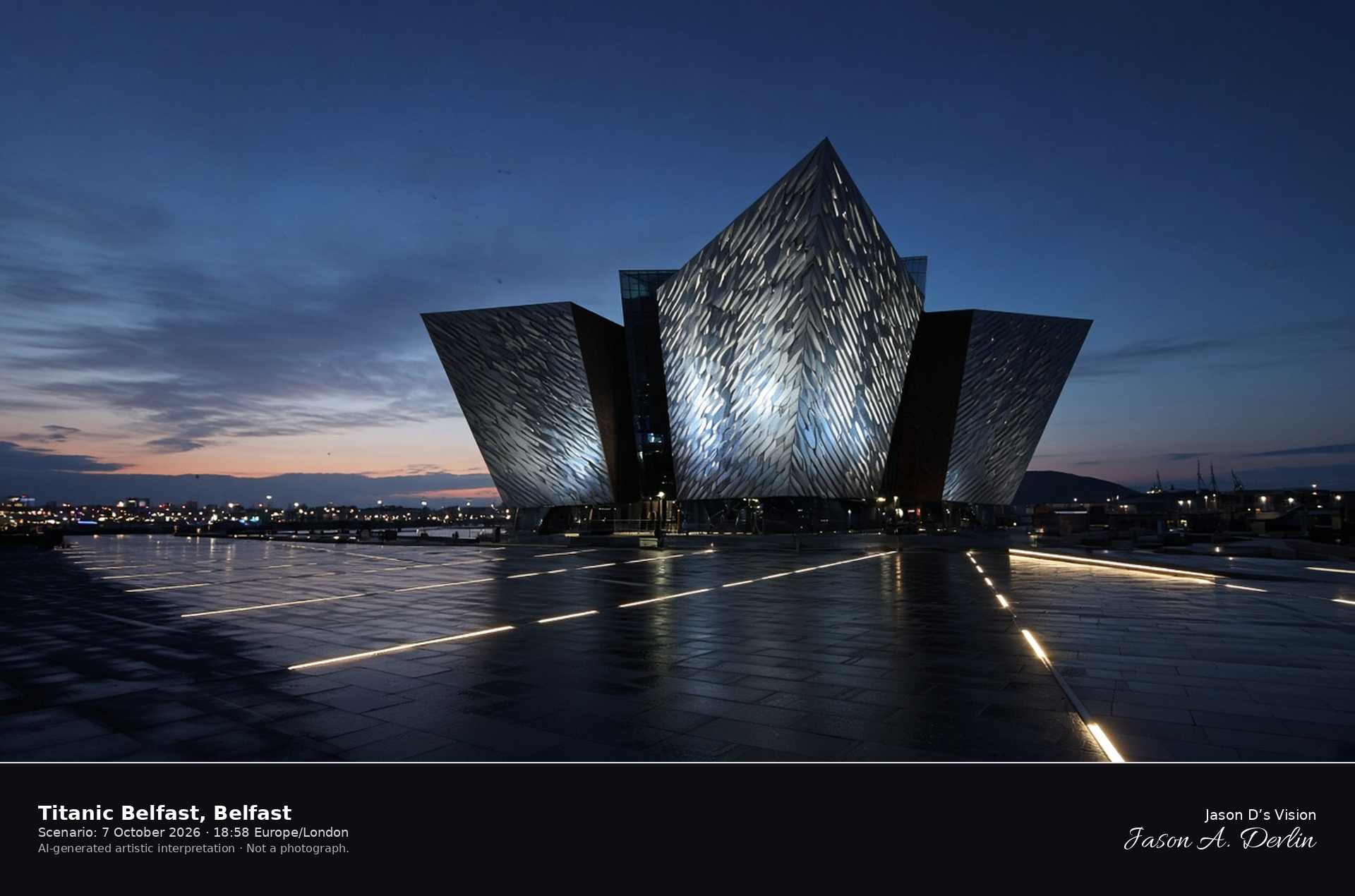
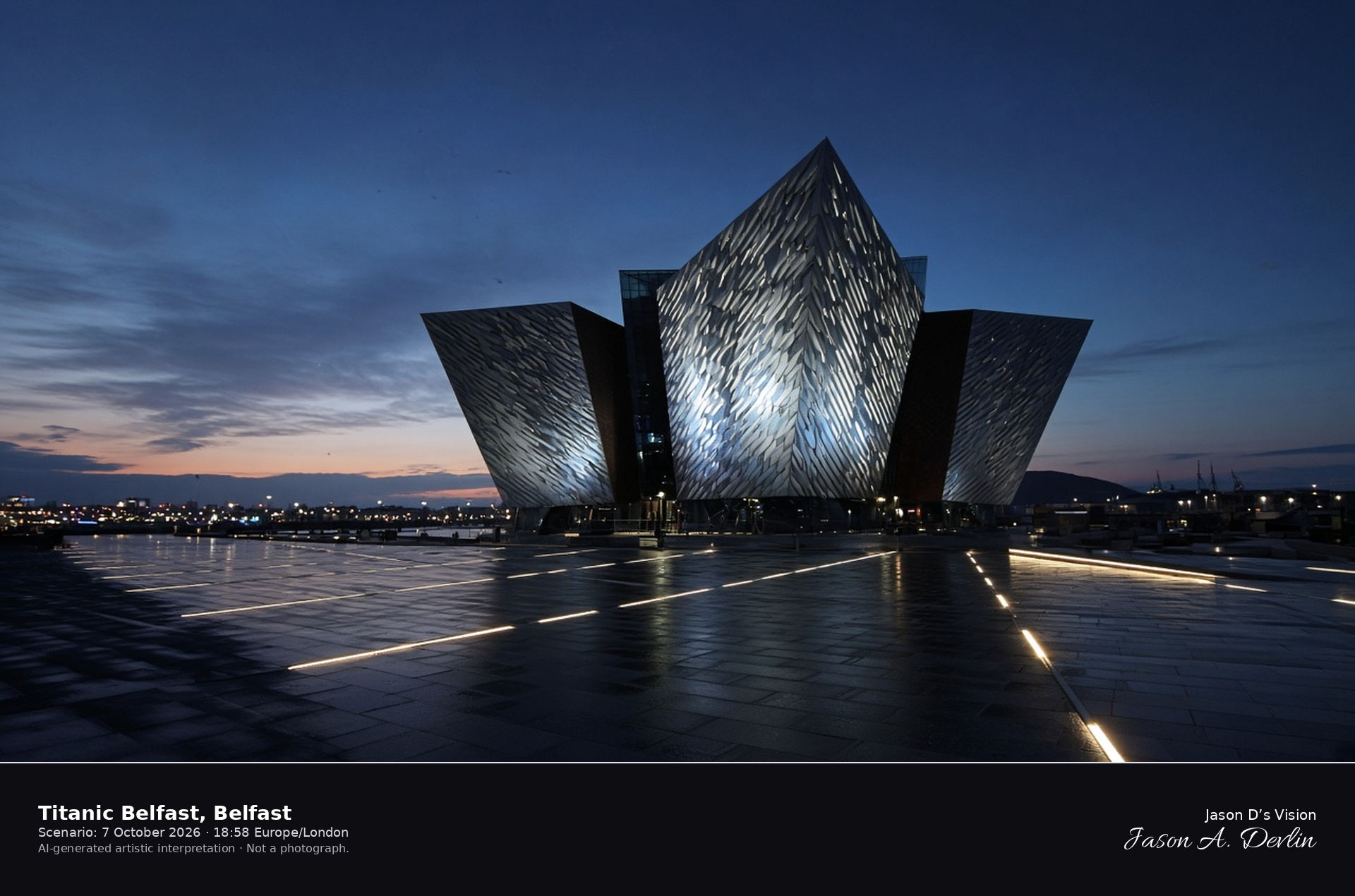
Titanic Belfast opened in 2012, the centenary year of Titanic's maiden voyage, beside the historic shipyard slipways where Titanic and Olympic were built. Its prow-shaped facades evoke ships' bows and the White Star Line.
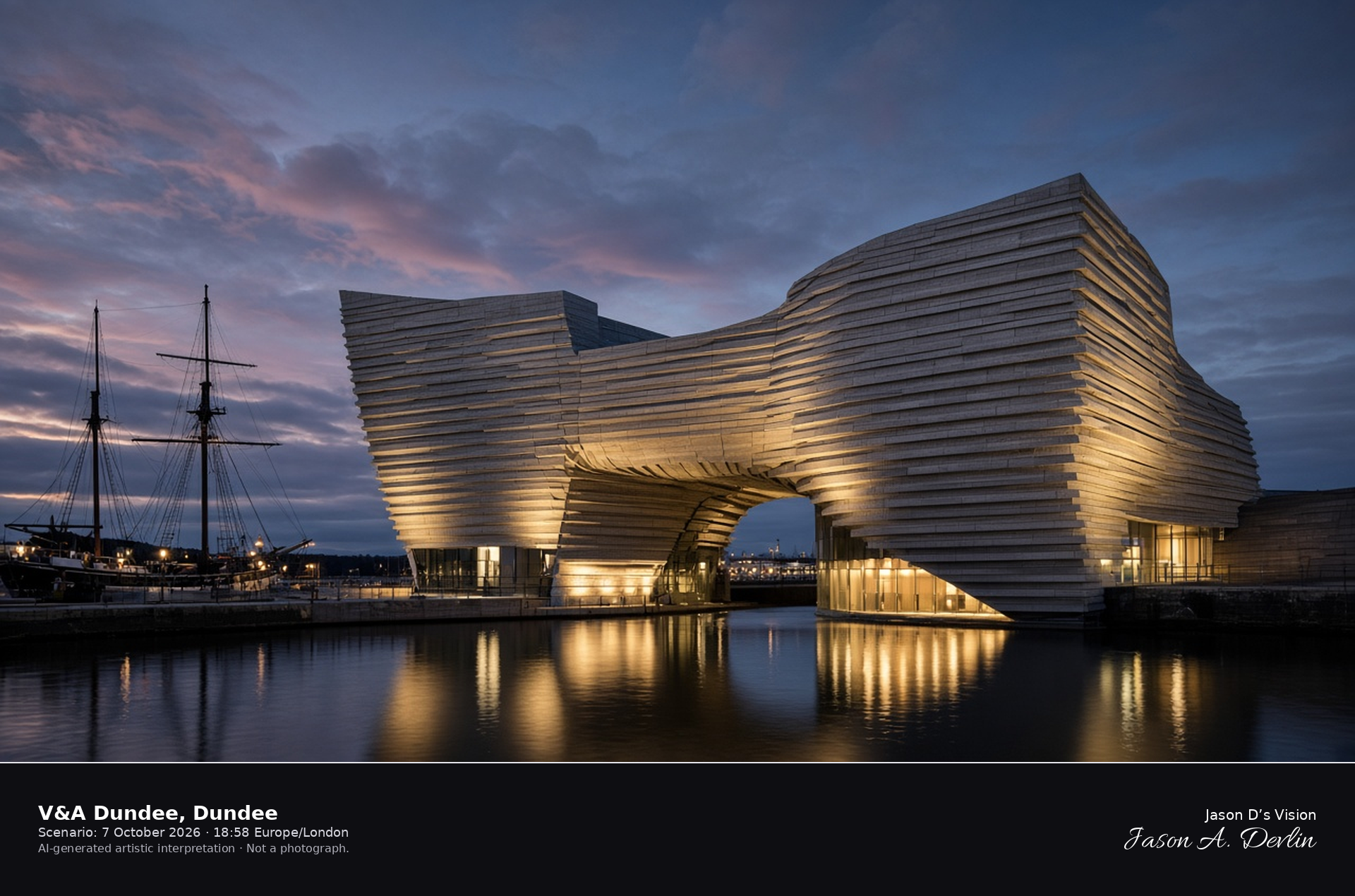
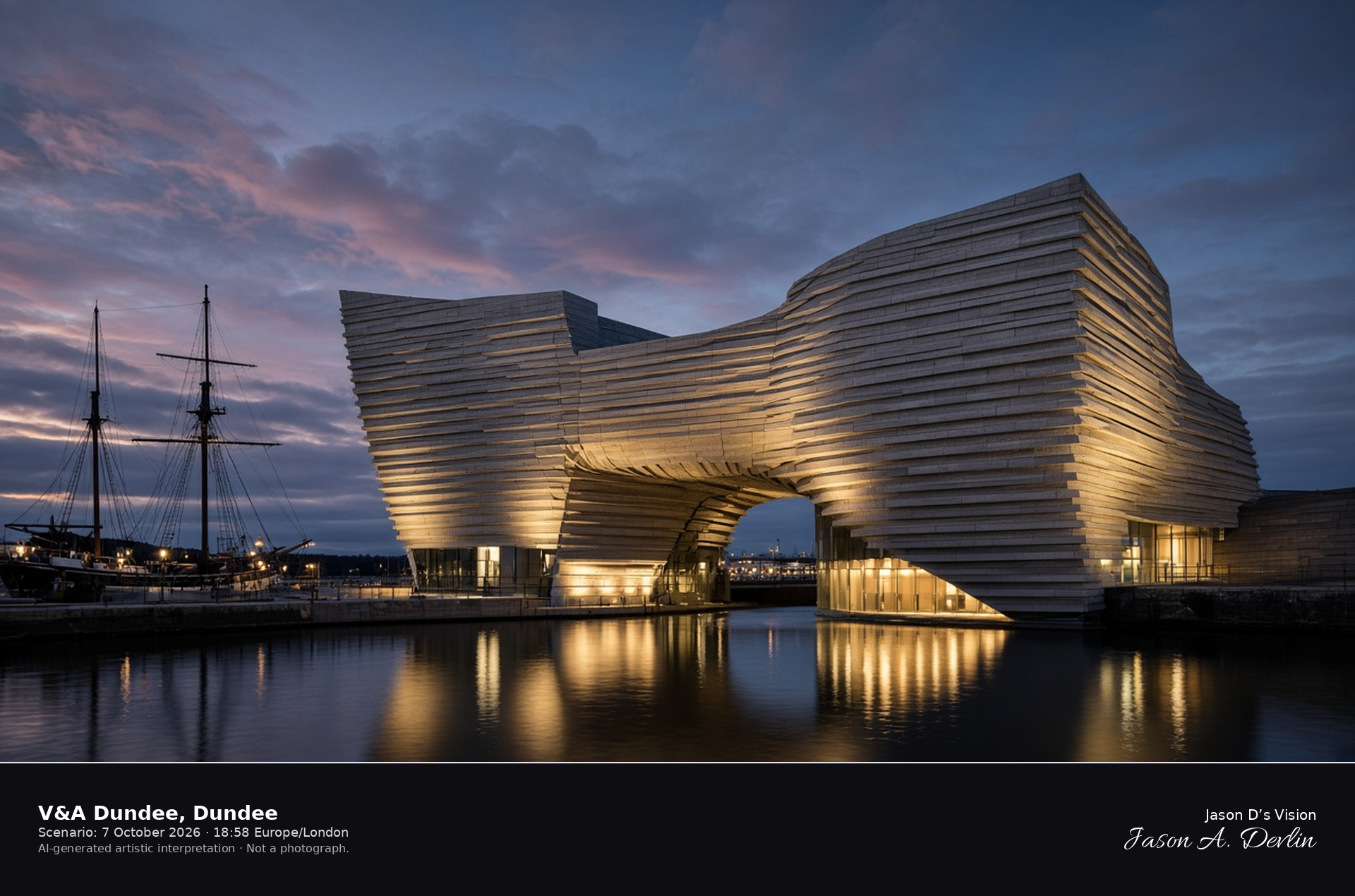
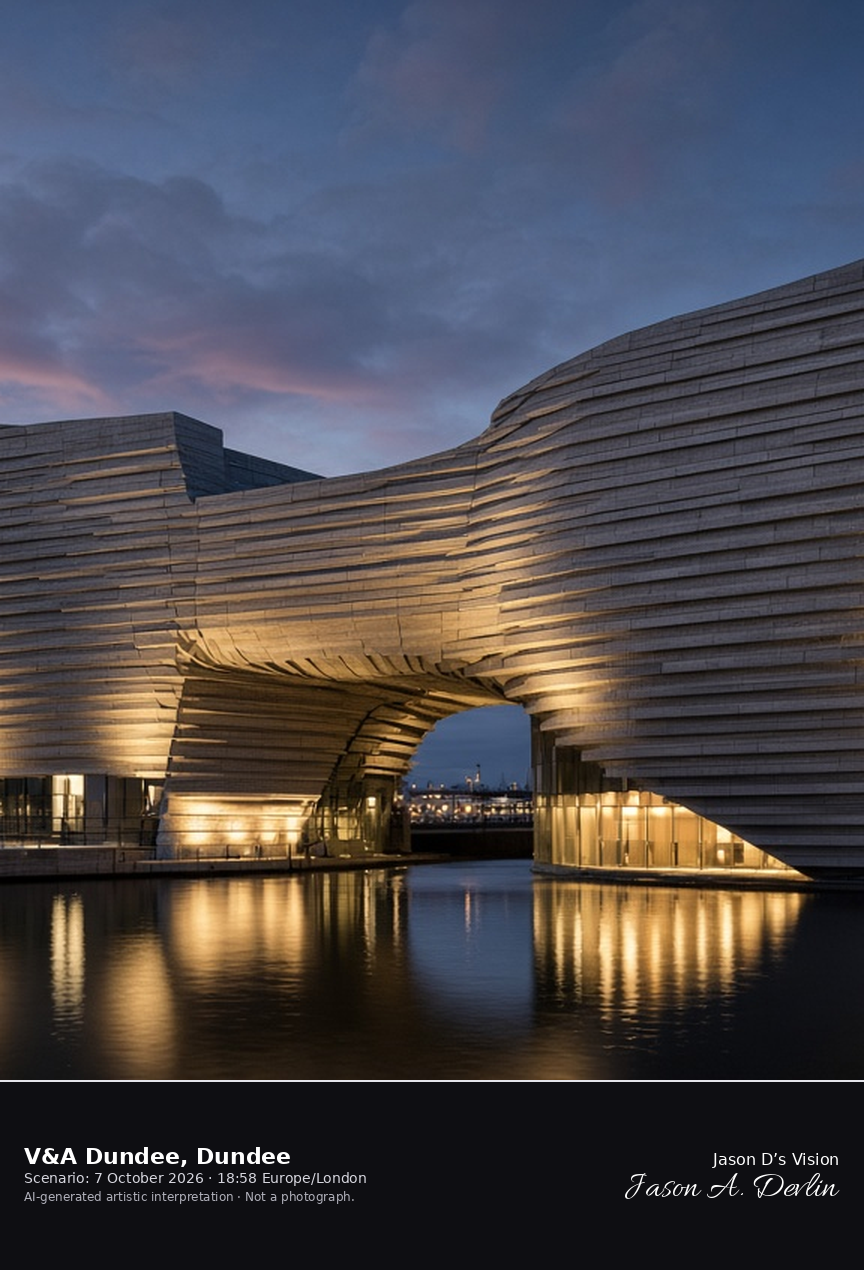
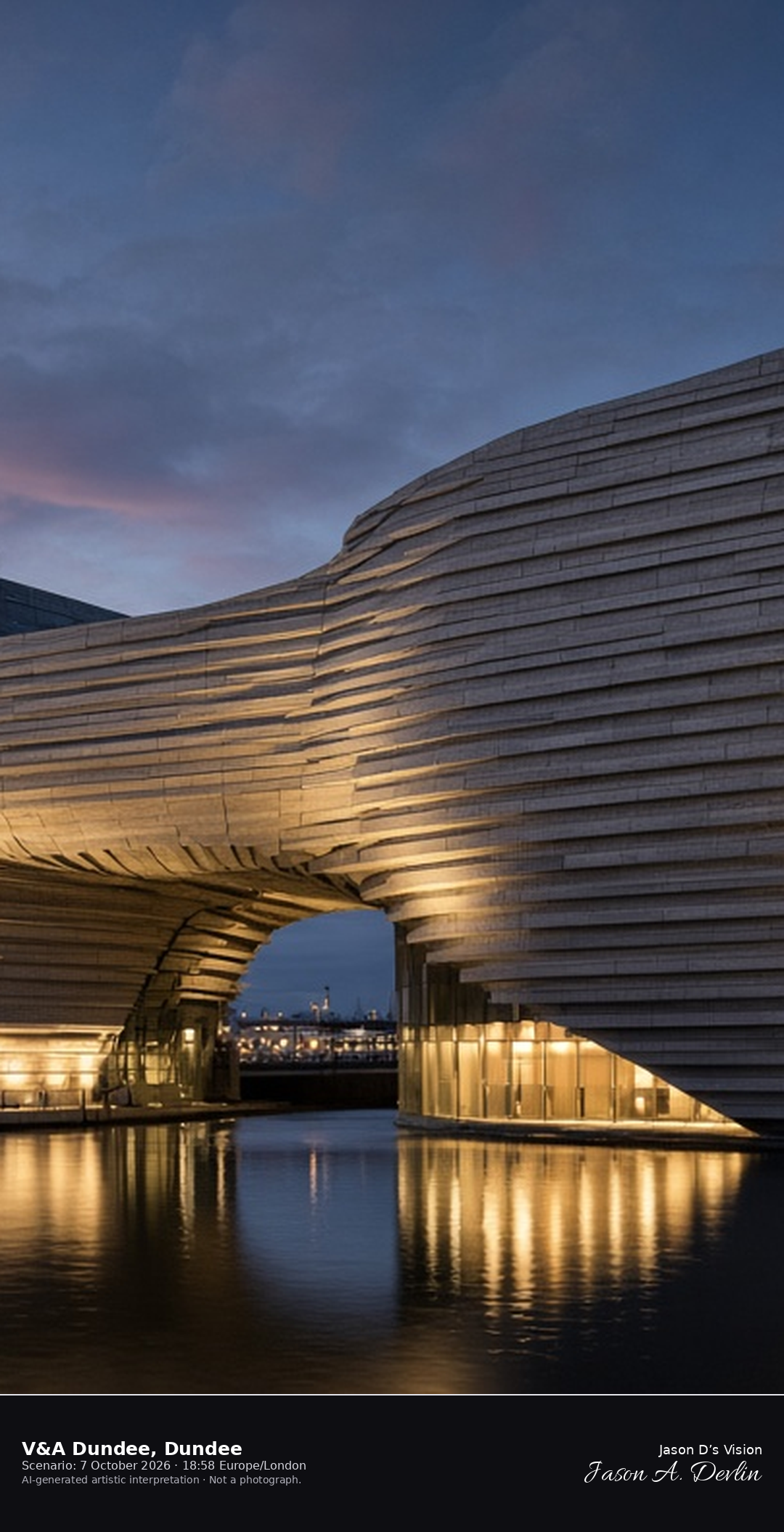
V&A Dundee, designed by Kengo Kuma, opened in 2018 as Scotland's first design museum. It stands beside Discovery Point, where Captain Scott's polar ship RRS Discovery is on display.
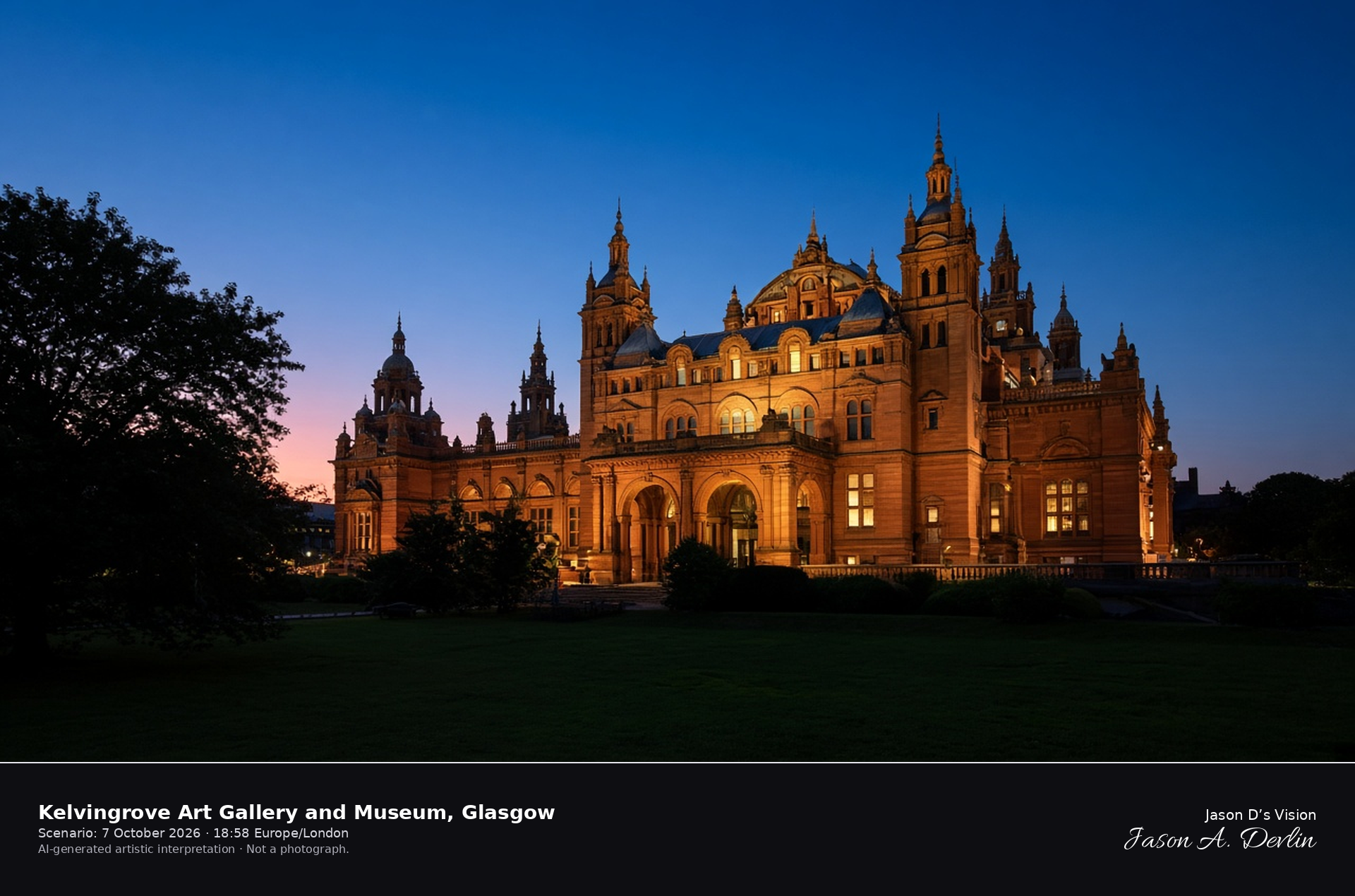
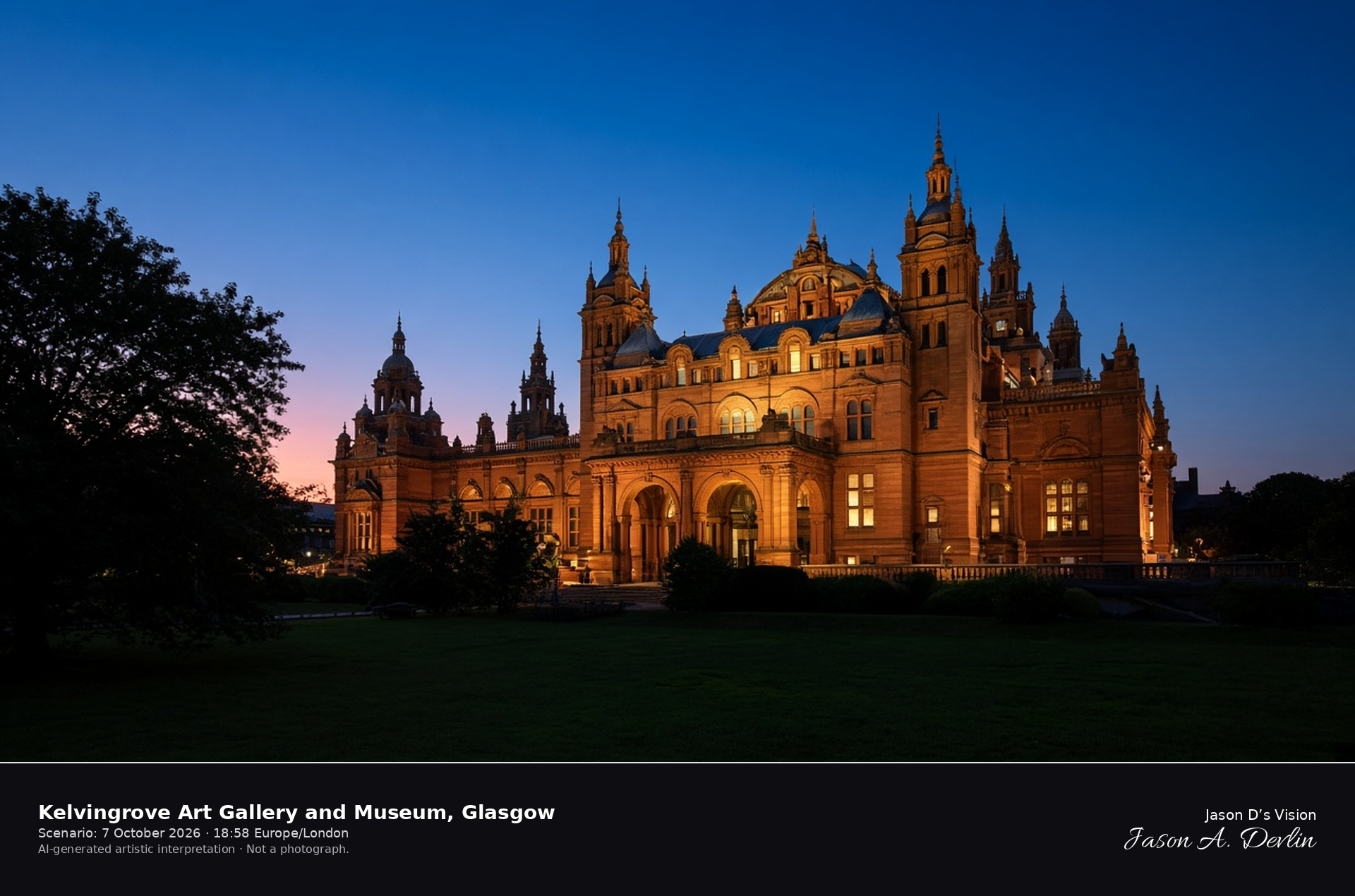
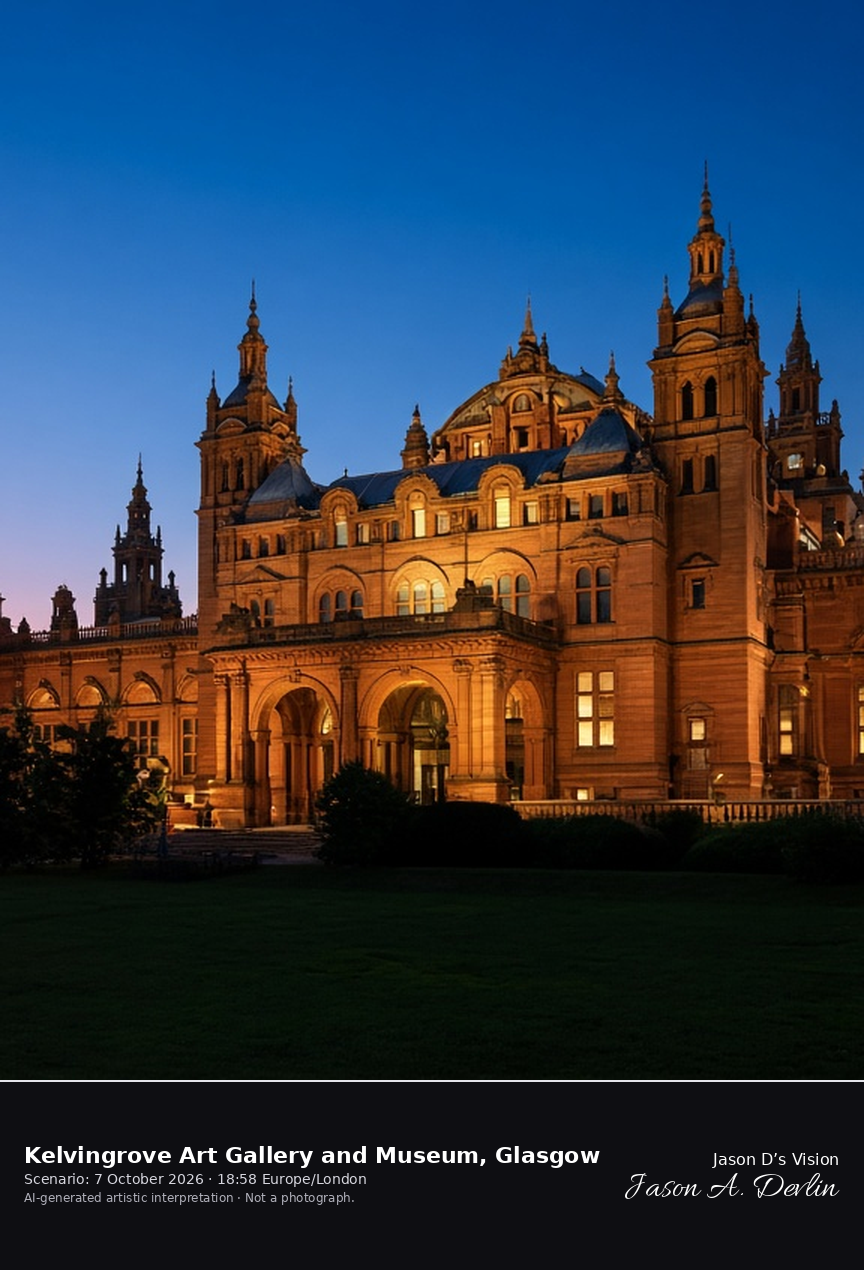
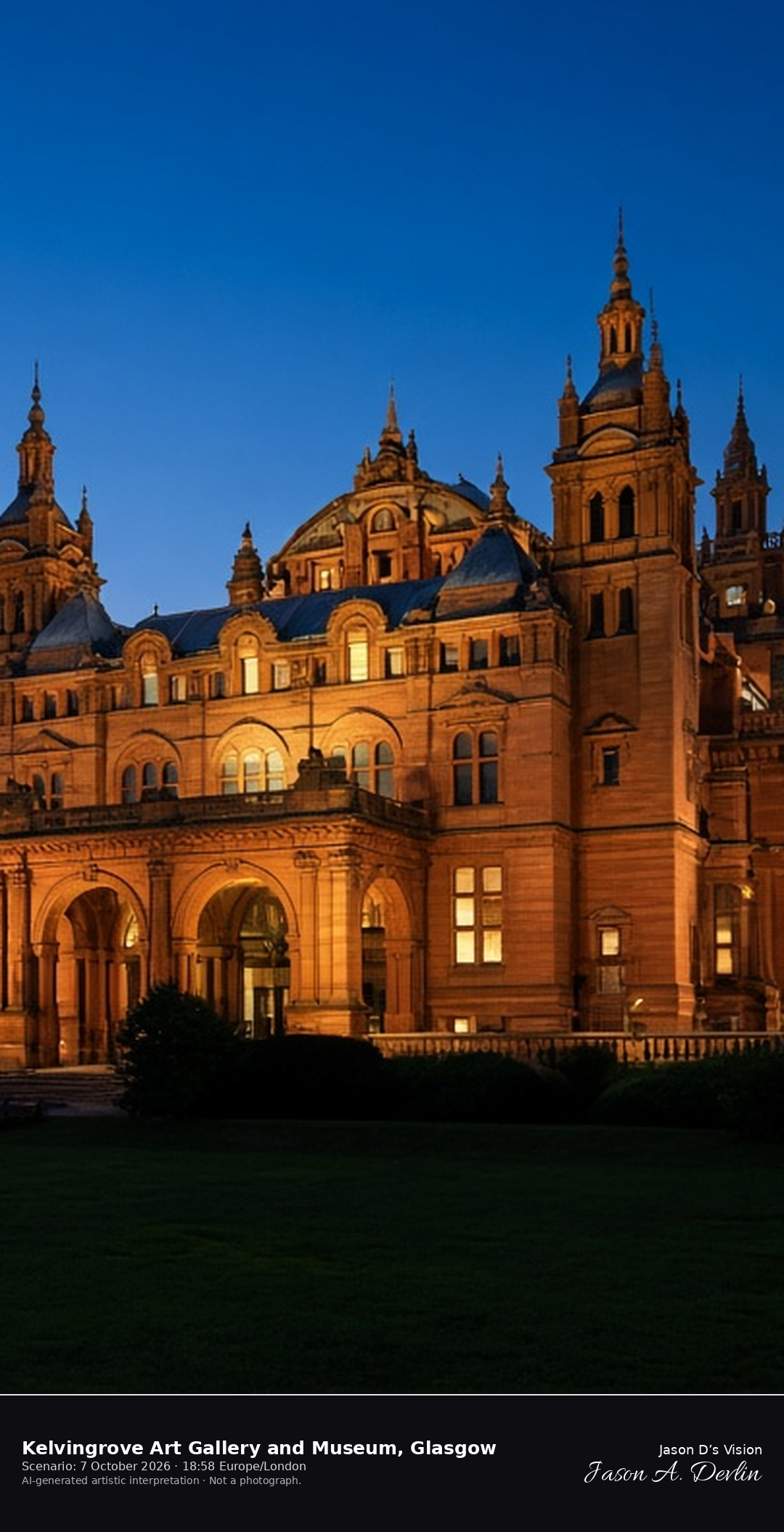
Kelvingrove Art Gallery and Museum, Glasgow · AI-generated artistic interpretation
Kelvingrove Art Gallery and Museum opened in 1901 and is one of Scotland's most visited museums, free to enter. Its collection includes Salvador Dali's Christ of Saint John of the Cross.
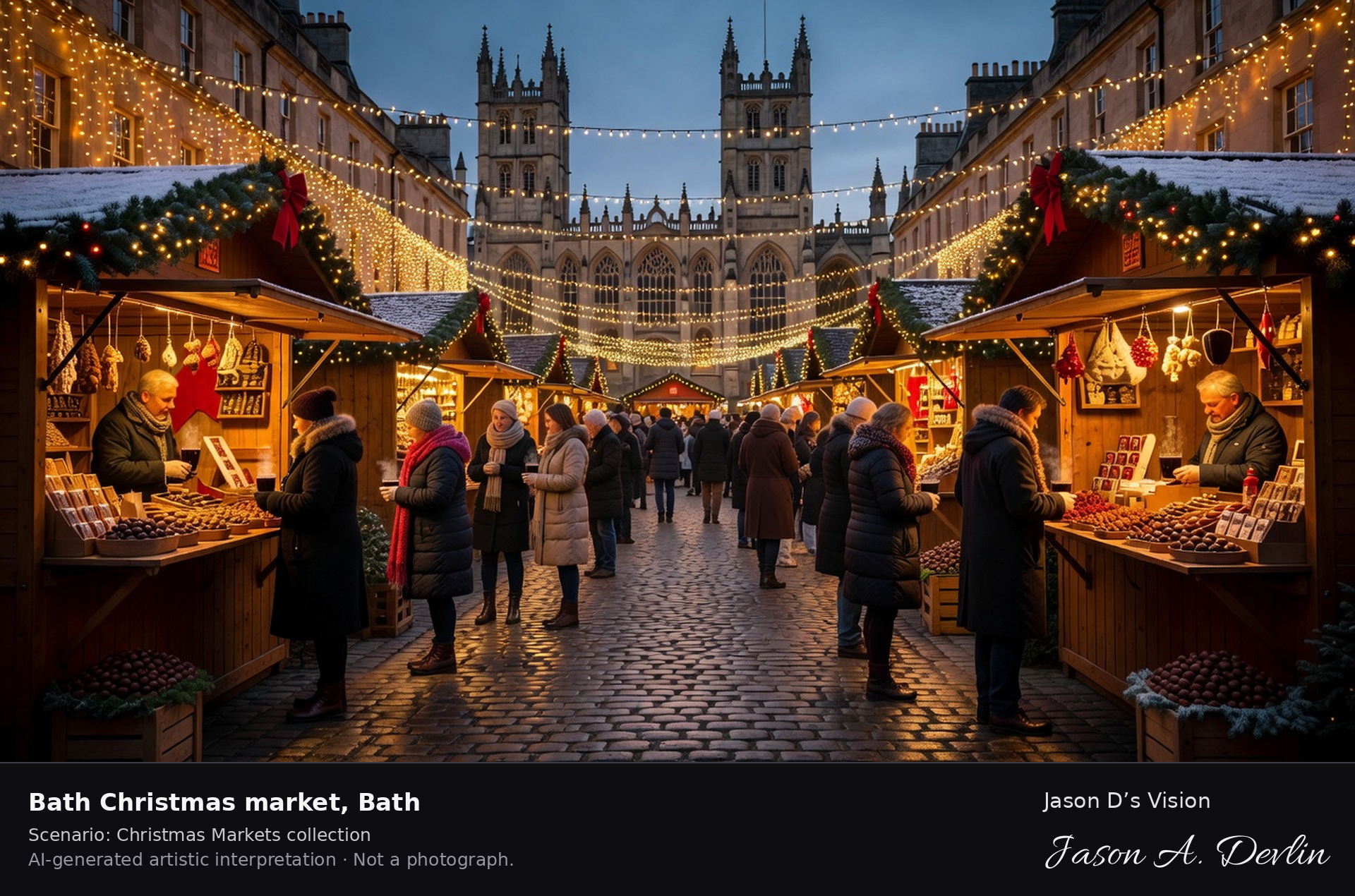
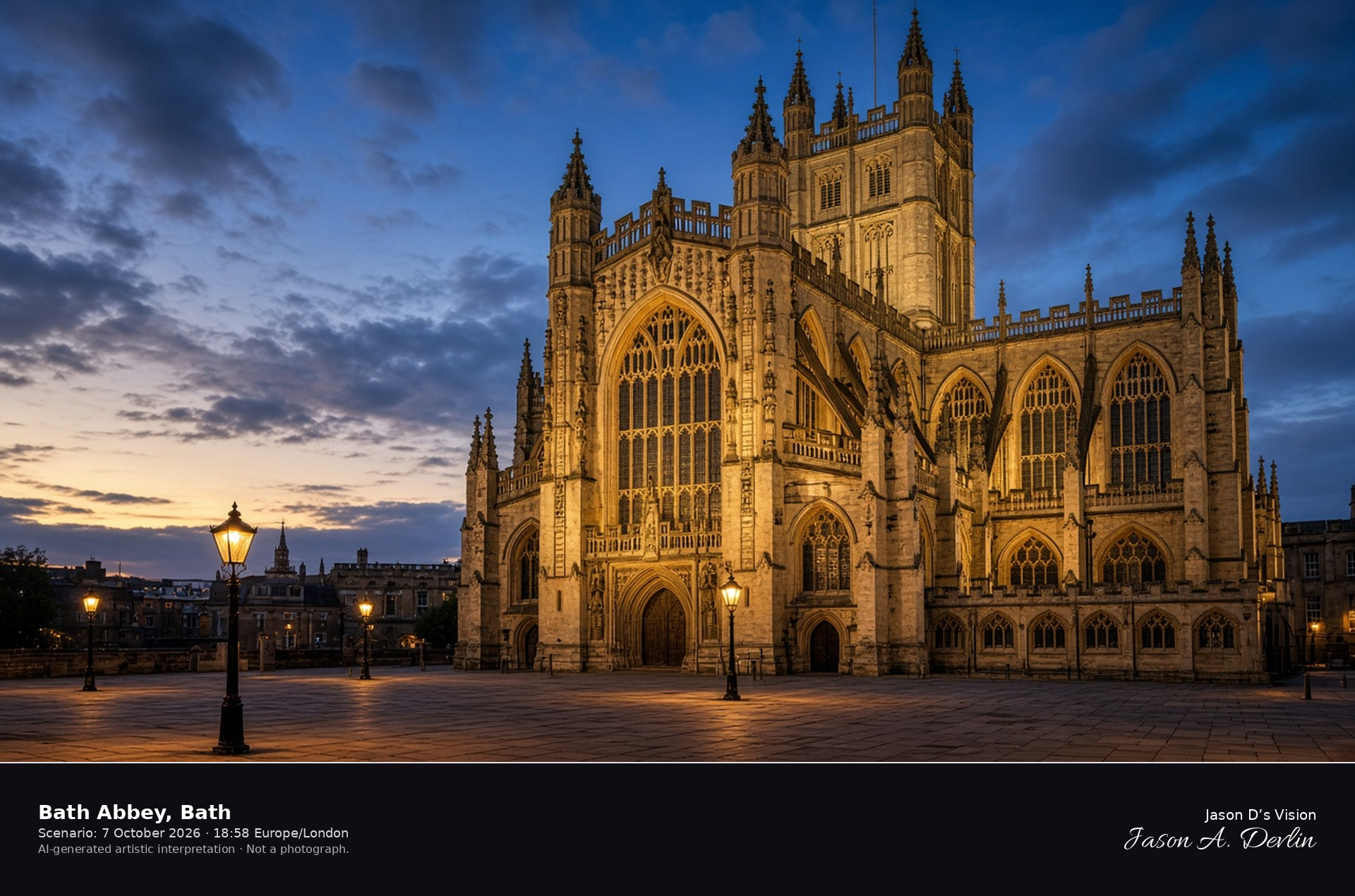
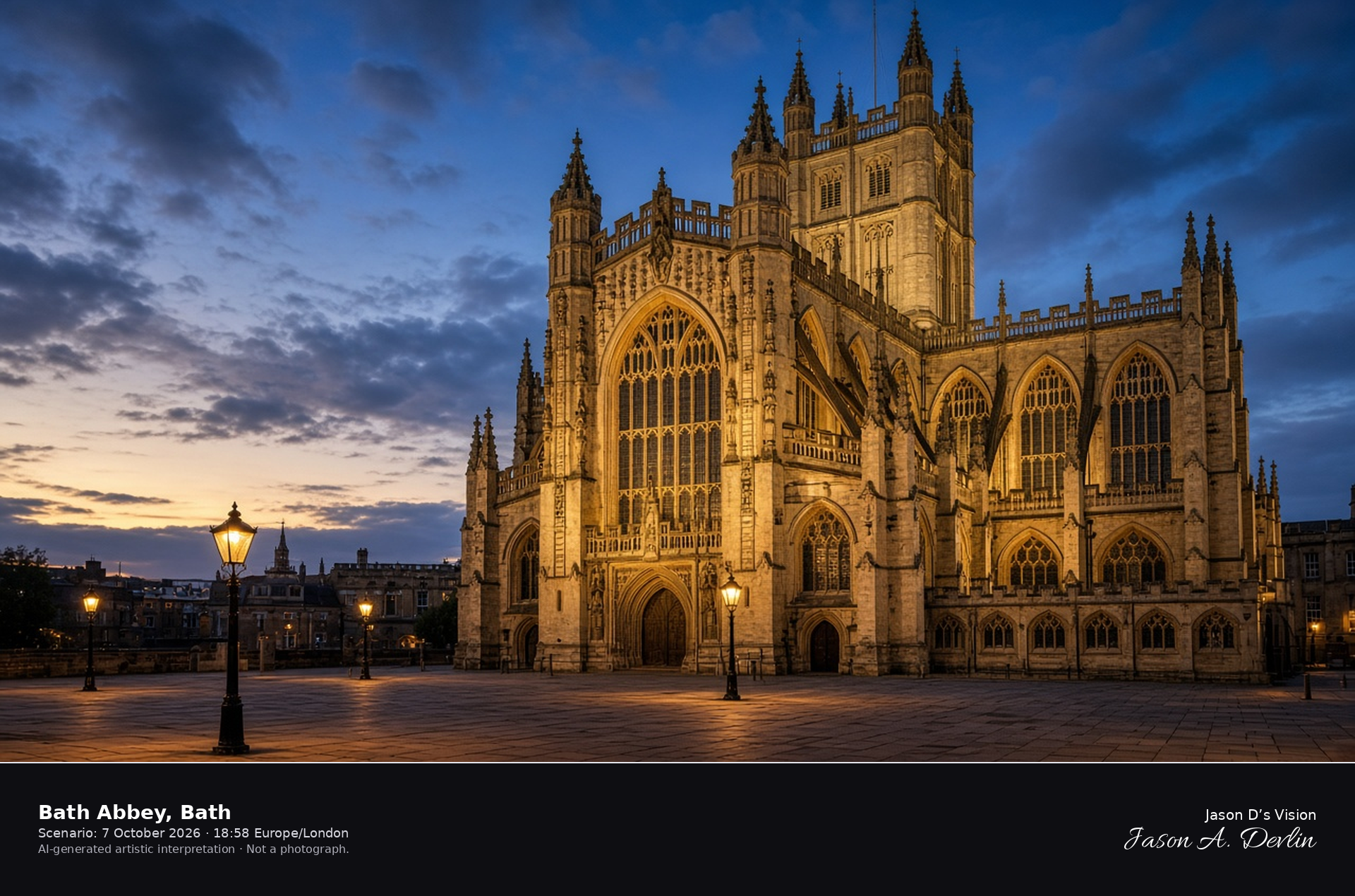
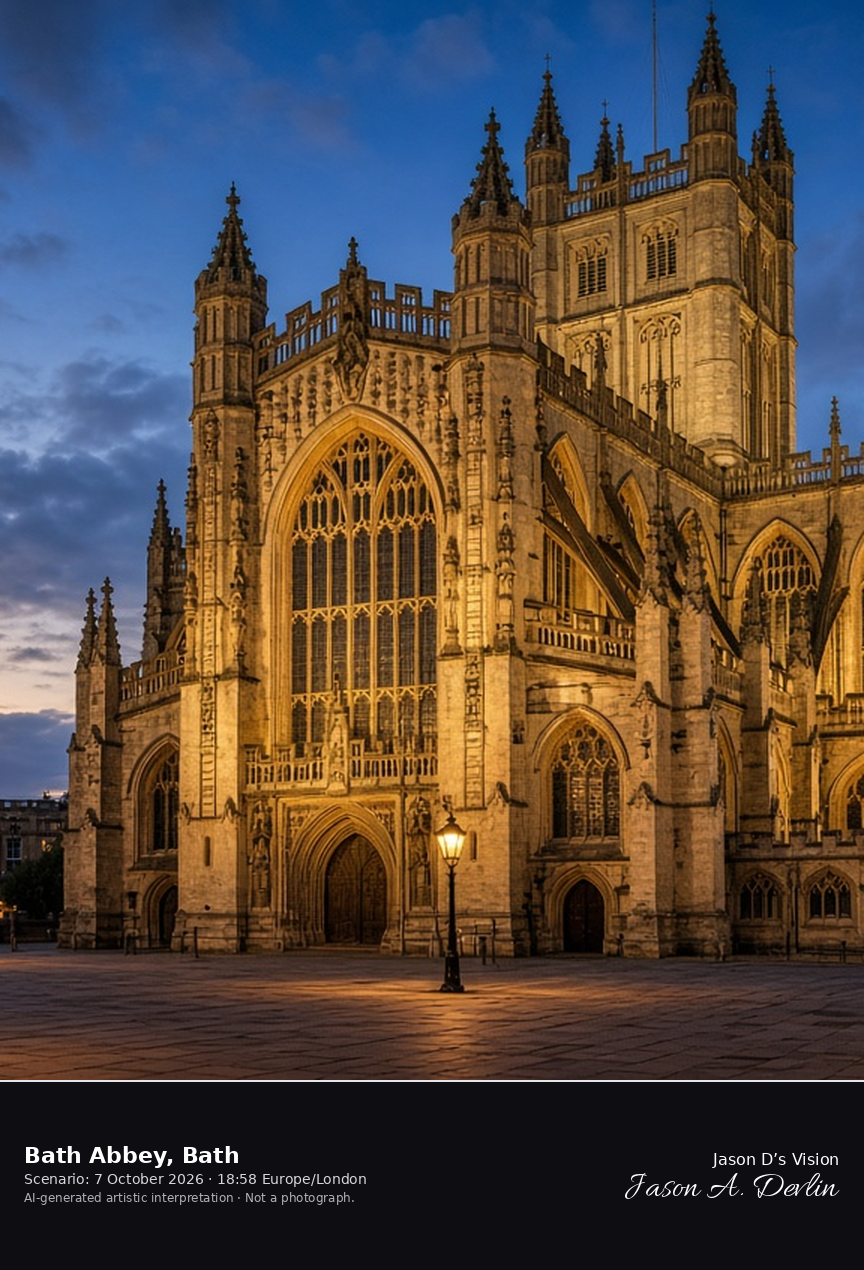
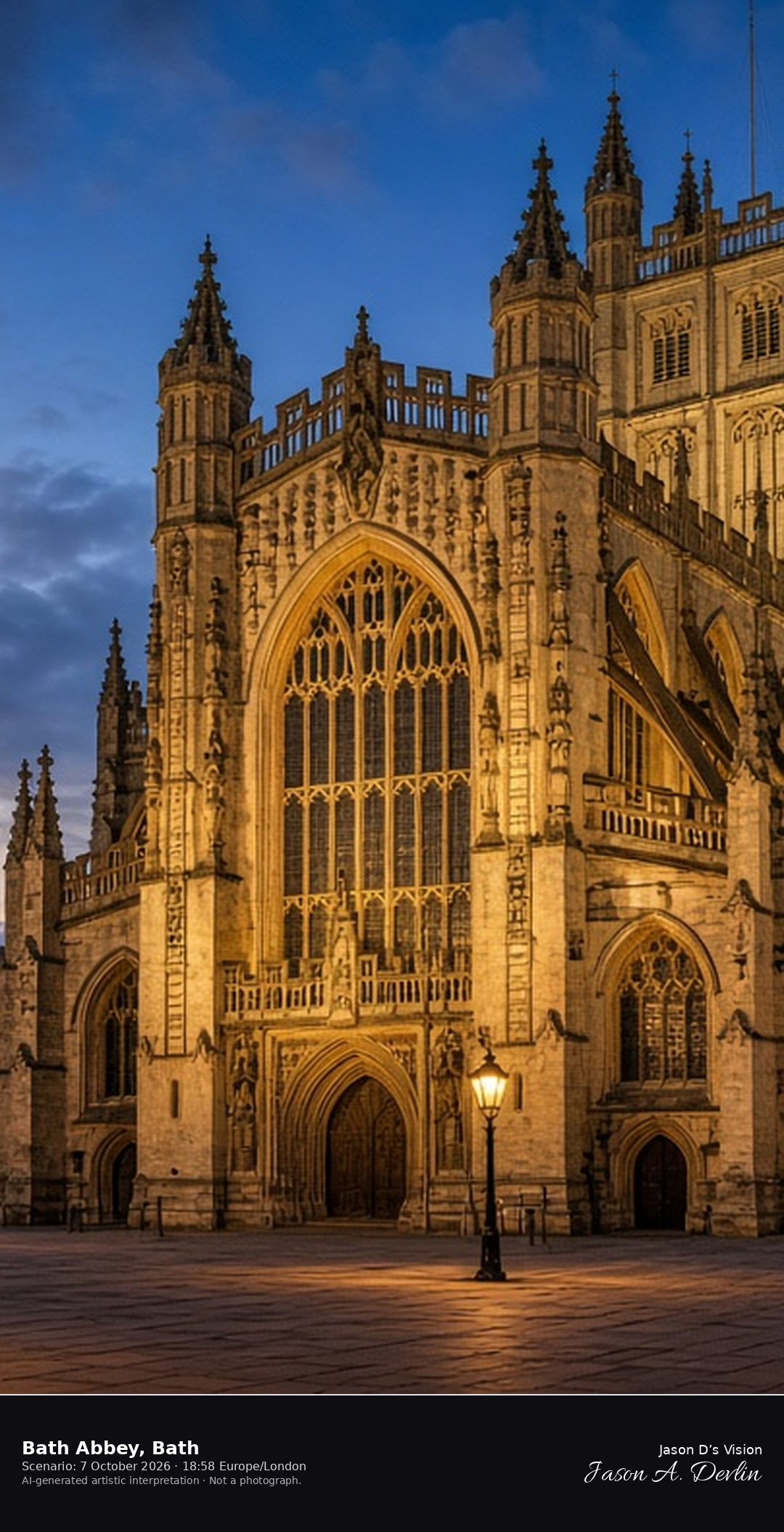
The present Bath Abbey was begun in 1499 on the site of earlier churches; the angel ladders on its west front recall a dream of its founder, Bishop Oliver King. It stands beside the Roman Baths in the heart of Bath.
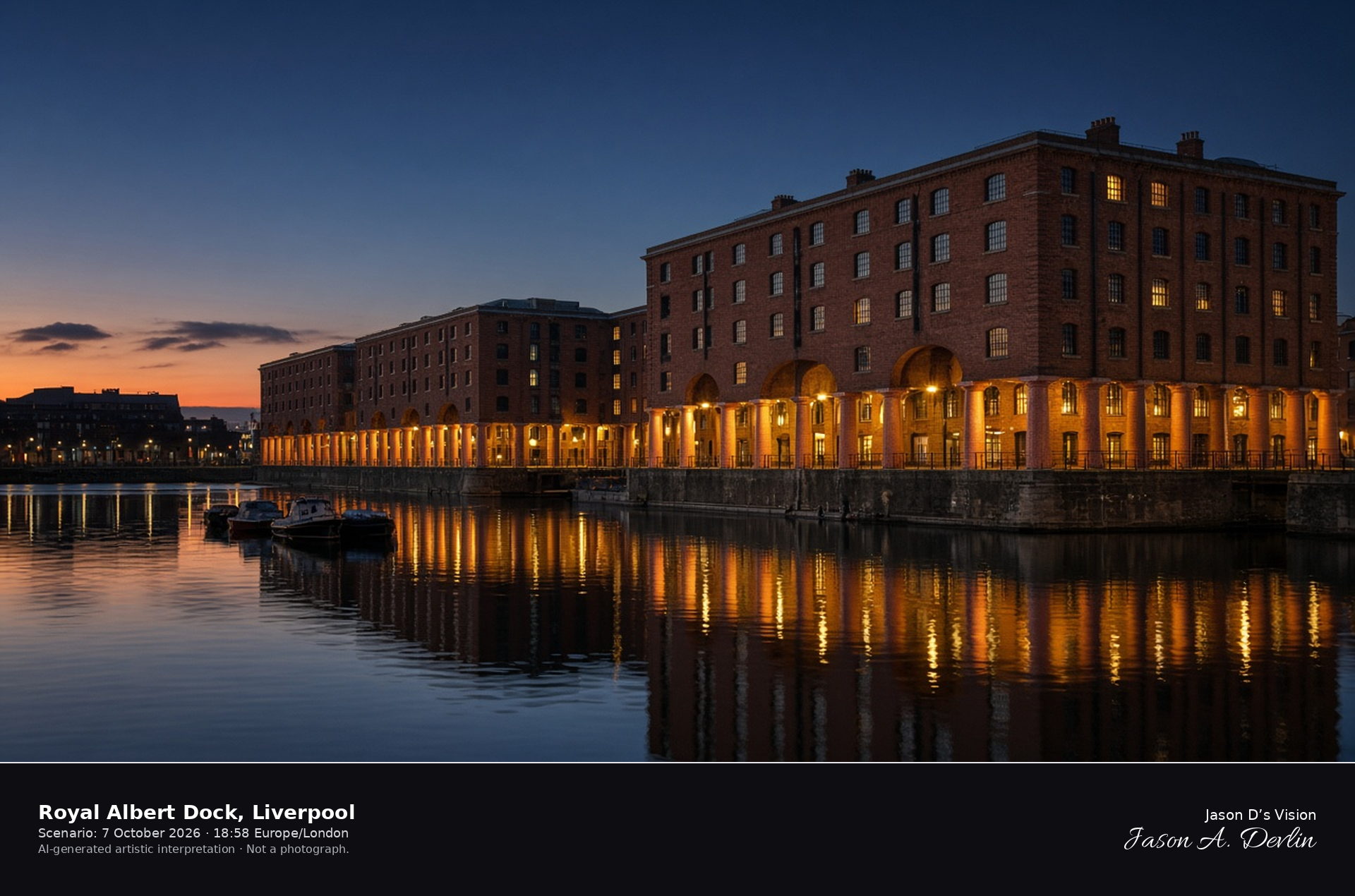
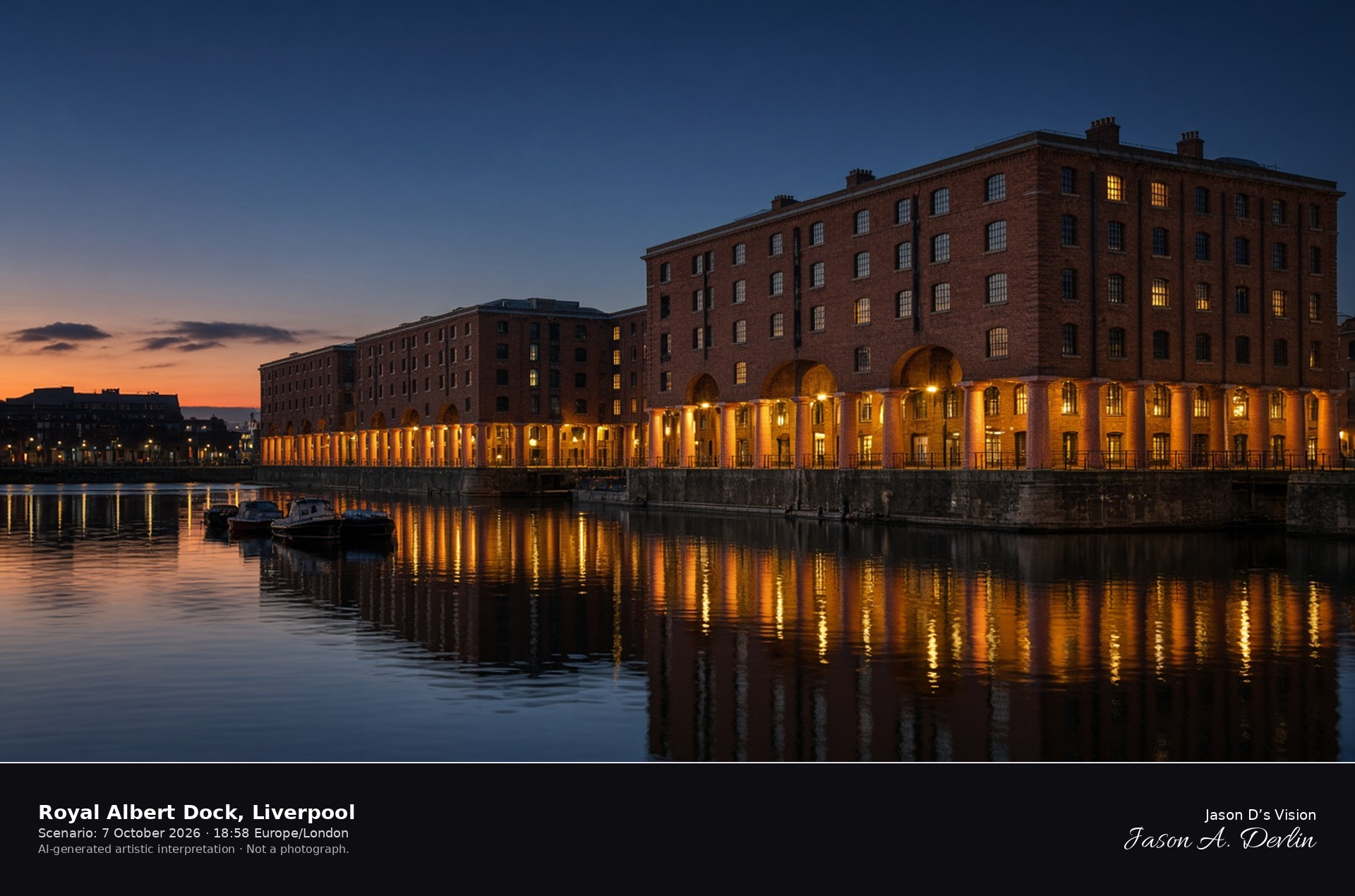
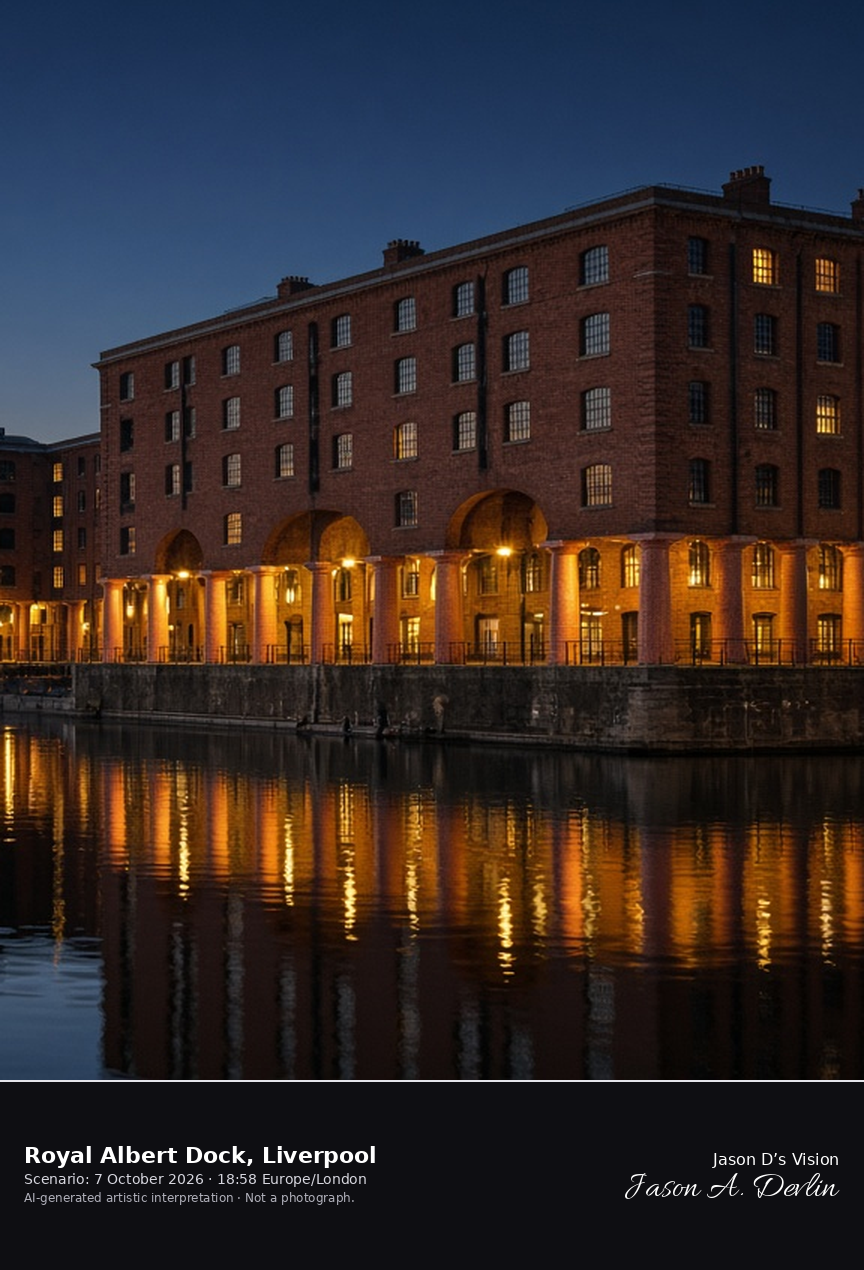
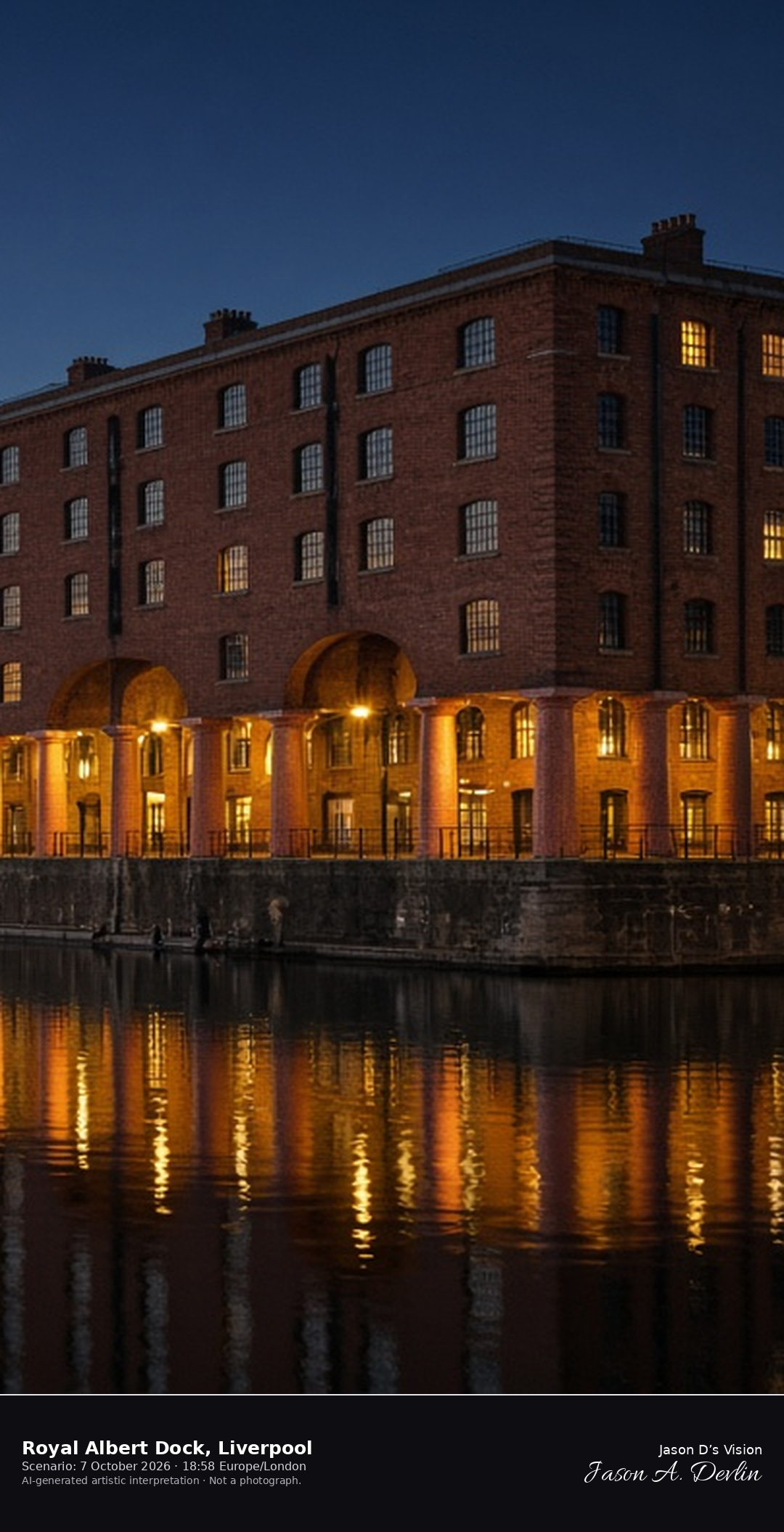
Royal Albert Dock, Liverpool · AI-generated artistic interpretation
The Royal Albert Dock opened in 1846 and was the first structure in Britain built of cast iron, brick and stone with no structural wood. It is the largest group of Grade I listed buildings in the UK.
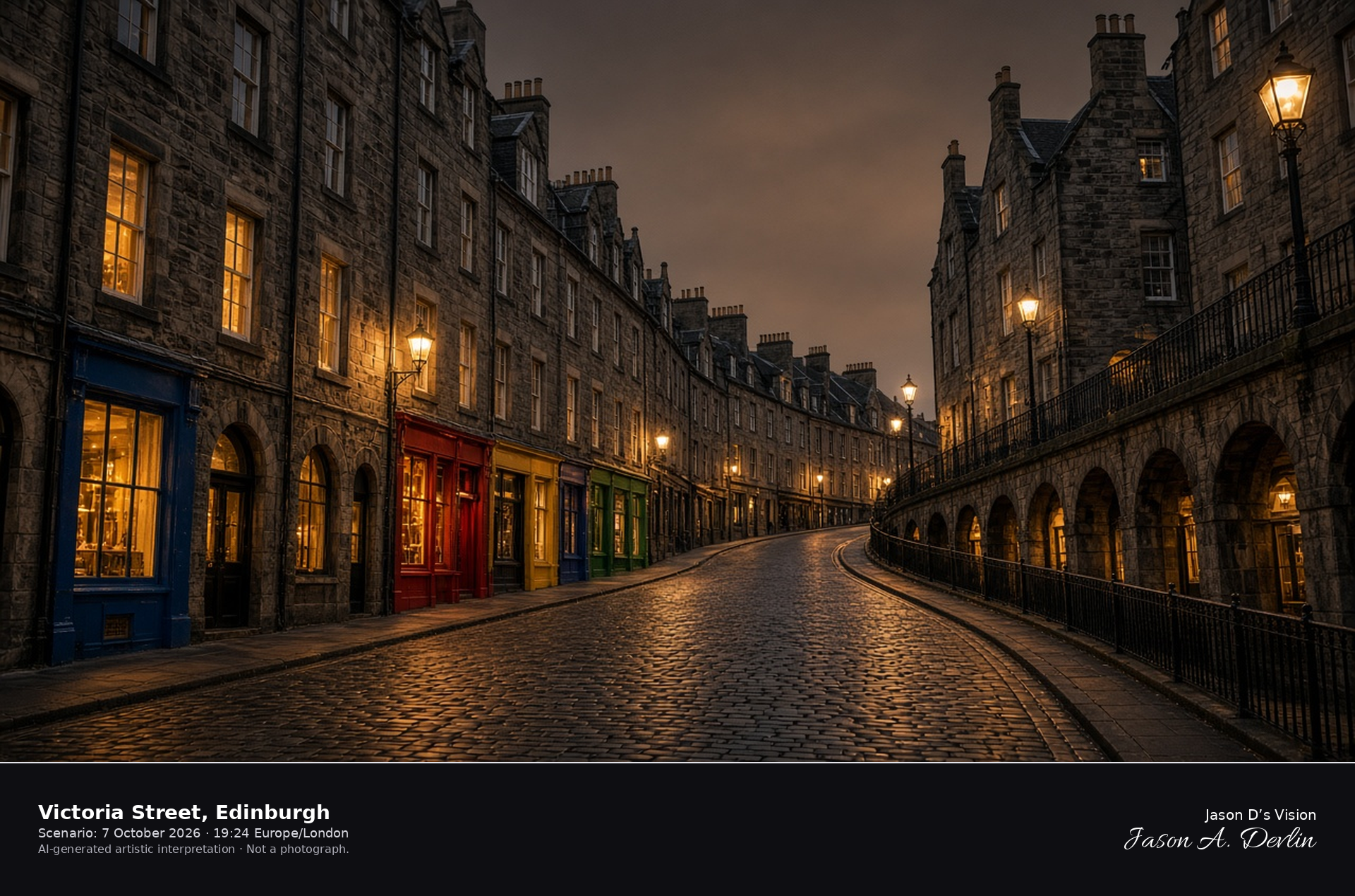
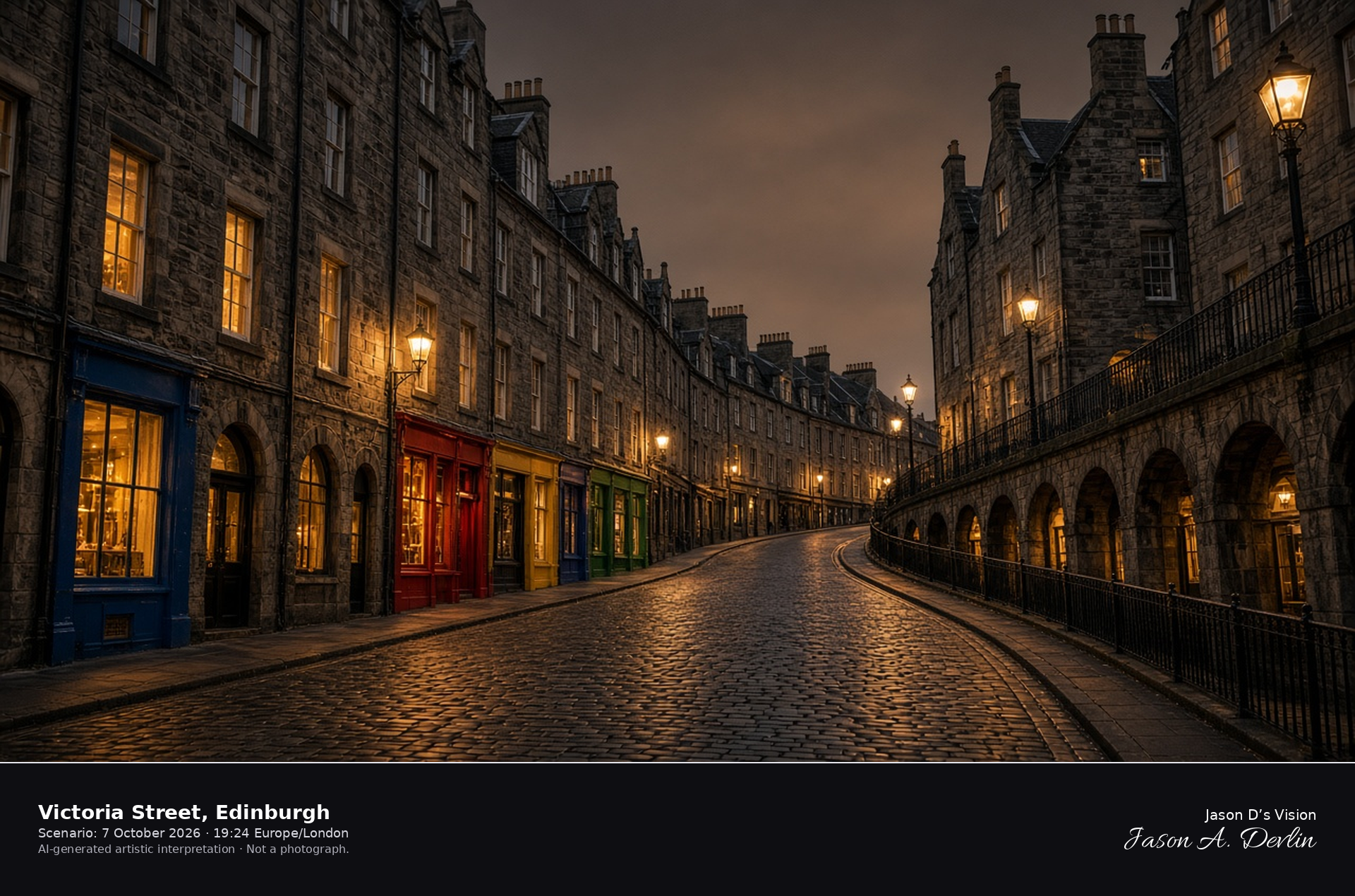
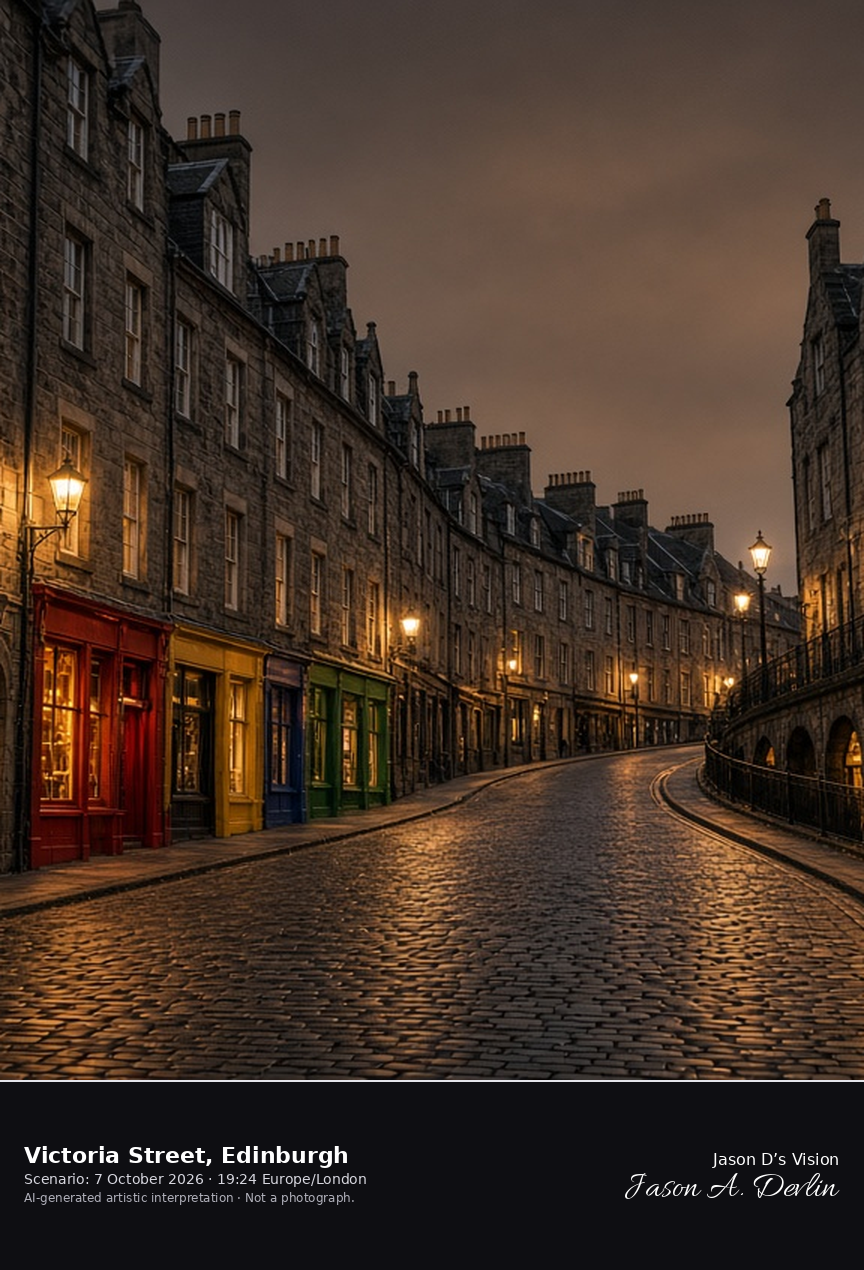
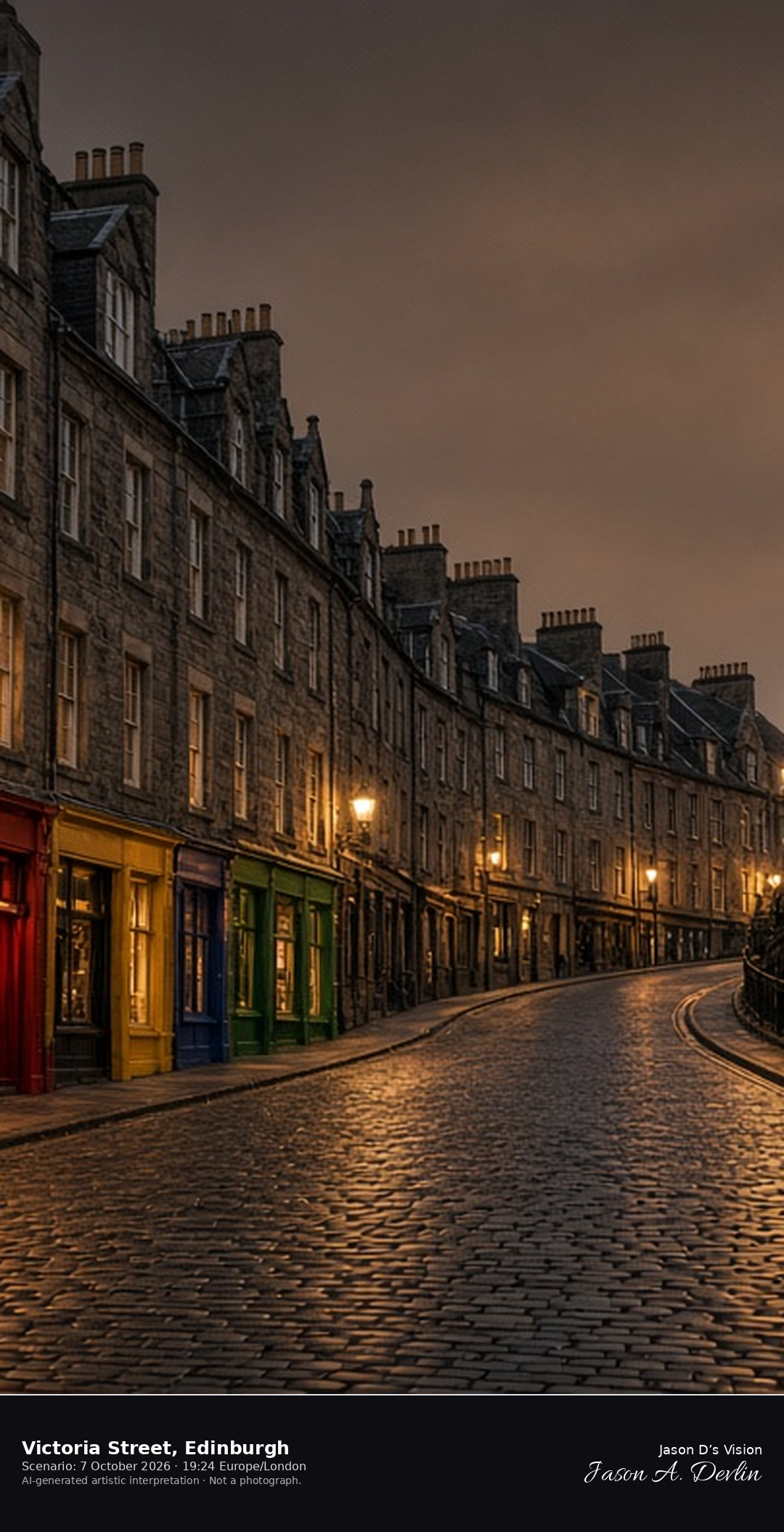
Victoria Street · AI-generated artistic interpretation
Victoria Street was built between 1829 and 1834, curving through Edinburgh's Old Town between the Grassmarket and George IV Bridge. Its colourful shopfronts remind many visitors of Diagon Alley in the Harry Potter books — an association, rather than proof that the street inspired the novels.
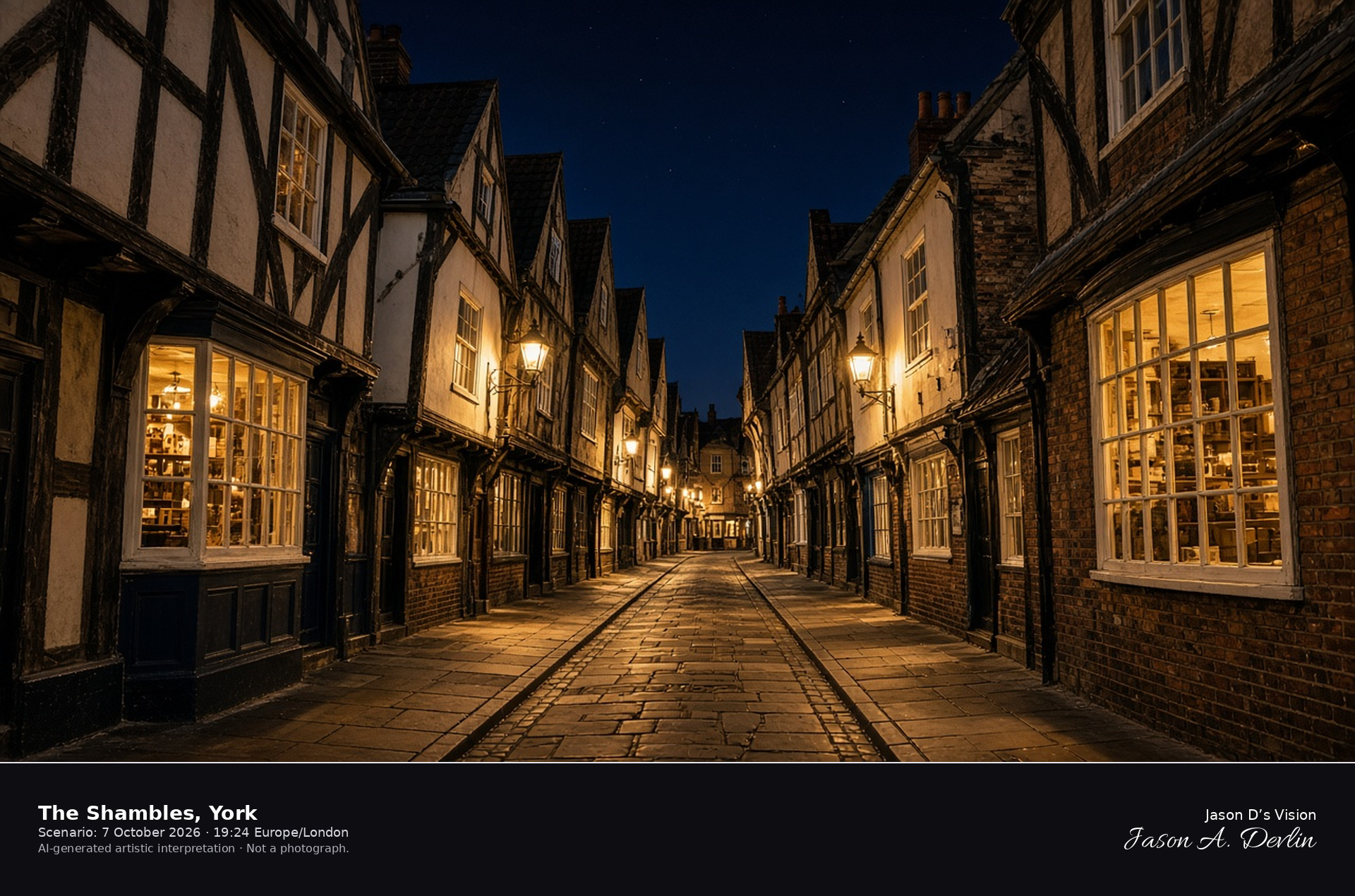
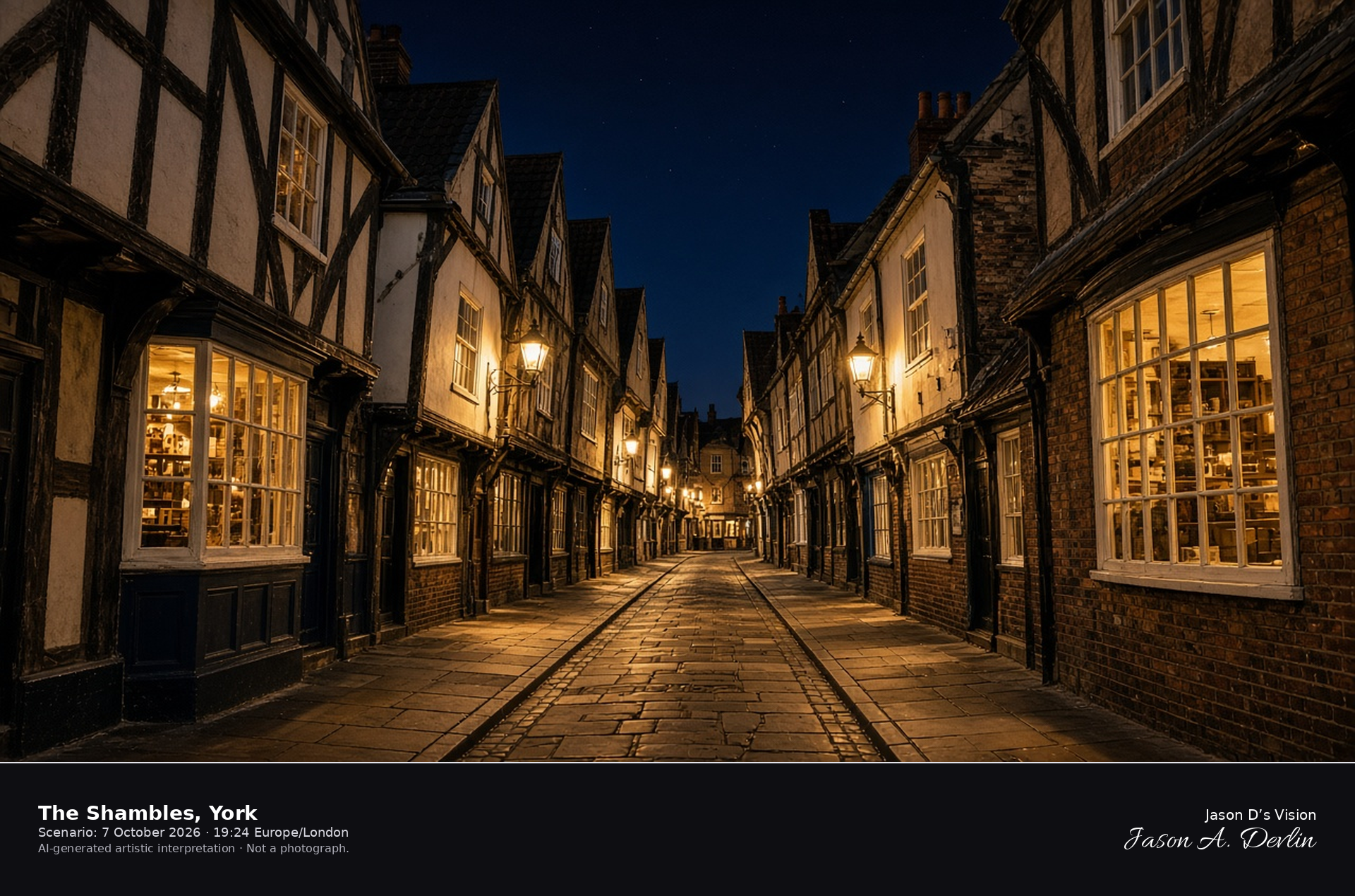
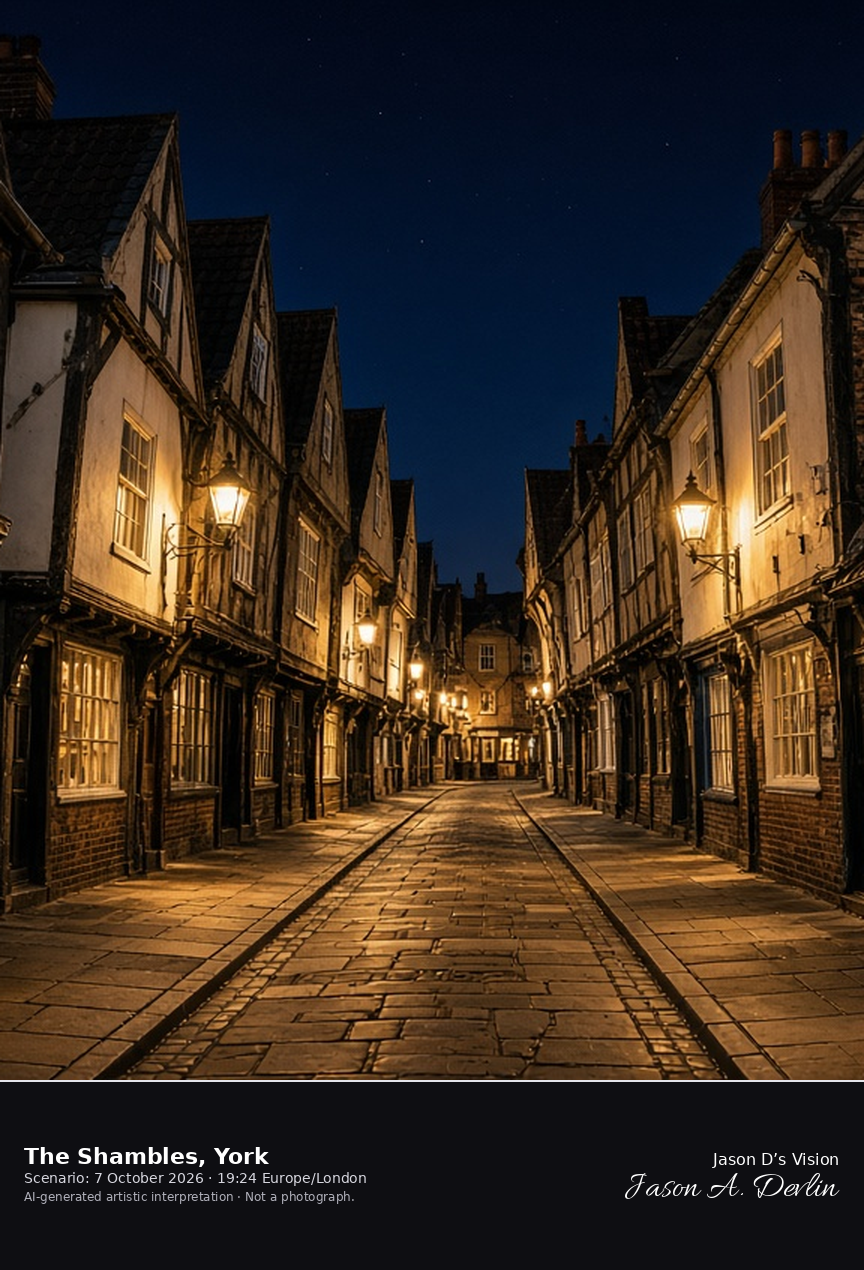
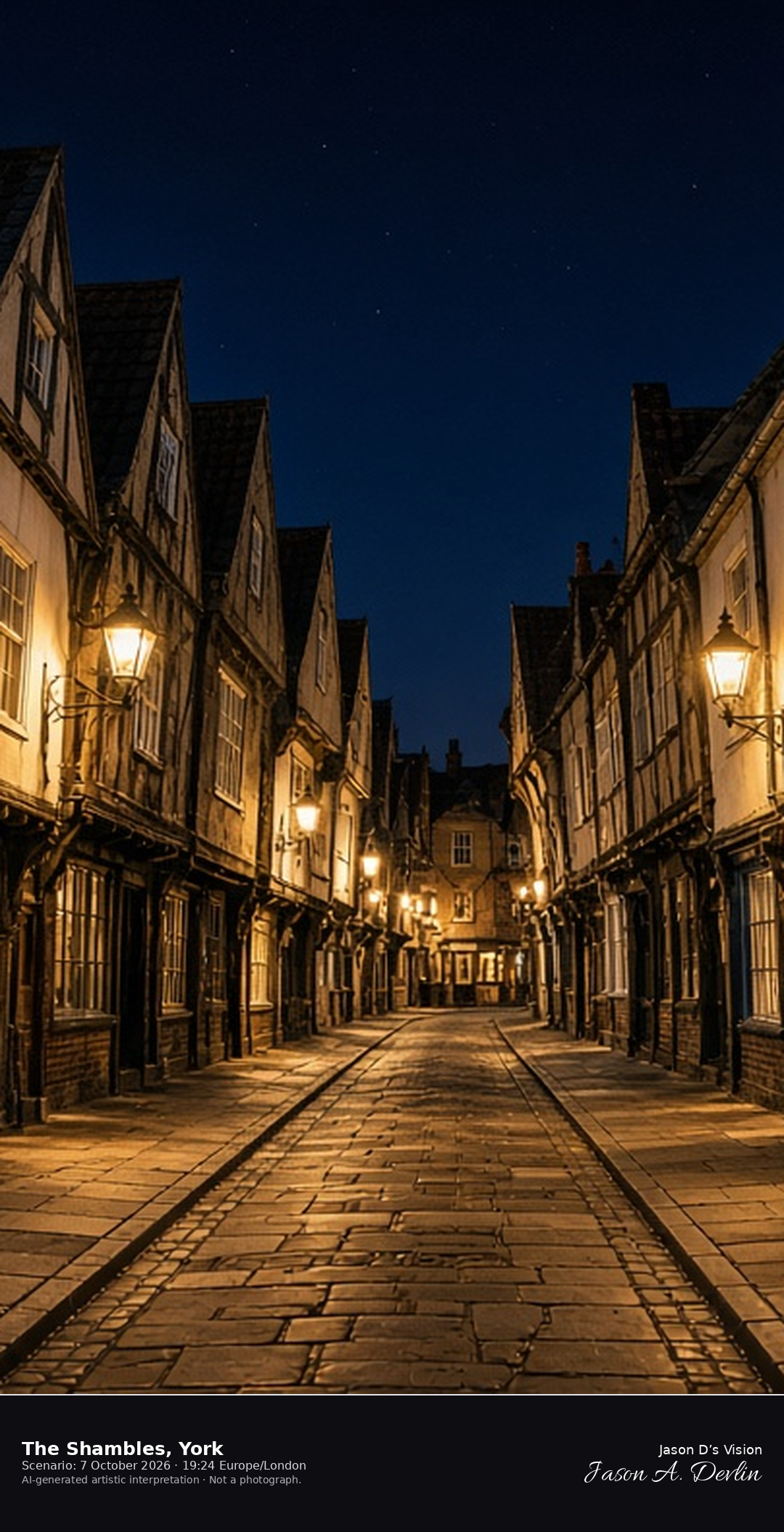
The Shambles, York · AI-generated artistic interpretation
The Shambles takes its name from the butchers' stalls, or shambles, that once lined it, and some of its buildings date from the fourteenth century. It is one of the best-preserved medieval streets in England.
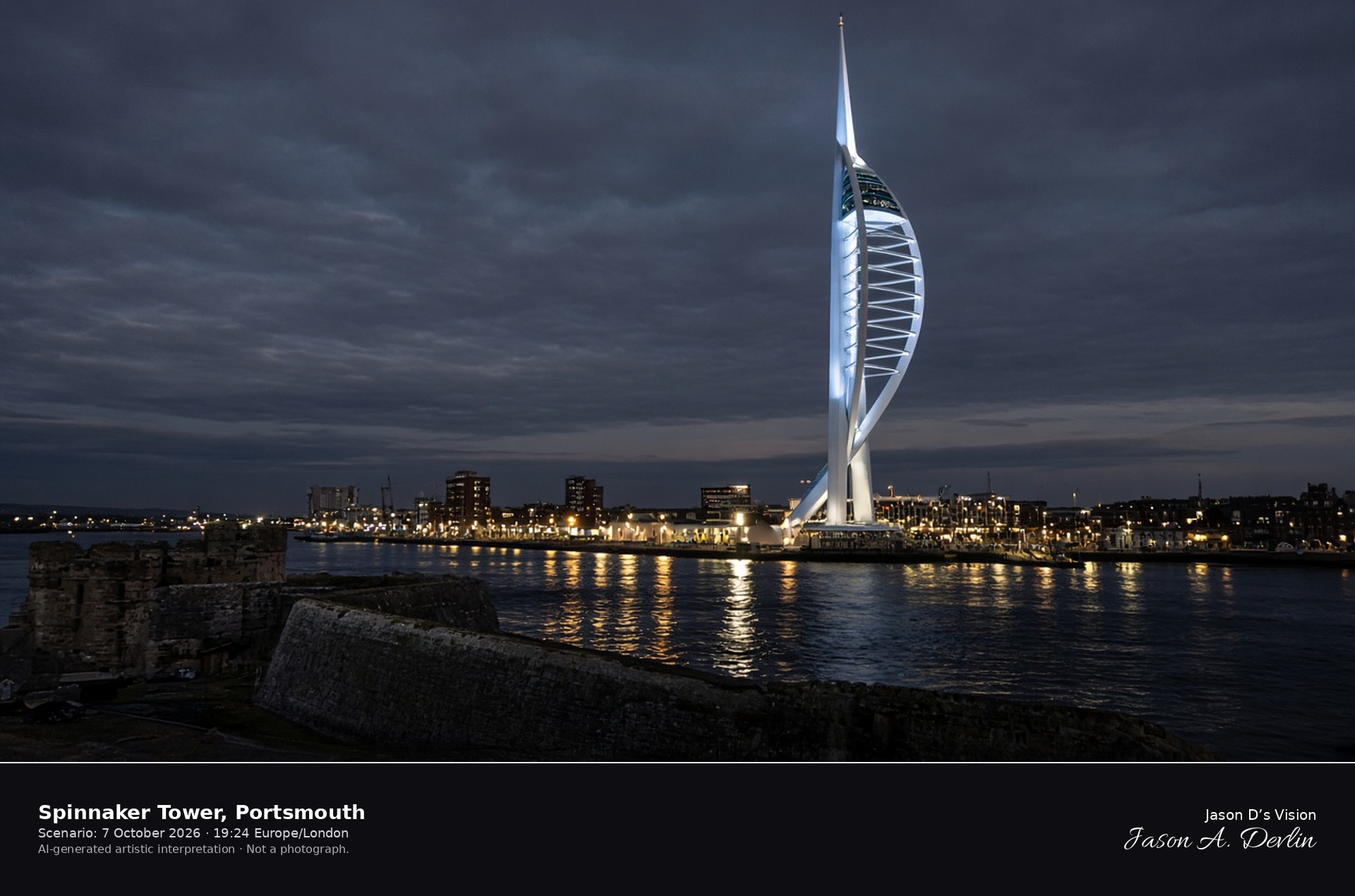
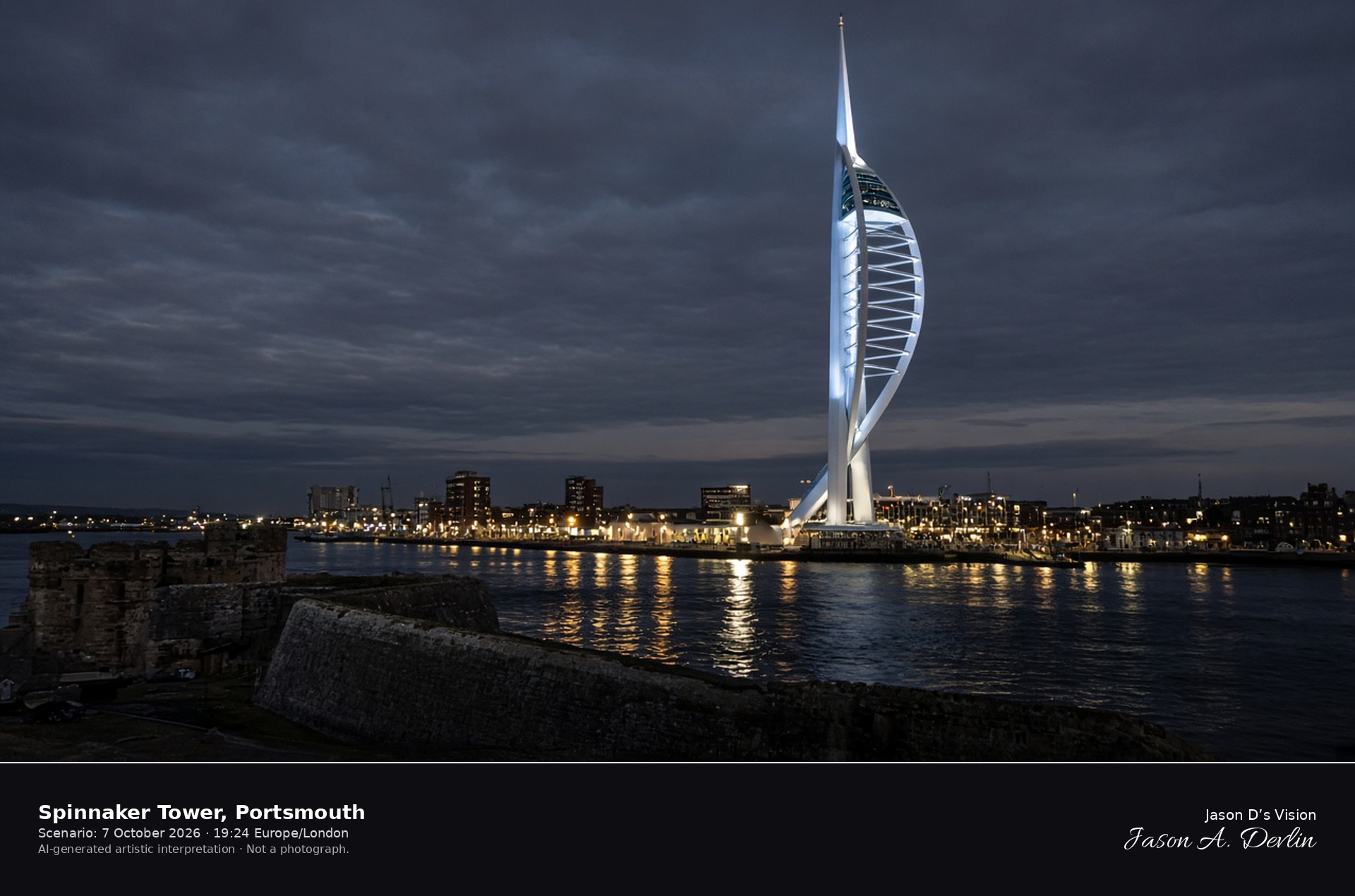
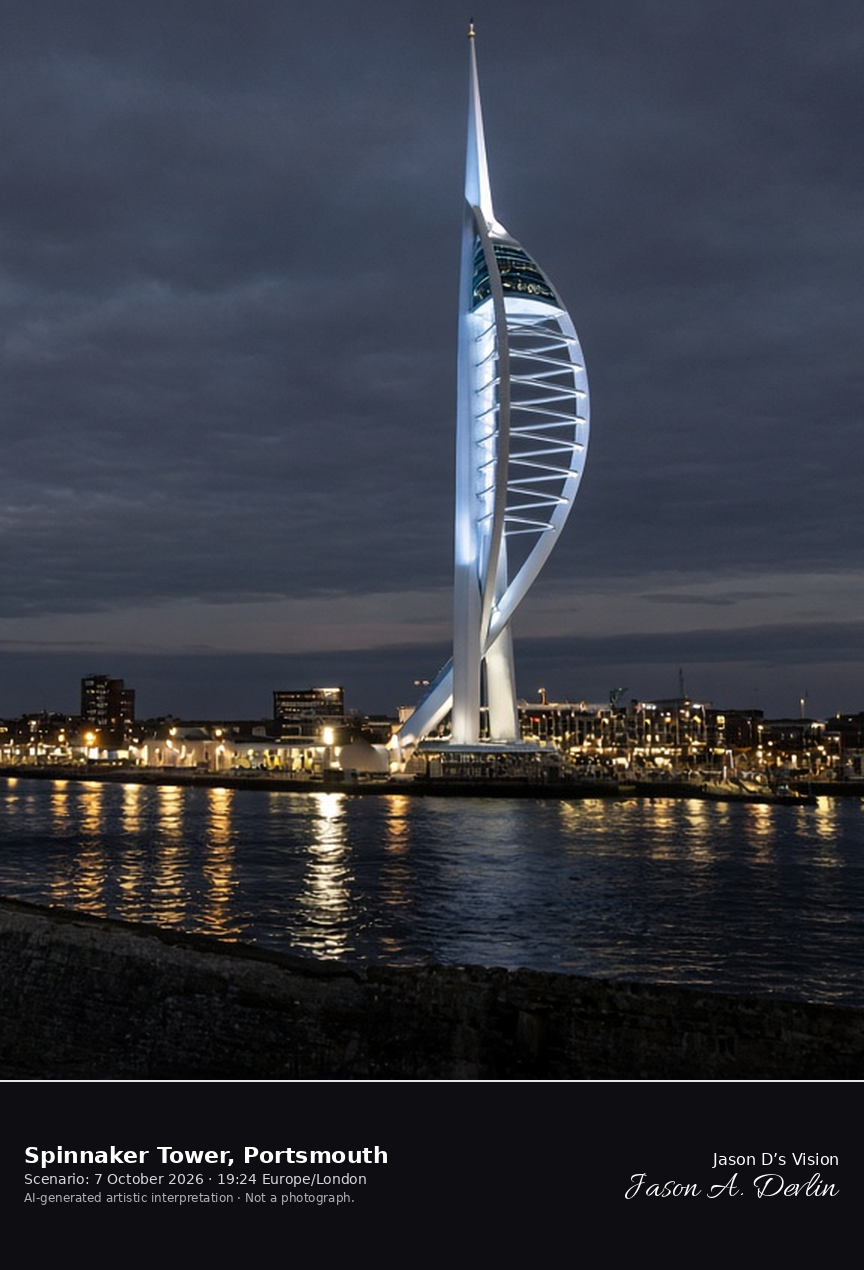
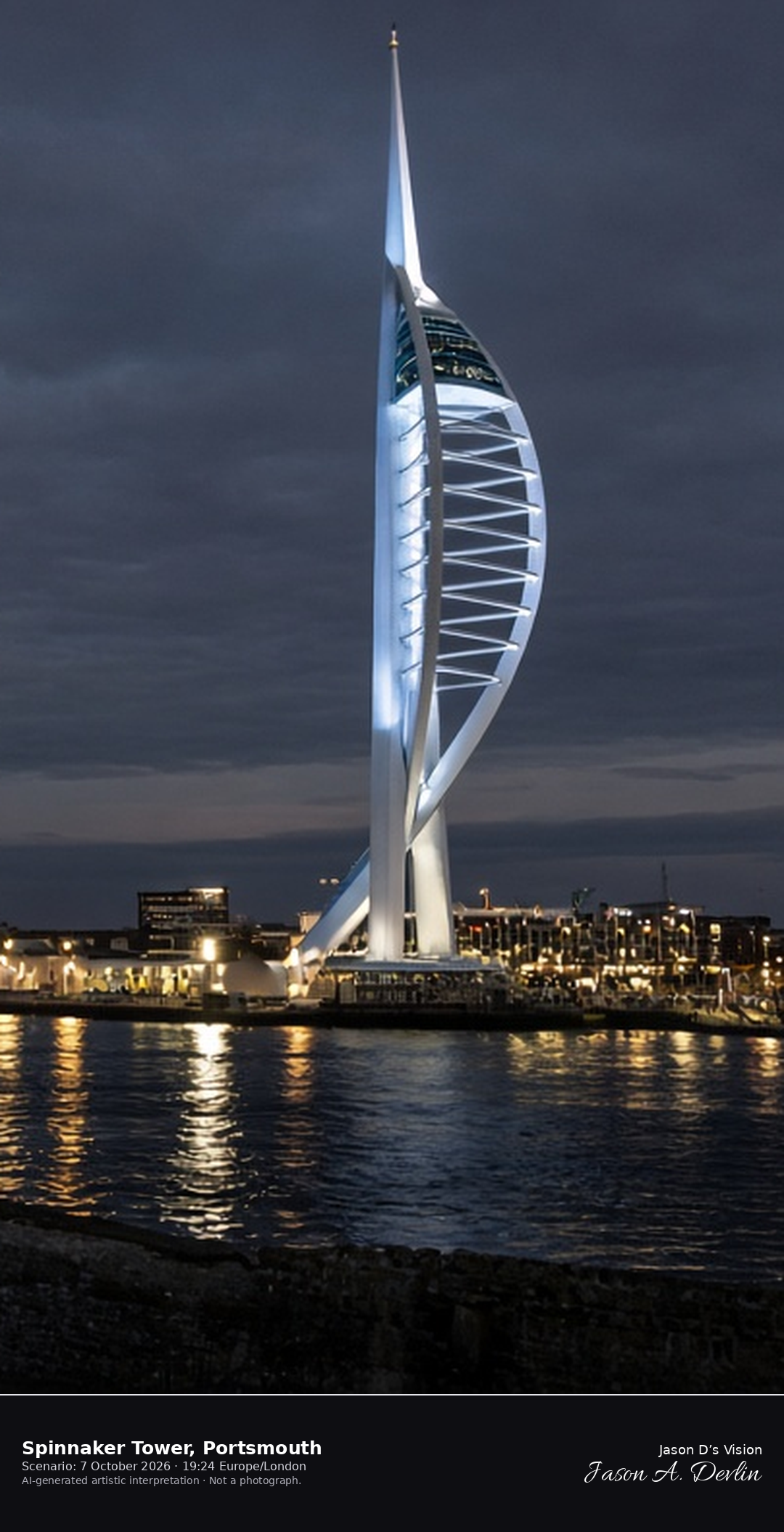
The Spinnaker Tower opened in 2005 and stands 170 metres tall, designed to recall a sail billowing in the wind. Its viewing decks look out over the harbour and the Solent.
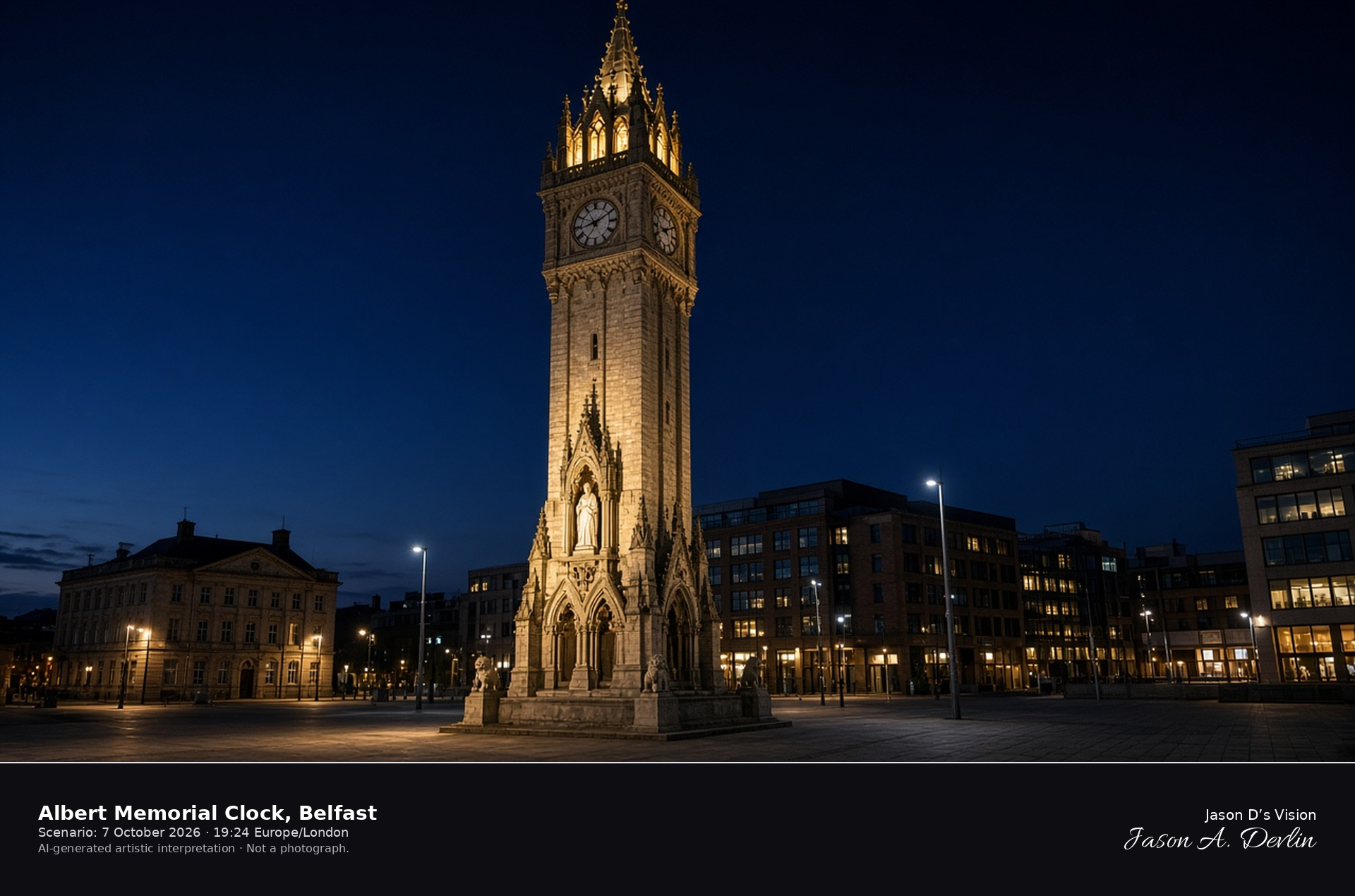
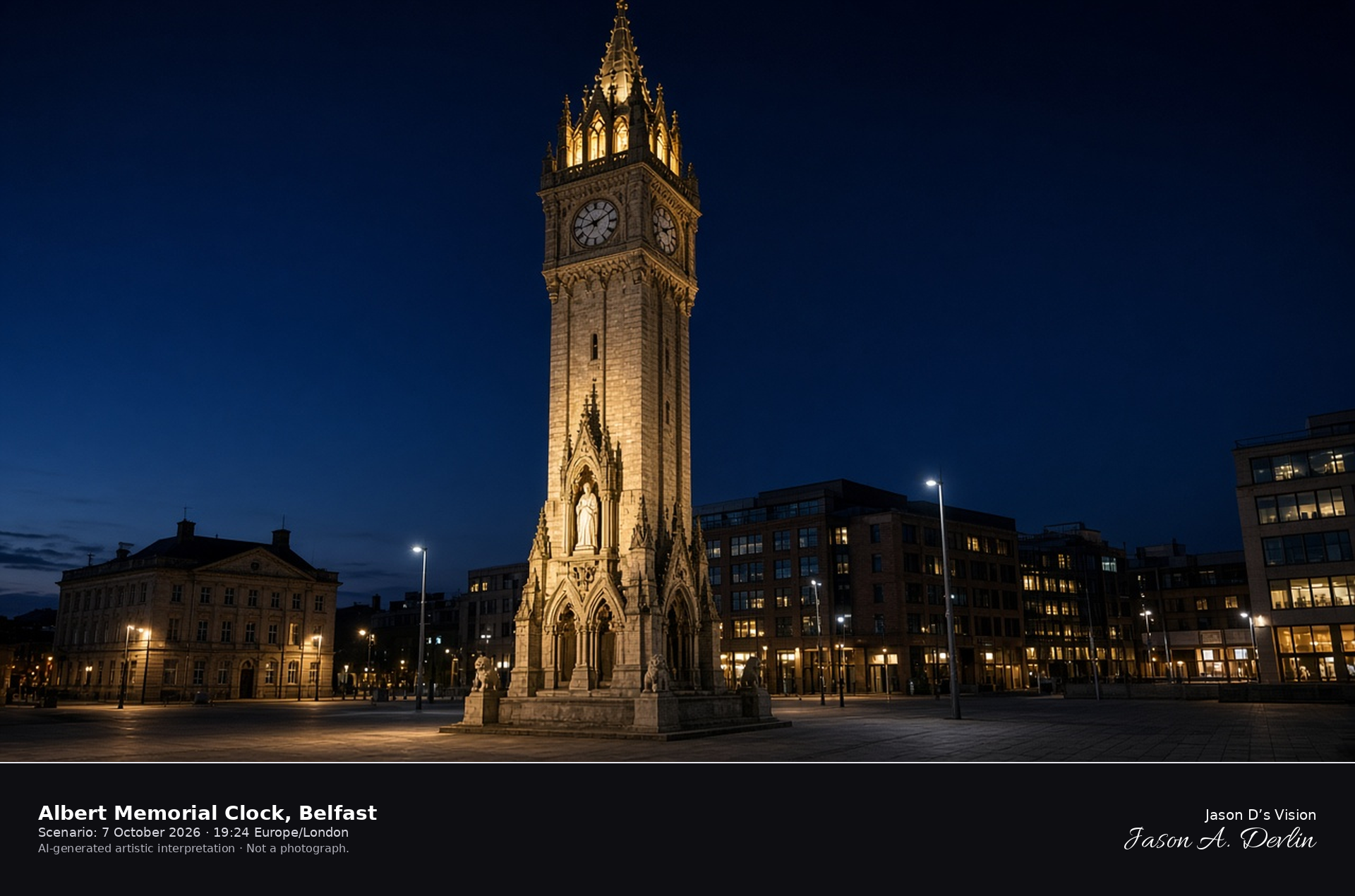
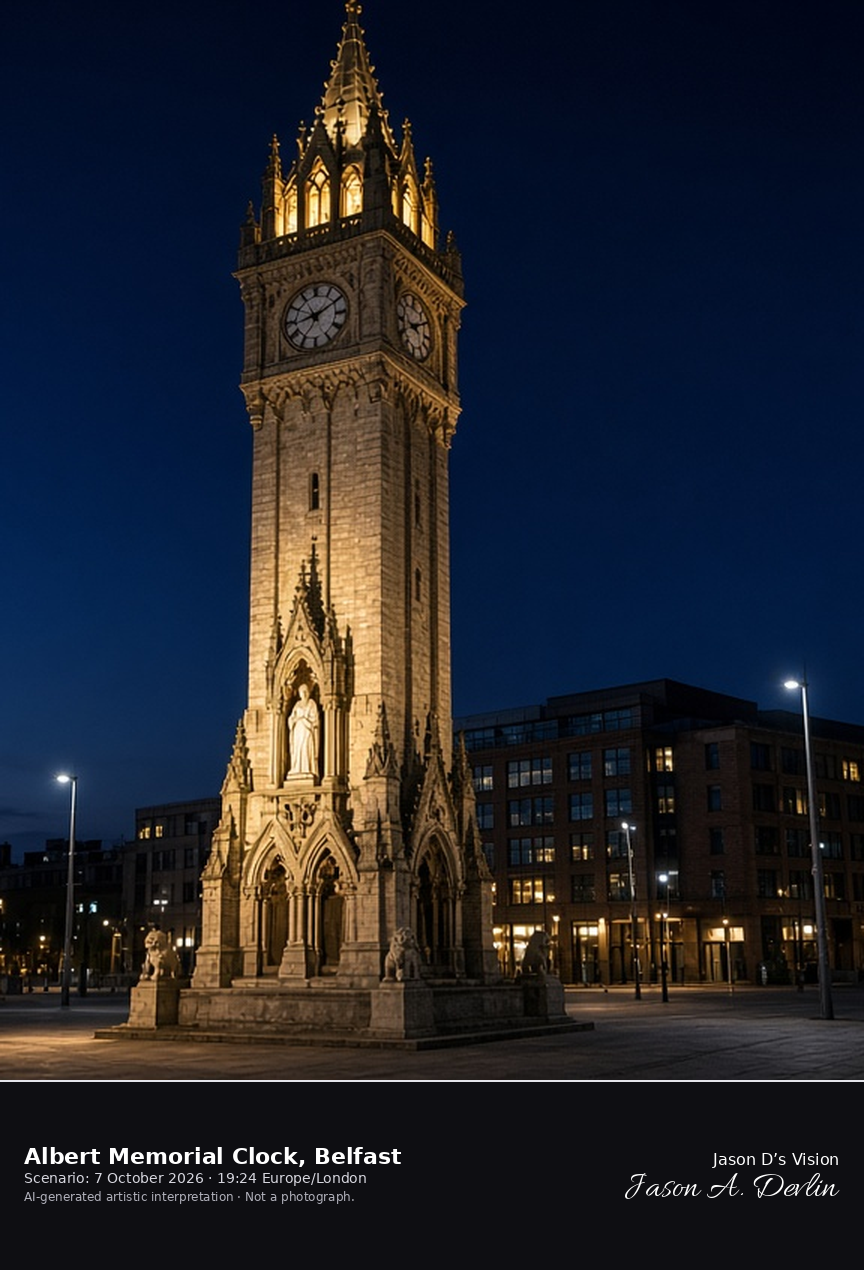
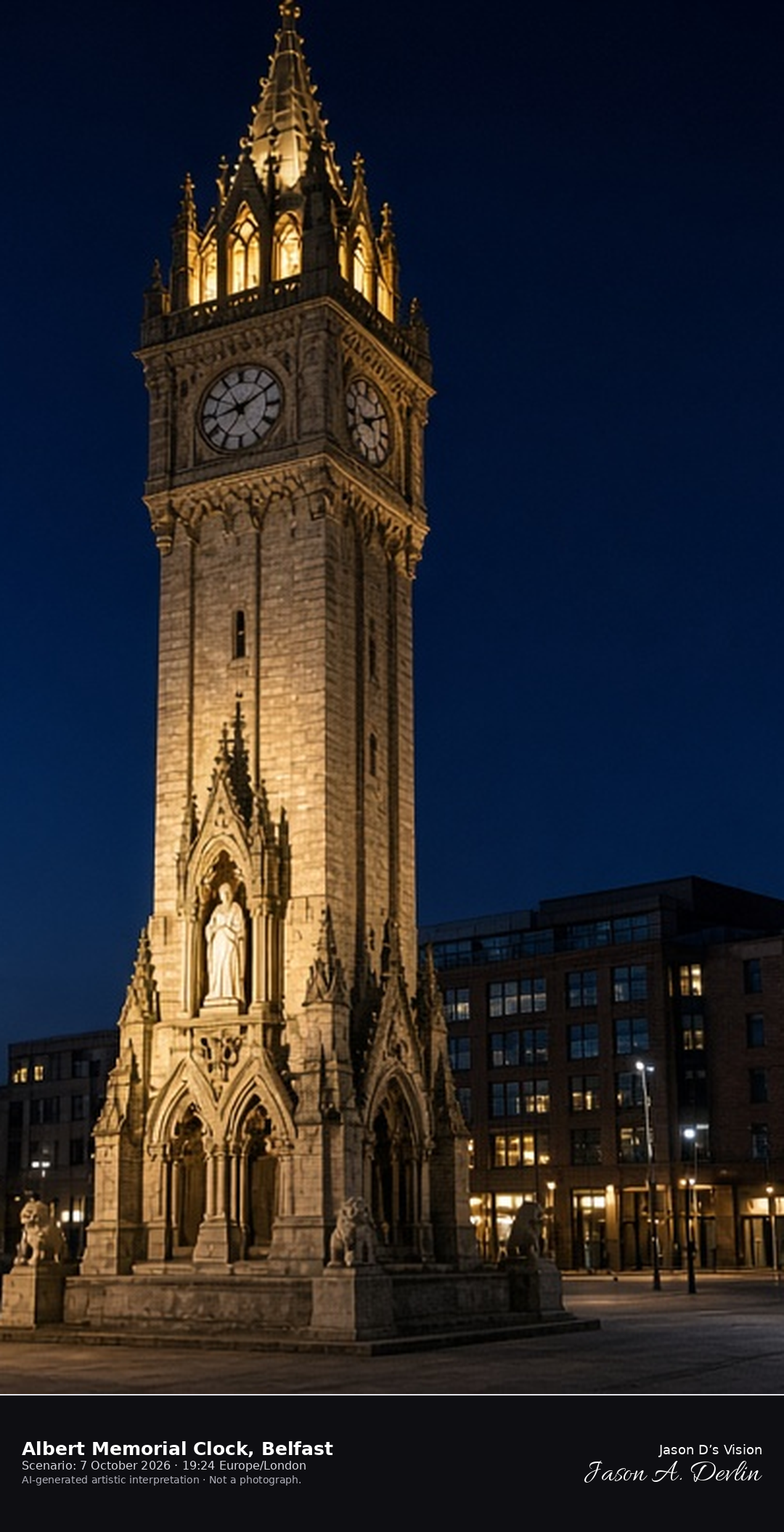
Albert Memorial Clock · AI-generated artistic interpretation
Belfast's Albert Clock, completed in 1869 as the city's memorial to Prince Albert, leans some four feet from the vertical. Its timber foundation piles settled into the reclaimed marsh of the little River Farset, giving Belfast a leaning tower of its own.
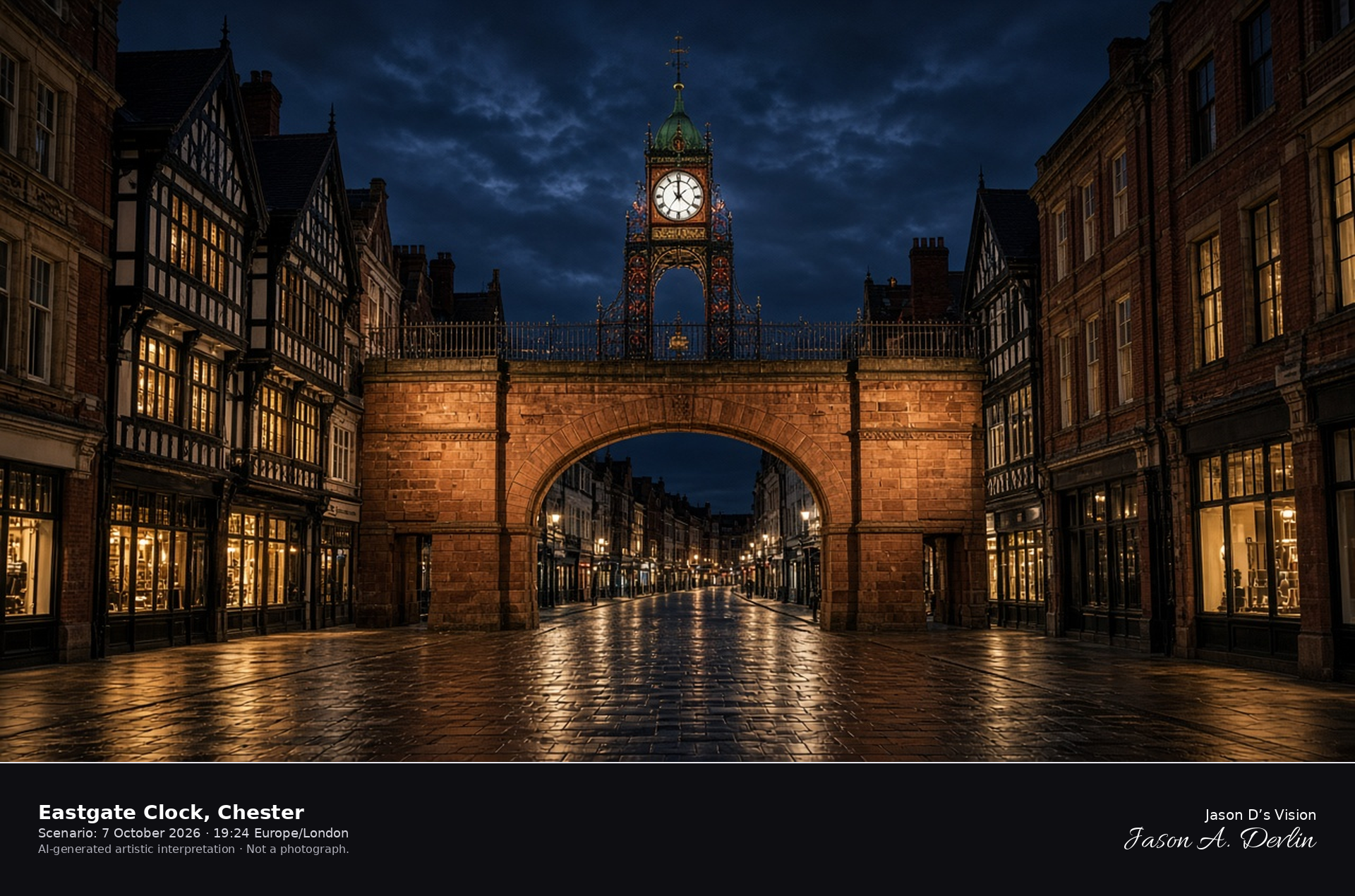
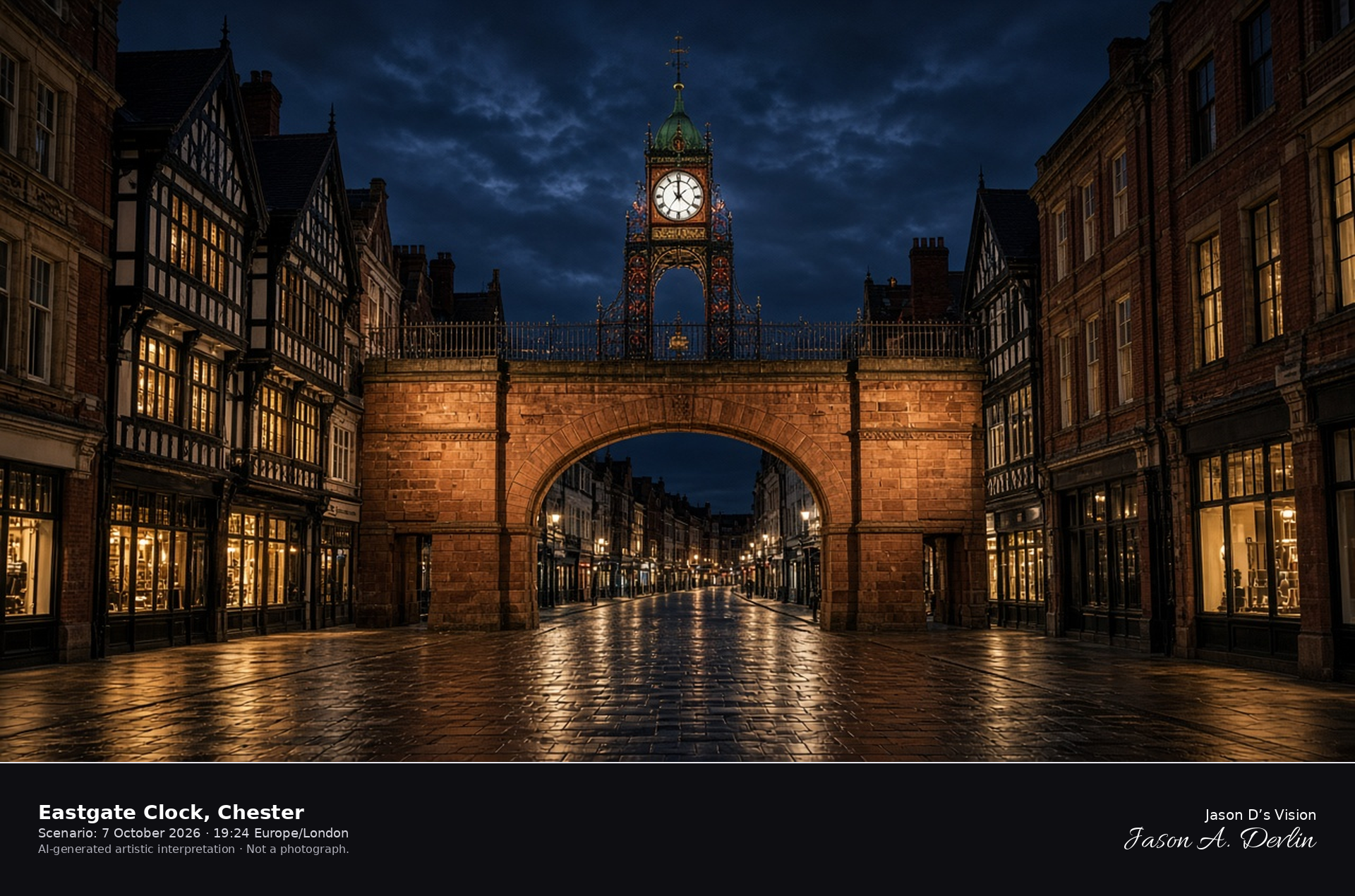
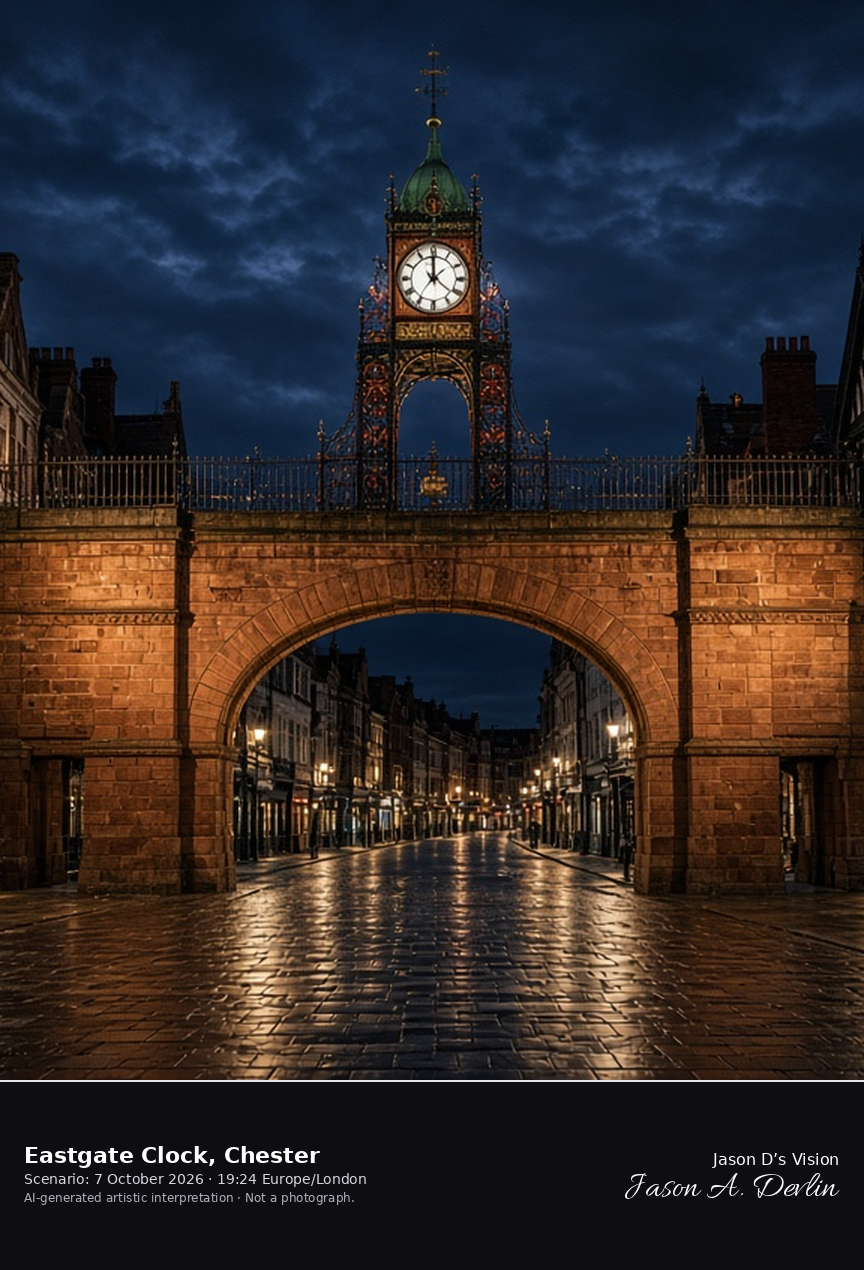
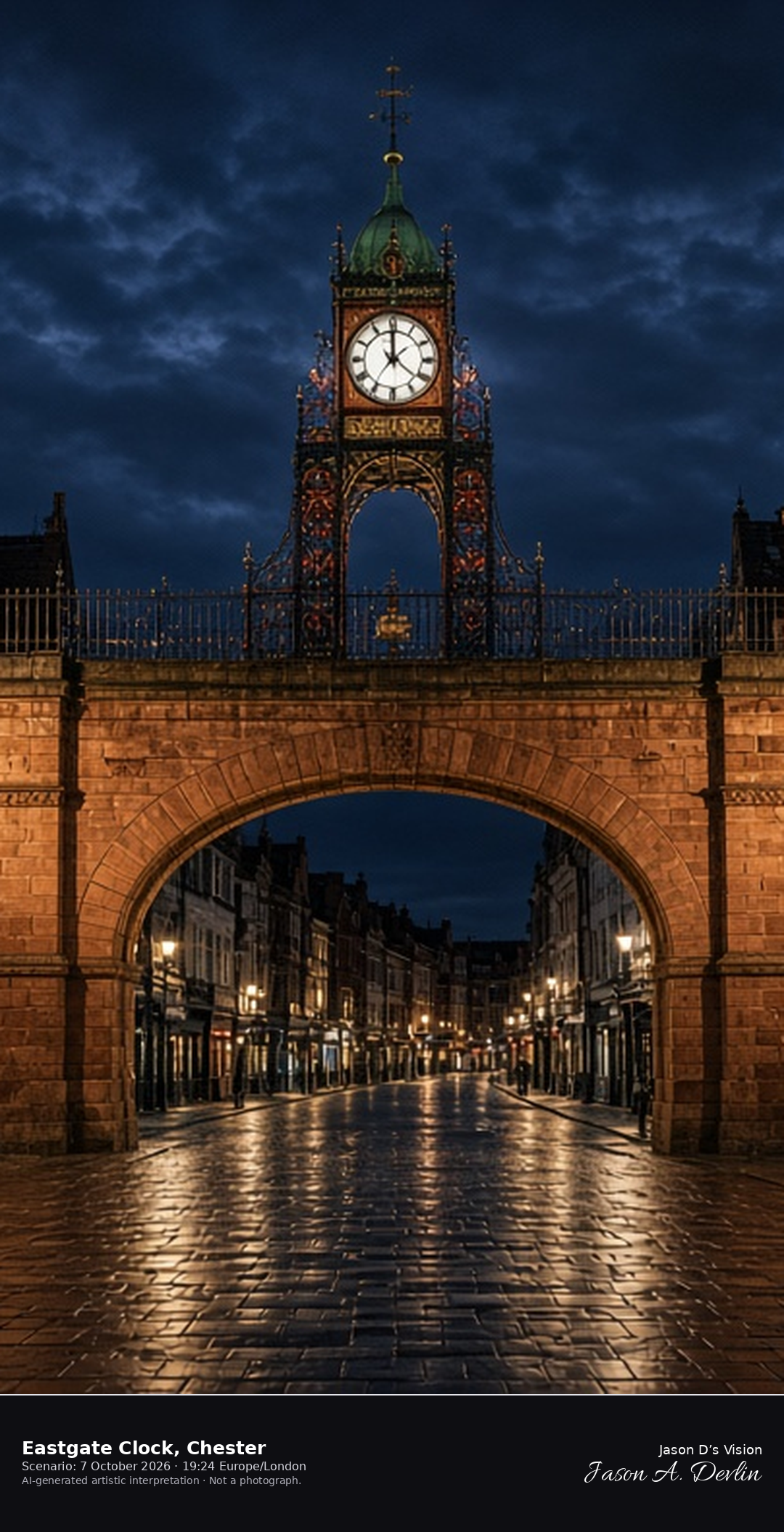
The Eastgate Clock was raised in 1899 to crown Queen Victoria's Diamond Jubilee, standing upon the gateway where the Roman legionary fortress had its eastern entrance. It is reputed, after Big Ben, the most photographed clock in England.
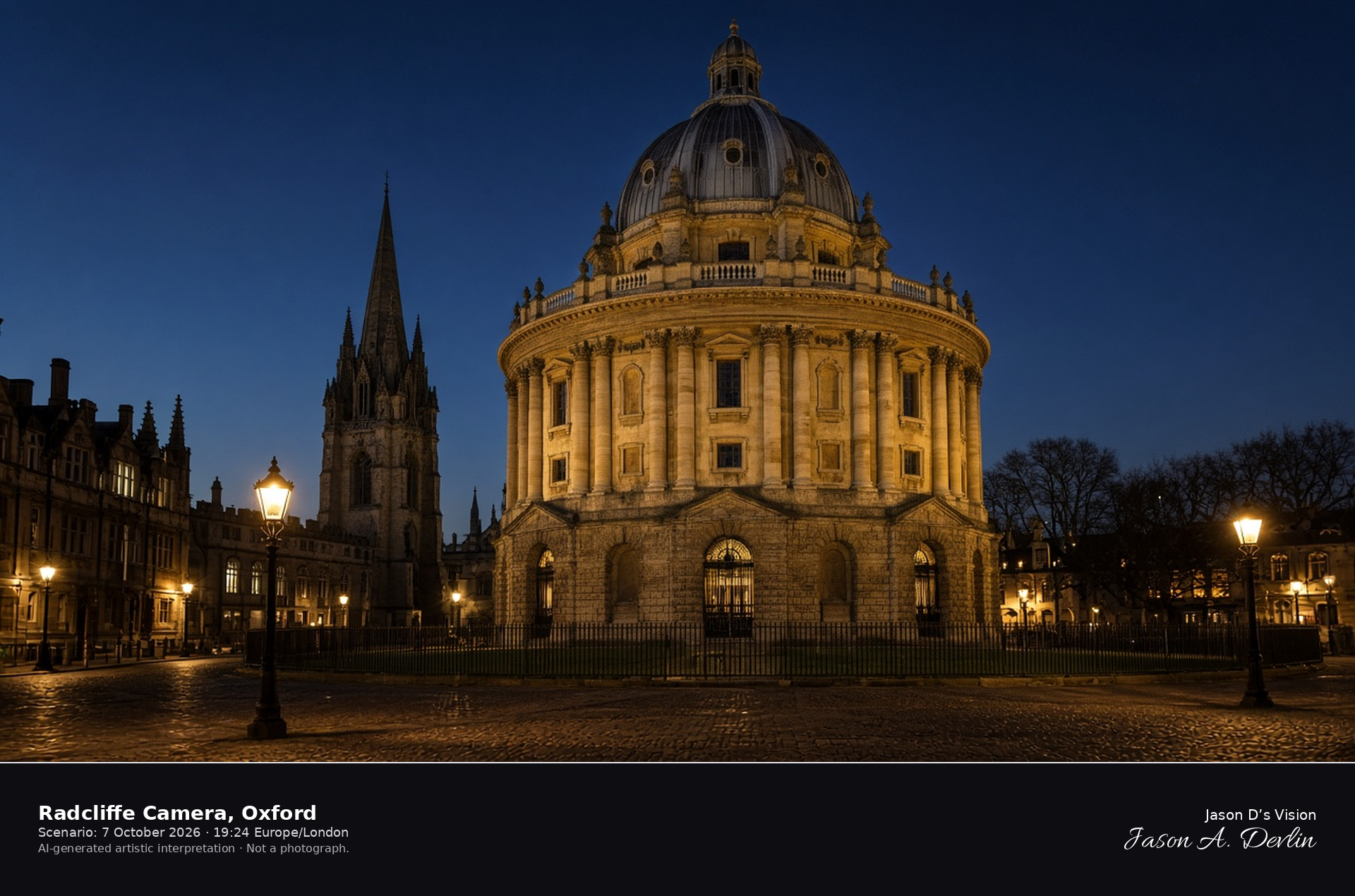
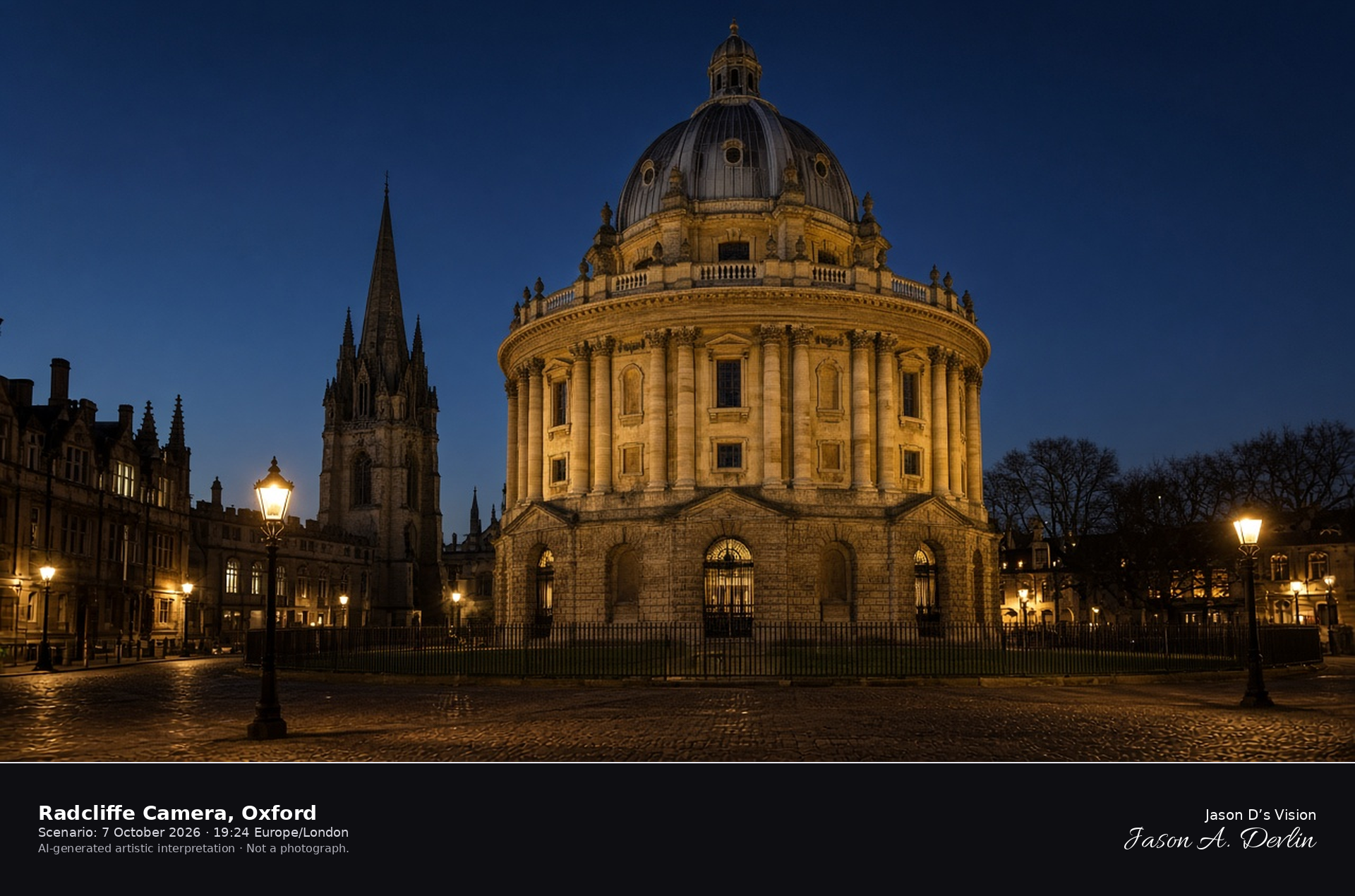
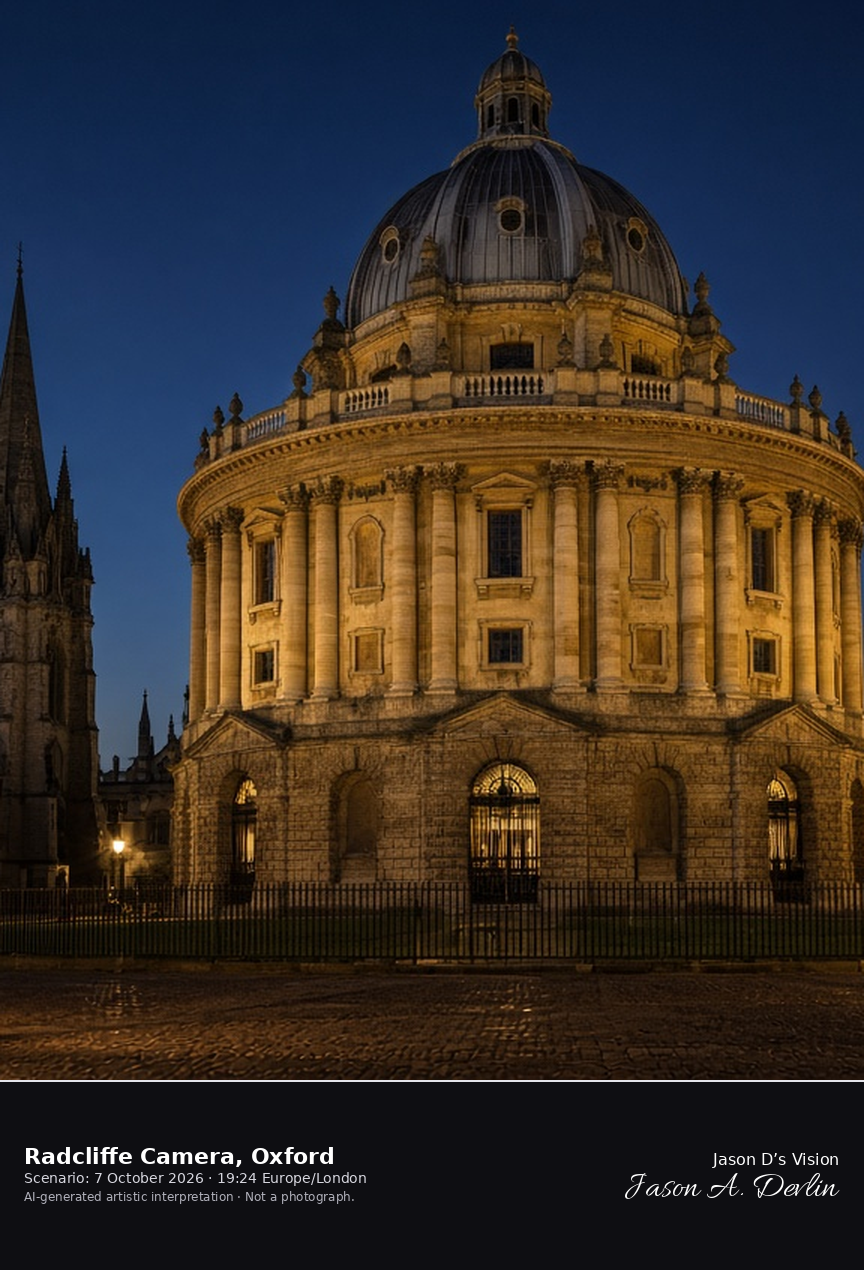
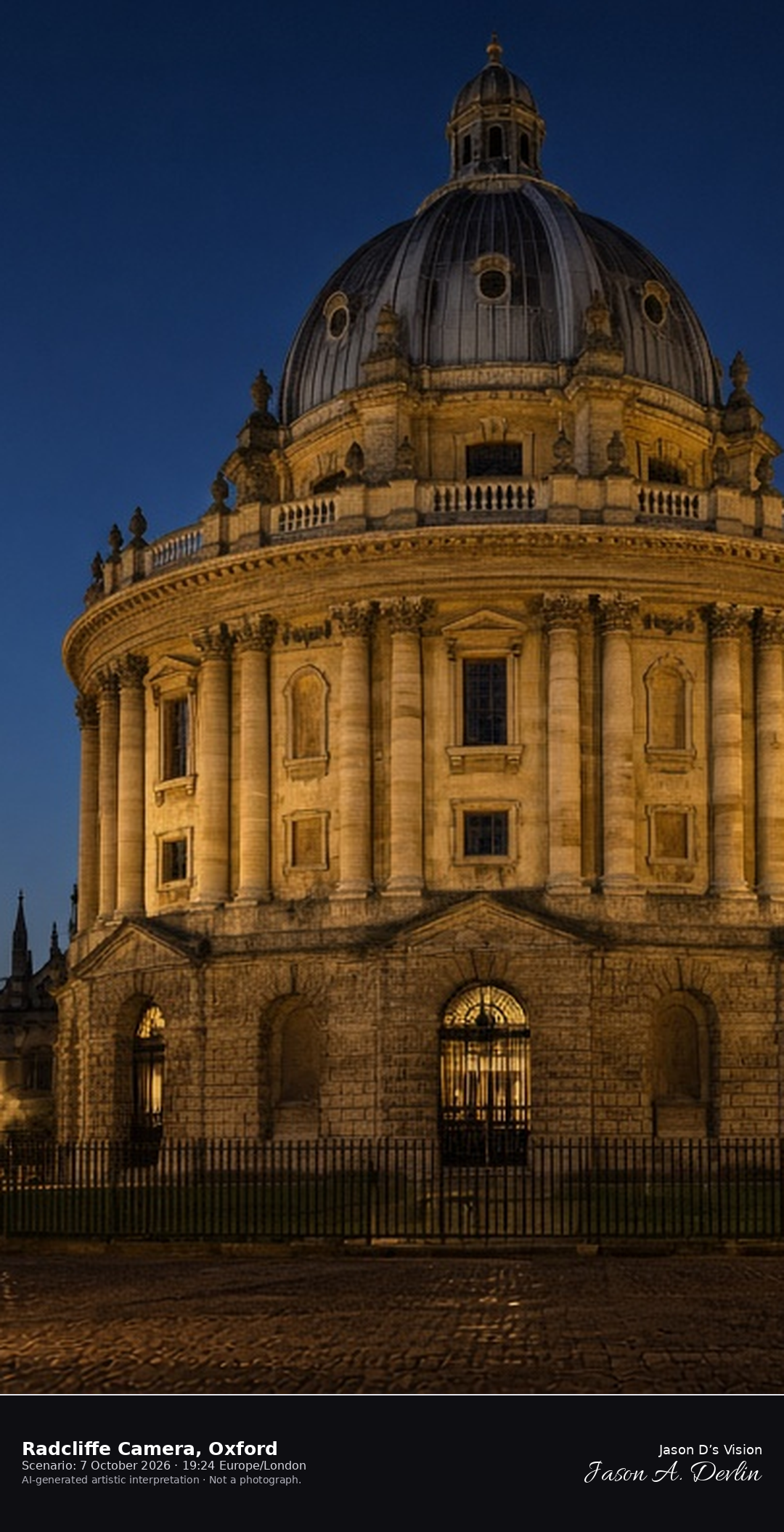
The Radcliffe Camera was designed by James Gibbs and built between 1737 and 1749, the first circular library in England. It is now a reading room of the Bodleian Library.
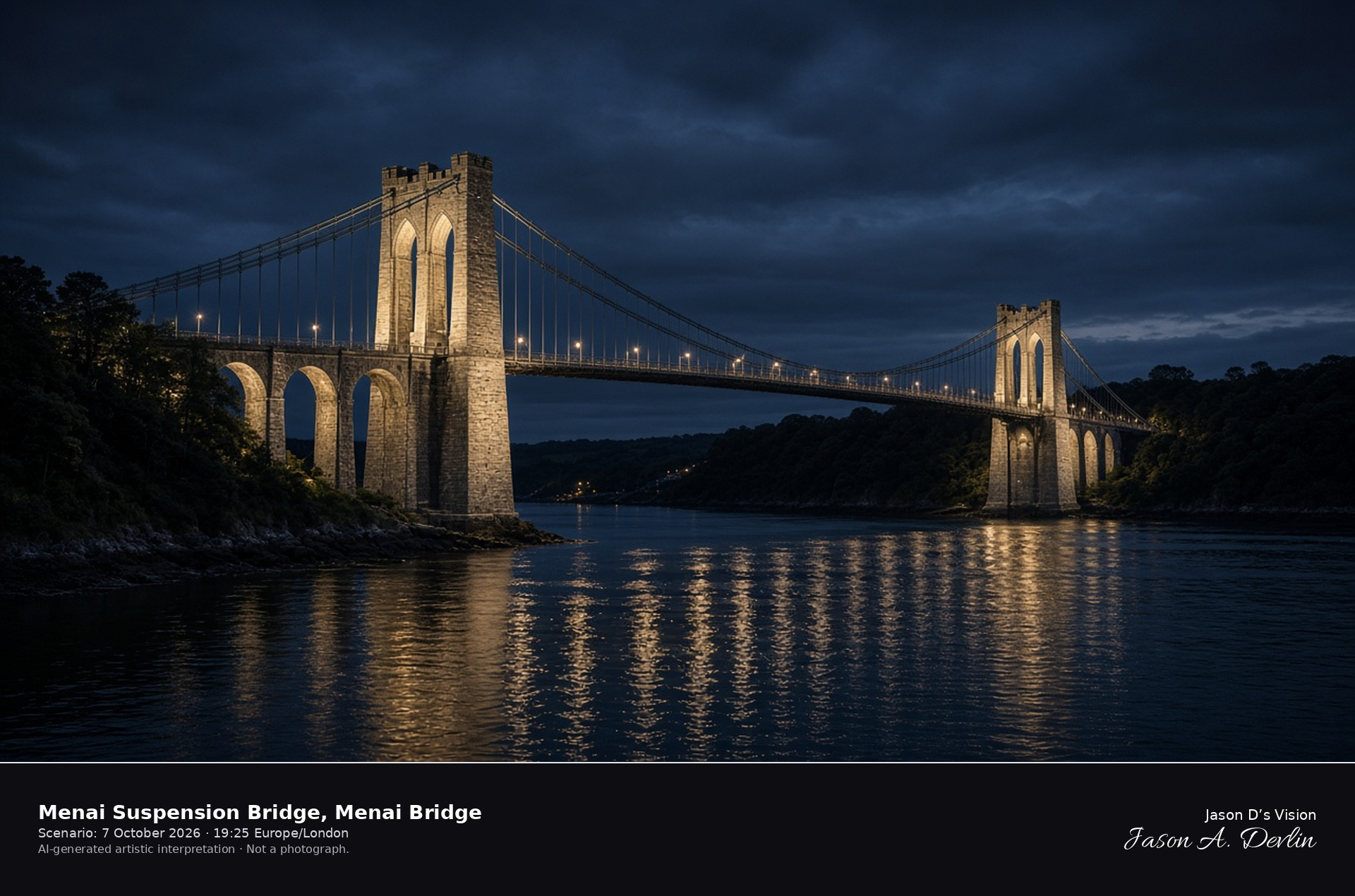
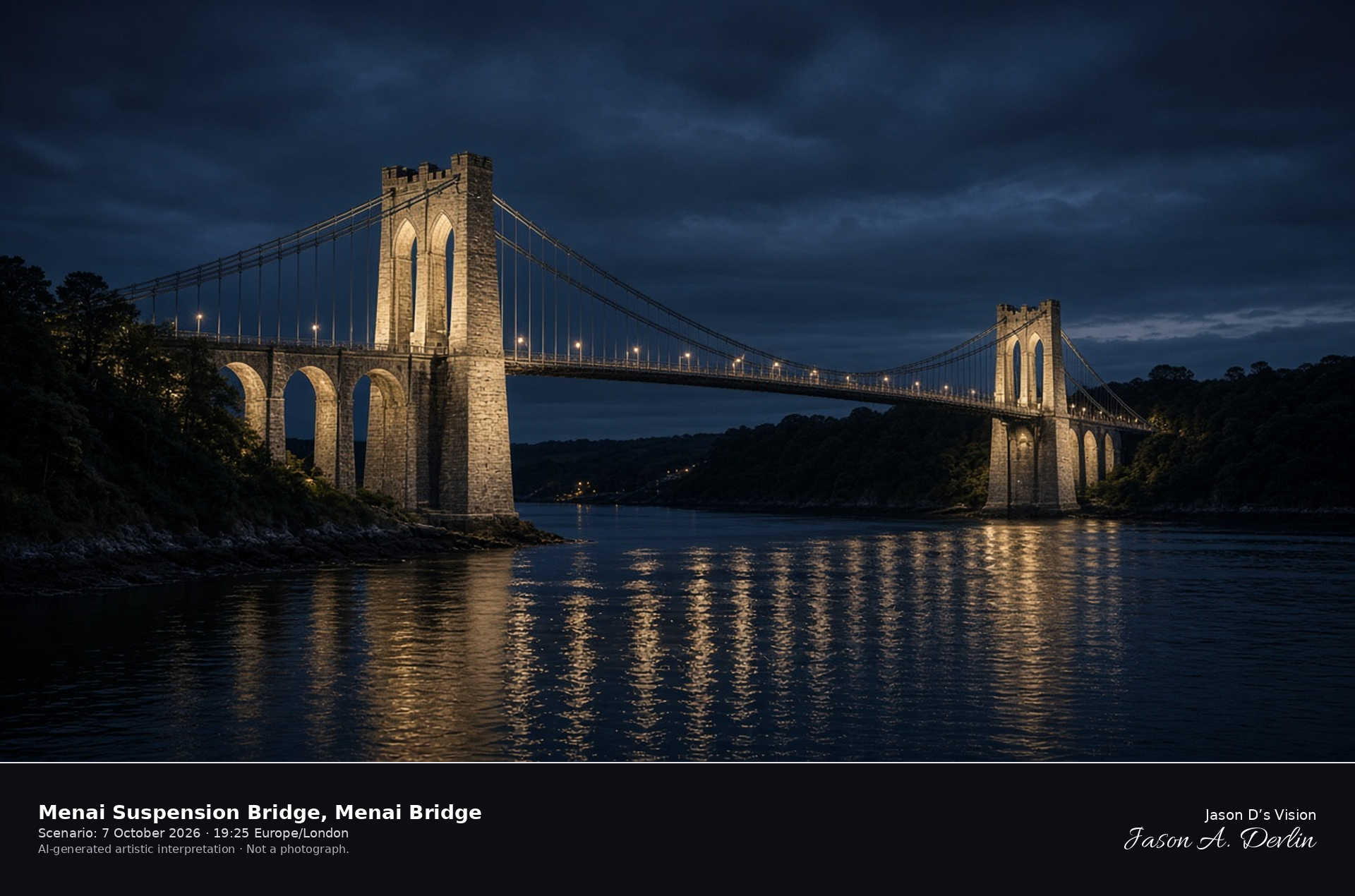
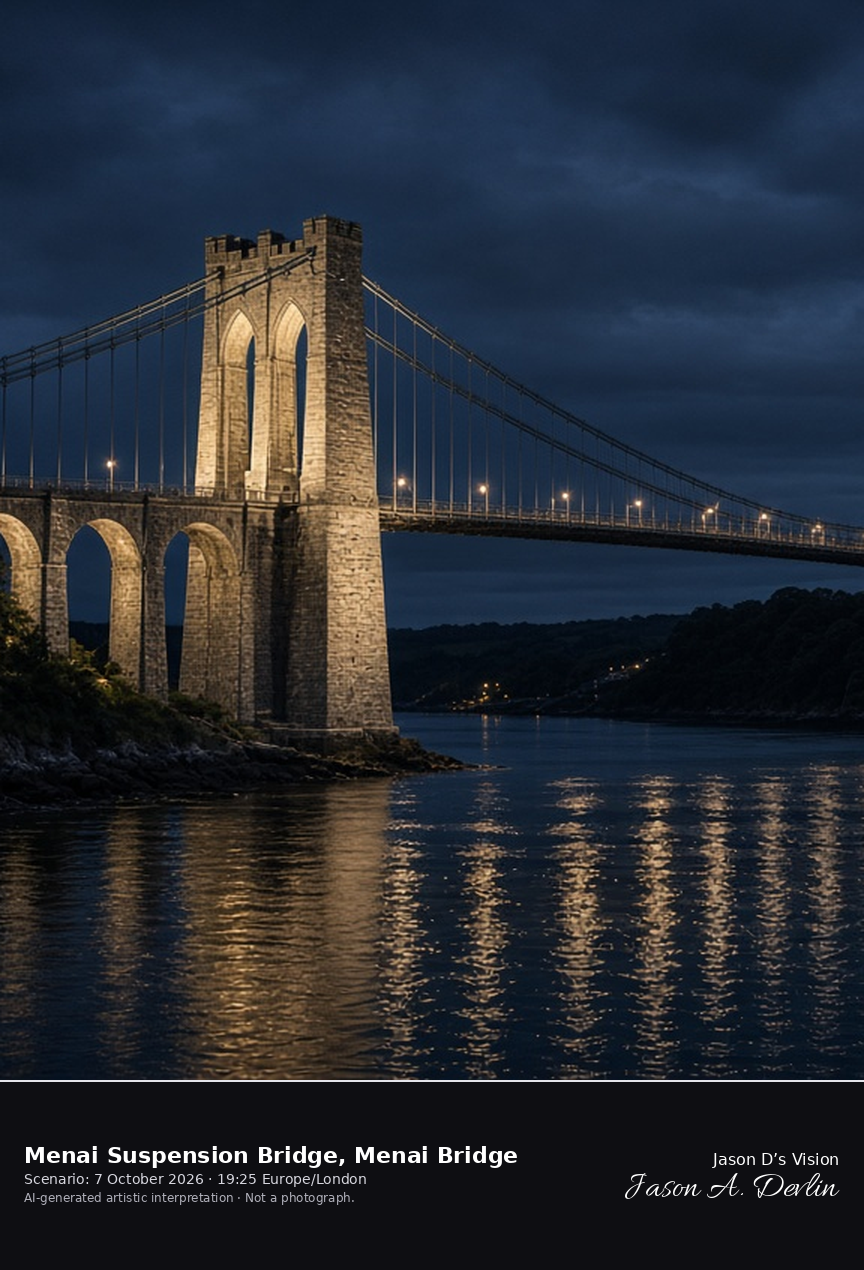
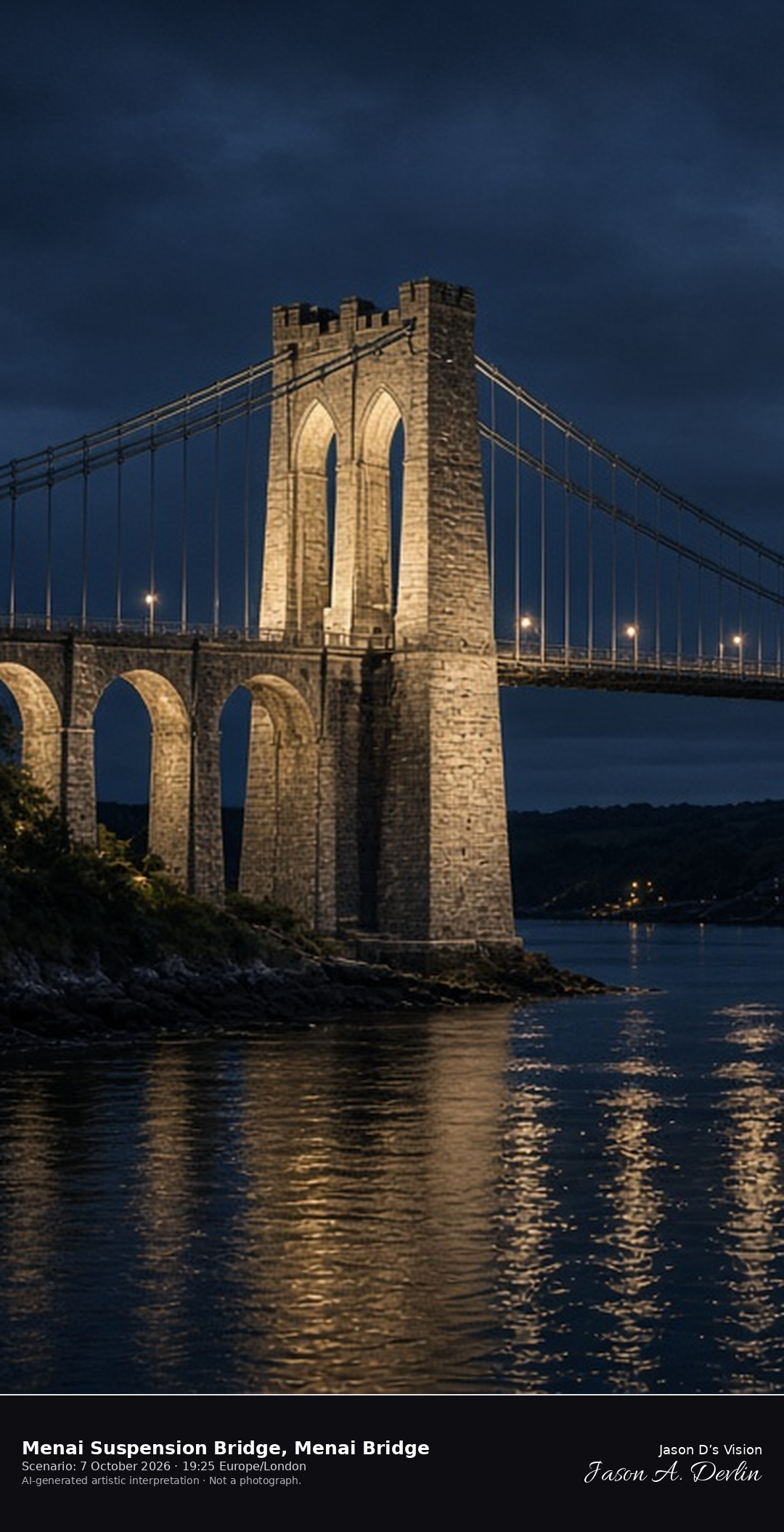
Anglesey — Ynys Môn in Welsh — is the largest island in Wales, joined to the mainland by Telford's great Menai Suspension Bridge of 1826. Its village of Llanfairpwll is famous everywhere for the longest place name in Britain, fifty-eight letters that the locals shorten to Llanfair P.G.
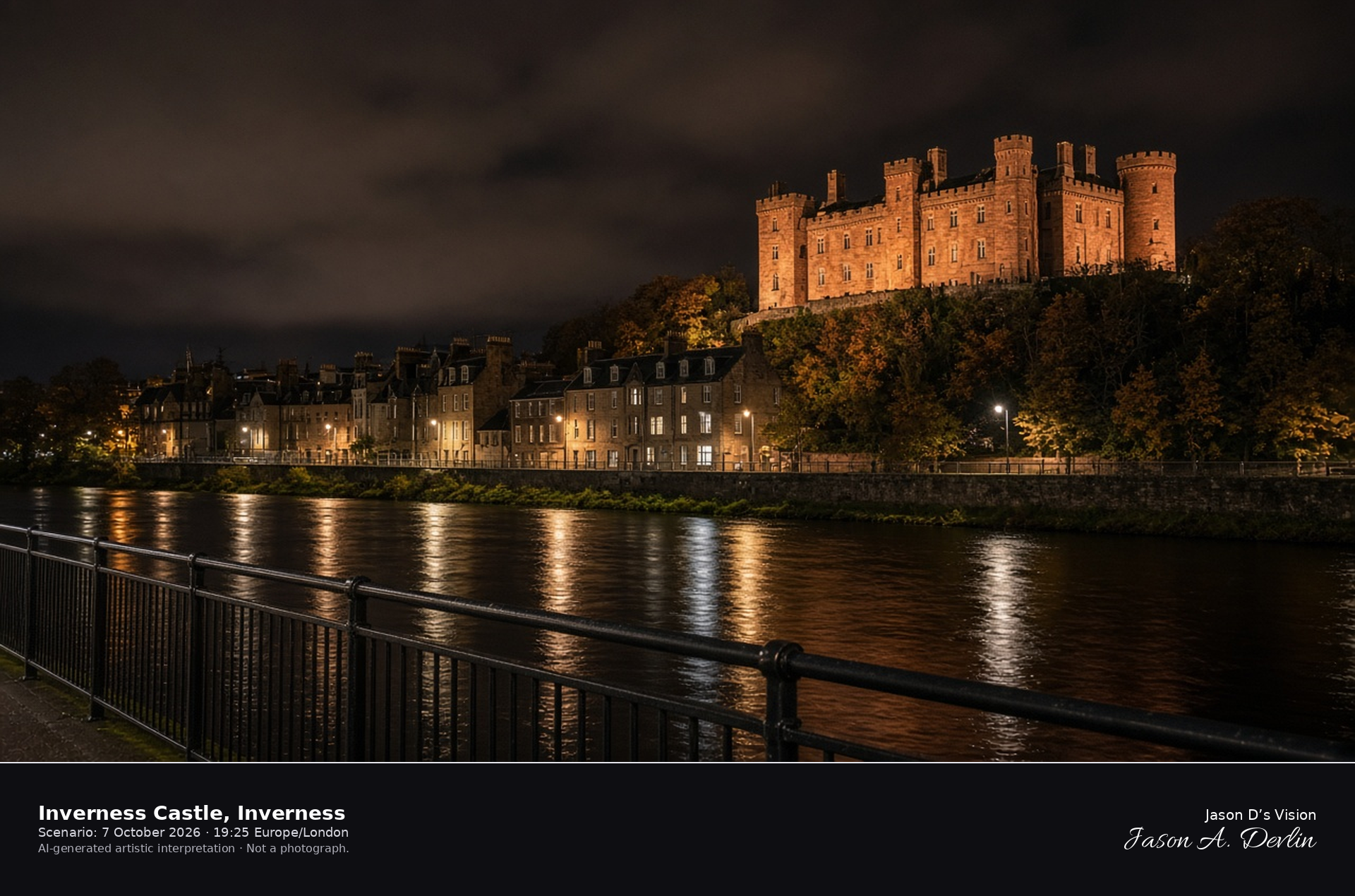
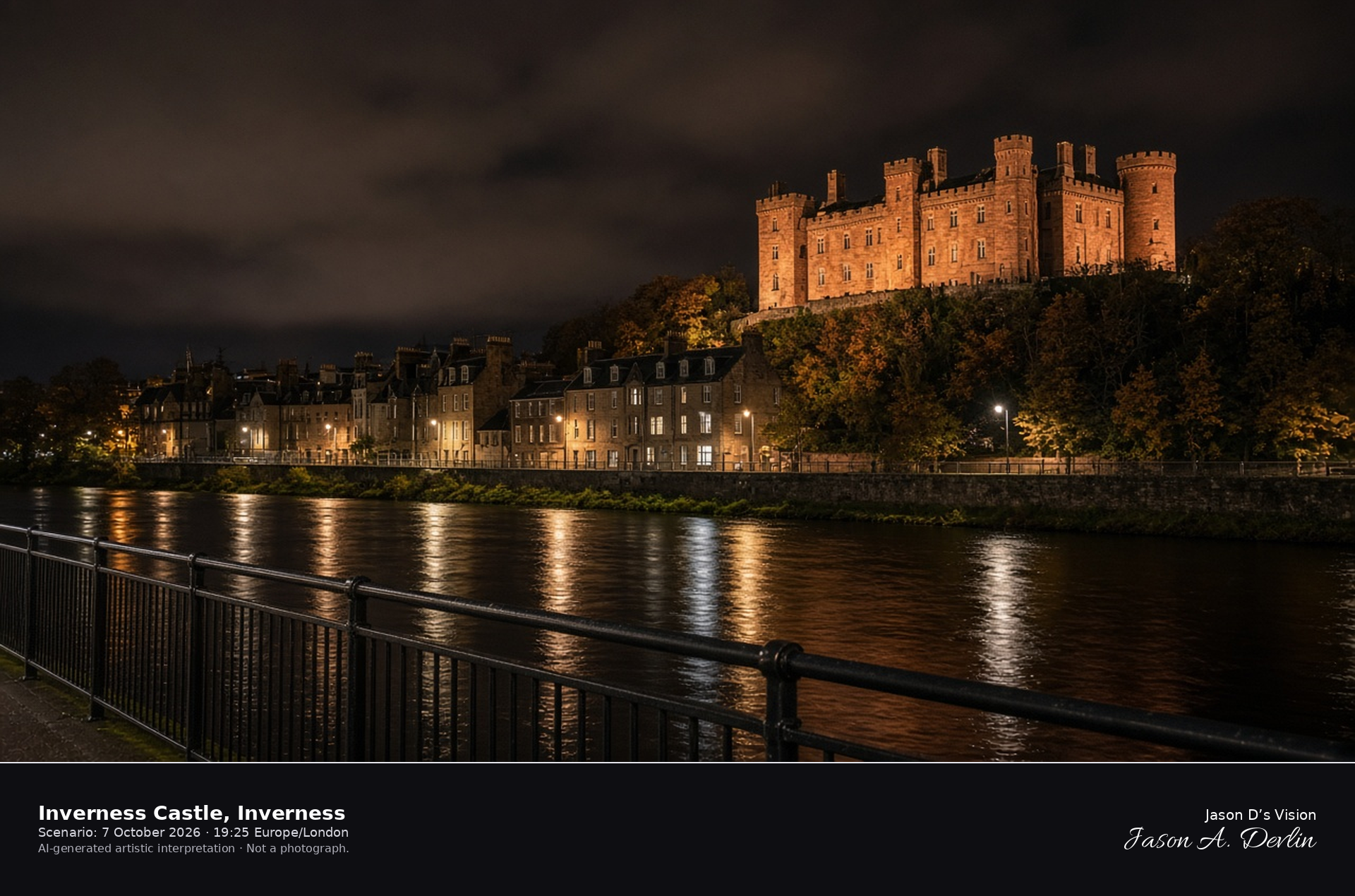
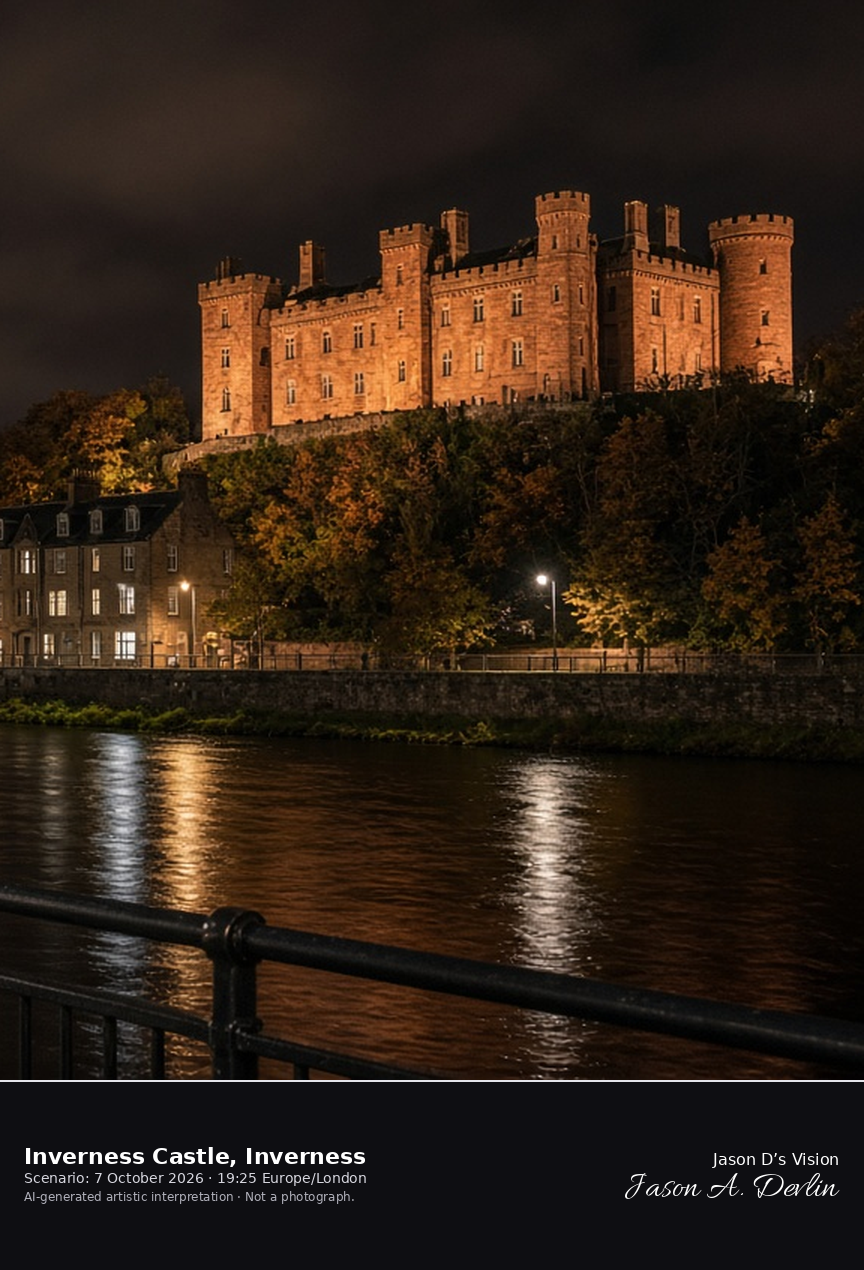
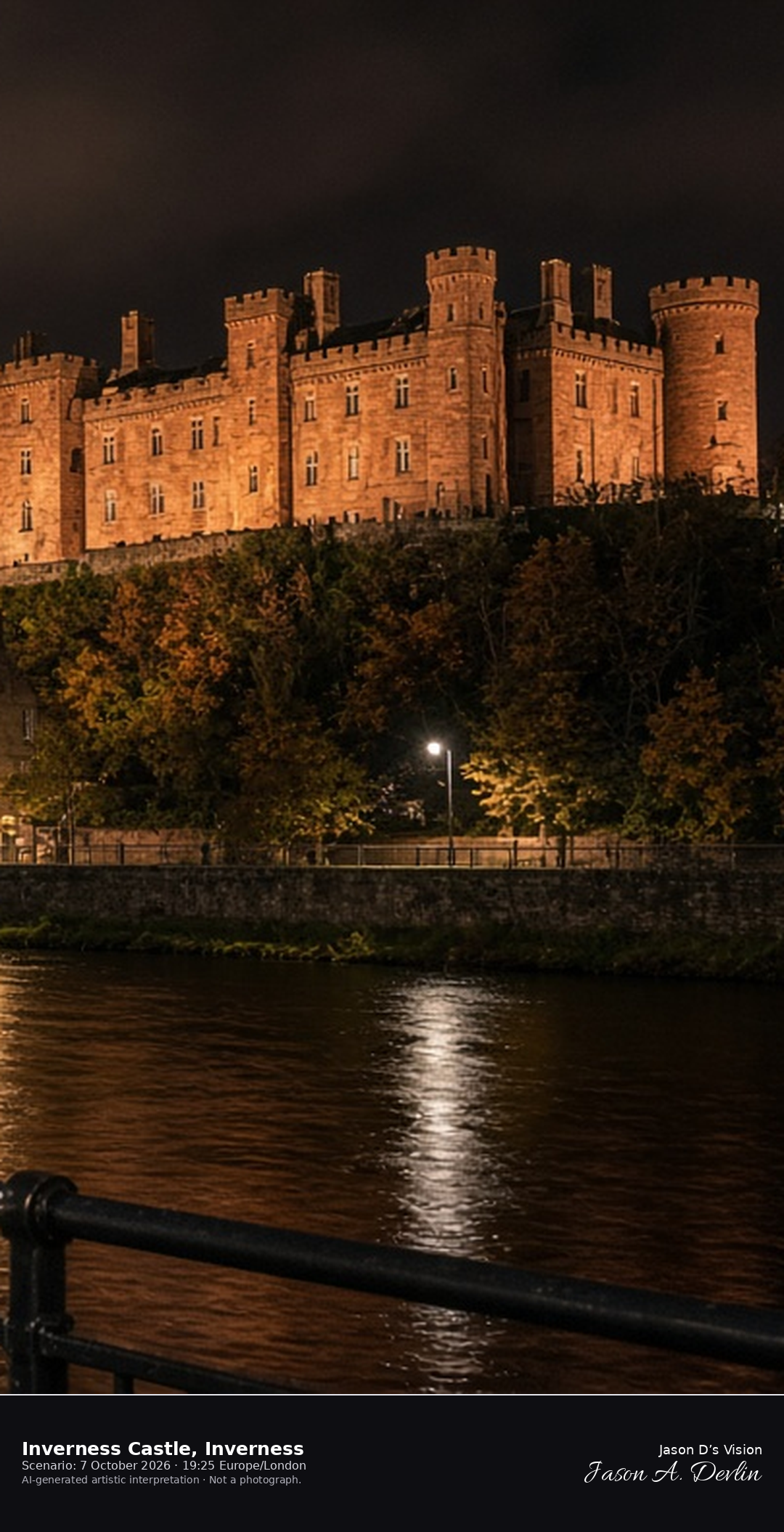
Inverness Castle stands above the River Ness on the site of an earlier medieval fortress. The present castle-like buildings were constructed as a courthouse in the 1830s and a prison in the 1840s. A statue of Flora MacDonald, erected in 1896, commemorates the Highland heroine associated with Bonnie Prince Charlie's escape.
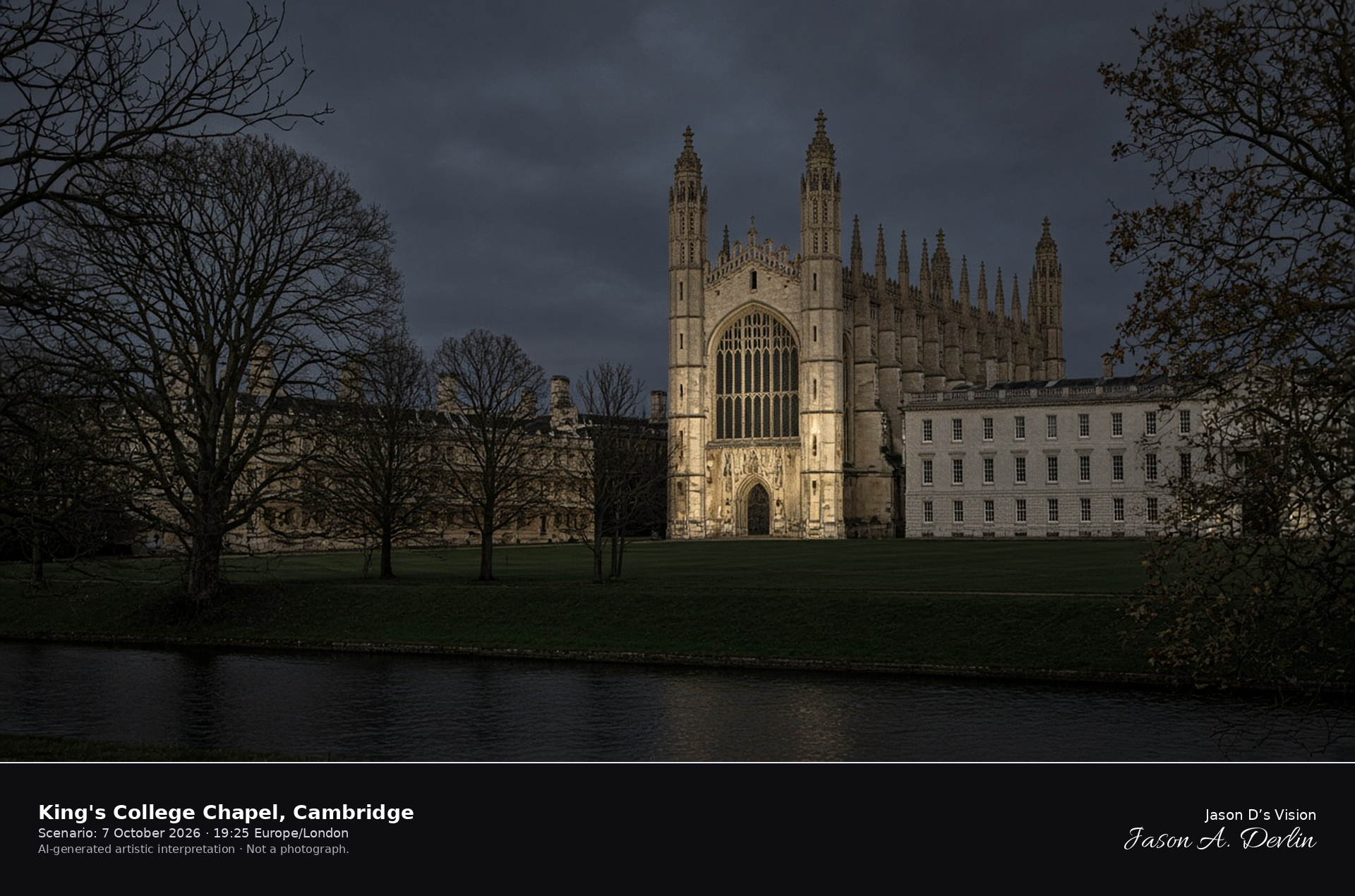
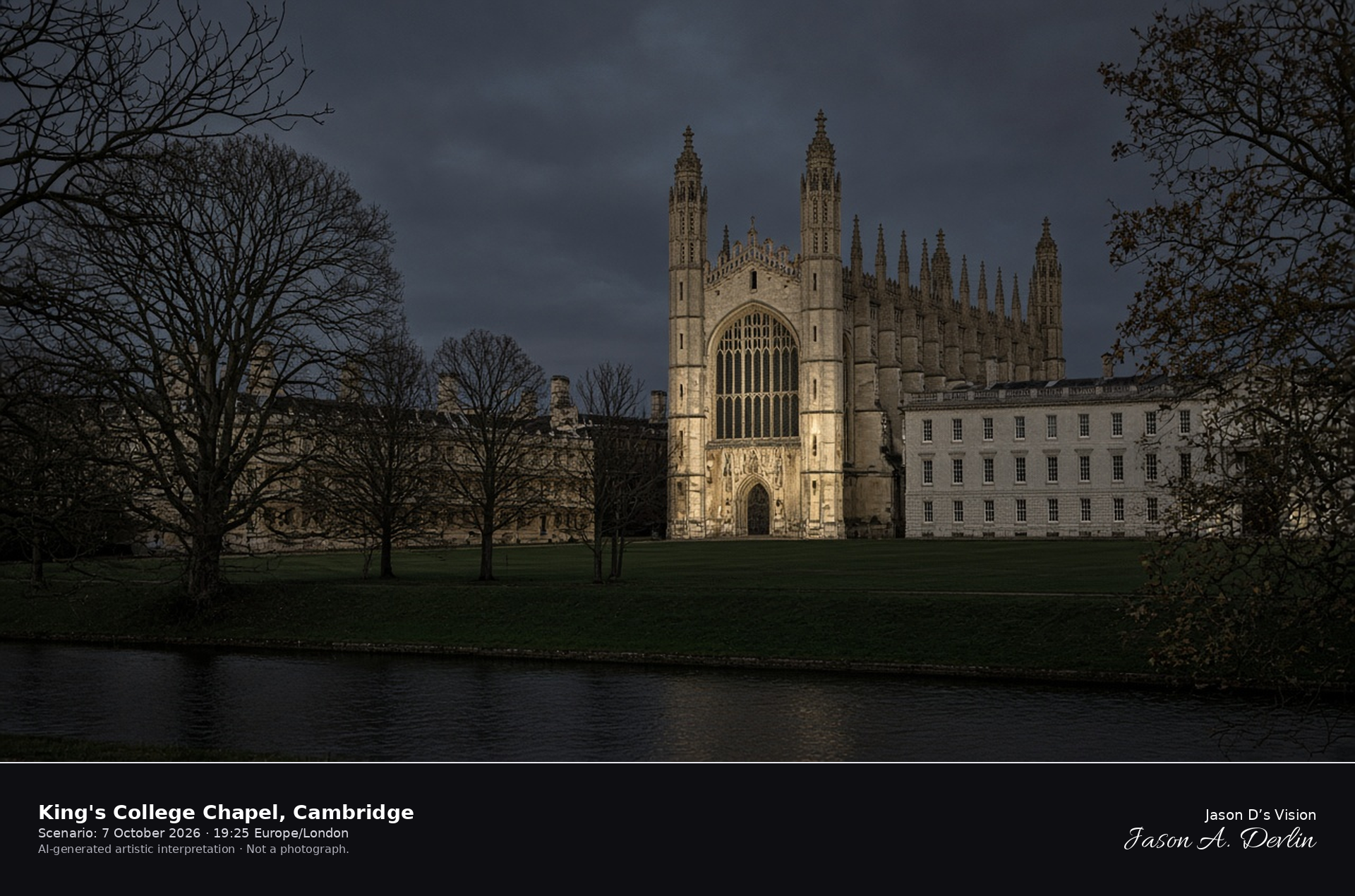
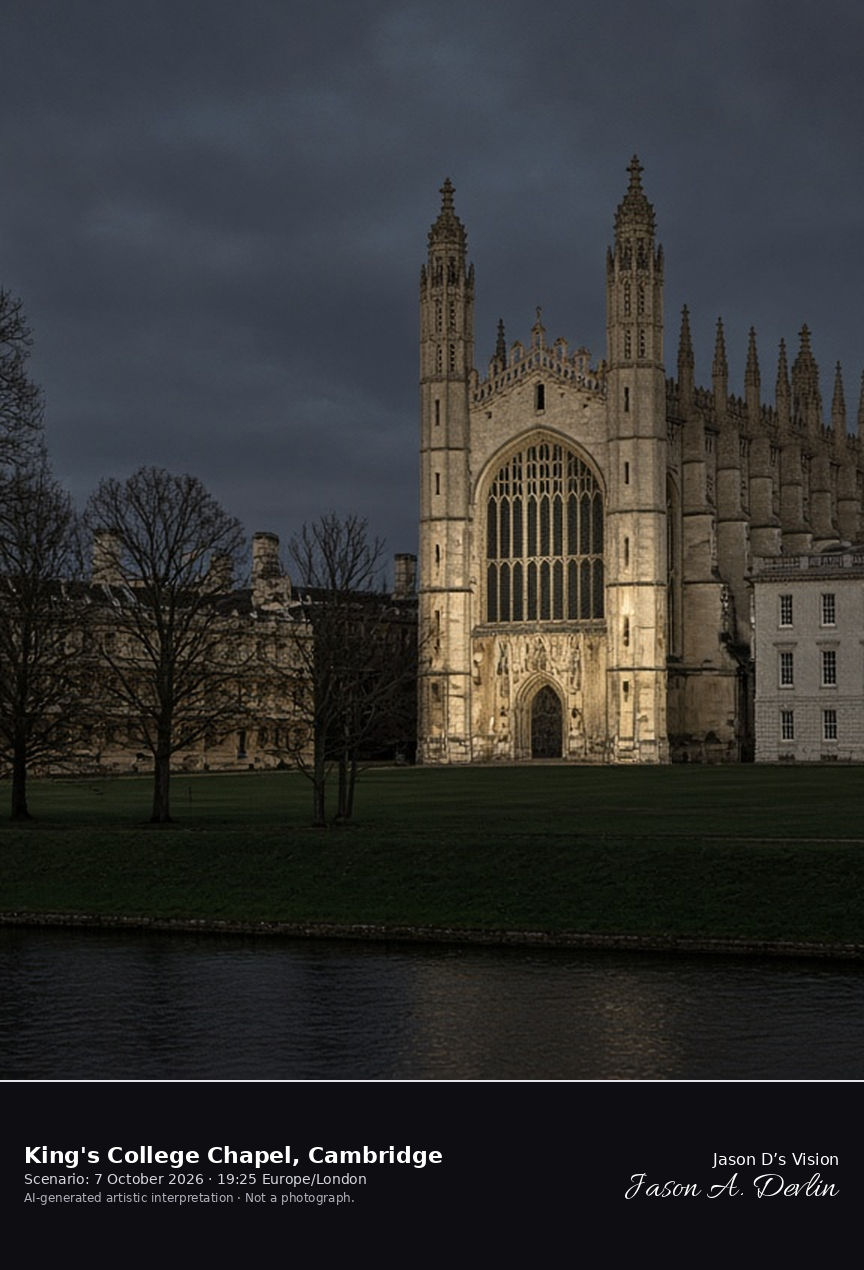
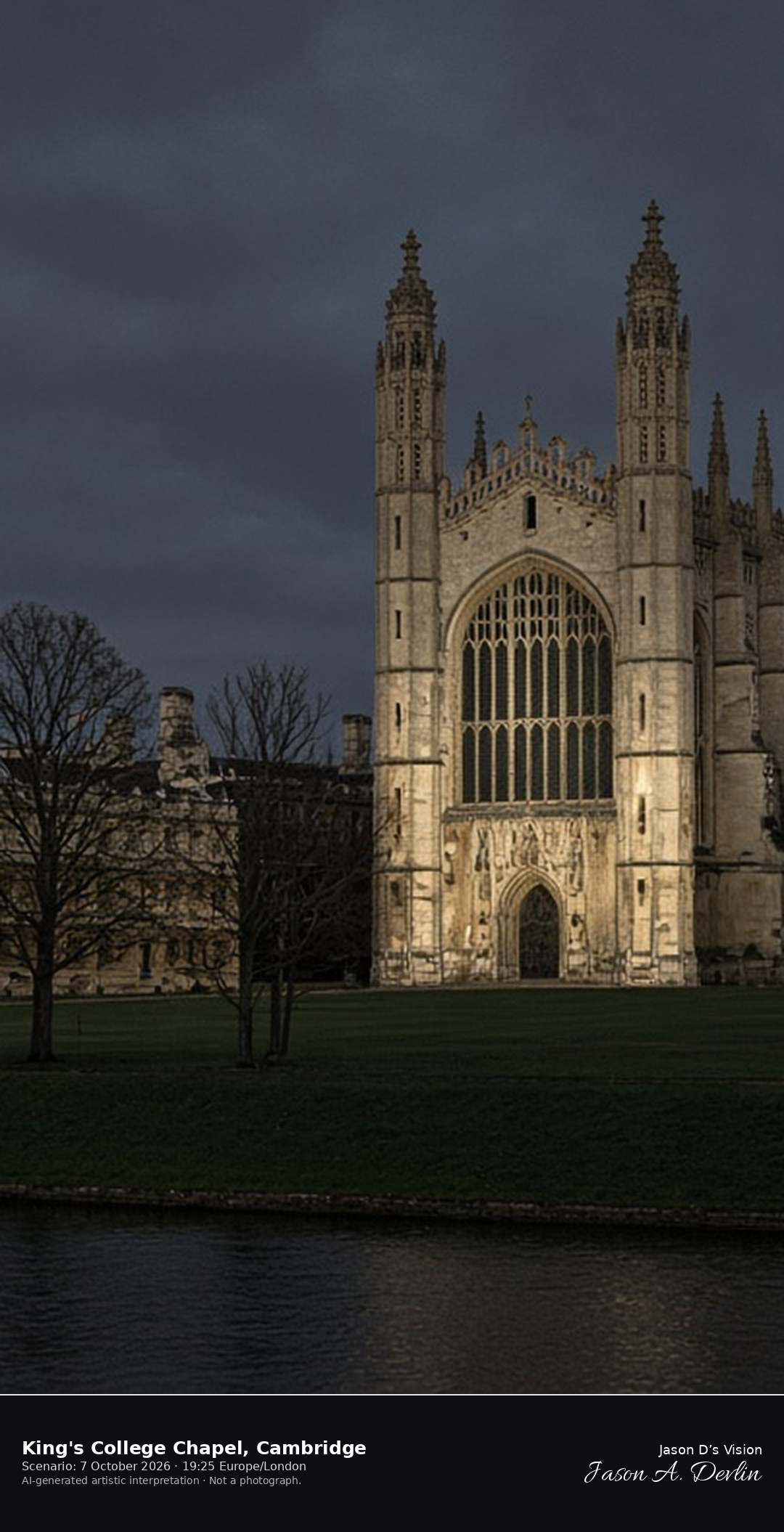
King's College Chapel · AI-generated artistic interpretation
The Chapel, built between 1446 and 1515, holds the largest fan-vaulted ceiling in the world and Rubens's great Adoration of the Magi behind its altar. Its choir's Festival of Nine Lessons and Carols, first sung in 1918, is now broadcast to millions each Christmas Eve.
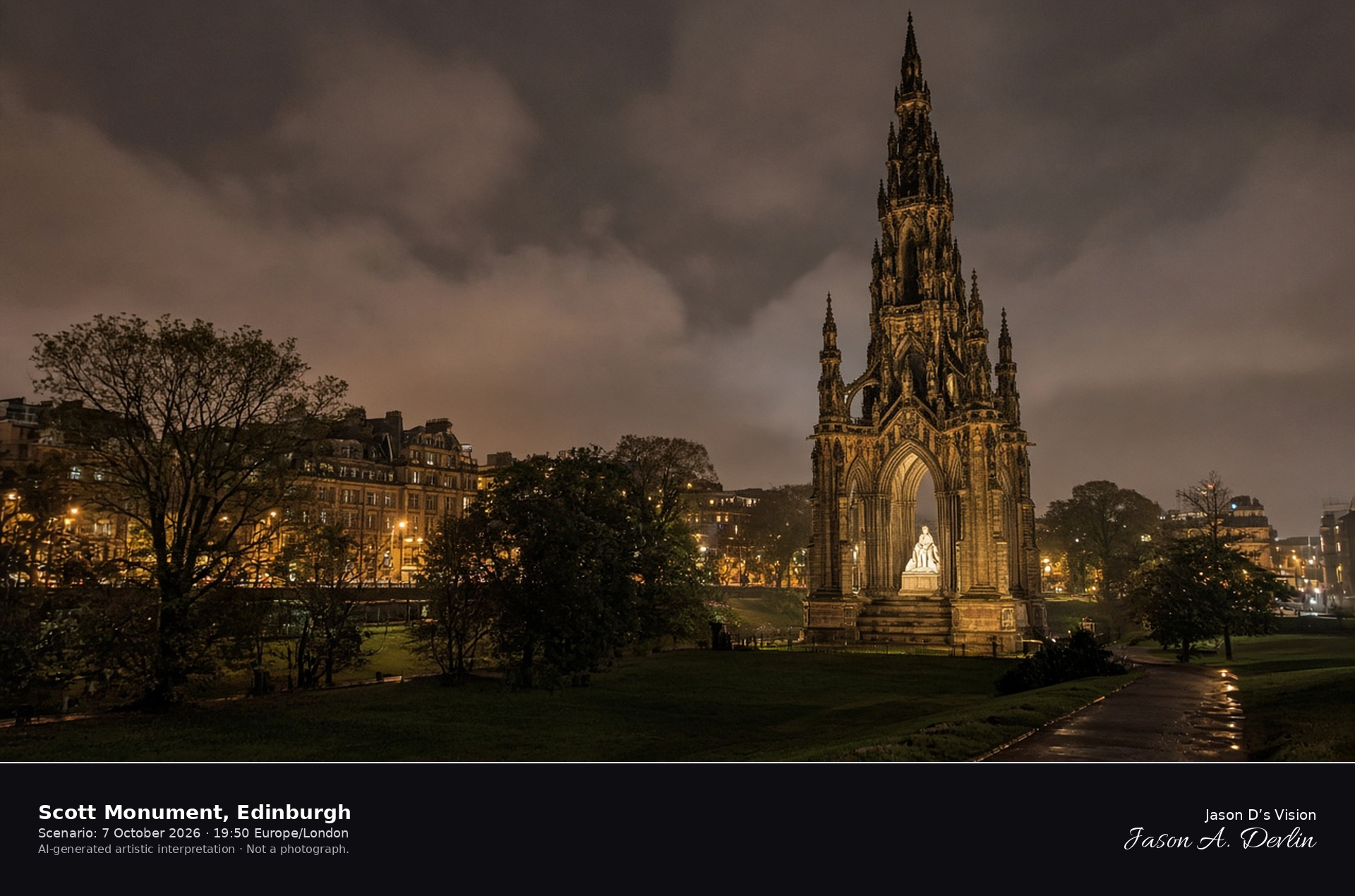
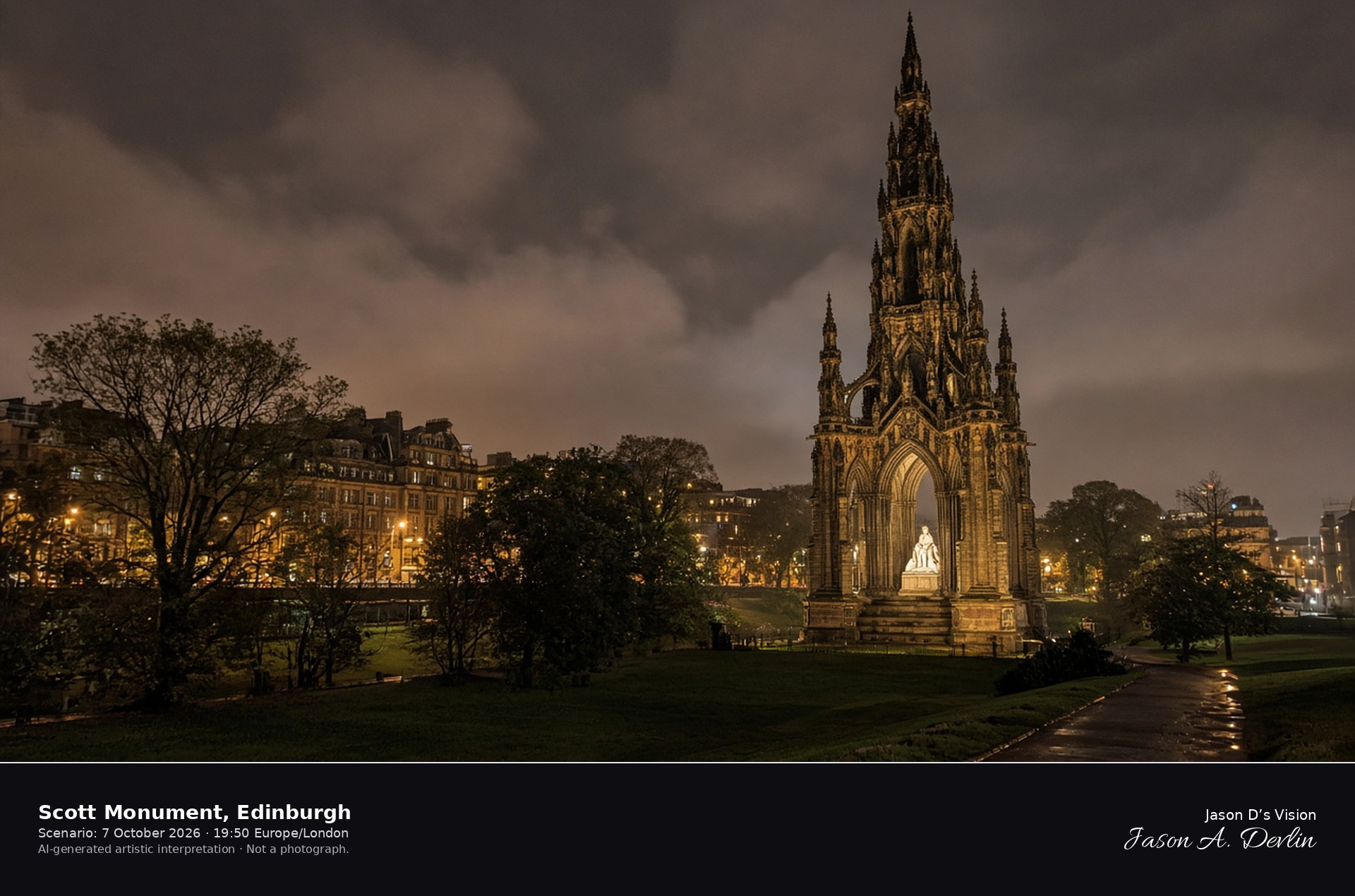
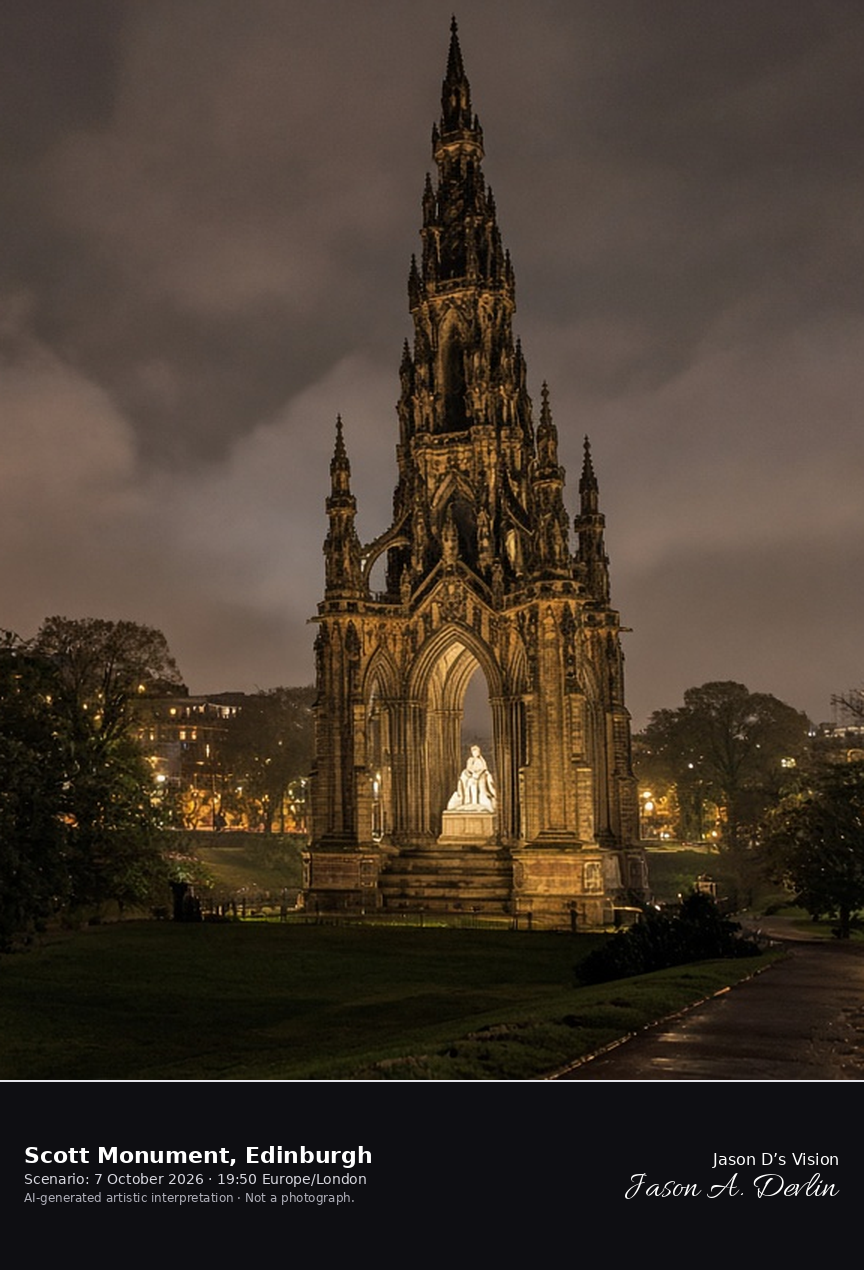
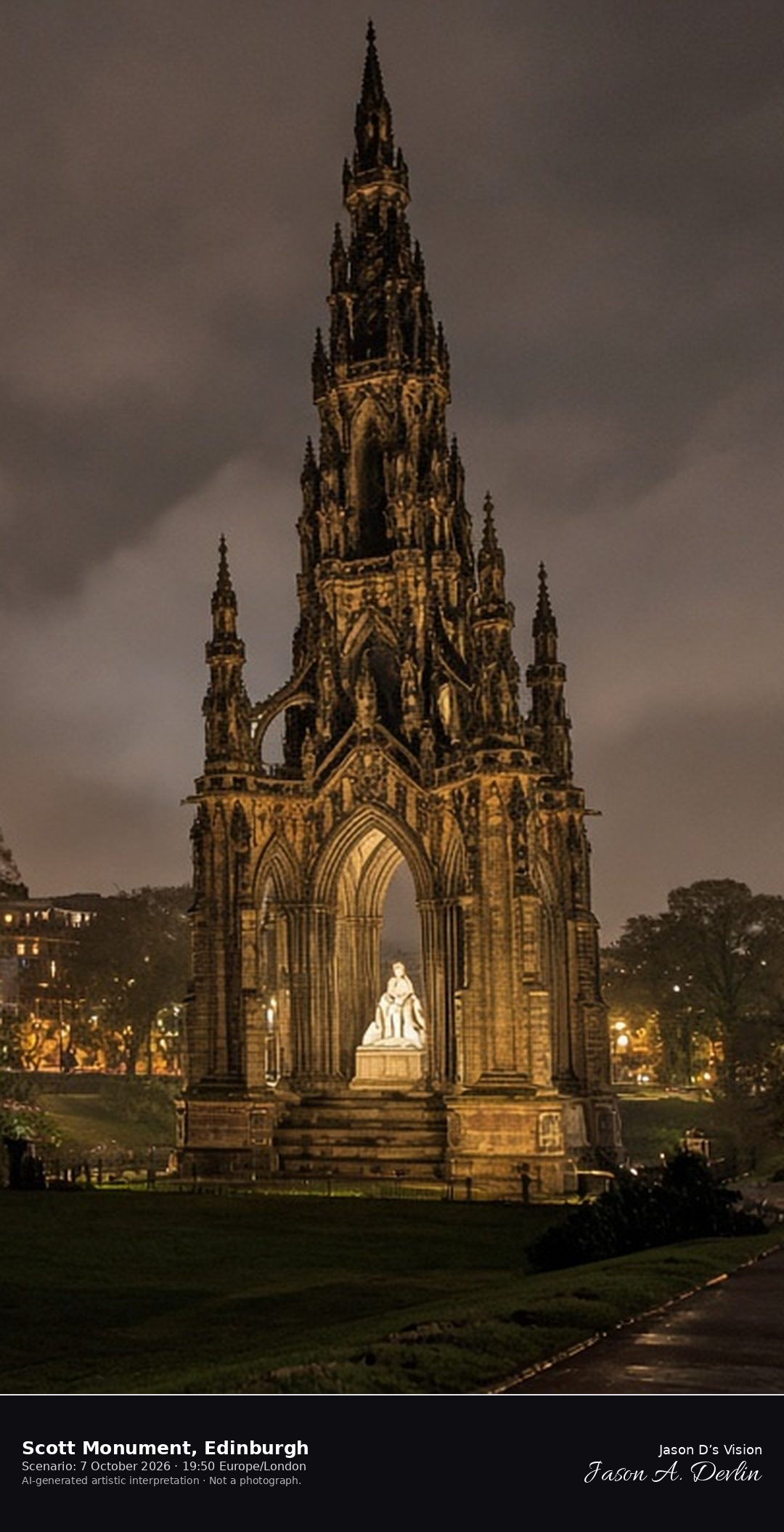
Scott Monument, Edinburgh · AI-generated artistic interpretation
The Scott Monument was completed in 1844 to a design by George Meikle Kemp and is one of the largest monuments to a writer in the world. Visitors can climb its narrow stairs to viewing galleries near the top.
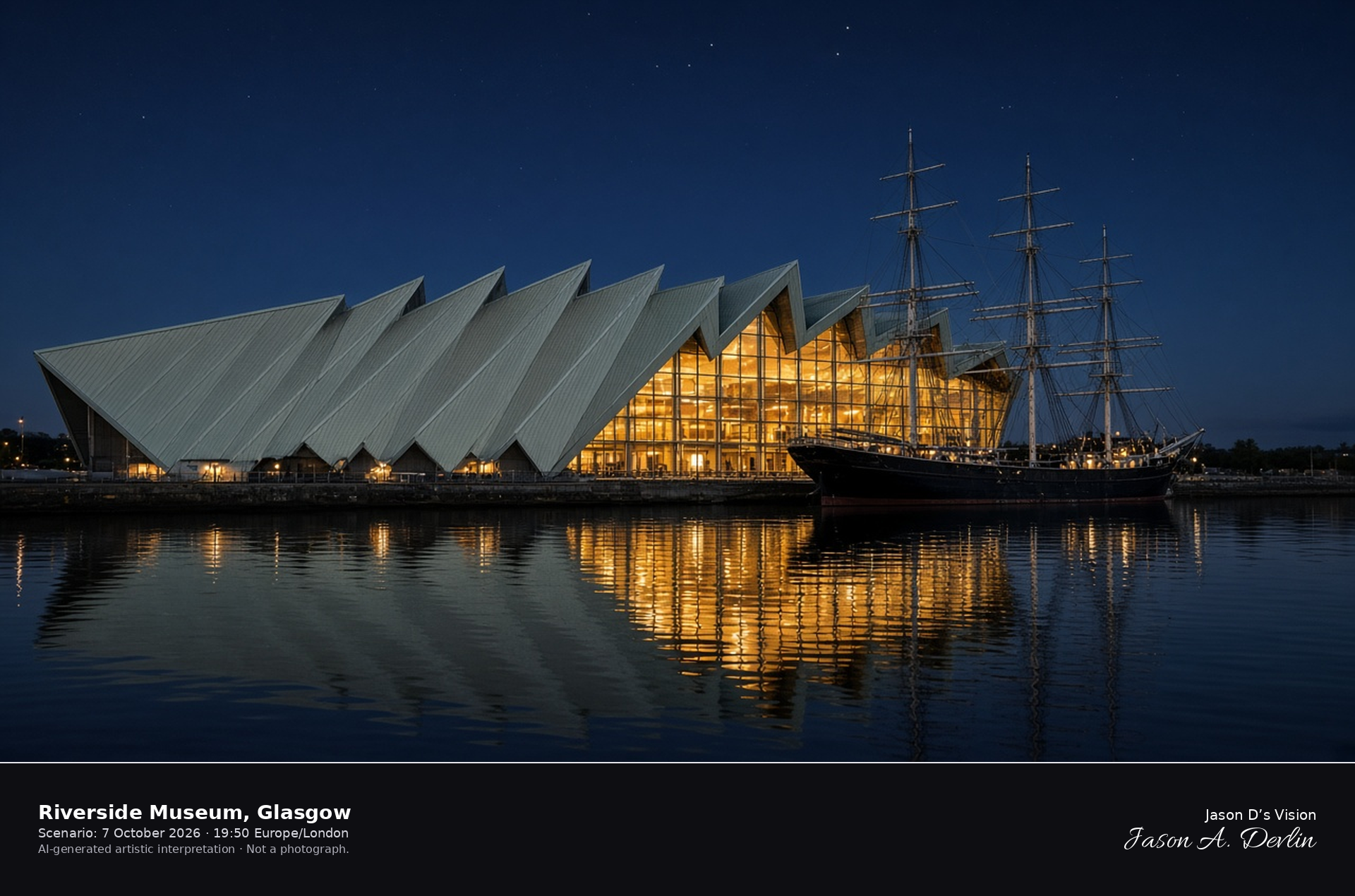
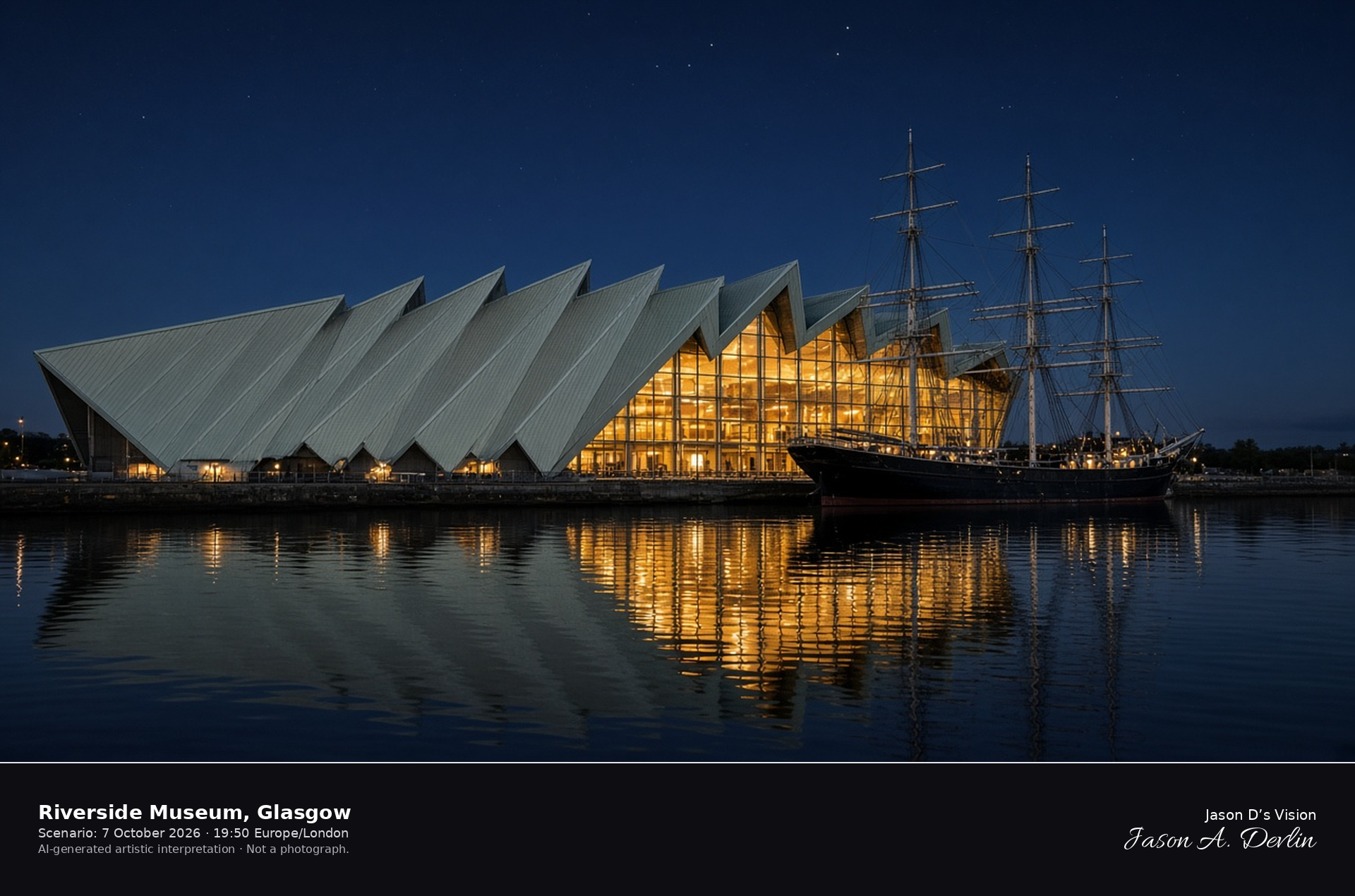
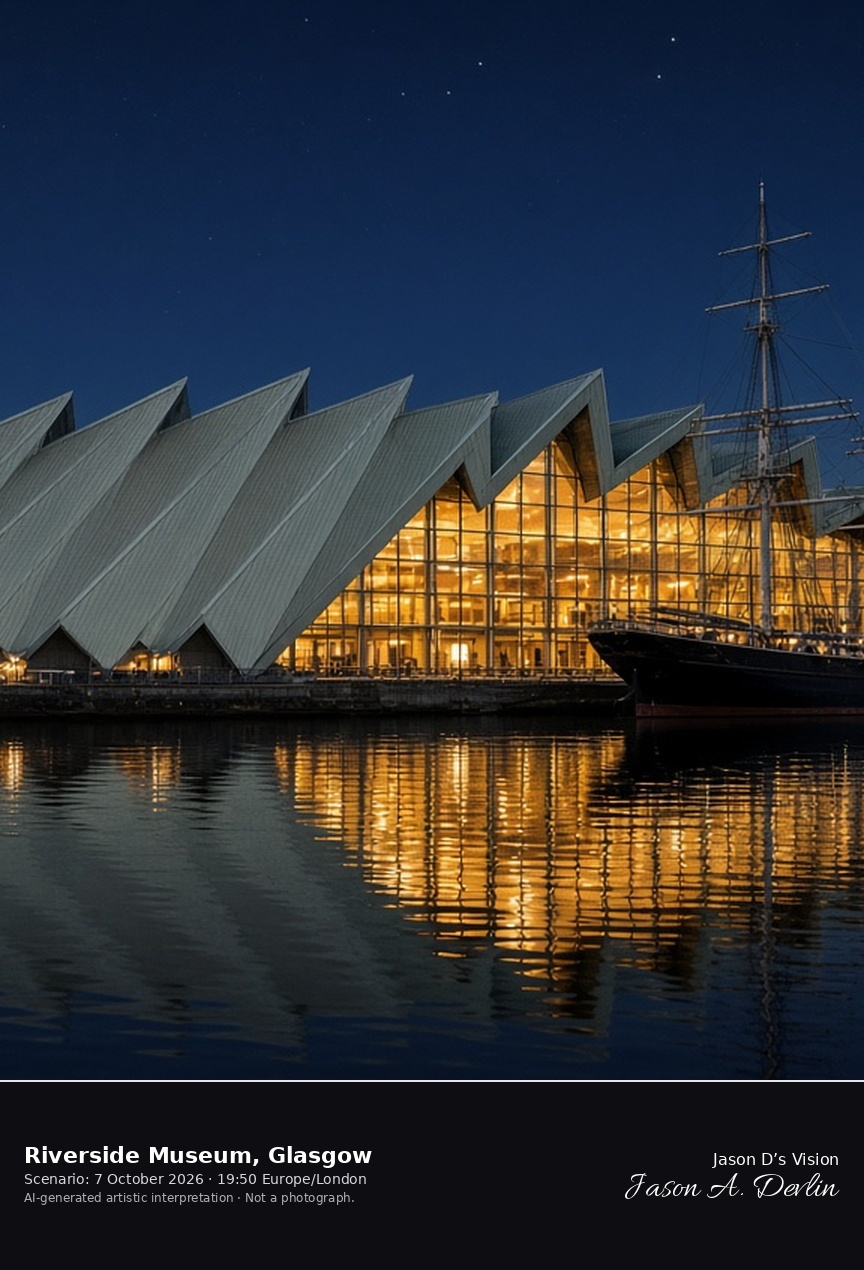
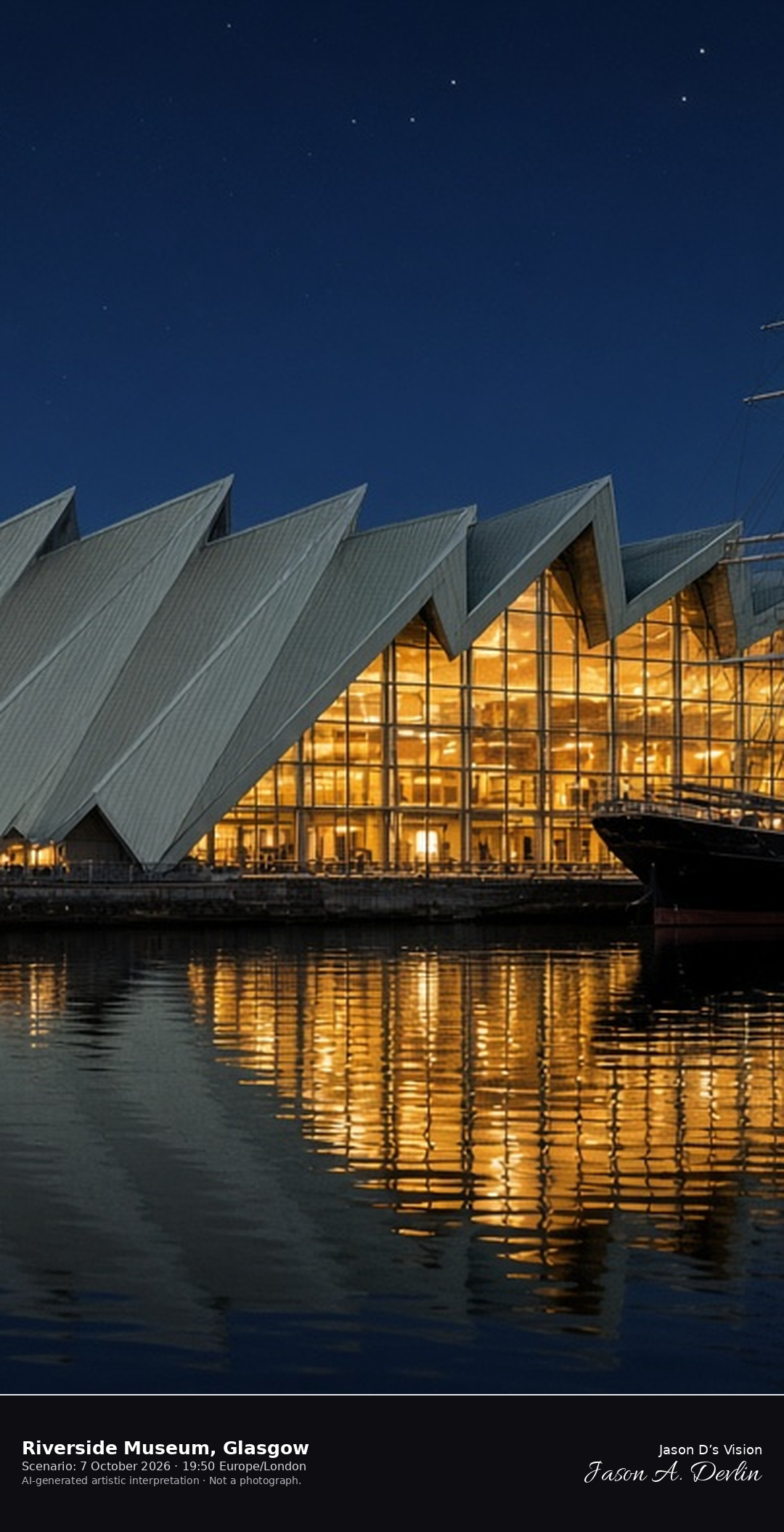
The Riverside Museum, designed by Zaha Hadid, opened in 2011 as Glasgow's museum of transport and travel. The Glenlee, launched on the Clyde in 1896, is berthed beside it.
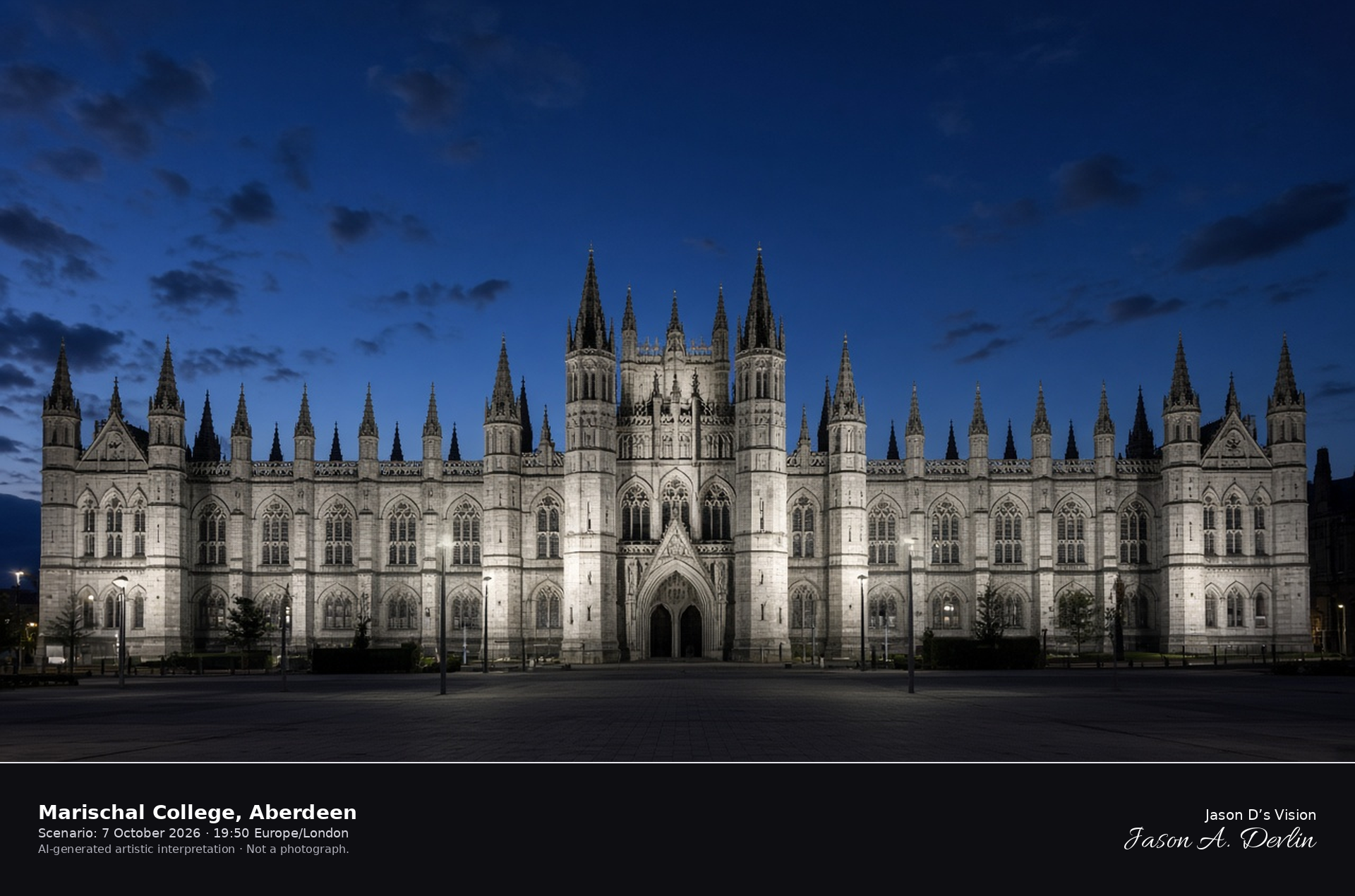
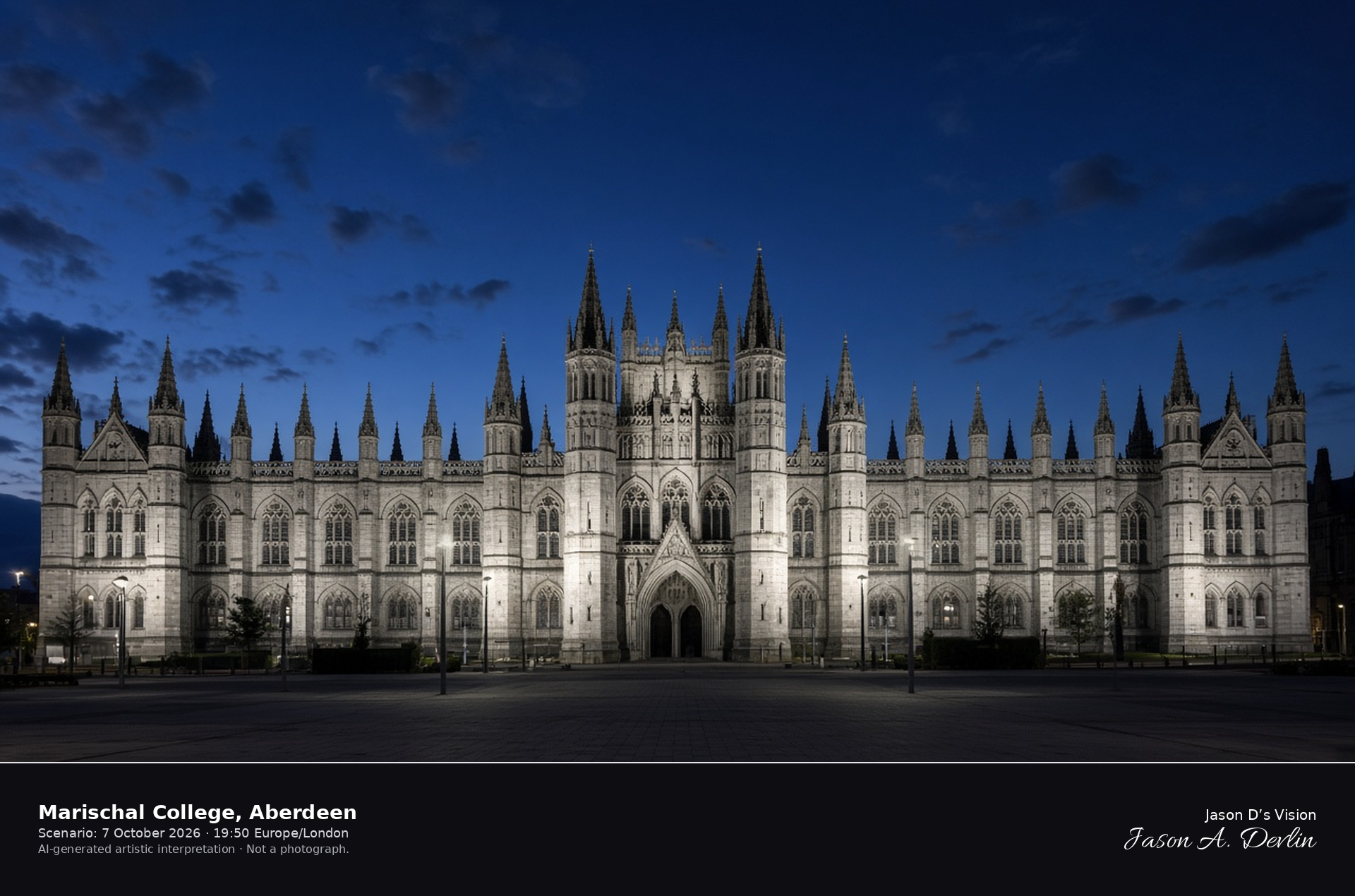
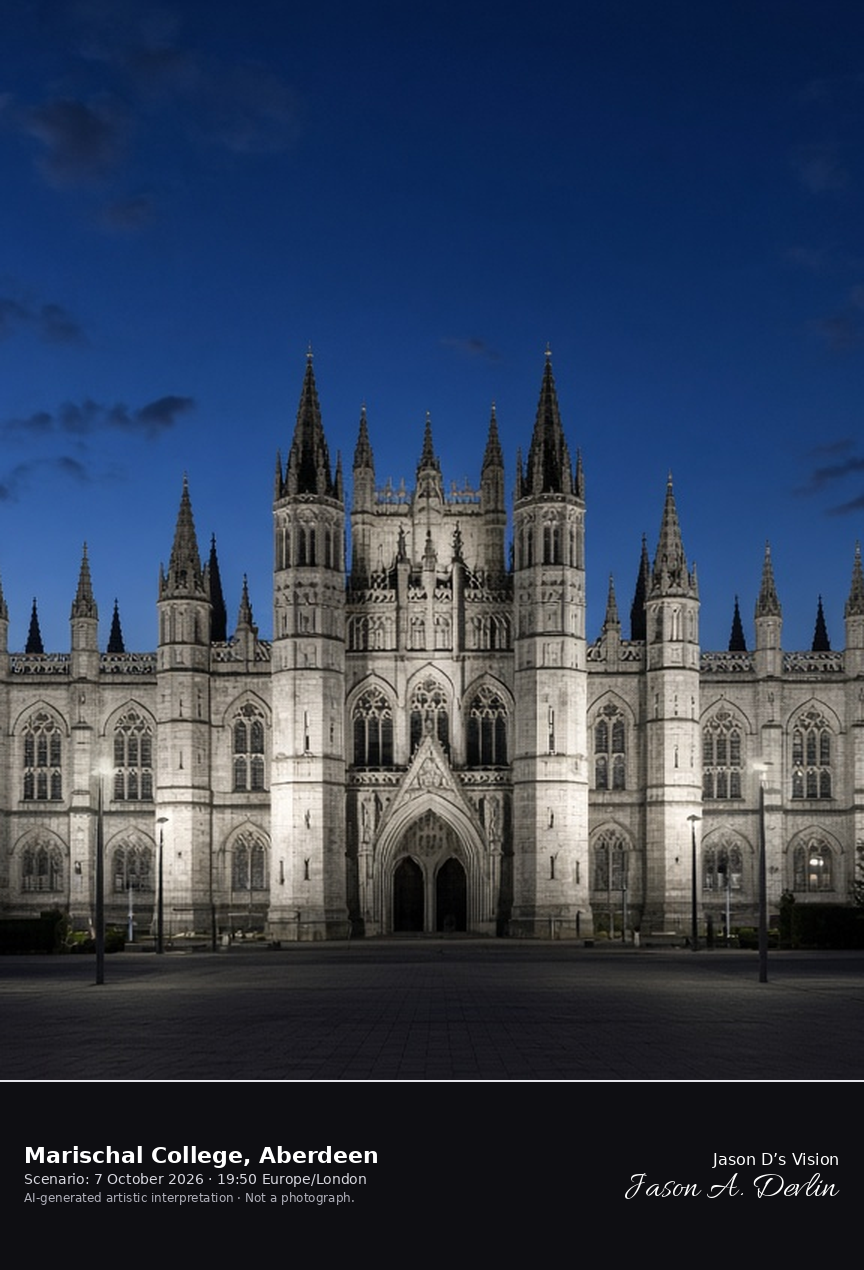
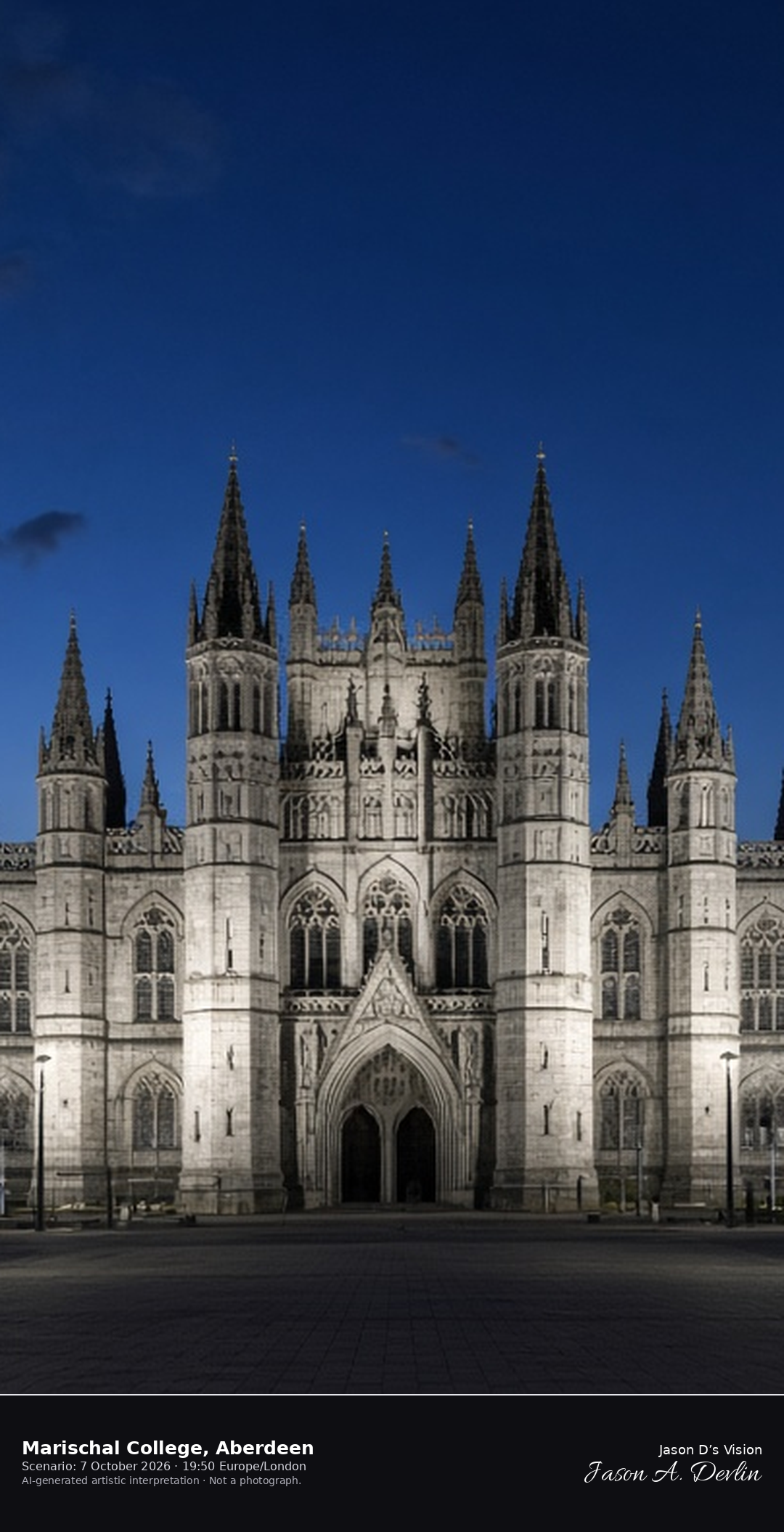
Marischal College's Gothic Revival front was completed in 1906 and is one of the largest granite buildings in the world. It now houses Aberdeen City Council's headquarters.
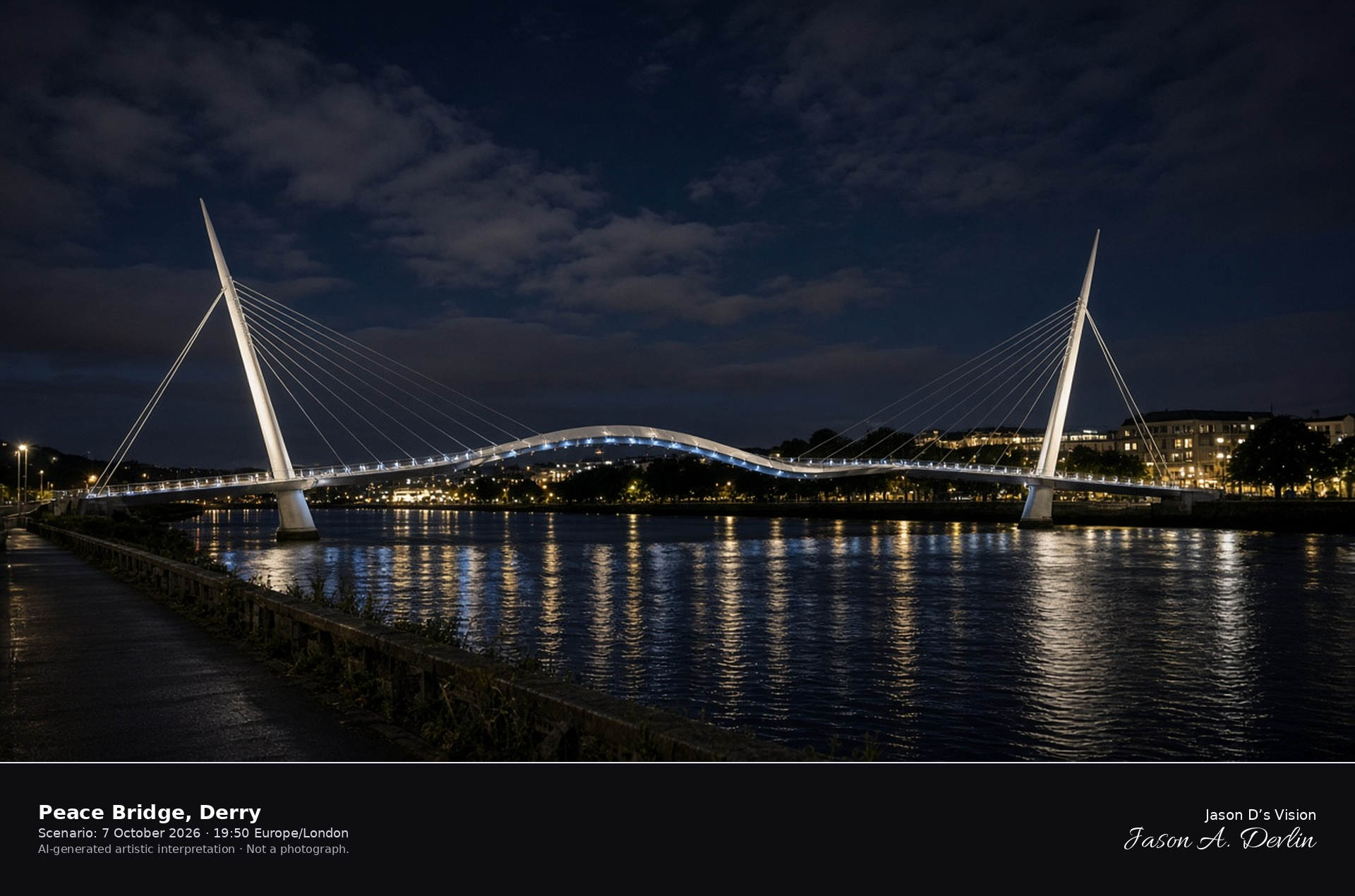
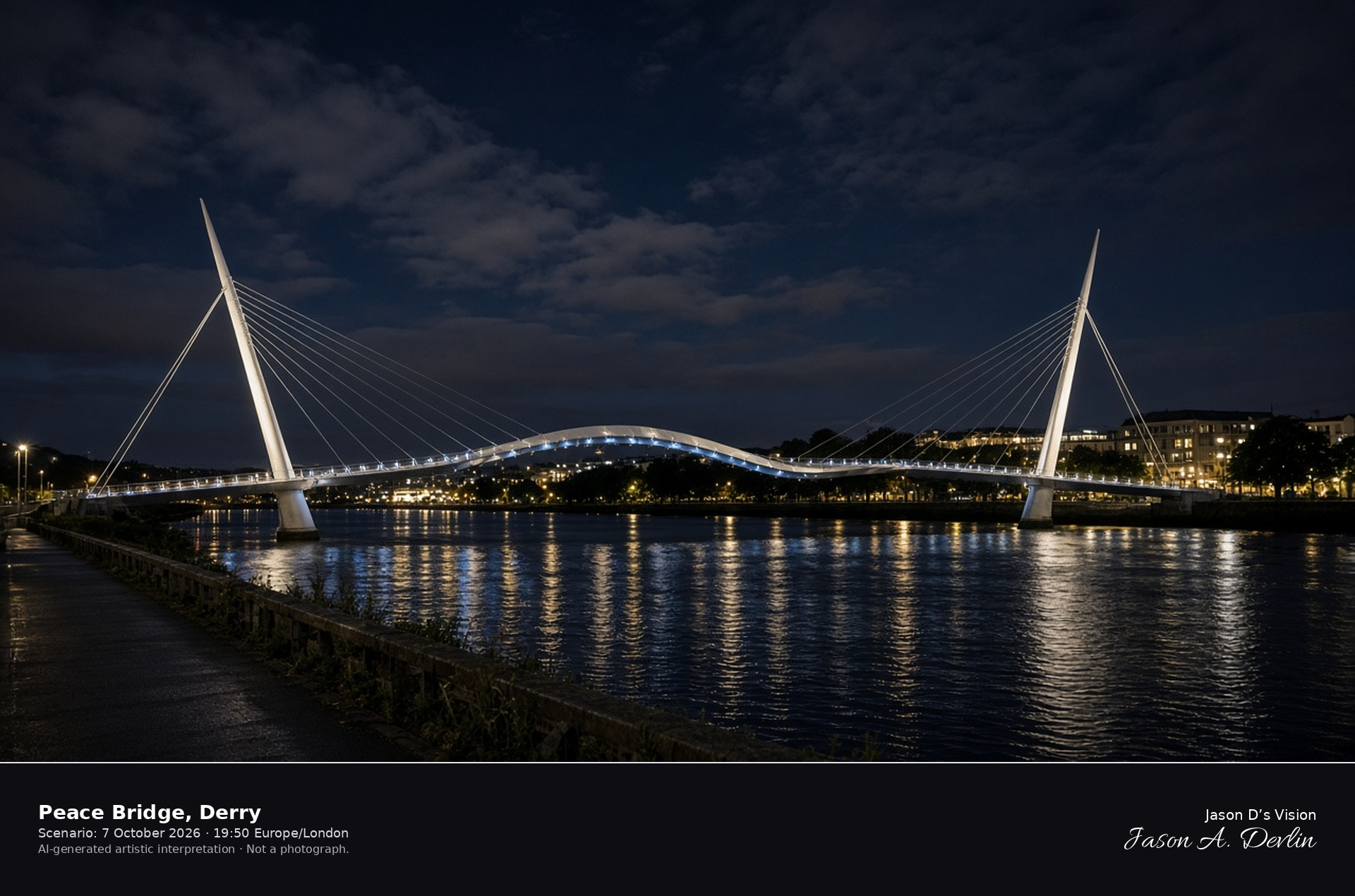
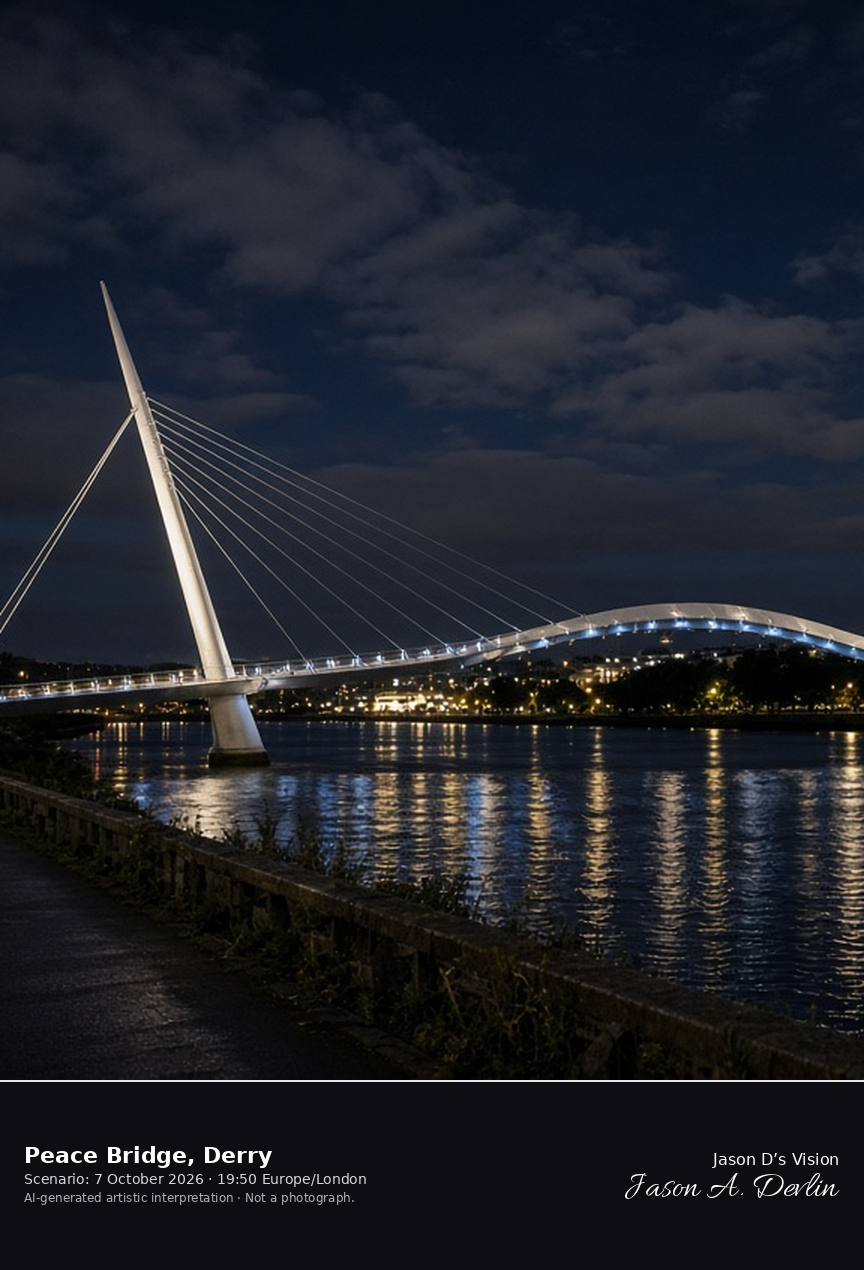
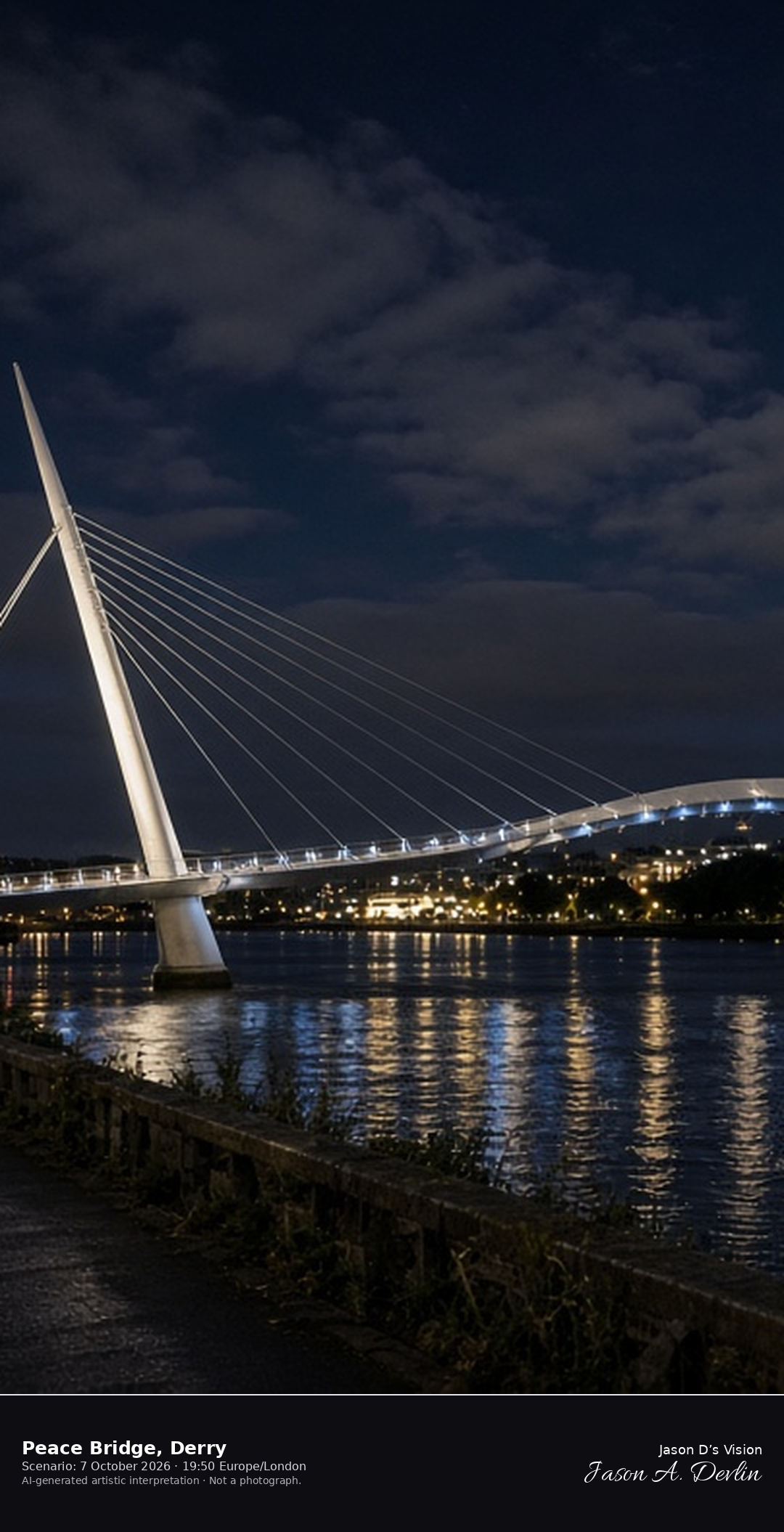
The Peace Bridge, opened in 2011, joins the two banks of the River Foyle in one graceful curve — the Waterside and the Cityside, long divided by history as much as by water. It has become the emblem of a city determined to be one place again.
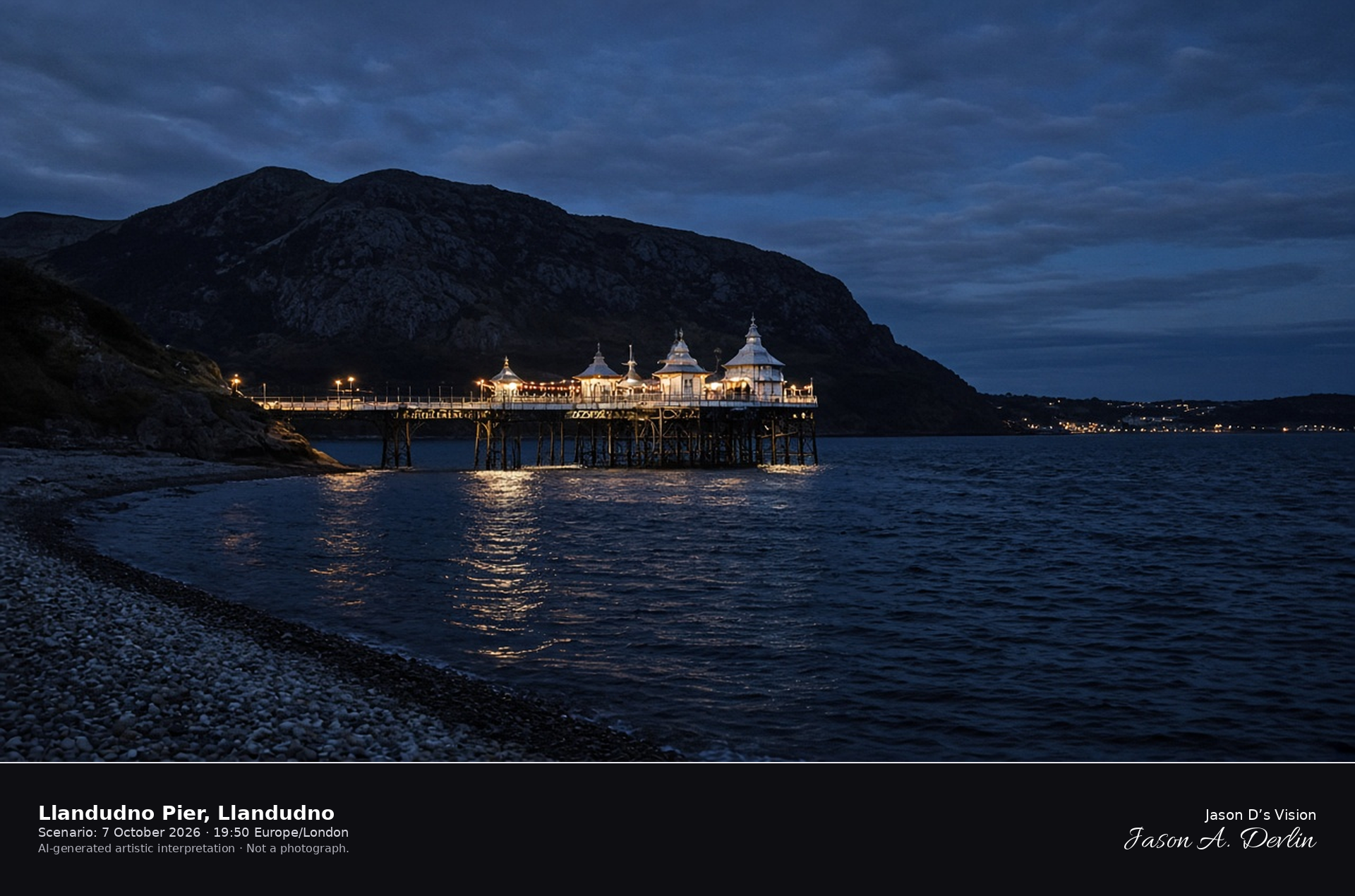
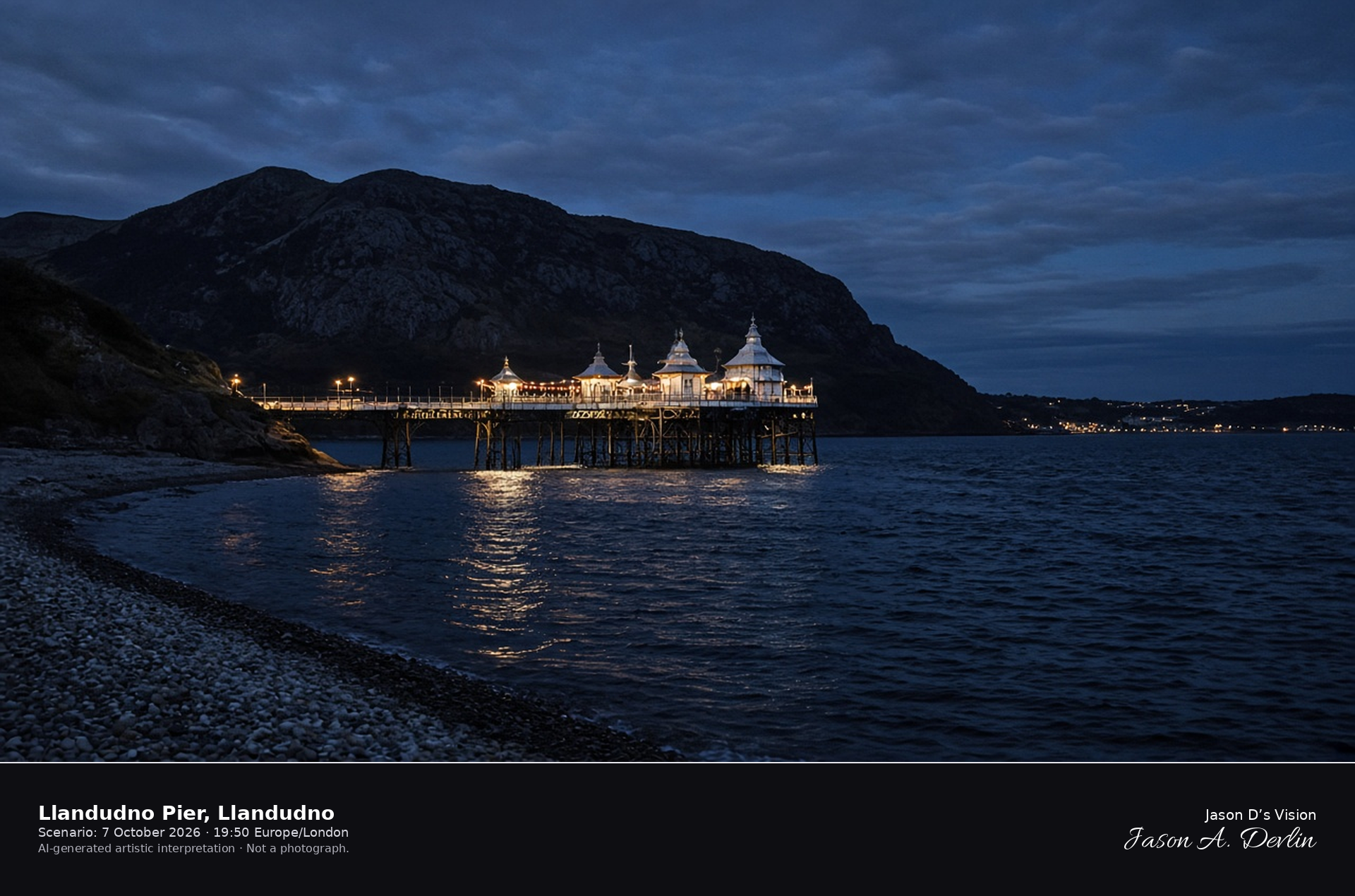
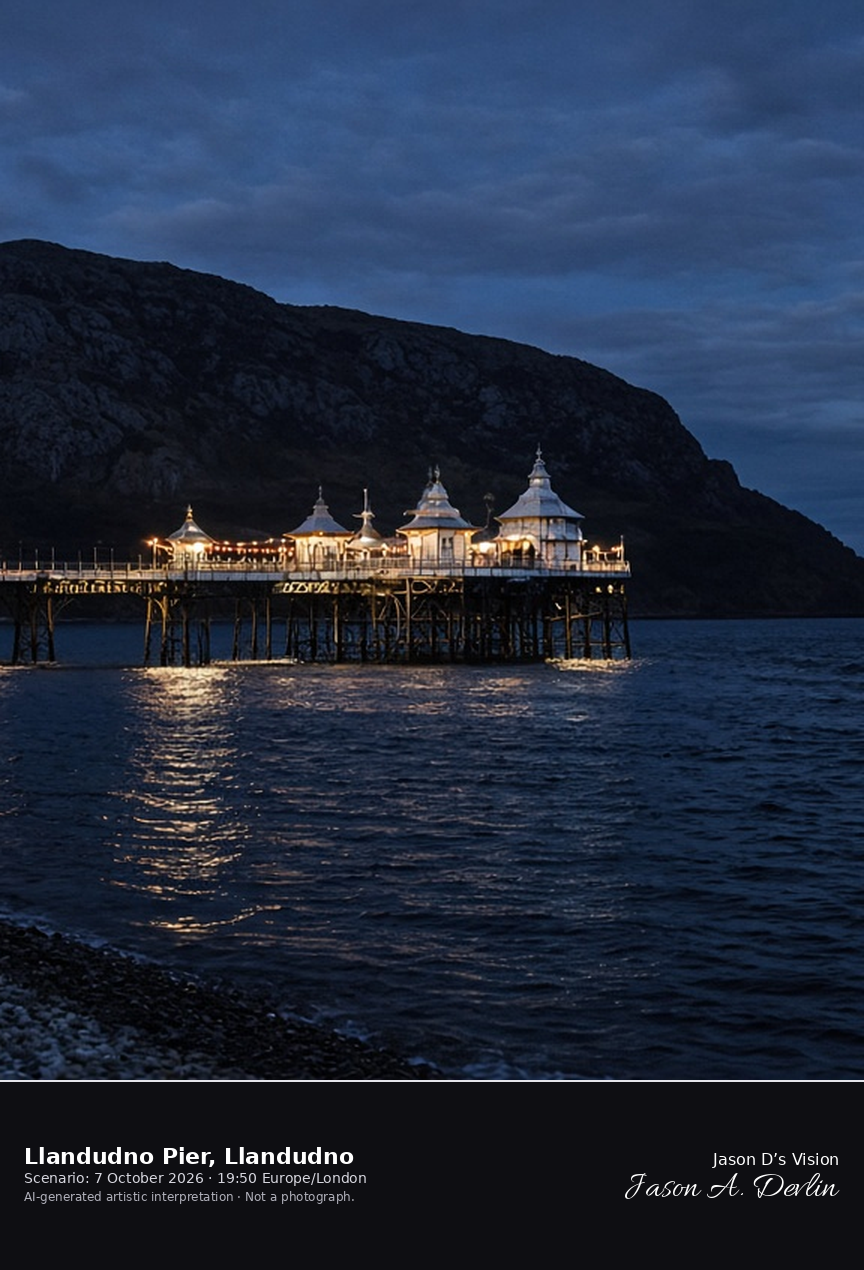
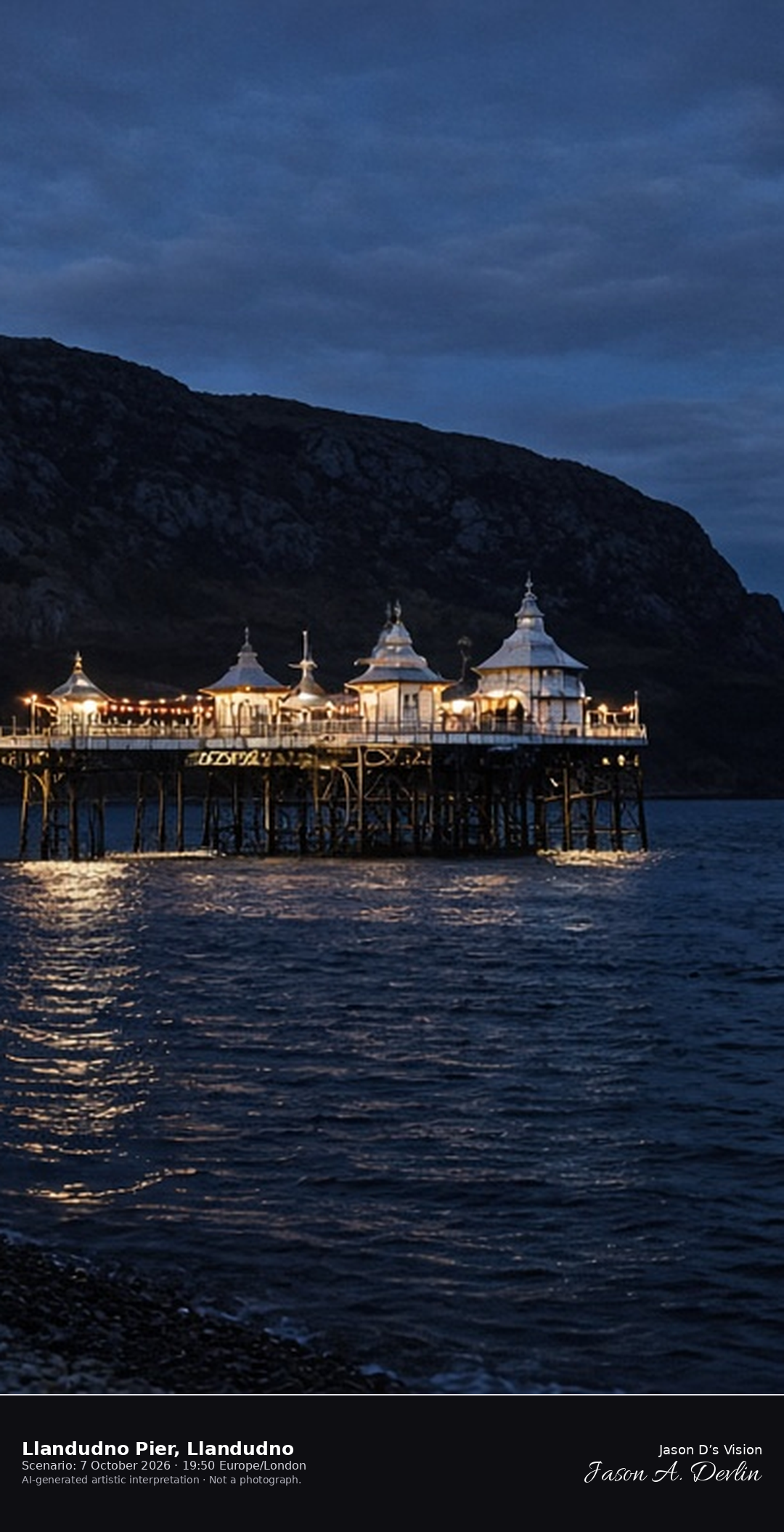
Llandudno Pier first opened to the public in 1877; a landward extension followed in 1884. At about seven hundred metres in total, it is the longest pier in Wales. The Victorian resort also has a literary connection: Alice Liddell, the inspiration for Alice in Wonderland, once holidayed at its West Shore.
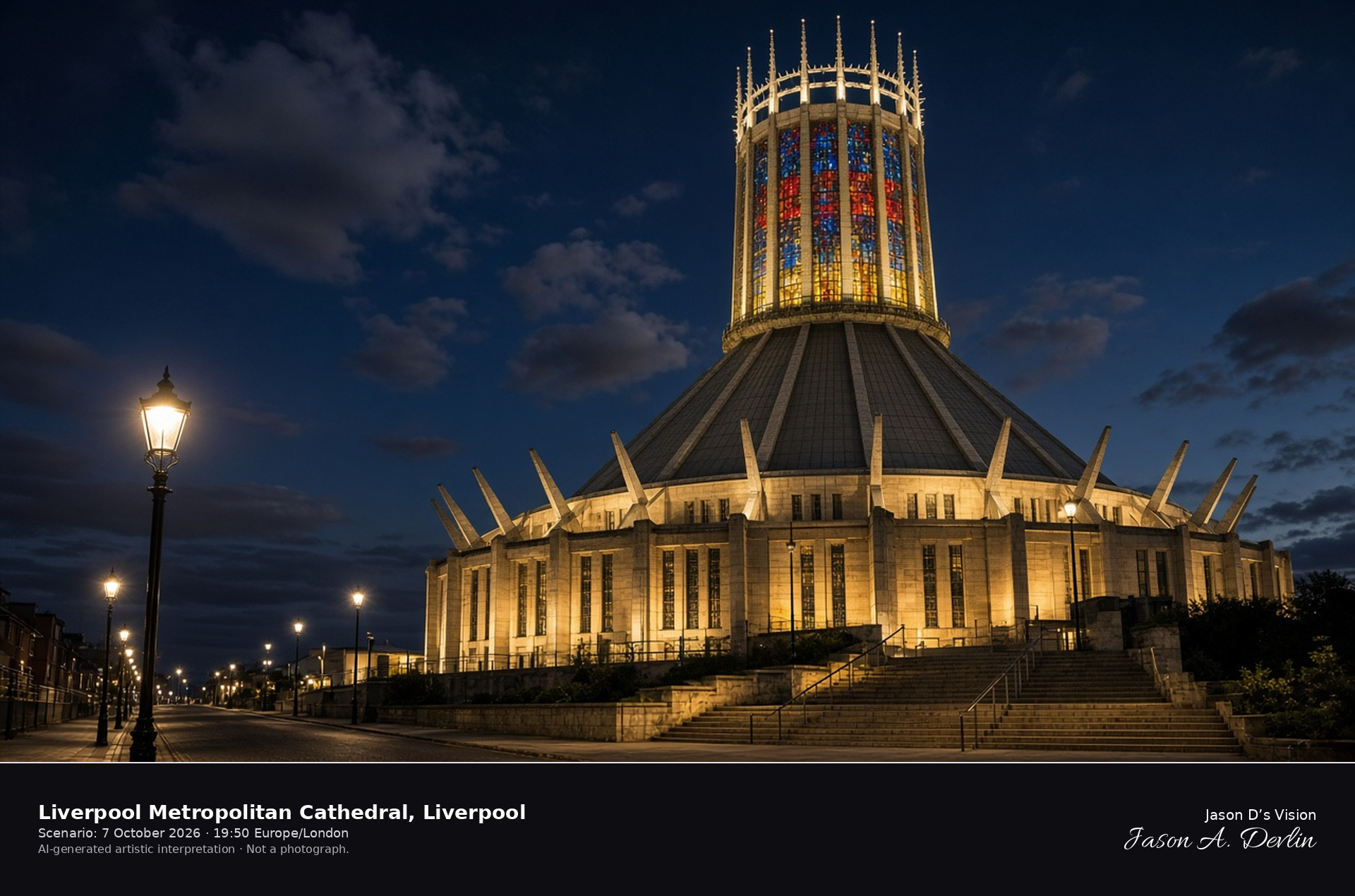
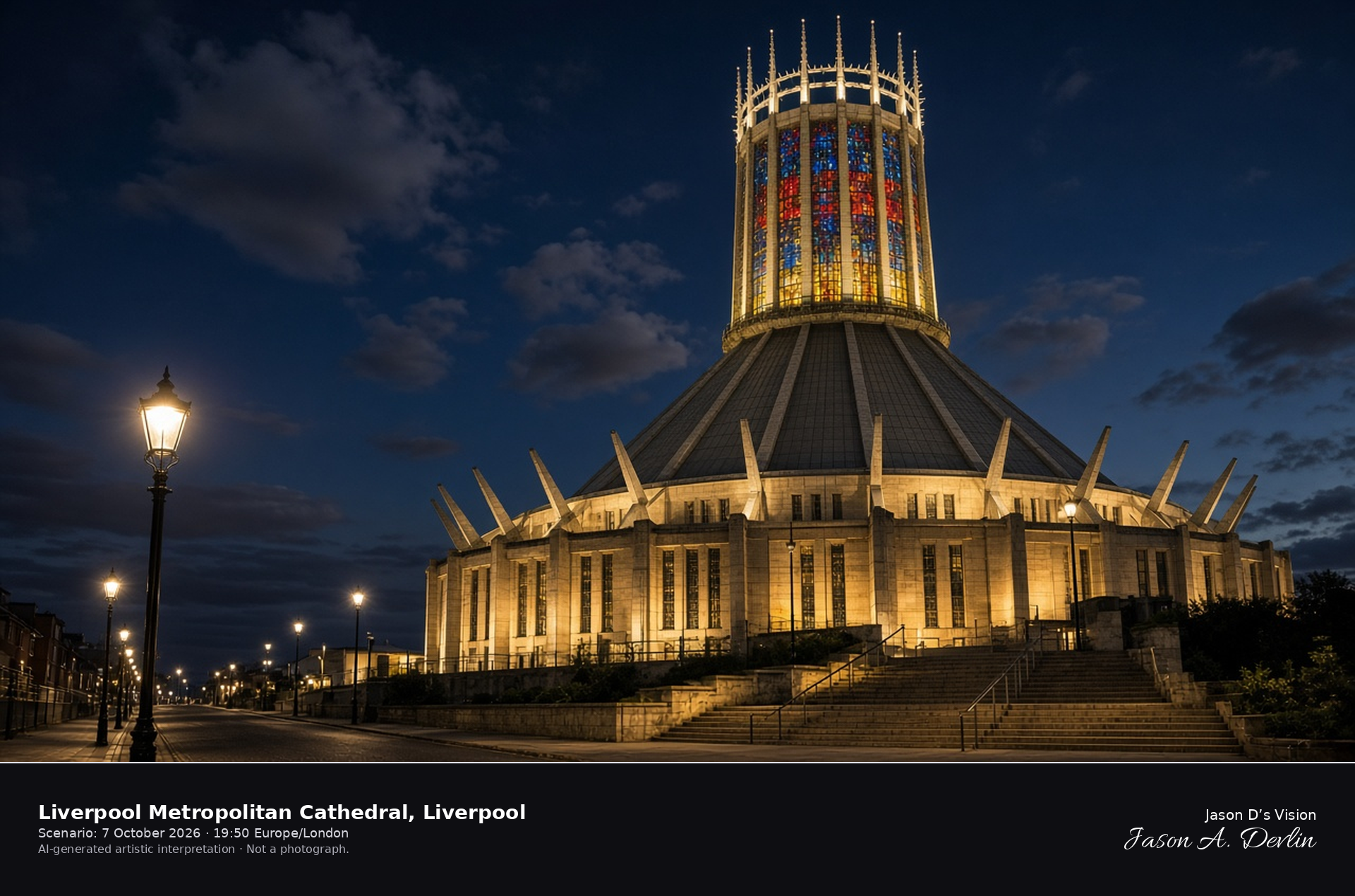
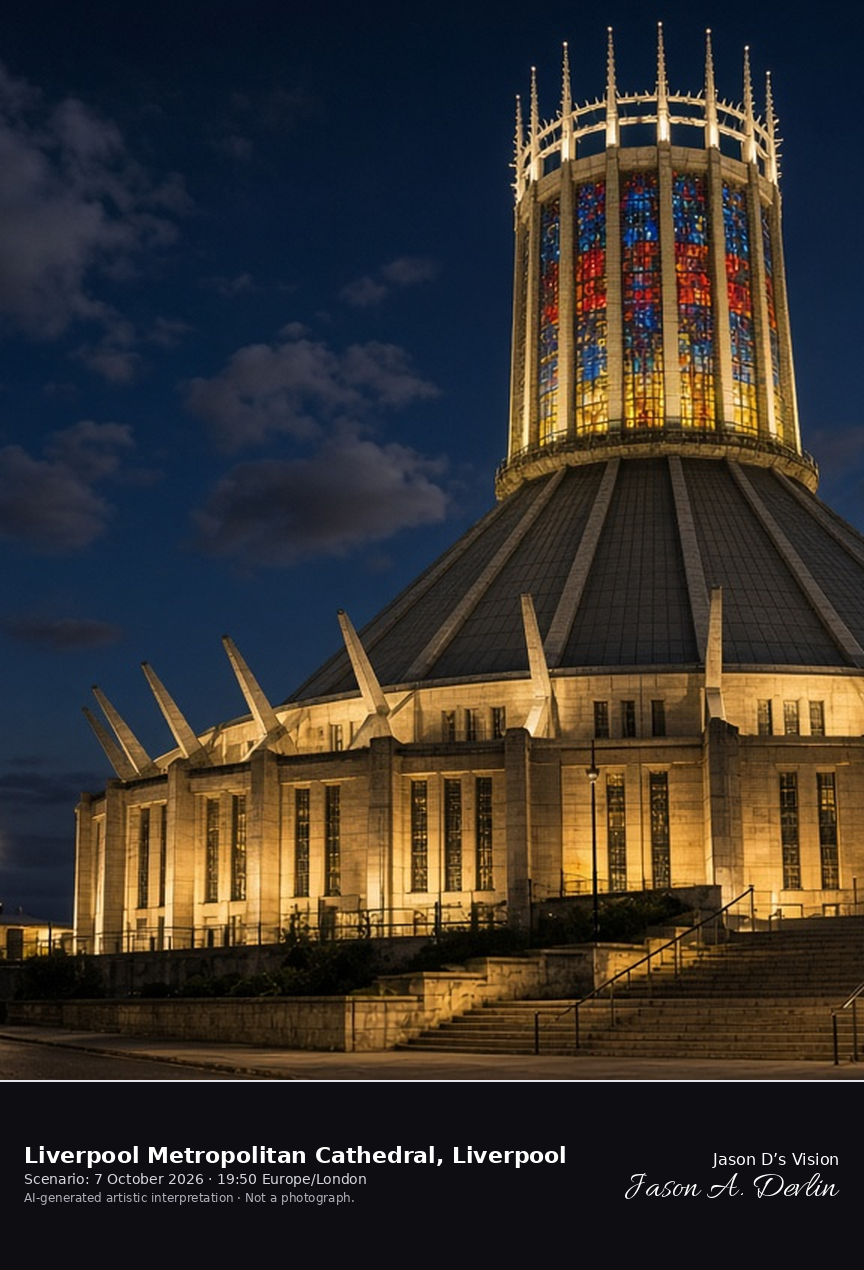
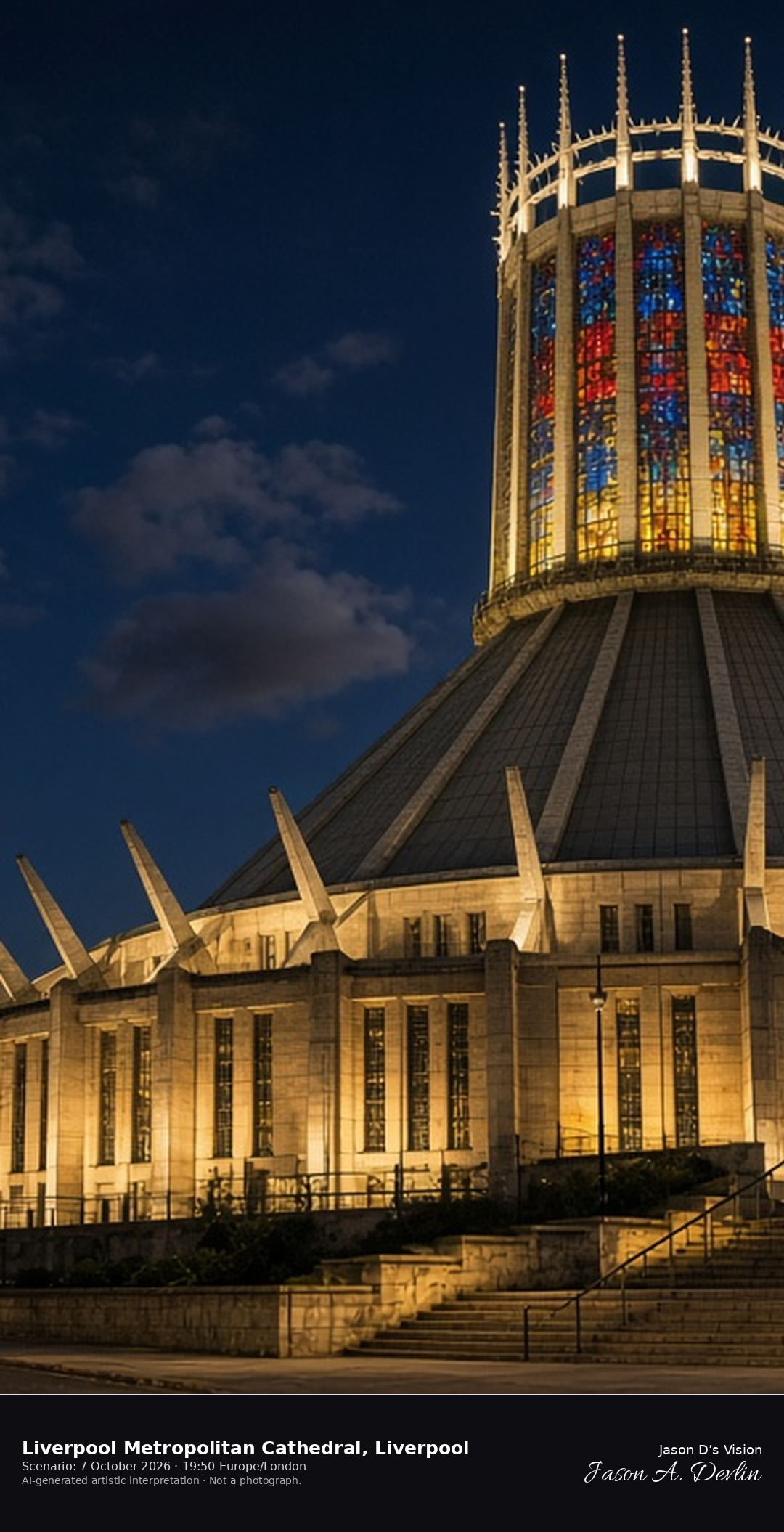
Liverpool Metropolitan Cathedral · AI-generated artistic interpretation
Liverpool's Metropolitan Cathedral was consecrated in 1967 to Sir Frederick Gibberd's design. Beneath the cathedral lies the crypt of Sir Edwin Lutyens — the surviving part of his uncompleted plan for a vast cathedral intended to rival St Peter's in Rome.
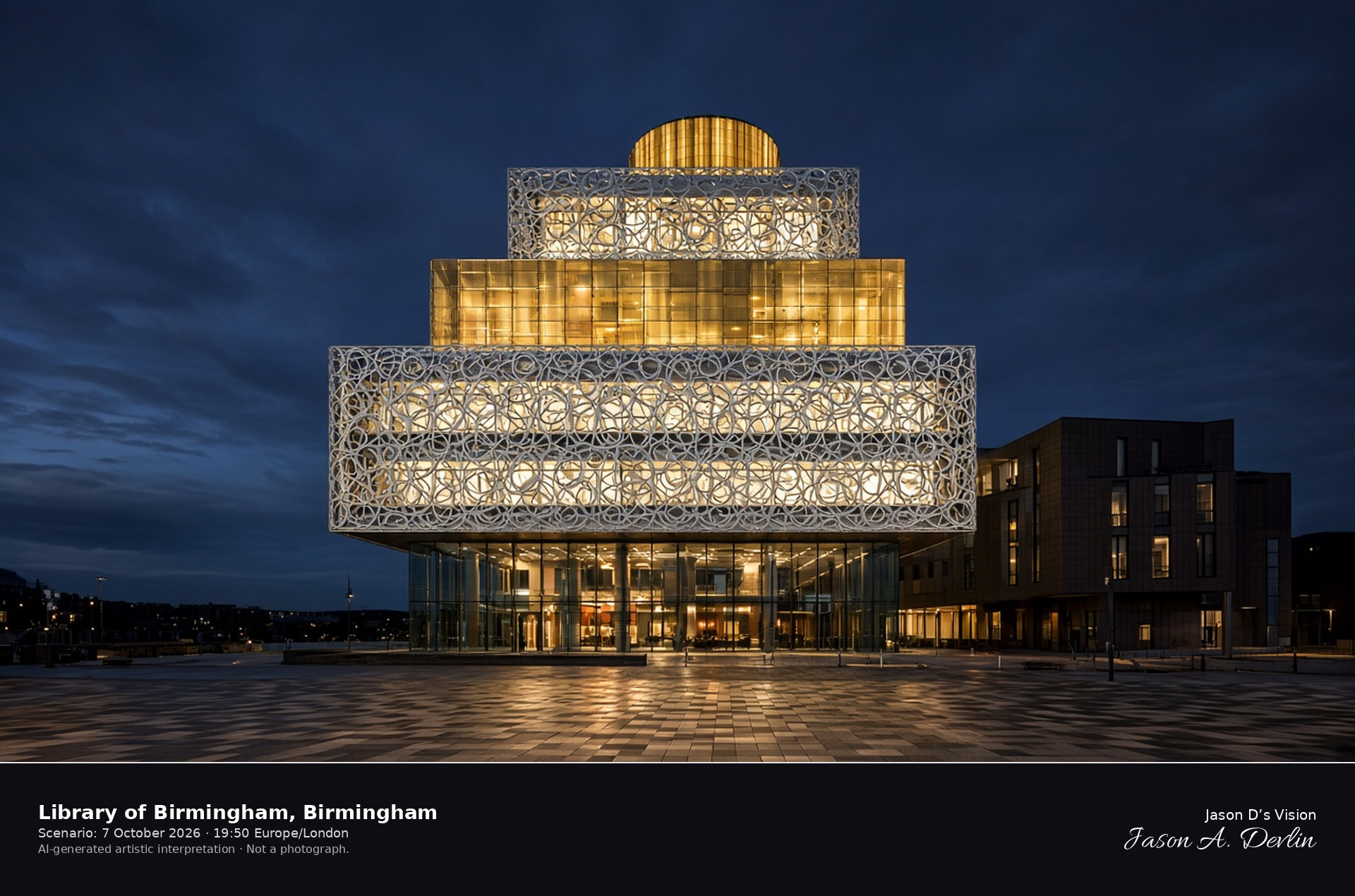
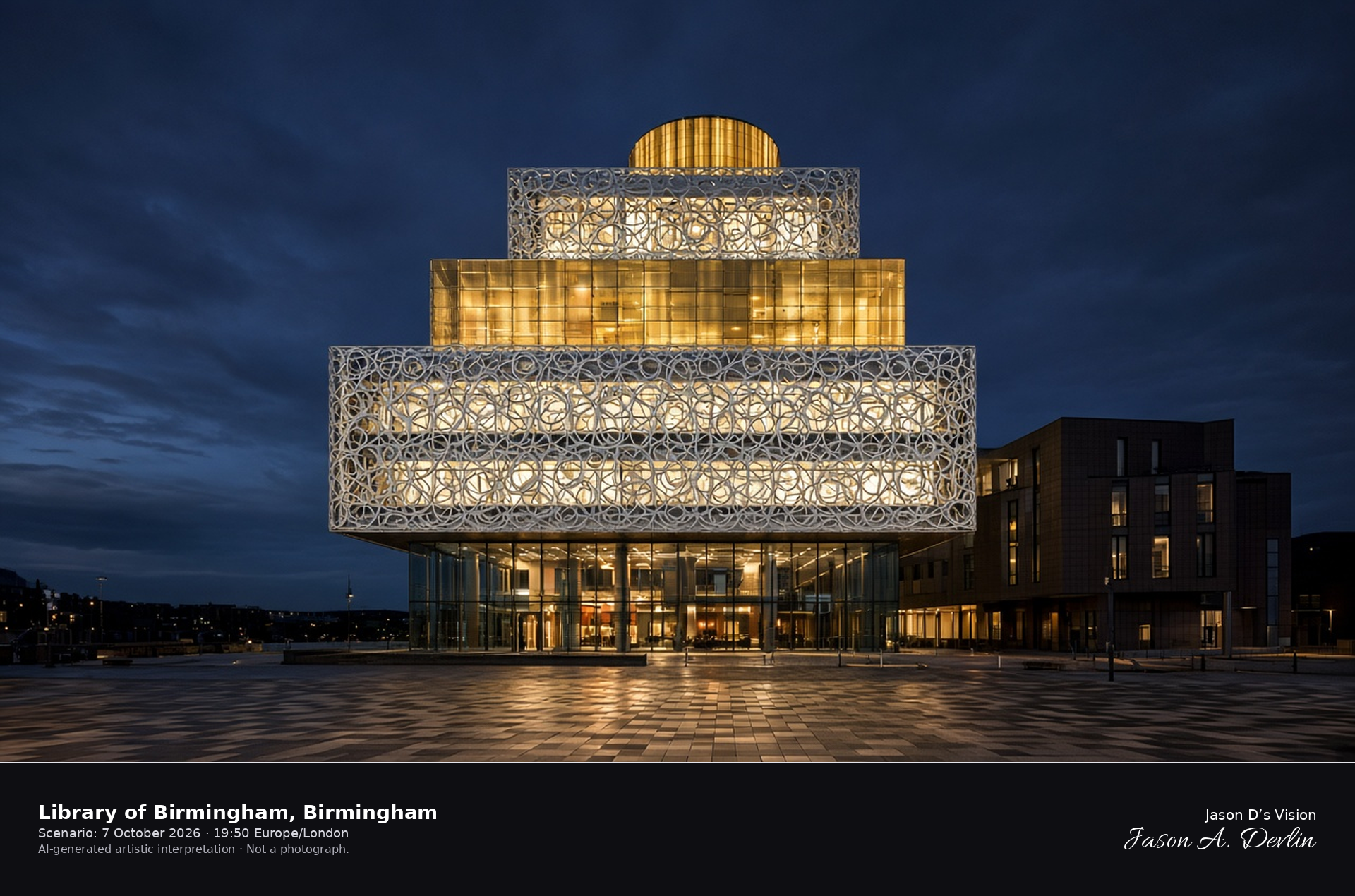
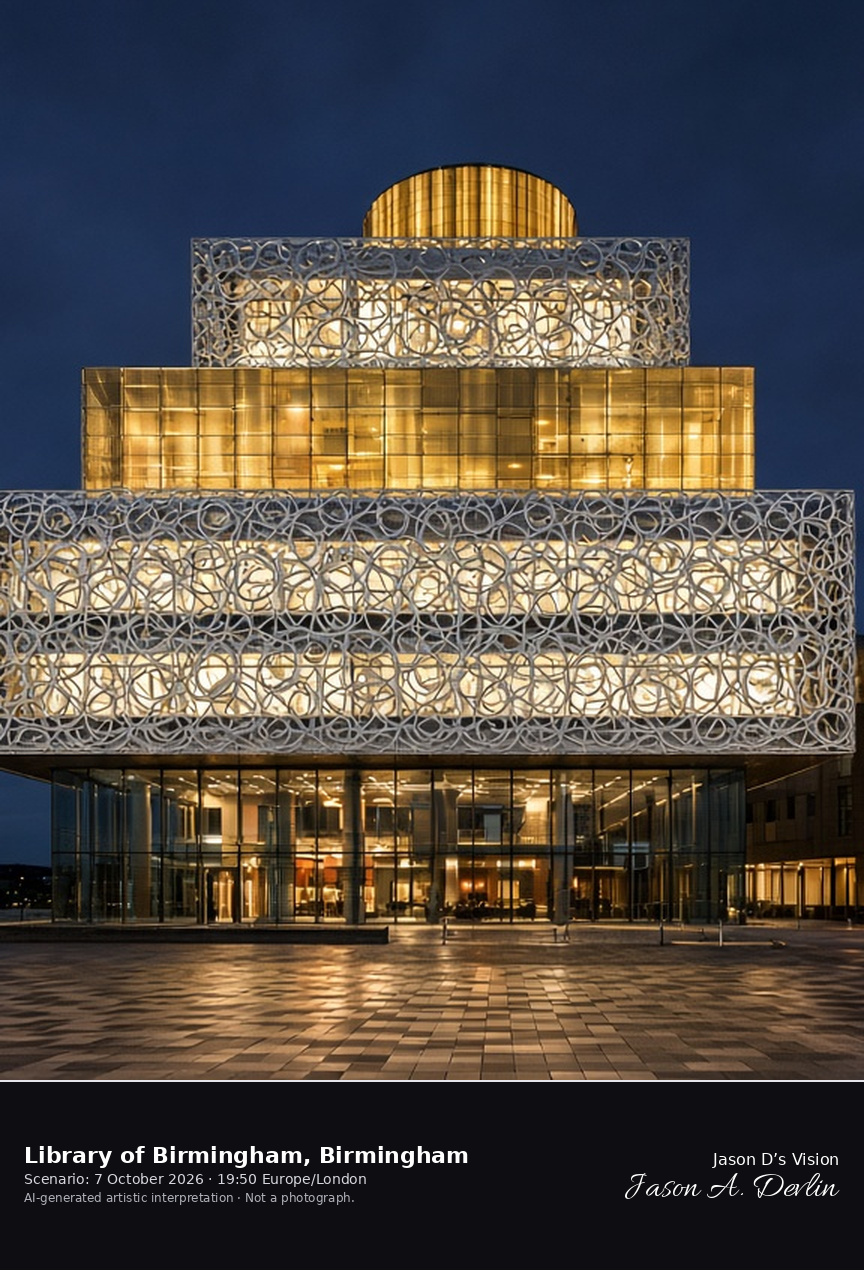
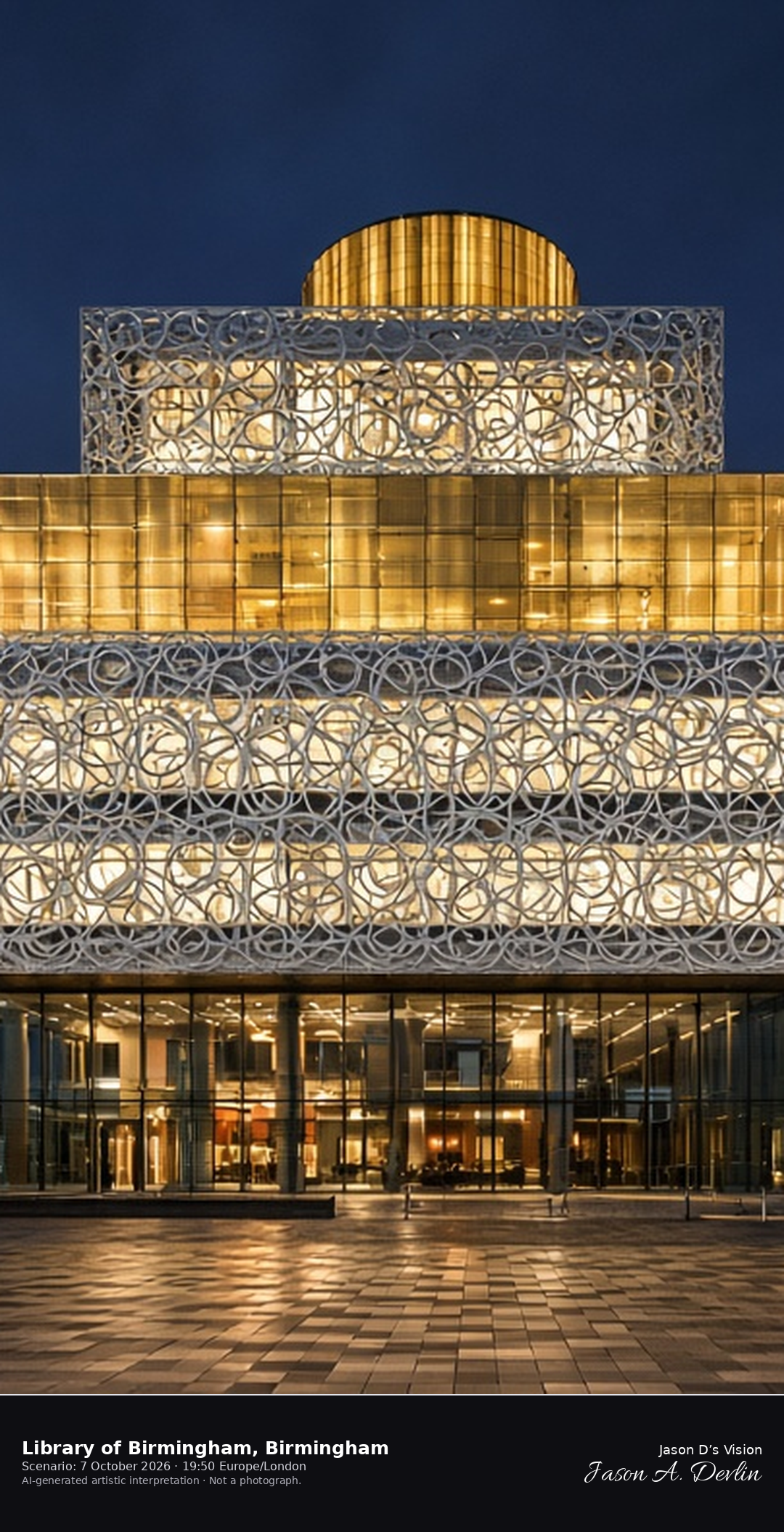
Library of Birmingham, Birmingham · AI-generated artistic interpretation
The Library of Birmingham, designed by Mecanoo, opened in 2013 on Centenary Square. Its filigree of rings recalls the city's jewellery and metalworking heritage.
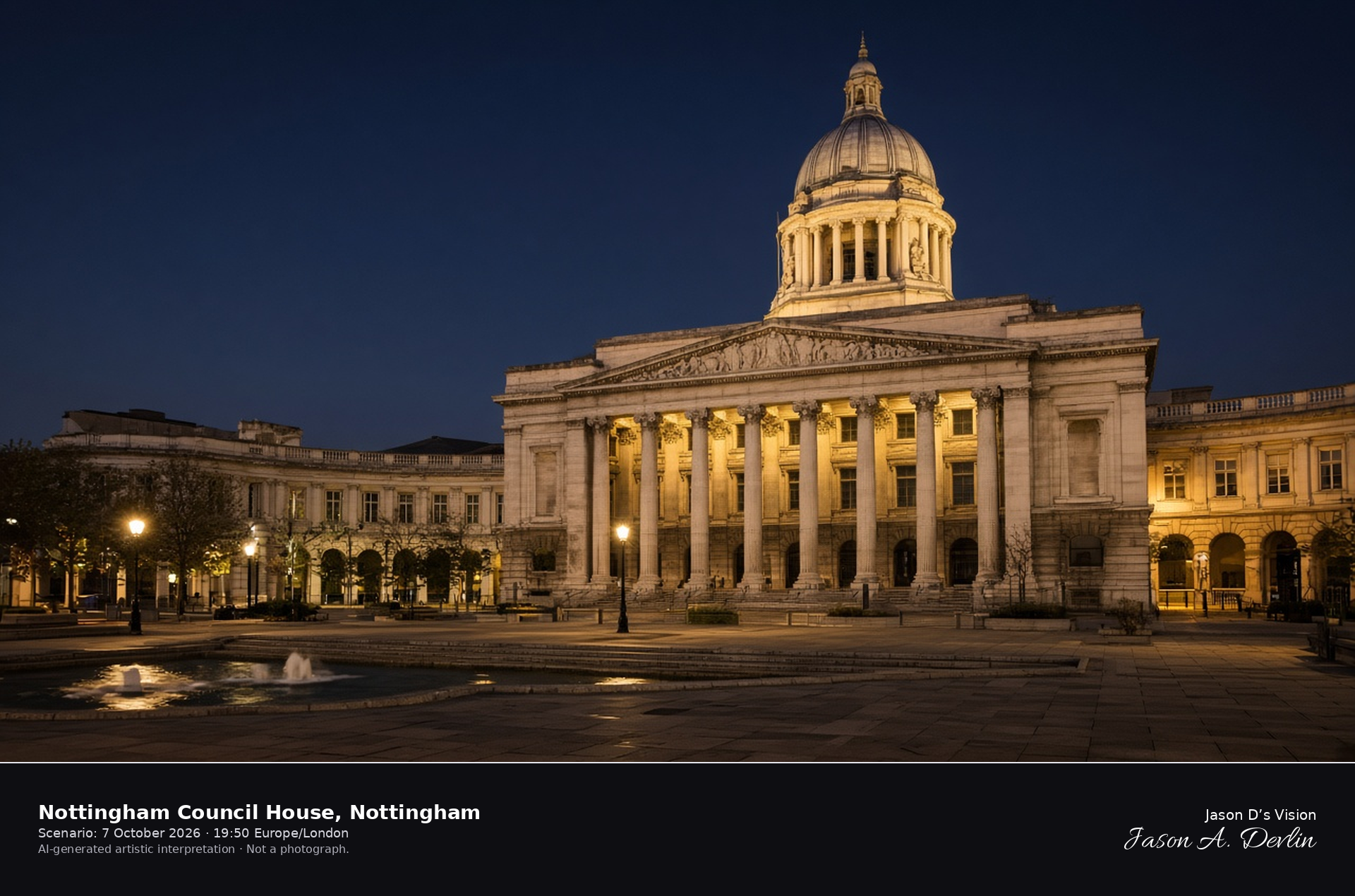
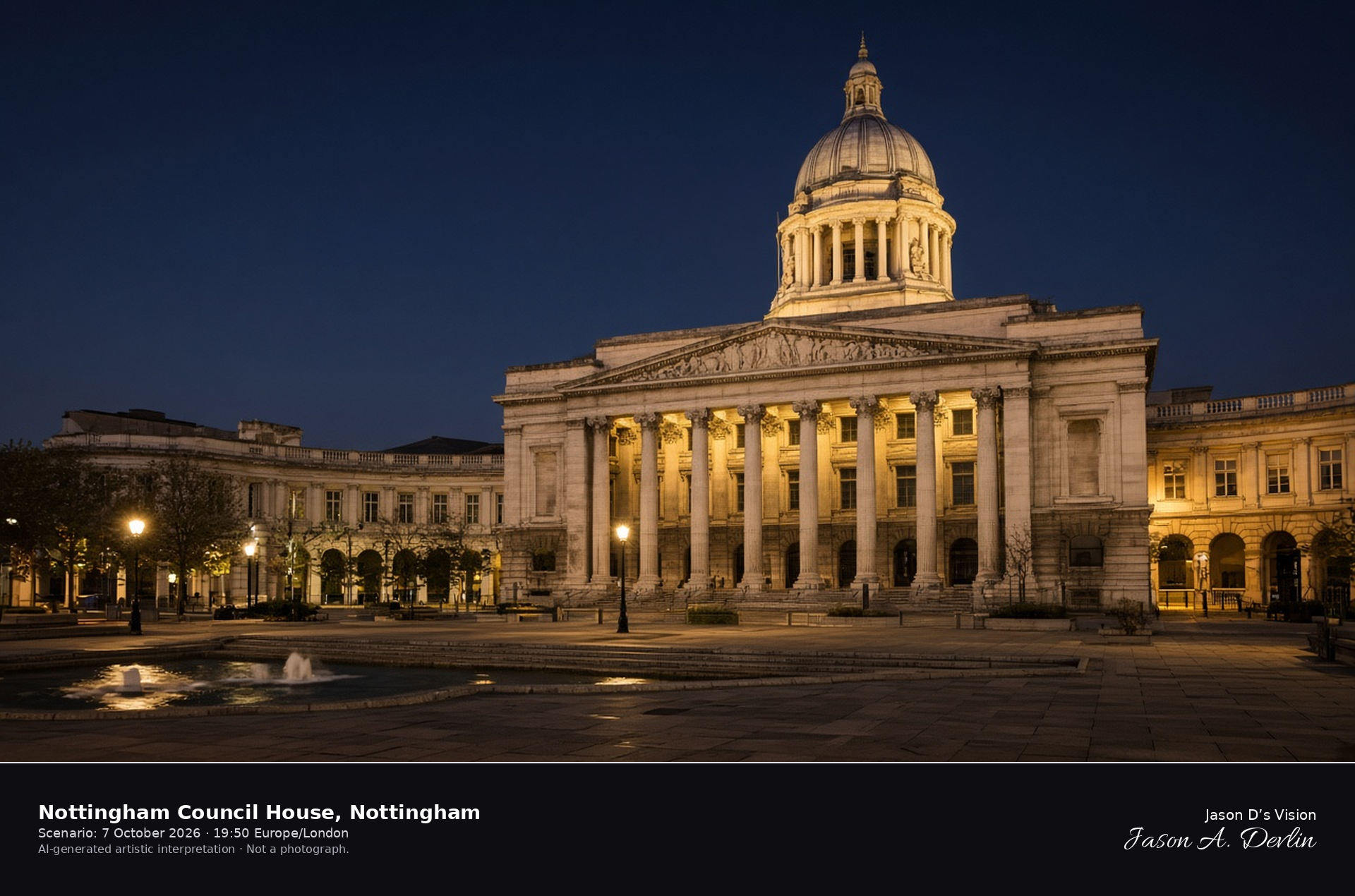
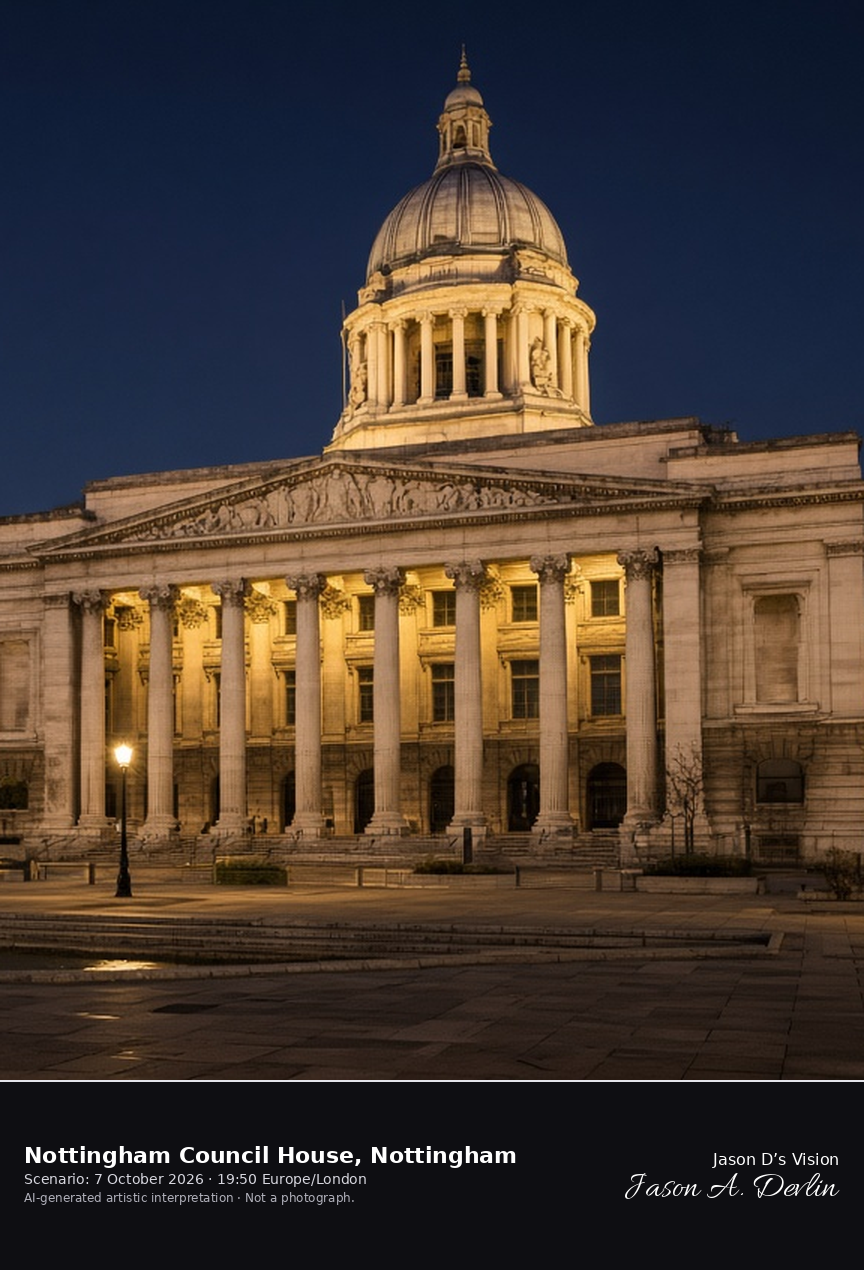
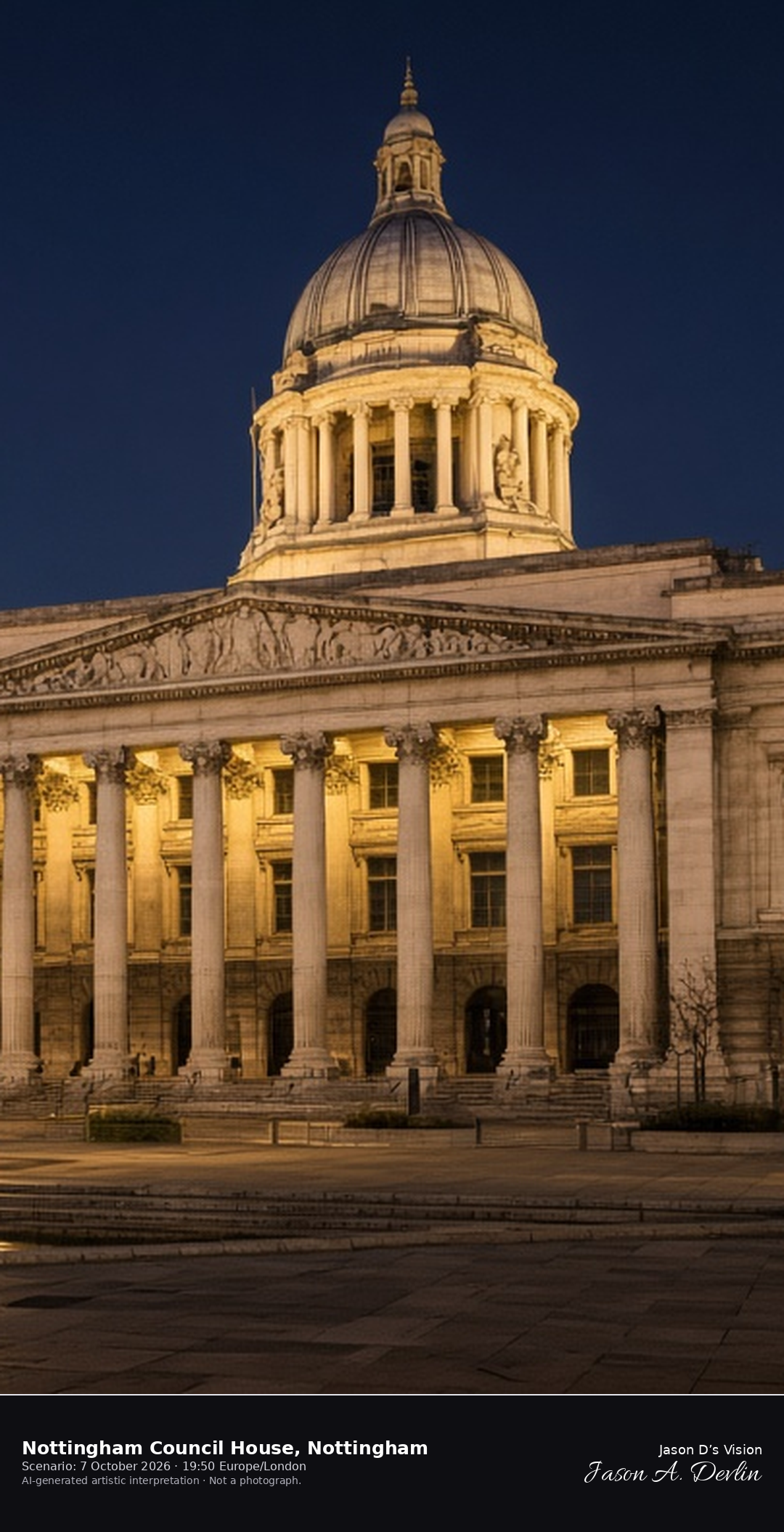
Nottingham's sandstone is riddled with caves — hundreds of chambers dug over the centuries for cellars, tanneries, and wartime shelters. Robin Hood's legend took root here, in the outlaw's endless feud with the Sheriff of Nottingham.
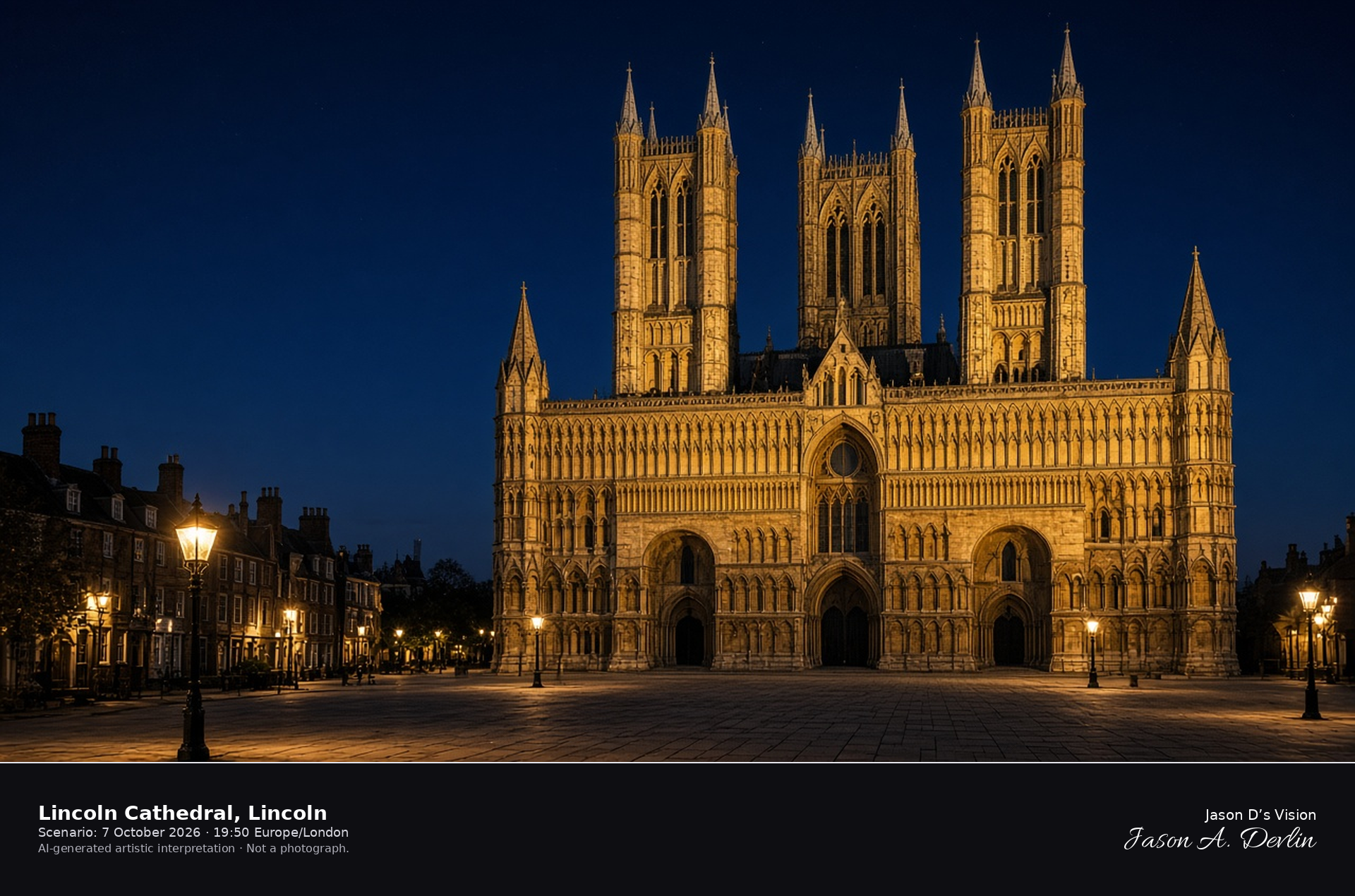
Lincoln Cathedral · AI-generated artistic interpretation
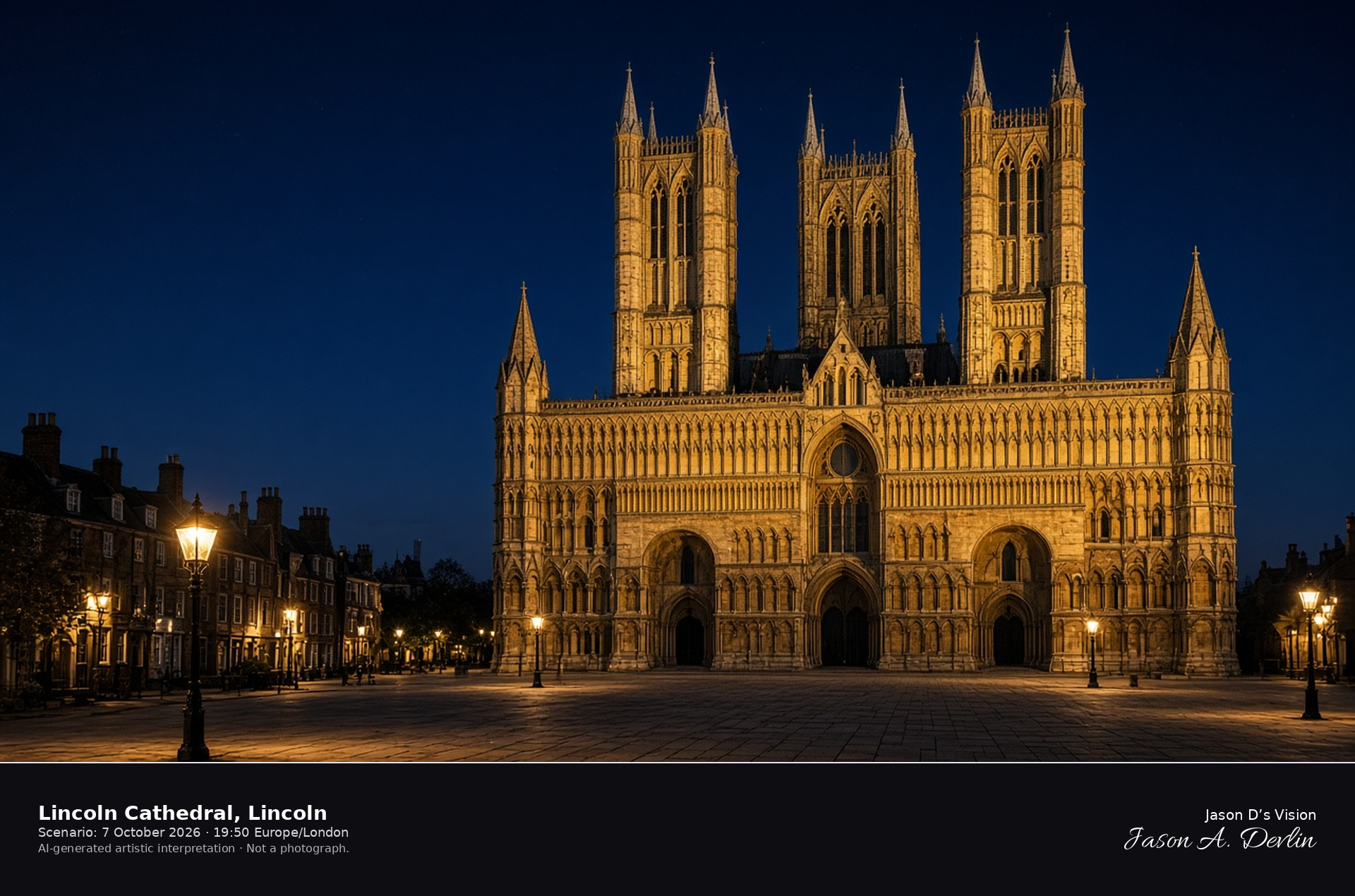
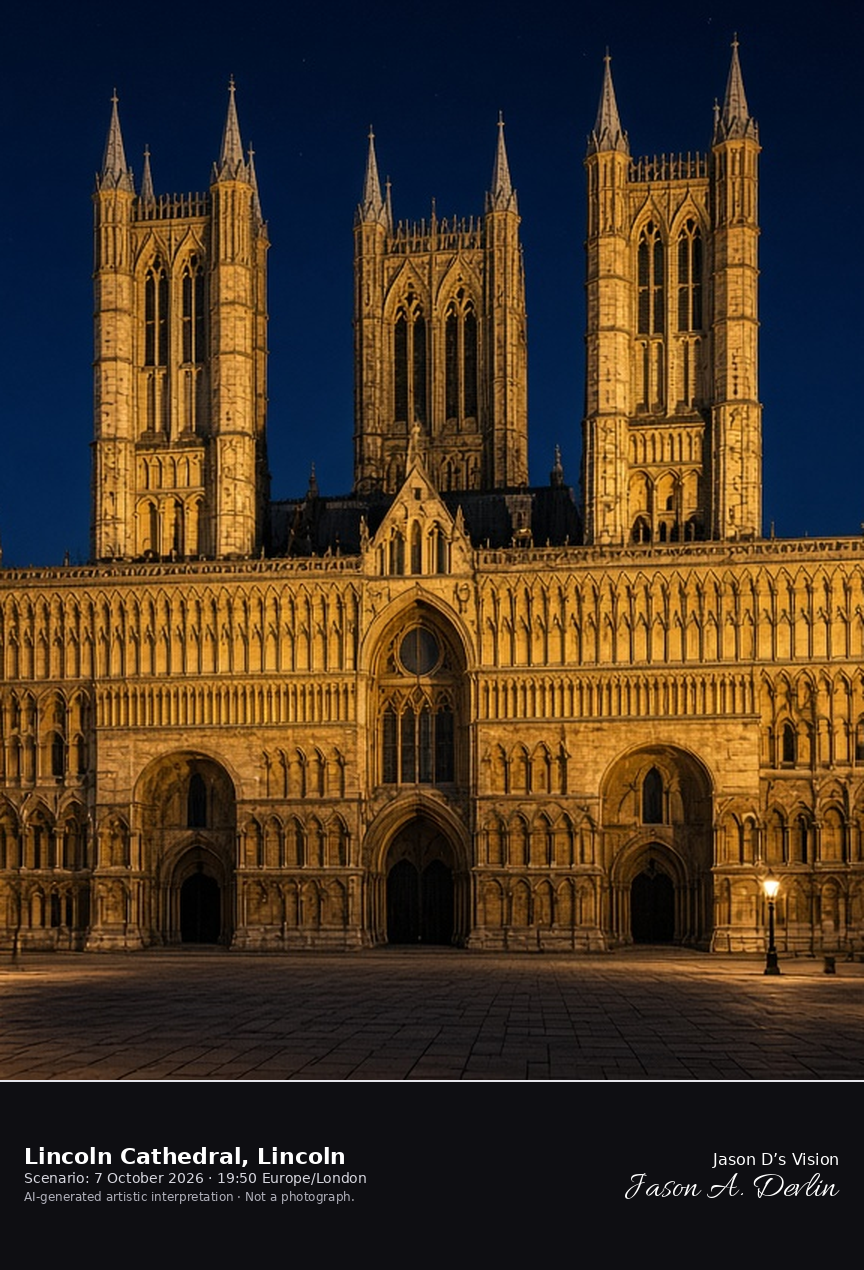
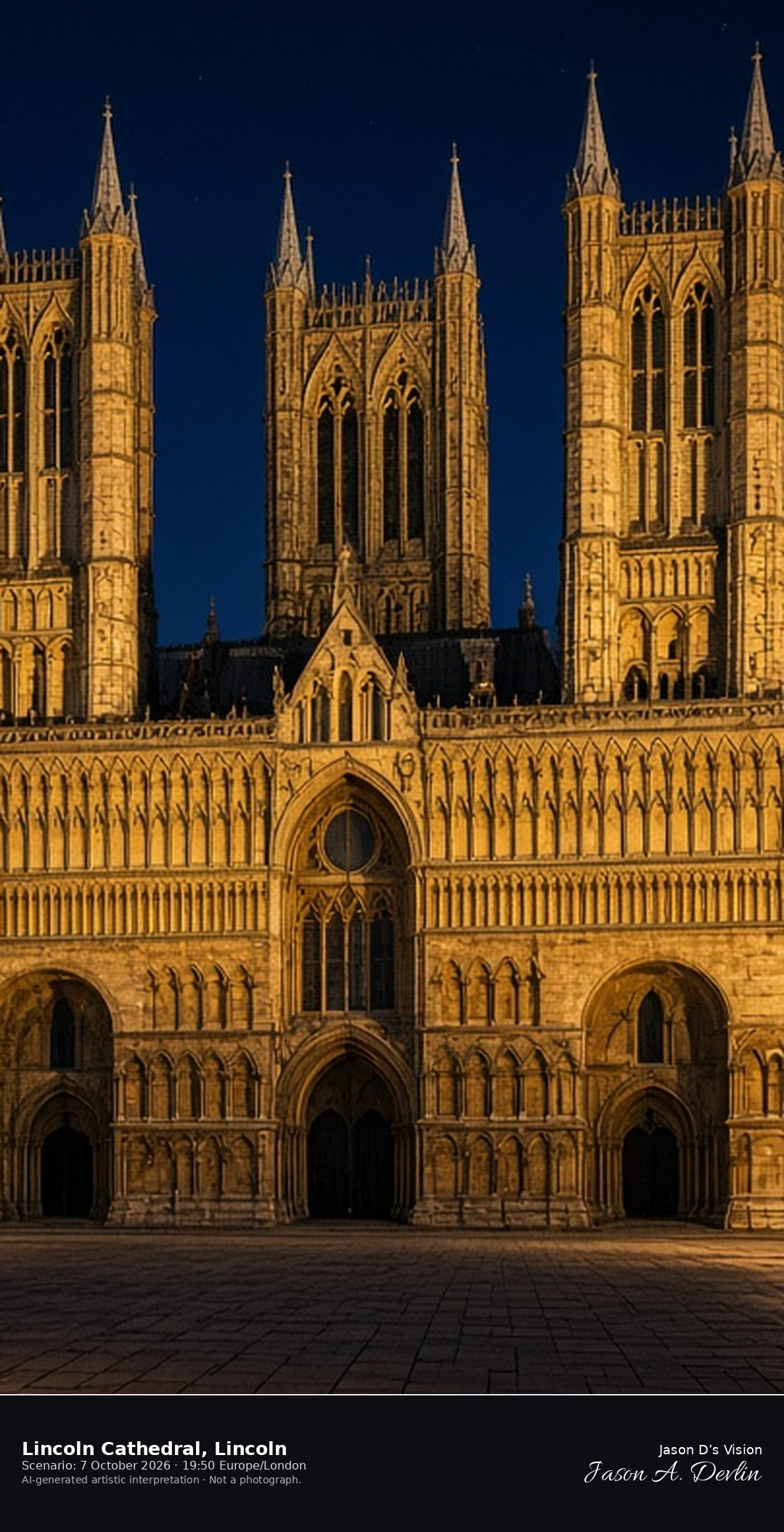
With its lost central spire, Lincoln Cathedral is reputed to have overtaken the Great Pyramid as the world’s tallest building for more than two centuries. High in its stonework hides the Lincoln Imp, the city’s mischievous emblem; the cathedral also owns one of the four surviving copies of the 1215 Magna Carta, displayed nearby at Lincoln Castle.
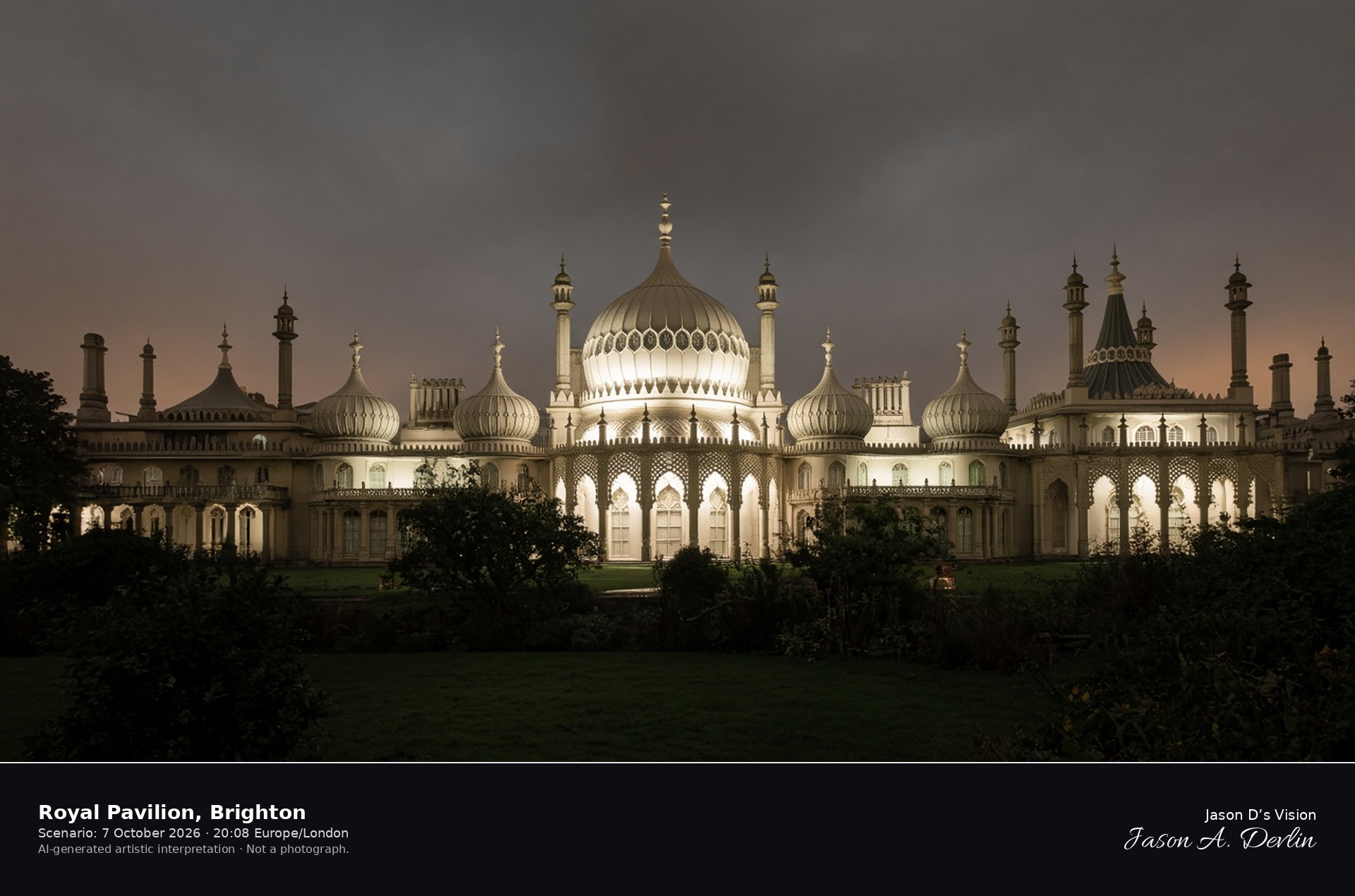
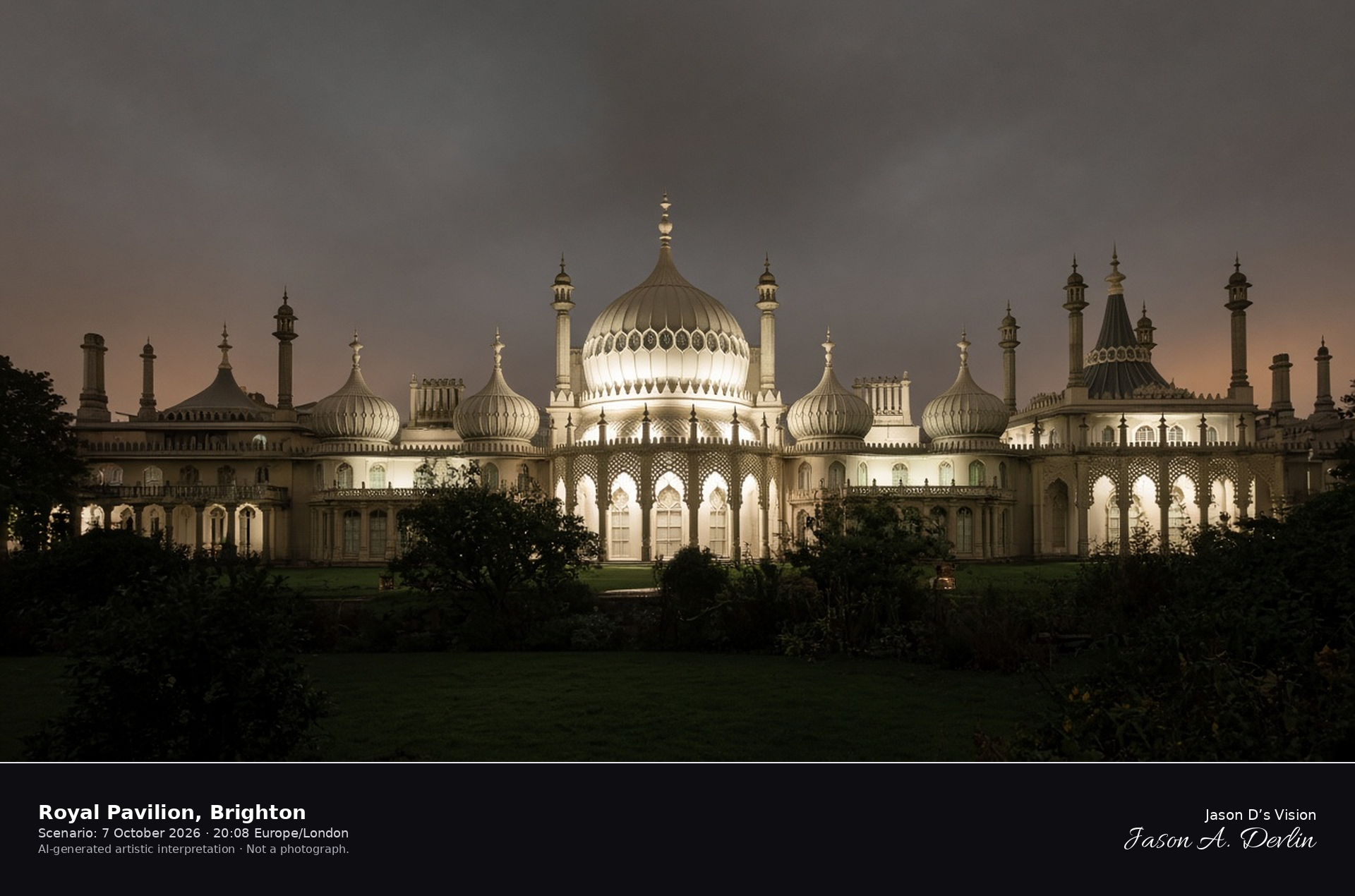
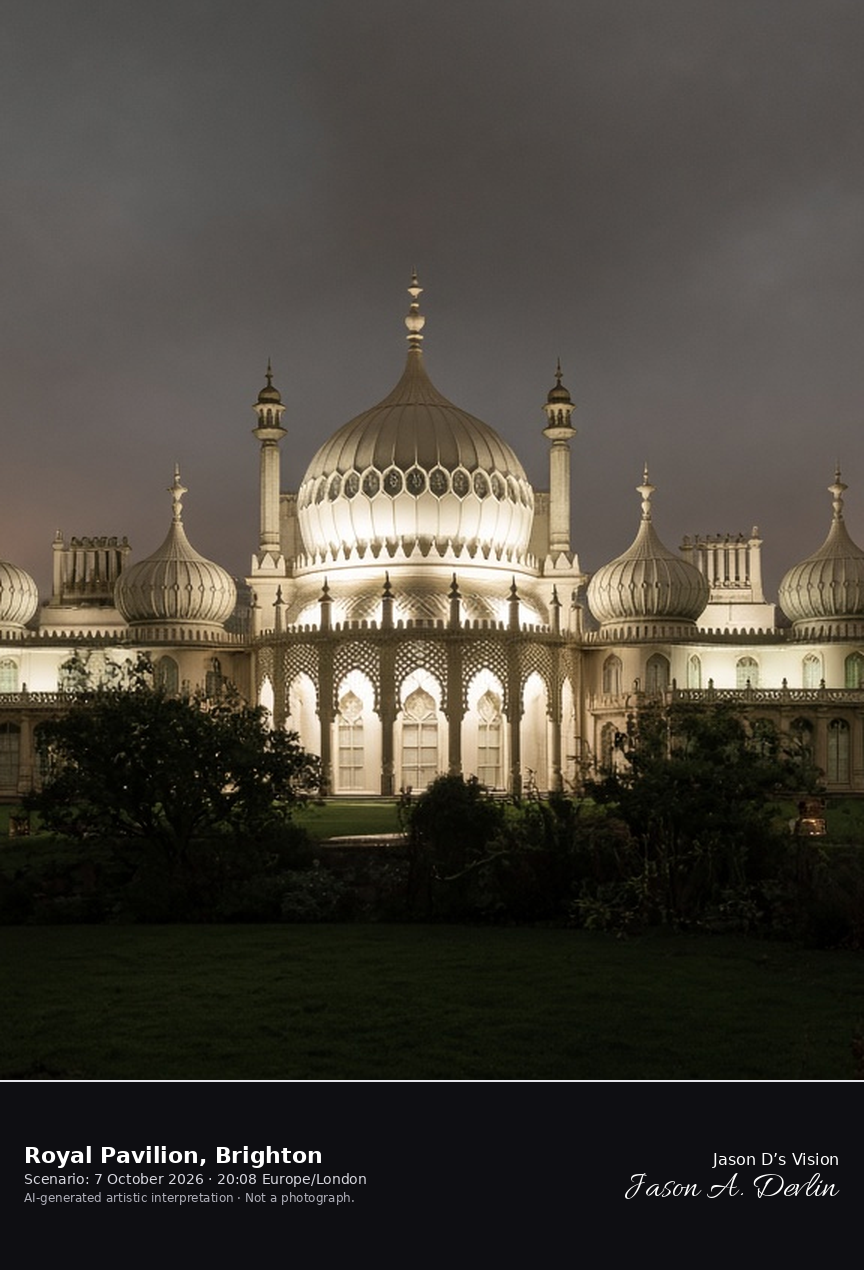
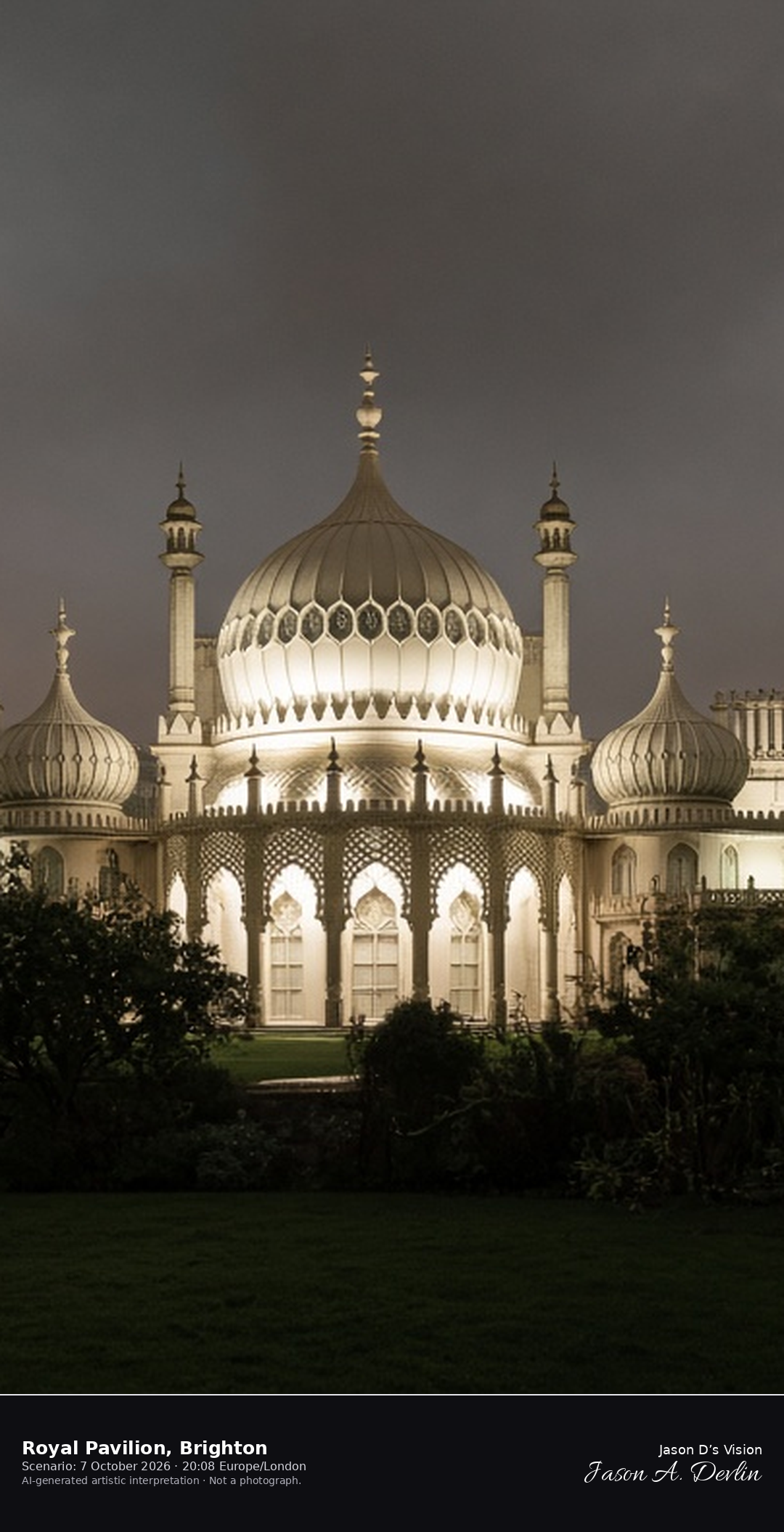
Royal Pavilion, Brighton · AI-generated artistic interpretation
The Royal Pavilion was remodelled for the Prince Regent, later George IV, by John Nash between 1815 and 1822. Its exterior borrows from Indian architecture while its interiors are richly Chinese in style.
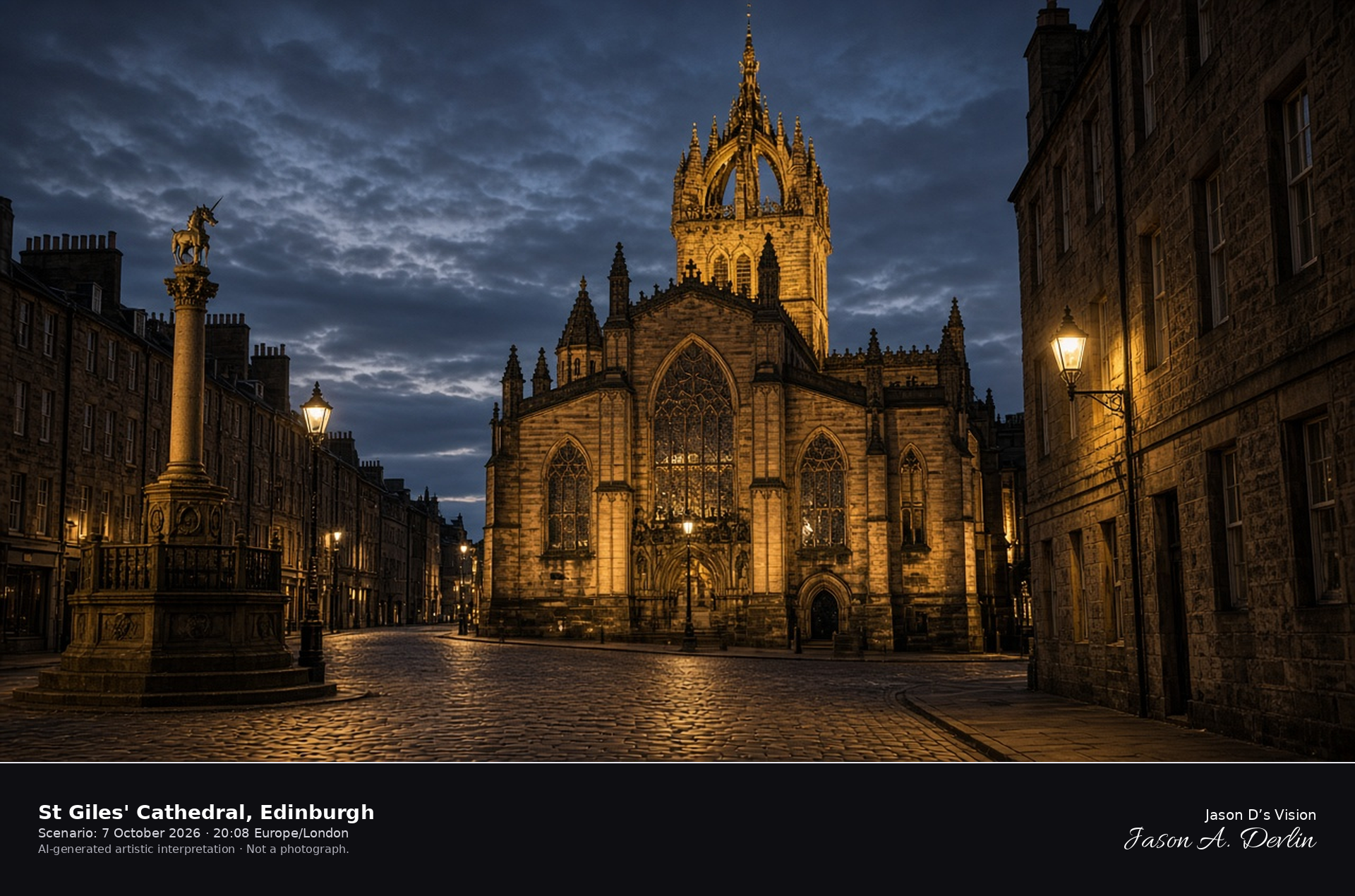
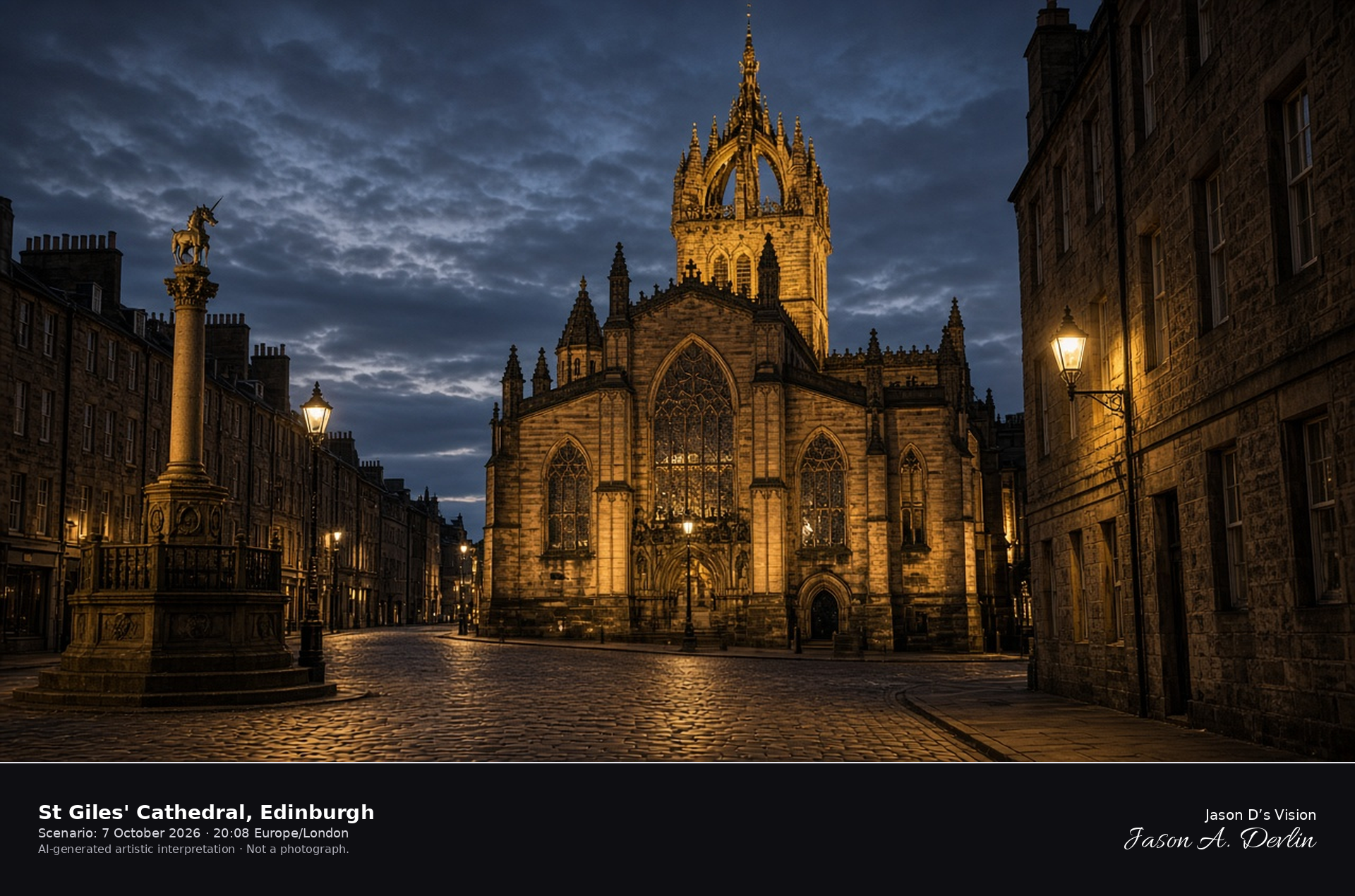
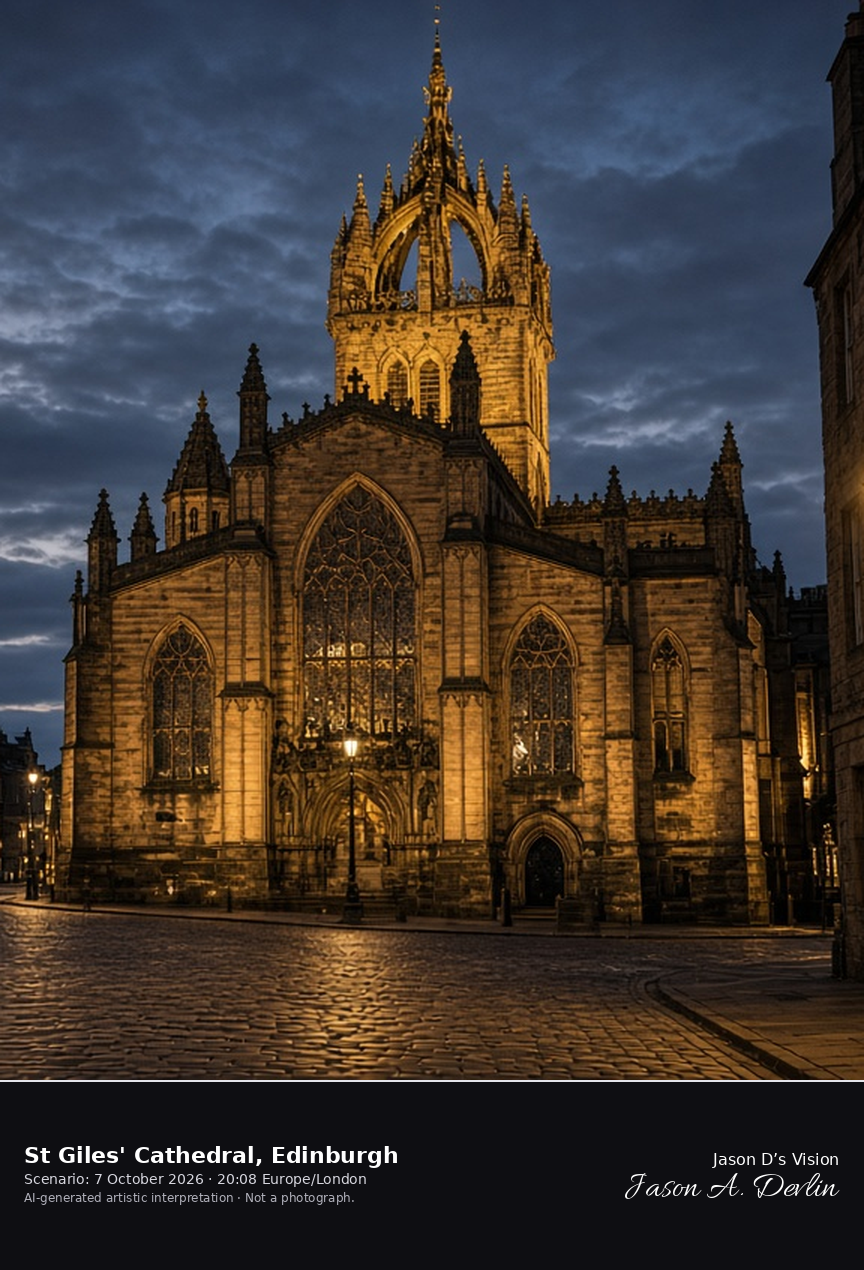
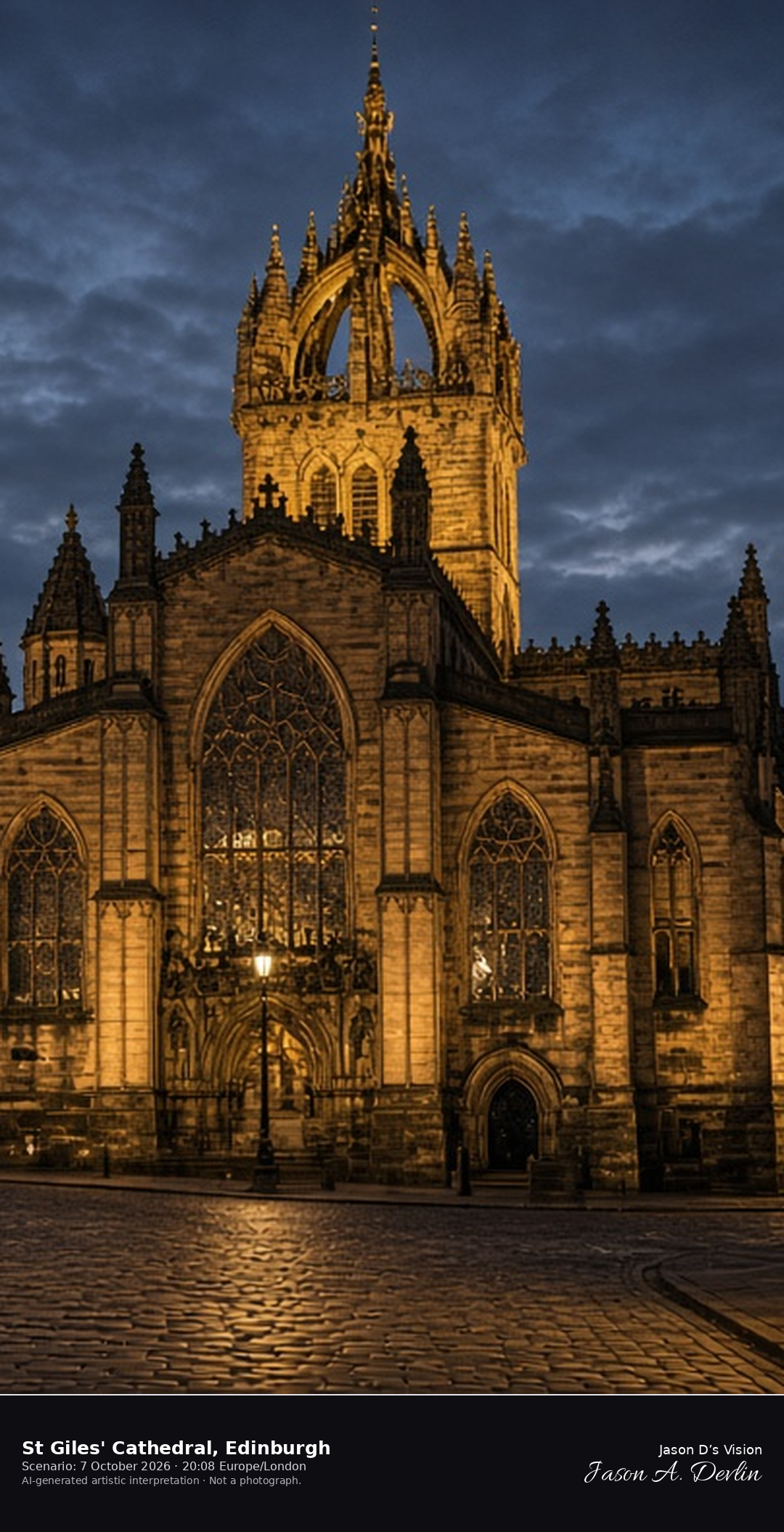
St Giles' Cathedral · AI-generated artistic interpretation
St Giles', Edinburgh's High Kirk, was founded in 1124 on the site of today's Royal Mile, crowned by its open crown spire of flying buttresses. John Knox thundered from its pulpit as a leading minister of the Scottish Reformation, and the little Thistle Chapel within is home to Scotland's highest order of chivalry.
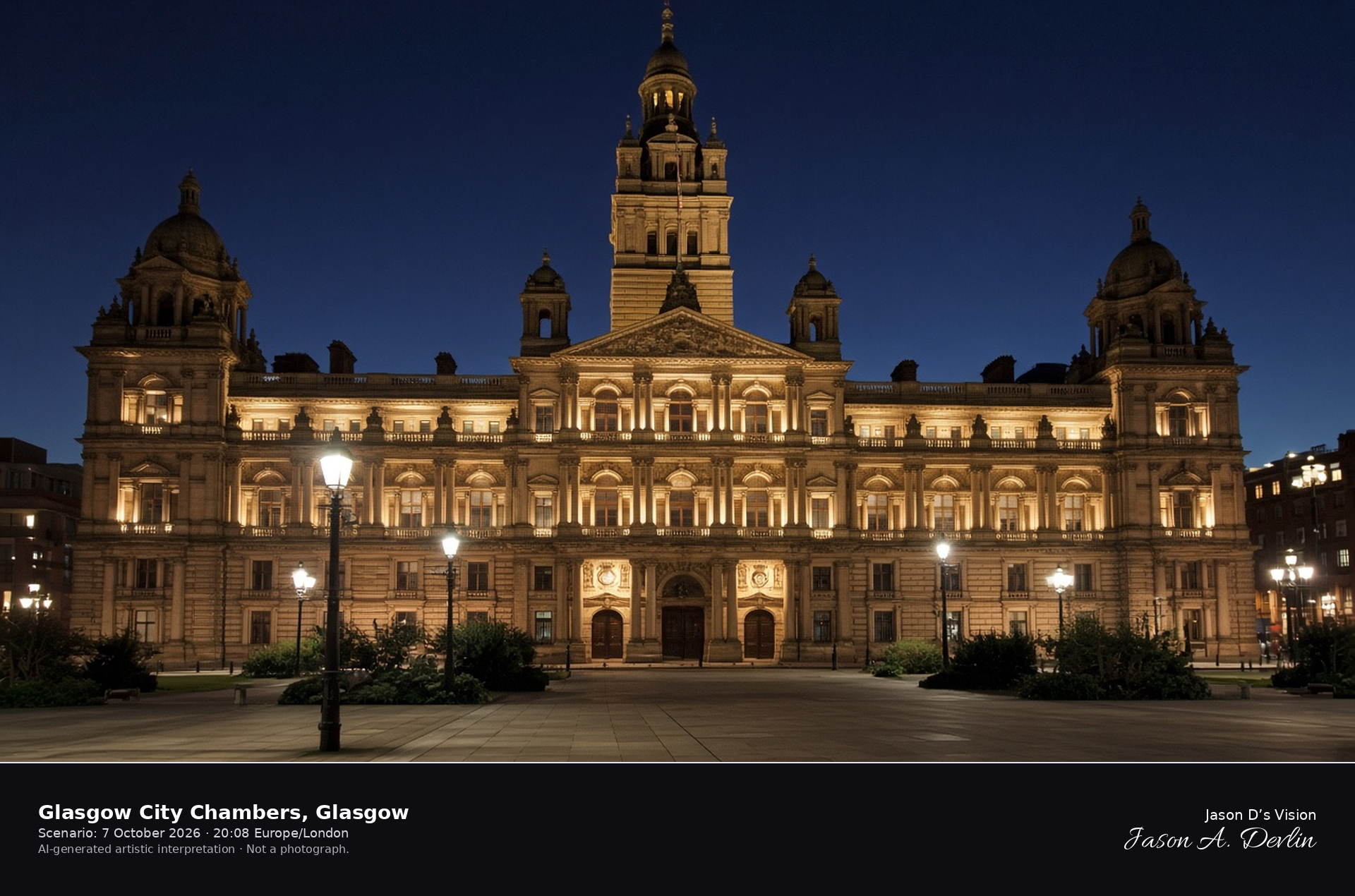
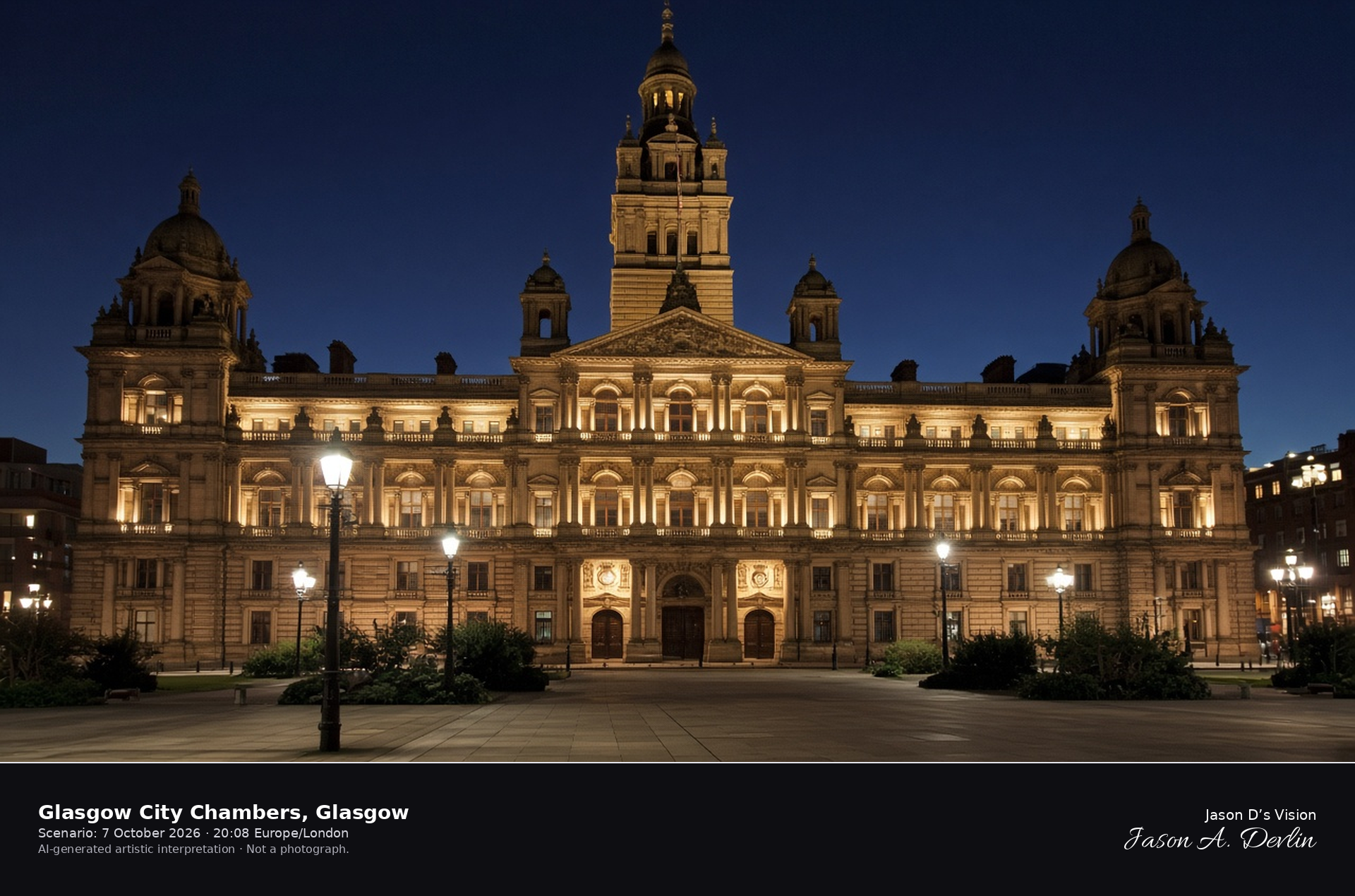
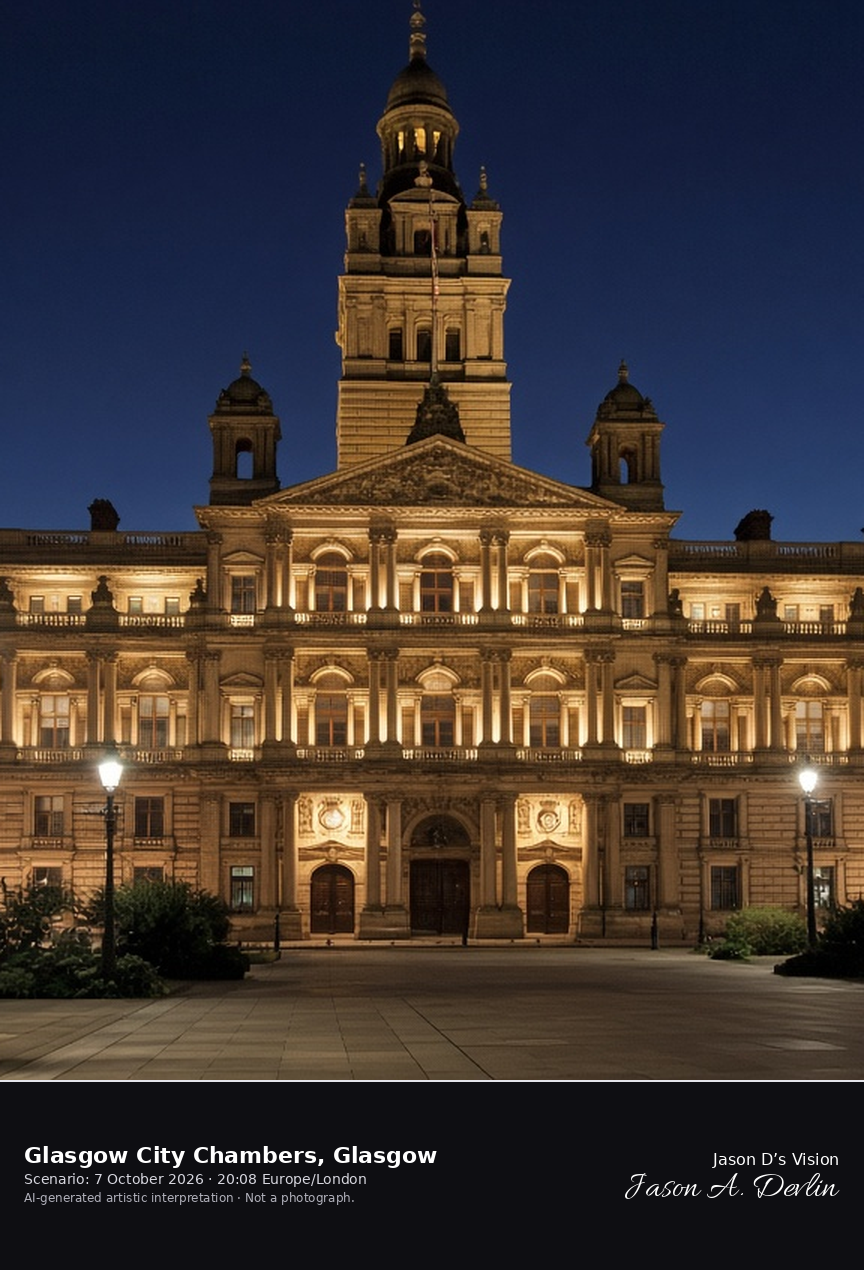
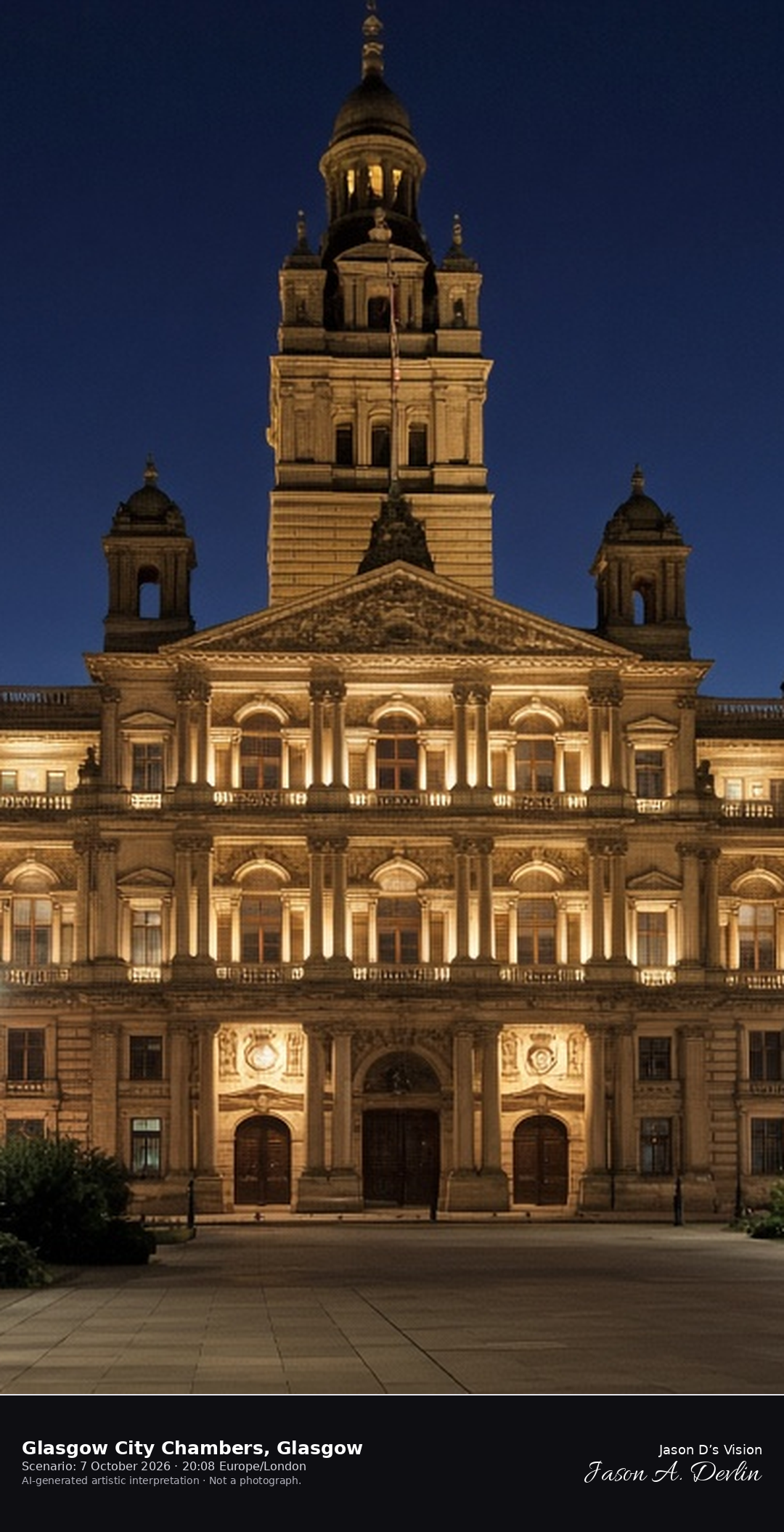
Glasgow City Chambers · AI-generated artistic interpretation
Opened by Queen Victoria in 1888, Glasgow's City Chambers expressed the wealth and ambition of the industrial city. Inside are a Carrara marble staircase, mosaic-covered vaults, and a grand banqueting hall decorated with murals by Glasgow artists.
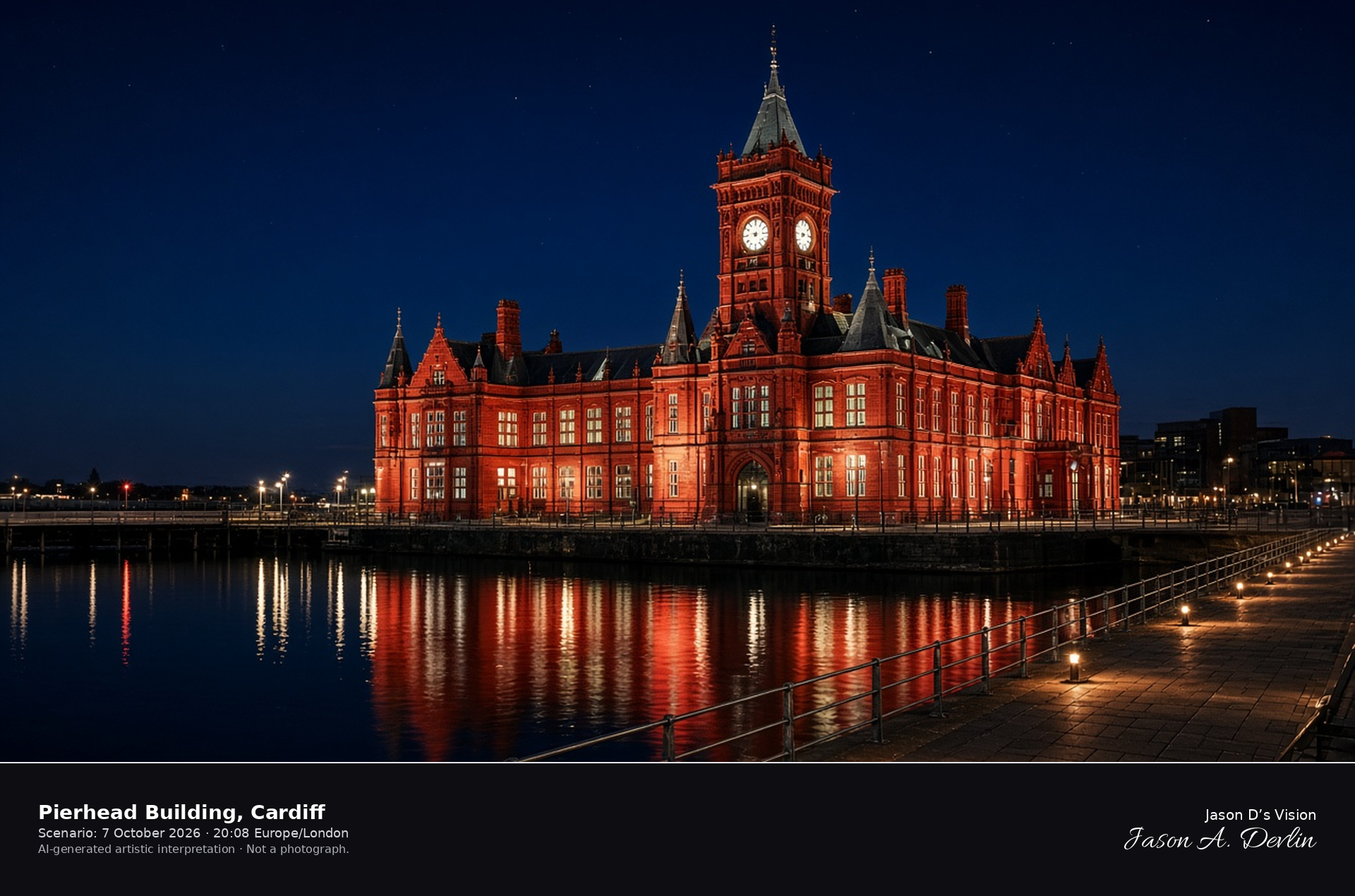
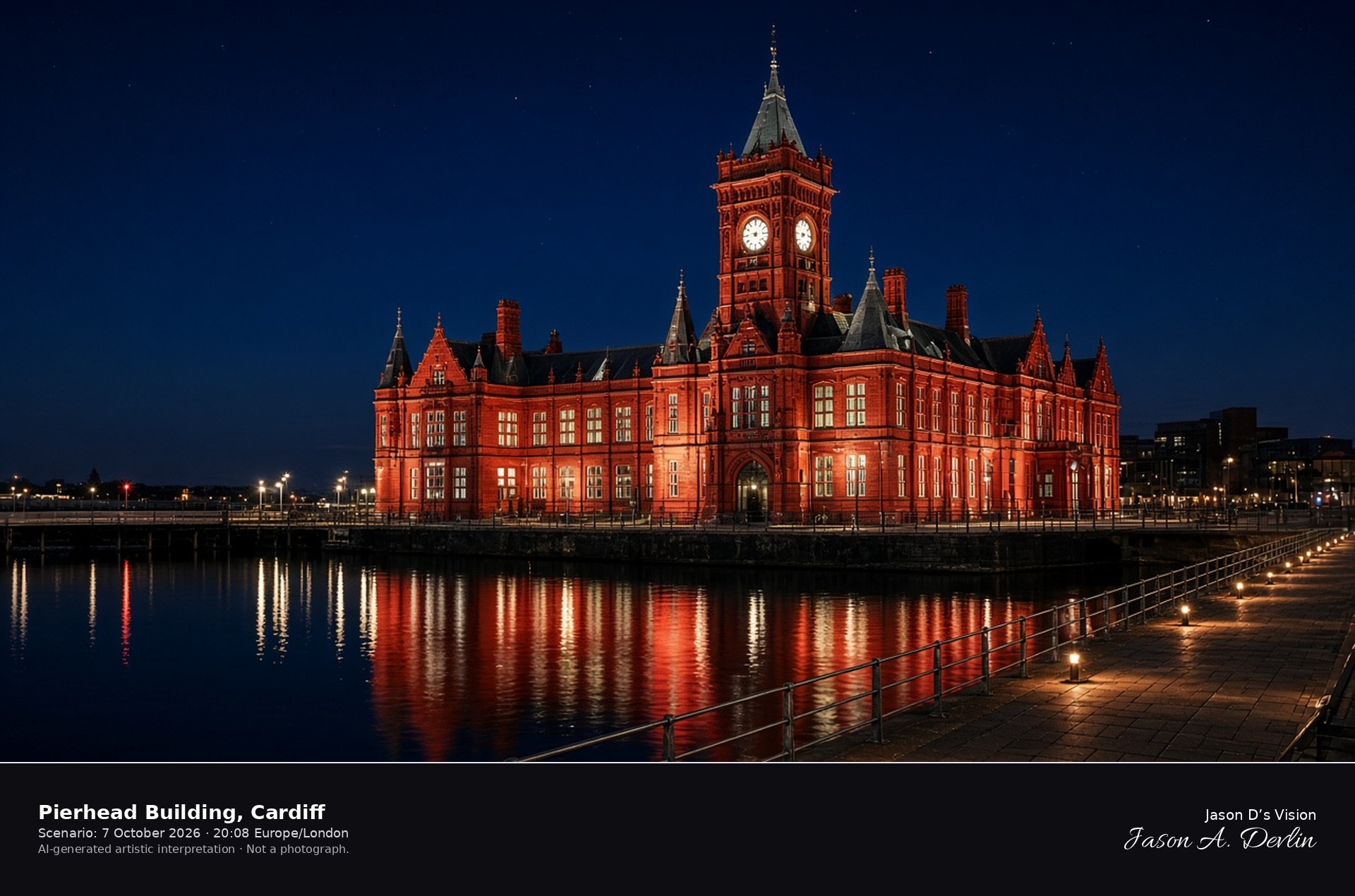
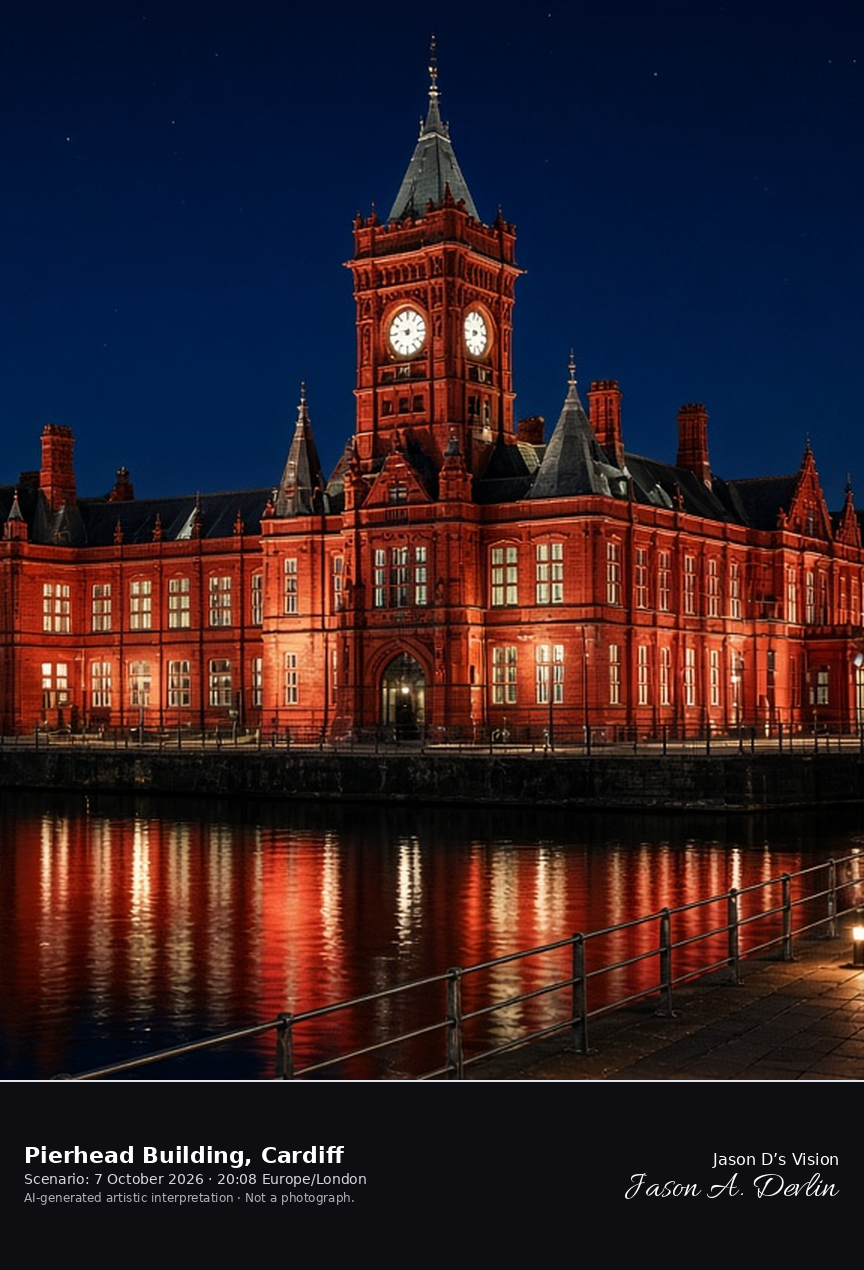
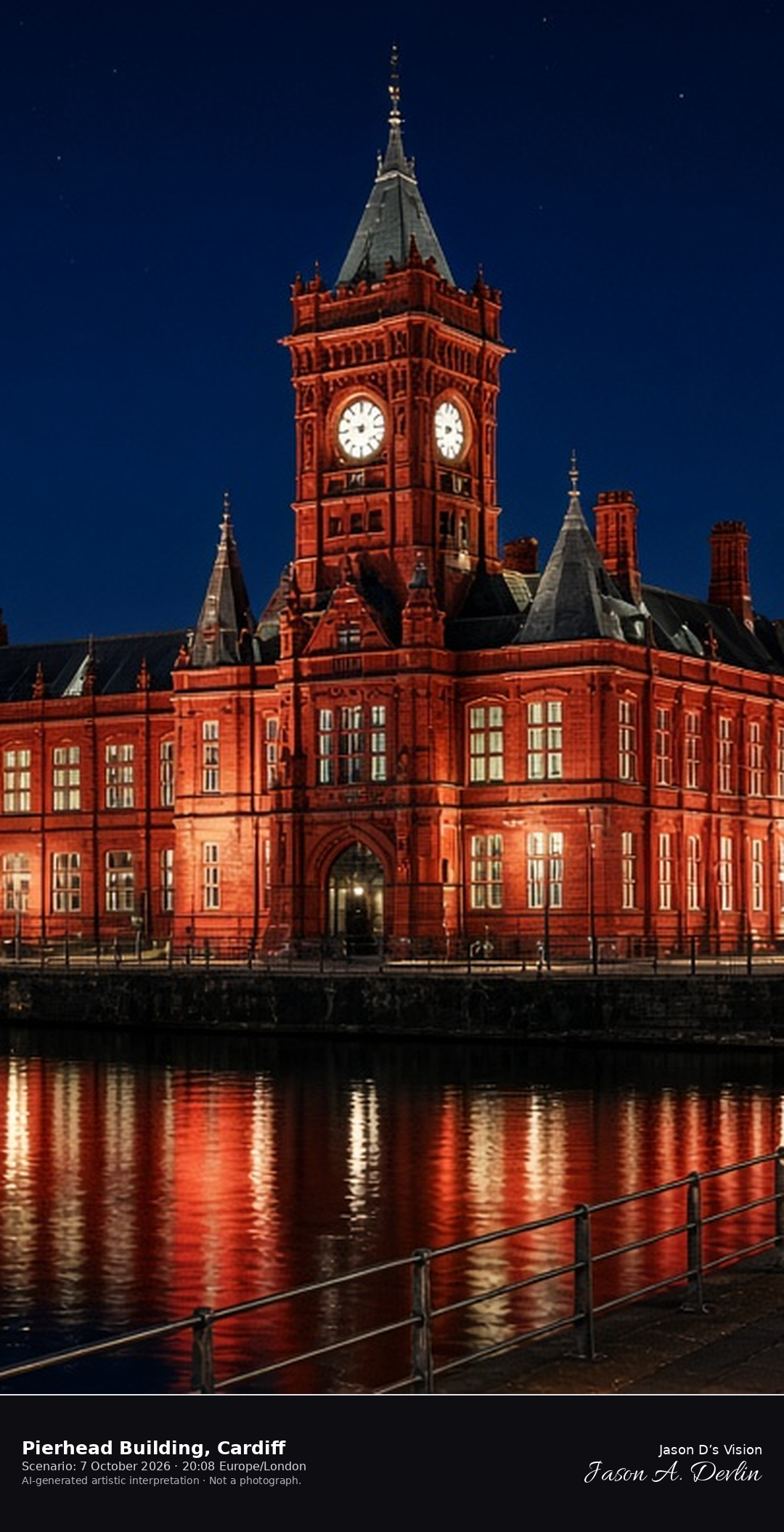
The Pierhead Building was completed in 1897 as the headquarters of the Bute Dock Company. Its clock tower earned it the nickname Baby Big Ben, and it now sits beside the Senedd.
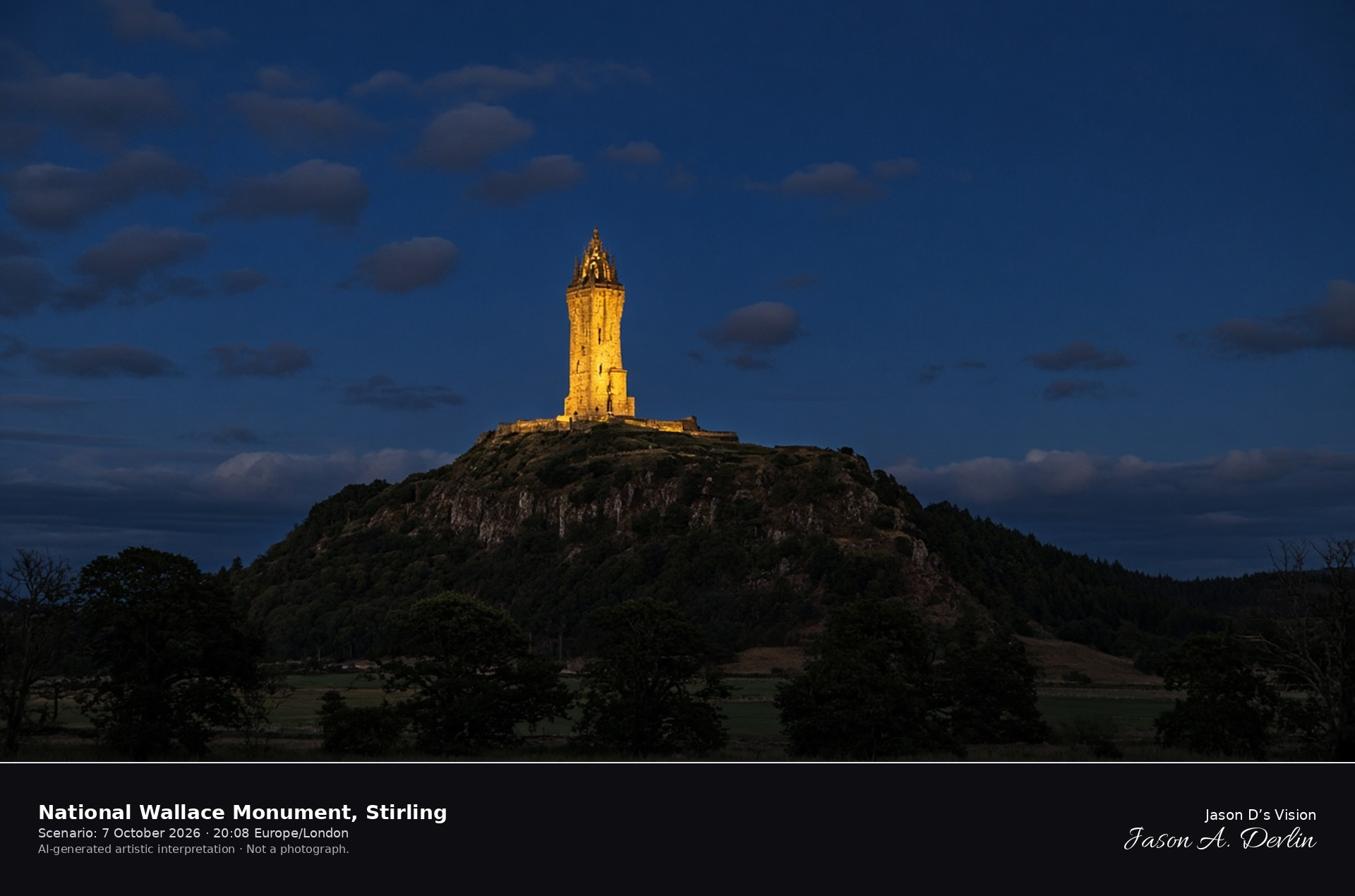
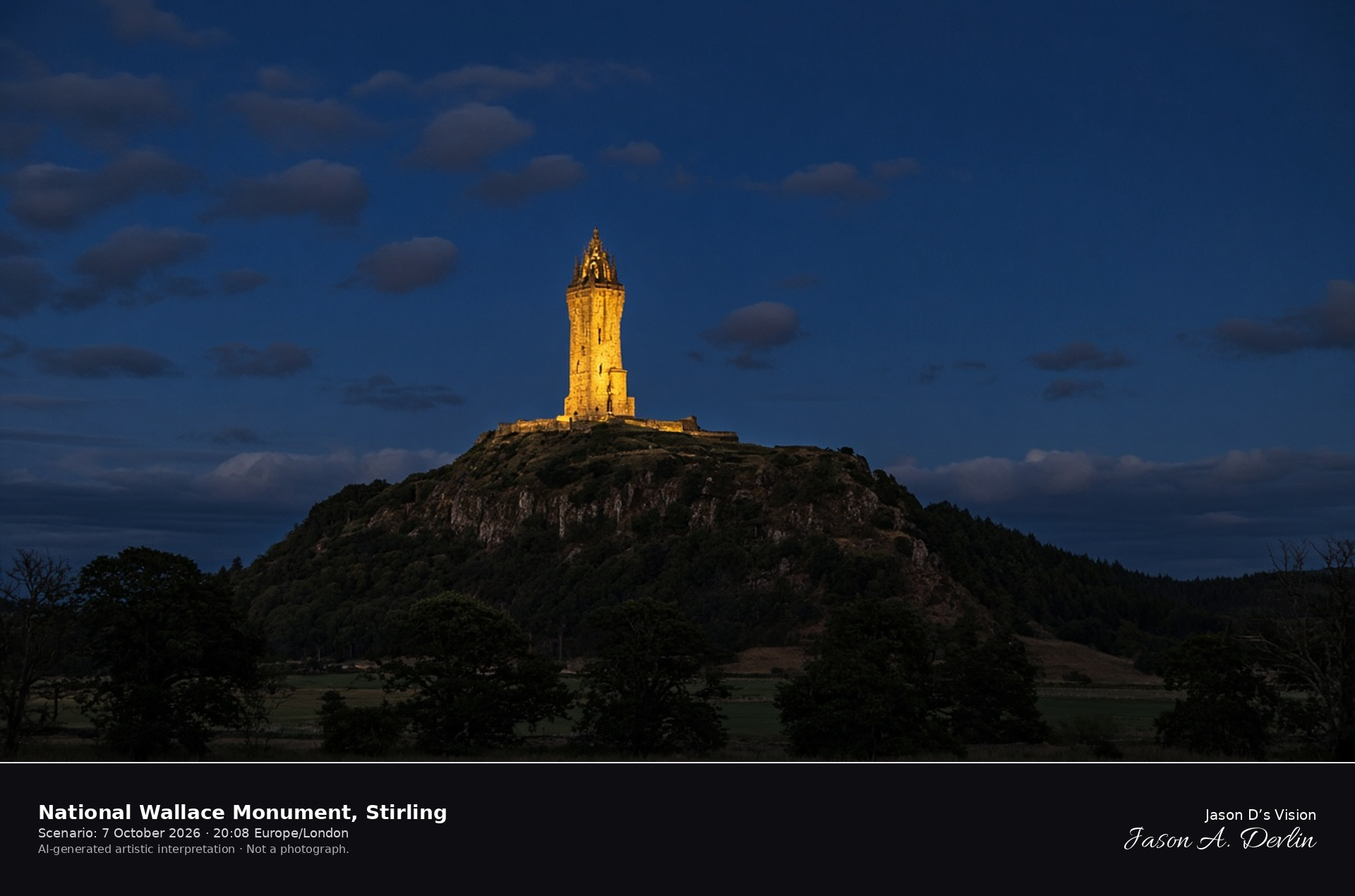
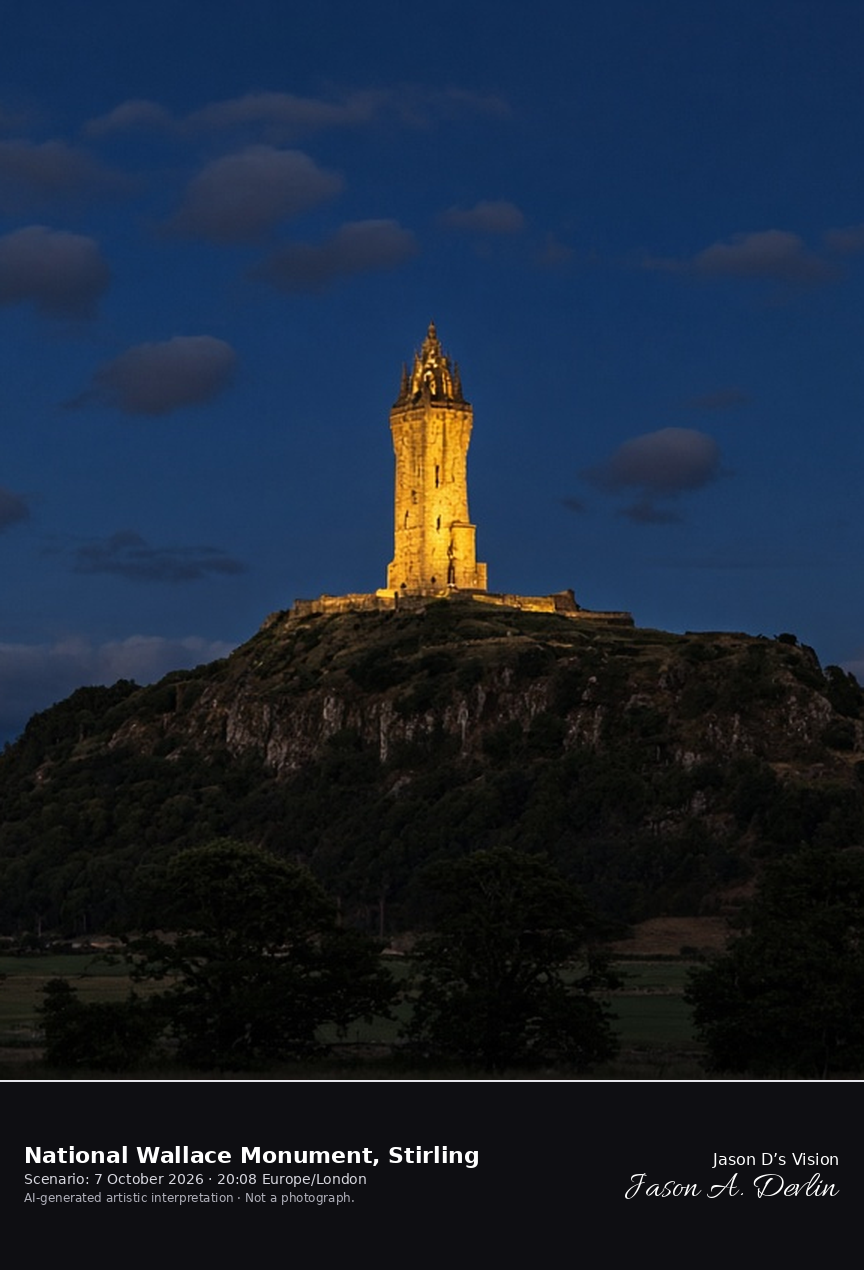
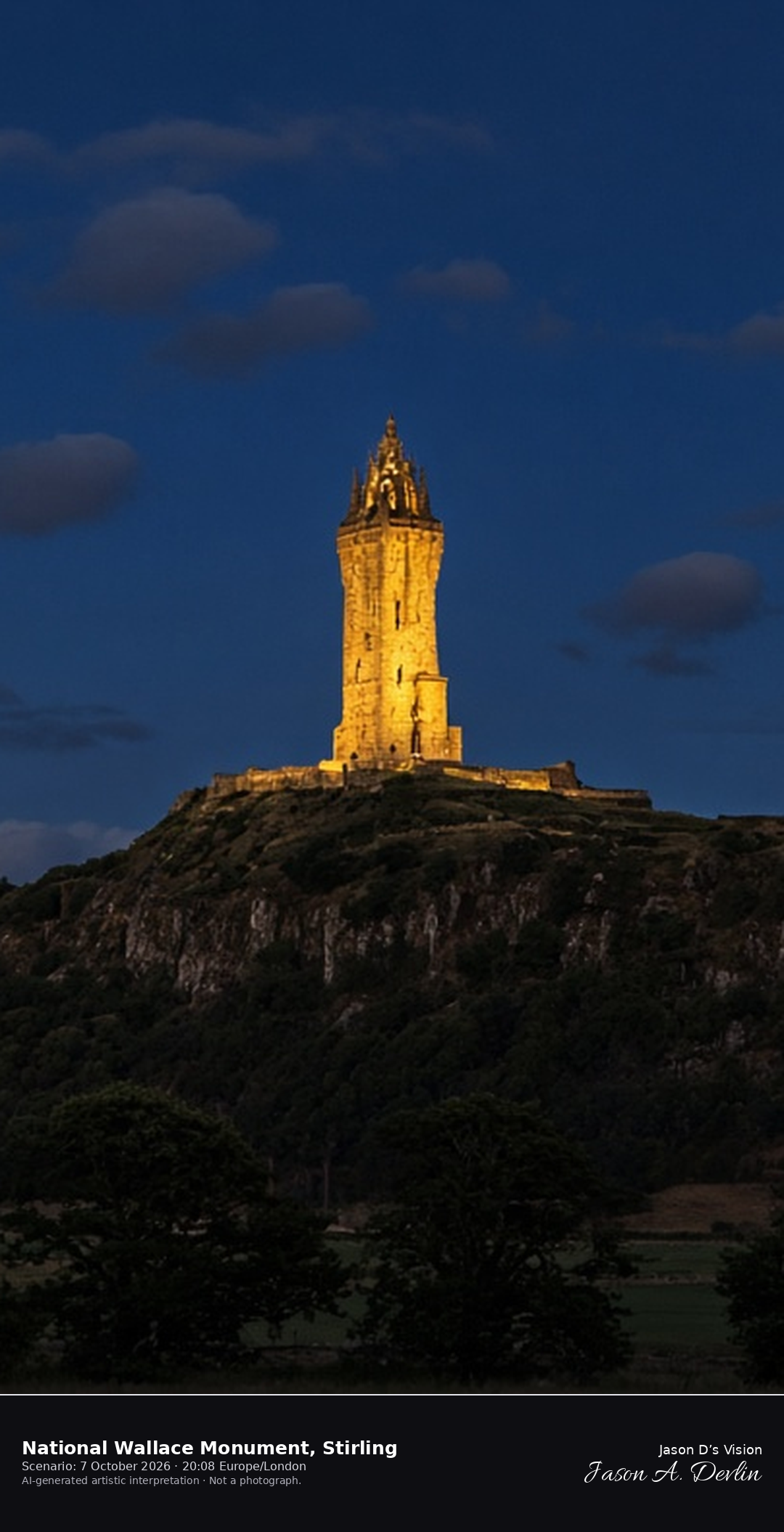
National Wallace Monument · AI-generated artistic interpretation
The National Wallace Monument opened in 1869 on Abbey Craig, funded by public contributions. The hill is thought to have offered Wallace and Andrew de Moray a vantage point before the Battle of Stirling Bridge in 1297. Inside is the Wallace Sword, traditionally associated with Wallace: a two-handed weapon about five and a half feet long overall.
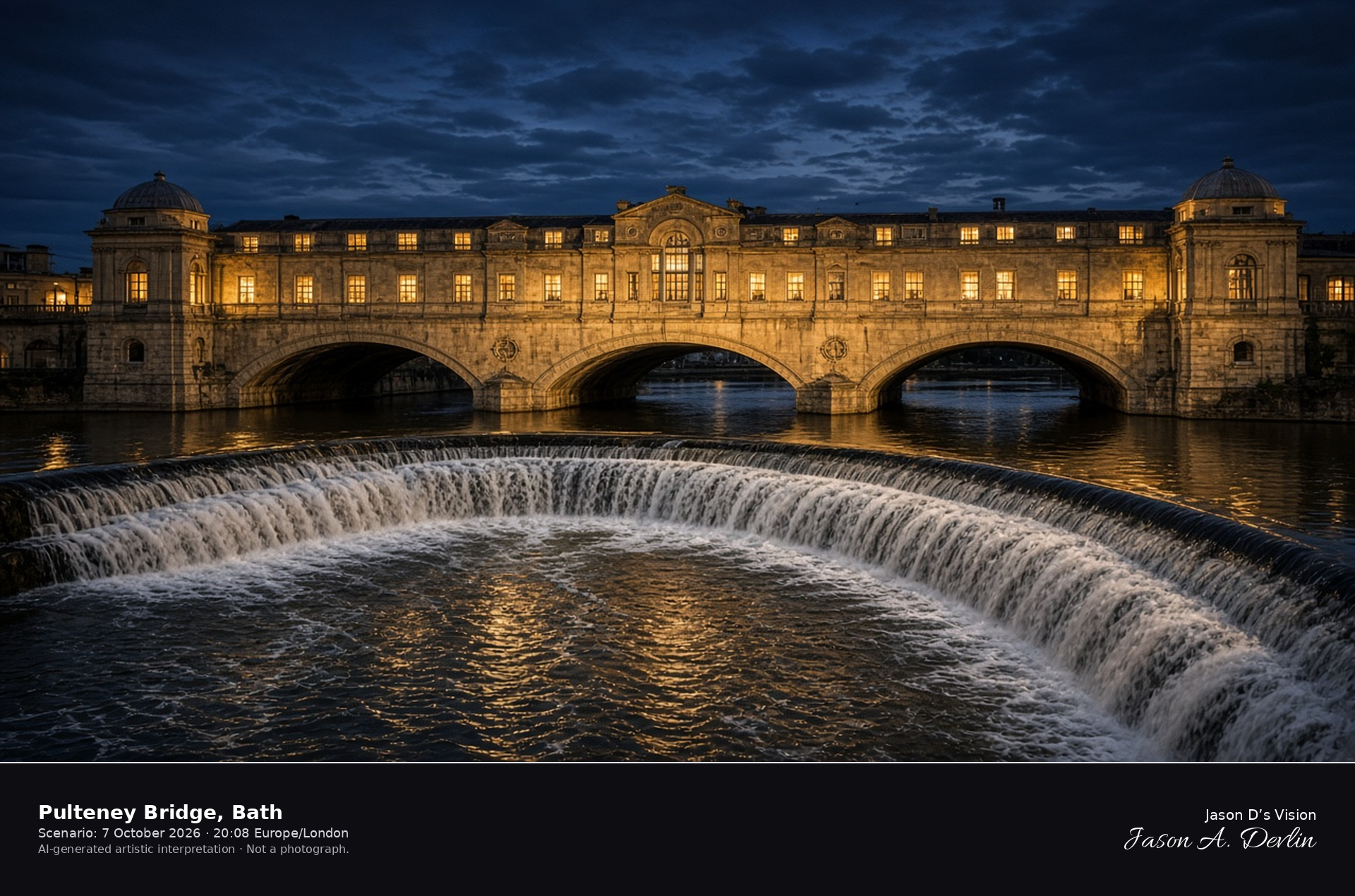
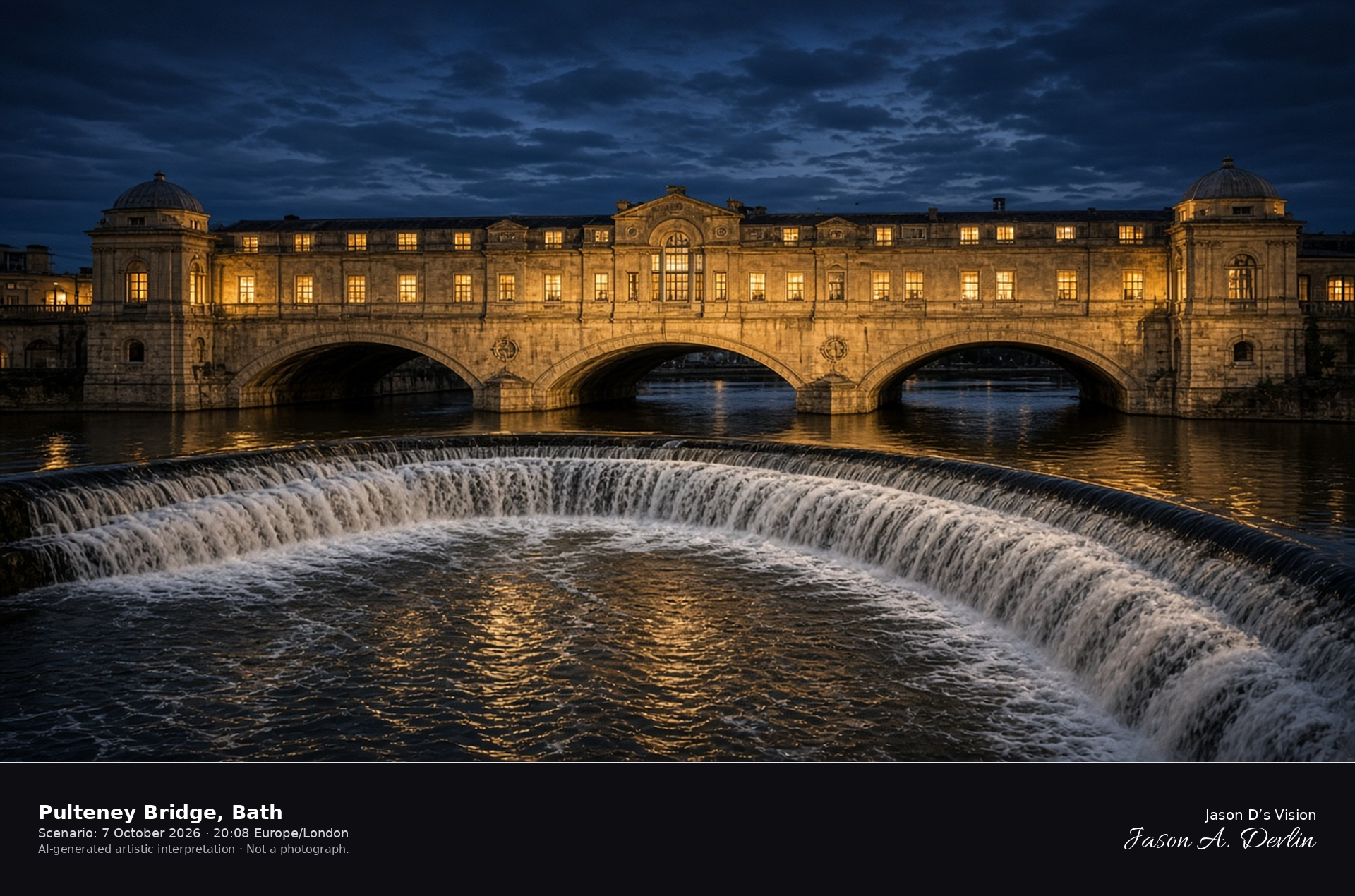
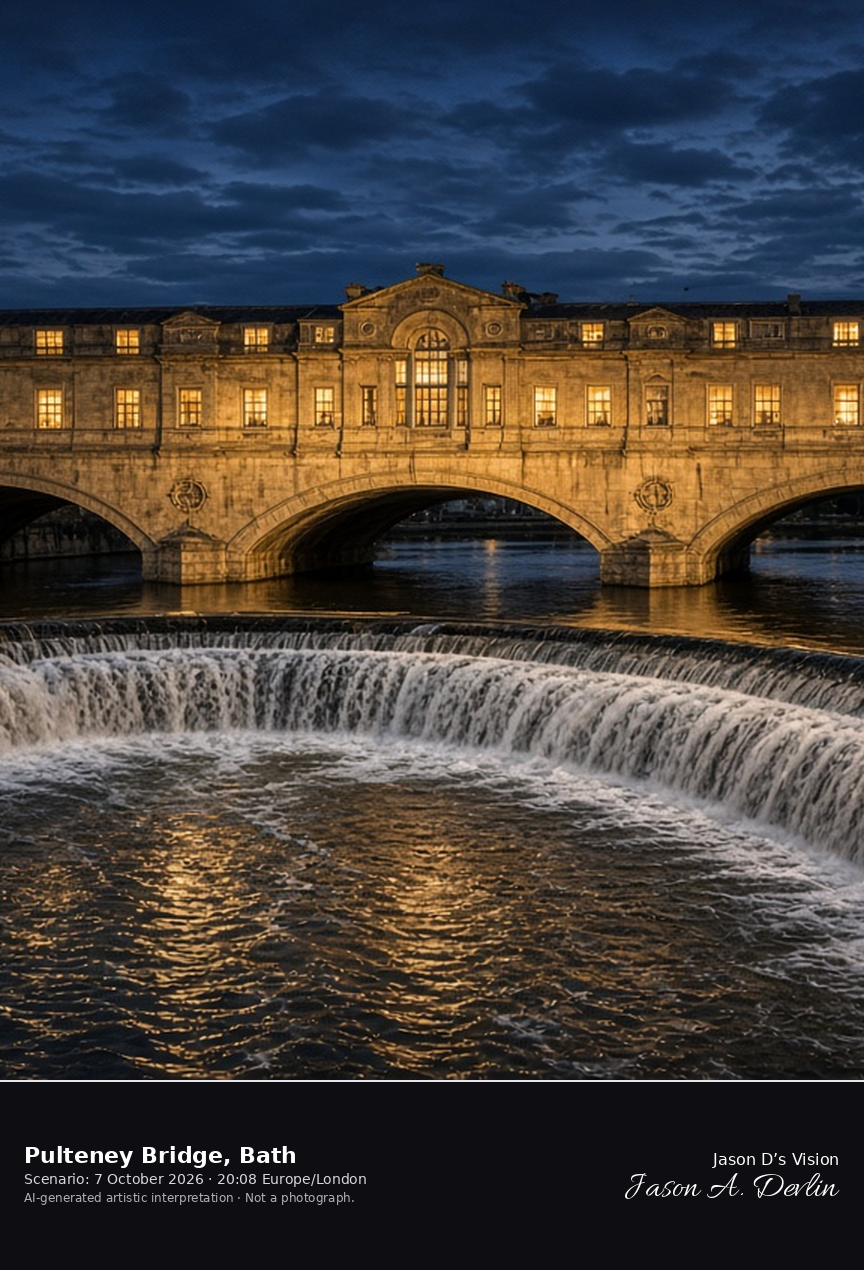
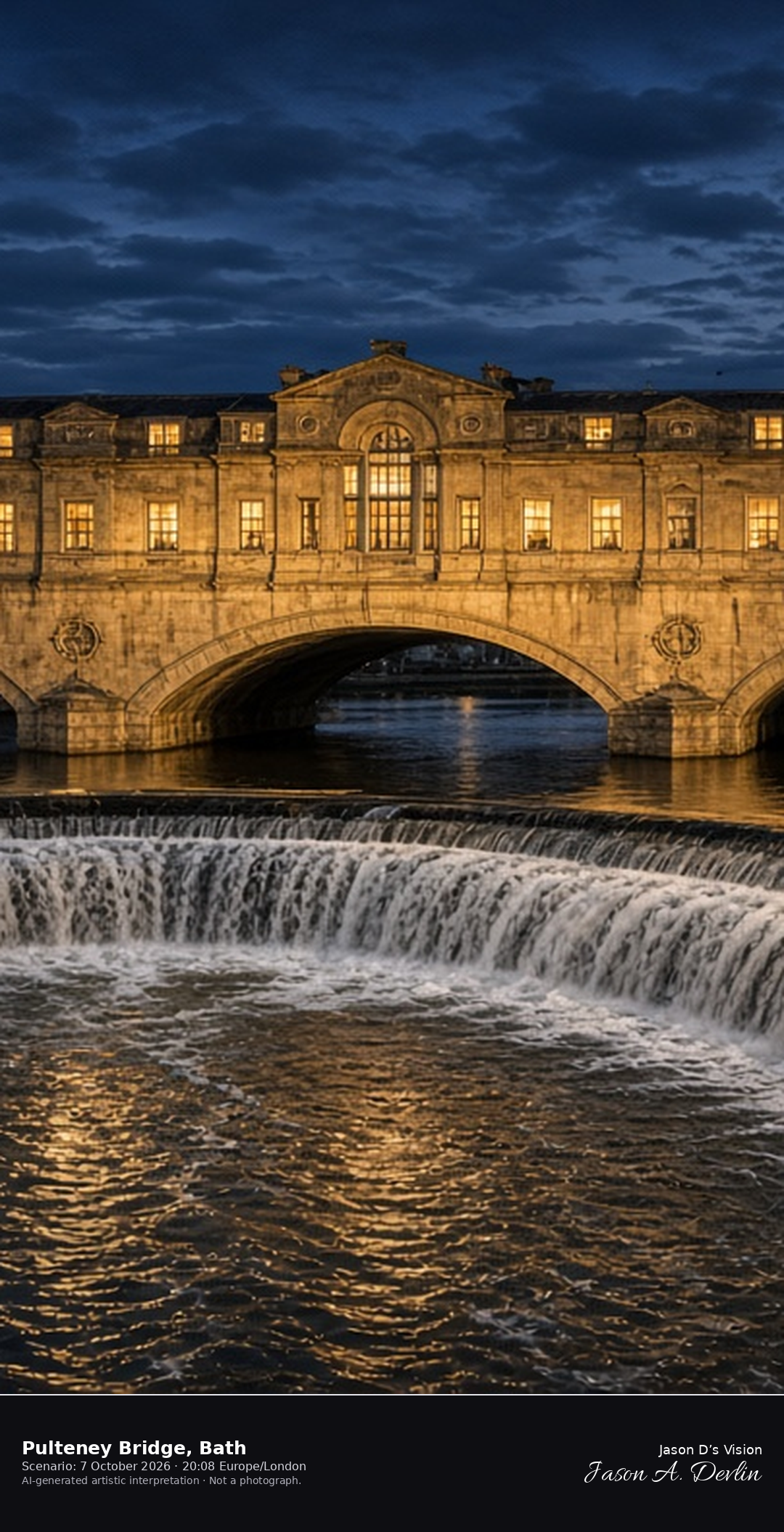
Pulteney Bridge was designed by Robert Adam and completed in 1774. It is one of only a handful of bridges in the world lined with shops along both sides.
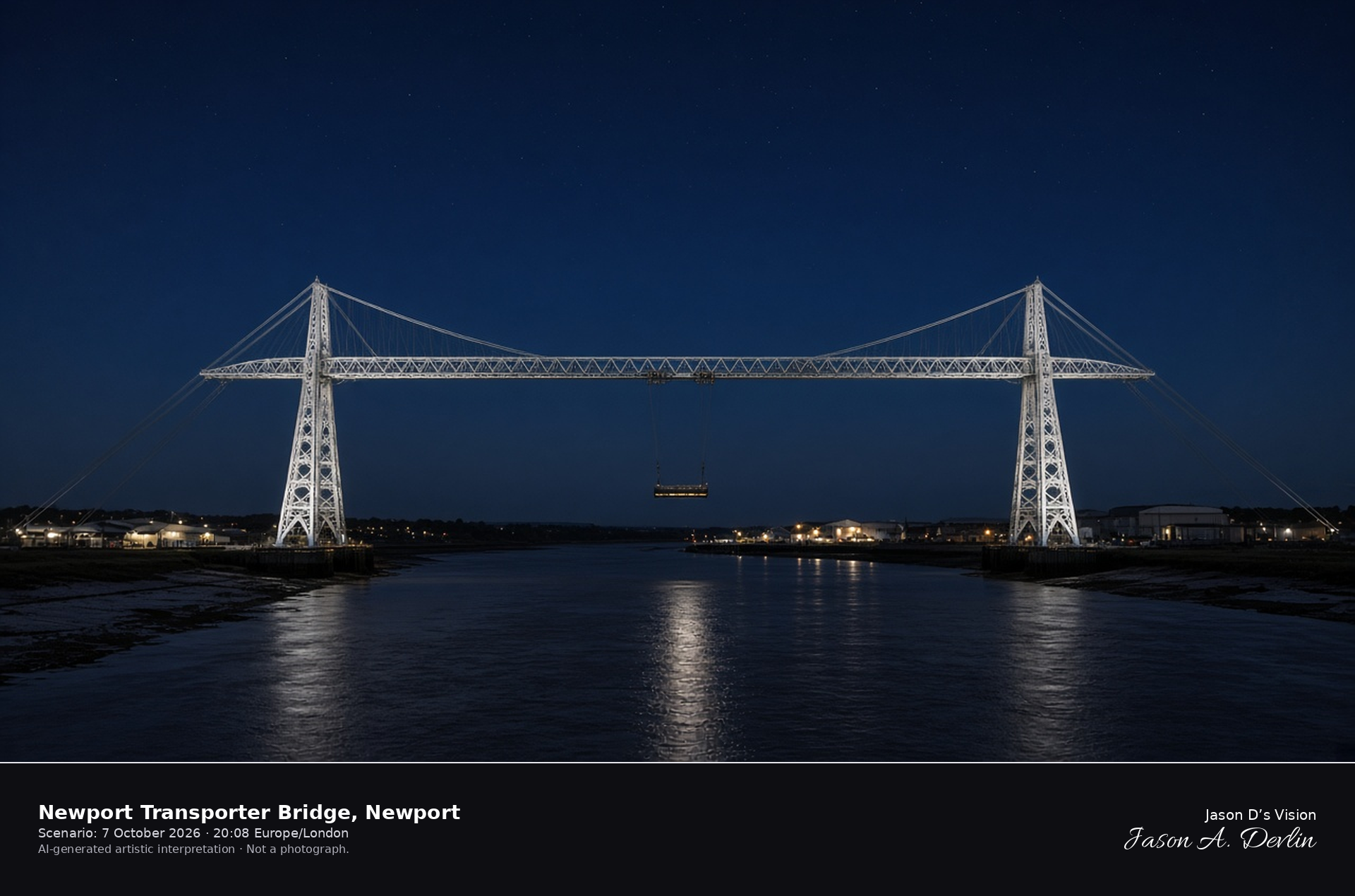
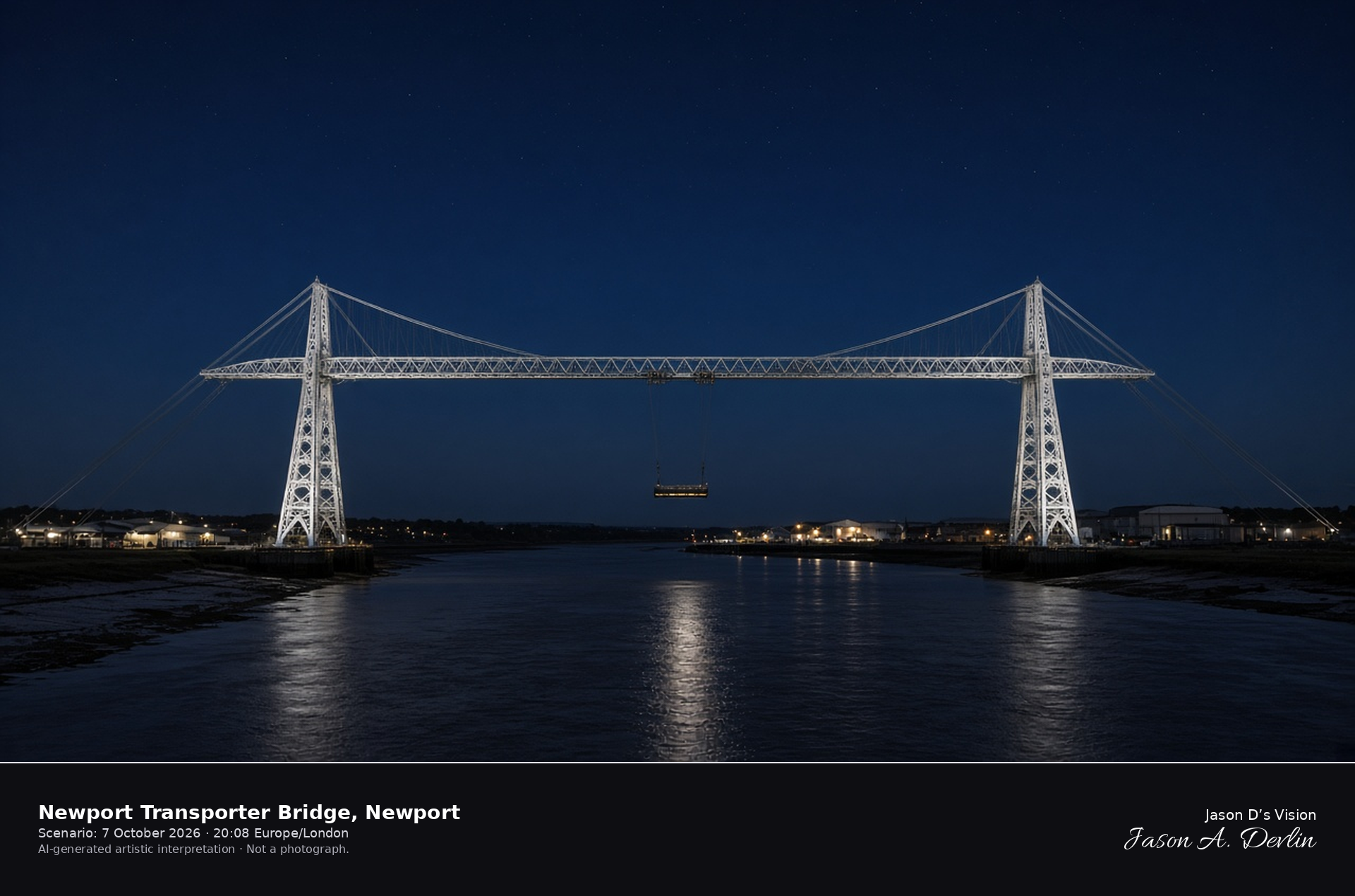
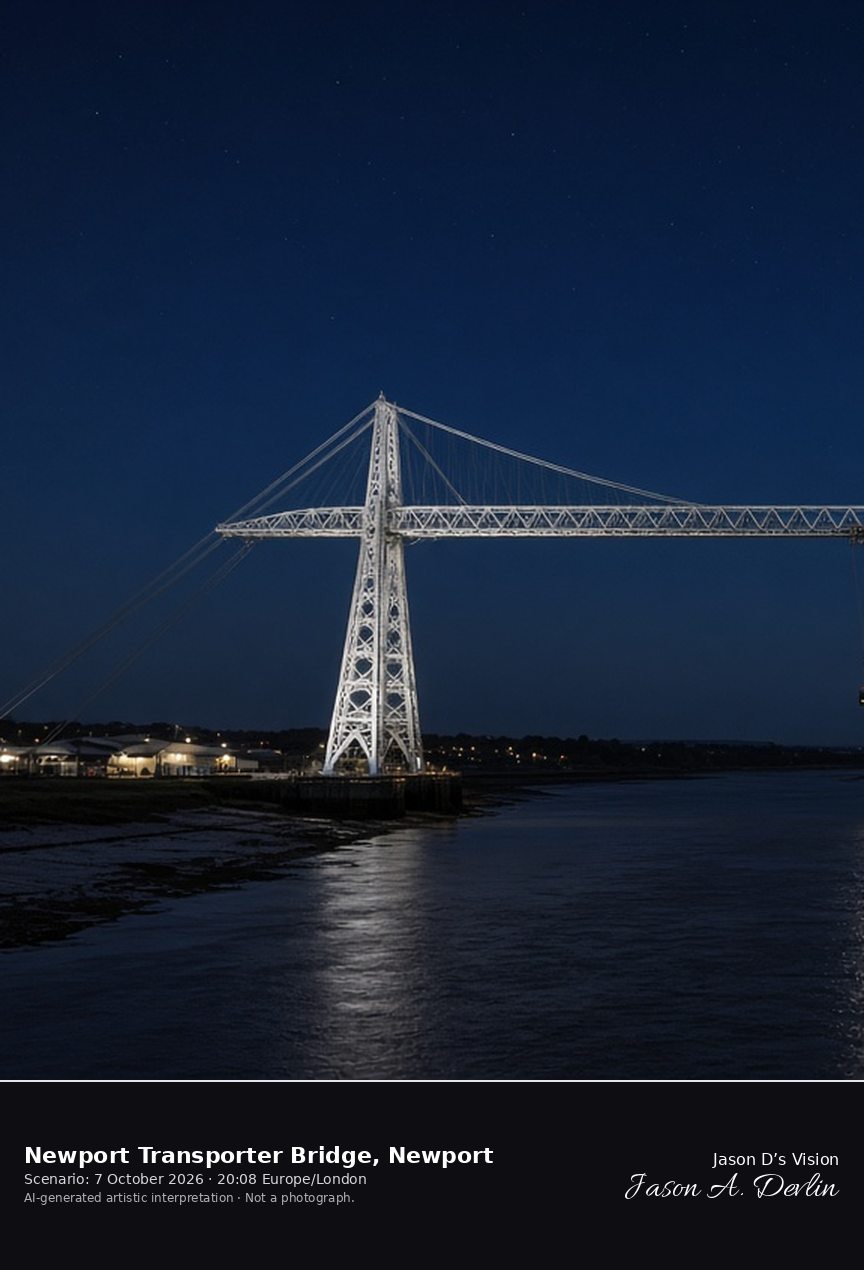
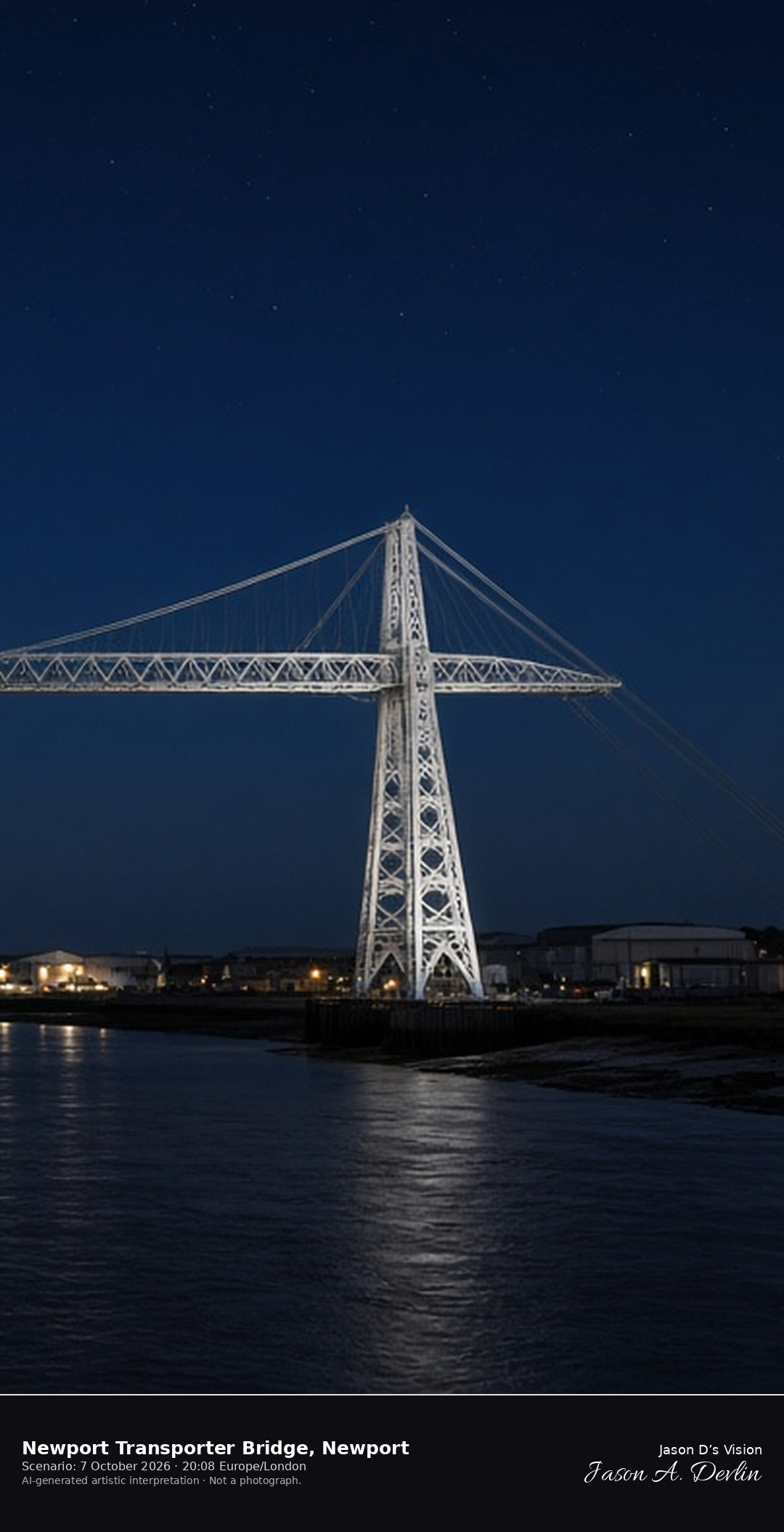
Newport's transporter bridge, opened in 1906, was designed to carry passengers across the Usk in a suspended gondola while leaving room for ships to pass. It is a rare surviving example of a bridge built to serve both a busy port and the people working around it.
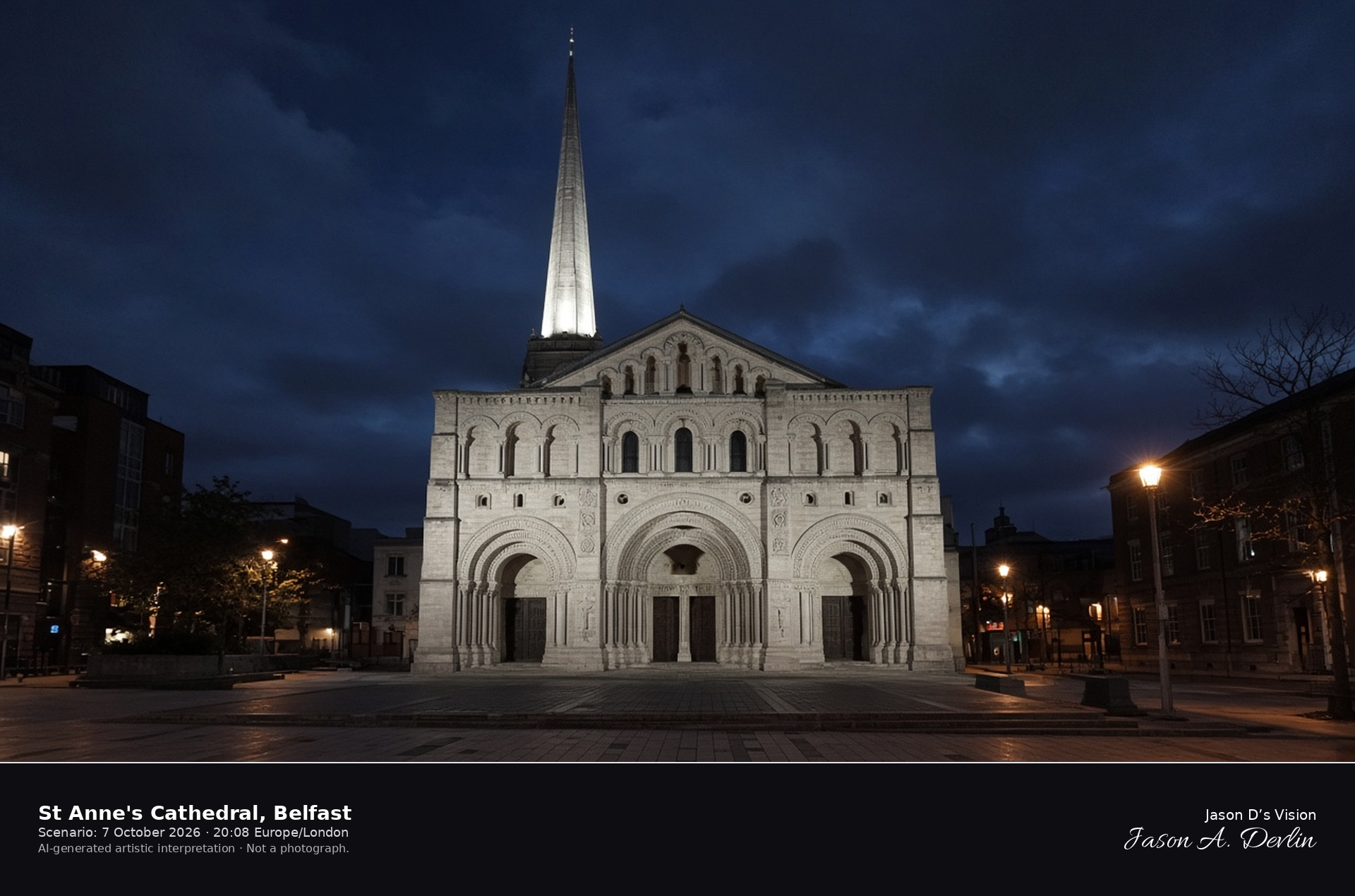
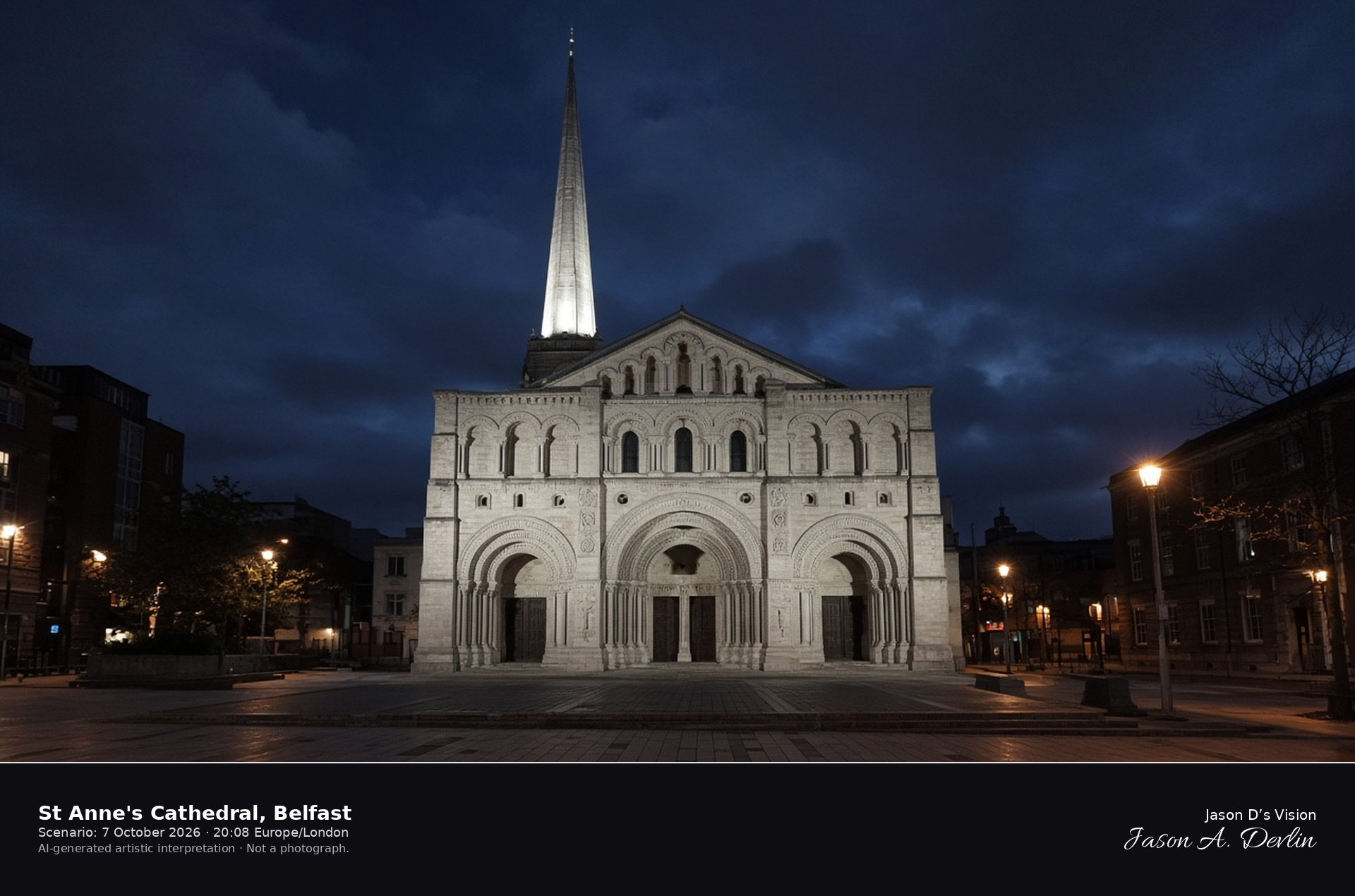
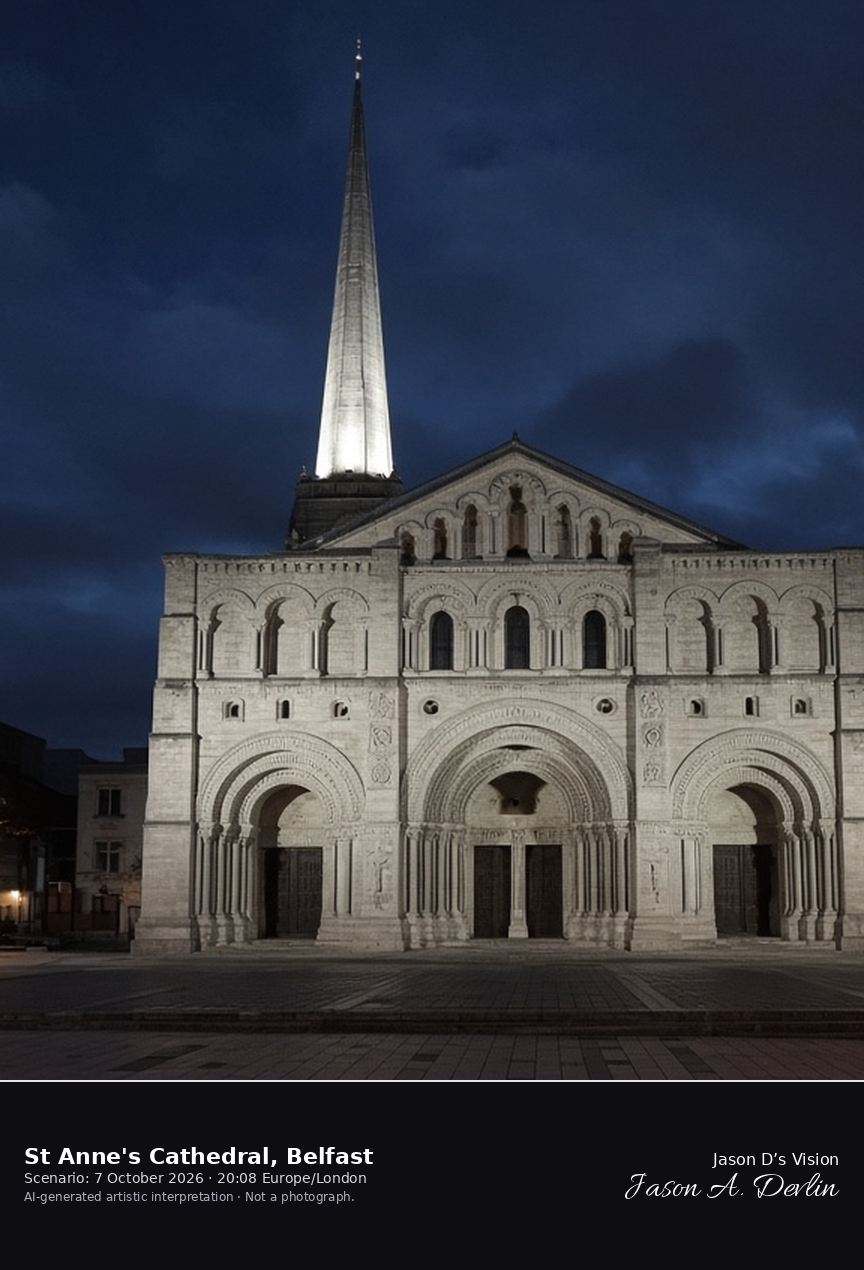
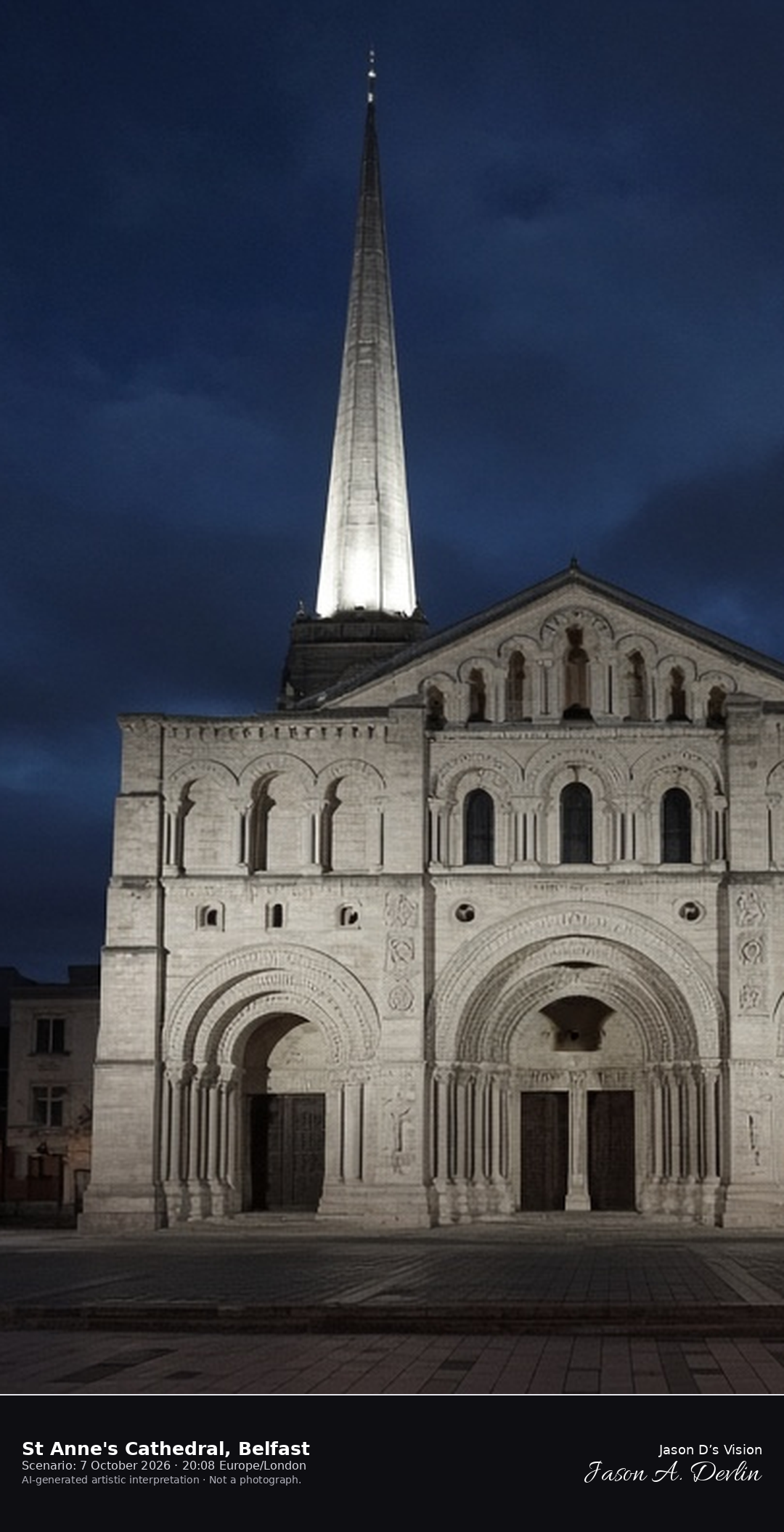
St Anne's Cathedral, Belfast · AI-generated artistic interpretation
St Anne's Cathedral was begun in 1899 and built over much of the twentieth century. The stainless-steel Spire of Hope was added in 2007 and rises about 40 metres above the roof.
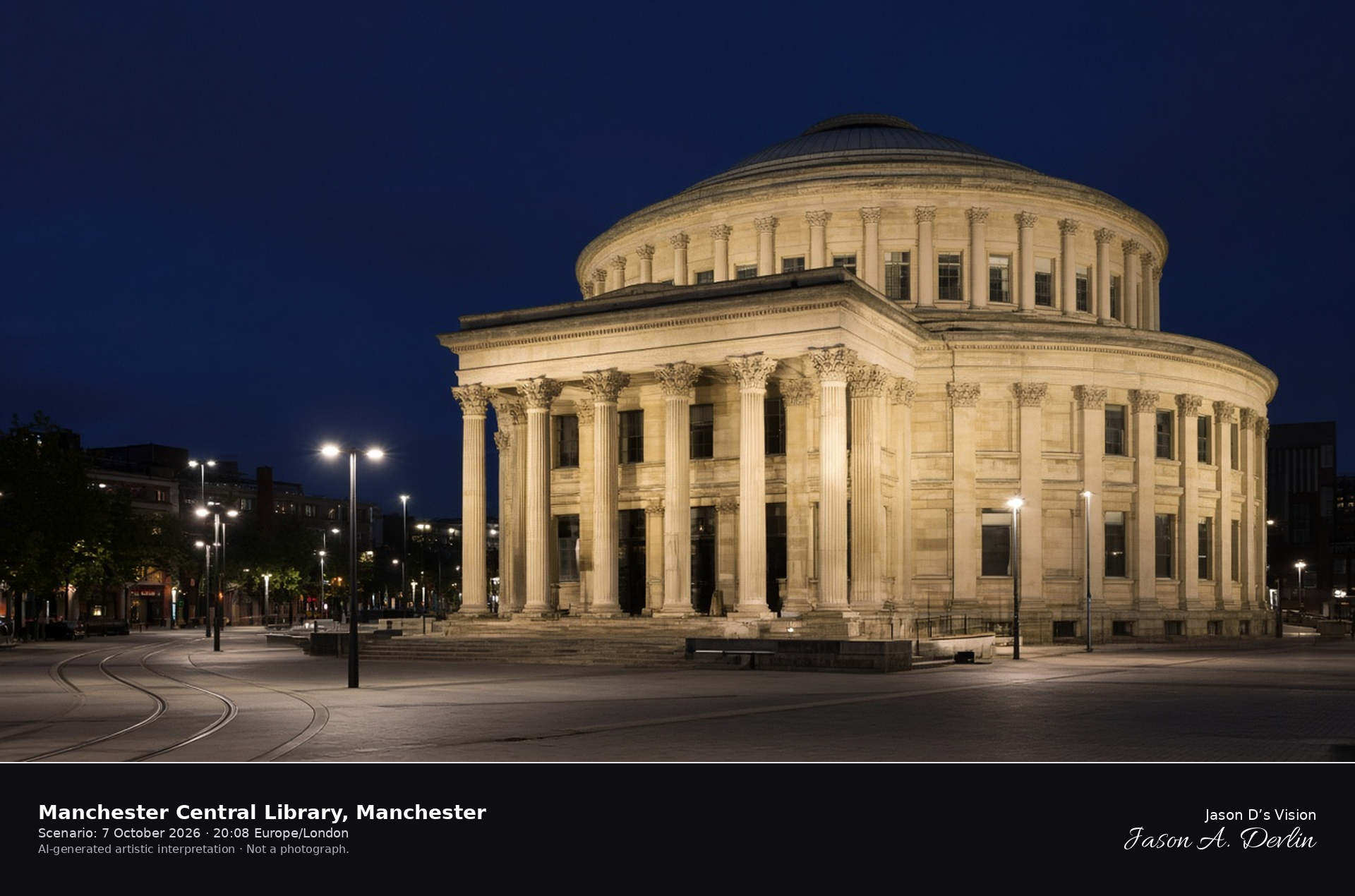
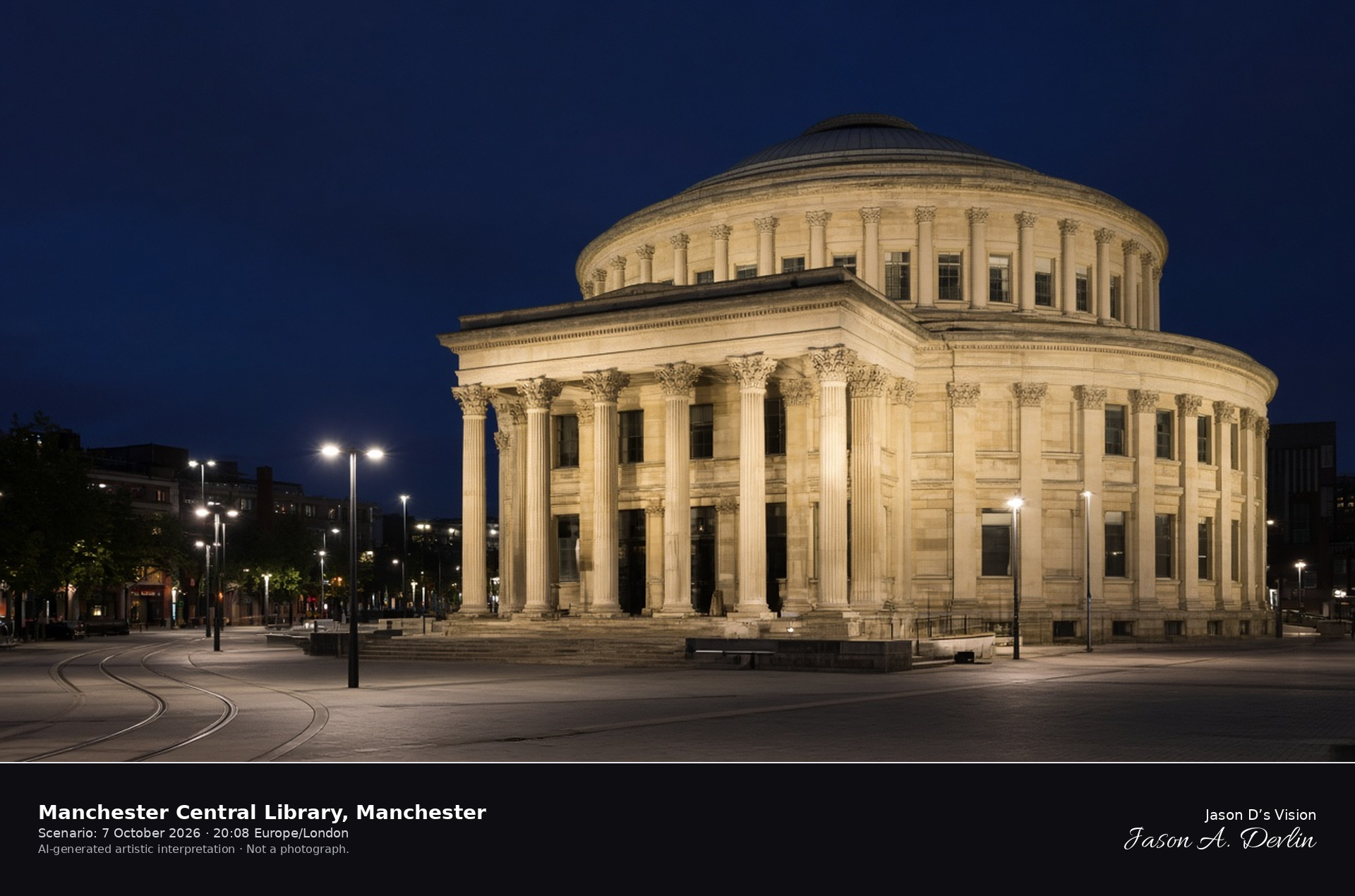
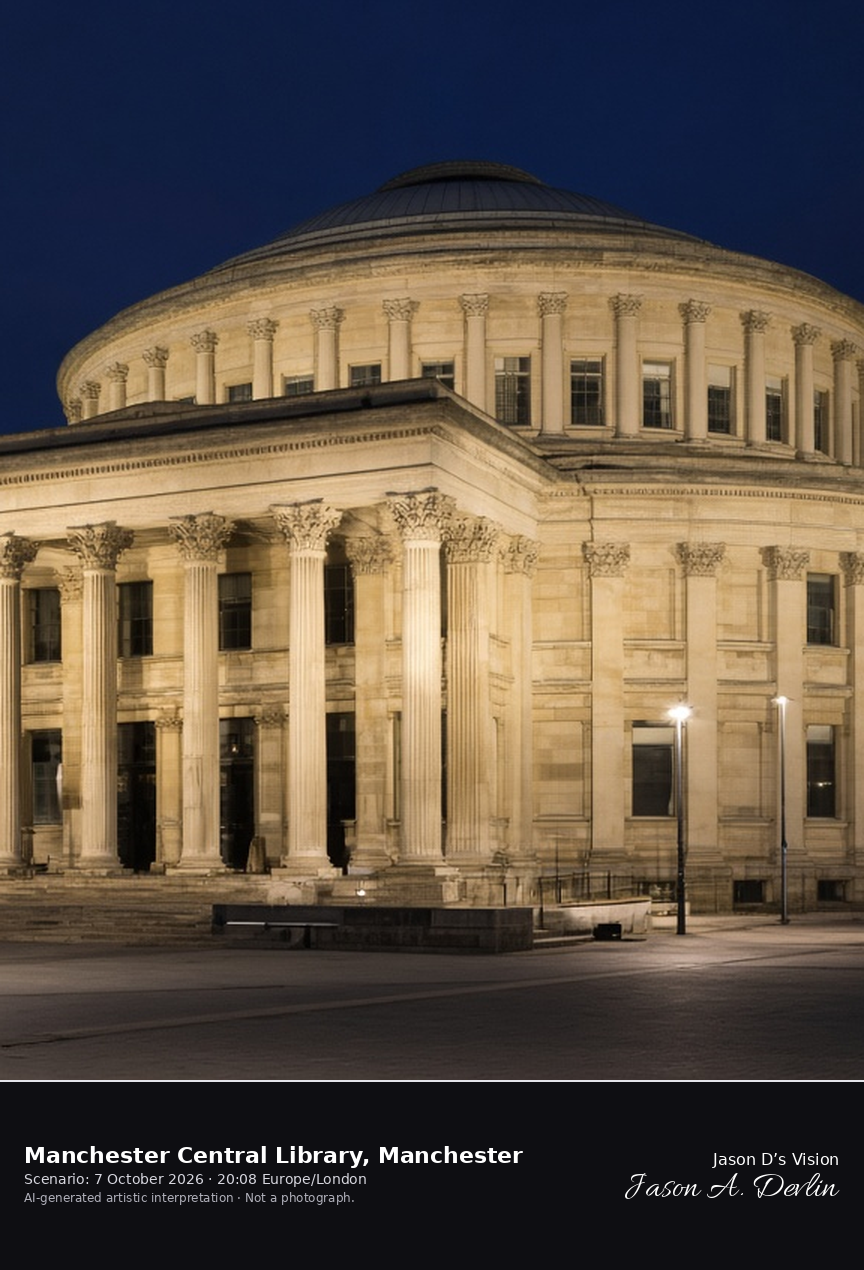
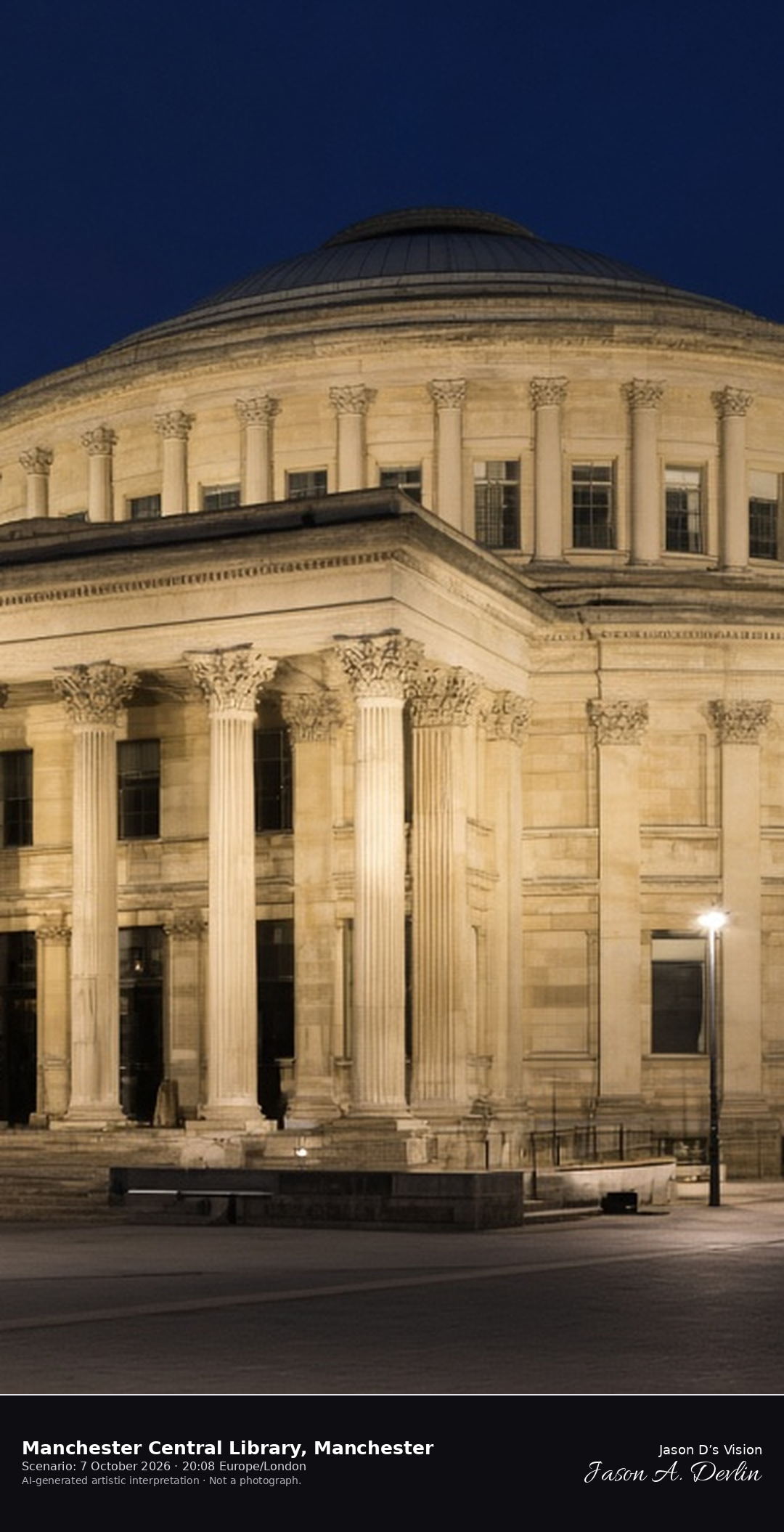
Manchester Central Library · AI-generated artistic interpretation
Manchester Central Library, opened by King George the Fifth in 1934, is E. Vincent Harris's circular temple to reading, shaped after the Pantheon of ancient Rome. Its great reading room, hushed beneath the dome, has served the city's students, poets, and quiet dreamers ever since.
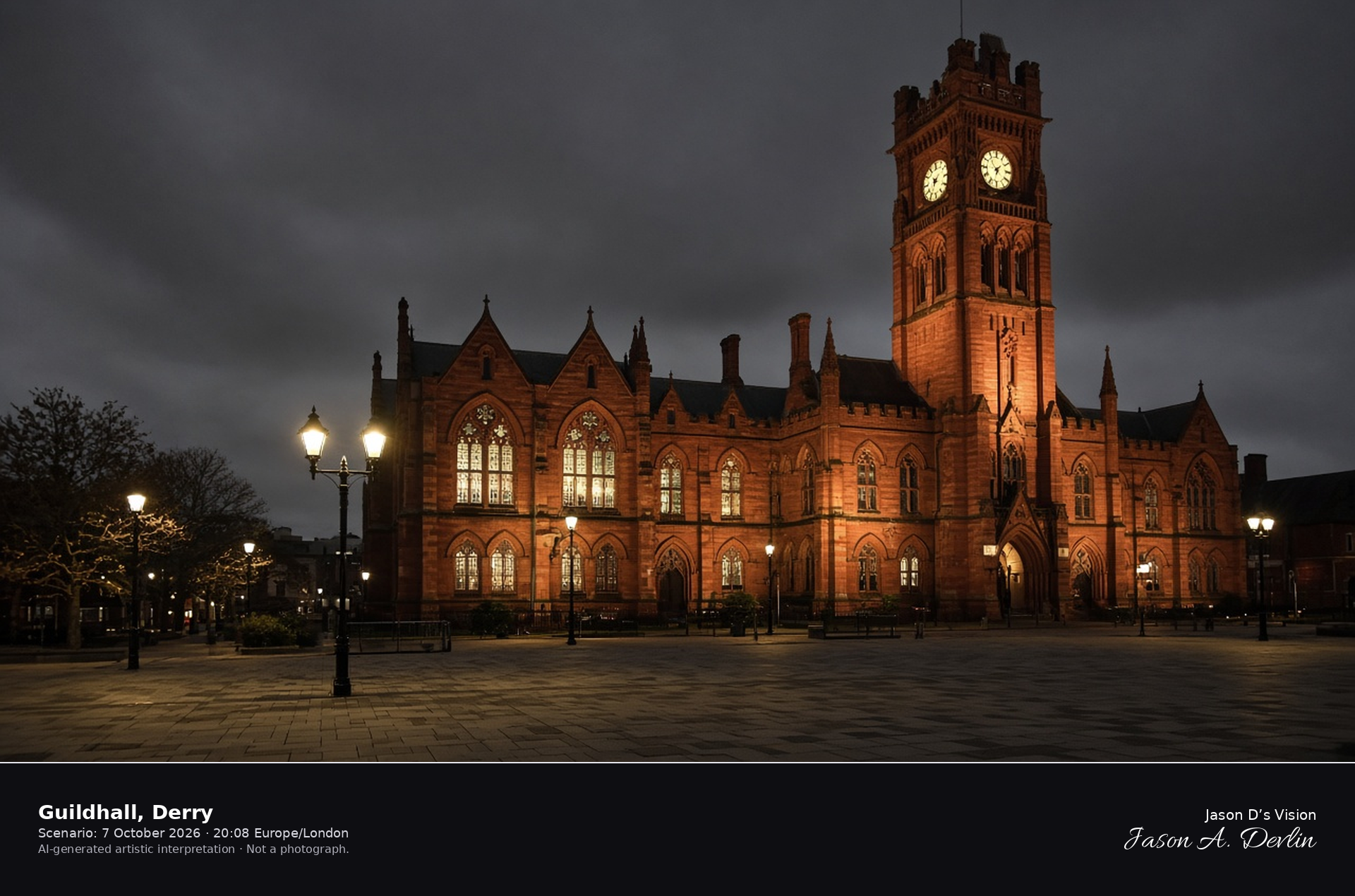
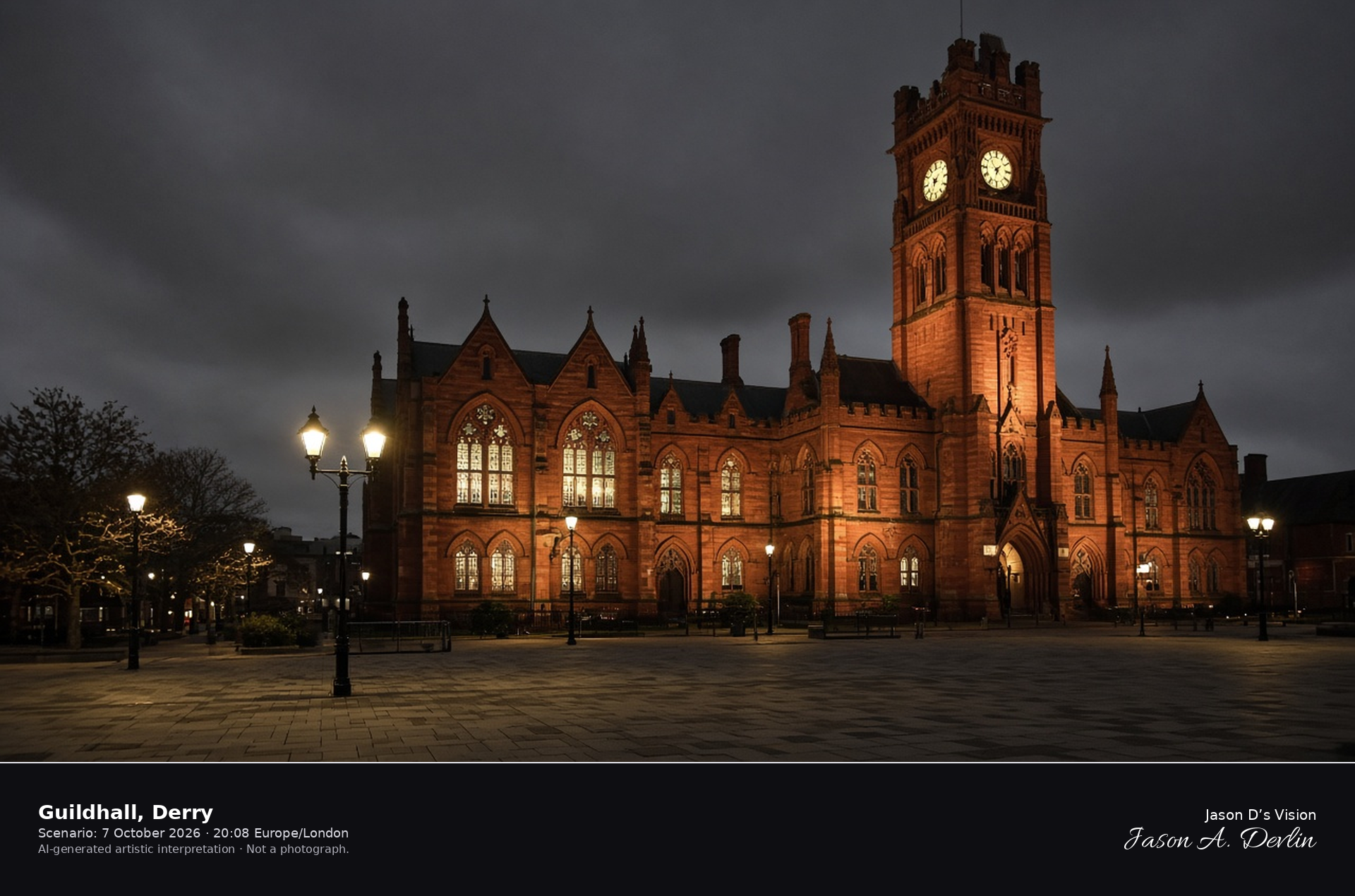
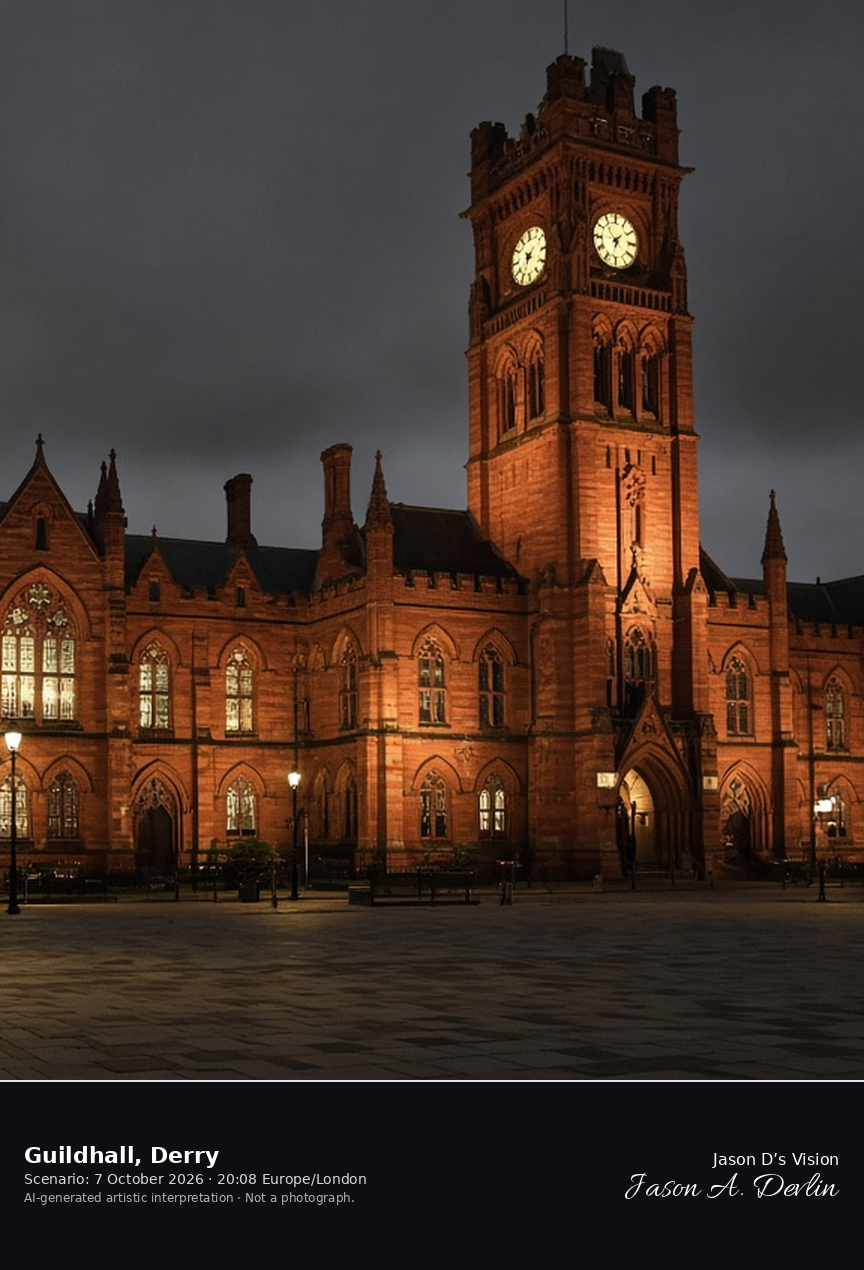
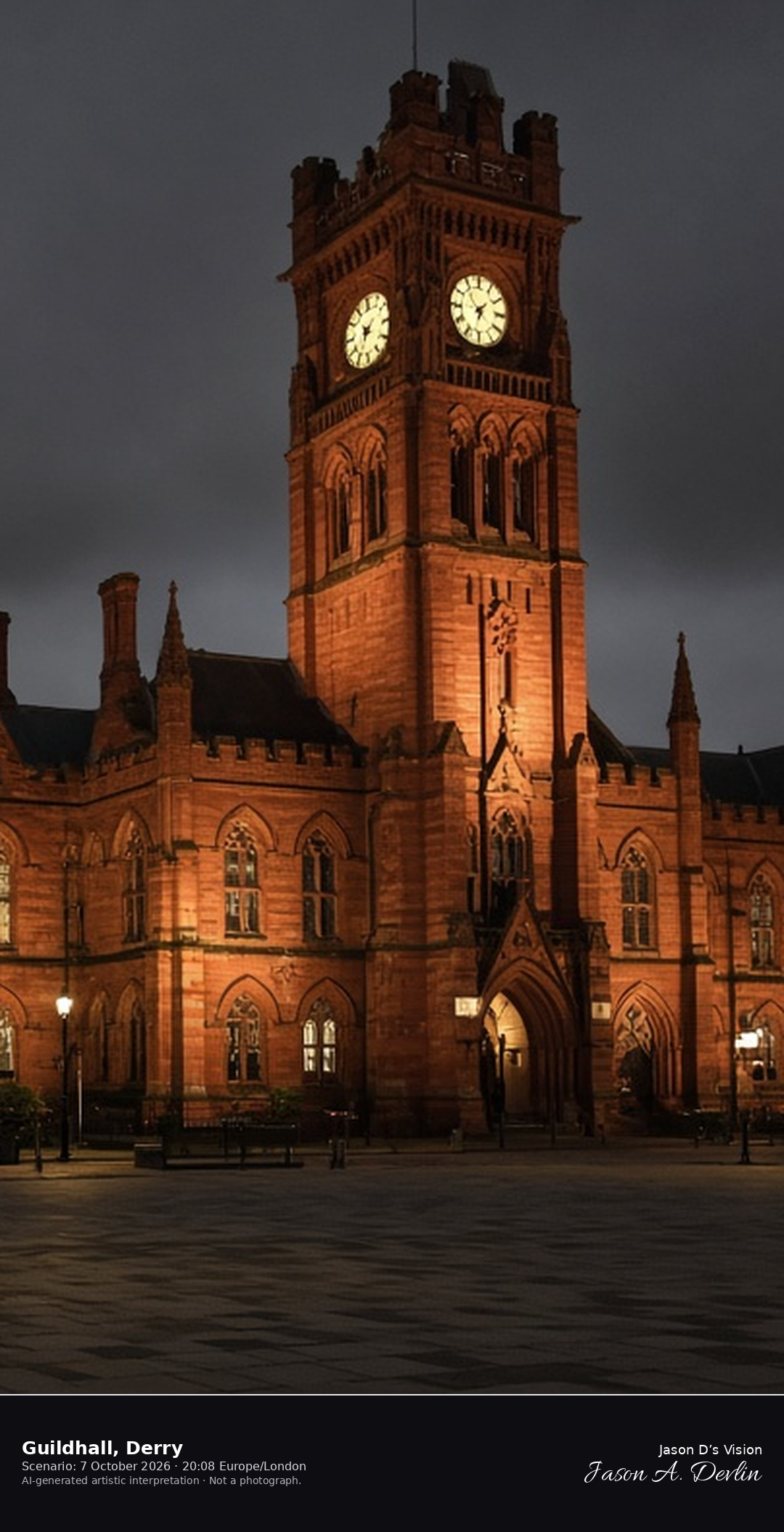
Derry's Guildhall was built in 1890 and rebuilt after a fire in 1908. Its stained-glass windows tell the history of the city, and it hosted the Saville Inquiry.
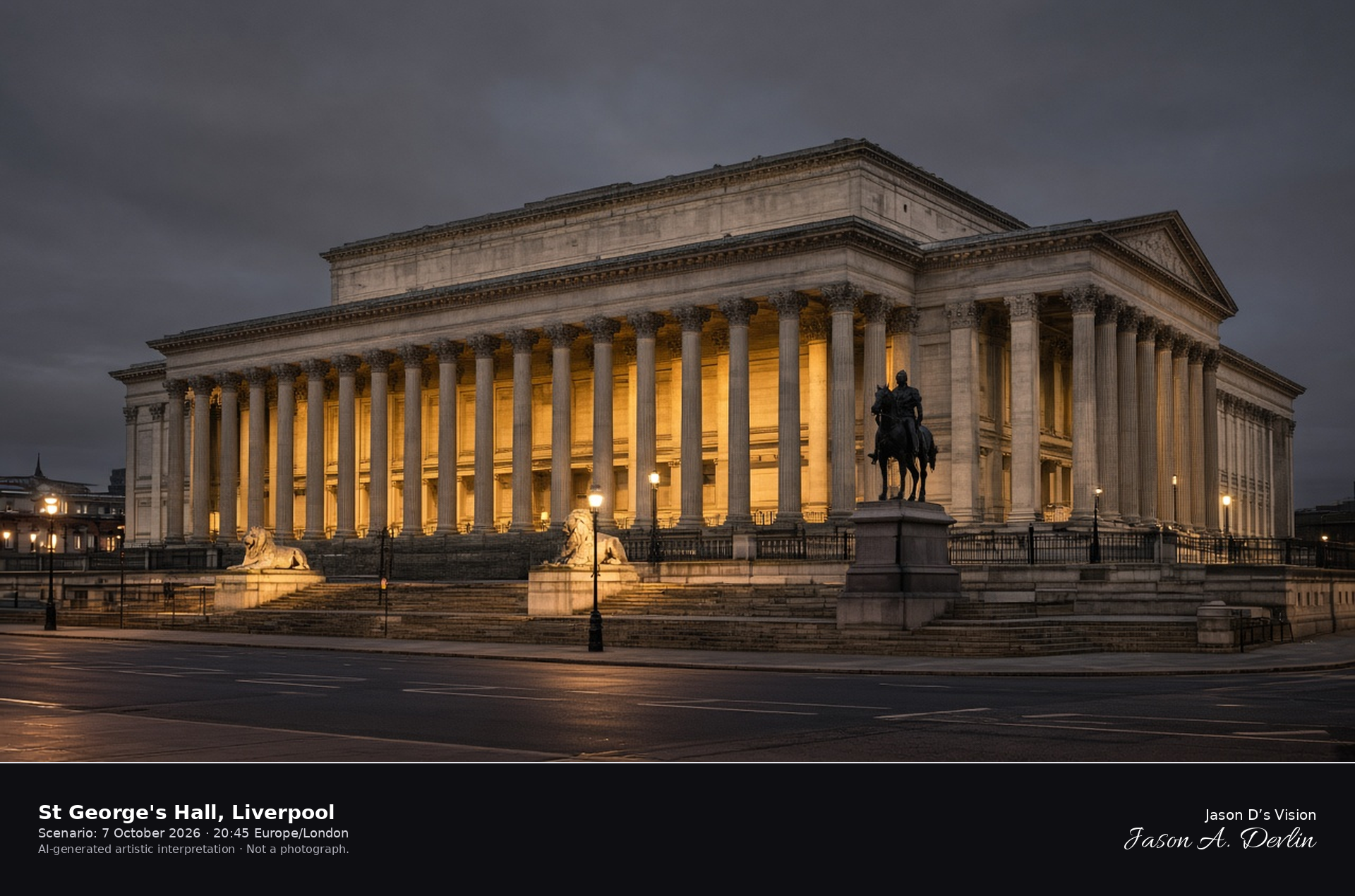
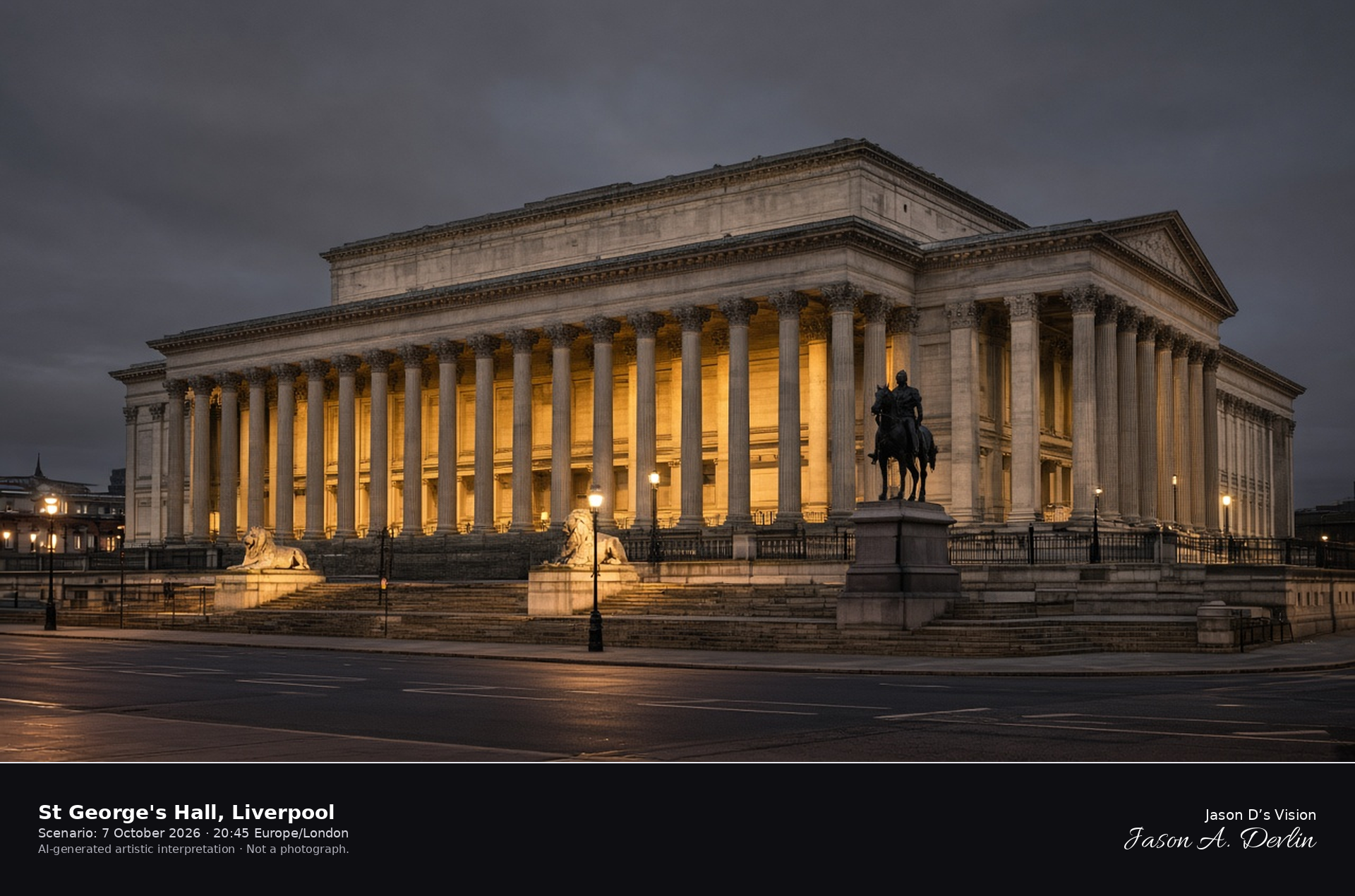
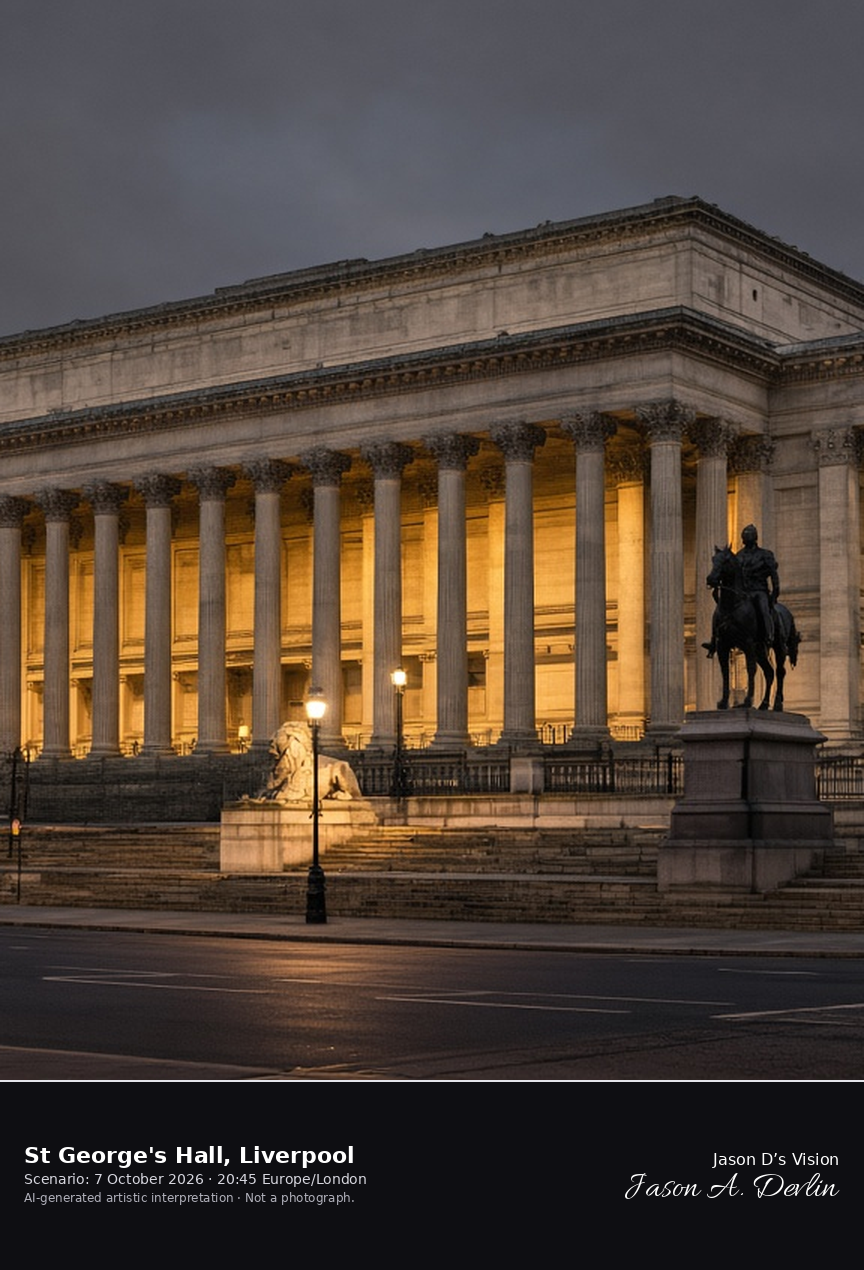
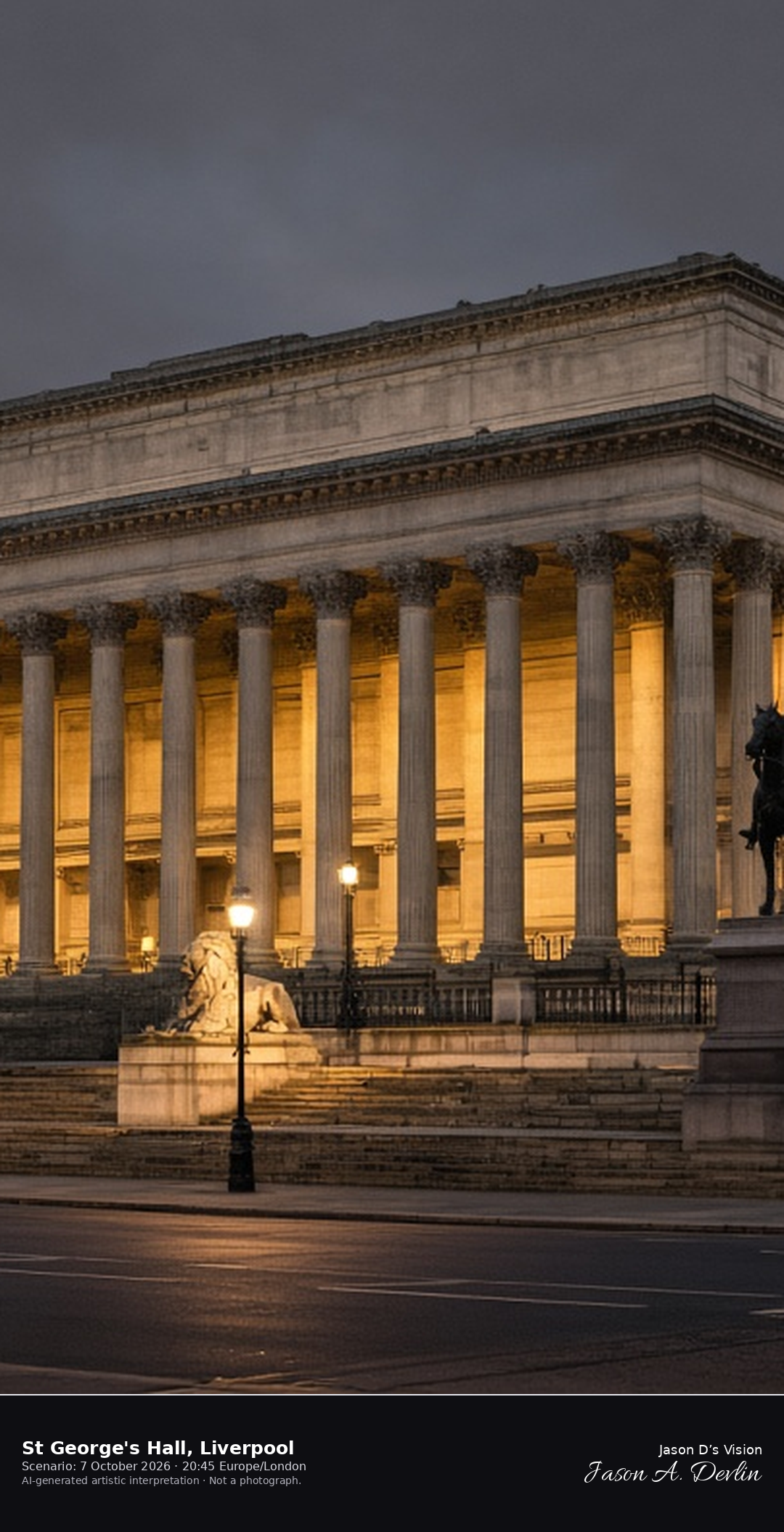
St George's Hall · AI-generated artistic interpretation
St George's Hall, opened in 1854, lodged Liverpool's concert hall and its assize courts beneath a single immense roof of Greek Revival splendour. Charles Dickens gave readings here; and beneath the hall's floorboards lies a pavement of thirty thousand Minton tiles, uncovered for visitors on special days.
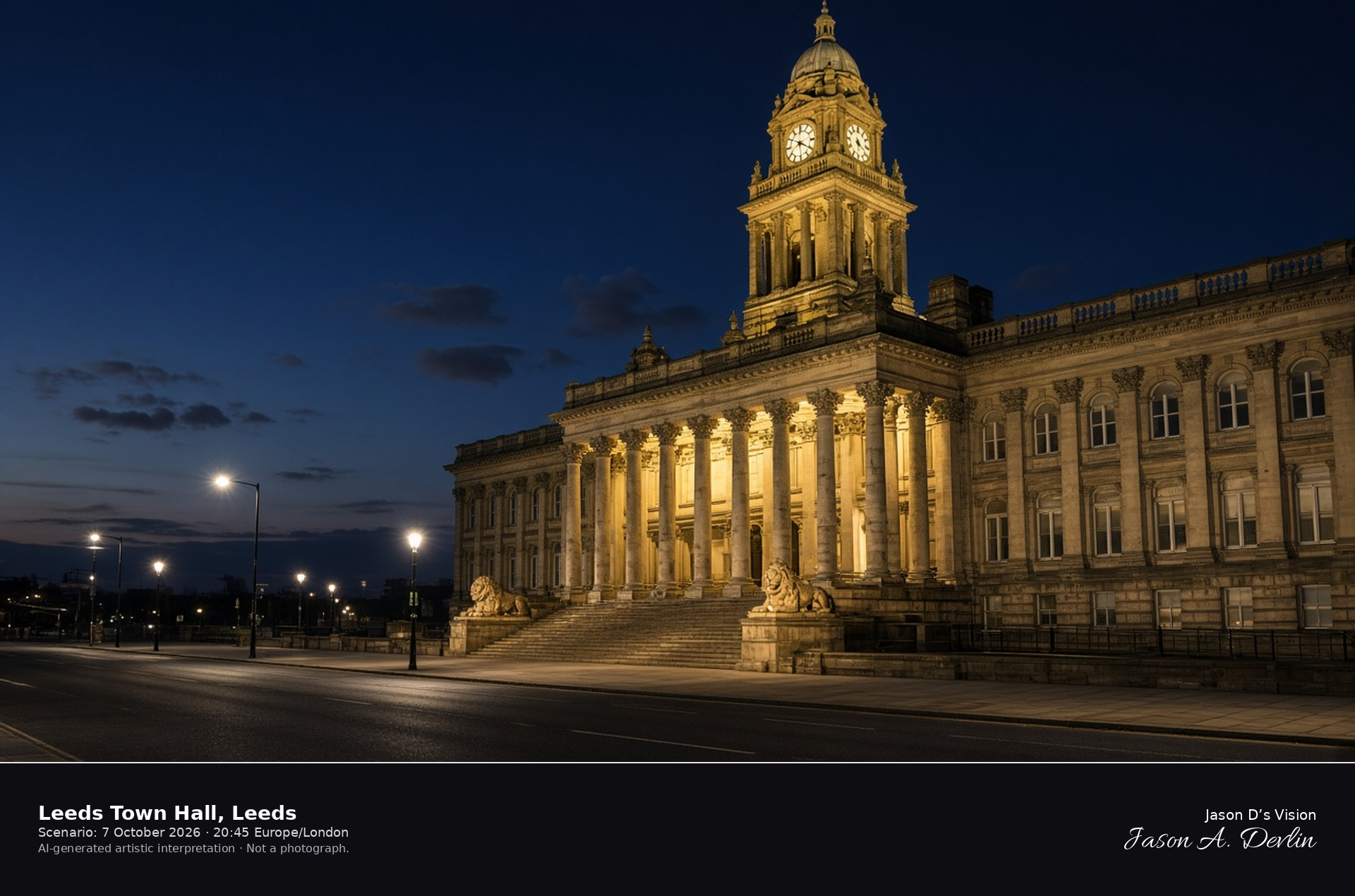
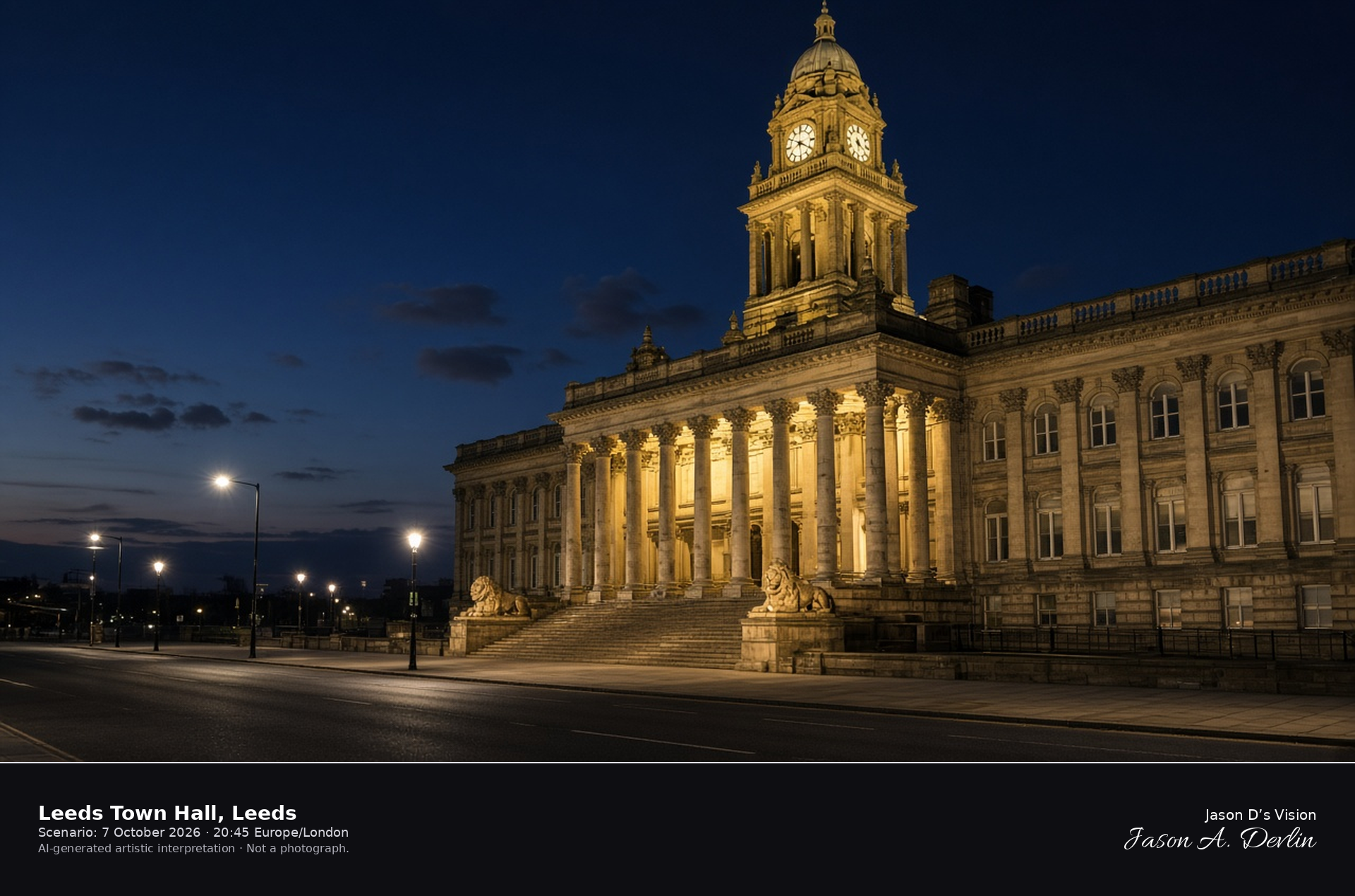
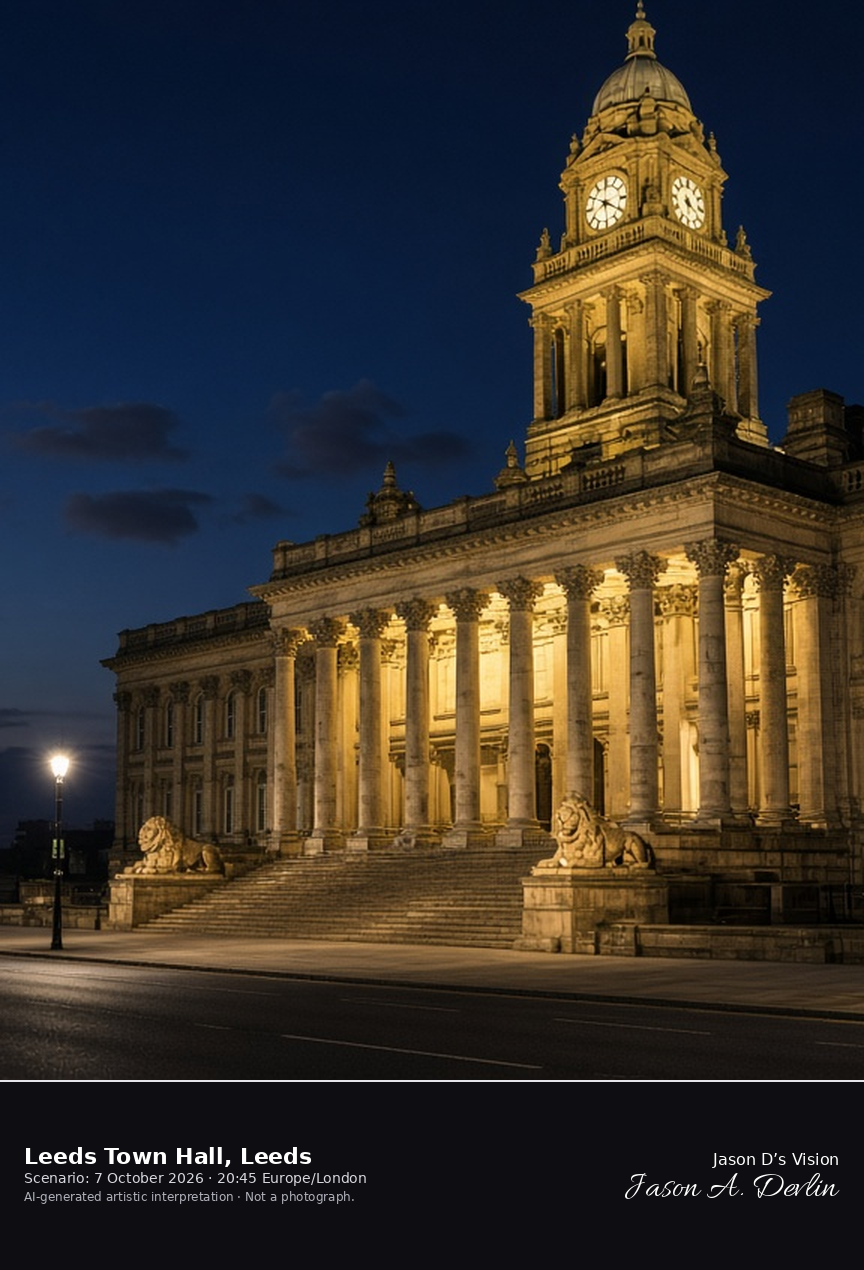
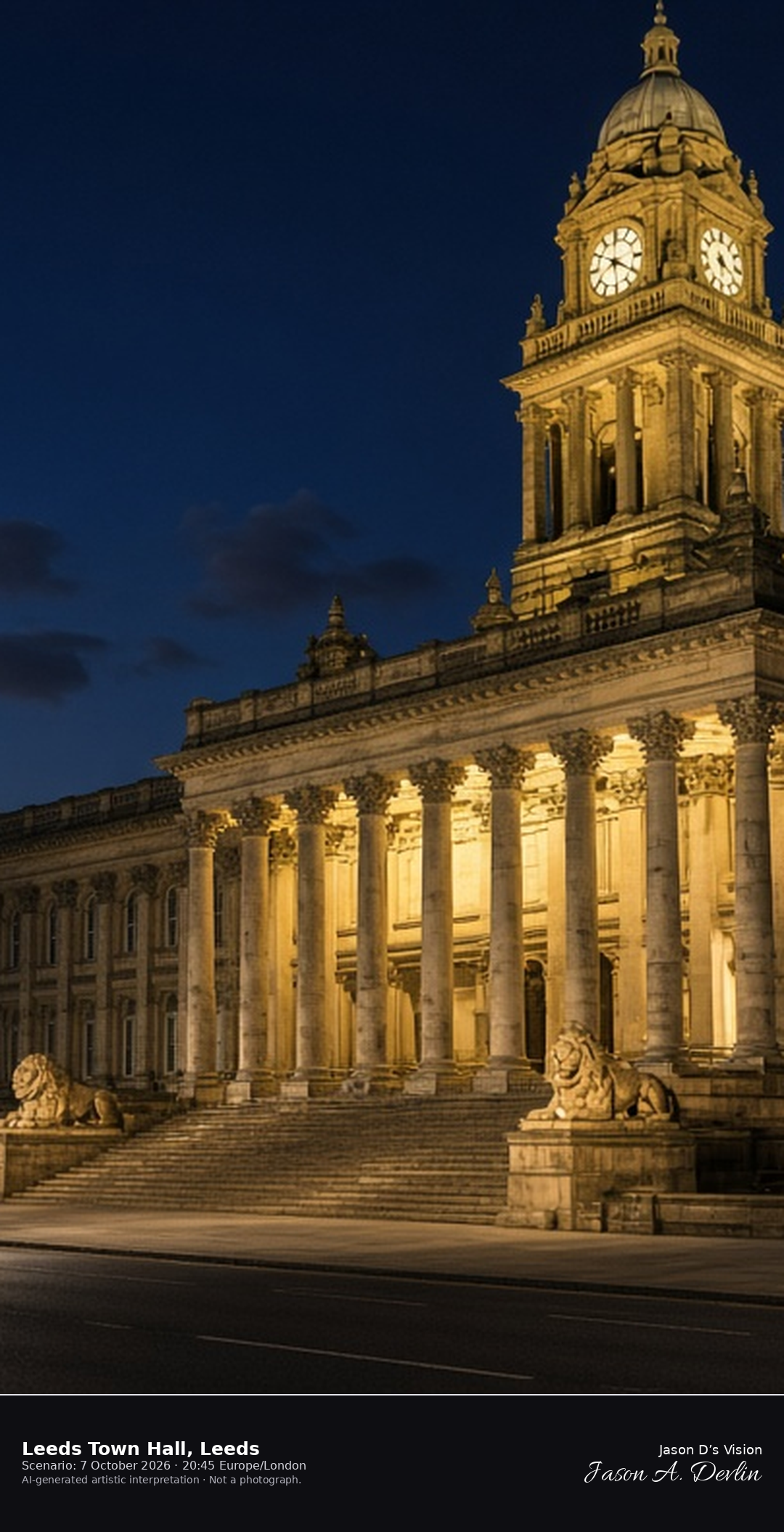
Leeds Town Hall, Leeds · AI-generated artistic interpretation
Leeds Town Hall was designed by Cuthbert Brodrick and opened by Queen Victoria in 1858. It was one of the largest town halls in Britain and still hosts concerts in its Victoria Hall.
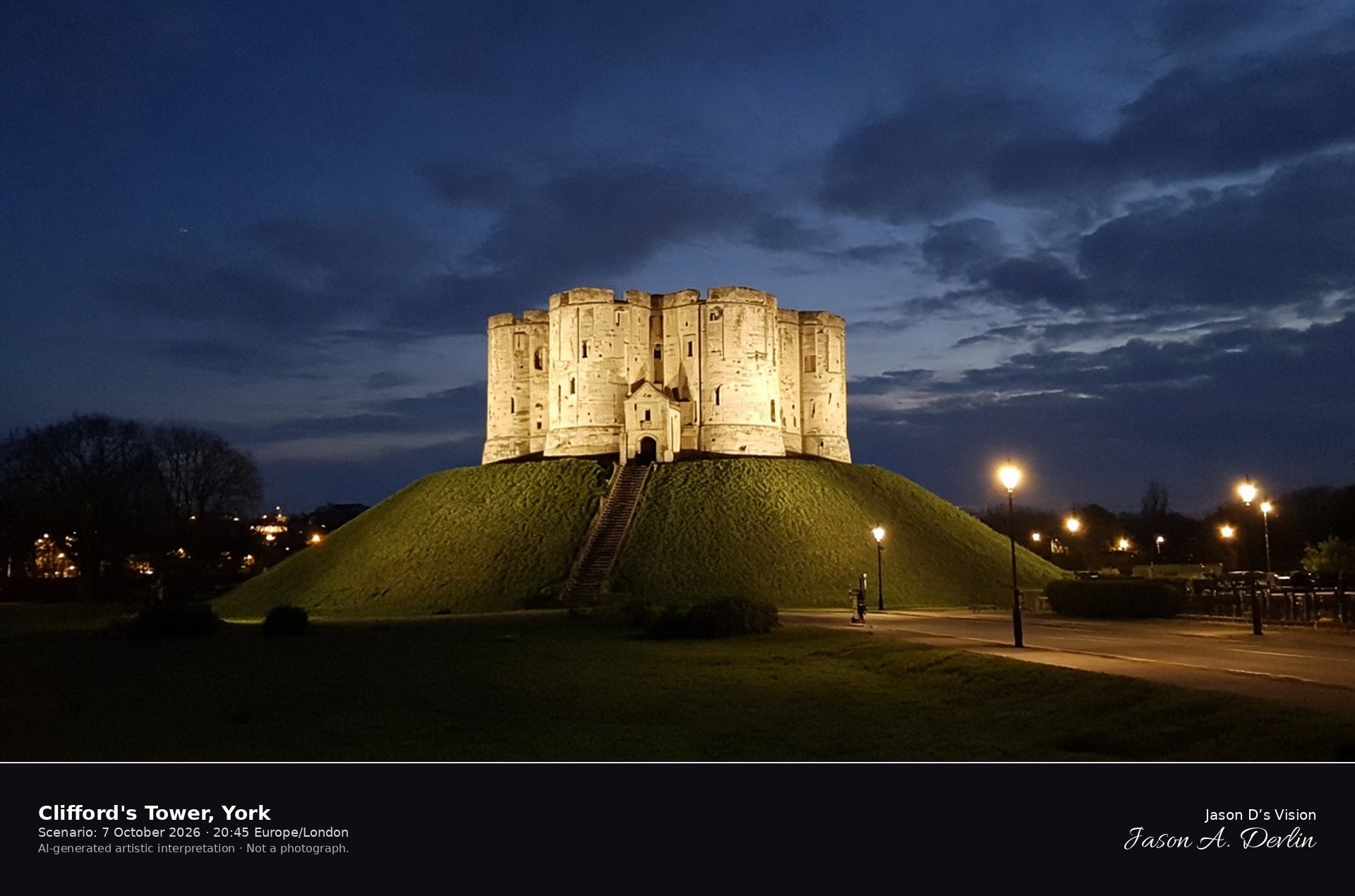
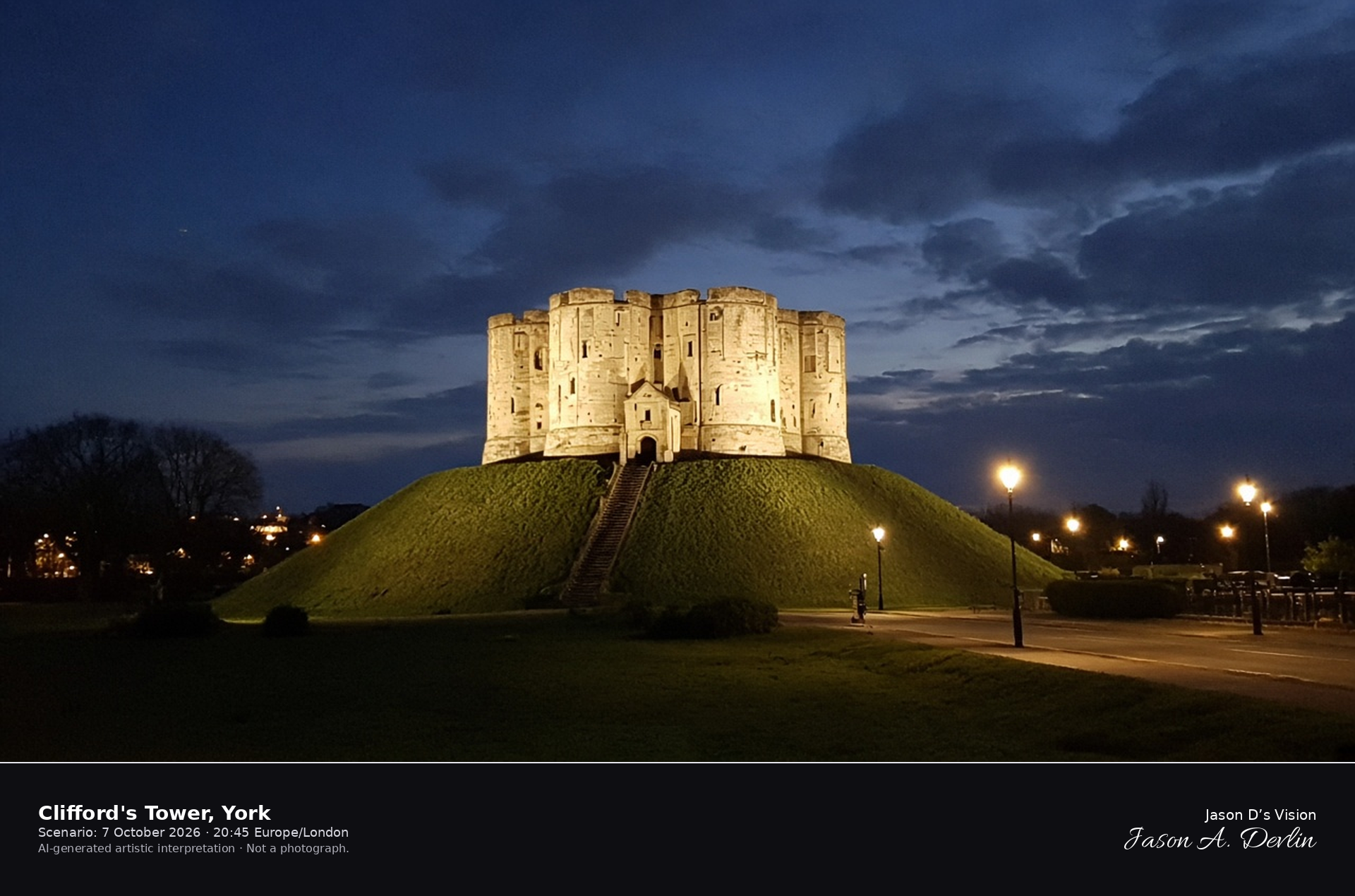
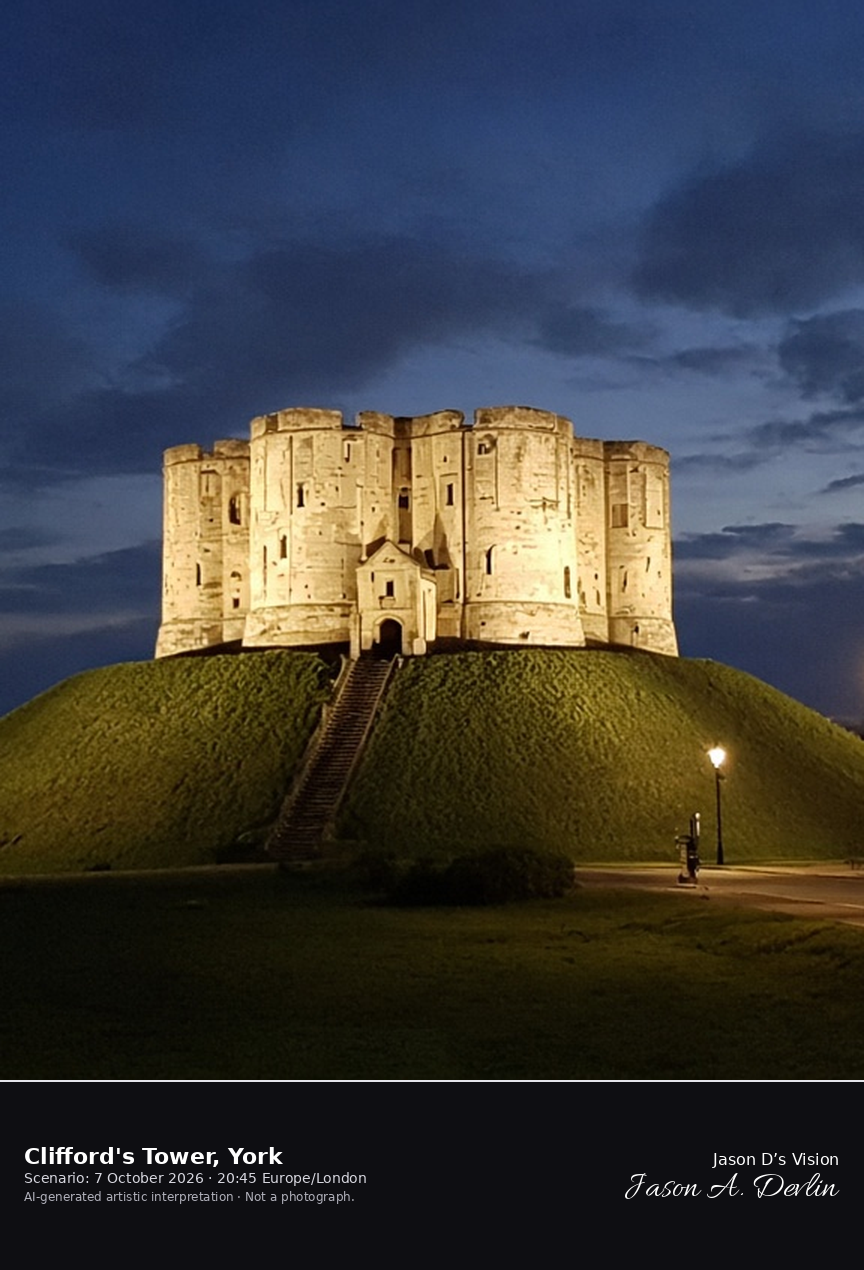
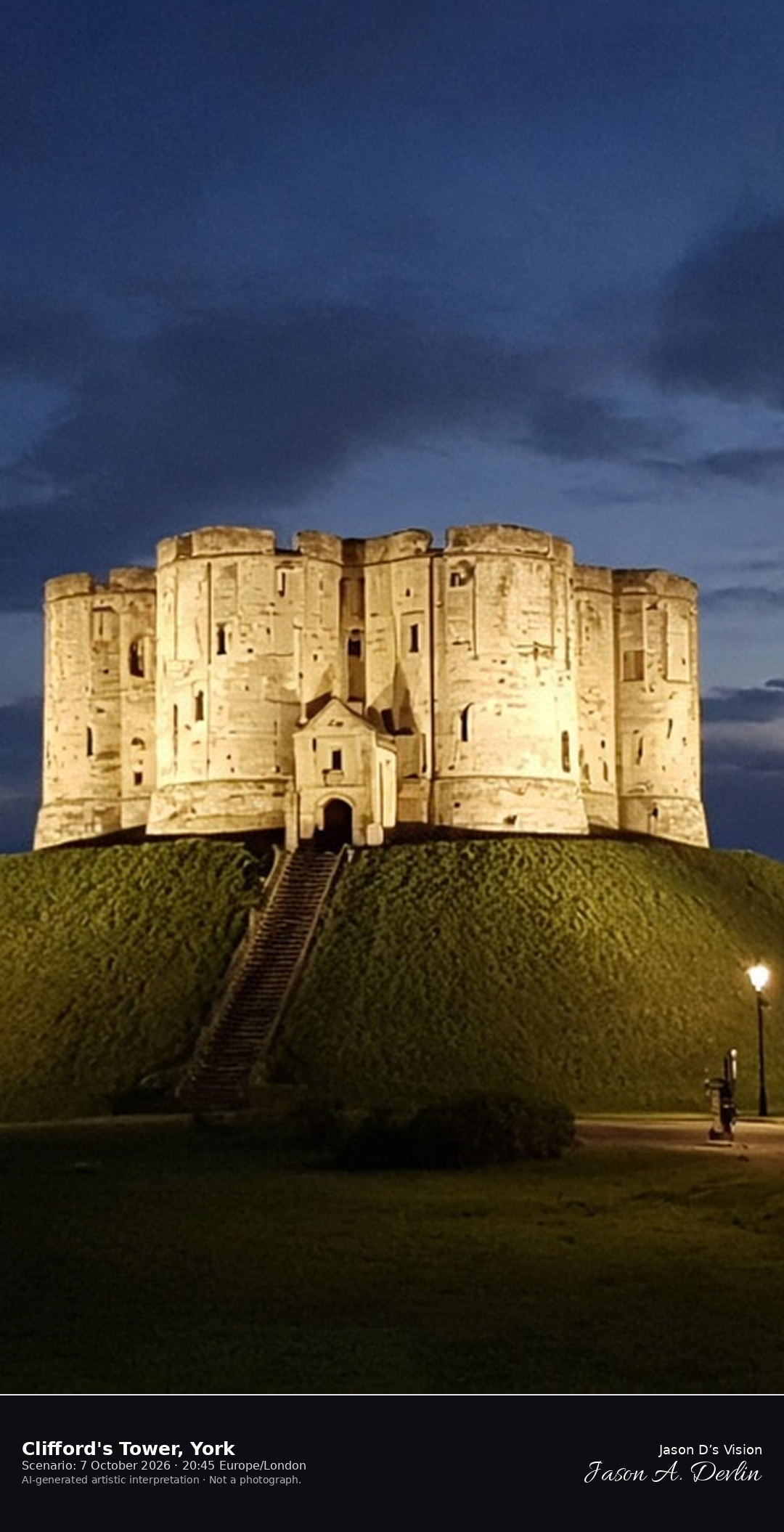
Clifford's Tower, York · AI-generated artistic interpretation
Clifford's Tower is the largest surviving part of York Castle, rebuilt in stone by Henry III in the 13th century. Its four-lobed quatrefoil plan is unique in England.
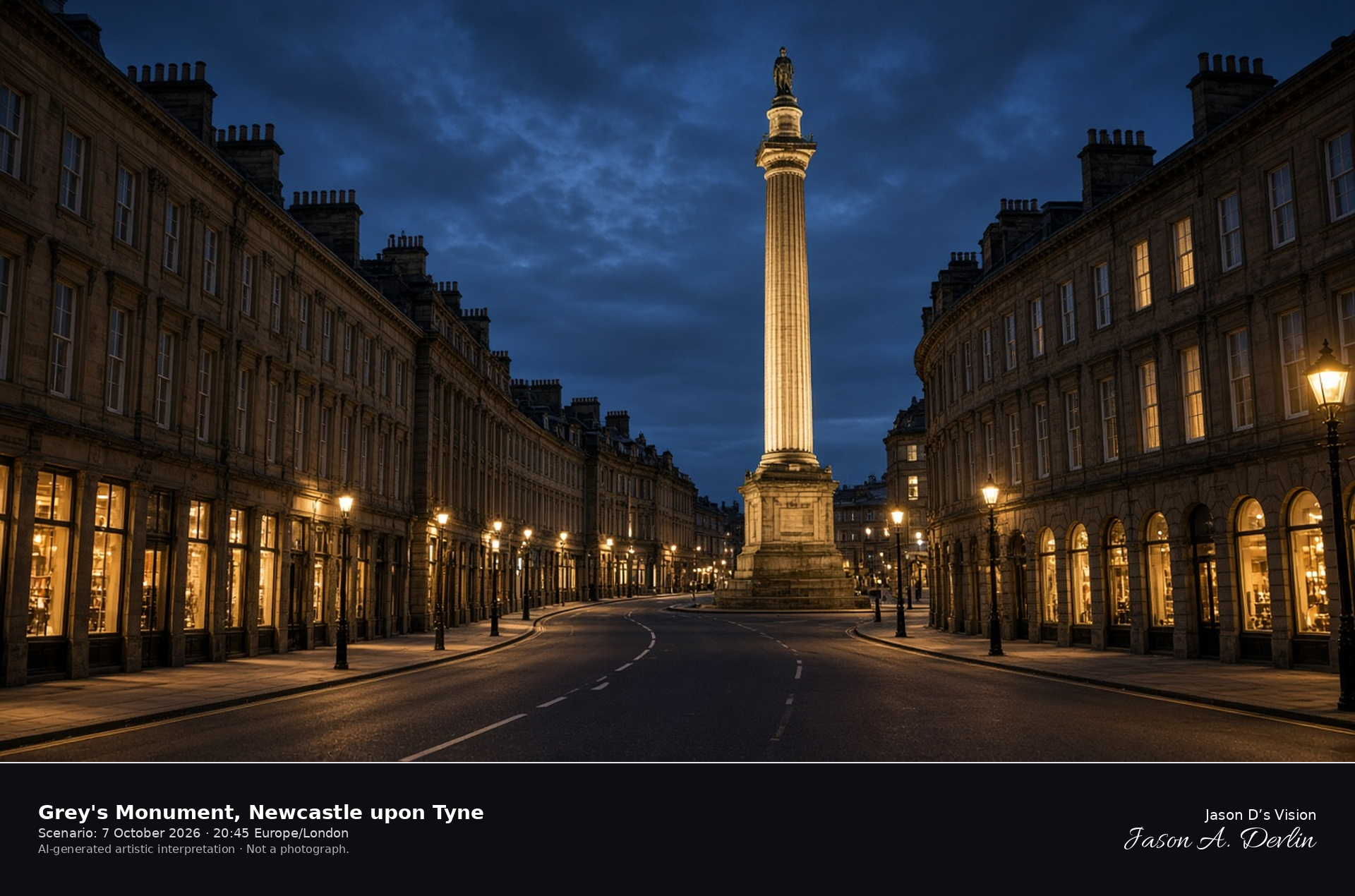
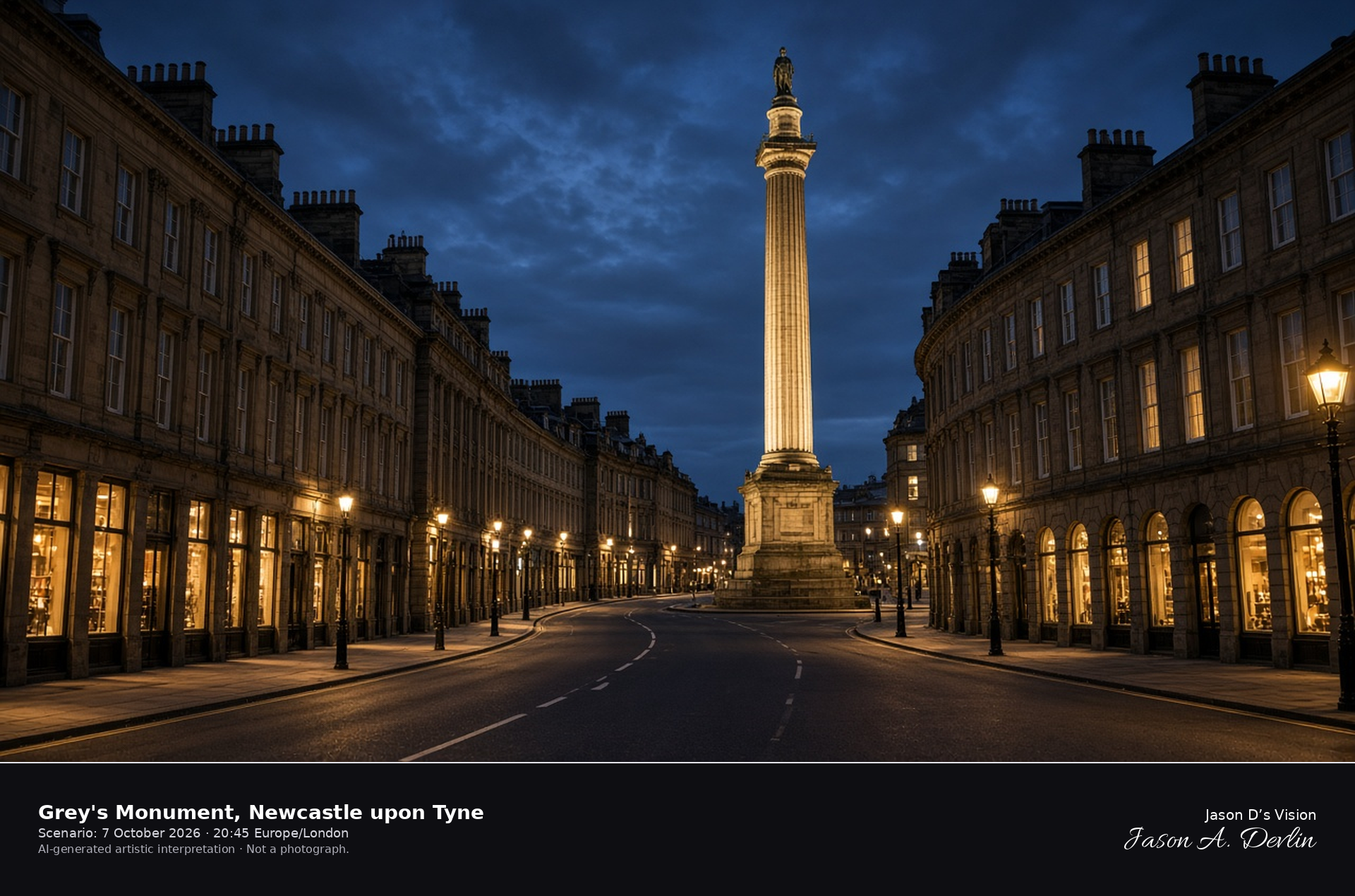
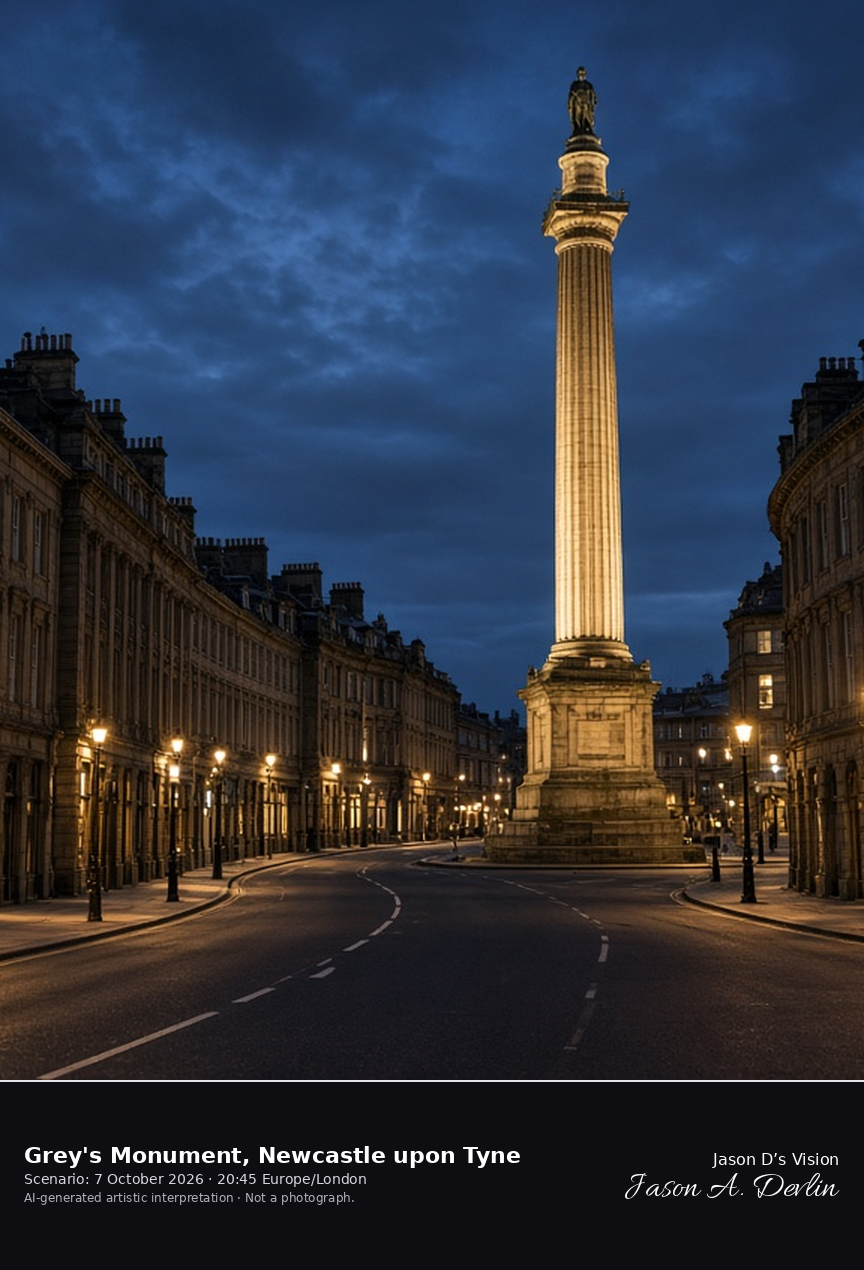
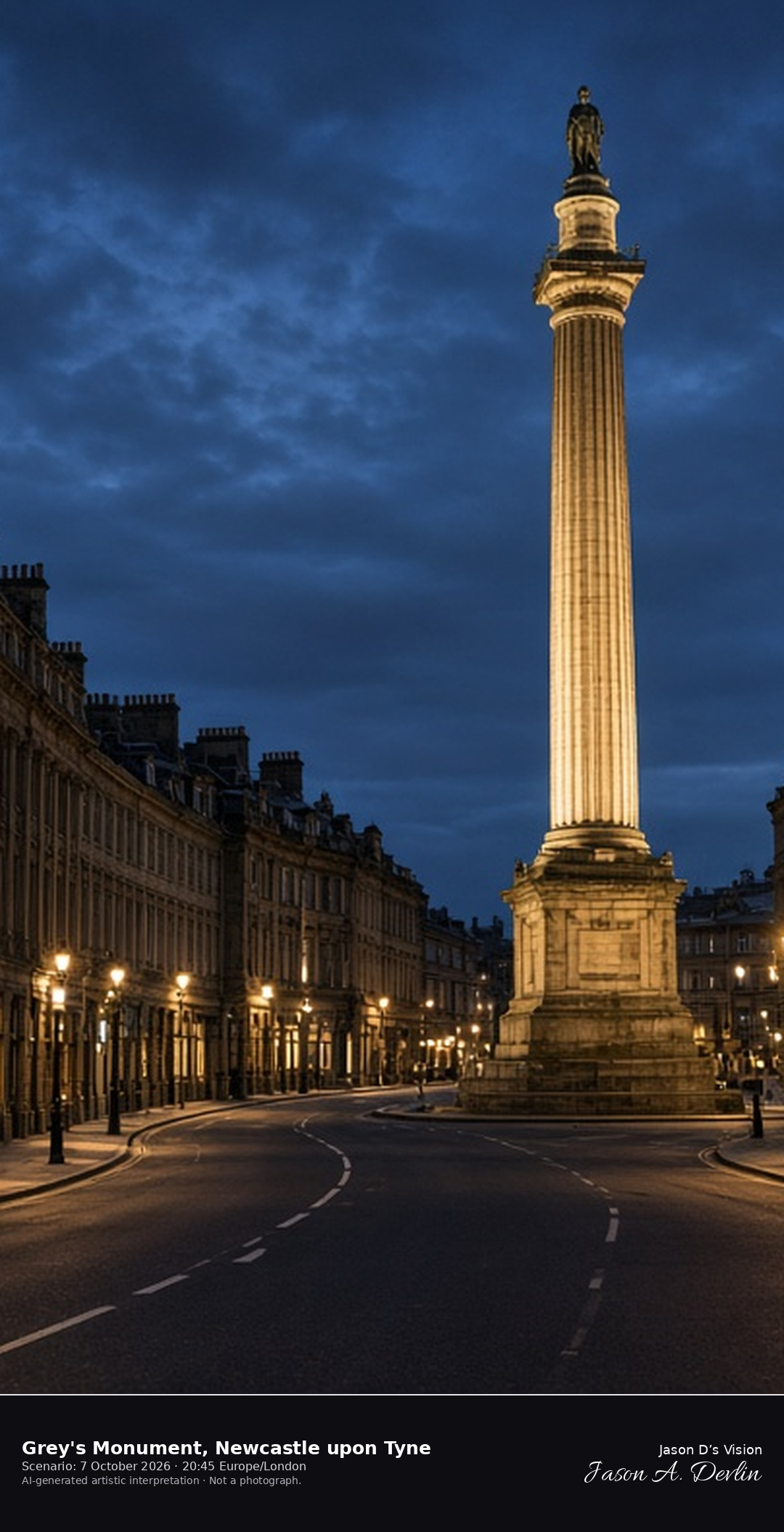
The monument honours Charles Grey, second Earl Grey, the Prime Minister whose government carried the Great Reform Act of 1832, extending the male franchise in England and Wales. Newcastle raised his column in his own lifetime, in 1838; he is also the Earl Grey of the famous tea, said to have been blended for the waters of his Northumberland home.
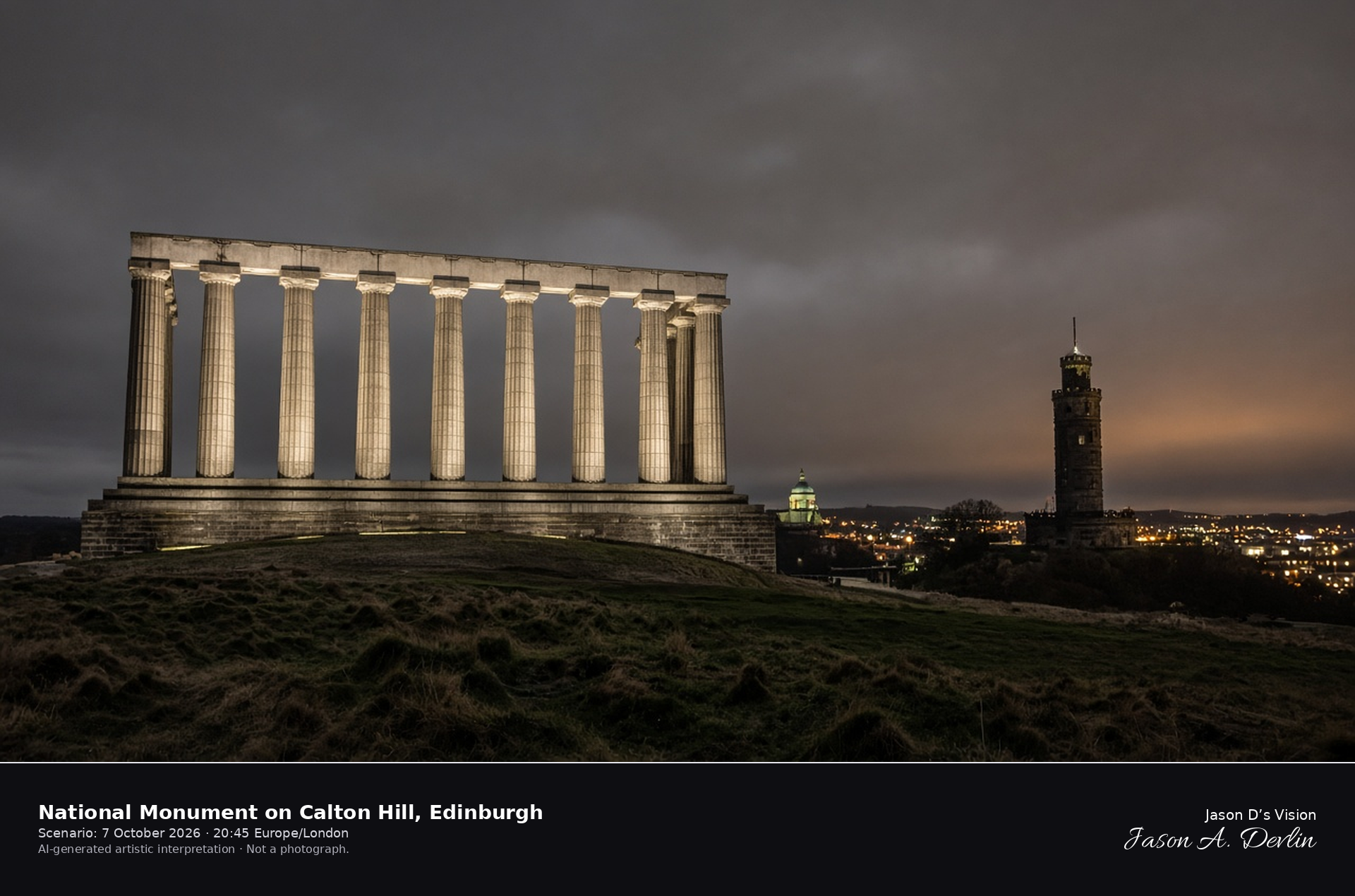
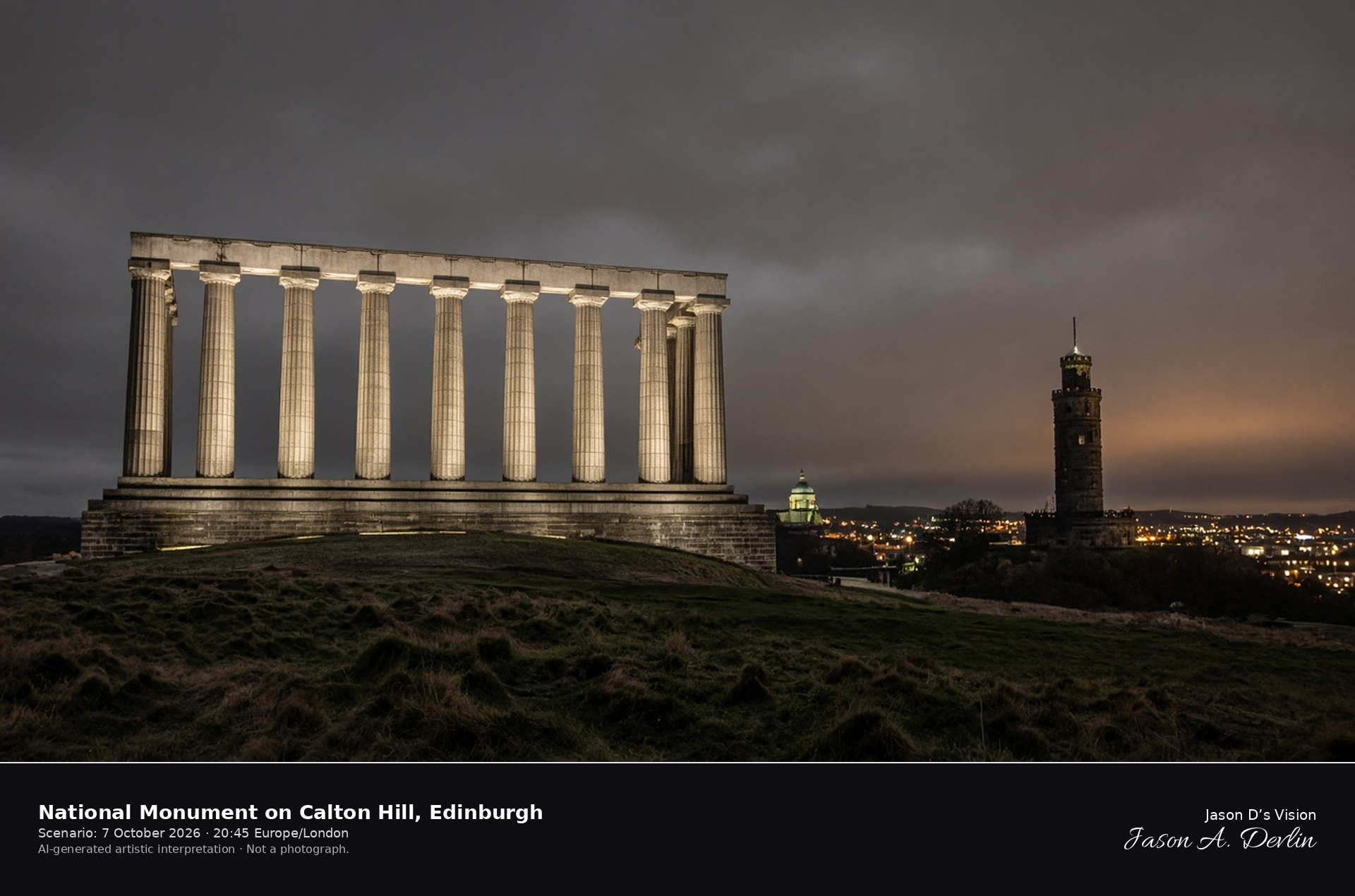
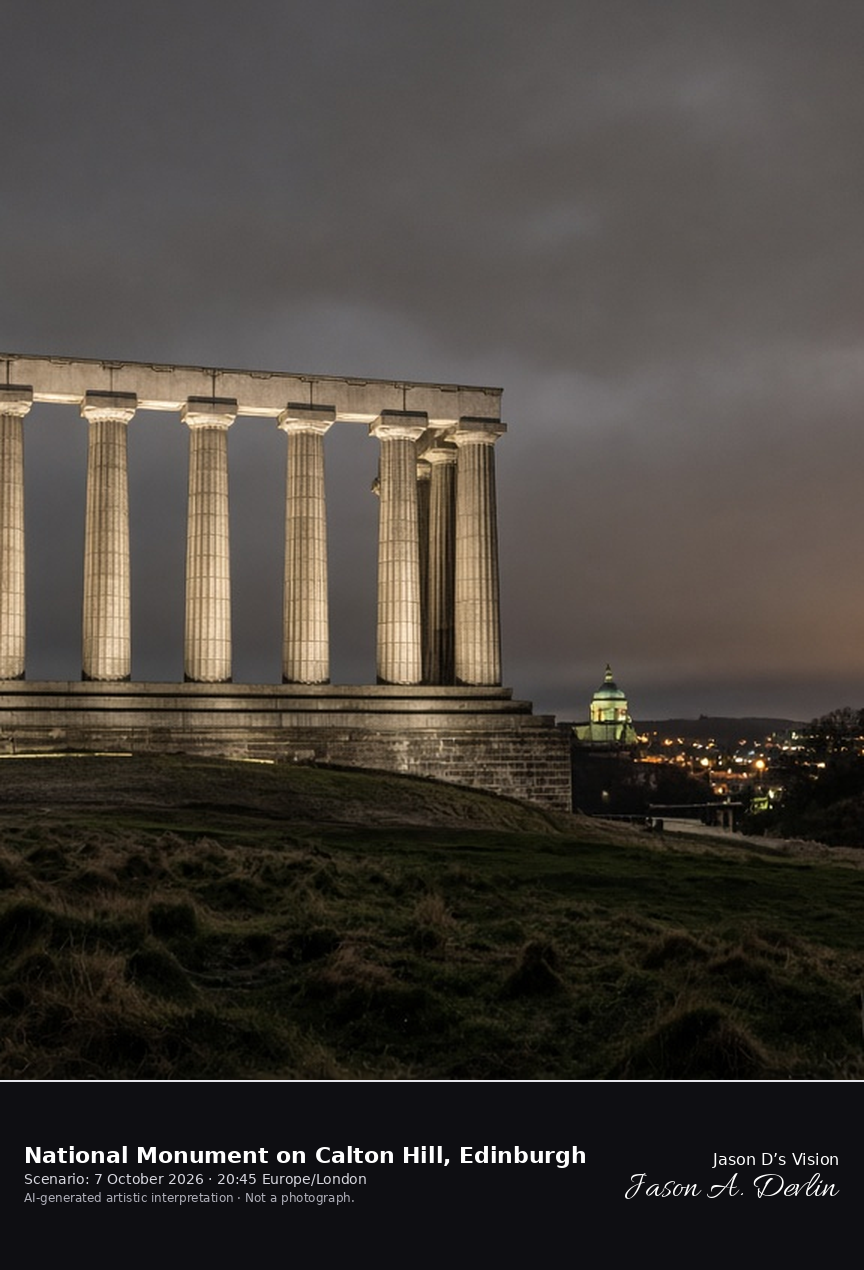
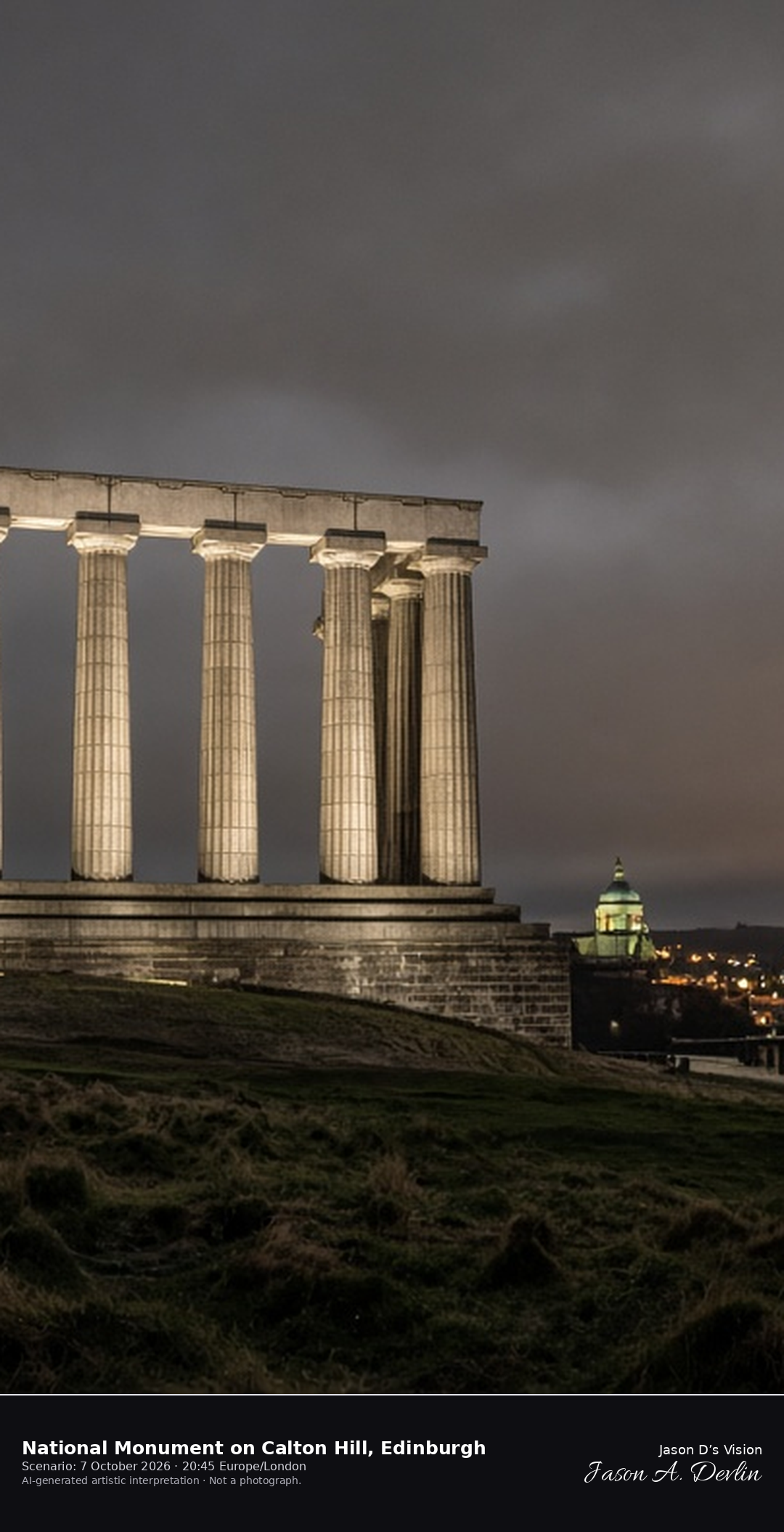
National Monument on Calton Hill · AI-generated artistic interpretation
Edinburgh set out in 1826 to copy the Parthenon of Athens as a memorial to her Napoleonic dead — and the money ran out three years later, leaving just twelve columns standing. Long nicknamed 'Edinburgh's Disgrace', the unfinished temple is now a familiar silhouette on the city's skyline.
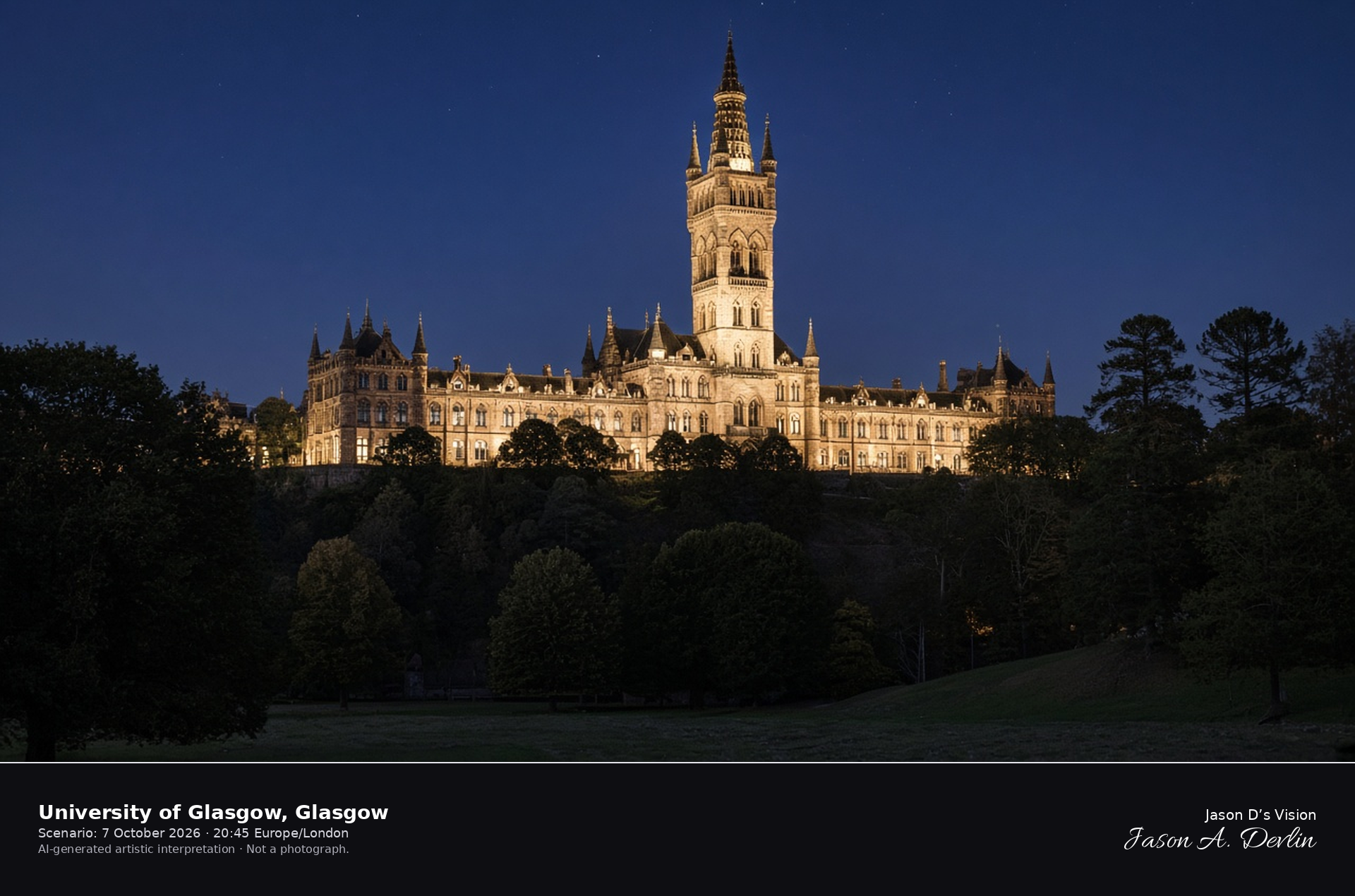
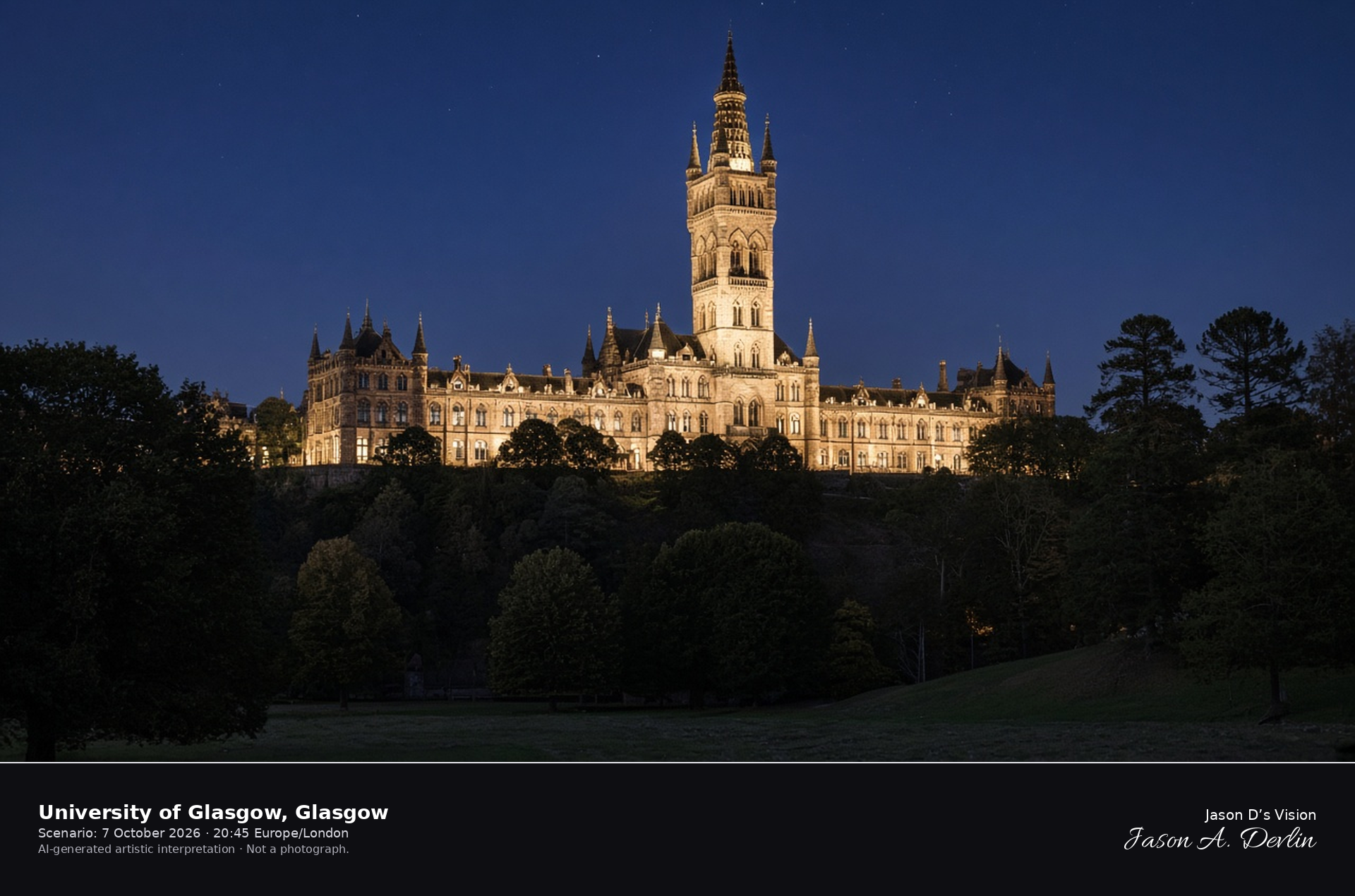
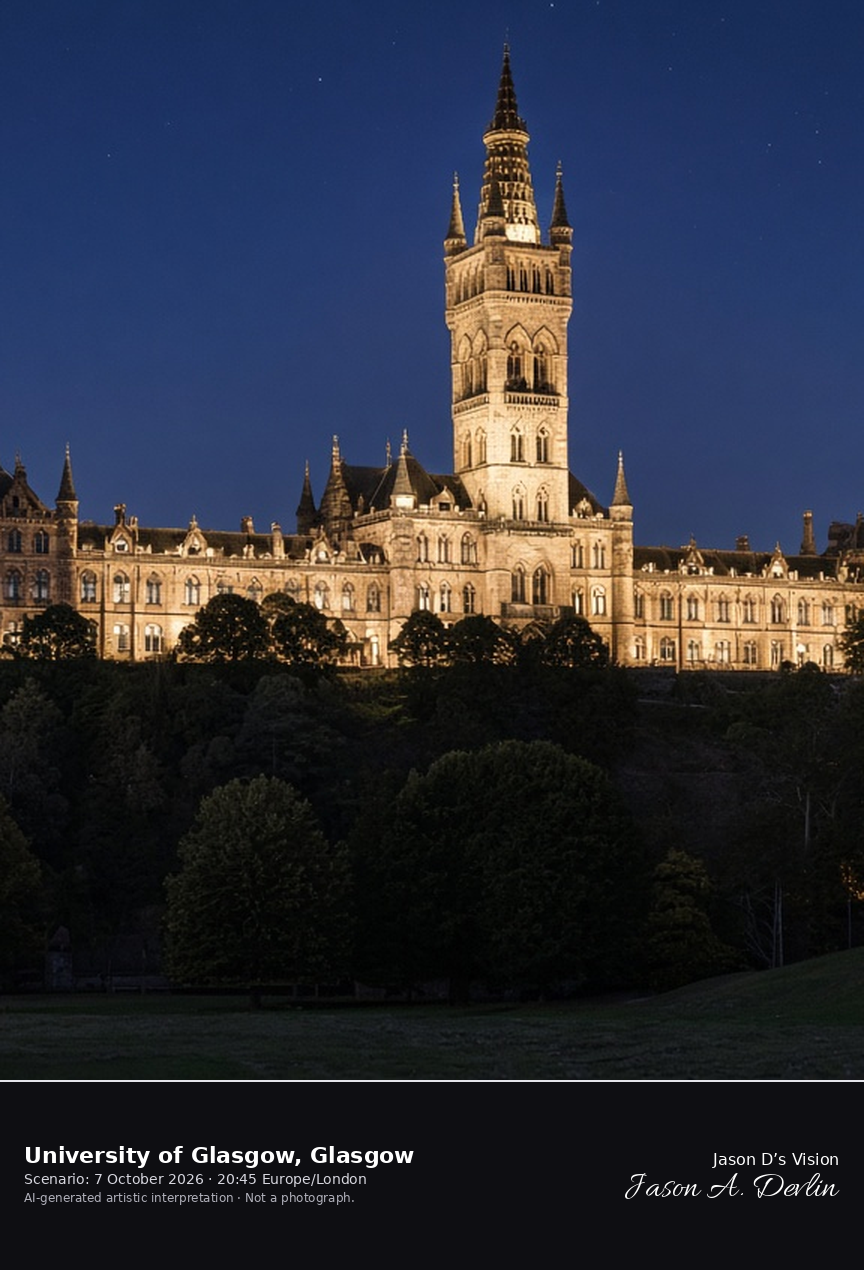
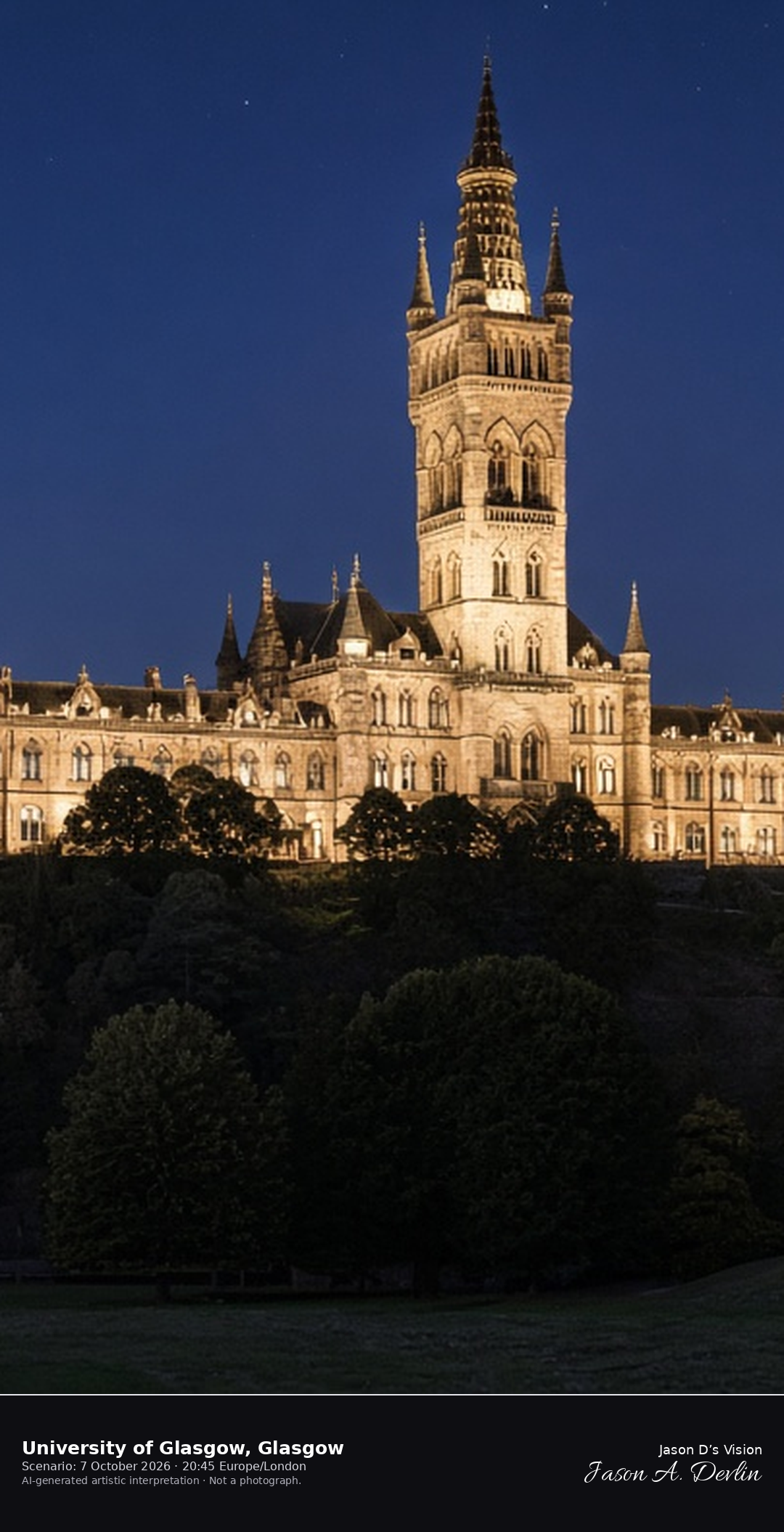
University of Glasgow, Glasgow · AI-generated artistic interpretation
The main building on Gilmorehill was designed by George Gilbert Scott and opened in 1870, when the university moved from the High Street. The university itself was founded in 1451.
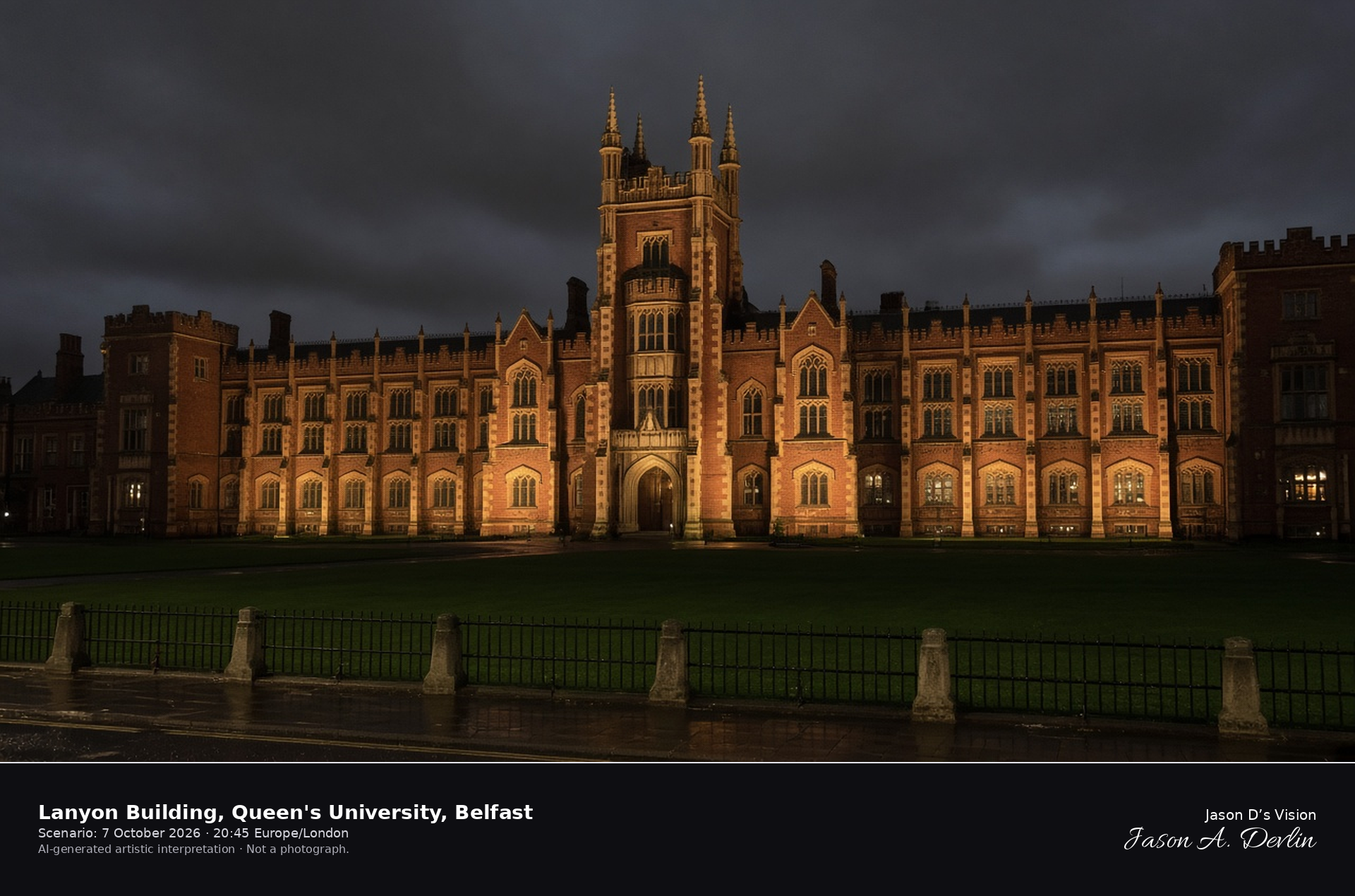
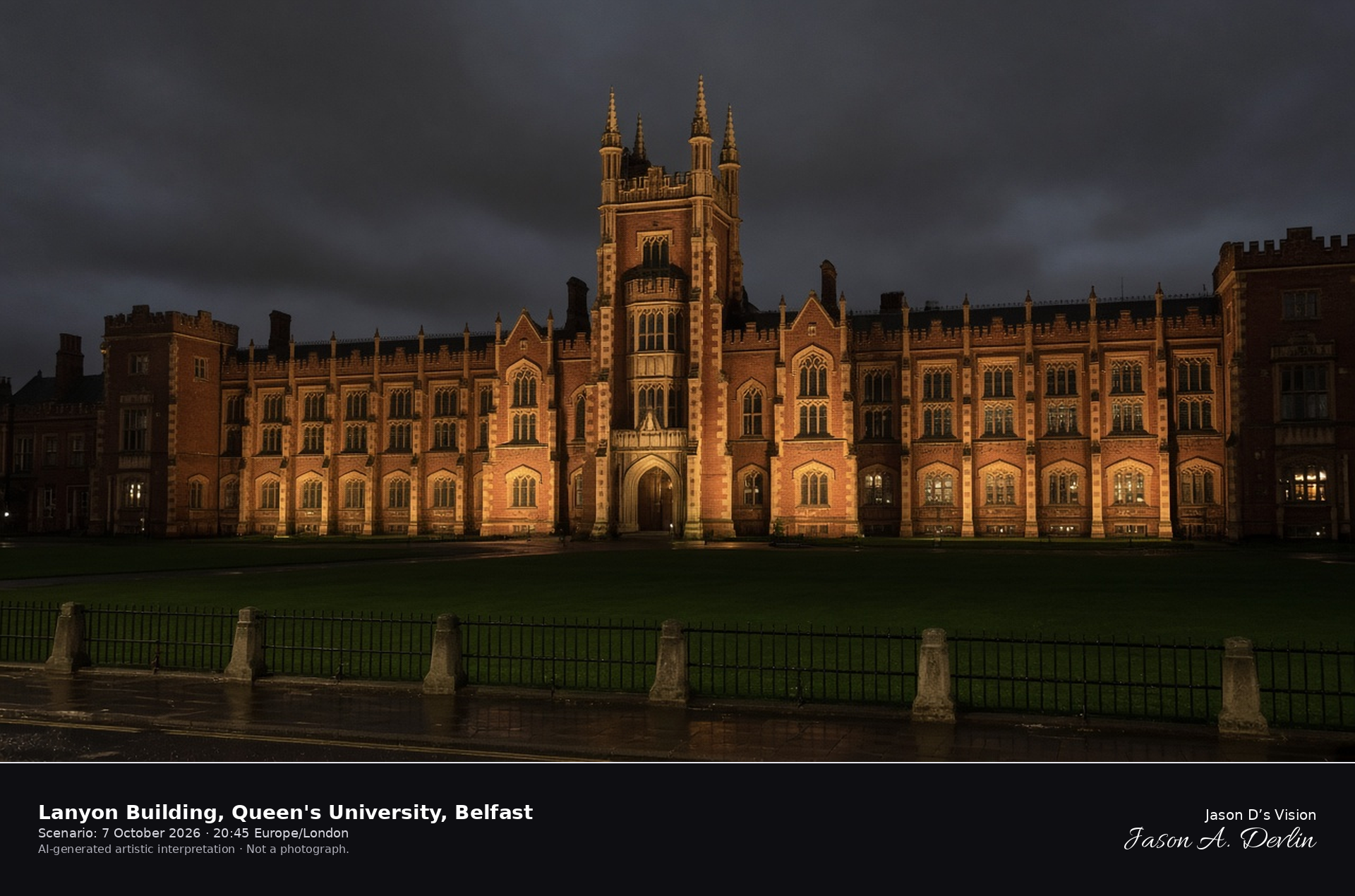
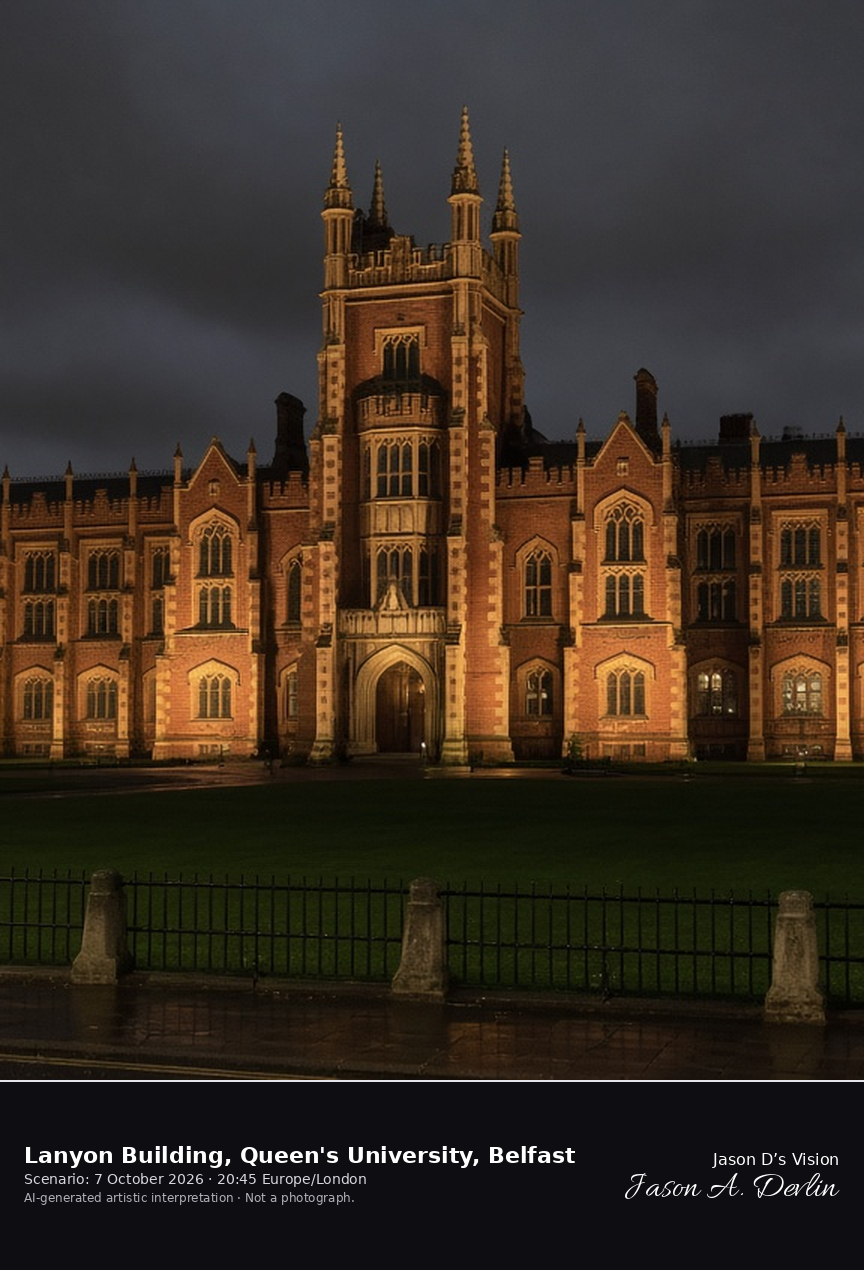
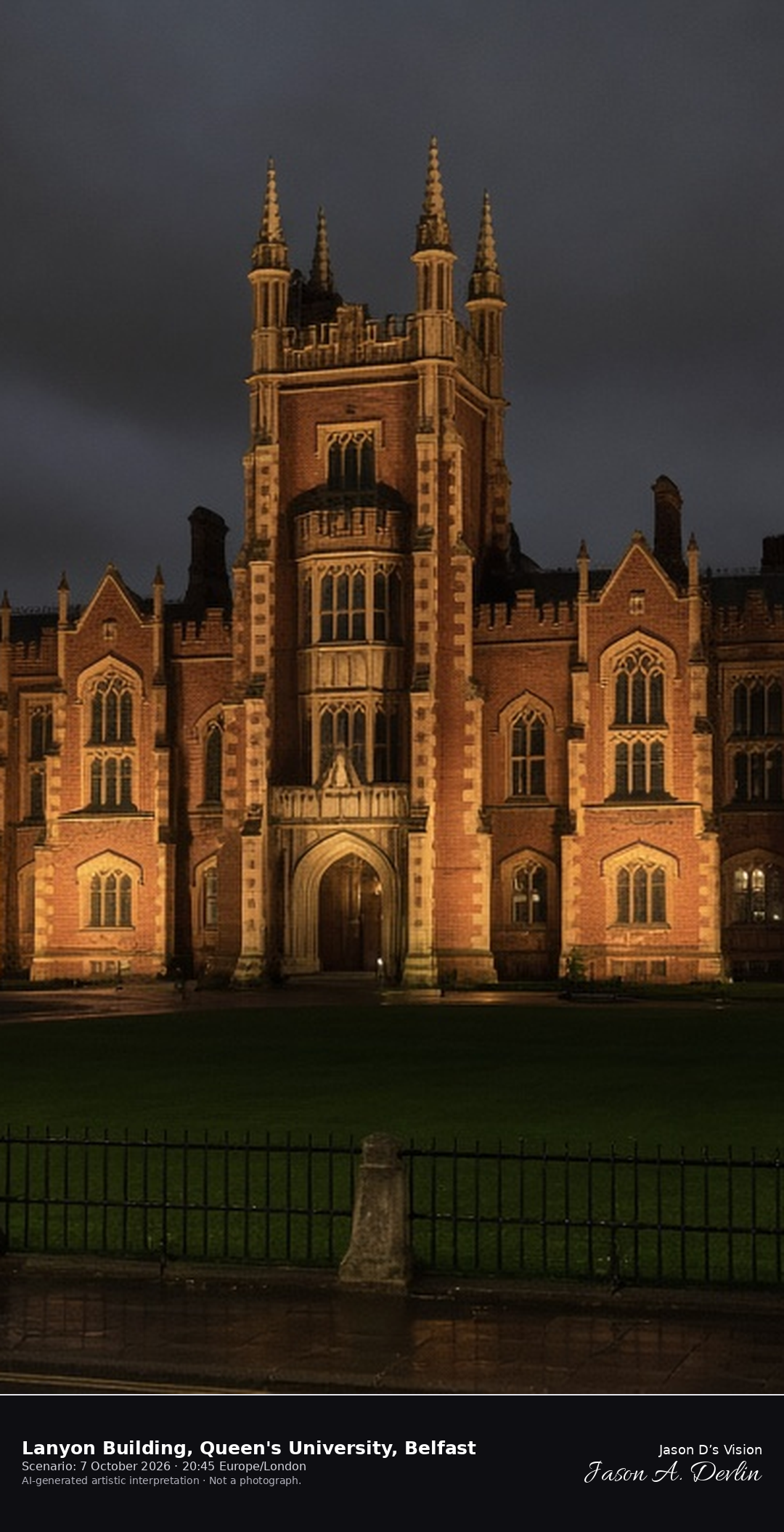
The Lanyon Building was designed by Charles Lanyon and opened in 1849 as Queen's College Belfast. Its central tower was inspired by the Founder's Tower of Magdalen College, Oxford.
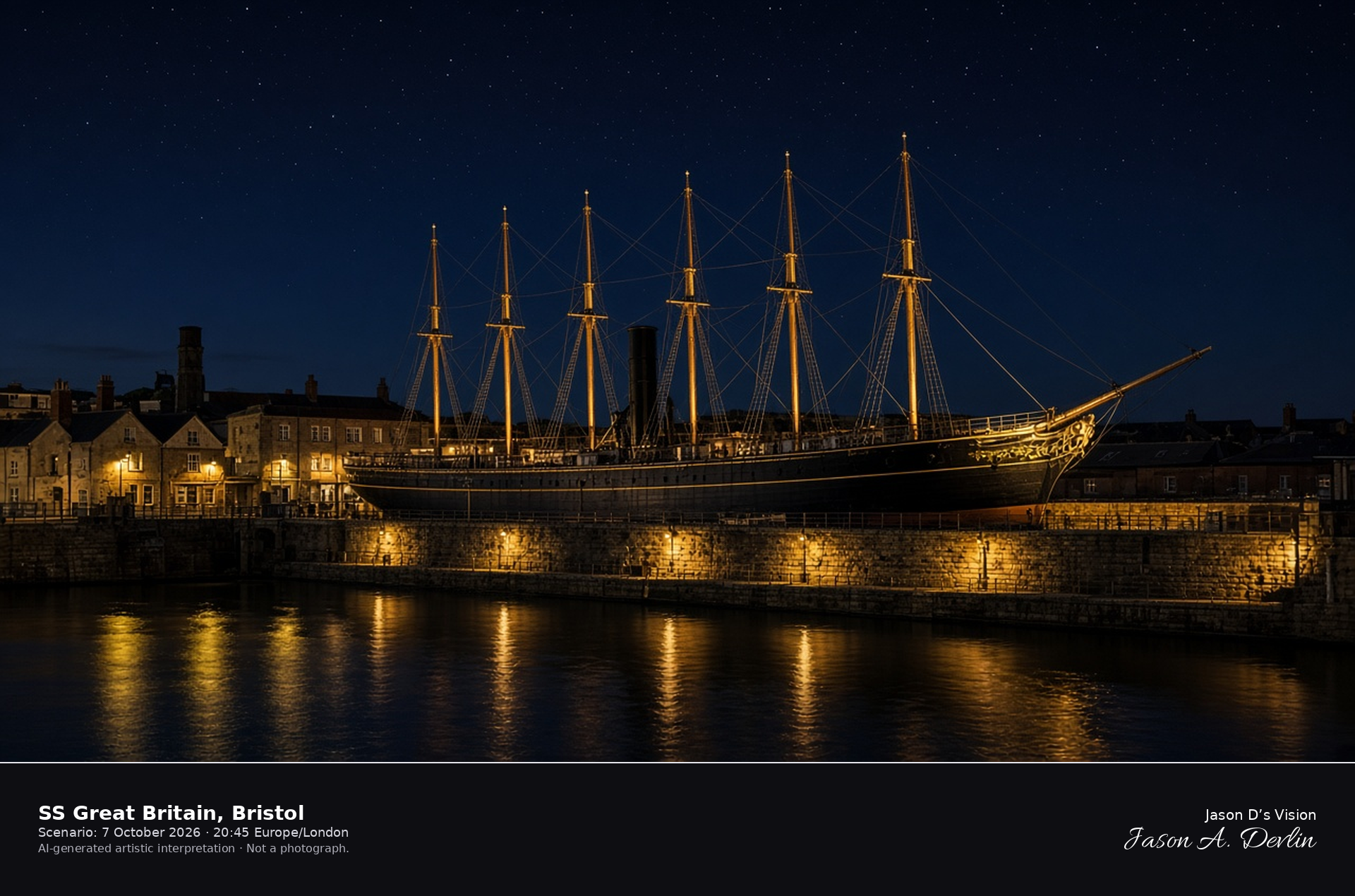
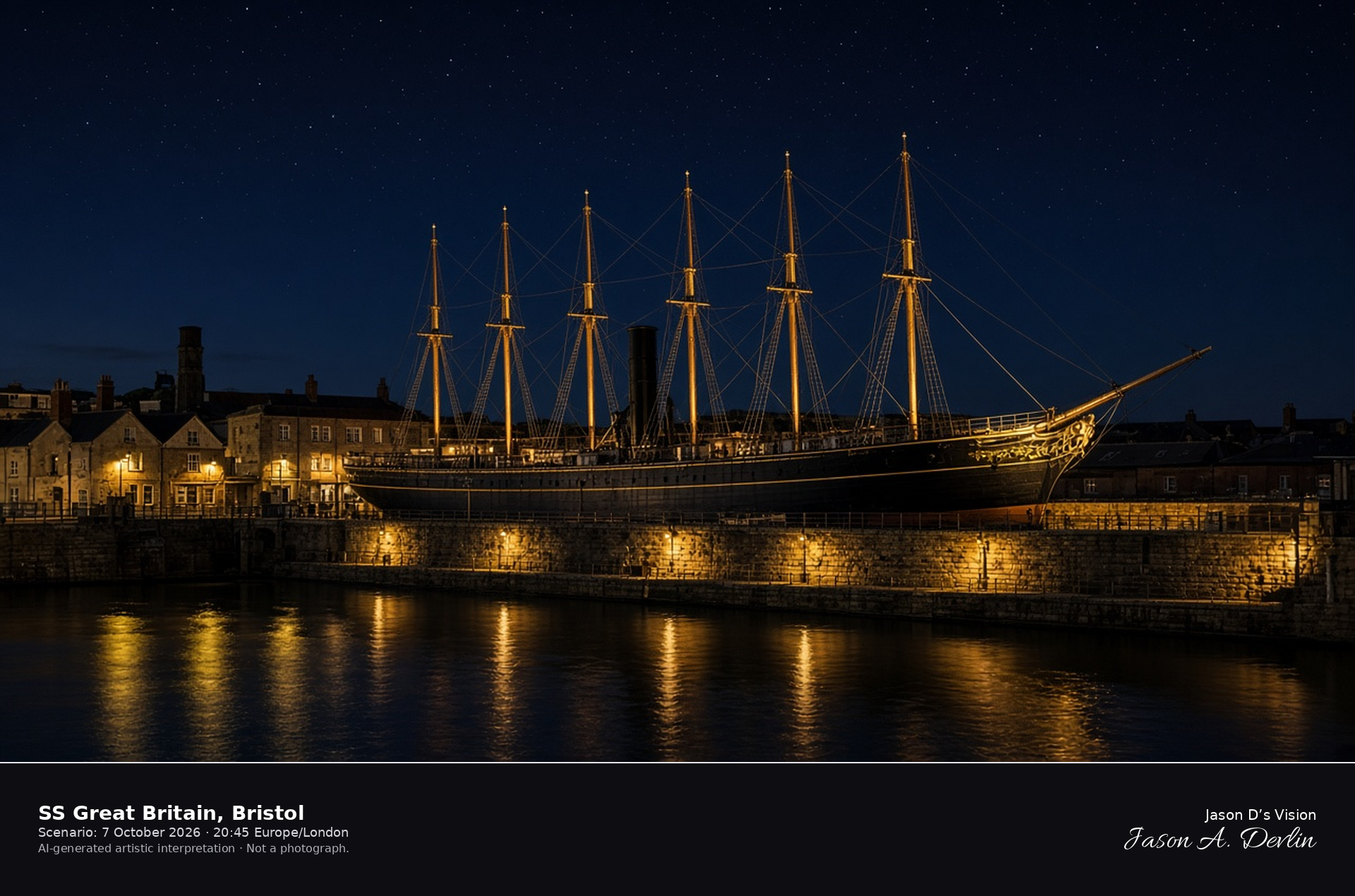
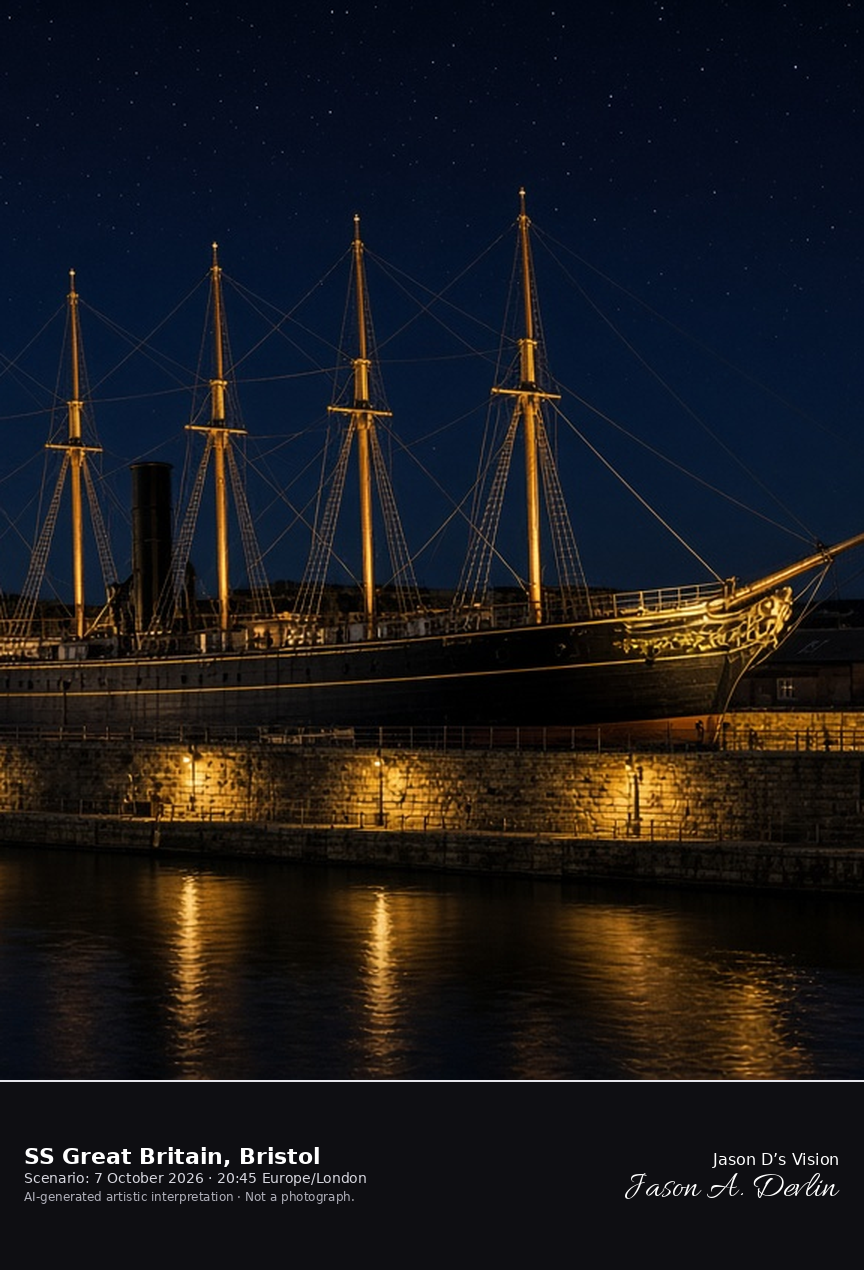
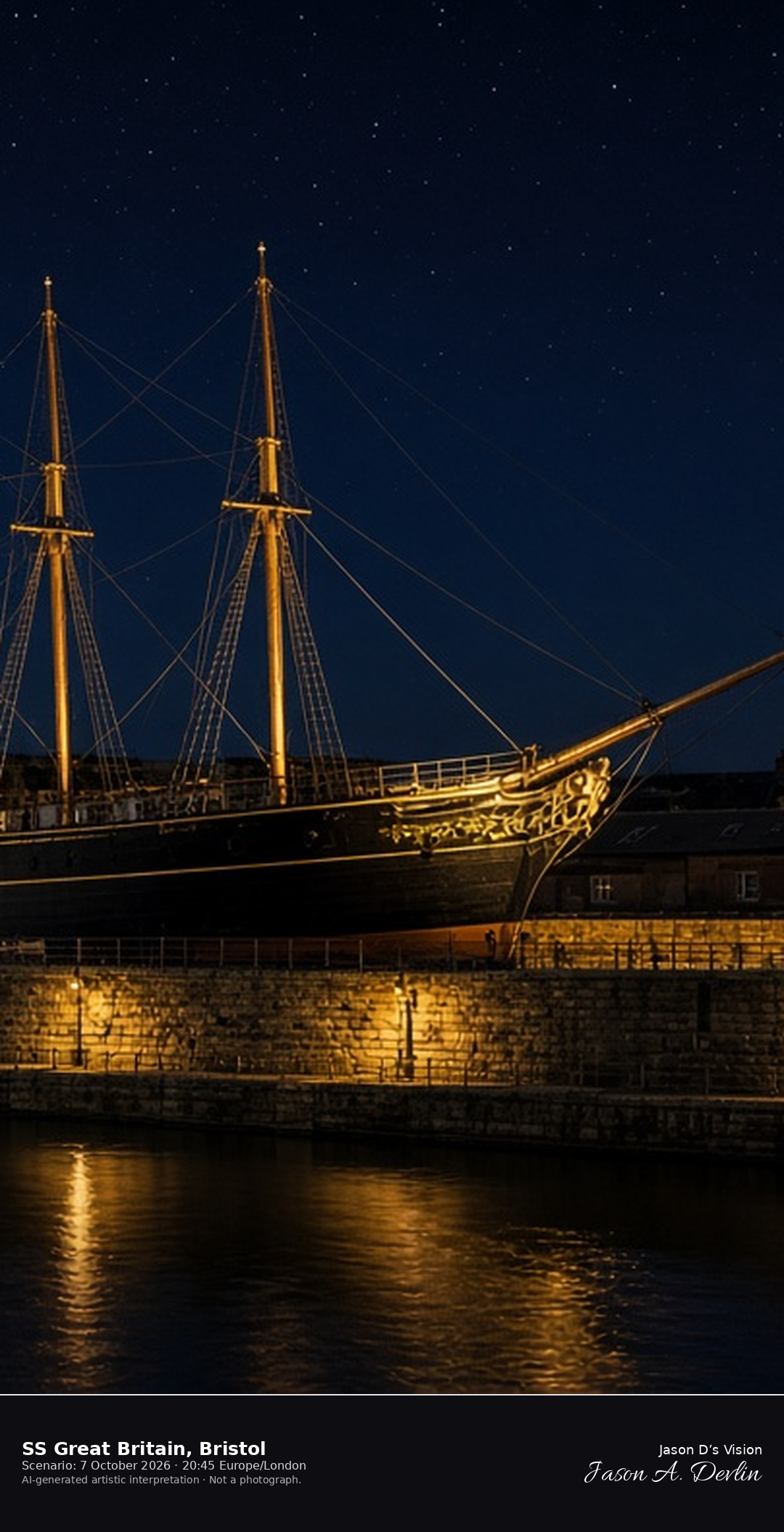
SS Great Britain, Bristol · AI-generated artistic interpretation
Designed by Isambard Kingdom Brunel and launched in 1843, the SS Great Britain was the first iron-hulled, screw-propelled ocean liner. It returned to the dock where it was built in 1970.
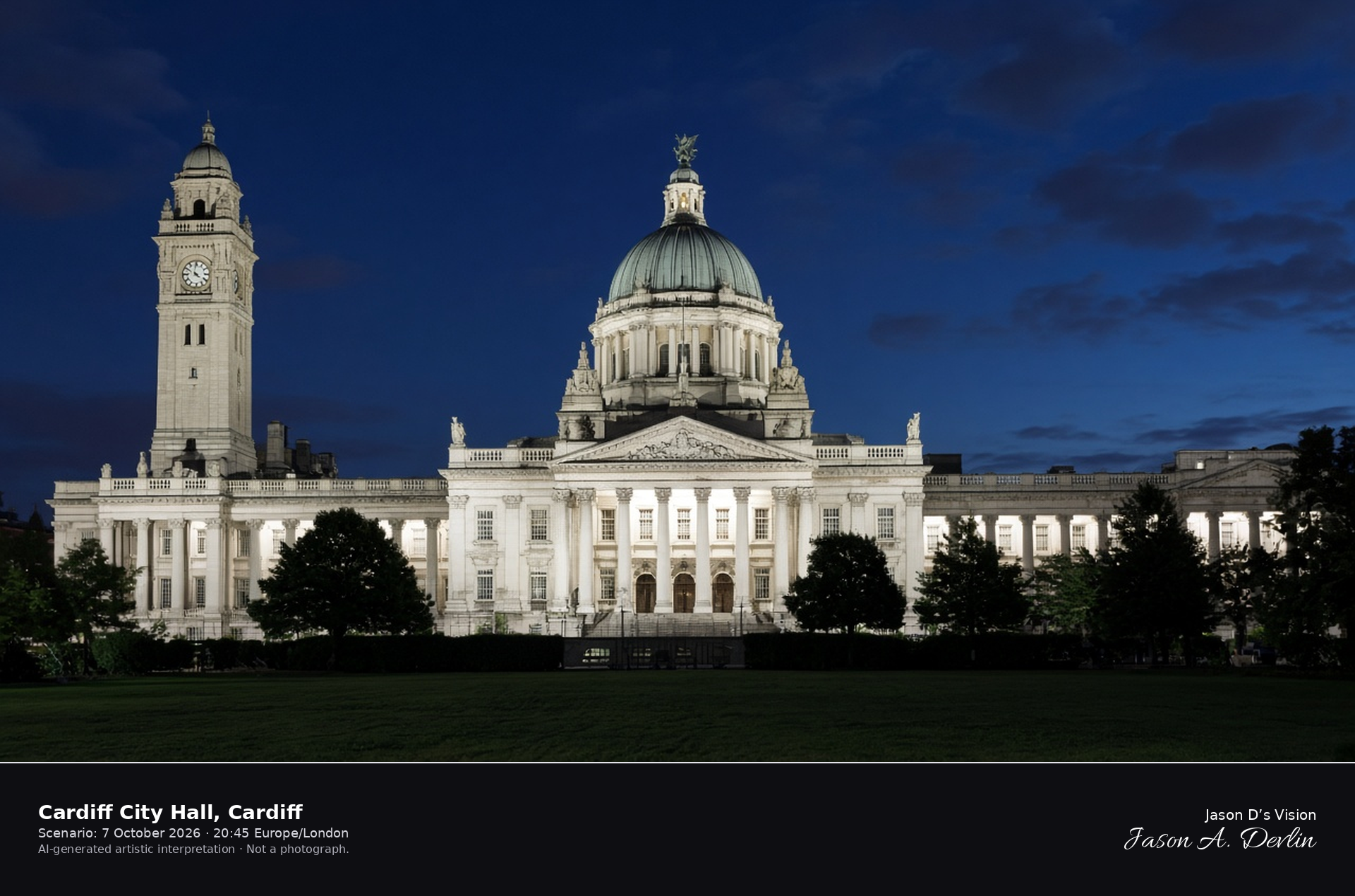
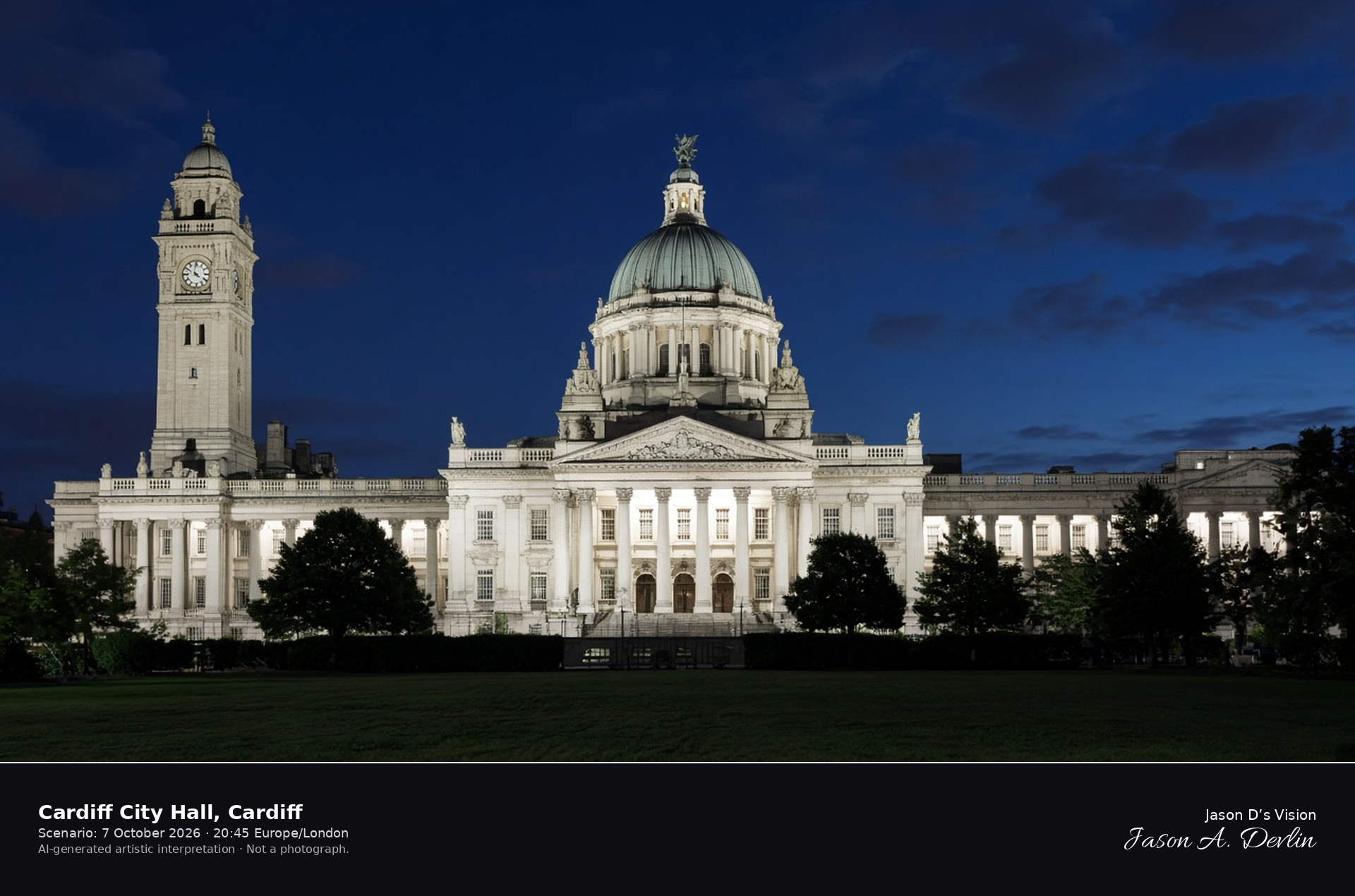
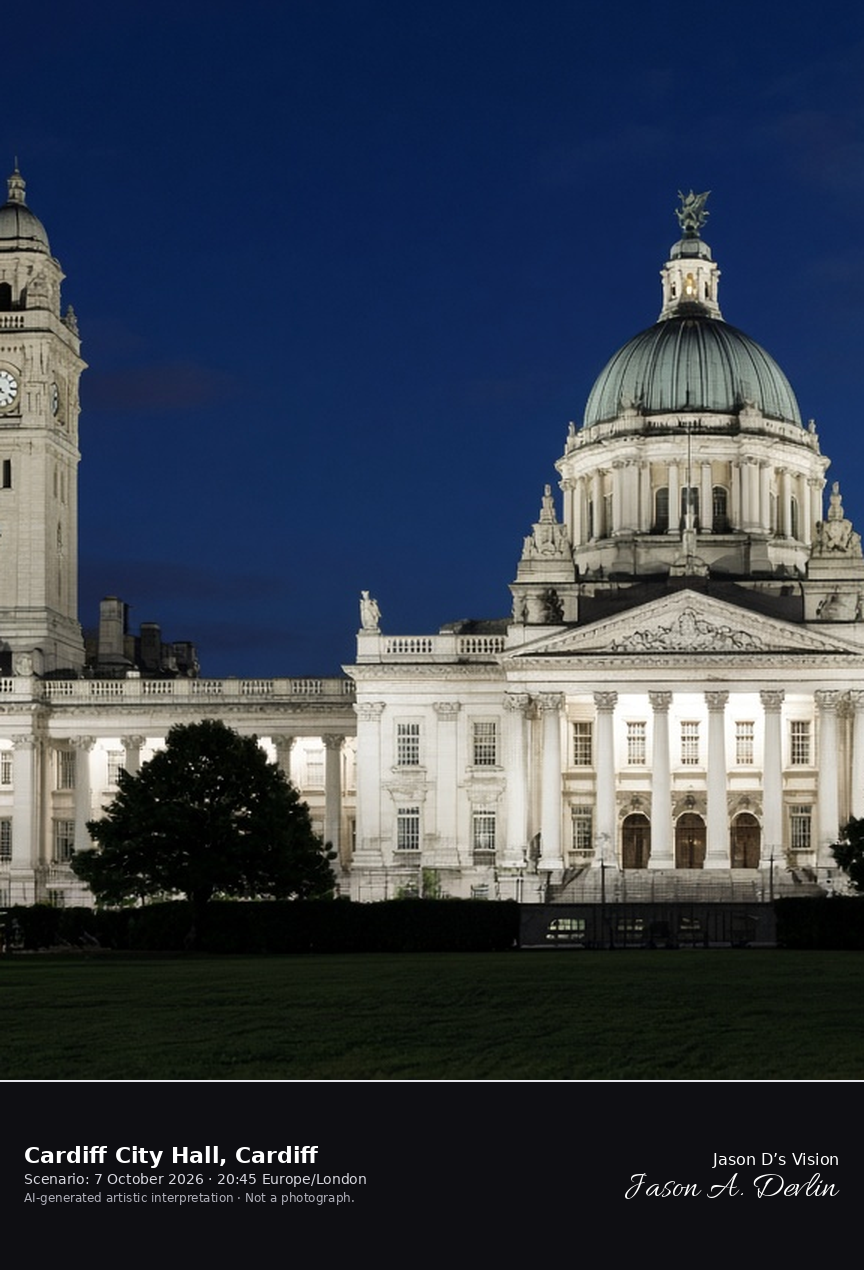
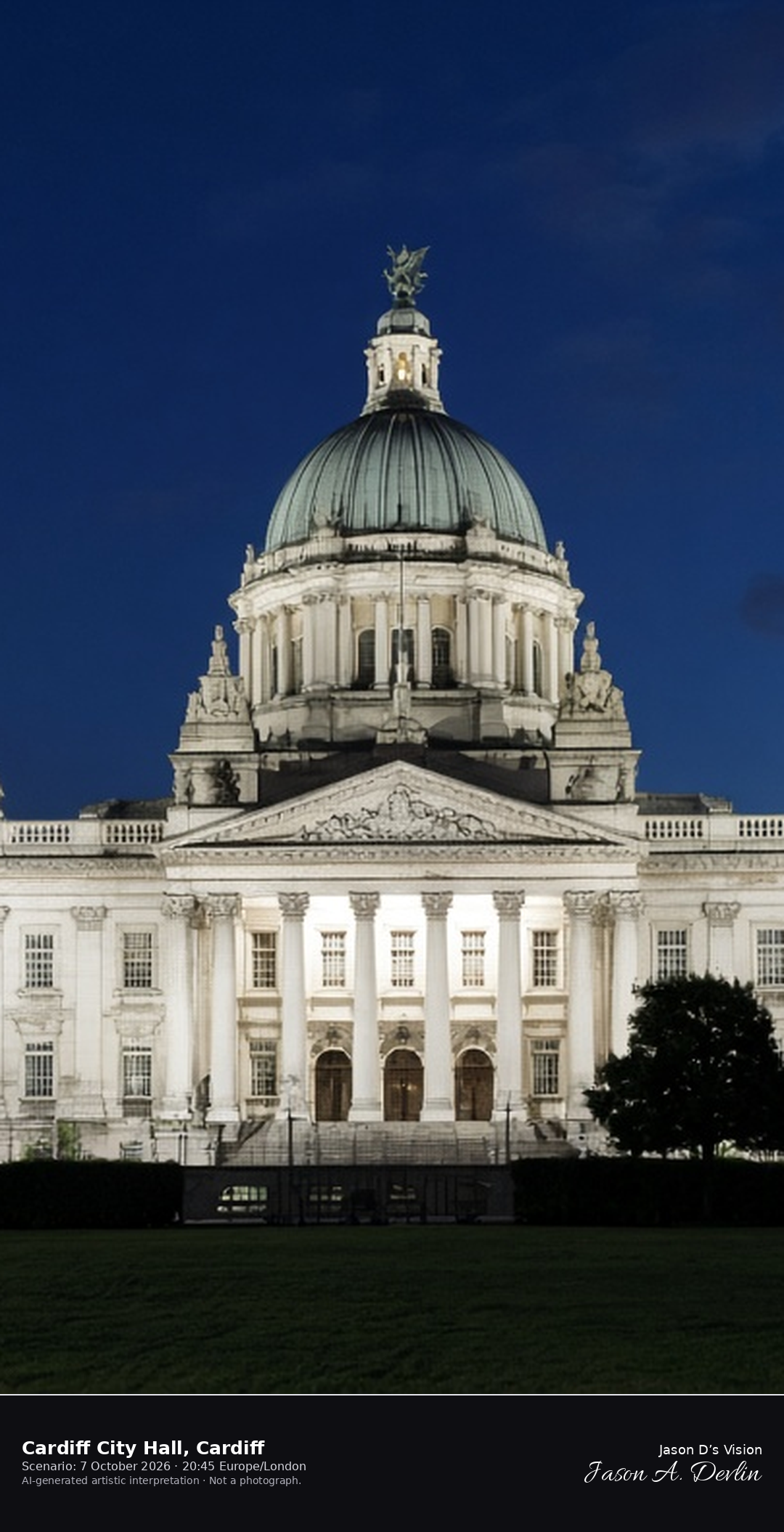
Cardiff City Hall, Cardiff · AI-generated artistic interpretation
City Hall opened in 1906, the year after Cardiff was granted city status, and became the city's civic centre. It is the heart of Cathays Park, one of Britain's finest groups of civic buildings.
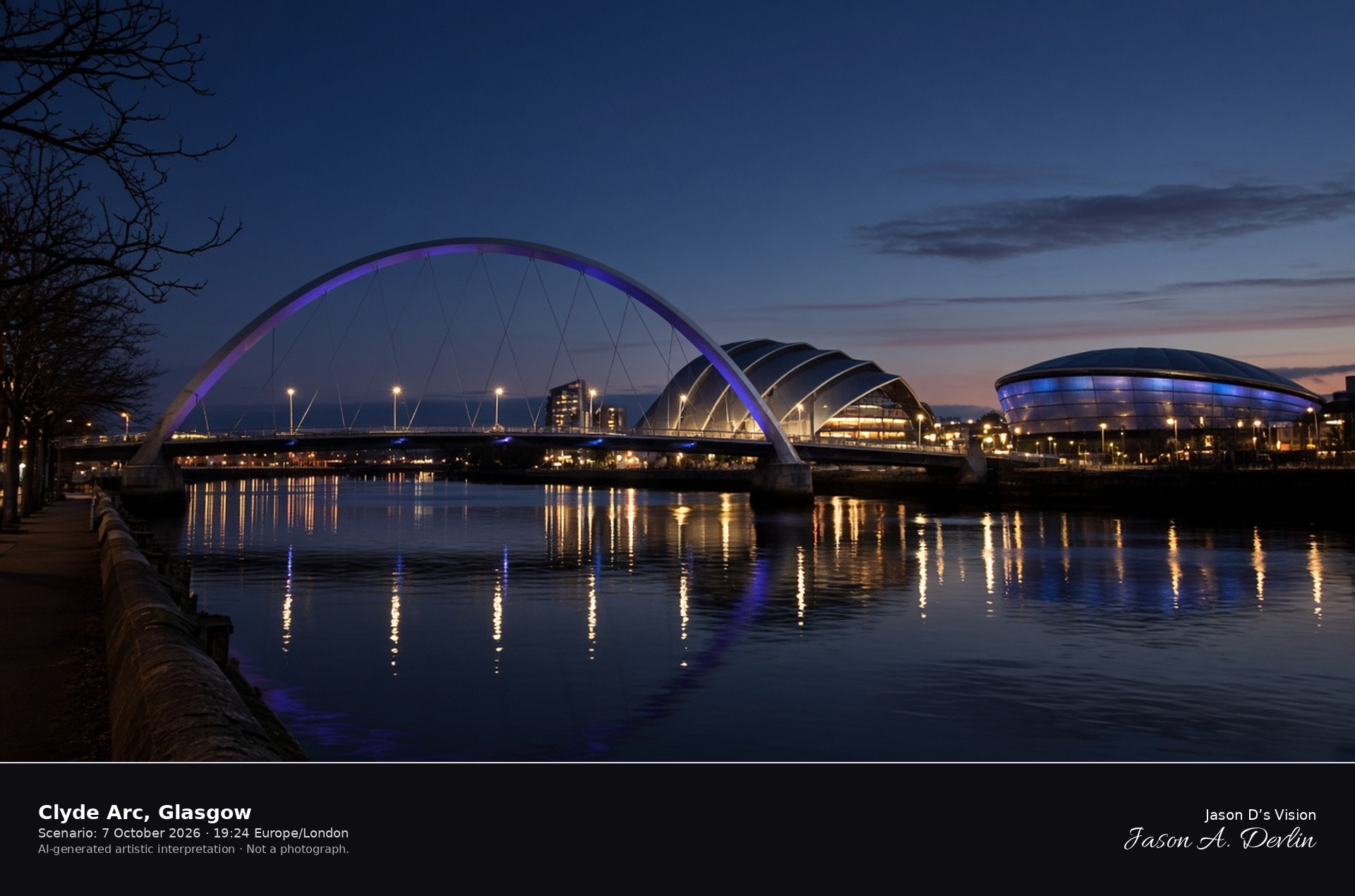
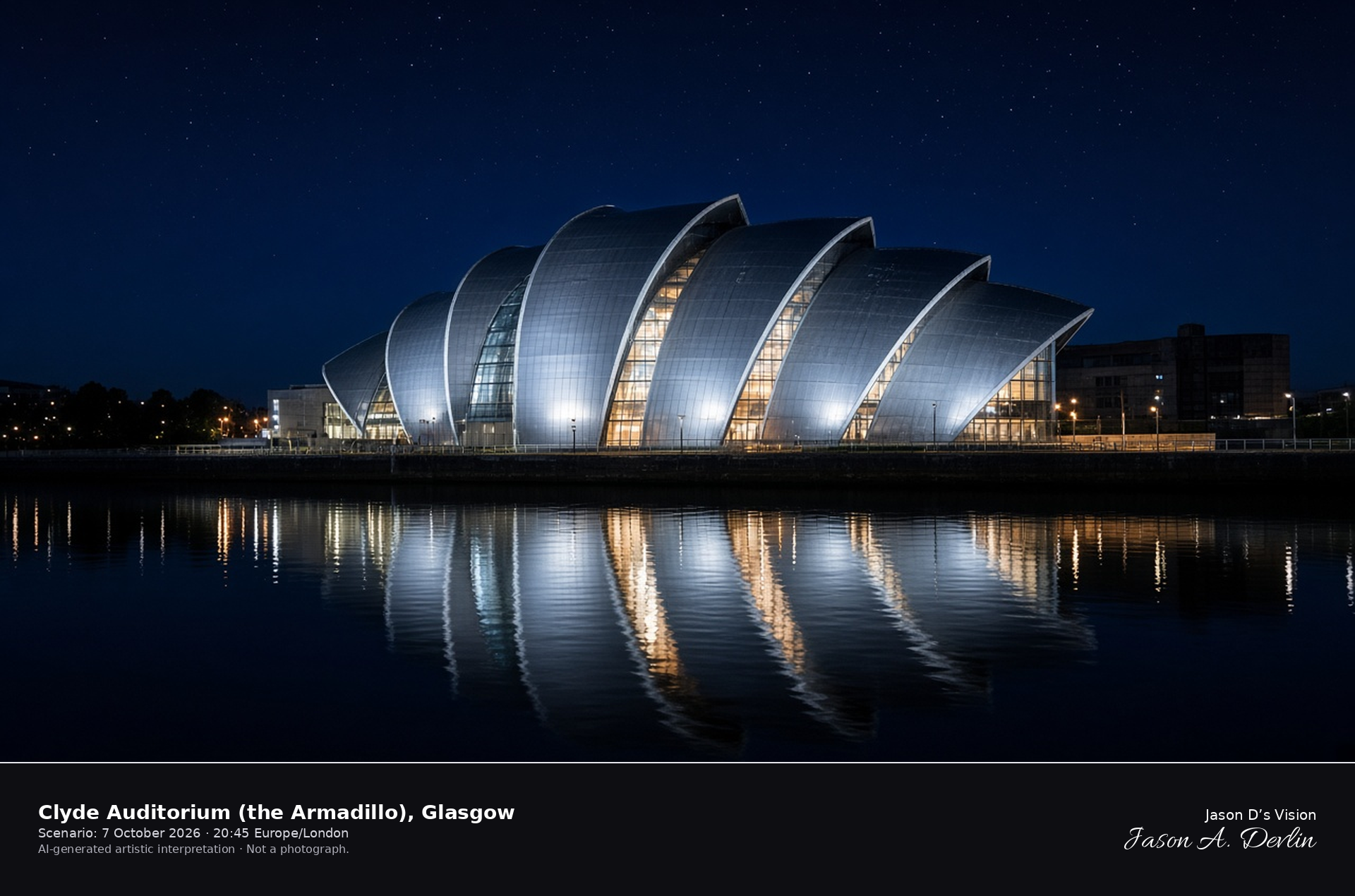
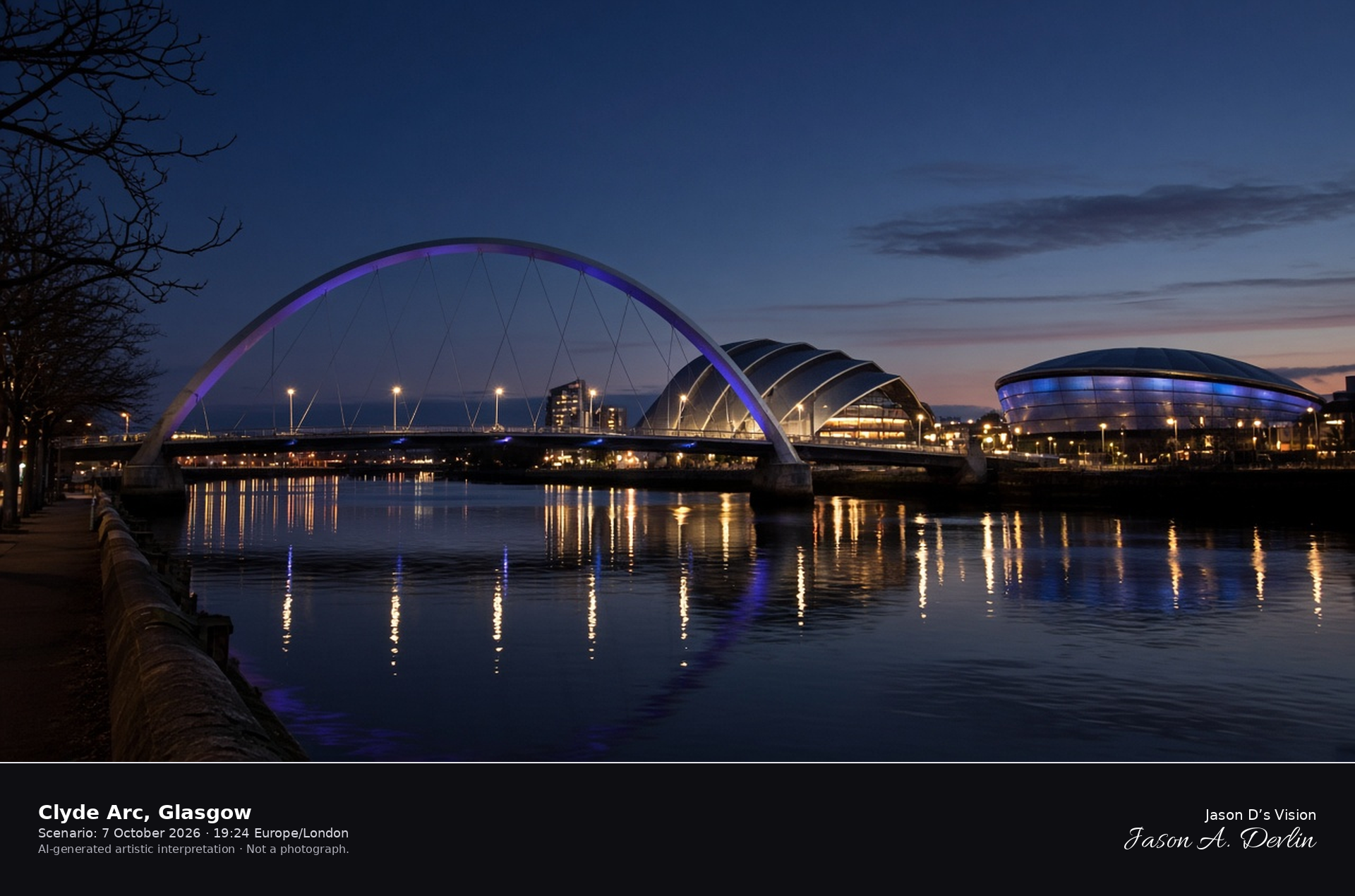
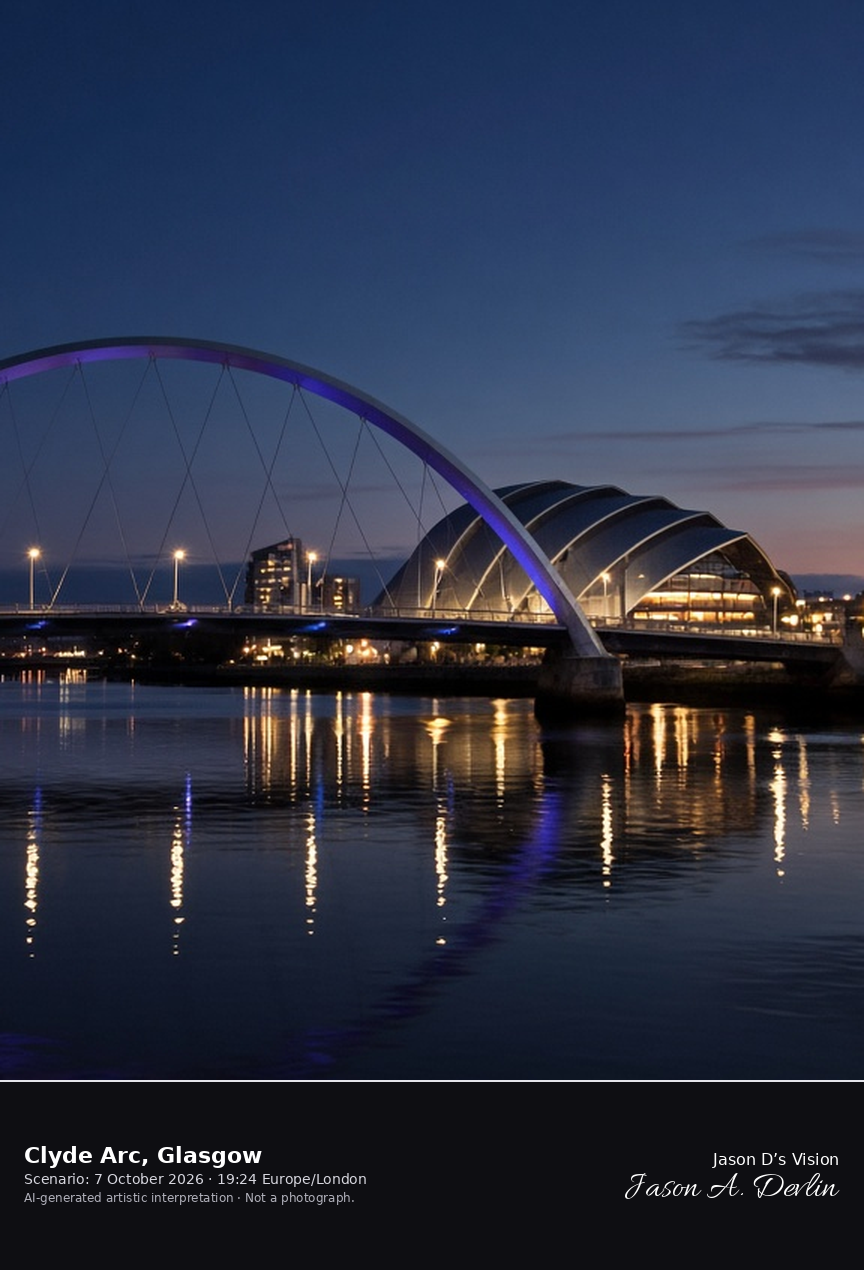
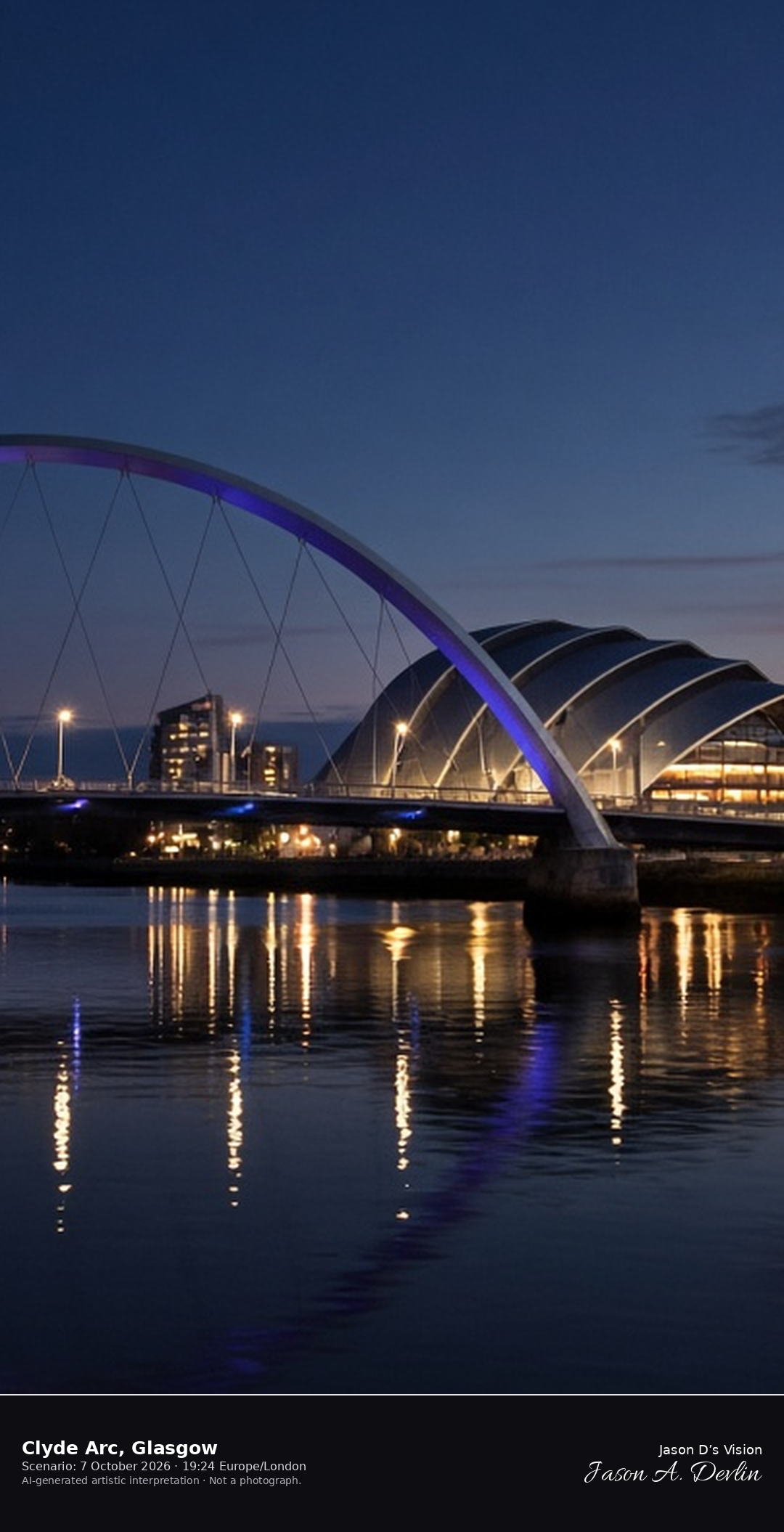
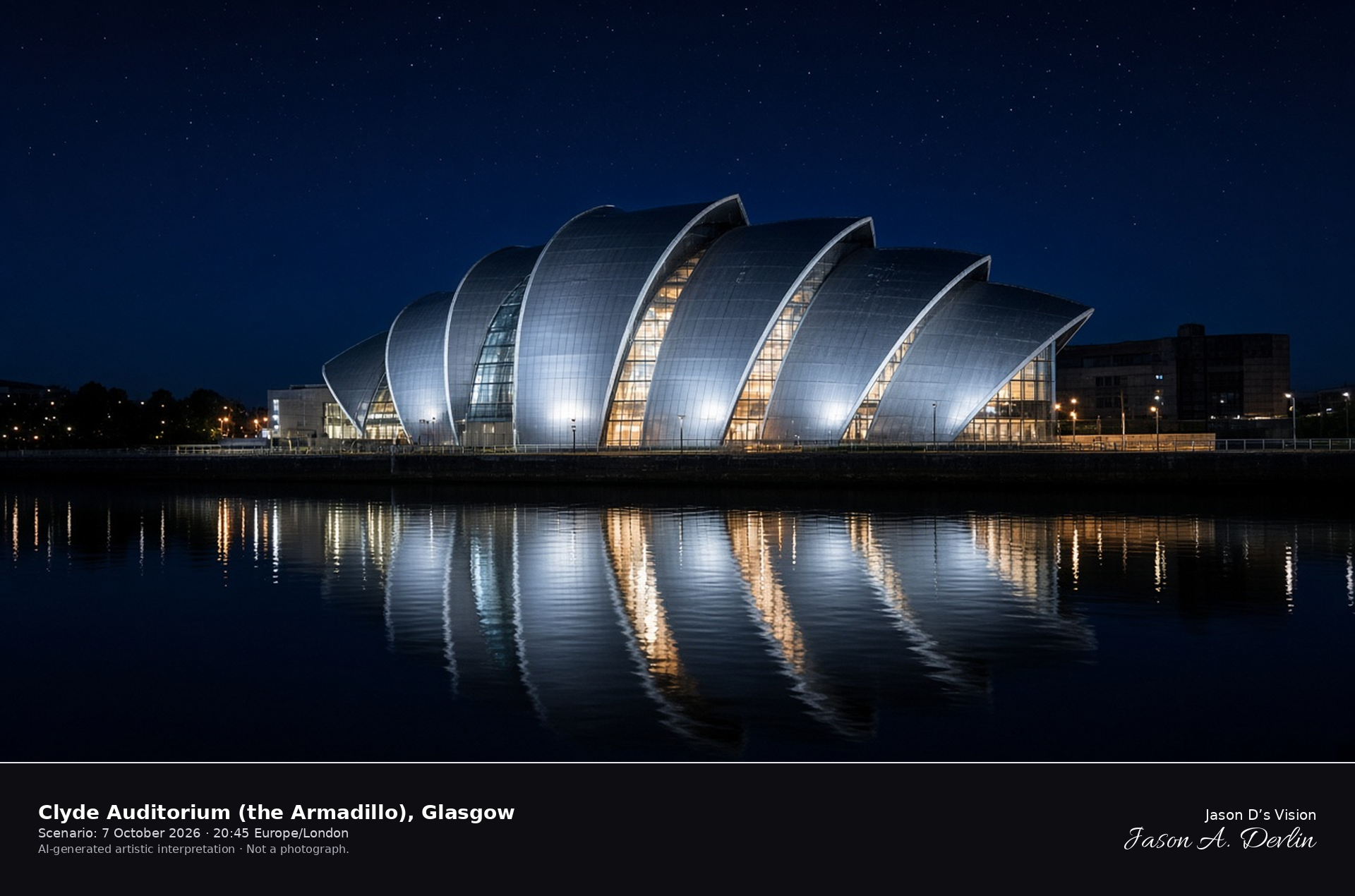
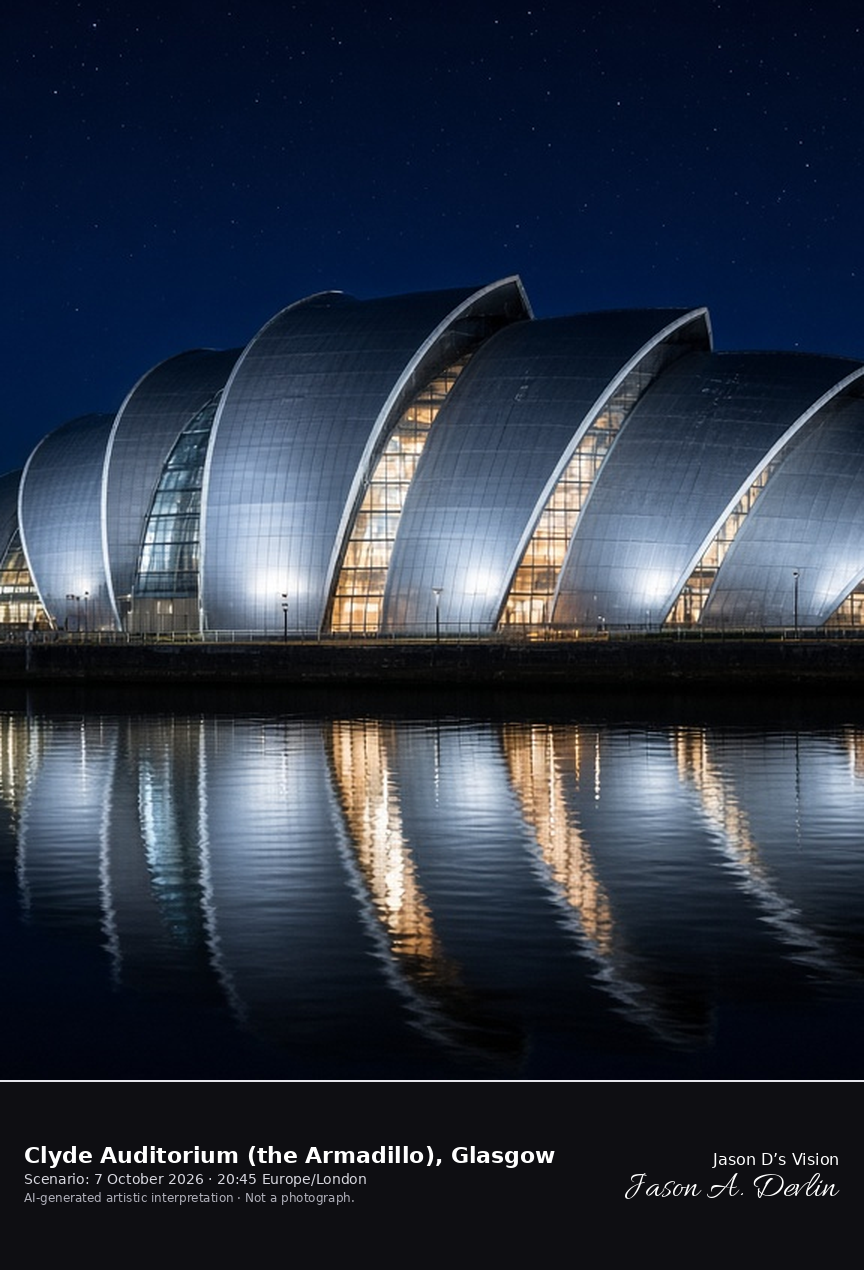
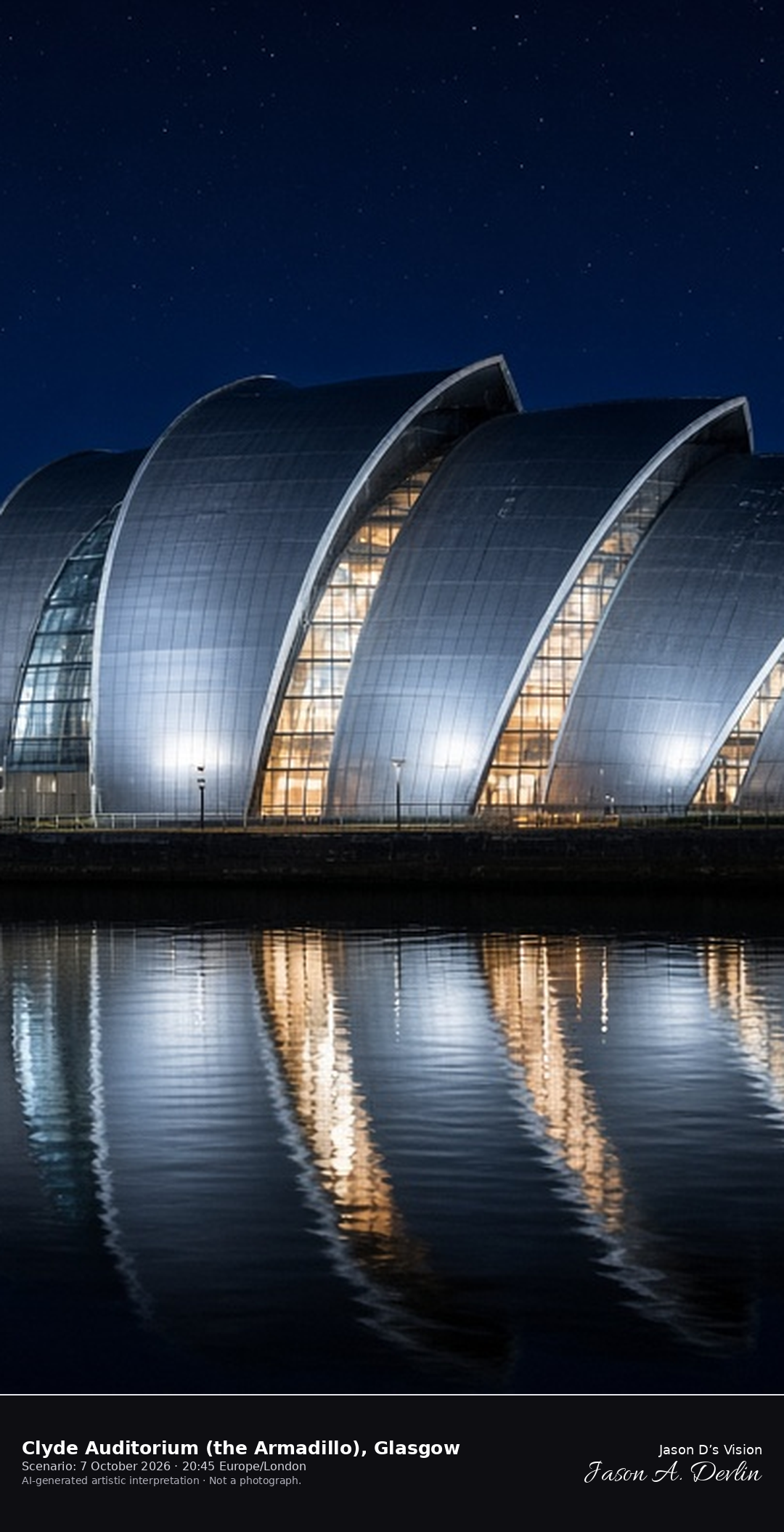
Clyde Auditorium (the Armadillo), Glasgow · AI-generated artistic interpretation
The Clyde Auditorium was designed by Foster and Partners and opened in 1997. Glaswegians nicknamed it the Armadillo for its tiers of curved shells, though it was inspired by ships' hulls.
Every image in Jason D’s Vision is free to use for any purpose — personal or commercial. No credit is required. If you’d like to credit, ‘Jason D’s Vision’ is appreciated, but it’s entirely your choice.
Jason D’s Vision waives its own rights in these images. This doesn’t waive anyone else’s rights: if an image happens to include a trademark, logo, or other third-party material, those rights still belong to their owners. All images are AI-generated artistic interpretations, not photographs, and use of an image doesn’t imply endorsement by Jason D’s Vision.